

Trait impulsivity and acute stress interact to influence choice and decision speed during multi-stage decision-making
Open accessThe DOI matches its Crossref record; 94 of the 94 references it cites were found in a registry or an index.
Abstract
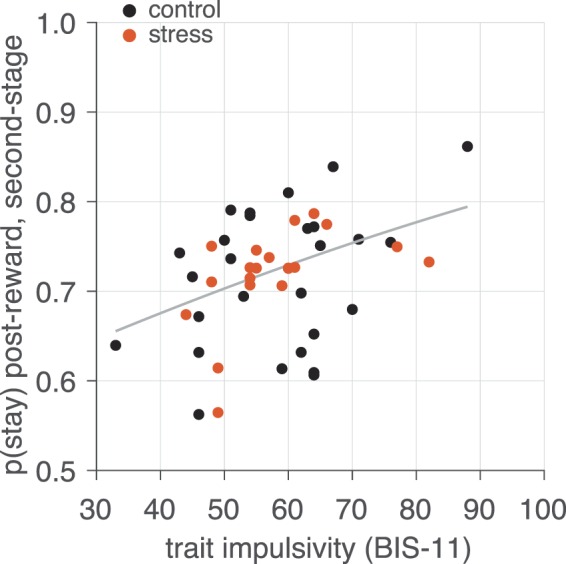
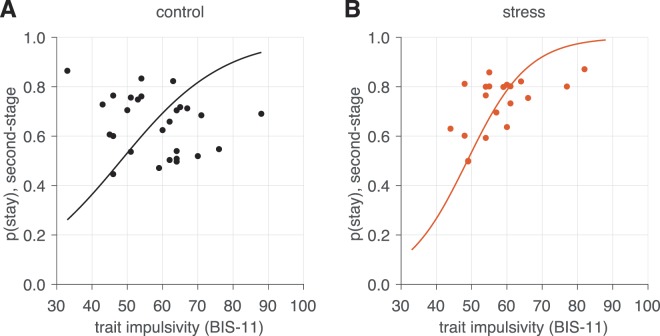
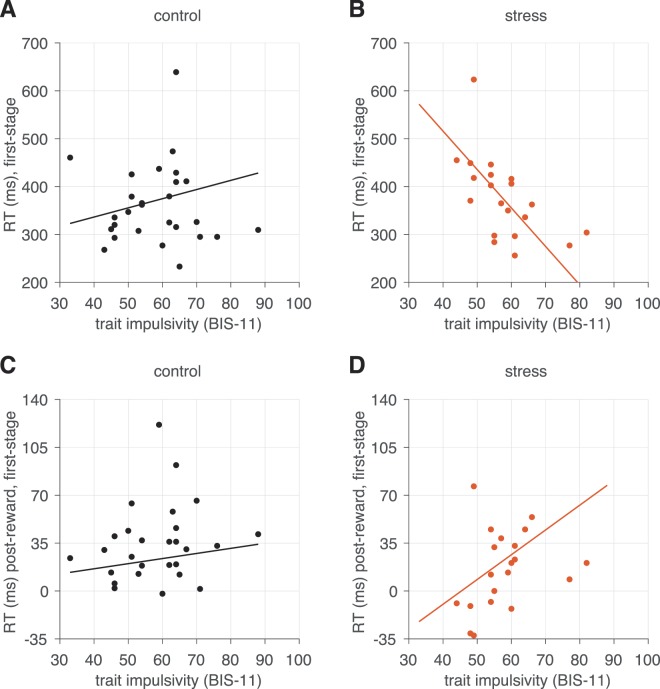
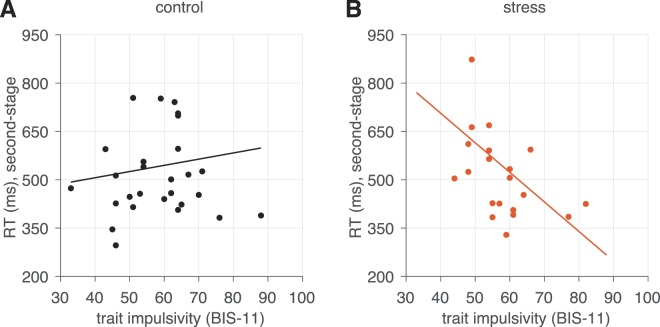
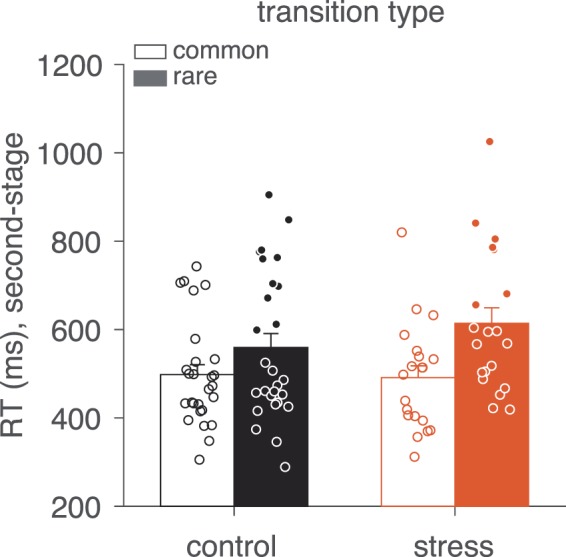
Impulsivity and stress exposure are two factors that are associated with changes in reward-related behavior in ways that are relevant to both healthy and maladaptive decision-making. Nonetheless, little empirical work has examined the possible independent and joint effects of these factors upon reward learning. Here, we sought to examine how trait impulsivity and acute stress exposure affect participants’ choice behavior and decision speed in a two-stage sequential reinforcement-learning task. We found that more impulsive participants were more likely to repeat second-stage choices after previous reward, irrespective of stress condition. Exposure to stress, on the other hand, was associated with an increased tendency to repeat second-stage choices independent of whether these choices previously led to a reward, and this tendency was exacerbated in more impulsive individuals. Such interaction effects between stress and impulsivity were also found on decision speed. Stress and impulsivity levels interacted to drive faster choices overall (again irrespective of reward) at both task stages, while reward received on the previous trial slowed subsequent first-stage choices, particularly among impulsive individuals under stress. Collectively, our results reveal novel, largely interactive effects of trait impulsivity and stress exposure and suggest that stress may reveal individual differences in decision-making tied to impulsivity that are not readily apparent in the absence of stress.
Overview
The claims and statistics of this paper haven’t been checked yet.
Free: it reads the open-access text and checks the first 5 claims that cite a source we can check. Create a free account to check every claim.
Integrity signals
Registry
Cites
Statistics
Figures
Verification
Claims the paper makes
The claims and statistics of this paper haven’t been checked yet.
Free: it reads the open-access text and checks the first 5 claims that cite a source we can check. Create a free account to check every claim.
Claims other papers make about this one
Each is checked against this paper’s own text: does it say what the citing paper says it does?
The cited source says what the claim attributes to it.
In the citing paper
“For instance, recent studies found that interactions between acute physical stress and trait impulsivity influenced choice behavior in a decision-making task (Raio et al., 2020).”
From Toward objective characterizations of suicide risk: A narrative review of laboratory-based cognitive and behavioral tasks (2023) · cites this paper as Raio et al., 2020
Experimental — accuracy not yet measured
Self-check
Percentages, sums and reported differences re-computed from the paper’s own numbers.
The self-check needs the paper’s full text.
Citations
Cites
lmerTest Package: Tests in Linear Mixed Effects Models
Kuznetsova, A., Brockhoff, P. B., & Christensen, R. H. B. (2017) · Journal of Statistical Software · doi:10.18637/jss.v082.i13 · Cited by 24,346
Mixed-effects modeling with crossed random effects for subjects and items
Baayen, R. H., Davidson, D. J., & Bates, D. M. (2008) · Journal of Memory and Language · doi:10.1016/j.jml.2007.12.005 · Cited by 8,540
Physiology and neurobiology of stress and adaptation: central role of the brain
McEwen, B. S. (2007) · Physiological Reviews · doi:10.1152/physrev.00041.2006 · Cited by 5,429
Journal of experimental psychology: Human Perception and performance
(1987) · Journal of Sound and Vibration · doi:10.1016/0022-460x(87)90423-8 · Cited by 5,411
A Syndrome produced by Diverse Nocuous Agents
SELYE, H. (1936) · Nature · doi:10.1038/138032a0 · Cited by 3,903
Neural regulation of endocrine and autonomic stress responses
Ulrich-Lai, Y. M., & Herman, J. P. (2009) · Nature Reviews Neuroscience · doi:10.1038/nrn2647 · Cited by 3,318
Stress signalling pathways that impair prefrontal cortex structure and function
Arnsten, A. F. T. (2009) · Nature Reviews Neuroscience · doi:10.1038/nrn2648 · Cited by 3,299
Journal of Experimental Psychology: Human Perception and Performance.
Intons-Peterson, M. J. (1981) · Journal of Experimental Psychology: Human Perception and Performance · doi:10.1037/h0078016 · Cited by 3,183
Daw, N. D., Niv, Y., & Dayan, P. (2005) · Nature Neuroscience · doi:10.1038/nn1560 · Cited by 2,533
Decision making, impulse control and loss of willpower to resist drugs: a neurocognitive perspective
Bechara, A. (2005) · Nature Neuroscience · doi:10.1038/nn1584 · Cited by 2,149
Cited by
Effects of chronic stress on cognitive function – From neurobiology to intervention
Girotti, M., Bulin, S. E., & Carreno, F. R. (2024) · Neurobiology of Stress · doi:10.1016/j.ynstr.2024.100670 · Cited by 212
“Thus, in healthy adults acute stress impaired decision making and speed of choice in both non-gambling and gambling settings, and these effects were more pronounced in individuals with higher impulsivity (Canale et al., 2017; Raio et al., 2020).”
BackgroundAcute Psychosocial Stress Increases Cognitive-Effort Avoidance
Bogdanov, M., Nitschke, J. P., LoParco, S., Bartz, J. A., & Otto, A. R. (2021) · Psychological Science · doi:10.1177/09567976211005465 · Cited by 73
“Importantly, because there are no reward incentives tied to choices or performance, the DST affords a relatively pure assessment of the effects of stress on effort avoidance, independently of its documented effects on reward sensitivity (Porcelli & Delgado, 2017; Raio et al., 2020).”
BackgroundSelf-citationRaji, H., Dinesh, S., & Sharma, S. (2025) · The Egyptian Journal of Neurology Psychiatry and Neurosurgery · doi:10.1186/s41983-024-00930-9 · Cited by 45
“Stress impacts learning and decision-making through two primary mechanisms: depleting cognitive resources required for deliberate decisions and imposing internal time constraints, accelerating choice behavior [104].”
Buabang, E. K., Boddez, Y., Wolf, O. T., & Moors, A. (2023) · Behavioral Neuroscience · doi:10.1037/bne0000439 · Cited by 30
“In line with the idea that stress detracts from the focal task, Raio et al. (2020) showed that (impulsive) people who were under stress showed more outcomeinsensitive behavior but also responded faster.”
BackgroundAccumbofrontal tract integrity is related to early life adversity and feedback learning
Kennedy, B. V., Hanson, J. L., Buser, N. J., van den Bos, W., Rudolph, K. D., Davidson, R. J., & Pollak, S. D. (2021) · Neuropsychopharmacology · doi:10.1038/s41386-021-01129-9 · Cited by 24
Empathy and mentalizing abilities in relation to psychosocial stress in healthy adult men and women
Tollenaar, M. S., & Overgaauw, S. (2020) · Heliyon · doi:10.1016/j.heliyon.2020.e04488 · Cited by 25
Balleyer, A. H., & Fennis, B. M. (2022) · Frontiers in Psychology · doi:10.3389/fpsyg.2022.685552 · Cited by 15
Tarantino, V., Tasca, I., Giannetto, N., Mangano, G. R., Turriziani, P., & Oliveri, M. (2021) · Behavioral Sciences · doi:10.3390/bs11120167 · Cited by 17
“, [8,59] and the effects of receiving feedback during the task (winnings or losses) on driving subsequent choice behavior [58,59], by demonstrating that during a prolonged environmental stress exposure in a real context, the most detrimental effect of stress was on older and more stressed male participants.”
BackgroundAcute Stress in Health Workers during Two Consecutive Epidemic Waves of COVID-19
Jáuregui‐Renaud, K., Cooper‐Bribiesca, D., Martínez-Pichardo, E., Miguel‐Puga, J. A., Rascón-Martínez, D. M., Sánchez‐Hurtado, L. A., Martínez, T. C., Espinosa‐Poblano, E., Anda‐Garay, J. C., González‐Díaz, J. I., et al. (2021) · International Journal of Environmental Research and Public Health · doi:10.3390/ijerph19010206 · Cited by 19
“However, stress reactions may also modify performance, verbal memory, assessment of risk, and decision making [7,8] and interact with impulsivity [9].”
BackgroundEnvironmental uncertainty and the advantage of impulsive choice strategies
Burk, D. C., & Averbeck, B. B. (2023) · PLoS Computational Biology · doi:10.1371/journal.pcbi.1010873 · Cited by 17
Lamontagne, S. J., Zabala, P. K., Zarate, C. A., & Ballard, E. D. (2023) · Neuroscience & Biobehavioral Reviews · doi:10.1016/j.neubiorev.2023.105361 · Cited by 12
He, Q., Beveridge, E. H., Vargas, V., Salen, A., & Brown, T. I. (2023) · Psychological Science · doi:10.1177/09567976231155870 · Cited by 13
Xiao, Z., Chen, Z., Chen, W., Gao, W., He, L., Wang, Q., Lei, X., Qiu, J., Feng, T., Chen, H., et al. (2022) · Cerebral Cortex · doi:10.1093/cercor/bhab505 · Cited by 13
“Such changes are expected because ongoingly distressed people do not have the cognitive resources to inhibit impulsive behaviors (Enticott et al. 2006; Raio et al. 2020); their cognitive and neural foci shift to regulating the stress (Lempert et al. 2012).”
Parr, A. C., Calancie, O. G., Coe, B. C., Khalid‐Khan, S., & Munoz, D. P. (2022) · Frontiers in Neuroscience · doi:10.3389/fnins.2021.667399 · Cited by 15
Impulsivity Relates to Multi-Trial Choice Strategy in Probabilistic Reversal Learning
Zou, A. R., Lopez, D. E. M., Johnson, S. L., & Collins, A. G. E. (2022) · Frontiers in Psychiatry · doi:10.3389/fpsyt.2022.800290 · Cited by 16
“For the BI model, individual parameters preward and pswitch were sampled from group-level beta distributions, and their hyperparameters were sampled from gamma(1,1).”
BackgroundMethodInfluentialSkvortsova, V., & Hauser, T. U. (2022) · Research Square · doi:10.21203/rs.3.rs-1280535/v1 · Cited by 9
Newcorn, J. H., Ivanov, I., Krone, B., Li, X., Duhoux, S., White, S., Schulz, K. P., Bédard, A.-C. V., Pedraza, J., Adler, L., et al. (2024) · Journal of Psychiatric Research · doi:10.1016/j.jpsychires.2023.11.037 · Cited by 7
Acute Stress Effects on Statistical Learning and Episodic Memory
Sherman, B. E., Huang, I., Wijaya, E. G., Turk‐Browne, N. B., & Goldfarb, E. V. (2024) · Journal of Cognitive Neuroscience · doi:10.1162/jocn_a_02178 · Cited by 10
“This finding, although challenging to interpret given mixed effects of acute stress and cortisol on RT (Raio, Konova, & Otto, 2020; Shields, Ivory, & Telzer, 2019; Goldfarb, Mendelevich, & Phelps, 2017), underscores the importance of considering relative differences in RT (i.e., the difference…”
ResultMultimodal objective assessment of impulsivity in healthy and mood disorder participants
Lamichhane, B., Moukaddam, N. J., Salas, R., Goodman, W. K., & Sabharwal, A. (2025) · NPP—Digital Psychiatry and Neuroscience · doi:10.1038/s44277-025-00026-z · Cited by 8
“The PulseCam measurements were obtained with the participants under stress since stress reveals impulsivity differences between individuals [38].”
Girotti, M., Carreno, F. R., & Morilak, D. A. (2022) · The International Journal of Neuropsychopharmacology · doi:10.1093/ijnp/pyac062 · Cited by 8
“Trait impulsivity has been shown to interact with stress to precipitate maladaptive behaviors such as substance abuse, gambling, and compulsions (Oswald et al., 2007; Sinha, 2008; Grubbs and Chapman, 2019; Raio et al., 2020; Albertella et al., 2021; Verdejo-Garcia and Albein-Urios, 2021).”
BackgroundAcute stress alters probabilistic reversal learning in healthy male adults
Wieland, L., Ebrahimi, C., Katthagen, T., Panitz, M., Luettgau, L., Heinz, A., Schlagenhauf, F., & Sjoerds, Z. (2023) · European Journal of Neuroscience · doi:10.1111/ejn.15916 · Cited by 9
“Increased perseverance has also been observed in a task that differentiates habitual and goal-directed behaviour (Raio et al., 2020).”
BackgroundResultInfluentialXie, X., Zhou, Y., Jiang, X., Xu, S., Zhang, J., Yang, C., & Ji, M. (2025) · Safety Science · doi:10.1016/j.ssci.2025.106833 · Cited by 9
Behavioral impulsivity moderates the relationship between acute stress and reward sensitivity
Dewi, M. I., Tao, C. S., Dong, M., Hatton, B., Fournier, M. A., & Erb, S. M. (2022) · Personality and Individual Differences · doi:10.1016/j.paid.2022.112040 · Cited by 6
Estrés laboral y su relación con la impulsividad en el personal sanitario de un hospital
Alomoto, J. P. A., & Freire, M. A. M. (2022) · Ciencia Latina Revista Científica Multidisciplinar · doi:10.37811/cl_rcm.v6i6.4055 · Cited by 12
“De tal forma, en otro estudio los niveles de impulsividad y estrés interactúan produciendo respuestas más rápidas, asimismo el estrés agudo genera diferencias individuales en la toma de decisiones asociadas a la impulsividad (Raio et al., 2020).”
Cui, C., Luo, G., Lei, J., Shi, Y., Yao, Y., Ren, K., Yang, J., Li, T., Li, M., Peng, X., et al. (2025) · Translational Psychiatry · doi:10.1038/s41398-025-03644-5 · Cited by 4
Hwang, Y. I., Simpson, P. L., & Butler, T. G. (2021) · Journal of Criminology · doi:10.1177/26338076211028729 · Cited by 6
“The dynamics of stress and impulsivity may also be a contributing factor, in terms of participants underestimating the influence these psychological states may have in impeding commitments to future plans (Raio et al., 2020).”
BackgroundOn the effects of impulsivity and compulsivity on neural correlates of model-based performance
Dück, K., Dieterich, R., Overmeyer, R., & Endraß, T. (2024) · Scientific Reports · doi:10.1038/s41598-024-71692-w · Cited by 3
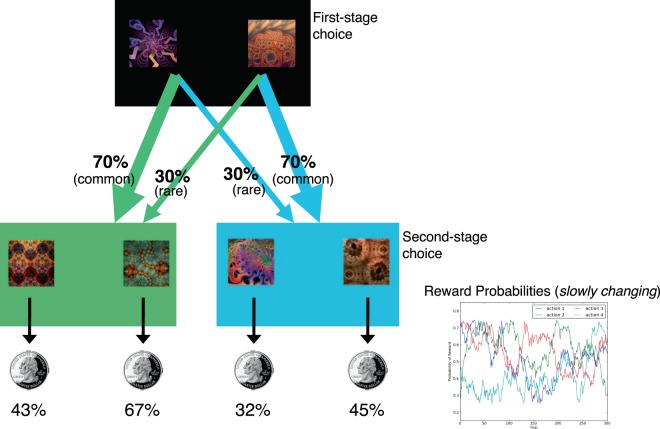
“Raio et al. 31 found impulsivity scores to affect choice behavior only in the second stage of a two-step task, where participants can be influenced by previous reward, but MF and MB control are no longer differentiated.”
Moukaddam, N. J., Lamichhane, B., Salas, R., Goodman, W. K., & Sabharwal, A. (2023) · Behavioural Neurology · doi:10.1155/2023/8552180 · Cited by 4
“We measured the patient’s cardiovascular physiology during their stressed state as stress reportedly reveals individual differences in impulsive behaviors, which might not be readily observed in a non-stressed state [19].”
BackgroundPost-reinforcement pauses during slot machine gambling are moderated by immersion
Murch, W. S., Ferrari, M. A., & Clark, L. (2024) · Quarterly Journal of Experimental Psychology · doi:10.1177/17470218241239054 · Cited by 6
“In one laboratory study, impulsivity and stress jointly impacted the PRP effect in a multi-stage decision-making task (Raio et al., 2020).”
Mamcarz, P. J., Dróździel, P., Madleňák, R., Pukalskas, S., & Gwiazdowska-Stańczak, S. (2023) · International Journal of Environmental Research and Public Health · doi:10.3390/ijerph20054559 · Cited by 4
“Furthermore, impulsiveness can also lead to a higher level of risk-taking behavior, which can increase work stress [61,62].”
BackgroundBuabang, E. K., Boddez, Y., Wolf, O. T., & Moors, A. (2022) · PsyArXiv (OSF Preprints) · doi:10.31234/osf.io/kz5ev · Cited by 2
Negative affect-driven impulsivity as hierarchical model-based overgeneralization
Okan, A., & Hallquist, M. N. (2025) · Trends in Cognitive Sciences · doi:10.1016/j.tics.2025.01.002 · Cited by 4
Grodin, E. N., Kirsch, D. E., Nieto, S. J., Belnap, M. A., Castillo, Y., Baker, N., Wassum, K. M., Grant, K. A., & Ray, L. A. (2025) · Drug and Alcohol Dependence · doi:10.1016/j.drugalcdep.2025.112767 · Cited by 1
Prakoso, A. F., Subroto, W. T., Andriansyah, E. H., Roziqifath, Z. F. M., & Ginanjar, A. E. (2026) · The Journal of Behavioral Science · doi:10.69523/tjbs.2026.288901 · Cited by 1
State impulsivity and substance use: A systematic review and meta-analysis protocol
Mazumder, A., Erb, S. M., & Fournier, M. A. (2026) · PLoS ONE · doi:10.1371/journal.pone.0346779 · Cited by 1
“Moreover, in many cases, impulsivity is associated with some of the more severe consequences of such disorders, such as suicide attempts, aggressive behavior, and self-harm [20,21].”
Pan, Y., Liu, Y., Tang, R., Chang, M., Li, Y., & You, X. (2026) · International Journal of Industrial Ergonomics · doi:10.1016/j.ergon.2026.104010 · Cited by 1
Farmer, N. M., Gordon, T., Middleton, K. R., Brooks, A. T., & Wallen, G. R. (2021) · Translational Behavioral Medicine · doi:10.1093/tbm/ibab108 · Cited by 1
Research on Integrated Learning of Industrial Clusters in Self‐Created Districts
Pang, L., Zhou, Y., & Chu, Y. (2021) · Wireless Communications and Mobile Computing · doi:10.1155/2021/8925688 · Cited by 1
“Multiagent adaptive negotiation [21] can be regarded as a multistage decision-making process [22].”
BackgroundDecision-Making under Stress: The Hiding behind a Small Cake Effect
Nogas, É. M., Póvoa, Â. C. S., & Pech, W. (2023) · Revista de Administração Contemporânea · doi:10.1590/1982-7849rac2023230023.en · Cited by 2
Parr, A. C., Calancie, O. G., Coe, B. C., Khalid‐Khan, S., & Munoz, D. P. (2021) · bioRxiv (Cold Spring Harbor Laboratory) · doi:10.1101/2021.02.11.430783
“, 2010), and variability in decision-making in healthy individuals (Franken et al., 2008; Penolazzi et al., 2012; Raio et al., 2020), including risk-taking behavior in adolescents (Romer et al.”
BackgroundYin, Q., Dong, W., Hou, T., Cai, W., & Deng, G. (2023) · Research Square · doi:10.21203/rs.3.rs-2880953/v1 · Cited by 1
Maxim, P., He, Q., & Brown, T. I. (2023) · Elsevier eBooks · doi:10.1016/b978-0-12-820480-1.00027-9
The Impact of Acute Psychological Stress on Individual Decision-Making
刘, 晴. (2024) · Advances in Social Sciences · doi:10.12677/ass.2024.13121150
Dougherty, R., Thrailkill, E. A., Horn, S. V., Kussad, A., & Toufexis, D. J. (2025) · Neurobiology of Learning and Memory · doi:10.1016/j.nlm.2025.108063
Involvement of a stress-responsive orbito-striatal projection in impulsive action in male rats
Girotti, M., Boehmer-Cortez, M. G., Tuite, K., & Morilak, D. A. (2025) · The International Journal of Neuropsychopharmacology · doi:10.1093/ijnp/pyaf043
“20,21 Rodent models of early life stress increased impulsive action after stress, although few studies have analyzed the neurobiological correlates of these effects.”
Llamas-Alonso, L. A., Quevedo-Calderon, A. J., Quiñones-Beltrán, S. L., Pérez, A. L. J., Arvizu-Oviedo, A., & Angulo‐Chavira, A. Q. (2025) · bioRxiv (Cold Spring Harbor Laboratory) · doi:10.1101/2025.08.24.672020
Moors, A., Buabang, E. K., Boddez, Y., & Wolf, O. T. (2022) · OSF Preprints (OSF Preprints)
Acute stress modulates early visual perception and decision-making speed in bees
Procenko, O., & Nityananda, V. (2026) · Journal of Experimental Biology · doi:10.1242/jeb.251716 · Cited by 1
Dück, K., Overmeyer, R., Dieterich, R., & Endraß, T. (2026) · Scientific Reports · doi:10.1038/s41598-026-58046-4
“Further, impulsivity has been linked to a dysfunction of model-based control 29,39,40 .”
Off the Cuff: Self-Reported Positive Urgency Predicts Rapid Choices During Risky Decision-Making
Fu, Z., Dong, Y. D., Devine, S., Weinberg, A., & Otto, A. R. (2026) · Affective Science · doi:10.1007/s42761-026-00377-6
“Similarly, under acute stress, individuals higher in overall impulsivity—indexed by the BIS-11 (Patton et al., 1995 ), exhibited faster choice response times (RTs) in general in a sequential Reinforcement Learning task (Raio et al., 2020 ).”
Self-citationLlamas-Alonso, L. A., Quevedo-Calderon, A. J., Quiñones-Beltrán, S. L., Pérez, A. L. J., Arvizu-Oviedo, A., & Angulo‐Chavira, A. Q. (2026) · Psychological Research · doi:10.1007/s00426-026-02349-8
Mazumder, A., Erb, S. M., & Fournier, M. A. (2026) · Assessment · doi:10.1177/10731911261475830
Metadata
- Authors
- Raio, C. M., Konova, A. B., & Otto, A. R.
- Affiliations
- New York University (US)
- Rutgers, The State University of New Jersey (US)
- McGill University (CA)
- Corresponding author
- Raio, Candace M.
- Venue
- Scientific Reports
- Published
- 2020-05-08
- Volume
- 10
- Issue
- 1
- Pages
- 7754-7754
- ISSN
- 2045-2322 (ISSN-L)
- PMC
- PMC7210896
- OpenAlex
- W3023695634
- Semantic Scholar
- 6350e718b1d577dce0f4a80ee2f4c01899b26474
- Cited by
- 52
- References
- 94
- Citations by year
- 2026: 8 · 2025: 9 · 2024: 5 · 2023: 10 · 2022: 10 · 2021: 9 · 2020: 1
- FWCI
- 4.03
- Type
- journal article
- Language
- en
- Open access
- gold
- doi.org
- Licence
- cc-by
- creativecommons.org/licenses/by/4.0 (tdm)
- creativecommons.org/licenses/by/4.0 (vor)
- Locations
- Scientific Reports (publishedVersion, cc-by)
- PubMed Central (publishedVersion, cc-by)
- PubMed (publishedVersion)
- Funders
- James S. McDonnell Foundation
- National Alliance for Research on Schizophrenia and Depression
- National Institutes of Health
- National Institute on Aging (R01AG039283)
- National Institute of Mental Health (R01MH087882)
- Topics
- Life Sciences › Neuroscience › Cognitive Neuroscience › Neural and Behavioral Psychology Studies
- Social Sciences › Decision Sciences › General Decision Sciences › Decision-Making and Behavioral Economics
- Life Sciences › Neuroscience › Cellular and Molecular Neuroscience › Neurotransmitter Receptor Influence on Behavior
- Keywords
- trait impulsivity, acute stress, decision-making speed, reward learning, choice behavior, multi-stage decision making, individual differences in decision making
- MeSH terms
- Acute Disease, Adult, Choice Behavior, Decision Making, Female, Humans, Impulsive Behavior, Male, Reward, Stress, Psychological, Time Factors
About these checks
Registry, retraction, Cites and statistics results are computed, not judged, with one exception: a printed reference that no index lists is read once by a model before it counts as a citation error. Claims are extracted by a model and kept only when their quote appears verbatim in the text; each cited source is then checked, with a model’s help, for whether it says what the claim relies on. Those verdicts can be wrong — read the claim’s quote and the cited source before relying on one.
Statistics and arithmetic are recomputed, not judged.
Confidence bands are shown only for fields calibrated on our annotated test set. None is calibrated yet, so no band is shown.
What counts as a claim ›How we measure confidence ›How we check this ›
Are you an author, or do you see a problem with this page? Request a review
Data sources
Bibliographic data: Semantic Scholar, OpenAlex, Crossref.
Contains information from the Semantic Scholar Academic Graph Datasets, made available under the ODC Attribution License (ODC-BY 1.0).
Semantic Scholar’s data is described in: Kinney, R., et al. (2023). The Semantic Scholar Open Data Platform. arXiv:2301.10140.
