

Trait impulsivity and acute stress interact to influence choice and decision speed during multi-stage decision-making
Open accessThe DOI matches its Crossref record; 94 of the 94 references it cites were found in a registry or an index.
Abstract
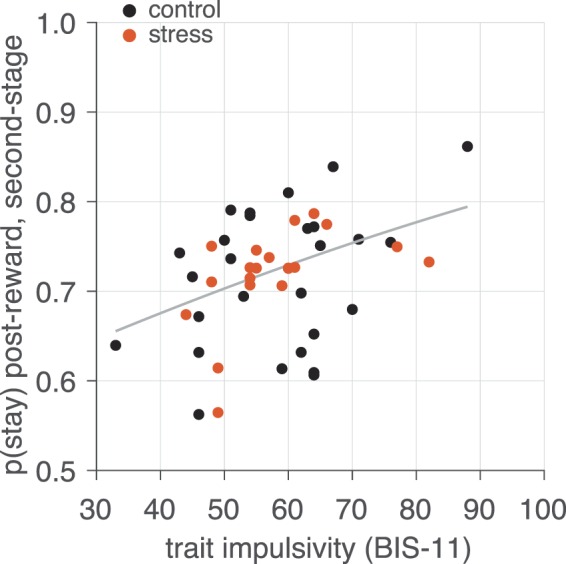
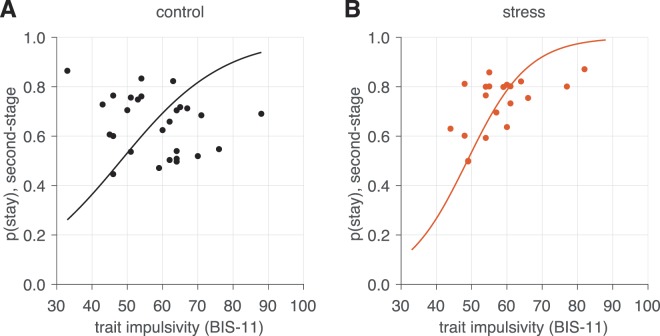
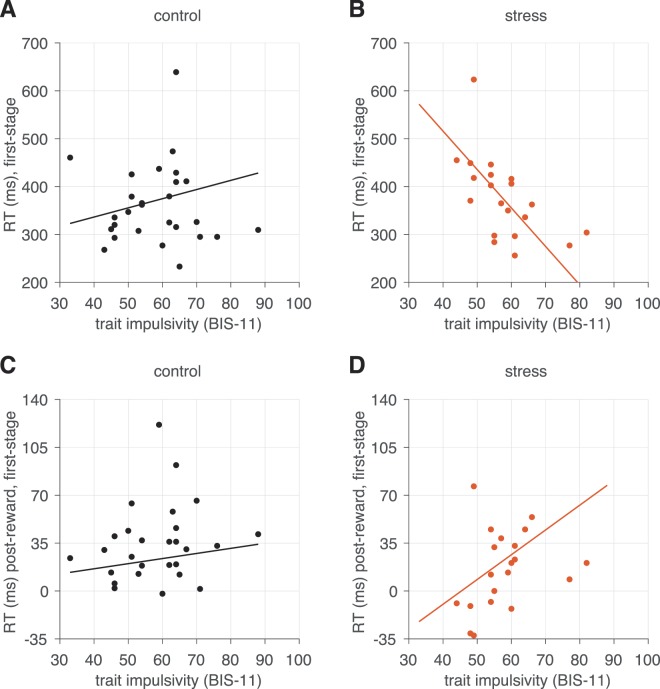
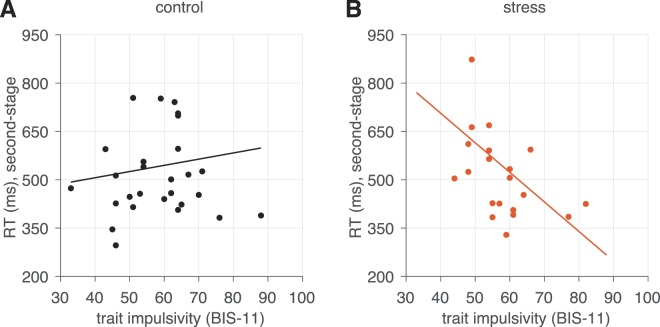
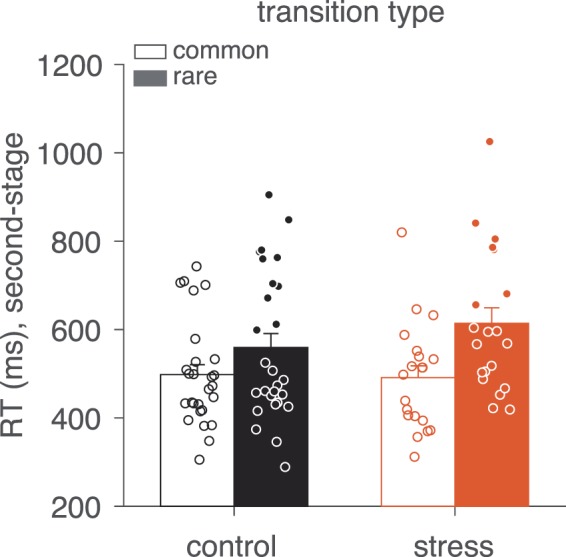
Impulsivity and stress exposure are two factors that are associated with changes in reward-related behavior in ways that are relevant to both healthy and maladaptive decision-making. Nonetheless, little empirical work has examined the possible independent and joint effects of these factors upon reward learning. Here, we sought to examine how trait impulsivity and acute stress exposure affect participants’ choice behavior and decision speed in a two-stage sequential reinforcement-learning task. We found that more impulsive participants were more likely to repeat second-stage choices after previous reward, irrespective of stress condition. Exposure to stress, on the other hand, was associated with an increased tendency to repeat second-stage choices independent of whether these choices previously led to a reward, and this tendency was exacerbated in more impulsive individuals. Such interaction effects between stress and impulsivity were also found on decision speed. Stress and impulsivity levels interacted to drive faster choices overall (again irrespective of reward) at both task stages, while reward received on the previous trial slowed subsequent first-stage choices, particularly among impulsive individuals under stress. Collectively, our results reveal novel, largely interactive effects of trait impulsivity and stress exposure and suggest that stress may reveal individual differences in decision-making tied to impulsivity that are not readily apparent in the absence of stress.
Overview
The claims and statistics of this paper haven’t been checked yet.
Free: it reads the open-access text and checks the first 5 claims that cite a source we can check. Create a free account to check every claim.
Integrity signals
Registry
Cites
Statistics
Figures
Verification
Claims the paper makes
The claims and statistics of this paper haven’t been checked yet.
Free: it reads the open-access text and checks the first 5 claims that cite a source we can check. Create a free account to check every claim.
Claims other papers make about this one
Each is checked against this paper’s own text: does it say what the citing paper says it does?
The cited source says what the claim attributes to it.
In the citing paper
“For instance, recent studies found that interactions between acute physical stress and trait impulsivity influenced choice behavior in a decision-making task (Raio et al., 2020).”
From Toward objective characterizations of suicide risk: A narrative review of laboratory-based cognitive and behavioral tasks (2023) · cites this paper as Raio et al., 2020
Experimental — accuracy not yet measured
Self-check
Percentages, sums and reported differences re-computed from the paper’s own numbers.
The self-check needs the paper’s full text.
Citations
Cites
lmerTest Package: Tests in Linear Mixed Effects Models
Kuznetsova, A., Brockhoff, P. B., & Christensen, R. H. B. (2017) · Journal of Statistical Software · doi:10.18637/jss.v082.i13 · Cited by 24,346
Mixed-effects modeling with crossed random effects for subjects and items
Baayen, R. H., Davidson, D. J., & Bates, D. M. (2008) · Journal of Memory and Language · doi:10.1016/j.jml.2007.12.005 · Cited by 8,540
Physiology and neurobiology of stress and adaptation: central role of the brain
McEwen, B. S. (2007) · Physiological Reviews · doi:10.1152/physrev.00041.2006 · Cited by 5,429
Journal of experimental psychology: Human Perception and performance
(1987) · Journal of Sound and Vibration · doi:10.1016/0022-460x(87)90423-8 · Cited by 5,411
A Syndrome produced by Diverse Nocuous Agents
SELYE, H. (1936) · Nature · doi:10.1038/138032a0 · Cited by 3,903
Neural regulation of endocrine and autonomic stress responses
Ulrich-Lai, Y. M., & Herman, J. P. (2009) · Nature Reviews Neuroscience · doi:10.1038/nrn2647 · Cited by 3,318
Stress signalling pathways that impair prefrontal cortex structure and function
Arnsten, A. F. T. (2009) · Nature Reviews Neuroscience · doi:10.1038/nrn2648 · Cited by 3,299
Journal of Experimental Psychology: Human Perception and Performance.
Intons-Peterson, M. J. (1981) · Journal of Experimental Psychology: Human Perception and Performance · doi:10.1037/h0078016 · Cited by 3,183
Daw, N. D., Niv, Y., & Dayan, P. (2005) · Nature Neuroscience · doi:10.1038/nn1560 · Cited by 2,533
Decision making, impulse control and loss of willpower to resist drugs: a neurocognitive perspective
Bechara, A. (2005) · Nature Neuroscience · doi:10.1038/nn1584 · Cited by 2,149
Methods for dealing with reaction time outliers.
Ratcliff, R. (1993) · Psychological Bulletin · doi:10.1037/0033-2909.114.3.510 · Cited by 2,123
A framework for mesencephalic dopamine systems based on predictive Hebbian learning
Montague, P., Dayan, P., & Sejnowski, T. (1996) · The Journal of Neuroscience · doi:10.1523/jneurosci.16-05-01936.1996 · Cited by 2,066
Evenden, J. L. (1999) · Psychopharmacology · doi:10.1007/pl00005481 · Cited by 2,044
Inhibition and impulsivity: behavioral and neural basis of response control
Bari, A., & Robbins, T. W. (2013) · Progress in Neurobiology · doi:10.1016/j.pneurobio.2013.06.005 · Cited by 1,921
Model-based influences on humans’ choices and striatal prediction errors
Daw, N. D., Gershman, S. J., Seymour, B., Dayan, P., & Dolan, R. J. (2011) · Neuron · doi:10.1016/j.neuron.2011.02.027 · Cited by 1,779
Robert J. Hockey, G. (1997) · Biological Psychology · doi:10.1016/s0301-0511(96)05223-4 · Cited by 1,753
Evaluating significance in linear mixed-effects models in R
Luke, S. G. (2017) · Behavior Research Methods · doi:10.3758/s13428-016-0809-y · Cited by 1,704
Impulsivity, compulsivity, and top-down cognitive control
Dalley, J. W., Everitt, B. J., & Robbins, T. W. (2011) · Neuron · doi:10.1016/j.neuron.2011.01.020 · Cited by 1,589
How does stress increase risk of drug abuse and relapse?
Sinha, R. (2001) · Psychopharmacology · doi:10.1007/s002130100917 · Cited by 1,505
Animal intelligence; experimental studies
Thorndike, E. L. (1911) · doi:10.5962/bhl.title.55072 · Cited by 1,100
Dynamic adaptation of large-scale brain networks in response to acute stressors
Hermans, E. J., Henckens, M. J. A. G., Joëls, M., & Fernández, G. (2014) · Trends in Neurosciences · doi:10.1016/j.tins.2014.03.006 · Cited by 949
A Syndrome Produced by Diverse Nocuous Agents
Selye, H. (1998) · The Journal of Neuropsychiatry and Clinical Neurosciences · doi:10.1176/jnp.10.2.230a · Cited by 924
Genetic triple dissociation reveals multiple roles for dopamine in reinforcement learning
Frank, M. J., Moustafa, A. A., Haughey, H. M., Curran, T., & Hutchison, K. E. (2007) · Proceedings of the National Academy of Sciences · doi:10.1073/pnas.0706111104 · Cited by 683
Impulsivity, frontal lobes and risk for addiction
Crews, F. T., & Boettiger, C. A. (2009) · Pharmacology Biochemistry and Behavior · doi:10.1016/j.pbb.2009.04.018 · Cited by 679
Amlung, M., Vedelago, L., Acker, J., Balodis, I., & MacKillop, J. (2017) · Addiction · doi:10.1111/add.13535 · Cited by 626
Bickel, W. K., Jarmolowicz, D. P., Mueller, E. T., Koffarnus, M. N., & Gatchalian, K. M. (2012) · Pharmacology & Therapeutics · doi:10.1016/j.pharmthera.2012.02.004 · Cited by 604
Decision making, impulsivity and time perception
Wittmann, M., & Paulus, M. P. (2008) · Trends in Cognitive Sciences · doi:10.1016/j.tics.2007.10.004 · Cited by 602
Neuroimmune mechanisms of depression
Hodes, G. E., Kana, V., Menard, C., Merad, M., & Russo, S. J. (2015) · Nature Neuroscience · doi:10.1038/nn.4113 · Cited by 585
Frank, M. J., & Claus, E. D. (2006) · Psychological Review · doi:10.1037/0033-295x.113.2.300 · Cited by 585
Learning, reward, and decision making
O'Doherty, J. P., Cockburn, J., & Pauli, W. M. (2017) · Annual Review of Psychology · doi:10.1146/annurev-psych-010416-044216 · Cited by 475
Working-memory capacity protects model-based learning from stress
Otto, A. R., Raio, C. M., Chiang, A., Phelps, E. A., & Daw, N. D. (2013) · Proceedings of the National Academy of Sciences · doi:10.1073/pnas.1312011110 · Cited by 465
Self-citationVentral striatal activation during reward anticipation correlates with impulsivity in alcoholics
Beck, A., Schlagenhauf, F., Wüstenberg, T., Hein, J., Kienast, T., Kahnt, T., Schmack, K., Hägele, C., Knutson, B., Heinz, A., et al. (2009) · Biological Psychiatry · doi:10.1016/j.biopsych.2009.04.035 · Cited by 461
Emotion and Decision Making: Multiple Modulatory Neural Circuits
Phelps, E. A., Lempert, K. M., & Sokol-Hessner, P. (2014) · Annual Review of Neuroscience · doi:10.1146/annurev-neuro-071013-014119 · Cited by 430
Food‐related impulsivity in obesity and Binge Eating Disorder – a systematic review
Schag, K., Schönleber, J., Teufel, M., Zipfel, S., & Giel, K. E. (2013) · Obesity Reviews · doi:10.1111/obr.12017 · Cited by 403
Addiction is a Reward Deficit and Stress Surfeit Disorder
Koob, G. F. (2013) · Frontiers in Psychiatry · doi:10.3389/fpsyt.2013.00072 · Cited by 397
Nederkoorn, C., Smulders, F. T. Y., Havermans, R. C., Roefs, A., & Jansen, A. (2006) · Appetite · doi:10.1016/j.appet.2006.05.008 · Cited by 374
Lee, B., London, E. D., Poldrack, R. A., Farahi, J., Nacca, A., Monterosso, J. R., Mumford, J. A., Bokarius, A. V., Dahlbom, M., Mukherjee, J., et al. (2009) · The Journal of Neuroscience · doi:10.1523/jneurosci.3765-09.2009 · Cited by 374
de Wit, S., Watson, P., Harsay, H. A., Cohen, M. X., van de Vijver, I., & Ridderinkhof, K. R. (2012) · The Journal of Neuroscience · doi:10.1523/jneurosci.1088-12.2012 · Cited by 373
Otto (2013) · doi:10.1177/0956797612463080 · Cited by 352
Reward prediction error signals associated with a modified time estimation task
Holroyd, C. B., & Krigolson, O. E. (2007) · Psychophysiology · doi:10.1111/j.1469-8986.2007.00561.x · Cited by 341
Computations of uncertainty mediate acute stress responses in humans
de Berker, A. O., Rutledge, R. B., Mathys, C., Marshall, L., Cross, G. F., Dolan, R. J., & Bestmann, S. (2016) · Nature Communications · doi:10.1038/ncomms10996 · Cited by 330
Rostrolateral Prefrontal Cortex and Individual Differences in Uncertainty-Driven Exploration
Badre, D., Doll, B. B., Long, N. M., & Frank, M. J. (2012) · Neuron · doi:10.1016/j.neuron.2011.12.025 · Cited by 309
Impulsivity in Gambling Disorder and problem gambling: a meta-analysis
Ioannidis, K., Hook, R., Wickham, K., Grant, J. E., & Chamberlain, S. R. (2019) · Neuropsychopharmacology · doi:10.1038/s41386-019-0393-9 · Cited by 302
Flagel, S. B., Watson, S. J., Robinson, T. E., & Akil, H. (2007) · Psychopharmacology · doi:10.1007/s00213-006-0535-8 · Cited by 289
Impulsivity is associated with behavioral decision-making deficits
Franken, I. H. A., van Strien, J. W., Nijs, I., & Muris, P. (2008) · Psychiatry Research · doi:10.1016/j.psychres.2007.06.002 · Cited by 283
The drift diffusion model as the choice rule in reinforcement learning
Pedersen, M. L., Frank, M. J., & Biele, G. (2017) · Psychonomic Bulletin & Review · doi:10.3758/s13423-016-1199-y · Cited by 283
Dissecting impulsivity and its relationships to drug addictions
Jentsch, J. D., Ashenhurst, J. R., Cervantes, M. C., Groman, S. M., James, A. S., & Pennington, Z. T. (2014) · Annals of the New York Academy of Sciences · doi:10.1111/nyas.12388 · Cited by 281
Prefrontal Cortex and Impulsive Decision Making
Kim, S., & Lee, D. (2011) · Biological Psychiatry · doi:10.1016/j.biopsych.2010.07.005 · Cited by 275
Choice impulsivity: Definitions, measurement issues, and clinical implications.
Hamilton, K. R., Mitchell, M. R., Wing, V. C., Balodis, I. M., Bickel, W. K., Fillmore, M., Lane, S. D., Lejuez, C. W., Littlefield, A. K., Luijten, M., et al. (2015) · Personality Disorders: Theory, Research, and Treatment · doi:10.1037/per0000099 · Cited by 271
Stress-induced modulation of instrumental behavior: From goal-directed to habitual control of action
Schwabe, L., & Wolf, O. T. (2011) · Behavioural Brain Research · doi:10.1016/j.bbr.2010.12.038 · Cited by 269
Risk and Reward Are Processed Differently in Decisions Made Under Stress
Mather, M., & Lighthall, N. R. (2012) · Current Directions in Psychological Science · doi:10.1177/0963721411429452 · Cited by 266
Decker, J. H., Otto, A. R., Daw, N. D., & Hartley, C. A. (2016) · Psychological Science · doi:10.1177/0956797616639301 · Cited by 263
Self-citationEffects of stress on decisions under uncertainty: A meta-analysis.
Starcke, K., & Brand, M. (2016) · Psychological Bulletin · doi:10.1037/bul0000060 · Cited by 244
Deserno, L., Huys, Q. J. M., Boehme, R., Buchert, R., Heinze, H.-J., Grace, A. A., Dolan, R. J., Heinz, A., & Schlagenhauf, F. (2015) · Proceedings of the National Academy of Sciences · doi:10.1073/pnas.1417219112 · Cited by 233
Stress and decision making: effects on valuation, learning, and risk-taking
Porcelli, A. J., & Delgado, M. R. (2017) · Current Opinion in Behavioral Sciences · doi:10.1016/j.cobeha.2016.11.015 · Cited by 226
McRae, A. L., Saladin, M. E., Brady, K. T., Upadhyaya, H., Back, S. E., & Timmerman, M. A. (2006) · Human Psychopharmacology: Clinical and Experimental · doi:10.1002/hup.778 · Cited by 221
Impulsive choice and response in dopamine agonist-related impulse control behaviors
Voon, V., Reynolds, B., Brezing, C., Gallea, C., Skaljic, M., Ekanayake, V., Fernandez, H., Potenza, M. N., Dolan, R. J., & Hallett, M. (2010) · Psychopharmacology · doi:10.1007/s00213-009-1697-y · Cited by 208
A reinforcement learning diffusion decision model for value-based decisions
Fontanesi, L., Gluth, S., Spektor, M. S., & Rieskamp, J. (2019) · Psychonomic Bulletin & Review · doi:10.3758/s13423-018-1554-2 · Cited by 192
Dopaminergic Genes Predict Individual Differences in Susceptibility to Confirmation Bias
Doll, B. B., Hutchison, K. E., & Frank, M. J. (2011) · The Journal of Neuroscience · doi:10.1523/jneurosci.6486-10.2011 · Cited by 184
Butts, K. A., Weinberg, J., Young, A. H., & Phillips, A. G. (2011) · Proceedings of the National Academy of Sciences · doi:10.1073/pnas.1111746108 · Cited by 182
Shahar, N., Hauser, T. U., Moutoussis, M., Moran, R., Keramati, M., NSPN consortium, & Dolan, R. J. (2019) · PLOS Computational Biology · doi:10.1371/journal.pcbi.1006803 · Cited by 154
Robust relation between temporal discounting rates and body mass
Jarmolowicz, D. P., Cherry, J. B. C., Reed, D. D., Bruce, J. M., Crespi, J. M., Lusk, J. L., & Bruce, A. S. (2014) · Appetite · doi:10.1016/j.appet.2014.02.013 · Cited by 153
Rapid-response impulsivity: Definitions, measurement issues, and clinical implications.
Hamilton, K. R., Littlefield, A. K., Anastasio, N. C., Cunningham, K. A., Fink, L. H. L., Wing, V. C., Mathias, C. W., Lane, S. D., Schütz, C. G., Swann, A. C., et al. (2015) · Personality Disorders: Theory, Research, and Treatment · doi:10.1037/per0000100 · Cited by 153
Poker‐machine gambling: An analysis of within session characteristics
Delabbro, P. H., & Winefield, A. H. (1999) · British Journal of Psychology · doi:10.1348/000712699161503 · Cited by 140
Stephan, R. A., Alhassoon, O. M., Allen, K. E., Wollman, S. C., Hall, M., Thomas, W. J., Gamboa, J. M., Kimmel, C., Stern, M., Sari, C., et al. (2017) · The American Journal of Drug and Alcohol Abuse · doi:10.1080/00952990.2016.1206113 · Cited by 138
The interaction of acute and chronic stress impairs model-based behavioral control
Radenbach, C., Reiter, A. M. F., Engert, V., Sjoerds, Z., Villringer, A., Heinze, H., Deserno, L., & Schlagenhauf, F. (2015) · Psychoneuroendocrinology · doi:10.1016/j.psyneuen.2014.12.017 · Cited by 134
Corral-Frías, N. S., Nikolova, Y. S., Michalski, L. J., Baranger, D. A. A., Hariri, A. R., & Bogdan, R. (2015) · Psychological Medicine · doi:10.1017/s0033291715000525 · Cited by 132
Acute stress selectively reduces reward sensitivity
Berghorst, L. H., Bogdan, R., Frank, M. J., & Pizzagalli, D. A. (2013) · Frontiers in Human Neuroscience · doi:10.3389/fnhum.2013.00133 · Cited by 131
Kale, D., Stautz, K., & Cooper, A. J. (2018) · Drug and Alcohol Dependence · doi:10.1016/j.drugalcdep.2018.01.003 · Cited by 129
Dixon, M. J., MacLaren, V. V., Jarick, M., Fugelsang, J. A., & Harrigan, K. A. (2012) · Journal of Gambling Studies · doi:10.1007/s10899-012-9333-x · Cited by 127
Binder, M. D., Hirokawa, N., & Windhorst, U. (2008) · Springer eBooks · doi:10.1007/978-3-540-29678-2_641 · Cited by 125
Near-Miss Effects on Response Latencies and Win Estimations of Slot Machine Players
Dixon, M. R., & Schreiber, J. E. (2004) · The Psychological Record · doi:10.1007/bf03395477 · Cited by 107
Stress modulates reinforcement learning in younger and older adults.
Lighthall, N. R., Gorlick, M. A., Schoeke, A., Frank, M. J., & Mather, M. (2013) · Psychology and Aging · doi:10.1037/a0029823 · Cited by 103
Stress reduces use of negative feedback in a feedback-based learning task.
Petzold, A., Plessow, F., Goschke, T., & Kirschbaum, C. (2010) · Behavioral Neuroscience · doi:10.1037/a0018930 · Cited by 97
Facets of impulsivity interactively predict body fat and binge eating in young women
Meule, A., & Platte, P. (2015) · Appetite · doi:10.1016/j.appet.2015.01.003 · Cited by 90
Chronic and Acute Stress Promote Overexploitation in Serial Decision Making
Lenow, J. K., Constantino, S. M., Daw, N. D., & Phelps, E. A. (2017) · The Journal of Neuroscience · doi:10.1523/jneurosci.3618-16.2017 · Cited by 89
Stress attenuates the flexible updating of aversive value
Raio, C. M., Hartley, C. A., Orederu, T. A., Li, J., & Phelps, E. A. (2017) · Proceedings of the National Academy of Sciences · doi:10.1073/pnas.1702565114 · Cited by 84
Self-citationWinning and losing: Effects on impulsive action.
Verbruggen, F., Chambers, C., Lawrence, N., & McLaren, I. P. L. (2017) · Journal of Experimental Psychology Human Perception & Performance · doi:10.1037/xhp0000284 · Cited by 78
Reduced model-based decision-making in gambling disorder
Wyckmans, F., Otto, A. R., Sebold, M., Daw, N., Bechara, A., Saeremans, M., Kornreich, C., Chatard, A., Jaafari, N., & Noël, X. (2019) · Scientific Reports · doi:10.1038/s41598-019-56161-z · Cited by 74
Self-citationPatzelt, E. H., Hartley, C. A., & Gershman, S. J. (2018) · Personality Neuroscience · doi:10.1017/pen.2018.14 · Cited by 65
Peters, H. L., Hunt, M. J., & Harper, D. N. (2010) · Journal of Gambling Studies · doi:10.1007/s10899-010-9183-3 · Cited by 56
Shao, R., Read, J., Behrens, T. E. J., & Rogers, R. D. (2013) · Translational Psychiatry · doi:10.1038/tp.2012.134 · Cited by 50
Stress enhances model-free reinforcement learning only after negative outcome
Park, H., Lee, D., & Chey, J. (2017) · PLoS ONE · doi:10.1371/journal.pone.0180588 · Cited by 43
A translational behavioral model of mood-based impulsivity: Implications for substance abuse
Gipson, C. D., Beckmann, J. S., Adams, Z. W., Marusich, J. A., Nesland, T., Yates, J. R., Kelly, T. H., & Bardo, M. T. (2011) · Drug and Alcohol Dependence · doi:10.1016/j.drugalcdep.2011.09.014 · Cited by 36
Cyders, M. A. (2015) · Personality Disorders Theory Research and Treatment · doi:10.1037/per0000123 · Cited by 34
Cáceres, P., & Martín, R. S. (2017) · Frontiers in Psychology · doi:10.3389/fpsyg.2017.00204 · Cited by 30
Bornemann, B., Kovacs, P., & Singer, T. (2019) · Scientific Reports · doi:10.1038/s41598-019-44201-7 · Cited by 30
Taking More, Now: The Optimality of Impulsive Choice Hinges on Environment Structure
Otto, A. R., Markman, A. B., & Love, B. C. (2011) · Social Psychological and Personality Science · doi:10.1177/1948550611411311 · Cited by 28
Self-citationWise, R. J., Phung, A. L., Labuschagne, I., & Stout, J. C. (2014) · Cognition & Emotion · doi:10.1080/02699931.2014.989815 · Cited by 27
Impulsivity influences betting under stress in laboratory gambling
Canale, N., Rubaltelli, E., Vieno, A., Pittarello, A., & Billieux, J. (2017) · Scientific Reports · doi:10.1038/s41598-017-10745-9 · Cited by 26
Ventral striatal activation during reward anticipation correlates with impulsivity in alcoholics
Beck, A., Schlagenhauf, F., Wüstenberg, T., Hein, J., Kienast, T., Kahnt, T., Schmack, K., Hägele, C., Knutson, B. D., Heinz, A., et al. (2009) · NeuroImage · doi:10.1016/s1053-8119(09)71675-1 · Cited by 23
Shao, R., Read, J., Behrens, T. E. J., & Rogers, R. D. (2013) · Translational Psychiatry · doi:10.1038/tp.2013.10 · Cited by 16
Why is pharma so scared of psychiatric drug discovery?
Tricklebank, M. D., & Ajram, L. A. (2017) · doi:10.35841/neuroscience.1.1.1-4 · Cited by 6
Factor structure of the Barratt impulsiveness scale
Patton, J. H., Stanford, M. S., & Barratt, E. S. (1995) · Journal of Clinical Psychology · doi:10.1002/1097-4679(199511)51:6<768::aid-jclp2270510607>3.0.co;2-1
Cited by
Effects of chronic stress on cognitive function – From neurobiology to intervention
Girotti, M., Bulin, S. E., & Carreno, F. R. (2024) · Neurobiology of Stress · doi:10.1016/j.ynstr.2024.100670 · Cited by 212
“Thus, in healthy adults acute stress impaired decision making and speed of choice in both non-gambling and gambling settings, and these effects were more pronounced in individuals with higher impulsivity (Canale et al., 2017; Raio et al., 2020).”
BackgroundAcute Psychosocial Stress Increases Cognitive-Effort Avoidance
Bogdanov, M., Nitschke, J. P., LoParco, S., Bartz, J. A., & Otto, A. R. (2021) · Psychological Science · doi:10.1177/09567976211005465 · Cited by 73
“Importantly, because there are no reward incentives tied to choices or performance, the DST affords a relatively pure assessment of the effects of stress on effort avoidance, independently of its documented effects on reward sensitivity (Porcelli & Delgado, 2017; Raio et al., 2020).”
BackgroundSelf-citationRaji, H., Dinesh, S., & Sharma, S. (2025) · The Egyptian Journal of Neurology Psychiatry and Neurosurgery · doi:10.1186/s41983-024-00930-9 · Cited by 45
“Stress impacts learning and decision-making through two primary mechanisms: depleting cognitive resources required for deliberate decisions and imposing internal time constraints, accelerating choice behavior [104].”
Buabang, E. K., Boddez, Y., Wolf, O. T., & Moors, A. (2023) · Behavioral Neuroscience · doi:10.1037/bne0000439 · Cited by 30
“In line with the idea that stress detracts from the focal task, Raio et al. (2020) showed that (impulsive) people who were under stress showed more outcomeinsensitive behavior but also responded faster.”
BackgroundAccumbofrontal tract integrity is related to early life adversity and feedback learning
Kennedy, B. V., Hanson, J. L., Buser, N. J., van den Bos, W., Rudolph, K. D., Davidson, R. J., & Pollak, S. D. (2021) · Neuropsychopharmacology · doi:10.1038/s41386-021-01129-9 · Cited by 24
Metadata
- Authors
- Raio, C. M., Konova, A. B., & Otto, A. R.
- Affiliations
- New York University (US)
- Rutgers, The State University of New Jersey (US)
- McGill University (CA)
- Corresponding author
- Raio, Candace M.
- Venue
- Scientific Reports
- Published
- 2020-05-08
- Volume
- 10
- Issue
- 1
- Pages
- 7754-7754
- ISSN
- 2045-2322 (ISSN-L)
- PMC
- PMC7210896
- OpenAlex
- W3023695634
- Semantic Scholar
- 6350e718b1d577dce0f4a80ee2f4c01899b26474
- Cited by
- 52
- References
- 94
- Citations by year
- 2026: 8 · 2025: 9 · 2024: 5 · 2023: 10 · 2022: 10 · 2021: 9 · 2020: 1
- FWCI
- 4.03
- Type
- journal article
- Language
- en
- Open access
- gold
- doi.org
- Licence
- cc-by
- creativecommons.org/licenses/by/4.0 (tdm)
- creativecommons.org/licenses/by/4.0 (vor)
- Locations
- Scientific Reports (publishedVersion, cc-by)
- PubMed Central (publishedVersion, cc-by)
- PubMed (publishedVersion)
- Funders
- James S. McDonnell Foundation
- National Alliance for Research on Schizophrenia and Depression
- National Institutes of Health
- National Institute on Aging (R01AG039283)
- National Institute of Mental Health (R01MH087882)
- Topics
- Life Sciences › Neuroscience › Cognitive Neuroscience › Neural and Behavioral Psychology Studies
- Social Sciences › Decision Sciences › General Decision Sciences › Decision-Making and Behavioral Economics
- Life Sciences › Neuroscience › Cellular and Molecular Neuroscience › Neurotransmitter Receptor Influence on Behavior
- Keywords
- trait impulsivity, acute stress, decision-making speed, reward learning, choice behavior, multi-stage decision making, individual differences in decision making
- MeSH terms
- Acute Disease, Adult, Choice Behavior, Decision Making, Female, Humans, Impulsive Behavior, Male, Reward, Stress, Psychological, Time Factors
About these checks
Registry, retraction, Cites and statistics results are computed, not judged, with one exception: a printed reference that no index lists is read once by a model before it counts as a citation error. Claims are extracted by a model and kept only when their quote appears verbatim in the text; each cited source is then checked, with a model’s help, for whether it says what the claim relies on. Those verdicts can be wrong — read the claim’s quote and the cited source before relying on one.
Statistics and arithmetic are recomputed, not judged.
Confidence bands are shown only for fields calibrated on our annotated test set. None is calibrated yet, so no band is shown.
What counts as a claim ›How we measure confidence ›How we check this ›
Are you an author, or do you see a problem with this page? Request a review
Data sources
Bibliographic data: Semantic Scholar, OpenAlex, Crossref.
Contains information from the Semantic Scholar Academic Graph Datasets, made available under the ODC Attribution License (ODC-BY 1.0).
Semantic Scholar’s data is described in: Kinney, R., et al. (2023). The Semantic Scholar Open Data Platform. arXiv:2301.10140.
