

High Oscillospira abundance indicates constipation and low BMI in the Guangdong Gut Microbiome Project
Open accessThe DOI matches its Crossref record; 43 of the 43 references it cites were found in a registry or an index.
Abstract
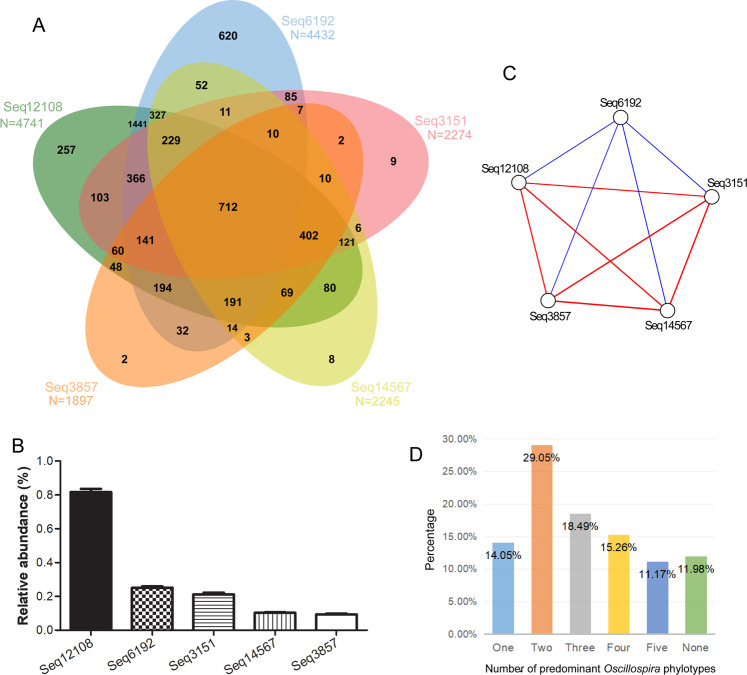
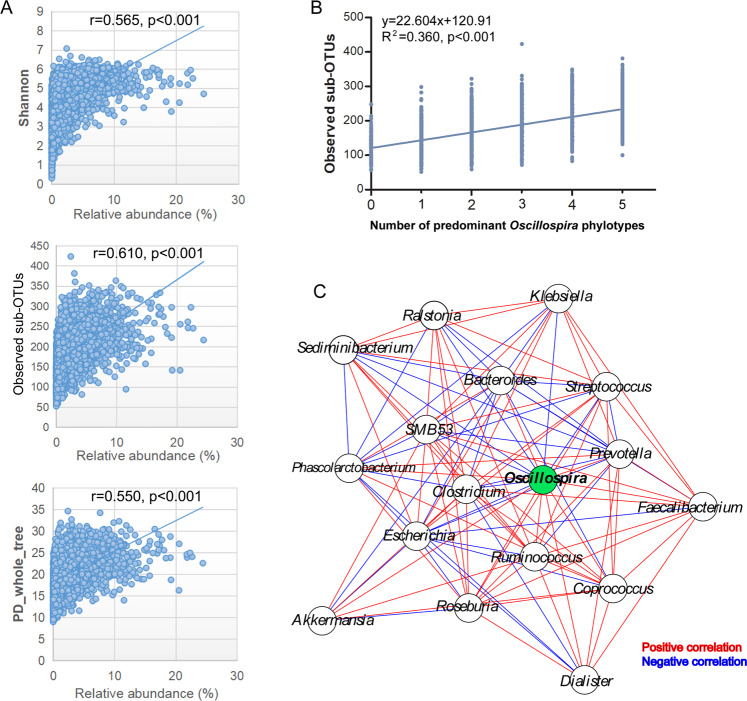
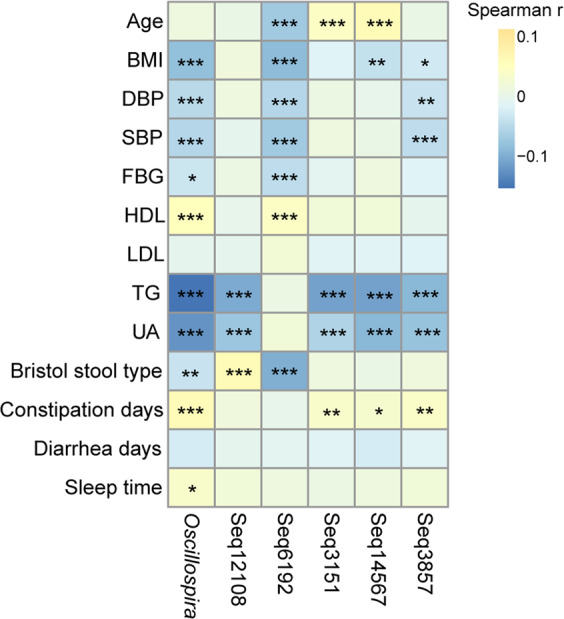
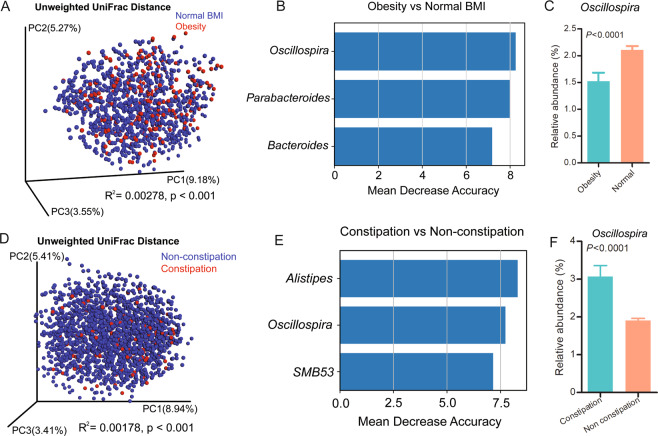
Oscillospira is a common yet rarely cultivated gut bacterial genus. Recently human gut microbiota studies have demonstrated its underlying significance for host health. However, little is known about Oscillospira -related host information and the links between Oscillospira and other members of the gut microbial community. To study the ecology of Oscillospira and gain insights into Oscillospira -related host physiological conditions, we analyzed data from the Guangdong Gut Microbiome Project, one of the largest gut microbiota database currently. Data of 6376 participants were analyzed. We studied the prevalence and relative abundance of Oscillospira as well as the profiles of associated microbial communities. We found that Oscillospira is closely related to human health because its abundance was positively correlated with microbial diversity, high density lipoprotein, and sleep time, and was inversely correlated with diastolic blood pressure, systolic blood pressure, fasting blood glucose, triglyceride, uric acid and Bristol stool type. Moreover, random forest analysis with five-fold cross validation showed Oscillospira could be a predictor of low BMI and constipation in the subset. Overall, in this study, we provide a basic understanding of Oscillospira -related microbiota profile and physiological parameters of the host. Our results indicate Oscillospira may play a role in aggravating constipation.
Overview
The claims and statistics of this paper haven’t been checked yet.
Free: it reads the open-access text and checks the first 5 claims that cite a source we can check. Create a free account to check every claim.
Integrity signals
Registry
Cites
Statistics
Figures
Verification
Claims the paper makes
The claims and statistics of this paper haven’t been checked yet.
Free: it reads the open-access text and checks the first 5 claims that cite a source we can check. Create a free account to check every claim.
Claims other papers make about this one
Each is checked against this paper’s own text: does it say what the citing paper says it does?
The cited source says what the claim attributes to it.
In the citing paper
“Coprococcus has been associated with higher quality of life indicators and both Ruminococcus and Oscillospira have been associated with improved markers of health including leanness and improved lipid profile (Valles-Colomer et al., 2019; Klimenko et al., 2018; Chen et al., 2020).”
From Gut-microbiota-targeted diets modulate human immune status (2021) · cites this paper as Chen et al., 2020
Self-check
Percentages, sums and reported differences re-computed from the paper’s own numbers.
The self-check needs the paper’s full text.
Citations
Cites
Reproducible, interactive, scalable and extensible microbiome data science using QIIME 2
Bolyen, E., Rideout, J. R., Dillon, M. R., Bokulich, N. A., Abnet, C. C., Al-Ghalith, G. A., Alexander, H., Alm, E. J., Arumugam, M., Asnicar, F., et al. (2019) · Nature Biotechnology · doi:10.1038/s41587-019-0209-9 · Cited by 23,742
Diet rapidly and reproducibly alters the human gut microbiome
David, L. A., Maurice, C. F., Carmody, R. N., Gootenberg, D. B., Button, J. E., Wolfe, B. E., Ling, A. V., Devlin, A. S., Varma, Y., Fischbach, M. A., et al. (2014) · Nature · doi:10.1038/nature12820 · Cited by 10,100
Human gut microbiome viewed across age and geography
Yatsunenko, T., Rey, F. E., Manary, M. J., Trehan, I., Dominguez-Bello, M. G., Contreras, M., Magris, M., Hidalgo, G., Baldassano, R. N., Anokhin, A. P., et al. (2012) · Nature · doi:10.1038/nature11053 · Cited by 7,815
Richness of human gut microbiome correlates with metabolic markers
Le Chatelier, E., Nielsen, T., Qin, J., Prifti, E., Hildebrand, F., Falony, G., Almeida, M., Arumugam, M., Batto, J.-M., Kennedy, S., et al. (2013) · Nature · doi:10.1038/nature12506 · Cited by 4,662
Dysfunction of the intestinal microbiome in inflammatory bowel disease and treatment
Morgan, X. C., Tickle, T. L., Sokol, H., Gevers, D., Devaney, K. L., Ward, D. V., Reyes, J. A., Shah, S. A., LeLeiko, N., Snapper, S. B., et al. (2012) · Genome Biology · doi:10.1186/gb-2012-13-9-r79 · Cited by 2,713
A communal catalogue reveals Earth's multiscale microbial diversity
Thompson, L. R., Sanders, J. G., McDonald, D., Amir, A., Ladau, J., Locey, K. J., Prill, R. J., Tripathi, A., Gibbons, S. M., Ackermann, G., et al. (2017) · Nature · doi:10.1038/nature24621 · Cited by 2,684
Population-level analysis of gut microbiome variation
Falony, G., Joossens, M., Vieira-Silva, S., Wang, J., Darzi, Y., Faust, K., Kurilshikov, A., Bonder, M. J., Valles-Colomer, M., Vandeputte, D., et al. (2016) · Science · doi:10.1126/science.aad3503 · Cited by 2,400
Population-based metagenomics analysis reveals markers for gut microbiome composition and diversity
Zhernakova, A., Kurilshikov, A., Bonder, M. J., Tigchelaar, E. F., Schirmer, M., Vatanen, T., Mujagic, Z., Vila, A. V., Falony, G., Vieira-Silva, S., et al. (2016) · Science · doi:10.1126/science.aad3369 · Cited by 1,914
Deblur Rapidly Resolves Single-Nucleotide Community Sequence Patterns
Amir, A., McDonald, D., Navas-Molina, J. A., Kopylova, E., Morton, J. T., Zech Xu, Z., Kightley, E. P., Thompson, L. R., Hyde, E. R., Gonzalez, A., et al. (2017) · mSystems · doi:10.1128/msystems.00191-16 · Cited by 1,881
Zhu, L., Baker, S. S., Gill, C., Liu, W., Alkhouri, R., Baker, R. D., & Gill, S. R. (2013) · Hepatology · doi:10.1002/hep.26093 · Cited by 1,708
Cited by
Items 101–138 of 138
Ulyanin, A. I., Poluektova, E. A., Kudryavtseva, A. V., Ma, M., Shifrin, O. S., Alekseev, A. A., Герович, Б. А., Kazey, V. I., Krasnov, G. S., Maslennikov, R. V., et al. (2025) · Russian Journal of Gastroenterology Hepatology Coloproctology · doi:10.22416/1382-4376-2025-35-4-71-87 · Cited by 2
Shivram Karthik, S., Jadhav, P., Paul, A., Kumar, R., Paul, D., & Bose, S. (2026) · Microbial Pathogenesis · doi:10.1016/j.micpath.2026.108466 · Cited by 2
Koga, J., Ojiro, K., Yanagida, A., Suto, T., Hiki, H., Inoue, Y., Sakai, C., Nakamoto, K., Fujisawa, Y., Orihara, A., et al. (2022) · Current Developments in Nutrition · doi:10.1093/cdn/nzac129 · Cited by 2
“We also focused on the decrease in Oscillospira species in mice after the ingestion of cacao proteins (Figure 3E) because the relative abundance of Oscillospira species in constipated adults was found to be significantly higher than in nonconstipated adults in a Chinese gut microbiome project (47) and positively corre…”
ResultSong, J., Ji, B., Peng, Y., Ye, Z., Wang, Z., Zhao, T., & Liang, Y. (2024) · Journal of Animal and Feed Sciences · doi:10.22358/jafs/189181/2024 · Cited by 2
“This genus is believed to play a cru - cial role in maintaining the stability of the microbial community and promoting host health (Chen et al., 2020).”
BackgroundPhysical Activity Induced Alterations of Gut Microbiota in Humans: A Systematic ReviewPreprint
Dziewiecka, H., Buttar, H. S., Kasperska, A., Ostapiuk–Karolczuk, J., Domagalska, M., Cichoń-Woźniak, J., & Skarpańska-Stejnborn, A. (2022) · Research Square · doi:10.21203/rs.3.rs-1533424/v1 · Cited by 2
Christensenella minuta DSM 22607 and Food Restriction Manage Age-Related Disorders In Vivo
Kropp, C., Ríos-Covián, D., Auger, S., Rainteau, D. P., Langella, P., Claus, S. P., & Martín, R. (2026) · Probiotics and Antimicrobial Proteins · doi:10.1007/s12602-026-10994-z · Cited by 1
“DSM 22607 reduced creatinine levels, suggesting potential benefits for kidney metabolism, consistent with reports associating Christensenellaceae with healthier renal profiles [66, 67].”
Wu, R. T., Xu, Q., Wen, Y., Zhan, Y., Zhang, L., Tian, Y., & Tang, X. (2025) · Phytomedicine · doi:10.1016/j.phymed.2025.157575 · Cited by 1
Distinct Gut Microbiota Profiles Reflect Severity in Chronic Insomnia Disorder
Liu, Y., Cai, Y., Shi, X., Fan, M., Zhang, X., Lin, J., Fan, X., Liu, B., & Pan, J. (2025) · Brain and Behavior · doi:10.1002/brb3.71155 · Cited by 1
Liu, Q., Zhu, S., Li, X., Li, W., Li, X., Xu, Y., Yu, Q., Hua, W., Yang, H., & Wang, Z. (2026) · Food Frontiers · doi:10.1002/fft2.70267 · Cited by 1
Zhang, Y., Li, J., Luo, Y., Liu, S., & Liu, J. (2026) · Frontiers in Microbiology · doi:10.3389/fmicb.2026.1704766 · Cited by 1
Decoding the power of the microbiome in human health
Kumar, M., Almohannadi, N., & Khodor, S. A. (2026) · Frontiers in Cellular and Infection Microbiology · doi:10.3389/fcimb.2026.1877371 · Cited by 1
“Other lipid-based molecules such as LPS and peptidoglycan fragments interact with host pattern recognition receptors to modulate in fl ammation and barrier function (Li and Wu, 2021), while polyamines and peptide derivatives support epithelial renewal and immune activation (Zheng et al., 2020).”
Schubert, M. G., Dentand, A., Karczewski, M., Morsy, Y., Beuschlein, F., Scharl, M. M., & Krayenbuehl, P. (2026) · Nutrients · doi:10.3390/nu18091399 · Cited by 1
“In contrast, Oscillospira has been associated with beneficial metabolic characteristics and lower body mass index and has been suggested as a potential candidate for next-generation probiotic approaches [18,19].”
Yan, C., Zhao, H., Nayar, N., Rhee, K. E., & Lumeng, J. C. (2021) · bioRxiv (Cold Spring Harbor Laboratory) · doi:10.1101/2021.04.24.438478 · Cited by 2
Bayesian Compositional Regression with Microbiome Features via Variational InferencePreprint
Scott, D. A. V., Benavente, E. D., Libiseller-Egger, J., FEDEROV, D., Phelan, J. E., Ilina, E. N., Tikhonova, P., Kudryavstev, A., Galeeva, J. S., Clark, T. G., et al. (2022) · Research Square · doi:10.21203/rs.3.rs-1401242/v1
Sun, G., Trzpis, M., Ding, H., Gao, X., Broens, P. M. A., & Zhang, W. (2022) · Research Square · doi:10.21203/rs.3.rs-1745618/v1
Vylegzhanina, A. E., Shalaginova, I., Katserov, D., Semenova, A., Luzikova, S. P., Alekseeva, S., Trach, D., Novikova, S., & Dyuzhikova, N. A. (2025) · Physiology & Behavior · doi:10.1016/j.physbeh.2025.115182
Scott, D. A. V., Benavente, E. D., Libiseller-Egger, J., Fedorov, D., Phelan, J., Ilina, E., Tikhonova, P., Kudryavstev, A., Galeeva, J. S., Clark, T. G., et al. (2024) · Figshare · doi:10.6084/m9.figshare.26590892
Abdullah, B., Daud, S., Aazmi, M. S., Idorus, M. Y., & Mahamooth, M. I. J. (2022) · Figshare · doi:10.6084/m9.figshare.19234348
Saibene, L. R. (2025) · eScholarship@McGill (McGill) · doi:10.82308/23530
A study on assessing systemic inflammation due to malignant cells and pesticide exposure
Soon, T. T. K. (2022) · Institutional Repositories DataBase (IRDB)
Lu, S., Gao, M., Kuttappan, D. A., & Amalaradjou, M. A. R. (2025) · Foods · doi:10.3390/foods15010066
“In contrast, elevated levels of Oscillospira have been described in certain animal disease models, including dextran sulfate sodium (DSS)-induced colitis and high-fat diet–induced obesity [104,105], and associations with constipation have also been suggested [106].”
Pan, L., Hu, W.-F., Fu, Z., Yu, X., Li, Z., Guo, M., Wu, J., & Zhu, H. (2025) · Molecular Nutrition & Food Research · doi:10.1002/mnfr.70358
“Moreover, Oscillospira has been linked to hard stools and reduced defecation frequency [ 64 ].”
Hou, K., Li, J., Wang, Y., He, M., & Wang, H. (2026) · Poultry Science · doi:10.1016/j.psj.2026.106648
Schmidt, V., Gerlach, R. G., Deinzer, A., Petzold, J., Fallon, P. G., Hayek, I., & Schwartz, C. (2026) · Research Square · doi:10.21203/rs.3.rs-9576616/v1
Tabata, Y., Gotoh, Y., WATANABE, M., & MARUYAMA, K. (2026) · Bioscience of Microbiota Food and Health · doi:10.12938/bmfh.2026-001
“Furthermore, microbial diversity and the abundance of specific taxa differ between healthy and constipated doi: 10.12938/bmfh.2026-001 ©2026 BMFH Press individuals [15, 16].”
InfluentialCavon, J., Perez, C., Quinn-Bohmann, N., Magis, A. T., & Gibbons, S. M. (2026) · medRxiv · doi:10.64898/2026.05.27.26354250
Shah, E., Sharma, A., Curren, N., Laitman, A. P., & Staller, K. D. (2026) · Advances in Therapy · doi:10.1007/s12325-026-03645-w
“…distinct microbial patterns, such as a reported higher abundance of Oscillospira and Methanobrevibac-ter smithii ; however, similar to multiple micro-biome studies, data interpretation is limited by numerous confounders (e.g., diet, medications, comorbidities, stool collection methods) [21–24].”
Lai, W., Huang, S., Zhang, Y., Lai, S., Sun, S., Tang, F., Yan, H., & Yang, F. (2026) · bioRxiv (Cold Spring Harbor Laboratory) · doi:10.64898/2026.06.18.733290
“Given that Oscillospira has frequently been associated with metabolic health and anti-inflammatory states in previous studies[57, 58], this finding further supports the notion that Oscillospira may indirectly shape systemic immune homeostasis by influencing immune cell differentiation trajectories.”
Hu, W., Wang, Y., Hua, C., Shi, C., Tu, Y., Ye, S., Hu, M., Huang, Q., Lin, L., & Hua, Y. (2026) · Animals · doi:10.3390/ani16132072
“…with body weight and lower body mass index (BMI), both genera belong to the family Oscillospiraceae, members of which—along with [Eubacterium]_hallii_group (Anaerobutyricum hallii) —are widely recognized as vital contributors to the short-chain fatty acid (SCFA) pool in the mammalian gut [65–67].”
Ikkert, O. P., Gridina, M. M., Герасимчук, А. Л., & Petrov, V. A. (2026) · Opera medica et physiologica · doi:10.24412/2500-2295-2026-2-104-119
Sall, I., Foxall, R. L., Felth, L. C., Gaur, A., Whistler, J. L., & Whistler, C. A. (2026) · Gut Microbes · doi:10.1080/19490976.2026.2691347
“Both genera are commensals associated with promoting gut homeostasis, 108,109,120,121 but their role in shaping the microbiota structure following morphine disturbance diverged, as Oscillospira re-emerged as a hub in the non-compulsive network post-self-administration whereas Coprococcus, a genus…”
Engineered Probiotics with Pb-Binding Enhanced Curli Nanofibers for Oral Lead Elimination
Hong, J., Yuan, B., Feng, H., Song, Y., Li, Z., Wang, K., Wang, M., Peng, H., & Jin, Y. (2026) · ACS Applied Materials & Interfaces · doi:10.1021/acsami.6c13433
Fan, Q., Yang, J., Chen, M., Yan, W., Li, H., Zheng, L., Hu, W., Yang, H., Liu, B., & Wang, Q. (2026) · Animals · doi:10.3390/ani16203168
“Studies have shown that the abundance of Oscillospira is negatively correlated with host serum lipid levels and obesity indices, suggesting that it may have a protective role in maintaining lipid metabolic homeostasis [62].”
Wang, T., Feng, Y., Wang, X., Xue, Y., Wang, J., Qu, Y., Ma, T.-M., & Liu, J. (2026) · Brain and Behavior · doi:10.1002/brb3.71854
Islam, M. M., Yang, G., & Kang, K. S. (2026) · Frontiers in Nutrition · doi:10.3389/fnut.2026.1839461
The Interplay Between Obesity, Gut Microbiota and Early-onset Colorectal Cancer
Kendong, S. M. A., Razali, N. N., BO, M. S., Sarkawi, M., Mokhtar, M. H., & Hamid, A. A. (2026) · In Vivo · doi:10.21873/invivo.14478
Gut anti-inflammatory potential of dietary-relevant terpenoids: a critical overview
Zadra, M., Alves-Silva, J. M., Melillo, E., Beekwilder, J., & dos Santos, C. N. (2026) · Food & Function · doi:10.1039/d6fo02384c
Palma, J. A. (2026) · Queensland University of Technology · doi:10.5204/thesis.eprints.268714
Metadata
- Authors
- Chen, Y.-R., Zheng, H.-M., Zhang, G.-X., Chen, F.-L., Chen, L.-D., & Yang, Z.-C.
- Affiliations
- Guangzhou Center for Disease Control and Prevention (CN)
- Shenzhen Second People's Hospital (CN)
- Corresponding author
- Chen, Li-dan
- Venue
- Scientific Reports
- Published
- 2020-06-09
- Volume
- 10
- Issue
- 1
- Pages
- 9364-9364
- ISSN
- 2045-2322 (ISSN-L)
- PMC
- PMC7283226
- OpenAlex
- W3033182537
- Semantic Scholar
- 8032273b82046c638d8f9d8b94632bfef5c71772
- Cited by
- 127
- References
- 43
- Citations by year
- 2026: 13 · 2025: 18 · 2024: 19 · 2023: 28 · 2022: 35 · 2021: 13 · 2020: 1
- FWCI
- 6.25
- Type
- journal article
- Language
- en
- Open access
- gold
- doi.org
- Licence
- cc-by
- creativecommons.org/licenses/by/4.0 (tdm)
- creativecommons.org/licenses/by/4.0 (vor)
- Locations
- Scientific Reports (publishedVersion, cc-by)
- PubMed Central (publishedVersion, cc-by)
- PubMed (publishedVersion)
- Funders
- Project for Key Medicine Discipline Construction of Guangzhou Municipality (2017-2019-04)
- Topics
- Life Sciences › Biochemistry, Genetics and Molecular Biology › Molecular Biology › Gut microbiota and health
- Health Sciences › Medicine › Gastroenterology › Gastrointestinal motility and disorders
- Health Sciences › Dentistry › Periodontics › Oral microbiology and periodontitis research
- Keywords
- Oscillospira, gut microbiota, constipation, body mass index, microbial diversity, serum lipids, blood pressure, fasting blood glucose, uric acid, sleep duration, host-microbe association
- MeSH terms
- Clostridiales, Eubacteriales, Gastrointestinal Microbiome, China, Constipation, Female, Humans, Male, Middle Aged, Body Mass Index, Host-Pathogen Interactions
About these checks
Registry, retraction, Cites and statistics results are computed, not judged, with one exception: a printed reference that no index lists is read once by a model before it counts as a citation error. Claims are extracted by a model and kept only when their quote appears verbatim in the text; each cited source is then checked, with a model’s help, for whether it says what the claim relies on. Those verdicts can be wrong — read the claim’s quote and the cited source before relying on one.
Statistics and arithmetic are recomputed, not judged.
Confidence bands are shown only for fields calibrated on our annotated test set. None is calibrated yet, so no band is shown.
What counts as a claim ›How we measure confidence ›How we check this ›
Are you an author, or do you see a problem with this page? Request a review
Data sources
Bibliographic data: Semantic Scholar, OpenAlex, Crossref.
Contains information from the Semantic Scholar Academic Graph Datasets, made available under the ODC Attribution License (ODC-BY 1.0).
Semantic Scholar’s data is described in: Kinney, R., et al. (2023). The Semantic Scholar Open Data Platform. arXiv:2301.10140.
