

Nurr1 performs its anti-inflammatory function by regulating RasGRP1 expression in neuro-inflammation
Open accessThe DOI matches its Crossref record; 67 of the 67 references it cites were found in a registry or an index; none of the 67 sources its claims cite is checked for support yet.
Abstract
Nurr1, a transcription factor belonging to the orphan nuclear receptor, has an essential role in the generation and maintenance of dopaminergic neurons and is important in the pathogenesis of Parkinson’ disease (PD). In addition, Nurr1 has a non-neuronal function, and it is especially well known that Nurr1 has an anti-inflammatory function in the Parkinson’s disease model. However, the molecular mechanisms of Nurr1 have not been elucidated. In this study, we describe a novel mechanism of Nurr1 function. To provide new insights into the molecular mechanisms of Nurr1 in the inflammatory response, we performed Chromatin immunoprecipitation sequencing (ChIP-Seq) on LPS-induced inflammation in BV2 cells and finally identified the RasGRP1 gene as a novel target of Nurr1. Here, we show that Nurr1 directly binds to the RasGRP1 intron to regulate its expression. Moreover, we also identified that RasGRP1 regulates the Ras-Raf-MEK-ERK signaling cascade in LPS-induced inflammation signaling. Finally, we conclude that RasGRP1 is a novel regulator of Nurr1’s mediated inflammation signaling.
Overview
CoChat Summary
TL;DR
Nurr1 directly binds an NBRE-containing site in the second intron of RasGRP1 and represses RasGRP1 expression, thereby suppressing LPS-induced pro-inflammatory cytokines in microglia. ChIP-seq in LPS-treated BV2 cells identified RasGRP1 as a Nurr1 target, and RasGRP1 knockdown reduced active Ras and downstream Raf-MEK-ERK signaling.
Key findings
- ChIP-seq in LPS-induced BV2 cells identified 46 Nurr1-enriched genes with >5-fold enrichment, including Rasgrp1 at 25.06-fold; other enriched genes included Il4 (38.73-fold) and Il1b (18.01-fold).
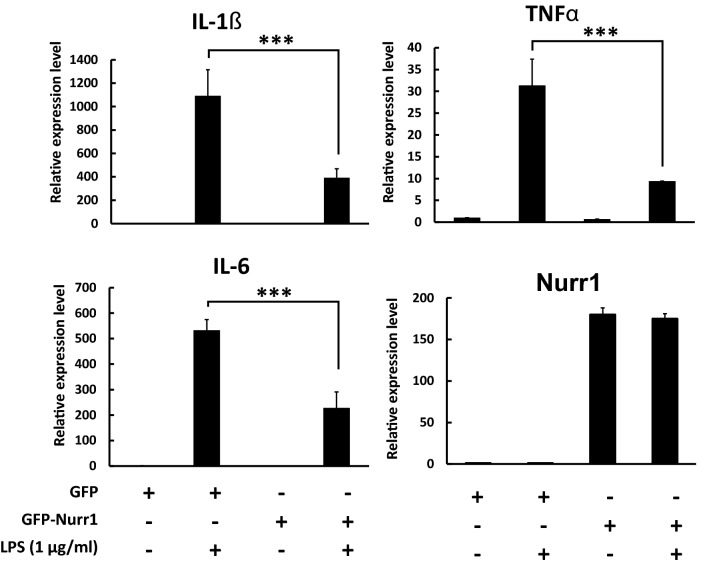
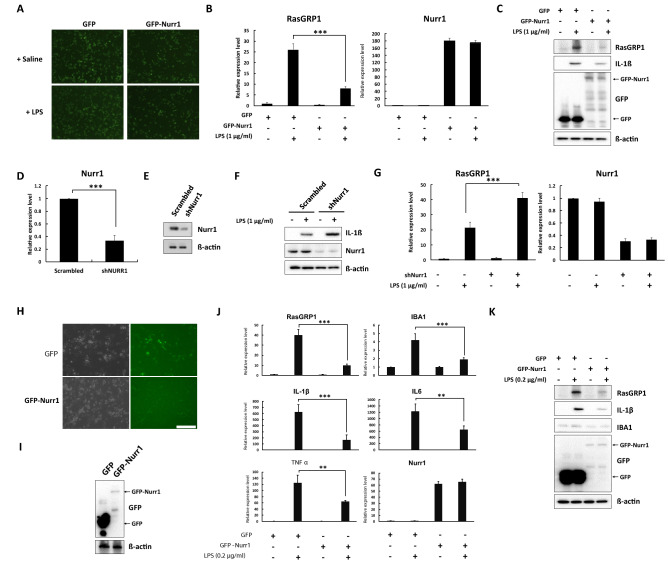
- Nurr1 overexpression reduced LPS-induced IL-1β, IL-6, and TNFα expression in BV2 cells; Nurr1 knockdown increased IL-1β and RasGRP1, while Nurr1 overexpression in primary microglia reduced pro-inflammatory genes, IBA1, and RasGRP1 after LPS.
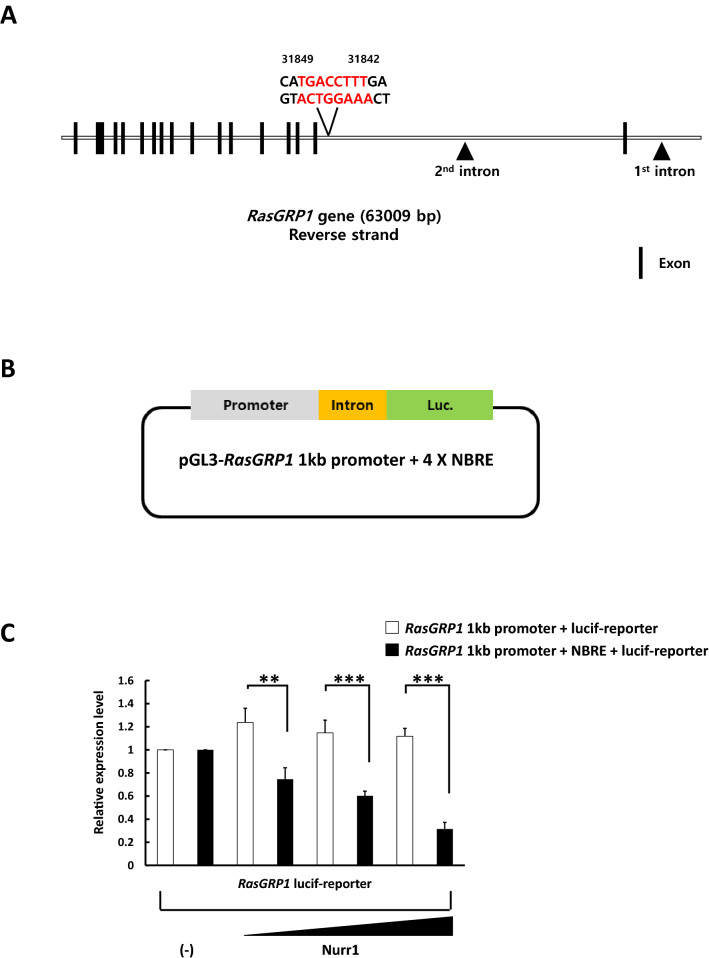
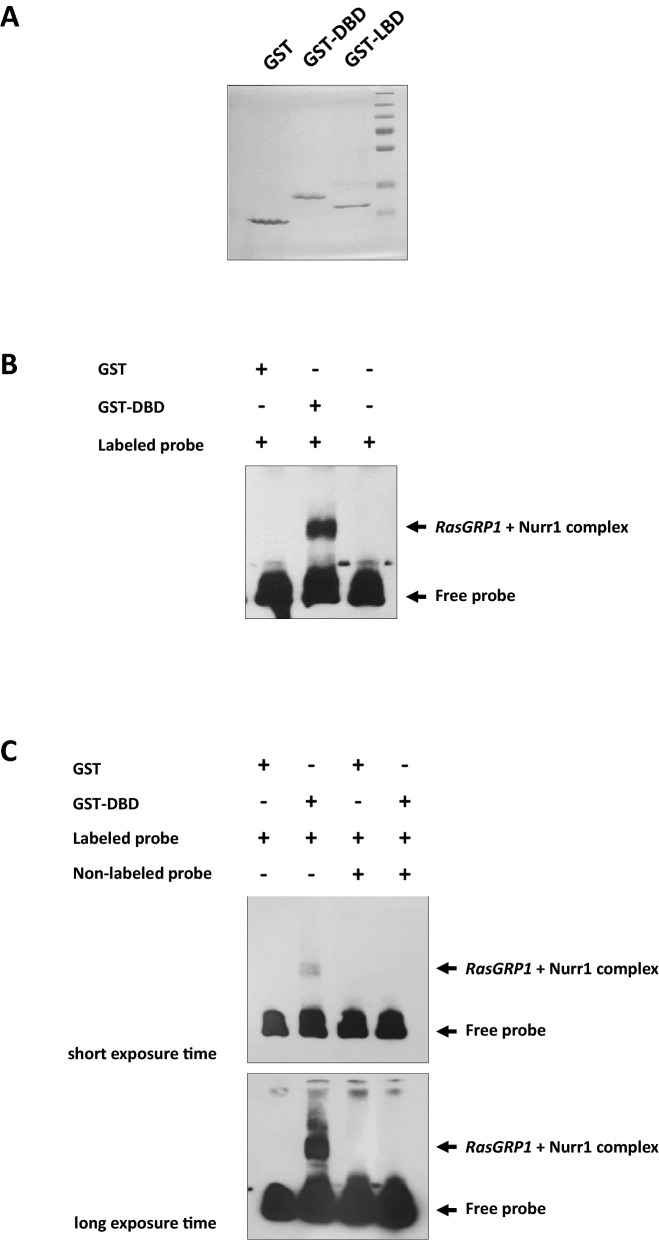
- Nurr1 bound the second intron of RasGRP1 at an NBRE (AAAGGTCA) site: luciferase reporter activity was reduced dose-dependently by Nurr1, EMSA showed DBD binding, and ChIP confirmed recruitment to the intronic region.
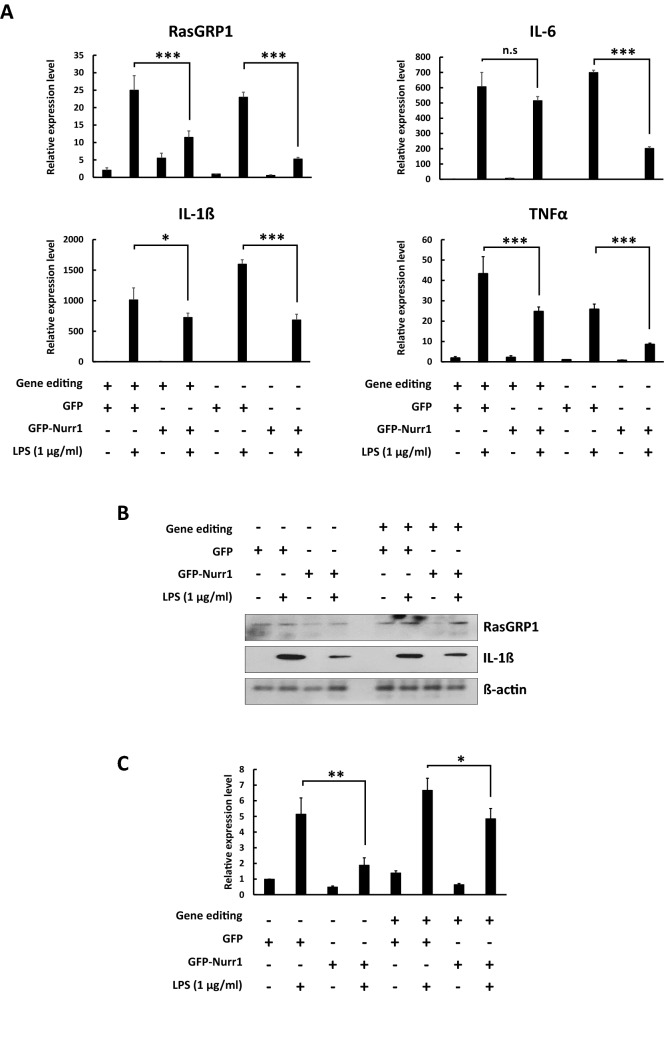
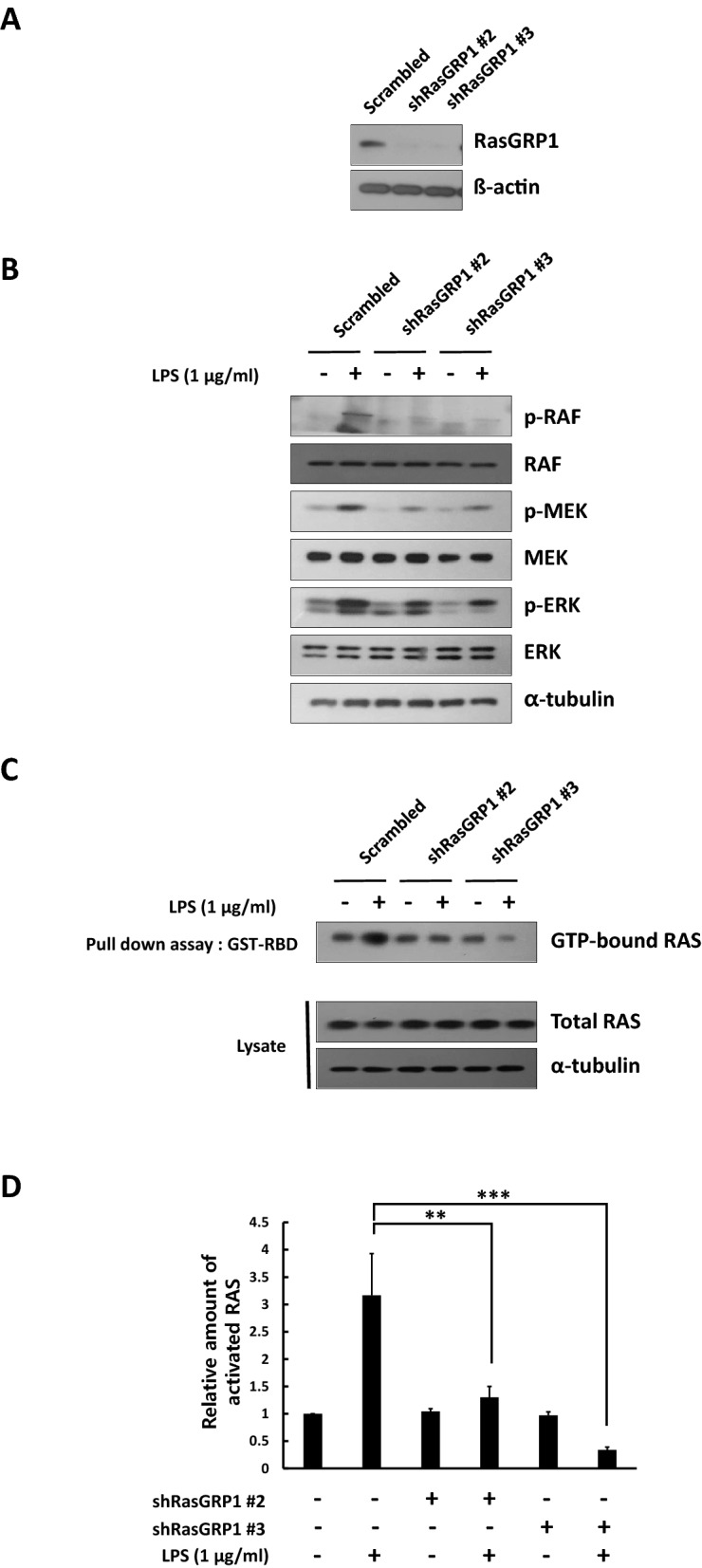
- Cas9-mediated deletion of the NBRE-containing RasGRP1 intron partially reduced LPS-induced RasGRP1, IL-1β, IL-6, and TNFα; RasGRP1 knockdown decreased active Ras and phosphorylation of Raf1, MEK1/2, and ERK1/2 after LPS.
Methods
- Design: in vitro mechanistic study using BV2 mouse microglial cells, primary microglia, and HEK293T cells; LPS treatment was used to induce inflammation (BV2: 1 μg/ml for 6 h; primary microglia: 0.2 μg/ml for 3 h).
- Data/sample: ChIP-seq with His-tagged Nurr1 in BV2 cells; validation by qRT-PCR, western blotting, luciferase reporter assays, EMSA, ChIP, CRISPR/Cas9-mediated deletion, and Ras-GTP pulldown assays.
- Analysis: experiments repeated three times; statistical analysis by Student’s t-test, with significance reported as *P < 0.05, P < 0.01, *P < 0.005.
Limitations
- Stated: the authors did not identify detailed molecular transcriptional partners for Nurr1 and RasGRP1, and suggest additional factors/proteins remain to be investigated.
- Stated: Cas9 deletion of the NBRE-containing intron did not completely suppress RasGRP1, IL-1β, IL-6, or TNFα, indicating other factors or pathways participate in Nurr1-mediated signaling.
- Stated and evident: the mechanism by which an intron sequence regulates gene expression is not fully understood, and the study is primarily in vitro; the authors call for further in vitro and in vivo studies to find the translational partner for Nurr1 in inflammation.
Model-written summary. Check it against the paper before relying on it.
Integrity signals
Registry
Cites
Statistics
Figures
Verification
Claims the paper makes
0 Valid · 0 Not valid · 46 Not checked · 46 Own results and interpretations
A result the paper reports from its own data — it cites no other source for it, so there is none to check. The quote shows it is in the paper.
In the paper
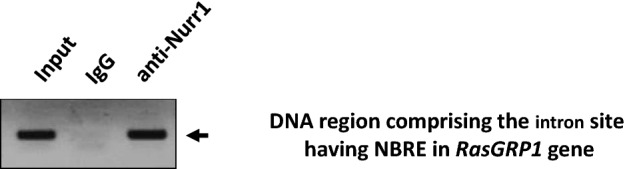
“Nurr1 bound to a specific site in the second intron of the RasGRP1 gene.”
- Also stated in: § Nurr1 is recruited to the second intron in the RasGRP1 gene · boosted
“We observed the recruitment of the specific intron region of RasGRP1 in the anti-Nurr1 antibody sample and not in the control rabbit IgG sample (Fig. 5) confirming the intron site containing that the NBRE sequence in RasGRP1 is the specific target of Nurr1.”
§ Nurr1 performs its anti-inflammatory function by regulating RasGRP1 expression in neuro-inflammation > Results > Nurr1 is recruited to the second intron in the RasGRP1 gene
boostedstates an associationn = 3- Asserted: passes — The authors put it forward as true.
- Checkable: passes — It can be checked against evidence.
- Load-bearing: passes — The paper’s conclusions depend on it.
- Based: passes — The paper gives a reason why it holds.
- Also stated in: § Nurr1 is recruited to the second intron in the RasGRP1 gene · boosted
A result the paper reports from its own data — it cites no other source for it, so there is none to check. The quote shows it is in the paper.
In the paper
“Rasgrp1 | 25.06”
§ Nurr1 performs its anti-inflammatory function by regulating RasGRP1 expression in neuro-inflammation > Results > In vitro ChIP sequencing revealed the binding of Nurr1 to specific regions of Nurr1-regulating genes
plainstates an association- Asserted: passes — The authors put it forward as true.
- Checkable: passes — It can be checked against evidence.
- Load-bearing: passes — The paper’s conclusions depend on it.
- Based: passes — The paper gives a reason why it holds.
A result the paper reports from its own data — it cites no other source for it, so there is none to check. The quote shows it is in the paper.
In the paper
“Well-known genes involved in inflammation, including IL-4 and IL-1β, were found among the 46 most enriched genes.”
§ Nurr1 performs its anti-inflammatory function by regulating RasGRP1 expression in neuro-inflammation > Results > In vitro ChIP sequencing revealed the binding of Nurr1 to specific regions of Nurr1-regulating genes
boosted- Asserted: passes — The authors put it forward as true.
- Checkable: passes — It can be checked against evidence.
- Load-bearing: unclear — It is unclear whether the paper’s conclusions depend on it.
- Based: passes — The paper gives a reason why it holds.
A result the paper reports from its own data — it cites no other source for it, so there is none to check. The quote shows it is in the paper.
In the paper
“When compared with the empty vector, the RasGRP1 promoter-reporter vector had significant activity.”
§ Nurr1 performs its anti-inflammatory function by regulating RasGRP1 expression in neuro-inflammation > Results > Nurr1 repressed the transcriptional activity of the RasGRP1 gene
plainstates an association- Asserted: passes — The authors put it forward as true.
- Checkable: passes — It can be checked against evidence.
- Load-bearing: passes — The paper’s conclusions depend on it.
- Based: passes — The paper gives a reason why it holds.
A result the paper reports from its own data — it cites no other source for it, so there is none to check. The quote shows it is in the paper.
In the paper
“Ras activation was decreased in the RasGRP1 knocked down cell lines treated with LPS.”
- Also stated in: § Ras activation was decreased in the RasGRP1 knockdown cell lines · plain
“As a result, we found that the knock-down of RasGRP1 in the BV2 cells decreased the expression of active Ras in response to LPS.”
§ Nurr1 performs its anti-inflammatory function by regulating RasGRP1 expression in neuro-inflammation > Results > Ras activation was decreased in the RasGRP1 knockdown cell lines
plainstates a causen = 3- Asserted: passes — The authors put it forward as true.
- Checkable: passes — It can be checked against evidence.
- Load-bearing: passes — The paper’s conclusions depend on it.
- Based: passes — The paper gives a reason why it holds.
- Rests on an assumption not shown here.
- Also stated in: § Ras activation was decreased in the RasGRP1 knockdown cell lines · plain
42 more claims
Create a free account to see all 92 claims and to verify the 67 references still open.
- It may state two separate claims as one. 16
- Probably not a substantial claim. 40
- The quote only partly states this claim. 1
Claims other papers make about this one
Each is checked against this paper’s own text: does it say what the citing paper says it does?
In the citing paper
“progress in RasGRP1 research is also being made in the areas of schizophrenia [112], neuro-inflammation [113], systemic lupus erythematosus [114], Parkinson’s disease [115], and angiogenesis [116].”
From A Focused Review of Ras Guanine Nucleotide-Releasing Protein 1 in Immune Cells and Cancer (2023) · cites this paper as [113]
Self-check
Percentages, sums and reported differences re-computed from the paper’s own numbers.
Each contradiction between two passages listed here was confirmed by an independent check.
Rated major: it would touch a result — a value a result rests on, reported and recomputed p-values on opposite sides of the significance level, two passages that conflict with no sign which is right, or a cited work retracted before this paper was published.
In the paper
§ Nurr1 performs its anti-inflammatory function by regulating RasGRP1 expression in neuro-inflammation > Methods > Ras activation assay (Ras pulldown assay)
“For the assay, cells were treated with LPS (1 μg/ml) in a 100 mm dish at 37 °C for 40 min.”
§ Nurr1 performs its anti-inflammatory function by regulating RasGRP1 expression in neuro-inflammation > Results > Ras activation was decreased in the RasGRP1 knockdown cell lines
“(C, D) BV2 cells expressing scrambled or shRasGRP1 RNA were treated with LPS (1 μg/ml) for 20 min.”
Rated minor: it would not touch a result — a value no result rests on, a p-value that stays on the same side of the significance level, or a conflict that is clerical, resolved elsewhere in the paper, or outside its own findings.
In the paper
§ Nurr1 performs its anti-inflammatory function by regulating RasGRP1 expression in neuro-inflammation > Methods > Primary microglial cell culture
“All experimental protocols were approved by the Institutional Animal Care and Use Committee of the Korea Research Institute of Bioscience & Biotechnology (KRIBB)”
§ Nurr1 performs its anti-inflammatory function by regulating RasGRP1 expression in neuro-inflammation > Conclusions > Ethics approval and consent to participate
“### Ethics approval and consent to participate Not applicable.”
Cited works that were retracted
Works this paper cites that were later retracted, from the retraction notices publishers deposit. Major when the notice came out before this paper was published, unless its text notes the retraction.
A note, not an issue: for example, a cited work that was retracted only after this paper was published, which its authors could not have known.
In the paper
“Roy J Retraction notice to "primary microglia isolation from mixed cell cultures of neonatal mouse brain tissue" [Brain Res.”
Cited work 10.1016/j.brainres.2018.03.018 · retracted 2018-06-01 · notice 10.1016/j.brainres.2018.08.017 · this paper published 2020-07-01
Citations
Cites
1 retracted
RETRACTED: Primary microglia isolation from mixed cell cultures of neonatal mouse brain tissue
Roy, J. (2018) · Brain Research · doi:10.1016/j.brainres.2018.03.018 · Cited by 10
RetractedModel-based Analysis of ChIP-Seq (MACS)
Zhang, Y., Liu, T., Meyer, C. A., Eeckhoute, J., Johnson, D. S., Bernstein, B. E., Nusbaum, C., Myers, R. M., Brown, M., Li, W., et al. (2008) · Genome Biology · doi:10.1186/gb-2008-9-9-r137 · Cited by 18,386
Marshall, C. J. (1995) · Cell · doi:10.1016/0092-8674(95)90401-8 · Cited by 3,906
ChIP-seq accurately predicts tissue-specific activity of enhancers
Visel, A., Blow, M. J., Li, Z., Zhang, T., Akiyama, J. A., Holt, A., Plajzer-Frick, I., Shoukry, M., Wright, C., Chen, F., et al. (2009) · Nature · doi:10.1038/nature07730 · Cited by 1,639
Saijo, K., Winner, B., Carson, C. T., Collier, J. G., Boyer, L., Rosenfeld, M. G., Gage, F. H., & Glass, C. K. (2009) · Cell · doi:10.1016/j.cell.2009.01.038 · Cited by 957
Design and analysis of ChIP-seq experiments for DNA-binding proteins
Kharchenko, P. V., Tolstorukov, M. Y., & Park, P. J. (2008) · Nature Biotechnology · doi:10.1038/nbt.1508 · Cited by 916
Orphan Nuclear Receptors: From Gene to Function*
Giguère, V. (1999) · Endocrine Reviews · doi:10.1210/edrv.20.5.0378 · Cited by 855
Chang, F., Steelman, L. S., Lee, J. T., Shelton, J. G., Navolanic, P. M., Blalock, W. L., Franklin, R. A., & McCubrey, J. A. (2003) · Leukemia · doi:10.1038/sj.leu.2402945 · Cited by 725
An integrated software system for analyzing ChIP-chip and ChIP-seq data
Ji, H., Jiang, H., Ma, W., Johnson, D. S., Myers, R. M., & Wong, W. H. (2008) · Nature Biotechnology · doi:10.1038/nbt.1505 · Cited by 716
Cited by
Kumar, V. (2020) · International Immunopharmacology · doi:10.1016/j.intimp.2020.107087 · Cited by 272
He, Y., Wang, Y., Yu, H., Tian, Y., Chen, X., Chen, C., Ren, Y., Chen, Z., Ren, Y., Gong, X., et al. (2023) · Pharmacological Research · doi:10.1016/j.phrs.2023.106717 · Cited by 59
The role of NURR1 in metabolic abnormalities of Parkinson’s disease
Al‐Nusaif, M., Yang, Y., Li, S., Cheng, C., & Le, W. (2022) · Molecular Neurodegeneration · doi:10.1186/s13024-022-00544-w · Cited by 57
“RAS guanyl-releasing protein 1 in lipopolysaccharide (LPS)-induced inflammatory cell model [112].”
BackgroundEpigenetic Regulation of Neuroinflammation in Alzheimer’s Disease
Ma, Y., Wang, W., Liu, S., Qiao, X., Xing, Y., Zhou, Q., & Zhang, Z. (2023) · Cells · doi:10.3390/cells13010079 · Cited by 54
Advances in NURR1-Regulated Neuroinflammation Associated with Parkinson’s Disease
Al‐Nusaif, M., Lin, Y., Li, T., Cheng, C., & Le, W. (2022) · International Journal of Molecular Sciences · doi:10.3390/ijms232416184 · Cited by 34
Ding, R., Sun, X., Yi, B., Liu, W., Kazama, K., Xu, X., Deshpande, D. A., Liang, C., & Sun, J. (2021) · American Journal of Respiratory Cell and Molecular Biology · doi:10.1165/rcmb.2020-0524oc · Cited by 33
A Focused Review of Ras Guanine Nucleotide-Releasing Protein 1 in Immune Cells and Cancer
Hsu, T. C., Rodrigues, G. O. L., Winer, H., Hixon, J. A., Li, W., Tarasova, N. I., & Durum, S. K. (2023) · International Journal of Molecular Sciences · doi:10.3390/ijms24021652 · Cited by 27
García‐Yagüe, Á. J., & Cuadrado, A. (2023) · International Journal of Molecular Sciences · doi:10.3390/ijms241512280 · Cited by 25
Aspirin inhibits prostaglandins to prevents colon tumor formation via down-regulating Wnt production
Feng, Y., Tao, L., Wang, G., Li, Z., Yang, M., He, W., Zhong, X., Zhang, Y., Yang, J., Cheung, S., et al. (2021) · European Journal of Pharmacology · doi:10.1016/j.ejphar.2021.174173 · Cited by 25
Li, Z., Yu, Y., Bu, Y., Liu, C., Liu, E., Jin, J., Chen, G., Li, C., Wang, H., Li, H., et al. (2024) · Phytomedicine · doi:10.1016/j.phymed.2024.155733 · Cited by 23
Abdelaziz, A. M. (2025) · International Immunopharmacology · doi:10.1016/j.intimp.2025.114692 · Cited by 20
Sahebdel, F., Zia, A., Quintá, H. R., Morse, L. R., Olson, J. K., & Battaglino, R. A. (2024) · International Journal of Molecular Sciences · doi:10.3390/ijms251910601 · Cited by 20
Nuclear receptors of NR1 and NR4 subfamilies in the regulation of microglial functions and pathology
Katsuki, H. (2021) · Pharmacology Research & Perspectives · doi:10.1002/prp2.766 · Cited by 14
Khorasgani, A. M., Moghadam, F. H., & Nasr‐Esfahani, M. H. (2023) · PLoS ONE · doi:10.1371/journal.pone.0290249 · Cited by 11
Gatica-García, B., Bannon, M. J., Martínez-Dávila, I. A., Soto-Rojas, L. O., Reyes-Corona, D., Escobedo, L., Maldonado-Berny, M., Gutiérrez-Castillo, M. E., Espadas-Álvarez, A. J., Fernandez-Parrilla, M. A., et al. (2023) · Neural Regeneration Research · doi:10.4103/1673-5374.391190 · Cited by 9
NURR1 Alterations in Perinatal Stress: A First Step towards Late-Onset Diseases? A Narrative Review
Bordoni, L., Petracci, I., Calleja‐Agius, J., Lalor, J., & Gabbianelli, R. (2020) · Biomedicines · doi:10.3390/biomedicines8120584 · Cited by 9
Arora, T., Sharma, G., Prashar, V., Singh, R., Sharma, A., Changotra, H., & Parkash, J. (2024) · Molecular Neurobiology · doi:10.1007/s12035-024-04261-x · Cited by 8
Kambey, P. A., Liu, W.-Y., Wu, J., Bosco, B., Nadeem, I., Kanwore, K., & Gao, D. (2023) · Neural Regeneration Research · doi:10.4103/1673-5374.366493 · Cited by 8
A role of NR4A2 in Graves’ disease: regulation of Th17/Treg
Zhao, S., Wang, X., Huang, F., Zhou, Y., Meng, D., Zhao, D., Wang, J., Zhang, H., Wu, L., Zhang, Y., et al. (2023) · Endocrine · doi:10.1007/s12020-023-03490-9 · Cited by 8
Ball, B. K., Proctor, E. A., & Brubaker, D. K. (2024) · Pacific Symposium on Biocomputing (PSB) · doi:10.1142/9789819807024_0031 · Cited by 7
Habiba, E. S., Fathelbab, M. H., Aziz, M. A., El-Sayed, N. S., Mady, M. M., & Khamis, G. M. (2025) · Naunyn-Schmiedeberg s Archives of Pharmacology · doi:10.1007/s00210-025-04376-5 · Cited by 7
NURR1 Deficiency Is Associated to Altered Microglial Phenotype in Male Mice
Montarolo, F., Thielens, S., Bové, M., Bertolotto, A., Tempia, F., & Hoxha, E. (2025) · Molecular Neurobiology · doi:10.1007/s12035-025-04787-8 · Cited by 7
Fan, S., Kang, B., Li, S., Li, W., Chen, C., Chen, J., Deng, L., Chen, D., & Zhou, J. (2024) · Cell Cycle · doi:10.1080/15384101.2024.2366009 · Cited by 6
Segura‐Aguilar, J. (2021) · Elsevier eBooks · doi:10.1016/b978-0-12-822120-4.00001-0 · Cited by 5
The multiple mechanisms of NR4A2 in neurological disorders and advances in targeted therapy research
Duan, K., Yang, C., Gao, D., Li, M., Chen, M., Li, H., Zeng, W., Zhao, L.-J., & Zhu, M. (2025) · Neurobiology of Disease · doi:10.1016/j.nbd.2025.107229 · Cited by 4
Tang, W., Wang, L., Liu, Y., & Xiao, D. (2022) · Open Forum Infectious Diseases · doi:10.1093/ofid/ofac041 · Cited by 4
Wu, Z., Zhang, J., Gao, H., & Li, W.-S. (2024) · Stem Cells International · doi:10.1155/2024/2792909 · Cited by 3
Nr4a2, A Key Factor Controlling the Development and Functional Maintenance of Forebrain Car3 Neurons
Tao, Y.-C., Zhao, L., Zhang, Q., Liu, X.-Y., Liu, W., Li, Z.-X., Hu, L., Zhang, L., Chen, J., Ding, Y., et al. (2025) · Neuroscience Bulletin · doi:10.1007/s12264-025-01496-z · Cited by 2
Flores-Estrada, J. J., Jiménez, A., Victoria-Acosta, G., Cortés-Malagón, E. M., Ortiz‐López, M. G., Álvarez-Sánchez, M. E., Núñez-Olvera, S. I., Pérez‐Navarro, Y., Morales‐Reyna, M., & Puente-Rivera, J. (2025) · International Journal of Molecular Sciences · doi:10.3390/ijms26157340 · Cited by 2
Qasim, R., Thiab, T. M. A., Alhindi, T., Al‐Hunaiti, A., & Imraish, A. (2024) · Scientific Reports · doi:10.1038/s41598-024-64820-z · Cited by 2
Santana‐Cisneros, E., Solís‐Barbosa, M. A., Segovia-Gamboa, N. C., Meraz‐Ríos, M. A., González‐Domínguez, E., Hernández‐Rivas, R., Marrero–Rodríguez, D., & Sánchez‐Torres, C. (2025) · Scandinavian Journal of Immunology · doi:10.1111/sji.70061 · Cited by 2
The Interplay Between Nurr1 and Mitochondrial Biogenesis: Implications for Neurodegenerative Therapy
Kaur, S., Mannan, A., & Singh, T. (2026) · Molecular Neurobiology · doi:10.1007/s12035-025-05633-7 · Cited by 1
Ondrus, M., Fox, R. J., Peelen, E., Fonseca, J., Sciacca, V., Sánchez‐Gómez, I., Arend, J., Herrmann, A., Samcova, M., Gege, C., et al. (2026) · Expert Opinion on Investigational Drugs · doi:10.1080/13543784.2026.2705509 · Cited by 1
Age-relevant in vitro models may lead to improved translational research for traumatic brain injury
Dickerson, M. R., Correa, F. G., Boni, J. L., & VandeVord, P. J. (2022) · Current Opinion in Biomedical Engineering · doi:10.1016/j.cobme.2022.100391 · Cited by 1
Zeng, X., Xie, X., Zhang, J., Jia, J., & Huang, L. (2026) · Neural Plasticity · doi:10.1155/np/9997801 · Cited by 1
Hu, D., Sun, W., Wang, W., Chen, Z., Wang, H., & Zhai, S. (2024) · Research Square · doi:10.21203/rs.3.rs-5656048/v1
Sarsah, S. K., & Murray, M. N. (2026) · BMC Research Notes · doi:10.1186/s13104-026-07898-0
Metadata
- Authors
- Oh, M., Kim, S. Y., Gil, J.-E., Byun, J.-S., Cha, D.-W., Ku, B., Lee, W., Kim, W.-K., Oh, K.-J., Lee, E.-W., Bae, K.-H., Lee, S. C., & Han, B.-S.
- Affiliations
- Korea Research Institute of Bioscience and Biotechnology (KR)
- Corresponding author
- Lee, Sang Chul
- Han, Baek-Soo
- ORCID
- Venue
- Scientific Reports
- Published
- 2020-07-01
- Volume
- 10
- Issue
- 1
- Pages
- 10755-10755
- ISSN
- 2045-2322 (ISSN-L)
- PMC
- PMC7329810
- OpenAlex
- W3039337921
- Semantic Scholar
- 7a50f0f7fff47580069201db356dffdd4415db0b
- Cited by
- 37
- References
- 67
- Citations by year
- 2026: 4 · 2025: 7 · 2024: 8 · 2023: 8 · 2022: 4 · 2021: 4 · 2020: 2
- FWCI
- 1.13
- Type
- journal article
- Language
- en
- Open access
- gold
- doi.org
- Licence
- cc-by
- creativecommons.org/licenses/by/4.0 (tdm)
- creativecommons.org/licenses/by/4.0 (vor)
- Locations
- Scientific Reports (publishedVersion, cc-by)
- PubMed Central (publishedVersion, cc-by)
- PubMed (publishedVersion)
- Funders
- The Korea National Research of Foundation (2017R1E1A1A01074745, 2017M3A9C4065954)
- The KRIBB Research Initiative Program (KGM5321911, KGM1121911)
- Topics
- Life Sciences › Biochemistry, Genetics and Molecular Biology › Molecular Biology › Nuclear Receptors and Signaling
- Life Sciences › Neuroscience › Neurology › Neuroinflammation and Neurodegeneration Mechanisms
- Life Sciences › Biochemistry, Genetics and Molecular Biology › Molecular Biology › Genomics, phytochemicals, and oxidative stress
- Keywords
- Nurr1, RasGRP1, neuroinflammation, anti-inflammatory activity, Parkinson's disease, dopaminergic neurons, orphan nuclear receptor, lipopolysaccharide-induced inflammation, BV-2 cells, RAS/MAPK pathway, transcriptional regulation, ChIP-seq
- MeSH terms
- Animals, Cell Line, Chromatin, DNA-Binding Proteins, Humans, Inflammation, Introns, Lipopolysaccharides, Parkinson Disease, Transcription Factors, Signal Transduction, Microglia, Guanine Nucleotide Exchange Factors, Mice, Nuclear Receptor Subfamily 4, Group A, Member 2, HEK293 Cells, Dopaminergic Neurons
About these checks
Registry, retraction, Cites and statistics results are computed, not judged, with one exception: a printed reference that no index lists is read once by a model before it counts as a citation error. Claims are extracted by a model and kept only when their quote appears verbatim in the text; each cited source is then checked, with a model’s help, for whether it says what the claim relies on. Those verdicts can be wrong — read the claim’s quote and the cited source before relying on one.
A language model drew the claims from the paper on 2026-11-29, under version 3 of the claim definition (model deepseek-v4.1-flash, prompt extract-v3).
A second model labelled each claim on 2026-11-29 (model jev-1.13-20260917, definition revision gold-guideline-v0.2).
Statistics and arithmetic are recomputed, not judged.
Confidence bands are shown only for fields calibrated on our annotated test set. None is calibrated yet, so no band is shown.
What counts as a claim ›How we measure confidence ›How we check this ›
Are you an author, or do you see a problem with this page? Request a review
Data sources
Bibliographic data: Semantic Scholar, OpenAlex, Crossref.
Contains information from the Semantic Scholar Academic Graph Datasets, made available under the ODC Attribution License (ODC-BY 1.0).
Semantic Scholar’s data is described in: Kinney, R., et al. (2023). The Semantic Scholar Open Data Platform. arXiv:2301.10140.
