

Context-aware experience sampling reveals the scale of variation in affective experience
Open accessThe DOI matches its Crossref record; 108 of the 108 references it cites were found in a registry or an index.
Abstract
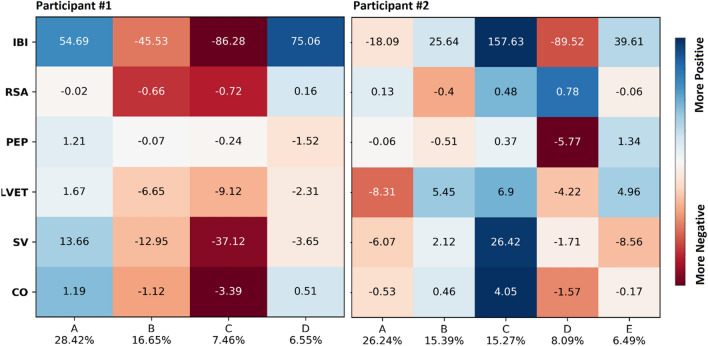
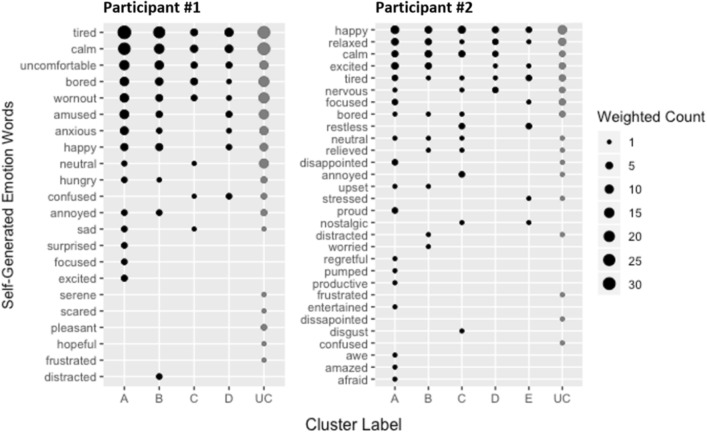
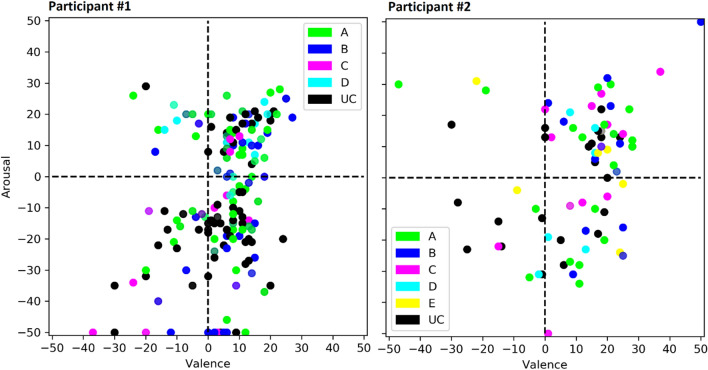
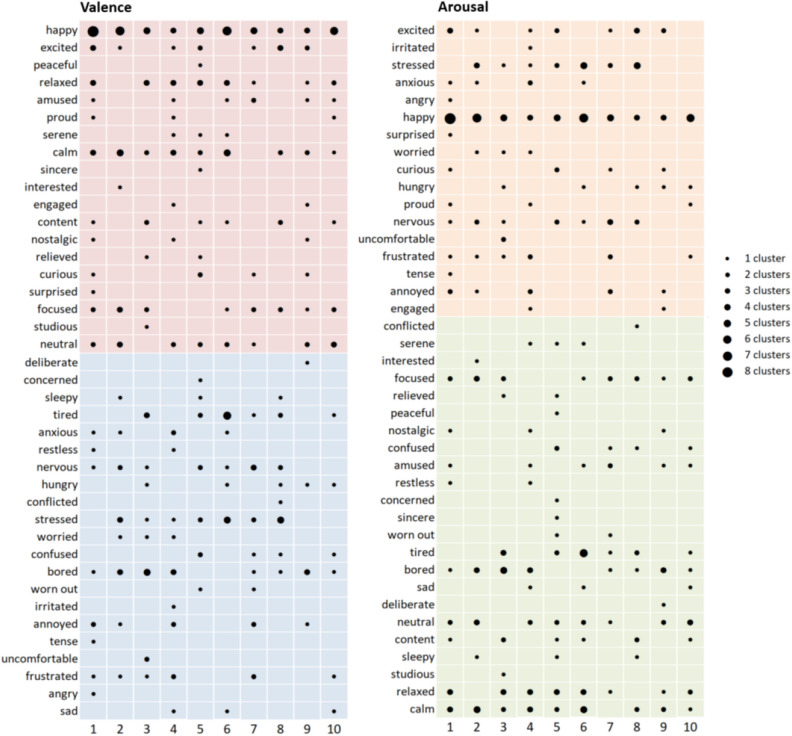
Emotion research typically searches for consistency and specificity in physiological activity across instances of an emotion category, such as anger or fear, yet studies to date have observed more variation than expected. In the present study, we adopt an alternative approach, searching inductively for structure within variation, both within and across participants. Following a novel, physiologically-triggered experience sampling procedure, participants’ self-reports and peripheral physiological activity were recorded when substantial changes in cardiac activity occurred in the absence of movement. Unsupervised clustering analyses revealed variability in the number and nature of patterns of physiological activity that recurred within individuals, as well as in the affect ratings and emotion labels associated with each pattern. There were also broad patterns that recurred across individuals. These findings support a constructionist account of emotion which, drawing on Darwin, proposes that emotion categories are populations of variable instances tied to situation-specific needs.
Overview
The claims and statistics of this paper haven’t been checked yet.
Free: it reads the open-access text and checks the first 5 claims that cite a source we can check. Create a free account to check every claim.
Integrity signals
Registry
Cites
Statistics
Figures
Verification
Claims the paper makes
The claims and statistics of this paper haven’t been checked yet.
Free: it reads the open-access text and checks the first 5 claims that cite a source we can check. Create a free account to check every claim.
Claims other papers make about this one
Each is checked against this paper’s own text: does it say what the citing paper says it does?
The cited source says what the claim attributes to it.
In the citing paper
“The notion that discrete emotion categories can be reliably identified by specific behavioural patterns and/or physiological features has been seriously called into doubt by the marked variability within instances of the same category as well as similarities across categories.”
From A new science of emotion: implications for functional neurological disorder (2022) · cites this paper as [60]
Self-check
Percentages, sums and reported differences re-computed from the paper’s own numbers.
The self-check needs the paper’s full text.
Citations
Cites
Scikit-learn: Machine Learning in Python
Pedregosa, F., Varoquaux, G., Gramfort, A., Michel, V., Thirion, B., Grisel, O., Blondel, M., Müller, A., Nothman, J., Louppe, G., et al. (2012) · arXiv · doi:10.48550/arxiv.1201.0490 · Cited by 71,016
Book Review: Pattern Recognition and Machine Learning
Nasrabadi, N. M. (2007) · Journal of Electronic Imaging · doi:10.1117/1.2819119 · Cited by 22,066
Lakens, D. (2013) · Frontiers in Psychology · doi:10.3389/fpsyg.2013.00863 · Cited by 10,303
Pattern Recognition and Machine Learning
(2007) · Kybernetes · doi:10.1108/03684920710743466 · Cited by 8,265
Heart rate variability: origins, methods, and interpretive caveats
BERNTSON, G. G., THOMAS BIGGER, J., ECKBERG, D. L., GROSSMAN, P., KAUFMANN, P. G., MALIK, M., NAGARAJA, H. N., PORGES, S. W., SAUL, J. P., STONE, P. H., et al. (1997) · Psychophysiology · doi:10.1111/j.1469-8986.1997.tb02140.x · Cited by 3,962
Emotion knowledge: further exploration of a prototype approach
Shaver, P., Schwartz, J., Kirson, D., & O'Connor, C. (1987) · Journal of Personality and Social Psychology · doi:10.1037/0022-3514.52.6.1061 · Cited by 3,072
Autonomic nervous system activity distinguishes among emotions
Ekman, P., Levenson, R. W., & Friesen, W. V. (1983) · Science · doi:10.1126/science.6612338 · Cited by 2,692
Toward machine emotional intelligence: analysis of affective physiological state
Picard, R. W., Vyzas, E., & Healey, J. (2001) · IEEE Transactions on Pattern Analysis and Machine Intelligence · doi:10.1109/34.954607 · Cited by 2,334
The brain basis of emotion: a meta-analytic review
Lindquist, K. A., Wager, T. D., Kober, H., Bliss-Moreau, E., & Barrett, L. F. (2012) · Behavioral and Brain Sciences · doi:10.1017/s0140525x11000446 · Cited by 2,320
Self-citationNorms of valence, arousal, and dominance for 13,915 English lemmas
Warriner, A. B., Kuperman, V., & Brysbaert, M. (2013) · Behavior Research Methods · doi:10.3758/s13428-012-0314-x · Cited by 1,959
Research works printed but not linked: 6
- Scherer KR Scherer KR Ekman P On the nature and function of emotion: a component process approach Approaches to Emotion 1984 New York Lawrence Erlbaum Associates 293 317
- Barrett LF How emotions are made: the secret life the brain and what it means for your health, the law, and human nature 2017 Houghton Mifflin Harcourt Houghton
- Darwin, C. On the Origin of Species. (Harvard University Press, Harvard, 1859/2001).
- Cohen J The effect size index d: statistical power analysis for the behavioral sciences 1988 Abingdon-on-Thames Routledge Academic
- Le Mau, T. et al. Uncovering emotional structure in 604 expert portrayals of experience. (under review).
- Kleckner IR Quigley KS Barrett LF Russell JA Mapping the neurophysiological state of the body to affective experience The psychological construction of emotion 2015 New York Guilford Press 265 301
Cited by
Quigley, K. S., Gianaros, P. J., Norman, G. J., Jennings, J. R., Berntson, G. G., & de Geus, E. J. C. (2024) · Psychophysiology · doi:10.1111/psyp.14604 · Cited by 225
Self-citationA new science of emotion: implications for functional neurological disorder
Jungilligens, J., Paredes-Echeverri, S., Popkirov, S., Barrett, L. F., & Perez, D. L. (2022) · Brain · doi:10.1093/brain/awac204 · Cited by 164
Self-citationBarrett, L. F. (2022) · American Psychologist · doi:10.1037/amp0001054 · Cited by 152
Self-citationMarczak, M., Wierzba, M., Zaremba, D., Kulesza, M., Szczypiński, J., Kossowski, B., Budziszewska, M., Michałowski, J. M., Klöckner, C. A., & Marchewka, A. (2023) · Global Environmental Change · doi:10.1016/j.gloenvcha.2023.102764 · Cited by 151
Emotion context insensitivity in depression: Toward an integrated and contextualized approach
Bylsma, L. M. (2020) · Psychophysiology · doi:10.1111/psyp.13715 · Cited by 130
Toward Explainable Affective Computing: A Review
Cortiñas-Lorenzo, K., & Lacey, G. (2023) · IEEE Transactions on Neural Networks and Learning Systems · doi:10.1109/tnnls.2023.3270027 · Cited by 112
Some Recommendations on the Use of Daily Life Methods in Affective Science
Kuppens, P., Dejonckheere, E., Kalokerinos, E. K., & Koval, P. (2022) · Affective Science · doi:10.1007/s42761-022-00101-0 · Cited by 110
The neurobiology of interoception and affect
Feldman, M. J., Bliss-Moreau, E., & Lindquist, K. A. (2024) · Trends in Cognitive Sciences · doi:10.1016/j.tics.2024.01.009 · Cited by 101
Self-citationAllostasis, action and affect in depression: Insights from the theory of constructed emotion
Shaffer, C., Westlin, C., Quigley, K. S., Whitfield-Gabrieli, S., & Barrett, L. F. (2022) · Annual Review of Clinical Psychology · doi:10.1146/annurev-clinpsy-081219-115627 · Cited by 94
“We hypothesize that sadness and other mental categories are a population of instances whose features vary from one to another because each instance is situated, and situations vary (discussed in Barrett 2017b, Barrett et al. 2019, Hoemann et al. 2020, Siegel et al. 2018).”
BackgroundSelf-citationAzari, B., Westlin, C., Satpute, A. B., Hutchinson, J. B., Kragel, P. A., Hoemann, K., Khan, Z., Wormwood, J. B., Quigley, K. S., Erdogmus, D., et al. (2020) · Scientific Reports · doi:10.1038/s41598-020-77117-8 · Cited by 90
Self-citationThe Theory of Constructed Emotion: More Than a Feeling
Barrett, L. F., Atzil, S., Bliss‐Moreau, E., Chanes, L., Gendron, M., Hoemann, K., Katsumi, Y., Kleckner, I. R., Lindquist, K. A., Quigley, K. S., et al. (2025) · Perspectives on Psychological Science · doi:10.1177/17456916251319045 · Cited by 88
Self-citationIn search of boredom: beyond a functional account
Danckert, J. A., & Elpidorou, A. (2023) · Trends in Cognitive Sciences · doi:10.1016/j.tics.2023.02.002 · Cited by 85
Hoemann, K., Nielson, C., Yuen, A., Gurera, J. W., Quigley, K. S., & Barrett, L. F. (2021) · Psychological Bulletin · doi:10.1037/bul0000327 · Cited by 83
“For example, clustering analyses could be used to look for differences in how measured constructs — and the features of expertise they represent — group together, via linear or nonlinear relationships, within or across individuals (e.g., Hoemann et al., 2020; Wormwood et al., 2019).”
Self-citationHoemann, K., Barrett, L. F., & Quigley, K. S. (2021) · Frontiers in Psychology · doi:10.3389/fpsyg.2021.704125 · Cited by 84
Self-citationNavigating the science of emotion
Barrett, L. F., & Westlin, C. (2021) · Elsevier eBooks · doi:10.1016/b978-0-12-821124-3.00002-8 · Cited by 63
Self-citationEmotional Granularity is Associated with Daily Experiential Diversity
Hoemann, K., Lee, Y., Kuppens, P., Gendron, M., & Boyd, R. L. (2023) · Affective Science · doi:10.1007/s42761-023-00185-2 · Cited by 62
Self-citationBoredom and Cognitive Engagement: A Functional Theory of Boredom
Elpidorou, A. (2022) · Review of Philosophy and Psychology · doi:10.1007/s13164-021-00599-6 · Cited by 57
Swami, V., Hochstöger, S., Kargl, E., & Stieger, S. (2022) · PLoS ONE · doi:10.1371/journal.pone.0269629 · Cited by 53
The construction of emotional meaning in language
Hoemann, K., Lee, Y., Dussault, È., Devylder, S., Ungar, L., Geeraerts, D., & Mesquita, B. (2025) · Communications Psychology · doi:10.1038/s44271-025-00255-0 · Cited by 53
Self-citationHARMONY: A Human-Centered Multimodal Driving Study in the Wild
Tavakoli, A., Kumar, S., Guo, X., Balali, V., Boukhechba, M., & Heydarian, A. (2021) · IEEE Access · doi:10.1109/access.2021.3056007 · Cited by 51
Hoemann, K., Khan, Z., Kamona, N., Dy, J., Barrett, L. F., & Quigley, K. S. (2021) · Psychophysiology · doi:10.1111/psyp.13818 · Cited by 40
Self-citationSignal processing in the vagus nerve: Hypotheses based on new genetic and anatomical evidence
Shaffer, C., Barrett, L. F., & Quigley, K. S. (2023) · Biological Psychology · doi:10.1016/j.biopsycho.2023.108626 · Cited by 36
Self-citationMultimodal, Idiographic Ambulatory Sensing Will Transform our Understanding of Emotion
Hoemann, K., Wormwood, J. B., Barrett, L. F., & Quigley, K. S. (2023) · Affective Science · doi:10.1007/s42761-023-00206-0 · Cited by 34
Self-citationUsing Freely Generated Labels Instead of Rating Scales to Assess Emotion in Everyday Life
Hoemann, K., Warfel, E. A., Mills, C., Allen, L., Kuppens, P., & Wormwood, J. B. (2024) · Assessment · doi:10.1177/10731911241283623 · Cited by 34
Self-citationMacCormack, J. K., Bonar, A. S., & Lindquist, K. A. (2024) · Emotion · doi:10.1037/emo0001270 · Cited by 33
The Human AffectomePreprint
Schiller, D., Yu, A. N. C., Alia‐Klein, N., Becker, S., Cromwell, H. C., Dolcos, F., Eslinger, P. J., Frewen, P., Kemp, A. H., Pace-Schott, E. F., et al. (2022) · PsyArXiv (OSF Preprints) · doi:10.31234/osf.io/9nu32 · Cited by 31
Ventura‐Bort, C., Wendt, J., & Weymar, M. (2022) · Psychophysiology · doi:10.1111/psyp.14088 · Cited by 31
IDEST: International Database of Emotional Short Texts
Kaakinen, J. K., Werlen, E., Kammerer, Y., Acartürk, C., Aparicio, X., Baccino, T., Ballenghein, U., Bergamin, P. B., Castells, N., Costa, A., et al. (2022) · PLoS ONE · doi:10.1371/journal.pone.0274480 · Cited by 30
Interoceptive attention and mood in daily life: an experience-sampling study
Poerio, G. L., Klabunde, M., Bird, G., & Murphy, J. (2024) · Philosophical Transactions of the Royal Society B Biological Sciences · doi:10.1098/rstb.2023.0256 · Cited by 29
Episode model: The functional approach to emotional experiences of music
Eerola, T., Kirts, C., & Saarikallio, S. H. (2024) · Psychology of Music · doi:10.1177/03057356241279763 · Cited by 27
McVeigh, K., Kleckner, I. R., Quigley, K. S., & Satpute, A. B. (2024) · Emotion · doi:10.1037/emo0001265 · Cited by 25
Self-citationArslanova, I., Galvez-Pol, A., Kilner, J. M., Finotti, G., & Tsakiris, M. (2022) · Affective Science · doi:10.1007/s42761-022-00151-4 · Cited by 23
Driver State Modeling Through Latent Variable State Space Framework in the Wild
Tavakoli, A., Boker, S. M., & Heydarian, A. (2022) · IEEE Transactions on Intelligent Transportation Systems · doi:10.1109/tits.2022.3221858 · Cited by 23
Endotoxicosis After Psychological Correction
Salekhov, S. A., Larionova, T., Salekhova, J., Maksimyuk, N. N., & Yablochkina, E. (2021) · The European Proceedings of Social & Behavioural Sciences · doi:10.15405/epsbs.2021.07.02.41 · Cited by 23
A systematic review of the effects of laughter on blood pressure and heart rate variability
Oliveira, R., & Arriaga, P. (2022) · Humor - International Journal of Humor Research · doi:10.1515/humor-2021-0111 · Cited by 22
Measuring Arousal: Promises and Pitfalls
Reid, T., Nielson, C., & Wormwood, J. B. (2024) · Affective Science · doi:10.1007/s42761-024-00288-4 · Cited by 22
Self-citationElpidorou, A. (2025) · doi:10.1093/9780197564363.001.0001 · Cited by 21
Park, E., Lee, D., Han, Y., Diefendorff, J. M., & Lee, U. (2024) · Proceedings of the ACM on Interactive Mobile Wearable and Ubiquitous Technologies · doi:10.1145/3678593 · Cited by 19
Age Differences in Physiological Reactivity to Daily Emotional Experiences
Park, Y., Gordon, A. M., & Mendes, W. B. (2023) · Affective Science · doi:10.1007/s42761-023-00207-z · Cited by 19
Boredom signals deviation from a cognitive homeostatic set point
Trudel, C. M. J., Risko, E. F., Eastwood, J. D., van Tilburg, W. A. P., Elpidorou, A., & Danckert, J. A. (2025) · Communications Psychology · doi:10.1038/s44271-025-00209-6 · Cited by 17
van den Berg, M. K. N., Karahanoğlu, A., Noordzij, M. L., Maeckelberghe, E. L. M., & Ludden, G. (2025) · CHI Conference on Human Factors in Computing Systems · doi:10.1145/3706598.3713802 · Cited by 17
Eerola, T., & Saari, P. (2025) · PLoS ONE · doi:10.1371/journal.pone.0313502 · Cited by 16
Exploring Edge Machine Learning-based Stress Prediction using Wearable Devices
Sim, S.-H., Paranjpe, T., Roberts, N. A., & Zhao, M. Y. (2022) · International Conference on Machine Learning and Applications · doi:10.1109/icmla55696.2022.00203 · Cited by 15
Lohani, M., & Blodgett, G. R. (2025) · Frontiers in Psychology · doi:10.3389/fpsyg.2025.1557055 · Cited by 14
Accelerometer‐based heart rate adjustment for ambulatory stress research
van de Ven, S. R. B., Gevonden, M. J., Noordzij, M. L., & de Geus, E. J. C. (2024) · Psychophysiology · doi:10.1111/psyp.14721 · Cited by 14
Hoemann, K. (2023) · Topics in Cognitive Science · doi:10.1111/tops.12659 · Cited by 13
Self-citationFischbach, A. K., Satpute, A. B., Quigley, K. S., Kragel, P. A., Chen, D., Bianciardi, M., Wald, L. L., Wager, T. D., Choi, J., Zhang, J., et al. (2024) · Journal of Neuroscience · doi:10.1523/jneurosci.1757-23.2024 · Cited by 13
Self-citationWho Can Predict Their Future Feelings? Individual Differences in Affective Forecasting Accuracy
Petagna, K. D., & Wormwood, J. B. (2023) · Social Psychological and Personality Science · doi:10.1177/19485506231208749 · Cited by 13
Self-citationToner, E. R., Rucker, M., Wang, Z., Larrazabal, M. A., Cai, L., Datta, D., Lone, H. R., Boukhechba, M., Teachman, B. A., & Barnes, L. E. (2025) · IEEE Transactions on Affective Computing · doi:10.1109/taffc.2025.3562787 · Cited by 14
Indeterminacy in Emotion Perception: Disorientation as the Norm
Munch‐Jurišić, D. M. (2023) · Passion Journal of the European Philosophical Society for the Study of Emotions · doi:10.59123/passion.v1i2.14952 · Cited by 12
Carter, J. R., Jenkins, N. D. M., Bigalke, J. A., Robinson, A. T., Keller‐Ross, M. L., Greaney, J. L., Fonkoue, I. T., Fadel, P. J., Macefield, V. G., Charkoudian, N., et al. (2026) · American Journal of Physiology-Heart and Circulatory Physiology · doi:10.1152/ajpheart.00041.2026 · Cited by 12
Stress‐evoked muscle activity in women with and without chronic myofascial face pain
Janal, M. N., Lobbezoo, F., Quigley, K. S., & Raphael, K. G. (2021) · Journal of Oral Rehabilitation · doi:10.1111/joor.13238 · Cited by 12
Self-citationThe Universality of Emotion: Perspectives from the Sciences and Humanities
Irish, B. J. (2025) · Cambridge University Press eBooks · doi:10.1017/9781009442534 · Cited by 11
Angkasirisan, T. (2024) · Psychological Research · doi:10.1007/s00426-024-02068-y · Cited by 11
Fugate, J. M. B., Gendron, M., & Hoemann, K. (2024) · Affective Science · doi:10.1007/s42761-024-00284-8 · Cited by 11
Self-citationA shared structure for emotion experiences from narratives, videos, and everyday life
Han, Y., & Adolphs, R. (2024) · iScience · doi:10.1016/j.isci.2024.110378 · Cited by 12
Facing Immersive “Post-Truth” in AIVR?
Aliman, N.-M., & Kester, L. J. H. M. (2020) · Philosophies · doi:10.3390/philosophies5040045 · Cited by 10
Coles, N. A., Perz, B., Behnke, M., Eichstaedt, J. C., Kim, S.-H., Vu, T. N., Raman, C., Tejada, J., Huynh, V. T., Zhang, G., et al. (2025) · Royal Society Open Science · doi:10.1098/rsos.241778 · Cited by 10
Colditz, I. G. (2021) · Frontiers in Animal Science · doi:10.3389/fanim.2021.652306 · Cited by 10
Manfredi, L., López‐Pérez, B., Gregori, F., Lundie, D. C., Shannon, L., & Zuffianò, A. (2024) · European Journal of Personality · doi:10.1177/08902070241247237 · Cited by 10
Measuring Continuous Affect in Daily Life With Intensity Profile Drawings
Cloos, L., Mestdagh, M., Vanpaemel, W., Ceulemans, E., & Kuppens, P. (2024) · Assessment · doi:10.1177/10731911241266286 · Cited by 10
Koppold, A., Lonsdorf, T. B., Kuhn, M., Weymar, M., & Ventura‐Bort, C. (2026) · Psychophysiology · doi:10.1111/psyp.70224 · Cited by 8
Stadel, M., Langener, A. M., Hoemann, K., & Bringmann, L. F. (2025) · Methods in Psychology · doi:10.1016/j.metip.2025.100177 · Cited by 8
Self-citationSchneider, S., Toledo, M. J. L., Junghaenel, D. U., Smyth, J. M., Lee, P.-J., Goldstein, S., Pomeroy, O., & Stone, A. A. (2025) · Frontiers in Psychology · doi:10.3389/fpsyg.2024.1503411 · Cited by 7
A Latent Oscillator Measurement Model to Simulate Emotional-Expression Score Dynamics in VideoPreprint
Tomašević, A., Golino, H. F., & Christensen, A. P. (2024) · PsyArXiv (OSF Preprints) · doi:10.31234/osf.io/hf3g7 · Cited by 6
The process of affect labeling
Givon, E., Meiran, N., & Goldenberg, A. (2025) · Trends in Cognitive Sciences · doi:10.1016/j.tics.2025.09.017 · Cited by 6
Choose or Fuse: Enriching Data Views with Multi-label Emotion Dynamics
Cang, X. L., Guerra, R. R., Bucci, P., Guta, B., MacLean, K. E., Rodgers, L., Mah, H., Hsu, S., Feng, Q., Zhang, C., et al. (2022) · International Conference on Affective Computing and Intelligent Interaction and workshops · doi:10.1109/acii55700.2022.9953882 · Cited by 6
Multimodal Analysis of Emotions in Gaming: Understanding Cultural Influences
Gursesli, M. C., Tarchi, P., Calà, F., Frassineti, L., Guazzini, A., Duradoni, M., Park, K., Thawonmas, R., You, X., & Lanatà, A. (2026) · IEEE Transactions on Affective Computing · doi:10.1109/taffc.2026.3660362 · Cited by 6
An Integrative Framework for Capturing Emotion and Emotion Regulation in Daily Life
Lee, R. T., Ni, M., Fang, W. M., Ravreby, I., Shoda, Y., & Zayas, V. (2024) · Affective Science · doi:10.1007/s42761-024-00262-0 · Cited by 5
The Role of Interoception in Emotion and Social Cognition
Feldman, M. J., Ma, R., & Lindquist, K. A. (2024) · Springer eBooks · doi:10.1007/978-3-031-68521-7_5 · Cited by 5
Self-citationUnsupervised learning for physiological signals in real-life emotion recognition using wearables
Kunc, D. (2022) · International Conference on Affective Computing and Intelligent Interaction Workshops and Demos (ACIIW) · doi:10.1109/aciiw57231.2022.10086004 · Cited by 5
Putting Musical Feelings Into Words: Children's Verbal Descriptions of Music-Evoked Experiences
Owen, C., Egermann, H., & Schiavio, A. (2024) · Music & Science · doi:10.1177/20592043241265318 · Cited by 5
Embracing Subjectivity in Affective Research: Naturalistic and Controlled Settings
Kunc, D., Komoszyńska, J., Saganowski, S., Kazienko, P., Quigley, K. S., & Barrett, L. F. (2024) · International Conference on Affective Computing and Intelligent Interaction Workshops and Demos (ACIIW) · doi:10.1109/aciiw63320.2024.00035 · Cited by 5
Self-citationBraun, D., Shareef-Trudeau, L., Rao, S. P., Chesebrough, C., Kam, J. W. Y., & Kucyi, A. (2025) · Journal of Neuroscience · doi:10.1523/jneurosci.0608-25.2025 · Cited by 4
Primett, W., Mukhina, K. D., Yilmaz, M. B., Rietdijk, W., & Tikka, P. (2025) · Frontiers in Neuroscience · doi:10.3389/fnins.2025.1613485 · Cited by 4
Kar, P., & Hazarika, J. (2023) · International Journal of Human-Computer Interaction · doi:10.1080/10447318.2023.2254626 · Cited by 3
Unsupervised Bayesian change point detection model to track acute stress responses
Shishavan, H. H., Gossett, E. W., Bi, J., Henning, R. A., Cherniack, M. C., & Kim, I.-S. (2024) · Biomedical Signal Processing and Control · doi:10.1016/j.bspc.2024.106415 · Cited by 3
Petagna, K. D., Ecker, A., Reid, T. E., McMullen, K. M., Quigley, K. S., & Wormwood, J. B. (2026) · International Journal of Clinical and Health Psychology · doi:10.1016/j.ijchp.2025.100659 · Cited by 3
Self-citationMapping the embodied experience of boredom
Lee, J. A., Drody, A. C., & Danckert, J. A. (2026) · Personality and Individual Differences · doi:10.1016/j.paid.2026.113805 · Cited by 3
Integrative Strategy Of Psychotrauma Correction (Special Case)
Salekhov, S. A. (2021) · The European Proceedings of Social & Behavioural Sciences · doi:10.15405/epsbs.2021.07.02.58 · Cited by 3
The inadequacy of normative ratings for building stimulus sets in affective science.
Westlin, C., McVeigh, K., Korogodsky, I., Fernando-McKinley, G., Erdogmus, D., Barrett, L. F., & Satpute, A. B. (2026) · Emotion · doi:10.1037/emo0001554 · Cited by 3
Self-citationD’Amelio, A., Patania, S., Buršić, S., Cuculo, V., & Boccignone, G. (2023) · Sensors · doi:10.3390/s23062885 · Cited by 2
Putting Emotional Memories in Context: The Constructionist Model of Emotional Memory
West, J. T., Mulligan, N. W., & Lindquist, K. A. (2026) · Perspectives on Psychological Science · doi:10.1177/17456916261425152 · Cited by 2
Lans, L., Huijbregts, K. M. L., Westerhof, G. J., Haeyen, S., Derks, Y. P. M. J., & Noordzij, M. L. (2025) · Frontiers in Psychiatry · doi:10.3389/fpsyt.2025.1591871 · Cited by 2
Cheung, V. K. M., Harada, T., Sakamoto, S., & Furuya, S. (2025) · iScience · doi:10.1016/j.isci.2025.114072 · Cited by 2
Real-time fMRI-triggered experience sampling: A proof-of-concept study
Bounyarith, T., Braun, D., & Kucyi, A. (2026) · Imaging Neuroscience · doi:10.1162/imag.a.1268 · Cited by 2
Faraji‐Rad, A., Tamaddoni, A., & Jebeli, A. (2024) · PsyArXiv (OSF Preprints) · doi:10.31234/osf.io/hjtfn · Cited by 2
Krämer, M. D., & Wrzus, C. (2025) · Clinical Psychological Science · doi:10.1177/21677026251338030 · Cited by 2
Words matter when inferring emotions: a conceptual replication and extension
Ventura‐Bort, C., Panza, D., & Weymar, M. (2023) · Cognition & Emotion · doi:10.1080/02699931.2023.2183491 · Cited by 2
Cloos, L., Eisele, G. V., Dejonckheere, E., Erbaş, Y., Houben, M., Kirtley, O. J., Weermeijer, J. D. M., Kiekens, G., Wampers, M., Rintala, A., et al. (2026) · Leuven University Press eBooks · doi:10.2307/jj.29048691 · Cited by 2
Humor at first sight: The role of positive humor in human-robot interactions in groups
Oliveira, R. S. A. (2023) · Repositório do ISCTE-IUL · Cited by 2
Representation Learning Enables Uncovering Psychophysiological States from Wearable Data
Kunc, D., & Saganowski, S. (2025) · IEEE International Conference on Pervasive Computing and Communications Workshops (PerCom Workshops) · doi:10.1109/percomworkshops65533.2025.00151 · Cited by 2
Boredom as Cognitive Allostasis
Elpidorou, A. (2025) · Oxford University Press eBooks · doi:10.1093/9780197564363.003.0008 · Cited by 1
Equivariant deep generative models
Azari, B. (2022) · Digital Repository Service (Northeastern University) · doi:10.17760/d20449065 · Cited by 1
Elpidorou, A. (2025) · Oxford University Press eBooks · doi:10.1093/9780197564363.003.0012 · Cited by 1
Sikora, M. T., Zhao, X., Klooster, J. W. J. R. V. '., Koyuncu, Z., de Geus, E. J. C., & Noordzij, M. L. (2026) · Behavior Research Methods · doi:10.3758/s13428-026-03161-3 · Cited by 1
Guerra, R. R., Cang, X. L., Chen, P.-Y., Rojas, N., & MacLean, K. E. (2026) · IEEE Transactions on Affective Computing · doi:10.1109/taffc.2026.3653398 · Cited by 1
Roberts, J. (2023) · Radar (Oxford Brookes University) · doi:10.24384/m974-q682 · Cited by 1
The construction of emotional meaning in languagePreprint
Hoemann, K., Lee, Y., Dussault, È., Devylder, S., Ungar, L., Geeraerts, D., & Mesquita, B. (2025) · PsyArXiv (OSF Preprints) · doi:10.31234/osf.io/2c57n · Cited by 1
Self-citationCognitive homeostasis: Boredom as a drive for optimal engagement
Trudel, C. (2024) · UWSpace (University of Waterloo) · Cited by 1
Metadata
- Authors
- Hoemann, K., Khan, Z., Feldman, M. J., Nielson, C., Devlin, M., Dy, J., Barrett, L. F., Wormwood, J. B., & Quigley, K. S.
- Affiliations
- Northeastern University (US)
- University of North Carolina at Chapel Hill (US)
- University of New Hampshire (US)
- Corresponding author
- Hoemann, Katie
- ORCID
- Venue
- Scientific Reports
- Published
- 2020-07-27
- Volume
- 10
- Issue
- 1
- Pages
- 12459-12459
- ISSN
- 2045-2322 (ISSN-L)
- PMC
- PMC7385108
- OpenAlex
- W3045388177
- Cited by
- 124
- References
- 108
- Citations by year
- 2026: 16 · 2025: 37 · 2024: 22 · 2023: 17 · 2022: 19 · 2021: 11 · 2020: 2
- FWCI
- 11.81
- Type
- journal article
- Language
- en
- Update notices
- correction (2021-01-26)
- Open access
- gold
- doi.org
- Licence
- cc-by
- creativecommons.org/licenses/by/4.0 (tdm)
- creativecommons.org/licenses/by/4.0 (vor)
- Locations
- Scientific Reports (publishedVersion, cc-by)
- PubMed Central (publishedVersion, cc-by)
- PubMed (publishedVersion)
- Lirias (submittedVersion, cc-by)
- Funders
- Army Research Institute for the Behavioral and Social Sciences (W911NF-16-1-0191)
- National Heart, Lung, and Blood Institute (1 F31 HL140943-01)
- National Institute of Mental Health (R01MH113234)
- National Cancer Institute (1U01CA193632-01A1)
- Topics
- Physical Sciences › Computer Science › Artificial Intelligence › Emotion and Mood Recognition
- Social Sciences › Psychology › Experimental and Cognitive Psychology › Mental Health Research Topics
- Social Sciences › Psychology › Social Psychology › Emotions and Moral Behavior
- Keywords
- emotional experience, emotion variability, emotion categories, ecological momentary assessment, physiological function, cardiac activity, unsupervised clustering, self-report, emotion labels
- MeSH terms
- Adolescent, Adult, Awareness, Cardiovascular Physiological Phenomena, Emotions, Female, Humans, Life Change Events, Male, Young Adult
About these checks
Registry, retraction, Cites and statistics results are computed, not judged, with one exception: a printed reference that no index lists is read once by a model before it counts as a citation error. Claims are extracted by a model and kept only when their quote appears verbatim in the text; each cited source is then checked, with a model’s help, for whether it says what the claim relies on. Those verdicts can be wrong — read the claim’s quote and the cited source before relying on one.
Statistics and arithmetic are recomputed, not judged.
Confidence bands are shown only for fields calibrated on our annotated test set. None is calibrated yet, so no band is shown.
What counts as a claim ›How we measure confidence ›How we check this ›
Are you an author, or do you see a problem with this page? Request a review
Data sources
Bibliographic data: Semantic Scholar, OpenAlex, Crossref.
Contains information from the Semantic Scholar Academic Graph Datasets, made available under the ODC Attribution License (ODC-BY 1.0).
Semantic Scholar’s data is described in: Kinney, R., et al. (2023). The Semantic Scholar Open Data Platform. arXiv:2301.10140.
