

Drug-encapsulated blend of PLGA-PEG microspheres: in vitro and in vivo study of the effects of localized/targeted drug delivery on the treatment of triple-negative breast cancer
Open accessThe DOI matches its Crossref record; 93 of the 93 references it cites were found in a registry or an index.
Abstract
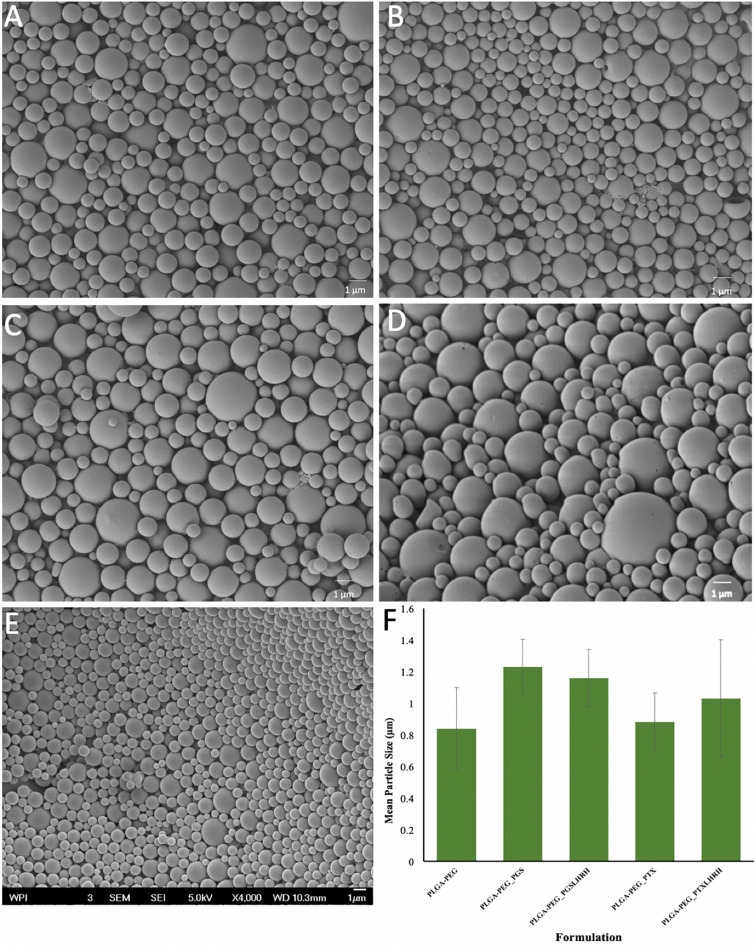
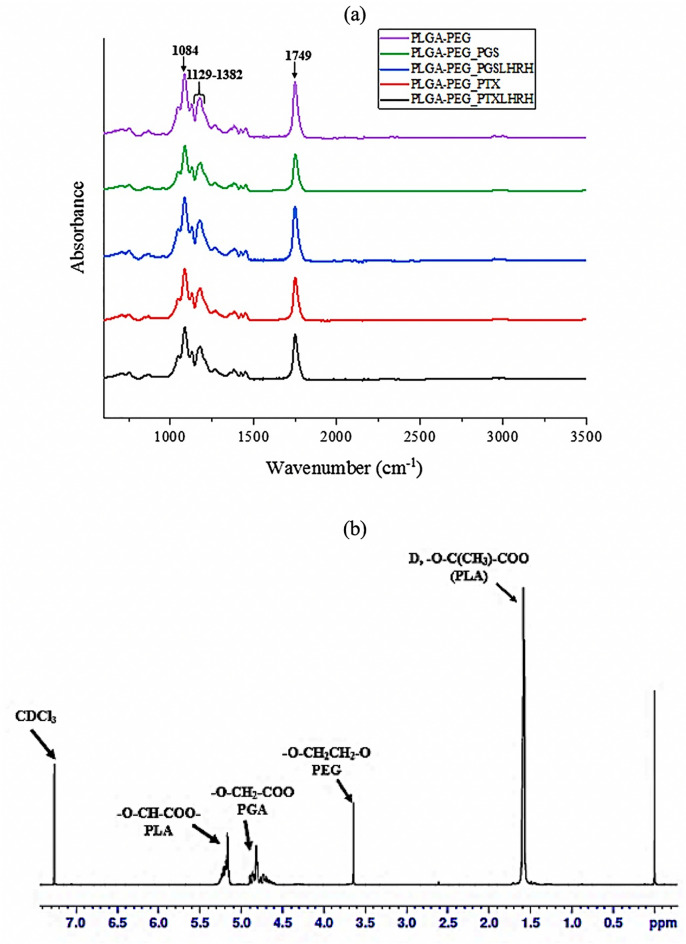
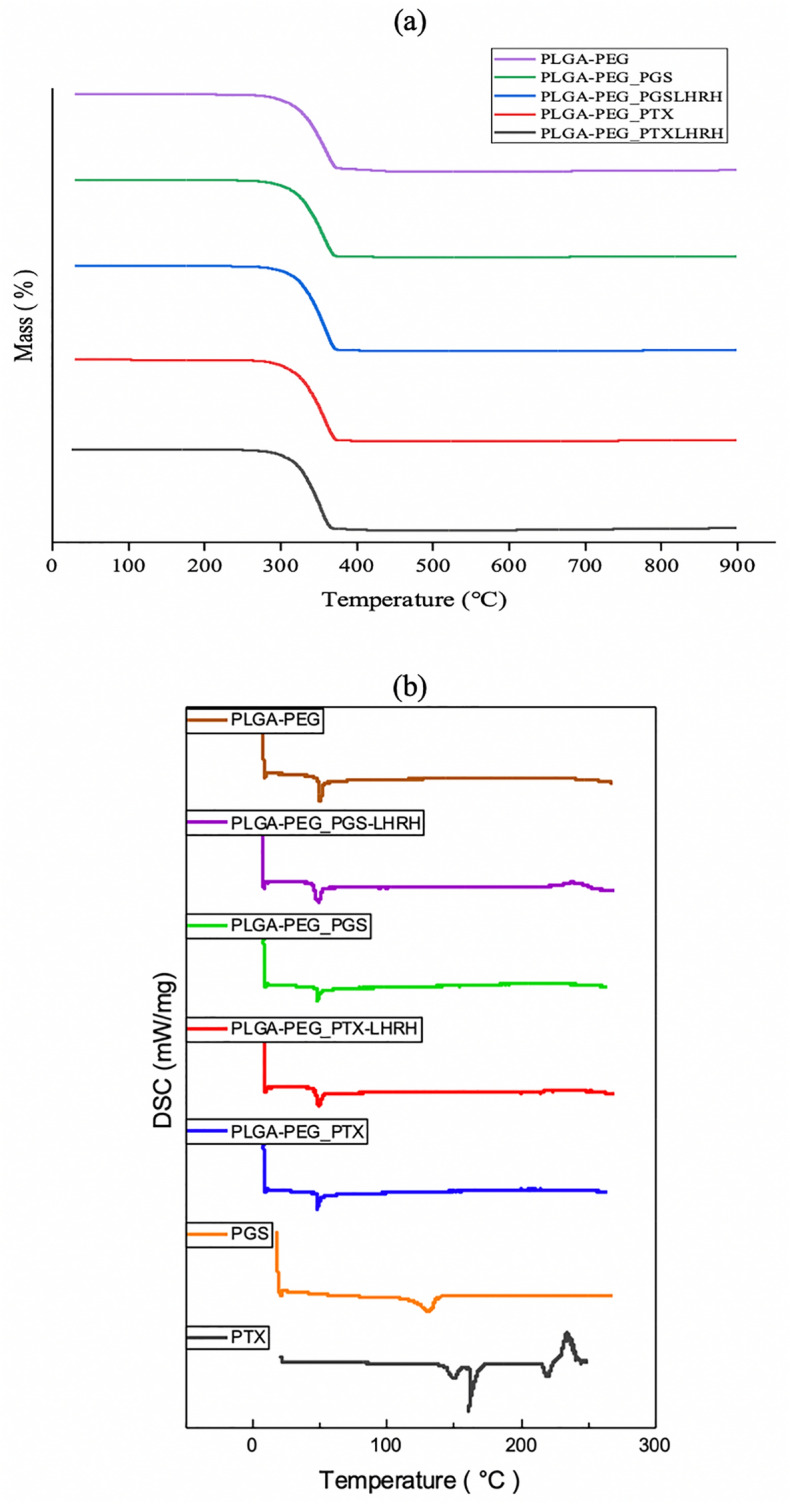
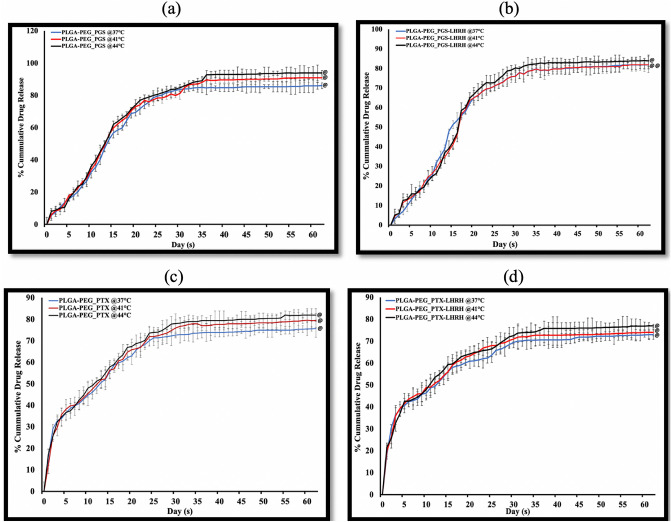
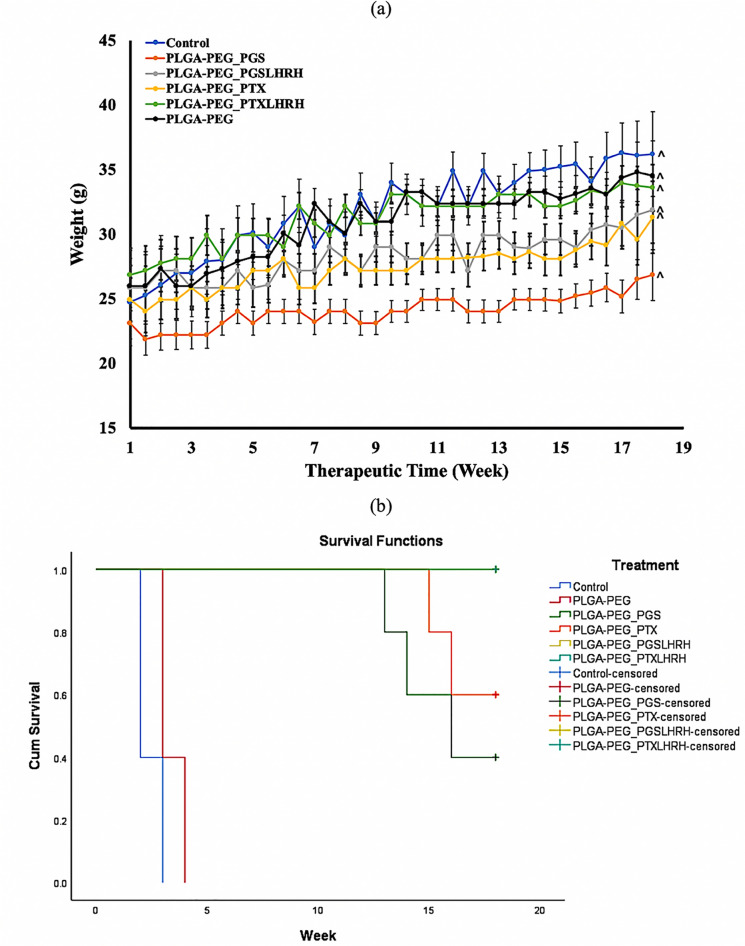
Triple-negative breast cancer (TNBC) is more aggressive and difficult to treat using conventional bulk chemotherapy that is often associated with increased toxicity and side effects. In this study, we encapsulated targeted drugs [A bacteria-synthesized anticancer drug (prodigiosin) and paclitaxel] using single solvent evaporation technique with a blend of FDA-approved poly lactic-co-glycolic acid-polyethylene glycol (PLGA_PEG) polymer microspheres. These drugs were functionalized with Luteinizing Hormone-Releasing hormone (LHRH) ligands whose receptors are shown to overexpressed on surfaces of TNBC. The physicochemical, structural, morphological and thermal properties of the drug-loaded microspheres were then characterized using Fourier Transform Infrared Spectroscopy (FTIR), Scanning Electron Microscopy (SEM), Dynamic Light Scattering (DLS), Nuclear Magnetic Resonance Spectroscopy (NMR), Thermogravimetric Analysis (TGA) and Differential Scanning Calorimetry (DSC). Results obtained from in vitro kinetics drug release at human body temperature (37 °C) and hyperthermic temperatures (41 and 44 °C) reveal a non-Fickian sustained drug release that is well-characterized by Korsmeyer-Peppas model with thermodynamically non-spontaneous release of drug. Clearly, the in vitro and in vivo drug release from conjugated drug-loaded microspheres (PLGA-PEG_PGS-LHRH, PLGA-PEG_PTX-LHRH) is shown to result in greater reductions of cell/tissue viability in the treatment of TNBC. The in vivo animal studies also showed that all the drug-loaded PLGA-PEG microspheres for the localized and targeted treatment of TNBC did not caused any noticeable toxicity and thus significantly extended the survival of the treated mice post tumor resection. The implications of this work are discussed for developing targeted drug systems to treat and prevent local recurred triple negative breast tumors after surgical resection.
Overview
The claims and statistics of this paper haven’t been checked yet.
Free: it reads the open-access text and checks the first 5 claims that cite a source we can check. Create a free account to check every claim.
Integrity signals
Registry
Cites
Statistics
Figures
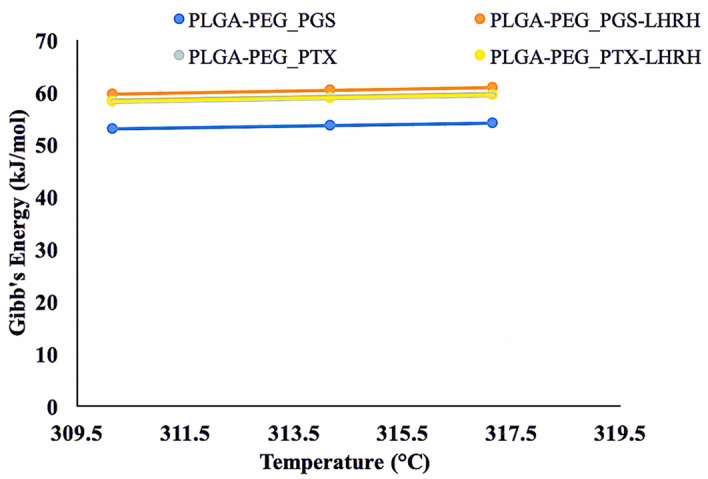
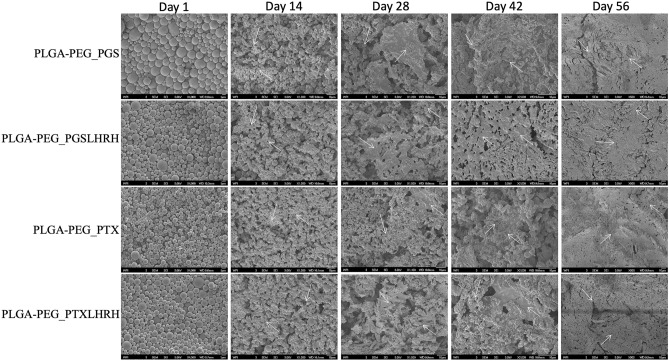
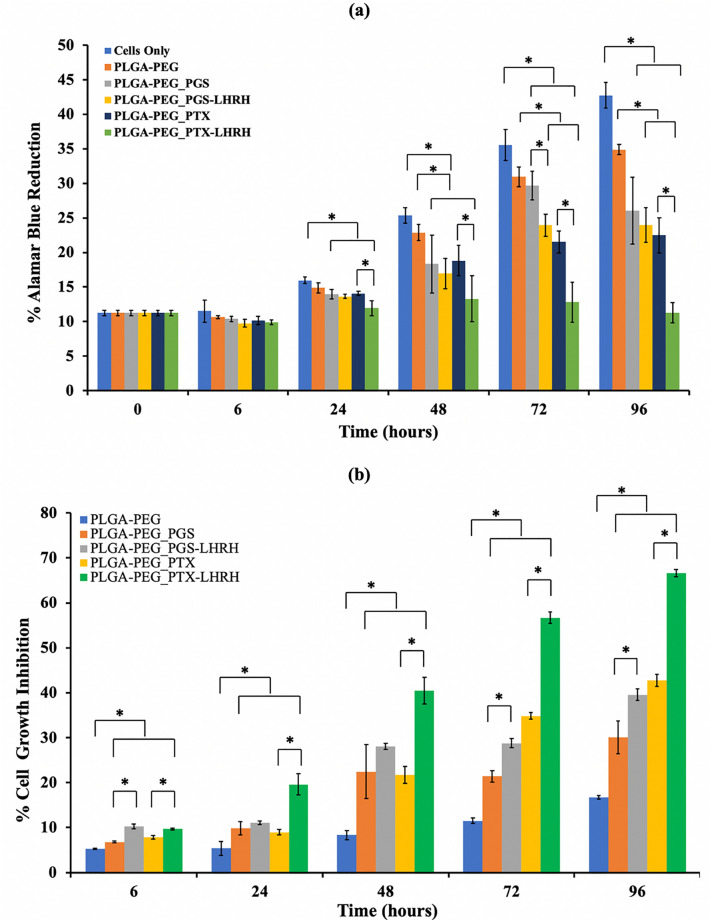
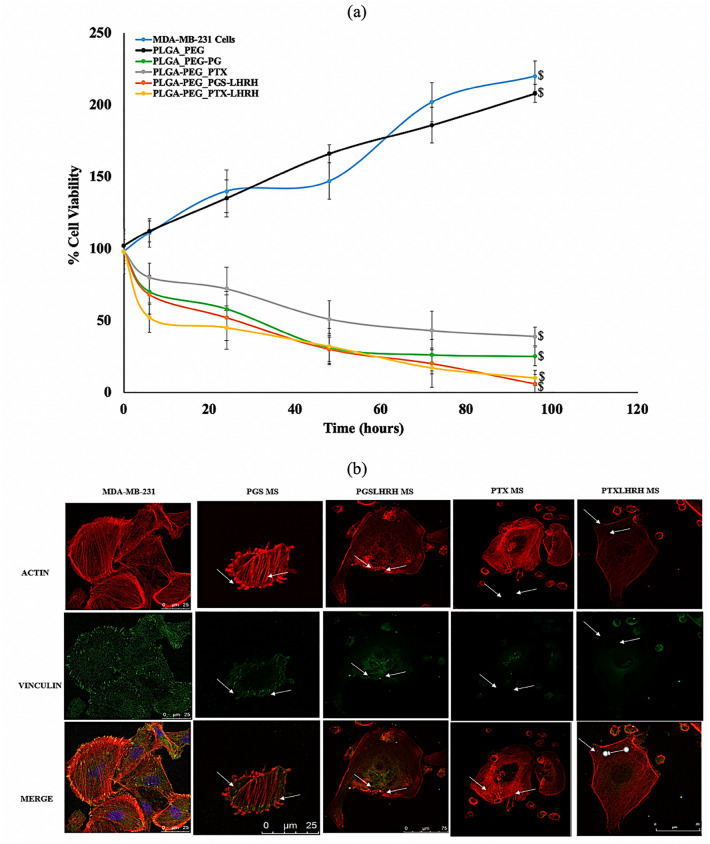
Verification
Claims the paper makes
The claims and statistics of this paper haven’t been checked yet.
Free: it reads the open-access text and checks the first 5 claims that cite a source we can check. Create a free account to check every claim.
Claims other papers make about this one
Each is checked against this paper’s own text: does it say what the citing paper says it does?
The source backs part of the claim, not all of it — or backs it for a different population, condition or comparison.
In the citing paper
“These results confirm the controlled release of TrH from PAGalginate microspheres.34,75”
From A bioinspired, pH-responsive microsphere matrix of cold-water extracted Colocasia esculenta mucilage and alginate: a new approach for sustained oral delivery of tramadol (2026) · cites this paper as [75]
Experimental — accuracy not yet measured
Self-check
Percentages, sums and reported differences re-computed from the paper’s own numbers.
The self-check needs the paper’s full text.
Citations
Cites
Bray, F., Ferlay, J., Soerjomataram, I., Siegel, R. L., Torre, L. A., & Jemal, A. (2018) · CA: A Cancer Journal for Clinicians · doi:10.3322/caac.21492 · Cited by 84,109
Siegel, R. L., Miller, K. D., & Jemal, A. (2016) · CA: A Cancer Journal for Clinicians · doi:10.3322/caac.21332 · Cited by 16,003
Modeling and comparison of dissolution profiles
Costa, P., & Sousa Lobo, J. M. (2001) · European Journal of Pharmaceutical Sciences · doi:10.1016/s0928-0987(01)00095-1 · Cited by 5,509
Mechanisms of solute release from porous hydrophilic polymers
Korsmeyer, R. W., Gurny, R., Doelker, E., Buri, P., & Peppas, N. A. (1983) · International Journal of Pharmaceutics · doi:10.1016/0378-5173(83)90064-9 · Cited by 5,258
Introduction to chemical engineering thermodynamics
Smith, J. M. (1950) · Journal of Chemical Education · doi:10.1021/ed027p584.3 · Cited by 4,973
Higuchi, T. (1963) · Journal of Pharmaceutical Sciences · doi:10.1002/jps.2600521210 · Cited by 4,884
Poly Lactic-co-Glycolic Acid (PLGA) as Biodegradable Controlled Drug Delivery Carrier
Makadia, H. K., & Siegel, S. J. (2011) · Polymers · doi:10.3390/polym3031377 · Cited by 4,816
Biodegradable polymeric nanoparticles based drug delivery systems
Kumari, A., Yadav, S. K., & Yadav, S. C. (2010) · Colloids and Surfaces B: Biointerfaces · doi:10.1016/j.colsurfb.2009.09.001 · Cited by 3,724
Global Cancer Incidence and Mortality Rates and Trends—An Update
Torre, L. A., Siegel, R. L., Ward, E. M., & Jemal, A. (2016) · Cancer Epidemiology, Biomarkers & Prevention · doi:10.1158/1055-9965.epi-15-0578 · Cited by 3,692
Poly(ethylene glycol) in Drug Delivery: Pros and Cons as Well as Potential Alternatives
Knop, K., Hoogenboom, R., Fischer, D., & Schubert, U. S. (2010) · Angewandte Chemie International Edition · doi:10.1002/anie.200902672 · Cited by 3,533
Research works printed but not linked: 5
- 35. Bruck, S. D.) (CRC Press, Amster- dam, 2019).
- 50. Patil, P. B., Uphade, K. B. & Saudagar, R. B. A review: Osmotic drug delivery system. Pharma Sci. Monit. 9, 2 (2018).
- 66. Zhang, Z. G., Sun, A. P. & Long, L. X. Effect of physicochemical properties of drugs on morphology and release of microspheres. J. Med. Biol. Eng. https ://doi.org/10.5405/jmbe.1070 (2014). · doi:10.5405/jmbe.1070
- 67. Yang, R. et al. Cationic formulation of paclitaxel-loaded poly D, L-lactic-co-glycolic acid (PLGA) nanoparticles using an emulsion- solvent diffusion method. Asian J. Pharm. Sci. 4, 89 (2009).
- 82. Narasimhan, B., Mallapragada, S. K. & Peppas, N. A. Release kinetics, data interpretation. Encycl. Control. Drug Deliv. 2, 921-935 (1999).
Cited by
Items 101–126 of 126
Kopoleva, E., Tsymbal, S. A., Kuchur, O. A., Kulchanovskaya, D. S., Grishina, A. Y., Pinova, A. A., Doroshenko, I. V., Romanov, R. I., Muslimov, A. R., Syuy, A. V., et al. (2026) · Drug Delivery and Translational Research · doi:10.1007/s13346-026-02112-x · Cited by 1
Joy, J. G., Sharma, G., Zhao, F., & Kim, J. (2026) · Carbohydrate Polymers · doi:10.1016/j.carbpol.2026.125365 · Cited by 1
Raval, A., Raval, A. A., Parikh, J. K., & Desai, M. A. (2026) · Journal of Applied Polymer Science · doi:10.1002/app.70967 · Cited by 1
CELY-GARCIA, M. C., ESPINEL-PABÓN, D. Y., Jaimes-Mendez, N., Balcázar, N., & Murillo, E. A. (2025) · Anais da Academia Brasileira de Ciências · doi:10.1590/0001-3765202520241069 · Cited by 1
Ruan, Y., Li, R., Zheng, P., Zhao, S., Wang, Z., Nie, G., & Qian, S. (2025) · ACS Applied Bio Materials · doi:10.1021/acsabm.5c00700 · Cited by 2
Noureen, S., Noreen, S., Batool, F., Ghumman, S. A., Hasan, S., Aslam, S., & Ahmed, N. (2026) · RSC Pharmaceutics · doi:10.1039/d5pm00263j
da Silva, G. R. (2021) · Digital Library of Theses and Dissertations (Universidade de São Paulo) · doi:10.11606/t.76.2021.tde-01092021-154844
Optimization of mimetic periosteum autografts for the treatment of nonunions
Romero-Torrecilla, J. A. (. A. (2023) · Depósito Académico Digital Universidad de Navarra (University of Navarra) · doi:10.15581/10171/68418
Advancements in Long-acting Injectable Therapies: Revolutionizing Cancer Treatment
Patel, V., Panjwani, D., Patel, S., Ahlawat, P., Dharamsi, A. T., Patel, L. D., & Patel, A. (2024) · Current Drug Therapy · doi:10.2174/0115748855307290240807060226
Nanomedicine-Based Cancer Immunotherapy
Ali, S. H., & Aziz, M. A. (2024) · Interdisciplinary cancer research · doi:10.1007/16833_2024_339
Urea‐Loaded PLGA Microspheres as Chemotaxis Stimulants for Helicobacter pylori
Shanmughan, P., Subrahmaniyan, P., Bhatnagar, D., Ranganathan, S., & Lele, P. P. (2024) · Biotechnology and Bioengineering · doi:10.1002/bit.28870
“In this regard, poly(lactic ‐ co ‐ glycolic acid) (PLGA) microparticles are suitable vehicles for loading and releasing hydrophilic ligands, such as urea, considering their biocompatibility and biodegradability (Chatterjee and Chanda 2022; Jusu et al. 2020).”
Bioresorbable materials in controlled and smart drug delivery systems
Kadam, A., Sheyn, D., Maheshwari, N., & More, N. (2025) · Elsevier eBooks · doi:10.1016/b978-0-443-31606-7.00006-5
Dziewior, C. S., Li, Y., Song, S., Agarwal, A., Coaker, K., Judge, N. G., Ji, R., & Becker, M. L. (2025) · Advanced Healthcare Materials · doi:10.1002/adhm.202503669
Zheng, X., Li, B., Deng, Q., & Cao, G. (2025) · Scientific Reports · doi:10.1038/s41598-025-30466-8
“PEI-modified PLGA nanoparticles are effective for loading gene therapy molecules such as DNA, siRNA, and microRNA 31 , as well as hydrophobic drugs, due to PEI’s positive charge enhancing electrostatic interactions and surface characteristics 32 .”
Polymeric Nanoparticles for Antigen Delivery to Dendritic Cells
Stahl, M. (2023) · University of Regensburg Publication Server (University of Regensburg) · doi:10.5283/epub.53240
Biomaterials for Enhanced Care in Sickle Cell Disease and Complex Wounds
Enueme, N. I. (2025) · eScholarship (California Digital Library)
Synthesis, characterization and applications of peptide-coated nanoparticles
Poursharifi, M. (2021) · CUNY Academic Works (City University of New York)
Myllymäki, I. (2023) · Tampere University Institutional Repository (Tampere University)
TRIPLE-NEGATIVE BREAST CANCER: A REVIEW OF EVOLVING STRATEGIES
Manaal, F., Bukka, S., Kallu, C., Reddy, N. R. G. M., & Boggula, N. (2026) · International Journal of Pharmaceutics and Drug Analysis · doi:10.47957/ijpda.v14i1.694
MacNeil, G. A. (n.d.) · Summit (Simon Fraser University)
PLGA-based microparticles : towards an elucidation of the drug release mechansims
Lefol, L. A. (2023) · theses.fr (ABES) · doi:10.70675/30ae50a0z3d67z4539z8271zd2c655954b3b
Bioabsorbable anti-infection system for orthopedic implants
Madureira, M. A. B., Gomes, R. C., Júnior, A. R. D. S., Motta, A. C., & Zavaglia, C. A. D. C. (2026) · In vitro models · doi:10.1007/s44164-026-00121-1
Kemawy, G. A. S., Mohammadnejad, J., Narmani, A., Pourmadadi, M., Jafari, H., Döğüş, Y., Haqverdi, S. J., Özbolat, G., & Daemi, A. (2026) · Discover Oncology · doi:10.1007/s12672-026-05220-9
“The results of this test were in accordance with the findings of research by Jusu et al. [64].”
Gadagi, A. G., Athira, K., Kumar, B. S., Reddy, S. G., Srinivas, S. P., & Posa, J. K. (2026) · Engineered Science · doi:10.30919/es2342
Bae, J. (2026) · Syracuse University Libraries (Syracuse University)
Gajare, B., Kanp, T., Aalhate, M., Dhuri, A., Ravi, N. K., Manoharan, B., Nair, R., Rode, K., Paul, P., & Singh, P. K. (2026) · Research Square · doi:10.21203/rs.3.rs-10459192/v1
Metadata
- Authors
- Jusu, S. M., Obayemi, J. D., Salifu, A. A., Nwazojie, C. C., Uzonwanne, V., Odusanya, O. S., & Soboyejo, W. O.
- Affiliations
- Worcester Polytechnic Institute (US)
- African Institute of Science and Technology (NG)
- Corresponding author
- Soboyejo, W. O.
- Venue
- Scientific Reports
- Published
- 2020-08-25
- Volume
- 10
- Issue
- 1
- Pages
- 14188-14188
- ISSN
- 2045-2322 (ISSN-L)
- PMC
- PMC7447811
- OpenAlex
- W3080177289
- Semantic Scholar
- c65429a42c54856e402f6bdbeb56da2789bd17a3
- Cited by
- 112
- References
- 91
- Citations by year
- 2026: 9 · 2025: 19 · 2024: 23 · 2023: 18 · 2022: 28 · 2021: 15
- FWCI
- 3.97
- Type
- journal article
- Language
- en
- Open access
- gold
- doi.org
- Licence
- cc-by
- creativecommons.org/licenses/by/4.0 (tdm)
- creativecommons.org/licenses/by/4.0 (vor)
- Locations
- Scientific Reports (publishedVersion, cc-by)
- PubMed Central (publishedVersion, cc-by)
- PubMed (publishedVersion)
- Funders
- African Center of Excellence (ACE) Program through the Pan-African Materials Institute (P126974)
- Topics
- Physical Sciences › Materials Science › Biomaterials › Nanoparticle-Based Drug Delivery
- Life Sciences › Pharmacology, Toxicology and Pharmaceutics › Pharmaceutical Science › Advanced Drug Delivery Systems
- Physical Sciences › Engineering › Biomedical Engineering › Ultrasound and Hyperthermia Applications
- Keywords
- triple-negative breast cancer, targeted drug delivery, prodigiosin, paclitaxel, sustained drug release, Korsmeyer-Peppas model, tumor recurrence prevention
- MeSH terms
- Animals, Antineoplastic Agents, Phytogenic, Calorimetry, Differential Scanning, Delayed-Action Preparations, Drug Carriers, Female, Humans, Gonadotropin-Releasing Hormone, Ligands, Lung Neoplasms, Mice, Nude, Microscopy, Electron, Scanning, Microspheres, Neoplasm Proteins, Polyesters, Polyethylene Glycols, Receptors, LHRH, Thermodynamics, Thermogravimetry, Drug Delivery Systems, Paclitaxel, Spectroscopy, Fourier Transform Infrared, Xenograft Model Antitumor Assays, Cell Line, Tumor, Mice, Triple Negative Breast Neoplasms, Drug Liberation
About these checks
Registry, retraction, Cites and statistics results are computed, not judged, with one exception: a printed reference that no index lists is read once by a model before it counts as a citation error. Claims are extracted by a model and kept only when their quote appears verbatim in the text; each cited source is then checked, with a model’s help, for whether it says what the claim relies on. Those verdicts can be wrong — read the claim’s quote and the cited source before relying on one.
Statistics and arithmetic are recomputed, not judged.
Confidence bands are shown only for fields calibrated on our annotated test set. None is calibrated yet, so no band is shown.
What counts as a claim ›How we measure confidence ›How we check this ›
Are you an author, or do you see a problem with this page? Request a review
Data sources
Bibliographic data: Semantic Scholar, OpenAlex, Crossref.
Contains information from the Semantic Scholar Academic Graph Datasets, made available under the ODC Attribution License (ODC-BY 1.0).
Semantic Scholar’s data is described in: Kinney, R., et al. (2023). The Semantic Scholar Open Data Platform. arXiv:2301.10140.
