

Caffeine increases performance and leads to a cardioprotective effect during intense exercise in cyclists
Open accessThe DOI matches its Crossref record; 63 of the 63 references it cites were found in a registry or an index.
Abstract
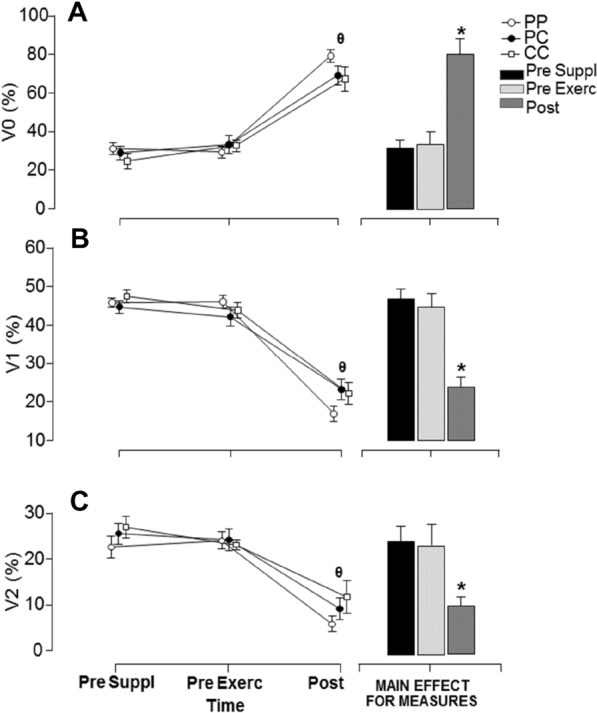
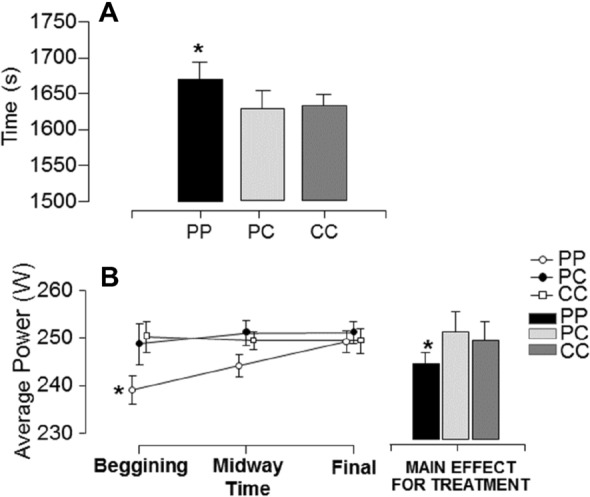
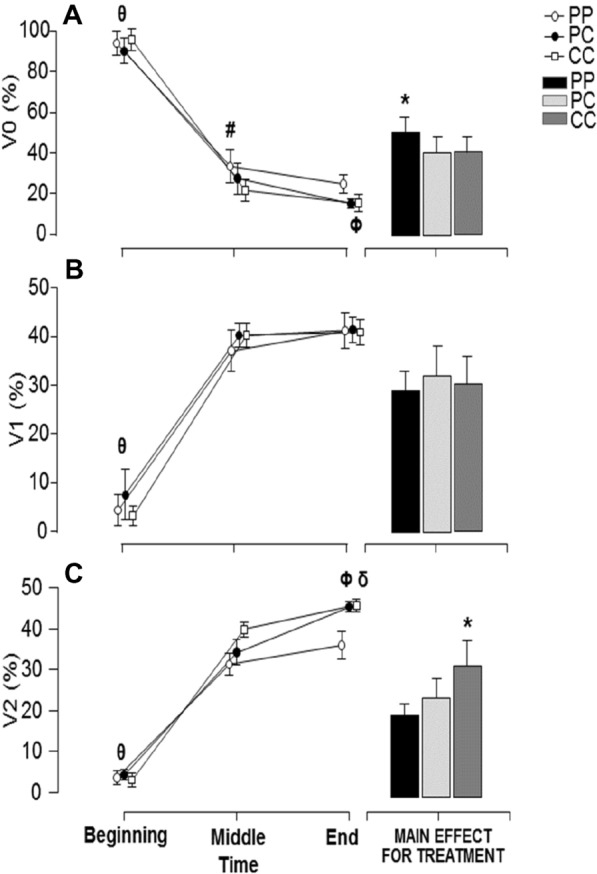
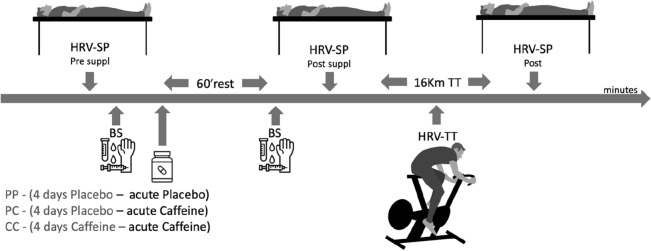
The present study was designed to investigate the effects of different caffeine dietary strategies to compare the impact on athletic performance and cardiac autonomic response. The order of the supplementation was randomly assigned: placebo(4-day)-placebo(acute)/PP, placebo(4-day)-caffeine(acute)/PC and caffeine(4-day)-caffeine(acute)/CC. Fourteen male recreationally-trained cyclists ingested capsules containing either placebo or caffeine (6 mg kg−1) for 4 days. On day 5 (acute), capsules containing placebo or caffeine (6 mg kg−1) were ingested 60 min before completing a 16 km time-trial (simulated cycling). CC and PC showed improvements in time (CC vs PP, Δ − 39.3 s and PC vs PP, Δ − 43.4 s; P = 0.00; ƞ 2 = 0.33) and in output power (CC vs PP, Δ 5.55 w and PC vs PP, Δ 6.17 w; P = 0.00; ƞ 2 = 0.30). At the final of the time-trial, CC and PC exhibited greater parasympathetic modulation (vagal tone) when compared to the PP condition (P < 0.00; ƞ 2 = 0.92). Our study provided evidence that acute caffeine intake (6 mg∙kg−1) increased performance (time-trial) and demonstrated a relevant cardioprotective effect, through increased vagal tone.
Overview
The claims and statistics of this paper haven’t been checked yet.
Free: it reads the open-access text and checks the first 5 claims that cite a source we can check. Create a free account to check every claim.
Integrity signals
Registry
Cites
Statistics
Figures
Verification
Claims the paper makes
The claims and statistics of this paper haven’t been checked yet.
Free: it reads the open-access text and checks the first 5 claims that cite a source we can check. Create a free account to check every claim.
Claims other papers make about this one
Each is checked against this paper’s own text: does it say what the citing paper says it does?
The source backs part of the claim, not all of it — or backs it for a different population, condition or comparison.
In the citing paper
“Evidence suggests that CAF in liquid [ 22 ] and gum [ 20 ] forms may exert a more pronounced influence on reducing parasympathetic activity parameters compared to capsules [ 17 , 36 ].”
From Impact of Caffeine Intake Strategies on Heart Rate Variability during Post-Exercise Recovery: A Systematic Review and Meta-Analysis (2024) · cites this paper as [17]
Experimental — accuracy not yet measuredThe source backs part of the claim, not all of it — or backs it for a different population, condition or comparison.
In the citing paper
“Due to the challenges in quantifying the expression of tissue receptors (muscular, neural, and cardiac) involved in CAF interactions in human models, many researchers have indirectly observed these responses through physiological outcomes such as HRV and heart rate [ 17 , 41 ].”
From Impact of Caffeine Intake Strategies on Heart Rate Variability during Post-Exercise Recovery: A Systematic Review and Meta-Analysis (2024) · cites this paper as [17]
Experimental — accuracy not yet measuredThe cited source says what the claim attributes to it.
In the citing paper
“However, CAF might influence this HRV index measurement [ 17 ].”
From Impact of Caffeine Intake Strategies on Heart Rate Variability during Post-Exercise Recovery: A Systematic Review and Meta-Analysis (2024) · cites this paper as [17]
Self-check
Percentages, sums and reported differences re-computed from the paper’s own numbers.
The self-check needs the paper’s full text.
Citations
Cites
Heart rate variability: Standards of measurement, physiological interpretation, and clinical use
Malik, M., Bigger, J. T., Camm, A. J., Kleiger, R. E., Malliani, A., Moss, A. J., & Schwartz, P. J. (1996) · European Heart Journal · doi:10.1093/oxfordjournals.eurheartj.a014868 · Cited by 15,289
Vanderlei (2009) · doi:10.1590/s0102-76382009000200018 · Cited by 744
Beverage caffeine intakes in the U.S.
Mitchell, D. C., Knight, C. A., Hockenberry, J., Teplansky, R., & Hartman, T. J. (2014) · Food and Chemical Toxicology · doi:10.1016/j.fct.2013.10.042 · Cited by 565 · cited 4×
“Discussion Since our study presented data from (1) procedures to ensure the control of experiments (blood CAF quantification, HRV PRE suppl and POS exerc); (2) performance in TT-test; (3) HRV along and after the TT-test, the discussion was structured to follow the exposed sequence.”
BackgroundMethodInfluentialQuantitative analysis of heart rate variability
Kurths, J., Voss, A., Saparin, P., Witt, A., Kleiner, H. J., & Wessel, N. (1995) · Chaos: An Interdisciplinary Journal of Nonlinear Science · doi:10.1063/1.166090 · Cited by 474
Quintana, D. S., & Williams, D. R. (2018) · BMC Psychiatry · doi:10.1186/s12888-018-1761-4 · Cited by 408
A Bayesian perspective on the bonferroni adjustment
Westfall, P. (1997) · Biometrika · doi:10.1093/biomet/84.2.419 · Cited by 316
Porta, A., Tobaldini, E., Guzzetti, S., Furlan, R., Montano, N., & Gnecchi-Ruscone, T. (2007) · American Journal of Physiology-Heart and Circulatory Physiology · doi:10.1152/ajpheart.00006.2007 · Cited by 309
Symbolic Dynamics of Heart Rate Variability: A Probe to Investigate Cardiac Autonomic Modulation
Guzzetti, S., Borroni, E., Garbelli, P. E., Ceriani, E., Bella, P. D., Montano, N., Cogliati, C., Somers, V. K., Mallani, A., & Porta, A. (2005) · Circulation · doi:10.1161/circulationaha.104.518449 · Cited by 307
Southward, K., Rutherfurd-Markwick, K. J., & Ali, A. (2018) · Sports Medicine · doi:10.1007/s40279-018-0939-8 · Cited by 254
Hartzell, H. C., Méry, P.-F., Fischmeister, R., & Szabo, G. (1991) · Nature · doi:10.1038/351573a0 · Cited by 229
Placebo in sports nutrition: a proof‐of‐principle study involving caffeine supplementation
Saunders, B., de Oliveira, L. F., da Silva, R. P., de Salles Painelli, V., Gonçalves, L. S., Yamaguchi, G., Mutti, T., Maciel, E., Roschel, H., Artioli, G. G., et al. (2017) · Scandinavian Journal of Medicine & Science in Sports · doi:10.1111/sms.12793 · Cited by 195
Gonçalves, L. D. S., Painelli, V. D. S., Yamaguchi, G., Oliveira, L. F. D., Saunders, B., da Silva, R. P., Maciel, E., Artioli, G. G., Roschel, H., & Gualano, B. (2017) · Journal of Applied Physiology · doi:10.1152/japplphysiol.00260.2017 · Cited by 173
Improved Cycling Time-Trial Performance after Ingestion of a Caffeine Energy Drink
Ivy, J. L., Kammer, L., Ding, Z., Wang, B., Bernard, J. R., Liao, Y.-H., & Hwang, J. (2009) · International Journal of Sport Nutrition and Exercise Metabolism · doi:10.1123/ijsnem.19.1.61 · Cited by 165
Nonlinear Methods Most Applied to Heart-Rate Time Series: A Review
Henriques, T., Ribeiro, M., Teixeira, A., Castro, L., Antunes, L., & Costa-Santos, C. (2020) · Entropy · doi:10.3390/e22030309 · Cited by 158
Xanthine derivatives as antagonists at A1 and A2 adenosine receptors
Schwabe, U., Ukena, D., & Lohse, M. J. (1985) · Naunyn-Schmiedeberg's Archives of Pharmacology · doi:10.1007/bf00572436 · Cited by 153
Time course of tolerance to the performance benefits of caffeine
Lara, B., Ruiz-Moreno, C., Salinero, J. J., & Del Coso, J. (2019) · PLOS ONE · doi:10.1371/journal.pone.0210275 · Cited by 142
Beaumont, R., Cordery, P., Funnell, M., Mears, S., James, L., & Watson, P. (2017) · Journal of Sports Sciences · doi:10.1080/02640414.2016.1241421 · Cited by 130
What Should We Do about Habitual Caffeine Use in Athletes?
Pickering, C., & Kiely, J. (2019) · Sports Medicine · doi:10.1007/s40279-018-0980-7 · Cited by 127
Sanctis, V. D., Soliman, N. A., Soliman, A. T., Elsedfy, H. H., Maio, S. D., Kholy, M. E., & Fiscina, B. (2017) · Acta bio-medica dell'Ateneo parmense/Acta biomedica · doi:10.23750/abm.v88i2.6664 · Cited by 114
The effects of caffeine on graded exercise performance in caffeine naive versus habituated subjects
Dodd, S. L., Brooks, E., Powers, S. K., & Tulley, R. (1991) · European Journal of Applied Physiology and Occupational Physiology · doi:10.1007/bf00626615 · Cited by 105
Conway, K. J., Orr, R., & Stannard, S. R. (2003) · Journal of Applied Physiology · doi:10.1152/japplphysiol.00911.2002 · Cited by 102
Acute effects of caffeine on heart rate variability
Sondermeijer, H. P., van Marle, A. G. J., Kamen, P., & Krum, H. (2002) · The American Journal of Cardiology · doi:10.1016/s0002-9149(02)02725-x · Cited by 99
Caffeine withdrawal and high-intensity endurance cycling performance
Irwin, C., Desbrow, B., Ellis, A., O'Keeffe, B., Grant, G., & Leveritt, M. (2011) · Journal of Sports Sciences · doi:10.1080/02640414.2010.541480 · Cited by 96
Caffeine and Exercise Performance: Possible Directions for Definitive Findings
Martins, G. L., Guilherme, J. P. L. F., Ferreira, L. H. B., de Souza-Junior, T. P., & Lancha, A. H. (2020) · Frontiers in Sports and Active Living · doi:10.3389/fspor.2020.574854 · Cited by 79
Gonzaga, L. A., Vanderlei, L. C. M., Gomes, R. L., & Valenti, V. E. (2017) · Scientific Reports · doi:10.1038/s41598-017-14540-4 · Cited by 75
Shen, J. G., Brooks, M. B., Cincotta, J., & Manjourides, J. D. (2019) · Journal of Science and Medicine in Sport · doi:10.1016/j.jsams.2018.07.022 · Cited by 75
The interactions of caffeine with monoamine oxidase
Petzer, A., Pienaar, A., & Petzer, J. P. (2013) · Life Sciences · doi:10.1016/j.lfs.2013.06.020 · Cited by 74
Improved analysis of heart rate variability by methods of nonlinear dynamics
Voss, A., Kurths, J., Kleiner, H. J., Witt, A., & Wessel, N. (1995) · Journal of Electrocardiology · doi:10.1016/s0022-0736(95)80021-2 · Cited by 72
Basrai, M., Schweinlin, A., Menzel, J., Mielke, H., Weikert, C., Dusemund, B., Putze, K., Watzl, B., Lampen, A., & Bischoff, S. C. (2019) · The Journal of Nutrition · doi:10.1093/jn/nxy303 · Cited by 71
No effect of carbohydrate feeding on 16 km cycling time trial performance
Jeukendrup, A. E., Hopkins, S., Vargas, A., & Hulston, C. J. (2008) · European Journal of Applied Physiology · doi:10.1007/s00421-008-0838-z · Cited by 70
Impact of Genetic Variability on Physiological Responses to Caffeine in Humans: A Systematic Review
Fulton, J. L., Dinas, P. C., Carrillo, A. E., Edsall, J. R., Ryan, E. J., & Ryan, E. J. (2018) · Nutrients · doi:10.3390/nu10101373 · Cited by 69
The cardiovascular effects of methylxanthines
Riksen, N. P., Smits, P., & Rongen, G. A. (2011) · Handbook of Experimental Pharmacology · doi:10.1007/978-3-642-13443-2_16 · Cited by 65
Neural Mechanisms of Cardioprotection
Gourine, A., & Gourine, A. V. (2014) · Physiology · doi:10.1152/physiol.00037.2013 · Cited by 62
Caffeine delays autonomic recovery following acute exercise
Bunsawat, K., White, D. W., Kappus, R. M., & Baynard, T. (2015) · European Journal of Preventive Cardiology · doi:10.1177/2047487314554867 · Cited by 61
Nutritional Strategies to Optimize Performance and Recovery in Rowing Athletes
Kim, J., & Kim, E.-K. (2020) · Nutrients · doi:10.3390/nu12061685 · Cited by 61
Lévy, S., Santini, L., Capucci, A., Oto, A., Santomauro, M., Riganti, C., Raviele, A., & Cappato, R. (2019) · Journal of Interventional Cardiac Electrophysiology · doi:10.1007/s10840-019-00610-2 · Cited by 58
Shohet, K. L., & Landrum, R. E. (2001) · Psychological Reports · doi:10.2466/pr0.2001.89.3.521 · Cited by 56
Zuchinali, P., Souza, G. C., Pimentel, M., Chemello, D., Zimerman, A., Giaretta, V., Salamoni, J., Fracasso, B., Zimerman, L. I., & Rohde, L. E. (2016) · JAMA Internal Medicine · doi:10.1001/jamainternmed.2016.6374 · Cited by 43
Acevedo, J. M., Almansa, A. S., Matos-Vergara, N., Marrero-Cordero, L. R., Cabezas-Bou, E., & Díaz‐Ríos, M. (2015) · Neuropharmacology · doi:10.1016/j.neuropharm.2015.10.020 · Cited by 42
Durkalec-Michalski, K., Nowaczyk, P. M., Główka, N., & Grygiel, A. (2019) · Journal of the International Society of Sports Nutrition · doi:10.1186/s12970-019-0305-8 · Cited by 41
Wilk, M., Krzysztofik, M., Maszczyk, A., Chycki, J., & Zajac, A. (2019) · Journal of the International Society of Sports Nutrition · doi:10.1186/s12970-019-0275-x · Cited by 37
Subjective and objective effects of coffee consumption — caffeine or expectations?
Dömötör, Z., Szemerszky, R., & Köteles, F. G. (2014) · Acta Physiologica Hungarica · doi:10.1556/aphysiol.101.2014.012 · Cited by 35
da Cruz, C. J. G., Porto, L. G. G., Rolim, P. D. S., Pires, D. D. S., Garcia, G. L., & Molina, G. E. (2019) · Clinics · doi:10.6061/clinics/2019/e806 · Cited by 34
Caffeine and Activation Theory: Effects on Health and Behavior
(2006) · CRC Press eBooks · doi:10.1201/9781420006568 · Cited by 32
Okudaira, N., Kuwahara, M., Hirata, Y., Oku, Y., & Nishio, H. (2014) · Biochemical and Biophysical Research Communications · doi:10.1016/j.bbrc.2014.08.132 · Cited by 29
Caffeine Attenuates Decreases in Leg Power Without Increased Muscle Damage
Ribeiro, B. G., Morales, A. P., Sampaio-Jorge, F., Barth, T., de Oliveira, M. B. C., Coelho, G. M. D. O., & Leite, T. C. (2016) · The Journal of Strength and Conditioning Research · doi:10.1519/jsc.0000000000001332 · Cited by 28
Self-citationKonishi, Y., Hori, H., Ide, K., Katsuki, A., Atake, K., Igata, R., Kubo, T., Tominaga, H., Beppu, H., Asahara, T., et al. (2018) · PLoS ONE · doi:10.1371/journal.pone.0202247 · Cited by 27
Wiffin, M., Smith, L., Antonio, J., Johnstone, J., Beasley, L., & Roberts, J. (2019) · Journal of the International Society of Sports Nutrition · doi:10.1186/s12970-019-0268-9 · Cited by 27
Ferreira, R. E. S., Pacheco, R. L., de Oliveira Cruz Latorraca, C., Riera, R., Eid, R. G., & Martimbianco, A. L. C. (2021) · Sports Health: A Multidisciplinary Approach · doi:10.1177/1941738121998712 · Cited by 27
Khcharem, A., Souissi, M., Atheymen, R., Souissi, W., & Sahnoun, Z. (2021) · Pharmacology Biochemistry and Behavior · doi:10.1016/j.pbb.2021.173219 · Cited by 24
Sarshin, A., Naderi, A., da Cruz, C. J. G., Feizolahi, F., Forbes, S. C., Candow, D. G., Mohammadgholian, E., Amiri, M., Jafari, N., Rahimi, A., et al. (2020) · Journal of the International Society of Sports Nutrition · doi:10.1186/s12970-020-00373-6 · Cited by 21
Lajin, B., Schweighofer, N., Goessler, W., & Obermayer-Pietsch, B. M. (2021) · Talanta · doi:10.1016/j.talanta.2021.122658 · Cited by 21
Recovery of Heart Rate Variability and Ventricular Repolarization Indices Following Exercise
Lahiri, M. K., Chicos, A., Bergner, D., Ng, J., Banthia, S., Wang, N. C., Subačius, H., Kadish, A. H., & Goldberger, J. J. (2012) · Annals of Noninvasive Electrocardiology · doi:10.1111/j.1542-474x.2012.00527.x · Cited by 18
Clark, N. W., Herring, C. H., Goldstein, E. R., Stout, J. R., Wells, A. J., & Fukuda, D. H. (2020) · Nutrients · doi:10.3390/nu12082372 · Cited by 16
Suicidal attempt with caffeine overdose treated with dexmedetomidine: a case report
Kitano, T., Okajima, M., Sato, K., Noda, T., & Taniguchi, T. (2021) · Journal of Medical Case Reports · doi:10.1186/s13256-020-02611-6 · Cited by 15
Glaister, M., & Moir, G. L. (2019) · Journal of Caffeine and Adenosine Research · doi:10.1089/caff.2019.0003 · Cited by 14
Caffeine improves performance but not duration of the countermovement jump phases
Lago-Rodríguez, Á., Jiménez, P. J., Bailey, S. J., & Domínguez, R. (2021) · The Journal of Sports Medicine and Physical Fitness · doi:10.23736/s0022-4707.20.11099-5 · Cited by 11
Perceived Consumption of a High-Dose Caffeine Drink Delays Neuromuscular Fatigue
Elhaj, H. M., Imam, O., Page, B., Vitale, J. M., & Malek, M. H. (2020) · Journal of Strength and Conditioning Research · doi:10.1519/jsc.0000000000003932 · Cited by 11
Caliskan, S. G., & Bilgin, M. D. (2020) · Cardiology in the Young · doi:10.1017/s1047951120001481 · Cited by 10
dos Santos, J. H. B., Passos, R. S., Freire, I. V., Ribeiro, Í. J. S., Oliveira, A. A., Casotti, C. A., Alkahtani, S. A., Barbosa, A. A. L., & Pereira, R. (2021) · Experimental Gerontology · doi:10.1016/j.exger.2021.111227 · Cited by 8
Self-citation(2020) · Case Medical Research · doi:10.31525/ct1-nct04281758 · Cited by 2
Çalışkan, Ş. G., & Bilgin, M. (2020) · Cardiology in the Young · doi:10.1017/s1047951120002814 · Cited by 1
Cited by
Overview of Caffeine Effects on Human Health and Emerging Delivery Strategies
Saraiva, S. M., Jacinto, T. A., Gonçalves, A. C., Gaspar, D., & Silva, L. R. (2023) · Pharmaceuticals · doi:10.3390/ph16081067 · Cited by 102
Willems, M. E. T., & Blacker, S. D. (2022) · Frontiers in Nutrition · doi:10.3389/fnut.2022.864323 · Cited by 31
Outcomes of hypothalamic oxytocin neuron-driven cardioprotection after acute myocardial infarction
Schunke, K. J., Rodriguez, J., Dyavanapalli, J., Schloen, J., Wang, X., Escobar, J. B., Kowalik, G., Cheung, E. C., Ribeiro, C., Russo, R., et al. (2023) · Basic Research in Cardiology · doi:10.1007/s00395-023-01013-1 · Cited by 29
“Clinical studies suggest remote ischemic conditioning-induced cardioprotection likely involves activation of sensory nerve fibers [81], while acute caffeine intake can possibly provide a cardioprotective effect through increased vagal tone [103].”
Almeida, B. A., Morales, A. P., Ribeiro, J. R. C., Sampaio-Jorge, F., Ribeiro, Y. G., Barth, T., & Ribeiro, B. G. (2024) · Current Cardiology Reviews · doi:10.2174/011573403x289842240307114736 · Cited by 9
Self-citationMenezes, J. L., Aidar, F. J., Bădicu, G., Cataldi, S., Carvutto, R., Silva, A. F., Clemente, F. M., Cerulli, C., de Jesus, J. B., Souza, L. M. V., et al. (2022) · Biology · doi:10.3390/biology11121843 · Cited by 7
“This effect can also be explained by changes in autonomic modulation [5,23,41].”
Background
Metadata
- Authors
- Sampaio-Jorge, F., Morales, A. P., Pereira, R., Barth, T., & Ribeiro, B. G.
- Affiliations
- Universidade Federal do Rio de Janeiro (BR)
- Southwest Bahia State University (BR)
- Corresponding author
- Sampaio-Jorge, Felipe
- ORCID
- Venue
- Scientific Reports
- Published
- 2021-12-21
- Volume
- 11
- Issue
- 1
- Pages
- 24327-24327
- ISSN
- 2045-2322 (ISSN-L)
- PMC
- PMC8692308
- OpenAlex
- W4200165175
- Cited by
- 15
- References
- 63
- Citations by year
- 2026: 2 · 2025: 2 · 2024: 4 · 2023: 5 · 2022: 2
- FWCI
- 1.61
- Type
- journal article
- Language
- en
- Open access
- gold
- doi.org
- Licence
- cc-by
- creativecommons.org/licenses/by/4.0 (tdm)
- creativecommons.org/licenses/by/4.0 (vor)
- Locations
- Scientific Reports (publishedVersion, cc-by)
- PubMed Central (publishedVersion, cc-by)
- PubMed (publishedVersion)
- DOAJ (DOAJ: Directory of Open Access Journals) (submittedVersion, cc-by-sa)
- Funders
- Coordenação de Aperfeiçoamento de Pessoal de Nível Superior
- Fundação Carlos Chagas Filho de Amparo à Pesquisa do Estado do Rio de Janeiro
- Topics
- Health Sciences › Medicine › Pharmacology (medical) › Coffee research and impacts
- Health Sciences › Medicine › Orthopedics and Sports Medicine › Sports Performance and Training
- Health Sciences › Medicine › Physiology (medical) › Thermoregulation and physiological responses
- Keywords
- caffeine, athletic performance, cyclists, cycling time trial, output power, cardiac autonomic response, vagal tone, parasympathetic modulation, cardioprotection
- MeSH terms
- Adult, Central Nervous System Stimulants, Bicycling, Caffeine, Cardiotonic Agents, Double-Blind Method, Heart Rate, Humans, Male, Oxygen Consumption, Exercise, Cross-Over Studies, Athletic Performance
About these checks
Registry, retraction, Cites and statistics results are computed, not judged, with one exception: a printed reference that no index lists is read once by a model before it counts as a citation error. Claims are extracted by a model and kept only when their quote appears verbatim in the text; each cited source is then checked, with a model’s help, for whether it says what the claim relies on. Those verdicts can be wrong — read the claim’s quote and the cited source before relying on one.
Statistics and arithmetic are recomputed, not judged.
Confidence bands are shown only for fields calibrated on our annotated test set. None is calibrated yet, so no band is shown.
What counts as a claim ›How we measure confidence ›How we check this ›
Are you an author, or do you see a problem with this page? Request a review
Data sources
Bibliographic data: Semantic Scholar, OpenAlex, Crossref.
Contains information from the Semantic Scholar Academic Graph Datasets, made available under the ODC Attribution License (ODC-BY 1.0).
Semantic Scholar’s data is described in: Kinney, R., et al. (2023). The Semantic Scholar Open Data Platform. arXiv:2301.10140.
