

The DOI matches its Crossref record; 110 of the 112 references it cites were found in a registry or an index.
A review of some techniques for inclusion of domain-knowledge into deep neural networks
Open accessAbstract
We present a survey of ways in which existing scientific knowledge are included when constructing models with neural networks. The inclusion of domain-knowledge is of special interest not just to constructing scientific assistants, but also, many other areas that involve understanding data using human-machine collaboration. In many such instances, machine-based model construction may benefit significantly from being provided with human-knowledge of the domain encoded in a sufficiently precise form. This paper examines the inclusion of domain-knowledge by means of changes to: the input, the loss-function, and the architecture of deep networks. The categorisation is for ease of exposition: in practice we expect a combination of such changes will be employed. In each category, we describe techniques that have been shown to yield significant changes in the performance of deep neural networks.
Overview
The claims and statistics of this paper haven’t been checked yet.
Run the check — free, no account needed. It reads the open-access text and checks the sources it cites.
Integrity signals
Registry
Cites
Statistics
Figures
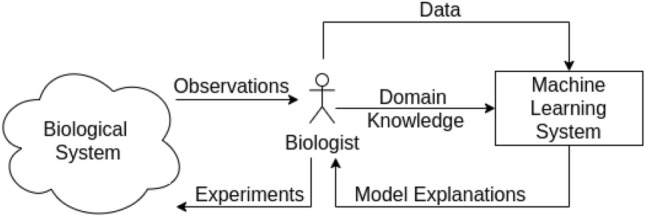
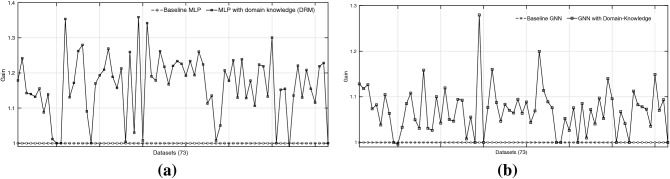
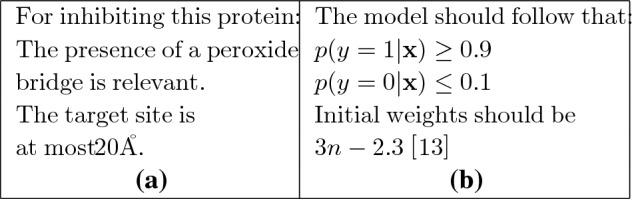
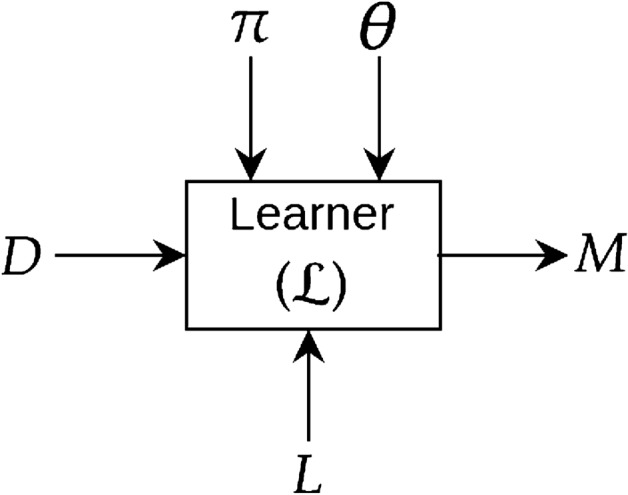
Verification
Claims the paper makes
The claims and statistics of this paper haven’t been checked yet.
Run the check — free, no account needed. It reads the open-access text and checks the sources it cites.
Claims other papers make about this one
Each is checked against this paper’s own text: does it say what the citing paper says it does?
The source backs part of the claim, not all of it — or backs it for a different population, condition or comparison.
In the citing paper
“However, integrating external domain knowledge into emotion recognition models is usually a complex and timeconsuming process [19].”
From Emotion Classification With Visibility Graphs (2025) · cites this paper as [19]
Experimental — accuracy not yet measured
Self-check
Percentages, sums and reported differences re-computed from the paper’s own numbers.
The self-check needs the paper’s full text.
Citations
Cites
Vaswani, A., Shazeer, N., Parmar, N., Uszkoreit, J., Jones, L., Gomez, A. N., Kaiser, L., & Polosukhin, I. (2017) · arXiv · doi:10.48550/arxiv.1706.03762 · Cited by 120,404
Jakubův, J., Chvalovský, K., Goertzel, Z., et al. (2023) · DROPS (Schloss Dagstuhl – Leibniz Center for Informatics) · doi:10.4230/lipics.itp.2023.19 · Cited by 76,648
Language Models are Few-Shot Learners
Brown, T. B., Mann, B., Ryder, N., Subbiah, M., Kaplan, J., Dhariwal, P., Neelakantan, A., Shyam, P., Sastry, G., Askell, A., et al. (2020) · arXiv · doi:10.48550/arxiv.2005.14165 · Cited by 23,372
Advances in neural information processing systems 7
Cios, K. J., & Shields, M. E. (1997) · Neurocomputing · doi:10.1016/s0925-2312(97)90018-7 · Cited by 22,093
Distilling the Knowledge in a Neural Network
Hinton, G., Vinyals, O., & Dean, J. (2015) · arXiv · doi:10.48550/arxiv.1503.02531 · Cited by 14,204 · cited 1×
“This is done via a modifica-tion to the knowledge-distillation loss proposed by Hinton et al. [65].”
Barredo Arrieta, A., Díaz-Rodríguez, N., Del Ser, J., Bennetot, A., Tabik, S., Barbado, A., Garcia, S., Gil-Lopez, S., Molina, D., Benjamins, R., et al. (2020) · Information Fusion · doi:10.1016/j.inffus.2019.12.012 · Cited by 10,423 · cited 1×
“Understanding models constructed by deep neural networks is an area of intense research activity, and good summaries exist elsewhere [3; 4].”
A Comprehensive Survey on Transfer Learning
Zhuang, F., Qi, Z., Duan, K., Xi, D., Zhu, Y., Zhu, H., Xiong, H., & He, Q. (2021) · Proceedings of the IEEE · doi:10.1109/jproc.2020.3004555 · Cited by 6,678
The global landscape of AI ethics guidelines
Jobin, A., Ienca, M., & Vayena, E. (2019) · Nature Machine Intelligence · doi:10.1038/s42256-019-0088-2 · Cited by 6,220 · cited 1×
“It is now accepted that trust comes through understanding of how decisions are made by the machine-constructed models [112], and what are the determining factors in these decisions.”
BackgroundA Survey on Bias and Fairness in Machine Learning
Mehrabi, N., Morstatter, F., Saxena, N., Lerman, K., & Galstyan, A. (2022) · ACM Computing Surveys · doi:10.1145/3457607 · Cited by 5,812 · cited 1×
“Domain-knowledge can also be used to correct biases [114] built into a deep network either declaratively, through the use of constraints, or through the use of loss functions that include “ethical penalty” terms.”
BackgroundModeling Relational Data with Graph Convolutional Networks
Schlichtkrull, M., Kipf, T. N., Bloem, P., van den Berg, R., Titov, I., & Welling, M. (2018) · Lecture Notes in Computer Science · doi:10.1007/978-3-319-93417-4_38 · Cited by 5,570 · cited 2×
“The computational machinery available in GNN then aggregates and combines the information available in the knowledge graph (an example of this kind of aggregation and pooling of relational information is in [46]).”
Method
Research works printed but not linked: 9
- Lipton, Z. C. The mythos of model interpretability. arXiv preprint arXiv:1606.03490 (2016). · arXiv
- Garcez, A. S. d., Broda, K. B. & Gabbay, D. M. Neural-symbolic learning systems: foundations and applications (Springer, 2012).
- Radford, A. et al. Language models are unsupervised multitask learners. OpenAI Blog. 1, 9 (2019).
- Ellis, K., Morales, L., Meyer, M. S., Solar-Lezama, A. & Tenenbaum, J. B. Dreamcoder: Bootstrapping domain-specific languages for neurally-guided bayesian program learning. In Proceedings of the 2nd Workshop on Neural Abstract Machines and Program Induction (2018).
- Hogan, A. et al. Knowledge graphs. arXiv preprint arXiv:2003.02320 (2020). · arXiv
- Devlin, J., Chang, M.-W., Lee, K. & Toutanova, K. Bert: Pre-training of deep bidirectional transformers for language understanding. In NAACL-HLT (1), 4171–4186 (2019). https://aclweb.org/anthology/papers/N/N19/N19-1423/.
- Vishwanathan, S. V. N., Schraudolph, N. N., Kondor, R. & Borgwardt, K. M. Graph kernels. J. Mach. Learn. Res. 11, 1201–1242 (2010).
- Sourek, G., Aschenbrenner, V., Zelezny, F., Schockaert, S. & Kuzelka, O. Lifted relational neural networks: Efficient learning of latent relational structures. J. Artif. Intell. Res. 62, 69–100 (2018). · DOI
- Anderson, M., Anderson, S. & Armen, C. Medethex: Toward a medical ethics advisor (Caring Machines, In AAAI Fall Symposium, 2005).
Cited by
Sorted by citations
A Survey on Graph Representation Learning Methods
Khoshraftar, S., & An, A. (2023) · ACM Transactions on Intelligent Systems and Technology · doi:10.1145/3633518 · Cited by 278
“This knowledge can be included in the models by changing the input, loss function, and model architecture [49].”
Towards artificial intelligence-enabled extracellular vesicle precision drug delivery
Greenberg, Z., Graim, K. S., & He, M. (2023) · Advanced Drug Delivery Reviews · doi:10.1016/j.addr.2023.114974 · Cited by 166
Advancements in remote sensing for active fire detection: A review of datasets and methods
Yang, S., Huang, Q., & Yu, M. (2024) · The Science of The Total Environment · doi:10.1016/j.scitotenv.2024.173273 · Cited by 103
3D molecular generative framework for interaction-guided drug design
(2024) · doi:10.1038/s41467-024-47011-2 · Cited by 88
“From the reference ligands of their original complexes, we extracted initial core structures, which were azabicyclo[2.2.1]heptane, 2-(oxan-3-yloxy)oxane, and benzene, respectively.”
InfluentialMontero, A. M. B., Bibal, A., Huet‐Dastarac, M., Draguet, C., Valdés, G., Nguyen, D. T. D., Willems, S., Vandewinckele, L., Holmström, M., Löfman, F., et al. (2022) · Physics in Medicine and Biology · doi:10.1088/1361-6560/ac678a · Cited by 91
“Early works of including domain knowledge into the loss function date from the mid nineties ( Fu 1995, Dash et al 2022 ) .”
Background
Metadata
- Authors
- Dash, T., Chitlangia, S., Ahuja, A., & Srinivasan, A.
- Affiliations
- Birla Institute of Technology and Science, Pilani - Goa Campus (IN)
- Corresponding author
- Dash, Tirtharaj
- Venue
- Scientific Reports
- Published
- 2022-01-20
- Volume
- 12
- Issue
- 1
- Pages
- 1040-1040
- ISSN
- 2045-2322 (ISSN-L)
- PMC
- PMC8776800
- OpenAlex
- W4205511145
- Semantic Scholar
- 8f00fca03482af9c7aaf3c5ff60f8a0f69178935
- Cited by
- 196
- References
- 112
- Citations by year
- 2026: 30 · 2025: 52 · 2024: 52 · 2023: 49 · 2022: 11
- FWCI
- 13.49
- Type
- journal article
- Language
- en
- Open access
- gold
- doi.org
- Locations
- Scientific Reports (publishedVersion, cc-by)
- PubMed Central (publishedVersion, cc-by)
- PubMed (publishedVersion)
- arXiv (Cornell University) (submittedVersion)
- DOAJ (DOAJ: Directory of Open Access Journals) (submittedVersion, cc-by-sa)
- arXiv (Cornell University)
- Funders
- University of New South Wales
- Birla Institute of Technology and Science, Pilani
- Topics
- Physical Sciences › Computer Science › Artificial Intelligence › Neural Networks and Applications
- Physical Sciences › Computer Science › Artificial Intelligence › Domain Adaptation and Few-Shot Learning
- Physical Sciences › Physics and Astronomy › Statistical and Nonlinear Physics › Model Reduction and Neural Networks
- Keywords
- domain knowledge, deep neural network, loss functions, network architecture, input encoding, human-machine collaboration
About these checks
Registry, retraction, Cites and statistics results are computed, not judged, with one exception: a printed reference that no index lists is read once by a model before it counts as a citation error. Claims are extracted by a model and kept only when their quote appears verbatim in the text; each cited source is then checked, with a model’s help, for whether it says what the claim relies on. Those verdicts can be wrong — read the claim’s quote and the cited source before relying on one.
Statistics and arithmetic are recomputed, not judged.
Confidence bands are shown only for fields calibrated on our annotated test set. None is calibrated yet, so no band is shown.
What counts as a claim ›How we measure confidence ›How we check this ›
Are you an author, or do you see a problem with this page? Request a review
