

The DOI matches its Crossref record; 110 of the 112 references it cites were found in a registry or an index.
A review of some techniques for inclusion of domain-knowledge into deep neural networks
Open accessAbstract
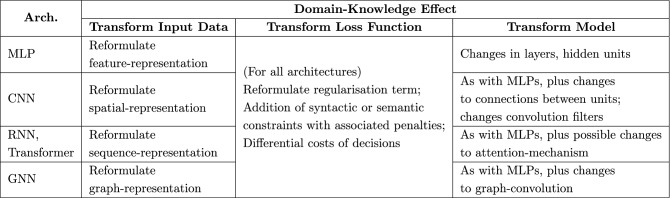
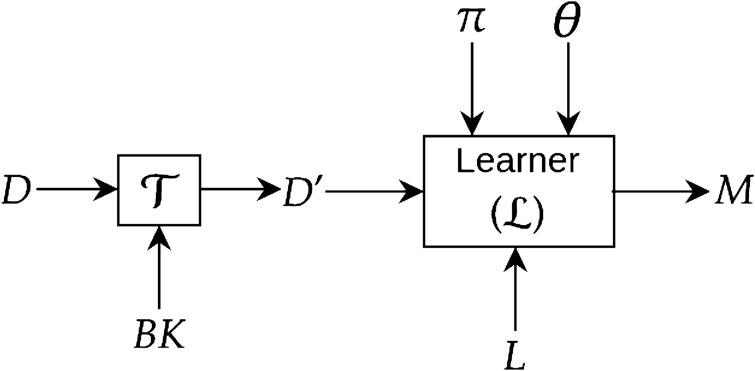
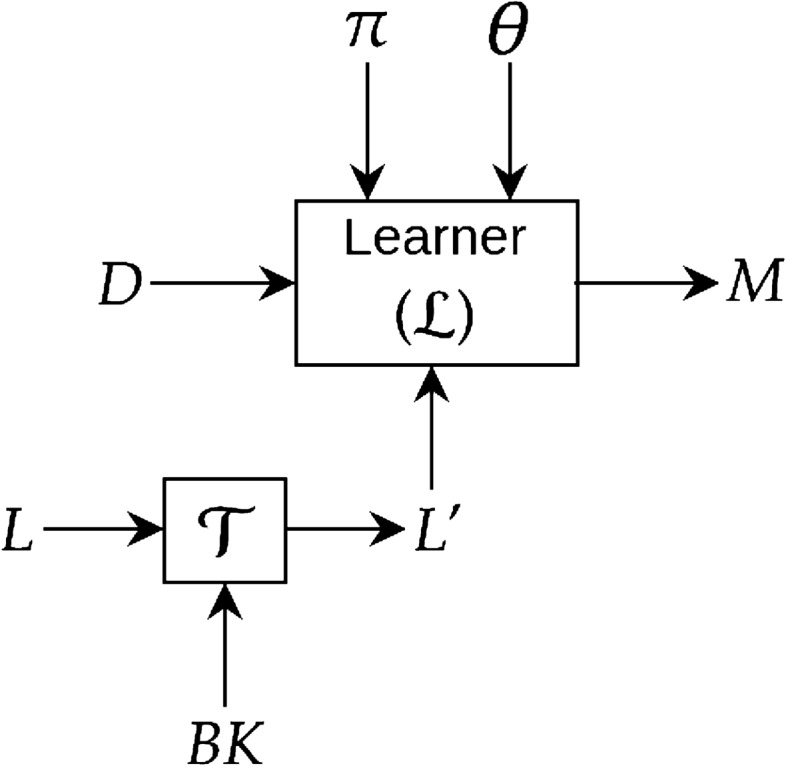
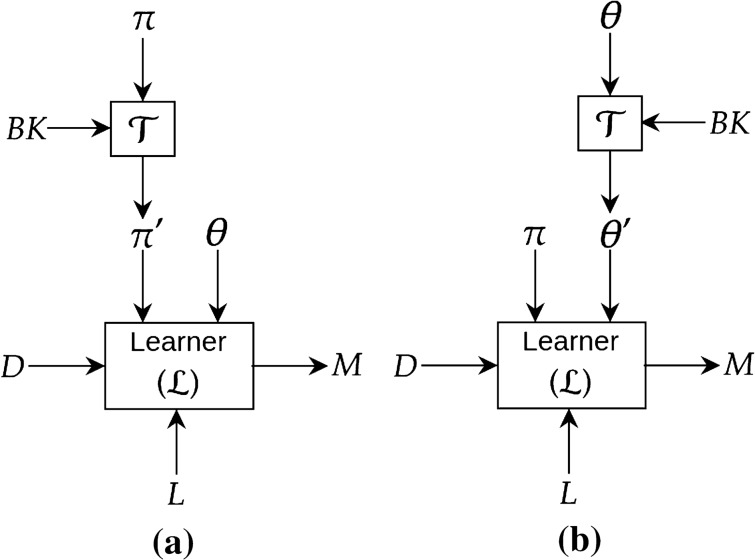
We present a survey of ways in which existing scientific knowledge are included when constructing models with neural networks. The inclusion of domain-knowledge is of special interest not just to constructing scientific assistants, but also, many other areas that involve understanding data using human-machine collaboration. In many such instances, machine-based model construction may benefit significantly from being provided with human-knowledge of the domain encoded in a sufficiently precise form. This paper examines the inclusion of domain-knowledge by means of changes to: the input, the loss-function, and the architecture of deep networks. The categorisation is for ease of exposition: in practice we expect a combination of such changes will be employed. In each category, we describe techniques that have been shown to yield significant changes in the performance of deep neural networks.
Overview
The claims and statistics of this paper haven’t been checked yet.
Run the check — free, no account needed. It reads the open-access text and checks the sources it cites.
Integrity signals
Registry
Cites
Statistics
Figures
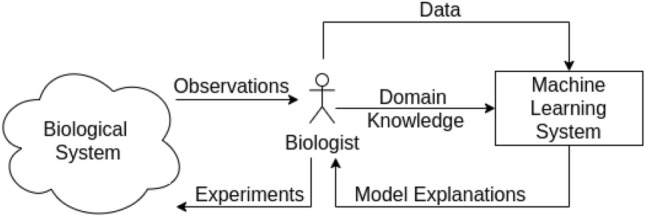
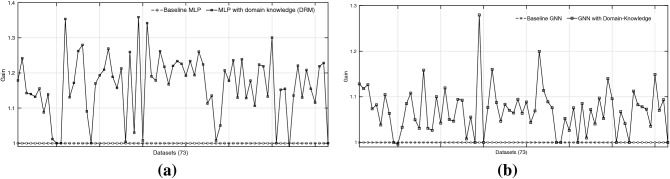
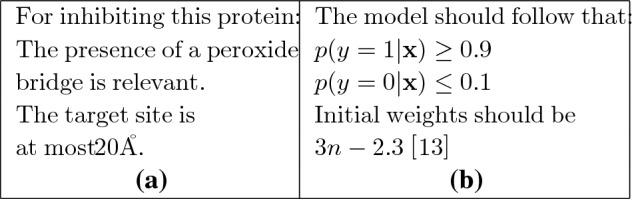
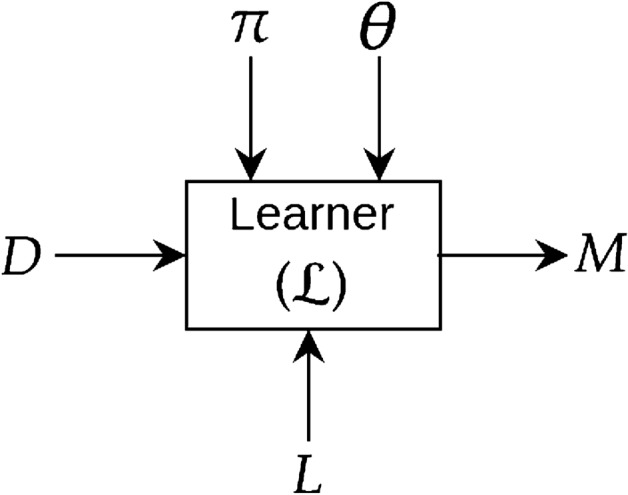
Verification
Claims the paper makes
The claims and statistics of this paper haven’t been checked yet.
Run the check — free, no account needed. It reads the open-access text and checks the sources it cites.
Claims other papers make about this one
Each is checked against this paper’s own text: does it say what the citing paper says it does?
The source backs part of the claim, not all of it — or backs it for a different population, condition or comparison.
In the citing paper
“However, integrating external domain knowledge into emotion recognition models is usually a complex and timeconsuming process [19].”
From Emotion Classification With Visibility Graphs (2025) · cites this paper as [19]
Experimental — accuracy not yet measured
Self-check
Percentages, sums and reported differences re-computed from the paper’s own numbers.
The self-check needs the paper’s full text.
Citations
Cites
Vaswani, A., Shazeer, N., Parmar, N., Uszkoreit, J., Jones, L., Gomez, A. N., Kaiser, L., & Polosukhin, I. (2017) · arXiv · doi:10.48550/arxiv.1706.03762 · Cited by 120,404
Jakubův, J., Chvalovský, K., Goertzel, Z., et al. (2023) · DROPS (Schloss Dagstuhl – Leibniz Center for Informatics) · doi:10.4230/lipics.itp.2023.19 · Cited by 76,648
Language Models are Few-Shot Learners
Brown, T. B., Mann, B., Ryder, N., Subbiah, M., Kaplan, J., Dhariwal, P., Neelakantan, A., Shyam, P., Sastry, G., Askell, A., et al. (2020) · arXiv · doi:10.48550/arxiv.2005.14165 · Cited by 23,372
Advances in neural information processing systems 7
Cios, K. J., & Shields, M. E. (1997) · Neurocomputing · doi:10.1016/s0925-2312(97)90018-7 · Cited by 22,093
Distilling the Knowledge in a Neural Network
Hinton, G., Vinyals, O., & Dean, J. (2015) · arXiv · doi:10.48550/arxiv.1503.02531 · Cited by 14,204 · cited 1×
“This is done via a modifica-tion to the knowledge-distillation loss proposed by Hinton et al. [65].”
Barredo Arrieta, A., Díaz-Rodríguez, N., Del Ser, J., Bennetot, A., Tabik, S., Barbado, A., Garcia, S., Gil-Lopez, S., Molina, D., Benjamins, R., et al. (2020) · Information Fusion · doi:10.1016/j.inffus.2019.12.012 · Cited by 10,423 · cited 1×
“Understanding models constructed by deep neural networks is an area of intense research activity, and good summaries exist elsewhere [3; 4].”
A Comprehensive Survey on Transfer Learning
Zhuang, F., Qi, Z., Duan, K., Xi, D., Zhu, Y., Zhu, H., Xiong, H., & He, Q. (2021) · Proceedings of the IEEE · doi:10.1109/jproc.2020.3004555 · Cited by 6,678
The global landscape of AI ethics guidelines
Jobin, A., Ienca, M., & Vayena, E. (2019) · Nature Machine Intelligence · doi:10.1038/s42256-019-0088-2 · Cited by 6,220 · cited 1×
“It is now accepted that trust comes through understanding of how decisions are made by the machine-constructed models [112], and what are the determining factors in these decisions.”
BackgroundA Survey on Bias and Fairness in Machine Learning
Mehrabi, N., Morstatter, F., Saxena, N., Lerman, K., & Galstyan, A. (2022) · ACM Computing Surveys · doi:10.1145/3457607 · Cited by 5,812 · cited 1×
“Domain-knowledge can also be used to correct biases [114] built into a deep network either declaratively, through the use of constraints, or through the use of loss functions that include “ethical penalty” terms.”
BackgroundModeling Relational Data with Graph Convolutional Networks
Schlichtkrull, M., Kipf, T. N., Bloem, P., van den Berg, R., Titov, I., & Welling, M. (2018) · Lecture Notes in Computer Science · doi:10.1007/978-3-319-93417-4_38 · Cited by 5,570 · cited 2×
“The computational machinery available in GNN then aggregates and combines the information available in the knowledge graph (an example of this kind of aggregation and pooling of relational information is in [46]).”
Method
Research works printed but not linked: 9
- Lipton, Z. C. The mythos of model interpretability. arXiv preprint arXiv:1606.03490 (2016). · arXiv
- Garcez, A. S. d., Broda, K. B. & Gabbay, D. M. Neural-symbolic learning systems: foundations and applications (Springer, 2012).
- Radford, A. et al. Language models are unsupervised multitask learners. OpenAI Blog. 1, 9 (2019).
- Ellis, K., Morales, L., Meyer, M. S., Solar-Lezama, A. & Tenenbaum, J. B. Dreamcoder: Bootstrapping domain-specific languages for neurally-guided bayesian program learning. In Proceedings of the 2nd Workshop on Neural Abstract Machines and Program Induction (2018).
- Hogan, A. et al. Knowledge graphs. arXiv preprint arXiv:2003.02320 (2020). · arXiv
- Devlin, J., Chang, M.-W., Lee, K. & Toutanova, K. Bert: Pre-training of deep bidirectional transformers for language understanding. In NAACL-HLT (1), 4171–4186 (2019). https://aclweb.org/anthology/papers/N/N19/N19-1423/.
- Vishwanathan, S. V. N., Schraudolph, N. N., Kondor, R. & Borgwardt, K. M. Graph kernels. J. Mach. Learn. Res. 11, 1201–1242 (2010).
- Sourek, G., Aschenbrenner, V., Zelezny, F., Schockaert, S. & Kuzelka, O. Lifted relational neural networks: Efficient learning of latent relational structures. J. Artif. Intell. Res. 62, 69–100 (2018). · DOI
- Anderson, M., Anderson, S. & Armen, C. Medethex: Toward a medical ethics advisor (Caring Machines, In AAAI Fall Symposium, 2005).
Cited by
Sorted by citations
A Survey on Graph Representation Learning Methods
Khoshraftar, S., & An, A. (2023) · ACM Transactions on Intelligent Systems and Technology · doi:10.1145/3633518 · Cited by 278
“This knowledge can be included in the models by changing the input, loss function, and model architecture [49].”
Towards artificial intelligence-enabled extracellular vesicle precision drug delivery
Greenberg, Z., Graim, K. S., & He, M. (2023) · Advanced Drug Delivery Reviews · doi:10.1016/j.addr.2023.114974 · Cited by 166
Advancements in remote sensing for active fire detection: A review of datasets and methods
Yang, S., Huang, Q., & Yu, M. (2024) · The Science of The Total Environment · doi:10.1016/j.scitotenv.2024.173273 · Cited by 103
3D molecular generative framework for interaction-guided drug design
(2024) · doi:10.1038/s41467-024-47011-2 · Cited by 88
“From the reference ligands of their original complexes, we extracted initial core structures, which were azabicyclo[2.2.1]heptane, 2-(oxan-3-yloxy)oxane, and benzene, respectively.”
InfluentialMontero, A. M. B., Bibal, A., Huet‐Dastarac, M., Draguet, C., Valdés, G., Nguyen, D. T. D., Willems, S., Vandewinckele, L., Holmström, M., Löfman, F., et al. (2022) · Physics in Medicine and Biology · doi:10.1088/1361-6560/ac678a · Cited by 91
“Early works of including domain knowledge into the loss function date from the mid nineties ( Fu 1995, Dash et al 2022 ) .”
BackgroundSurvey of Transfer Learning Approaches in the Machine Learning of Digital Health Sensing Data
Chato, L., & Regentova, E. E. (2023) · Journal of Personalized Medicine · doi:10.3390/jpm13121703 · Cited by 74
Towards Data-And Knowledge-Driven AI: A Survey on Neuro-Symbolic Computing
Wang, W., Yang, Y., & Wu, F. Q. (2024) · IEEE Transactions on Pattern Analysis and Machine Intelligence · doi:10.1109/tpami.2024.3483273 · Cited by 126
“In a related vein, informed ma-chinelearning[216],[217]focusinparticularonhowtointegrate prior knowledge into DNNs.”
Coiera, E. W., & Liu, S. (2022) · Cell Reports Medicine · doi:10.1016/j.xcrm.2022.100860 · Cited by 56
“82 Pragmatically, many healthcare problems involve highly structured data, may have low dimensionality, and can yield to traditional statistical approaches such as linear regression, 83 or classic tree-building methods from machine learning such as xgboost.”
BackgroundFei, Y., Liao, W., Lu, X., & Guan, H. (2023) · Computer-Aided Civil and Infrastructure Engineering · doi:10.1111/mice.13094 · Cited by 47
“Generally, for neural networks, prior knowledge is introduced by modifying the following three elements of the network (Dash et al., 2022): (1) input data (Marino et al., 2021; Yin et al., 2019), (2) loss function (Y. Du et al., 2022; Fei et al., 2022a; Lu et al., 2022), and (3) network…”
MethodMulti-omics based artificial intelligence for cancer research
Li, L., Sun, M., Wang, J., & Wan, S. (2024) · Advances in cancer research · doi:10.1016/bs.acr.2024.06.005 · Cited by 49
Zang, Y., Qiu, Y., Chen, X., et al. (2023) · GIScience & Remote Sensing · doi:10.1080/15481603.2022.2163576 · Cited by 45
“Effectively integrating the domain knowledge might help to reduce the relying on the large training samples for deep (Dash et al. 2022; Xie et al. 2021).”
BackgroundDeep Learning with Logical Constraints
Giunchiglia, E., Stoian, M. C., & Lukasiewicz, T. (2022) · International Joint Conference on Artificial Intelligence · doi:10.24963/ijcai.2022/767 · Cited by 78
“For coarser surveys on how to include background knowledge expressed in different ways, see [von Rueden et al. , 2021; Dash et al. , 2022].”
BackgroundSon, A., Park, J., Kim, W., Yoon, Y., Lee, S., Park, Y., & Kim, H. (2024) · Molecules · doi:10.3390/molecules29194626 · Cited by 42
“Embedding domain knowledge into AI models can greatly enhance their interpretability and resilience, as demonstrated by recent research in diverse domains like health, engineering, and environmental science [47].”
BackgroundSingh, A., Wolf, M., Jacobs, G., & König, F. (2023) · Tribology International · doi:10.1016/j.triboint.2022.108166 · Cited by 38
AI in Context: Harnessing Domain Knowledge for Smarter Machine Learning
Miller, T. I., Durlik, I., Łobodzińska, A., Dorobczyński, L., & Jasionowski, R. (2024) · Applied Sciences · doi:10.3390/app142411612 · Cited by 46
Physics-guided neural networks with engineering domain knowledge for hybrid process modeling
Gallup, E. R., Gallup, T., & Powell, K. M. (2023) · Computers & Chemical Engineering · doi:10.1016/j.compchemeng.2022.108111 · Cited by 36
EINNs: Epidemiologically-Informed Neural Networks
Rodríguez, A., Cui, J., Ramakrishnan, N., Adhikari, B., & Prakash, B. A. (2023) · Proceedings of the AAAI Conference on Artificial Intelligence · doi:10.1609/aaai.v37i12.26690 · Cited by 45
Knowledge-Infused Learning: A Sweet Spot in Neuro-Symbolic AI
Gaur, M., Gunaratna, K., Bhatt, S., & Sheth, A. (2022) · IEEE Internet Computing · doi:10.1109/mic.2022.3179759 · Cited by 34
“A substantial growth in incorporating knowledgewith deep learning has pursued.(3) Humans are capable of handling information at various levels of abstraction, which corresponds to different levels of learning.”
BackgroundMiedema, E., Waschull, S., & Emmanouilidis, C. (2025) · Computers in Industry · doi:10.1016/j.compind.2025.104409 · Cited by 41
Towards responsible AI for education: Hybrid human-AI to confront the elephant in the room
Hooshyar, D., Šír, G., Yang, Y., Kikas, E., Hämäläinen, R., Kärkkäinen, T., Gašević, D., & Azevedo, R. (2025) · Computers and Education Artificial Intelligence · doi:10.1016/j.caeai.2025.100524 · Cited by 43
“The proposed framework offers three distinct ways to embed symbolic knowledge into deep neural networks (Dash et al., 2022): modifying network inputs by representing raw features as embeddings that capture both inherent characteristics and domain-specific context, enforcing domain knowledge through…”
Ruiz, Á. Y., Cavagnaro, M., & Crocco, L. (2023) · Sensors · doi:10.3390/s23020643 · Cited by 26
“In these approaches, domain knowledge on wave scattering physics is incorporated into the input or in the internal architecture of the neural network, having a beneficial effect on its performance [15,16].”
BackgroundUnfolding Explainable AI for Brain Tumor Segmentation
Hassan, M. A., Fateh, A. A., Lin, J., Zhuang, Y., Lin, G., Xiong, H., You, Z., Qin, P., & Zeng, H. (2024) · Neurocomputing · doi:10.1016/j.neucom.2024.128058 · Cited by 28
Gim, M., Choe, J., Baek, S., Park, J., Lee, C., Ju, M., Lee, S., & Kang, J. (2023) · Bioinformatics · doi:10.1093/bioinformatics/btad207 · Cited by 29
“Critical domain knowledge should be integrated to ensure that the model’s implicit assumptions are compatible with expert opinions (Dash et al. 2022).”
BackgroundKampezidou, S. I., Ray, A. T., Bhat, A. P., Fischer, O. J. P., & Mavris, D. N. (2024) · Eng—Advances in Engineering · doi:10.3390/eng5010021 · Cited by 25
A Survey on Large Language Model-based Agents for Statistics and Data Science
Sun, M., Han, R., Jiang, B., Qi, H., Sun, D., Yuan, Y., & Huang, J. (2025) · The American Statistician · doi:10.1080/00031305.2025.2561140 · Cited by 57
“Integrating domain-specific knowledge into data agents presents a challenge (Dash et al. 2022; Sun et al. 2024).”
Eudave, R. R., Ferreira, T. M., Vicente, R., et al. (2023) · International Journal of Architectural Heritage · doi:10.1080/15583058.2023.2200739 · Cited by 23
“Given that we accept that the set of parameters is representative for conditioning the level of damage, it is possible to accept it as a Handcrafted Feature Extraction Technique (Dash et al. 2022).”
BackgroundPhenotyping Key Fruit Quality Traits in Olive Using RGB Images and Back Propagation Neural Networks
Montanaro, G., Petrozza, A., Rustioni, L., et al. (2023) · Plant Phenomics · doi:10.34133/plantphenomics.0061 · Cited by 21
“However, it could be noted that “cultivar” resembles information of the “knowledge domain”, which should be provided to an ideal ANN working over several cultivars to improve its performance [60].”
BackgroundFrom failure to fusion: A survey on learning from bad machine learning models
Naser, M. Z. (2025) · Information Fusion · doi:10.1016/j.inffus.2025.103122 · Cited by 24
Fang, H., Zhang, Z., Di, D., Zhang, J., Sun, B., Wang, N., & Li, B. (2023) · Tunnelling and Underground Space Technology · doi:10.1016/j.tust.2023.105386 · Cited by 20
Visible neural networks for multi-omics integration: a critical review
Selby, D., Jakhmola, R., Sprang, M., Großmann, G., Raki, H., Maani, N., Pavliuk, D., Ewald, J., & Vollmer, S. J. (2025) · Frontiers in Artificial Intelligence · doi:10.3389/frai.2025.1595291 · Cited by 22
Arrotta, L., Civitarese, G., & Bettini, C. (2023) · Proceedings of the ACM on Interactive Mobile Wearable and Ubiquitous Technologies · doi:10.1145/3631407 · Cited by 19
Probabilistic Bayesian Neural Networks for olive phenology prediction in precision agriculture
Nappa, A., Quartulli, M., Azpiroz, I., Marchi, S., Guidotti, D., Staiano, M., & Siciliano, R. (2024) · Ecological Informatics · doi:10.1016/j.ecoinf.2024.102723 · Cited by 18
Peng, B., Besser, K.-L., Shen, S., Siegismund-Poschmann, F., Raghunath, R., Mittleman, D. M., Jamali, V., & Jorswieck, E. A. (2025) · IEEE Transactions on Wireless Communications · doi:10.1109/twc.2025.3536178 · Cited by 18
“According to [34], incorporating domain knowledge is considered as one of the three grand challenges in ML.”
Mixture of Experts for EEG-Based Seizure Subtype Classification
Du, Z., Peng, R., Liu, W., Li, W., & Wu, D. (2023) · IEEE Transactions on Neural Systems and Rehabilitation Engineering · doi:10.1109/tnsre.2023.3337802 · Cited by 18
“Restrictions apply. interesting to incorporate a priori expert knowledge into DNNs to reduce their labeled data requirement and enhance their performance [34]: 1) Use expert knowledge to augment or transform the inputs.”
BackgroundInfluentialGenerating Novel Leads for Drug Discovery Using LLMs with Logical Feedback
Brahmavar, S. B., Srinivasan, A., Dash, T., Krishnan, S. R., Vig, L., Roy, A., & Aduri, R. (2024) · Proceedings of the AAAI Conference on Artificial Intelligence · doi:10.1609/aaai.v38i1.27751 · Cited by 18
Self-citationKawada, R., Endo, K., Yasuoka, K., Kojima, H., & Matubayasi, N. (2022) · Journal of Chemical Information and Modeling · doi:10.1021/acs.jcim.2c01316 · Cited by 16
Logic-Informed Graph Neural Networks for Structural Form-Finding
Bleker, L., Tam, K.-M. M., & D’Acunto, P. (2024) · Advanced Engineering Informatics · doi:10.1016/j.aei.2024.102510 · Cited by 15
ContextGPT: Infusing LLMs Knowledge into Neuro-Symbolic Activity Recognition Models
Arrotta, L., Bettini, C., Civitarese, G., & Fiori, M. (2024) · IEEE International Conference on Smart Computing · doi:10.1109/smartcomp61445.2024.00029 · Cited by 15
The utilization of different AI methods-based satellite communications: A survey
Abdulwahid, M. M., & Kurnaz, S. (2024) · AIP conference proceedings · doi:10.1063/5.0192068 · Cited by 14
Neuro-Symbolic AI + Agent Systems: A First Reflection on Trends, Opportunities and Challenges
Belle, V., Fisher, M., Russo, A., Komendantskaya, E., & Nottle, A. (2023) · AAMAS Workshops · doi:10.1007/978-3-031-56255-6_10 · Cited by 14
“There are several survey papers that make an attempt to categorise di ff erent trends in the field [16, 35, 53].”
BackgroundComparison of deep learning models for milk production forecasting at national scale
Cesarini, L., Gonçalves, R., Martina, M. L. V., Romão, X., Monteleone, B., Перейра, Ф. Л., & Figueiredo, R. (2024) · Computers and Electronics in Agriculture · doi:10.1016/j.compag.2024.108933 · Cited by 15
Qiu, Y., Hui, Y., Zhao, P., et al. (2025) · Fuel · doi:10.1016/j.fuel.2025.135533 · Cited by 13
Dey, S., & Lee, S. W. (2023) · ACM/SIGAPP Symposium on Applied Computing (SAC) · doi:10.1145/3555776.3577647 · Cited by 12
Involving logical clinical knowledge into deep neural networks to improve bladder tumor segmentation
Yue, X., Huang, X., Xu, Z., Chen, Y., & Xu, C. (2024) · Medical Image Analysis · doi:10.1016/j.media.2024.103189 · Cited by 12
Jiang, S., Yang, B., & Liu, B. (2025) · Journal of Building Engineering · doi:10.1016/j.jobe.2025.111907 · Cited by 12
Ruiz, Á. Y., Cavagnaro, M., & Crocco, L. (2023) · Cancers · doi:10.3390/cancers15061717 · Cited by 11
“In the latter, DL architectures are combined with standard MWI approaches that supply the neural network with domain knowledge that either makes the training of the network easier or its predictions more efficient [17,18].”
MethodSafety Monitoring of Machine Learning Perception Functions: A Survey
Ferreira, R., Guerin, J. M., Delmas, K., Guiochet, J., & Waeselynck, H. (2025) · Computational Intelligence · doi:10.1111/coin.70032 · Cited by 23
LAMBDA: A Large Model Based Data Agent
Sun, M., Han, R., Jiang, B., Qi, H., Sun, D., Yuan, Y., & Huang, J. (2025) · Journal of the American Statistical Association · doi:10.1080/01621459.2025.2510000 · Cited by 29
“On the other hand, domain experts find it challenging to integrate their expertise into AI models to enhance their performance (Dash et al. 2022).”
Zhang, Y., Yan, W., Jiang, L., et al. (2025) · Engineering Applications of Artificial Intelligence · doi:10.1016/j.engappai.2025.111695 · Cited by 9
Hybrid AI Systems for Tool Wear Monitoring in Manufacturing: A Systematic Review
Saatçı, B. T., Ulaş, M., & Gürgenç, T. (2025) · Applied Sciences · doi:10.3390/app16010208 · Cited by 12
Improving Pre-trained Language Models
Paaß, G., & Giesselbach, S. (2023) · Artificial intelligence: foundations, theory, and algorithms/Artificial intelligence: Foundations, theory, and algorithms · doi:10.1007/978-3-031-23190-2_3 · Cited by 9
Concurrent Multi-Label Prediction in Event Streams
Shou, X., Gao, T., Subramanian, D., Bhattacharjya, D., & Bennett, K. P. (2023) · Proceedings of the AAAI Conference on Artificial Intelligence · doi:10.1609/aaai.v37i8.26172 · Cited by 9
“where λ trades off between negative log-likelihood loss and background knowledge loss (Dash et al. 2022).”
BackgroundGonzález-Martín, C., Carrasco, M., & Wielandt, T. G. W. (2023) · Empirical Studies of the Arts · doi:10.1177/02762374231163481 · Cited by 8
“This problem has seen more studies in recent years to facilitate learning about different domains (Dash, Chitlangia, Ahuja, & Srinivasan, 2022) and it supposes a limitation in the fi eld of deep learning.”
BackgroundTowards a neuro-symbolic cycle for human-centered explainability
Mileo, A. (2024) · Neurosymbolic Artificial Intelligence · doi:10.3233/nai-240740 · Cited by 11
“Vector embeddings as well as modification of the loss function have become popular approaches to inject background knowledge into DNNs with a focus on improving performance [5].”
Guo, S., Li, L., Li, X., & Zhu, J. (2024) · IEEE Transactions on Instrumentation and Measurement · doi:10.1109/tim.2024.3502777 · Cited by 8
Challenges and opportunities in Machine learning for bioenergy crop yield Prediction: A review
Dayil, J. L., Akande, O., Mahmoud, A. E. D., Kimera, R., & Omole, O. (2024) · Sustainable Energy Technologies and Assessments · doi:10.1016/j.seta.2024.104057 · Cited by 16
A Survey of Human Intelligence Augmented Artificial Intelligence: An Autonomous Driving Perspective
Li, S., Yuan, K., Tang, Z., Zhang, Y., Ji, P., Ge, Q., Du, S., Huang, Y., & Chen, H. (2025) · Automotive Innovation · doi:10.1007/s42154-025-00361-z · Cited by 10
Superpixel-based knowledge infusion in deep neural networks for image classification
Chhablani, G., Sharma, A., Pandey, H., & Dash, T. (2022) · ACM Southeast Regional Conference (ACMSE) · doi:10.1145/3476883.3520216 · Cited by 8
“where the amount of available data is low [6].”
BackgroundSelf-citationBrain‐regulated learning for classifying on‐site hazards with small datasets
Zhou, X., & Liao, P. (2023) · Computer-Aided Civil and Infrastructure Engineering · doi:10.1111/mice.13078 · Cited by 8
“…various methods such as demonstration learning (C.-J. Liang et al., 2020), active learning (Jinwoo Kim et al., 2020), structured domain knowledge (Dash et al., 2022), and discriminative feature selection (Deng et al., 2015), this study highlights the unique advantage of directly leveraging human…”
MethodHong, J., Park, K. H., & Pavlic, T. P. (2024) · IEEE Winter Conference on Applications of Computer Vision · doi:10.1109/wacv57701.2024.00481 · Cited by 10
“Since the introduction of deep-learning models with logical constraints [23], this dataset has been used as one of the benchmark datasets to assess the effectiveness of embedding the constraints into neural networks (in-depth surveys can be found in [15,28]).”
MethodClinVec: Unified Embeddings of Clinical Codes Enable Knowledge-Grounded AI in MedicinePreprint
Johnson, R., Gottlieb, U., Shaham, G., Eisen, L., Waxman, J. G., Devons-Sberro, S., Ginder, C. R., Hong, P. J., Sayeed, R., Su, X., et al. (2024) · medRxiv · doi:10.1101/2024.12.03.24318322 · Cited by 8
AI-Driven Chemometrics for Multi-omics Data Integration: Advances, Challenges, and Future Directions
Polu, P. R. (2026) · Critical Reviews in Analytical Chemistry · doi:10.1080/10408347.2026.2657553 · Cited by 9
Gharaei, R. S., Gholami, A., Khoshdast, H., & Biglari, H. (2024) · Mineral Processing and Extractive Metallurgy Review · doi:10.1080/08827508.2024.2395828 · Cited by 8
Dai, L., Lei, J., Ma, F., Sun, Z., Du, H., Zhang, H., Jiang, J., Wei, J., Wang, D., Tan, G., et al. (2024) · Radiology Artificial Intelligence · doi:10.1148/ryai.230520 · Cited by 8
Baumgartner, P., Smith, D., Rana, M., Kapoor, R., Tartaglia, E., Schutt, A., Rahman, A., Taylor, J., & Dunstall, S. (2022) · Research Square · doi:10.21203/rs.3.rs-2136936/v1 · Cited by 10
An integrated deep learning framework for the interpretation of untargeted metabolomics data
Tian, L., & Yu, T. (2023) · Briefings in Bioinformatics · doi:10.1093/bib/bbad244 · Cited by 7
Bhattacharya, A., Stumpf, S., Croon, R. D., & Verbert, K. (2025) · CHI Conference on Human Factors in Computing Systems · doi:10.1145/3706598.3713497 · Cited by 16
Zou, C., Zhang, Y., Jiang, S., Li, X., Luo, W., Liao, Z., & Guo, W. (2026) · Measurement · doi:10.1016/j.measurement.2026.122225 · Cited by 7
Orro, A., & Trombetti, G. (2023) · Biomedicines · doi:10.3390/biomedicines11061631 · Cited by 6
“Although advanced machine learning architectures should be capable of inferring knowledge from data on their own, the direct inclusion of additional domain knowledge into the training process is very appealing [31,32], not only for increased accuracy and computational speed, but also for obtaining simpler and more int…”
BackgroundSendlbeck, S., Maurer, M., Otto, M. K., & Stahl, K. (2023) · Forschung im Ingenieurwesen · doi:10.1007/s10010-023-00699-y · Cited by 7
“Combining data-driven machine learning with domain knowledge directly, as for example reviewed in [103] for deep neural networks and shown by Liu et al. in feature selection for materials property prediction [104], is promising for flexible and high-quality designs, but is rarely addressed in…”
MethodZero-Shot Modulation Recognition via Knowledge-Informed Waveform Description
Chen, Y., Wang, X., & Huang, Z. (2024) · IEEE Signal Processing Letters · doi:10.1109/lsp.2024.3491013 · Cited by 6
“Researchers have found that domain-knowledge can give guidance on what data features might be helpful [17], [18], [19].”
An exploratory study on domain knowledge infusion in deep learning for automated threat defense
Khanzadeh, S., Neto, E. C. P., Iqbal, S., Alalfi, M. H., & Buffett, S. (2025) · International Journal of Information Security · doi:10.1007/s10207-025-00987-4 · Cited by 7
Consistent Scene Graph Generation by Constraint Optimization
Chen, B., Marussy, K., Pilarski, S., et al. (2022) · IEEE/ACM International Conference on Automated Software Engineering (ASE) · doi:10.1145/3551349.3560433 · Cited by 6
Human Expectations and Perceptions of Learning in Machine Teaching
Mishra, S., & Rzeszotarski, J. M. (2023) · ACM Conference on User Modeling, Adaptation and Personalization (UMAP) · doi:10.1145/3565472.3595612 · Cited by 6
“Machine Teaching environments are generally customized to a specific task [24].”
BackgroundIs machine learning a necessity? A regression-based approach for stock return prediction
Cheng, T., Jiang, S., Zhao, A. B., et al. (2025) · Journal of Empirical Finance · doi:10.1016/j.jempfin.2025.101598 · Cited by 5
Artificial intelligence for sustainable architectural design
Yao, J., Jian, Y., Huang, C., et al. (2025) · Nexus · doi:10.1016/j.ynexs.2025.100100 · Cited by 5
Domain-enhanced dual-branch model for efficient and interpretable accident anticipation
Guan, Y., Liao, H., Wang, C., Wang, B., Zhang, J., Hu, J. S., & Li, Z. (2025) · Communications in Transportation Research · doi:10.1016/j.commtr.2025.100214 · Cited by 5
Review on artificial intelligence supported breast cancer diagnosis for effective treatment planning
Narayanan, M., Prabhu, N., & Rajinikanth, V. (2025) · Discover Applied Sciences · doi:10.1007/s42452-025-07920-3 · Cited by 6
“Combine domain expertise into model strategy to improve explain ability [92].”
Zhang, P., Kannan, R., & Prasanna, V. K. (2023) · 2012 International Conference for High Performance Computing, Networking, Storage and Analysis · doi:10.1145/3581784.3607043 · Cited by 5
Framework for learning and control in the classical and quantum domains
Vedaie, S. S., Dalal, A., Paez, E. J., & Sanders, B. C. (2023) · Annals of Physics · doi:10.1016/j.aop.2023.169471 · Cited by 5
The function of red and banded patterns in snakes: a review of hypotheses and evidence
Mouy, H. (2023) · Biological Journal of the Linnean Society · doi:10.1093/biolinnean/blad151 · Cited by 5
Chen, T., Zou, B., Wang, Y., et al. (2024) · IEEE Transactions on Geoscience and Remote Sensing · doi:10.1109/tgrs.2024.3394523 · Cited by 5
“Currently, there are primarily two methods of incorporating prior information to constrain the training process of neural networks [24].”
MethodCunha, P. A. C., Humphrey, A., Brinchmann, J., et al. (2024) · Astronomy and Astrophysics · doi:10.1051/0004-6361/202346426 · Cited by 5
DKINet: Medication Recommendation via Domain Knowledge Informed Deep Learning
Liu, S., Wang, X., Zhao, X., et al. (2024) · IEEE International Conference on Bioinformatics and Biomedicine (BIBM) · doi:10.1109/bibm62325.2024.10821909 · Cited by 5
“Part of them tries to leverage the biomedical knowledge of medication to assist the representation of patients during the medication recommendation process [18, 29].”
GLUECons: A Generic Benchmark for Learning under Constraints
Faghihi, H. R., Nafar, A., Chen, Z., Mirzaee, R., Zhang, Y., Uszok, A., Wan, A., Premsri, T., Roth, D., & Kordjamshidi, P. (2023) · Proceedings of the AAAI Conference on Artificial Intelligence · doi:10.1609/aaai.v37i8.26143 · Cited by 7
Carvalho, R., Morgado, A. C., Andrade, C., Nedelcu, T., Carreiro, A. V., & Vasconcelos, M. J. M. (2021) · Diagnostics · doi:10.3390/diagnostics12010036 · Cited by 5
Liu, N., Zhao, Q., Williams, R., et al. (2025) · Computers and Electronics in Agriculture · doi:10.1016/j.compag.2025.111332 · Cited by 4
ConSequence: Synthesizing Logically Constrained Sequences for Electronic Health Record Generation
Theodorou, B., Jain, S., Xiao, C., & Sun, J. (2024) · Proceedings of the AAAI Conference on Artificial Intelligence · doi:10.1609/aaai.v38i14.29460 · Cited by 5
HYPERTENSION PREDICTION USING DEEP LEARNING WITH TRANSFER LEARNING TECHNIQUES
Bada, A. B., Garko, A. B., & Gabi, D. (2024) · FUDMA Journal of Sciences · doi:10.33003/fjs-2024-0806-2855 · Cited by 4
Domain knowledge-guided intelligent recognition of multi-type potential landslides
Liu, Q., Liu, H., Lan, Q., Li, K., Huang, C., & Yang, X. (2025) · Knowledge-Based Systems · doi:10.1016/j.knosys.2025.112979 · Cited by 4
Sogabe, T., Malla, D. B., Chen, C.-C., et al. (2022) · Journal of Renewable and Sustainable Energy · doi:10.1063/5.0097344 · Cited by 4
Yang, Z., Wang, C., Wang, Y., Lafata, K. J., Zhang, H., Ackerson, B. G., Kelsey, C. R., Tong, B. C., & Yin, F.-F. (2023) · Frontiers in Oncology · doi:10.3389/fonc.2023.1185771 · Cited by 4
“Nevertheless, the deep radiomic features are highly data-dependent and are directly learned by the neural networks without human supervision; these make the extracted features incompatible with human experts’ interpretation within the existing knowledge domain (56).”
BackgroundSiaKey: A Method for Improving Few-shot Learning with Clinical Domain Information
Li, Z., Thaker, K. M., & He, D. (2023) · IEEE-EMBS International Conference on Biomedical and Health Informatics (BHI ...) · doi:10.1109/bhi58575.2023.10313362 · Cited by 5
“Domain knowledge is the understanding of a specific industry, discipline or activity [13].”
BackgroundNaturally Supervised 3D Visual Grounding with Language-Regularized Concept Learners
Feng, C., Hsu, J., Liu, W., & Wu, J. (2024) · IEEE Computer Society Conference on Computer Vision and Pattern Recognition/Proceedings - IEEE Computer Society Conference on Computer Vision and Pattern Recognition/Proceedings · doi:10.1109/cvpr52733.2024.01260 · Cited by 7
“Many works have proposed strategies for models to effectively encode knowledge-based rules, for the purposes of improving interpretability, sample efficiency, and compliance with safety constraints [13, 14, 20, 48].”
BackgroundSuperpixel-based Domain-Knowledge Infusion in Computer Vision.Preprint
Chhablani, G., Sharma, A., Pandey, H., & Dash, T. (2021) · arXiv (Cornell University) · Cited by 4
Self-citationHigh-performance perovskite quantum dot synthesis investigated through exploratory data analysis
Gaznaghi, S., Dashti, N., Hao, M., Baktash, A., & Wang, L. (2025) · Nanoscale · doi:10.1039/d4nr04942j · Cited by 3
Pham, D. T., Thủy, N. T. T., & Tran, L. Q. (2025) · Machine Vision and Applications · doi:10.1007/s00138-025-01756-y · Cited by 4
Knowledge Guided Deep Learning for General-Purpose Computer Vision Applications
Djenouri, Y., Belbachir, A. N., Jhaveri, R. H., et al. (2023) · Lecture notes in computer science · doi:10.1007/978-3-031-44237-7_18 · Cited by 3
Domain knowledge-powered attention for air traffic management hazardous events classification
Guo, Z., Zeng, W., Quan, Z., & Tan, X. (2024) · Engineering Applications of Artificial Intelligence · doi:10.1016/j.engappai.2024.109454 · Cited by 3
Metadata
- Authors
- Dash, T., Chitlangia, S., Ahuja, A., & Srinivasan, A.
- Affiliations
- Birla Institute of Technology and Science, Pilani - Goa Campus (IN)
- Corresponding author
- Dash, Tirtharaj
- Venue
- Scientific Reports
- Published
- 2022-01-20
- Volume
- 12
- Issue
- 1
- Pages
- 1040-1040
- ISSN
- 2045-2322 (ISSN-L)
- PMC
- PMC8776800
- OpenAlex
- W4205511145
- Semantic Scholar
- 8f00fca03482af9c7aaf3c5ff60f8a0f69178935
- Cited by
- 196
- References
- 112
- Citations by year
- 2026: 30 · 2025: 52 · 2024: 52 · 2023: 49 · 2022: 11
- FWCI
- 13.49
- Type
- journal article
- Language
- en
- Open access
- gold
- doi.org
- Locations
- Scientific Reports (publishedVersion, cc-by)
- PubMed Central (publishedVersion, cc-by)
- PubMed (publishedVersion)
- arXiv (Cornell University) (submittedVersion)
- DOAJ (DOAJ: Directory of Open Access Journals) (submittedVersion, cc-by-sa)
- arXiv (Cornell University)
- Funders
- University of New South Wales
- Birla Institute of Technology and Science, Pilani
- Topics
- Physical Sciences › Computer Science › Artificial Intelligence › Neural Networks and Applications
- Physical Sciences › Computer Science › Artificial Intelligence › Domain Adaptation and Few-Shot Learning
- Physical Sciences › Physics and Astronomy › Statistical and Nonlinear Physics › Model Reduction and Neural Networks
- Keywords
- domain knowledge, deep neural network, loss functions, network architecture, input encoding, human-machine collaboration
About these checks
Registry, retraction, Cites and statistics results are computed, not judged, with one exception: a printed reference that no index lists is read once by a model before it counts as a citation error. Claims are extracted by a model and kept only when their quote appears verbatim in the text; each cited source is then checked, with a model’s help, for whether it says what the claim relies on. Those verdicts can be wrong — read the claim’s quote and the cited source before relying on one.
Statistics and arithmetic are recomputed, not judged.
Confidence bands are shown only for fields calibrated on our annotated test set. None is calibrated yet, so no band is shown.
What counts as a claim ›How we measure confidence ›How we check this ›
Are you an author, or do you see a problem with this page? Request a review
