

The DOI matches its Crossref record; 109 of the 109 references it cites were found in a registry or an index.
A multilayer multimodal detection and prediction model based on explainable artificial intelligence for Alzheimer’s disease
Open accessAbstract
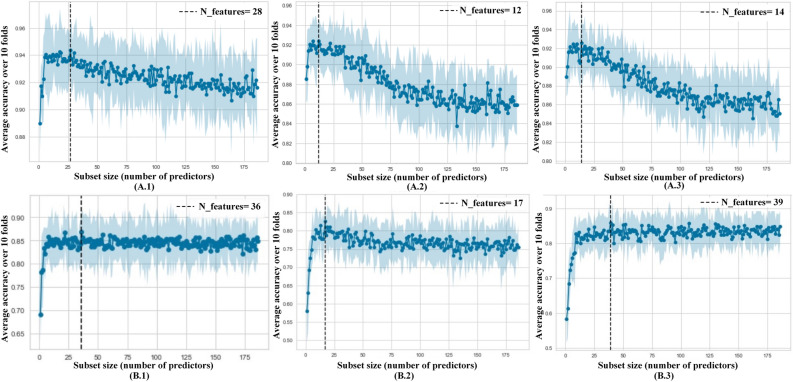
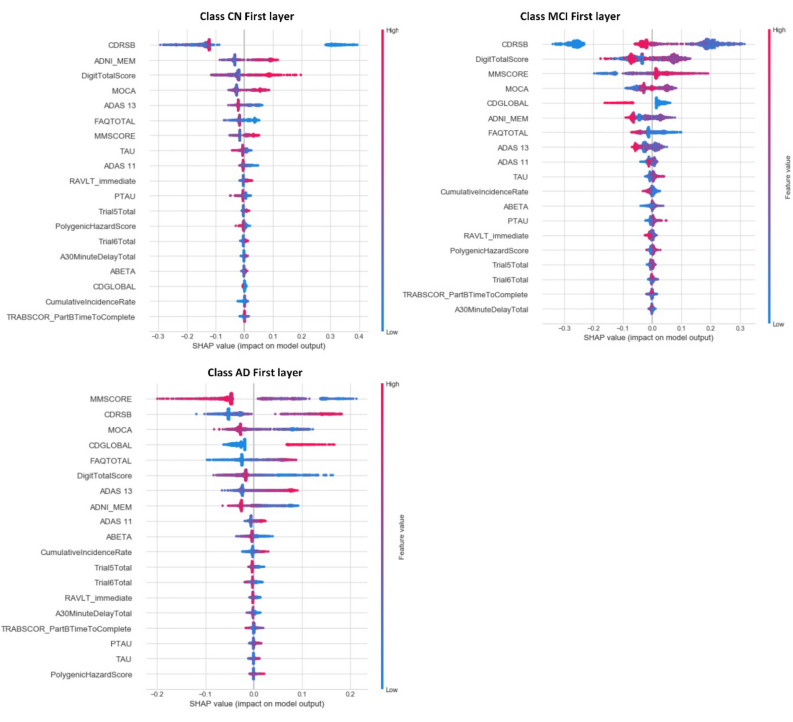
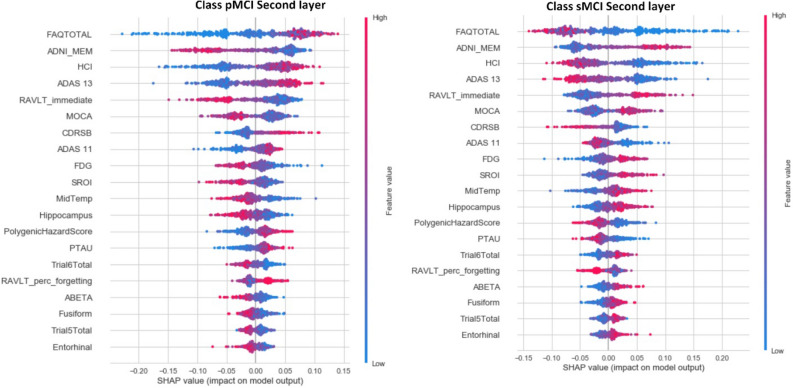
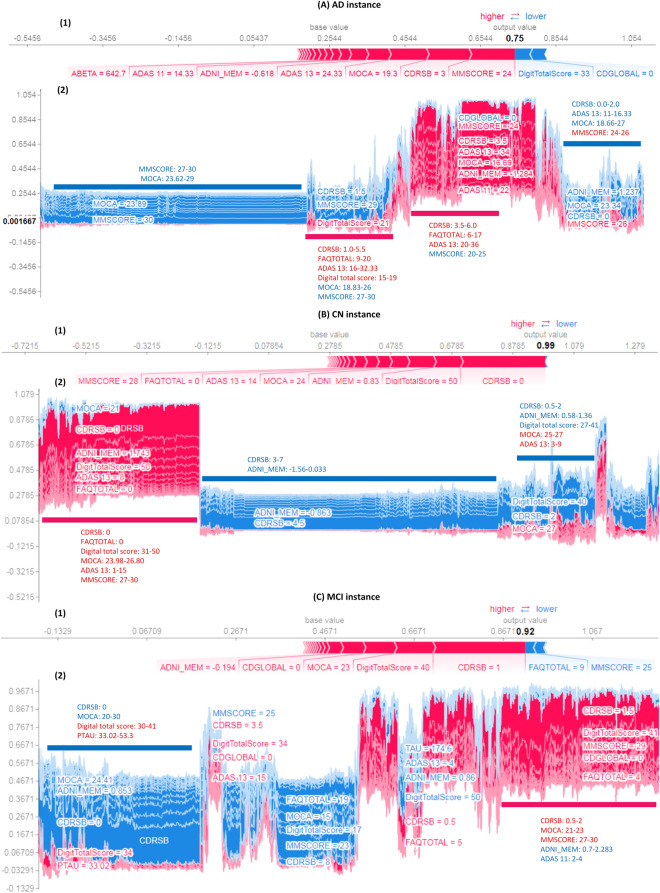
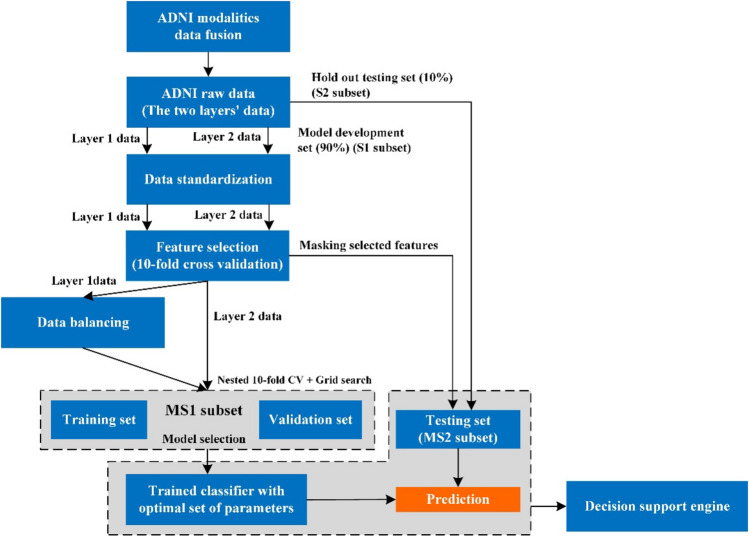
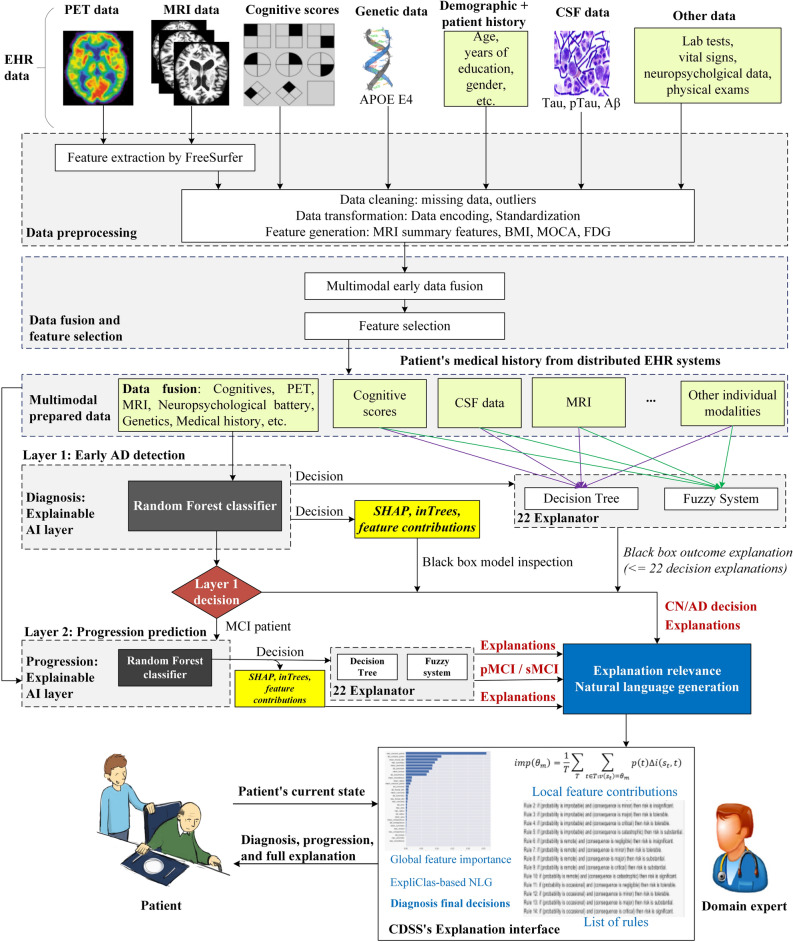
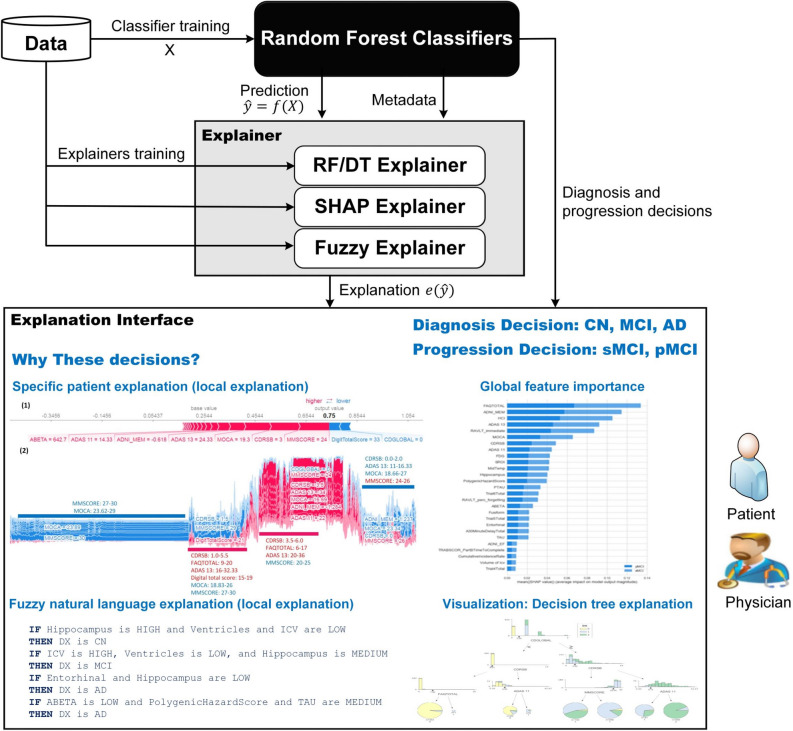
Alzheimer’s disease (AD) is the most common type of dementia. Its diagnosis and progression detection have been intensively studied. Nevertheless, research studies often have little effect on clinical practice mainly due to the following reasons: (1) Most studies depend mainly on a single modality, especially neuroimaging; (2) diagnosis and progression detection are usually studied separately as two independent problems; and (3) current studies concentrate mainly on optimizing the performance of complex machine learning models, while disregarding their explainability. As a result, physicians struggle to interpret these models, and feel it is hard to trust them. In this paper, we carefully develop an accurate and interpretable AD diagnosis and progression detection model. This model provides physicians with accurate decisions along with a set of explanations for every decision. Specifically, the model integrates 11 modalities of 1048 subjects from the Alzheimer’s Disease Neuroimaging Initiative (ADNI) real-world dataset: 294 cognitively normal, 254 stable mild cognitive impairment (MCI), 232 progressive MCI, and 268 AD. It is actually a two-layer model with random forest (RF) as classifier algorithm. In the first layer, the model carries out a multi-class classification for the early diagnosis of AD patients. In the second layer, the model applies binary classification to detect possible MCI-to-AD progression within three years from a baseline diagnosis. The performance of the model is optimized with key markers selected from a large set of biological and clinical measures. Regarding explainability, we provide, for each layer, global and instance-based explanations of the RF classifier by using the SHapley Additive exPlanations (SHAP) feature attribution framework. In addition, we implement 22 explainers based on decision trees and fuzzy rule-based systems to provide complementary justifications for every RF decision in each layer. Furthermore, these explanations are represented in natural language form to help physicians understand the predictions. The designed model achieves a cross-validation accuracy of 93.95% and an F1-score of 93.94% in the first layer, while it achieves a cross-validation accuracy of 87.08% and an F1-Score of 87.09% in the second layer. The resulting system is not only accurate, but also trustworthy, accountable, and medically applicable, thanks to the provided explanations which are broadly consistent with each other and with the AD medical literature. The proposed system can help to enhance the clinical understanding of AD diagnosis and progression processes by providing detailed insights into the effect of different modalities on the disease risk.
Overview
The claims and statistics of this paper haven’t been checked yet.
Run the check — free, no account needed. It reads the open-access text and checks the sources it cites.
Integrity signals
Registry
Cites
Statistics
Figures

Verification
Claims the paper makes
The claims and statistics of this paper haven’t been checked yet.
Run the check — free, no account needed. It reads the open-access text and checks the sources it cites.
Claims other papers make about this one
Each is checked against this paper’s own text: does it say what the citing paper says it does?
The source backs part of the claim, not all of it — or backs it for a different population, condition or comparison.
In the citing paper
“El-Sappagh et al. performed early and late fusion to create an interpretable Alzheimer’s diagnosis and progression detection model158. Their best performing model was one that implemented instance-based explanations of the random forest classifier by using the SHapley Additive exPlanations (SHAP) feature attribution. Despite using clinical, genomic, and imaging data, the most influential feature”
From Multimodal machine learning in precision health: A scoping review (2022) · cites this paper as [158]
Experimental — accuracy not yet measured
Self-check
Percentages, sums and reported differences re-computed from the paper’s own numbers.
The self-check needs the paper’s full text.
Citations
Cites
Breiman, L. (2001) · Machine Learning · doi:10.1023/a:1010933404324 · Cited by 133,538
SMOTE synthetic minority over-sampling technique
Chawla, N. V., Bowyer, K. W., Hall, L. O., & Kegelmeyer, W. P. (2002) · Journal of Artificial Intelligence Research · doi:10.1613/jair.953 · Cited by 32,865
McKhann, G., Drachman, D., Folstein, M., Katzman, R., Price, D., & Stadlan, E. M. (1984) · Neurology · doi:10.1212/wnl.34.7.939 · Cited by 27,915
A Unified Approach to Interpreting Model Predictions
Lundberg, S., & Lee, S.-I. (2017) · arXiv · doi:10.48550/arxiv.1705.07874 · Cited by 23,707 · cited 2×
“SHAP is based on the Shapely value concept from game theory 91,92 .”
Method(1992) · Cited by 23,431
Advances in neural information processing systems 7
Cios, K. J., & Shields, M. E. (1997) · Neurocomputing · doi:10.1016/s0925-2312(97)90018-7 · Cited by 22,093
"Why Should I Trust You?": Explaining the Predictions of Any Classifier
Ribeiro, M. T., Singh, S., & Guestrin, C. (2016) · Proceedings of the 22nd ACM SIGKDD International Conference on Knowledge Discovery and Data Mining · doi:10.1145/2939672.2939778 · Cited by 17,555 · cited 3×
“Fernandez-Delgado et al. 40 evaluated 179 classifiers using different UCI datasets, and concluded that RF outperforms other classifiers, including SVMs and neural networks.”
BackgroundMethodRor2 signaling regulates Golgi structure and transport through IFT20 for tumor invasiveness
Nishita, M., Park, S.-Y., Nishio, T., Kamizaki, K., Wang, Z., Tamada, K., Takumi, T., Hashimoto, R., Otani, H., Pazour, G. J., et al. (2017) · Scientific Reports · doi:10.1038/s41598-016-0028-x · Cited by 15,947
Desikan, R. S., Ségonne, F., Fischl, B., Quinn, B. T., Dickerson, B. C., Blacker, D., Buckner, R. L., Dale, A. M., Maguire, R. P., Hyman, B. T., et al. (2006) · NeuroImage · doi:10.1016/j.neuroimage.2006.01.021 · Cited by 13,324
A Study of Cross-Validation and Bootstrap for Accuracy Estimation and Model Selection
Kohavi, R. (1995) · Zenodo · doi:10.5281/zenodo.19712698 · Cited by 10,909
Research works printed but not linked: 2
- Fernandez-Delgado, M., Cernadas, E., Barro, S. & Amorim, D. Do we need hundreds of classifiers to solve real world classification problems. J. Mach. Learn. Res. 15, 3133–3181 (2014).
- Elisseeff, A. & Pontil, M. Leave-one-out error and stability of learning algorithms with applications. In NATO science series sub series iii computer and systems sciences 111–130 (ISO Press, 2003).
Cited by
Sorted by citations
Items 201–300 of 363
Nimmy, S. F., Hussain, O. K., Chakrabortty, R. K., & Leshob, A. (2024) · Engineering Applications of Artificial Intelligence · doi:10.1016/j.engappai.2024.109678 · Cited by 5
An art painting style explainable classifier grounded on logical and commonsense reasoning
Costa, V., Alonso, J. M., Falomir, Z., & Dellunde, P. (2023) · Soft Computing · doi:10.1007/s00500-023-08258-x · Cited by 6
“XAI is a fruitful research field with outstanding applications, for example, in medicine (Ma et al. 2021; El-Sappagh et al. 2021).”
BackgroundSelf-citationBashir, M., El–Sappagh, S., Woo, S. S., Kim, D. I., & Abuhmed, T. (2026) · Information Fusion · doi:10.1016/j.inffus.2026.104507 · Cited by 5
Self-citationLiu, H., Huo, Q., Li, F., Luo, X., & Deng, R. (2025) · Frontiers in Neurology · doi:10.3389/fneur.2025.1587441 · Cited by 5
Diagnostic Efficacy and Clinical Relevance of Artificial Intelligence in Detecting Cognitive Decline
Mohamed, A. A., & Marques, O. (2023) · Cureus · doi:10.7759/cureus.47004 · Cited by 4
“Many other studies have proposed novel approaches for early diagnosis of AD using magnetic resonance imaging (MRI) [44-53, Evident by the number of investigations and the demonstration of high accuracy by the many different proposed algorithms, the use of AI as an aid for the early diagnosis of AD…”
Poonam, K., Prasad, A., Guha, R., Hazra, A., & Chakrabarti, P. P. (2023) · Lecture notes in computer science · doi:10.1007/978-3-031-45170-6_25 · Cited by 4
Multi-Modal Deep Feature Integration for Alzheimer's Disease Staging
Singh, A., Shi, W., & Wang, M. D. (2023) · IEEE International Conference on Bioinformatics and Biomedicine (BIBM) · doi:10.1109/bibm58861.2023.10431906 · Cited by 6
“In addition, access to multi-2023 modal clinical data enables the deep learning models to leverage complementary information from multiple modalities simultaneously, enhancing the overall performance potential [6], [7], [8].”
BackgroundMethodSingh, R. P., Kumar, S., Rana, F. S., Singh, S., Anand, A. V., Kukreja, D., & Sharma, N. (2024) · International Conference on Communication, Computer Sciences and Engineering (IC3SE) · doi:10.1109/ic3se62002.2024.10593216 · Cited by 4
Hanis, T. M., Ruhaiyem, N. I. R., Arifin, W. N., Haron, J., Rahman, W. F. W. A., Abdullah, R., & Musa, K. I. (2022) · Diagnostics · doi:10.3390/diagnostics12112826 · Cited by 4
“XAI had been researched for diagnosis and prediction of glioblastoma [28], colorectal cancer [29], thoracic cancer [30], renal cell carcinoma [31], COVID-19 [32], chronic wounds [33], and Alzheimer’s disease [34].”
BackgroundArtificial Intelligence for Personalized Care, Wellness, and Longevity Research
Shaban‐Nejad, A., Michalowski, M., & Bianco, S. (2023) · Studies in computational intelligence · doi:10.1007/978-3-031-36938-4_1 · Cited by 4
Bonifazi, G., Cauteruccio, F., Corradini, E., Giannelli, E., Marchetti, M., Domenico Ursino, A., & Virgili, L. (2023) · Social Network Analysis and Mining · doi:10.1007/s13278-023-01163-z · Cited by 4
“Examples include social interactions (Interdonato et al. 2019; Danziger et al. 2019; Scabini et al. 2021), biological and medical processes (El-Sappagh et al. 2021; Vaiana and Muldoon 2020; Hammoud and Kramer 2020) and technological applications (Dudek 2020; Bujak and Kucharski 2023).”
Hybrid Quantum-Classical Machine Learning for Dementia Detection
Kim, R. (2023) · IEEE MIT Undergraduate Research Technology Conference (URTC) · doi:10.1109/urtc60662.2023.10535034 · Cited by 4
Agarwal, K., Choudhury, S., Tipirneni, S., Mukherjee, P., Ham, C., Tamang, S. R., Baker, M. C., Tang, S., Kocaman, V., Gevaert, O., et al. (2021) · Research Square · doi:10.21203/rs.3.rs-965815/v1 · Cited by 4
Utilizing Fog computing and Explainable Deep Learning techniques for Gestational Diabetes predictionPreprint
El-Rashidy, N. M., ElSayed, N. E., El-Ghamry, A., & Talaat, F. M. (2022) · Research Square · doi:10.21203/rs.3.rs-1098270/v1 · Cited by 4
Petrovska, N., Larrondo-Petrie, M., & Pavlovic, M. (2025) · 2025 International Conference on Advanced Machine Learning and Data Science (AMLDS) · doi:10.1109/amlds63918.2025.11159451 · Cited by 3
Santhosh, A. J. S., Karthik, R., & Suganthi, K. (2025) · Computer Science Review · doi:10.1016/j.cosrev.2025.100821 · Cited by 5
Automated Machine Learning Approach (AutoML) to Alzheimer’s Disease Diagnosis and Prognosis
Guillén, P., & Frías-Martínez, E. (2025) · Applied Artificial Intelligence · doi:10.1080/08839514.2025.2565166 · Cited by 4
“…Model-agnostic Explanations (LIME), among others, have been designed to facilitate explaining how ML algorithms make decisions (Bogdanovic, Eftimov, and Simjanoska 2022; El-Sappagh et al. 2021; Lombardi et al. 2022; Lundberg and Lee 2017; Vimbi, Shaff, and Mahmud 2024; Yi et al. 2023).”
Lu, D., Wu, S., & Huang, X.-Y. (2025) · 2025 International Conference on Artificial Intelligence, Human-Computer Interaction and Natural Language Processing (ICAHN) · doi:10.1109/icahn67688.2025.00022 · Cited by 2
“…the previous post event retro-diagnosis and passive medical mode are difficult to match the demands of modern public health, the establishment of risk in the early period and personalized intervention system for those high risky groups is the core direction of current medical research [1].”
Research on improved fast-RCNN target detection algorithm based on Kolmogorov-Arnold network
Ren, Z., Tang, X., Ren, G., & Wu, D. (2026) · Applied Intelligence · doi:10.1007/s10489-025-06817-3 · Cited by 3
Ullah, W., Dai, Q., Zulqarnain, M., & Fiidow, M. A. (2026) · Scientific Reports · doi:10.1038/s41598-026-43707-1 · Cited by 5
Toumaj, S., & Heidari, A. (2026) · Artificial Intelligence Review · doi:10.1007/s10462-026-11606-6 · Cited by 3
Wang, M., Zhao, H., Wang, Z., Chen, H., Xu, X., Zheng, S., Yao, Y., & Li, J. (2024) · Diagnostics · doi:10.3390/diagnostics14202291 · Cited by 3
“This will allow for an assessment of the efficiency of interpretable methods and the overall satisfaction of clinicians with the various XAI tools that assist in clinical decision-making, as well as to measure the impact on decision-making time.”
Dementia Deterioration Prediction Using Machine Learning
Almardoud, L. D., Tawfik, H., & Majzoub, S. (2024) · International Conference on Cloud and Big Data Computing (ICCBDC) · doi:10.1145/3694860.3694868 · Cited by 3
“Moreover, El-Sappagh et al. [11] further introduced a two-layer Random Forest model for AD diagnosis and progression detection.”
Choi, D., & Cho, I. (2025) · International Journal of Production Research · doi:10.1080/00207543.2025.2481182 · Cited by 3
“In healthcare, these have been used to interpret predictive models for Alzheimer’s disease diagnosis (El-Sappagh et al. 2021).”
Christodoulou, R. C., Vamvouras, G., Sarquis, M. D., Petrou, V., Papageorgiou, P. S., Rivera, L., Gonzalez, C. M., Rivera, G., Papageorgiou, S. G., & Vassiliou, E. K. (2025) · Journal of Clinical Medicine · doi:10.3390/jcm14207360 · Cited by 4
Hagos, M. T., Alzheimer’s Disease Neuroimaging Initiative 1 Data used in preparation of this article were obtained from the Alzheimer’s Disease Neuroimaging Initiative (ADNI) database (adni.loni.usc.edu). As such, T. I. W. T. A. C. T. T. D. A. I. O. A. A. P. D. B. D. N. P. I. A. O. W. O. T. R. A. C. L. O. A. I. C. B. F. A., Killeen, R. P., Curran, K. M., & Namee, B. M. (2022) · Frontiers in artificial intelligence and applications · doi:10.3233/faia220074 · Cited by 3
Shin, H.-J., Yoon, H., Kim, S., & Kang, D. (2022) · Applied Sciences · doi:10.3390/app12157355 · Cited by 3
“SVM, the most used algorithm, showed an average accuracy of 75.4%, and the average accuracy of the convolutional neural network was 78.5%, which was higher than that of SVM. El-Sappagh et al. (2021) [30] classified AD, MCI, and HC using RF with multimodal data (including MRI images, FDG PET, and cognitive scores).”
InfluentialInterpretable Hierarchical Deep Learning Model for Noninvasive Alzheimer’s Disease Diagnosis
Zokaeinikoo, M., Kazemian, P., & Mitra, P. (2023) · INFORMS Journal on Data Science · doi:10.1287/ijds.2020.0005 · Cited by 3
Soon, H. I., Abdullah, A. A., Nishizaki, H., Mashor, . Y., Kamarudin, L. M., Mohamed‐Hussein, Z., Mohamed, Z., & Ang, W. C. (2024) · International Journal of ADVANCED AND APPLIED SCIENCES · doi:10.21833/ijaas.2024.06.023 · Cited by 3
Transparent Insights into Alzheimer’s Progression: A Time-Aware Approach with Explainable AI
Varghese, A., George, B., Sherimon, V., & Gouda, P. (2024) · Jurnal Kejuruteraan · doi:10.17576/jkukm-2024-36(4)-34 · Cited by 2
XAI: Focusing on Fertility Assessment
Santosh, K., & Roy, D. G. (2025) · Studies in computational intelligence · doi:10.1007/978-981-95-1248-5_5 · Cited by 2
Recent Advances in the Application of Artificial Intelligence in Alzheimer's Disease
Yao, L., Ni, J., Wei, M., Li, T., Li, F., Wang, T., Xiao, W., Shi, J., & Tian, J. (2025) · Current Alzheimer Research · doi:10.2174/0115672050410489250930175402 · Cited by 2
A survey of multimodal fusion for Alzheimer’s disease prediction: A new taxonomy and trends
Guan, Y., Wang, W., Chen, J., Yang, P., Xu, J., & Qi, J. (2025) · Information Fusion · doi:10.1016/j.inffus.2025.104098 · Cited by 3
Parthiv, J. P., Harshavardhanan, P., & Nair, R. (2025) · IEEE International Conference on Advanced Computing Technologies (ICACT) · doi:10.1109/icact67549.2025.11351391 · Cited by 2
Aurpa, T. T. (2026) · Scientific Reports · doi:10.1038/s41598-026-43507-7 · Cited by 6
A survey on multimodal explainable Artificial Intelligence
Giovannoni, C., Metta, C., Monreale, A., & Rinzivillo, S. (2026) · Intelligent Systems with Applications · doi:10.1016/j.iswa.2026.200671 · Cited by 2
Laxmikantha, K., & Ashokkumar, P. S. (2026) · Engineering Technology & Applied Science Research · doi:10.48084/etasr.18269 · Cited by 3
Chaieb, M., Ameur, N. B., Ghazouani, H., & Jaghdam, I. H. (2026) · Expert Systems with Applications · doi:10.1016/j.eswa.2026.133541 · Cited by 3
Blockchain and AI to Build an Alzheimer’s Risk Calculator
Sorino, P. (2022) · Lecture notes in computer science · doi:10.1007/978-3-031-09917-5_31 · Cited by 2
Gad, E., Gamal, A., Elattar, M., & Selim, S. (2022) · Lecture notes in computer science · doi:10.1007/978-3-031-21595-7_3 · Cited by 2
Introducing a New High-Resolution Handwritten Digits Data Set with Writer Characteristics
Beaulac, C., & Rosenthal, J. S. (2022) · SN Computer Science · doi:10.1007/s42979-022-01494-2 · Cited by 3
“It is common in the prediction of neurodegenerative diseases to combine image data (such as MRI) with patients’ characteristics [12].”
BackgroundHarnessing artificial intelligence for transpathology advancements
Liu, Z., Dong, S., Zhang, L., & Shi, K. (2024) · Elsevier eBooks · doi:10.1016/b978-0-323-95223-1.00022-9 · Cited by 2
Explainable AI in Healthcare: Methods, Concepts, and Challenges
Patel, S., & Amin, H. (2024) · Lecture notes in electrical engineering · doi:10.1007/978-981-97-3442-9_21 · Cited by 3
Unraveling the Mysteries of Alzheimer's Disease Using Artificial Intelligence
Tripathi, S., Sharma, Y., & Kumar, D. (2024) · Reviews on Recent Clinical Trials · doi:10.2174/0115748871330861241030143321 · Cited by 1
CogTrack: A Proof of Concept for Cognition Tracker
Bhargava, Y., Kattupalli, K. K., & Baths, V. (2024) · IEEE Access · doi:10.1109/access.2024.3519220 · Cited by 2
Alzheimer's Disease Prediction using an Artificial Butterfly Optimizer with a Two-Layer CNN Approach
Jevin, J. A., & Umamageswari, A. (2024) · International Conference on Mobile Networks and Wireless Communications (ICMNWC) · doi:10.1109/icmnwc63764.2024.10872314 · Cited by 2
“Deterioration of cognitive abilities, language skills, memory, and behavior difficulties brought on by the buildup of amyloid plaques and neurobiliary tangles in the brain leads to this incurable disease[2].”
Khan, K. A., Esa, M., Kamal, Z., Ullah, B., Perry, G. L., Kamal, S., Ahmad, S., Hussain, H., Ullah, A., & Shafique, M. S. (2025) · Current Neuropharmacology · doi:10.2174/011570159x361867250313073624 · Cited by 2
“Both NF-κ B and YY1 have the ability to enhance the melatonergic pathway [142-144].”
MBLSTM is a contextual interaction refined method for time series prediction
Qiu, W., Zhu, F., Hao, T., Wang, M., & Huang, R. (2025) · Scientific Reports · doi:10.1038/s41598-025-03243-w · Cited by 3
“Time series prediction has been a pivotal method for analyzing ordered data and making predictions based on the information hidden in the former historical data 5,6 .”
Identifying dementia neuropathology using low‐burden clinical data
Ren, Y., Shahbaba, B., & Stark, C. E. L. (2025) · Alzheimer s & Dementia · doi:10.1002/alz.70539 · Cited by 1
Čukić, M., & López, V. (2022) · Frontiers in Psychiatry · doi:10.3389/fpsyt.2022.828773 · Cited by 2
Revealing Advanced Brain Tumour Detection: An In-Depth Study Leveraging Grad CAM Interpretability
Joshi, D., Zawar, S., Ingale, V., & Jamadar, Z. (2024) · Algorithms for intelligent systems · doi:10.1007/978-981-97-0180-3_25 · Cited by 1
From data to discovery: Neuroinformatics in understanding Alzheimer's disease
Pahal, S., Pahal, V., & Chaudhary, A. (2024) · Journal of Biosciences · doi:10.1007/s12038-024-00486-z · Cited by 1
Deep Learning-Based MRI Image Classification for Early-Stage Alzheimer's Disease Diagnosis
Mehmood, A., Ondus, N. A., Faraz, M., & Naqvi, S. Z. H. (2024) · International Conference on Emerging Technologies · doi:10.1109/icet63392.2024.10935026 · Cited by 1
“[15] created a machine learning model for multimodal Alzheimer’s diagnosis.”
Binuya, M. A. E., Linn, S. C., Boekhout, A. H., Schmidt, M. K., & Engelhardt, E. G. (2025) · MDM Policy & Practice · doi:10.1177/23814683251328377 · Cited by 1
Empowering Senior Health Through Digital Literacy: A Review of Impactful Initiatives
Jain, S., Mishra, A., Varshney, A., Singhal, A., Mall, P. K., & Srivastava, S. (2025) · International Conference on Pervasive Computational Technologies (ICPCT) · doi:10.1109/icpct64145.2025.10940258 · Cited by 1
“El-Sappagh et al. (2021) [11] proposed a two-layer Random Forest model for multi-modal AD diagnosis and progression detection, using SHAP and decision tree-based explanations to enhance interpretability, achieving accuracy rates of 93.95% and 87.08% for early diagnosis and progression detection,…”
InfluentialShrestha, S. T., & Ghosh, A. K. (2025) · IEEE SoutheastCon · doi:10.1109/southeastcon56624.2025.10971504 · Cited by 1
On the role of explanations in machine learning prediction of nonalcoholic steatohepatitis
Babakov, N., Rezgova, E., Reiter, E., & Bugarín, A. (2025) · Progress in Artificial Intelligence · doi:10.1007/s13748-025-00387-8 · Cited by 1
“However, most medical papers apply only global explainability analysis to the trained models [38–42] and do not analyze the predictions on the local level.”
Basu, A., Gupta, A., Das, S., & Shamsolmoali, P. (2025) · Procedia Computer Science · doi:10.1016/j.procs.2025.07.130 · Cited by 2
Emerging Trends in Early Dementia Diagnosis: An Analysis on Advanced Machine Learning Approaches
Gami, B., Agrawal, M., & Katarya, R. (2025) · ACM Computing Surveys · doi:10.1145/3764578 · Cited by 1
“Most of them used SVM as baseline models [20] to demonstrate that having K-Nearest Neighbor (K-NN) [32, 100] customizations in DL architectures produce more accurate results.”
Attention-Enhanced Dual-Path CNN for Early Alzheimer’s Detection From Multi-Planar T1-Weighted MRI
Ramineni, V., Kim, J., Park, C., Kim, J.-I., & Kwon, G. (2025) · IEEE Access · doi:10.1109/access.2025.3613762 · Cited by 1
“Moreover, studies by Shi et al. [22] have emphasized the value of deep learning pipelines not only for AD but also for related neuropsychiatric conditions, further validating the approach.”
Settu, K., & Jayalakshmi, M. (2025) · Expert Systems with Applications · doi:10.1016/j.eswa.2025.130364 · Cited by 1
Is the Era of One-Size-Fits-All Alzheimer’s Treatment Officially Over?
Verma, S., Kumari, K., Kesharwani, P., Verma, K., Dwivedi, J., Paliwal, S., & Sharma, S. (2025) · Journal of Molecular Neuroscience · doi:10.1007/s12031-025-02445-1 · Cited by 1
“Adapted with permission from [104] stage, and molecular endophenotypes, and treated with multi-target pharmacologic or biologic regimens designed to address the heterogeneity of the disease.”
Artificial intelligence in MRI clinical practice: From historical innovation to emerging trends
Aldahery, S. T. (2026) · Journal of Radiation Research and Applied Sciences · doi:10.1016/j.jrras.2026.102158 · Cited by 1
Social Impacts, Risks, and Governance Framework of Generative Artificial Intelligence Applications
Fan, L., & Wu, M. (2025) · International Conference on Algorithms, Software and Network Security (ASNS) · doi:10.1109/asns67347.2025.11346050 · Cited by 1
“During the dissemination phase, relying on multimodal adversarial detection technology, hidden feature anomalies in forged content[ 21 ]—such as coherence deviations between video frames and semantic - logical contradictions in text—can be captured to quickly identify and intercept false…”
Yu, M., Shi, L., Wang, B., He, C., Cheng, S. Y., Zhang, T., & Liu, Q. (2026) · International Journal of Human-Computer Interaction · doi:10.1080/10447318.2026.2619621 · Cited by 1
“The third theme is multimodal interaction in assistive technology for AD (El-Sappagh et al., 2021; Y. Wang et al., 2025).”
Ahmad, A. A., Johab, M. A., Islam, M. T., & Aman, N. (2025) · IEEE International Conference on Computing, Applications and Systems (COMPAS) · doi:10.1109/compas67506.2025.11381610 · Cited by 1
“El-Sappagh et al. [5] proposed a multimodal explainable framework based on AlexNet, achieving 99.21% accuracy.”
InfluentialAutomated explainable machine learning for squeeze-casting: automatic relationship analysis
Deng, J.-X., Dai, B., Yang, Y., Nong, Z., & Yin, Z. (2026) · Applied intelligence (Boston) · doi:10.1007/s10489-026-07088-2 · Cited by 2
“For example, Sappagh et al. [23 ] proposed a two-layer model using ran - dom forest (RF) as a classifier for the diagnosis and pre - diction of Alzheimer’s disease.”
Gibbs, D., Black, B., Petersen, M. E., Johnson, L. A., Hall, J., O’Bryant, S. E., Zhang, F., & for the Health and Aging Brain Study (HABS-HD) Study Team # (2026) · Journal of Alzheimer s Disease · doi:10.1177/13872877261426563 · Cited by 1
Reconfigurable ambipolar non-volatile transistors for fuzzy logic-enabled edge computing
Zhang, M., Meng, X., Tian, H., Pu, W., Huang, H., Liu, K., Chen, L., Rao, G., & Wang, X. (2026) · Journal of Materials Chemistry C · doi:10.1039/d6tc00402d · Cited by 1
Perna, P., Alessandra, C., Stasolla, F., & Nappo, R. (2026) · Technologies · doi:10.3390/technologies14030183 · Cited by 1
Khan, A., Perera, K. L. H. S., Tirumala, S. S., Ati, M., Abrar, M. F., Jiang, W., Khan, M. N., & Reegu, F. A. (2026) · Telematics and Informatics Reports · doi:10.1016/j.teler.2026.100313 · Cited by 1
Dual-model deep learning for Alzheimer’s prognostication
Fin, S., Moayedikia, A., & Wiil, U. K. (2026) · Computers in Biology and Medicine · doi:10.1016/j.compbiomed.2026.111672 · Cited by 1
Integrating Predictive AI Models to Bridge Energy Efficiency Gaps in Smart Building Design
Sugiarto, S., Christopher, L., & Grace, A. (2026) · Civil Engineering Science and Technology · doi:10.51903/2fwp7m63 · Cited by 2
Zarei, S., Saffar, M., Hassani‐Abharian, P., Shalbaf, R., & Shalbaf, A. (2026) · International Journal of Imaging Systems and Technology · doi:10.1002/ima.70390 · Cited by 2
“Building on this synergy, multimodal ML frameworks that integrate sMRI with neurocognitive data have consistently out-performed single-modality models [32, 33].”
Perceptual Variation Stacking: Test Time Augmentations in Endoscopy Image Segmentation
Lad, A., Jani, S., Madhani, H., Soumya, S., & Solanki, Y. (2021) · International Conference on Image and Vision Computing New Zealand (IVCNZ) · doi:10.1109/ivcnz54163.2021.9653349 · Cited by 1
Vision Sensors - Recent Advances
Gallegos-Funes, F. J. (2022) · IntechOpen eBooks · doi:10.5772/intechopen.100738 · Cited by 1
A Brief Review of Explainable Artificial Intelligence Reviews and Methods
Sarac, F. (2023) · Springer eBooks · doi:10.1007/978-3-031-38036-5_8 · Cited by 1
Improving Alzheimer's Disease Diagnosis with Artificial Intelligence and Neuropsychological Tests
Raghuraman, A., & Avery, E. W. (2023) · Journal of Student Research · doi:10.47611/jsrhs.v12i3.4777 · Cited by 1
Joshi, P., Rautela, J., Gairola, N., Raj, A., Ghildiyal, P., & Suyal, J. (2023) · International Conference on Advanced Computing & Communication Technologies (ICACCTech) · doi:10.1109/icacctech61146.2023.00051 · Cited by 1
Harshini, V., Sweatha, S. M., Senthil Shunmugam, K., & Saraswathi Meena, R. (2024) · Advances in medical technologies and clinical practice book series · doi:10.4018/979-8-3693-7462-7.ch004 · Cited by 1
Yan, Z., Guo, Q., & Xue, J.-H. (2024) · Clinical Nursing Research · doi:10.1177/10547738241273158 · Cited by 2
“…of multiple variables that influence outcomes in such a complex patient cohort, and this novel approach exemplifies the capability of explainable artificial intelligence (El-Sappagh et al., 2021; Sudar et al., 2022; Vimbi et al., 2023) in elucidating the factors contributing to patient outcomes.”
Hu, Y., Zeng, Y., Wang, L., Liao, Z., Tan, M. J., Kuang, Y., Gong, P., Qi, B., & Zhen, X. (2024) · PubMed Central · doi:10.12122/j.issn.1673-4254.2024.12.20 · Cited by 1
A Novel Two-Stage Feature Selection Framework for Efficiently Diagnosing Alzheimer's Disease
Lu, P., Gao, W., Pan, J., Yang, H., & Ding, X. (2024) · International Conference on Data Science and Information Technology (DSIT) · doi:10.1109/dsit61374.2024.10881133 · Cited by 1
Deep ensemble architecture with improved segmentation model for Alzheimer’s disease detection
Kale, S. J., & Chavan, P. (2025) · Journal of Medical Engineering & Technology · doi:10.1080/03091902.2025.2484691 · Cited by 1
“Individuals with MCI are at a heightened risk of developing AD [7].”
InfluentialLu, P., Chen, M., Chen, L., Lin, F. Y., Yang, H., Wang, Y., & Ding, X. (2025) · Journal of Alzheimer s Disease · doi:10.1177/13872877251343241 · Cited by 2
Saleh, H., McCann, M., Breslin, J. G., & El–Sappagh, S. (2025) · Journal of Advances in Information Technology · doi:10.12720/jait.16.6.854-868 · Cited by 1
Self-citationPatient-centered modeling of the breast biopsy experience
Nieto-Alvarez, I., Bojorges-Valdez, E., Lang, E. V., Sharif, M. R., Köber, G., Rohleder, N., & Amft, O. (2025) · Frontiers in Artificial Intelligence · doi:10.3389/frai.2025.1618357 · Cited by 1
EEG and MRI Processing for Alzheimer’s Diseases
Rad, E. M. (2022) · IntechOpen eBooks · doi:10.5772/intechopen.107162 · Cited by 1
Wang, F., Xu, C., Chen, W.-H., Duan, S., Xu, S., Dai, J., & Wang, Q. (2021) · SSRN Electronic Journal · doi:10.2139/ssrn.3797592 · Cited by 2
Moradi, F., van den Berg, M., Mirjebreili, S. M., Kosten, L., Verhoye, M., Amiri, M., & Keliris, G. A. (2022) · bioRxiv (Cold Spring Harbor Laboratory) · doi:10.1101/2022.07.01.498373 · Cited by 1
Role of Explainable Artificial Intelligence (XAI) in Prediction of Non-Communicable Diseases (NCDs)
Shafi, J., Basu, S., & Kavila, S. D. (2022) · Advances in medical technologies and clinical practice book series · doi:10.4018/978-1-6684-3791-9.ch005
Huang, P. (2022) · International Conference on Inventive Computation Technologies (ICICT) · doi:10.1109/icict54344.2022.9850863
Designing an Intelligent System for Predicting Alzheimer’s Disease
Ali, W. A. (2023) · International Journal of Computing · doi:10.47839/ijc.22.3.3238
wang, B., Chen, L., Shi, A., shi, Y., Qi, W., Yao, J., Cao, S., Lou, X., Dong, C., Zhu, X., et al. (2023) · Research Square · doi:10.21203/rs.3.rs-3737832/v1
Cao, S., Wang, B., Shi, Y., Yao, J., Lou, X., He, D., Chen, Y., Qi, W., Wang, B., Dong, C., et al. (2023) · doi:10.2196/preprints.55237
Predicting progression of Alzheimer’s disease using new survival analysis approach
Zawawi, N., Saber, H. G., Hashem, M., & Gharib, T. F. (2024) · Indonesian Journal of Electrical Engineering and Computer Science · doi:10.11591/ijeecs.v33.i1.pp603-611
Machine Learning, Features, and Computational Approaches to Discourse Analysis
Clarke, N., & Garrard, P. (2023) · Springer eBooks · doi:10.1007/978-3-031-45190-4_17
Early Onset Detection of Alzheimer's Disease Based on Intelligent Techniques
Jadhav, D., Singh, N., Pawar, V., Bhatane, P., Waghachoude, R., & Patil, V. (2024) · Advances in medical technologies and clinical practice book series · doi:10.4018/979-8-3693-1090-8.ch015
Robotics and computer vision for health, food security, and environment
Hussain, S. Z., Wani, N. R., Fayaz, U., & Qadri, T. (2024) · Elsevier eBooks · doi:10.1016/b978-0-443-24001-0.00016-6
Overview of Artificial Intelligence Methods for Alzheimer’s Disease Prediction and Progression
Comito, C., Pizzuti, C., & Sammarra, M. (2023) · International Conference on Signal-Image Technology & Internet-Based Systems (SITIS) · doi:10.1109/sitis61268.2023.00014
Metadata
- Authors
- El-Sappagh, S., Alonso, J. M., Islam, S. M. R., Sultan, A. M., & Kwak, K. S.
- Affiliations
- Sejong University (KR)
- Inha University (KR)
- Corresponding author
- Kwak, Kyung Sup
- Venue
- Scientific Reports
- Published
- 2021-01-29
- Volume
- 11
- Issue
- 1
- Pages
- 2660-2660
- ISSN
- 2045-2322 (ISSN-L)
- PMC
- PMC7846613
- OpenAlex
- W3125069671
- Cited by
- 363
- References
- 108
- Citations by year
- 2026: 62 · 2025: 96 · 2024: 80 · 2023: 58 · 2022: 56 · 2021: 11
- FWCI
- 36.77
- Type
- journal article
- Language
- en
- Open access
- gold
- doi.org
- Locations
- Scientific Reports (publishedVersion, cc-by)
- PubMed Central (publishedVersion, cc-by)
- PubMed (publishedVersion)
- Aberdeen University Research Archive (Aberdeen University) (submittedVersion)
- LA Referencia (Red Federada de Repositorios Institucionales de Publicaciones Científicas) (submittedVersion, cc-by)
- DOAJ (DOAJ: Directory of Open Access Journals) (submittedVersion, cc-by-sa)
- Hispana (submittedVersion, cc-by)
- Repositorio institucional da Universidade de Santiago de Compostela (University of Santiago de Compostela) (submittedVersion, other-oa)
- Greater South Information System
- Funders
- National Research Foundation of Korea-Grant funded by the Korean Government (NRF-2017R1A2B2012337)
- Topics
- Health Sciences › Medicine › Psychiatry and Mental health › Dementia and Cognitive Impairment Research
- Health Sciences › Health Professions › Health Information Management › Artificial Intelligence in Healthcare
- Physical Sciences › Computer Science › Artificial Intelligence › Explainable Artificial Intelligence (XAI)
- Keywords
- Alzheimer's disease, Alzheimer's disease diagnosis, multimodal fusion, explainable AI, SHAP feature attribution, random forest, fuzzy rule-based systems, natural language explanations, clinical decision support, Alzheimer's Disease Neuroimaging Initiative, biomarker selection, model interpretability
- MeSH terms
- Aged, Aged, 80 and over, Alzheimer Disease, Artificial Intelligence, Brain, Female, Follow-Up Studies, Humans, Magnetic Resonance Imaging, Male, Middle Aged, Models, Neurological, Databases, Factual, Neuroimaging
About these checks
Registry, retraction, Cites and statistics results are computed, not judged, with one exception: a printed reference that no index lists is read once by a model before it counts as a citation error. Claims are extracted by a model and kept only when their quote appears verbatim in the text; each cited source is then checked, with a model’s help, for whether it says what the claim relies on. Those verdicts can be wrong — read the claim’s quote and the cited source before relying on one.
Statistics and arithmetic are recomputed, not judged.
Confidence bands are shown only for fields calibrated on our annotated test set. None is calibrated yet, so no band is shown.
What counts as a claim ›How we measure confidence ›How we check this ›
Are you an author, or do you see a problem with this page? Request a review
