

The DOI matches its Crossref record; 76 of the 76 references it cites were found in a registry or an index.
Graphene nanosheets derived from plastic waste for the application of DSSCs and supercapacitors
Open accessAbstract
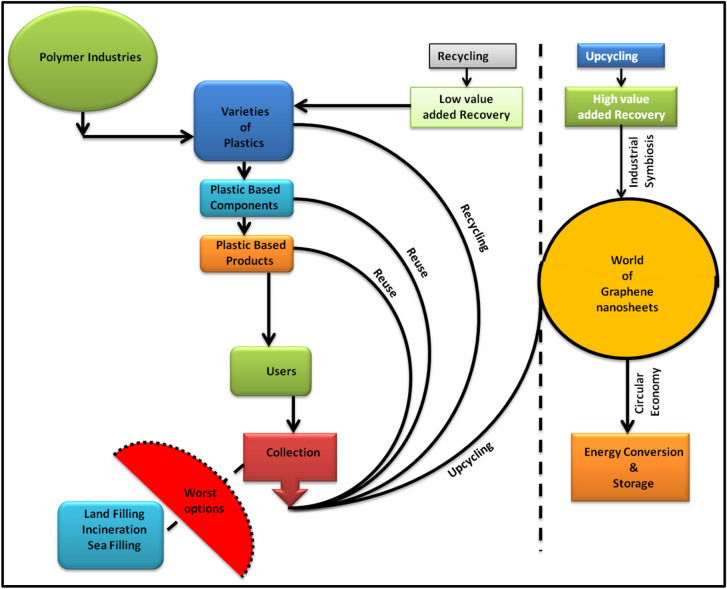
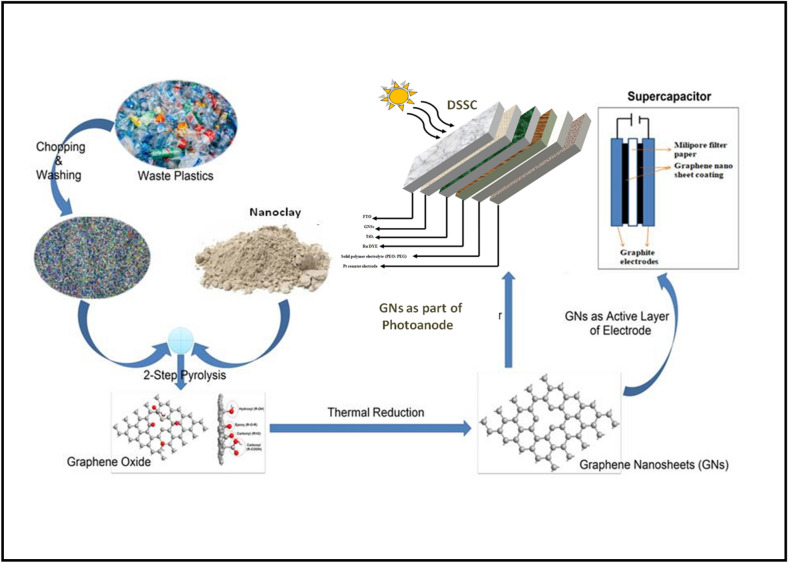
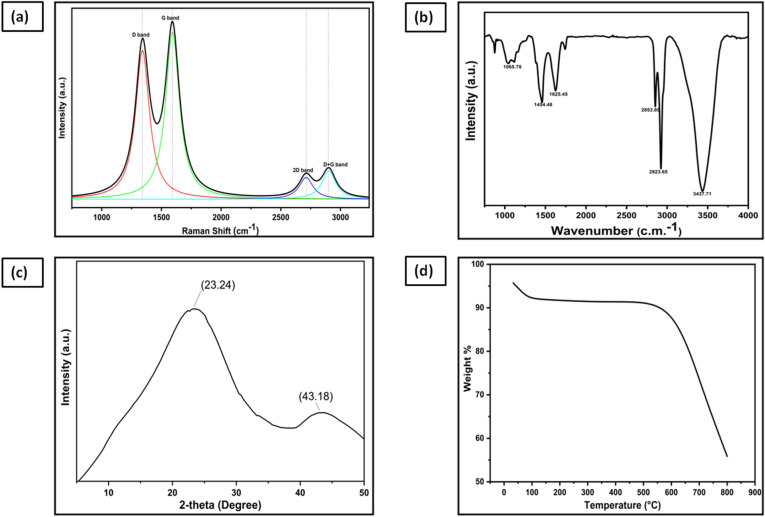
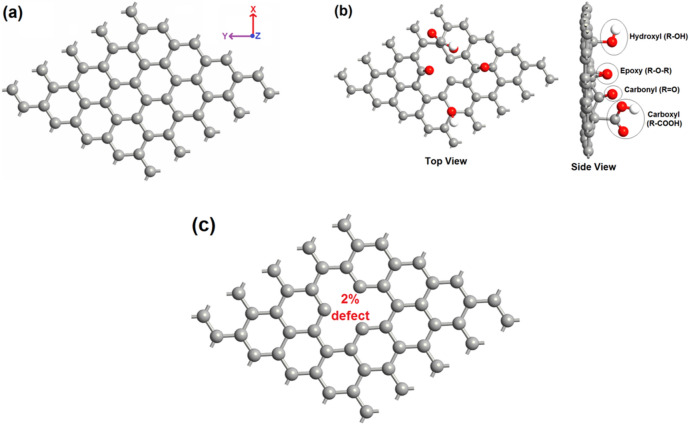
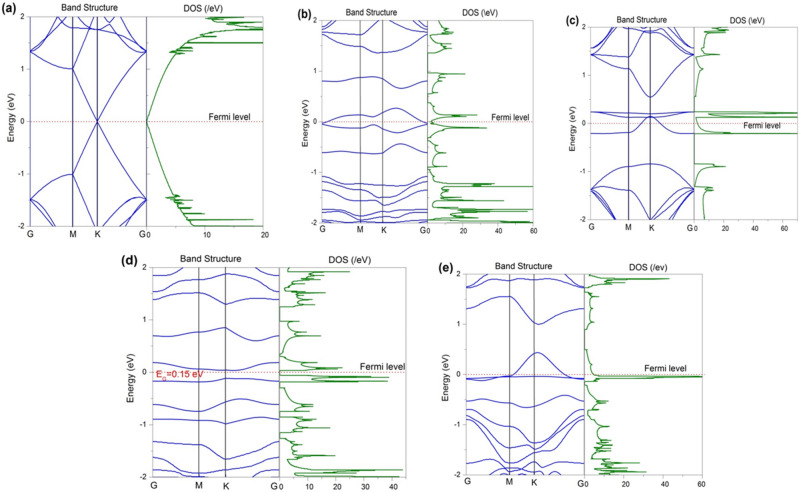
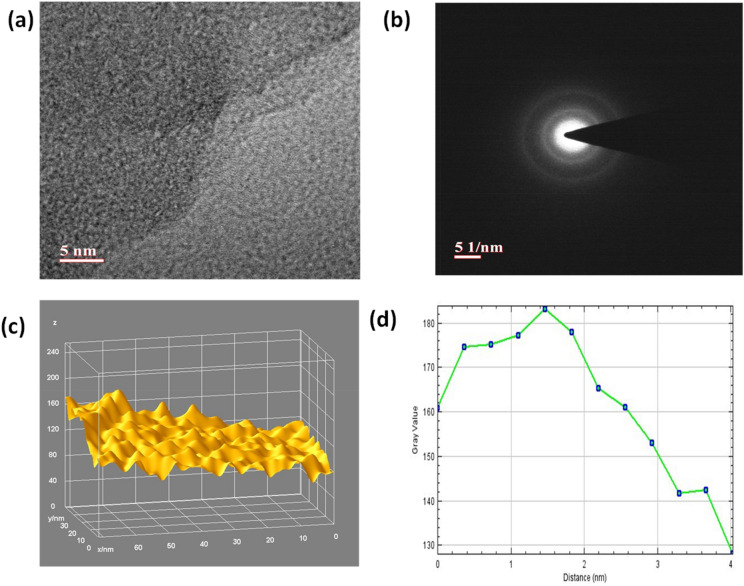
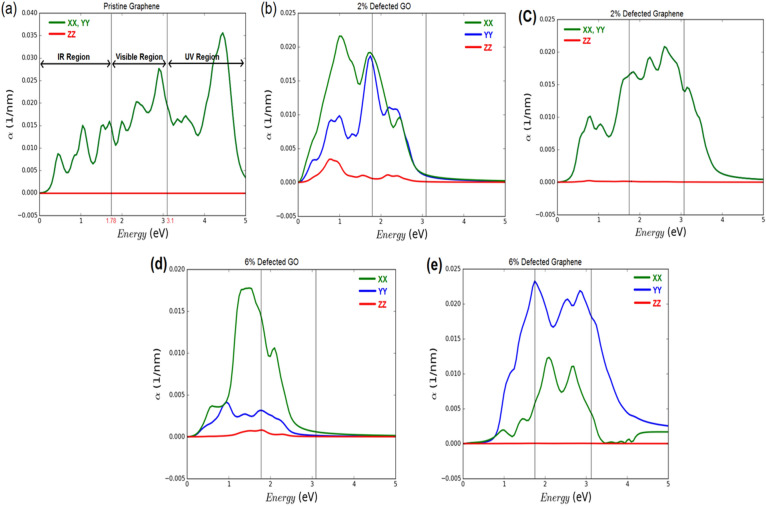
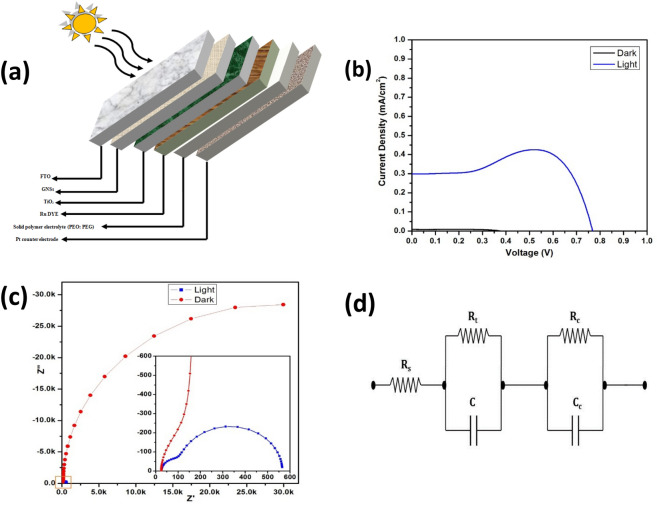
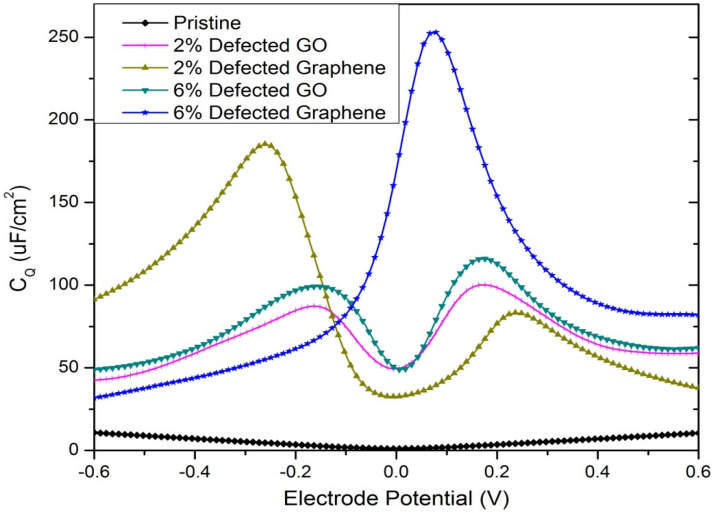
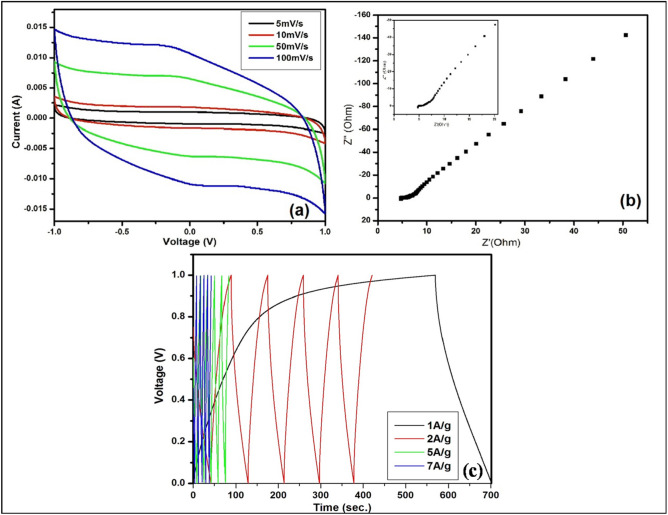
The present study reports the upcycling process of waste plastics into value-added product graphene nanosheets (GNs) and their subsequent applications in dye sensitized solar cells (DSSCs) and supercapacitors. Bentonite nanoclay has been used as an agent for the degradation of waste plastics with two step pyrolysis processes at 450 °C and 945 °C in an inert atmosphere of N 2 gas to obtain GNs. The GNs with few layers were confirmed by the RAMAN spectroscopy, XRD and HRTEM analyses. Further, FT-IR and EDX analyses also performed for the identification and quantitative analysis of functional groups in GNs. The GNs thus synthesized from plastic waste have been used for the fabrication of DSSCs and supercapacitors. The DSSC fabrication with GNs as part of photo-anode with polymeric electrolyte showed a high fill factor of 86.4% and high V oc of 0.77 V, which were also supported by the computational findings. On the other hand, the utilization of GNs as an active layer material of supercapacitor electrodes offered a high specific capacitance of 398 F/g with a scan rate of 0.005 V/s. The supercapacitor also exhibited significant energy density (E d ) and power density (P d ) of 38 Wh/kg and 1009.74 W/kg, respectively. Thus, the process illustrated the utility of waste plastics upcycling for conservation of EEE i.e., ecology, economy and energy for better tomorrow.
Overview
The claims and statistics of this paper haven’t been checked yet.
Run the check — free, no account needed. It reads the open-access text and checks the sources it cites.
Integrity signals
Registry
Cites
Statistics
Figures
Verification
Claims the paper makes
The claims and statistics of this paper haven’t been checked yet.
Run the check — free, no account needed. It reads the open-access text and checks the sources it cites.
Claims other papers make about this one
Each is checked against this paper’s own text: does it say what the citing paper says it does?
In the citing paper
“In order to effectively store and use energy, supercapacitors with high specific power density, good cycle stability and long life, fast charging or discharging and wide operating temperature range are preferred for energy storage devices (Pandey et al. 2021).”
From Conversion of waste plastics into value-added carbon materials (2023) · cites this paper as Pandey et al. 2021
Self-check
Percentages, sums and reported differences re-computed from the paper’s own numbers.
The self-check needs the paper’s full text.
Citations
Cites
Generalized Gradient Approximation Made Simple
Perdew, J. P., Burke, K., & Ernzerhof, M. (1996) · Physical Review Letters · doi:10.1103/physrevlett.77.3865 · Cited by 215,824
Electric Field Effect in Atomically Thin Carbon Films
Novoselov, K. S., Geim, A. K., Morozov, S. V., Jiang, D., Zhang, Y., Dubonos, S. V., Grigorieva, I. V., & Firsov, A. A. (2004) · Science · doi:10.1126/science.1102896 · Cited by 66,834
Materials for electrochemical capacitors
Simon, P., & Gogotsi, Y. G. (2008) · Nature Materials · doi:10.1038/nmat2297 · Cited by 16,636
Interpretation of Raman spectra of disordered and amorphous carbon
Ferrari, A. C., & Robertson, J. (2000) · Physical review. B, Condensed matter · doi:10.1103/physrevb.61.14095 · Cited by 15,715
Raman Spectrum of Graphene and Graphene Layers
Ferrari, A. C., Meyer, J. C., Scardaci, V., Casiraghi, C., Lazzeri, M., Mauri, F., Piscanec, S., Jiang, D., Novoselov, K. S., Roth, S., et al. (2006) · Physical Review Letters · doi:10.1103/physrevlett.97.187401 · Cited by 15,229
On the limited memory BFGS method for large scale optimization
Liu, D. C., & Nocedal, J. M. (1989) · Mathematical Programming · doi:10.1007/bf01589116 · Cited by 9,062
Graphene-Based Ultracapacitors
Stoller, M. D., Park, S., Zhu, Y., An, J., & Ruoff, R. S. (2008) · Nano Letters · doi:10.1021/nl802558y · Cited by 8,448
Ferrari, A. C. (2007) · Solid State Communications · doi:10.1016/j.ssc.2007.03.052 · Cited by 7,706
What are batteries, fuel cells, and supercapacitors?
Winter, M., & Brodd, R. J. (2004) · Chemical Reviews · doi:10.1021/cr020730k · Cited by 7,389
Honeycomb Carbon: A Review of Graphene
Allen, M. J., Tung, V., & Kaner, R. B. (2009) · Chemical Reviews · doi:10.1021/cr900070d · Cited by 7,073
Accurate Band Gaps of Semiconductors and Insulators with a Semilocal Exchange-Correlation Potential
Tran, F., & Blaha, P. (2009) · Physical Review Letters · doi:10.1103/physrevlett.102.226401 · Cited by 6,135
Electrochemical Capacitors for Energy Management
Miller, J. R., & Simon, P. (2008) · Science · doi:10.1126/science.1158736 · Cited by 4,840
Advanced Materials for Energy Storage
Liu, C., Li, F., Ma, L., & Cheng, H. (2010) · Advanced Materials · doi:10.1002/adma.200903328 · Cited by 4,810
Resonant Raman spectroscopy of disordered, amorphous, and diamondlike carbon
Ferrari, A. C., & Robertson, J. (2001) · Physical review. B, Condensed matter · doi:10.1103/physrevb.64.075414 · Cited by 2,994
QuantumATK: an integrated platform of electronic and atomic-scale modelling tools
Smidstrup, S., Markussen, T., Vancraeyveld, P., Wellendorff, J., Schneider, J., Gunst, T., Verstichel, B., Stradi, D., Khomyakov, P. A., Vej-Hansen, U. G., et al. (2019) · Journal of Physics Condensed Matter · doi:10.1088/1361-648x/ab4007 · Cited by 2,015
Double Resonant Raman Scattering in Graphite
Thomsen, C., & Reich, S. (2000) · Physical Review Letters · doi:10.1103/physrevlett.85.5214 · Cited by 1,781
Measurement of the quantum capacitance of graphene
Xia, J., Chen, F., Li, J., & Tao, N. J. (2009) · Nature Nanotechnology · doi:10.1038/nnano.2009.177 · Cited by 1,758
Hu, C., Chang, K., Lin, M.-C., & Wu, Y.-T. (2006) · Nano Letters · doi:10.1021/nl061576a · Cited by 1,734
Printable Thin Film Supercapacitors Using Single-Walled Carbon Nanotubes
Kaempgen, M., Chan, C. K., Ma, J., Cui, Y., & Gruner, G. (2009) · Nano Letters · doi:10.1021/nl8038579 · Cited by 1,535
Strategies to reduce the global carbon footprint of plastics
Zheng, J., & Suh, S. (2019) · Nature Climate Change · doi:10.1038/s41558-019-0459-z · Cited by 1,356
Graphene-polymer nanocomposites for structural and functional applications
Hu, K., Kulkarni, D. D., Choi, I., & Tsukruk, V. V. (2014) · Progress in Polymer Science · doi:10.1016/j.progpolymsci.2014.03.001 · Cited by 1,095
Graphene-based materials for supercapacitor electrodes – A review
Ke, Q., & Wang, J. (2016) · Journal of Materiomics · doi:10.1016/j.jmat.2016.01.001 · Cited by 1,030
Yang, N., Zhai, J., Wang, D., Chen, Y., & Jiang, L. (2010) · ACS Nano · doi:10.1021/nn901660v · Cited by 979
Large, Solution-Processable Graphene Quantum Dots as Light Absorbers for Photovoltaics
Yan, X., Cui, X., Li, B., & Li, L. (2010) · Nano Letters · doi:10.1021/nl101060h · Cited by 915
Interpretation of infrared and Raman spectra of amorphous carbon nitrides
Ferrari, A. C., Rodil, S. E., & Robertson, J. (2003) · Physical review. B, Condensed matter · doi:10.1103/physrevb.67.155306 · Cited by 786
Graphene for energy conversion and storage in fuel cells and supercapacitors
Choi, H., Jung, S., Seo, J., Chang, D. W., Dai, L., & Baek, J. (2012) · Nano Energy · doi:10.1016/j.nanoen.2012.05.001 · Cited by 696
Punetha, V. D., Rana, S., Yoo, H. J., Chaurasia, A., McLeskey, J. T., Ramasamy, M. S., Sahoo, N. G., & Cho, J. W. (2016) · Progress in Polymer Science · doi:10.1016/j.progpolymsci.2016.12.010 · Cited by 674
Self-citationFacilitated Ion Transport in All-Solid-State Flexible Supercapacitors
Choi, B. G., Hong, J., Hong, W. H., Hammond, P. T., & Park, H. S. (2011) · ACS Nano · doi:10.1021/nn202020w · Cited by 486
Achieving high specific charge capacitances in Fe3O4/reduced graphene oxide nanocomposites
Shi, W., Zhu, J., Sim, D., Tay, Y. Y., Lu, Z., Zhang, X., Sharma, Y., Srinivasan, M., Zhang, H., Hng, H. H., et al. (2011) · Journal of Materials Chemistry · doi:10.1039/c0jm03175e · Cited by 469
Design and Preparation of Materials for Advanced Electrochemical Storage
Melot, B. C., & Tarascon, J. ‐. (2013) · Accounts of Chemical Research · doi:10.1021/ar300088q · Cited by 436
Graphene Materials and Their Use in Dye-Sensitized Solar Cells
Roy‐Mayhew, J. D., & Aksay, İ. A. (2014) · Chemical Reviews · doi:10.1021/cr400412a · Cited by 424
Highly Pt-like electrocatalytic activity of transition metal nitrides for dye-sensitized solar cells
Li, G., Song, J. Z., Pan, G. L., & Gao, X. (2011) · Energy & Environmental Science · doi:10.1039/c1ee01105g · Cited by 408
Carbon‐Based Functional Materials Derived from Waste for Water Remediation and Energy Storage
Ma, Q., Yu, Y., Sindoro, M., Fane, A. G., Wang, R., & Zhang, H. (2017) · Advanced Materials · doi:10.1002/adma.201605361 · Cited by 392
Upcycling waste plastics into carbon nanomaterials: A review
Zhuo, C., & Levendis, Y. A. (2013) · Journal of Applied Polymer Science · doi:10.1002/app.39931 · Cited by 335
Yao, D., Wu, C., Yang, H., Zhang, Y. S., Nahil, M. A., Chen, Y., Williams, P. T., & Chen, H. (2017) · Energy Conversion and Management · doi:10.1016/j.enconman.2017.06.012 · Cited by 316
Wu, C., Nahil, M. A., Miskolczi, N., Huang, J., & Williams, P. T. (2013) · Environmental Science & Technology · doi:10.1021/es402488b · Cited by 242
Density of States and Zero Landau Level Probed through Capacitance of Graphene
Ponomarenko, L. A., Yang, R., Gorbachev, R., Blake, P., Mayorov, A. S., Novoselov, K. S., Katsnelson, M. I., & Geim, A. K. (2010) · Physical Review Letters · doi:10.1103/physrevlett.105.136801 · Cited by 242
Li, Z., Wang, J., Liu, S., Liu, X., & Yang, S. (2011) · Journal of Power Sources · doi:10.1016/j.jpowsour.2011.05.036 · Cited by 236
Rossi, F. D., Pontecorvo, T., & Brown, T. M. (2015) · Applied Energy · doi:10.1016/j.apenergy.2015.07.031 · Cited by 232
Quantum Effects on the Capacitance of Graphene-Based Electrodes
Zhan, C., Neal, J. N., Wu, J., & Jiang, D. (2015) · The Journal of Physical Chemistry C · doi:10.1021/acs.jpcc.5b05930 · Cited by 231
NiSe2 as an efficient electrocatalyst for a Pt-free counter electrode of dye-sensitized solar cells
Gong, F., Xu, X., Li, Z., Zhou, G., & Wang, Z. (2012) · Chemical Communications · doi:10.1039/c2cc38621f · Cited by 220
Independent Tuning of the Band Gap and Redox Potential of Graphene Quantum Dots
Yan, X., Li, B., Cui, X., Wei, Q., Tajima, K., & Li, L. (2011) · The Journal of Physical Chemistry Letters · doi:10.1021/jz200450r · Cited by 220
Xiao, W., Xia, H., Fuh, J. Y. H., & Lü, L. (2009) · Journal of Power Sources · doi:10.1016/j.jpowsour.2009.03.073 · Cited by 216
Ahmad, S., Yum, J., Zhang, X., Grätzel, M., Butt, H., & Nazeeruddin, M. K. (2010) · Journal of Materials Chemistry · doi:10.1039/b920210b · Cited by 211
Long-term stability of dye solar cells
Harikisun, R., & Desilvestro, H. (2010) · Solar Energy · doi:10.1016/j.solener.2010.10.016 · Cited by 172
Baxter, J. B. (2012) · Journal of Vacuum Science & Technology A Vacuum Surfaces and Films · doi:10.1116/1.3676433 · Cited by 163
Jiang, Z., Song, R., Bi, W., Lu, J. Q., & Tang, T. (2006) · Carbon · doi:10.1016/j.carbon.2006.08.012 · Cited by 156
Aladekomo, J. B., & Bragg, R. H. (1990) · Carbon · doi:10.1016/0008-6223(90)90338-y · Cited by 152
Hole Defects and Nitrogen Doping in Graphene: Implication for Supercapacitor Applications
Luo, G., Liu, L., Zhang, J., Li, G., Wang, B., & Zhao, J. (2013) · ACS Applied Materials & Interfaces · doi:10.1021/am403427h · Cited by 151
Pandey, S., Karakoti, M., Dhali, S., Karki, N., SanthiBhushan, B., Tewari, C., Rana, S., Srivastava, A., Melkani, A. B., & Sahoo, N. G. (2019) · Waste Management · doi:10.1016/j.wasman.2019.03.023 · Cited by 151
Self-citationSynthesis of carbon nanotubes by sequential pyrolysis and combustion of polyethylene
Zhuo, C., Hall, B., Richter, H., & Levendis, Y. A. (2010) · Carbon · doi:10.1016/j.carbon.2010.07.007 · Cited by 134
Park, S.-H., Kim, B., & Lee, W.-J. (2013) · Journal of Power Sources · doi:10.1016/j.jpowsour.2013.03.079 · Cited by 113
Sahito, I. A., Sun, K. C., Arbab, A. A., Qadir, M. B., Choi, Y. S., & Jeong, S. H. (2016) · Journal of Power Sources · doi:10.1016/j.jpowsour.2016.04.025 · Cited by 110
Lee, T. H., Do, K., Lee, Y. W., Jeon, S. S., Kim, C., Ko, J., & Im, S. S. (2012) · Journal of Materials Chemistry · doi:10.1039/c2jm34807a · Cited by 103
Wu, C., Wang, Z., Wang, L., Williams, P. T., & Huang, J. (2012) · RSC Advances · doi:10.1039/c2ra20261a · Cited by 94
Singh, P. K., Nagarale, R. K., Pandey, S. P., Rhee, H., & Bhattacharya, B. (2011) · Advances in Natural Sciences Nanoscience and Nanotechnology · doi:10.1088/2043-6262/2/2/023002 · Cited by 94
Self-citationFew Layer Reduced Graphene Oxide: Evaluation of the Best Experimental Conditions for Easy Production
Pavoski, G., Maraschin, T. G., Fim, F. D. C., Balzaretti, N. M., Galland, G. B., Moura, C. S., & Basso, N. R. D. S. (2016) · Materials Research · doi:10.1590/1980-5373-mr-2015-0528 · Cited by 94
Gong, J., Feng, J., Liu, J., Jiang, Z., Chen, X., Mijowska, E., Wen, X., & Tang, T. (2014) · Chemical Engineering Journal · doi:10.1016/j.cej.2014.01.107 · Cited by 91
Electrochemical capacitors of RuO2 nanophase grown on LiNbO3(100) and sapphire(0001) substrates
Ke, Y.-F., Tsai, D., & Huang, Y. (2005) · Journal of Materials Chemistry · doi:10.1039/b502754c · Cited by 83
Yeh, M., Lin, L., Sun, C., Leu, Y., Tsai, J.-T., Yeh, C., Vittal, R., & Ho, K. (2014) · The Journal of Physical Chemistry C · doi:10.1021/jp412542d · Cited by 83
Chang, L.-H., Hsieh, C., Hsiao, M., Chiang, J., Liu, P., Ho, K.-K., Ma, C.-C. M., Yen, M., Tsai, M.-C., & Tsai, C. (2012) · Journal of Power Sources · doi:10.1016/j.jpowsour.2012.08.058 · Cited by 77
Catalytic conversion of wastes from the bioethanol production into carbon nanomaterials
Alves, J. O., Zhuo, C., Levendis, Y. A., & Tenório, J. A. S. (2011) · Applied Catalysis B: Environmental · doi:10.1016/j.apcatb.2011.06.001 · Cited by 73
Porous graphene paper for supercapacitor applications
Li, Q., Guo, X., Zhang, Y., Zhang, W., Ge, C., Zhao, L., Wang, X., Zhang, H., Chen, J., Wang, Z., et al. (2017) · Journal of Material Science and Technology · doi:10.1016/j.jmst.2017.03.018 · Cited by 73
Simple, Fast and Cost-Effective Electrochemical Synthesis of Few Layer Graphene Nanosheets
Sahoo, S. K., & Mallik, A. (2014) · NANO · doi:10.1142/s1793292015500198 · Cited by 57
Arbab, A. A., Sun, K. C., Sahito, I. A., Memon, A. A., Choi, Y. S., & Jeong, S. H. (2015) · Journal of Materials Chemistry A · doi:10.1039/c5ta08858e · Cited by 57
Kim, H., Veerappan, G., & Park, J. H. (2014) · Electrochimica Acta · doi:10.1016/j.electacta.2014.06.012 · Cited by 55
Critical raw materials and the circular economy
Mathieux, F., Ardente, F., Bobba, S., Nuss, P., Blengini, G. A., Alves, D., Blagoeva, P., Matos, C. T. D., Wittmer, C., Pavel, D., et al. (2017) · PORTO Publications Open Repository TOrino (Politecnico di Torino) · Cited by 50
Arbab, A. A., Sun, K. C., Sahito, I. A., Qadir, M. B., & Jeong, S. H. (2015) · Applied Surface Science · doi:10.1016/j.apsusc.2015.04.199 · Cited by 42
Light-Controlled Plasmon Switching Using Hybrid Metal-Semiconductor Nanostructures
Paudel, H. P., & Leuenberger, M. N. (2012) · Nano Letters · doi:10.1021/nl203990c · Cited by 35
Utilizing reduced graphene oxide for achieving better efficient dye sensitized solar cells
Surana, K., Konwar, S., Singh, P. K., & Bhattacharya, B. (2019) · Journal of Alloys and Compounds · doi:10.1016/j.jallcom.2019.02.287 · Cited by 27
Self-citationCharles, R. G., Douglas, P., Baker, J., Carnie, M. J., Douglas, J. O., Penney, D., & Watson, T. (2018) · Journal of Cleaner Production · doi:10.1016/j.jclepro.2018.08.125 · Cited by 25
Chopra, S., & Maidich, L. (2014) · RSC Advances · doi:10.1039/c4ra06727d · Cited by 22
Surana, K., Idris, M. G., & Bhattacharya, B. (2020) · Applied Nanoscience · doi:10.1007/s13204-020-01452-5 · Cited by 20
Self-citationImproved durability of dye-sensitized solar cell with H2-reduced carbon counter electrode
Takada, H., Obana, Y., Sasaki, R., Kuribayashi, M., Kanno, M., Zhu, C. Y., Bessho, T., Takagi, Y., Hinokuma, K., & Noda, K. (2014) · Journal of Power Sources · doi:10.1016/j.jpowsour.2014.10.148 · Cited by 19
Surana, K., Jadhav, N., Singh, P. K., & Bhattacharya, B. (2018) · Applied Nanoscience · doi:10.1007/s13204-018-0887-5 · Cited by 11
Self-citationOptical properties of boron-group (V) hexagonal nanowires: DFT investigation
SanthiBhushan, B., Soni, M., & Srivastava, A. (2017) · Pramana · doi:10.1007/s12043-017-1406-z · Cited by 9
Self-citation
Research works printed but not linked: 3
- MacArthur, E. Towards the Circular Economy, Economic and Business Rationale for an Accelerated Transition (Ellen MacArthur Foundation, Cowes, 2013).
- EC, Speaking points by Environment Commissioner Janez Potočnik on Circular Economy—Press conference on Circular Economy and Green Employment Initiative, Brussels. (2014).
- EC, Report on critical raw materials for the EU—Critical raw materials profiles. in Industry, D.E.a. (ed.) (2015).
Cited by
Sorted by citations
Harussani, M. M., Sapuan, S. M., Rashid, U., Khalina, A., & Ilyas, R. A. (2021) · The Science of The Total Environment · doi:10.1016/j.scitotenv.2021.149911 · Cited by 277
Isaeva, V. I., Vedenyapina, M. D., Kurmysheva, A. Y., Weichgrebe, D., Nair, R. R., Nguyen, N. P., & Kustov, L. M. (2021) · Molecules · doi:10.3390/molecules26216628 · Cited by 206
A comprehensive review on supercapacitors: Basics to recent advancements
Singh, N. K., Singh, V., Bisht, N., Negi, P., Dhyani, A., Sharma, R. K., & Tewari, B. S. (2025) · Journal of Energy Storage · doi:10.1016/j.est.2025.116498 · Cited by 182
Plastic Waste Valorization by Leveraging Multidisciplinary Catalytic Technologies
Zhou, H., Wang, Y., Ren, Y., Li, Z., Kong, X., Shao, M., & Duan, H. (2022) · ACS Catalysis · doi:10.1021/acscatal.2c02775 · Cited by 173
A review on carbon materials production from plastic wastes
Dai, L., Karakas, O., Cheng, Y., Cobb, K., Chen, P. L., & Ruan, R. R. (2022) · Chemical Engineering Journal · doi:10.1016/j.cej.2022.139725 · Cited by 166
Metadata
- Authors
- Pandey, S., Karakoti, M., Surana, K., Dhapola, P. S., SanthiBhushan, B., Ganguly, S., Singh, P. K., Abbas, A., Srivastava, A., & Sahoo, N. G.
- Affiliations
- Kumaun University (IN)
- Sharda University (IN)
- Indian Institute of Technology Bombay (IN)
- The University of Sydney (AU)
- Atal Bihari Vajpayee Indian Institute of Information Technology and Management (IN)
- Corresponding author
- Sahoo, Nanda Gopal
- ORCID
- Venue
- Scientific Reports
- Published
- 2021-02-16
- Volume
- 11
- Issue
- 1
- Pages
- 3916-3916
- ISSN
- 2045-2322 (ISSN-L)
- PMC
- PMC7887277
- OpenAlex
- W3131772750
- Cited by
- 155
- References
- 76
- Citations by year
- 2026: 20 · 2025: 31 · 2024: 36 · 2023: 31 · 2022: 23 · 2021: 13
- FWCI
- 7.82
- Type
- journal article
- Language
- en
- Open access
- gold
- doi.org
- Locations
- Scientific Reports (publishedVersion, cc-by)
- PubMed Central (publishedVersion, cc-by)
- PubMed (publishedVersion)
- DOAJ (DOAJ: Directory of Open Access Journals) (submittedVersion, cc-by-sa)
- Funders
- Department of Science and Technology, Ministry of Science and Technology, India (IF150750)
- Ministry of Environment, Forest and Climate Changes, India (GBPNI/NMHS-2019-20/MG)
- Topics
- Physical Sciences › Materials Science › Materials Chemistry › Graphene research and applications
- Physical Sciences › Materials Science › Electronic, Optical and Magnetic Materials › Supercapacitor Materials and Fabrication
- Physical Sciences › Energy › Renewable Energy, Sustainability and the Environment › TiO2 Photocatalysis and Solar Cells
- Keywords
- graphene nanosheets, plastic waste upcycling, plastic waste pyrolysis, bentonite nanoclay, dye-sensitized solar cells, supercapacitors, photoanodes, polymer electrolytes, specific capacitance, energy density, electronic waste
About these checks
Registry, retraction, Cites and statistics results are computed, not judged, with one exception: a printed reference that no index lists is read once by a model before it counts as a citation error. Claims are extracted by a model and kept only when their quote appears verbatim in the text; each cited source is then checked, with a model’s help, for whether it says what the claim relies on. Those verdicts can be wrong — read the claim’s quote and the cited source before relying on one.
Statistics and arithmetic are recomputed, not judged.
Confidence bands are shown only for fields calibrated on our annotated test set. None is calibrated yet, so no band is shown.
What counts as a claim ›How we measure confidence ›How we check this ›
Are you an author, or do you see a problem with this page? Request a review
