

The DOI matches its Crossref record; 40 of the 40 references it cites were found in a registry or an index.
Pancancer survival analysis of cancer hallmark genes
Open accessAbstract
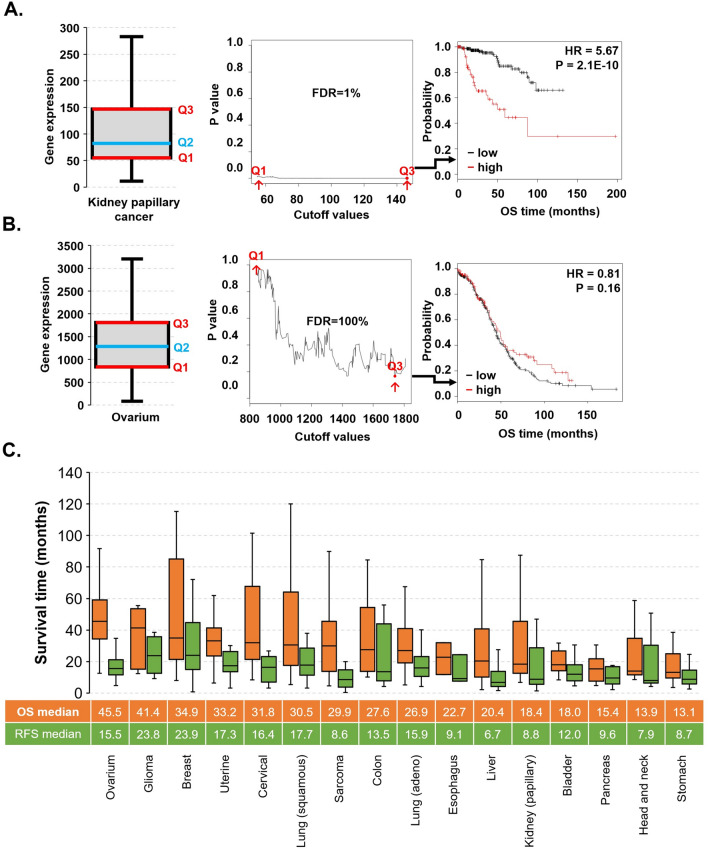
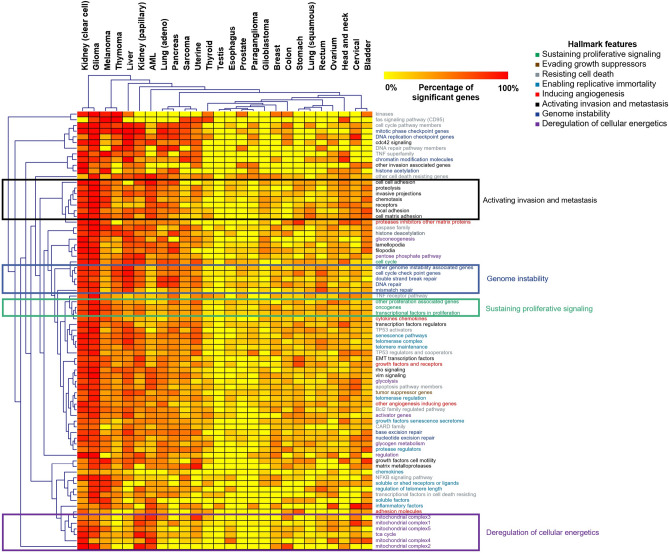
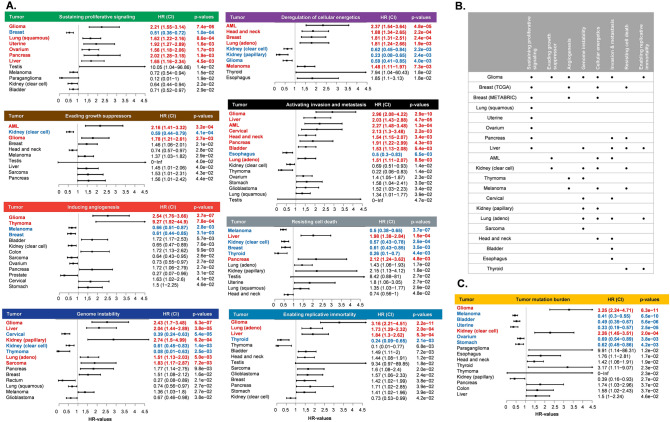
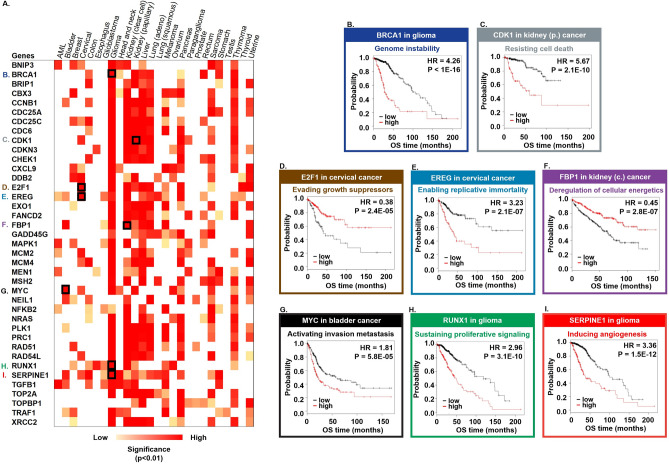
Cancer hallmark genes are responsible for the most essential phenotypic characteristics of malignant transformation and progression. In this study, our aim was to estimate the prognostic effect of the established cancer hallmark genes in multiple distinct cancer types. RNA-seq HTSeq counts and survival data from 26 different tumor types were acquired from the TCGA repository. DESeq was used for normalization. Correlations between gene expression and survival were computed using the Cox proportional hazards regression and by plotting Kaplan–Meier survival plots. The false discovery rate was calculated to correct for multiple hypothesis testing. Signatures based on genes involved in genome instability and invasion reached significance in most individual cancer types. Thyroid and glioblastoma were independent of hallmark genes (61 and 54 genes significant, respectively), while renal clear cell cancer and low grade gliomas harbored the most prognostic changes (403 and 419 genes significant, respectively). The eight genes with the highest significance included BRCA1 (genome instability, HR 4.26, p < 1E−16), RUNX1 (sustaining proliferative signaling, HR 2.96, p = 3.1E−10) and SERPINE1 (inducing angiogenesis, HR 3.36, p = 1.5E−12) in low grade glioma, CDK1 (cell death resistance, HR = 5.67, p = 2.1E−10) in kidney papillary carcinoma, E2F1 (tumor suppressor, HR 0.38, p = 2.4E−05) and EREG (enabling replicative immortality, HR 3.23, p = 2.1E−07) in cervical cancer, FBP1 (deregulation of cellular energetics, HR 0.45, p = 2.8E−07) in kidney renal clear cell carcinoma and MYC (invasion and metastasis, HR 1.81, p = 5.8E−05) in bladder cancer. We observed unexpected heterogeneity and tissue specificity when correlating cancer hallmark genes and survival. These results will help to prioritize future targeted therapy development in different types of solid tumors.
Overview
The claims and statistics of this paper haven’t been checked yet.
Run the check — free, no account needed. It reads the open-access text and checks the sources it cites.
Integrity signals
Registry
Cites
Statistics
Figures
Verification
Claims the paper makes
The claims and statistics of this paper haven’t been checked yet.
Run the check — free, no account needed. It reads the open-access text and checks the sources it cites.
Claims other papers make about this one
Each is checked against this paper’s own text: does it say what the citing paper says it does?
In the citing paper
“Kaplan–Meier analysis using public breast cancer meta-analysis database11,30 reveals that TNBC patients with higher hypoxia gene signature are associated with worse disease outcomes, including both overall survival (OS) and distant metastasis-free survival (DMFS), compared to those with lower expression of hypoxia gene signature (Fig. 1h).”
Self-check
Percentages, sums and reported differences re-computed from the paper’s own numbers.
The self-check needs the paper’s full text.
Citations
Cites
Hallmarks of Cancer: The Next Generation
Hanahan, D., & Weinberg, R. A. (2011) · Cell · doi:10.1016/j.cell.2011.02.013 · Cited by 66,590
Subramanian, A., Tamayo, P., Mootha, V. K., Mukherjee, S., Ebert, B. L., Gillette, M. A., Paulovich, A., Pomeroy, S. L., Golub, T. R., Lander, E. S., et al. (2005) · Proceedings of the National Academy of Sciences · doi:10.1073/pnas.0506580102 · Cited by 53,625
Hanahan, D., & Weinberg, R. A. (2000) · Cell · doi:10.1016/s0092-8674(00)81683-9 · Cited by 29,219
Differential expression analysis for sequence count data
Anders, S., & Huber, W. (2010) · Genome Biology · doi:10.1186/gb-2010-11-10-r106 · Cited by 15,581
The genomic and transcriptomic architecture of 2,000 breast tumours reveals novel subgroups
METABRIC Group, Curtis, C., Shah, S. P., Chin, S.-F., Turashvili, G., Rueda, O. M., Dunning, M. J., Speed, D., Lynch, A. G., Samarajiwa, S., et al. (2012) · Nature · doi:10.1038/nature10983 · Cited by 6,097
Trastuzumab plus Adjuvant Chemotherapy for Operable HER2-Positive Breast Cancer
Romond, E. H., Perez, E. A., Bryant, J., Suman, V. J., Geyer, C. E., Davidson, N. E., Tan-Chiu, E., Martino, S., Paik, S., Kaufman, P. A., et al. (2005) · New England Journal of Medicine · doi:10.1056/nejmoa052122 · Cited by 5,438
Trastuzumab after Adjuvant Chemotherapy in HER2-Positive Breast Cancer
Piccart-Gebhart, M. J., Procter, M., Leyland-Jones, B., Goldhirsch, A., Untch, M., Smith, I., Gianni, L., Baselga, J., Bell, R., Jackisch, C., et al. (2005) · New England Journal of Medicine · doi:10.1056/nejmoa052306 · Cited by 5,084
Tamoxifen for early breast cancer: an overview of the randomised trials
Abe, O., Bartholomeus, S., & Piccart, M. J. (1998) · The Lancet · doi:10.1016/s0140-6736(97)11423-4 · Cited by 4,180
Gene-expression profiles to predict distant metastasis of lymph-node-negative primary breast cancer
Wang, Y., Klijn, J. G. M., Zhang, Y., Sieuwerts, A. M., Look, M. P., Yang, F., Talantov, D., Timmermans, M. A. M., Gelder, M. E. M., Yu, J. X., et al. (2005) · The Lancet · doi:10.1016/s0140-6736(05)17947-1 · Cited by 2,831
Focan, C., Steinberg, S. M., Blichert-Toft, M., Forbes, J., Collins, R. D., Anderson, S., Margreiter, R., Harwood, C. S., Andersen, K., Beighton, G., et al. (1998) · PubMed · Cited by 2,146
Cited by
Sorted by citations
Items 301–400 of 1,000
Hao, J., Zou, J., Zhang, J., Chen, K., Wu, D., Cao, W., Shang, G., Yang, J. Y. H., Wong‐Lin, K., Sun, H., et al. (2023) · Briefings in Bioinformatics · doi:10.1093/bib/bbad062 · Cited by 15
Fung, S., Knoefel, W. T., & Krieg, A. H. (2021) · Cancers · doi:10.3390/cancers13164098 · Cited by 13
Bürri, D., & Zavolan, M. (2021) · RNA · doi:10.1261/rna.078886.121 · Cited by 14
Zeng, Z., Jiang, X., Pan, Z., Zhou, R.-S., Lin, Z., Tang, Y. C., Cui, Y. J., Zhang, E., & Cao, Z. (2021) · Aging · doi:10.18632/aging.203574 · Cited by 13
Dioguardi, M., Cantore, S., Sovereto, D., Femina, L. L., Spirito, F., Caloro, G. A., Caroprese, M., Maci, M., Scacco, S., Muzio, L. L., et al. (2022) · Journal of Personalized Medicine · doi:10.3390/jpm12091436 · Cited by 12
The Role of WRAP53 in Cell Homeostasis and Carcinogenesis Onset
Gadelha, R. B., Machado, C. B., Pessoa, F. M. C. D. P., Pantoja, L. D. C., Barreto, I. V., Ribeiro, R. M., de Moraes, M. O., de Moraes, M. E. A., Khayat, A. S., & Moreira-Nunes, C. A. (2022) · Current Issues in Molecular Biology · doi:10.3390/cimb44110372 · Cited by 13
Huang, J., Liu, W., Song, S., Li, J. C., Gan, K., Shen, C., Holzbeierlein, J. M., & Li, B. (2022) · Frontiers in Pharmacology · doi:10.3389/fphar.2022.1080055 · Cited by 12
Al-Shawi, A. A. A., El‐Arabey, A. A., Mutlaq, D. Z., Eltayb, W. A., Iriti, M., & Abdalla, M. (2023) · Current Topics in Medicinal Chemistry · doi:10.2174/1568026623666230106121527 · Cited by 12
Zhang, H., Kong, W., Zhao, X., Xie, Y., Luo, D., & Chen, S. (2023) · BMC Medical Genomics · doi:10.1186/s12920-023-01463-5 · Cited by 12
NUF2 is correlated with a poor prognosis and immune infiltration in clear cell renal cell carcinoma
Zheng, B., Wang, S., Yuan, X., Zhang, J., Shen, Z., & Ge, C. (2023) · BMC Urology · doi:10.1186/s12894-023-01258-x · Cited by 14
Deep Survival Analysis With Latent Clustering and Contrastive Learning
Cui, C., Tang, Y., & Zhang, W. (2024) · IEEE Journal of Biomedical and Health Informatics · doi:10.1109/jbhi.2024.3362850 · Cited by 13
Jiang, Y., Liu, Y., Wei, Y., Jhang, J., Kuo, H., Huang, H.-H., Chan, M. W. Y., Lin, G., Cheng, W., Lin, S.-C., et al. (2024) · Diagnostics · doi:10.3390/diagnostics14050468 · Cited by 12
Edtmayer, S., Witalisz‐Siepracka, A., Moser, B., Heindl, K., Weiß, S. A. I., Eder, T., Dutta, S., Graichen, U., Klee, S., Sharif, O., et al. (2024) · Cell Death and Disease · doi:10.1038/s41419-024-06749-9 · Cited by 12
Self-citationSajid, A., Manzoor, Q., Sajid, A., Mehr-un-Nisa, Imtiaz, F., Mumtaz, M. A., Fatima, N., Mohammed, O. A., Abdel‐Reheim, M. A., & Iqbal, M. (2024) · Journal of Molecular Structure · doi:10.1016/j.molstruc.2024.139675 · Cited by 12
Yan, Y., Liang, Q., Xu, Z., & Yi, Q. (2021) · PeerJ · doi:10.7717/peerj.12171 · Cited by 12
Basic, V., Zhang, B., Domert, J., Pellas, U., & Tot, T. (2021) · Oncology Letters · doi:10.3892/ol.2021.13101 · Cited by 12
Prognostic Value of NUSAP1 and Its Correlation with Immune Infiltrates in Human Breast Cancer
Li, M., & Yang, B. (2021) · Critical Reviews in Eukaryotic Gene Expression · doi:10.1615/critreveukaryotgeneexpr.2021040248 · Cited by 12
Yao, S., Chen, W., Zuo, H., Bi, Z., Zhang, X., Pang, L., Jing, Y., Yin, X., & Cheng, H. (2021) · Biochemical Genetics · doi:10.1007/s10528-021-10178-0 · Cited by 12
Hilgers, K., Ibrahim, S., Kiesel, L., Greve, B., Espinoza‐Sánchez, N. A., & Götte, M. (2022) · Frontiers in Oncology · doi:10.3389/fonc.2022.803899 · Cited by 12
Integrated bioinformatics analysis of validated and circulating miRNAs in ovarian cancer
Doğan, B., Gümüşoğlu-Acar, E., Ülgen, E., Sezerman, O. U., & Günel, T. (2022) · Genomics & Informatics · doi:10.5808/gi.21067 · Cited by 12
Su, Y., Zeng, K., Liu, S., Wu, Y. M., Wang, C., Wang, S., Lin, L., Zou, R., Sun, G., Luan, R., et al. (2022) · Journal of Biological Chemistry · doi:10.1016/j.jbc.2022.102734 · Cited by 12
Pan, X. N., Xue, L., & Sun, Y. (2022) · Annals of Translational Medicine · doi:10.21037/atm-22-5014 · Cited by 12
Anticancer Effects of Carvacrol in In Vitro and In Vivo Models: A Comprehensive Review
(2022) · Biointerface Research in Applied Chemistry · doi:10.33263/briac133.290 · Cited by 12
Zhang, X., Wang, Q., Zhang, R., & Kong, Z. (2023) · International Journal of Radiation Biology · doi:10.1080/09553002.2023.2194390 · Cited by 12
FOXA2 controls the anti-oxidant response in FH-deficient cells
Rogerson, C., Sciacovelli, M., Maddalena, L. A., Pouikli, A., Segarra‐Mondejar, M., Valcárcel-Jiménez, L., Schmidt, C., Yang, M. H., Ivanova, E., Kent, J., et al. (2023) · Cell Reports · doi:10.1016/j.celrep.2023.112751 · Cited by 13
Duan, Y., Du, Y., Gu, Z., Zheng, X., & Wang, C. (2022) · International Journal of Molecular Sciences · doi:10.3390/ijms231810316 · Cited by 12
Jin, X. Y., Yin, J., Zhu, H., Li, W., Yu, K., Liu, M., Zhang, X., Lu, M., Wan, Z., & Huang, X. (2021) · Frontiers in Pharmacology · doi:10.3389/fphar.2021.701454 · Cited by 11
Microsatellite instability states serve as predictive biomarkers for tumors chemotherapy sensitivity
Ye, T., Lin, A., Qiu, Z., Hu, S., Zhou, C., Liu, Z., Cheng, Q., Zhang, J., & Luo, P. (2023) · iScience · doi:10.1016/j.isci.2023.107045 · Cited by 12
Xulu, K. R., Nweke, E. E., & Augustine, T. N. (2023) · Frontiers in Genetics · doi:10.3389/fgene.2023.1087432 · Cited by 11
Paizula, X., Wulaying, A., Chen, D., & Ou, J. (2024) · Scientific Reports · doi:10.1038/s41598-024-64687-0 · Cited by 11
STAT3 in acute myeloid leukemia facilitates natural killer cell-mediated surveillance
Witalisz‐Siepracka, A., Denk, C.-M., Moser, B., Hofmann, L., Edtmayer, S., Harm, T., Weiß, S. A. I., Heindl, K., Hessenberger, M., Summer, S., et al. (2024) · Frontiers in Immunology · doi:10.3389/fimmu.2024.1374068 · Cited by 11
Self-citationNeoplastic ICAM-1 protects lung carcinoma from apoptosis through ligation of fibrinogen
Wang, S., Wang, J., Liu, C., Yang, L., Tan, X., Chen, S., Xue, Y., Ji, H., Ge, G., & Chen, J. (2024) · Cell Death and Disease · doi:10.1038/s41419-024-06989-9 · Cited by 10
Gonçalves, F. A., Bittencourt, L. D. S., Barbosa, S., Diel, L. F., Bernardi, L., Matté, C., & Lamers, M. L. (2024) · Molecular Carcinogenesis · doi:10.1002/mc.23831 · Cited by 11
Zhang, G., Xiang, M., Gu, L., Zhou, J., Zhang, B., Tian, W., & Deng, D. (2024) · Proceedings of the National Academy of Sciences · doi:10.1073/pnas.2409447121 · Cited by 11
Kim, S., Kim, K. H., Jung, H., Jeong, E.-O., Lee, H.-J., Kwon, J., Kwon, H., Choi, S.-W., Koh, H., & Kim, S. (2024) · Journal of Cancer · doi:10.7150/jca.104759 · Cited by 11
Saif, A., Islam, M. T., Raihan, M. O., Yousefi, N., Rahman, M. A., Faridi, H. M., Hasan, A. R., Hossain, M. M., Saleem, R. M., Albadrani, G. M., et al. (2025) · Computers in Biology and Medicine · doi:10.1016/j.compbiomed.2025.110044 · Cited by 13
Wu, R., Tang, W., Qiu, K., Li, P., Li, Y., Li, D., & He, Z. (2021) · International Journal of General Medicine · doi:10.2147/ijgm.s330500 · Cited by 11
Chen, S., Li, Y., Wu, M., Xue, L., Zhu, J., Wu, M., Zhang, Q., He, G., Li, G., Fu, S., et al. (2022) · Frontiers in Oncology · doi:10.3389/fonc.2022.731528 · Cited by 11
Manevich, L., Okita, Y., Okano, Y., Sugasawa, T., Kawanishi, K., Poullikkas, T., Cao, L. T. L. D., Zheng, L., Nakayama, M., Matsumoto, S., et al. (2022) · Cancer Science · doi:10.1111/cas.15359 · Cited by 10
Menck, K., Wlochowitz, D., Wachter, A., Conradi, L., Wolff, A., Scheel, A. H., Korf, U., Wiemann, S., Schildhaus, H., Bohnenberger, H., et al. (2022) · Cancers · doi:10.3390/cancers14092084 · Cited by 11
In vitro assessment of roles of PPP1R14B in cervical and endometrial cancer
Xiang, N., Chen, T., Zhao, X., & Zhao, M. (2022) · Tissue and Cell · doi:10.1016/j.tice.2022.101845 · Cited by 11
APEX1 promotes the oncogenicity of hepatocellular carcinoma via regulation of MAP2K6
Sun, Z., Chen, G., Wang, L., Sang, Q., Xu, G., & Zhang, N. (2022) · Aging · doi:10.18632/aging.204325 · Cited by 11
Ding, Y., Xu, Y., Fu, Y. S., Zhang, H., Zhao, L., & Fan, X. (2022) · Discover Oncology · doi:10.1007/s12672-022-00587-x · Cited by 11
Alasiri, G. A. (2023) · International Journal of Molecular Sciences · doi:10.3390/ijms24032049 · Cited by 11
Expression and significance of m6A-RNA-methylation in oral cancer and precancerous lesion
Qin, Z., Bai, J., He, H., & Li, B. (2023) · Frontiers in Oncology · doi:10.3389/fonc.2023.1013054 · Cited by 11
Özenver, N., & Efferth, T. (2023) · Pharmaceutics · doi:10.3390/pharmaceutics15020427 · Cited by 11
Hong, X., Hsieh, M., Tseng, T.-Y., Lin, H., Chang, H., Yau, S.-T., Cheng, W., Ke, B., Liao, H.-H., Wu, C., et al. (2023) · Journal of Biological Chemistry · doi:10.1016/j.jbc.2023.104814 · Cited by 11
Oncogenic role of an uncharacterized cold‐induced zinc finger protein 726 in breast cancer
Bandyopadhayaya, S., Yadav, P., Sharma, A., Dey, S. K., Nag, A., Maheshwari, R., Ford, B. M., & Mandal, C. C. (2023) · Journal of Cellular Biochemistry · doi:10.1002/jcb.30417 · Cited by 11
Longmate, W., Miskin, R. P., Water, L. V. D., & DiPersio, C. (2021) · JID Innovations · doi:10.1016/j.xjidi.2021.100017 · Cited by 1
Noblejas‐López, M. D. M., López-Cade, I., Fuentes‐Antrás, J., Fernández-Hinojal, G., Esteban‐Sánchez, A., Manzano, A., García-Sáenz, J. Á., Pérez‐Segura, P., de la Hoya, M., Pandiella, A., et al. (2021) · Cancers · doi:10.3390/cancers13164118 · Cited by 11
Self-citationFeng, X., Zhang, T., Chou, J.-H., Liu, L., Miller, L. D., Sullivan, C. A., & Browne, J. D. (2021) · Head & Neck · doi:10.1002/hed.26944 · Cited by 11
Ye, Z., Liu, D., Liu, D., Lv, Y., Zhang, Y., Zhang, J., Bao, J., Yuan, X., Hou, J., & Li, L. (2022) · Frontiers in Endocrinology · doi:10.3389/fendo.2021.826667 · Cited by 11
Xu, J., Guo, Z., Yuan, S., Li, H., & Luo, S. (2022) · Journal of Reproductive Immunology · doi:10.1016/j.jri.2022.103658 · Cited by 11
van den Driest, L., Johnson, C. H., Rattray, N. J. W., & Rattray, Z. (2022) · Alternatives to Laboratory Animals · doi:10.1177/02611929221107546 · Cited by 12
Lian, Q., Ma, C., Wang, X., Wang, J., Zeng, J., Zhang, J., & Li, Y. (2025) · Frontiers in Immunology · doi:10.3389/fimmu.2025.1668627 · Cited by 10
Chan, H. Y. E., & Chen, Z. S. (2022) · Aging · doi:10.18632/aging.204262 · Cited by 10
Chen, L., Wu, Z., Guo, J., Wang, X., Zhao, Z., Liang, H., Zhang, R., & Deng, J. (2022) · Clinical and Experimental Medicine · doi:10.1007/s10238-022-00952-8 · Cited by 10
Chang, C., Huang, Y., Chiang, H., Wu, Y., Wu, K., Chang, Y.-Y., Liu, L.-X., Tsai, Y., & Hsu, Y. (2022) · International Journal of Molecular Sciences · doi:10.3390/ijms24010431 · Cited by 10
Sun, R., Zhang, Y., Lin, X., Piao, Y., Xie, T., He, Y., Xiang, J., Shao, S., Zhou, Q., Zhou, Z., et al. (2023) · Angewandte Chemie · doi:10.1002/ange.202217408 · Cited by 10
Wang, T., Liu, X., Wang, T., Zhan, L., & Zhang, M. (2023) · FEBS Open Bio · doi:10.1002/2211-5463.13654 · Cited by 10
Uncharacterized Proteins CxORFx: Subinteractome Analysis and Prognostic Significance in Cancers
Ershov, P., Yablokov, E. O., Mezentsev, Y. V., & Ivanov, A. S. (2023) · International Journal of Molecular Sciences · doi:10.3390/ijms241210190 · Cited by 10
Shi, Z., Jin, X., Li, W., Tao, H., Song, S.-J., Fan, Z.-W., Jiang, W., Liang, J.-W., & Bai, J. (2023) · Translational Cancer Research · doi:10.21037/tcr-23-136 · Cited by 10
Quantitative MRI Evaluation of Ferritin Overexpression in Non-Small-Cell Lung Cancer
Singhania, M., Zaher, A., Pulliam, C. F., Bayanbold, K., Searby, C. C., Schoenfeld, J. D., Mapuskar, K. A., Fath, M. A., Allen, B. G., Spitz, D. R., et al. (2024) · International Journal of Molecular Sciences · doi:10.3390/ijms25042398 · Cited by 10
Recurrent UBE3C-LRP5 translocations in head and neck cancer with therapeutic implications
Dharavath, B., Butle, A. B., Chaudhary, A., Pal, A., Desai, S., Chowdhury, A., Thorat, R. A., Upadhyay, P., Nair, S. V., & Dutt, A. (2024) · npj Precision Oncology · doi:10.1038/s41698-024-00555-4 · Cited by 9
Arumugam, P., Senthil Murugan, M., & Jayaseelan, V. P. (2024) · Journal of Stomatology Oral and Maxillofacial Surgery · doi:10.1016/j.jormas.2024.102041 · Cited by 10
Zhang, Y., Cai, J., Hosmane, N. S., & Zhu, Y. (2024) · European Journal of Medicinal Chemistry · doi:10.1016/j.ejmech.2024.116841 · Cited by 10
Kumar, R. R., Kannan, B., Pandi, C., Pandi, A., Jayaseelan, V. P., & Arumugam, P. (2024) · Archives of Oral Biology · doi:10.1016/j.archoralbio.2024.106090 · Cited by 10
Oláh, C., Mairinger, F. D., Wessolly, M., Joniau, S., Spahn, M., Julio, M. K.-D., Hadaschik, B. A., Soós, Á., Nyírády, P., Győrffy, B., et al. (2024) · Prostate Cancer and Prostatic Diseases · doi:10.1038/s41391-024-00918-9 · Cited by 10
Self-citationPalma, F. D. E. D., Pol, J. G., Carbonnier, V., Scuderi, S. A., Mannino, D., Montégut, L., Sauvat, A., Pérez-Lanzón, M., Uribe-Carretero, E., Guarracino, M. R., et al. (2025) · Cell Death and Differentiation · doi:10.1038/s41418-024-01430-2 · Cited by 10
Li, Y., Chen, Z., Xiao, H., Liu, Y., Zhao, C., Yang, N., Yuan, C., Yan, S., & Li, P. (2025) · Experimental & Molecular Medicine · doi:10.1038/s12276-025-01407-2 · Cited by 10
Cui, Y., Liu, Y., Mu, L., Li, Y., & Wu, G. (2022) · Frontiers in Oncology · doi:10.3389/fonc.2022.821958 · Cited by 10
PHF13 epigenetically activates TGFβ driven epithelial to mesenchymal transition
Sun, Y., Li, D., Liu, H., Huang, Y., Meng, F., Tang, J., Li, Z., & Xie, W. (2022) · Cell Death and Disease · doi:10.1038/s41419-022-04940-4 · Cited by 10
Darmawi, D., Chen, L., Su, P., Liew, P., Wang, H.-C., Weng, Y., Huang, R., & Lai, H.-C. (2022) · International Journal of Molecular Sciences · doi:10.3390/ijms23137158 · Cited by 10
D’Angelo, A., Kilili, H., Chapman, R., Generali, D., Tinhofer, I., Luminari, S., Donati, B., Ciarrocchi, A., Giannini, R., Moretto, R., et al. (2023) · PLoS ONE · doi:10.1371/journal.pone.0280364 · Cited by 11
The emerging role of MCPH1/BRIT1 in carcinogenesis
Alsolami, M., Aboalola, D. A., Malibari, D., Alghamdi, T. S., Alshekhi, W., Jad, H., Rumbold-Hall, R., Altowairqi, A. S., Bell, S. M., & Alsiary, R. (2023) · Frontiers in Oncology · doi:10.3389/fonc.2023.1047588 · Cited by 11
Bioinformatic Analysis of miR-200b/429 and Hub Gene Network in Cervical Cancer
Shukla, V., Mallya, S. P., Adiga, D., Sriharikrishnaa, S., Chakrabarty, S., & Kabekkodu, S. P. (2023) · Biochemical Genetics · doi:10.1007/s10528-023-10356-2 · Cited by 10
Papasavva, M., Amvrosiou, S., Pilala, K., Soureas, K., Christodoulou, P., Ji, Y., STRAVODIMOS, K. G., Xu, D., Scorilas, A., Avgeris, M., et al. (2023) · International Journal of Molecular Sciences · doi:10.3390/ijms24119258 · Cited by 10
Papillary Thyroid Carcinoma: A thorough Bioinformatic Analysis of Gene Expression and Clinical Data
Petrini, I., Cecchini, R. L., Mascaró, M., Ponzoni, I., & Carballido, J. A. (2023) · Genes · doi:10.3390/genes14061250 · Cited by 10
Role of the membrane-spanning 4A gene family in lung adenocarcinoma
Zheng, Z., Li, H., Yang, R., & Guo, H. (2023) · Frontiers in Genetics · doi:10.3389/fgene.2023.1162787 · Cited by 10
Chen, J., Wu, F., Cao, Y., Xing, Y., Liu, Q., & Zhao, Z. (2023) · PeerJ · doi:10.7717/peerj.15749 · Cited by 10
Li, H., Wu, C., Chang, W., Zhong, L., Gao, W., Zeng, M., Wen, Z., Mai, S., & Chen, Y. (2023) · Frontiers in Bioscience-Landmark · doi:10.31083/j.fbl2810243 · Cited by 10
SUMOylation Is Associated with Aggressive Behavior in Chondrosarcoma of Bone
Kroonen, J. S., Kruisselbrink, A. B., Bruijn, I. H. B., Olaofe, O. O., Bovée, J. V. M. G., & Vertegaal, A. C. O. (2021) · Cancers · doi:10.3390/cancers13153823 · Cited by 10
A Transcriptomic Analysis of Head and Neck Squamous Cell Carcinomas for Prognostic Indications
Chi, L.-H., Wu, A. T. H., Hsiao, M., & Li, Y. (2021) · Journal of Personalized Medicine · doi:10.3390/jpm11080782 · Cited by 10
Pseudogene Transcripts in Head and Neck Cancer: Literature Review and In Silico Analysis
Carron, J., Coletta, R. D., & Lourenço, G. J. (2021) · Genes · doi:10.3390/genes12081254 · Cited by 10
Qiu, L., Meng, Y., Wang, L., Gunewardena, S., Liu, S., Han, J., & Krieg, A. J. (2021) · MedComm · doi:10.1002/mco2.85 · Cited by 10
Identification of mRNA Prognostic Markers for TGCT by Integration of Co-Expression and CeRNA Network
Zhu, F., Liu, Z., Zhou, Q., Fan, J., Zhou, D., Liu, X., Bo, H., Tang, L. M., & Fan, L. (2021) · Frontiers in Endocrinology · doi:10.3389/fendo.2021.743155 · Cited by 10
Lin, Y., Zhou, X., Peng, W. J., Wu, J., Wu, X., Chen, Y., & Cui, Z. (2021) · BMC Cancer · doi:10.1186/s12885-021-08785-6 · Cited by 10
Huang, J., Jing, M., Chen, X., Gao, Y., Hua, H., Pan, C., Wu, J., Wang, X., Chen, X., Gao, Y., et al. (2021) · Cell Death and Disease · doi:10.1038/s41419-021-04252-z · Cited by 10
Yang, H., Tian, W., & Zhou, B. (2021) · Genomics · doi:10.1016/j.ygeno.2021.12.011 · Cited by 9
GGT5 Is an Independent Prognostic Biomarker in Stomach Adenocarcinoma
Huang, Y., Zhou, H., Zou, J., & Wang, D. (2022) · Canadian Journal of Gastroenterology and Hepatology · doi:10.1155/2022/9983351 · Cited by 10
Chen, W., Guo, Z., Wu, J., Lin, G., Chen, S., Lin, Q., Yang, J., Xu, Y., & Zeng, Y. (2022) · BMC Cancer · doi:10.1186/s12885-021-08992-1 · Cited by 10
Transcriptome analysis reveals SALL4 as a prognostic key gene in gastric adenocarcinoma
Sarma, R. J., Sarathbabu, S., Zohmingthanga, J., Chenkual, S., Zomuana, T., Lalruatfela, S. T., Pautu, J. L., Maitra, A., & Kumar, N. S. (2022) · Journal of the Egyptian National Cancer Institute · doi:10.1186/s43046-022-00108-5 · Cited by 10
Zhang, Z., Li, F., Li, Y., Li, Z., & Jia, G. (2022) · Clinical Breast Cancer · doi:10.1016/j.clbc.2022.12.013 · Cited by 10
Sheta, M., Yoshida, K., Kanemoto, H., Calderwood, S. K., & Eguchi, T. (2023) · International Journal of Molecular Sciences · doi:10.3390/ijms24065168 · Cited by 10
Kumar, K. G., Bose, S., & Chakrabarti, S. (2021) · Frontiers in Medicine · doi:10.3389/fmed.2021.736495 · Cited by 9
Wang, L., Sun, X.-D., He, J., & Liu, Z. (2022) · Frontiers in Oncology · doi:10.3389/fonc.2022.781686 · Cited by 9
Aberrant Expression and Prognostic Potential of IL-37 in Human Lung Adenocarcinoma
Christodoulou, P., Kyriakou, T.-C., Boutsikos, P., Andreou, M., Ji, Y., Xu, D., Papageorgis, P., & Christodoulou, M. (2022) · Biomedicines · doi:10.3390/biomedicines10123037 · Cited by 9
Qi, X., Li, Z., Zhang, J., Li, H., Zhang, G., Li, M., Li, B., Fu, Y., Cai, M., Wang, H., et al. (2023) · iScience · doi:10.1016/j.isci.2023.106103 · Cited by 9
Altered expression of anti-apoptotic protein Api5 affects breast tumorigenesis
Kuttanamkuzhi, A., Panda, D., Malaviya, R., Gaidhani, G., & Lahiri, M. (2023) · BMC Cancer · doi:10.1186/s12885-023-10866-7 · Cited by 9
Xing, Y., Jing, X., Gong, Q., & Jiang, Y. (2024) · Radiology and Oncology · doi:10.2478/raon-2024-0020 · Cited by 9
Metadata
- Authors
- Nagy, Á., Munkácsy, G., & Győrffy, B.
- Affiliations
- Semmelweis University (HU)
- Corresponding author
- Győrffy, Balázs
- Venue
- Scientific Reports
- Published
- 2021-03-15
- Volume
- 11
- Issue
- 1
- Pages
- 6047-6047
- ISSN
- 2045-2322 (ISSN-L)
- PMC
- PMC7961001
- OpenAlex
- W3139511935
- Cited by
- 1,381
- References
- 40
- Citations by year
- 2026: 38 · 2025: 84 · 2024: 145 · 2023: 504 · 2022: 311 · 2021: 298
- FWCI
- 101.01
- Type
- journal article
- Language
- en
- Open access
- gold
- doi.org
- Locations
- Scientific Reports (publishedVersion, cc-by)
- bioRxiv (Cold Spring Harbor Laboratory) (acceptedVersion)
- PubMed Central (publishedVersion, cc-by)
- PubMed (publishedVersion)
- DOAJ (DOAJ: Directory of Open Access Journals) (submittedVersion, cc-by-sa)
- Funders
- Semmelweis Egyetem
- Innovációs és Technológiai Minisztérium (ÚNKP-19-3, 2018-2.1.17-TET-KR-00001)
- Topics
- Life Sciences › Biochemistry, Genetics and Molecular Biology › Molecular Biology › Gene expression and cancer classification
- Life Sciences › Biochemistry, Genetics and Molecular Biology › Cancer Research › Breast Cancer Treatment Studies
- Life Sciences › Biochemistry, Genetics and Molecular Biology › Cancer Research › Cancer Genomics and Diagnostics
- Keywords
- prognostic gene signature, survival analysis, genomic instability, invasion and metastasis, replicative immortality, cell death resistance, angiogenesis, tumor suppressor, BRCA1, RUNX1, SERPINE1, CDK1, E2F1, epiregulin, c-Myc, clear cell renal cell carcinoma, low-grade glioma, cervical cancer, bladder cancer, thyroid cancer, glioblastoma, tissue specificity, targeted therapy
- MeSH terms
- RNA-Seq, Humans, Neoplasms, Biomarkers, Tumor, Survival Rate, Disease-Free Survival, Databases, Nucleic Acid, Kaplan-Meier Estimate
About these checks
Registry, retraction, Cites and statistics results are computed, not judged, with one exception: a printed reference that no index lists is read once by a model before it counts as a citation error. Claims are extracted by a model and kept only when their quote appears verbatim in the text; each cited source is then checked, with a model’s help, for whether it says what the claim relies on. Those verdicts can be wrong — read the claim’s quote and the cited source before relying on one.
Statistics and arithmetic are recomputed, not judged.
Confidence bands are shown only for fields calibrated on our annotated test set. None is calibrated yet, so no band is shown.
What counts as a claim ›How we measure confidence ›How we check this ›
Are you an author, or do you see a problem with this page? Request a review
