

Nicotinamide mononucleotide production by fructophilic lactic acid bacteria
Open accessThe DOI matches its Crossref record; 38 of the 38 references it cites were found in a registry or an index.
Abstract
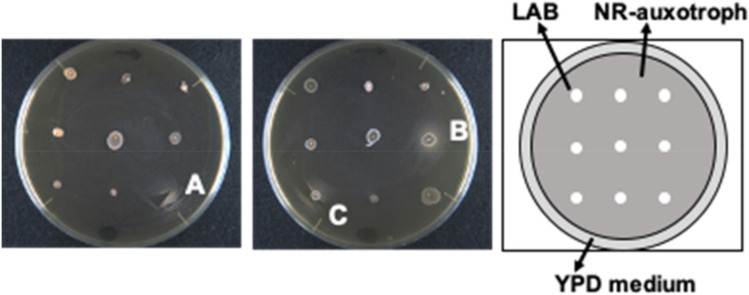
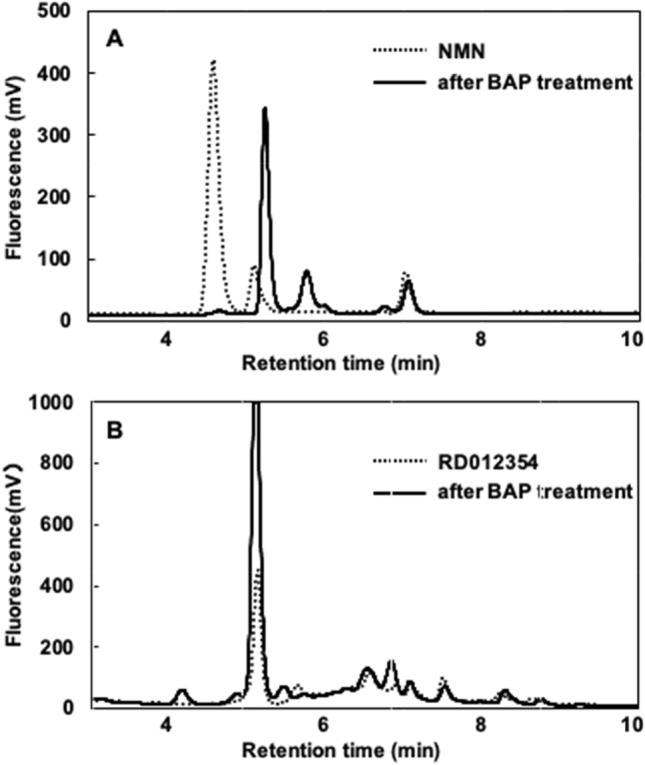
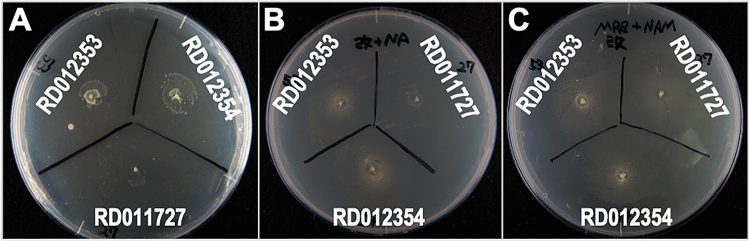
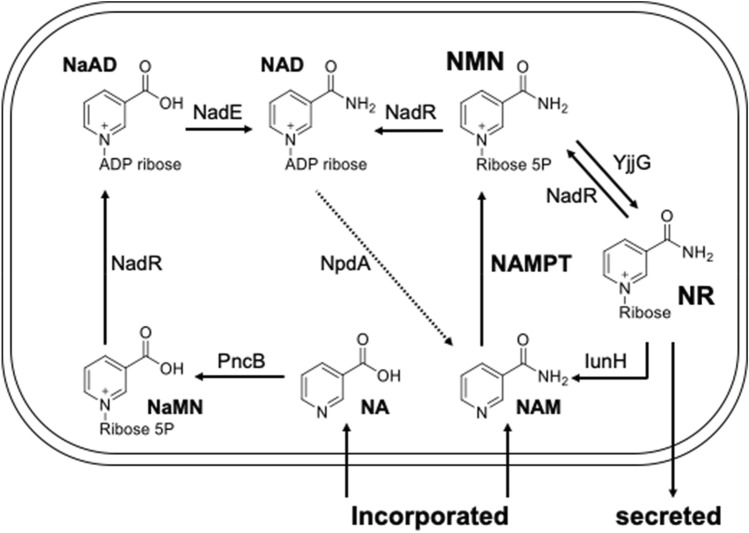
Nicotinamide mononucleotide (NMN), an intermediate in nicotinamide adenine dinucleotide biosynthesis, is recently attracting much attention for its pharmacological and anti-aging efficacies. However, current commercial products containing NMN are very high-priced because efficient and facile methods for industrial NMN production are limited. In this study, aiming for its nutraceutical application, we attempted to screen lactic acid bacteria for intracellular and/or extracellular NMN production. Using a bioassay system with an auxotrophic yeast that requires nicotinamide riboside (NR; dephosphorylated NMN), three candidates were obtained from a library of 174 strains of facultative anaerobic lactic acid bacteria. All three candidates belonged to the genus Fructobacillus and produced NR in the culture media (0.8–1.5 mg/l). Lactic acid bacteria of the genus Fructobacillus are known to use d-fructose as an electron acceptor in anaerobic lactic acid fermentation; addition of d-fructose to the medium caused intracellular accumulation of NMN and NR, but no extracellular production of these compounds was observed. Draft genome sequencing for one of the candidates suggested that nicotinamide phosphoribosyltransferase, which exists commonly in mammals but is less reported in microorganisms, is a key enzyme for NMN and NR production in the fructophilic bacteria.
Overview
The claims and statistics of this paper haven’t been checked yet.
Free: it reads the open-access text and checks the first 5 claims that cite a source we can check. Create a free account to check every claim.
Integrity signals
Registry
Cites
Statistics
Figures
Verification
Claims the paper makes
The claims and statistics of this paper haven’t been checked yet.
Free: it reads the open-access text and checks the first 5 claims that cite a source we can check. Create a free account to check every claim.
Claims other papers make about this one
Each is checked against this paper’s own text: does it say what the citing paper says it does?
The cited source says what the claim attributes to it.
In the citing paper
“This would bring new possibilities alongside the potential biotechnological use of microbial species (e.g., fructophilic lactic acid bacteria) to produce NMN and NR [78] for functional probiotic products and supplements.”
From NAD+ Precursors Nicotinamide Mononucleotide (NMN) and Nicotinamide Riboside (NR): Potential Dietary Contribution to Health (2023) · cites this paper as [78]
Self-check
Percentages, sums and reported differences re-computed from the paper’s own numbers.
The self-check needs the paper’s full text.
Citations
Cites
Trimmomatic: a flexible trimmer for Illumina sequence data
Bolger, A. M., Lohse, M., & Usadel, B. (2014) · Bioinformatics · doi:10.1093/bioinformatics/btu170 · Cited by 65,548
SPAdes: A New Genome Assembly Algorithm and Its Applications to Single-Cell Sequencing
Bankevich, A., Nurk, S., Antipov, D., Gurevich, A. A., Dvorkin, M., Kulikov, A. S., Lesin, V. M., Nikolenko, S. I., Pham, S., Prjibelski, A. D., et al. (2012) · Journal of Computational Biology · doi:10.1089/cmb.2012.0021 · Cited by 25,987
InterProScan 5: genome-scale protein function classification
Jones, P., Binns, D., Chang, H.-Y., Fraser, M., Li, W., McAnulla, C., McWilliam, H., Maslen, J., Mitchell, A., Nuka, G., et al. (2014) · Bioinformatics · doi:10.1093/bioinformatics/btu031 · Cited by 9,301
KofamKOALA: KEGG ortholog assignment based on profile HMM and adaptive score threshold
Aramaki, T., Blanc-Mathieu, R., Endo, H., Ohkubo, K., Kanehisa, M., Goto, S., & Ogata, H. (2019) · doi:10.1101/602110 · Cited by 2,054
Gomes, A. P., Price, N. L., Ling, A. J. Y., Moslehi, J. J., Montgomery, M. K., Rajman, L., White, J. P., Teodoro, J. S., Wrann, C. D., Hubbard, B. P., et al. (2013) · Cell · doi:10.1016/j.cell.2013.11.037 · Cited by 1,482
Yoshino, J., Mills, K. F., Yoon, M. J., & Imai, S.-I. (2011) · Cell Metabolism · doi:10.1016/j.cmet.2011.08.014 · Cited by 1,340
DFAST: a flexible prokaryotic genome annotation pipeline for faster genome publication
Tanizawa, Y., Fujisawa, T., & Nakamura, Y. (2018) · Bioinformatics · doi:10.1093/bioinformatics/btx713 · Cited by 1,291
KEGG Mapper for inferring cellular functions from protein sequences
Kanehisa, M., & Sato, Y. (2020) · Protein Science · doi:10.1002/pro.3711 · Cited by 1,180
Revollo, J. R., Grimm, A. A., & Imai, S.-I. (2004) · Journal of Biological Chemistry · doi:10.1074/jbc.m408388200 · Cited by 1,010
Camacho-Pereira, J., Tarragó, M. G., Chini, C. C. S., Nin, V., Escande, C., Warner, G. M., Puranik, A. S., Schoon, R. A., Reid, J. M., Galina, A., et al. (2016) · Cell Metabolism · doi:10.1016/j.cmet.2016.05.006 · Cited by 901
Cited by
Alegre, G. F. S., & Pastore, G. M. (2023) · Current Nutrition Reports · doi:10.1007/s13668-023-00475-y · Cited by 101
Wang, Z., & Wang, L. (2024) · Grain & Oil Science and Technology · doi:10.1016/j.gaost.2024.03.001 · Cited by 73
Maharjan, A., Singhvi, M. S., & Kim, B. S. (2021) · ACS Synthetic Biology · doi:10.1021/acssynbio.1c00333 · Cited by 51
Sun, X., Dey, P., Bruno, R. S., & Zhu, J. (2022) · The Journal of Nutritional Biochemistry · doi:10.1016/j.jnutbio.2022.109094 · Cited by 42
Meradji, M., Bachtarzi, N., Mora, D., & Kharroub, K. (2023) · Foods · doi:10.3390/foods12122312 · Cited by 39
“Otherwise, certain intracellular or extracellular polymeric substances produced by many species of FLAB are seen to have benefits on human health, such as EPS, which has a cholesterol-lowering ability [26]; galacto-oligosaccharides (GOSS), which find application as prebiotics [28]; and nicotinamide mononucleotide (NMN…”
BackgroundRole and Potential Mechanisms of Nicotinamide Mononucleotide in Aging
Rahman, S. U., Qadeer, A., & Wu, Z. (2024) · Aging and disease · doi:10.14336/ad.2023.0519-1 · Cited by 34
Imai, S. (2025) · npj Aging · doi:10.1038/s41514-025-00192-6 · Cited by 31
Design of an in vitro multienzyme cascade system for the biosynthesis of nicotinamide mononucleotide
Zhou, C.-L., Feng, J., Wang, J., Hao, N., Wang, X., & Chen, K. (2022) · Catalysis Science & Technology · doi:10.1039/d1cy01798e · Cited by 31
Li, Q., Meng, D., & You, C. (2022) · Enzyme and Microbial Technology · doi:10.1016/j.enzmictec.2022.110122 · Cited by 29
Balasubramanian, V. K., Muthuramalingam, J. B., Chen, Y., & Chou, J. (2023) · Archives of Microbiology · doi:10.1007/s00203-023-03745-z · Cited by 29
“Furthermore, Sugiyama (2021) identified the presence of the enzyme nicotinamide phosphoribosyltransferase, a crucial enzyme for nicotinamide mononucleotide and nicotinamide ribo-side, in two FLAB strains, namely F. tropaeola and F. duri-onis .”
Advances in the Synthesis and Physiological Metabolic Regulation of Nicotinamide Mononucleotide
Zheng, C., Li, Y., Wu, X., Gao, L., & Chen, X. (2024) · Nutrients · doi:10.3390/nu16142354 · Cited by 28
Kong, L., Liu, T., Yao, Q., Zhang, X., Xu, W., & Qin, J. (2022) · Journal of the Science of Food and Agriculture · doi:10.1002/jsfa.12253 · Cited by 26
Suntornsaratoon, P., Antonio, J. M., Flores, J., Upadhyay, R., Veltri, J., Bandyopadhyay, S., Dadala, R., Kim, M., Liu, Y., Balasubramanian, I., et al. (2024) · Cellular and Molecular Gastroenterology and Hepatology · doi:10.1016/j.jcmgh.2024.04.003 · Cited by 25
“Some strains of lactobacilli make NAM-metabolites, 36 and we found that LGG makes kynurenine and NAD þ in vitro, which may fuel intestinal NAM metabolism in the host cells.”
BackgroundMaharjan, A., Singhvi, M. S., Kafle, S. R., & Kim, B. S. (2023) · Process Biochemistry · doi:10.1016/j.procbio.2023.07.002 · Cited by 21
Kafle, S. R., Kushwaha, A., Goswami, L., Maharjan, A., & Kim, B. S. (2023) · Bioresource Technology · doi:10.1016/j.biortech.2023.129911 · Cited by 21
Luo, S., Zhao, J., Zheng, Y., Chen, T., & Wang, Z. (2023) · Fermentation · doi:10.3390/fermentation9070594 · Cited by 20
Şimşek, D., Kıymacı, M. E., Tok, K. C., Gümüştaş, M., & Altanlar, N. (2022) · Archives of Microbiology · doi:10.1007/s00203-022-03000-x · Cited by 19
“It has been shown to produce intracellular nicotinamide mononucleotide, a high-priced industrial product and has anti-ageing activity via nicotinamide phosphoribosyl transferase during D-fructose consumption (Sugiyama et al. 2021).”
BackgroundTechnology and functional insights into the nicotinamide mononucleotide for human health
Liu, Y., Gong, J., Marshall, G., Su, C., Shi, J., & Xu, Z. (2023) · Applied Microbiology and Biotechnology · doi:10.1007/s00253-023-12612-2 · Cited by 19
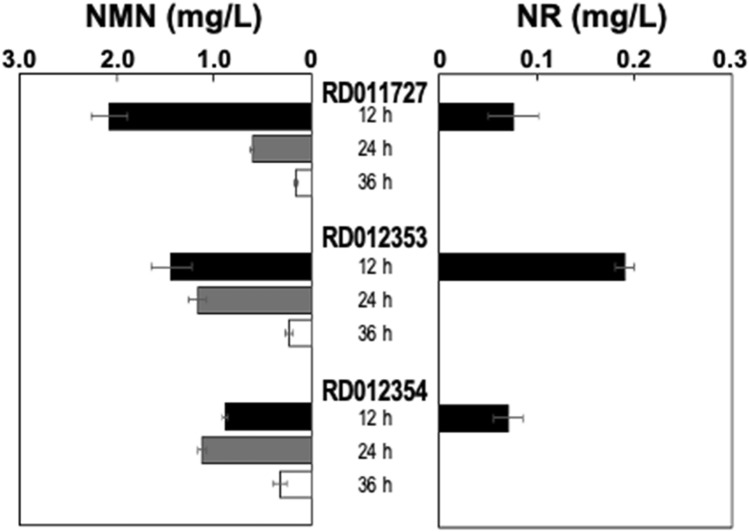
“Among them, Lactobacillus RD011727 produced the highest yield of NMN, reaching about 2 mg/L (Sugiyama et al. 2021).”
BackgroundKafle, S. R., Cabulong, R. B., & Kim, B. S. (2024) · Chemical Engineering Science · doi:10.1016/j.ces.2024.120240 · Cited by 13
Liu, C., Wei, J., Shi, M., Huang, X., Wang, Z., Liu, Q., Lang, T., & Zhu, Z. (2024) · Scientific Reports · doi:10.1038/s41598-024-68478-5 · Cited by 13
“It has been reported that microorganisms that can naturally synthesize β-NMN include fructophilic lactic acid bacteria 58 and yeast 59 .”
BackgroundSu, C., Cheng, L., Gong, J., Li, H., Xu, Z., & Shi, J. (2024) · Food Bioscience · doi:10.1016/j.fbio.2024.103859 · Cited by 13
Kong, L., Li, X., Liu, T., Yao, Q., & Qin, J. (2024) · Frontiers in Microbiology · doi:10.3389/fmicb.2024.1492179 · Cited by 10
Use of Nicotinamide Mononucleotide as Non-Natural Cofactor
Naaz, T., & Kim, B. S. (2025) · Catalysts · doi:10.3390/catal15010037 · Cited by 10
The emerging importance of NAD+ metabolome for nutrition and food sciences: A bibliometric analysis
Alegre, G. F. S., & Pastore, G. M. (2023) · Food Bioscience · doi:10.1016/j.fbio.2023.103126 · Cited by 10
Xing, S., Kang, X., Wang, R., Wang, C., Wang, Y., Bao, X., & Zhao, J. (2025) · ACS Synthetic Biology · doi:10.1021/acssynbio.5c00038 · Cited by 9
Dang, M., Dong, J., Wu, C., Hu, X., & Ren, L. (2025) · Food Bioscience · doi:10.1016/j.fbio.2025.107179 · Cited by 9
Recent Advances in the Chemical Synthesis of β-Nicotinamide Mononucleotide
Ming, W., Hu, S., Liu, Y., Li, Q.-A.-W., Zhu, Y., & Gu, S.-X. (2023) · Current Organic Chemistry · doi:10.2174/1385272827666230201103848 · Cited by 9
Mikołajczuk-Szczyrba, A., Wojtczak, A., Kieliszek, M., & Sokołowska, B. (2024) · Folia Microbiologica · doi:10.1007/s12223-024-01207-7 · Cited by 9
“…their capacity for polyol production (Ruiz Rodríguez et al. 2017), their ability to break down complex compounds like lignin (Rokop et al. 2015), and even their intracellular synthesis of nicotinamide mononucleotide, a valuable industrial compound with anti-aging properties (Sugiyama et al. 2021).”
Biological production of nicotinamide mononucleotide: a review
Cabulong, R. B., Kafle, S. R., Singh, A., Sharma, M., & Kim, B. S. (2024) · Critical Reviews in Biotechnology · doi:10.1080/07388551.2024.2433993 · Cited by 8
“Apart from E. coli , the utilization of lactic acid bacteria (LAB), specifically Fructobacillus strains, has been explored for NMN production [61].”
Kong, L., Li, X., He, Q., Yao, Q., Ai, L., & Qin, J. (2025) · Frontiers in Microbiology · doi:10.3389/fmicb.2025.1637666 · Cited by 8
“Sugiyama et al. (2021) reported that Fructobacillus tropaeoli RD012354 presented the highest NMN production after 24 h cultivation.”
Lactic acid bacteria act as potent interventions in improving hyperuricemia: a review
Wu, Q.-L., Pei, X., Gao, T.-T., Liu, X., & Wang, C. (2024) · Food Science and Human Wellness · doi:10.26599/fshw.2024.9250255 · Cited by 8
An overview of engineering microbial production of nicotinamide mononucleotide
Li, B., Meng, X., & Liu, W. (2024) · Journal of Biotechnology · doi:10.1016/j.jbiotec.2024.10.014 · Cited by 8
Maharjan, A., Singhvi, M. S., & Kim, B. S. (2025) · Enzyme and Microbial Technology · doi:10.1016/j.enzmictec.2025.110585 · Cited by 5
Rane, D. V., García-Calvo, L., Kristiansen, K. A., & Bruheim, P. (2024) · Metabolites · doi:10.3390/metabo14110607 · Cited by 4
“[5,6,10] . et al. [5,6,10].”
Muslimah, R. H., Mahatmanto, T., Kusnadi, J., & Murdiyatmo, U. (2021) · IOP Conference Series Earth and Environmental Science · doi:10.1088/1755-1315/924/1/012079 · Cited by 4
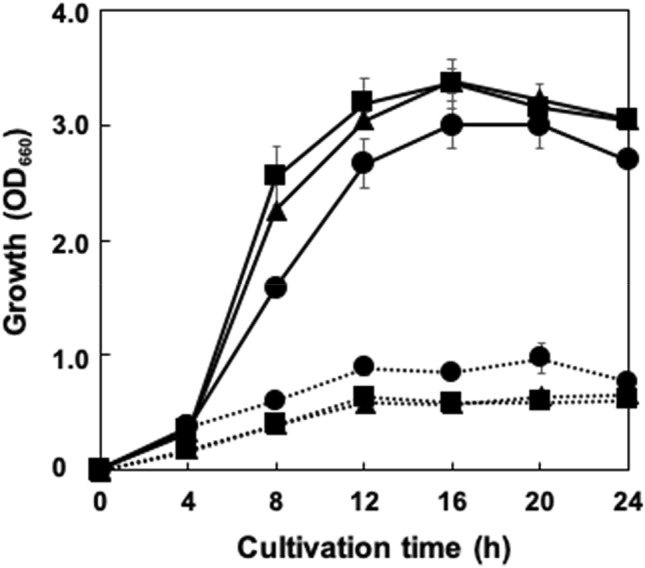
“Fructobacillus strains isolated from natural resources can grow exponentially in 4 hours and reach the stationary phase after 12 hours when cultured in MRS media supplemented with 1% D-fructose at 30°C under static conditions [16].”
MethodKashiwagi, R., Udono, M., & Katakura, Y. (2024) · Cytotechnology · doi:10.1007/s10616-023-00610-1 · Cited by 4
“Sugiyama et al. (2021) successfully isolated a strain of Fructobacil-lus with high NMN production.”
BackgroundNISHIKAWA, K., & Idogaki, H. (2024) · Bioscience of Microbiota Food and Health · doi:10.12938/bmfh.2024-063 · Cited by 2
“Recently, a unique feature of Fructobacillus spp. was identified under anaerobic and fructose-rich conditions: they accumulated high concentrations of NAD + and its precursor, nicotinamide mononucleotide [16].”
Self-citationZhang, P., Ye, Z., Tian, Z., Liu, Q., & Huang, Y. (2025) · Synthetic and Systems Biotechnology · doi:10.1016/j.synbio.2025.04.005 · Cited by 2
“Additionally, a separate study utilized a bioassay system with an auxotrophic yeast that requires NR to isolate strains capable of producing NMN and NR [42].”
Ozaki, S., Honme, Y., & Morifuji, M. (2025) · Microbiology Spectrum · doi:10.1128/spectrum.00333-25 · Cited by 2
Lee, Y., Huang, C.-C., McDaniel, M., Huang, K., Lee, L., Lao, G., Karthi, D., & Lin, S.-J. (2026) · Journal of Biological Chemistry · doi:10.1016/j.jbc.2026.111456 · Cited by 2
“In this system, feeder strains of interest release NR to support the growth of the NR-dependent recipient cells, which manifests as microcolonies radiating from the feeder spots (22, 32, 36, 37).”
Evaluation of the Role of PnuC Gene in Enhancing Nicotinamide Mononucleotide Synthesis
Vo, G. T. T., Nguyen, K. K. H., & Kim, B. S. (2025) · Biotechnology and Applied Biochemistry · doi:10.1002/bab.2713 · Cited by 2
Green manufacturing synthesis of nicotinamide mononucleotide: Pathways, catalysts, and prospects
Peng, F., Ke, W., Jin, X., Xie, Y., Xue, Y., & Zhang, J.-F. (2026) · Bioorganic Chemistry · doi:10.1016/j.bioorg.2026.109683 · Cited by 1
Hasan, H. M., Salih, G. M., & Jasim, H. M. (2022) · The Egyptian Journal of Hospital Medicine · doi:10.21608/ejhm.2022.270278 · Cited by 1
“Sugiyama et al. showed that FLAB extract has effect on nicotinamide mononucleotide (NMN), that is considered as an intermediate in nicotinamide adenine dinucleotide (NAD) biosynthesis.”
BackgroundInfluentialScreening of Natural High-producing NMN strains and Microbial Synthesis of NMN by Nampt
Li, C., Long, Z., Zhang, H., Lin, Y., & Zhao, L. (2023) · Food Nutrition Chemistry · doi:10.18686/fnc.v1i1.7 · Cited by 1
李超, 邹国珑, 张海潮, 林玉惠, & 赵丽青 (2023) · Food Nutrition Chemistry · doi:10.18686/zhfnc.v1i1.25 · Cited by 1
木村, 夏., Taira, K., 島田, 莉., Tokimoto, Y., Masuda, Y., Nishikawa, K., Idogaki, H., & Katakura, Y. (2026) · Journal of Functional Foods · doi:10.1016/j.jff.2026.107534
Self-citation
Metadata
- Authors
- Sugiyama, K., Iijima, K., Yoshino, M., Dohra, H., Tokimoto, Y., Nishikawa, K., Idogaki, H., & Yoshida, N.
- Affiliations
- Shizuoka University (JP)
- Osaka Soda (Japan) (JP)
- Corresponding author
- Yoshida, Nobuyuki
- Venue
- Scientific Reports
- Published
- 2021-04-07
- Volume
- 11
- Issue
- 1
- Pages
- 7662-7662
- ISSN
- 2045-2322 (ISSN-L)
- PMC
- PMC8027369
- OpenAlex
- W3149077290
- Cited by
- 46
- References
- 38
- Citations by year
- 2026: 3 · 2025: 9 · 2024: 14 · 2023: 12 · 2022: 6 · 2021: 2
- FWCI
- 4.71
- Type
- journal article
- Language
- en
- Open access
- gold
- doi.org
- Licence
- cc-by
- creativecommons.org/licenses/by/4.0 (tdm)
- creativecommons.org/licenses/by/4.0 (vor)
- Locations
- Scientific Reports (publishedVersion, cc-by)
- PubMed Central (publishedVersion, cc-by)
- PubMed (publishedVersion)
- DOAJ (DOAJ: Directory of Open Access Journals) (submittedVersion, cc-by-sa)
- Funders
- University of California, Davis
- Topics
- Health Sciences › Medicine › Geriatrics and Gerontology › Sirtuins and Resveratrol in Medicine
- Life Sciences › Biochemistry, Genetics and Molecular Biology › Molecular Biology › Microbial Metabolic Engineering and Bioproduction
- Life Sciences › Agricultural and Biological Sciences › Food Science › Probiotics and Fermented Foods
- Keywords
- nicotinamide mononucleotide, nicotinamide riboside, fructophilic lactic acid bacteria, visfatin, anti-aging compounds
- MeSH terms
- Escherichia coli, Fructose, Leuconostoc, Niacinamide, Nicotinamide Mononucleotide, Pyridinium Compounds, Nicotinamide Phosphoribosyltransferase, Lactobacillales
About these checks
Registry, retraction, Cites and statistics results are computed, not judged, with one exception: a printed reference that no index lists is read once by a model before it counts as a citation error. Claims are extracted by a model and kept only when their quote appears verbatim in the text; each cited source is then checked, with a model’s help, for whether it says what the claim relies on. Those verdicts can be wrong — read the claim’s quote and the cited source before relying on one.
Statistics and arithmetic are recomputed, not judged.
Confidence bands are shown only for fields calibrated on our annotated test set. None is calibrated yet, so no band is shown.
What counts as a claim ›How we measure confidence ›How we check this ›
Are you an author, or do you see a problem with this page? Request a review
Data sources
Bibliographic data: Semantic Scholar, OpenAlex, Crossref.
Contains information from the Semantic Scholar Academic Graph Datasets, made available under the ODC Attribution License (ODC-BY 1.0).
Semantic Scholar’s data is described in: Kinney, R., et al. (2023). The Semantic Scholar Open Data Platform. arXiv:2301.10140.
