

Cardiorespiratory fitness assessment using risk-stratified exercise testing and dose-response relationships with disease outcomes
Open accessPublished version of a preprint
The DOI matches its Crossref record; 54 of the 54 references it cites were found in a registry or an index.
Abstract
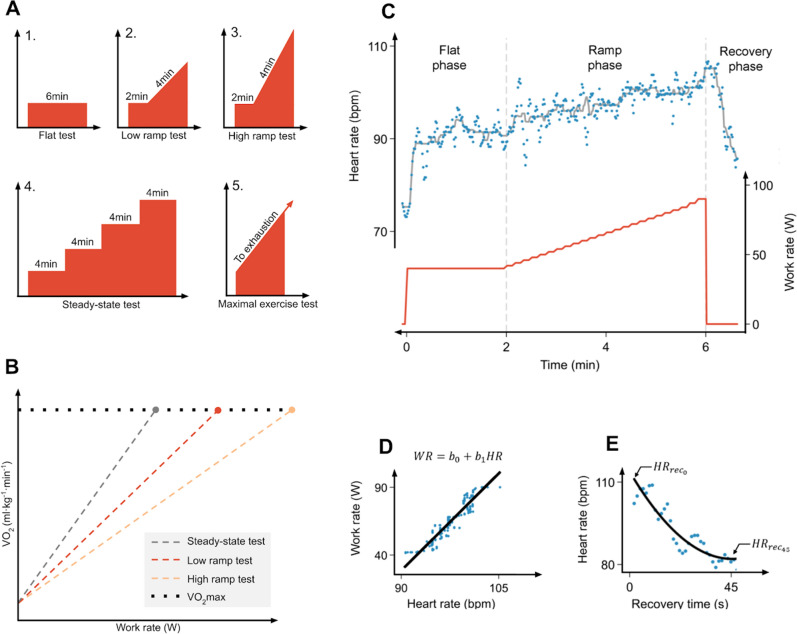
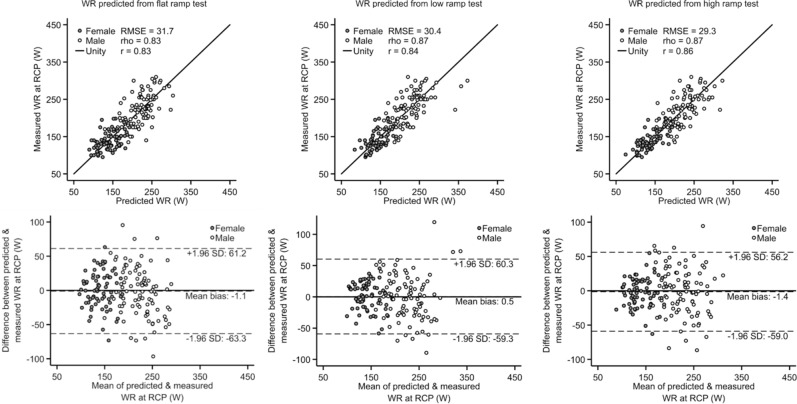
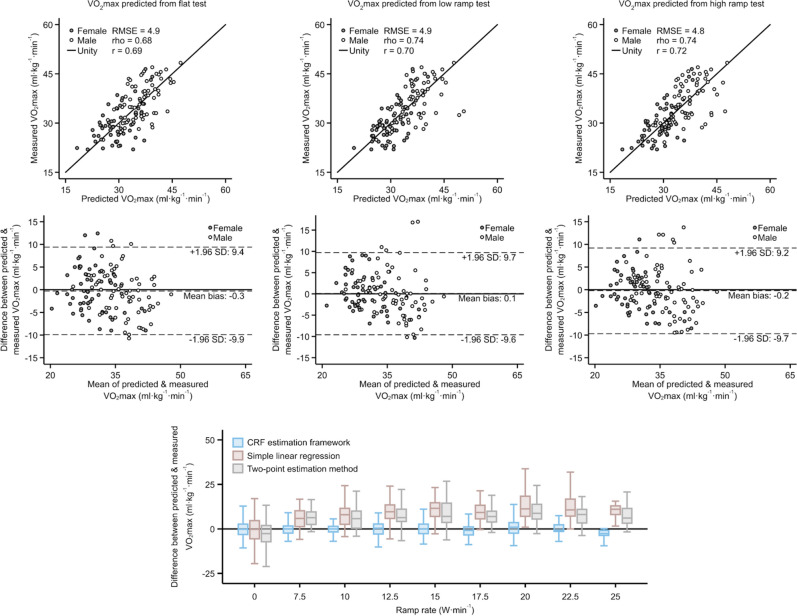
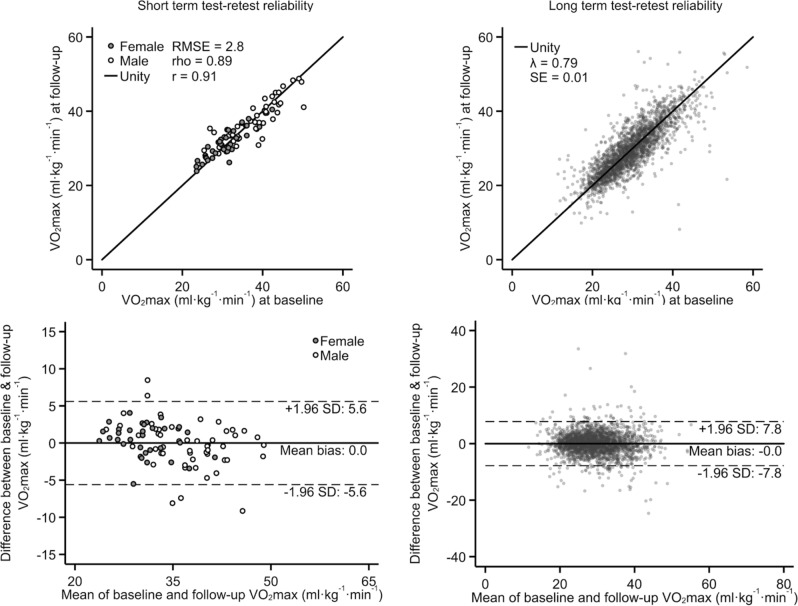
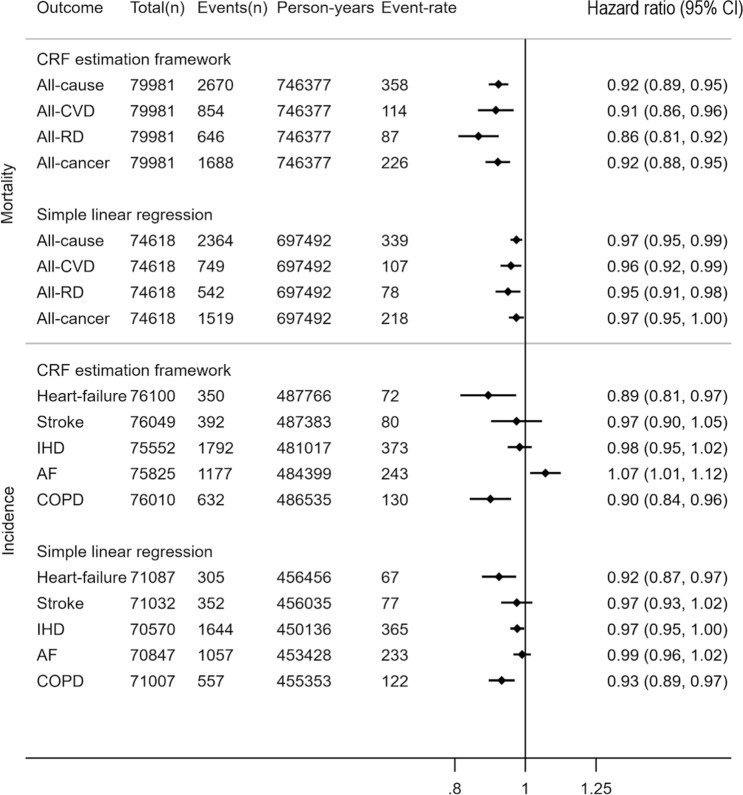
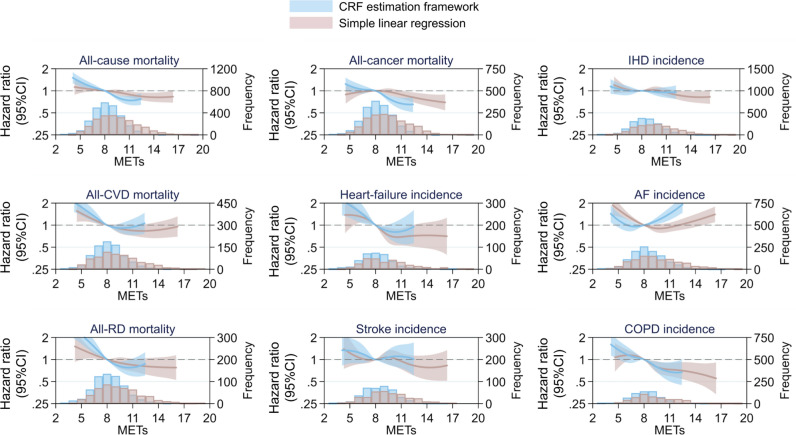
Cardiorespiratory fitness (CRF) is associated with mortality and cardiovascular disease, but assessing CRF in the population is challenging. Here we develop and validate a novel framework to estimate CRF (as maximal oxygen consumption, VO 2 max) from heart rate response to low-risk personalised exercise tests. We apply the method to examine associations between CRF and health outcomes in the UK Biobank study, one of the world’s largest and most inclusive studies of CRF, showing that risk of all-cause mortality is 8% lower (95%CI 5–11%, 2670 deaths among 79,981 participants) and cardiovascular mortality is 9% lower (95%CI 4–14%, 854 deaths) per 1-metabolic equivalent difference in CRF. Associations obtained with the novel validated CRF estimation method are stronger than those obtained using previous methodology, suggesting previous methods may have underestimated the importance of fitness for human health.
Overview
The claims and statistics of this paper haven’t been checked yet.
Free: it reads the open-access text and checks the first 5 claims that cite a source we can check. Create a free account to check every claim.
Integrity signals
Registry
Cites
Statistics
Figures
Verification
Claims the paper makes
The claims and statistics of this paper haven’t been checked yet.
Free: it reads the open-access text and checks the first 5 claims that cite a source we can check. Create a free account to check every claim.
Claims other papers make about this one
Each is checked against this paper’s own text: does it say what the citing paper says it does?
The check wasn’t confident either way, so it gives no verdict — never disputed.
In the citing paper
“RHR is inversely related to fitness, is relatively easy to measure, and has associations with health outcomes that are similar to those observed with fitness [6–8].”
From Resting heart rate is a population-level biomarker of cardiorespiratory fitness: The Fenland Study (2023) · cites this paper as [7]
Experimental — accuracy not yet measuredThe check wasn’t confident either way, so it gives no verdict — never disputed.
In the citing paper
“RHR is inversely related to fitness, is relatively easy to measure, and has associations with health outcomes that are similar to those observed with fitness [6–8].”
From Resting heart rate is a population-level biomarker of cardiorespiratory fitness: The Fenland Study (2023) · cites this paper as [7]
Experimental — accuracy not yet measured
Self-check
Percentages, sums and reported differences re-computed from the paper’s own numbers.
The self-check needs the paper’s full text.
Citations
Cites
Goldberger, A. L., Amaral, L. A. N., Glass, L., Hausdorff, J. M., Ivanov, P. C., Mark, R. G., Mietus, J. E., Moody, G. B., Peng, C.-K., & Stanley, H. E. (2000) · Circulation · doi:10.1161/01.cir.101.23.e215 · Cited by 14,809
Measuring agreement in method comparison studies
Bland, J. M., & Altman, D. G. (1999) · Statistical Methods in Medical Research · doi:10.1177/096228029900800204 · Cited by 9,619
Age-predicted maximal heart rate revisited
Tanaka, H., Monahan, K. D., & Seals, D. R. (2001) · Journal of the American College of Cardiology · doi:10.1016/s0735-1097(00)01054-8 · Cited by 3,775
Kodama, S. (2009) · JAMA · doi:10.1001/jama.2009.681 · Cited by 3,035
Balady, G. J., Arena, R., Sietsema, K., Myers, J., Coke, L., Fletcher, G. F., Forman, D., Franklin, B., Guazzi, M., Gulati, M., et al. (2010) · Circulation · doi:10.1161/cir.0b013e3181e52e69 · Cited by 1,964
Blair, S. N. (1996) · JAMA: The Journal of the American Medical Association · doi:10.1001/jama.1996.03540030039029 · Cited by 1,819
Three-dimensional Epigenome Statistical Model: Genome-wide Chromatin Looping Prediction
Al Bkhetan, Z., & Plewczynski, D. (2018) · Scientific Reports · doi:10.1038/s41598-018-23276-8 · Cited by 1,662
Carnethon, M. R. (2003) · JAMA · doi:10.1001/jama.290.23.3092 · Cited by 691
Submaximal Exercise Testing: Clinical Application and Interpretation
Noonan, V., & Dean, E. (2000) · Physical Therapy · doi:10.1093/ptj/80.8.782 · Cited by 637
Wei, M., Gibbons, L. W., Mitchell, T. L., Kampert, J. B., Lee, C. D., & Blair, S. N. (1999) · Annals of Internal Medicine · doi:10.7326/0003-4819-130-2-199901190-00002 · Cited by 472
Research works printed but not linked: 2
- Pescatello, L. S., Arena, R., Riebe, D., Thompson, P. D. & American College of Sports Medicine Health-related physical fitness testing and interpretation. In ACSM’s Guidelines for Exercise Testing and Prescription (eds Pescatello, L. S. et al.) 88–93 (Lippincott Williams & Wilkins, 2014).
- Engelse WAH Zeelenberg C A single scan algorithm for QRS-detection and feature extraction Comput. Cardiol. 1979 6 37 42
Cited by
Physical activity lowers the risk for acute respiratory infections: Time for recognition
Nieman, D. C., & Sakaguchi, C. A. (2022) · Journal of sport and health science/Journal of Sport and Health Science · doi:10.1016/j.jshs.2022.08.002 · Cited by 67
“Gonzales et al. (2021)14 Prospective cohort of 42,351 women and 37,650 men from the UKBB, 9.9 years follow-up, 2670 deaths.”
InfluentialCausal associations between cardiorespiratory fitness and type 2 diabetes
Cai, L., Gonzales, T. I., Wheeler, E., Kerrison, N. D., Day, F. R., Langenberg, C., Perry, J. R. B., Brage, S., & Wareham, N. J. (2023) · Nature Communications · doi:10.1038/s41467-023-38234-w · Cited by 61
Self-citationPerry, A., Farber‐Eger, E. H., Gonzales, T. I., Tanaka, T., Robbins, J., Murthy, V. L., Stolze, L. K., Zhao, S., Huang, S., Colangelo, L. A., et al. (2024) · Nature Medicine · doi:10.1038/s41591-024-03039-x · Cited by 47
“Mappings for ICD10 data to death category were informed by previous work 91 .”
MethodSelf-citationResting heart rate is a population-level biomarker of cardiorespiratory fitness: The Fenland Study
Gonzales, T. I., Jeon, J. Y., Lindsay, T., Westgate, K., Perez-Pozuelo, I., Hollidge, S., Wijndaele, K., Rennie, K., Forouhi, N., Griffin, S., et al. (2023) · PLOS ONE · doi:10.1371/journal.pone.0285272 · Cited by 44
“28 ml O2�kg �beat) which used an individualised submaximal cycle ergometry test to assess fitness in approximately 80,000 participants [7].”
MethodSelf-citationSian, T. S., Inns, T. B., Gates, A., Doleman, B., Bass, J. J., Atherton, P. J., Lund, J. N., & Phillips, B. E. (2022) · BMC Geriatrics · doi:10.1186/s12877-022-03208-y · Cited by 39
“Cardiorespiratory fitness (CRF) is not only the “goldstandard” measure of physical fitness [5], but is also a recognised marker of cardiovascular health, and prognostic marker of both cardiovascular disease [6] and premature mortality [7, 8].”
BackgroundWang, S., Xu, L., Yang, W., Wang, J., Dove, A. E., Qi, X., & Xu, W. (2024) · British Journal of Sports Medicine · doi:10.1136/bjsports-2023-108048 · Cited by 25
Perry, A., Hadad, N., Chatterjee, E., Ramos, M. J., Farber‐Eger, E. H., Roshani, R., Stolze, L. K., Betti, M. J., Zhao, S., Huang, S., et al. (2024) · Cell Reports Medicine · doi:10.1016/j.xcrm.2024.101871 · Cited by 23
Klevjer, M., Nordeidet, A. N., Hansen, A. F., Madssen, E., Wisløff, U., Brumpton, B. M., & Bye, A. (2022) · Medicine & Science in Sports & Exercise · doi:10.1249/mss.0000000000002951 · Cited by 20
Štěpánek, L., Nakládalová, M., Sovová, E., Štěpánek, L., Boriková, A., Sovová, M., Moravcová, K., Ožana, J., & Jelínek, L. (2023) · Scandinavian Journal of Infectious Diseases · doi:10.1080/23744235.2023.2228408 · Cited by 17
“VO2 max is the gold standard expression of cardiorespiratory fitness and aerobic capacity, and is also a strong predictor of all-cause and case-specific mortality and morbidity [13].”
BackgroundTavares, V. D. D. O., Schuch, F. B., de Sousa, G. M., Hallgren, M. Å., Neto, L. O., Cabral, D. A. R., de Almeida, R. N., Barbosa, D. C., de Almeida, V. R. N., Tinôco, H. G. B. D. M., et al. (2024) · Psychology of sport and exercise · doi:10.1016/j.psychsport.2024.102729 · Cited by 17
Kjaergaard, A. D., Ellervik, C., Jessen, N., & Lessard, S. J. (2024) · The Journal of Clinical Endocrinology & Metabolism · doi:10.1210/clinem/dgae393 · Cited by 16
Exercise Testing for Metabolic Flexibility: Time for Protocol Standardization
Lovell, D. I., Stuelcken, M., & Eagles, A. N. (2025) · Sports Medicine - Open · doi:10.1186/s40798-025-00825-w · Cited by 15
“While the VO 2 max test is considered the “gold standard” of cardiovascular health and fitness [92], the Fat max test may be a more appropriate assessment of mitochondrial function and metabolic health [28, 55].”
Plasma proteomic signatures for type 2 diabetes and related traits in the UK Biobank cohort
Gupte, T. P., Azizi, Z., Kho, P. F., Zhou, J., Nzenkue, K., Chen, M., Panyard, D. J., Guarischi‐Sousa, R., Hilliard, A. T., Sharma, D., et al. (2024) · Diabetes Research and Clinical Practice · doi:10.1016/j.diabres.2025.112194 · Cited by 13
Breath Acetone Measurement-Based Prediction of Exercise-Induced Energy and Substrate Expenditure
Kim, M.-J., Hong, S. H., Cho, W., Park, D., Lee, E.-B., Song, Y., Choe, Y.-S., Lee, J. H., Jang, Y., Lee, W., et al. (2020) · Sensors · doi:10.3390/s20236878 · Cited by 13
Self-citationZaki, S., Alam, F., Faizan, M., Sharma, S. R., & Naqvi, I. H. (2024) · Journal of Human Sport and Exercise · doi:10.55860/eazehg56 · Cited by 11
“Concurrently, cardiorespiratory fitness (CRF), often quantified by maximal oxygen uptake (VO 2max ), is a robust predictor of cardiovascular and all-cause mortality, underlining its crucial role in assessing overall health and the risk of chronic diseases (Gonzales et al., 2021).”
BackgroundWang, X., Wu, Y., Chen, Y., Gao, Q., Liu, W., Xu, J., & Zang, S. (2024) · Journal of Affective Disorders · doi:10.1016/j.jad.2024.04.032 · Cited by 10
Sparks, J. R., Wang, X., Lavie, C. J., & Sui, X. (2024) · Reviews in Cardiovascular Medicine · doi:10.31083/j.rcm2508291 · Cited by 9
“CRF is often assessed through measures, such as maximal oxygen consumption (VO 2 max) or sub-maximal exercise tests, with a higher VO 2 max indicating better CRF [72].”
MethodWatts, E. L., Gonzales, T. I., Strain, T., Saint‐Maurice, P. F., Bishop, D. T., Chanock, S. J., Johansson, M., Keku, T. O., Marchand, L. L., Moreno, V. R., et al. (2023) · British Journal of Cancer · doi:10.1038/s41416-023-02489-3 · Cited by 8
Self-citationPhysical Fitness, Biological Aging, and Healthy Longevity
Chen, Z., Collings, P. J., Wang, M., Shi, Q., Luo, S., Yeung, S. L. A., Brage, S., Gonzales, T. I., & Kim, Y. (2025) · Journal of the American Medical Directors Association · doi:10.1016/j.jamda.2025.105792 · Cited by 7
Self-citationLu, H., Wang, H., Li, C., Meng, X., Zheng, D., Wu, L., & Wang, Y. (2024) · The EPMA Journal · doi:10.1007/s13167-024-00382-4 · Cited by 7
“Studies have reported the derivation and validation of fitness estimates [40].”
InfluentialCardiorespiratory responses: Pilates compared to different walking speeds in healthy adults
Gultekin, S. C., Kahraman, B. Ö., & Kahraman, T. (2023) · Irish Journal of Medical Science (1971 -) · doi:10.1007/s11845-023-03468-6 · Cited by 9
Sub Maximal Ergospirometry Parameters in Untrained Non-Frail Octogenarian Subjects
Cofré-Bolados, C., Ferrari, G., Valdívia-Moral, P., Vidal-Díaz, F., Ramírez‐Vélez, R., & Izquierdo, M. (2022) · Medicina · doi:10.3390/medicina58030378 · Cited by 7
“As CPX tests usually take the maximum oxygen consumption or peak oxygen consumption (VO2 max/VO2 peak) as the golden standard, there are established and very recent proposals [7] to try to estimate this VO2 max from submaximal tests.”
BackgroundDescriptive Epidemiology of Cardiorespiratory Fitness in UK Adults: The Fenland Study
GONZALES, T. I., WESTGATE, K., HOLLIDGE, S., LINDSAY, T., WIJNDAELE, K., FOROUHI, N. G., GRIFFIN, S., WAREHAM, N., & BRAGE, S. (2023) · Medicine & Science in Sports & Exercise · doi:10.1249/mss.0000000000003068 · Cited by 6
Self-citationHelleryd, E., Rawshani, A., Rawshani, A., Hjärtstam, N., Myredal, A., & Skoglund, K. (2023) · Open Heart · doi:10.1136/openhrt-2023-002307 · Cited by 6
“7 Current models predict cardiovascular events and overall mortality using the submaximal exercise test in the UK Biobank 8–10 ; however, there is no clinical prediction that predicts STEMI using the submaximal exercise test.”
A Self-Paced Walk Test for Individual Calibration of Heart Rate to Energy Expenditure
Westgate, K. L., Gonzales, T. I., Hollidge, S. E., Lindsay, T., Wareham, N. J., & Brage, S. (2024) · Journal for the Measurement of Physical Behaviour · doi:10.1123/jmpb.2023-0042 · Cited by 6
Self-citationProteomic Risk Score of Increased Respiratory Susceptibility: A Multicohort Study
Liu, G. Y., Perry, A., Washko, G. R., Farber‐Eger, E. H., Colangelo, L. A., Sheng, Q., Wells, Q. S., Huang, X., Thyagarajan, B., Guan, W., et al. (2024) · American Journal of Respiratory and Critical Care Medicine · doi:10.1164/rccm.202403-0613oc · Cited by 7
Wu, Y. C., Spathis, D., Jia, H., Perez-Pozuelo, I., Gonzales, T. I., Brage, S., Wareham, N. J., & Mascolo, C. (2023) · arXiv (Cornell University) · doi:10.48550/arxiv.2307.16651 · Cited by 7
“Specifically, we apply UDAMA on a large CRF datasets (Lindsay et al., 2019; Gonzales et al., 2021) and show that UDAMA achieves the SOTA performance.”
MethodInfluentialSelf-citationImpact of cycling cadence on physiological response during a cardiopulmonary exercise test
Knox‐Brown, B., Harding, C., Chowdhury, S., Pritchard, A. D., Shakespeare, J., & Sylvester, K. P. (2025) · BMJ Open Respiratory Research · doi:10.1136/bmjresp-2024-002824 · Cited by 5
Murnane, A., Mesinovic, J., Kiss, N. K., Lewin, J. H., Curtis, A. R., & Fraser, S. F. (2025) · Journal of Adolescent and Young Adult Oncology · doi:10.1089/jayao.2024.0135 · Cited by 4
Cofré-Bolados, C., Vidal, F. J. V., Gutiérrez‐Espinoza, H., Betancourt, I., Orihuela, P. A., & Izquierdo, M. (2023) · Sports · doi:10.3390/sports11110219 · Cited by 4
Reitzner, S. M., Emanuelsson, E. B., & Sundberg, C. J. (2024) · Physiological Reports · doi:10.14814/phy2.16161 · Cited by 4
“…health complications such as cardiovascular and kidney diseases as well as general surgical outcome in lung diseases (Erman Helper et al., 2024; Gonzales et al., 2021; Salati & Brunelli, 2016), in the context of ACE2 neither VO 2 peak nor leg strength could be used to separate untrained…”
BackgroundExercise and Fitness Quantification in Clinical Practice: Why and How; and Where Are We Going?
Riopel-Meunier, J., Piché, M., & Poirier, P. (2024) · Canadian Journal of Cardiology · doi:10.1016/j.cjca.2024.11.032 · Cited by 4
Xu, L., Wang, S., Maimaitiyiming, M., Yang, W., Sakakibara, S., Qi, X., Wang, Y., & Dove, A. E. (2025) · JACC Advances · doi:10.1016/j.jacadv.2025.102198 · Cited by 6
Miras‐Moreno, S., Torres‐Martos, Á., Ruiz, J. R., Carter, J. L., de Carvalho, C. A., Aguilera, C. M., Piernas, C., & Martínez‐Téllez, B. (2026) · Circulation Genomic and Precision Medicine · doi:10.1161/circgen.125.005736 · Cited by 3
Su, S., Liu, J.-Y., Yu, C. C.-W., Ngai, S. P. C., & Fu, S. N. (2025) · European Review of Aging and Physical Activity · doi:10.1186/s11556-025-00381-y · Cited by 4
“A decline in walking endurance predisposes individuals to an increased risk of cardiovascular disease and mortality [56, 57].”
Zhou, H., Wang, Y., Song, X., Xu, T., Xia, C., Guo, Y., Weng, S., Gong, J., & Wang, F. (2025) · Diabetes Obesity and Metabolism · doi:10.1111/dom.70217 · Cited by 4
“VO 2 max was calculated using the prediction equation developed by González et al. 25 This approach integrates heart rate (HR) response features obtained during both the flat and ramped phases of the test, accounts for the individualized ramp rate and extrapolates the steady-state HR-work rate…”
Polygenic prediction of cardiorespiratory fitness in the Trøndelag health study (HUNT)
Øvretveit, K., Klevjer, M., Brumpton, B. M., Wisløff, U., Hveem, K., & Bye, A. (2025) · Scientific Reports · doi:10.1038/s41598-025-28894-7 · Cited by 4
“Moreover, the reliance on estimated CRF, which only explains about ~ 60% of trait variance for the nonexercise model and ~ 50% (Pearson’s r range 0.68–0.74) for the submaximal exercise test 36 , makes it challenging to validate and quantify the true predictive accuracy of the CRF PGS .”
InfluentialCollings, P. J., Wang, M., Chen, Z., Shi, Q., Luo, S., Yeung, S. L. A., Gonzales, T. I., Sharp, S. J., Brage, S., & Kim, Y. (2026) · Mayo Clinic Proceedings · doi:10.1016/j.mayocp.2025.07.036 · Cited by 3
Self-citationActive assessment of fitness and performance in a general population
Winslow, B. D., Natarajan, A., Mravca, S., Duong, J. J., Choudhary, S., & Giest, T. (2025) · Frontiers in Sports and Active Living · doi:10.3389/fspor.2025.1552365 · Cited by 3
Takács, J., Deák, D., & Koller, Á. (2024) · Scientific Reports · doi:10.1038/s41598-024-57646-2 · Cited by 3
Tang, X., Yu, Y., Wu, X., Xu, C., Zhang, Z., & Lu, Y. (2024) · PeerJ · doi:10.7717/peerj.17459 · Cited by 4
“There is a demonstrable quantitative relationship between exercise intensity and its health and fitness benefits, with exercise intensity being crucial for regulating physiological stress and maximizing the health benefits of daily PA ( Gonzales et al., 2021 ).”
BackgroundWu, Y., Spathis, D., Jia, H., Perez-Pozuelo, I., Gonzales, T. I., Brage, S., Wareham, N. J., & Mascolo, C. (2022) · arXiv (Cornell University) · doi:10.48550/arxiv.2211.10475 · Cited by 3
“The target domain D t represents the gold-standard measurement dataset BBVS, which is a subset of 191 participants from the Fen-land study with directly measured ground-truth VO 2 max (Gonzales et al., 2021) during the maximal exercise tests.”
MethodSelf-citationPeak V̇O2Q: A new approach for the interpretation of cardiorespiratory fitness estimates
Knox‐Brown, B., Barnes, J., Harding, C., Fuld, J. P., & Sylvester, K. P. (2025) · Experimental Physiology · doi:10.1113/ep093195 · Cited by 2
Zhide, L., Du, S., Zhao, S., Wang, X., Yan, Q., Xu, B., Ng, S., & Ning, Z. (2026) · British Journal of Sports Medicine · doi:10.1136/bjsports-2025-111351 · Cited by 4
Liu, X., Chen, X., Yang, W., Ding, G., Zhao, Y., Li, Y., Chen, N., & Cui, J. (2025) · Diabetes Obesity and Metabolism · doi:10.1111/dom.70261 · Cited by 1
“In UK Biobank participants who completed an exercise electrocardiogram (ECG) test, maximal oxygen consumption (VO 2 max) was estimated according to the multilevel modelling framework developed and validated by Gonzales et al. 29 This framework incorporates individual heart rate responses relative to workload progressi…”
Scoping Review of Cardiorespiratory Fitness in Adolescent and Young Adult Cancer Survivors
Murnane, A., Lewin, J. H., Kiss, N. K., Ugalde, A., & Fraser, S. F. (2026) · Journal of Adolescent and Young Adult Oncology · doi:10.1177/21565333261424190 · Cited by 1
“61,62 However, CPET is not routinely used in AYA-CS due to several factors, including limited availability, time constraints, the need for specialized clinician expertise, and cost.”
Study on the stability and accuracy of the new Booster portable cardiopulmonary function meter
Yun, H., Zhang, W., Chen, Y., Li, Q., & Song, Y. (2025) · Frontiers in Physiology · doi:10.3389/fphys.2024.1453942 · Cited by 1
Effects of a periodized aerobic training in submaximal cardorespiratory parameters in octogenarians
Vidal-Díaz, F. (2024) · Academica-e (Universidad Pública de Navarra) · doi:10.48035/tesis/2454/48241
Poiron, V., Letout, S., Guméry, P.-Y., Nougier, V., Rolland, C., Eychenne, C., & Bosson, J. (2025) · Medical Engineering & Physics · doi:10.1016/j.medengphy.2025.104426
RetFit: A Novel Deep Learning-Based Biomarker of Cardiorespiratory Fitness Derived From the RetinaPreprint
Quintas, I., Bontempi, D., Bors, S., Trofimova, O., Böttger, L., Iuliani, I., Vela, S. O., Liefers, B. J., Quiros, J. V., Klaver, C. C. W., et al. (2025) · medRxiv · doi:10.1101/2025.09.29.25336874 · Cited by 1
“Cardiorespiratory fitness (CRF) was defined as maximal oxygen consumption or VO 2 max and estimated from heart rate responses obtained during submaximal exercise testing 24 .”
InfluentialA framework for estimating cardiorespiratory fitness from diverse exercise tests
Gonzales, T. I., Wareham, N. J., & Brage, S. (2026) · npj Exercise Medicine and Health · doi:10.1038/s44437-026-00004-3
“As evidenced by various cohort studies, testing protocols vary widely between investigations 2 – 4 and among subpopulations within the same cohort 5 .”
InfluentialSelf-citationSian, T. S., Inns, T. B., Gates, A., Doleman, B., Bass, J. J., Atherton, P. J., Lund, J. N., & Phillips, B. E. (2022) · Figshare · doi:10.6084/m9.figshare.20168219
Mankowski, I., Pinter, E., Lee, I.-M. M., Rätsch, G., Brüggemann, D., & Demler, O. (2026) · medRxiv · doi:10.64898/2026.05.09.26352818
Xu, A., Zhou, H., Wang, C., Qian, H. L., Wu, P., Wu, W., Wu, H., Kong, A. P. S., Cao, H., Guan, H., et al. (2026) · Diabetes & Metabolism Journal · doi:10.4093/dmj.2025.1109
“VO 2max was estimated using the prediction equation developed by Gonzales et al. [21], which integrates heart rate response features obtained during both the flat and ramped phases of the test, adjusts for the individualized ramp rate, and extrapolates the steady-state HR-work-rate relationship to…”
Chen, Z., Collings, P. J., Shi, Q., Yeung, S. L. A., Luo, S., Li, C., Gonzales, T. I., Brage, S., & Kim, Y. (2026) · BMC Medicine · doi:10.1186/s12916-026-04854-4
“Full methodological details are described elsewhere [28].”
InfluentialSelf-citationZhou, H., Zhang, R., Jiang, Z., Guo, Y., Guo, L., Ke, H., Lin, K., & Wang, F. (2026) · Research and Practice in Thrombosis and Haemostasis · doi:10.1016/j.rpth.2026.106898
“CRF, expressed as maximal oxygen consumption (VO 2 max), was calculated using the validated prediction equation developed by Gonzalez et al. [22].”
Tanisawa, K., Watanabe, D., Li, Q., Fan, X., & Sun, X. (2026) · Medicine & Science in Sports & Exercise · doi:10.1249/mss.0000000000004164
Tur‐Boned, A., Calatayud, J., Núñez‐Cortés, R., Andersen, L. L., Suso‐Martí, L., Yang, L., & López‐Bueno, R. (2026) · Mayo Clinic Proceedings · doi:10.1016/j.mayocp.2026.09.023
Liu, Y., Li, Y., Liu, X., Yang, W., Zhou, X., & Chen, N. (2026) · Journal of Affective Disorders · doi:10.1016/j.jad.2026.122604
Metadata
- Authors
- Gonzales, T. I., Westgate, K., Strain, T., Hollidge, S., Jeon, J., Christensen, D. L., Jensen, J., Wareham, N. J., & Brage, S.
- Affiliations
- University of Cambridge (GB)
- Yonsei University (KR)
- University of Copenhagen (DK)
- Corresponding author
- Brage, Søren
- ORCID
- Venue
- Scientific Reports
- Published
- 2021-07-28
- Volume
- 11
- Issue
- 1
- Pages
- 15315-15315
- ISSN
- 2045-2322 (ISSN-L)
- PMC
- PMC8319417
- OpenAlex
- W3184192324
- Semantic Scholar
- a8ad47286f439027609ff7217f0644c855e888c2
- Cited by
- 59
- References
- 54
- Citations by year
- 2026: 12 · 2025: 15 · 2024: 18 · 2023: 7 · 2022: 6
- FWCI
- 8.73
- Type
- journal article
- Language
- en
- Update notices
- correction (2023-10-17)
- Open access
- gold
- doi.org
- Licence
- cc-by
- creativecommons.org/licenses/by/4.0 (tdm)
- creativecommons.org/licenses/by/4.0 (vor)
- Locations
- Scientific Reports (publishedVersion, cc-by)
- medRxiv (acceptedVersion, cc-by-nd)
- PubMed Central (publishedVersion, cc-by)
- PubMed (publishedVersion)
- Research at the University of Copenhagen (University of Copenhagen) (publishedVersion, cc-by)
- Apollo (University of Cambridge) (submittedVersion, cc-by)
- DOAJ (DOAJ: Directory of Open Access Journals) (submittedVersion, cc-by-sa)
- NORA - Norwegian Open Research Archives (submittedVersion, cc-by)
- Edinburgh Research Explorer (University of Edinburgh) (submittedVersion, cc-by)
- Apollo
- Funders
- National Institute for Health and Care Research ([IS-BRC-1215-20014, BRC1215-20014, MC_UU_12015/3, IS-BRC-1215)
- British Heart Foundation (CH/1996001/9454)
- Medical Research Council (IS-BRC-1215-20014, MC_UU_12015, [MC_UU_00006/4], MC_UU_12015/3, MC_PC_17228, BRC-1215-20014)
- Topics
- Health Sciences › Medicine › Physiology (medical) › Cardiovascular and exercise physiology
- Health Sciences › Medicine › Public Health, Environmental and Occupational Health › Physical Activity and Health
- Health Sciences › Medicine › Cardiology and Cardiovascular Medicine › Cardiovascular Effects of Exercise
- Keywords
- cardiorespiratory fitness, heart rate response, all-cause mortality, cardiovascular mortality, metabolic equivalents, dose-response relationship, UK Biobank, physical fitness assessment
- MeSH terms
- Cardiorespiratory Fitness, Cause of Death, Exercise Test, Female, Heart Diseases, Heart Rate, Humans, Male, Middle Aged, Neoplasms, Obesity, Oxygen Consumption, Respiration Disorders, Proportional Hazards Models
About these checks
Registry, retraction, Cites and statistics results are computed, not judged, with one exception: a printed reference that no index lists is read once by a model before it counts as a citation error. Claims are extracted by a model and kept only when their quote appears verbatim in the text; each cited source is then checked, with a model’s help, for whether it says what the claim relies on. Those verdicts can be wrong — read the claim’s quote and the cited source before relying on one.
Statistics and arithmetic are recomputed, not judged.
Confidence bands are shown only for fields calibrated on our annotated test set. None is calibrated yet, so no band is shown.
What counts as a claim ›How we measure confidence ›How we check this ›
Are you an author, or do you see a problem with this page? Request a review
Data sources
Bibliographic data: Semantic Scholar, OpenAlex, Crossref.
Contains information from the Semantic Scholar Academic Graph Datasets, made available under the ODC Attribution License (ODC-BY 1.0).
Semantic Scholar’s data is described in: Kinney, R., et al. (2023). The Semantic Scholar Open Data Platform. arXiv:2301.10140.
