

Cardiorespiratory fitness assessment using risk-stratified exercise testing and dose-response relationships with disease outcomes
Open accessPublished version of a preprint
The DOI matches its Crossref record; 54 of the 54 references it cites were found in a registry or an index.
Abstract
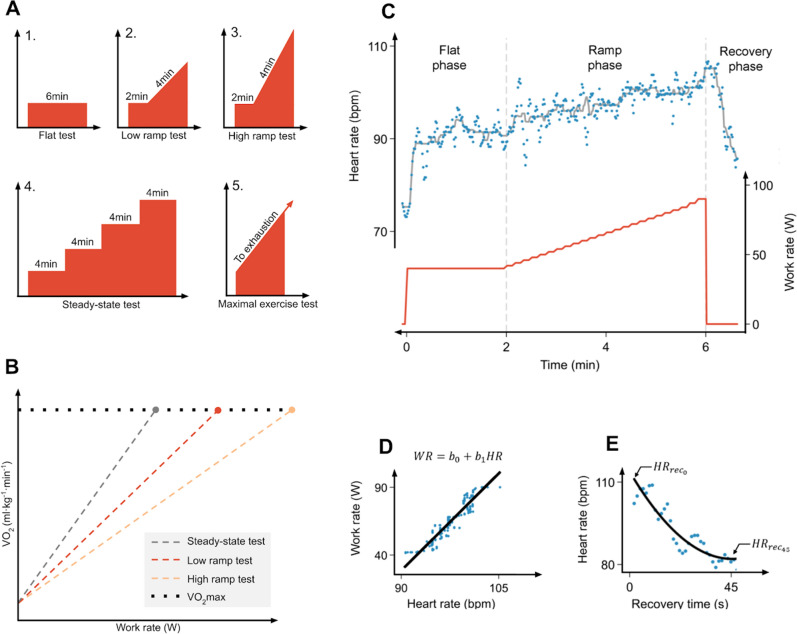
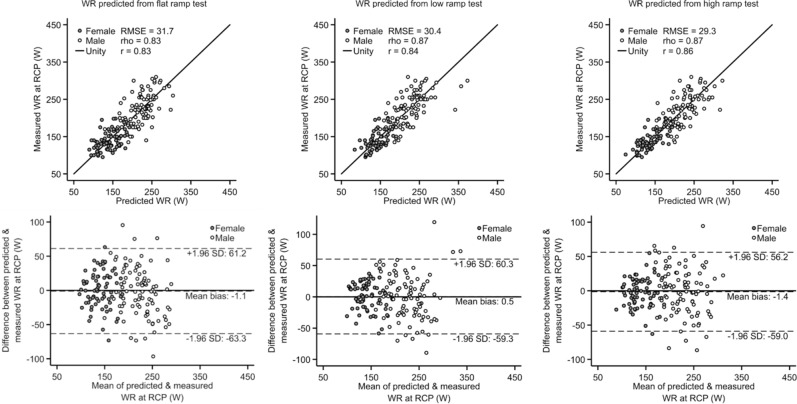
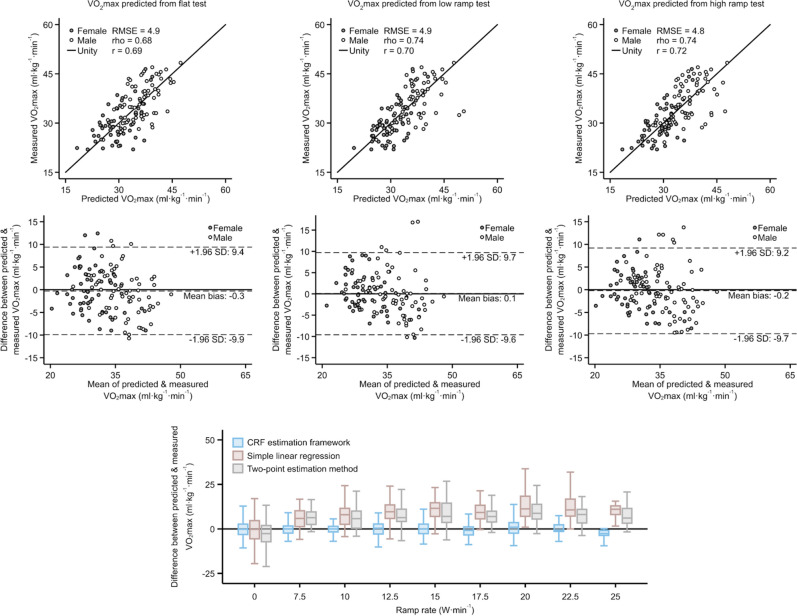
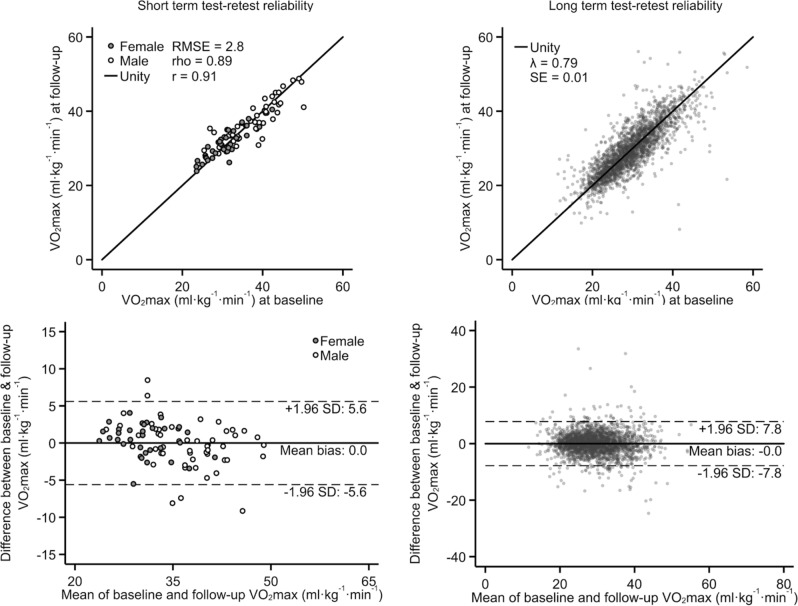
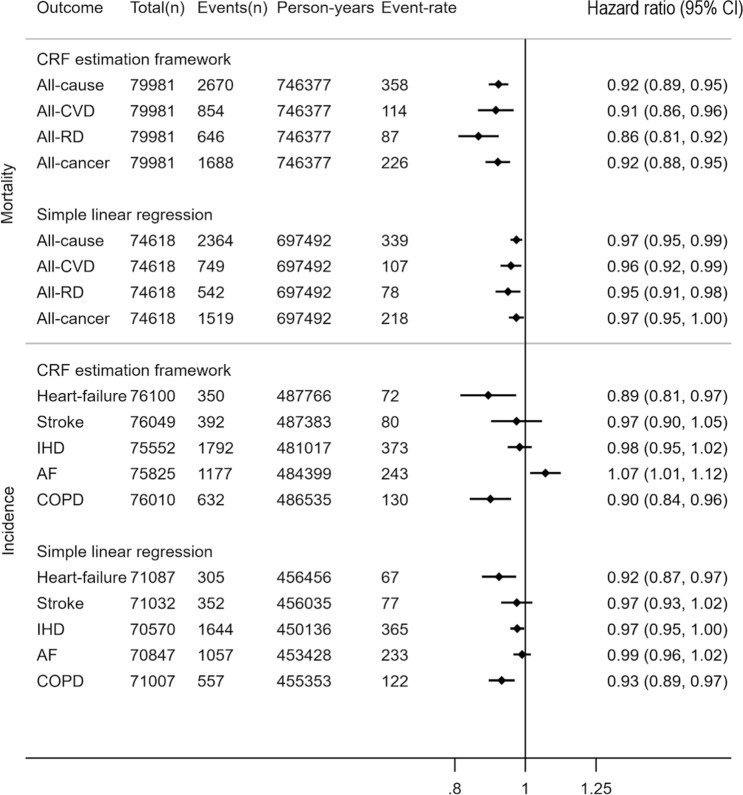
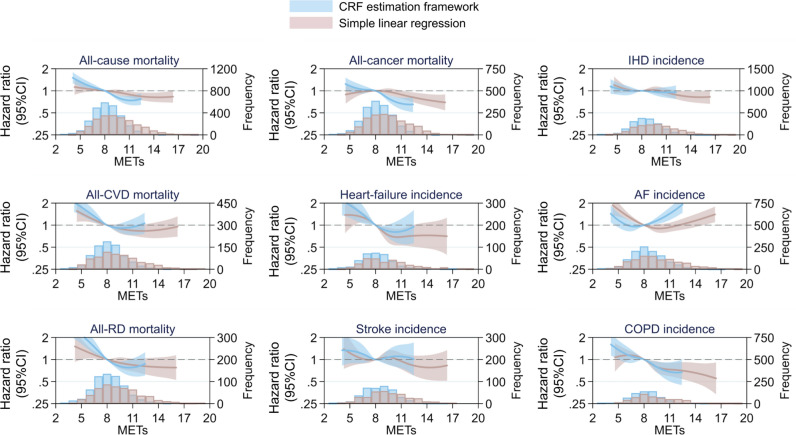
Cardiorespiratory fitness (CRF) is associated with mortality and cardiovascular disease, but assessing CRF in the population is challenging. Here we develop and validate a novel framework to estimate CRF (as maximal oxygen consumption, VO 2 max) from heart rate response to low-risk personalised exercise tests. We apply the method to examine associations between CRF and health outcomes in the UK Biobank study, one of the world’s largest and most inclusive studies of CRF, showing that risk of all-cause mortality is 8% lower (95%CI 5–11%, 2670 deaths among 79,981 participants) and cardiovascular mortality is 9% lower (95%CI 4–14%, 854 deaths) per 1-metabolic equivalent difference in CRF. Associations obtained with the novel validated CRF estimation method are stronger than those obtained using previous methodology, suggesting previous methods may have underestimated the importance of fitness for human health.
Overview
The claims and statistics of this paper haven’t been checked yet.
Free: it reads the open-access text and checks the first 5 claims that cite a source we can check. Create a free account to check every claim.
Integrity signals
Registry
Cites
Statistics
Figures
Verification
Claims the paper makes
The claims and statistics of this paper haven’t been checked yet.
Free: it reads the open-access text and checks the first 5 claims that cite a source we can check. Create a free account to check every claim.
Claims other papers make about this one
Each is checked against this paper’s own text: does it say what the citing paper says it does?
The check wasn’t confident either way, so it gives no verdict — never disputed.
In the citing paper
“RHR is inversely related to fitness, is relatively easy to measure, and has associations with health outcomes that are similar to those observed with fitness [6–8].”
From Resting heart rate is a population-level biomarker of cardiorespiratory fitness: The Fenland Study (2023) · cites this paper as [7]
Experimental — accuracy not yet measuredThe check wasn’t confident either way, so it gives no verdict — never disputed.
In the citing paper
“RHR is inversely related to fitness, is relatively easy to measure, and has associations with health outcomes that are similar to those observed with fitness [6–8].”
From Resting heart rate is a population-level biomarker of cardiorespiratory fitness: The Fenland Study (2023) · cites this paper as [7]
Experimental — accuracy not yet measured
Self-check
Percentages, sums and reported differences re-computed from the paper’s own numbers.
The self-check needs the paper’s full text.
Citations
Cites
Goldberger, A. L., Amaral, L. A. N., Glass, L., Hausdorff, J. M., Ivanov, P. C., Mark, R. G., Mietus, J. E., Moody, G. B., Peng, C.-K., & Stanley, H. E. (2000) · Circulation · doi:10.1161/01.cir.101.23.e215 · Cited by 14,809
Measuring agreement in method comparison studies
Bland, J. M., & Altman, D. G. (1999) · Statistical Methods in Medical Research · doi:10.1177/096228029900800204 · Cited by 9,619
Age-predicted maximal heart rate revisited
Tanaka, H., Monahan, K. D., & Seals, D. R. (2001) · Journal of the American College of Cardiology · doi:10.1016/s0735-1097(00)01054-8 · Cited by 3,775
Kodama, S. (2009) · JAMA · doi:10.1001/jama.2009.681 · Cited by 3,035
Balady, G. J., Arena, R., Sietsema, K., Myers, J., Coke, L., Fletcher, G. F., Forman, D., Franklin, B., Guazzi, M., Gulati, M., et al. (2010) · Circulation · doi:10.1161/cir.0b013e3181e52e69 · Cited by 1,964
Blair, S. N. (1996) · JAMA: The Journal of the American Medical Association · doi:10.1001/jama.1996.03540030039029 · Cited by 1,819
Three-dimensional Epigenome Statistical Model: Genome-wide Chromatin Looping Prediction
Al Bkhetan, Z., & Plewczynski, D. (2018) · Scientific Reports · doi:10.1038/s41598-018-23276-8 · Cited by 1,662
Carnethon, M. R. (2003) · JAMA · doi:10.1001/jama.290.23.3092 · Cited by 691
Submaximal Exercise Testing: Clinical Application and Interpretation
Noonan, V., & Dean, E. (2000) · Physical Therapy · doi:10.1093/ptj/80.8.782 · Cited by 637
Wei, M., Gibbons, L. W., Mitchell, T. L., Kampert, J. B., Lee, C. D., & Blair, S. N. (1999) · Annals of Internal Medicine · doi:10.7326/0003-4819-130-2-199901190-00002 · Cited by 472
Abdulla, J., & Nielsen, J. R. (2009) · Europace · doi:10.1093/europace/eup197 · Cited by 420
Metabolic Syndrome, Obesity, and Mortality
Katzmarzyk, P. T., Church, T. S., Janssen, I., Ross, R., & Blair, S. N. (2005) · Diabetes Care · doi:10.2337/diacare.28.2.391 · Cited by 378
Tan, Z. B., Elo, T., Puska, A., Sarkar, J., Lähteenmäki, P., Duerr, F., Gould, C., Molenkamp, L. W., Nagaev, K. E., & Hakonen, P. J. (2018) · Scientific Reports · doi:10.1038/s41598-018-32777-5 · Cited by 316
Heart rate and performance parameters in elite cyclists: a longitudinal study.
LUC??A, A., HOYOS, J., P??REZ, M., & CHICHARRO, J. L. (2000) · Medicine & Science in Sports & Exercise · doi:10.1097/00005768-200010000-00018 · Cited by 304
Cardiac output estimated noninvasively from oxygen uptake during exercise
Stringer, W. W., Hansen, J. E., & Wasserman, K. (1997) · Journal of Applied Physiology · doi:10.1152/jappl.1997.82.3.908 · Cited by 282
Tikkanen, E., Gustafsson, S., & Ingelsson, E. (2018) · Circulation · doi:10.1161/circulationaha.117.032432 · Cited by 255
Yates, T., Zaccardi, F., Dhalwani, N. N., Davies, M. J., Bakrania, K., Celis-Morales, C. A., Gill, J. M. R., Franks, P. W., & Khunti, K. (2017) · European Heart Journal · doi:10.1093/eurheartj/ehx449 · Cited by 238
Relation of oxygen uptake to work rate in normal men and men with circulatory disorders
Hansen, J. E., Sue, D. Y., Oren, A., & Wasserman, K. (1987) · The American Journal of Cardiology · doi:10.1016/0002-9149(87)91190-8 · Cited by 218
Qureshi, W. T., Alirhayim, Z., Blaha, M. J., Juraschek, S. P., Keteyian, S. J., Brawner, C. A., & Al-Mallah, M. H. (2015) · Circulation · doi:10.1161/circulationaha.114.014833 · Cited by 207
A prospective study of cardiorespiratory fitness and risk of type 2 diabetes in women
Sui, X., Hooker, S. P., Lee, I.-M., Church, T. S., Colabianchi, N., Lee, C.-D., & Blair, S. N. (2008) · Diabetes Care · doi:10.2337/dc07-1870 · Cited by 185
A PRACTICAL METHOD OF ESTIMATING AN INDIVIDUAL'S MAXIMAL OXYGEN INTAKE
MARITZ, J. S., MORRISON, J. F., PETER, J., STRYDOM, N. B., & WYNDHAM, C. H. (1961) · Ergonomics · doi:10.1080/00140136108930512 · Cited by 180
Berry, J. D., Willis, B., Gupta, S., Barlow, C. E., Lakoski, S. G., Khera, A., Rohatgi, A., de Lemos, J. A., Haskell, W., & Lloyd-Jones, D. M. (2011) · Journal of the American College of Cardiology · doi:10.1016/j.jacc.2010.10.056 · Cited by 148
The Oxygen Uptake Response to Incremental Ramp Exercise: Methodogical and Physiological Issues
Boone, J., & Bourgois, J. (2012) · Sports Medicine · doi:10.2165/11599690-000000000-00000 · Cited by 132
De Cort, S. C., Innes, J. A., Barstow, T. J., & Guz, A. (1991) · The Journal of Physiology · doi:10.1113/jphysiol.1991.sp018764 · Cited by 131
Rietjens, G. J., Kuipers, H., Kester, A. D., & Keizer, H. A. (2001) · International Journal of Sports Medicine · doi:10.1055/s-2001-14342 · Cited by 126
Influence of beta-blocker use on percentage of target heart rate exercise prescription
Wonisch, M., Hofmann, P., Fruhwald, F. M., Kraxner, W., H??dl, R., Pokan, R., & Klein, W. (2003) · European Journal of Cardiovascular Prevention & Rehabilitation · doi:10.1097/00149831-200308000-00013 · Cited by 120
Cross-Validation of the YMCA Submaximal Cycle Ergometer Test to Predict VO2max
Beekley, M. D., Brechue, W. F., Dehoyos, D. V., Garzarella, L., Werber-Zion, G., & Pollock*, M. L. (2004) · Research Quarterly for Exercise and Sport · doi:10.1080/02701367.2004.10609165 · Cited by 117
Steell, L., Ho, F. K. W., Sillars, A., Petermann-Rocha, F. E., Li, H., Lyall, D. M., Iliodromiti, S., Welsh, P. I., Anderson, J. J., Mackay, D., et al. (2019) · British Journal of Sports Medicine · doi:10.1136/bjsports-2018-099093 · Cited by 114
The combination of cardiorespiratory fitness and muscle strength, and mortality risk
Kim, Y., White, T., Wijndaele, K., Westgate, K., Sharp, S. J., Helge, J. W., Wareham, N. J., & Brage, S. (2018) · European Journal of Epidemiology · doi:10.1007/s10654-018-0384-x · Cited by 112
Self-citationBiological Insights Into Muscular Strength: Genetic Findings in the UK Biobank
Tikkanen, E., Gustafsson, S., Amar, D., Shcherbina, A., Waggott, D., Ashley, E. A., & Ingelsson, E. (2018) · Scientific Reports · doi:10.1038/s41598-018-24735-y · Cited by 109
Iannetta, D., de Almeida Azevedo, R., Keir, D. A., & Murias, J. M. (2019) · Journal of Applied Physiology · doi:10.1152/japplphysiol.00508.2019 · Cited by 109
Cardiorespiratory fitness, lifestyle factors and cancer risk and mortality in Finnish men
Laukkanen, J. A., Pukkala, E., Rauramaa, R., Mäkikallio, T. H., Toriola, A. T., & Kurl, S. (2009) · European Journal of Cancer · doi:10.1016/j.ejca.2009.07.013 · Cited by 107
Association between birth weight and visceral fat in adults
Rolfe, E. D. L., Loos, R. J. F., Druet, C., Stolk, R. P., Ekelund, U., Griffin, S. J., Forouhi, N. G., Wareham, N. J., & Ong, K. K. (2010) · American Journal of Clinical Nutrition · doi:10.3945/ajcn.2010.29247 · Cited by 101
Self-citationTHE BIOENERGETIC AND GAS EXCHANGE BASIS OF EXERCISE TESTING
Whipp, B. J. (1994) · Clinics in Chest Medicine · doi:10.1016/s0272-5231(21)01067-4 · Cited by 99
The Danish Health Examination Survey 2007-2008 (DANHES 2007-2008)
Eriksen, L., Grønbæk, M., Helge, J. W., Tolstrup, J. S., & Curtis, T. (2011) · Scandinavian Journal of Public Health · doi:10.1177/1403494810393557 · Cited by 99
Celis-Morales, C. A., Lyall, D. M., Steell, L., Gray, S. R., Iliodromiti, S., Anderson, J., Mackay, D. F., Welsh, P., Yates, T., Pell, J. P., et al. (2018) · BMC Medicine · doi:10.1186/s12916-018-1063-1 · Cited by 99
Cardiorespiratory Fitness as a Predictor of Fatal and Nonfatal Stroke in Asymptomatic Women and Men
Hooker, S. P., Sui, X., Colabianchi, N., Vena, J., Laditka, J., LaMonte, M. J., & Blair, S. N. (2008) · Stroke · doi:10.1161/strokeaha.107.495275 · Cited by 98
Using ramp-incremental V̇O2 responses for constant-intensity exercise selection
Keir, D. A., Paterson, D. H., Kowalchuk, J. M., & Murias, J. M. (2018) · Applied Physiology, Nutrition, and Metabolism · doi:10.1139/apnm-2017-0826 · Cited by 97
Kokkinos, P. F., Kaminsky, L. A., Arena, R. A., Zhang, J., & MYERS, J. N. (2018) · European Journal of Preventive Cardiology · doi:10.1177/2047487318772667 · Cited by 96
Descriptive epidemiology of physical activity energy expenditure in UK adults (The Fenland study)
Lindsay, T., Westgate, K., Wijndaele, K., Hollidge, S., Kerrison, N., Forouhi, N., Griffin, S., Wareham, N., & Brage, S. (2019) · International Journal of Behavioral Nutrition and Physical Activity · doi:10.1186/s12966-019-0882-6 · Cited by 83
Self-citationLaukkanen, J. A., Kunutsor, S. K., Yates, T. E., Willeit, P., Kujala, U. M., Khan, H. M., & Zaccardi, F. (2020) · Mayo Clinic Proceedings · doi:10.1016/j.mayocp.2019.12.030 · Cited by 82
Walking Pace Is Associated with Lower Risk of All-Cause and Cause-Specific Mortality
CELIS-MORALES, C. A., GRAY, S., PETERMANN, F., ILIODROMITI, S., WELSH, P., LYALL, D. M., ANDERSON, J., PELLICORI, P., MACKAY, D. F., PELL, J. P., et al. (2019) · Medicine & Science in Sports & Exercise · doi:10.1249/mss.0000000000001795 · Cited by 72
Cardiorespiratory fitness and health outcomes: a call to standardize fitness categories.
Kokkinos, P., Myers, J., Franklin, B., Narayan, P., Lavie, C. J., & Faselis, C. (2018) · Mayo Clinic Proceedings · doi:10.1016/j.mayocp.2017.10.011 · Cited by 65
KEIR, D. A., POGLIAGHI, S., & MURIAS, J. M. (2018) · Medicine & Science in Sports & Exercise · doi:10.1249/mss.0000000000001698 · Cited by 65
Effects of step duration in incremental ramp protocols on peak power and maximal oxygen consumption
Adami, A., Sivieri, A., Moia, C., Perini, R., & Ferretti, G. (2013) · European Journal of Applied Physiology · doi:10.1007/s00421-013-2705-9 · Cited by 64
Pan, F., Smith-Byrne, K., Ramakrishnan, R., Ferreira, M. L., Dwyer, T., & Jones, G. (2018) · Journal of science and medicine in sport · doi:10.1016/j.jsams.2018.10.008 · Cited by 60
On the modeling and interpretation of oxygen uptake kinetics from ramp work rate tests
Swanson, G. D., & Hughson, R. L. (1988) · Journal of Applied Physiology · doi:10.1152/jappl.1988.65.6.2453 · Cited by 48
Raichlen, D. A., Klimentidis, Y. C., Bharadwaj, P. K., & Alexander, G. E. (2020) · Brain Imaging and Behavior · doi:10.1007/s11682-019-00148-x · Cited by 46
Robsahm, T. E., Falk, R. S., Heir, T., Sandvik, L., Vos, L., Erikssen, J. E., & Tretli, S. (2016) · Cancer Medicine · doi:10.1002/cam4.773 · Cited by 41
Association of Fitness and Grip Strength With Heart Failure
Sillars, A., Celis-Morales, C. A., Ho, F. K., Petermann, F., Welsh, P., Iliodromiti, S., Ferguson, L. D., Lyall, D. M., Anderson, J., Mackay, D. F., et al. (2019) · Mayo Clinic Proceedings · doi:10.1016/j.mayocp.2019.04.041 · Cited by 37
Association between cardiorespiratory fitness and colorectal cancer in the UK Biobank
Hillreiner, A., Baumeister, S. E., Sedlmeier, A. M., Finger, J. D., Schlitt, H. J., & Leitzmann, M. F. (2019) · European Journal of Epidemiology · doi:10.1007/s10654-019-00575-6 · Cited by 26
Celis-Morales, C. A., Lyall, D. M., Petermann-Rocha, F. E., Anderson, J. J., Ward, J., Iliodromiti, S., Mackay, D., Welsh, P. I., Bailey, M. E. S., Pell, J. P., et al. (2019) · International Journal of Obesity · doi:10.1038/s41366-019-0381-5 · Cited by 21
Exercise Assessment in Clinical Practice
Questad, K. A., & Alquist, A. D. (1994) · Physical Medicine and Rehabilitation Clinics of North America · doi:10.1016/s1047-9651(18)30522-9 · Cited by 5
Reaction time, cardiorespiratory fitness and mortality in UK Biobank: An observational study
Yates, T. E., Bakrania, K., Zaccardi, F., Dhalwani, N. N., Hamer, M., Davies, M. J., & Khunti, K. (2017) · Intelligence · doi:10.1016/j.intell.2017.11.006 · Cited by 4
Research works printed but not linked: 2
- Pescatello, L. S., Arena, R., Riebe, D., Thompson, P. D. & American College of Sports Medicine Health-related physical fitness testing and interpretation. In ACSM’s Guidelines for Exercise Testing and Prescription (eds Pescatello, L. S. et al.) 88–93 (Lippincott Williams & Wilkins, 2014).
- Engelse WAH Zeelenberg C A single scan algorithm for QRS-detection and feature extraction Comput. Cardiol. 1979 6 37 42
Cited by
Physical activity lowers the risk for acute respiratory infections: Time for recognition
Nieman, D. C., & Sakaguchi, C. A. (2022) · Journal of sport and health science/Journal of Sport and Health Science · doi:10.1016/j.jshs.2022.08.002 · Cited by 67
“Gonzales et al. (2021)14 Prospective cohort of 42,351 women and 37,650 men from the UKBB, 9.9 years follow-up, 2670 deaths.”
InfluentialCausal associations between cardiorespiratory fitness and type 2 diabetes
Cai, L., Gonzales, T. I., Wheeler, E., Kerrison, N. D., Day, F. R., Langenberg, C., Perry, J. R. B., Brage, S., & Wareham, N. J. (2023) · Nature Communications · doi:10.1038/s41467-023-38234-w · Cited by 61
Self-citationPerry, A., Farber‐Eger, E. H., Gonzales, T. I., Tanaka, T., Robbins, J., Murthy, V. L., Stolze, L. K., Zhao, S., Huang, S., Colangelo, L. A., et al. (2024) · Nature Medicine · doi:10.1038/s41591-024-03039-x · Cited by 47
“Mappings for ICD10 data to death category were informed by previous work 91 .”
MethodSelf-citationResting heart rate is a population-level biomarker of cardiorespiratory fitness: The Fenland Study
Gonzales, T. I., Jeon, J. Y., Lindsay, T., Westgate, K., Perez-Pozuelo, I., Hollidge, S., Wijndaele, K., Rennie, K., Forouhi, N., Griffin, S., et al. (2023) · PLOS ONE · doi:10.1371/journal.pone.0285272 · Cited by 44
“28 ml O2�kg �beat) which used an individualised submaximal cycle ergometry test to assess fitness in approximately 80,000 participants [7].”
MethodSelf-citationSian, T. S., Inns, T. B., Gates, A., Doleman, B., Bass, J. J., Atherton, P. J., Lund, J. N., & Phillips, B. E. (2022) · BMC Geriatrics · doi:10.1186/s12877-022-03208-y · Cited by 39
“Cardiorespiratory fitness (CRF) is not only the “goldstandard” measure of physical fitness [5], but is also a recognised marker of cardiovascular health, and prognostic marker of both cardiovascular disease [6] and premature mortality [7, 8].”
Background
Metadata
- Authors
- Gonzales, T. I., Westgate, K., Strain, T., Hollidge, S., Jeon, J., Christensen, D. L., Jensen, J., Wareham, N. J., & Brage, S.
- Affiliations
- University of Cambridge (GB)
- Yonsei University (KR)
- University of Copenhagen (DK)
- Corresponding author
- Brage, Søren
- ORCID
- Venue
- Scientific Reports
- Published
- 2021-07-28
- Volume
- 11
- Issue
- 1
- Pages
- 15315-15315
- ISSN
- 2045-2322 (ISSN-L)
- PMC
- PMC8319417
- OpenAlex
- W3184192324
- Semantic Scholar
- a8ad47286f439027609ff7217f0644c855e888c2
- Cited by
- 59
- References
- 54
- Citations by year
- 2026: 12 · 2025: 15 · 2024: 18 · 2023: 7 · 2022: 6
- FWCI
- 8.73
- Type
- journal article
- Language
- en
- Update notices
- correction (2023-10-17)
- Open access
- gold
- doi.org
- Licence
- cc-by
- creativecommons.org/licenses/by/4.0 (tdm)
- creativecommons.org/licenses/by/4.0 (vor)
- Locations
- Scientific Reports (publishedVersion, cc-by)
- medRxiv (acceptedVersion, cc-by-nd)
- PubMed Central (publishedVersion, cc-by)
- PubMed (publishedVersion)
- Research at the University of Copenhagen (University of Copenhagen) (publishedVersion, cc-by)
- Apollo (University of Cambridge) (submittedVersion, cc-by)
- DOAJ (DOAJ: Directory of Open Access Journals) (submittedVersion, cc-by-sa)
- NORA - Norwegian Open Research Archives (submittedVersion, cc-by)
- Edinburgh Research Explorer (University of Edinburgh) (submittedVersion, cc-by)
- Apollo
- Funders
- National Institute for Health and Care Research ([IS-BRC-1215-20014, BRC1215-20014, MC_UU_12015/3, IS-BRC-1215)
- British Heart Foundation (CH/1996001/9454)
- Medical Research Council (IS-BRC-1215-20014, MC_UU_12015, [MC_UU_00006/4], MC_UU_12015/3, MC_PC_17228, BRC-1215-20014)
- Topics
- Health Sciences › Medicine › Physiology (medical) › Cardiovascular and exercise physiology
- Health Sciences › Medicine › Public Health, Environmental and Occupational Health › Physical Activity and Health
- Health Sciences › Medicine › Cardiology and Cardiovascular Medicine › Cardiovascular Effects of Exercise
- Keywords
- cardiorespiratory fitness, heart rate response, all-cause mortality, cardiovascular mortality, metabolic equivalents, dose-response relationship, UK Biobank, physical fitness assessment
- MeSH terms
- Cardiorespiratory Fitness, Cause of Death, Exercise Test, Female, Heart Diseases, Heart Rate, Humans, Male, Middle Aged, Neoplasms, Obesity, Oxygen Consumption, Respiration Disorders, Proportional Hazards Models
About these checks
Registry, retraction, Cites and statistics results are computed, not judged, with one exception: a printed reference that no index lists is read once by a model before it counts as a citation error. Claims are extracted by a model and kept only when their quote appears verbatim in the text; each cited source is then checked, with a model’s help, for whether it says what the claim relies on. Those verdicts can be wrong — read the claim’s quote and the cited source before relying on one.
Statistics and arithmetic are recomputed, not judged.
Confidence bands are shown only for fields calibrated on our annotated test set. None is calibrated yet, so no band is shown.
What counts as a claim ›How we measure confidence ›How we check this ›
Are you an author, or do you see a problem with this page? Request a review
Data sources
Bibliographic data: Semantic Scholar, OpenAlex, Crossref.
Contains information from the Semantic Scholar Academic Graph Datasets, made available under the ODC Attribution License (ODC-BY 1.0).
Semantic Scholar’s data is described in: Kinney, R., et al. (2023). The Semantic Scholar Open Data Platform. arXiv:2301.10140.
