

Effects of SGLT2 inhibitors on stroke and its subtypes in patients with type 2 diabetes: a systematic review and meta-analysis.
Open accessThe DOI matches its Crossref record; 38 of the 38 references it cites were found in a registry or an index.
Abstract
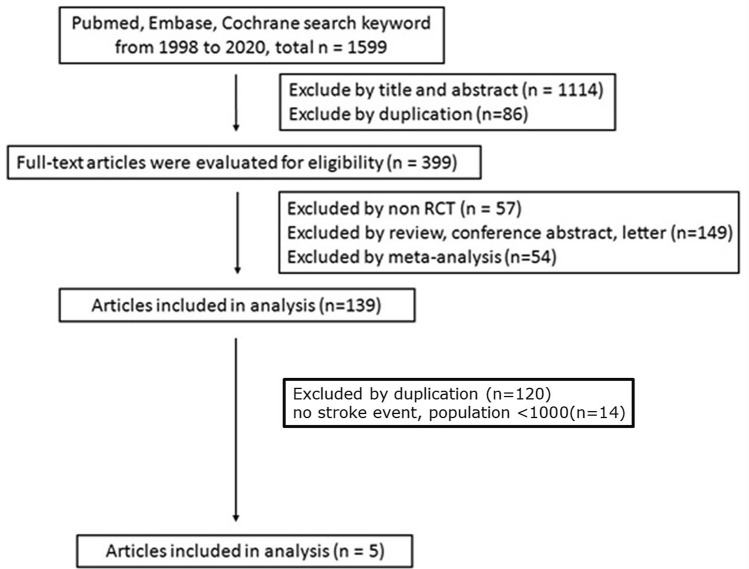
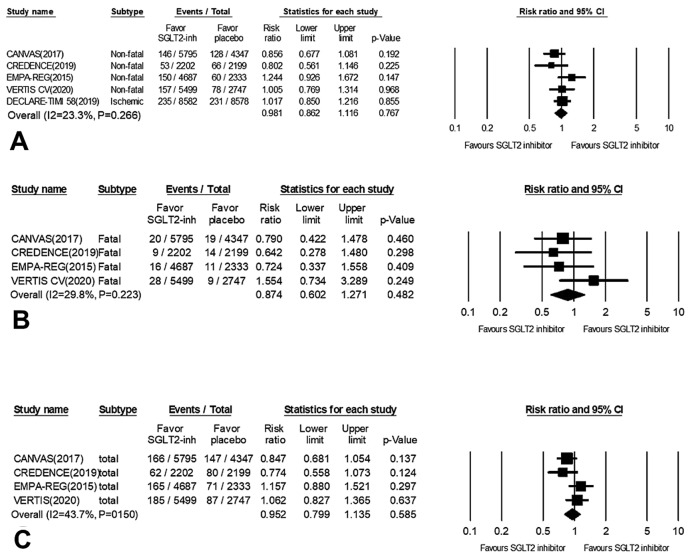
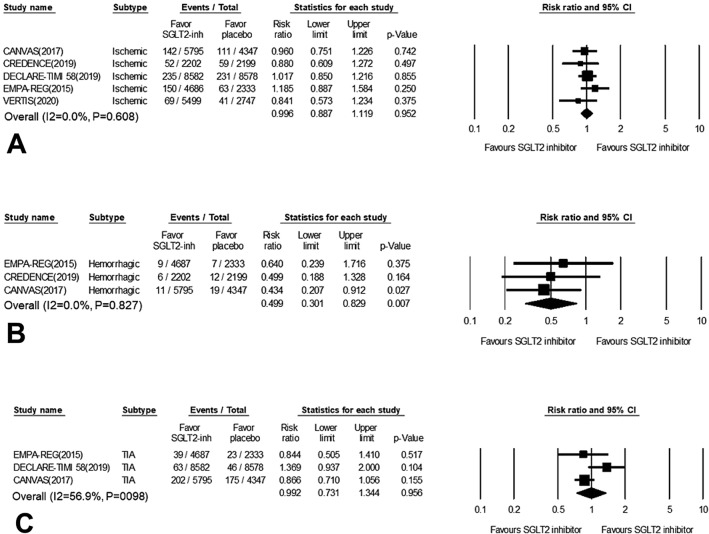
Sodium-glucose cotransporter 2 (SGLT2) inhibitors have shown impressive effects in reducing major vascular events in several randomized controlled trials (RCTs). The purpose of this study was to perform a meta-analysis to evaluate the effect of SGLT2 inhibitors on the risk of stroke and its subtypes. All data from prospective RCTs up to 20 October 2020 involving SGLT2 inhibitors that reported stroke events as the primary endpoint or safety in subjects with type 2 diabetes were subjected to meta-analysis. Five eligible RCTs (EMPA-REG, CANVAS, DECLARE-TIMI 58, CREDENCE and VERTIS CV) involving 46,969 participants were included. Pooled analysis of the RCTs showed no significant effect of SGLT2 inhibitors on total stroke [risk ratio (RR) = 0.95; 95% confidence interval (CI) 0.79–1.13, P = 0.585]. Subgroup analysis indicated that SGLT2 inhibitors had no significant effect against fatal stroke, non-fatal stroke, ischemic stroke or transient ischemic attack. When only hemorrhagic stroke was included, SGLT2 inhibitors were associated with a significant 50% reduction compared with placebo (RR = 0.49, 95% CI 0.30–0.82, P = 0.007). This meta-analysis shows that SGLT2 inhibitors have a neutral effect on the risk of stroke and its subtypes but a potential protective effect against hemorrhagic stroke.
Overview
The claims and statistics of this paper haven’t been checked yet.
Free: it reads the open-access text and checks the first 5 claims that cite a source we can check. Create a free account to check every claim.
Integrity signals
Registry
Cites
Statistics
Figures
Verification
Claims the paper makes
The claims and statistics of this paper haven’t been checked yet.
Free: it reads the open-access text and checks the first 5 claims that cite a source we can check. Create a free account to check every claim.
Claims other papers make about this one
Each is checked against this paper’s own text: does it say what the citing paper says it does?
The source backs part of the claim, not all of it — or backs it for a different population, condition or comparison.
In the citing paper
“When individual components of MACE were analyzed separately, GLP-1 RA reduced all three outcomes, with a more pronounced effect on stroke followed by cardiovascular death and myocardial infarction (253,254).”
From Management of Hyperglycemia in Type 2 Diabetes, 2022. A Consensus Report by the American Diabetes Association (ADA) and the European Association for the Study of Diabetes (EASD) (2022) · cites this paper as [254]
Experimental — accuracy not yet measuredIn the citing paper
“Indirect comparison also suggests that GLP-1RAs may have a larger magnitude of effect on cardiovascular risk than SGLT2is.16,57”
From Cardioprotective Glucose-Lowering Agents and Dementia Risk: A Systematic Review and Meta-Analysis (2025) · cites this paper as [57]
Self-check
Percentages, sums and reported differences re-computed from the paper’s own numbers.
The self-check needs the paper’s full text.
Citations
Cites
Empagliflozin, Cardiovascular Outcomes, and Mortality in Type 2 Diabetes
Zinman, B., Wanner, C., Lachin, J. M., Fitchett, D., Bluhmki, E., Hantel, S., Mattheus, M., Devins, T., Johansen, O. E., Woerle, H. J., et al. (2015) · New England Journal of Medicine · doi:10.1056/nejmoa1504720 · Cited by 12,315
Canagliflozin and Cardiovascular and Renal Events in Type 2 Diabetes
Neal, B., Perkovic, V., Mahaffey, K. W., de Zeeuw, D., Fulcher, G., Erondu, N., Shaw, W., Law, G., Desai, M., & Matthews, D. R. (2017) · New England Journal of Medicine · doi:10.1056/nejmoa1611925 · Cited by 7,830
Dapagliflozin and Cardiovascular Outcomes in Type 2 Diabetes
Wiviott, S. D., Raz, I., Bonaca, M. P., Mosenzon, O., Kato, E. T., Cahn, A., Silverman, M. G., Zelniker, T. A., Kuder, J. F., Murphy, S. A., et al. (2019) · New England Journal of Medicine · doi:10.1056/nejmoa1812389 · Cited by 6,382
Canagliflozin and Renal Outcomes in Type 2 Diabetes and Nephropathy
Perkovic, V., Jardine, M. J., Neal, B., Bompoint, S., Heerspink, H. J. L., Charytan, D. M., Edwards, R., Agarwal, R., Bakris, G., Bull, S., et al. (2019) · New England Journal of Medicine · doi:10.1056/nejmoa1811744 · Cited by 6,189
Zelniker, T. A., Wiviott, S. D., Raz, I., Im, K., Goodrich, E. L., Bonaca, M. P., Mosenzon, O., Kato, E. T., Cahn, A., Furtado, R. H. M., et al. (2019) · The Lancet · doi:10.1016/s0140-6736(18)32590-x · Cited by 2,845
Cardiovascular outcomes with ertugliflozin in type 2 diabetes
Cannon, C. P., Pratley, R., Dagogo-Jack, S., Mancuso, J., Huyck, S., Masiukiewicz, U., Charbonnel, B., Frederich, R., Gallo, S., Cosentino, F., et al. (2020) · New England Journal of Medicine · doi:10.1056/nejmoa2004967 · Cited by 1,514
Ray, K. K., Seshasai, S. R. K., Wijesuriya, S., Sivakumaran, R., Nethercott, S., Preiss, D., Erqou, S., & Sattar, N. (2009) · The Lancet · doi:10.1016/s0140-6736(09)60697-8 · Cited by 1,383
Mortality and causes of death in the WHO Multinational Study of Vascular Disease in Diabetes
and the WHO Multinational Study Group, Morrish, N. J., Wang, S.-L., Stevens, L. K., Fuller, J. H., & Keen, H. (2001) · Diabetologia · doi:10.1007/pl00002934 · Cited by 1,288 · cited 1×
“Criteria for inclusion of a study derived from all previously published meta-analysis in this area were: (1) RCTs design; (2) comparison of SGLT2 inhibitors with control (eg, placebo or other glucose-lowering agents); and (3) Studies with at least 1000 patients above 18 years of age.”
MethodXie, X., Atkins, E., Lv, J., Bennett, A., Neal, B., Ninomiya, T., Woodward, M., MacMahon, S., Turnbull, F., Hillis, G. S., et al. (2016) · The Lancet · doi:10.1016/s0140-6736(15)00805-3 · Cited by 980
CV Protection in the EMPA-REG OUTCOME Trial: A “Thrifty Substrate” Hypothesis
Ferrannini, E., Mark, M., & Mayoux, E. (2016) · Diabetes Care · doi:10.2337/dc16-0330 · Cited by 975
Cited by
Davies, M. J., Aroda, V. R., Collins, B. S., Gabbay, R. A., Green, J., Maruthur, N. M., Rosas, S. E., Del Prato, S., Mathieu, C., Mingrone, G., et al. (2022) · Diabetes Care · doi:10.2337/dci22-0034 · Cited by 2,104
“When individual components of MACE were analyzed separately, GLP-1 RA reduced all three outcomes, with a more pronounced effect on stroke followed by cardiovascular death and myocardial infarction (253,254).”
BackgroundDavies, M. J., Aroda, V. R., Collins, B. S., Gabbay, R. A., Green, J., Maruthur, N. M., Rosas, S. E., Del Prato, S., Mathieu, C., Mingrone, G., et al. (2022) · Diabetologia · doi:10.1007/s00125-022-05787-2 · Cited by 1,048
“When individual components of MACE were analysed separately, GLP-1 RA reduced all three outcomes, with a more pronounced effect on stroke followed by cardiovascular death and myocardial infarction [253, 254].”
2024 ESC Guidelines for the management of peripheral arterial and aortic diseases
Mazzolai, L., Teixido-Tura, G., Lanzi, S., Boc, V., Bossone, E., Brodmann, M., Bura-Rivière, A., De Backer, J., Deglise, S., Della Corte, A., et al. (2024) · European Heart Journal · doi:10.1093/eurheartj/ehae179 · Cited by 993
Samson, S. L., Vellanki, P., Blonde, L., Christofides, E. A., Galindo, R. J., Hirsch, I. B., Isaacs, S. D., Izuora, K. E., Low Wang, C. C., Twining, C. L., et al. (2023) · Endocrine Practice · doi:10.1016/j.eprac.2023.02.001 · Cited by 375
SGLT2 inhibitors: from glucose-lowering to cardiovascular benefits
Preda, A., Montecucco, F., Carbone, F., Camici, G. G., Lüscher, T. F., Kraler, S., & Liberale, L. (2024) · Cardiovascular Research · doi:10.1093/cvr/cvae047 · Cited by 161
Scisciola, L., Cataldo, V., Taktaz, F., Fontanella, R. A., Pesapane, A., Ghosh, P., Franzese, M., Puocci, A., Angelis, A. D., Sportiello, L., et al. (2022) · Frontiers in Cardiovascular Medicine · doi:10.3389/fcvm.2022.1008922 · Cited by 145
Cardioprotective Glucose-Lowering Agents and Dementia Risk: A Systematic Review and Meta-Analysis
Seminer, A., Mulihano, A., O’Brien, C., Krewer, F., Costello, M., Judge, C., O’Donnell, M., & Reddin, C. (2025) · JAMA Neurology · doi:10.1001/jamaneurol.2025.0360 · Cited by 91
Cognitive disorders in patients with chronic kidney disease: Approaches to prevention and treatment
Pépin, M., Klimkowicz‐Mrowiec, A., Godefroy, O., Delgado, P., Carriazo, S. M., Ferreira, A. C., Golenia, A., Małyszko, J., Grodzicki, T. K., Giannakou, K., et al. (2023) · European Journal of Neurology · doi:10.1111/ene.15928 · Cited by 75
Fawzy, A. M., Rivera‐Caravaca, J. M., Underhill, P., Fauchier, L., & Lip, G. Y. H. (2022) · Diabetes Obesity and Metabolism · doi:10.1111/dom.14854 · Cited by 55
“That said, a risk reduction of 50% was observed with SGLT2 inhibitors when haemorrhagic strokes were factored in, suggesting a potential protective effect.(19) In the CVD-REAL-2 study, which focused on Asia Pacific, Middle Eastern and North American populations, significant reductions in all the aforementioned outcome…”
BackgroundTakashima, M., Nakamura, K., Kiyohara, T., Wakisaka, Y., Hidaka, M., Takaki, H., Yamanaka, K., Shibahara, T., Wakisaka, M., Ago, T., et al. (2022) · Communications Biology · doi:10.1038/s42003-022-03605-4 · Cited by 48
Rodriguez‐Valadez, J. M., Tahsin, M., Fleischmann, K. E., Masharani, U. B., Yeboah, J., Park, M., Li, L., Weber, E. S., Li, Y., Berkalieva, A., et al. (2023) · Diabetes Care · doi:10.2337/dc22-0772 · Cited by 49
Banerjee, M., Pal, R., Mukhopadhyay, S., & Nair, K. (2023) · The Journal of Clinical Endocrinology & Metabolism · doi:10.1210/clinem/dgad076 · Cited by 53
Role of diabetes in stroke: Recent advances in pathophysiology and clinical management
Bradley, S., Spring, K. J., Beran, R. G., Chatzis, D., Killingsworth, M. C., & Bhaskar, S. M. M. (2021) · Diabetes/Metabolism Research and Reviews · doi:10.1002/dmrr.3495 · Cited by 44
“, of five RCTs, including CREDENCE (Canagliflozin and Renal Outcomes in Type 2 Diabetes and Nephropathy),(136) VERTIS CV (Cardiovascular Outcomes with Ertugliflozin in Type 2 Diabetes),(99) CANVAS (Canagliflozin and Cardiovascular and Renal Events in Type 2 Diabetes),(102) DECLARE‐TIMI 58 (Dapagliflozin and Cardiovasc…”
BackgroundRathmann, W., & Kostev, K. (2022) · Acta Diabetologica · doi:10.1007/s00592-022-01943-7 · Cited by 32
“The German Diabetes Center is funded by the German Federal Ministry of Health and the Ministry of Culture and Science of the 1 3 State of North Rhine-Westphalia.”
BackgroundMethodResultInfluentialThe Ketogenic Effect of SGLT-2 Inhibitors—Beneficial or Harmful?
Koutentakis, M., Kuciński, J., Świeczkowski, D., Surma, S., Filipiak, K. J., & Gąsecka, A. (2023) · Journal of Cardiovascular Development and Disease · doi:10.3390/jcdd10110465 · Cited by 40
Is There a Role for SGLT2 Inhibitors in Patients with End-Stage Kidney Disease?
Siddiqui, R., Obi, Y., Dossabhoy, N. R., & Shafi, T. (2024) · Current Hypertension Reports · doi:10.1007/s11906-024-01314-3 · Cited by 34
SGLT2 Inhibitors: Effect on Myocardial Infarction and Stroke in Type 2 Diabetes
Mukhopadhyay, P., Sanyal, D., Chatterjee, P., Pandit, K., & Ghosh, S. K. (2023) · The Journal of Clinical Endocrinology & Metabolism · doi:10.1210/clinem/dgad113 · Cited by 31
Lui, D. T. W., Tang, E. H. M., Wu, T., Au, I. C. H., Lee, C., Woo, Y. C., Tan, K. C. B., & Wong, C. K. H. (2023) · Cardiovascular Diabetology · doi:10.1186/s12933-023-01772-0 · Cited by 25
“In two meta-analyses [4, 5], SGLT2i use was associated with a 50% reduction in the risk of hemorrhagic stroke, postulated to be related blood pressure lowering effect of SGLT2i, which has a more prominent benefit in hemorrhagic stroke [28].”
BackgroundSelf-citationGhafoury, R., Malek, M., Ismail‐Beigi, F., & Khamseh, M. E. (2025) · Diabetes Therapy · doi:10.1007/s13300-025-01743-6 · Cited by 31
“SGLT2 inhibitors and DPP4 inhibitors primarily show a neutral effect on total stroke risk [79, 91].”
Samson, S. L., Vellanki, P., Blonde, L., Hirsch, I. B., Hoang, T. D., Isaacs, S. D., Izuora, K. E., Wang, C. C. L., Ooi, C. P., Padilla, B. I., et al. (2026) · Endocrine Practice · doi:10.1016/j.eprac.2026.01.006 · Cited by 36
Tsai, P.-C., Chuang, W.-J., Ko, A. M., Chen, J.-S., Chiu, C., Chen, C., & Yeh, Y. (2023) · Cardiovascular Diabetology · doi:10.1186/s12933-023-01789-5 · Cited by 27
Rodriguez‐Valadez, J. M., Tahsin, M., Masharani, U. B., Park, M., Hunink, M. G. M., Yeboah, J., Li, L., Weber, E. S., Berkalieva, A., Avezaat, L., et al. (2024) · Journal of the American Heart Association · doi:10.1161/jaha.123.032463 · Cited by 22
“86 If mediators act only on 1 or a few of the single end points within the combined end point, these associations may be missed.”
BackgroundNgoc, N. B., Nguyen, L., Mital, S., Bugden, S., & Nguyen, H. V. (2023) · Diabetes Obesity and Metabolism · doi:10.1111/dom.15009 · Cited by 25
“High blood pressure leads to a higher risk of haemorrhagic stroke than ischaemic stroke.(50,51) Our sensitivity analyses showed that human GLP-1RAs offered better cardiorenal protection than exendin-4 GLP-1RAs.”
BackgroundScheen, A. J. (2023) · Diabetes & Metabolism · doi:10.1016/j.diabet.2023.101474 · Cited by 22
Dai, W., Alavi, R., Li, J., Carreño, J. E., Pahlevan, N. M., & Kloner, R. A. (2025) · Scientific Reports · doi:10.1038/s41598-025-93483-7 · Cited by 20
Li, J., Cheng, J., Zhang, W., Lan, L., & Ge, W. (2022) · Journal of Diabetes and its Complications · doi:10.1016/j.jdiacomp.2022.108362 · Cited by 24
Jang, H. Y., Kim, I., & Oh, J. M. (2022) · Frontiers in Pharmacology · doi:10.3389/fphar.2022.928121 · Cited by 16
Kim, J. S., Lee, G., Park, K., & Oh, S. (2024) · Diabetes & Metabolism Journal · doi:10.4093/dmj.2022.0421 · Cited by 19
“In a meta-analysis of five RCTs which directly compared SGLT-2 inhibitors to placebo, there was no significant effect on total stroke; a pooled analysis of three trials showed that SGLT-2 inhibitors were associated with a substantial reduction in hemorrhagic stroke alone [22].”
ResultPasqualotto, E., Rodrigues, F. R., Ribeiro, G. B. E. S., Almeida, G. D. O., Kabariti, J. C., Ferreira, R. O. M., Pedrotti, M., Clemente, M. R. C., Sur, N. B., & Luca, D. G. D. (2024) · Journal of Stroke and Cerebrovascular Diseases · doi:10.1016/j.jstrokecerebrovasdis.2024.107730 · Cited by 15
The Intersection of SGLT2 Inhibitors, Cognitive Impairment, and CKD
Noel, J. A., Hougen, I., & Sood, M. M. (2022) · Frontiers in Neurology · doi:10.3389/fneur.2022.823569 · Cited by 19
Sagris, D., Ntaios, G., & Milionis, H. J. (2023) · Journal of Neurology Neurosurgery & Psychiatry · doi:10.1136/jnnp-2022-329149 · Cited by 13
Pantea, I., Repanovici, A., & Cocuz, M. E. (2022) · Healthcare · doi:10.3390/healthcare10050773 · Cited by 15
“SGLT2 inhibitors produced a 50% decrease in hemorrhagic stroke compared to a placebo [55].”
BackgroundChung, M., Hsu, H., Chang, C., Hung, P., Hsiao, P., Wu, L.-Y., Wu, M., Shieh, J., & Chung, C. (2022) · Scientific Reports · doi:10.1038/s41598-022-13760-7 · Cited by 14
Li, S., Yu, N., Xu, F., Yu, L., Yu, Q., & Fu, J. (2022) · Journal of Ginseng Research · doi:10.1016/j.jgr.2022.05.006 · Cited by 13
“VERTIS CV (Ertugliflozin)) involving 46,969 participants, SLC5A2 inhibitors were associated with a significant 50% reduction of hemorrhagic stroke risk [38].”
BackgroundShah, M. U., Roebuck, A., Srinivasan, B., Ward, J. K., Squires, P. E., Hills, C. E., & Lee, K. (2025) · Frontiers in Endocrinology · doi:10.3389/fendo.2024.1499681 · Cited by 24
Hsieh, C., & Sung, S. (2022) · International Journal of Molecular Sciences · doi:10.3390/ijms24010351 · Cited by 15
“Meta-analyses have shown that SGLT2 inhibitors may reduce the risk of hemorrhagic stroke risks by about 50% [20,39].”
BackgroundXu, B., Yang, M., Li, S., Kang, B., & Zhou, J. (2025) · Annals of Pharmacotherapy · doi:10.1177/10600280251317495 · Cited by 9
“28,29 Trials included in our study covered a range of populations prone to stroke, and the overall sample size was large enough to avoid missing other results.”
Lin, T., Chen, Y.-H., Huang, J., Liao, P., Chen, M., Pan, L.-F., & Jong, G. (2022) · Frontiers in Cardiovascular Medicine · doi:10.3389/fcvm.2022.966708 · Cited by 9
“Although these drugs are primarily indicated for diabetes, several studies have examined their use in the primary and secondary prevention of stroke (9, 10).”
BackgroundMurasheva, A., Fuks, O., Тимкина, Н. В., Mikhailova, A., Vlasov, T. D., Samochernykh, K. A., & Каронова, Т. Л. (2024) · Biomedicines · doi:10.3390/biomedicines12122797 · Cited by 8
Non-Anticoagulation Strategies Aimed at Primary Stroke Prevention in Nascent Atrial Fibrillation
Sgarra, L., Desantis, V., Matteucci, A., Caccavo, V. P., Troisi, F., Monaco, A. D., Mangini, F., Katsouras, G., Guaricci, A. I., Dadamo, M. L., et al. (2025) · Biomedicines · doi:10.3390/biomedicines13030660 · Cited by 10
“In contrast, Sodium-Glucose Transporter-2 Inhibitors (SGLT2-Is), while highly effective in reducing major CV outcomes such as heart failure hospitalizations and kidney disease progression, do not appear to have a significant impact on cerebrovascular protection and stroke prevention [80].”
Sodium-glucose cotransporter 2 inhibitors and atherosclerosis
Ceasovschih, A., Balta, A., Aldeen, E. S., Bianconi, V., Barkas, F., Şener, Y. Z., Jakubová, M., Yılmaz, M. B., Banach, M., Șorodoc, L., et al. (2025) · American Journal of Preventive Cardiology · doi:10.1016/j.ajpc.2025.101061 · Cited by 12
“Contrary to previous meta-analyses that suggested a higher risk of stroke with SGLT2i, more recent studies indicate neutral effects on ischemic stroke and potential protective effects against hemorrhagic stroke [130 – 132].”
Poststroke Cardiovascular Management: Current Concepts, Integrated Care, and Future Developments
Lip, G. Y. H., Lenarczyk, R., Pastori, D., Ntaios, G., Doehner, W., & Schnabel, R. B. (2023) · Current Problems in Cardiology · doi:10.1016/j.cpcardiol.2023.101738 · Cited by 8
Diabetes and Stroke: Impact of Novel Therapies for the Treatment of Type 2 Diabetes Mellitus
Vieira, I. H., Carvalho, T., Saraiva, J. C., Gomes, L., & Paiva, I. (2024) · Biomedicines · doi:10.3390/biomedicines12051102 · Cited by 9
“Regarding hemorrhagic stroke, there are data from two meta-analyses attributing a 50% reduction in the risk of hemorrhagic stroke to patients on SGLT2i vs. placebo [69,70].”
BackgroundBelluardo, G., Sessa, C., & Morale, W. (2024) · Behavioural Brain Research · doi:10.1016/j.bbr.2024.115337 · Cited by 10
Симаненкова, А. В., Fuks, O., Тимкина, Н. В., Islamova, A., Суфиева, Д. А., Kirik, O. V., Korzhevsky, D. E., Vlasov, T. D., & Каронова, Т. Л. (2024) · Frontiers in Bioscience-Landmark · doi:10.31083/j.fbl2907265 · Cited by 7
Kamdar, A. L., Sykes, R., Morrow, A., Mangion, K., & Berry, C. (2021) · Reviews in Cardiovascular Medicine · doi:10.31083/j.rcm2204152 · Cited by 9
“However, it was shown that theremay be amodest reduction in hemorrhagic stroke [34] and atrial fibrillation [33].”
BackgroundFelix, N. S., Gauza, M. D. M., Teixeira, L., Guisso, M. E. S., Nogueira, A., Dagostin, C. S., Godoi, A., Ribeiro, S. A. G., Duque, J. C., Moura-Neto, J. A., et al. (2024) · Korean Circulation Journal · doi:10.4070/kcj.2023.0241 · Cited by 8
SGLT2 inhibitors: Do they have antiarrhythmic properties?
Caballero, R., Tamargo, J. L., & Delpón, E. (2026) · Pharmacology & Therapeutics · doi:10.1016/j.pharmthera.2025.108973 · Cited by 7
Diabetes and Stroke—A Focused Review
Menon, B., Syed, R., Yadav, P. K., & Menon, M. P. K. (2024) · Journal of Diabetology · doi:10.4103/jod.jod_46_24 · Cited by 10
Chen, Z., Meng, H., Guo, Y., Sun, H., Zhang, W., Yu, C., & Hou, S. (2024) · Journal of Stroke and Cerebrovascular Diseases · doi:10.1016/j.jstrokecerebrovasdis.2024.108136 · Cited by 7
Ebrahimi, P., Soleimani, H., Mahalleh, M., Farisi, P., Taheri, M., Ramezani, P., Soltani, P., Nazari, R., Senobari, N., Mousavinezhad, S. M., et al. (2025) · Journal of Diabetes & Metabolic Disorders · doi:10.1007/s40200-024-01545-w · Cited by 6
Sotagliflozin: Two Birds with One Stone?
Requena-Ibáñez, J. A., Kindberg, K. M., Santos‐Gallego, C. G., Zafar, M. U., & Badimón, J. J. (2025) · Cardiovascular Drugs and Therapy · doi:10.1007/s10557-025-07723-z · Cited by 7
Johri, N., Matreja, P. S., John, D., Dutta, S., Parida, A. K., & Sarma, S. N. (2022) · Current Molecular Pharmacology · doi:10.2174/1874467216666221017123333 · Cited by 5
Симаненкова, А. В., Станиславовна, Ф. О., Тимкина, Н. В., Каронова, Т. Л., Цыба, Д. Л., Kirik, O. V., Korzhevsky, D. E., & Vlasov, T. D. (2022) · Journal of Evolutionary Biochemistry and Physiology · doi:10.1134/s0022093022050234 · Cited by 6
Shi, S., Li, X., Chen, Y., Li, J., & Dai, Y. (2025) · Journal of Diabetes · doi:10.1111/1753-0407.70044 · Cited by 5
Jin, B., Kumari, T., Lee, J., Kim, J.-S., Bokorová, R., Gheware, A., Ripoll, C. V., Sargazi, A., Jeong, S., Hyun, Y., et al. (2026) · Cardiovascular Research · doi:10.1093/cvr/cvag003 · Cited by 4
Interdisciplinary Engagement In Neurocardiology: A Key Opportunity
Lusk, J. B., Grory, B. M., Sheth, K. N., & Bhatt, D. L. (2024) · Journal of the American Heart Association · doi:10.1161/jaha.124.034804 · Cited by 4
Heart Failure and Stroke: A Narrative Review
Katano, T., Mori, H., & Suda, S. (2025) · Journal of Clinical Medicine · doi:10.3390/jcm14176044 · Cited by 5
“While no efficacy was observed for ischemic stroke, some studies have suggested a potential 50% reduction in the risk of hemorrhagic stroke (RR = 0.49; 95% CI, 0.30–0.82; p = 0.007) [70], indicating a promising avenue for future investigation.”
InfluentialHussain, N., Ramadan, A., Haddad, A. H. I. A., & Alfahl, Z. (2026) · Journal of Diabetes Research · doi:10.1155/jdr/2719491 · Cited by 5
Neuroprotective effects of glucose-lowering drugs in rat focal brain ischemia-reperfusion model
Симаненкова, А. В., Станиславовна, Ф. О., Тимкина, Н. В., Александровна, Т. П., Vlasov, T. D., & Каронова, Т. Л. (2023) · Arterial’naya Gipertenziya (Arterial Hypertension) · doi:10.18705/1607-419x-2023-29-6-579-592 · Cited by 3
Fathy, N., Labib, M. A., Essam, R. M., & El-Boghdady, N. A. (2024) · ACS Chemical Neuroscience · doi:10.1021/acschemneuro.4c00313 · Cited by 6
Ng, P. Y., Ng, A. K., Ip, A., Sin, W. C., & Yiu, K. (2024) · Journal of the American Heart Association · doi:10.1161/jaha.124.037207 · Cited by 3
Chou, O. H. I., Luo, Z., Chung, C. T., Chan, J. S. K., Li, H., Lakhani, I., Lee, S., Lau, D. H. H., Zhang, Q., Liu, T., et al. (2025) · Journal of the American Heart Association · doi:10.1161/jaha.123.034175 · Cited by 6
“23,24 In line with the prior studies, we found that SGLT2I use was associated with lower risks of the various adverse outcomes compared with DPP4Is.”
Yu, Z., Liu, X., Feng, X., Zhang, X., & Gao, R. (2024) · Frontiers in Cardiovascular Medicine · doi:10.3389/fcvm.2024.1449185 · Cited by 3
Azhari, H. F., & Dawson, J. (2024) · Frontiers in Stroke · doi:10.3389/fstro.2024.1363954 · Cited by 4
Lin, B.-H., Huang, H., Lin, H.-A., & Lin, S. (2025) · International Journal of Stroke · doi:10.1177/17474930251364060 · Cited by 2
“9,12,26 In this study, we comprehensively evaluated the effect of SGLT2i on patients with various risk factors in a sizable cohort from a global research network.”
InfluentialPark, S. J., Kim, H. J., Seo, M., Byun, D. W., Suh, K., Yoo, M. H., Yang, H., Lee, I., Kwon, S. H., Kim, M., et al. (2026) · BMJ Open · doi:10.1136/bmjopen-2025-105271 · Cited by 5
Ding, Q., Sico, J. J., Perkins, A. J., Myers, L. J., Daggy, J., Sexson, A. E., Taylor, S., Burrone, L., Waddell, K. J., & Bravata, D. M. (2026) · Cardiovascular Diabetology – Endocrinology Reports · doi:10.1186/s40842-026-00280-w · Cited by 2
“Recently, novel antihyperglycemic agents, including sodium glucose cotransporter-2 inhibitors (SGLT-2i) and glucagon-like peptide-1 receptor agonists (GLP-1 RAs), have shown efficacy in cardiovascular risk management, decreasing major adverse cardiovascular events [4–8].”
Stroke prevention in diabetes with glucagon-like peptide-1 receptor agonists: A game-changer?
Katsiki, N., & Fonseca, V. A. (2021) · Journal of Diabetes and its Complications · doi:10.1016/j.jdiacomp.2021.108075 · Cited by 2
Winkler, G., Folyovich, A., Kis, J. T., Dancs, T., & Schandl, L. (2024) · Orvosi Hetilap · doi:10.1556/650.2024.33012 · Cited by 2
Khan, H. U., Akhtar, B., Singla, B., Mughal, H. M. F., Hamid, A., Khan, Z. U., Ismail, S., Sana, M., & Khaliq, M. (2025) · Cureus · doi:10.7759/cureus.84137 · Cited by 3
“Although data on stroke risk reduction across various cardiovascular disease patient groups were reported in multiple studies, the findings were not statistically significant [26,27].”
Boriani, G., Mei, D. A., & Imberti, J. F. (2023) · European Journal of Heart Failure · doi:10.1002/ejhf.2891 · Cited by 2
SGLT2 Inhibitors and GLP-1 Agonists: A Beacon of Hope for Stroke Prevention in Diabetes
Jeon, J. (2024) · Diabetes & Metabolism Journal · doi:10.4093/dmj.2024.0079 · Cited by 3
“Neverthe-less, a possible protective effect against hemorrhagic stroke emerges from systematic review and meta-analysis, proposing a potential reduction in this stroke subtype’s risk via SGLT2 inhibitors [8].”
BackgroundAtherosclerosis risk factor management - what's new for the neurologist?
Bichuette, L. D., Lottenberg, M. P., Cardozo, F. A. M., & Calderaro, D. (2022) · Arquivos de Neuro-Psiquiatria · doi:10.1590/0004-282x-anp-2022-s102 · Cited by 5
Unraveling the Genetic Links: The Impacts of Antidiabetic Drugs on Stroke Risk
Chen, J., Wang, Y., Li, L., & Xu, J. (2025) · Reviews in Cardiovascular Medicine · doi:10.31083/rcm40051 · Cited by 1
“A separate meta-analysis suggested a neutral effect of SGLT2 inhibitors on the risk of stroke and associated stroke subtypes while highlighting a potential protective effect against hemorrhagic stroke [55].”
Pavlidis, G., Prentza, V., Ikonomidis, I., Katogiannis, K., Kountouri, A., Thymis, J., Michalopoulou, E., Pliouta, L., Korakas, E., Stefanou, M., et al. (2026) · Medicina · doi:10.3390/medicina62020254 · Cited by 1
“…with SGLT-2i [53], while a previous meta-analysis of randomized clinical studies suggested differential effects by stroke subtype, with SGLT-2i demonstrating neutral effects on the risk of ischemic stroke but a significant 50% reduction in hemorrhagic stroke risk compared with placebo [54].”
Alatawi, A. M. (2023) · Pakistan Journal of Medical Sciences · doi:10.12669/pjms.40.1.6982 · Cited by 1
Neuroprotective potential of gliflozins
Kokin, A. S., & Суплотова, Л. А. (2023) · Diabetes Mellitus · doi:10.14341/dm13085 · Cited by 3
Therapeutic Strategies to Prevent Recurrent Stroke
Camafort, M., Yang, E., Ponte, C. I., & Coca, A. (2024) · Updates in hypertension and cardiovascular protection · doi:10.1007/978-3-031-64928-8_15 · Cited by 1
Before you start: the safety of SGLT2 inhibitors for anti-obesity treatment
Meslamani, A. Z. A. (2025) · Expert Opinion on Drug Safety · doi:10.1080/14740338.2025.2573368 · Cited by 2
“An acute drop in blood pressure, coupled with hemoconcentration, may reduce blood flow to the brain and heighten the risk of ischemic stroke in the short term [50].”
Does evidence from RCTs suggest: SGLT2 inhibitors could not reduce myocardial infarction and stroke?
Du, L., Li, Z., Lan, P., Huang, H., Cheng, W., & Xia, J. (2022) · European Journal of Clinical Pharmacology · doi:10.1007/s00228-022-03377-0 · Cited by 1
Fawzy, A. M., Rivera‐Caravaca, J. M., Fauchier, L., & Lip, G. Y. H. (2022) · Diabetes Obesity and Metabolism · doi:10.1111/dom.14913 · Cited by 1
“That said, some of these studies did not distinguish ischaemic strokes from the other stroke subtypes and a meta-analysis of randomized controlled trials on stroke subtypes suggests that a protective effect from SGLT2 inhibitors is only observed for haemorrhagic strokes.(6) Further studies are required to determine th…”
SGLT-2i para a prevenção de eventos cardiovasculares em portadores com Diabetes mellitus tipo 2
Barros, W. F. D. N., & de Oliveira, F. H. P. C. (2022) · Research Society and Development · doi:10.33448/rsd-v11i8.30528
Diabetes and Stroke: The Role of Glucose Regulation
Lowe, F. J., Feng, W., & Cantú-Brito, C. G. (2023) · Springer eBooks · doi:10.1007/978-3-031-25519-9_51 · Cited by 2
Станиславовна, Ф. О., Симаненкова, А. В., Тимкина, Н. В., Александровна, Т. П., Gagiev, А. Z., & Каронова, Т. Л. (2023) · Consilium Medicum · doi:10.26442/20751753.2023.4.202277
“Сведения о потенциальном защитном эффекте данного класса препаратов в условиях ОНМК немногочисленны и сводятся, как указывалось выше, к возможности уменьшения риска кардиоэмболического инсульта, а также геморрагического инсульта, что показано только для одного представителя класса, низкоселективного канаглифлозина [16…”
Chou, O. H. I., Luo, Z., Chung, C. T., Chan, J. S. K., Li, H., Lakhani, I., Lee, S., Zhang, Q., Liu, T., Wong, W. T., et al. (2023) · medRxiv · doi:10.1101/2023.08.21.23294389
Shestakova, M. V., Galstyan, G. R., Grineva, E. N., Zilov, A. V., Demidova, T. Y., Mkrtumyan, A. M., Petunina, N. A., Ruyatkina, L. A., Sukhareva, O. Y., Суплотова, Л. А., et al. (2023) · Diabetes Mellitus · doi:10.14341/dm13086
SGLT2 Inhibitor, an Agent for Diabetes, Heart, Kidney… and Stroke
Yang, T., Lee, J., & Oh, J. (2024) · Korean Circulation Journal · doi:10.4070/kcj.2024.0214
Warren, S., McKee, S., & Yakiwchuk, E. (2024) · The Senior Care Pharmacist · doi:10.4140/tcp.n.2024.350
Park, S. J., Kim, H. J., Byun, D. W., Suh, K., Yang, H., Lee, I., Kwon, S. H., Kim, M. J., Mok, J., Chun, S. W., et al. (2024) · doi:10.2196/preprints.66168
Ali, A., Sohail, U., Rao, T., Tariq, F., Baig, A., & Fatima, S. A. (2025) · Cureus · doi:10.7759/cureus.93303
Tsai, P.-C., Chuang, W.-J., Ko, A. M., Chen, J.-S., Chiu, C.-H., Chen, C.-H., & Yeh, Y. (2024) · Figshare · doi:10.6084/m9.figshare.26574907
Tsai, P.-C., Chuang, W.-J., Ko, A. M., Chen, J.-S., Chiu, C.-H., Chen, C.-H., & Yeh, Y. (2024) · Figshare · doi:10.6084/m9.figshare.26574919
Tsai, P.-C., Chuang, W.-J., Ko, A. M., Chen, J.-S., Chiu, C.-H., Chen, C.-H., & Yeh, Y. (2024) · Figshare · doi:10.6084/m9.figshare.26574922
Lui, D. T. W., Tang, E. H. M., Wu, T., Au, I. C. H., Lee, C. H., Woo, Y. C., Tan, K. C. B., & Wong, C. K. H. (2024) · Figshare · doi:10.6084/m9.figshare.26571379
Self-citationTsai, P.-C., Chuang, W.-J., Ko, A. M., Chen, J.-S., Chiu, C.-H., Chen, C.-H., & Yeh, Y. (2024) · Figshare · doi:10.6084/m9.figshare.26574910
Tsai, P.-C., Chuang, W.-J., Ko, A. M., Chen, J.-S., Chiu, C.-H., Chen, C.-H., & Yeh, Y. (2024) · Figshare · doi:10.6084/m9.figshare.26574913
Huang, X., Xiaoxiang, W. A. N. G., JIANG, Y., Shen, K., Zhenlei, J. I. A., Xiangdong, M. A., Zhong, B., He, Y., & Lou, M. (2025) · Journal of Zhejiang University (Medical Sciences) · doi:10.3724/zdxbyxb-2025-0474
Pasya, S. K. R., Asedi, T., Al-Sabbagh, M., Alsadi, H., Ghayada, I. K. K., Vetter, E., Schartz, C., Al-Sabbagh, M. Q., & Eswaradass, P. V. (2026) · The Neurohospitalist · doi:10.1177/19418744261416216
“30,31 Future studies should focus on the utility and cost effectiveness of such interventions.”
Inhibidores de la SLGT-2 en el manejo de enfermedad renal crónica en pacientes no diabéticos
Cadena, A. E., Pastrana, J. C. G., & Oltra, G. (2026) · Revista del Hospital Italiano de Buenos Aires · doi:10.51987/rev.hosp.ital.b.aires.v46i1.1279
Metadata
- Authors
- Tsai, W.-H., Chuang, S.-M., Liu, S.-C., Lee, C.-C., Chien, M.-N., Leung, C.-H., Liu, S.-J., & Shih, H.-M.
- Affiliations
- Mackay Memorial Hospital (TW)
- National Taiwan University (TW)
- Corresponding author
- Chuang, Shih-Ming
- ORCID
- Venue
- Scientific Reports
- Published
- 2021-07-28
- Volume
- 11
- Issue
- 1
- Pages
- 15364-15364
- ISSN
- 2045-2322 (ISSN-L)
- PMC
- PMC8319393
- OpenAlex
- W3186786961
- Cited by
- 113
- References
- 38
- Citations by year
- 2026: 21 · 2025: 18 · 2024: 30 · 2023: 21 · 2022: 20 · 2021: 3
- FWCI
- 2.84
- Type
- journal article
- Language
- en
- Open access
- gold
- doi.org
- Licence
- cc-by
- creativecommons.org/licenses/by/4.0 (tdm)
- creativecommons.org/licenses/by/4.0 (vor)
- Locations
- Scientific Reports (publishedVersion, cc-by)
- PubMed Central (publishedVersion, cc-by)
- PubMed (publishedVersion)
- Tamkang University Institutional Repository (TKUIR) (submittedVersion)
- DOAJ (DOAJ: Directory of Open Access Journals) (submittedVersion, cc-by-sa)
- Funders
- Mackay Memorial Hospital
- Topics
- Health Sciences › Medicine › Endocrinology, Diabetes and Metabolism › Diabetes Treatment and Management
- Health Sciences › Medicine › Clinical Neurology › Acute Ischemic Stroke Management
- Health Sciences › Medicine › Cardiology and Cardiovascular Medicine › Blood Pressure and Hypertension Studies
- Keywords
- SGLT2 inhibitors, stroke, hemorrhagic stroke, ischemic stroke, transient ischemic attack, type 2 diabetes, drug safety, EMPA-REG, Canva, DECLARE-TIMI 58, degrees of belief
- MeSH terms
- Sodium-Glucose Transporter 2 Inhibitors, Hemorrhagic Stroke, Diabetes Mellitus, Type 2, Humans, Randomized Controlled Trials as Topic, Risk Assessment, Sodium-Glucose Transporter 2
About these checks
Registry, retraction, Cites and statistics results are computed, not judged, with one exception: a printed reference that no index lists is read once by a model before it counts as a citation error. Claims are extracted by a model and kept only when their quote appears verbatim in the text; each cited source is then checked, with a model’s help, for whether it says what the claim relies on. Those verdicts can be wrong — read the claim’s quote and the cited source before relying on one.
Statistics and arithmetic are recomputed, not judged.
Confidence bands are shown only for fields calibrated on our annotated test set. None is calibrated yet, so no band is shown.
What counts as a claim ›How we measure confidence ›How we check this ›
Are you an author, or do you see a problem with this page? Request a review
Data sources
Bibliographic data: Semantic Scholar, OpenAlex, Crossref.
Contains information from the Semantic Scholar Academic Graph Datasets, made available under the ODC Attribution License (ODC-BY 1.0).
Semantic Scholar’s data is described in: Kinney, R., et al. (2023). The Semantic Scholar Open Data Platform. arXiv:2301.10140.
