

Single-cell and bulk transcriptomics of the liver reveals potential targets of NASH with fibrosis
Open accessThe DOI matches its Crossref record; 81 of the 81 references it cites were found in a registry or an index.
Abstract
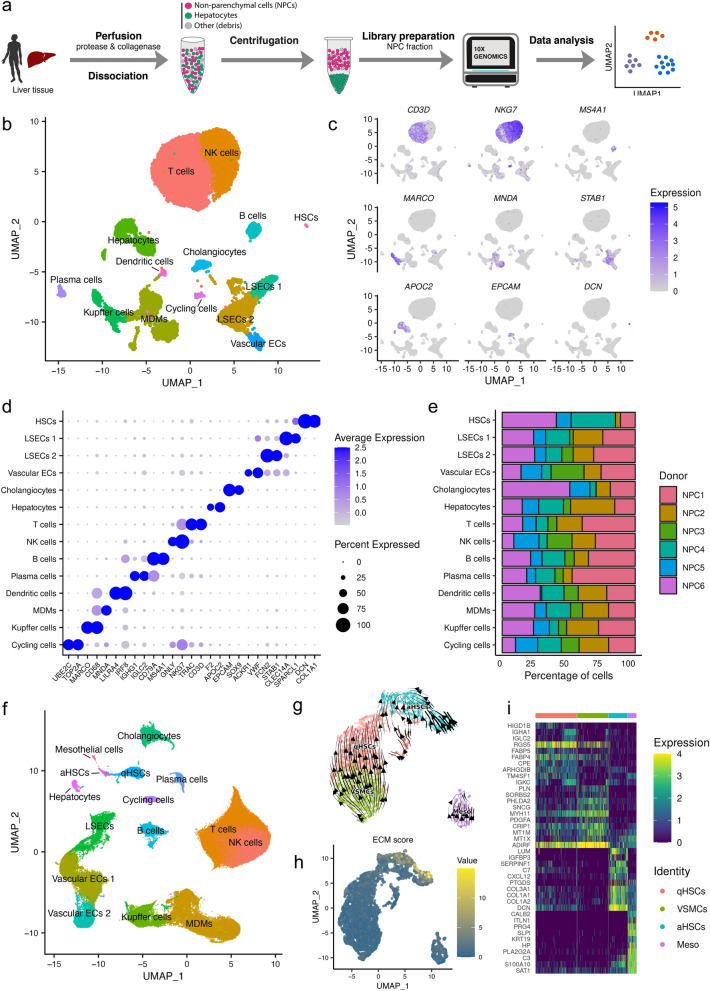
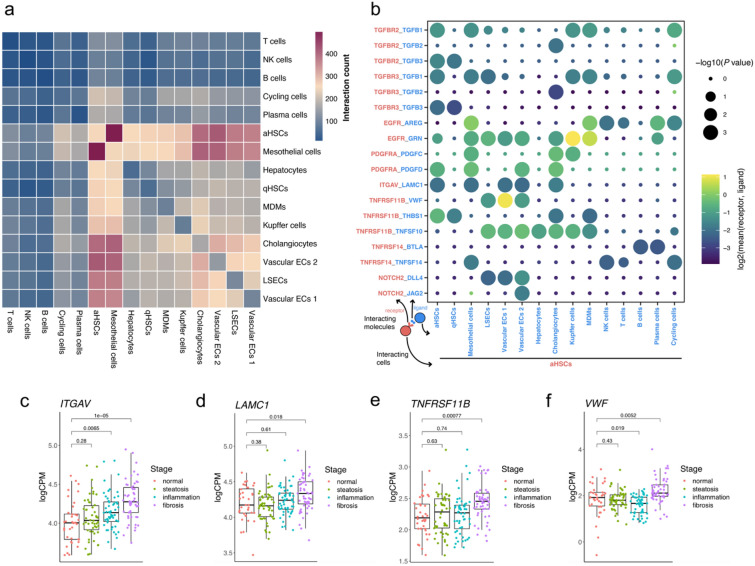
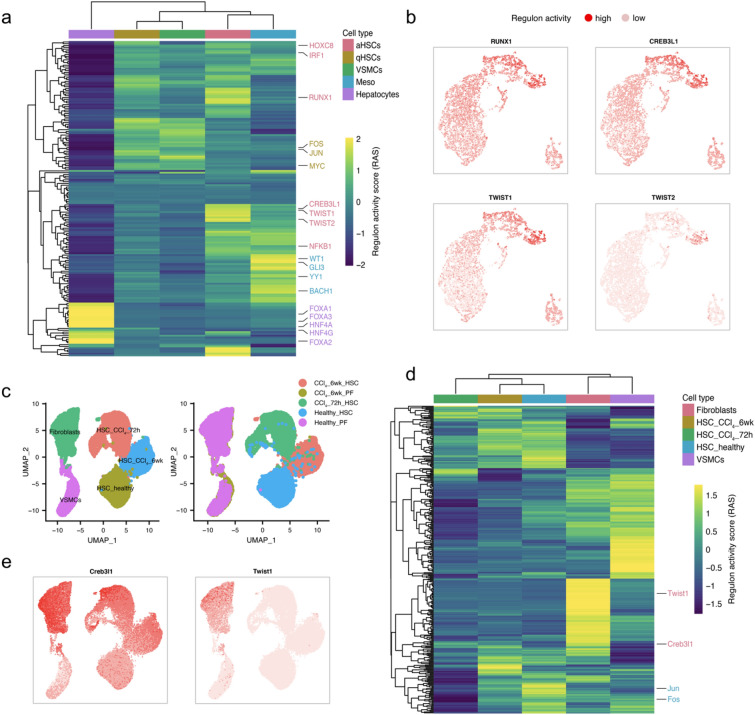
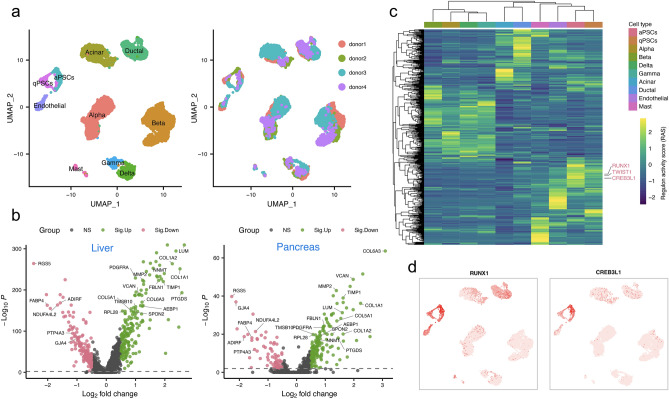
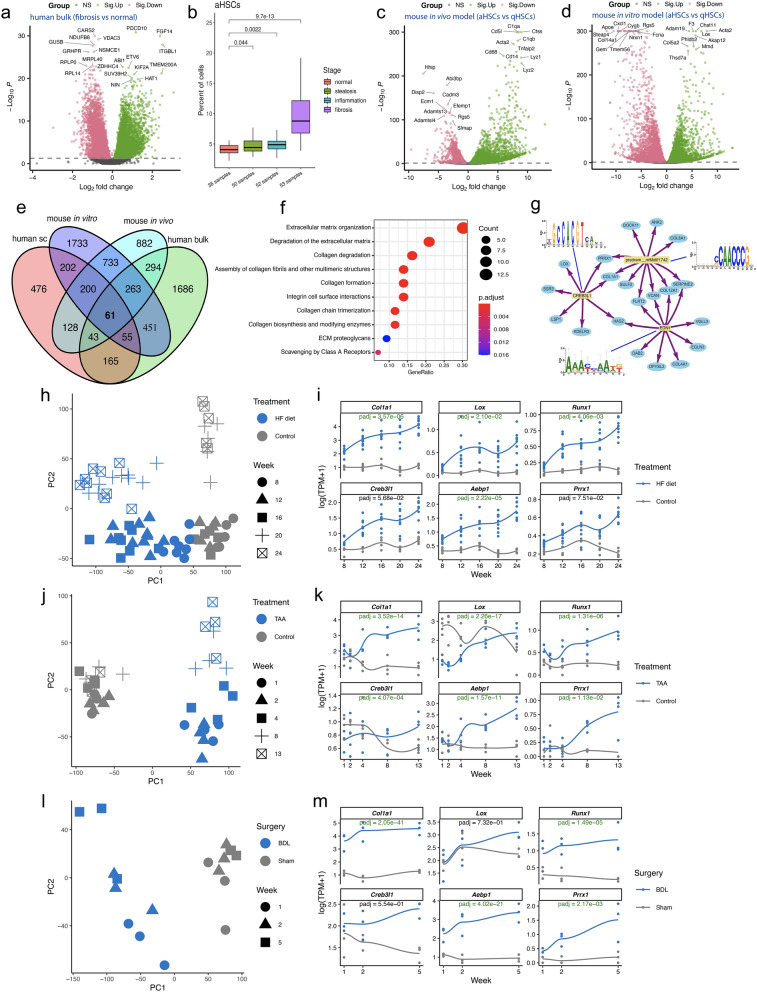
Fibrosis is characterized by the excessive production of collagen and other extracellular matrix (ECM) components and represents a leading cause of morbidity and mortality worldwide. Previous studies of nonalcoholic steatohepatitis (NASH) with fibrosis were largely restricted to bulk transcriptome profiles. Thus, our understanding of this disease is limited by an incomplete characterization of liver cell types in general and hepatic stellate cells (HSCs) in particular, given that activated HSCs are the major hepatic fibrogenic cell population. To help fill this gap, we profiled 17,810 non-parenchymal cells derived from six healthy human livers. In conjunction with public single-cell data of fibrotic/cirrhotic human livers, these profiles enable the identification of potential intercellular signaling axes (e.g., ITGAV–LAMC1, TNFRSF11B–VWF and NOTCH2–DLL4) and master regulators (e.g., RUNX1 and CREB3L1) responsible for the activation of HSCs during fibrogenesis. Bulk RNA-seq data of NASH patient livers and rodent models for liver fibrosis of diverse etiologies allowed us to evaluate the translatability of candidate therapeutic targets for NASH-related fibrosis. We identified 61 liver fibrosis-associated genes (e.g., AEBP1, PRRX1 and LARP6) that may serve as a repertoire of translatable drug target candidates. Consistent with the above regulon results, gene regulatory network analysis allowed the identification of CREB3L1 as a master regulator of many of the 61 genes. Together, this study highlights potential cell–cell interactions and master regulators that underlie HSC activation and reveals genes that may represent prospective hallmark signatures for liver fibrosis.
Overview
The claims and statistics of this paper haven’t been checked yet.
Free: it reads the open-access text and checks the first 5 claims that cite a source we can check. Create a free account to check every claim.
Integrity signals
Registry
Cites
Statistics
Figures
Verification
Claims the paper makes
The claims and statistics of this paper haven’t been checked yet.
Free: it reads the open-access text and checks the first 5 claims that cite a source we can check. Create a free account to check every claim.
Claims other papers make about this one
Each is checked against this paper’s own text: does it say what the citing paper says it does?
The source backs part of the claim, not all of it — or backs it for a different population, condition or comparison.
In the citing paper
“We recently used single nuclear RNA-seq in murine MASH models and patients with MASH to demonstrate enrichment of pathways in myofibroblasts that regulate extracellular matrix production and cell migration, including matrix metalloproteinase (MMPs), tissue inhibitors of metalloproteinases (TIMPs), and lysyl oxidases (LOXLs) (47-49), similar to earlier studies of mouse fibrosis and human cirrhosis”
From Found in translation—Fibrosis in metabolic dysfunction–associated steatohepatitis (MASH) (2023) · cites this paper as [47]
Experimental — accuracy not yet measuredThe source backs part of the claim, not all of it — or backs it for a different population, condition or comparison.
In the citing paper
“The detection of both quiescent and activated HSCs in mouse liver injury models using single cell RNA-seq reinforces HSC activation as a driver of fibrosis common across etiologies that includes MASH (46-50).”
From Found in translation—Fibrosis in metabolic dysfunction–associated steatohepatitis (MASH) (2023) · cites this paper as [47]
Experimental — accuracy not yet measuredThe cited source says what the claim attributes to it.
In the citing paper
“The number of predicted HSC-cell interactions is greatly increased upon HSC activation, highlighting the importance of these contacts during disease progression (54).”
From Hepatic Stellate Cell-Immune Interactions in NASH (2022) · cites this paper as [54]
The cited source says what the claim attributes to it.
In the citing paper
“Similar evidence is emerging from human cirrhotic patients where multiple HSC subsets can be detected with either quiescent or activated gene expression profiles (47) (99).”
From Found in translation—Fibrosis in metabolic dysfunction–associated steatohepatitis (MASH) (2023) · cites this paper as [47]
In the citing paper
“Algorithms that analyze ligand-receptor pairs to predict cell-cell signaling have demonstrated that HSCs have among the greatest number and most diverse interactions of any hepatic cell type including with KCs, MoMF and to a lesser extent T, B, and NKT cells (19, 54).”
From Hepatic Stellate Cell-Immune Interactions in NASH (2022) · cites this paper as [54]
Self-check
Percentages, sums and reported differences re-computed from the paper’s own numbers.
The self-check needs the paper’s full text.
Citations
Cites
Moderated estimation of fold change and dispersion for RNA-seq data with DESeq2
Love, M. I., Huber, W., & Anders, S. (2014) · Genome Biology · doi:10.1186/s13059-014-0550-8 · Cited by 95,106
clusterProfiler: an R Package for Comparing Biological Themes Among Gene Clusters
Yu, G., Wang, L.-G., Han, Y., & He, Q.-Y. (2012) · OMICS: A Journal of Integrative Biology · doi:10.1089/omi.2011.0118 · Cited by 36,259
Comprehensive Integration of Single-Cell Data
Stuart, T., Butler, A., Hoffman, P., Hafemeister, C., Papalexi, E., Mauck, W. M., Hao, Y., Stoeckius, M., Smibert, P., & Satija, R. (2019) · Cell · doi:10.1016/j.cell.2019.05.031 · Cited by 15,453
Scenic: single-cell regulatory network inference and clustering.
Aibar, S., González-Blas, C. B., Moerman, T., Huynh-Thu, V. A., Imrichova, H., Hulselmans, G., Rambow, F., Marine, J.-C., Geurts, P., Aerts, J., et al. (2017) · Nature Methods · doi:10.1038/nmeth.4463 · Cited by 6,520
Aran, D., Looney, A. P., Liu, L., Wu, E., Fong, V., Hsu, A., Chak, S., Naikawadi, R. P., Wolters, P. J., Abate, A. R., et al. (2019) · Nature Immunology · doi:10.1038/s41590-018-0276-y · Cited by 4,984
Mechanisms of NAFLD development and therapeutic strategies
Friedman, S. L., Neuschwander-Tetri, B. A., Rinella, M., & Sanyal, A. J. (2018) · Nature Medicine · doi:10.1038/s41591-018-0104-9 · Cited by 4,354
La Manno, G., Soldatov, R., Zeisel, A., Braun, E., Hochgerner, H., Petukhov, V., Lidschreiber, K., Kastriti, M. E., Lönnerberg, P., Furlan, A., et al. (2018) · Nature · doi:10.1038/s41586-018-0414-6 · Cited by 4,118
Transforming Growth Factor β in Tissue Fibrosis
Epstein, F. H., Border, W. A., & Noble, N. A. (1994) · New England Journal of Medicine · doi:10.1056/nejm199411103311907 · Cited by 3,069
Generalizing RNA velocity to transient cell states through dynamical modeling
Bergen, V., Lange, M., Peidli, S., Wolf, F. A., & Theis, F. J. (2020) · Nature Biotechnology · doi:10.1038/s41587-020-0591-3 · Cited by 2,951
Mechanisms of hepatic stellate cell activation
Tsuchida, T., & Friedman, S. L. (2017) · Nature Reviews Gastroenterology & Hepatology · doi:10.1038/nrgastro.2017.38 · Cited by 2,909
Cited by
Items 101–111 of 111
Morrell, E. A. (2023) · ScholarWorks - UA (University of Alaska System)
Modeling fatty liver disease and progression with stem cell derived hepatocytes
Wang, Y., Berlin, D., Li, Y., Ko, L. M., Qi, Z., Feng, J., Clark, C. T., Cheng, D., Andrade, M. J., Potma, E. O., et al. (2026) · Scientific Reports · doi:10.1038/s41598-025-34762-1 · Cited by 1
“5b) 54,55 .”
Ding, S., Liu, Y., Liu, Z., Chu, F., Lu, B., & Xu, L. (2026) · Journal of Inflammation Research · doi:10.2147/jir.s569506
“41 Elevated VWF levels are significantly associated with the progression of advanced liver disease and hepatic complications, serving as a predictive indicator for hepatic decompensation and mortality.”
Chen, F., Guan, Y., Liu, N., & Jing, W. (2026) · Comprehensive physiology · doi:10.1002/cph4.70218
“Several signaling pathways are aberrantly activated in the liver in response to adipose tissue-derived signals, driving the transition from fibrosis to HCC.”
InfluentialKumak, E., Darde, T., & Konu, Ö. (2026) · bioRxiv (Cold Spring Harbor Laboratory) · doi:10.64898/2026.08.26.747338
Intraoperative glucocorticoids confound surgical biopsy transcriptomics
Larsen, F. T., Wernberg, C. W., Nambiar, J., Dutta, S., Nielsen, E. J., Grønkjær, L. L., Jacobsen, B. G., Mandrup, S., Loft, A., Schmidt, S. F., et al. (2026) · JCI Insight · doi:10.64898/2026.09.08.26362140
Duan, A., Jiang, Y., Wang, X., Chen, Z., Dong, P., Guo, Z., Qin, W., & Bao, H. (2026) · Journal of Advanced Research · doi:10.1016/j.jare.2026.10.017
Meiners, F., Palmer, D., Avelar, R. A., Barrantes, I., & Fuellen, G. (2026) · Aging · doi:10.18632/aging.206431
Tang, Y., Lu, P., Chen, H., & Lin, D. (2026) · Metabolism and Diseases · doi:10.1016/j.metdis.2026.100039
Lu, W., Xu, J., Wang, K., Chen, Y., Cherubini, A., Valenti, L. V. C., Zheng, S., & Liu, Z. (2026) · Frontiers in Immunology · doi:10.3389/fimmu.2026.1954491
Zhang, J., Wang, J., Shen, Y., Zhang, Y., Luo, Z., Kong, X., Li, W., Luo, J., Xu, F., & Wan, S. (2026) · Frontiers in Cell and Developmental Biology · doi:10.3389/fcell.2026.1961567
Metadata
- Authors
- Wang, Z.-Y., Keogh, A., Waldt, A., Cuttat, R., Neri, M., Zhu, S., Schuierer, S., Ruchti, A., Crochemore, C., Knehr, J., Bastien, J., Ksiazek, I., Sánchez-Taltavull, D., Ge, H., Wu, J., Roma, G., Helliwell, S. B., Stroka, D., & Nigsch, F.
- Affiliations
- University of Bern (CH)
- Novartis (Switzerland) (CH)
- Corresponding author
- Nigsch, Florian
- ORCID
- Venue
- Scientific Reports
- Published
- 2021-09-29
- Volume
- 11
- Issue
- 1
- Pages
- 19396-19396
- ISSN
- 2045-2322 (ISSN-L)
- PMC
- PMC8481490
- OpenAlex
- W3201984060
- Semantic Scholar
- 2728ffe6f18c64c6f6c79b74bd2af8ca7fbe14d6
- Cited by
- 103
- References
- 80
- Citations by year
- 2026: 14 · 2025: 19 · 2024: 21 · 2023: 35 · 2022: 14
- FWCI
- 9.99
- Type
- journal article
- Language
- en
- Open access
- gold
- doi.org
- Licence
- cc-by
- creativecommons.org/licenses/by/4.0 (tdm)
- creativecommons.org/licenses/by/4.0 (vor)
- Locations
- Scientific Reports (publishedVersion, cc-by)
- Europe PMC (PubMed Central) (publishedVersion, other-oa)
- PubMed Central (publishedVersion, cc-by)
- PubMed (publishedVersion)
- The Novartis Repository (Novartis) (submittedVersion)
- Bern Open Repository and Information System (University of Bern) (submittedVersion, cc-by)
- DOAJ (DOAJ: Directory of Open Access Journals) (submittedVersion, cc-by-sa)
- Open Access CRIS of the University of Bern
- Funders
- Novartis Institutes for BioMedical Research
- Topics
- Health Sciences › Medicine › Hepatology › Liver physiology and pathology
- Health Sciences › Medicine › Hepatology › Liver Disease Diagnosis and Treatment
- Health Sciences › Medicine › Hepatology › Liver Diseases and Immunity
- Keywords
- nonalcoholic steatohepatitis, liver fibrosis, hepatic stellate cell activation, single-cell transcriptomics, liver cell types, extracellular matrix, intercellular communication, RUNX1, CREB3L1, master regulators, gene regulatory networks, liver cirrhosis
- MeSH terms
- Animals, Humans, Rats, Hepatic Stellate Cells, Single-Cell Analysis, Transcriptome, Healthy Volunteers, Non-alcoholic Fatty Liver Disease
About these checks
Registry, retraction, Cites and statistics results are computed, not judged, with one exception: a printed reference that no index lists is read once by a model before it counts as a citation error. Claims are extracted by a model and kept only when their quote appears verbatim in the text; each cited source is then checked, with a model’s help, for whether it says what the claim relies on. Those verdicts can be wrong — read the claim’s quote and the cited source before relying on one.
Statistics and arithmetic are recomputed, not judged.
Confidence bands are shown only for fields calibrated on our annotated test set. None is calibrated yet, so no band is shown.
What counts as a claim ›How we measure confidence ›How we check this ›
Are you an author, or do you see a problem with this page? Request a review
Data sources
Bibliographic data: Semantic Scholar, OpenAlex, Crossref.
Contains information from the Semantic Scholar Academic Graph Datasets, made available under the ODC Attribution License (ODC-BY 1.0).
Semantic Scholar’s data is described in: Kinney, R., et al. (2023). The Semantic Scholar Open Data Platform. arXiv:2301.10140.
