

An explainable machine learning-based clinical decision support system for prediction of gestational diabetes mellitus
Open accessThe DOI matches its Crossref record; 44 of the 46 references it cites were found in a registry or an index, and 2 are not checked yet.
Abstract
Gestational Diabetes Mellitus (GDM), a common pregnancy complication associated with many maternal and neonatal consequences, is increased in mothers with overweight and obesity. Interventions initiated early in pregnancy can reduce the rate of GDM in these women, however, untargeted interventions can be costly and time-consuming. We have developed an explainable machine learning-based clinical decision support system (CDSS) to identify at-risk women in need of targeted pregnancy intervention. Maternal characteristics and blood biomarkers at baseline from the PEARS study were used. After appropriate data preparation, synthetic minority oversampling technique and feature selection, five machine learning algorithms were applied with five-fold cross-validated grid search optimising the balanced accuracy. Our models were explained with Shapley additive explanations to increase the trustworthiness and acceptability of the system. We developed multiple models for different use cases: theoretical (AUC-PR 0.485, AUC-ROC 0.792), GDM screening during a normal antenatal visit (AUC-PR 0.208, AUC-ROC 0.659), and remote GDM risk assessment (AUC-PR 0.199, AUC-ROC 0.656). Our models have been implemented as a web server that is publicly available for academic use. Our explainable CDSS demonstrates the potential to assist clinicians in screening at risk patients who may benefit from early pregnancy GDM prevention strategies.
Overview
The claims and statistics of this paper haven’t been checked yet.
Free: it reads the open-access text and checks the first 5 claims that cite a source we can check. Create a free account to check every claim.
Integrity signals
Registry
Cites
Statistics
Figures
Verification
Claims the paper makes
The claims and statistics of this paper haven’t been checked yet.
Free: it reads the open-access text and checks the first 5 claims that cite a source we can check. Create a free account to check every claim.
Self-check
Percentages, sums and reported differences re-computed from the paper’s own numbers.
The self-check needs the paper’s full text.
Citations
Cites
Scikit-learn: Machine Learning in Python
Pedregosa, F., Varoquaux, G., Gramfort, A., Michel, V., Thirion, B., Grisel, O., Blondel, M., Müller, A., Nothman, J., Louppe, G., et al. (2012) · arXiv · doi:10.48550/arxiv.1201.0490 · Cited by 71,016
XGBoost: A Scalable Tree Boosting System
Chen, T., & Guestrin, C. (2016) · Proceedings of the 22nd ACM SIGKDD International Conference on Knowledge Discovery and Data Mining · doi:10.1145/2939672.2939785 · Cited by 54,569
Ror2 signaling regulates Golgi structure and transport through IFT20 for tumor invasiveness
Nishita, M., Park, S.-Y., Nishio, T., Kamizaki, K., Wang, Z., Tamada, K., Takumi, T., Hashimoto, R., Otani, H., Pazour, G. J., et al. (2017) · Scientific Reports · doi:10.1038/s41598-016-0028-x · Cited by 15,947
Ng, M., Fleming, T., Robinson, M., Thomson, B., Graetz, N., Margono, C., Mullany, E. C., Biryukov, S., Abbafati, C., Abera, S. F., et al. (2014) · The Lancet · doi:10.1016/s0140-6736(14)60460-8 · Cited by 11,952
Harris hawks optimization: Algorithm and applications
Heidari, A. A., Mirjalili, S., Faris, H., Aljarah, I., Mafarja, M., & Chen, H. (2019) · Future Generation Computer Systems · doi:10.1016/j.future.2019.02.028 · Cited by 6,324 · cited 1×
“We recognise that the performance of our models may require further improvement for use in a clinical setting, for example, by using some intelligent optimization algorithms 40–44 .”
MethodInternational Association of Diabetes and Pregnancy Study Groups Consensus Panel (2010) · Diabetes Care · doi:10.2337/dc09-1848 · Cited by 5,390
Proceedings of the 21st International Conference on Neural Information Processing Systems
Koller, D., Schuurmans, D., Bengio, Y., & Bottou, L. (2008) · Cited by 4,461
Slime mould algorithm: A new method for stochastic optimization
Li, S., Chen, H., Wang, M., Heidari, A. A., & Mirjalili, S. (2020) · Future Generation Computer Systems · doi:10.1016/j.future.2020.03.055 · Cited by 3,036 · cited 1×
“Our models included a very small set of features (4 or 5) compared with published models (4-2355), which means our models would be easier and faster to use.”
MethodAdaptive Control Processes: A Guided Tour
Bellman, R. E. (1961) · doi:10.1515/9781400874668 · Cited by 2,802
Intelligible Models for HealthCare: Predicting Pneumonia Risk and Hospital 30-day Readmission
Caruana, R., Lou, Y., Gehrke, J., Koch, P., Sturm, M., & Elhadad, N. (2015) · Proceedings of the 21th ACM SIGKDD International Conference on Knowledge Discovery and Data Mining · doi:10.1145/2783258.2788613 · Cited by 1,685 · cited 1×
“Our models included a very small set of features (4 or 5) compared with published models (4-2355), which means our models would be easier and faster to use.”
Method
Research works printed but not linked: 2
- Bellman RE Adaptive Control Processes 2015 Princeton Princeton University Press
- Lemaître G Nogueira F Aridas CK Imbalanced-learn: A python toolbox to tackle the curse of imbalanced datasets in machine learning J. Mach. Learn. Res. 2017 18 1 5
Cited by
Items 101–128 of 128
Hossain, M. S., Devnath, A., & Karmokar, P. K. (2023) · Research Square · doi:10.21203/rs.3.rs-3364064/v1 · Cited by 3
Introductory Chapter: Artificial Intelligence in Healthcare – Where Do We Go from Here?
Stawicki, S. P., Papadimos, T. J., Salibi, M., & Pappada, S. M. (2023) · Artificial intelligence · doi:10.5772/intechopen.111823 · Cited by 2
Trinh, H.-C., Pham, V.-H., & Vo, A. H. (2023) · KSII Transactions on Internet and Information Systems · doi:10.3837/tiis.2023.12.002
Kumar, R. S., Li, K. Z., Chia, S. Y. C., Wang, L. R., Yip, V. C.-H., Ngo, W. K., Ng, Y. Y., & Fan, X. (2024) · Lecture notes in computer science · doi:10.1007/978-3-031-66535-6_34
Santosa, W. B., Syukur, A., & Purwanto, P. (2024) · JURNAL MEDIA INFORMATIKA BUDIDARMA · doi:10.30865/mib.v8i1.7277
“Dan Indonesia berada di peringkat ke-7 diantara 10 negera dengan jumlah penderita tertinggi di dunia[4].”
BackgroundThe cascade integration model based on machine learning to predict gestational diabetes
Ma, J., Shi, X., Xu, L., Wang, S., Zheng, R., Du, L., & Yang, Z. (2024) · Engineering Research Express · doi:10.1088/2631-8695/ad8dab
Evaluating the Top Machine Learning Classifiers Used in Diabetes Prediction
Das, M. N., Ojha, R. K., Tripathy, J., & Panda, G. (2025) · Learning and analytics in intelligent systems · doi:10.1007/978-3-031-82706-8_1
Zhai, W., Yang, Y., Zhang, K., Sun, L., Luo, M., Han, X., Wang, M., Wang, Z., & Gao, F. (2024) · Figshare · doi:10.6084/m9.figshare.26614156
Aundhakar, V. B., & Bartere, M. M. (2025) · Biomedical Materials & Devices · doi:10.1007/s44174-025-00452-9 · Cited by 2
“Du et al. [3] employed an Explainable ML-based CDSS for the gestational diabetes mellitus prediction.”
Alharmoodi, S., Nweran, M. A., El‐Kebbi, I. M., Everett, D., Ibrahim, S. M., Farhat, J., & Al‐Omari, B. (2025) · Patient Preference and Adherence · doi:10.2147/ppa.s567113 · Cited by 2
“…[64] ● LR, RF, Support Vector Machine (SVM), adaptive boosting (AdaBoost) and XGBoost Assisting in early GDM screening for high risk patients [65] Glycemic Control ● Stacked-LSTM Predicting blood glucose levels before and after meal [66] ● General Linear Models (GLM), RF, and SVM Predicting…”
Li, Y., Deng, H., & Gu, Y. (2025) · Diagnostics · doi:10.3390/diagnostics16010103
Rivera, F. N. F., Magboo, M. S. A., Gasmen, P. E., Pontiveros, M. J., & Solano, G. A. (2026) · Lecture notes in networks and systems · doi:10.1007/978-3-032-10824-1_21
Integrating Xgboost with Explainable AI Techniques for Diabetes Prediction: A Comparative Study
Agarwal, R., Gangwar, K. K., Pandey, A., Sharma, V., & Sanghi, A. (2025) · International Conference on System Modeling & Advancement in Research Trends (SMART) · doi:10.1109/smart66937.2025.11389515
“In order to accomplish this, LIME creates a collection of new instances in the vicinity of the instance of interest (by marginally altering the feature values) and observes the predictions made by the model for these new instances [16][17].”
Oral and cardiometabolic health through the lens of biobanks and large-scale epidemiologic research
Hashim, N. T., Babiker, R. A., Padmanabhan, V., Islam, M. S., Priya, S. P., Chaitanya, N. C. S. K., Mohammed, R., Dasnadi, S. P., Ahmed, A., Gismalla, B. G., et al. (2026) · Frontiers in Oral Health · doi:10.3389/froh.2026.1774868
Sharma, Y., Majhi, S., Mahanta, R., Das, A. K., & Nandi, A. (2026) · Lecture notes in networks and systems · doi:10.1007/978-3-032-13555-1_17
Wang, F., Li, X., He, H., Guo, W., Huang, J., & Li, D. (2026) · International Journal of Diabetes in Developing Countries · doi:10.1007/s13410-026-01668-1
Lalithavani, J., & Karthick, T. (2025) · International Conference on Sustainable Computing and Smart Systems (ICSCSS) · doi:10.1109/icscss64956.2025.11500982
Introduction to Artificial Intelligence in Heart Disease Diagnostics
Abir, S. I., Shoha, S., & Khan, N. I. (2026) · Information systems engineering and management · doi:10.1007/978-3-032-12470-8_1
Interpretable Diabetes Risk Prediction using SHAP-Guided Stacking Ensemble Model
Abbas, M., Janjua, J. I., Karmani, M. Z. I., Khan, M. Z., & Khan, M. B. S. (2026) · Systems and Information Engineering Design Symposium · doi:10.1109/sieds69358.2026.11540252
“Conventional methods of diagnostics are based on clinical evaluation and laboratory studies, which, though effective, are time-consuming, costly, and in the case of a comprehensive screening of large populations are not possible [3].”
Hassoon, B. A., Xiong, S., Hasson, M. A., & Abduljabbar, Z. A. (2026) · Biomedical Signal Processing and Control · doi:10.1016/j.bspc.2026.110743
Opportunities and Challenges of Explainable AI (XAI) in Health Care: A Review
Begum, M., & Ferdush, J. (2026) · Journal of Computer and Communications · doi:10.4236/jcc.2026.146006 · Cited by 1
AI-Powered Decision Support System for Heart Disease Detection and Treatment Recommendation
Rajani, B., Teja, A. K., Kiran, G. J., Govindammagari, G., & Varun, C. H. (2026) · International Conference on Inventive Computing and Informatics (ICICI) · doi:10.1109/icici68773.2026.11581174
“XGBoost is trained for binary classification using the logistic objective with regularization [18].”
Factors associated with chronic pain clinical decision support use in primary care
McCord, E., Apathy, N. C., Blackburn, J. L., Holmes, A. M., Sanner, L. M., Harle, C. A., & Mazurenko, O. (2026) · PLOS Digital Health · doi:10.1371/journal.pdig.0001032
Munna, M. M. H., Islam, T., Faruk, O., Tulona, R. F., Sultana, A., Saima, F., Kabir, A. H., Sultana, T., & Islam, R. U. (2026) · PLoS ONE · doi:10.1371/journal.pone.0358557
Dilhani, K., & Rajapaksha, R. (2026) · International Conference on Advanced Network Technologies and Applications (APAN) · doi:10.1109/apan70967.2026.11709765
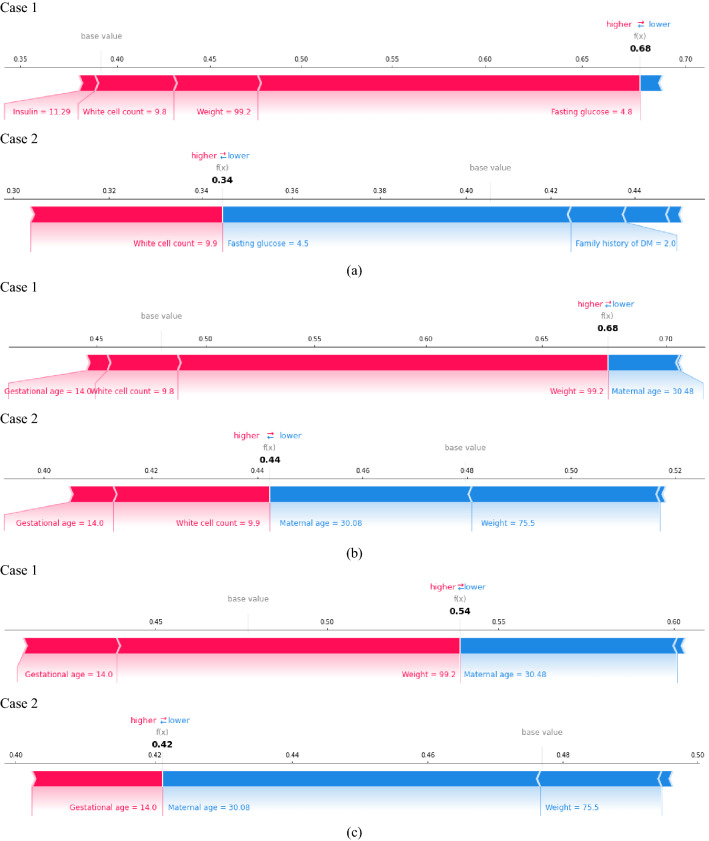
“…Clinical Decision Support System (CDSS) uses SHapley Additive exPlanations (SHAP) to provide individualized predictions and improve transparency [31], while a stepwise ML framework progressively incorporates pregnancy-stage clinical information to enhance practical deployment and…”
Cubillos, G., Mönckeberg, M., Illanes, S. E., & Perez, C. A. (2026) · Frontiers in Endocrinology · doi:10.3389/fendo.2026.1941799
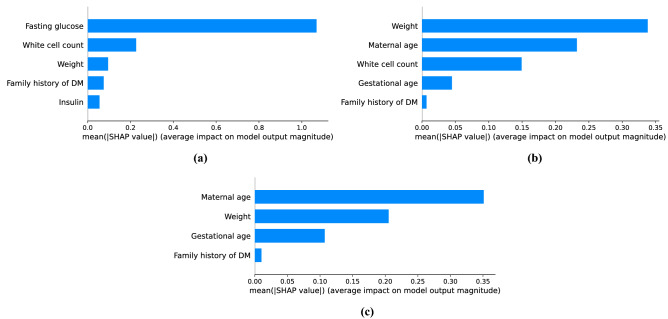
“A Support Vector Machine (SVM) incorporating family history of diabetes, weight, white cell count, fasting glucose, and insulin was employed in another study, which also compared performance with other models such as LR, XGB, RF, and AdaBoost (37).”
Explainable AI in Medicine: Trends and Educational Implications
Rigas, E. S., Billis, A., & Bamidis, P. D. (2026) · Proceedings - IEEE Symposium on Computer-Based Medical Systems · doi:10.1109/cbms69103.2026.00097
“For example, Du et al. [7] presented a machine learning (ML)-based clinical decision support system to predict gestational diabetes mellitus and they explain the results using the well-known Shapley Identify applicable funding agency here.”
An, X., Cai, J., Cao, X., & Li, J. (2026) · Frontiers in Endocrinology · doi:10.3389/fendo.2026.1980631
Metadata
- Authors
- Du, Y., Rafferty, A. R., McAuliffe, F. M., Wei, L., & Mooney, C.
- Affiliations
- University College Dublin (IE)
- Corresponding author
- Mooney, Catherine
- Venue
- Scientific Reports
- Published
- 2022-01-21
- Volume
- 12
- Issue
- 1
- Pages
- 1170-1170
- ISSN
- 2045-2322 (ISSN-L)
- PMC
- PMC8782851
- OpenAlex
- W4206997722
- Cited by
- 128
- References
- 43
- Citations by year
- 2026: 20 · 2025: 32 · 2024: 33 · 2023: 32 · 2022: 11
- FWCI
- 20.24
- Type
- journal article
- Language
- en
- Open access
- gold
- doi.org
- Licence
- cc-by
- creativecommons.org/licenses/by/4.0 (tdm)
- creativecommons.org/licenses/by/4.0 (vor)
- Locations
- Scientific Reports (publishedVersion, cc-by)
- PubMed Central (publishedVersion, cc-by)
- PubMed (publishedVersion)
- DOAJ (DOAJ: Directory of Open Access Journals) (submittedVersion, cc-by-sa)
- Funders
- UCD School of Computer Science
- UCD School of Medicine
- Topics
- Health Sciences › Health Professions › Health Information Management › Artificial Intelligence in Healthcare
- Health Sciences › Medicine › Obstetrics and Gynecology › Gestational Diabetes Research and Management
- Physical Sciences › Computer Science › Artificial Intelligence › Machine Learning in Healthcare
- Keywords
- gestational diabetes mellitus, clinical decision support systems, explainable machine learning, SHAP, GDM risk prediction, GDM screening, prenatal care, blood biomarkers, maternal obesity, synthetic minority oversampling
- MeSH terms
- Smartphone, Machine Learning, Adult, Female, Humans, Maternal Age, Pregnancy, Risk Factors, ROC Curve, Models, Statistical, Randomized Controlled Trials as Topic, Diabetes, Gestational, Risk Assessment, Decision Support Systems, Clinical, Overweight, Mobile Applications
About these checks
Registry, retraction, Cites and statistics results are computed, not judged, with one exception: a printed reference that no index lists is read once by a model before it counts as a citation error. Claims are extracted by a model and kept only when their quote appears verbatim in the text; each cited source is then checked, with a model’s help, for whether it says what the claim relies on. Those verdicts can be wrong — read the claim’s quote and the cited source before relying on one.
Statistics and arithmetic are recomputed, not judged.
Confidence bands are shown only for fields calibrated on our annotated test set. None is calibrated yet, so no band is shown.
What counts as a claim ›How we measure confidence ›How we check this ›
Are you an author, or do you see a problem with this page? Request a review
Data sources
Bibliographic data: Semantic Scholar, OpenAlex, Crossref.
Contains information from the Semantic Scholar Academic Graph Datasets, made available under the ODC Attribution License (ODC-BY 1.0).
Semantic Scholar’s data is described in: Kinney, R., et al. (2023). The Semantic Scholar Open Data Platform. arXiv:2301.10140.
