

Cyber-physical defense in the quantum Era
Open accessThe DOI matches its Crossref record; 49 of the 53 references it cites were found in a registry or an index.
Abstract
Networked-Control Systems (NCSs), a type of cyber-physical systems, consist of tightly integrated computing, communication and control technologies. While being very flexible environments, they are vulnerable to computing and networking attacks. Recent NCSs hacking incidents had major impact. They call for more research on cyber-physical security. Fears about the use of quantum computing to break current cryptosystems make matters worse. While the quantum threat motivated the creation of new disciplines to handle the issue, such as post-quantum cryptography, other fields have overlooked the existence of quantum-enabled adversaries. This is the case of cyber-physical defense research, a distinct but complementary discipline to cyber-physical protection. Cyber-physical defense refers to the capability to detect and react in response to cyber-physical attacks. Concretely, it involves the integration of mechanisms to identify adverse events and prepare response plans, during and after incidents occur. In this paper, we assume that the eventually available quantum computer will provide an advantage to adversaries against defenders, unless they also adopt this technology. We envision the necessity for a paradigm shift, where an increase of adversarial resources because of quantum supremacy does not translate into a higher likelihood of disruptions. Consistently with current system design practices in other areas, such as the use of artificial intelligence for the reinforcement of attack detection tools, we outline a vision for next generation cyber-physical defense layers leveraging ideas from quantum computing and machine learning. Through an example, we show that defenders of NCSs can learn and improve their strategies to anticipate and recover from attacks.
Overview
The claims and statistics of this paper haven’t been checked yet.
Free: it reads the open-access text and checks the first 5 claims that cite a source we can check. Create a free account to check every claim.
Integrity signals
Registry
Cites
Statistics
Figures

Verification
Claims the paper makes
The claims and statistics of this paper haven’t been checked yet.
Free: it reads the open-access text and checks the first 5 claims that cite a source we can check. Create a free account to check every claim.
Claims other papers make about this one
Each is checked against this paper’s own text: does it say what the citing paper says it does?
The source backs part of the claim, not all of it — or backs it for a different population, condition or comparison.
In the citing paper
“Contemporary surveys and threat assessments consistently warn that quantum decryption transforms confidentiality into a temporal vulnerability, demanding immediate cryptographic agility and migration toward quantum-resilient standards [17-19].”
From Harvest-Now, Decrypt-Later: A Temporal Cybersecurity Risk in the Quantum Transition (2025) · cites this paper as [18]
Experimental — accuracy not yet measuredThe source backs part of the claim, not all of it — or backs it for a different population, condition or comparison.
In the citing paper
“By combining multiple layers such as PQC primitives, hybrid modes, agile key management, and forward-secure lifecycles, recent research delineates a viable pathway for maintaining communications confidentiality against the HNDL threat [18,28].”
From Harvest-Now, Decrypt-Later: A Temporal Cybersecurity Risk in the Quantum Transition (2025) · cites this paper as [18]
Experimental — accuracy not yet measuredThe check wasn’t confident either way, so it gives no verdict — never disputed.
In the citing paper
“Recent work instead frames confidentiality as an explicitly temporal requirement, where an encryption scheme must remain secure for the full lifetime of the data it protects [18].”
From Harvest-Now, Decrypt-Later: A Temporal Cybersecurity Risk in the Quantum Transition (2025) · cites this paper as [18]
Experimental — accuracy not yet measuredThe check wasn’t confident either way, so it gives no verdict — never disputed.
In the citing paper
“Similarly, Mosca et al. [18] propose a systems-level temporal security framework but treat HNDL as one among several emerging risks rather than as a definable cryptographic adversary.”
From Harvest-Now, Decrypt-Later: A Temporal Cybersecurity Risk in the Quantum Transition (2025) · cites this paper as [18]
Experimental — accuracy not yet measured
Self-check
Percentages, sums and reported differences re-computed from the paper’s own numbers.
The self-check needs the paper’s full text.
Citations
Cites
LeCun, Y., Bengio, Y., & Hinton, G. (2015) · Nature · doi:10.1038/nature14539 · Cited by 84,126
Human-level control through deep reinforcement learning
Mnih, V., Kavukcuoglu, K., Silver, D., Rusu, A. A., Veness, J., Bellemare, M. G., Graves, A., Riedmiller, M., Fidjeland, A. K., Ostrovski, G., et al. (2015) · Nature · doi:10.1038/nature14236 · Cited by 30,357
Quantum Computation and Quantum Information
Nielsen, M. A., Chuang, I., & Grover, L. K. (2002) · American Journal of Physics · doi:10.1119/1.1463744 · Cited by 21,895
Quantum computation and quantum information
Law, J. (2001) · ACM SIGSOFT Software Engineering Notes · doi:10.1145/505482.505499 · Cited by 18,842
Watkins, C. J. C. H., & Dayan, P. (1992) · Machine Learning · doi:10.1007/bf00992698 · Cited by 9,083
Polynomial-time algorithms for prime factorization and discrete logarithms on a quantum computer
Shor, P. W. (1997) · SIAM Journal on Computing · doi:10.1137/s0097539795293172 · Cited by 8,472
Asynchronous Methods for Deep Reinforcement Learning
Mnih, V., Badia, A. P., Mirza, M., Graves, A., Lillicrap, T. P., Harley, T., Silver, D., & Kavukcuoglu, K. (2016) · arXiv · doi:10.48550/arxiv.1602.01783 · Cited by 7,132 · cited 1×
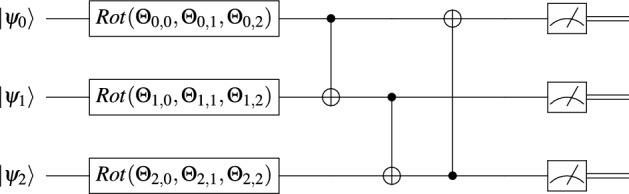
“Note that deep learning 45–47 and quantum RL can be used to approximate the Q-value function, with respectively, a neural network or a variational quantum circuit.”
MethodWatkins, C. (1989) · OpenGrey (Institut de l'Information Scientifique et Technique) · doi:10.17863/cam.132164 · Cited by 5,297
Biamonte, J., Wittek, P., Pancotti, N., Rebentrost, P., Wiebe, N., & Lloyd, S. (2017) · Nature · doi:10.1038/nature23474 · Cited by 4,779
Degen, C. L., Reinhard, F., & Cappellaro, P. (2017) · Reviews of Modern Physics · doi:10.1103/revmodphys.89.035002 · Cited by 4,045
Research works printed but not linked: 5
- McEliece RJ A public-key cryptosystem based on algebraic Codin. Thv. 1978 4244 114 116
- Merkle, R. Secrecy, Authentication, and Public Key Systems. Computer Science Series (UMI Research Press, 1982).
- Barbeau, M. & Garcia-Alfaro, J. Supplementary material to: Cyber-physical defense in the quantum Era. https://github.com/jgalfaro/DL-PoC (2021). PMC8814167 35115576
- Schneier, B. Modelling security threats. Dr. Dobb’s Journal (1999).
- Chio C Freeman D Machine Learning and Security: Protecting Systems with Data and Algorithms 2018 O’Reilly Media
Cited by
Hoang, V.-T., Ergu, Y. A., Nguyen, V.-L., & Chang, R. (2024) · Journal of Network and Computer Applications · doi:10.1016/j.jnca.2024.104031 · Cited by 94
A quantum-based approach for offensive security against cyber attacks in electrical infrastructure
Lakshmi, D., Nagpal, N., Chandrasekaran, S., & Hemanth, D. J. (2023) · Applied Soft Computing · doi:10.1016/j.asoc.2023.110071 · Cited by 39
Harvest-Now, Decrypt-Later: A Temporal Cybersecurity Risk in the Quantum Transition
Kagai, F., Branch, P., But, J., & Allen, R. (2025) · Telecom · doi:10.3390/telecom6040100 · Cited by 15
“This reframing aligns cryptographic assurance with realistic temporal threat models, ensuring that confidentiality guarantees remain credible for decades to come [18,23].”
InfluentialEzeogu, A. O. (2025) · Research Corridor Journal of Engineering Science · doi:10.66320/s0k5vw19 · Cited by 14
“…to target critical data repositories (30), but also future-proof sensitive healthcare data against the inevitable rise of quantum computing, building resilience into its digital infrastructure and thereby ensuring the long-term integrity and confidentiality of sensitive health information (16).”
A Hybrid Framework Integrating QML, AI, and Quantum-Safe Cryptography for Cybersecurity
Gunasridharan, R., Altalbe, A. A., Gurusamy, B. M., Pallavi, G., & Kumar, R. P. (2025) · Journal of Computational and Cognitive Engineering · doi:10.47852/bonviewjcce52025121 · Cited by 9
Strategic Overview of Applying Artificial Intelligence on the Future Battlefield
Heng, L. (2024) · Jyväskylä University Digital Archive (University of Jyväskylä) · Cited by 9
How Quantum Computing Impacts Cyber Security
Abushgra, A. A. (2023) · Intelligent Methods, Systems, and Applications (IMSA) · doi:10.1109/imsa58542.2023.10217756 · Cited by 7
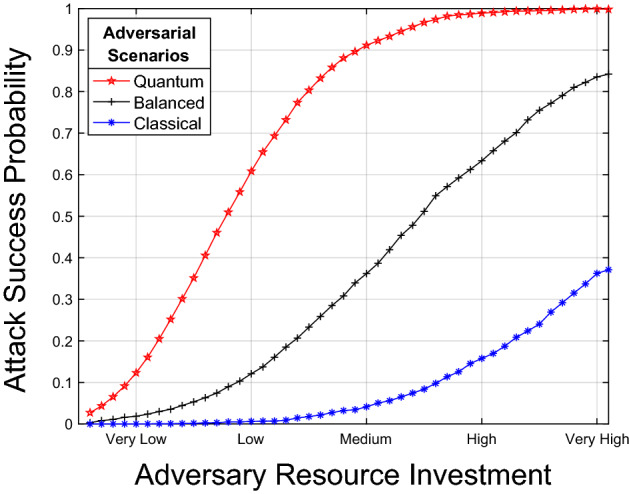
“According to [20], experiments were conducted as Adversary Resource Investment, where three case-scenarios were implemented as classical, balanced, and quantum.”
MethodQuantum Computing Applications and Impact for Cyber Physical Systems
Iftemi, A., Cernian, A. S., & Moisescu, M. A. (2023) · International Conference on Control Systems and Computer Science · doi:10.1109/cscs59211.2023.00066 · Cited by 7
Impact of computer-integrated technologies on cybersecurity in the defence sector
Semenenkо, O., Kirsanov, S., Movchan, A., Ihnatiev, M., & Dobrovolskyi, U. (2024) · Naukovij žurnal «Tehnìka ta energetika» · doi:10.31548/machinery/2.2024.118 · Cited by 6
Mallick, B., Parida, P., Prasad, B., Nayak, C., Panda, M. K., Ali, N., & Kumar, N. M. (2026) · Computers · doi:10.3390/computers15060389 · Cited by 4
“Barbeau and Garcia-Alfaro [53] introduced a cutting-edge cyber-physical defense system against emerging quantum-era cyber threats.”
Jamming precoding in AF relay-aided PLC systems with multiple eavessdroppers
Kong, Z., Cui, J., Ding, L., Huang, T., & Yan, S. (2024) · Scientific Reports · doi:10.1038/s41598-024-58735-y · Cited by 3
Babu, B. S., Sandhya, S., & Subramanya, K. (2024) · Advances in information security, privacy, and ethics book series · doi:10.4018/979-8-3693-9220-1.ch008 · Cited by 1
A Quantum Algorithm for Assessing Node Importance in the st-Connectivity Attack
Burge, I., Barbeau, M., & García-Alfaro, J. (2025) · IFIP advances in information and communication technology · doi:10.1007/978-3-031-92886-4_16 · Cited by 1
Self-citationA New Cryptographic Frontier: Key-Independent Security and Post-Quantum Hardness Assumptions
Laouid, A., Kara, M., & Hammoudeh, M. A. A. (2025) · IEEE Open Journal of the Computer Society · doi:10.1109/ojcs.2025.3592218 · Cited by 1
“As quantum hardware continues to mature, the reality of quantum adversaries capable of undermining widely deployed cryptographic infrastructures becomes increasingly plausible [5], [6].”
Game Strategies for Entanglement Paths in Quantum Network Infrastructure
Rao, N. S. V., Ma, C. Y. T., & He, F. (2025) · International Conference on Information Fusion (FUSION) · doi:10.23919/fusion65864.2025.11124102 · Cited by 1
“To address the issue, we develop a graph model of a QC infrastructure for entanglement distribution over paths spanning multiple sites, which captures the correlations based on quantum, conventional, hybrid, and facility components [4], [23].”
Secure AI-Enabled Communication in Smart Cities and Industry 4.0
Thamrin, M., Anwar, N., Nurdiansyah, N., Asrowardi, I., Faisal, M., Sahabuddin, Ronaldi, T., Kumar, A., & Bajpai, S. (2025) · Advances in computational intelligence and robotics book series · doi:10.4018/979-8-3373-3576-6.ch009 · Cited by 1
Quantum Key Distribution for SCADA in Power Grids: Security Architectures and Practical Applications
Mondal, A., Annapurani, K., & Basak, A. (2025) · International Conference on Emerging Technologies in Computer Engineering: Machine Learning and Internet of Things (ICETCE) · doi:10.1109/icetce66848.2025.11388178 · Cited by 1
“Techniques like autocorrelation and frequency domain analysis are used to spot periodic disruptions or time-based anomalies in the traffic streams of both SCADA and QKD [23], [24].”
Technological compulsion: understanding its impact on international relations and geopolitics
Kumar, S. (2025) · EDPACS · doi:10.1080/07366981.2025.2473313 · Cited by 1
“…artificial intelligence and quantum computing is also attracting the attention of a wider range of actors, from major powers to smaller states and even non-state actors, who are all trying to leverage these advanced technologies for their own strategic advantage (Barbeau & Garcia-Alfaro, 2022).”
Burge, I., Barbeau, M., & García-Alfaro, J. (2026) · Computers & Security · doi:10.1016/j.cose.2026.105154
“…of potential advantage or speed-up optimizations of quantum computing associated with probing, control, and planning of cyber-physical systems [39], as well as formally verifying properties and providing explainability of the related processes [40]; (ii) use of quantum technologies to secure…”
Self-citationOverview of Security Approaches for Quantum Computing in the Current Era
Hansora, P., Prajapati, V., Thakkar, A. R., Rathod, A., Mannanuddin, K., & ALSarmi, H. S. N. (2025) · International Conference on Electronics and Renewable Systems (ICEARS) · doi:10.1109/icears64219.2025.10941151
“In [23] Michel Barbeau et al, We have presented our concept for a cyber-physical defensive system of the next generation that is applicable to the quantum age.”
METHODS AND AREAS OF APPLICATION OF QUANTUM COMPUTERS IN CRYPTOGRAPHY AND LOGISTICS
САПОЖНИК, Д. О. (2025) · Scientific notes of Taurida National V I Vernadsky University Series Technical Sciences · doi:10.32782/2663-5941/2025.5.2/34
A Survey of Quantum Computing: Foundations, Challenges, and Emerging DirectionsPreprint
Hassan, M. R., Mahmoud, T. M., & Kaabouch, N. (2026) · TechRxiv · doi:10.36227/techrxiv.177223090.01125198/v1
Quantum Computing and AI: The Future of Cybersecurity Defense Mechanisms
Yedalla, J. (2026) · International Journal of Science and Research (IJSR) · doi:10.21275/sr26317220858
“Such monitoring allows detecting anomalies in Supervisory Control and Data Acquisition (SCADA) and Internet of Things (IoT) networks with the help of AI, and quantum-enhanced resilience can be used to defend against state-level cyberwarfare (Barbeau & Garcia-Alfaro, 2022).”
The RLC Circuit to Model 3D Harmonic Oscillators of Wired Trapped Ions
Nieto-Chaupis, H. (2025) · International Conference on Electrical, Computer and Energy Technologies (ICECET) · doi:10.1109/icecet63943.2025.11472376
“Nowadays, there is a firm consensus that quantum era has already started and it would be reflected in the increasing interest about the quantum technologies and what them can do in a realistic manner in benefit of societies [1-2].”
Quantum Machine Learning Potential in Cyber-Physical Systems: A Case Study in Manufacturing Lines
ADWAN, M., Alali, W., Hijawi, O., Toma, A., Abuabiah, M., & Chihi, I. (2026) · International Multi-Conference on Systems, Signals & Devices (SSD) · doi:10.1109/ssd69655.2026.11558923
“On the other hand, new research has emerged on post-quantum CPS in preparation for the expected ability of quantum computers to break the highly developed cryptographic algorithms that protect numerous systems [13].”
Nori, H. A. (2026) · CyberSystem journal. · doi:10.57238/csj.2026.1026
Ensuring Cybersecurity through Artificial Intelligence and Machine Learning
Bhavani, J., Dayalan, P., Sambamoorthy, N., & Woods, A. (2026) · BENTHAM SCIENCE PUBLISHERS eBooks · doi:10.2174/9798898816780126010007
Quantum cryptography for secure agricultural data: Applications and impact
Sharma, A., Chaudhary, V. K., Sharma, C., & Sharma, A. (2026) · Elsevier eBooks · doi:10.1016/b978-0-443-44247-6.00001-4
Explainable Quantum Learning for Robust Interference Classification in Next-Gen O-RAN
Ergu, Y. A., Lin, P., Hwang, R., Duong, T. Q., & Nguyen, V.-L. (2026) · IEEE Transactions on Mobile Computing · doi:10.1109/tmc.2026.3725286
Metadata
- Authors
- Barbeau, M., & Garcia-Alfaro, J.
- Affiliations
- Carleton University (CA)
- Corresponding author
- Barbeau, Michel
- ORCID
- Barbeau, Michel
- Venue
- Scientific Reports
- Published
- 2022-02-03
- Volume
- 12
- Issue
- 1
- Pages
- 1905-1905
- ISSN
- 2045-2322 (ISSN-L)
- PMC
- PMC8814167
- OpenAlex
- W4210315416
- Semantic Scholar
- e5dd7b3f517f57ebdc89e550cba8c218280ccd97
- Cited by
- 22
- References
- 53
- Citations by year
- 2026: 5 · 2025: 8 · 2024: 5 · 2023: 3 · 2022: 1
- FWCI
- 1.71
- Type
- journal article
- Language
- en
- Open access
- gold
- doi.org
- Licence
- cc-by
- creativecommons.org/licenses/by/4.0 (tdm)
- creativecommons.org/licenses/by/4.0 (vor)
- Locations
- Scientific Reports (publishedVersion, cc-by)
- PubMed Central (publishedVersion, cc-by)
- PubMed (publishedVersion)
- arXiv (Cornell University) (submittedVersion)
- HAL (submittedVersion, cc-by)
- DOAJ (DOAJ: Directory of Open Access Journals) (submittedVersion, cc-by-sa)
- arXiv (Cornell University) (cc-by)
- Funders
- European Commission (830892, H2020)
- Horizon 2020 Framework Programme (830892)
- Natural Sciences and Engineering Research Council of Canada
- Topics
- Physical Sciences › Engineering › Control and Systems Engineering › Smart Grid Security and Resilience
- Physical Sciences › Computer Science › Information Systems › Information and Cyber Security
- Physical Sciences › Computer Science › Computer Networks and Communications › Network Security and Intrusion Detection
- Keywords
- networked control systems, cyber-physical security, quantum computing threats, quantum advantage, attack detection, incident response, post-quantum cryptography, machine learning for intrusion detection
About these checks
Registry, retraction, Cites and statistics results are computed, not judged, with one exception: a printed reference that no index lists is read once by a model before it counts as a citation error. Claims are extracted by a model and kept only when their quote appears verbatim in the text; each cited source is then checked, with a model’s help, for whether it says what the claim relies on. Those verdicts can be wrong — read the claim’s quote and the cited source before relying on one.
Statistics and arithmetic are recomputed, not judged.
Confidence bands are shown only for fields calibrated on our annotated test set. None is calibrated yet, so no band is shown.
What counts as a claim ›How we measure confidence ›How we check this ›
Are you an author, or do you see a problem with this page? Request a review
Data sources
Bibliographic data: Semantic Scholar, OpenAlex, Crossref.
Contains information from the Semantic Scholar Academic Graph Datasets, made available under the ODC Attribution License (ODC-BY 1.0).
Semantic Scholar’s data is described in: Kinney, R., et al. (2023). The Semantic Scholar Open Data Platform. arXiv:2301.10140.
