

The DOI matches its Crossref record; 45 of the 45 references it cites were found in a registry or an index.
Characterizing the mucin-degrading capacity of the human gut microbiota
Open accessAbstract
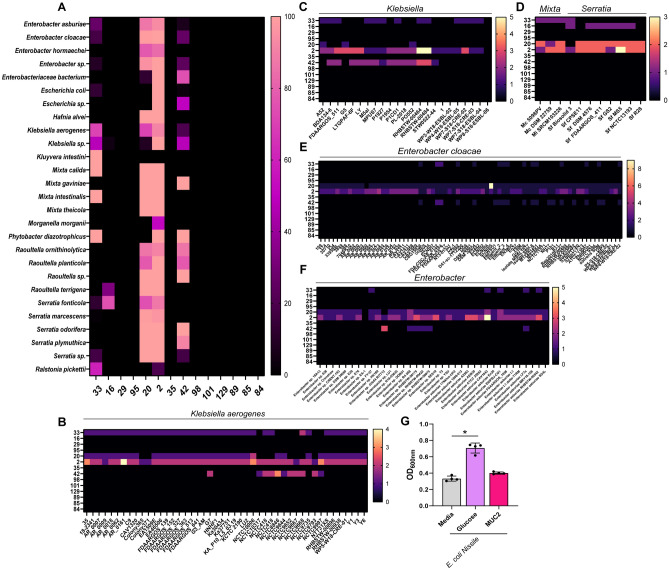
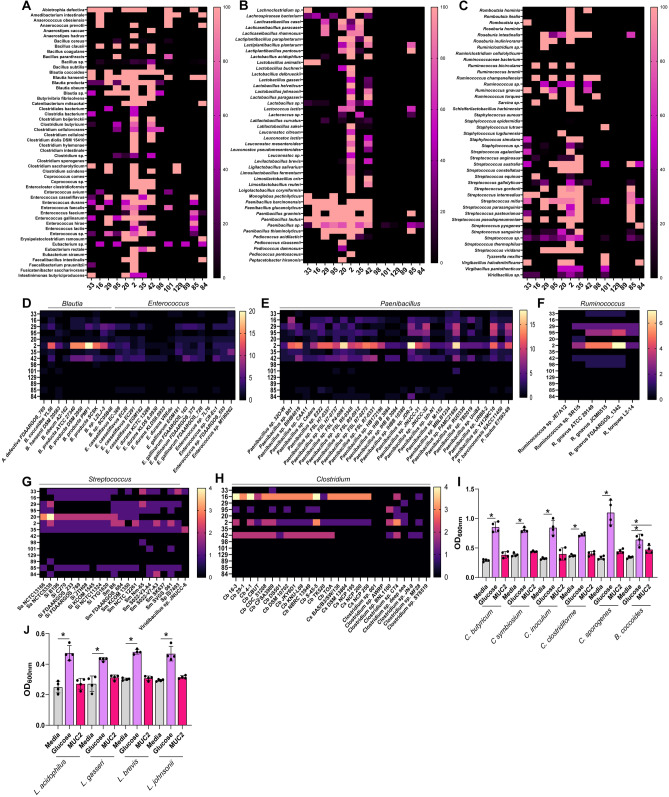
Mucin-degrading microbes are known to harbor glycosyl hydrolases (GHs) which cleave specific glycan linkages. Although several microbial species have been identified as mucin degraders, there are likely many other members of the healthy gut community with the capacity to degrade mucins. The aim of the present study was to systematically examine the CAZyme mucin-degrading profiles of the human gut microbiota. Within the Verrucomicrobia phylum, all Akkermansia glycaniphila and muciniphila genomes harbored multiple gene copies of mucin-degrading GHs. The only representative of the Lentisphaerae phylum, Victivallales, harbored a GH profile that closely mirrored Akkermansia. In the Actinobacteria phylum, we found several Actinomadura, Actinomyces, Bifidobacterium, Streptacidiphilus and Streptomyces species with mucin-degrading GHs. Within the Bacteroidetes phylum, Alistipes, Alloprevotella, Bacteroides, Fermenitomonas Parabacteroides, Prevotella and Phocaeicola species had mucin degrading GHs. Firmicutes contained Abiotrophia, Blautia, Enterococcus, Paenibacillus, Ruminococcus, Streptococcus, and Viridibacillus species with mucin-degrading GHs. Interestingly, far fewer mucin-degrading GHs were observed in the Proteobacteria phylum and were found in Klebsiella, Mixta, Serratia and Enterobacter species. We confirmed the mucin-degrading capability of 23 representative gut microbes using a chemically defined media lacking glucose supplemented with porcine intestinal mucus. These data greatly expand our knowledge of microbial-mediated mucin degradation within the human gut microbiota.
Overview
The claims and statistics of this paper haven’t been checked yet.
Run the check — free, no account needed. It reads the open-access text and checks the sources it cites.
Integrity signals
Registry
Cites
Statistics
Figures
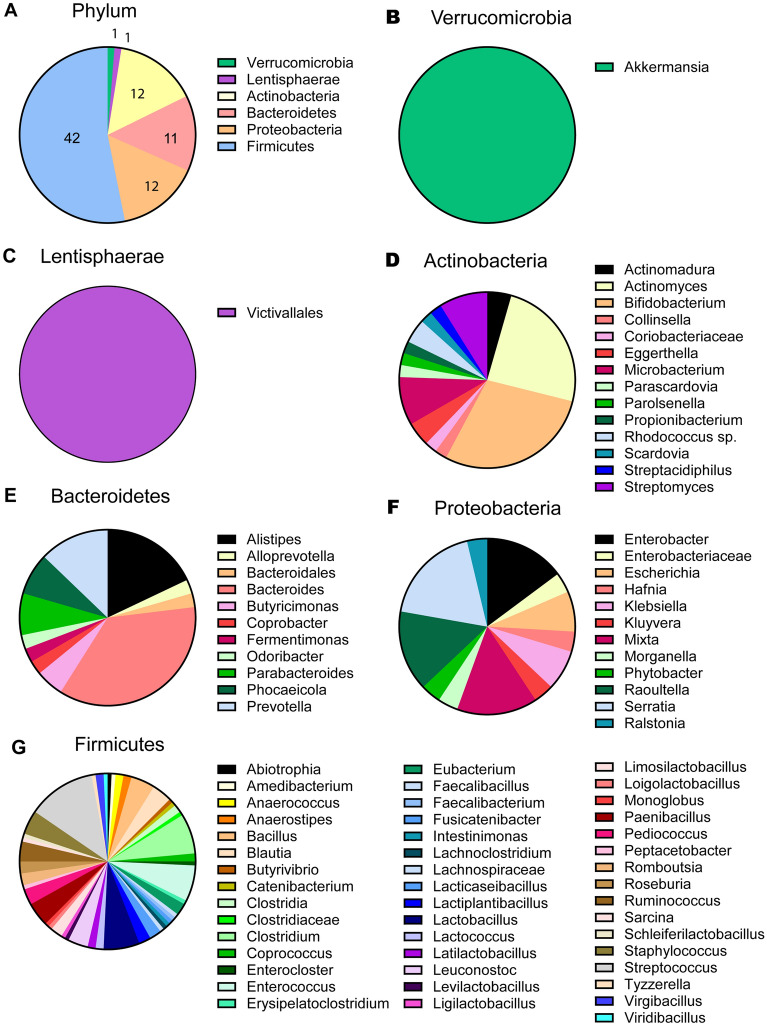
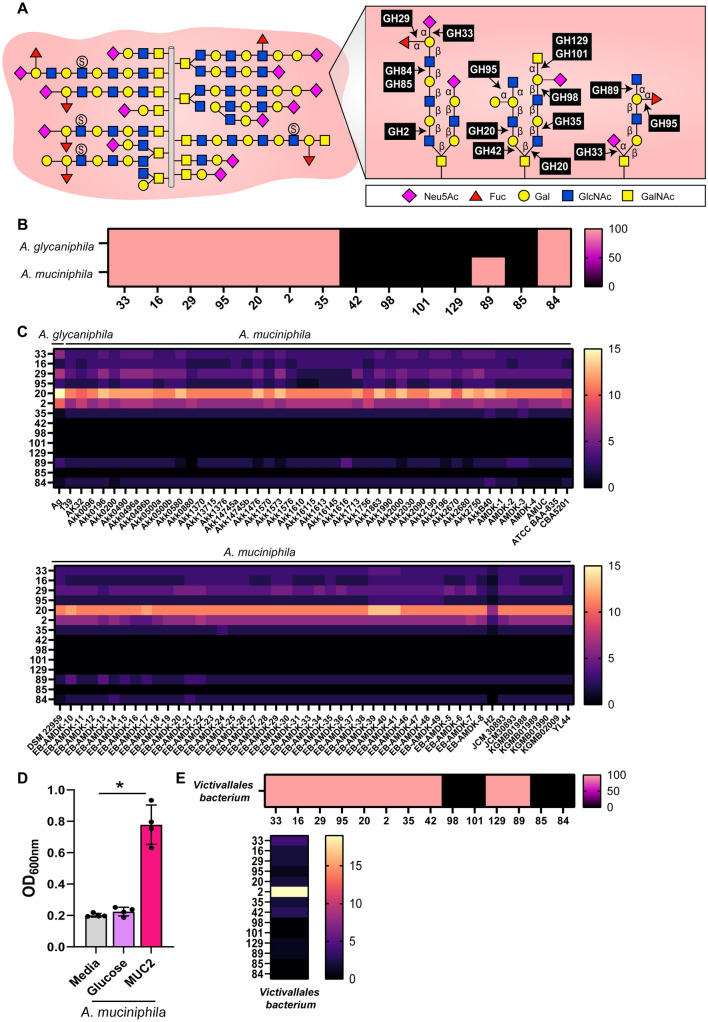
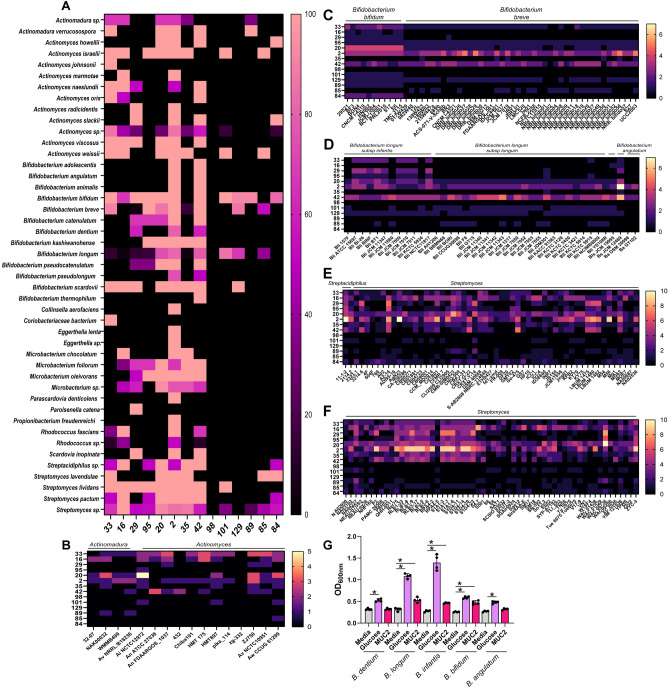
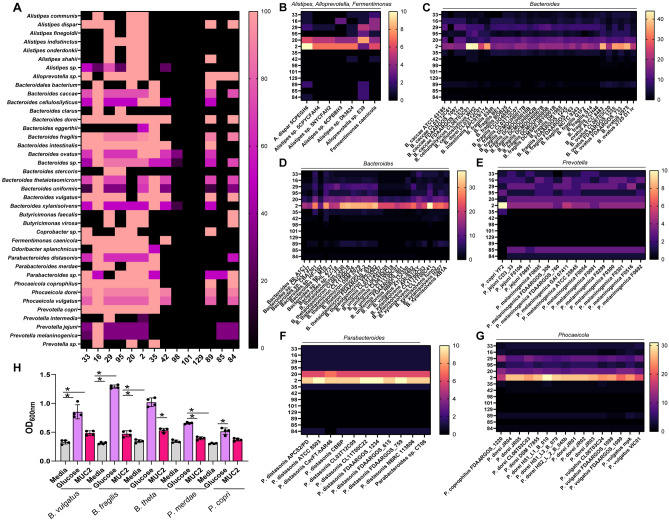
Verification
Claims the paper makes
The claims and statistics of this paper haven’t been checked yet.
Run the check — free, no account needed. It reads the open-access text and checks the sources it cites.
Claims other papers make about this one
Each is checked against this paper’s own text: does it say what the citing paper says it does?
In the citing paper
“Host substrates, such as mucin and bile salts, can also be metabolized by the gut microbiota [18, 19].”
From Role of the gut microbiota in nutrient competition and protection against intestinal pathogen colonization (2023) · cites this paper as [19]
Self-check
Percentages, sums and reported differences re-computed from the paper’s own numbers.
The self-check needs the paper’s full text.
Citations
Cites
The carbohydrate-active enzymes database (CAZy) in 2013
Lombard, V., Ramulu, H. G., Drula, É., Coutinho, P. M., & Henrissat, B. (2013) · Nucleic Acids Research · doi:10.1093/nar/gkt1178 · Cited by 6,452
The Carbohydrate-Active EnZymes database (CAZy): an expert resource for Glycogenomics
Cantarel, B. L., Coutinho, P. M., Rancurel, C., Bernard, T., Lombard, V., & Henrissat, B. (2008) · Nucleic Acids Research · doi:10.1093/nar/gkn663 · Cited by 6,108
Dynamics and Stabilization of the Human Gut Microbiome during the First Year of Life
Bäckhed, F., Roswall, J., Peng, Y., Feng, Q., Jia, H., Kovatcheva-Datchary, P., Li, Y., Xia, Y., Xie, H., Zhong, H., et al. (2015) · Cell Host & Microbe · doi:10.1016/j.chom.2015.04.004 · Cited by 3,315
A classification of glycosyl hydrolases based on amino acid sequence similarities.
Henrissat, B. (1991) · Biochemical Journal · doi:10.1042/bj2800309 · Cited by 3,188
Desai, M. S., Seekatz, A. M., Koropatkin, N. M., Kamada, N., Hickey, C. A., Wolter, M., Pudlo, N. A., Kitamoto, S., Terrapon, N., Muller, A., et al. (2016) · Cell · doi:10.1016/j.cell.2016.10.043 · Cited by 2,805
Akkermansia muciniphila gen. nov., sp. nov., a human intestinal mucin-degrading bacterium
Derrien, M., Vaughan, E. E., Plugge, C. M., & de Vos, W. M. (2004) · International Journal of Systematic and Evolutionary Microbiology · doi:10.1099/ijs.0.02873-0 · Cited by 2,094
New families in the classification of glycosyl hydrolases based on amino acid sequence similarities
Henrissat, B., & Bairoch, A. (1993) · Biochemical Journal · doi:10.1042/bj2930781 · Cited by 1,974
The abundance and variety of carbohydrate-active enzymes in the human gut microbiota
Kaoutari, A. E., Armougom, F., Gordon, J. I., Raoult, D., & Henrissat, B. (2013) · Nature Reviews Microbiology · doi:10.1038/nrmicro3050 · Cited by 1,683
Mucin dynamics and enteric pathogens
McGuckin, M. A., Lindén, S. K., Sutton, P., & Florin, T. H. (2011) · Nature Reviews Microbiology · doi:10.1038/nrmicro2538 · Cited by 1,428
Png, C. W., Lindén, S. K., Gilshenan, K. S., Zoetendal, E. G., McSweeney, C. S., Sly, L. I., McGuckin, M. A., & Florin, T. H. J. (2010) · American Journal of Gastroenterology · doi:10.1038/ajg.2010.281 · Cited by 1,364
Cited by
Sorted by citations
Items 301–311 of 311
Alkhatib, S. N. (2026) · International Journal of Molecular Sciences · doi:10.3390/ijms27177851
Microbiome and Diseases: Infection
Gerner, R. R., Almási, É. D. H., & Stecher, B. (2026) · Springer eBooks · doi:10.1007/978-3-032-26410-7_14
Alamandine/MrgD pathway modulates gut–bone marrow axis in ageing
Chittimalli, K., Rozario, H. E., Martinez, V., McAdams, Z. L., Adkins, S., Ericsson, A. C., & Jarajapu, Y. P. R. (2026) · British Journal of Pharmacology · doi:10.1111/bph.70656 · Cited by 1
Draft genome sequences for two mucin-degrading bacteria isolated in Alabama
Gorman, B., Hobson, K., & Higgins, M. A. (2026) · Microbiology Resource Announcements · doi:10.1128/mra.00659-26
Fast structural search for classification of gut bacterial mucin O-glycan degrading enzymes
Erden, M., Schult, T. J., Yanagi, K., Sahoo, J. K., Kaplan, D. L., Cowen, L., & Lee, K. (2026) · PLoS Computational Biology · doi:10.1371/journal.pcbi.1014034
Gan, Y., Lu, M., Fan, L., Nong, J., Shangguan, P., Zhu, B., Xie, P., & Zhang, Z. (2026) · World Journal of Microbiology and Biotechnology · doi:10.1007/s11274-026-05284-3
Qi, W., Peng, X.-X., Song, P.-Y., Xiao, S.-T., & Hu, W. (2026) · Biomolecules · doi:10.3390/biom16101425
Sialidases and sialylated oligosaccharides in intestinal homeostasis and inflammation
Abuhussein, E., Singh, D. K., Yamaguchi, Y., Orahovats, C. E., Cassidy, O. G., Tsuboi, K., & Huang, L. (2026) · Frontiers in Immunology · doi:10.3389/fimmu.2026.1980845
No strain, no gain: within-host bacterial microdiversity and human health
Wojtkowiak, A., Shinfuku, M. S., & Lewin, G. R. (2026) · Infection and Immunity · doi:10.1128/iai.00062-26
Ortutu, B. F., Keum, K.-S., Kim, J. G., Yoon, S.-I., & Cho, J. A. (2026) · Nutrients · doi:10.3390/nu18203452
Microbial dynamics across commercial spaceflights of varying duration
Krishnavajhala, A., Gingras, M.-C., Santiago-Rodriguez, T. M., Chen, Y., Bandaranaike, D., Bhamidipati, S., Qin, X., Kottapalli, K., Momin, Z., Santhanam, A., et al. (2026) · iScience · doi:10.1016/j.isci.2026.117988
Metadata
- Authors
- Glover, J. S., Ticer, T. D., & Engevik, M. A.
- Affiliations
- Medical University of South Carolina (US)
- Corresponding author
- Engevik, Melinda A.
- Venue
- Scientific Reports
- Published
- 2022-05-19
- Volume
- 12
- Issue
- 1
- Pages
- 8456-8456
- ISSN
- 2045-2322 (ISSN-L)
- PMC
- PMC9120202
- OpenAlex
- W4280576091
- Cited by
- 307
- References
- 45
- Citations by year
- 2026: 68 · 2025: 90 · 2024: 90 · 2023: 48 · 2022: 11
- FWCI
- 19.84
- Type
- journal article
- Language
- en
- Open access
- gold
- doi.org
- Locations
- Scientific Reports (publishedVersion, cc-by)
- PubMed Central (publishedVersion, cc-by)
- PubMed (publishedVersion)
- DOAJ (DOAJ: Directory of Open Access Journals) (submittedVersion)
- Funders
- U.S. Department of Health & Human Services | NIH | National Institute of General Medical Sciences (1T32GM132055-01)
- U.S. Department of Health & Human Services | NIH | National Institute of Diabetes and Digestive and Kidney Diseases (1T32DK124191-01A1, DK123195-01)
- Topics
- Life Sciences › Biochemistry, Genetics and Molecular Biology › Molecular Biology › Gut microbiota and health
- Health Sciences › Dentistry › Periodontics › Oral microbiology and periodontitis research
- Health Sciences › Nursing › Nutrition and Dietetics › Infant Nutrition and Health
- Keywords
- mucin degradation, human gut microbiome, glycoside hydrolases, carbohydrate-active enzymes, Akkermansia, Verrucomicrobia, Bacteroidetes, Firmicutes, actinobacteria, mucus
- MeSH terms
- Clostridiales, Eubacteriales, Gastrointestinal Microbiome, Animals, Humans, Mucins, Polysaccharides, Swine, Verrucomicrobia
About these checks
Registry, retraction, Cites and statistics results are computed, not judged, with one exception: a printed reference that no index lists is read once by a model before it counts as a citation error. Claims are extracted by a model and kept only when their quote appears verbatim in the text; each cited source is then checked, with a model’s help, for whether it says what the claim relies on. Those verdicts can be wrong — read the claim’s quote and the cited source before relying on one.
Statistics and arithmetic are recomputed, not judged.
Confidence bands are shown only for fields calibrated on our annotated test set. None is calibrated yet, so no band is shown.
What counts as a claim ›How we measure confidence ›How we check this ›
Are you an author, or do you see a problem with this page? Request a review
