

Characterization of the binding of MRTX1133 as an avenue for the discovery of potential KRASG12D inhibitors for cancer therapy
Open accessThe DOI matches its Crossref record; 66 of the 66 references it cites were found in a registry or an index.
Abstract
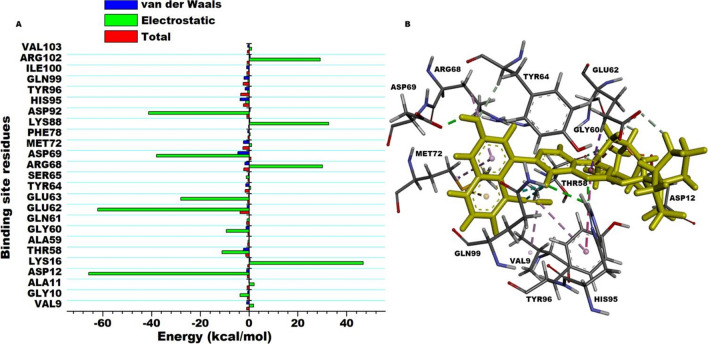
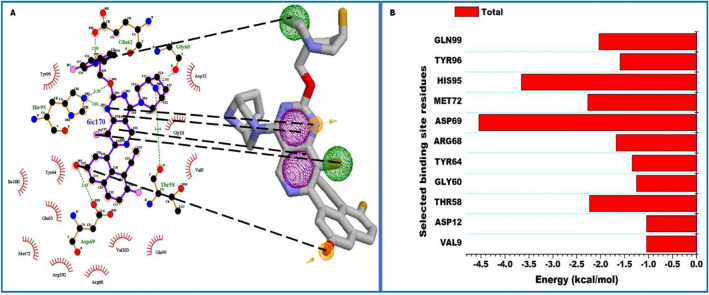
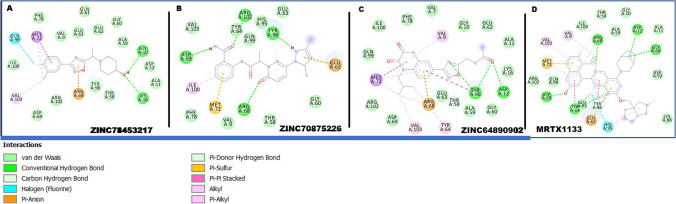
The Kirsten rat sarcoma (KRAS) oncoprotein has been on drug hunters list for decades now. Initially considered undruggable, recent advances have successfully broken the jinx through covalent inhibition that exploits the mutated cys12 in the switch II binding pocket (KRAS G12C). Though this approach has achieved some level of success, patients with mutations other than cys12 are still uncatered for. KRAS G12D is the most frequent KRAS mutated oncoprotein. It is only until recently, MRTX1133 has been discovered as a potential inhibitor of KRAS G12D. This study seeks to unravel the structural binding mechanism of MRTX1133 as well as identify potential drug leads of KRAS G12D based on structural binding characteristics of MRTX1133. It was revealed that MRTX1133 binding stabilizes the binding site by increasing the hydrophobicity which resultantly induced positive correlated movements of switches I and II which could disrupt their interaction with effector and regulatory proteins. Furthermore, MRTX1133 interacted with critical residues; Asp69 (− 4.54 kcal/mol), His95 (− 3.65 kcal/mol), Met72 (− 2.27 kcal/mol), Thr58 (− 2.23 kcal/mol), Gln99 (− 2.03 kcal/mol), Arg68 (− 1.67 kcal/mol), Tyr96 (− 1.59 kcal/mol), Tyr64 (− 1.34 kcal/mol), Gly60 (− 1.25 kcal/mol), Asp12 (− 1.04 kcal/mol), and Val9 (− 1.03 kcal/mol) that contributed significantly to the total free binding energy of − 73.23 kcal/mol. Pharmacophore-based virtual screening based on the structural binding mechanisms of MRTX1133 identified ZINC78453217, ZINC70875226 and ZINC64890902 as potential KRAS G12D inhibitors. Further, structural optimisations and biochemical testing of these compounds would assist in the discovery of effective KRAS G12D inhibitors.
Overview
The claims and statistics of this paper haven’t been checked yet.
Free: it reads the open-access text and checks the first 5 claims that cite a source we can check. Create a free account to check every claim.
Integrity signals
Registry
Cites
Statistics
Figures
Verification
Claims the paper makes
The claims and statistics of this paper haven’t been checked yet.
Free: it reads the open-access text and checks the first 5 claims that cite a source we can check. Create a free account to check every claim.
Claims other papers make about this one
Each is checked against this paper’s own text: does it say what the citing paper says it does?
The source backs part of the claim, not all of it — or backs it for a different population, condition or comparison.
In the citing paper
“Besides, MRTX-1133 inhibited KRAS-dependent signaling and promoted tumor regression in xenograft models.”
From Recent advances in targeting the “undruggable” proteins: from drug discovery to clinical trials (2023) · cites this paper as [255]
Experimental — accuracy not yet measuredThe source backs part of the claim, not all of it — or backs it for a different population, condition or comparison.
In the citing paper
“Preclinical studies demonstrated potent suppression of KRAS G12D signaling and marked antitumor activity in pancreatic and colorectal cancer models [51,53].”
From Precision Targeting of KRAS-Mutant Cancers: Beyond G12C Toward G12D and Pan-RAS Therapeutic Strategies (2026) · cites this paper as [53]
Experimental — accuracy not yet measured
Self-check
Percentages, sums and reported differences re-computed from the paper’s own numbers.
The self-check needs the paper’s full text.
Citations
Cites
UCSF Chimera—A visualization system for exploratory research and analysis
Pettersen, E. F., Goddard, T. D., Huang, C. C., Couch, G. S., Greenblatt, D. M., Meng, E. C., & Ferrin, T. E. (2004) · Journal of Computational Chemistry · doi:10.1002/jcc.20084 · Cited by 45,828
Berman, H. M. (2000) · Nucleic Acids Research · doi:10.1093/nar/28.1.235 · Cited by 40,196
Daina, A., Michielin, O., & Zoete, V. (2017) · Scientific Reports · doi:10.1038/srep42717 · Cited by 18,367
Lipinski, C. A., Lombardo, F., Dominy, B. W., & Feeney, P. J. (2001) · Advanced Drug Delivery Reviews · doi:10.1016/s0169-409x(00)00129-0 · Cited by 18,139
ff14SB: Improving the Accuracy of Protein Side Chain and Backbone Parameters from ff99SB
Maier, J. A., Martinez, C., Kasavajhala, K., Wickstrom, L., Hauser, K. E., & Simmerling, C. (2015) · Journal of Chemical Theory and Computation · doi:10.1021/acs.jctc.5b00255 · Cited by 10,830
Molecular properties that influence the oral bioavailability of drug candidates
Veber, D. F., Johnson, S. R., Cheng, H.-Y., Smith, B. R., Ward, K. W., & Kopple, K. D. (2002) · Journal of Medicinal Chemistry · doi:10.1021/jm020017n · Cited by 8,420
PTRAJ and CPPTRAJ: Software for Processing and Analysis of Molecular Dynamics Trajectory Data
Roe, D. R., & Cheatham, T. E. (2013) · Journal of Chemical Theory and Computation · doi:10.1021/ct400341p · Cited by 7,382
Osimertinib in Untreated EGFR -Mutated Advanced Non–Small-Cell Lung Cancer
Soria, J.-C., Ohe, Y., Vansteenkiste, J., Reungwetwattana, T., Chewaskulyong, B., Lee, K. H., Dechaphunkul, A., Imamura, F., Nogami, N., Kurata, T., et al. (2018) · New England Journal of Medicine · doi:10.1056/nejmoa1713137 · Cited by 5,508
MMPBSA.py: An Efficient Program for End-State Free Energy Calculations
Miller, B. R., McGee, T. D., Swails, J. M., Homeyer, N., Gohlke, H., & Roitberg, A. E. (2012) · Journal of Chemical Theory and Computation · doi:10.1021/ct300418h · Cited by 4,609
Small-Molecule Library Screening by Docking with PyRx
Dallakyan, S., & Olson, A. J. (2015) · Methods in Molecular Biology · doi:10.1007/978-1-4939-2269-7_19 · Cited by 3,998
Drug-like properties and the causes of poor solubility and poor permeability
Lipinski, C. A. (2000) · Journal of Pharmacological and Toxicological Methods · doi:10.1016/s1056-8719(00)00107-6 · Cited by 3,734
Targeting RAS signalling pathways in cancer therapy
Downward, J. (2003) · Nature Reviews Cancer · doi:10.1038/nrc969 · Cited by 3,256
ProTox-II: a webserver for the prediction of toxicity of chemicals
Banerjee, P., Eckert, A. O., Schrey, A. K., & Preissner, R. (2018) · Nucleic Acids Research · doi:10.1093/nar/gky318 · Cited by 3,195
Ertl, P., Rohde, B., & Selzer, P. (2000) · Journal of Medicinal Chemistry · doi:10.1021/jm000942e · Cited by 3,084
The GTPase superfamily: a conserved switch for diverse cell functions
Bourne, H. R., Sanders, D. A., & McCormick, F. (1990) · Nature · doi:10.1038/348125a0 · Cited by 2,333
Drugging the undruggable RAS: Mission Possible?
Cox, A. D., Fesik, S. W., Kimmelman, A. C., Luo, J., & Der, C. J. (2014) · Nature Reviews Drug Discovery · doi:10.1038/nrd4389 · Cited by 1,997
RAS Proteins and Their Regulators in Human Disease
Simanshu, D. K., Nissley, D. V., & McCormick, F. (2017) · Cell · doi:10.1016/j.cell.2017.06.009 · Cited by 1,943
Molecular dynamics simulations and drug discovery
Durrant, J. D., & McCammon, J. A. (2011) · BMC Biology · doi:10.1186/1741-7007-9-71 · Cited by 1,403
Regulation of Small GTPases by GEFs, GAPs, and GDIs
Cherfils, J., & Zeghouf, M. (2013) · Physiological Reviews · doi:10.1152/physrev.00003.2012 · Cited by 1,245
OPLS3e: Extending Force Field Coverage for Drug-Like Small Molecules
Roos, K., Wu, C., Damm, W., Reboul, M., Stevenson, J. M., Lu, C., Dahlgren, M. K., Mondal, S., Chen, W., Wang, L., et al. (2019) · Journal of Chemical Theory and Computation · doi:10.1021/acs.jctc.8b01026 · Cited by 1,220
The Frequency of Ras Mutations in Cancer
Prior, I. A., Hood, F. E., & Hartley, J. L. (2020) · Cancer Research · doi:10.1158/0008-5472.can-19-3682 · Cited by 1,130
KRAS Mutation: From Undruggable to Druggable in Cancer
Huang, L., Guo, Z., Wang, F., & Fu, L. (2021) · Signal Transduction and Targeted Therapy · doi:10.1038/s41392-021-00780-4 · Cited by 1,127 · cited 1×
“0 kcal/ (1) Gbind = Gcomplex− Greceptor− Gligand”
Wood, K. W., Sarnecki, C., Roberts, T. M., & Blenis, J. (1992) · Cell · doi:10.1016/0092-8674(92)90076-o · Cited by 903
Biochemical and Structural Analysis of Common Cancer-Associated KRAS Mutations
Hunter, J. C., Manandhar, A., Carrasco, M. A., Gurbani, D., Gondi, S., & Westover, K. D. (2015) · Molecular Cancer Research · doi:10.1158/1541-7786.mcr-15-0203 · Cited by 786
Identification of MRTX1133, a Noncovalent, Potent, and Selective KRAS G12D Inhibitor
Wang, X., Allen, S., Blake, J. F., Bowcut, V., Briere, D. M., Calinisan, A., Dahlke, J. R., Fell, J. B., Fischer, J. P., Gunn, R. J., et al. (2022) · Journal of Medicinal Chemistry · doi:10.1021/acs.jmedchem.1c01688 · Cited by 769
ProTox: a web server for the in silico prediction of rodent oral toxicity
Drwal, M. N., Banerjee, P., Dunkel, M., Wettig, M. R., & Preissner, R. (2014) · Nucleic Acids Research · doi:10.1093/nar/gku401 · Cited by 738
Brunn, G. J., Williams, J., Sabers, C., Wiederrecht, G., Lawrence, J. C., & Abraham, R. T. (1996) · The EMBO Journal · doi:10.1002/j.1460-2075.1996.tb00911.x · Cited by 723
Approaches for enhancing oral bioavailability of peptides and proteins
Renukuntla, J., Vadlapudi, A. D., Patel, A., Boddu, S. H. S., & Mitra, A. K. (2013) · International Journal of Pharmaceutics · doi:10.1016/j.ijpharm.2013.02.030 · Cited by 681
Recent Developments and Applications of the MMPBSA Method
Wang, C., Greene, D., Xiao, L., Qi, R., & Luo, R. (2018) · Frontiers in Molecular Biosciences · doi:10.3389/fmolb.2017.00087 · Cited by 655
Direct small-molecule inhibitors of KRAS: from structural insights to mechanism-based design
Ostrem, J. M. L., & Shokat, K. M. (2016) · Nature Reviews Drug Discovery · doi:10.1038/nrd.2016.139 · Cited by 641
Maurer, T., Garrenton, L. S., Oh, A., Pitts, K., Anderson, D. J., Skelton, N. J., Fauber, B. P., Pan, B., Malek, S., Stokoe, D., et al. (2012) · Proceedings of the National Academy of Sciences · doi:10.1073/pnas.1116510109 · Cited by 618
Glossary of terms used in medicinal chemistry (IUPAC Recommendations 1998)
Wermuth, C. G., Ganellin, C. R., Lindberg, P., & Mitscher, L. A. (1998) · Pure and Applied Chemistry · doi:10.1351/pac199870051129 · Cited by 529
OriginPro 9.1: Scientific Data Analysis and Graphing Software—Software Review
Seifert, E. (2014) · Journal of Chemical Information and Modeling · doi:10.1021/ci500161d · Cited by 509
Discovery of Small Molecules that Bind to K‐Ras and Inhibit Sos‐Mediated Activation
Sun, Q., Burke, J. P., Phan, J., Burns, M. C., Olejniczak, E. T., Waterson, A. G., Lee, T., Rossanese, O. W., & Fesik, S. W. (2012) · Angewandte Chemie International Edition · doi:10.1002/anie.201201358 · Cited by 490
Topological Polar Surface Area: A Useful Descriptor in 2D-QSAR
Prasanna, S., & Doerksen, R. (2009) · Current Medicinal Chemistry · doi:10.2174/092986709787002817 · Cited by 484
Sorafenib for Advanced and Refractory Desmoid Tumors
Gounder, M. M., Mahoney, M. R., Van Tine, B. A., Ravi, V., Attia, S., Deshpande, H. A., Gupta, A. A., Milhem, M. M., Conry, R. M., Movva, S., et al. (2018) · New England Journal of Medicine · doi:10.1056/nejmoa1805052 · Cited by 463
ZINCPharmer: pharmacophore search of the ZINC database
Koes, D. R., & Camacho, C. J. (2012) · Nucleic Acids Research · doi:10.1093/nar/gks378 · Cited by 436
Immune modulatory effects of oncogenic KRAS in cancer
Hamarsheh, S., Groß, O., Brummer, T., & Zeiser, R. (2020) · Nature Communications · doi:10.1038/s41467-020-19288-6 · Cited by 387
Drug-Like Property Concepts in Pharmaceutical Design
Di, L., Kerns, E., & Carter, G. (2009) · Current Pharmaceutical Design · doi:10.2174/138161209788682479 · Cited by 327
The structure of Ras protein: a model for a universal molecular switch
Wittinghofer, A., & Pal, E. F. (1991) · Trends in Biochemical Sciences · doi:10.1016/0968-0004(91)90156-p · Cited by 308
Activated Ras interacts with the Ral guanine nucleotide dissociation stimulator.
Hofer, F., Fields, S., Schneider, C., & Martin, G. S. (1994) · Proceedings of the National Academy of Sciences · doi:10.1073/pnas.91.23.11089 · Cited by 287
The current understanding of KRAS protein structure and dynamics
Pantsar, T. (2020) · Computational and Structural Biotechnology Journal · doi:10.1016/j.csbj.2019.12.004 · Cited by 282
Flexible Ligand Docking with Glide
Repasky, M. P., Shelley, M., & Friesner, R. A. (2007) · Current Protocols in Bioinformatics · doi:10.1002/0471250953.bi0812s18 · Cited by 256
Banerjee, P., Dehnbostel, F. O., & Preissner, R. (2018) · Frontiers in Chemistry · doi:10.3389/fchem.2018.00362 · Cited by 195
KRAS G12C Game of Thrones, which direct KRAS inhibitor will claim the iron throne?
Nagasaka, M., Li, Y., Sukari, A., Ou, S.-H. I., Al-Hallak, M. N., & Azmi, A. S. (2020) · Cancer Treatment Reviews · doi:10.1016/j.ctrv.2020.101974 · Cited by 185
Larini, L., Mannella, R., & Leporini, D. (2007) · The Journal of Chemical Physics · doi:10.1063/1.2464095 · Cited by 184
Influence of Molecular Flexibility and Polar Surface Area Metrics on Oral Bioavailability in the Rat
Lu, J. J., Crimin, K., Goodwin, J. T., Crivori, P., Orrenius, C., Xing, L., Tandler, P. J., Vidmar, T. J., Amore, B. M., Wilson, A. G. E., et al. (2004) · Journal of Medicinal Chemistry · doi:10.1021/jm0306529 · Cited by 169
G proteins, effectors and GAPs: structure and mechanism
Sprang, S. R. (1997) · Current Opinion in Structural Biology · doi:10.1016/s0959-440x(97)80157-1 · Cited by 150
Recent Advances on Aqueous Solubility Prediction
Wang, J., & Hou, T. (2011) · Combinatorial Chemistry & High Throughput Screening · doi:10.2174/138620711795508331 · Cited by 128
P-SHAKE: A quadratically convergent SHAKE in
Gonnet, P. (2006) · Journal of Computational Physics · doi:10.1016/j.jcp.2006.05.032 · Cited by 122
Fell, J. B., Fischer, J. P., Baer, B. R., Ballard, J., Blake, J. F., Bouhana, K., Brandhuber, B. J., Briere, D. M., Burgess, L. E., Burkard, M. R., et al. (2018) · ACS Medicinal Chemistry Letters · doi:10.1021/acsmedchemlett.8b00382 · Cited by 120
Analysing molecular polar surface descriptors to predict blood-brain barrier permeation
Shityakov, S., Neuhaus, W., Dandekar, T., & Förster, C. Y. (2013) · International Journal of Computational Biology and Drug Design · doi:10.1504/ijcbdd.2013.052195 · Cited by 119
Passive Permeation of Organic Compounds through Biological Tissue: a Non-Steady-State Theory
Penniston, J. T., Beckett, L. A., Bentley, D. L., & Hansch, C. H. (1969) · Molecular Pharmacology · doi:10.1016/s0026-895x(25)14674-9 · Cited by 118
Mechanisms of Resistance to KRASG12C Inhibitors
Dunnett-Kane, V., Nicola, P., Blackhall, F., & Lindsay, C. (2021) · Cancers · doi:10.3390/cancers13010151 · Cited by 117 · cited 1×
“Nineteen (19) compounds were selected and further subjected to docking using GLIDE docking suit incorporated in Schrödinger with an extra precision (XP).”
MethodRudrapal, M., Issahaku, A. R., Agoni, C., Bendale, A. R., Nagar, A. A., Soliman, M. E. S., & Lokwani, D. K. (2021) · Journal of Biomolecular Structure and Dynamics · doi:10.1080/07391102.2021.1944909 · Cited by 90
Self-citationThe Ras switch in structural and historical perspective
Gasper, R., & Wittinghofer, F. (2019) · Biological Chemistry · doi:10.1515/hsz-2019-0330 · Cited by 84
Drugging All RAS Isoforms With One Pocket
Kessler, D., Bergner, A., Böttcher, J., Fischer, G., Döbel, S., Hinkel, M., Müllauer, B., Weiss-Puxbaum, A., & McConnell, D. B. (2020) · Future Medicinal Chemistry · doi:10.4155/fmc-2020-0221 · Cited by 73
Stopping the beating heart of cancer: KRAS reviewed
Herdeis, L., Gerlach, D., McConnell, D. B., & Kessler, D. (2021) · Current Opinion in Structural Biology · doi:10.1016/j.sbi.2021.06.013 · Cited by 62
Chapter 9 Calculating Binding Free Energy in Protein–Ligand Interaction
Raha, K., & Merz, K. M. (2005) · Annual reports in computational chemistry · doi:10.1016/s1574-1400(05)01009-1 · Cited by 49
Available Instruments for Analyzing Molecular Dynamics Trajectories
Likhachev, I. V., Балабаев, Н. К., & Galzitskaya, O. V. (2016) · The Open Biochemistry Journal · doi:10.2174/1874091x01610010001 · Cited by 46
Vallianatou, T., Giaginis, C., & Tsantili‐Kakoulidou, A. (2014) · Advances in experimental medicine and biology · doi:10.1007/978-3-319-08927-0_21 · Cited by 43
Acid-mediated Lipinski’s second rule: application to drug design and targeting in cancer
Omran, Z., & Rauch, C. (2014) · European Biophysics Journal · doi:10.1007/s00249-014-0953-1 · Cited by 33
Daga, P. R., Bolger, M. B., Haworth, I. S., Clark, R. D., & Martin, É. (2018) · Molecular Pharmaceutics · doi:10.1021/acs.molpharmaceut.7b00973 · Cited by 20
Li, Y., Han, L., & Zhang, Z. (2022) · Computational and Structural Biotechnology Journal · doi:10.1016/j.csbj.2022.02.018 · Cited by 17
ANALYSIS OF CONSERVED HYDROPHOBIC CORES IN PROTEINS AND SUPRAMOLECULAR COMPLEXES
Karyagina, A. S., Ershova, A. S., TITOV, M., Olovnikov, I. A., Aksianov, E., Ryazanova, A. Y., Kubareva, E. A., Spirin, S., & Alexeevski, A. V. (2006) · Journal of Bioinformatics and Computational Biology · doi:10.1142/s0219720006001837 · Cited by 9
Abdelgawad, M. A., Soliman, M. E. S., Mathew, B., Agoni, C., Issahaku, A. R., & Khames, A. (2022) · Combinatorial Chemistry & High Throughput Screening · doi:10.2174/1386207325666220214110717 · Cited by 8
Self-citation
Research works printed but not linked: 1
- Schweizer L Mueller L protein conformational dynamics and signaling in evolution and pathophysiology Arey Pharmacology and Therapeutics 2014 San Diego Academic Press 209 249
Cited by
Recent advances in targeting the “undruggable” proteins: from drug discovery to clinical trials
Xie, X., Yu, T., Li, X., Zhang, N., Foster, L. J., Peng, C., Huang, W., & He, G. (2023) · Signal Transduction and Targeted Therapy · doi:10.1038/s41392-023-01589-z · Cited by 396
Rudrapal, M., Eltayeb, W. A., Rakshit, G., El-Arabey, A. A., Khan, J., Aldosari, S. M., Alshehri, B., & Abdalla, M. (2023) · Scientific Reports · doi:10.1038/s41598-023-35161-0 · Cited by 167
Self-citationIssahaku, A. R., Salifu, E. Y., Agoni, C., Alahmdi, M. I., Abo-Dya, N. E., Soliman, M. E. S., Rudrapal, M., & Naresh, P. (2023) · ChemistrySelect · doi:10.1002/slct.202300277 · Cited by 58
Self-citationÇapan, İ., Hawash, M., Qaoud, M. T., Gülüm, L., Tunoğlu, E. N. Y., Çifci, K. U., Çevrimli, B. S., Sert, Y., Servi, S., Koca, İ., et al. (2024) · BMC Chemistry · doi:10.1186/s13065-024-01207-1 · Cited by 54
“The preparation step encompassed various tasks, including assigning bond orders, adding hydrogen atoms, filling in missing side chains and loops using Prime, generating het states at pH 7 ± 1 using Epik, optimizing the protein structure, removing water molecules within a 3 Å range beyond hets, and…”
MethodVenkata, R. B., Prasanth, D., Pasala, P. K., Panda, S. P., Tatipamula, V. B., Mulukuri, N. V. L. S., Kota, R. K., Rudrapal, M., Khan, J., Aldosari, S., et al. (2023) · Frontiers in Nutrition · doi:10.3389/fnut.2023.1185236 · Cited by 52
Self-citation
Metadata
- Authors
- Issahaku, A. R., Mukelabai, N., Agoni, C., Rudrapal, M., Aldosari, S. M., Almalki, S. G., & Khan, J.
- Affiliations
- University of KwaZulu-Natal (ZA)
- Majmaah University (SA)
- Corresponding author
- Rudrapal, Mithun
- ORCID
- Venue
- Scientific Reports
- Published
- 2022-10-22
- Volume
- 12
- Issue
- 1
- Pages
- 17796-17796
- ISSN
- 2045-2322 (ISSN-L)
- PMC
- PMC9588042
- OpenAlex
- W4307138949
- Cited by
- 93
- References
- 66
- Citations by year
- 2026: 13 · 2025: 21 · 2024: 41 · 2023: 18
- FWCI
- 6.61
- Type
- journal article
- Language
- en
- Open access
- gold
- doi.org
- Licence
- cc-by
- creativecommons.org/licenses/by/4.0 (tdm)
- creativecommons.org/licenses/by/4.0 (vor)
- Locations
- Scientific Reports (publishedVersion, cc-by)
- PubMed Central (publishedVersion, cc-by)
- PubMed (publishedVersion)
- DOAJ (DOAJ: Directory of Open Access Journals) (submittedVersion, cc-by-sa)
- Topics
- Life Sciences › Biochemistry, Genetics and Molecular Biology › Molecular Biology › Protein Kinase Regulation and GTPase Signaling
- Life Sciences › Pharmacology, Toxicology and Pharmaceutics › Drug Discovery › Computational Drug Discovery Methods
- Life Sciences › Biochemistry, Genetics and Molecular Biology › Molecular Biology › Protein Tyrosine Phosphatases
- Keywords
- MRTX1133, KRAS G12D, KRAS inhibitors, covalent inhibition, binding free energy, hydrophobic stabilization, pharmacophore-based virtual screening, lead compound identification, cancer therapy
- MeSH terms
- Binding Sites, Humans, Mutation, Neoplasms, Proto-Oncogene Proteins p21(ras)
About these checks
Registry, retraction, Cites and statistics results are computed, not judged, with one exception: a printed reference that no index lists is read once by a model before it counts as a citation error. Claims are extracted by a model and kept only when their quote appears verbatim in the text; each cited source is then checked, with a model’s help, for whether it says what the claim relies on. Those verdicts can be wrong — read the claim’s quote and the cited source before relying on one.
Statistics and arithmetic are recomputed, not judged.
Confidence bands are shown only for fields calibrated on our annotated test set. None is calibrated yet, so no band is shown.
What counts as a claim ›How we measure confidence ›How we check this ›
Are you an author, or do you see a problem with this page? Request a review
Data sources
Bibliographic data: Semantic Scholar, OpenAlex, Crossref.
Contains information from the Semantic Scholar Academic Graph Datasets, made available under the ODC Attribution License (ODC-BY 1.0).
Semantic Scholar’s data is described in: Kinney, R., et al. (2023). The Semantic Scholar Open Data Platform. arXiv:2301.10140.
