

The DOI matches its Crossref record; 32 of the 32 references it cites were found in a registry or an index.
Inhibition of inflammatory microglia by dietary fiber and short-chain fatty acids
Open accessAbstract
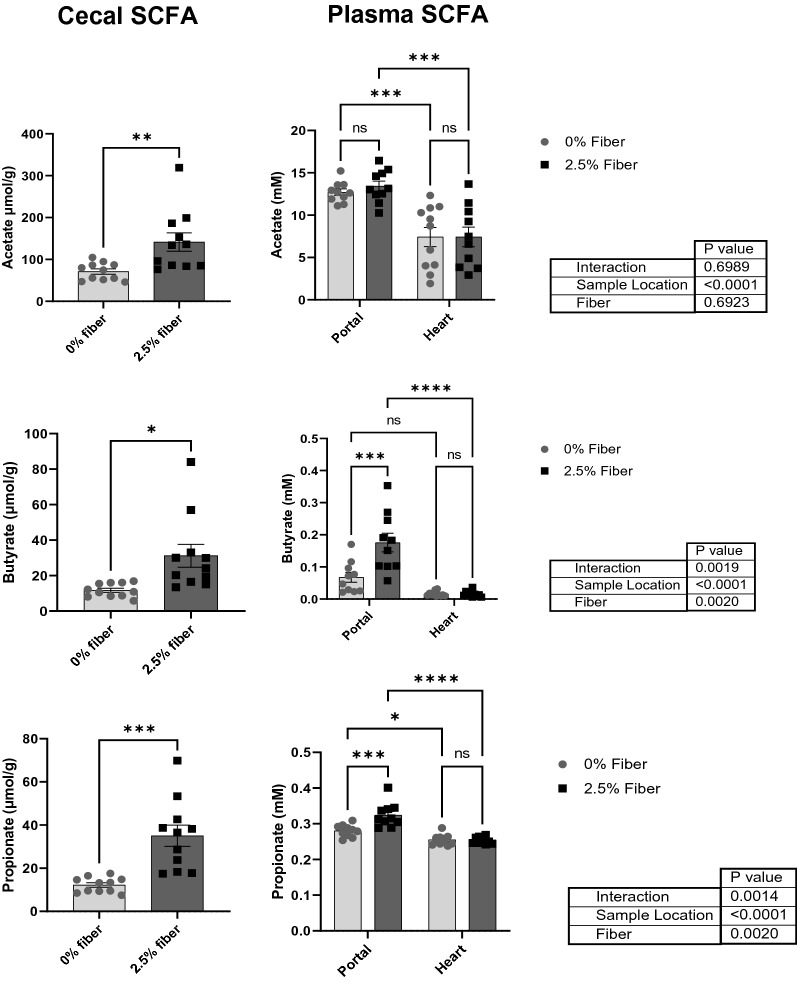
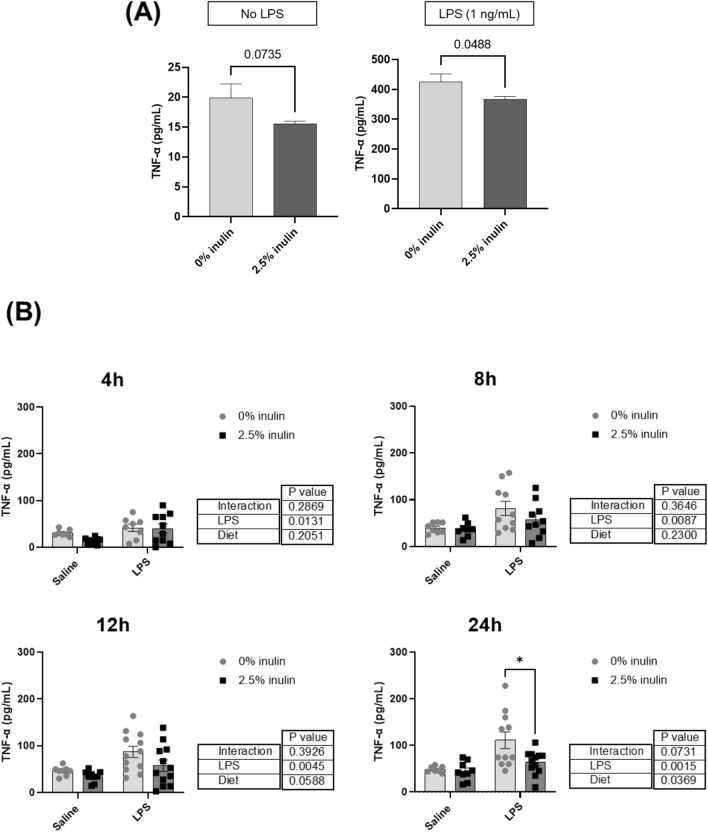
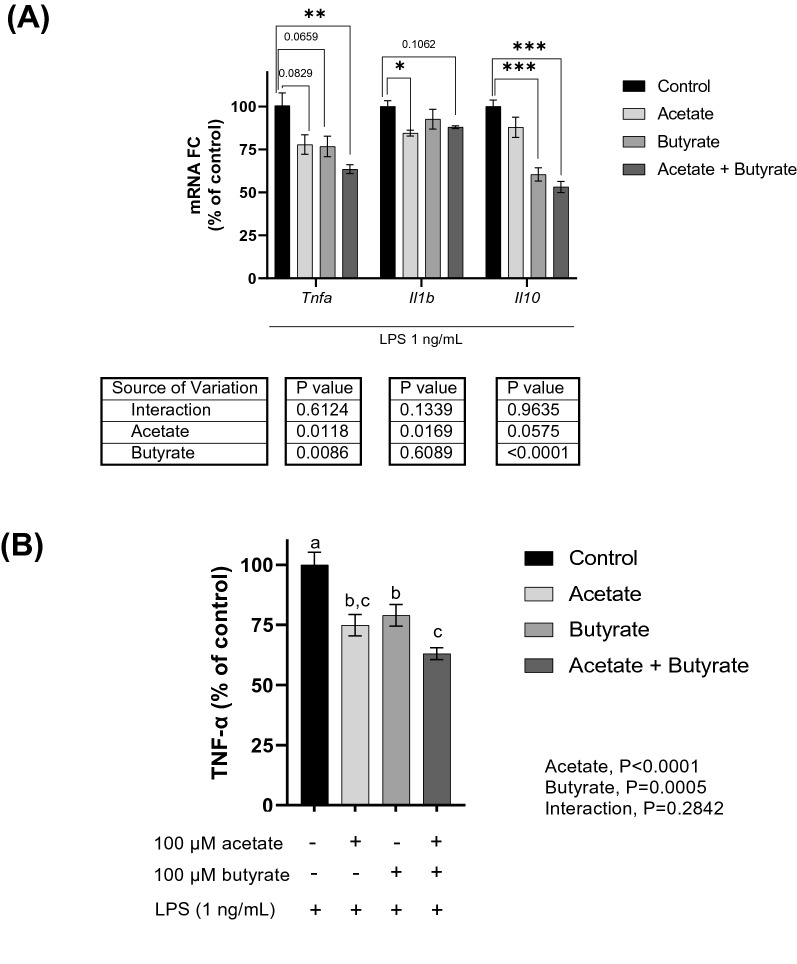
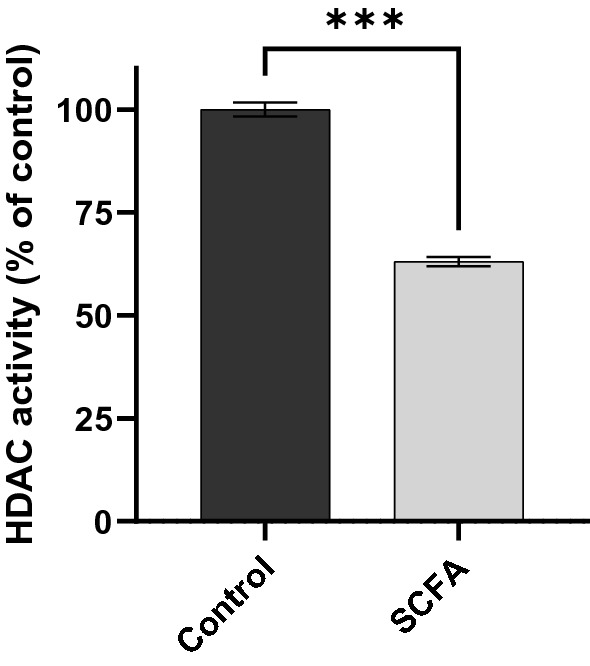
Microglia play a vital role maintaining brain homeostasis but can also cause persistent neuroinflammation. Short-chain fatty acids (SCFAs) produced by the intestinal microbiota have been suggested to regulate microglia inflammation indirectly by signaling through the gut-brain axis or directly by reaching the brain. The present work evaluated the anti-inflammatory effects of SCFAs on lipopolysaccharide (LPS)-stimulated microglia from mice fed inulin, a soluble fiber that is fermented by intestinal microbiota to produce SCFAs in vivo, and SCFAs applied to primary microglia in vitro. Feeding mice inulin increased SCFAs in the cecum and in plasma collected from the hepatic portal vein. Microglia isolated from mice fed inulin and stimulated with LPS in vitro secreted less tumor necrosis factor α (TNF-α) compared to microglia from mice not given inulin. Additionally, when mice were fed inulin and injected i.p with LPS, the ex vivo secretion of TNF-α by isolated microglia was lower than that secreted by microglia from mice not fed inulin and injected with LPS. Similarly, in vitro treatment of primary microglia with acetate and butyrate either alone or in combination downregulated microglia cytokine production with the effects being additive. SCFAs reduced histone deacetylase activity and nuclear factor-κB nuclear translocation after LPS treatment in vitro. Whereas microglia expression of SCFA receptors Ffar2 or Ffar3 was not detected by single-cell RNA sequencing analysis, the SCFA transporters Mct1 and Mct4 were. Nevertheless, inhibiting monocarboxylate transporters on primary microglia did not interfere with the anti-inflammatory effects of SCFAs, suggesting that if SCFAs produced in the gut regulate microglia directly it is likely through an epigenetic mechanism following diffusion.
Overview
The claims and statistics of this paper haven’t been checked yet.
Run the check — free, no account needed. It reads the open-access text and checks the sources it cites.
Integrity signals
Registry
Cites
Statistics
Figures
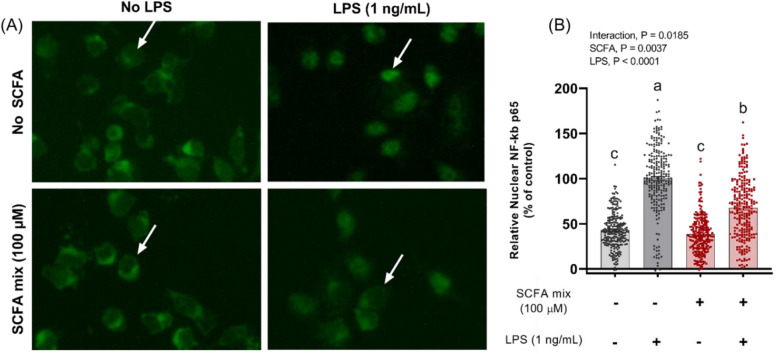
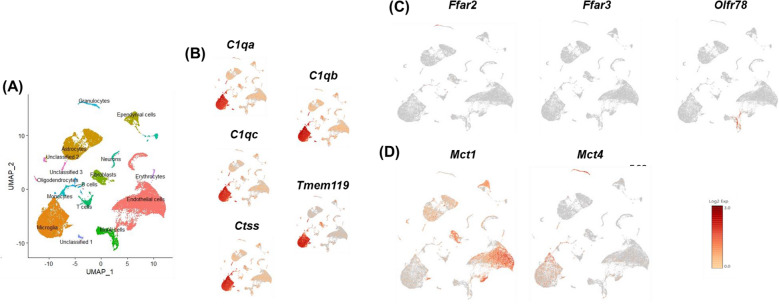
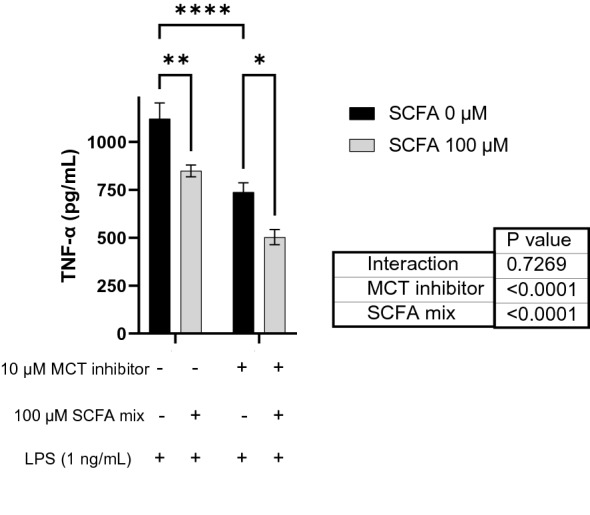
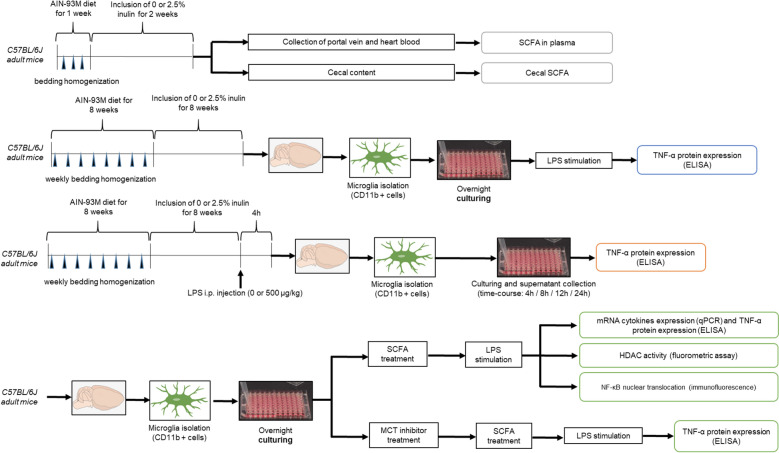
Verification
Claims the paper makes
The claims and statistics of this paper haven’t been checked yet.
Run the check — free, no account needed. It reads the open-access text and checks the sources it cites.
Claims other papers make about this one
Each is checked against this paper’s own text: does it say what the citing paper says it does?
In the citing paper
“Acetate and butyrate have been shown to inhibit the inflammatory response of LPS-stimulated primary microglia by inhibiting HDAC activity and NF-κB activation.289”
From Microbiota–gut–brain axis and its therapeutic applications in neurodegenerative diseases (2024) · cites this paper as [289]
Self-check
Percentages, sums and reported differences re-computed from the paper’s own numbers.
The self-check needs the paper’s full text.
Citations
Cites
The Microbial Metabolites, Short-Chain Fatty Acids, Regulate Colonic T reg Cell Homeostasis
Smith, P. M., Howitt, M. R., Panikov, N., Michaud, M., Gallini, C. A., Bohlooly-Y, M., Glickman, J. N., & Garrett, W. S. (2013) · Science · doi:10.1126/science.1241165 · Cited by 5,413
Host microbiota constantly control maturation and function of microglia in the CNS
Erny, D., Hrabě de Angelis, A. L., Jaitin, D., Wieghofer, P., Staszewski, O., David, E., Keren-Shaul, H., Mahlakoiv, T., Jakobshagen, K., Buch, T., et al. (2015) · Nature Neuroscience · doi:10.1038/nn.4030 · Cited by 3,569
The role of short-chain fatty acids in microbiota–gut–brain communication
Dalile, B., Van Oudenhove, L., Vervliet, B., & Verbeke, K. (2019) · Nature Reviews Gastroenterology & Hepatology · doi:10.1038/s41575-019-0157-3 · Cited by 3,357
Regulation of inflammatory responses by gut microbiota and chemoattractant receptor GPR43
Maslowski, K. M., Vieira, A. T., Ng, A., Kranich, J., Sierro, F., Yu, D., Schilter, H. C., Rolph, M. S., Mackay, F., Artis, D., et al. (2009) · Nature · doi:10.1038/nature08530 · Cited by 3,241
The Role of Short-Chain Fatty Acids From Gut Microbiota in Gut-Brain Communication
Silva, Y. P., Bernardi, A., & Frozza, R. L. (2020) · Frontiers in Endocrinology · doi:10.3389/fendo.2020.00025 · Cited by 3,043
Single-cell transcriptomics of 20 mouse organs creates a Tabula Muris
The Tabula Muris Consortium, coordination, O., coordination, L., processing, O. C. A., sequencing, L. P. A., analysis, C. D., annotation, C. T., Writing group, Supplemental text writing group, & Principal investigators (2018) · Nature · doi:10.1038/s41586-018-0590-4 · Cited by 2,842
HMDB 5.0: the Human Metabolome Database for 2022
Wishart, D. S., Guo, A., Oler, E., Wang, F., Anjum, A., Peters, H., Dizon, R., Sayeeda, Z., Tian, S., Lee, B. L., et al. (2021) · Nucleic Acids Research · doi:10.1093/nar/gkab1062 · Cited by 2,659
Interactions between the microbiota, immune and nervous systems in health and disease
Fung, T. C., Olson, C. A., & Hsiao, E. Y. (2017) · Nature Neuroscience · doi:10.1038/nn.4476 · Cited by 1,900
Systemic inflammation and microglial activation: systematic review of animal experiments
Hoogland, I. C. M., Houbolt, C., van Westerloo, D. J., van Gool, W. A., & van de Beek, D. (2015) · Journal of Neuroinflammation · doi:10.1186/s12974-015-0332-6 · Cited by 957
Nøhr, M. K., Pedersen, M. H., Gille, A., Egerod, K. L., Engelstoft, M. S., Husted, A. S., Sichlau, R. M., Grunddal, K. V., Poulsen, S. S., Han, S., et al. (2013) · Endocrinology · doi:10.1210/en.2013-1142 · Cited by 597
Cited by
Sorted by citations
Items 201–224 of 224
Li, X., Ke, L., Wang, T., Lei, Z., Tian, F., Zhang, Y., & Liu, X. (2026) · Frontiers in Microbiology · doi:10.3389/fmicb.2026.1891231
Gut Microbiome-Mediated Inter-Organ Crosstalk in Obesity and Aging
Mehta, O., & Ghosh, T. S. (2026) · Healthy ageing and longevity · doi:10.1007/978-3-032-24097-2_10
In silico dysbiosis-associated neuroprotective metabolite insufficiency in Alzheimer’s disease
Shaer, N. A., & Al-Abbas, N. S. (2026) · Open Medicine · doi:10.1515/med-2026-1484
Improving the Outcome of Brain-Injured Patients by Non-Continuous Feeding to Prevent Dysbiosis
Corriero, A., Soloperto, R., Giglio, M., Taccone, F. S., Puntillo, F., & Preiser, J. (2026) · Nutrients · doi:10.3390/nu18172907
Teerapornpuntakit, J., Chetthong, P., Intaladchum, P., Sroinak, S., Chatree, S., & Promsuban, C. (2026) · Veterinary and Animal Science · doi:10.1016/j.vas.2026.100816
Liao, J., Chen, Y., Lu, Y., Qu, F., Xie, X., Yang, Z., & Wen, W. (2026) · Behavioural Neurology · doi:10.1155/bn/6222269
Dong, Z., Zheng, W., Lv, S., Peng, L., Wang, Y., & Wang, Q. (2026) · Biomolecules · doi:10.3390/biom16091225
Diniz, C. G., Bento-Torres, N. V. O., da Costa, E. R., Magalhães, N. G. D. M., de Melo, M. A. D., Pereira, P. D. C., Carvalho, J. P. R., Magno, G. M., Bento‐Torres, J., Sosthenes, M. C. K., et al. (2026) · Neuroscience & Biobehavioral Reviews · doi:10.1016/j.neubiorev.2026.106922
Tang, E. E. X., Siripaopradit, Y., Thanakitcharu, J., Tang, E. E. S., & Chan, L. F. (2026) · Brain Behavior and Immunity · doi:10.1016/j.bbi.2026.106987
Pérez-Reytor, D., GARCÍA, K. P., Urrutia, Í. M., Plaza, N., & Karahanian, E. (2026) · Frontiers in Nutrition · doi:10.3389/fnut.2026.1927800
Zhang, X., Wang, Z., Wu, S., Hao, J., Jia, X., Zhao, Z., Duan, S., Liu, Z., Liu, X., Lu, Y., et al. (2026) · Journal of Agricultural and Food Chemistry · doi:10.1021/acs.jafc.6c03546
Alkhatib, S. N. (2026) · International Journal of Molecular Sciences · doi:10.3390/ijms27177851
Nutritional regulation of gut-brain immune crosstalk across the lifespan
Zhou, Y., Toro, S. D., & Zeng, M. Y. (2026) · Gut Microbes · doi:10.1080/19490976.2026.2725371
The Microbiota–Gut–Brain Axis in Obesity: Inflammation, Appetite Dysregulation, and Feeding Behavior
Sandoval-Valenzuela, C., & Pacheco, R. (2026) · Nutrients · doi:10.3390/nu18203409
Mechanisms of exercise-induced improvement in drug addiction via gut microbiota
Liao, S., Xueqiang, W. A. N. G., Zhang, T., & Jiong, L. U. O. (2026) · Journal of Zhejiang University (Medical Sciences) · doi:10.3724/zdxbyxb-2025-0859
Lachinani, F., & Milajerdi, A. (2026) · Progress in Neuro-Psychopharmacology and Biological Psychiatry · doi:10.1016/j.pnpbp.2026.111944
The gut–lung axis in early life: microbiome-associated mechanisms and clinical relevance
Klischke, L., Rahn, A., Fortmann, I., Dammann, M.-T., Ricklefs, I., Sugihara, F., Glaser, K., Klingenberg, C., Härtel, C., & Pirr, S. M. (2026) · European Respiratory Review · doi:10.1183/16000617.0147-2026
The microbiota–proteostasis axis: implications in neurodegenerative diseases
Czyż, D. M., & Brown, B. M. (2026) · Philosophical Transactions of the Royal Society B Biological Sciences · doi:10.1098/rstb.2025.0265
Shokr, M. M., & Abdelaziz, A. M. (2026) · Inflammopharmacology · doi:10.1007/s10787-026-02393-1
Zhu, C., & Wei, J. (2026) · Behavioural Brain Research · doi:10.1016/j.bbr.2026.116533
Wang, Z., & Liu, Y. (2026) · Frontiers in Nutrition · doi:10.3389/fnut.2026.1984798
Shoubridge, A. P., Manning, S. K., Tan, S., Kidson, S., Richard, A., Trinder, J., Miller, S. J., Laver, K., Rahja, M., Robertson, J. S., et al. (2026) · medRxiv · doi:10.64898/2026.10.15.26365677
Cavalluzzi, M. M., Terlizzi, F., Catalano, A. A., Pannunzio, A., Rotondo, N. P., Habtemariam, S., & Lentini, G. (2026) · Molecules · doi:10.3390/molecules31203728
Islam, M. M., Yang, G., & Kang, K. S. (2026) · Frontiers in Nutrition · doi:10.3389/fnut.2026.1839461
Metadata
- Authors
- Caetano-Silva, M. E., Rund, L., Hutchinson, N. T., Woods, J. A., Steelman, A. J., & Johnson, R. W.
- Affiliations
- University of Illinois Urbana-Champaign (US)
- Corresponding author
- Johnson, Rodney W.
- Venue
- Scientific Reports
- Published
- 2023-02-16
- Volume
- 13
- Issue
- 1
- Pages
- 2819-2819
- ISSN
- 2045-2322 (ISSN-L)
- PMC
- PMC9935636
- OpenAlex
- W4321018263
- Cited by
- 225
- References
- 32
- Citations by year
- 2026: 80 · 2025: 77 · 2024: 51 · 2023: 17
- FWCI
- 23.02
- Type
- journal article
- Language
- en
- Open access
- gold
- doi.org
- Locations
- Scientific Reports (publishedVersion, cc-by)
- PubMed Central (publishedVersion, cc-by)
- PubMed (publishedVersion)
- DOAJ (DOAJ: Directory of Open Access Journals) (submittedVersion, cc-by-sa)
- Funders
- National Institutes of Health (R01 AG059622)
- Topics
- Life Sciences › Neuroscience › Neurology › Neuroinflammation and Neurodegeneration Mechanisms
- Life Sciences › Biochemistry, Genetics and Molecular Biology › Molecular Biology › Gut microbiota and health
- Life Sciences › Neuroscience › Biological Psychiatry › Tryptophan and brain disorders
- Keywords
- microglia, neuroinflammation, short-chain fatty acids, dietary fiber, inulin, gut microbiota, lipopolysaccharide, TNF-α, acetate, butyrate, histone deacetylase, NF-κB, FFAR2, FFAR3, MCT1, MCT4, monocarboxylate transporters, epigenetic regulation, gut-brain axis
- MeSH terms
- Animals, Anti-Inflammatory Agents, Dietary Fiber, Fatty Acids, Volatile, Inulin, Lipopolysaccharides, Tumor Necrosis Factor-alpha, Microglia, Membrane Transport Proteins, Mice
About these checks
Registry, retraction, Cites and statistics results are computed, not judged, with one exception: a printed reference that no index lists is read once by a model before it counts as a citation error. Claims are extracted by a model and kept only when their quote appears verbatim in the text; each cited source is then checked, with a model’s help, for whether it says what the claim relies on. Those verdicts can be wrong — read the claim’s quote and the cited source before relying on one.
Statistics and arithmetic are recomputed, not judged.
Confidence bands are shown only for fields calibrated on our annotated test set. None is calibrated yet, so no band is shown.
What counts as a claim ›How we measure confidence ›How we check this ›
Are you an author, or do you see a problem with this page? Request a review
