

Effect of breathwork on stress and mental health: A meta-analysis of randomised-controlled trials
Open accessThe DOI matches its Crossref record; 91 of the 93 references it cites were found in a registry or an index; 20 of the 48 sources its claims cite were checked for support.
Abstract
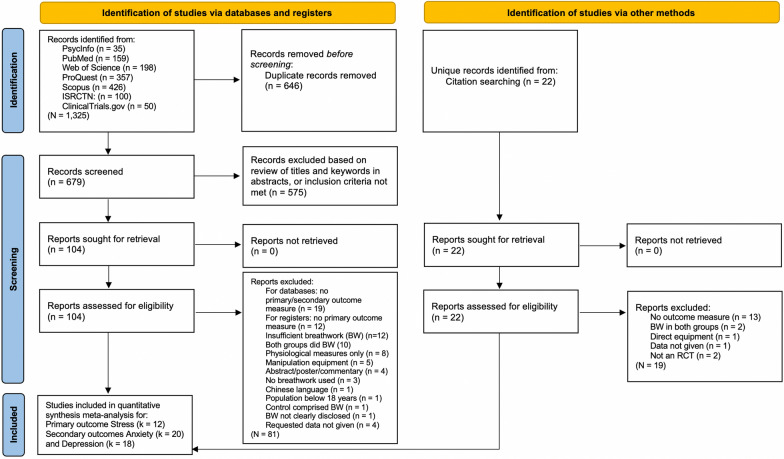
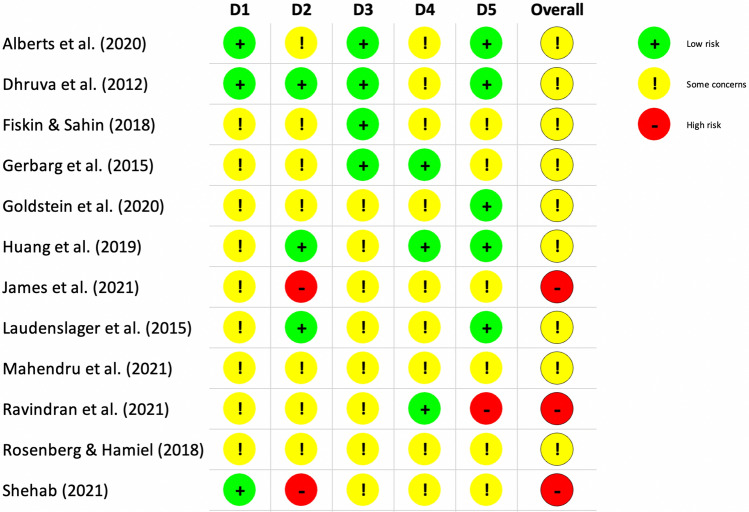
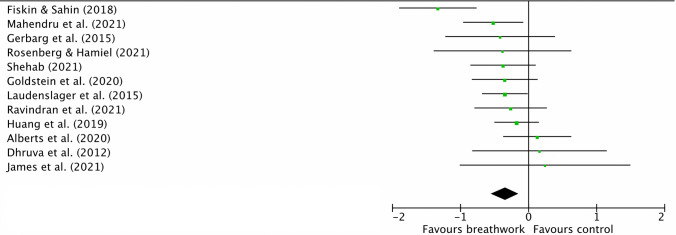
Abstract Deliberate control of the breath (breathwork) has recently received an unprecedented surge in public interest and breathing techniques have therapeutic potential to improve mental health. Our meta-analysis primarily aimed to evaluate the efficacy of breathwork through examining whether, and to what extent, breathwork interventions were associated with lower levels of self-reported/subjective stress compared to non-breathwork controls. We searched PsycInfo, PubMed, ProQuest, Scopus, Web of Science, ClinicalTrials.gov and ISRCTN up to February 2022, initially identifying 1325 results. The primary outcome self-reported/subjective stress included 12 randomised-controlled trials ( k = 12) with a total of 785 adult participants. Most studies were deemed as being at moderate risk of bias. The random-effects analysis yielded a significant small-to-medium mean effect size, g = − 0.35 [95% CI − 0.55, − 0.14], z = 3.32, p = 0.0009, showing breathwork was associated with lower levels of stress than control conditions. Heterogeneity was intermediate and approaching significance, χ 2 11 = 19, p = 0.06, I 2 = 42%. Meta-analyses for secondary outcomes of self-reported/subjective anxiety ( k = 20) and depressive symptoms ( k = 18) showed similar significant effect sizes: g = − 0.32, p < 0.0001, and g = − 0.40, p < 0.0001, respectively. Heterogeneity was moderate and significant for both. Overall, results showed that breathwork may be effective for improving stress and mental health. However, we urge caution and advocate for nuanced research approaches with low risk-of-bias study designs to avoid a miscalibration between hype and evidence.
Overview
CoChat Summary
## TL;DR
This meta-analysis of 12 RCTs with 785 adults found that breathwork was associated with lower self-reported stress than non-breathwork controls, with a significant small-to-medium effect (g = −0.35). Secondary meta-analyses also found significant small-to-medium benefits for anxiety (k = 20, g = −0.32) and depression (k = 18, g = −0.40), but the authors caution that risk of bias and limited follow-up data weaken certainty.
## Key findings
- Primary stress analysis: 12 RCTs, 785 participants; breathwork reduced stress versus controls with g = −0.35 (95% CI −0.55, −0.14; p = 0.0009).
- Stress heterogeneity was moderate (I² = 42%, χ²11 = 19, p = 0.06), and sensitivity analyses remained significant when studies were removed one at a time (ES range −0.27 to −0.39).
- Secondary outcomes also favored breathwork: anxiety, k = 20, g = −0.32 (95% CI −0.48, −0.16; p < 0.0001; I² = 51%); depression, k = 18, g = −0.40 (95% CI −0.58, −0.22; p < 0.0001; I² = 58%).
- Subgroup analyses found no significant differences between subgroups; significant stress effects were reported in nonclinical samples, with slow-paced breathing, individual and group delivery, remote/in-person/combined delivery, and both active and inactive controls.
## Methods
- Systematic review and meta-analysis of RCTs, pre-registered on PROSPERO (2022 CRD42022296709) and conducted per PRISMA.
- Searched PsycInfo, PubMed, ProQuest, Scopus, Web of Science, ClinicalTrials.gov, and ISRCTN up to February 2022; included English-language adult RCTs where breathwork made up 50% or more of the intervention and outcomes included self-reported stress, anxiety, or depression.
- Primary analysis used random-effects meta-analysis with Hedges’ g on post-intervention data; the paper also ran sensitivity analyses, subgroup analyses for stress, publication-bias checks, and dose–response correlations.
## Limitations
- The paper states that most studies were at moderate risk of bias overall, with 3 of 12 stress studies rated high risk of bias and 9 with some concerns.
- The authors state there were too few studies for useful subgroup comparisons and insufficient studies for follow-up meta-analyses for stress and secondary outcomes.
- Evident from the text: the review included only English-language studies and relied primarily on self-reported outcomes, with no objective outcomes for stress, which the authors say increases risk of bias further.
Model-written summary. Check it against the paper before relying on it.
Integrity signals
Registry
Cites
Statistics
Figures
Verification
Claims the paper makes
17 Valid · 2 Not valid · 20 Not checked · 89 Own results and interpretations
The cited sources support only part of this claim — read each source’s verdict below.
In the paper
“Positive impacts on HRV may partially explain some of the mechanisms behind mindfulness meditation101,102.”
§ Effect of breathwork on stress and mental health: A meta-analysis of randomised-controlled trials > Discussion > Comparison to stress-reduction interventions Through estimating statistically significant differences and 95% CIs among studies97, in comparison to interventions for stress, our findings suggest that breathwork might be associated with similar—and non-significantly different—effects. For instance, Heber et al.’s meta-analysis on computer- and online-based stress interventions, including CBT and third-wave CBT (e.g., inclusion of meditation, mindfulness, or acceptance of emotions) compared to controls in adults, found moderate effects on stress, d = 0.43 [95% CI 0.31, 0.54], anxiety, d = 0.32 [95% CI 0.17, 0.47], and depression, d = 0.34 [95% CI 0.21, 0.48]98. Each of these effects overlap more than 25% with the width of either interval in our results for breathwork, denoting no indication of a clinically relevant difference between the interventions. Similar meta-analytic findings concerning effects on stress, anxiety and depression have been found for related and more analogous techniques such as mindfulness-based cognitive therapy and stress reduction (MBCT/MBSR)99 along with self-help (MBSH)100. While Pizzoli et al.’s recent post-intervention HRVB meta-analysis (14 published RCTs)13 found a significant effect on depression, another meta-analysis did not find a significant effect on stress, with the smallest ES being yielded for self-reported stress out of myriad outcomes14. Lastly, a meta-analysis of eight meta-analytic outcomes of RCTs on physical activity99 showed similar significant effects on depression and anxiety. While we are not proposing breathwork as a substitute for other treatments, it could complement other therapeutic interventions, potentially leading to additive effects of such health behaviours. People with stress and anxiety disorders tend to chronically breathe faster and more erratically, yet with increased meditation practice, respiration rate can become gradually slower, potentially translating into better health and mood, along with less autonomic activity92. Positive impacts on HRV may partially explain some of the mechanisms behind mindfulness meditation101,102. However, the above approaches like MBCT/MBSR and HRVB may be less accessible. MBCT/MBSR teacher training takes at least one year while HRVB is routinely taught by a qualified healthcare professional; this is usually a prerequisite and most certified biofeedback therapists are habitually licensed medical providers, including general practitioners, psychiatrists, dentists, nurses, and psychologists103. MBCT/MBSR and HRVB therapist training includes theoretical/practical curricula, while breathwork teacher training can be more quickly and easily taught (i.e., over days and weeks) online and remotely to both healthcare professionals and the general population, thus potentially proving cost-effective. Two of our studies used the only Food and Drug Administration-approved portable electronic biofeedback device, which encourages deep, slow breathing103. However, HRV can be improved in the same way (tenfold) by simply breathing at a rate around 5–6 breaths/min104 and some Zen Buddhist monks have been found to naturally respire around this rate during deep meditation105. It may be possible that breathing rate forms a key component of meditation’s known positive effects. Indeed, it has been shown that HRV can be modulated during the practice of meditation106. However, a recent meta-analysis on this exact matter found insufficient evidence suggesting mindfulness/meditation led to improvements in vagally mediated HRV, and more well-designed RCTs without high risk of bias are needed to clarify any such contemplative practices’ impact on this physiological metric107, along with potential mechanisms related to cortisol. Traditional mindfulness-based programmes frequently involve meditation requiring observation of the breath, using it as an object of awareness, not voluntary regulation of respiration like in breathwork. Such breath-focus may be a key active ingredient and potential mechanism of action of the former contemplative practices, since highly experienced meditators have been found to breathe at over 1.5 times slower than nonmeditators, during meditation and at rest108. This translates into approximately 2000 less daily breaths for the former group of adept meditation practitioners (i.e., around 700,000 less breaths in a year), placing less demand on the ANS92. Meditation could also be complementary; voluntary upregulation of HRV through biofeedback may be improved by mental contemplative training109. While there is a possibility that it could simply be the cognitive-attentional components of both meditation and breathing practices that explain their effects, observation of the breath (i.e., most practices within mindfulness curricula) versus control of the breath (i.e., breathwork) warrants nuanced investigation.
What the sources say
- Supportedcites [101] Kirk U Axelsen JL Heart rate variability is enhanced during mindfulness practice: A randomized controlled trial involving a 10-day online-based mindfulness intervention PLoS ONE 2020 15 e0243488 10.1371/journal.pone.0243488 33332403 PMC7746169 source
The Conclusion (page unavailable) reports that the 10-day mindfulness intervention increased HRV. The Discussion’s “Mindfulness and trait-dependent effects” section (page unavailable) interprets the HRV response as a physiologically mediated effect related to attention and cognitive control, supporting the claim’s tentative suggestion about mechanisms. (LLM, conf=0.86)
- Partly supportedcites [102] Sun S Hu C Pan J Liu C Huang M Trait mindfulness is associated with the self-similarity of heart rate variability Front. Psychol. 2019 10 314 10.3389/fpsyg.2019.00314 30873070 PMC6403186 sourceExperimental — accuracy not yet measured
The Conclusion (page unavailable) proposes that homeostasis reflected in the self-similarity of HRV may help explain the adaptive merits of trait mindfulness. The Abstract reports an association with trait mindfulness, not an effect of mindfulness meditation on HRV; it found no significant association with HRV parameters at the absolute or difference-change levels. Thus the proposed mechanism is supported, but the claim extends it from trait mindfulness to meditation and implies a broader positive impact on HRV. (LLM, conf=0.86)
hedgedstates a possible cause- Asserted: passes — The authors put it forward as true.
- Checkable: passes — It can be checked against evidence.
- Load-bearing: unclear — It is unclear whether the paper’s conclusions depend on it.
- Based: passes — The paper gives a reason why it holds.
- Supported
Every source the paper cites for this claim was checked and supports it.
In the paper
“Nonetheless, regarding safety and tolerability, a small subgroup of participants in Ravindran et al.’s study71 focusing on fast-paced breathwork in unipolar and bipolar depression reported side effects such as hot flushes, shortness of breath and/or sweating.”
§ Effect of breathwork on stress and mental health: A meta-analysis of randomised-controlled trials > Results > Risk of bias for stress
What the sources say
- Supportedcites [71] Ravindran A Breathing-focused Yoga as Augmentation for Unipolar and Bipolar Depression: A Randomized Controlled Trial: Le yoga axé sur la respiration comme traitement d'appoint pour la dépression unipolaire et bipolaire: Un essai randomisé contrôlé Can. J. Psychiatry. Revue canadienne de psychiatrie 2021 66 159 169 10.1177/0706743720940535 32677851 PMC7918867 source
The Results section's 'Safety and Tolerability' passage states verbatim that a small subgroup of subjects (N = 5 in the first arm, N = 2 in the second) reported side effects of sweating, shortness of breath, and/or hot flushes after the cyclical breathing. The Methods 'Study Treatments' passage confirms the intervention was rapid ('cyclical breathing refers to rapid cycle breathing... 40 to 60 breaths per minute... up to 80 to 100 breaths per minute'), i.e. fast-paced breathwork, and the Abstract/Methods confirm the population as outpatients with unipolar or bipolar depression. The Discussion adds that only ~10% reported such effects, consistent with 'a small subgroup'. (LLM, conf=0.92)
plain- Asserted: passes — The authors put it forward as true.
- Checkable: passes — It can be checked against evidence.
- Load-bearing: unclear — It is unclear whether the paper’s conclusions depend on it.
- Based: passes — The paper gives a reason why it holds.
- Supported
The cited sources support only part of this claim — read each source’s verdict below.
In the paper
“Nonetheless, this study showed that the stress hormone cortisol was lower in people undergoing slow-paced breathwork compared to controls96.”
§ Effect of breathwork on stress and mental health: A meta-analysis of randomised-controlled trials > Discussion > Breathwork and stress
What the sources say
- Partly supportedcites [96] Ma X The effect of diaphragmatic breathing on attention, negative affect and stress in healthy adults Front. Psychol. 2017 8 874 10.3389/fpsyg.2017.00874 28626434 PMC5455070 sourceExperimental — accuracy not yet measured
The Results (Salivary Cortisol; page unavailable) report that cortisol fell significantly after training in the slow-breathing group but did not change significantly in controls. They do not establish that cortisol levels were lower in the breathing group than in controls; the reported main effect of group was not significant. (LLM, conf=0.87)
plainstates a cause- Asserted: passes — The authors put it forward as true.
- Checkable: passes — It can be checked against evidence.
- Load-bearing: unclear — It is unclear whether the paper’s conclusions depend on it.
- Based: passes — The paper gives a reason why it holds.
- Partly supported
A result the paper reports from its own data — it cites no other source for it, so there is none to check. The quote shows it is in the paper.
In the paper
“Heterogeneity was intermediate and approaching significance, χ211 = 19, p = 0.06, I2 = 42%.”
§ Effect of breathwork on stress and mental health: A meta-analysis of randomised-controlled trials > Abstract Deliberate control of the breath (breathwork) has recently received an unprecedented surge in public interest and breathing techniques have therapeutic potential to improve mental health. Our meta-analysis primarily aimed to evaluate the efficacy of breathwork through examining whether, and to what extent, breathwork interventions were associated with lower levels of self-reported/subjective stress compared to non-breathwork controls. We searched PsycInfo, PubMed, ProQuest, Scopus, Web of Science, ClinicalTrials.gov and ISRCTN up to February 2022, initially identifying 1325 results. The primary outcome self-reported/subjective stress included 12 randomised-controlled trials (k = 12) with a total of 785 adult participants. Most studies were deemed as being at moderate risk of bias. The random-effects analysis yielded a significant small-to-medium mean effect size, g = − 0.35 [95% CI − 0.55, − 0.14], z = 3.32, p = 0.0009, showing breathwork was associated with lower levels of stress than control conditions. Heterogeneity was intermediate and approaching significance, χ211 = 19, p = 0.06, I2 = 42%. Meta-analyses for secondary outcomes of self-reported/subjective anxiety (k = 20) and depressive symptoms (k = 18) showed similar significant effect sizes: g = − 0.32, p < 0.0001, and g = − 0.40, p < 0.0001, respectively. Heterogeneity was moderate and significant for both. Overall, results showed that breathwork may be effective for improving stress and mental health. However, we urge caution and advocate for nuanced research approaches with low risk-of-bias study designs to avoid a miscalibration between hype and evidence.
plainn = 785- Asserted: passes — The authors put it forward as true.
- Checkable: passes — It can be checked against evidence.
- Load-bearing: unclear — It is unclear whether the paper’s conclusions depend on it.
- Based: passes — The paper gives a reason why it holds.
A result the paper states — it cites no source for it, so there is none to check. The quote shows it is in the paper.
In the paper
“Most studies were deemed as being at moderate risk of bias.”
§ Effect of breathwork on stress and mental health: A meta-analysis of randomised-controlled trials > Abstract Deliberate control of the breath (breathwork) has recently received an unprecedented surge in public interest and breathing techniques have therapeutic potential to improve mental health. Our meta-analysis primarily aimed to evaluate the efficacy of breathwork through examining whether, and to what extent, breathwork interventions were associated with lower levels of self-reported/subjective stress compared to non-breathwork controls. We searched PsycInfo, PubMed, ProQuest, Scopus, Web of Science, ClinicalTrials.gov and ISRCTN up to February 2022, initially identifying 1325 results. The primary outcome self-reported/subjective stress included 12 randomised-controlled trials (k = 12) with a total of 785 adult participants. Most studies were deemed as being at moderate risk of bias. The random-effects analysis yielded a significant small-to-medium mean effect size, g = − 0.35 [95% CI − 0.55, − 0.14], z = 3.32, p = 0.0009, showing breathwork was associated with lower levels of stress than control conditions. Heterogeneity was intermediate and approaching significance, χ211 = 19, p = 0.06, I2 = 42%. Meta-analyses for secondary outcomes of self-reported/subjective anxiety (k = 20) and depressive symptoms (k = 18) showed similar significant effect sizes: g = − 0.32, p < 0.0001, and g = − 0.40, p < 0.0001, respectively. Heterogeneity was moderate and significant for both. Overall, results showed that breathwork may be effective for improving stress and mental health. However, we urge caution and advocate for nuanced research approaches with low risk-of-bias study designs to avoid a miscalibration between hype and evidence.
plainn = 785- Asserted: passes — The authors put it forward as true.
- Checkable: passes — It can be checked against evidence.
- Load-bearing: unclear — It is unclear whether the paper’s conclusions depend on it.
- Based: passes — The paper gives a reason why it holds.
39 more claims
Create a free account to see all 128 claims and to verify the 6 references still open.
- Probably not a substantial claim. 44
- It may state two separate claims as one. 54
Claims other papers make about this one
Each is checked against this paper’s own text: does it say what the citing paper says it does?
The source backs part of the claim, not all of it — or backs it for a different population, condition or comparison.
In the citing paper
“Although existing literature confirms the widespread benefits of slow breathing practices for stress/anxiety reduction [23,24,25,35,36,37,38], null or negative results are reported in some studies [39,40,41,42,43,44,45,46,47,48,49,50].”
From Breathing Practices for Stress and Anxiety Reduction: Conceptual Framework of Implementation Guidelines Based on a Systematic Review of the Published Literature (2023) · cites this paper as [35]
Experimental — accuracy not yet measuredThe source backs part of the claim, not all of it — or backs it for a different population, condition or comparison.
In the citing paper
“Intervention effectiveness was less likely during fast-only breathing versus any other pace, consistent with other reviews finding benefits associated with slow-paced breathing practices [23,35].”
From Breathing Practices for Stress and Anxiety Reduction: Conceptual Framework of Implementation Guidelines Based on a Systematic Review of the Published Literature (2023) · cites this paper as [35]
Experimental — accuracy not yet measuredThe source backs part of the claim, not all of it — or backs it for a different population, condition or comparison.
In the citing paper
“Although the analysis by Fincham and colleagues attempted to investigate subgroup effects, they included only 12 studies [35].”
From Breathing Practices for Stress and Anxiety Reduction: Conceptual Framework of Implementation Guidelines Based on a Systematic Review of the Published Literature (2023) · cites this paper as [35]
Experimental — accuracy not yet measuredThe source backs part of the claim, not all of it — or backs it for a different population, condition or comparison.
In the citing paper
“In addition, most reviews include breathing interventions incorporating biofeedback [23,25,35,52], which is not readily applicable to at-home practice.”
From Breathing Practices for Stress and Anxiety Reduction: Conceptual Framework of Implementation Guidelines Based on a Systematic Review of the Published Literature (2023) · cites this paper as [35]
Experimental — accuracy not yet measuredThe source backs part of the claim, not all of it — or backs it for a different population, condition or comparison.
In the citing paper
“Although these results contrast with other findings of no treatment duration effect [24,35], those reviews may have been limited by small samples, study heterogeneity, and exclusion of human-guided training, which may interact with long-term practice.”
From Breathing Practices for Stress and Anxiety Reduction: Conceptual Framework of Implementation Guidelines Based on a Systematic Review of the Published Literature (2023) · cites this paper as [35]
Experimental — accuracy not yet measured
4 more claims about this paper
Create a free account to see every claim other papers make about this one.
Statistics that don’t add up
Each reported p-value recomputed from its test statistic and degrees of freedom, each partial η² from its F, and each ratio, mean difference or B printed with a p checked against its own confidence interval.
Rated minor: it would not touch a result — a value no result rests on, a p-value that stays on the same side of the significance level, or a conflict that is clerical, resolved elsewhere in the paper, or outside its own findings.
In the paper
“z = 0.03, p = 0.947”
§ Effect of breathwork on stress and mental health: A meta-analysis of randomised-controlled trials > Results > Breathwork and stress
Reported p = .947 · recomputed p = .976
Statistics recomputed
Every reported test result, recomputed from its test statistic and degrees of freedom. A result shows as not adding up only once an independent check has confirmed it.
- Doesn’t add upz = 0.03reported p = .947 · recomputed p = .976
“z = 0.03, p = .947”
- Consistentz = 3.32reported p = .0009 · recomputed p < .001
“z = 3.32, p = .0009”
- Consistentz = 3.9reported p < .0001 · recomputed p < .001
“z = 3.90, p < .0001”
- Consistentz = 4.27reported p < .0001 · recomputed p < .001
“z = 4.27, p < .0001”
Self-check
Percentages, sums and reported differences re-computed from the paper’s own numbers.
Self-check results appear here once an independent check has confirmed them.
Citations
Cites
Measuring inconsistency in meta-analyses
Higgins, J. P. T., Thompson, S. G., Deeks, J. J., & Altman, D. G. (2003) · BMJ · doi:10.1136/bmj.327.7414.557 · Cited by 63,139
Bias in meta-analysis detected by a simple, graphical test
Egger, M., Smith, G. D., Schneider, M., & Minder, C. (1997) · BMJ · doi:10.1136/bmj.315.7109.629 · Cited by 56,722
RoB 2: a revised tool for assessing risk of bias in randomised trials
Sterne, J. A. C., Savović, J., Page, M. J., Elbers, R. G., Blencowe, N. S., Boutron, I., Cates, C. J., Cheng, H.-Y., Corbett, M. S., Eldridge, S. M., et al. (2019) · BMJ · doi:10.1136/bmj.l4898 · Cited by 34,787
Cochrane Handbook for Systematic Reviews of Interventions
(2019) · doi:10.1002/9781119536604 · Cited by 14,828
Borenstein, M., Hedges, L. V., Higgins, J. P. T., & Rothstein, H. R. (2021) · doi:10.1002/9781119558378 · Cited by 9,799
A basic introduction to fixed-effect and random-effects models for meta-analysis
Borenstein, M., Hedges, L. V., Higgins, J. P. T., & Rothstein, H. R. (2010) · Research Synthesis Methods · doi:10.1002/jrsm.12 · Cited by 6,793
Holmes, E. A., O'Connor, R. C., Perry, V. H., Tracey, I., Wessely, S., Arseneault, L., Ballard, C., Christensen, H., Cohen Silver, R., Everall, I., et al. (2020) · The Lancet Psychiatry · doi:10.1016/s2215-0366(20)30168-1 · Cited by 5,715
Porges, S. W. (2007) · Biological Psychology · doi:10.1016/j.biopsycho.2006.06.009 · Cited by 3,415
Heart rate variability: A review
Rajendra Acharya, U., Paul Joseph, K., Kannathal, N., Lim, C. M., & Suri, J. S. (2006) · Medical & Biological Engineering & Computing · doi:10.1007/s11517-006-0119-0 · Cited by 2,820
Review of the Psychometric Evidence of the Perceived Stress Scale
Lee, E.-H. (2012) · Asian Nursing Research · doi:10.1016/j.anr.2012.08.004 · Cited by 2,305
Research works printed but not linked: 7
- OED. Definition: Breathwork, Noun. (Oxford English Dictionary, 1972–2019).
- Nestor, J. Breath: The New Science of a Lost Art. (Penguin Life, 2020).
- Leahy, R. L., Holland, S. J. & McGinn, L. K. Treatment Plans and Interventions for Depression and Anxiety Disorders (Guilford Press, 2011).
- Young C Hunte A Newell J Valian P Coping with panic Cambs. Peterb. NHS Found. Trust. Ed. Improv. Access Psychol. Ther. 2011 4 27 28
- Review Manager (RevMan) [Computer program]. Version 5.4. Cochrane Collaboration (2020).
- Conover, W. J. Practical Nonparametric Statistics, vol. 350 (Wiley, 1999).
- Goleman, D. & Davidson, R. The Science of Meditation: How to Change Your Brain, Mind and Body. (Penguin UK, 2017).
Cited by
Bentley, T. G. K., D’Andrea-Penna, G., Rakic, M., Arce, N., LaFaille, M., Berman, R., Cooley, K., & Sprimont, P. (2023) · Brain Sciences · doi:10.3390/brainsci13121612 · Cited by 229
Interoceptive Mechanisms and Emotional Processing
Greenwood, B. M., & Garfinkel, S. N. (2024) · Annual Review of Psychology · doi:10.1146/annurev-psych-020924-125202 · Cited by 103
Breathwork Interventions for Adults with Clinically Diagnosed Anxiety Disorders: A Scoping Review
Banushi, B., Brendle, M., Ragnhildstveit, A., Murphy, T., Moore, C., Egberts, J., & Robison, R. (2023) · Brain Sciences · doi:10.3390/brainsci13020256 · Cited by 58
“In synthesizing the considerations above, we conclude that breathwork interventions, such as diaphragmatic breathing and respiratory or HRV-assisted therapies, widely used to reduce stress among the general population [38,88,91], are effective in targeting panic and stress in patients clinically diagnosed with anxiety.”
BackgroundMigliaccio, G. M., Russo, L., Maric, M., & Padulo, J. (2023) · Sports · doi:10.3390/sports11050103 · Cited by 96
“Fast breathing can have a significant impact on an individual’s mental state and wellbeing because a decrease in the level of carbon dioxide in the blood, FB, and also VFB can cause feelings of anxiety and panic [51].”
BackgroundSlow breathing for reducing stress: The effect of extending exhale
Birdee, G. S., Nelson, K., Wallston, K., Nian, H., Diedrich, A., Paranjape, S. Y., Abraham, R. L., & Gamboa, A. C. (2023) · Complementary Therapies in Medicine · doi:10.1016/j.ctim.2023.102937 · Cited by 84
Tumour–brain crosstalk restrains cancer immunity via a sensory–sympathetic axis
Wei, H. K., Yu, C. D., Hu, B., Zeng, X., Ichise, H., Li, L., Wang, Y., Wang, R., Germain, R. N., Chang, R. B., et al. (2026) · Nature · doi:10.1038/s41586-025-10028-8 · Cited by 73
“Notably, optogenetic activation of Npy2r+ VSNs triggers rapid and shallowing breathing 14 , a response linked to heightened sympathetic activity 46,47 .”
Fincham, G. W., Kartar, A. A., Uthaug, M. V., Anderson, B., Hall, L., Nagai, Y., Critchley, H., & Colasanti, A. (2023) · Neuroscience & Biobehavioral Reviews · doi:10.1016/j.neubiorev.2023.105453 · Cited by 64
“A recent systematic review and meta-analysis on breathwork and mental health, focusing solely on RCTs, did not find reported adverse events directly attributed to fast-paced breathwork, although only around 20% of the included studies actively reported on adverse events (Fincham et al., 2023).”
BackgroundSelf-citationAbdelaziz, E. M., Alsadaan, N., Alqahtani, M., Elsharkawy, N. B., Ouda, M. M. A., Ramadan, O. M. E., Shaban, M., & Shokre, E. S. (2024) · Behavioral Sciences · doi:10.3390/bs14010046 · Cited by 59
“These techniques involve training individuals to identify, approach, and resolve problems more effectively, thereby reducing stress and improving their ability to cope with challenging situations [43–47].”
BackgroundBreathwork-induced psychedelic experiences modulate neural dynamics
Lewis-Healey, E., Tagliazucchi, E., Canales‐Johnson, A., & Bekinschtein, T. A. (2024) · Cerebral Cortex · doi:10.1093/cercor/bhae347 · Cited by 46
Bahi, C., Irrmischer, M., Franken, K., Fejer, G., Schlenker, A., Deijen, J. B., & Engelbregt, H. (2023) · Current Psychology · doi:10.1007/s12144-023-05119-6 · Cited by 35
“…12 randomised-controlled trials in healthy adults (10 studies were primarily focussed on slow-paced breathing and 2 studies on fast-paced breathing) on self-reported/subjective stress showed that breathwork was associated with lower levels of stress than control conditions (Fincham et al., 2023).”
Dynamic mechanisms that couple the brain and breathing to the external environment
Goheen, J., Wolman, A., Angeletti, L. L., Wolff, A., Anderson, J. A. E., & Northoff, G. (2024) · Communications Biology · doi:10.1038/s42003-024-06642-3 · Cited by 40
Nakamura, N. H., Oku, Y., & Fukunaga, M. (2023) · Reviews in the Neurosciences · doi:10.1515/revneuro-2023-0062 · Cited by 35
Neurodegenerative disorders, metabolic icebergs, and mitohormesis
Phillips, M. C. L., & Picard, M. A. (2024) · Translational Neurodegeneration · doi:10.1186/s40035-024-00435-8 · Cited by 33
“A meta-analysis of 12 randomized controlled trials found that breathwork can be effective for mitigating stress and enhancing mental health [227].”
MethodEffect of coherent breathing on mental health and wellbeing: a randomised placebo-controlled trial
Fincham, G. W., Strauss, C., & Cavanagh, K. (2023) · Scientific Reports · doi:10.1038/s41598-023-49279-8 · Cited by 45
“Public interest in breathwork has exploded due to its therapeutic potential, but it is essential such excitement is grounded in a robust evidence-base 6 .”
InfluentialSelf-citationCortez-Vázquez, G., Adriaanse, M. C., Burchell, G. L., Ostelo, R., Panayiotou, G., & Vlemincx, E. (2024) · Applied Psychophysiology and Biofeedback · doi:10.1007/s10484-023-09611-4 · Cited by 39
“Breath control (or breath work) involves consciously altering the frequency of the breath, depth of the breath, the inhalation/exhalation ratio (I/E ratio), and/or the location of breath (movement of the abdomen vs. chest, or nose vs. mouth) (Fincham et al., 2023; Zaccaro et al., 2018 ).”
BackgroundResistance exercise for anxiety and depression: efficacy and plausible mechanisms
Herring, M. P., & Meyer, J. D. (2024) · Trends in Molecular Medicine · doi:10.1016/j.molmed.2023.11.016 · Cited by 34
“Brain‐IT”: Exergame training with biofeedback breathing in neurocognitive disorders
Manser, P., & de Bruin, E. D. (2024) · Alzheimer s & Dementia · doi:10.1002/alz.13913 · Cited by 28
“…effective in improving cardiac autonomic control, 20,21 cognitive functioning (in particular executive functions), 22,23 and emotional regulation 20,23 (i.e., by decreasing symptoms of depression, 20,23,24 anxiety, 20,24,25 and stress 24,25 ) across different age groups and in clinical populations.”
BackgroundJohnson, E., Corrick, S., Isley, S., Vandermeer, B., Dolgoy, N., Bates, J., Godfrey, E., Soltys, C., Muir, C., Vohra, S., et al. (2024) · PLOS Digital Health · doi:10.1371/journal.pdig.0000435 · Cited by 24
Havenith, M. N., Leidenberger, M., Brasanac, J., Corvacho, M., Figueiredo, I., Schwarz, L., Uthaug, M. V., Rakusa, S., Bernardic, M., Vasquez-Mock, L., et al. (2025) · Communications Psychology · doi:10.1038/s44271-025-00247-0 · Cited by 33
“The studies conducted so far seem to generally demonstrate the bene fi ts of circular breathwork for alleviating stress and anxiety 7,11 – 13 , reducing depression and PTSD 14 , and enhancing self-awareness and life satisfaction 7,10 .”
Chen, R., Liu, S., Zhang, C., Jiang, C., Zhou, W., Chen, P., Wu, D., Li, D., Zhang, J., & Luo, T. (2024) · ACS Applied Materials & Interfaces · doi:10.1021/acsami.4c07731 · Cited by 21
Neural activity is modulated by spontaneous and volitionally controlled breathing
Karjalainen, S., Kujala, J., & Parviainen, T. M. (2025) · Biological Psychology · doi:10.1016/j.biopsycho.2025.109026 · Cited by 25
Common threads: Altered interoceptive processes across affective and anxiety disorders
Saltafossi, M., Heck, D. H., Kluger, D. S., & Varga, S. (2024) · Journal of Affective Disorders · doi:10.1016/j.jad.2024.09.135 · Cited by 27
Vlaskamp, D., Landman, A., van Rooij, J., & Blundell, J. (2025) · International Journal of Industrial Ergonomics · doi:10.1016/j.ergon.2025.103733 · Cited by 19
Malipeddi, S., Sasidharan, A., Ravindra, P. N., Mehrotra, S., John, J. P., & Kutty, B. M. (2024) · Mindfulness · doi:10.1007/s12671-024-02466-8 · Cited by 13
“…of stress and mental distress and their positive impact on well-being and improvements in mental health (Brown & Gerbarg, 2009; Chang et al., 2022; Fincham et al., 2023; Galante et al., 2014; Koenig, 2012; Malipeddi et al., 2024; Nagarathna et al., 2021; Sedlmeier et al., 2012; Upadhyay, et al.,…”
Hüzmeli, İ., Katayıfçı, N., Yalçın, F., & Hüzmeli, E. D. (2024) · International Journal of Clinical Practice · doi:10.1155/2024/4136457 · Cited by 16
Thomson, C. J., Pahl, H., & Giles, L. V. (2024) · Canadian Journal of Pain · doi:10.1080/24740527.2024.2352399 · Cited by 12
“10,47 Interventions that include an emphasis on diaphragmatic breathing have been shown to improve mindfulness, attentional control, and symptoms of anxiety, depression, and stress in healthy adults 48,49 and in women with fibromyalgia.”
BackgroundFerreira, S., Rodrigues, M. A., Mateus, C., Rodrigues, P. P., & Rocha, N. (2025) · Journal of Medical Internet Research · doi:10.2196/70134 · Cited by 14
“These findings align with previous research on the implementation of breathing techniques for reducing physiological and psychological stress in adults [70-72].”
Malipeddi, S., Mehrotra, S., John, J. P., & Kutty, B. M. (2024) · Frontiers in Public Health · doi:10.3389/fpubh.2024.1280859 · Cited by 12
Fincham, G. W., Epel, E. S., Colasanti, A., Strauss, C., & Cavanagh, K. (2024) · Scientific Reports · doi:10.1038/s41598-024-64254-7 · Cited by 16
“Lastly, we carefully assessed subjective adverse effects pertaining to tolerability of HVBR in terms of acute short-term side effects and long-term lasting negative effects, something lacking in HVB research 2 , and clinical research more generally from meditation 36 to psychedelics 37”
MethodSelf-citationBreathePulse: Peripheral Guided Breathing via Implicit Airflow Cues for Information Work
Gemicioglu, T., Viranda, T., Zhao, Y., Yessenbayev, O., Arora, J., Wang, J., Lopes, P., Adams, A. T., & Choudhury, T. (2024) · Proceedings of the ACM on Interactive Mobile Wearable and Ubiquitous Technologies · doi:10.1145/3702211 · Cited by 12
Stress and Heart in Remodeling Process: Multiple Stressors at the Same Time Kill
Yalçın, F., Abraham, M. R., & Garcia, M. J. (2024) · Journal of Clinical Medicine · doi:10.3390/jcm13092597 · Cited by 10
Effective engagement in computerized cognitive training for older adults
Guimarães, A. L., Lin, F. V., Panizzutti, R., & Turnbull, A. G. (2025) · Ageing Research Reviews · doi:10.1016/j.arr.2024.102650 · Cited by 11
Health Workers’ Mindfulness-Based Stress Reduction and Resilience During COVID-19 Pandemic
Ma, H., Chiang, N., Kao, R., & Lee, C.-Y. (2024) · Journal of Multidisciplinary Healthcare · doi:10.2147/jmdh.s464285 · Cited by 10
Johnson, M. A., Simonian, N., & Reggente, N. (2024) · Scientific Reports · doi:10.1038/s41598-024-75943-8 · Cited by 11
“…control (i.e., focused attention of breath while voluntarily manipulating, such as in Pranayama, deep slow breathing, diaphragmatic breathing, etc.) have shown extensively documented benefits for mental, physical, and cognitive health 20–23 , including effects from even a single session 24,25 .”
BackgroundDolgilevica, K., Grunfeld, E. A., & Derakhshan, N. (2025) · Current Oncology · doi:10.3390/curroncol32030150 · Cited by 11
“A recent meta-analysis [94] compared paced breathing to non-breathing control interventions e.g., mindfulness-based techniques for stress reduction and found similar reductions in self-reported stress across interventions implicating attention-based influences in stress reduction in paced breathing…”
Breathwork for Chronic Stress and Mental Health: Does Choosing a Specific Technique Matter?
Siebieszuk, A., Płoński, A. F., & Baranowski, M. (2025) · Medical Sciences · doi:10.3390/medsci13030127 · Cited by 16
“Previous research has indicated breathwork’s promising role in promoting overall mental well-being [13,19,23,24].”
InfluentialA Nunavut community-directed Inuit youth mental wellness initiative: making I-SPARX fly
Bohr, Y. M., Hankey, J. R., Thomas, A., Abdelmaseh, M., Armour, L., McCague, H., Barnhardt, J., Oskalns, M., Garvey, N., Singh, Y., et al. (2024) · International Journal of Circumpolar Health · doi:10.1080/22423982.2024.2401210 · Cited by 13
French, J., Brown, R. J., & Bell, T. (2024) · Counselling and Psychotherapy Research · doi:10.1002/capr.12782 · Cited by 13
Yuenyongchaiwat, K., Changsri, K., Harnmanop, S., Namdaeng, P., Aiemthaisong, M., Pongpanit, K., & Pariyatkaraphan, T. (2023) · Journal of Bodywork and Movement Therapies · doi:10.1016/j.jbmt.2023.11.042 · Cited by 12
Fincham, G. W., Kartar, A. A., Uthaug, M. V., et al. (2023) · doi:10.31234/osf.io/z62fv · Cited by 6
Self-citationIt's About Time—Breathing Dynamics Modulate Emotion and Cognition
Goheen, J., Çatal, Y., MacPhee, I., Call, T., Carson, C., Ali, R., Khan, R., Weche, K., Anderson, J. A. E., & Northoff, G. (2025) · Psychophysiology · doi:10.1111/psyp.70149 · Cited by 6
Vakhtin, A. A., Lin, H. C., Richardson, S. P., Shaff, N. A., & Ryman, S. G. (2025) · Journal of Cerebral Blood Flow & Metabolism · doi:10.1177/0271678x251399120 · Cited by 5
Review on the relationship of asthma and mental disorders
de Freitas, J. F., & Novais, F. (2025) · Personalized Medicine in Psychiatry · doi:10.1016/j.pmip.2025.100157 · Cited by 12
Acute effects of voluntary breathing patterns on postural control during walking
Karagiannakis, D. N., & Mandalidis, D. G. (2025) · Human Movement Science · doi:10.1016/j.humov.2025.103326 · Cited by 8
A body-brain (dis)equilibrium regulating transitions from health to pathology
Criscuolo, A., Czepiel, A. M., Schwartze, M., & Kotz, S. A. (2025) · Physics of Life Reviews · doi:10.1016/j.plrev.2025.07.003 · Cited by 7
“…here, the breathing cycle is under volitional control: this unique characteristic allows individuals to adaptively Physics of Life Reviews 54 (2025) 94–111 regulate respiratory dynamics to optimize information processing [102,106] action preparation [119,120] and modulate mental states [98].”
The A52 Breath Method: A Narrative Review of Breathwork for Mental Health and Stress Resilience
Little, A. G. (2025) · Stress and Health · doi:10.1002/smi.70098 · Cited by 15
Manser, P., Rosio, M., Schmidt, A., Michels, L., & de Bruin, E. D. (2025) · Alzheimer s Research & Therapy · doi:10.1186/s13195-025-01835-2 · Cited by 4
Czarnecki, J., Nowakowska‐Domagała, K., & Mokros, Ł. (2024) · International Journal of Circumpolar Health · doi:10.1080/22423982.2024.2330741 · Cited by 6
“Results of a meta-analysis published in 2023 found significant small-medium effects of breathwork on self-reported stress, anxiety and depression compared to non-breathwork control conditions [6].”
BackgroundA New Look at Breathing for Affective Studies
Sun, N., & Pavlidis, I. T. (2024) · IEEE Transactions on Affective Computing · doi:10.1109/taffc.2024.3413053 · Cited by 5
Crișan, A. F., Pescaru, C. C., Marițescu, A., Cărunta, V., Stoicescu, E. R., Oancea, C. I., Amaricai, E. C., & Onofrei, R. R. (2025) · BMC Public Health · doi:10.1186/s12889-025-22585-8 · Cited by 11
“Pharmacological treatments can be effective, but they often involve high costs and adverse effects, and their accessibility is limited for some students [1].”
InfluentialVetter, V. M., Kurth, T., & Konigorski, S. (2024) · Frontiers in Psychiatry · doi:10.3389/fpsyt.2024.1420097 · Cited by 3
“However, some studies did not fi nd a statistically signi fi cant effect of breathing exercises on stress (25 – 27).”
BackgroundPozzato, I., Schoffl, J., Tran, Y., Arora, M., McBain, C., Middleton, J. W., Cameron, I. D., & Craig, A. R. (2025) · Journal of Affective Disorders · doi:10.1016/j.jad.2025.01.008 · Cited by 9
Nakamura, N. H., Fukunaga, M., Nakamura, N. H., & Oku, Y. (2023) · Progress in Neurobiology · doi:10.60124/j.pneuro.2023.10.01 · Cited by 4
Mütze, C., Mitzinger, D., & Haller, H. (2025) · Frontiers in Psychiatry · doi:10.3389/fpsyt.2025.1616996 · Cited by 14
Chakraborty, S. (2025) · Open Medicine · doi:10.1515/med-2025-1319 · Cited by 3
Slow Breathing for Anxiety: A Critical Perspective Towards Personalization
Vlemincx, E., & Cortez-Vázquez, G. (2024) · Springer eBooks · doi:10.1007/978-3-031-56798-8_4 · Cited by 5
Varia, J. C., Herbert, M. R., & Hooker, B. S. (2025) · Molecular Neurobiology · doi:10.1007/s12035-025-05589-8 · Cited by 10
Isley, S., Johnson, E., Corrick, S., Hyde, A. M., Vandermeer, B., Dolgoy, N. D., Tabert, N., Pituskin, E., & Tandon, P. (2025) · PLOS Digital Health · doi:10.1371/journal.pdig.0000878 · Cited by 5
Effects of app delivered self hypnosis on stress management
Tran, N., Saperia, C., Neri, E., Jo, B., Kim, B., Zewde, N., Nouriani, B., Kinderman, C., Jagielo, A., Faerman, A., et al. (2025) · npj Digital Medicine · doi:10.1038/s41746-025-02182-0 · Cited by 3
“Complementary interventions are increasingly appreciated and utilized, including among people who may not necessarily meet formal diagnostic criteria for anxiety disorders, with exercise, mindfulness meditation, and controlled breathwork yielding moderate to large effect sizes in studies 7,8 .”
Heart rate variability biofeedback to reduce anxiety in autism spectrum disorder – a mini review
Coulter, H., Donnelly, M. P., Yakkundi, A., McAneney, H., Barr, O. G., & Kernohan, G. W. (2024) · Frontiers in Psychiatry · doi:10.3389/fpsyt.2024.1409173 · Cited by 17
Mesropyan, N., Katemann, C., Heuvelink-Marck, A., et al. (2025) · Investigative Radiology · doi:10.1097/rli.0000000000001150 · Cited by 2
McDermott, T. J., Siegle, G. J., Guelfo, A., Huynh, K., Karkare, M. C., Krawczak, R. A., Johnston, A., Elbasheir, A., Fulton, T. M., Semerod, J., et al. (2025) · Journal of Anxiety Disorders · doi:10.1016/j.janxdis.2025.103008 · Cited by 1
Gallegos, A. M., Chapman, B. P., Kaplan, J., Orden, K. A. V., & Heffner, K. L. (2025) · Aging & Mental Health · doi:10.1080/13607863.2025.2506774 · Cited by 2
“…factors of psychosocial interventions: (a) the number of sessions, (b) the length of sessions, and (c) delivery format, and modeled after paced breathing interventions that effectively reduce stress and anxiety (Fincham et al., 2023) but have no cognitive/ emotion regulation training components.”
Levendusky, A., & Crippen, K. J. (2025) · Mindfulness · doi:10.1007/s12671-025-02612-w · Cited by 6
“Breathwork has been shown to alleviate symptoms of depression and anxiety (Brewerton et al., 2012; Fincham et al., 2023) and to improve physical functionality and cognition (Liu et al., 2023).”
Honinx, E., Meys, M., Broes, S., Langenhoven, L. V., Janssens, R., Huys, I., Oswald, V., Annen, J., Laureys, S., Martial, C., et al. (2025) · International Journal of Clinical and Health Psychology · doi:10.1016/j.ijchp.2025.100603 · Cited by 2
“Among these, breathing exercises stand out for their potential in stress alleviation by altering respiration patterns to enhance well-being (Fincham et al., 2023).”
Canazei, M., Glenzer, L., Staggl, S., Dresen, V., Weninger, J., & Weiss, E. M. (2025) · Scientific Reports · doi:10.1038/s41598-025-24813-y · Cited by 6
“Despite these benefits, most SB intervention research has focused on stress-reducing effects under resting conditions 13–15 .”
Breathing and the brain: Pranayama, an ancient self-directed approach to neuromodulation
Bhargav, H., Mehta, U. M., Kumar, A. R., Subramanian, S., & Keshavan, M. S. (2025) · Asian Journal of Psychiatry · doi:10.1016/j.ajp.2025.104788 · Cited by 7
Fernández, M. B., Caes, L., Rossel, J. I., Díaz, G. D., Valenzuela, G. R., Madariaga, S. C., Vallecillo, N. K., Vilche, S. H., Tapia, V., Zamarin, M. J. G., et al. (2026) · Frontiers in Pediatrics · doi:10.3389/fped.2025.1654835 · Cited by 6
Can, Ö. F., Şavkın, R., & Kutluana, U. (2026) · Neurogastroenterology & Motility · doi:10.1111/nmo.70354 · Cited by 3
“Evidence from randomized trials of breathwork interventions suggests potential benefits for stress and mental health outcomes, although the findings should be interpreted cautiously because of heterogeneity and risk- of-bias concerns [27].”
Yoga, mindfulness and acupuncture impact on burnout: a preliminary meta-analysis
Esperança, M. B., Ferreira, A. I., & Costa, S. P. (2025) · Psychology Health & Medicine · doi:10.1080/13548506.2025.2465658 · Cited by 2
COMPLEXITY-BASED ANALYSIS OF THE VARIATIONS IN BRAIN ACTIVITY IN SHORT DEEP BREATHING
Krejcar, O., Yazidi, A., Agarwal, G., & Namazi, H. (2025) · Fractals · doi:10.1142/s0218348x25500707 · Cited by 2
Digital support for female students in physical education universities in Japan
Okuyama, J., Seto, S., Motokawa, T., Kato, T., Miyamoto, A., Maekawa, M., Funakoshi, S., Okazaki, T., & Ebihara, S. (2025) · Scientific Reports · doi:10.1038/s41598-025-98921-0 · Cited by 2
Death recollection moderates stress-influenced depression in Thai boarding school students
DeMaranville, J., Wongpakaran, T., Wongpakaran, N., & Wedding, D. (2025) · BMC Psychology · doi:10.1186/s40359-025-03147-4 · Cited by 4
“Breathing meditation and breathing exercises have been shown to help with stress reduction [10, 33, 55].”
A Smartphone Application Using Vibro-Acoustic Technology for Stress ManagementPreprint
Motokawa, T., Kato, T., Seto, S., & Okuyama, J. (2024) · Research Square · doi:10.21203/rs.3.rs-3998545/v1 · Cited by 2
Respiratory control and circuitry
Kartar, A. A., & Colasanti, A. (2024) · Elsevier eBooks · doi:10.1016/b978-0-12-820480-1.00106-6 · Cited by 2
Slow, Deep Breathing Exercise Lowers Blood Pressure and Stress in Medical Students
Candrawati, S., Ganesha, E. A., Setiawan, R. H., Lestari, D. W. D., & Fatchurohmah, W. (2024) · Annals of Applied Sport Science · doi:10.61186/aassjournal.1407 · Cited by 5
Riches, S., & Nicholson, S. L. (2025) · International Journal of Spa and Wellness · doi:10.1080/24721735.2025.2450151 · Cited by 1
“Relaxation practices, including mindfulness, meditation, body scanning, progressive muscle relaxation, yoga, and breathing exercises, are techniques that are often used to combat stress (Fincham et al., 2023; Li et al., 2020; Pascoe et al., 2017).”
Canazei, M., Glenzer, L., Staggl, S., Dresen, V., Weninger, J., & Weiss, E. M. (2025) · Computers in Human Behavior Reports · doi:10.1016/j.chbr.2025.100661 · Cited by 2
Fontanini, W. (2025) · Orvosi Hetilap · doi:10.1556/650.2025.33320 · Cited by 3
Ganesan, V., Kaiser, K. A., Allada, A., Puppala, A., White, D. K., Mugavero, M., Maruvada, A., Kyle, J., Gutta, H., Jahan, N., et al. (2025) · Lifestyle Medicine · doi:10.1002/lim2.70033 · Cited by 1
“…the review, as the studies that showed beneficial effects have a range of percentage of breathwork component (25–100%), and there is a lack of studies on the effects of fast versus slow-paced breathing (as described in a review on breathwork in healthy population [6]) among breast cancer survivors.”
InfluentialLynch, S., Pender, R., Ingram, C., Finnerty, C., Lowry, D., O’Meara, Y., & Brennan, D. J. (2025) · Cancer Medicine · doi:10.1002/cam4.71047 · Cited by 3
Owens, M., Houghton, C., Beattie, P., & Bunce, H. L. I. (2025) · Behavioral Sciences · doi:10.3390/bs15081096 · Cited by 2
“…draw on evidence showing the beneficial effects of virtual nature exposure (Browning et al., 2020; Owens & Bunce, 2023), nature-guided imagery (Koivisto & Grassini, 2023; Owens et al., 2024), brief nature-based meditation (Burger et al., 2024) and guided breathwork (Fincham et al., 2023).”
Frausing, K. P., Flammild, M. H., & Dahlgaard, J. (2025) · Healthcare · doi:10.3390/healthcare13162049 · Cited by 7
“…or mindful breathing have consistently shown positive outcomes when implemented as part of stress or anxiety management interventions [37,38], and breathwork has been suggested as one of those accessible and scalable interventions that may ameliorate the present state of global mental health [39].”
Nagy, E. N., Mostafa, M. S., Elsheimy, H. A., Mogahed, H. G. H., & Elsayed, M. M. (2025) · Journal of Evidence-Based Integrative Medicine · doi:10.1177/2515690x251372718 · Cited by 1
“18 Reducing stress can affect the hypothalamic-pituitary-ovarian axis, which controls sex hormones, and indirectly promote a more balanced hormonal environment, which may eventually affect the levels of estradiol.”
Breathwork and holistic wellbeing: A protocol for a scoping review
Beauchamp, F. E., Bispo, E., Galinha, I. C., & Kemp, A. H. (2025) · PLoS ONE · doi:10.1371/journal.pone.0333360 · Cited by 2
“While existing reviews have focused on the effects of breathwork on outcomes aligned to hedonic (feeling good) and eudaimonic (functioning well) wellbeing perspectives [e.g., 10, 11], they typically neglect wider determinants.”
A légzésmanipulációs eljárások pszichofiziológiája. Elméleti és gyakorlati vonatkozások
Tihanyi, B. T., Drozdovszky, O., & Köteles, F. G. (2025) · Mentálhigiéné és Pszichoszomatika · doi:10.1556/0406.2025.00095 · Cited by 1
Co-Designing Stress Interventions in Mixed Reality with Mental Health Experts
Sasikumar, P., Sasikumar, P., & Nanayakkara, S. C. (2025) · IEEE International Symposium on Mixed and Augmented Reality Adjunct (ISMAR-Adjunct) · doi:10.1109/ismar-adjunct68609.2025.00030 · Cited by 1
“As a result, their effectiveness is reduced, particularly among those individuals experiencing persistent everyday stress [5].”
Canazei, M., Hüfner, K., Sperner‐Unterweger, B., Lampe, A., Weninger, J., Staggl, S., Dresen, V., & Weiss, E. M. (2025) · General Psychiatry · doi:10.1136/gpsych-2025-102357 · Cited by 2
“The simplicity of the intervention makes it particularly suitable for patients with a high symptom burden who may initially struggle to engage in more complex psychosocial therapies.”
Chyad, H. A., & Majeed, H. M. (2025) · Journal of Education and Health Promotion · doi:10.4103/jehp.jehp_394_25 · Cited by 2
“[38,39] These results additional to Tsakona et al. , 2025 who reported a deep breathing can effectively contribute on its own or in combination with other therapeutic methods to improving physiological and psychological indicators in the pediatric population.”
Hallez, Q., Shankland, R., & Vauthier, M. (2025) · Psychology in the Schools · doi:10.1002/pits.70137 · Cited by 1
“Indeed, a recent meta‐analysis underlined the benefits of breathwork – especially slow‐paced deep breathing – on self‐ reported stress, anxiety and depressive symptoms, with small to medium effect sizes (Fincham et al. 2023).”
InfluentialBuchem, I., Kazubski, J., & Goerke, C. (2026) · ACM/IEEE International Conference on Human-Robot Interaction (HRI) · doi:10.1145/3776734.3794450 · Cited by 1
Riedl, E. M., Bracklo, T., Wimmer, K., Perzl, J., Gdynia, H.-J., Thomas, J., & Surżykiewicz, J. (2026) · Anxiety Stress & Coping · doi:10.1080/10615806.2026.2659809 · Cited by 2
“In their meta-analysis, Fincham et al. (2023) reported small to moderate effects of breathing exercises on stress, anxiety, and depression.”
Rudnicki, K., Joris, G., Meyvis, F., Verschraegen, M., & Poels, K. (2026) · Behavioral Sciences · doi:10.3390/bs16050778 · Cited by 1
“These null findings appear to contrast with recent meta-analytic evidence: Fincham et al. (2023) reported a small-to-medium pooled effect on self-reported stress ( g = − 0.35, 95% CI − 0.55 to − 0.14) across https://doi.org/10.3390/bs16050778 12 randomized controlled trials, suggesting that…”
InfluentialFincham, G. W., Caddye, E., Kartar, A. A., Lilley, E. A., Stoke, N., & Colasanti, A. (2026) · Frontiers in Psychology · doi:10.3389/fpsyg.2026.1851882 · Cited by 3
Self-citationBridging brain and body: a 3R framework for real-time self-regulation strategies in sport
Yakushina, A. A., Lakičević, N., Leonov, S., Vvedenskiy, S., & Drid, P. (2026) · Frontiers in Psychology · doi:10.3389/fpsyg.2026.1833469 · Cited by 1
Gugel, J., Rauschenberg, C., Paetzold, I., Schick, A., Wierzba, E., Hirjak, D., Boehnke, J. R., Boecking, B., & Reininghaus, U. (2026) · Journal of Medical Internet Research · doi:10.2196/77150 · Cited by 3
“Breathing exercises may physiologically activate the parasympathetic nervous system, and thus be an effective way to activate the soothing system even in high-stress situations, potentially yielding short-term effects [94,95].”
Erdmann, L., Breitenstein, B., Badanova, M., Telschow, L., Havenith, M. N., & Dziobek, I. (2026) · Frontiers in Psychology · doi:10.3389/fpsyg.2026.1777341 · Cited by 1
“In the present study, HVB is defined as practices “that involve manipulating the manner in which one breathes” (Oxford English Dictionary, 2023) by increasing the rate and/or depth of ventilation (Fincham et al., 2023b).”
A mixed-methods investigation of COVID-19 pandemic-specific stress in college students
Dolbier, C. L., Vanacore, S. M., Conder, L., & Guiler, W. (2023) · Journal of American College Health · doi:10.1080/07448481.2023.2253929 · Cited by 2
Designing a Mindful Computerized Therapy Module to Reduce Depression
Noor, S. F. M., Wook, T. S. M. T., Elias, N. F., Mohamed, H. B., Hussain, N. H., Ismail, W. S. W., Thiagarajan, A., Ibrahim, N., & Fabil, N. (2023) · doi:10.1109/iceei59426.2023.10346652 · Cited by 1
“…accessible and scalable can solve the burden faced by patients (such as long time, no guarantee of recovery, and barriers to access to therapy) even though worldwide treatment guidelines recommend behavioral and cognitive therapy (CBT) as the appropriate treatment to deal with depression [12].”
BackgroundTran, V., McCall, C., Secules, S., Kali, M. B., & Dyke, G. V. (2024) · ASEE Annual Conference & Exposition · doi:10.18260/1-2--47482 · Cited by 1
Metadata
- Authors
- Fincham, G. W., Strauss, C., Montero-Marin, J., & Cavanagh, K.
- Affiliations
- University of Sussex (GB)
- Corresponding author
- Fincham, Guy William
- Venue
- Scientific Reports
- Published
- 2023-01-09
- Volume
- 13
- Issue
- 1
- Pages
- 432-432
- ISSN
- 2045-2322 (ISSN-L)
- PMC
- PMC9828383
- OpenAlex
- W4313894187
- Semantic Scholar
- 109e1bdbdbbecd63b832a73fa6a3aa8e1d18b559
- Cited by
- 224
- References
- 93
- Citations by year
- 2026: 86 · 2025: 86 · 2024: 39 · 2023: 13
- FWCI
- 11.36
- Type
- journal article
- Language
- en
- Open access
- gold
- doi.org
- Licence
- cc-by
- creativecommons.org/licenses/by/4.0 (tdm)
- creativecommons.org/licenses/by/4.0 (vor)
- Locations
- Scientific Reports (publishedVersion, cc-by)
- PubMed Central (publishedVersion, cc-by)
- PubMed (publishedVersion)
- Sussex Research Online (University of Sussex) (submittedVersion, cc-by)
- DOAJ (DOAJ: Directory of Open Access Journals) (submittedVersion, cc-by-sa)
- Figshare (submittedVersion, cc-by)
- Funders
- The Ryoichi Sasakawa Young Leaders Fellowship Fund, Tokyo
- Sylff Association
- Topics
- Social Sciences › Psychology › Clinical Psychology › Mindfulness and Compassion Interventions
- Social Sciences › Psychology › Applied Psychology › Digital Mental Health Interventions
- Social Sciences › Psychology › Clinical Psychology › Psychotherapy Techniques and Applications
- Keywords
- breathwork, breathing exercises, stress, mental health, anxiety, depressive symptoms, mindfulness-based interventions, self-reported stress, risk of bias
- MeSH terms
- Adult, Anxiety, Anxiety Disorders, Humans, Mental Health, Randomized Controlled Trials as Topic
About these checks
Registry, retraction, Cites and statistics results are computed, not judged, with one exception: a printed reference that no index lists is read once by a model before it counts as a citation error. Claims are extracted by a model and kept only when their quote appears verbatim in the text; each cited source is then checked, with a model’s help, for whether it says what the claim relies on. Those verdicts can be wrong — read the claim’s quote and the cited source before relying on one.
The claim verdicts this report counts are experimental: their accuracy is not yet measured.
A language model drew the claims from the paper on 2026-10-10, under version 3 of the claim definition (model deepseek-v4.1-flash, prompt extract-v3).
A second model labelled each claim on 2026-10-10 (model jev-1.13-20260917, definition revision gold-guideline-v0.2).
Cited sources are checked with a language model’s help (gpt-6-sol and qwen3.8-omni-flash).
Statistics and arithmetic are recomputed, not judged.
Confidence bands are shown only for fields calibrated on our annotated test set. None is calibrated yet, so no band is shown.
What counts as a claim ›How we measure confidence ›How we check this ›
Are you an author, or do you see a problem with this page? Request a review
Data sources
Bibliographic data: Semantic Scholar, OpenAlex, Crossref.
Contains information from the Semantic Scholar Academic Graph Datasets, made available under the ODC Attribution License (ODC-BY 1.0).
Semantic Scholar’s data is described in: Kinney, R., et al. (2023). The Semantic Scholar Open Data Platform. arXiv:2301.10140.
