

Effect of breathwork on stress and mental health: A meta-analysis of randomised-controlled trials
Open accessThe DOI matches its Crossref record; 92 of the 93 references it cites were found in a registry or an index; 20 of the 48 sources its claims cite were checked for support.
Abstract
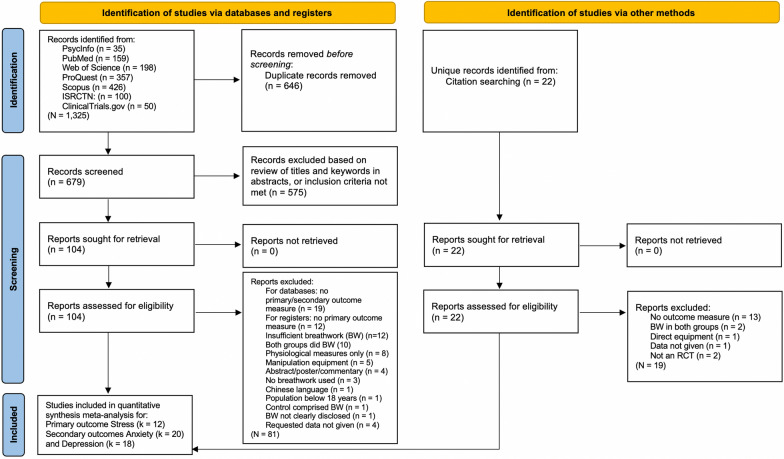
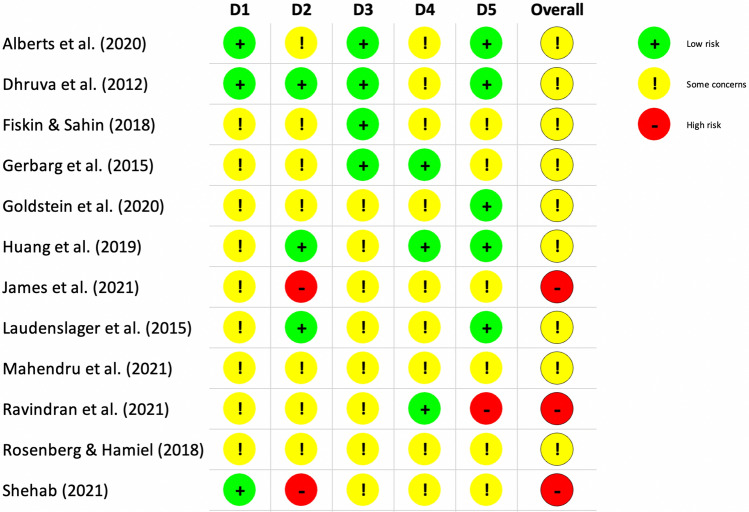
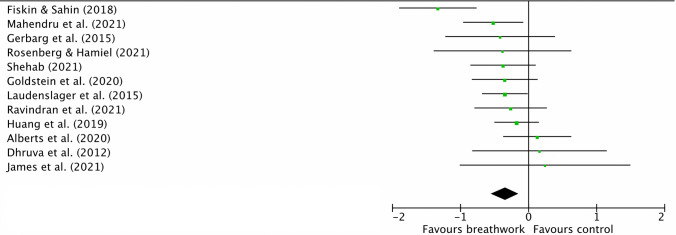
Abstract Deliberate control of the breath (breathwork) has recently received an unprecedented surge in public interest and breathing techniques have therapeutic potential to improve mental health. Our meta-analysis primarily aimed to evaluate the efficacy of breathwork through examining whether, and to what extent, breathwork interventions were associated with lower levels of self-reported/subjective stress compared to non-breathwork controls. We searched PsycInfo, PubMed, ProQuest, Scopus, Web of Science, ClinicalTrials.gov and ISRCTN up to February 2022, initially identifying 1325 results. The primary outcome self-reported/subjective stress included 12 randomised-controlled trials ( k = 12) with a total of 785 adult participants. Most studies were deemed as being at moderate risk of bias. The random-effects analysis yielded a significant small-to-medium mean effect size, g = − 0.35 [95% CI − 0.55, − 0.14], z = 3.32, p = 0.0009, showing breathwork was associated with lower levels of stress than control conditions. Heterogeneity was intermediate and approaching significance, χ 2 11 = 19, p = 0.06, I 2 = 42%. Meta-analyses for secondary outcomes of self-reported/subjective anxiety ( k = 20) and depressive symptoms ( k = 18) showed similar significant effect sizes: g = − 0.32, p < 0.0001, and g = − 0.40, p < 0.0001, respectively. Heterogeneity was moderate and significant for both. Overall, results showed that breathwork may be effective for improving stress and mental health. However, we urge caution and advocate for nuanced research approaches with low risk-of-bias study designs to avoid a miscalibration between hype and evidence.
Overview
CoChat Summary
## TL;DR
This meta-analysis of 12 RCTs with 785 adults found that breathwork was associated with lower self-reported stress than non-breathwork controls, with a significant small-to-medium effect (g = −0.35). Secondary meta-analyses also found significant small-to-medium benefits for anxiety (k = 20, g = −0.32) and depression (k = 18, g = −0.40), but the authors caution that risk of bias and limited follow-up data weaken certainty.
## Key findings
- Primary stress analysis: 12 RCTs, 785 participants; breathwork reduced stress versus controls with g = −0.35 (95% CI −0.55, −0.14; p = 0.0009).
- Stress heterogeneity was moderate (I² = 42%, χ²11 = 19, p = 0.06), and sensitivity analyses remained significant when studies were removed one at a time (ES range −0.27 to −0.39).
- Secondary outcomes also favored breathwork: anxiety, k = 20, g = −0.32 (95% CI −0.48, −0.16; p < 0.0001; I² = 51%); depression, k = 18, g = −0.40 (95% CI −0.58, −0.22; p < 0.0001; I² = 58%).
- Subgroup analyses found no significant differences between subgroups; significant stress effects were reported in nonclinical samples, with slow-paced breathing, individual and group delivery, remote/in-person/combined delivery, and both active and inactive controls.
## Methods
- Systematic review and meta-analysis of RCTs, pre-registered on PROSPERO (2022 CRD42022296709) and conducted per PRISMA.
- Searched PsycInfo, PubMed, ProQuest, Scopus, Web of Science, ClinicalTrials.gov, and ISRCTN up to February 2022; included English-language adult RCTs where breathwork made up 50% or more of the intervention and outcomes included self-reported stress, anxiety, or depression.
- Primary analysis used random-effects meta-analysis with Hedges’ g on post-intervention data; the paper also ran sensitivity analyses, subgroup analyses for stress, publication-bias checks, and dose–response correlations.
## Limitations
- The paper states that most studies were at moderate risk of bias overall, with 3 of 12 stress studies rated high risk of bias and 9 with some concerns.
- The authors state there were too few studies for useful subgroup comparisons and insufficient studies for follow-up meta-analyses for stress and secondary outcomes.
- Evident from the text: the review included only English-language studies and relied primarily on self-reported outcomes, with no objective outcomes for stress, which the authors say increases risk of bias further.
Model-written summary. Check it against the paper before relying on it.
Integrity signals
Registry
Cites
Statistics
Figures
Verification
Claims the paper makes
17 Valid · 2 Not valid · 20 Not checked · 89 Own results and interpretations
The cited sources support only part of this claim — read each source’s verdict below.
In the paper
“Positive impacts on HRV may partially explain some of the mechanisms behind mindfulness meditation101,102.”
§ Effect of breathwork on stress and mental health: A meta-analysis of randomised-controlled trials > Discussion > Comparison to stress-reduction interventions Through estimating statistically significant differences and 95% CIs among studies97, in comparison to interventions for stress, our findings suggest that breathwork might be associated with similar—and non-significantly different—effects. For instance, Heber et al.’s meta-analysis on computer- and online-based stress interventions, including CBT and third-wave CBT (e.g., inclusion of meditation, mindfulness, or acceptance of emotions) compared to controls in adults, found moderate effects on stress, d = 0.43 [95% CI 0.31, 0.54], anxiety, d = 0.32 [95% CI 0.17, 0.47], and depression, d = 0.34 [95% CI 0.21, 0.48]98. Each of these effects overlap more than 25% with the width of either interval in our results for breathwork, denoting no indication of a clinically relevant difference between the interventions. Similar meta-analytic findings concerning effects on stress, anxiety and depression have been found for related and more analogous techniques such as mindfulness-based cognitive therapy and stress reduction (MBCT/MBSR)99 along with self-help (MBSH)100. While Pizzoli et al.’s recent post-intervention HRVB meta-analysis (14 published RCTs)13 found a significant effect on depression, another meta-analysis did not find a significant effect on stress, with the smallest ES being yielded for self-reported stress out of myriad outcomes14. Lastly, a meta-analysis of eight meta-analytic outcomes of RCTs on physical activity99 showed similar significant effects on depression and anxiety. While we are not proposing breathwork as a substitute for other treatments, it could complement other therapeutic interventions, potentially leading to additive effects of such health behaviours. People with stress and anxiety disorders tend to chronically breathe faster and more erratically, yet with increased meditation practice, respiration rate can become gradually slower, potentially translating into better health and mood, along with less autonomic activity92. Positive impacts on HRV may partially explain some of the mechanisms behind mindfulness meditation101,102. However, the above approaches like MBCT/MBSR and HRVB may be less accessible. MBCT/MBSR teacher training takes at least one year while HRVB is routinely taught by a qualified healthcare professional; this is usually a prerequisite and most certified biofeedback therapists are habitually licensed medical providers, including general practitioners, psychiatrists, dentists, nurses, and psychologists103. MBCT/MBSR and HRVB therapist training includes theoretical/practical curricula, while breathwork teacher training can be more quickly and easily taught (i.e., over days and weeks) online and remotely to both healthcare professionals and the general population, thus potentially proving cost-effective. Two of our studies used the only Food and Drug Administration-approved portable electronic biofeedback device, which encourages deep, slow breathing103. However, HRV can be improved in the same way (tenfold) by simply breathing at a rate around 5–6 breaths/min104 and some Zen Buddhist monks have been found to naturally respire around this rate during deep meditation105. It may be possible that breathing rate forms a key component of meditation’s known positive effects. Indeed, it has been shown that HRV can be modulated during the practice of meditation106. However, a recent meta-analysis on this exact matter found insufficient evidence suggesting mindfulness/meditation led to improvements in vagally mediated HRV, and more well-designed RCTs without high risk of bias are needed to clarify any such contemplative practices’ impact on this physiological metric107, along with potential mechanisms related to cortisol. Traditional mindfulness-based programmes frequently involve meditation requiring observation of the breath, using it as an object of awareness, not voluntary regulation of respiration like in breathwork. Such breath-focus may be a key active ingredient and potential mechanism of action of the former contemplative practices, since highly experienced meditators have been found to breathe at over 1.5 times slower than nonmeditators, during meditation and at rest108. This translates into approximately 2000 less daily breaths for the former group of adept meditation practitioners (i.e., around 700,000 less breaths in a year), placing less demand on the ANS92. Meditation could also be complementary; voluntary upregulation of HRV through biofeedback may be improved by mental contemplative training109. While there is a possibility that it could simply be the cognitive-attentional components of both meditation and breathing practices that explain their effects, observation of the breath (i.e., most practices within mindfulness curricula) versus control of the breath (i.e., breathwork) warrants nuanced investigation.
What the sources say
- Supportedcites [101] Kirk U Axelsen JL Heart rate variability is enhanced during mindfulness practice: A randomized controlled trial involving a 10-day online-based mindfulness intervention PLoS ONE 2020 15 e0243488 10.1371/journal.pone.0243488 33332403 PMC7746169 source
The Conclusion (page unavailable) reports that the 10-day mindfulness intervention increased HRV. The Discussion’s “Mindfulness and trait-dependent effects” section (page unavailable) interprets the HRV response as a physiologically mediated effect related to attention and cognitive control, supporting the claim’s tentative suggestion about mechanisms. (LLM, conf=0.86)
- Partly supportedcites [102] Sun S Hu C Pan J Liu C Huang M Trait mindfulness is associated with the self-similarity of heart rate variability Front. Psychol. 2019 10 314 10.3389/fpsyg.2019.00314 30873070 PMC6403186 sourceExperimental — accuracy not yet measured
The Conclusion (page unavailable) proposes that homeostasis reflected in the self-similarity of HRV may help explain the adaptive merits of trait mindfulness. The Abstract reports an association with trait mindfulness, not an effect of mindfulness meditation on HRV; it found no significant association with HRV parameters at the absolute or difference-change levels. Thus the proposed mechanism is supported, but the claim extends it from trait mindfulness to meditation and implies a broader positive impact on HRV. (LLM, conf=0.86)
hedgedstates a possible cause- Asserted: passes — The authors put it forward as true.
- Checkable: passes — It can be checked against evidence.
- Load-bearing: unclear — It is unclear whether the paper’s conclusions depend on it.
- Based: passes — The paper gives a reason why it holds.
- Supported
Every source the paper cites for this claim was checked and supports it.
In the paper
“Nonetheless, regarding safety and tolerability, a small subgroup of participants in Ravindran et al.’s study71 focusing on fast-paced breathwork in unipolar and bipolar depression reported side effects such as hot flushes, shortness of breath and/or sweating.”
§ Effect of breathwork on stress and mental health: A meta-analysis of randomised-controlled trials > Results > Risk of bias for stress
What the sources say
- Supportedcites [71] Ravindran A Breathing-focused Yoga as Augmentation for Unipolar and Bipolar Depression: A Randomized Controlled Trial: Le yoga axé sur la respiration comme traitement d'appoint pour la dépression unipolaire et bipolaire: Un essai randomisé contrôlé Can. J. Psychiatry. Revue canadienne de psychiatrie 2021 66 159 169 10.1177/0706743720940535 32677851 PMC7918867 source
The Results section's 'Safety and Tolerability' passage states verbatim that a small subgroup of subjects (N = 5 in the first arm, N = 2 in the second) reported side effects of sweating, shortness of breath, and/or hot flushes after the cyclical breathing. The Methods 'Study Treatments' passage confirms the intervention was rapid ('cyclical breathing refers to rapid cycle breathing... 40 to 60 breaths per minute... up to 80 to 100 breaths per minute'), i.e. fast-paced breathwork, and the Abstract/Methods confirm the population as outpatients with unipolar or bipolar depression. The Discussion adds that only ~10% reported such effects, consistent with 'a small subgroup'. (LLM, conf=0.92)
plain- Asserted: passes — The authors put it forward as true.
- Checkable: passes — It can be checked against evidence.
- Load-bearing: unclear — It is unclear whether the paper’s conclusions depend on it.
- Based: passes — The paper gives a reason why it holds.
- Supported
The cited sources support only part of this claim — read each source’s verdict below.
In the paper
“Nonetheless, this study showed that the stress hormone cortisol was lower in people undergoing slow-paced breathwork compared to controls96.”
§ Effect of breathwork on stress and mental health: A meta-analysis of randomised-controlled trials > Discussion > Breathwork and stress
What the sources say
- Partly supportedcites [96] Ma X The effect of diaphragmatic breathing on attention, negative affect and stress in healthy adults Front. Psychol. 2017 8 874 10.3389/fpsyg.2017.00874 28626434 PMC5455070 sourceExperimental — accuracy not yet measured
The Results (Salivary Cortisol; page unavailable) report that cortisol fell significantly after training in the slow-breathing group but did not change significantly in controls. They do not establish that cortisol levels were lower in the breathing group than in controls; the reported main effect of group was not significant. (LLM, conf=0.87)
plainstates a cause- Asserted: passes — The authors put it forward as true.
- Checkable: passes — It can be checked against evidence.
- Load-bearing: unclear — It is unclear whether the paper’s conclusions depend on it.
- Based: passes — The paper gives a reason why it holds.
- Partly supported
A result the paper reports from its own data — it cites no other source for it, so there is none to check. The quote shows it is in the paper.
In the paper
“Heterogeneity was intermediate and approaching significance, χ211 = 19, p = 0.06, I2 = 42%.”
§ Effect of breathwork on stress and mental health: A meta-analysis of randomised-controlled trials > Abstract Deliberate control of the breath (breathwork) has recently received an unprecedented surge in public interest and breathing techniques have therapeutic potential to improve mental health. Our meta-analysis primarily aimed to evaluate the efficacy of breathwork through examining whether, and to what extent, breathwork interventions were associated with lower levels of self-reported/subjective stress compared to non-breathwork controls. We searched PsycInfo, PubMed, ProQuest, Scopus, Web of Science, ClinicalTrials.gov and ISRCTN up to February 2022, initially identifying 1325 results. The primary outcome self-reported/subjective stress included 12 randomised-controlled trials (k = 12) with a total of 785 adult participants. Most studies were deemed as being at moderate risk of bias. The random-effects analysis yielded a significant small-to-medium mean effect size, g = − 0.35 [95% CI − 0.55, − 0.14], z = 3.32, p = 0.0009, showing breathwork was associated with lower levels of stress than control conditions. Heterogeneity was intermediate and approaching significance, χ211 = 19, p = 0.06, I2 = 42%. Meta-analyses for secondary outcomes of self-reported/subjective anxiety (k = 20) and depressive symptoms (k = 18) showed similar significant effect sizes: g = − 0.32, p < 0.0001, and g = − 0.40, p < 0.0001, respectively. Heterogeneity was moderate and significant for both. Overall, results showed that breathwork may be effective for improving stress and mental health. However, we urge caution and advocate for nuanced research approaches with low risk-of-bias study designs to avoid a miscalibration between hype and evidence.
plainn = 785- Asserted: passes — The authors put it forward as true.
- Checkable: passes — It can be checked against evidence.
- Load-bearing: unclear — It is unclear whether the paper’s conclusions depend on it.
- Based: passes — The paper gives a reason why it holds.
A result the paper states — it cites no source for it, so there is none to check. The quote shows it is in the paper.
In the paper
“Most studies were deemed as being at moderate risk of bias.”
§ Effect of breathwork on stress and mental health: A meta-analysis of randomised-controlled trials > Abstract Deliberate control of the breath (breathwork) has recently received an unprecedented surge in public interest and breathing techniques have therapeutic potential to improve mental health. Our meta-analysis primarily aimed to evaluate the efficacy of breathwork through examining whether, and to what extent, breathwork interventions were associated with lower levels of self-reported/subjective stress compared to non-breathwork controls. We searched PsycInfo, PubMed, ProQuest, Scopus, Web of Science, ClinicalTrials.gov and ISRCTN up to February 2022, initially identifying 1325 results. The primary outcome self-reported/subjective stress included 12 randomised-controlled trials (k = 12) with a total of 785 adult participants. Most studies were deemed as being at moderate risk of bias. The random-effects analysis yielded a significant small-to-medium mean effect size, g = − 0.35 [95% CI − 0.55, − 0.14], z = 3.32, p = 0.0009, showing breathwork was associated with lower levels of stress than control conditions. Heterogeneity was intermediate and approaching significance, χ211 = 19, p = 0.06, I2 = 42%. Meta-analyses for secondary outcomes of self-reported/subjective anxiety (k = 20) and depressive symptoms (k = 18) showed similar significant effect sizes: g = − 0.32, p < 0.0001, and g = − 0.40, p < 0.0001, respectively. Heterogeneity was moderate and significant for both. Overall, results showed that breathwork may be effective for improving stress and mental health. However, we urge caution and advocate for nuanced research approaches with low risk-of-bias study designs to avoid a miscalibration between hype and evidence.
plainn = 785- Asserted: passes — The authors put it forward as true.
- Checkable: passes — It can be checked against evidence.
- Load-bearing: unclear — It is unclear whether the paper’s conclusions depend on it.
- Based: passes — The paper gives a reason why it holds.
39 more claims
Create a free account to see all 128 claims and to verify the 6 references still open.
- Probably not a substantial claim. 44
- It may state two separate claims as one. 54
Claims other papers make about this one
Each is checked against this paper’s own text: does it say what the citing paper says it does?
The source backs part of the claim, not all of it — or backs it for a different population, condition or comparison.
In the citing paper
“Although existing literature confirms the widespread benefits of slow breathing practices for stress/anxiety reduction [23,24,25,35,36,37,38], null or negative results are reported in some studies [39,40,41,42,43,44,45,46,47,48,49,50].”
From Breathing Practices for Stress and Anxiety Reduction: Conceptual Framework of Implementation Guidelines Based on a Systematic Review of the Published Literature (2023) · cites this paper as [35]
Experimental — accuracy not yet measuredThe source backs part of the claim, not all of it — or backs it for a different population, condition or comparison.
In the citing paper
“Intervention effectiveness was less likely during fast-only breathing versus any other pace, consistent with other reviews finding benefits associated with slow-paced breathing practices [23,35].”
From Breathing Practices for Stress and Anxiety Reduction: Conceptual Framework of Implementation Guidelines Based on a Systematic Review of the Published Literature (2023) · cites this paper as [35]
Experimental — accuracy not yet measuredThe source backs part of the claim, not all of it — or backs it for a different population, condition or comparison.
In the citing paper
“Although the analysis by Fincham and colleagues attempted to investigate subgroup effects, they included only 12 studies [35].”
From Breathing Practices for Stress and Anxiety Reduction: Conceptual Framework of Implementation Guidelines Based on a Systematic Review of the Published Literature (2023) · cites this paper as [35]
Experimental — accuracy not yet measuredThe source backs part of the claim, not all of it — or backs it for a different population, condition or comparison.
In the citing paper
“In addition, most reviews include breathing interventions incorporating biofeedback [23,25,35,52], which is not readily applicable to at-home practice.”
From Breathing Practices for Stress and Anxiety Reduction: Conceptual Framework of Implementation Guidelines Based on a Systematic Review of the Published Literature (2023) · cites this paper as [35]
Experimental — accuracy not yet measuredThe source backs part of the claim, not all of it — or backs it for a different population, condition or comparison.
In the citing paper
“Although these results contrast with other findings of no treatment duration effect [24,35], those reviews may have been limited by small samples, study heterogeneity, and exclusion of human-guided training, which may interact with long-term practice.”
From Breathing Practices for Stress and Anxiety Reduction: Conceptual Framework of Implementation Guidelines Based on a Systematic Review of the Published Literature (2023) · cites this paper as [35]
Experimental — accuracy not yet measured
4 more claims about this paper
Create a free account to see every claim other papers make about this one.
Statistics that don’t add up
Each reported p-value recomputed from its test statistic and degrees of freedom, each partial η² from its F, and each ratio, mean difference or B printed with a p checked against its own confidence interval.
Rated minor: it would not touch a result — a value no result rests on, a p-value that stays on the same side of the significance level, or a conflict that is clerical, resolved elsewhere in the paper, or outside its own findings.
In the paper
“z = 0.03, p = 0.947”
§ Effect of breathwork on stress and mental health: A meta-analysis of randomised-controlled trials > Results > Breathwork and stress
Reported p = .947 · recomputed p = .976
Statistics recomputed
Every reported test result, recomputed from its test statistic and degrees of freedom. A result shows as not adding up only once an independent check has confirmed it.
- Doesn’t add upz = 0.03reported p = .947 · recomputed p = .976
“z = 0.03, p = .947”
- Consistentz = 3.32reported p = .0009 · recomputed p < .001
“z = 3.32, p = .0009”
- Consistentz = 3.9reported p < .0001 · recomputed p < .001
“z = 3.90, p < .0001”
- Consistentz = 4.27reported p < .0001 · recomputed p < .001
“z = 4.27, p < .0001”
Self-check
Percentages, sums and reported differences re-computed from the paper’s own numbers.
Self-check results appear here once an independent check has confirmed them.
Citations
Cites
Measuring inconsistency in meta-analyses
Higgins, J. P. T., Thompson, S. G., Deeks, J. J., & Altman, D. G. (2003) · BMJ · doi:10.1136/bmj.327.7414.557 · Cited by 63,139
Bias in meta-analysis detected by a simple, graphical test
Egger, M., Smith, G. D., Schneider, M., & Minder, C. (1997) · BMJ · doi:10.1136/bmj.315.7109.629 · Cited by 56,722
RoB 2: a revised tool for assessing risk of bias in randomised trials
Sterne, J. A. C., Savović, J., Page, M. J., Elbers, R. G., Blencowe, N. S., Boutron, I., Cates, C. J., Cheng, H.-Y., Corbett, M. S., Eldridge, S. M., et al. (2019) · BMJ · doi:10.1136/bmj.l4898 · Cited by 34,787
Cochrane Handbook for Systematic Reviews of Interventions
(2019) · doi:10.1002/9781119536604 · Cited by 14,828
Borenstein, M., Hedges, L. V., Higgins, J. P. T., & Rothstein, H. R. (2021) · doi:10.1002/9781119558378 · Cited by 9,799
A basic introduction to fixed-effect and random-effects models for meta-analysis
Borenstein, M., Hedges, L. V., Higgins, J. P. T., & Rothstein, H. R. (2010) · Research Synthesis Methods · doi:10.1002/jrsm.12 · Cited by 6,793
Holmes, E. A., O'Connor, R. C., Perry, V. H., Tracey, I., Wessely, S., Arseneault, L., Ballard, C., Christensen, H., Cohen Silver, R., Everall, I., et al. (2020) · The Lancet Psychiatry · doi:10.1016/s2215-0366(20)30168-1 · Cited by 5,715
Porges, S. W. (2007) · Biological Psychology · doi:10.1016/j.biopsycho.2006.06.009 · Cited by 3,415
Heart rate variability: A review
Rajendra Acharya, U., Paul Joseph, K., Kannathal, N., Lim, C. M., & Suri, J. S. (2006) · Medical & Biological Engineering & Computing · doi:10.1007/s11517-006-0119-0 · Cited by 2,820
Review of the Psychometric Evidence of the Perceived Stress Scale
Lee, E.-H. (2012) · Asian Nursing Research · doi:10.1016/j.anr.2012.08.004 · Cited by 2,305
Research works printed but not linked: 7
- OED. Definition: Breathwork, Noun. (Oxford English Dictionary, 1972–2019).
- Nestor, J. Breath: The New Science of a Lost Art. (Penguin Life, 2020).
- Leahy, R. L., Holland, S. J. & McGinn, L. K. Treatment Plans and Interventions for Depression and Anxiety Disorders (Guilford Press, 2011).
- Young C Hunte A Newell J Valian P Coping with panic Cambs. Peterb. NHS Found. Trust. Ed. Improv. Access Psychol. Ther. 2011 4 27 28
- Review Manager (RevMan) [Computer program]. Version 5.4. Cochrane Collaboration (2020).
- Conover, W. J. Practical Nonparametric Statistics, vol. 350 (Wiley, 1999).
- Goleman, D. & Davidson, R. The Science of Meditation: How to Change Your Brain, Mind and Body. (Penguin UK, 2017).
Cited by
Items 101–200 of 217
Lessy, Z., Ro'fah, R., Andayani, A., & Muhrisun, M. (2024) · Journal of Human Behavior in the Social Environment · doi:10.1080/10911359.2024.2412130 · Cited by 3
“…behavioral ways to achieve well-being—as via meditation, contemplation, positive thinking, deep breathing—and there are invocations to relieve mental stress by taking a personal pause as part of healing from psychological disruption or negativity (Fincham et al., 2023; Preston et al., 2023).”
Anxiety Monitoring and Digital Meditation Aids
Kanniga Devi, R., & Muthuraman, P. (2024) · International Conference on Electrical Electronics and Computing Technologies (ICEECT) · doi:10.1109/iceect61758.2024.10739069 · Cited by 1
Canello, T., Tlaie, A., Chalise, K., Schölvinck, M. L., Pia, L., & Havenith, M. N. (2026) · Scientific Reports · doi:10.1038/s41598-026-59995-6 · Cited by 3
Chawla, V., Burgess, J. D., Lagera, P. G. D., & Noordsy, D. L. (2025) · Springer eBooks · doi:10.1007/978-3-031-82888-1_15 · Cited by 1
Seo, D., Choi, J. J., Goldberg, L. M., & Sinha, R. (2025) · Alcoholism Clinical and Experimental Research · doi:10.1111/acer.70131 · Cited by 2
Dynamic Mechanisms That Couple the Brain and Breathing to the External EnvironmentPreprint
Goheen, J., Wolman, A., Angeletti, L. L., et al. (2023) · doi:10.31234/osf.io/r4t7x · Cited by 1
Ganesan, V., Fowler, L. A., Bajaj, S., Qu, H., Singh, P., Krishnan, S. D., McGregor, K., Nolan, T. S., Baidwan, N. K., Mehta, T. S., et al. (2025) · medRxiv · doi:10.1101/2025.01.04.25319992 · Cited by 2
Vetter, V. M., Kurth, T., & Konigorski, S. (2025) · medRxiv · doi:10.1101/2025.04.09.25325513 · Cited by 1
Gugel, J., Paetzold, I., Rauschenberg, C., Schick, A., Hirjak, D., Boehnke, J. R., Boecking, B., & Reininghaus, U. (2025) · doi:10.2196/preprints.77150 · Cited by 1
FeelWave: Enabling Emotion-Aware Voice Interaction through Noise-Robust mmWave Emotion Sensing
Lingyu, W., Zuo, Y., Wang, D., He, C., Meng, C., Zhang, X. Y., Fan, X., & Zhang, Y. (2026) · CHI Conference on Human Factors in Computing Systems · doi:10.1145/3772318.3790631 · Cited by 1
Zenflow: Investigating MR Transitions for Enhancing Sleep and Relaxation
Sasikumar, P., Sasikumar, P., Ramesh, S., Masuda, T., Qiao, H., & Nanayakkara, S. C. (2026) · CHI Conference on Human Factors in Computing Systems · doi:10.1145/3772318.3791875
Wang, Q., Yan, Y., Fang, S., An, Q., Luo, X., Jia, J., & Yu, B. (2026) · CHI Conference on Human Factors in Computing Systems · doi:10.1145/3772318.3791096 · Cited by 1
Hosoi, J., Ban, Y., & Warisawa, S. (2026) · CHI Conference on Human Factors in Computing Systems · doi:10.1145/3772318.3790818
Cendales, A. S., Cuadra, I. M. T. D. L., Fajardo, A. P. R., Rodríguez, M. V., & Palencia-Sánchez, F. (2023) · PsyArXiv (OSF Preprints) · doi:10.31234/osf.io/fhpjx · Cited by 1
Johnson, M. A., Simonian, N., & Reggente, N. (2024) · doi:10.31234/osf.io/hb7wx
Janapureddy, R., Koffler, Y., Chew, J., Frings, D., & Gummuluri, K. S. (2024) · doi:10.2196/preprints.56647
Janapureddy, R., Koffler, Y., Chew, J., Frings, D., & Gummuluri, K. S. (2024) · doi:10.2196/preprints.57993
Breathing exercises influence on psychoemotional state in different age groups
Vasylenko, M., Omelchenko, T., & Kornieva, Y. (2024) · Scientific Journal of National Pedagogical Dragomanov University Series 15 Scientific and pedagogical problems of physical culture (physical culture and sports) · doi:10.31392/udu-nc.series15.2024.3k(176).31
Vetter, V. M., Kurth, T., & Konigorski, S. (2024) · medRxiv · doi:10.1101/2024.04.22.24306161
Violato, E. M., Edwards, M., & Shaw, L. R. (2024) · International Journal of Healthcare Simulation · doi:10.54531/nwjx3272
Liang, W.-M., Jiang, K., Hendrikson, A., Truskauskaitė‐Kunevičienė, I., Griškova-Bulanova, I., Xiao, J., Ren, F.-F., Du, Y.-L., & Rukšėnas, O. (2025) · Research Square · doi:10.21203/rs.3.rs-5844007/v1
Atemfokussierte Entspannungstechniken in der TCM-Behandlung des Kinderwunsches
Baumann, M. (2025) · Chinesische Medizin / Chinese Medicine · doi:10.1007/s00052-025-00140-3
Groeneveld, M., & Harper, T. (2024) · PsyArXiv (OSF Preprints) · doi:10.31234/osf.io/aps5g_v1
The Impact of Pranayama on Mental Health Disorders in Young Individuals
Natarajan, K., Pal, P., & Pal, G. K. (2025) · International Journal of Clinical and Experimental Physiology · doi:10.5530/ijcep.2024.11.4.29 · Cited by 1
The Interplay of Breath and Emotion: A Novel Cardio-Respiratory-Cortical-Limbic Network Framework
Jerath, R., & Jensen, M. A. (2025) · Psychology · doi:10.4236/psych.2025.164025
Tabassum, R., Jamil, D. M., & Kashif, M. F. (2025) · Social Sciences Spectrum · doi:10.71085/sss.04.02.270
Fukami, M., Sato, Y., Endo, K., Mizushima, K., Nishikawa, D., Takayose, M., & Koshizawa, R. (2025) · The Sport Psychologist · doi:10.1123/tsp.2024-0072
Miklusiak, K. J., & Miklusiak, K. D. (2025) · MEDICAL SCIENCE PULSE · doi:10.5604/01.3001.0055.1479
Efficacy of transformational breath for anxiety management in professional voice users
Wheble, P. C. R., & Elcin, D. (2025) · PLOS mental health. · doi:10.1371/journal.pmen.0000119
Does Ibuprofen affect the taste buds? Histological and biochemical study
Saleh, O. W., Alhussary, B. N., & Ameen, O. M. (2025) · Regulatory Mechanisms in Biosystems · doi:10.15421/0225064
Groeneveld, M., & Harper, T. (2025) · PsyArXiv (OSF Preprints) · doi:10.31234/osf.io/aps5g_v4 · Cited by 1
Visualizing Kendall’s τ and Hidden Structures in Ranked Data
Edwards, N. D., de Jong, E., Liu, F., et al. (2025) · The American Statistician · doi:10.1080/00031305.2025.2564268
“…data type used in research across many fields of study for which a variety of statistical tests have been developed (Friedman 1937, 1939; Kendall 1938; Milton 1940; Wilcoxon 1945; Spearman 1987; Pirttilä and Uusitalo 2010; Weber and Titman 2019; Ferguson et al. 2023; Fincham et al. 2023).”
Breathe Well, Be Well: Development and Validation of the Perceived Breath Mastery Scale (PBM-S)Preprint
Darkins, R. J., Ciarrochi, J., & Sahdra, B. K. (2025) · Research Square · doi:10.21203/rs.3.rs-7532844/v1
Effect of a Virtual Breathwork Program on Wellness of Counselors‐in‐Training
Liu, Y., Lin, T., Rolins, D., & Dedeoglu, Y. N. (2025) · Counselor Education and Supervision · doi:10.1002/ceas.70007
Motokawa, T., & Kato, T. (2025) · BMC Psychology · doi:10.1186/s40359-025-03293-9
Acors, E. L., Renner, B., Worrill, S., Bhagtani, H., Ocazionez, S. N. J., & Magalhaes, E. (2025) · Cureus · doi:10.7759/cureus.94724 · Cited by 1
Breathing interventions for spinal pain: A systematic review and meta-analysis
Wesemael, S. V., Janssens, L., Amerijckx, C., Goossens, N., Klaps, S., Vlemincx, E., & Bogaerts, K. (2025) · Clinical Rehabilitation · doi:10.1177/02692155251382790
“61 As stress and anxiety are associated with an increased respiratory rate and decreased end-tidal CO 2 , 61,62 slow deep breathing may reduce stress, anxiety, and arousal, 63 and hence indirectly reduce pain perception.”
Fatigue in Cholestatic Liver Disease: A Review of Mechanisms and Non-Pharmacological Management
Isley, S., Johnson, E., Swain, M. G., & Tandon, P. (2025) · Current Hepatology Reports · doi:10.1007/s11901-025-00706-6
“These therapies have been associated with a reduction in Hypothalamic Pituitary Adrenal (HPA) axis activation [ 106], sympathetic overactivity [ 107 ], and an increase in parasympathetic tone [ 108]; mechanisms that can help restore energy regulation and reduce fatigue-related distress.”
ZenBreath: Um jogo sério ativo para promover o relaxamento pela respiração cadenciada
de Faria, H. S., Hounsell, M. D. S., & Dias, C. (2025) · Simpósio Brasileiro de Jogos e Entretenimento Digital (SBGames) · doi:10.5753/sbgames.2025.9602
Raina, N., Williams, V., & George, J. E. (2025) · International Journal of Community Medicine and Public Health · doi:10.18203/2394-6040.ijcmph20253689
Stress and anxiety before a marathon can leave runners at risk of getting sick – new research
Harrison, S. E., Roberts, R., & Walsh, N. P. (2025) · The Conversation · doi:10.64628/ab.h9kuy3dh4
Effects of Short‐Term Breathwork on Respiration and Cognitive Performance in a Discrimination Task
Hehemann, L., Stetza, L., & Kayser, C. (2026) · European Journal of Neuroscience · doi:10.1101/2025.11.17.688761
EFEITOS DO EXERCÍCIO FÍSICO SOBRE AS PRINCIPAIS PSICOPATOLOGIAS EM IDOSOS: Uma revisão integrativa
Souza, D. B., Regis, J. D. F., & Gil, A. W. D. O. (2025) · Psicologia e Saúde em Debate · doi:10.22289/2446-922x.v11a2a47
Fincham, G. W., Caddye, E., Kartar, A. A., Lilley, E. A., Stoke, N., & Colasanti, A. (2025) · Research Square · doi:10.21203/rs.3.rs-7254002/v1
Self-citationWadhen, V., Pavey, L., & Vyas, N. S. (2025) · Applied Psychology · doi:10.1111/apps.70040 · Cited by 3
Hösl, B., Leipold, L., Niedermeier, M., & Kopp, M. (2025) · Advances in Mental Health · doi:10.1080/18387357.2025.2594570 · Cited by 1
Ferreira, M., Gadelha, M. J. N., Galdino, M. K. C., Ortíz, A. I. V., Nunes, S. A. N., & do Nascimento, E. B. (2025) · Applied Neuropsychology Child · doi:10.1080/21622965.2025.2594552
Sexual health in patients with an implantable cardioverter-defibrillator: A narrative review
Poels, P., Stuyck, N., Dorrestijn, A., Robyns, T., Moons, P., Willems, R., & Vandenberk, B. (2025) · Heart Rhythm O2 · doi:10.1016/j.hroo.2025.11.024 · Cited by 1
“70,71 A meta-analysis by Fincham et al 72 showed significant reductions in perceived stress and anxiety after breathwork interventions, and Balban et al 73 found both mindfulness and breathwork effective in reducing negative affect, with breathwork yielding greater improvements in positive mood.”
Ramquar, S. D., Tyagi, C., Sharma, B., Chui, C., Wasti, A., & Green, R. (2025) · Systematic Reviews · doi:10.1186/s13643-025-03004-w
Kim, K.-Y., & Bae, S.-H. (2025) · Journal of the Korean Society of Physical Medicine · doi:10.13066/kspm.2025.20.4.143
Iwakura, H., Terada, M., Shimozawa, Y., Shinohara, Y., & Isaka, T. (2025) · Journal of Back and Musculoskeletal Rehabilitation · doi:10.1177/10538127251406955
“27,28 However, the associations of diaphragm function with patient-generated physical, mental, and emotional health status in patients with LBP remains unexplored.”
STRATEGI MAHASISWA MENGATASI KECEMASAN KOMUNIKASI SAAT PRESENTASI DI KELAS 1C
Dzikry, M., Rachman, A., Sabela, D., Lestari, A., & Putri, N. M. K. A. I. (2025) · Jurnal Lentera Edukasi · doi:10.70305/jle.v3i4.152
Millon, E. M., Shang, A., Bass, B., Peña, G., Alendy, F., Zavotsky, K. E., Delmore, B. A., & DeMarco, K. (2025) · Journal of Integrative and Complementary Medicine · doi:10.1177/27683605251406896
Nandgaonkar, G. G., & Afle, G. M. (2025) · International Journal of Community Medicine and Public Health · doi:10.18203/2394-6040.ijcmph20254466
Strauß, S. (2025) · Psychotherapie: Praxis · doi:10.1007/978-3-662-71404-1_2
Sheng, L.-L., & Zhang, M. (2026) · Frontiers in Psychiatry · doi:10.3389/fpsyt.2025.1748005
Sharma, P., Osman, R., Nycklemoe, M., Boos, D. M., Murph, C. M., Flock, C. R., Jacobson, D. N., Lim, S., Nation, J. L., Wilson, M. A., et al. (2026) · medRxiv · doi:10.64898/2026.01.07.26343607
Caddye, E., Lukianstseva, Y., Aceves, R. L., & Fincham, G. W. (2026) · OBM Integrative and Complementary Medicine · doi:10.21926/obm.icm.2601006
Self-citationAfrontamiento, salud oral y estrés en personas mexicanas con hemofilia
Dávila, V. E. B., Palacios, L. H. A., Encinas, D. A. O., & Fuentes, K. R. (2025) · doi:10.61728/ae20257019
Nunes, S. M., Rizzo, R. R. N., Franco, M. R., Ferreira, F. R., Barros, L., Maciel, I. T., Santos, R. L., Nascimento, R. R., Couto, A. J., Quaresma, L., et al. (2026) · BMJ Open · doi:10.1136/bmjopen-2025-112982 · Cited by 1
“18 When practised in groups, yoga has been reported to increase social connectedness by fostering a sense of community among participants, which may be particularly valuable for individuals with depression symptoms or at high risk of social isolation.”
Breathing Techniques, Working with the Five Senses and the Use of Touch
Fleet, D. (2026) · Palgrave texts in counselling and psychotherapy · doi:10.1007/978-3-032-16609-8_9
The Impact of Meditation on Instantaneous Respiration Rate and Amplitude: A Secondary Data Analysis
Wexler, R. S., Klee, D., Kaplan, J., & Oken, B. (2026) · Mindfulness · doi:10.1007/s12671-026-02757-2
Cartier, M., Cadimas, J., Sulkin, D., Reilly, O., Harries, J., Hill, J., Robson, L., Harris, S., & Carr, C. E. (2026) · Frontiers in Psychiatry · doi:10.3389/fpsyt.2026.1735103 · Cited by 2
Min, H.-K. P., Osman, R., Nycklemoe, M., Boos, D. M., Murphy, C. M., Flock, C. R., Jacobson, D. N., Lim, S., Nation, J. L., Wilson, M. A., et al. (2026) · BMJ Open · doi:10.1136/bmjopen-2025-113105 · Cited by 1
Mindfulness and breathing exercises reduce stress and support goal progress
Kappes, C., Heier, C., & Schad, D. J. (2026) · Motivation and Emotion · doi:10.1007/s11031-026-10217-6
Puffer: Breathing Regulation Through Sequential Soft Robotics
Kapoor, D., Sebuh, S., Wang, M., & Zhu, Y. (2026) · International Conference on Tangible, Embedded, and Embodied Interaction (TEI) · doi:10.1145/3731459.3786208
TILO: Designing Soft Kinetic Cues for Embodied Biofeedback
Seo, S., Lee, J., Ha, K., Lee, S., & Hwang, S. Y. (2026) · International Conference on Tangible, Embedded, and Embodied Interaction (TEI) · doi:10.1145/3731459.3786216
JONES, M. E., Smith, G., Acevedo, A. M., & Melton, B. F. (2026) · Medicine & Science in Sports & Exercise · doi:10.1249/mss.0000000000003972 · Cited by 1
Drimalla, H. (2026) · Springer eBooks · doi:10.1007/978-981-96-5290-7_20
Integrated brain and body mechanisms underlying acute stress and trauma-related vulnerability
Lee, K. F. A., Liang, L., Asharaf, S. T., & Lee, T. M. C. (2026) · Neurobiology of Stress · doi:10.1016/j.ynstr.2026.100809 · Cited by 1
Feng, H., Chien, L., Lin, C., Liang, C.-Y., & Tzeng, W. (2026) · Journal of Medical Sciences · doi:10.4103/jmedsci.jmedsci_159_25
Tuohey, S., Rich, B. A., Lochbaum, M. R., Acer, V., Maulik, L., & Phillips, I. (2026) · Frontiers in Education · doi:10.3389/feduc.2026.1739636 · Cited by 1
Neuroplasticity and the Breath: Unpacking the Brain Mechanisms Behind Yogic Pranayama
Valappil, I. N. K., Korol, A., Vasanthi, G., Elayaraja, M., & Govindasamy, K. (2026) · IGI Global eBooks · doi:10.4018/979-8-3373-4187-3.ch003 · Cited by 1
Kaplan, M., Çakar, F., Şimşek, H., Çelik, M., & Özer, M. Y. (2026) · BMC Sports Science Medicine and Rehabilitation · doi:10.1186/s13102-026-01699-5
“Indeed, previous research has reported that groups engaging in breathing exercises demonstrated lower stress levels compared to control conditions, along with small to moderate but statistically significant improvements in anxiety and depression scores [55].”
Ritual in Psychedelic Therapy: A Principle-Based Framework
Dames, S., Scharf, G., Tsang, V. W. L., Watler, C., Brewer, M., Sheffield, J., & Kryskow, P. (2026) · Human Arenas · doi:10.1007/s42087-026-00596-0
“Although distinct from the ritual frame itself, these techniques can complement it by offering practical pathways for somatic grounding (Fincham et al., 2023 ; Shafir, 2016).”
Just breathe! The impact of a slow-paced breathing intervention for teachers
Carroll, T., Piggott, B., Conlon, J. A., Cripps, A. J., Bloomfield, L., & Newton, M. (2026) · Teaching and Teacher Education · doi:10.1016/j.tate.2026.105564
Gutiérrez, J. L. B., & Moreno-Coutiño, A. B. (2026) · European Journal of Child Development Education and Psychopathology · doi:10.32457/ejpad.v14i1.3646 · Cited by 1
Dibaj, I. S., Galfalvy, H., Tørmoen, A. J., Haga, E., & Mehlum, L. I. (2026) · Behaviour Research and Therapy · doi:10.1016/j.brat.2026.105091
Tan, P., Song, Y., Zhang, X., Chen, J., Lu, J., Ji, Y., Zheng, L., Ren, X., & Zhang, H. (2026) · Computers in Human Behavior Reports · doi:10.1016/j.chbr.2026.101153
Berghmans, C., & Monciino, A. (2026) · L Évolution Psychiatrique · doi:10.1016/j.evopsy.2026.03.009
Dansuk, E., & Menek, B. (2026) · Online Türk Sağlık Bilimleri Dergisi · doi:10.26453/otjhs.1828618
Chen, Y. Y., Lin, C., Liu, J.-H., Lin, H.-A., & Hsieh, Y.-S. (2026) · PLoS ONE · doi:10.1371/journal.pone.0351553
“Beyond its physiological benefits, respiratory training may also alleviate psychological symptoms by modulating emotional stress pathways via vagal nerve activation [61].”
Sazak, Y., Kalaycı, M., & Olgun, N. (2026) · La Medicina del Lavoro · doi:10.23749/mdl.2026.18426
Romaniuk, O. (2026) · European Journal of Arts Humanities and Social Sciences · doi:10.59324/ejahss.2026.3(3).32
Velichko, A., & Huyut, M. T. (2026) · Biomedical Signal Processing and Control · doi:10.1016/j.bspc.2026.111373 · Cited by 1
“Breathwork trials and reviews further indicate that structured breathing can reduce physiological arousal and improve mood or stress-related outcomes, although the exact respiratory pattern depends on the technique [41, 42, 43].”
Sun, M., Wu, H., Deng, M., & Qu, Q. (2026) · Frontiers in Psychiatry · doi:10.3389/fpsyt.2026.1879147
Sharma, P., Veerareddy, V., 홍이수, Nycklemoe, M., Kandimalla, M., Sharma, V., Kung, T. L., Osman, R., Lim, S., Kandimalla, K. K., et al. (2026) · Frontiers in Psychiatry · doi:10.3389/fpsyt.2026.1774490 · Cited by 1
“Readers interested in such review, should consult recent meta-analyses (10, 11).”
Ehrens, D., Stewart, A. X., Paul, A., Wangyal, T., & Berent, J. (2025) · International IEEE/EMBS Conference on Neural Engineering · doi:10.1109/ner61569.2025.11589154
Yang, G., Chen, H., & Yang, S. (2026) · Frontiers in Psychiatry · doi:10.3389/fpsyt.2026.1786605
“A meta-analysis has shown that there is signi fi cant stress and anxiety symptom relief from breathwork interventions, and that this is mediated by autonomic nervous system function and heart rate variability (40).”
Sharma, P., Imsande, K. G., Boos, D., Bormann, N. L., Osman, R., Nycklemoe, M., Lim, S., Arndt, S., Kainerstorfer, J., & Min, P. (2026) · JMIR Research Protocols · doi:10.2196/91615
Roxburgh, A. D., Rowland, B., Lubman, D. I., Bains, S. K., Pek, M. A., Tso, B., Manning, V., & Arunogiri, S. (2026) · Addiction · doi:10.1111/add.70542
Schmitz, C. N., Bernardic, M., Vlădoiu, A.-D., Harris, R., Carmana, D., Kärtner, L., Oberthür, G., Gründer, G., & Adolphi, H. (2026) · Progress in Neuro-Psychopharmacology and Biological Psychiatry · doi:10.1016/j.pnpbp.2026.111873 · Cited by 2
Molecules, meaning, and physiology: disentangling the active ingredients of psychedelic therapeutics
Kuypers, K. P. C. (2026) · Frontiers in Neuroscience · doi:10.3389/fnins.2026.1892474
Shankland, R., & IJzerman, H. (2025) · Elsevier eBooks · doi:10.1016/b978-2-294-78794-2.00064-6
Plantard, A., Catrambone, V., Chouchou, F., & Valenza, G. (2026) · American Journal of Physiology-Regulatory, Integrative and Comparative Physiology · doi:10.1152/ajpregu.00303.2025
Chabin, N. D., Chen, J., Abikenari, M. A., Dembow, M., Siddarth, P., Mays, V. M., Chavira, D. A., Ramsundarsingh, S., & Ghahremani, D. G. (2026) · Journal of Research on Adolescence · doi:10.1111/jora.70228 · Cited by 1
“While such programs have been shown to improve autonomic balance and SC in young adults (Fincham et al., 2023; Goldstein et al., 2022; Seppälä et al., 2020), their efficacy has not been examined among youth with high ACEs.”
Using Biofeedback Nasal Breathing to Augment Relaxation Following Exposure to Mild Stress
Cropley, M., Chrostek, L. M., Ali, R., & Dean, P. J. A. (2026) · Applied Psychophysiology and Biofeedback · doi:10.1007/s10484-026-09805-6
Zhou, Q., Zhang, Y., Ma, D., Lyu, F., Luo, S., & Yang, S. M. (2026) · Healthcare · doi:10.3390/healthcare14162489
“(3) These physiological gains alleviate dyspnea and fatigue, fostering patient autonomy and reducing anxiety, as consistently demonstrated across multiple clinical studies [31,32].”
Matsyshyn, V. S., Kravchenko, А. М., Ovodiuk, N. M., Zharkov, D. Y., Apykhtin, K. O., Романчук, А. П., & Chaikovsky, I. A. (2026) · Frontiers in Network Physiology · doi:10.3389/fnetp.2026.1912231
“Similarly, a meta-analysis by Fincham et al. (2023) of 12 RCTs reported significant reductions in perceived stress (g = −0.35; p = 0.0009), anxiety (g = −0.32; p < 0.0001), and depressive symptoms (g = −0.40; p < 0.0001) following structured breathing interventions.”
InfluentialAnsiedad en la sala de emergencias: revisión narrativa de estrategias diagnósticas y terapéuticas
Bravo-Sombrerero, M., & López-Loyola, T. (2026) · Archivos de Medicina de Urgencia de México · doi:10.35366/123750
Metadata
- Authors
- Fincham, G. W., Strauss, C., Montero-Marin, J., & Cavanagh, K.
- Affiliations
- University of Sussex (GB)
- Corresponding author
- Fincham, Guy William
- Venue
- Scientific Reports
- Published
- 2023-01-09
- Volume
- 13
- Issue
- 1
- Pages
- 432-432
- ISSN
- 2045-2322 (ISSN-L)
- PMC
- PMC9828383
- OpenAlex
- W4313894187
- Cited by
- 224
- References
- 93
- Citations by year
- 2026: 86 · 2025: 86 · 2024: 39 · 2023: 13
- FWCI
- 11.36
- Type
- journal article
- Language
- en
- Open access
- gold
- doi.org
- Licence
- cc-by
- creativecommons.org/licenses/by/4.0 (tdm)
- creativecommons.org/licenses/by/4.0 (vor)
- Locations
- Scientific Reports (publishedVersion, cc-by)
- PubMed Central (publishedVersion, cc-by)
- PubMed (publishedVersion)
- Sussex Research Online (University of Sussex) (submittedVersion, cc-by)
- DOAJ (DOAJ: Directory of Open Access Journals) (submittedVersion, cc-by-sa)
- Figshare (submittedVersion, cc-by)
- Funders
- The Ryoichi Sasakawa Young Leaders Fellowship Fund, Tokyo
- Sylff Association
- Topics
- Social Sciences › Psychology › Clinical Psychology › Mindfulness and Compassion Interventions
- Social Sciences › Psychology › Applied Psychology › Digital Mental Health Interventions
- Social Sciences › Psychology › Clinical Psychology › Psychotherapy Techniques and Applications
- Keywords
- breathwork, breathing exercises, stress, mental health, anxiety, depressive symptoms, mindfulness-based interventions, self-reported stress, risk of bias
- MeSH terms
- Adult, Anxiety, Anxiety Disorders, Humans, Mental Health, Randomized Controlled Trials as Topic
About these checks
Registry, retraction, Cites and statistics results are computed, not judged, with one exception: a printed reference that no index lists is read once by a model before it counts as a citation error. Claims are extracted by a model and kept only when their quote appears verbatim in the text; each cited source is then checked, with a model’s help, for whether it says what the claim relies on. Those verdicts can be wrong — read the claim’s quote and the cited source before relying on one.
The claim verdicts this report counts are experimental: their accuracy is not yet measured.
A language model drew the claims from the paper on 2026-10-10, under version 3 of the claim definition (model deepseek-v4.1-flash, prompt extract-v3).
A second model labelled each claim on 2026-10-10 (model jev-1.13-20260917, definition revision gold-guideline-v0.2).
Cited sources are checked with a language model’s help (gpt-6-sol and qwen3.8-omni-flash).
Statistics and arithmetic are recomputed, not judged.
Confidence bands are shown only for fields calibrated on our annotated test set. None is calibrated yet, so no band is shown.
What counts as a claim ›How we measure confidence ›How we check this ›
Are you an author, or do you see a problem with this page? Request a review
Data sources
Bibliographic data: Semantic Scholar, OpenAlex, Crossref.
Contains information from the Semantic Scholar Academic Graph Datasets, made available under the ODC Attribution License (ODC-BY 1.0).
Semantic Scholar’s data is described in: Kinney, R., et al. (2023). The Semantic Scholar Open Data Platform. arXiv:2301.10140.
