

Cluster-based psychological phenotyping and differences in anxiety treatment outcomes
Open accessThe DOI matches its Crossref record; 39 of the 39 references it cites were found in a registry or an index; 25 of the 35 sources its claims cite were checked for support.
Abstract
The identification of markers of mental health illness treatment response and susceptibility using personalized medicine has been elusive. In the context of psychological treatment for anxiety, we conducted two studies to identify psychological phenotypes with distinct characteristics related to: psychological intervention modalities (mindfulness training/awareness), mechanism of action (worry), and clinical outcome (generalized anxiety disorder scale scores). We also examined whether phenotype membership interacted with treatment response (Study 1) and mental health illness diagnosis (Studies 1–2). Interoceptive awareness, emotional reactivity, worry, and anxiety were assessed at baseline in treatment-seeking individuals (Study 1, n = 63) and from the general population (Study 2, n = 14,010). In Study 1, participants were randomly assigned to an app-delivered mindfulness program for anxiety for two months or treatment as usual. Changes in anxiety were assessed 1 and 2 months post-treatment initiation. In studies 1–2, three phenotypes were identified: ‘severely anxious with body/emotional awareness’ (cluster 1), ‘body/emotionally unaware’ (cluster 2), and ‘non-reactive and aware’ (cluster 3). Study 1’s results revealed a significant treatment response relative to controls (ps < 0.001) for clusters 1 and 3, but not for cluster 2. Chi-square analyses revealed that phenotypes exhibited significantly different proportions of participants with mental health diagnoses (studies 1–2). These results suggest that psychological phenotyping can bring the application of personalized medicine into clinical settings. Registry name and URL: Developing a novel digital therapeutic for the treatment of generalized anxiety disorder https://clinicaltrials.gov/ct2/show/NCT03683472?term=judson+brewer&draw=1&rank=1. Trial registration: Registered at clinicaltrials.gov (NCT03683472) on 25/09/2018. © 2023, The Author(s).
Overview
CoChat Summary
## TL;DR
This paper used unsupervised clustering on self-report psychological measures to identify three phenotypes in both a treatment-seeking anxiety sample and a general-population sample. In Study 1, cluster membership significantly moderated anxiety-treatment response, with clusters 1 and 3 improving more than cluster 2.
## Key findings
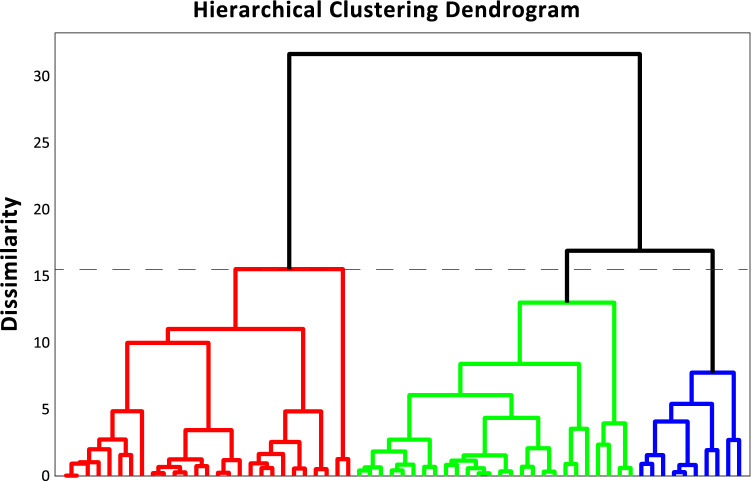
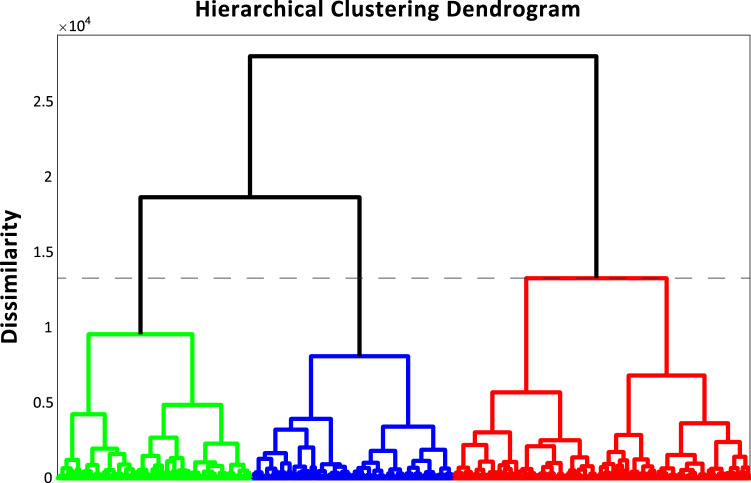
- Three clusters were identified in both studies. Study 1 used 63 participants and found 3 clusters with silhouette values of 0.503; Study 2 used 14,010 retained participants and also found 3 clusters with mean silhouette values = 0.60.
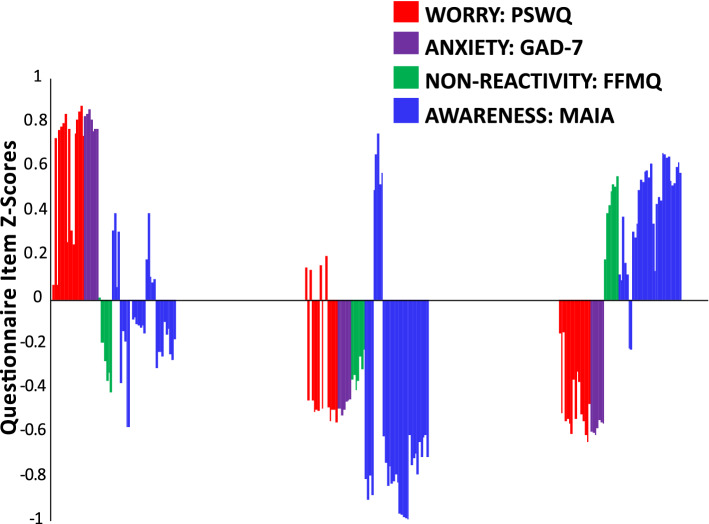
- Cluster membership was associated with diagnosis. In Study 1, cluster membership was associated with GAD diagnosis (Pearson chi-square (2) = 12.60, p = 0.002), with GAD diagnoses in 76.9% of cluster 1, 61.9% of cluster 2, and 24.1% of cluster 3. In Study 2, anxiety diagnosis proportions differed by cluster (Pearson chi-square(2) = 2982.2, p < 0.001), with 67% in cluster 1 and 21% in clusters 2 and 3.
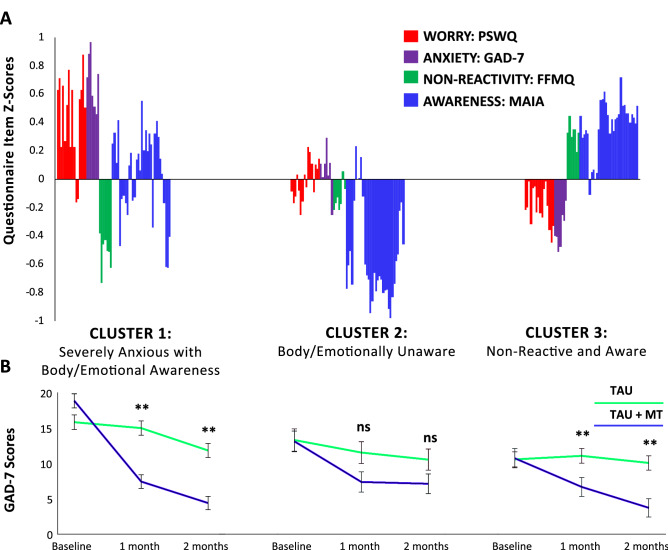
- Cluster membership moderated treatment response in Study 1. The TIME × GROUP × CLUSTER interaction on GAD-7 was significant (F(3.75, 106.95) = 2.72, p = 0.037, p2 = 0.09, observed power = 0.72). Follow-up analyses showed significant GROUP × TIME effects for cluster 1 (F(1.77, 19.41) = 31.39, p < 0.001, p2 = 0.74) and cluster 3 (F(1.77, 47.75) = 13.89, p < 0.001, p2 = 0.34), but not cluster 2 (F(1.53, 29.07) = 2.11, p = 0.149, p2 = 0.10).
- The clusters were described as: “severely anxious with body/emotional awareness” (cluster 1), “body/emotionally unaware” (cluster 2), and “aware and non-reactive” (cluster 3).
## Methods
- Design: Two studies using unsupervised clustering of baseline self-report questionnaire data; Study 1 examined whether cluster membership interacted with randomized anxiety treatment response over 2 months, and Study 2 examined cluster structure and associations with diagnosis in a general population sample.
- Samples/data: Study 1 included 63 treatment-seeking participants in TAU + mindfulness training vs TAU; Study 2 included 14,260 recruited, 14,010 retained participants from the US or Canada.
- Main analysis: Data were reduced with PCA, then clustered with hierarchical agglomerative clustering (Ward’s method) followed by k-means; outcomes were tested with mixed-measures ANOVA and chi-square analyses with Bonferroni correction.
## Limitations
- The paper states that Study 1’s sample was limited, which “may have masked the presence of significant effects,” and that Study 2’s large sample “may have yielded significant differences with less clinical relevance.”
- The paper states that diagnosis was measured differently across studies: diagnosed by an experimenter in Study 1 and self-reported in Study 2, limiting interpretation.
- The paper says the findings on treatment response should be interpreted with caution and replicated in larger studies.
- Evident from the text: the clustering and treatment-response findings rely on self-report questionnaires and the paper points to Supplementary Materials for full procedures, so the main text gives only partial methodological detail.
Model-written summary. Check it against the paper before relying on it.
Integrity signals
Registry
Cites
Statistics
Figures
Verification
Claims the paper makes
18 Valid · 1 Not valid · 9 Not checked · 77 Own results and interpretations
Every source the paper cites for this claim was checked and supports it.
In the paper
“This approach is based on the notion that inter-individual variability in various attributes (e.g. genetic, brain and physiological function, environmental exposure, behavioral and personality profile) is associated with heterogeneity in disease processes (disease progression, underlying factors/mechanisms) and treatment responses1.”
§ Cluster-based psychological phenotyping and differences in anxiety treatment outcomes > Introduction
What the sources say
- Supportedcites [1] Goetz LH Schork NJ Personalized medicine: Motivation, challenges, and progress Fertil. Steril. 2018 109 6 952 963 10.1016/j.fertnstert.2018.05.006 29935653 PMC6366451 source
Split into 2 atoms — 2 confirmed, 0 partially supported, 0 disputed, 0 misattributed, 0 unverifiable. Expand the claim to see per-atom verdicts.
plainstates an association- Asserted: passes — The authors put it forward as true.
- Checkable: passes — It can be checked against evidence.
- Load-bearing: passes — The paper’s conclusions depend on it.
- Based: passes — The paper gives a reason why it holds.
- Supported
Every source the paper cites for this claim was checked and supports it.
In the paper
“However, many of these effects are based on studies that do not have appropriate control groups, warranting an important need for further study [for reviews, see15,16].”
§ Cluster-based psychological phenotyping and differences in anxiety treatment outcomes > Introduction
What the sources say
- Supportedcites [15] Goyal M Meditation programs for psychological stress and well-being: A systematic review and meta-analysis JAMA Intern. Med. 2014 174 3 357 368 10.1001/jamainternmed.2013.13018 24395196 PMC4142584 source
The Introduction (page not provided) says earlier reviews reported reductions in emotional symptoms, including anxiety, but largely included uncontrolled studies. It also says many controlled studies did not adequately control for placebo effects, supporting the claim about inadequate control groups. (LLM, conf=0.92)
- Supportedcites [16] Hofmann SG The effect of mindfulness-based therapy on anxiety and depression: A meta-analytic review J. Consult. Clin. Psychol. 2010 78 2 169 183 10.1037/a0018555 20350028 PMC2848393 source
The Discussion reports that controlled effect sizes could be calculated for only 16 of 39 trials and calls for further randomized controlled trials. The Results specify that only 16 studies included a control or comparison group, supporting the claim that many reported effects came from studies without such groups. Page numbers were not available in our copy. (LLM, conf=0.92)
plainstates a cause- Asserted: passes — The authors put it forward as true.
- Checkable: passes — It can be checked against evidence.
- Load-bearing: passes — The paper’s conclusions depend on it.
- Based: passes — The paper gives a reason why it holds.
- Supported
Every source the paper cites for this claim was checked and supports it.
In the paper
“A recent meta-analysis also showed individual variability to psychological anxiety treatment outcomes, such that post-treatment symptom alleviation was significantly enhanced for patients exhibiting early response to treatment (in the first 4 weeks) vs those not showing such early improvements11.”
§ Cluster-based psychological phenotyping and differences in anxiety treatment outcomes > Introduction
What the sources say
- Supportedcites [11] Beard JIL Delgadillo J Early response to psychological therapy as a predictor of depression and anxiety treatment outcomes: A systematic review and meta-analysis Depress Anxiety 2019 36 9 866 878 10.1002/da.22931 31233263 source
The meta-analysis results (section 4.5, page not available) report significantly better post-treatment outcomes for early responders than for others (g = 0.87, p < .0001). The summary of evidence (section 4.1) reports a larger effect on anxiety outcomes (g = 1.37), and section 3.1.3 says many studies assessed early response by week 4. (LLM, conf=0.92)
plainstates an association- Asserted: passes — The authors put it forward as true.
- Checkable: passes — It can be checked against evidence.
- Load-bearing: passes — The paper’s conclusions depend on it.
- Based: passes — The paper gives a reason why it holds.
- Supported
The cited sources support only part of this claim — read each source’s verdict below.
In the paper
“Individuals with anxiety disorders, such as generalized anxiety disorder (GAD), display varying responses to pharmacological agents and psychotherapeutic approaches: response rates to anti-anxiety medications vary from 30 to 68%7, while 46% of patients showed clinical improvement from psychotherapeutic treatment8.”
§ Cluster-based psychological phenotyping and differences in anxiety treatment outcomes > Introduction
What the sources say
- Partly supportedcites [7] Koen N Stein DJ Pharmacotherapy of anxiety disorders: A critical review Dialog. Clin. Neurosci. 2011 13 4 423 437 10.31887/DCNS.2011.13.4/nkoen PMC3263390 22275848 sourceExperimental — accuracy not yet measured
The Generalized anxiety disorder section, Table I (page unavailable), reports a 68% response rate to paroxetine, supporting the upper end of the medication range. Its 30% figure is a remission rate, not a response rate, so the cited paper does not substantiate the stated 30–68% response range. The psychotherapy figure is attached to a different citation in the citing sentence. (LLM, conf=0.86)
- Supportedcites [8] Hunot V Psychological therapies for generalised anxiety disorder Cochrane Database Syst. Rev. 2007 1 01848 PMC7025441 17253466 source
The citation to this source is attached to the psychotherapy figure, not the medication range. The clinical-response passage (Cochrane Database of Systematic Reviews; page not specified) reports that 46% of participants receiving psychological therapy showed a clinical response. (LLM, conf=0.93)
plainstates an association- Asserted: passes — The authors put it forward as true.
- Checkable: passes — It can be checked against evidence.
- Load-bearing: passes — The paper’s conclusions depend on it.
- Based: passes — The paper gives a reason why it holds.
- Partly supported
Every source the paper cites for this claim was checked and supports it.
In the paper
“Recently, app-delivered MT has shown preliminary efficacy in symptom reduction: single-arm trials with anxious physicians23 and a randomized controlled trial from our laboratory conducted by Roy et al. which included individuals with GAD showed 57% and 67% reductions in clinical symptoms of anxiety respectively (Generalized Anxiety Disorder-7 scores, GAD-7)24.”
§ Cluster-based psychological phenotyping and differences in anxiety treatment outcomes > Introduction
What the sources say
- Supportedcites [23] Roy A Physician anxiety and burnout: Symptom correlates and a prospective pilot study of app-delivered mindfulness training JMIR Mhealth Uhealth 2020 8 4 e15608 10.2196/15608 32234708 PMC7160707 source
The Results > Changes in Anxiety and Burnout section reports a 57% reduction in GAD-7 scores at three months among physicians in this nonrandomized app-based mindfulness-training pilot study. That supports the preliminary symptom-reduction finding attributed to this source; the sentence’s 67% figure concerns a separately cited trial. (LLM, conf=0.93)
- Supportedcites [24] Roy A Clinical efficacy and psychological mechanisms of an app-based digital therapeutic for generalized anxiety disorder J. Med. Int. Res. 2021 23 12 e26987 PMC8686411 34860673 source
The Methods describe a randomized trial involving individuals with GAD who received treatment as usual with or without app-delivered MT. The Results (Changes in Outcome Measures) report a 67% reduction in GAD-7 anxiety scores in the app-delivered MT group at two months, compared with 14% in the treatment-as-usual group. The separate 57% figure is attributed to the single-arm study cited as reference 23, though this paper also reports it in the Introduction. (LLM, conf=0.94)
hedgedstates a cause- Asserted: passes — The authors put it forward as true.
- Checkable: passes — It can be checked against evidence.
- Load-bearing: passes — The paper’s conclusions depend on it.
- Based: passes — The paper gives a reason why it holds.
- Supported
62 more claims · 3 with their cited sources checked
Create a free account to see all 105 claims and to verify the 1 reference still open.
- Probably not a substantial claim. 19
- It may state two separate claims as one. 25
Statistics recomputed
Every reported test result, recomputed from its test statistic and degrees of freedom. A result shows as not adding up only once an independent check has confirmed it.
- ConsistentF(2, 60) = 1.86reported p = .165 · recomputed p = .165
“F(2,60) = 1.86, p = .165”
- ConsistentF(3.75, 106.95) = 2.72reported p = .037 · recomputed p = .037
“F(3.75, 106.95) = 2.72, p = .037”
- ConsistentF(1.77, 19.41) = 31.39reported p < .001 · recomputed p < .001
“F(1.77, 19.41) = 31.39, p < .001”
- ConsistentF(1.77, 47.75) = 13.89reported p < .001 · recomputed p < .001
“F(1.77, 47.75) = 13.89, p < .001”
- ConsistentF(1.53, 29.07) = 2.11reported p = .149 · recomputed p = .149
“F(1.53, 29.07) = 2.11, p = .149”
2 more recomputed tests
Create a free account to see every test the Stats check recomputed.
Self-check
Percentages, sums and reported differences re-computed from the paper’s own numbers.
Self-check results appear here once an independent check has confirmed them.
Citations
Cites
Diagnostic and Statistical Manual of Mental Disorders
American Psychiatric Association (2013) · doi:10.1176/appi.books.9780890425596 · Cited by 116,369
A Brief Measure for Assessing Generalized Anxiety Disorder: The GAD-7
Spitzer, R. L., Kroenke, K., Williams, J. B. W., & Löwe, B. (2006) · Archives of Internal Medicine · doi:10.1001/archinte.166.10.1092 · Cited by 31,765
Using Self-Report Assessment Methods to Explore Facets of Mindfulness
Baer, R. A., Smith, G. T., Hopkins, J., Krietemeyer, J., & Toney, L. (2006) · Assessment · doi:10.1177/1073191105283504 · Cited by 7,511 · cited 1×
“Finally, the TIME (1 month and 2 months post-treatment initiation) X CLUSTER ANOVA on number of mindfulness program modules completed did not reveal any significant main effect of CLUSTER (F(2, 25) = 0.”
MethodFinding Groups in Data: An Introduction to Cluster Analysis
Kaufman, L., & Rousseeuw, P. J. (1990) · Wiley Series in Probability and Statistics · doi:10.1002/9780470316801 · Cited by 7,344
Mindfulness: A proposed operational definition.
Bishop, S. R., Lau, M., Shapiro, S., Carlson, L., Anderson, N. D., Carmody, J., Segal, Z. V., Abbey, S., Speca, M., Velting, D., et al. (2004) · Clinical Psychology: Science and Practice · doi:10.1093/clipsy.bph077 · Cited by 7,234
Development and validation of the Penn State Worry Questionnaire
Meyer, T. J., Miller, M. L., Metzger, R. L., & Borkovec, T. D. (1990) · Behaviour Research and Therapy · doi:10.1016/0005-7967(90)90135-6 · Cited by 5,099
The effect of mindfulness based therapy on anxiety and depression: A meta analytic review
Hofmann, S. G., Sawyer, A. T., Witt, A. A., & Oh, D. (2010) · Journal of Consulting and Clinical Psychology · doi:10.1037/a0018555 · Cited by 3,846
Meditation Programs for Psychological Stress and Well-being: A Systematic Review and Meta-analysis
Goyal, M., Singh, S., Sibinga, E. M. S., Gould, N. F., Rowland-Seymour, A., Sharma, R., Berger, Z., Sleicher, D., Maron, D. D., Shihab, H. M., et al. (2014) · JAMA Internal Medicine · doi:10.1001/jamainternmed.2013.13018 · Cited by 2,380
Physical Activity and Mental Health: Current Concepts
Paluska, S. A., & Schwenk, T. L. (2000) · Sports Medicine · doi:10.2165/00007256-200029030-00003 · Cited by 1,722
Personalized medicine: motivation, challenges, and progress
Goetz, L. H., & Schork, N. J. (2018) · Fertility and Sterility · doi:10.1016/j.fertnstert.2018.05.006 · Cited by 976 · cited 2×
“Three key components may be needed to optimally determine an individual’s response to a psychological intervention: (1) traits/skills the intervention is aimed at developing, (2) mechanistic factors that are related to the disease process, and (3) clinical outcomes.”
BackgroundMethodBorkovec, T. D., Ray, W. J., & Stober, J. (1998) · Cognitive Therapy and Research · doi:10.1023/a:1018790003416 · Cited by 802
The Multidimensional Assessment of Interoceptive Awareness, Version 2 (MAIA-2)
Mehling, W. E., Acree, M., Stewart, A., Silas, J., & Jones, A. (2018) · PLOS ONE · doi:10.1371/journal.pone.0208034 · Cited by 793
Advances in Experimental Medicine and Biology
Berry, C. L. (1973) · Journal of Medical Genetics · doi:10.1136/jmg.10.4.401-a · Cited by 661
Machine learning and its applications to biology
Tarca, A. L., Carey, V. J., Chen, X.-W., Romero, R., & Drăghici, S. (2007) · PLoS Computational Biology · doi:10.1371/journal.pcbi.0030116 · Cited by 656
The use and reporting of cluster analysis in health psychology: A review
Clatworthy, J., Buick, D., Hankins, M., Weinman, J., & Horne, R. (2005) · British Journal of Health Psychology · doi:10.1348/135910705x25697 · Cited by 598
Response rates for CBT for anxiety disorders: need for standardized criteria
Loerinc, A. G., Meuret, A. E., Twohig, M. P., Rosenfield, D., Bluett, E. J., & Craske, M. G. (2015) · Clinical Psychology Review · doi:10.1016/j.cpr.2015.08.004 · Cited by 592
A "SMART" Design for Building Individualized Treatment Sequences
Lei, H., Nahum-Shani, I., Lynch, K., Oslin, D., & Murphy, S. A. (2012) · Annual Review of Clinical Psychology · doi:10.1146/annurev-clinpsy-032511-143152 · Cited by 557
Nutritional psychiatry: Towards improving mental health by what you eat
Adan, R. A. H., van der Beek, E. M., Buitelaar, J. K., Cryan, J. F., Hebebrand, J., Higgs, S., Schellekens, H., & Dickson, S. L. (2019) · European Neuropsychopharmacology · doi:10.1016/j.euroneuro.2019.10.011 · Cited by 454
Psychological therapies for generalised anxiety disorder
Hunot, V., Churchill, R., Teixeira, V., & Silva de Lima, M. (2007) · Cochrane Database of Systematic Reviews · doi:10.1002/14651858.cd001848.pub4 · Cited by 315
Brewer, J. A., Elwafi, H. M., & Davis, J. H. (2013) · Psychology of Addictive Behaviors · doi:10.1037/a0028490 · Cited by 303
Self-citationSartori, S. B., & Singewald, N. (2019) · Pharmacology & Therapeutics · doi:10.1016/j.pharmthera.2019.107402 · Cited by 236
G6 PD deficiency: a classic example of pharmacogenetics with on‐going clinical implications
Luzzatto, L., & Seneca, E. (2014) · British Journal of Haematology · doi:10.1111/bjh.12665 · Cited by 205 · cited 7×
“We found a significant association between cluster membership and the presence of a GAD diagnosis (Pearson chi-square (2) = 12.”
BackgroundMethodInfluentialPharmacotherapy of anxiety disorders: A critical review
Koen, N., & Stein, D. J. (2011) · Dialogues in Clinical Neuroscience · doi:10.31887/dcns.2011.13.4/nkoen · Cited by 151
Pharmacogenetics of warfarin: challenges and opportunities
Lee, M. T. M., & Klein, T. E. (2013) · Journal of Human Genetics · doi:10.1038/jhg.2013.40 · Cited by 137
Challenges and Future Prospects of Precision Medicine in Psychiatry
Manchia, M., Pisanu, C., Squassina, A., & Carpiniello, B. (2020) · Pharmacogenomics and Personalized Medicine · doi:10.2147/pgpm.s198225 · Cited by 135
Pharmacotherapy of anxiety disorders: a critical review.
Koen, N., & Stein, D. J. (2011) · PubMed · Cited by 124
Beard, J. I. L., & Delgadillo, J. (2019) · Depression and Anxiety · doi:10.1002/da.22931 · Cited by 81
Core Mechanisms of Cognitive Behavioral Therapy for Anxiety and Depression
Powers, M. B., de Kleine, R. A., & Smits, J. A. J. (2017) · Psychiatric Clinics of North America · doi:10.1016/j.psc.2017.08.010 · Cited by 75
Salters‐Pedneault, K., Gentes, E., & Roemer, L. (2007) · Cognitive Behaviour Therapy · doi:10.1080/16506070600874281 · Cited by 62
Nie, Z., Vairavan, S., Narayan, V. A., Ye, J., & Li, Q. S. (2018) · PLOS ONE · doi:10.1371/journal.pone.0197268 · Cited by 62
Brewer, J. (2019) · Current Opinion in Psychology · doi:10.1016/j.copsyc.2019.01.014 · Cited by 58
Self-citationJanes, A. C., Datko, M., Roy, A., Barton, B., Druker, S., Neal, C., Ohashi, K., Benoit, H., van Lutterveld, R., & Brewer, J. A. (2019) · Neuropsychopharmacology · doi:10.1038/s41386-019-0403-y · Cited by 55
Self-citationRoy, A., Druker, S., Hoge, E. A., & Brewer, J. A. (2020) · JMIR mHealth and uHealth · doi:10.2196/15608 · Cited by 55
Self-citationIdentifying schizophrenia subgroups using clustering and supervised learning
Talpalaru, A., Bhagwat, N., Devenyi, G. A., Lepage, M., & Chakravarty, M. M. (2019) · Schizophrenia Research · doi:10.1016/j.schres.2019.05.044 · Cited by 53
Niemann, U., Brueggemann, P., Boecking, B., Mebus, W., Rose, M., Spiliopoulou, M., & Mazurek, B. (2020) · Scientific Reports · doi:10.1038/s41598-020-73402-8 · Cited by 41
Roy, A., Hoge, E. A., Abrante, P., Druker, S., Liu, T., & Brewer, J. A. (2021) · Journal of Medical Internet Research · doi:10.2196/26987 · Cited by 41
Self-citationStatus of bcr-abl tyrosine kinase inhibitors in chronic myelogenous leukemia
O’Dwyer, M. E., & Druker, B. J. (2000) · Current Opinion in Oncology · doi:10.1097/00001622-200011000-00013 · Cited by 39 · cited 1×
“Three key components may be needed to optimally determine an individual’s response to a psychological intervention: (1) traits/skills the intervention is aimed at developing, (2) mechanistic factors that are related to the disease process, and (3) clinical outcomes.”
BackgroundZimmerman, B. J., Abraham, I., Schmidt, S. A., Baryshnikov, Y., & Husain, F. T. (2019) · Network Neuroscience · doi:10.1162/netn_a_00053 · Cited by 35
Personalized Clinical Approaches to Anxiety Disorders
Perna, G., Alciati, A., Sangiorgio, E., Caldirola, D., & Nemeroff, C. B. (2020) · Advances in Experimental Medicine and Biology · doi:10.1007/978-981-32-9705-0_25 · Cited by 15
Cited by
Machine learning applied to digital phenotyping: A systematic literature review and taxonomy
dos Santos, M. P., Heckler, W. F., Bavaresco, R. S., & Barbosa, J. L. V. (2024) · Computers in Human Behavior · doi:10.1016/j.chb.2024.108422 · Cited by 31
Understanding digital therapeutics in disease self-management: A systematic literature review
Yang, L., Zhang, M., Jia, L., Yan, Z., & Yin, Q. (2025) · Technology in Society · doi:10.1016/j.techsoc.2025.102831 · Cited by 9
Uncovering the heterogeneity in young adult anxiety: subtypes predict outcomes of a CBT mobile app
Giber, B., Schier, M. M., Bress, J. N., Mir, Z., Diaz, J. L., Falk, A. E., Bennett, S. M., Perlis, R. H., Lee, F. S., Gunning, F. M., et al. (2025) · Molecular Psychiatry · doi:10.1038/s41380-025-03188-6 · Cited by 5
“Further, most prior research focused on between-individual differences and did not incorporate methods that examine within-person effects [19 – 21].”
Okazaki, S., Okuhata, S., 青木, 真., & Maekawa, H. (2025) · Journal of Intelligence · doi:10.3390/jintelligence13060071 · Cited by 1
Genetics of Psychiatric Disorders: Advances in Genetic Epidemiology and Genomic Approaches
Kohshour, M. O., Strom, N. I., Meier, S. M., McMahon, F. J., Merikangas, K. R., Schulze, T. G., & Mattheisen, M. (2024) · Springer eBooks · doi:10.1007/978-3-030-42825-9_51-1
Metadata
- Authors
- Taylor, V. A., Roy, A., & Brewer, J. A.
- Affiliations
- Brown University (US)
- Venue
- Scientific Reports
- Published
- 2023-02-21
- Volume
- 13
- Issue
- 1
- Pages
- 3055-3055
- ISSN
- 2045-2322 (ISSN-L)
- PMC
- PMC9944281
- OpenAlex
- W4321611637
- Cited by
- 11
- References
- 39
- Citations by year
- 2026: 3 · 2025: 4 · 2024: 4
- FWCI
- 2.07
- Type
- journal article
- Language
- en
- Open access
- gold
- doi.org
- Licence
- cc-by
- creativecommons.org/licenses/by/4.0 (tdm)
- creativecommons.org/licenses/by/4.0 (vor)
- Locations
- Scientific Reports (publishedVersion, cc-by)
- PubMed Central (publishedVersion, cc-by)
- PubMed (publishedVersion)
- DOAJ (DOAJ: Directory of Open Access Journals) (submittedVersion, cc-by-sa)
- Funders
- National Institute of Health (R41MH118130-01)
- Brown University (Brown University Research Fund allocated to Dr J. Brewer)
- Topics
- Social Sciences › Psychology › Experimental and Cognitive Psychology › Anxiety, Depression, Psychometrics, Treatment, Cognitive Processes
- Social Sciences › Psychology › Applied Psychology › Digital Mental Health Interventions
- Social Sciences › Psychology › Clinical Psychology › Mindfulness and Compassion Interventions
- Keywords
- anxiety, generalized anxiety disorder, mindfulness training, digital therapeutics, interoceptive awareness, emotional reactivity, worry, treatment response, personalized medicine, psychiatric diagnosis, clustering
- MeSH terms
- Anxiety, Anxiety Disorders, Cognition, Humans, Treatment Outcome, Mindfulness
About these checks
Registry, retraction, Cites and statistics results are computed, not judged, with one exception: a printed reference that no index lists is read once by a model before it counts as a citation error. Claims are extracted by a model and kept only when their quote appears verbatim in the text; each cited source is then checked, with a model’s help, for whether it says what the claim relies on. Those verdicts can be wrong — read the claim’s quote and the cited source before relying on one.
The claim verdicts this report counts are experimental: their accuracy is not yet measured.
A language model drew the claims from the paper on 2026-10-11, under version 3 of the claim definition (model deepseek-v4.1-flash, prompt extract-v3).
A second model labelled each claim on 2026-10-11 (model jev-1.13-20260917, definition revision gold-guideline-v0.2).
Cited sources are checked with a language model’s help (gpt-6-sol).
Statistics and arithmetic are recomputed, not judged.
Confidence bands are shown only for fields calibrated on our annotated test set. None is calibrated yet, so no band is shown.
What counts as a claim ›How we measure confidence ›How we check this ›
Are you an author, or do you see a problem with this page? Request a review
Data sources
Bibliographic data: Semantic Scholar, OpenAlex, Crossref.
Contains information from the Semantic Scholar Academic Graph Datasets, made available under the ODC Attribution License (ODC-BY 1.0).
Semantic Scholar’s data is described in: Kinney, R., et al. (2023). The Semantic Scholar Open Data Platform. arXiv:2301.10140.
