

The endometrial microbiota of women with or without a live birth within 12 months after a first failed IVF/ICSI cycle
Open accessThe DOI matches its Crossref record; 52 of the 52 references it cites were found in a registry or an index.
Abstract
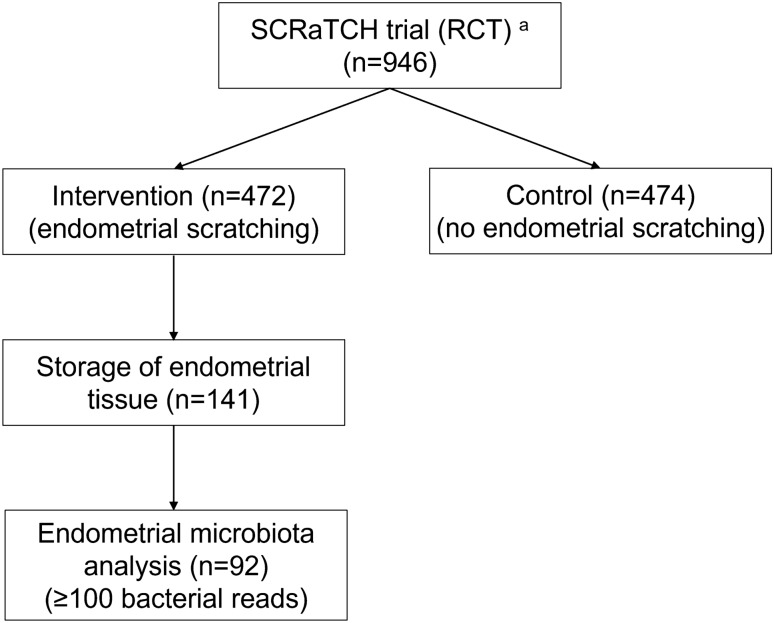
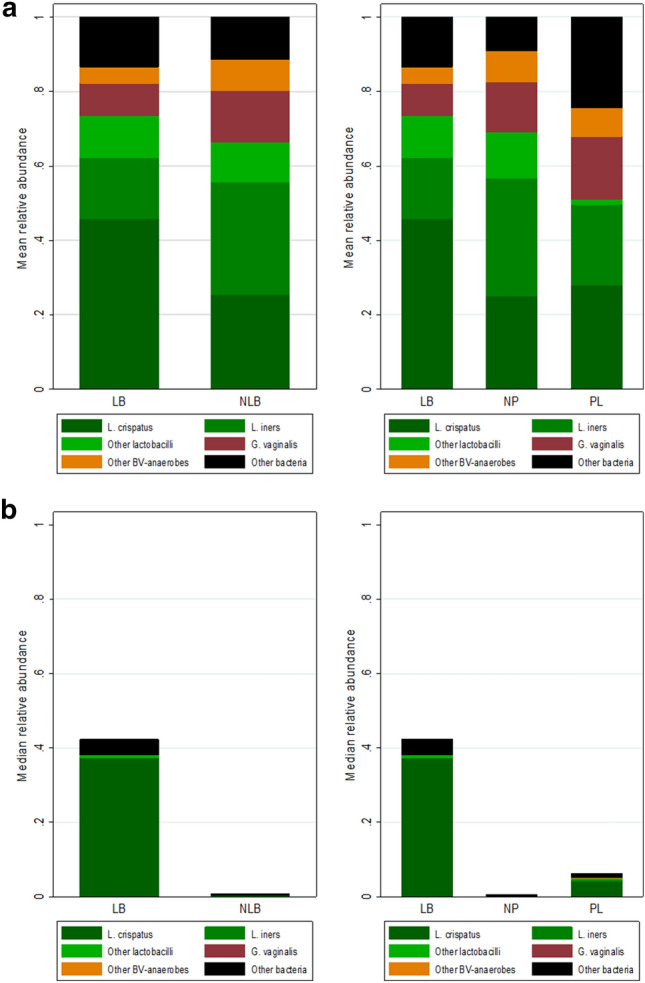
The endometrial microbiota composition may be associated with implantation success. However, a ‘core’ composition has not yet been defined. This exploratory study analysed the endometrial microbiota by 16S rRNA sequencing (V1–V2 region) of 141 infertile women whose first IVF/ICSI cycle failed and compared the microbiota profiles of women with and without a live birth within 12 months of follow-up, and by infertility cause and type. Lactobacillus was the most abundant genus in the majority of samples. Women with a live birth compared to those without had significantly higher Lactobacillus crispatus relative abundance (RA) (p = 0.029), and a smaller proportion of them had ≤ 10% L. crispatus RA (42.1% and 70.4%, respectively; p = 0.015). A smaller proportion of women in the male factor infertility group had ≤ 10% L. crispatus RA compared to women in the unexplained and other infertility causes groups combined (p = 0.030). Women with primary infertility compared to secondary infertility had significantly higher L. crispatus RA (p = 0.004); lower proportions of them had ≤ 10% L. crispatus RA (p = 0.009) and > 10% Gardnerella vaginalis RA (p = 0.019). In conclusion, IVF/ICSI success may be associated with L. crispatus RA and secondary infertility with endometrial dysbiosis, more often than primary infertility. These hypotheses should be tested in rigorous well-powered longitudinal studies.
Overview
The claims and statistics of this paper haven’t been checked yet.
Free: it reads the open-access text and checks the first 5 claims that cite a source we can check. Create a free account to check every claim.
Integrity signals
Registry
Cites
Statistics
Figures
Verification
Claims the paper makes
The claims and statistics of this paper haven’t been checked yet.
Free: it reads the open-access text and checks the first 5 claims that cite a source we can check. Create a free account to check every claim.
Claims other papers make about this one
Each is checked against this paper’s own text: does it say what the citing paper says it does?
The source backs part of the claim, not all of it — or backs it for a different population, condition or comparison.
In the citing paper
“Accordingly, several studies suggest that dysbiosis at the time of ET may lead to reduced pregnancy rates while Lactobacillus abundance poses a positive impact on ART outcomes [9–11].”
From Vaginal probiotics as therapeutic adjuncts for improving embryo transfer success rates: a systematic review and meta-analysis (2025) · cites this paper as [10]
Experimental — accuracy not yet measured
Self-check
Percentages, sums and reported differences re-computed from the paper’s own numbers.
The self-check needs the paper’s full text.
Citations
Cites
DADA2: High–resolution sample inference from Illumina amplicon data
Callahan, B. J., McMurdie, P. J., Rosen, M. J., Han, A. W., Johnson, A. J. A., & Holmes, S. P. (2016) · Nature Methods · doi:10.1038/nmeth.3869 · Cited by 35,698
The SILVA ribosomal RNA gene database project: improved data processing and web-based tools
Quast, C., Pruesse, E., Yilmaz, P., Gerken, J., Schweer, T., Yarza, P., Peplies, J., & Glöckner, F. O. (2012) · Nucleic Acids Research · doi:10.1093/nar/gks1219 · Cited by 33,055
Reproducible, interactive, scalable and extensible microbiome data science using QIIME 2
Bolyen, E., Rideout, J. R., Dillon, M. R., Bokulich, N. A., Abnet, C. C., Al-Ghalith, G. A., Alexander, H., Alm, E. J., Arumugam, M., Asnicar, F., et al. (2019) · Nature Biotechnology · doi:10.1038/s41587-019-0209-9 · Cited by 23,742
phyloseq: An R Package for Reproducible Interactive Analysis and Graphics of Microbiome Census Data
McMurdie, P. J., & Holmes, S. (2013) · PLoS ONE · doi:10.1371/journal.pone.0061217 · Cited by 21,322
Anomalous collapses of Nares Strait ice arches leads to enhanced export of Arctic sea ice
Moore, G. W. K., Howell, S. E. L., Brady, M., Xu, X., & McNeil, K. (2021) · Nature Communications · doi:10.1038/s41467-020-20314-w · Cited by 5,155
Vaginal microbiome of reproductive-age women
Ravel, J., Gajer, P., Abdo, Z., Schneider, G. M., Koenig, S. S. K., McCulle, S. L., Karlebach, S., Gorle, R., Russell, J., Tacket, C. O., et al. (2011) · Proceedings of the National Academy of Sciences · doi:10.1073/pnas.1002611107 · Cited by 4,254
World Health Organization reference values for human semen characteristics*‡
Cooper, T. G., Noonan, E., von Eckardstein, S., Auger, J., Baker, H. W. G., Behre, H. M., Haugen, T. B., Kruger, T., Wang, C., Mbizvo, M. T., et al. (2010) · Human Reproduction Update · doi:10.1093/humupd/dmp048 · Cited by 2,827
Analysis of compositions of microbiomes with bias correction
Lin, H., & Peddada, S. D. (2020) · Nature Communications · doi:10.1038/s41467-020-17041-7 · Cited by 2,104
Contamination in Low Microbial Biomass Microbiome Studies: Issues and Recommendations
Eisenhofer, R., Minich, J. J., Marotz, C., Cooper, A., Knight, R., & Weyrich, L. S. (2019) · Trends in Microbiology · doi:10.1016/j.tim.2018.11.003 · Cited by 1,146
Chen, C., Song, X., Wei, W., Zhong, H., Dai, J., Lan, Z., Li, F., Yu, X., Feng, Q., Wang, Z., et al. (2017) · Nature Communications · doi:10.1038/s41467-017-00901-0 · Cited by 984
Evidence that the endometrial microbiota has an effect on implantation success or failure
Moreno, I., Codoñer, F. M., Vilella, F., Valbuena, D., Martinez-Blanch, J. F., Jimenez-Almazán, J., Alonso, R., Alamá, P., Remohí, J., Pellicer, A., et al. (2016) · American Journal of Obstetrics and Gynecology · doi:10.1016/j.ajog.2016.09.075 · Cited by 868
Lactobacillus species as biomarkers and agents that can promote various aspects of vaginal health
Petrova, M. I., Lievens, E., Malik, S., Imholz, N., & Lebeer, S. (2015) · Frontiers in Physiology · doi:10.3389/fphys.2015.00081 · Cited by 523
The Vaginal Microbiota: What Have We Learned after a Decade of Molecular Characterization?
van de Wijgert, J. H. H. M., Borgdorff, H., Verhelst, R., Crucitti, T., Francis, S., Verstraelen, H., & Jespers, V. (2014) · PLoS ONE · doi:10.1371/journal.pone.0105998 · Cited by 465
Uterine Microbiota: Residents, Tourists, or Invaders?
Baker, J. M., Chase, D. M., & Herbst-Kralovetz, M. M. (2018) · Frontiers in Immunology · doi:10.3389/fimmu.2018.00208 · Cited by 392
Potential contribution of the uterine microbiome in the development of endometrial cancer
Walther-António, M. R. S., Chen, J., Multinu, F., Hokenstad, A., Distad, T. J., Cheek, E. H., Keeney, G. L., Creedon, D. J., Nelson, H., Mariani, A., et al. (2016) · Genome Medicine · doi:10.1186/s13073-016-0368-y · Cited by 386
Kindinger, L. M., Bennett, P. R., Lee, Y. S., Marchesi, J. R., Smith, A., Cacciatore, S., Holmes, E., Nicholson, J. K., Teoh, T. G., & MacIntyre, D. A. (2017) · Microbiome · doi:10.1186/s40168-016-0223-9 · Cited by 372
Menopause and the vaginal microbiome
Muhleisen, A. L., & Herbst-Kralovetz, M. M. (2016) · Maturitas · doi:10.1016/j.maturitas.2016.05.015 · Cited by 328
Endometrial microbiota composition is associated with reproductive outcome in infertile patients
Moreno, I., Garcia-Grau, I., Perez-Villaroya, D., Gonzalez-Monfort, M., Bahçeci, M., Barrionuevo, M. J., Taguchi, S., Puente, E., Dimattina, M., Lim, M. W., et al. (2022) · Microbiome · doi:10.1186/s40168-021-01184-w · Cited by 325
How uterine microbiota might be responsible for a receptive, fertile endometrium
Benner, M., Ferwerda, G., Joosten, I., & van der Molen, R. G. (2018) · Human Reproduction Update · doi:10.1093/humupd/dmy012 · Cited by 304
Franasiak, J. M., Werner, M. D., Juneau, C. R., Tao, X., Landis, J., Zhan, Y., Treff, N. R., & Scott, R. T. (2016) · Journal of Assisted Reproduction and Genetics · doi:10.1007/s10815-015-0614-z · Cited by 288
Understanding vaginal microbiome complexity from an ecological perspective
Hickey, R. J., Zhou, X., Pierson, J. D., Ravel, J., & Forney, L. J. (2012) · Translational Research · doi:10.1016/j.trsl.2012.02.008 · Cited by 269
Why do lactobacilli dominate the human vaginal microbiota?
Witkin, S., & Linhares, I. (2017) · BJOG: An International Journal of Obstetrics & Gynaecology · doi:10.1111/1471-0528.14390 · Cited by 264
Koedooder, R., Singer, M., Schoenmakers, S., Savelkoul, P. H. M., Morré, S. A., de Jonge, J. D., Poort, L., Cuypers, W. J. S. S., Beckers, N. G. M., Broekmans, F. J. M., et al. (2019) · Human Reproduction · doi:10.1093/humrep/dez065 · Cited by 257
Self-citationHaahr, T., Jensen, J. S., Thomsen, L., Duus, L., Rygaard, K., & Humaidan, P. (2016) · Human Reproduction · doi:10.1093/humrep/dew026 · Cited by 243
A review of the pathophysiology of recurrent implantation failure
Franasiak, J. M., Alecsandru, D., Forman, E. J., Gemmell, L. C., Goldberg, J. M., Llarena, N., Margolis, C., Laven, J., Schoenmakers, S., & Seli, E. (2021) · Fertility and Sterility · doi:10.1016/j.fertnstert.2021.09.014 · Cited by 206
Translocation of vaginal microbiota is involved in impairment and protection of uterine health
Wang, J., Li, Z., Ma, X., Du, L., Jia, Z., Cui, X., Yu, L., Yang, J., Xiao, L., Zhang, B., et al. (2021) · Nature Communications · doi:10.1038/s41467-021-24516-8 · Cited by 190
Does the endometrial cavity have a molecular microbial signature?
Winters, A. D., Romero, R., Gervasi, M. T., Gomez-Lopez, N., Tran, M. R., Garcia-Flores, V., Pacora, P., Jung, E., Hassan, S. S., Hsu, C.-D., et al. (2019) · Scientific Reports · doi:10.1038/s41598-019-46173-0 · Cited by 188
van de Wijgert, J., & Verwijs, M. (2020) · BJOG: An International Journal of Obstetrics & Gynaecology · doi:10.1111/1471-0528.15870 · Cited by 162
Hyman, R. W., Herndon, C. N., Jiang, H., Palm, C., Fukushima, M., Bernstein, D., Vo, K. C., Zelenko, Z., Davis, R. W., & Giudice, L. C. (2012) · Journal of Assisted Reproduction and Genetics · doi:10.1007/s10815-011-9694-6 · Cited by 159
Eckert, L. O., Moore, D. E., Patton, D. L., Agnew, K. J., & Eschenbach, D. A. (2003) · Infectious Diseases in Obstetrics and Gynecology · doi:10.1155/s1064744903000024 · Cited by 122
Kitaya, K., Nagai, Y., Arai, W., Sakuraba, Y., & Ishikawa, T. (2019) · Mediators of Inflammation · doi:10.1155/2019/4893437 · Cited by 113
Hansen, L. K., Becher, N., Bastholm, S. K., Glavind, J., Ramsing, M., Kim, C. J., Romero, R. J., Jensen, J. S., & Uldbjerg, N. (2013) · Acta Obstetricia Et Gynecologica Scandinavica · doi:10.1111/aogs.12296 · Cited by 107
Bernabeu, A., Lledó, B., Díaz, M. C., Lozano, F. M., Ruiz, V., Fuentes, A., López‐Pineda, A., Moliner, B., Castillo, J. C., Ortiz, J. A., et al. (2019) · Journal of Assisted Reproduction and Genetics · doi:10.1007/s10815-019-01564-0 · Cited by 105
Assisted reproductive technology in reproductive medicine — possibilities and limitations
Szamatowicz, M. (2016) · Ginekologia Polska · doi:10.5603/gp.2016.0095 · Cited by 100
Mapping the entire functionally active endometrial microbiota
Sola-Leyva, A., Andrés-León, E., Molina, N. M., Terron-Camero, L. C., Plaza-Díaz, J., Sáez-Lara, M. J., Gonzalvo, M. C., Sánchez, R., Ruíz, S., Martínez, L., et al. (2021) · Human Reproduction · doi:10.1093/humrep/deaa372 · Cited by 99
Molina, N. M., Sola-Leyva, A., Haahr, T., Aghajanova, L., Laudanski, P., Castilla, J. A., & Altmäe, S. (2021) · Human Reproduction · doi:10.1093/humrep/deab009 · Cited by 96
Tao, X., Franasiak, J. M., Zhan, Y., Scott, R. T., Rajchel, J., Bedard, J., Newby, R., Scott, R. T., Treff, N. R., & Chu, T. (2017) · Human Microbiome Journal · doi:10.1016/j.humic.2017.01.004 · Cited by 92
Impact of the Vaginal and Endometrial Microbiome Pattern on Assisted Reproduction Outcomes
Diaz-Martínez, M. D. C., Bernabeu, A., Lledó, B., Carratalá-Munuera, C., Quesada, J. A., Lozano, F. M., Ruiz, V., Morales, R., Llácer, J., Ten, J., et al. (2021) · Journal of Clinical Medicine · doi:10.3390/jcm10184063 · Cited by 75
Ichiyama, T., Kuroda, K., Nagai, Y., Urushiyama, D., Ohno, M., Yamaguchi, T., Nagayoshi, M., Sakuraba, Y., Yamasaki, F., Hata, K., et al. (2021) · Reproductive Medicine and Biology · doi:10.1002/rmb2.12389 · Cited by 73
Haahr, T., Humaidan, P., Elbæk, H. O., Alsbjerg, B., Laursen, R., Rygaard, K., Johannesen, T. B., Andersen, P. S., Ng, K. L., & Jensen, J. S. (2018) · The Journal of Infectious Diseases · doi:10.1093/infdis/jiy744 · Cited by 68
D’Ippolito, S., Nicuolo, F. D., Pontecorvi, A., Gratta, M., Scambia, G., & Simone, N. D. (2018) · American Journal of Reproductive Immunology · doi:10.1111/aji.13065 · Cited by 67
Kadogami, D., Nakaoka, Y., & Morimoto, Y. (2020) · Reproductive Biology · doi:10.1016/j.repbio.2020.07.001 · Cited by 64
van Hoogenhuijze, N. E., Mol, F., Laven, J. S. E., Groenewoud, E. R., Traas, M. A. F., Janssen, C. A. H., Teklenburg, G., de Bruin, J. P., van Oppenraaij, R. H. F., Maas, J. W. M., et al. (2020) · Human Reproduction · doi:10.1093/humrep/deaa268 · Cited by 63
Self-citationZheng, N., Guo, R., Yao, Y., Jin, M., Cheng, Y., & Ling, Z. (2019) · BioMed Research International · doi:10.1155/2019/6079734 · Cited by 53
Implantation Failure in Assisted Reproduction Technology and a Critical Approach to Treatment
Levi-Setti, P. E., COLOMBO, G. V., Savasi, V. M., Bulletti, C., Albani, E., & Ferrazzi, E. M. (2004) · Annals of the New York Academy of Sciences · doi:10.1196/annals.1335.021 · Cited by 41
The vaginal microbiome as a tool to predict IVF success
Schoenmakers, S., & Laven, J. S. E. (2020) · Current Opinion in Obstetrics & Gynecology · doi:10.1097/gco.0000000000000626 · Cited by 41
Eskew, A. M., Stout, M., Bedrick, B. S., Riley, J., Omurtag, K. R., Jimenez, P., Odem, R. R., Ratts, V., Keller, S., Jungheim, E., et al. (2019) · BJOG An International Journal of Obstetrics & Gynaecology · doi:10.1111/1471-0528.15951 · Cited by 32
Lüll, K., Saare, M., Peters, M., Инвериевна, К. Е., Zhdanova, A. S., Salumets, A., Boyarsky, K. Y., & Org, E. (2022) · Acta Obstetricia Et Gynecologica Scandinavica · doi:10.1111/aogs.14297 · Cited by 31
Armstrong, S. K. (2015) · Microbiology Spectrum · doi:10.1128/microbiolspec.mbp-0007-2014 · Cited by 19
Kitaya, K., & Ishikawa, T. (2022) · Archives of Gynecology and Obstetrics · doi:10.1007/s00404-022-06755-2 · Cited by 18
Eskew, A. M., Stout, M. J., Bedrick, B. S., Riley, J. K., Herter, B. N., Gula, H., Jungheim, E. S., & Wylie, K. M. (2021) · F&S Science · doi:10.1016/j.xfss.2021.01.002 · Cited by 14
Bednarska‐Czerwińska, A., Czerwinski, M. D., Morawiec, E., Łach, A., Ziaja, A., Kusaj, A., Strączyńska, P., Sagan, D., Boroń, D., & Grabarek, B. O. (2022) · Journal of Clinical Medicine · doi:10.3390/jcm11123348 · Cited by 14
Cited by
Balla, B., Illés, A., Tóbiás, B., Pikó, H., Beke, A., Sipos, M., Lakatos, P. L., & Kosa, J. P. (2024) · International Journal of Molecular Sciences · doi:10.3390/ijms252313227 · Cited by 69
Endometrial Microbiome and Reproductive Receptivity: Diverse Perspectives
Stoyancheva, G. D., Mihaylova, N., Gerginova, M., & Krumova, E. T. (2025) · International Journal of Molecular Sciences · doi:10.3390/ijms262110796 · Cited by 35
Longitudinal analysis of vaginal microbiota during IVF fresh embryo transfer and in early pregnancy
Väinämö, S., Saqib, S., Kalliala, I. E. J., Kervinen, K., Luiro, K., Niinimäki, M. J., Halttunen, M., Virtanen, S., Nieminen, P., Salonen, A., et al. (2023) · Microbiology Spectrum · doi:10.1128/spectrum.01650-23 · Cited by 31
Haahr, T., Freiesleben, N. L. C., Jensen, M. B., Elbæk, H. O., Alsbjerg, B., Laursen, R., Prætorius, L., Nielsen, H. S., Pinborg, A. B., Boujida, V. H., et al. (2025) · Nature Communications · doi:10.1038/s41467-025-60205-6 · Cited by 21
Hiratsuka, D., Matsuo, M., & Hirota, Y. (2026) · Fertility and Sterility · doi:10.1016/j.fertnstert.2026.01.010 · Cited by 20
Metadata
- Authors
- Bui, B. N., van Hoogenhuijze, N., Viveen, M., Mol, F., Teklenburg, G., de Bruin, J.-P., Besselink, D., Brentjens, L. S., Mackens, S., Rogers, M. R. C., Steba, G. S., Broekmans, F., Paganelli, F. L., & van de Wijgert, J. H. H. M.
- Affiliations
- University Medical Center Utrecht (NL)
- Amsterdam UMC Location University of Amsterdam (NL)
- Isala (NL)
- Radboud University Medical Center (NL)
- Maastricht University Medical Centre (NL)
- Vrije Universiteit Brussel (BE)
- Corresponding author
- Bui, Bich Ngoc
- ORCID
- Venue
- Scientific Reports
- Published
- 2023-03-01
- Volume
- 13
- Issue
- 1
- Pages
- 3444-3444
- ISSN
- 2045-2322 (ISSN-L)
- PMC
- PMC9977966
- OpenAlex
- W4322739017
- Cited by
- 38
- References
- 52
- Citations by year
- 2026: 16 · 2025: 12 · 2024: 7 · 2023: 3
- FWCI
- 6.92
- Type
- journal article
- Language
- en
- Open access
- gold
- doi.org
- Licence
- cc-by
- creativecommons.org/licenses/by/4.0 (tdm)
- creativecommons.org/licenses/by/4.0 (vor)
- Locations
- Scientific Reports (publishedVersion, cc-by)
- PubMed Central (publishedVersion, cc-by)
- PubMed (publishedVersion)
- Research Publications (Maastricht University) (publishedVersion, cc-by)
- Pure Amsterdam UMC (submittedVersion, cc-by)
- Radboud Repository (Radboud University) (submittedVersion)
- VUBIR (Vrije Universiteit Brussel) (submittedVersion)
- Radboud Repository (Radboud University) (submittedVersion, other-oa)
- Data Archiving and Networked Services (DANS) (submittedVersion, other-oa)
- DOAJ (DOAJ: Directory of Open Access Journals) (submittedVersion, cc-by-sa)
- Utrecht University Repository (Utrecht University) (submittedVersion, other-oa)
- Funders
- ZonMw (843002601)
- Merck KGaA
- Utrecht Exposome Hub of Utrecht Life Sciences
- Topics
- Life Sciences › Immunology and Microbiology › Microbiology › Reproductive tract infections research
- Life Sciences › Biochemistry, Genetics and Molecular Biology › Molecular Biology › Gut microbiota and health
- Life Sciences › Immunology and Microbiology › Immunology › Reproductive System and Pregnancy
- Keywords
- endometrial microbiota, Lactobacillus crispatus, Gardnerella vaginalis, live birth, implantation success, infertility, primary infertility, secondary infertility, male factor infertility, Lactobacillus
- MeSH terms
- Female, Humans, Infertility, Female, Infertility, Male, Male, Pregnancy, RNA, Ribosomal, 16S, Sperm Injections, Intracytoplasmic, Live Birth, Microbiota
About these checks
Registry, retraction, Cites and statistics results are computed, not judged, with one exception: a printed reference that no index lists is read once by a model before it counts as a citation error. Claims are extracted by a model and kept only when their quote appears verbatim in the text; each cited source is then checked, with a model’s help, for whether it says what the claim relies on. Those verdicts can be wrong — read the claim’s quote and the cited source before relying on one.
Statistics and arithmetic are recomputed, not judged.
Confidence bands are shown only for fields calibrated on our annotated test set. None is calibrated yet, so no band is shown.
What counts as a claim ›How we measure confidence ›How we check this ›
Are you an author, or do you see a problem with this page? Request a review
Data sources
Bibliographic data: Semantic Scholar, OpenAlex, Crossref.
Contains information from the Semantic Scholar Academic Graph Datasets, made available under the ODC Attribution License (ODC-BY 1.0).
Semantic Scholar’s data is described in: Kinney, R., et al. (2023). The Semantic Scholar Open Data Platform. arXiv:2301.10140.
