

Microbial composition of tumorous and adjacent gastric tissue is associated with prognosis of gastric cancer
Open accessThe DOI matches its Crossref record; 45 of the 45 references it cites were found in a registry or an index.
Abstract
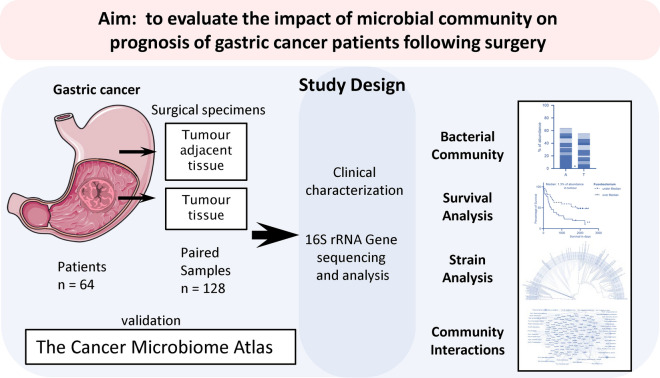
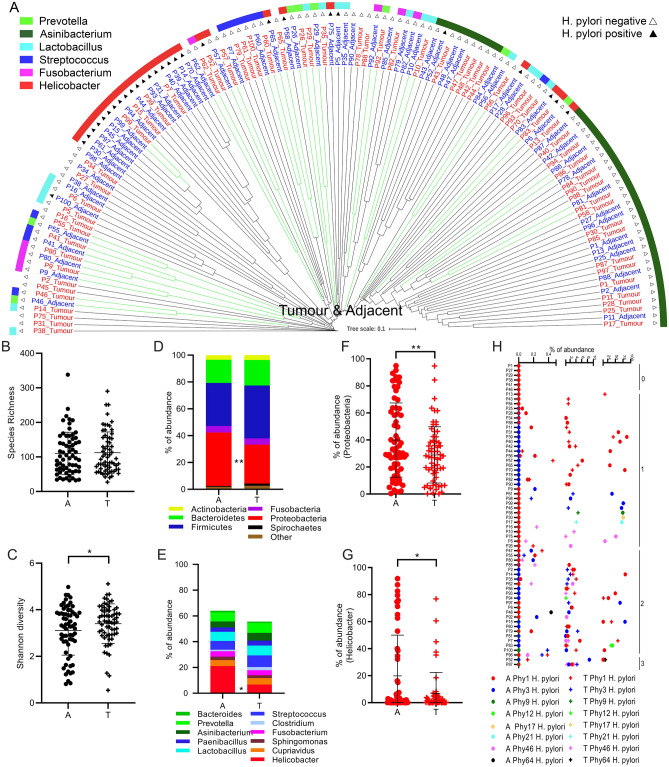
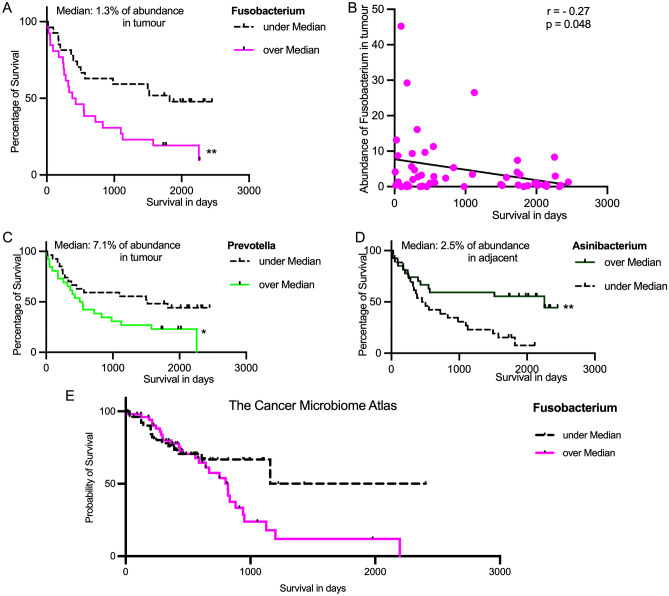
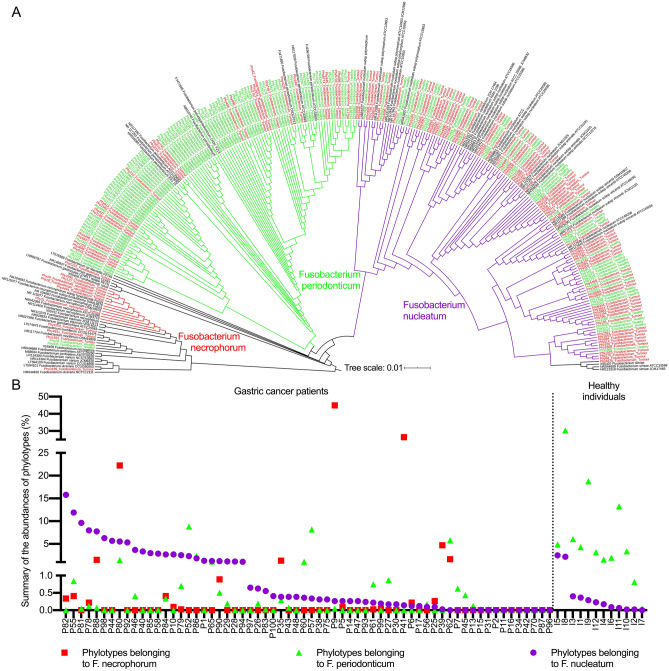
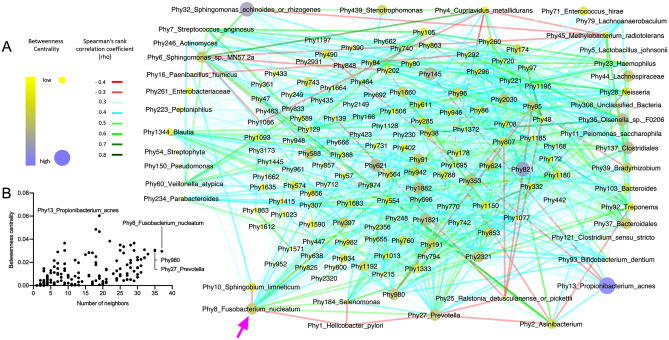
Helicobacter pylori (H. pylori) infection has been considered as the main causal factor in gastric carcinogenesis, but other bacterial species may also play an important role in pathophysiology of gastric cancer. The aim of the study was to explore the link between gastric cancer prognosis and the mucosal microbial community in tumorous and adjacent gastric tissue. The bacterial profile was analysed using 16S sequencing (V1–V2 region). Microbial differences were mostly characterized by lower relative abundances of H. pylori in tumorous gastric tissues. Bacterial community and outcome data analysis revealed the genus Fusobacterium and Prevotella significantly associated with worse overall survival in gastric cancer patients. In particular, Fusobacterium was associated with significant increase in hazard ratio in both univariable and multivariable analysis and independently validated using TCMA data. Phylogenetic biodiversity of Fusobacterium species in the stomach revealed F. periodonticum as the most prevalent in healthy subjects, while F. nucleatum was most abundant in patients with gastric cancer. Bacterial community network analysis in gastric cancer suggests substantial complexity and a strong interplay between F. nucleatum and Prevotella. In summary, mucosal microbial community in the stomach was associated with worse overall survival in gastric cancer patients. Strongest negative impact on prognosis was linked to the abundance of F. nucleatum in tumorous specimens, suggesting its translational relevance in management of gastric cancer patients.
Overview
The claims and statistics of this paper haven’t been checked yet.
Free: it reads the open-access text and checks the first 5 claims that cite a source we can check. Create a free account to check every claim.
Integrity signals
Registry
Cites
Statistics
Figures
Verification
Claims the paper makes
The claims and statistics of this paper haven’t been checked yet.
Free: it reads the open-access text and checks the first 5 claims that cite a source we can check. Create a free account to check every claim.
Claims other papers make about this one
Each is checked against this paper’s own text: does it say what the citing paper says it does?
The source backs part of the claim, not all of it — or backs it for a different population, condition or comparison.
In the citing paper
“The GC patients with enrichment of Fusobacterium nucleatum and the genus Prevotella I in their cancerous tissues showed worse survival using PERMANOVA and ANOSIM analyses.”
From Bioinformatics Analysis and Validation of Potential Markers Associated with Prediction and Prognosis of Gastric Cancer (2024) · cites this paper as [96]
Experimental — accuracy not yet measuredThe cited source says what the claim attributes to it.
In the citing paper
“A recent study characterized the mucosal microbiome composition in paired cancerous and adjacent normal tissues and found significant correlations with the prognosis of GC patients [96].”
From Bioinformatics Analysis and Validation of Potential Markers Associated with Prediction and Prognosis of Gastric Cancer (2024) · cites this paper as [96]
The cited source says what the claim attributes to it.
In the citing paper
“From 128 samples, 5450 different phylotypes belonging to 19 phyla and 296 genera were detected using a bioinformatics approach.”
From Bioinformatics Analysis and Validation of Potential Markers Associated with Prediction and Prognosis of Gastric Cancer (2024) · cites this paper as [96]
The cited source says what the claim attributes to it.
In the citing paper
“indicating that the gastric microbial environment may be responsible for the GC phenotype.”
From Bioinformatics Analysis and Validation of Potential Markers Associated with Prediction and Prognosis of Gastric Cancer (2024) · cites this paper as [96]
The cited source says what the claim attributes to it.
In the citing paper
“Bacterial network analysis revealed that F. nucleatum and Prevotella closely interacted with each other and with gastric bacterial communities in patients with GC”
From Bioinformatics Analysis and Validation of Potential Markers Associated with Prediction and Prognosis of Gastric Cancer (2024) · cites this paper as [96]
Self-check
Percentages, sums and reported differences re-computed from the paper’s own numbers.
The self-check needs the paper’s full text.
Citations
Cites
Cytoscape: A software Environment for integrated models of biomolecular interaction networks
Shannon, P., Markiel, A., Ozier, O., Baliga, N. S., Wang, J. T., Ramage, D., Amin, N., Schwikowski, B., & Ideker, T. (2003) · Genome Research · doi:10.1101/gr.1239303 · Cited by 51,888
DADA2: High–resolution sample inference from Illumina amplicon data
Callahan, B. J., McMurdie, P. J., Rosen, M. J., Han, A. W., Johnson, A. J. A., & Holmes, S. P. (2016) · Nature Methods · doi:10.1038/nmeth.3869 · Cited by 35,698
phyloseq: An R Package for Reproducible Interactive Analysis and Graphics of Microbiome Census Data
McMurdie, P. J., & Holmes, S. (2013) · PLoS ONE · doi:10.1371/journal.pone.0061217 · Cited by 21,322
Naïve Bayesian Classifier for Rapid Assignment of rRNA Sequences into the New Bacterial Taxonomy
Wang, Q., Garrity, G. M., Tiedje, J. M., & Cole, J. R. (2007) · Applied and Environmental Microbiology · doi:10.1128/aem.00062-07 · Cited by 19,885
Interactive Tree Of Life (iTOL) v5: an online tool for phylogenetic tree display and annotation
Letunic, I., & Bork, P. (2021) · Nucleic Acids Research · doi:10.1093/nar/gkab301 · Cited by 11,124
Database resources of the National Center for Biotechnology Information: update
Wheeler, D. L. (2004) · Nucleic Acids Research · doi:10.1093/nar/gkh073 · Cited by 10,641
Kostic, A. D., Chun, E., Robertson, L., Glickman, J. N., Gallini, C. A., Michaud, M., Clancy, T. E., Chung, D. C., Lochhead, P., Hold, G. L., et al. (2013) · Cell Host & Microbe · doi:10.1016/j.chom.2013.07.007 · Cited by 2,718
More powerful procedures for multiple significance testing
Hochberg, Y., & Benjamini, Y. (1990) · Statistics in Medicine · doi:10.1002/sim.4780090710 · Cited by 2,715
Rubinstein, M. R., Wang, X., Liu, W., Hao, Y., Cai, G., & Han, Y. W. (2013) · Cell Host & Microbe · doi:10.1016/j.chom.2013.07.012 · Cited by 2,476
SEAVIEW and PHYLO_WIN: two graphic tools for sequence alignment and molecular phylogeny
Galtier, N., Gouy, M., & Gautier, C. (1996) · Bioinformatics · doi:10.1093/bioinformatics/12.6.543 · Cited by 2,263
Research works printed but not linked: 3
- Jaensch, R., Jonaitis P., Kupcinskas, J., & Link, A. Microbiota in colorectal cancer: Advances in 2022. Microb Health Dis. in press, (2022).
- Oksanen, J. et al. vegan: Community ecology package Version 2.6-4. Preprint at https://cran.r-project.org/web/packages/vegan/index.html (2022).
- Hammer Ø Harper DAT Ryan PD Past: Paleontological statistics software package for education and data analysis Palaeontol. Electron. 2001 4 178
Cited by
Stomach microbiota in gastric cancer development and clinical implications
Zeng, R., Gou, H., Lau, H. C.-H., & Yu, J. Q. (2024) · Gut · doi:10.1136/gutjnl-2024-332815 · Cited by 168
RE.GA.IN.: the Real-world Gastritis Initiative–updating the updates
Rugge, M., Genta, R. M., Malfertheiner, P., Dinis-Ribeiro, M. J., El‐Serag, H. B., Graham, D. Y., Kuipers, E. J., Leung, W. K., Park, J. Y., Rokkas, T., et al. (2024) · Gut · doi:10.1136/gutjnl-2023-331164 · Cited by 173
Self-citationWizenty, J., & Sigal, M. J. (2025) · Nature Reviews Gastroenterology & Hepatology · doi:10.1038/s41575-025-01042-2 · Cited by 106
“Notably, most sequencing studies are from East Asian countries, whereas less evidence is available for European or US populations 169,177,197,204,206 .”
InfluentialMatsuoka, T., & Yashiro, M. (2024) · International Journal of Molecular Sciences · doi:10.3390/ijms25115880 · Cited by 83
“A recent study characterized the mucosal microbiome composition in paired cancerous and adjacent normal tissues and found significant correlations with the prognosis of GC patients [96].”
BackgroundXia, M., Lei, L., Zhao, L.-Y., Xu, W., Zhang, H., Li, M., Hu, J., Cheng, R., & Hu, T. (2025) · npj Biofilms and Microbiomes · doi:10.1038/s41522-024-00623-4 · Cited by 60
“RegardingLauren ’ sclassi fi cation,lowerdiversity and species richness were found in the diffuse type compared with the intestinal type, but no signi fi cant differences at the genus level were observed 56 .”
Liu, Z., Zhang, D., & Chen, S. (2024) · Journal of Experimental & Clinical Cancer Research · doi:10.1186/s13046-024-03034-7 · Cited by 63
“Moreover, the presence of Asi-nibacterium in non-tumor adjacent tissues correlated with improved overall survival in GC patients, suggesting a potential influence of the gastric microenvironment on the pathophysiology of GC [60].”
BackgroundResultInfluentialRad, H. F., Tahmasebi, H., Javani, S., Hemati, M., Zakerhamidi, D., Hosseini, M., Alibabaei, F., Banihashemian, S. Z., Oksenych, V., & Eslami, M. (2024) · Biomedicines · doi:10.3390/biomedicines12122776 · Cited by 46
Teng, F., Zhang, J., Huang, Y., Xu, W., Liu, W., Sun, L., Yan, M., Wu, J., Wang, R., Yang, S., et al. (2025) · Cell Reports Medicine · doi:10.1016/j.xcrm.2025.102238 · Cited by 35
Potential Role of the Intratumoral Microbiota in Prognosis of Head and Neck Cancer
Hamada, M., Inaba, H., Nishiyama, K., Yoshida, S., Yura, Y., Matsumoto‐Nakano, M., & Uzawa, N. (2023) · International Journal of Molecular Sciences · doi:10.3390/ijms242015456 · Cited by 27
Gastric Cancer: The Microbiome Beyond Helicobacter pylori
Mendes-Rocha, M., Pereira‐Marques, J., Ferreira, R. M., & Figueiredo, C. (2023) · Current topics in microbiology and immunology · doi:10.1007/978-3-031-47331-9_6 · Cited by 25
Fusobacterium nucleatum : Unraveling its potential role in gastric carcinogenesis
Petkevičius, V., Lehr, K., Kupčinskas, J., & Link, A. (2024) · World Journal of Gastroenterology · doi:10.3748/wjg.v30.i35.3972 · Cited by 25
“In particular, phylogenetic tree analysis linked F. nucleatum and in some cases Fusobacterium necrophorum to GC, while Fusobacterium peridonticum was also frequently observed in healthy controls[83].”
Self-citationLehr, K., Oosterlinck, B., Then, C. K., Gemmell, M., Gedgaudas, R., Bornschein, J., Kupčinskas, J., Smet, A., Hold, G. L., Link, A., et al. (2025) · mSystems · doi:10.1128/msystems.01358-24 · Cited by 21
Self-citationMicrobiota and gastric cancer: from molecular mechanisms to therapeutic strategies
Chen, Z., Jin, D., Hu, J., Guan, D., Bai, Q., & Gou, Y. (2025) · Frontiers in Cellular and Infection Microbiology · doi:10.3389/fcimb.2025.1563061 · Cited by 23
Ankudavičius, V., Nikitina, D., Lukoševičius, R., Tilinde, D., Šaltenienė, V., Poškienė, L., Miliauskas, S., Skiecevičienė, J., Žemaitis, M., & Kupčinskas, J. (2024) · International Journal of Molecular Sciences · doi:10.3390/ijms25042323 · Cited by 25
“Multiple studies have suggested that deregulation of the human microbiome may contribute to the development of various complex diseases, including cancer [4–9].”
BackgroundSelf-citationLink, J., Thon, C., Petkevičius, V., Steponaitienė, R., Malfertheiner, P., Kupčinskas, J., & Link, A. (2023) · Diagnostics · doi:10.3390/diagnostics13162701 · Cited by 19
“pylori) is gaining increasing attention in the assessment of GC pathogenesis, and is likely to have an impact on the prognosis of patients with GC [31].”
BackgroundSelf-citationFusobacterium nucleatum in Health and Disease
Yang, X., Zhang, S., Ning, T., & Wu, J. (2025) · MedComm · doi:10.1002/mco2.70465 · Cited by 18
Verma, J., Anwar, M. T., Linz, B., Backert, S., & Pachathundikandi, S. K. (2024) · Biomedicines · doi:10.3390/biomedicines13010061 · Cited by 18
“Additionally, using 16S rRNA sequencing-based techniques, early studies of the gastric microflora in healthy individuals identified the presence of Streptococcus , Prevotella , Veillonella , Gamella , Neisseria , Fusobacterium , Pseudomonas , etc. (Table 1) [63].”
Emerging implications of bacterial biofilm in cancer biology: Recent updates and major perspectives
Kushwaha, M., Nukala, V., Singh, A. K., Makharia, G. K., Mohan, A., Kumar, A., & Dalal, N. (2024) · Gut Microbes Reports · doi:10.1080/29933935.2024.2339270 · Cited by 16
“Other bacterial species, such as Streptococcus, Prevotella, and Fusobacterium , have also been found to be associated with GC biofilms 167,168 In the human, gastric lumen is known for its harsh conditions, which are detrimental to many bacteria.”
Lehr, K., Lange, U. G., Hipler, N. M., Vilchez‐Vargas, R., Hoffmeister, A., Feisthammel, J., Buchloh, D., Schanze, D., Zenker, M., Gockel, I., et al. (2024) · Scientific Reports · doi:10.1038/s41598-024-65320-w · Cited by 14
“5), similar as described previously 19 .”
Self-citationVerma, M., Randhawa, S., Bathla, M., Teji, N., & Acharya, A. (2025) · Journal of Materials Chemistry B · doi:10.1039/d4tb02409e · Cited by 16
Application of Fusobacterium nucleatum as a biomarker in gastrointestinal malignancies
Yu, L.-C., Li, Y.-P., Xin, Y.-M., Mao, M., Pan, Y.-X., Qu, Y.-X., Luo, Z.-D., Zhang, Y., & Zhang, X. (2024) · World Journal of Gastrointestinal Oncology · doi:10.4251/wjgo.v16.i6.2271 · Cited by 13
“Furthermore, a higher F. nucleatum abundance in tumor tissues was associated with significantly poorer overall survival, however there was no significant correlation between F. nucleatum abundance in paracarcinoma tissues and overall survival[67].”
Booth, M. E., Wood, H. M., Travis, M. A., Ambrose, J. C., Arumugam, P., Bevers, R. P. J., Bleda, M., Boardman-Pretty, F., Boustred, C. R., Brittain, H. K., et al. (2025) · Gastric Cancer · doi:10.1007/s10120-025-01588-9 · Cited by 12
“In line with our findings, lower alpha diversity was observed in patients with diffuse-type GC relative to intestinal-type GC, in a study of 64 GC samples from Lithuanian patients [28].”
Jia, K., Chen, Y., Dai, D., Xie, Y., Peng, H., Cao, Y., Zou, H., Qiu, C., Tan, Y., zhang, X., et al. (2026) · BMC Medicine · doi:10.1186/s12916-025-04575-0 · Cited by 12
“It is reported that intratumoral microbiome was associated with metastasis, prognosis and micros-atellite-instability-high (MSI-H) status of GC [15–18].”
Advances in 16S rRNA ‐Based Microbial Biomarkers for Gastric Cancer Diagnosis and Prognosis
Wang, Y., Qiu, X., Chu, A., Chen, J., Wang, L., Sun, X., Wang, B., Yuan, Y., & Gong, Y. (2025) · Microbial Biotechnology · doi:10.1111/1751-7915.70115 · Cited by 13
“…, Halomonas , Shewanella , Methylobacterium, Neisseria , and Veillonella was significantly associated with poor prognosis, whereas Asinibacterium and H. pylori were more abundant in GC patients with good prognosis (Peng et al. 2022; Lehr et al. 2023; Oosterlinck et al. 2023; Yang et al. 2023).”
Wu, S., Ye, X., Wang, J., Li, M., Fu, Y., & Wang, S. (2026) · Neoplasia · doi:10.1016/j.neo.2026.101290 · Cited by 11
“F. nucleatum has potential as a diagnostic biomarker and is also closely associated with the clinico-pathological features of gastric cancer [261].”
Yeo, K. K. L., Li, R., Wu, F., Bouras, G. S., H., L., Smith, E., Wormald, P., Valentine, R. J., Psaltis, A. J., Vreugde, S., et al. (2024) · Journal of Medical Microbiology · doi:10.1099/jmm.0.001799 · Cited by 11
Qiao, Y., Xia, Q., Cao, X., Xu, J., Qiao, Z., Wu, L., Chen, Z., Yang, L., & Lu, X. (2024) · Naunyn-Schmiedeberg s Archives of Pharmacology · doi:10.1007/s00210-024-03043-5 · Cited by 10
“Previous studies have shown that Clostridiales are closely related to the occurrence and progression of cancer and are also related to the prognosis of tumors (Lehr et al. 2023).”
Decoding the role of intratumoral microbiota in gastric cancer
Gui, F., Zhang, L., Xiao, J., & Zeng, C. (2025) · Biochimica et Biophysica Acta (BBA) - Reviews on Cancer · doi:10.1016/j.bbcan.2025.189355 · Cited by 11
Jeepipalli, S. P. K., Aravindraja, C., Duncan, W. D., Krishna, V., Sahay, B., Chan, E. K. L., & Kesavalu, L. N. (2025) · mSystems · doi:10.1128/msystems.01732-24 · Cited by 9
Lu, W., Aihaiti, A., Abudukeranmu, P., Liu, Y., & Gao, H. (2024) · Journal of Translational Medicine · doi:10.1186/s12967-024-05320-6 · Cited by 9
“Additionally, variations in gastric microbiota among patients with GC have prognostic significance, with certain bacteria like Fusobacterium and Prevotella significantly associated with poorer overall survival rates, suggesting their potential as prognostic targets [146].”
BackgroundThe role of microbiota in gastric cancer: A comprehensive review
Lei, C., Xu, Y., Zhang, S., Huang, C., & Qin, J. (2024) · Helicobacter · doi:10.1111/hel.13071 · Cited by 6
Shimogama, T., Tahara, T., Shijimaya, T., Yamazaki, J., Kobayashi, S., Nakamura, N., Takahashi, Y., Tomiyama, T., Honzawa, Y., Fukui, T., et al. (2025) · Journal of Translational Medicine · doi:10.1186/s12967-025-07046-5 · Cited by 6
“…alpha diversity measures in the gastric mucosa was associated with H. pylori infection and incidence of GC [13, 14, 33], while studies comparing primary GC and matched non-cancerous mucosa showed rather increased alpha diversity measures in primary GC relative to its non-cancerous mucosa [15, 16].”
InfluentialLowe, M. S., & Peek, R. M. (2025) · Frontiers in Microbiology · doi:10.3389/fmicb.2025.1691080 · Cited by 7
Insights into the role of glycosyltransferase in the targeted treatment of gastric cancer
Wang, Y., Zhang, P., Luo, Z., & Huang, C. (2024) · Biomedicine & Pharmacotherapy · doi:10.1016/j.biopha.2024.117194 · Cited by 7
The role of oral microbiota in digestive system diseases: current advances and perspectives
Li, Y., Xin, Y., Zong, W., & Li, X. (2025) · Journal of Oral Microbiology · doi:10.1080/20002297.2025.2566403 · Cited by 5
“Lehr et al. [78] conducted an analysis of gastric mucosal tissue using 16S rRNA sequencing and discovered that a higher abundance of F. nucleatum in GC tumor tissue is associated with poorer survival rates.”
Global status and trends of gastric cancer and gastric microbiota research: a bibliometric analysis
Ke, Y., Tan, C., Zhen, J., & Dong, W. (2024) · Frontiers in Microbiology · doi:10.3389/fmicb.2024.1341012 · Cited by 6
Trukhan, D. I. (2026) · Экспериментальная и клиническая гастроэнтерология · doi:10.31146/1682-8658-ecg-239-7-12-20 · Cited by 4
Kim, K.-I. J., Zhong, H., Tai, D., Shah, P. D., Park, D. J., de Goes, V. A., Li, J., Jung, C., Kim, L., Guzman, S., et al. (2026) · International Journal of Molecular Sciences · doi:10.3390/ijms27031452 · Cited by 4
Zhang, W., Liu, J., Sha, S., Yan, Q., & Ma, Y. (2026) · Microorganisms · doi:10.3390/microorganisms14030707 · Cited by 3
“In gastric cancer, a high abundance of Methylobacterium , Prevotella , and F. nucleatum correlates with a reduced overall survival period [40,41].”
A 15-layer multi-omics analysis of gastric cancer ecotypes provides therapeutic insights
Wang, Y., Olsen, L. K., Jiao, F., Wang, C., Jiang, K. X., Dou, Y., Hu, Y., Jiao, L., Chen, W., Elizarraras, J. M., et al. (2026) · Cell Reports Medicine · doi:10.1016/j.xcrm.2026.102756 · Cited by 4
Lee, I. T., Dohlman, A. B., Gao, T., Zhang, Z., Kasai, Y., Kim, G. E., Thirlwell, C., Nakakura, E. K., Meyerson, M. M., & Mäkinen, N. (2025) · ESMO Gastrointestinal Oncology · doi:10.1016/j.esmogo.2025.100229 · Cited by 1
“30 Regarding SI-NETs, microbes and microbial metabolites have previously been shown to influence hormonal secretion of colonic enterochromaffin cells in mice, suggesting that the microbiome could have an impact on SI-NET pathogenesis.”
Tan, A. X. H., Tee, N. C. H., & Ang, T. L. (2026) · Digestion · doi:10.1159/000551095 · Cited by 2
The dual role of gastric microbiota dysbiosis in gastric cancer progression and therapy
Liu, Y., Shao, Q., Zhang, C., Zhang, F., Liu, J., Li, Y., & Huang, Z. (2026) · International Journal of Clinical Oncology · doi:10.1007/s10147-026-03052-9 · Cited by 1
Ren, M., Jia, J., Li, Y., Shen, N., Shi, Y., Wang, Z., Huang, X., Li, G., Xiong, G., & Peng, R. L. (2026) · Gastroenterology report · doi:10.1093/gastro/goag033 · Cited by 1
Zapata‐Contreras, D., Aldridge, J., González-Puelma, J., Navarrete, M., Urrea, C., Orellana, F., Iriarte, M. J., Delgado, C., Puente, M., Lissette Leiva, S., et al. (2026) · Frontiers in Microbiology · doi:10.3389/fmicb.2026.1841026 · Cited by 1
“Additional genera enriched in GC include Prevotella, Selenomonas, Stomatobaculum and Lachnospiraceae (Lehr et al., 2023; Booth et al., 2025).”
Bordin, D. S., Игоревич, М. С., Livzan, M. A., Gaus, O. V., & Maev, I. V. (2024) · Effective Pharmacotherapy · doi:10.33978/2307-3586-2024-20-18-30-41 · Cited by 1
Elmoneim, H. M. A. (2025) · Saudi Toxicology Journal · doi:10.70957/uqu.edu.sa/s.toxicology.s/stj.2025.2.3
Shijimaya, T., Tahara, T., Shimogama, T., Yamazaki, J., Kobayashi, S., Nakamura, N., Takahashi, Y., Honzawa, Y., Tomiyama, T., & Naganuma, M. (2025) · Microorganisms · doi:10.3390/microorganisms13112499
“…bacterial alpha diversity measures in the gastric mucosa were associated with H. pylori infection [26–28], while studies comparing primary gastric cancer and matched non-cancerous mucosa showed increased alpha diversity measures in primary gastric cancer compared with non-cancerous mucosa [29,30].”
Shijimaya, T., Tahara, T., Shimogama, T., Yamazaki, J., Kobayashi, S., Nakamura, N., Takahashi, Y., Tomiyama, T., & Naganuma, M. (2025) · Journal of Clinical Gastroenterology · doi:10.1097/mcg.0000000000002299
ВОЗМОЖНАЯ СВЯЗЬ РАКА ПИЩЕВОДА И ЖЕЛУДКА С ЗАБОЛЕВАНИЯМИ ПАРОДОНТА
Трухан, Д. И., Degovtsov, E. N., Филиппович, С. А., & Анатольевич, К. Д. (n.d.) · CyberLeninK (CyberLeninka)
Cui, Y., Liu, Y., Dou, F., & Mao, J. (2026) · Journal of Translational Medicine · doi:10.1186/s12967-026-08514-2
“…are curious whether the established microbial signatures strongly associated with GC (particularly gastric mucosa-related ones) correlate with specific clinicopathological features (e.g., Lauren classification, lymphovascular invasion, propensity for peritoneal metastasis) or patient prognosis [5].”
Mi, M., Li, Q., Guan, Y., Deng, Z., Lu, Q., Bi, Y., Liu, Q., Zhang, Y., & Chen, Z. (2026) · The Microbe · doi:10.1016/j.microb.2026.100769
Fusobacterium nucleatum in cancer: prognostic relevance and clinical implications
Lehr, K., Thon, C., & Link, A. (2026) · Best Practice & Research Clinical Gastroenterology · doi:10.1016/j.bpg.2026.102124
Self-citationMicrobiome testing in gastrointestinal cancers: From microbial signatures to clinical translation
Nikitina, D., Morkūnas, E., Šabanas, P., Jonaitis, P., Urbonas, T., Gedgaudiene, G., Gedgaudas, R., Kupčinskienė, K., Macas, A., Simenas, Š., et al. (2026) · Best Practice & Research Clinical Gastroenterology · doi:10.1016/j.bpg.2026.102127
Self-citationSheng, Y., Chaosheng, Y., Yin, Y., Zeng, Z., Pei, X., Ma, C., Rao, J., haowen, S., & Xue, Y. (2026) · Journal of Translational Medicine · doi:10.1186/s12967-026-08730-w
“…mitigate confounding biases inherent in traditional observational research through instrumental variable analysis, suggest a potential causal link between specific microbial features (e.g., high abundance of F. nucleatum ) and the risk of gastric cancer and its precancerous lesions [152, 153].”
Morales-Álvarez, C. M., Marín-Benesiu, F., Larrosa, M., Domínguez, A. C. J., Vázquez‐Alonso, F., Cubero, M. J. A., & Martínez-González, L. J. (2026) · Research Square · doi:10.21203/rs.3.rs-10241004/v1
Changes in respiratory and gut microbiota in asthma and depression associate with disease markers
Lehr, K., Stegemann‐Koniszewski, S., Scharlach, M., Thon, C., Lücke, E., Link, A., & Schreiber, J. (2026) · Microbiology Spectrum · doi:10.1128/spectrum.02334-26
Self-citation
Metadata
- Authors
- Lehr, K., Nikitina, D., Vilchez-Vargas, R., Steponaitiene, R., Thon, C., Skieceviciene, J., Schanze, D., Zenker, M., Malfertheiner, P., Kupcinskas, J., & Link, A.
- Affiliations
- Otto-von-Guericke-Universität Magdeburg (DE)
- Lithuanian University of Health Sciences (LT)
- LMU Klinikum (DE)
- Corresponding author
- Lehr, Konrad
- Link, Alexander
- ORCID
- Venue
- Scientific Reports
- Published
- 2023-03-21
- Volume
- 13
- Issue
- 1
- Pages
- 4640-4640
- ISSN
- 2045-2322 (ISSN-L)
- PMC
- PMC10030820
- OpenAlex
- W4353015322
- Semantic Scholar
- 6f8de8b5b9ccf02cc2208797559c063fde857c3f
- Cited by
- 54
- References
- 45
- Citations by year
- 2026: 16 · 2025: 16 · 2024: 18 · 2023: 4
- FWCI
- 14.42
- Type
- journal article
- Language
- en
- Open access
- gold
- doi.org
- Licence
- cc-by
- creativecommons.org/licenses/by/4.0 (tdm)
- creativecommons.org/licenses/by/4.0 (vor)
- Locations
- Scientific Reports (publishedVersion, cc-by)
- PubMed Central (publishedVersion, other-oa)
- PubMed (publishedVersion)
- Lithuanian University of Health Sciences (submittedVersion, cc-by)
- DOAJ (DOAJ: Directory of Open Access Journals) (submittedVersion, cc-by-sa)
- Funders
- European Regional Development Fund (ZS/2018/11/95324)
- Otto-von-Guericke-Universität Magdeburg
- Topics
- Health Sciences › Medicine › Gastroenterology › Helicobacter pylori-related gastroenterology studies
- Life Sciences › Biochemistry, Genetics and Molecular Biology › Molecular Biology › Gut microbiota and health
- Health Sciences › Dentistry › Periodontics › Oral microbiology and periodontitis research
- Keywords
- gastric cancer, gastric microbiota, Helicobacter pylori, Fusobacterium nucleatum, Fusobacterium periodonticum, Prevotella, overall survival, prognosis, bacterial community composition, bacterial co-occurrence networks
- MeSH terms
- Bacteria, Fusobacterium, Gastric Mucosa, Humans, Phylogeny, Prognosis, RNA, Ribosomal, 16S, Stomach Neoplasms, Helicobacter pylori, Helicobacter Infections
About these checks
Registry, retraction, Cites and statistics results are computed, not judged, with one exception: a printed reference that no index lists is read once by a model before it counts as a citation error. Claims are extracted by a model and kept only when their quote appears verbatim in the text; each cited source is then checked, with a model’s help, for whether it says what the claim relies on. Those verdicts can be wrong — read the claim’s quote and the cited source before relying on one.
Statistics and arithmetic are recomputed, not judged.
Confidence bands are shown only for fields calibrated on our annotated test set. None is calibrated yet, so no band is shown.
What counts as a claim ›How we measure confidence ›How we check this ›
Are you an author, or do you see a problem with this page? Request a review
Data sources
Bibliographic data: Semantic Scholar, OpenAlex, Crossref.
Contains information from the Semantic Scholar Academic Graph Datasets, made available under the ODC Attribution License (ODC-BY 1.0).
Semantic Scholar’s data is described in: Kinney, R., et al. (2023). The Semantic Scholar Open Data Platform. arXiv:2301.10140.
