

Microbial composition of tumorous and adjacent gastric tissue is associated with prognosis of gastric cancer
Open accessThe DOI matches its Crossref record; 45 of the 45 references it cites were found in a registry or an index.
Abstract
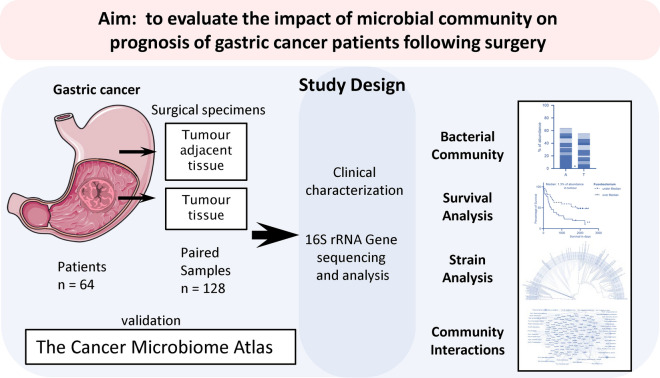
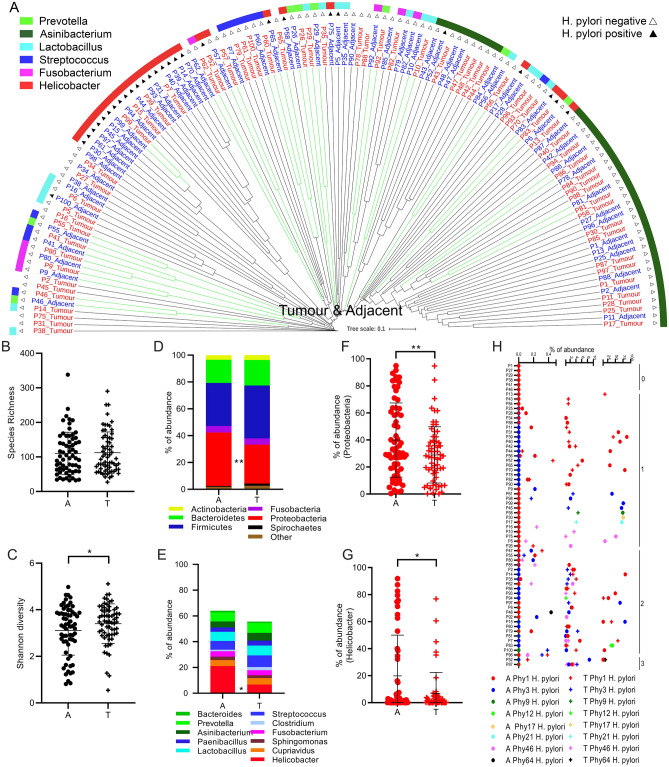
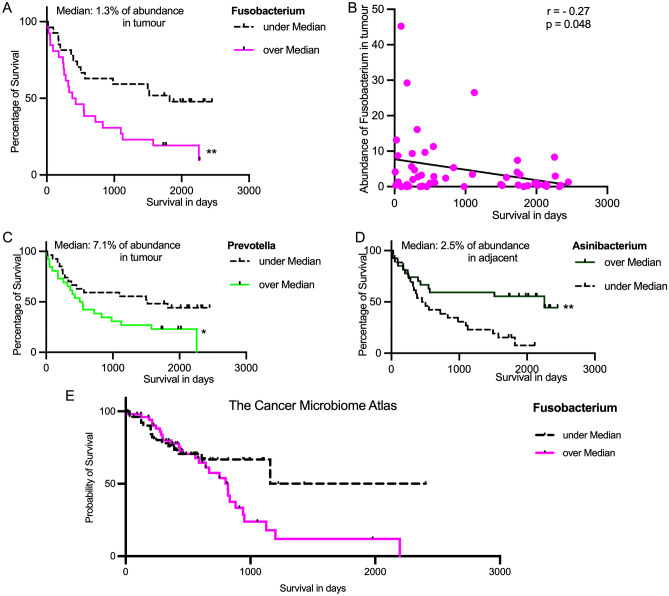
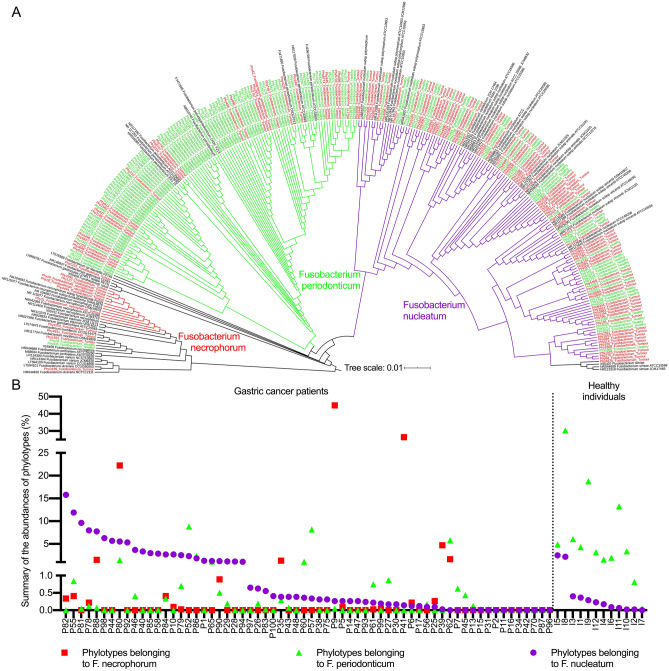
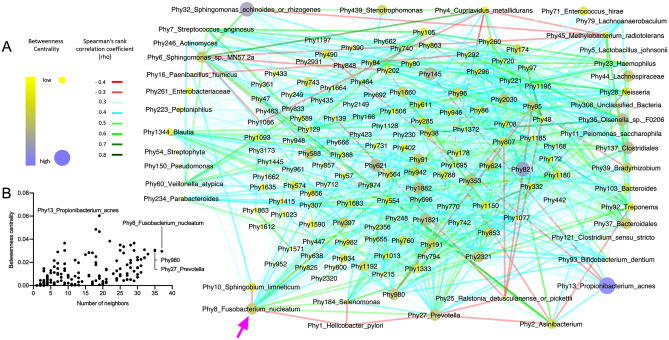
Helicobacter pylori (H. pylori) infection has been considered as the main causal factor in gastric carcinogenesis, but other bacterial species may also play an important role in pathophysiology of gastric cancer. The aim of the study was to explore the link between gastric cancer prognosis and the mucosal microbial community in tumorous and adjacent gastric tissue. The bacterial profile was analysed using 16S sequencing (V1–V2 region). Microbial differences were mostly characterized by lower relative abundances of H. pylori in tumorous gastric tissues. Bacterial community and outcome data analysis revealed the genus Fusobacterium and Prevotella significantly associated with worse overall survival in gastric cancer patients. In particular, Fusobacterium was associated with significant increase in hazard ratio in both univariable and multivariable analysis and independently validated using TCMA data. Phylogenetic biodiversity of Fusobacterium species in the stomach revealed F. periodonticum as the most prevalent in healthy subjects, while F. nucleatum was most abundant in patients with gastric cancer. Bacterial community network analysis in gastric cancer suggests substantial complexity and a strong interplay between F. nucleatum and Prevotella. In summary, mucosal microbial community in the stomach was associated with worse overall survival in gastric cancer patients. Strongest negative impact on prognosis was linked to the abundance of F. nucleatum in tumorous specimens, suggesting its translational relevance in management of gastric cancer patients.
Overview
The claims and statistics of this paper haven’t been checked yet.
Free: it reads the open-access text and checks the first 5 claims that cite a source we can check. Create a free account to check every claim.
Integrity signals
Registry
Cites
Statistics
Figures
Verification
Claims the paper makes
The claims and statistics of this paper haven’t been checked yet.
Free: it reads the open-access text and checks the first 5 claims that cite a source we can check. Create a free account to check every claim.
Claims other papers make about this one
Each is checked against this paper’s own text: does it say what the citing paper says it does?
The source backs part of the claim, not all of it — or backs it for a different population, condition or comparison.
In the citing paper
“The GC patients with enrichment of Fusobacterium nucleatum and the genus Prevotella I in their cancerous tissues showed worse survival using PERMANOVA and ANOSIM analyses.”
From Bioinformatics Analysis and Validation of Potential Markers Associated with Prediction and Prognosis of Gastric Cancer (2024) · cites this paper as [96]
Experimental — accuracy not yet measuredThe cited source says what the claim attributes to it.
In the citing paper
“A recent study characterized the mucosal microbiome composition in paired cancerous and adjacent normal tissues and found significant correlations with the prognosis of GC patients [96].”
From Bioinformatics Analysis and Validation of Potential Markers Associated with Prediction and Prognosis of Gastric Cancer (2024) · cites this paper as [96]
The cited source says what the claim attributes to it.
In the citing paper
“From 128 samples, 5450 different phylotypes belonging to 19 phyla and 296 genera were detected using a bioinformatics approach.”
From Bioinformatics Analysis and Validation of Potential Markers Associated with Prediction and Prognosis of Gastric Cancer (2024) · cites this paper as [96]
The cited source says what the claim attributes to it.
In the citing paper
“indicating that the gastric microbial environment may be responsible for the GC phenotype.”
From Bioinformatics Analysis and Validation of Potential Markers Associated with Prediction and Prognosis of Gastric Cancer (2024) · cites this paper as [96]
The cited source says what the claim attributes to it.
In the citing paper
“Bacterial network analysis revealed that F. nucleatum and Prevotella closely interacted with each other and with gastric bacterial communities in patients with GC”
From Bioinformatics Analysis and Validation of Potential Markers Associated with Prediction and Prognosis of Gastric Cancer (2024) · cites this paper as [96]
Self-check
Percentages, sums and reported differences re-computed from the paper’s own numbers.
The self-check needs the paper’s full text.
Citations
Cites
Cytoscape: A software Environment for integrated models of biomolecular interaction networks
Shannon, P., Markiel, A., Ozier, O., Baliga, N. S., Wang, J. T., Ramage, D., Amin, N., Schwikowski, B., & Ideker, T. (2003) · Genome Research · doi:10.1101/gr.1239303 · Cited by 51,888
DADA2: High–resolution sample inference from Illumina amplicon data
Callahan, B. J., McMurdie, P. J., Rosen, M. J., Han, A. W., Johnson, A. J. A., & Holmes, S. P. (2016) · Nature Methods · doi:10.1038/nmeth.3869 · Cited by 35,698
phyloseq: An R Package for Reproducible Interactive Analysis and Graphics of Microbiome Census Data
McMurdie, P. J., & Holmes, S. (2013) · PLoS ONE · doi:10.1371/journal.pone.0061217 · Cited by 21,322
Naïve Bayesian Classifier for Rapid Assignment of rRNA Sequences into the New Bacterial Taxonomy
Wang, Q., Garrity, G. M., Tiedje, J. M., & Cole, J. R. (2007) · Applied and Environmental Microbiology · doi:10.1128/aem.00062-07 · Cited by 19,885
Interactive Tree Of Life (iTOL) v5: an online tool for phylogenetic tree display and annotation
Letunic, I., & Bork, P. (2021) · Nucleic Acids Research · doi:10.1093/nar/gkab301 · Cited by 11,124
Database resources of the National Center for Biotechnology Information: update
Wheeler, D. L. (2004) · Nucleic Acids Research · doi:10.1093/nar/gkh073 · Cited by 10,641
Kostic, A. D., Chun, E., Robertson, L., Glickman, J. N., Gallini, C. A., Michaud, M., Clancy, T. E., Chung, D. C., Lochhead, P., Hold, G. L., et al. (2013) · Cell Host & Microbe · doi:10.1016/j.chom.2013.07.007 · Cited by 2,718
More powerful procedures for multiple significance testing
Hochberg, Y., & Benjamini, Y. (1990) · Statistics in Medicine · doi:10.1002/sim.4780090710 · Cited by 2,715
Rubinstein, M. R., Wang, X., Liu, W., Hao, Y., Cai, G., & Han, Y. W. (2013) · Cell Host & Microbe · doi:10.1016/j.chom.2013.07.012 · Cited by 2,476
SEAVIEW and PHYLO_WIN: two graphic tools for sequence alignment and molecular phylogeny
Galtier, N., Gouy, M., & Gautier, C. (1996) · Bioinformatics · doi:10.1093/bioinformatics/12.6.543 · Cited by 2,263
The RDP (Ribosomal Database Project)
Maidak, B. L., Olsen, G. J., Larsen, N., Overbeek, R., McCaughey, M. J., & Woese, C. R. (1997) · Nucleic Acids Research · doi:10.1093/nar/25.1.109 · Cited by 2,017
Analysis of Fusobacterium persistence and antibiotic response in colorectal cancer
Bullman, S., Pedamallu, C. S., Sicinska, E., Clancy, T. E., Zhang, X., Cai, D., Neuberg, D., Huang, K., Guevara, F., Nelson, T., et al. (2017) · Science · doi:10.1126/science.aal5240 · Cited by 1,574
Database resources of the National Center for Biotechnology Information
(2016) · Nucleic Acids Research · doi:10.1093/nar/gkv1290 · Cited by 1,470
Fusobacterium nucleatum in colorectal carcinoma tissue and patient prognosis
Mima, K., Nishihara, R., Qian, Z. R., Cao, Y., Sukawa, Y., Nowak, J. A., Yang, J., Dou, R., Masugi, Y., Song, M., et al. (2016) · Gut · doi:10.1136/gutjnl-2015-310101 · Cited by 1,080
Pathobiology of Helicobacter pylori–Induced Gastric Cancer
Amieva, M., & Peek, R. M. (2016) · Gastroenterology · doi:10.1053/j.gastro.2015.09.004 · Cited by 895
Gastric microbial community profiling reveals a dysbiotic cancer-associated microbiota
Ferreira, R. M., Pereira-Marques, J., Pinto-Ribeiro, I., Costa, J. L., Carneiro, F., Machado, J. C., & Figueiredo, C. (2018) · Gut · doi:10.1136/gutjnl-2017-314205 · Cited by 697
Mucosal microbiome dysbiosis in gastric carcinogenesis
Coker, O. O., Dai, Z., Nie, Y., Zhao, G., Cao, L., Nakatsu, G., Wu, W. K., Wong, S. H., Chen, Z., Sung, J. J. Y., et al. (2018) · Gut · doi:10.1136/gutjnl-2017-314281 · Cited by 695
Fusobacterium Is Associated with Colorectal Adenomas
McCoy, A. N., Araújo-Pérez, F., Azcárate-Peril, A., Yeh, J. J., Sandler, R. S., & Keku, T. O. (2013) · PLoS ONE · doi:10.1371/journal.pone.0053653 · Cited by 515
The Human Microbiome and Cancer
Rajagopala, S. V., Vashee, S., Oldfield, L. M., Suzuki, Y., Venter, J. C., Telenti, A., & Nelson, K. E. (2017) · Cancer Prevention Research · doi:10.1158/1940-6207.capr-16-0249 · Cited by 303
Dohlman, A. B., Arguijo Mendoza, D., Ding, S., Gao, M., Dressman, H., Iliev, I. D., Lipkin, S. M., & Shen, X. (2021) · Cell Host & Microbe · doi:10.1016/j.chom.2020.12.001 · Cited by 277
Hsieh, Y.-Y., Tung, S.-Y., Pan, H.-Y., Yen, C.-W., Xu, H.-W., Lin, Y.-J., Deng, Y.-F., Hsu, W.-T., Wu, C.-S., & Li, C. (2018) · Scientific Reports · doi:10.1038/s41598-017-18596-0 · Cited by 269
Schulz, C., Schütte, K., Koch, N., Vilchez-Vargas, R., Wos-Oxley, M. L., Oxley, A. P. A., Vital, M., Malfertheiner, P., & Pieper, D. H. (2018) · Gut · doi:10.1136/gutjnl-2016-312904 · Cited by 219
Self-citationZhang, Y., Zhang, L., Zheng, S., Li, M., Xu, C., Jia, D., Qi, Y., Hou, T., Wang, L., Wang, B., et al. (2022) · Gut Microbes · doi:10.1080/19490976.2022.2038852 · Cited by 207
Camarinha‐Silva, A., Jáuregui, R., Chaves‐Moreno, D., Oxley, A. P. A., Schaumburg, F., Becker, K., Wos‐Oxley, M. L., & Pieper, D. H. (2014) · Environmental Microbiology · doi:10.1111/1462-2920.12362 · Cited by 195
Vasapolli, R., Schütte, K., Schulz, C., Vital, M., Schomburg, D., Pieper, D. H., Vilchez-Vargas, R., & Malfertheiner, P. (2019) · Gastroenterology · doi:10.1053/j.gastro.2019.05.068 · Cited by 174
Self-citationSanduleanu, S., Jonkers, D., De Bruine, A., Hameeteman, W., & Stockbrügger, R. W. (2001) · Alimentary Pharmacology & Therapeutics · doi:10.1046/j.1365-2036.2001.00888.x · Cited by 170
Helicobacter pylori: perspectives and time trends
Malfertheiner, P., Link, A., & Selgrad, M. (2014) · Nature Reviews Gastroenterology & Hepatology · doi:10.1038/nrgastro.2014.99 · Cited by 170
Self-citationGao, J., Zhang, Y., Gerhard, M., Mejías‐Luque, R., Zhang, L., Vieth, M. W., Ma, J., Bajbouj, M., Suchánek, Š., Liu, W., et al. (2018) · Frontiers in Cellular and Infection Microbiology · doi:10.3389/fcimb.2018.00202 · Cited by 144
Bure, I. V., Nemtsova, M. V., & Zaletaev, D. V. (2019) · International Journal of Molecular Sciences · doi:10.3390/ijms20122870 · Cited by 138
Boehm, E. T., Thon, C., Kupcinskas, J., Steponaitiene, R., Skieceviciene, J., Canbay, A., Malfertheiner, P., & Link, A. (2020) · Scientific Reports · doi:10.1038/s41598-020-73448-8 · Cited by 115
Self-citationThe Role of Microbiota in Gastrointestinal Cancer and Cancer Treatment: Chance or Curse?
Smet, A., Kupčinskas, J., Link, A., Hold, G. L., & Bornschein, J. (2021) · Cellular and Molecular Gastroenterology and Hepatology · doi:10.1016/j.jcmgh.2021.08.013 · Cited by 94
Self-citationIntestinal Microbiota Is Altered in Patients with Gastric Cancer from Shanxi Province, China
Qi, Y.-F., Sun, J., Ren, L., Cao, X.-L., Dong, J.-H., Tao, K. X., Guan, X., Cui, Y.-N., & Su, W. (2018) · Digestive Diseases and Sciences · doi:10.1007/s10620-018-5411-y · Cited by 82
Fusobacterium spp. and colorectal cancer: cause or consequence?
Keku, T. O., McCoy, A. N., & Azcárate-Peril, M. A. (2013) · Trends in Microbiology · doi:10.1016/j.tim.2013.08.004 · Cited by 75
Steponaitiene, R., Kupcinskas, J., Langner, C., Balaguer, F., Venclauskas, L., Pauzas, H., Tamelis, A., Skieceviciene, J., Kupcinskas, L., Malfertheiner, P., et al. (2016) · Molecular Carcinogenesis · doi:10.1002/mc.22287 · Cited by 69
Self-citationFecal Streptococcus Alteration Is Associated with Gastric Cancer Occurrence and Liver Metastasis
Yu, D., Yang, J., Jin, M., Zhou, B., Shi, L., Zhao, L., Zhang, J., Lin, Z., Ren, J., Liu, L., et al. (2021) · mBio · doi:10.1128/mbio.02994-21 · Cited by 69
Rodriguez, R. M., Hernandez, B. Y., Menor, M., Deng, Y., & Khadka, V. S. (2020) · Computational and Structural Biotechnology Journal · doi:10.1016/j.csbj.2020.03.003 · Cited by 61
Gut microbial similarity in twins is driven by shared environment and aging
Vilchez‐Vargas, R., Skiecevičienė, J., Lehr, K., Varkalaitė, G., Thon, C., Urba, M., Morkūnas, E., Kučinskas, L., Bauraitė, K., Schanze, D., et al. (2022) · EBioMedicine · doi:10.1016/j.ebiom.2022.104011 · Cited by 54
Self-citationThe microbial community structure of the cotton rat nose
Chaves‐Moreno, D., Plumeier, I., Kahl, S., Krismer, B., Peschel, A., Oxley, A. P. A., Jáuregui, R., & Pieper, D. H. (2015) · Environmental Microbiology Reports · doi:10.1111/1758-2229.12334 · Cited by 49
Spiegelhauer, M. R., Kupčinskas, J., Johannesen, T. B., Urba, M., Skiecevičienė, J., Jonaitis, L. V., Frandsen, T. H., Kupčinskas, L., Fuursted, K., & Andersen, L. P. (2020) · Journal of Clinical Medicine · doi:10.3390/jcm9061882 · Cited by 36
LINE-1 hypomethylation is not a common event in preneoplastic stages of gastric carcinogenesis
Kupčinskas, J., Steponaitienė, R., Langner, C., Smailytė, G., Skiecevičienė, J., Kupčinskas, L., Malfertheiner, P., & Link, A. (2017) · Scientific Reports · doi:10.1038/s41598-017-05143-0 · Cited by 25
Self-citationImpact of healthy aging on active bacterial assemblages throughout the gastrointestinal tract
Schütte, K., Schulz, C., Vilchez‐Vargas, R., Vasapolli, R., Palm, F., Simon, B., Schomburg, D., Lux, A., Geffers, R., Pieper, D. H., et al. (2021) · Gut Microbes · doi:10.1080/19490976.2021.1966261 · Cited by 24
Self-citationNikitina, D., Lehr, K., Vilchez‐Vargas, R., Jonaitis, L. V., Urba, M., Kupčinskas, J., Skiecevičienė, J., & Link, A. (2023) · World Journal of Gastroenterology · doi:10.3748/wjg.v29.i7.1202 · Cited by 22
Self-citationHelicobacter pylori induced gastric carcinogenesis - The best molecular model we have?
Link, A., Bornschein, J., & Thon, C. (2021) · Best Practice & Research Clinical Gastroenterology · doi:10.1016/j.bpg.2021.101743 · Cited by 12
Self-citationThe Cancer Registry of Cali Colombia — Epidemiologic Studies of Gastric Cancer
Corréa, P., Bolaños, Ó., García, F. T., Gordillo, G., Edgar Duque, E., & Cuello, C. (1975) · Springer eBooks · doi:10.1007/978-3-642-80880-7_21 · Cited by 9
Taking a Closer Look at the Biogeography of the Human Gastrointestinal Microbiome
Engevik, M. A., & Versalovic, J. A. (2019) · Gastroenterology · doi:10.1053/j.gastro.2019.08.006 · Cited by 7
Research works printed but not linked: 3
- Jaensch, R., Jonaitis P., Kupcinskas, J., & Link, A. Microbiota in colorectal cancer: Advances in 2022. Microb Health Dis. in press, (2022).
- Oksanen, J. et al. vegan: Community ecology package Version 2.6-4. Preprint at https://cran.r-project.org/web/packages/vegan/index.html (2022).
- Hammer Ø Harper DAT Ryan PD Past: Paleontological statistics software package for education and data analysis Palaeontol. Electron. 2001 4 178
Cited by
Stomach microbiota in gastric cancer development and clinical implications
Zeng, R., Gou, H., Lau, H. C.-H., & Yu, J. Q. (2024) · Gut · doi:10.1136/gutjnl-2024-332815 · Cited by 168
RE.GA.IN.: the Real-world Gastritis Initiative–updating the updates
Rugge, M., Genta, R. M., Malfertheiner, P., Dinis-Ribeiro, M. J., El‐Serag, H. B., Graham, D. Y., Kuipers, E. J., Leung, W. K., Park, J. Y., Rokkas, T., et al. (2024) · Gut · doi:10.1136/gutjnl-2023-331164 · Cited by 173
Self-citationWizenty, J., & Sigal, M. J. (2025) · Nature Reviews Gastroenterology & Hepatology · doi:10.1038/s41575-025-01042-2 · Cited by 106
“Notably, most sequencing studies are from East Asian countries, whereas less evidence is available for European or US populations 169,177,197,204,206 .”
InfluentialMatsuoka, T., & Yashiro, M. (2024) · International Journal of Molecular Sciences · doi:10.3390/ijms25115880 · Cited by 83
“A recent study characterized the mucosal microbiome composition in paired cancerous and adjacent normal tissues and found significant correlations with the prognosis of GC patients [96].”
BackgroundXia, M., Lei, L., Zhao, L.-Y., Xu, W., Zhang, H., Li, M., Hu, J., Cheng, R., & Hu, T. (2025) · npj Biofilms and Microbiomes · doi:10.1038/s41522-024-00623-4 · Cited by 60
“RegardingLauren ’ sclassi fi cation,lowerdiversity and species richness were found in the diffuse type compared with the intestinal type, but no signi fi cant differences at the genus level were observed 56 .”
Metadata
- Authors
- Lehr, K., Nikitina, D., Vilchez-Vargas, R., Steponaitiene, R., Thon, C., Skieceviciene, J., Schanze, D., Zenker, M., Malfertheiner, P., Kupcinskas, J., & Link, A.
- Affiliations
- Otto-von-Guericke-Universität Magdeburg (DE)
- Lithuanian University of Health Sciences (LT)
- LMU Klinikum (DE)
- Corresponding author
- Lehr, Konrad
- Link, Alexander
- ORCID
- Venue
- Scientific Reports
- Published
- 2023-03-21
- Volume
- 13
- Issue
- 1
- Pages
- 4640-4640
- ISSN
- 2045-2322 (ISSN-L)
- PMC
- PMC10030820
- OpenAlex
- W4353015322
- Cited by
- 54
- References
- 45
- Citations by year
- 2026: 16 · 2025: 16 · 2024: 18 · 2023: 4
- FWCI
- 14.42
- Type
- journal article
- Language
- en
- Open access
- gold
- doi.org
- Licence
- cc-by
- creativecommons.org/licenses/by/4.0 (tdm)
- creativecommons.org/licenses/by/4.0 (vor)
- Locations
- Scientific Reports (publishedVersion, cc-by)
- PubMed Central (publishedVersion, other-oa)
- PubMed (publishedVersion)
- Lithuanian University of Health Sciences (submittedVersion, cc-by)
- DOAJ (DOAJ: Directory of Open Access Journals) (submittedVersion, cc-by-sa)
- Funders
- European Regional Development Fund (ZS/2018/11/95324)
- Otto-von-Guericke-Universität Magdeburg
- Topics
- Health Sciences › Medicine › Gastroenterology › Helicobacter pylori-related gastroenterology studies
- Life Sciences › Biochemistry, Genetics and Molecular Biology › Molecular Biology › Gut microbiota and health
- Health Sciences › Dentistry › Periodontics › Oral microbiology and periodontitis research
- Keywords
- gastric cancer, gastric microbiota, Helicobacter pylori, Fusobacterium nucleatum, Fusobacterium periodonticum, Prevotella, overall survival, prognosis, bacterial community composition, bacterial co-occurrence networks
- MeSH terms
- Bacteria, Fusobacterium, Gastric Mucosa, Humans, Phylogeny, Prognosis, RNA, Ribosomal, 16S, Stomach Neoplasms, Helicobacter pylori, Helicobacter Infections
About these checks
Registry, retraction, Cites and statistics results are computed, not judged, with one exception: a printed reference that no index lists is read once by a model before it counts as a citation error. Claims are extracted by a model and kept only when their quote appears verbatim in the text; each cited source is then checked, with a model’s help, for whether it says what the claim relies on. Those verdicts can be wrong — read the claim’s quote and the cited source before relying on one.
Statistics and arithmetic are recomputed, not judged.
Confidence bands are shown only for fields calibrated on our annotated test set. None is calibrated yet, so no band is shown.
What counts as a claim ›How we measure confidence ›How we check this ›
Are you an author, or do you see a problem with this page? Request a review
Data sources
Bibliographic data: Semantic Scholar, OpenAlex, Crossref.
Contains information from the Semantic Scholar Academic Graph Datasets, made available under the ODC Attribution License (ODC-BY 1.0).
Semantic Scholar’s data is described in: Kinney, R., et al. (2023). The Semantic Scholar Open Data Platform. arXiv:2301.10140.
