

Introduction and behavioral validation of the climate change distress and impairment scale
Open accessPublished version of a preprint
The DOI matches its Crossref record; 63 of the 63 references it cites were found in a registry or an index.
Abstract
Governmental agencies and the medical and psychological professions are calling for a greater focus on the negative mental health effects of climate change (CC). As a first step, the field needs measures to distinguish affective/emotional distress due to CC from impairment that requires further scientific and diagnostic attention and that may require treatment in the future. To this end, we constructed the climate change distress and impairment scale , which distinguishes CC distress (spanning anger, anxiety, and sadness) from impairment. In four studies ( N = 1699), we developed and validated English and German versions of the scale. Across samples, spanning 2021–2022, CC distress was at least moderate, while we observed general moderate to high levels of distress and low to moderate levels of impairment. In three English-speaking samples, younger individuals and women were most affected by CC distress, whereas this was not the case in a German-speaking sample, suggesting sociopolitical influencing factors. We demonstrate convergent validity with previous measures and discriminant validity for general negative affectivity and depressive and generalized anxiety disorder symptoms, which underlines that CC distress is not in itself pathological. Employing a fully incentivized social dilemma paradigm, we demonstrate that CC distress and (to a lesser degree) CC impairment predict pro-environmental behavior, underscoring them as possible drivers, and targets, of climate-change mitigation efforts.
Overview
The claims and statistics of this paper haven’t been checked yet.
Free: it reads the open-access text and checks the first 5 claims that cite a source we can check. Create a free account to check every claim.
Integrity signals
Registry
Cites
Statistics
Figures
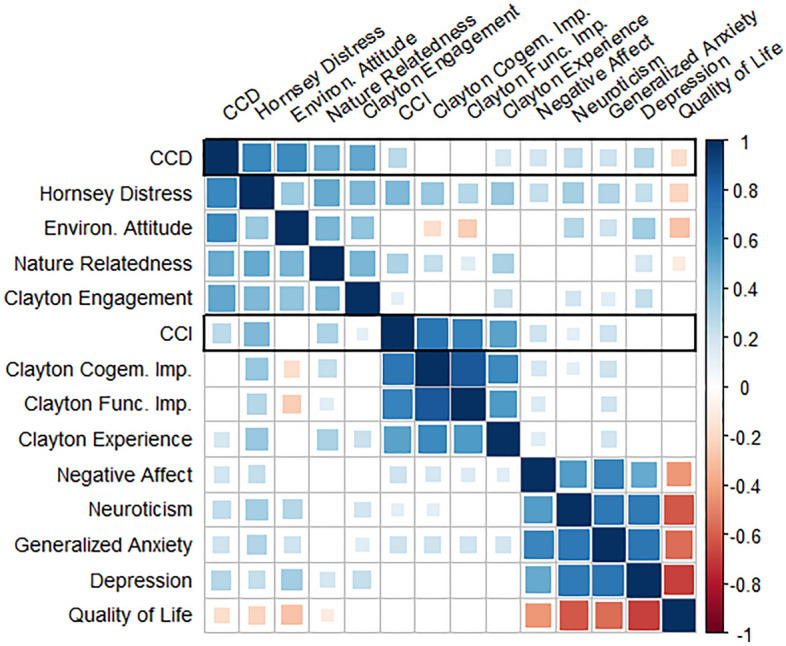
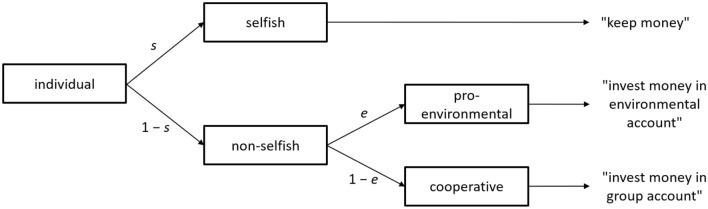
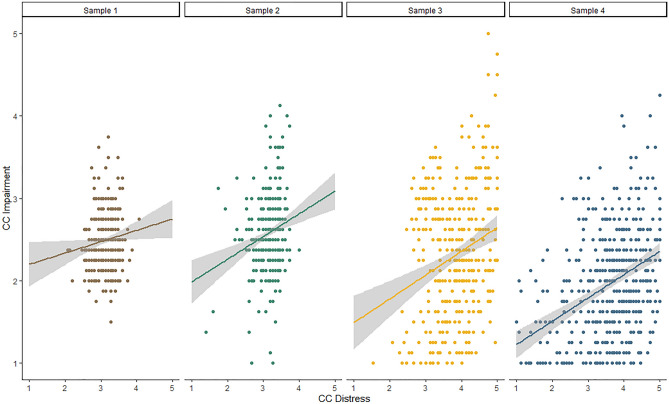
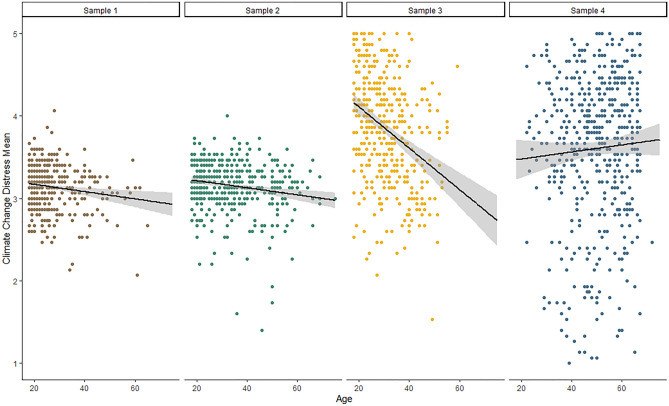
Verification
Claims the paper makes
The claims and statistics of this paper haven’t been checked yet.
Free: it reads the open-access text and checks the first 5 claims that cite a source we can check. Create a free account to check every claim.
Claims other papers make about this one
Each is checked against this paper’s own text: does it say what the citing paper says it does?
The cited source doesn’t support the claim as written.
In the citing paper
“Eighteen studies investigated the association between eco-anxiety and symptoms of depression, with fifteen reporting a significant small-to-moderate (r = .14 to 0.49) positive association [37, 40, 42, 46, 48, 50, 51, 54, 56, 57, 62–65, 69], whereas three reported no significant relationship [49, 52, 53].”
From The relationship between climate change and mental health: a systematic review of the association between eco-anxiety, psychological distress, and symptoms of major affective disorders (2024) · cites this paper as [49]
Checked by a reasoning model — may be wrong.
Experimental — accuracy not yet measuredThe cited source says what the claim attributes to it.
In the citing paper
“Of the correlational studies, 18 showed significant small-to-moderate positive correlations between eco-anxiety and clinical anxiety symptoms (r = .17 to 0.60), including across all eco-anxiety measure subscales [35, 36, 38, 40, 42, 46, 48–51, 56, 58, 62–65, 67, 69].”
Self-check
Percentages, sums and reported differences re-computed from the paper’s own numbers.
The self-check needs the paper’s full text.
Citations
Cites
Diagnostic and Statistical Manual of Mental Disorders
American Psychiatric Association (2013) · doi:10.1176/appi.books.9780890425596 · Cited by 116,369
A Brief Measure for Assessing Generalized Anxiety Disorder: The GAD-7
Spitzer, R. L., Kroenke, K., Williams, J. B. W., & Löwe, B. (2006) · Archives of Internal Medicine · doi:10.1001/archinte.166.10.1092 · Cited by 31,765
Russell, J. A. (1980) · Journal of Personality and Social Psychology · doi:10.1037/h0077714 · Cited by 16,334 · cited 1×
“The inclusion of these four negative affects reflects the breadth of emotions relevant to climate change 10,27 , follows established emotion models 28 , and reflects common sources of psychopathology 29 .”
Meyer, I. H. (2003) · Psychological Bulletin · doi:10.1037/0033-2909.129.5.674 · Cited by 14,736
Kollmuss, A., & Agyeman, J. (2002) · Environmental Education Research · doi:10.1080/13504620220145401 · Cited by 8,866 · cited 1×
“PEB is defined as behavior that consciously aims at avoiding or minimizing one’s negative impact on the natural world 21,22 .”
Beck, A. T., Steer, R. A., & Brown, G. (2011) · PsycTESTS Dataset · doi:10.1037/t00742-000 · Cited by 7,535
Dunlap, R. E., Van Liere, K. D., Mertig, A. G., & Jones, R. E. (2000) · Journal of Social Issues · doi:10.1111/0022-4537.00176 · Cited by 5,678
THE INTERGOVERNMENTAL PANEL ON CLIMATE CHANGE
Shine, K. (1990) · Weather · doi:10.1002/j.1477-8696.1990.tb05660.x · Cited by 5,462
The PANAS-X: Manual for the Positive and Negative Affect Schedule - Expanded Form
Watson, D., & Clark, L. A. (1994) · University of Iowa · doi:10.17077/48vt-m4t2 · Cited by 3,700
Hickman, C., Marks, E., Pihkala, P., Clayton, S., Lewandowski, R. E., Mayall, E. E., Wray, B., Mellor, C., & van Susteren, L. (2021) · The Lancet Planetary Health · doi:10.1016/s2542-5196(21)00278-3 · Cited by 2,324 · cited 1×
“…in a recent sample of 10,000 young persons from ten socio-culturally diverse countries across the globe, more than 45% of participants (aged 16–25) stated that their feelings about climate change negatively affected their daily lives, suggesting increased levels of CCI in this age cohort 25 .”
Research works printed but not linked: 3
- Albrecht G Chronic Environmental Change: Emerging ‘Psychoterratic’ Syndromes in Climate Change and Human Well-Being 2011 Springer
- Costa PT Crae RR The NEO-PI/NEO-FFI Manual Supplement 1989 Psychological Assessment Resources
- Erdfelder E Multinomial processing tree models J Psychol 2009 217 108 124
Cited by
Cosh, S. M., Ryan, R., Fallander, K., Robinson, K., Tognela, J., Tully, P. J., & Lykins, A. D. (2024) · BMC Psychiatry · doi:10.1186/s12888-024-06274-1 · Cited by 138
Eco-emotions and Psychoterratic Syndromes: Reshaping Mental Health Assessment Under Climate Change
Cianconi, P., Hanife, B., Grillo, F., Betrò, S., Lesmana, C. B. J., & Janiri, L. (2023) · The Yale Journal of Biology and Medicine · doi:10.59249/earx2427 · Cited by 163
Lewandowski, R. E., Clayton, S. D., Olbrich, L., Sakshaug, J. W., Wray, B., Schwartz, S. E. O., Augustinavicius, J., Howe, P. D., Parnes, M., Wright, S., et al. (2024) · The Lancet Planetary Health · doi:10.1016/s2542-5196(24)00229-8 · Cited by 91
“12,22 In a nationally representative online US survey, which was not peer-reviewed, 57% (weighted) of 629 adolescents aged 13–17 years reported that climate change makes them feel afraid.”
A meta-analysis on the relationship between climate anxiety and wellbeing
Gago, T., Sargisson, R. J., & Milfont, T. L. (2024) · Journal of Environmental Psychology · doi:10.1016/j.jenvp.2024.102230 · Cited by 87
Climate change anxiety: A meta-analysis
Kühner, C., Gemmecke, C., Hüffmeier, J., & Zacher, H. (2025) · Global Environmental Change · doi:10.1016/j.gloenvcha.2025.103015 · Cited by 100
Eco-anxiety and climate-anxiety linked to indirect exposure: A scoping review of empirical research
Jarrett, J. A., Gauthier, S., Baden, D. A., Ainsworth, B., & Dorey, L. (2024) · Journal of Environmental Psychology · doi:10.1016/j.jenvp.2024.102326 · Cited by 66
“With the exception of eleven studies which either had male-dominated (Agoston, Urban, et al., 2022; Clayton & Karazsia, 2020; Hepp et al., 2023; Lukacs et al., 2023; Wu et al., 2023), equal (Feather & Williams, 2022; Hajek & Konig, 2022a, 2022b, 2023; Zacher & Rudolph, 2023), or unspecified (Simon…”
Ballew, M. T., Uppalapati, S. S., Myers, T. A., Carman, J., Campbell, E., Rosenthal, S. A., Kotcher, J., Leiserowitz, A., & Maibach, E. W. (2024) · npj Climate Action · doi:10.1038/s44168-024-00172-8 · Cited by 70
“However,severalstudies havefoundonlyweakrelationshipsbetweenmeasuresofmentalhealthand climate-relateddistress 18,22,51,52 , and one study shows that climate-related distress signi fi cantly predicts engagement in collective action on climate change even when controlling for general symptoms of…”
Climate Change and Mental Health
Clayton, S., & Crandon, T. (2024) · Annual Review of Clinical Psychology · doi:10.1146/annurev-clinpsy-081423-025932 · Cited by 57
Veijonaho, S., Hietajärvi, L., Ojala, M., & Salmela‐Aro, K. (2025) · Journal of Environmental Psychology · doi:10.1016/j.jenvp.2025.102676 · Cited by 29
van Dijk, S., van Schie, K., Smeets, T., & Mertens, G. (2024) · Journal of Anxiety Disorders · doi:10.1016/j.janxdis.2024.102957 · Cited by 29
Buswell, G., Williams, M. O., Marks, E. M., & Morgan, G. (2025) · Cogent Mental Health · doi:10.1080/28324765.2025.2449878 · Cited by 15
“The Climate Change Distress and Impairment Scale (CCDIS; Hepp et al., 2023) was designed to measure impairment in, for example, social or work life, as well as different affective reactions to climate change such as anxiety, anger or sadness.”
Urbild, J., Zauner, K., & Hepp, J. (2023) · Current Research in Ecological and Social Psychology · doi:10.1016/j.cresp.2023.100099 · Cited by 14
Self-citationClimate change distress, entrapment, and suicidal ideation
Brailovskaia, J., & Teismann, T. (2024) · Climatic Change · doi:10.1007/s10584-024-03784-5 · Cited by 16
Elzohairy, N. W., Fatah, N. K. A. E., & Khedr, M. A. (2023) · Geriatric Nursing · doi:10.1016/j.gerinurse.2023.10.017 · Cited by 10
Karl, S., Brandt, L., Luykx, J. J., & Dom, G. (2024) · Current Opinion in Psychiatry · doi:10.1097/yco.0000000000000971 · Cited by 16
Hannachi, T., Yakimova, S., & Somat, A. (2024) · International Journal of Environmental Research and Public Health · doi:10.3390/ijerph21091158 · Cited by 12
“Beyond the clinical aspect assessed by the CCAS, the psychological reaction to the environmental crisis is assessed either as worry via the Climate Change Worry Scale [12] or as distress and impairment by the Climate Change Distress and Impairment Scale [13].”
BackgroundMethodClimate change distress and impairment in Germany
König, L., Breves, P. L., Linnemann, G. A., Hamer, T., & Suhr, R. (2024) · Frontiers in Public Health · doi:10.3389/fpubh.2024.1432881 · Cited by 12
“Recently, a promising measurement tool (18) was developed that differentiates between the affective experience of distress over climate change (climate change distress subscale, e.g., “When I think about climate change, I worry about the future”) and the functional impairments associated with…”
BackgroundMethodResultInfluentialAhmead, M., Sharif, N. E., Maqboul, E., Zyoud, R. N., & Nawajah, I. (2025) · Frontiers in Climate · doi:10.3389/fclim.2025.1580361 · Cited by 13
Systematic Review of the Links between Eco-Distress and Mental Health
Gebhardt, N., Westermann, F., Kleinböhl, L., Friederich, H., & Nikendei, C. (2025) · EcoHealth · doi:10.1007/s10393-025-01769-z · Cited by 8
“Five of the instruments, the Climate Change Anxiety Scale (Clayton & Karazsia, 2020), the Climate Change Distress and Impairment Scale (Hepp et al., 2023), the Eco Anxiety Questionnaire (A´goston et al., 2022a, b), the EMEA Eco Anxiety Scale (Jalin et al., 2025), and the Hogg Eco-Anxiety Scale (T. L. Hogg et al., 2021…”
Climate change distress and impairment among adolescents in Germany
König, L., Schröder, R., Breves, P. L., Linnemann, G. A., Hamer, T., & Suhr, R. (2025) · Frontiers in Climate · doi:10.3389/fclim.2025.1568676 · Cited by 8
“Girls were significantly more distressed than boys, consistent with previous research in the general population (Hepp et al., 2023; König et al., 2024a).”
InfluentialGallé, F., Valeriani, F., Giorgi, A. D., Grassi, F., Mazzeo, E., Napoli, C., & Protano, C. (2025) · Healthcare · doi:10.3390/healthcare13212716 · Cited by 13
Definitions and Conceptualizations of Climate Distress: An International Perspective
Pihkala, P. (2024) · Cambridge University Press eBooks · doi:10.1017/9781009252904.003 · Cited by 11
Williams, M. O., Buekers, J., Castaño‐Vinyals, G., de Cid, R., Delgado‐Ortiz, L., Espinosa, A., García‐Aymerich, J., Koch, S., Kogevinas, M., Viola, M., et al. (2024) · British Journal of Health Psychology · doi:10.1111/bjhp.12746 · Cited by 10
Beckord, J., Krakowczyk, J. B., Gebhardt, N., Geiser, L. S., Kamler, K., Nikendei, C., Skoda, E.-M., Teufel, M., & Bäuerle, A. (2024) · The Journal of Climate Change and Health · doi:10.1016/j.joclim.2024.100356 · Cited by 10
“To address these shortcomings, other instruments like the Eco-Anxiety Questionnaire (EAQ-22) [30] and the Climate Change Distress and Impairment Scale (CC-DIS) [27] were developed.”
Perfectionism and Cognitive and Emotional Reactions to Climate Change and Psychological Distress
Pereira, A. T., Cabaços, C., Marques, C., Araújo, A. I., & Macedo, A. (2024) · Sustainability · doi:10.3390/su16219221 · Cited by 8
Applying Emotional Regulation Strategies to Manage Climate Distress
Ibrahim, M. (2024) · IntechOpen eBooks · doi:10.5772/intechopen.1007813 · Cited by 10
Toward a unified understanding of climate anxiety: Examining measures of climate and eco-anxiety
Hempel, L. M., Geiger, M., & Betsch, C. (2025) · PLoS ONE · doi:10.1371/journal.pone.0339562 · Cited by 6
“…review by Jarrett and colleagues [16] identified several other measures with similar item content or construct names, such as the Climate Change Worry Scale [CCWS; 17], the Environmental Worry Questionnaire [EWQ; 18], or the Climate Change Distress and Impairment Scale [CC-DIS;19], among others.”
Klimakrise, Natur und Psychotherapie
Pfeifer, E. (2024) · Psychotherapie-Wissenschaft · doi:10.30820/1664-9583-2024-2-39 · Cited by 5
Validation of the Inventory of Climate Emotions (ICE) in a German sample
Metzen, D., Blumenschein, P., Peter, F., Bechtoldt, M. N., Frisch, A. L., Tschorn, M., & Heinzel, S. (2025) · Environmental Psychology Open · doi:10.69805/epo.v29.a36 · Cited by 6
“Another validated scale is the Climate Change Distress and Impairment Scale (Hepp et al., 2023), which can be divided into a distress and impairment subscale.”
Wasmus, H., Fleck, L., Schmidt, T., Scheydt, S., Schirmbeck, F. N., Kazlauskas, E., Tol, W. A., & Reininghaus, U. (2025) · BMJ Mental Health · doi:10.1136/bmjment-2025-301549 · Cited by 5
“3 5 Instead, they represent a natural response to an existential threat and have also been linked to adaptive behaviours, such as pro-environmental actions 6 and activism.”
Zauner, L., Urbild, J., Hilbig, B. E., Lane, S. P., & Hepp, J. (2026) · Journal of Environmental Psychology · doi:10.1016/j.jenvp.2026.103102 · Cited by 4
Self-citationDreissigacker, A., Michal, J., Rose, S., & Hepp, J. (2026) · Journal of Affective Disorders · doi:10.1016/j.jad.2026.122243 · Cited by 2
Self-citationPischel, M., Wüster, A.-L., Metz, K., Wulf, H., Lahmann, C., & Pfeifer, E. (2025) · Counselling and Psychotherapy Research · doi:10.1002/capr.70035 · Cited by 2
Fleck, L., Wasmus, H., Schirmbeck, F. N., de Freitas, C., Teixeira, R., Sanna, L., de Graaff, A. M., Allegri, M. D., Nguyen, H. T., Boehnke, J. R., et al. (2025) · JMIR Research Protocols · doi:10.2196/77764 · Cited by 2
“CC-DIS cutoffs for inclusion represent the average scale mean of the 4 samples used in the validation study by Hepp et al [3].”
InfluentialCabaços, C., Macedo, A., Baptista, M., & Pereira, A. T. (2026) · Sustainability · doi:10.3390/su18031501 · Cited by 2
Morgan, J. L., Gregory, J. D., & Williams, M. O. (2026) · Psychology and Psychotherapy Theory Research and Practice · doi:10.1111/papt.70052 · Cited by 1
“Participants demonstrated high levels of distress according to the CC-DIS (Hepp et al., 2023) (M = 4.56, SD = 0.24) and moderate- to-high levels of impairment (M = 3.40, SD = 0.28), with low variability in both scales.”
InfluentialConceptual Foundations of Climate Distress in Young People
Haase, E., & Hudson, K. (2024) · Cambridge University Press eBooks · doi:10.1017/9781009252904.001 · Cited by 1
Validation of the Inventory of Climate Emotions (ICE) in a German samplePreprint
Metzen, D., Blumenschein, P., Peter, F., Bechtoldt, M. N., Frisch, A., Tschorn, M., & Heinzel, S. (2025) · PsyArXiv (OSF Preprints) · doi:10.31234/osf.io/tcpem_v2 · Cited by 2
Young People Connected to Nature Worry More About Climate Change: How Meaning-Focused Coping
Corvello, M. M. (2024) · Carleton University's Institutional Repository (MacOdrum Library, Carleton University) · doi:10.22215/etd/2024-16250
Training clinicians for climate-informed mental healthcare
Williamson, R. E., Ruzek, J. I., Jiaqing, O., Wray, B., Safer, D. L., Punski‐Hoogervorst, J. L., Robohm, J. S., & Hyun, J. (2025) · Nature Mental Health · doi:10.1038/s44220-025-00530-3 · Cited by 2
Kim, T., Willis, M. A., Gao, A., Jett, J., & Lane, S. P. (2026) · Journal of Environmental Psychology · doi:10.1016/j.jenvp.2026.103109
Self-citationvan Beynen, J., & Lindsay, N. M. (2026) · Ecopsychology · doi:10.1177/19429347261465512
“Sue ’ s reference to “ mental illness ” resonates with other literature where impaired function is speculated to be a threshold indicative of the point someone might meet a clinical level of climate anxiety (Clayton & Karazsia, 2020; Hepp, Urbild, Klein, Horsten, & Lane, 2023).”
Reininghaus, U., Wierzba, E., Schick, A., Hartmann, J., Nayman, S., Wasmus, H., Zimmermann, L., Gugel, J., Kessler, A. S., Benker, A., et al. (2026) · BMJ Open · doi:10.1136/bmjopen-2026-123291
Die Forschungsmethoden der klinischen Psychologie in Zeiten der Klimakrise
Mundorf, A., Peterburs, J., & Ocklenburg, S. (2026) · Springer eBooks · doi:10.1007/978-3-662-73259-5_19
Niedzwiedz, C. L., Collery, A., Kibuchi, E., Orina, F., Meme, H., Odhiambo, M., Newton, C. R. J. C., Gray, C. M., & Kariuki, S. M. (2026) · Wellcome Open Research · doi:10.12688/wellcomeopenres.27258.1
Blyler, J., Marcos, A., John, R. S., Tieger, L., & Árvai, J. (2026) · Risk Analysis · doi:10.1111/risa.70320
“Vulnerability was measured using a modified version of the climate change distress and impairment scale (Hepp et al. 2023 ).”
One Health – One Planet – One Mind: integrating eco-anxiety into the One Health paradigm
Umar, S. I., Maaji, S. M., Beli, I. I., & Nura, Z. M. (2026) · One Health · doi:10.1016/j.onehlt.2026.101588
“Climate-related disability and impairment scales further complement these tools by quantifying functional impacts relevant to public health and resilience planning [67].”
Hess, F. M., Masson, T., & Fritsche, I. (2026) · Journal of Applied Social Psychology · doi:10.1111/jasp.70113
Metadata
- Authors
- Hepp, J., Klein, S. A., Horsten, L. K., Urbild, J., & Lane, S. P.
- Affiliations
- Heidelberg University (DE)
- Rheinland-Pfälzische Technische Universität Kaiserslautern-Landau (DE)
- University of Missouri (US)
- Corresponding author
- Hepp, Johanna
- Venue
- Scientific Reports
- Published
- 2023-07-12
- Volume
- 13
- Issue
- 1
- Pages
- 11272-11272
- ISSN
- 2045-2322 (ISSN-L)
- PMC
- PMC10338517
- OpenAlex
- W4384007619
- Semantic Scholar
- ab4d173bffbf28b90293d9c93aced3023fa25de9
- Cited by
- 41
- References
- 62
- Citations by year
- 2026: 10 · 2025: 12 · 2024: 18 · 2023: 1
- FWCI
- 17.62
- Type
- journal article
- Language
- en
- Open access
- gold
- doi.org
- Licence
- cc-by
- creativecommons.org/licenses/by/4.0 (tdm)
- creativecommons.org/licenses/by/4.0 (vor)
- Locations
- Scientific Reports (publishedVersion, cc-by)
- Research Square (acceptedVersion, cc-by)
- PubMed Central (publishedVersion, cc-by)
- PubMed (publishedVersion)
- DOAJ (DOAJ: Directory of Open Access Journals) (submittedVersion, cc-by-sa)
- Funders
- Deutsche Forschungsgemeinschaft (KL 3365/1-1)
- Medizinische Fakultät Mannheim der Universität Heidelberg
- Topics
- Social Sciences › Sociology and Political Science › Climate Change Communication and Perception
- Social Sciences › Psychology › Clinical Psychology › COVID-19 and Mental Health
- Physical Sciences › Environmental Science › Health, Toxicology and Mutagenesis › Climate Change and Health Impacts
- Keywords
- scale development, climate change and mental health, negative affectivity, depressive symptoms, generalized anxiety disorder, pro-environmental behavior, gender differences, age differences, cross-cultural validation, climate change mitigation
- MeSH terms
- Problem Behavior, Anger, Anxiety, Anxiety Disorders, Female, Humans, Climate Change
About these checks
Registry, retraction, Cites and statistics results are computed, not judged, with one exception: a printed reference that no index lists is read once by a model before it counts as a citation error. Claims are extracted by a model and kept only when their quote appears verbatim in the text; each cited source is then checked, with a model’s help, for whether it says what the claim relies on. Those verdicts can be wrong — read the claim’s quote and the cited source before relying on one.
Statistics and arithmetic are recomputed, not judged.
Confidence bands are shown only for fields calibrated on our annotated test set. None is calibrated yet, so no band is shown.
What counts as a claim ›How we measure confidence ›How we check this ›
Are you an author, or do you see a problem with this page? Request a review
Data sources
Bibliographic data: Semantic Scholar, OpenAlex, Crossref.
Contains information from the Semantic Scholar Academic Graph Datasets, made available under the ODC Attribution License (ODC-BY 1.0).
Semantic Scholar’s data is described in: Kinney, R., et al. (2023). The Semantic Scholar Open Data Platform. arXiv:2301.10140.
