

Introduction and behavioral validation of the climate change distress and impairment scale
Open accessPublished version of a preprint
The DOI matches its Crossref record; 63 of the 63 references it cites were found in a registry or an index.
Abstract
Governmental agencies and the medical and psychological professions are calling for a greater focus on the negative mental health effects of climate change (CC). As a first step, the field needs measures to distinguish affective/emotional distress due to CC from impairment that requires further scientific and diagnostic attention and that may require treatment in the future. To this end, we constructed the climate change distress and impairment scale , which distinguishes CC distress (spanning anger, anxiety, and sadness) from impairment. In four studies ( N = 1699), we developed and validated English and German versions of the scale. Across samples, spanning 2021–2022, CC distress was at least moderate, while we observed general moderate to high levels of distress and low to moderate levels of impairment. In three English-speaking samples, younger individuals and women were most affected by CC distress, whereas this was not the case in a German-speaking sample, suggesting sociopolitical influencing factors. We demonstrate convergent validity with previous measures and discriminant validity for general negative affectivity and depressive and generalized anxiety disorder symptoms, which underlines that CC distress is not in itself pathological. Employing a fully incentivized social dilemma paradigm, we demonstrate that CC distress and (to a lesser degree) CC impairment predict pro-environmental behavior, underscoring them as possible drivers, and targets, of climate-change mitigation efforts.
Overview
The claims and statistics of this paper haven’t been checked yet.
Free: it reads the open-access text and checks the first 5 claims that cite a source we can check. Create a free account to check every claim.
Integrity signals
Registry
Cites
Statistics
Figures
Verification
Claims the paper makes
The claims and statistics of this paper haven’t been checked yet.
Free: it reads the open-access text and checks the first 5 claims that cite a source we can check. Create a free account to check every claim.
Claims other papers make about this one
Each is checked against this paper’s own text: does it say what the citing paper says it does?
The cited source doesn’t support the claim as written.
In the citing paper
“Eighteen studies investigated the association between eco-anxiety and symptoms of depression, with fifteen reporting a significant small-to-moderate (r = .14 to 0.49) positive association [37, 40, 42, 46, 48, 50, 51, 54, 56, 57, 62–65, 69], whereas three reported no significant relationship [49, 52, 53].”
From The relationship between climate change and mental health: a systematic review of the association between eco-anxiety, psychological distress, and symptoms of major affective disorders (2024) · cites this paper as [49]
Checked by a reasoning model — may be wrong.
Experimental — accuracy not yet measuredThe cited source says what the claim attributes to it.
In the citing paper
“Of the correlational studies, 18 showed significant small-to-moderate positive correlations between eco-anxiety and clinical anxiety symptoms (r = .17 to 0.60), including across all eco-anxiety measure subscales [35, 36, 38, 40, 42, 46, 48–51, 56, 58, 62–65, 67, 69].”
Self-check
Percentages, sums and reported differences re-computed from the paper’s own numbers.
The self-check needs the paper’s full text.
Citations
Cites
Diagnostic and Statistical Manual of Mental Disorders
American Psychiatric Association (2013) · doi:10.1176/appi.books.9780890425596 · Cited by 116,369
A Brief Measure for Assessing Generalized Anxiety Disorder: The GAD-7
Spitzer, R. L., Kroenke, K., Williams, J. B. W., & Löwe, B. (2006) · Archives of Internal Medicine · doi:10.1001/archinte.166.10.1092 · Cited by 31,765
Russell, J. A. (1980) · Journal of Personality and Social Psychology · doi:10.1037/h0077714 · Cited by 16,334 · cited 1×
“The inclusion of these four negative affects reflects the breadth of emotions relevant to climate change 10,27 , follows established emotion models 28 , and reflects common sources of psychopathology 29 .”
Meyer, I. H. (2003) · Psychological Bulletin · doi:10.1037/0033-2909.129.5.674 · Cited by 14,736
Kollmuss, A., & Agyeman, J. (2002) · Environmental Education Research · doi:10.1080/13504620220145401 · Cited by 8,866 · cited 1×
“PEB is defined as behavior that consciously aims at avoiding or minimizing one’s negative impact on the natural world 21,22 .”
Beck, A. T., Steer, R. A., & Brown, G. (2011) · PsycTESTS Dataset · doi:10.1037/t00742-000 · Cited by 7,535
Dunlap, R. E., Van Liere, K. D., Mertig, A. G., & Jones, R. E. (2000) · Journal of Social Issues · doi:10.1111/0022-4537.00176 · Cited by 5,678
THE INTERGOVERNMENTAL PANEL ON CLIMATE CHANGE
Shine, K. (1990) · Weather · doi:10.1002/j.1477-8696.1990.tb05660.x · Cited by 5,462
The PANAS-X: Manual for the Positive and Negative Affect Schedule - Expanded Form
Watson, D., & Clark, L. A. (1994) · University of Iowa · doi:10.17077/48vt-m4t2 · Cited by 3,700
Hickman, C., Marks, E., Pihkala, P., Clayton, S., Lewandowski, R. E., Mayall, E. E., Wray, B., Mellor, C., & van Susteren, L. (2021) · The Lancet Planetary Health · doi:10.1016/s2542-5196(21)00278-3 · Cited by 2,324 · cited 1×
“…in a recent sample of 10,000 young persons from ten socio-culturally diverse countries across the globe, more than 45% of participants (aged 16–25) stated that their feelings about climate change negatively affected their daily lives, suggesting increased levels of CCI in this age cohort 25 .”
Ekman, P. (1999) · Handbook of Cognition and Emotion · doi:10.1002/0470013494.ch3 · Cited by 2,125
Gifford, R., & Nilsson, A. (2014) · International Journal of Psychology · doi:10.1002/ijop.12034 · Cited by 1,964
Nisbet, E. K., Zelenski, J. M., & Murphy, S. A. (2009) · Environment and Behavior · doi:10.1177/0013916508318748 · Cited by 1,963
Evaluating Bifactor Models: Calculating and Interpreting Statistical Indices
Rodriguez, A., Reise, S. P., & Haviland, M. G. (2016) · Psychological Methods · doi:10.1037/met0000045 · Cited by 1,599 · cited 1×
“…adequate overall model fit (CFI = 0.916, TLI = 0.903, SRMR = 0.066, RMSEA = 0.061) and excellent factor-specific reliability, replicability, and determinacy (Ω Distress = 0.841, Ω Impairment = 0.860, H Distress = 0.887, H Impairment = 0.880, FD Distress = 0.942, FD Impairment = 0.938) 31,32 .”
InfluentialConstructing validity: New developments in creating objective measuring instruments.
Clark, L. A., & Watson, D. (2019) · Psychological Assessment · doi:10.1037/pas0000626 · Cited by 1,470 · cited 2×
“Following guidelines for scale construction 30 , in the first step of item selection we excluded only the worst performing items to moderately decrease the item pool.”
InfluentialClimate anxiety: Psychological responses to climate change
Clayton, S. (2020) · Journal of Anxiety Disorders · doi:10.1016/j.janxdis.2020.102263 · Cited by 1,409
Ecological grief as a mental health response to climate change-related loss
Cunsolo, A., & Ellis, N. R. (2018) · Nature Climate Change · doi:10.1038/s41558-018-0092-2 · Cited by 1,408
The Impact of Climate Change on Mental Health: A Systematic Descriptive Review
Cianconi, P., Betrò, S., & Janiri, L. (2020) · Frontiers in Psychiatry · doi:10.3389/fpsyt.2020.00074 · Cited by 1,320 · cited 1×
“As women appear proportionately more vulnerable to the consequences of climate change 26 , we expected higher levels of CCI than in men.”
Development and validation of a measure of climate change anxiety
Clayton, S., & Karazsia, B. T. (2020) · Journal of Environmental Psychology · doi:10.1016/j.jenvp.2020.101434 · Cited by 1,196 · cited 7×
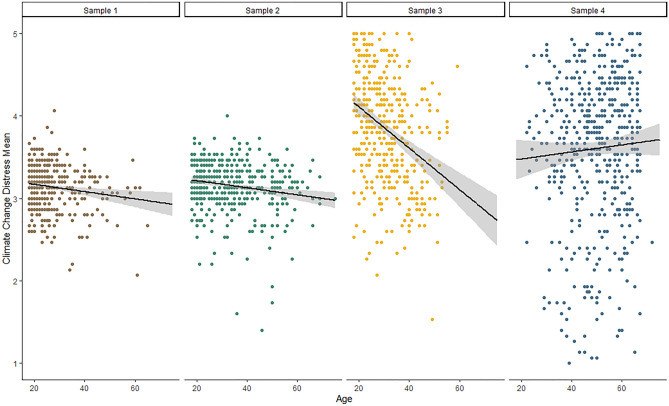
“This follows from previous work showing that younger individuals (aged 18–36) repeatedly reported increased levels of negative emotions in reaction to climate change 7,18,23,24 .”
InfluentialMeta-analyses of factors motivating climate change adaptation behaviour
van Valkengoed, A. M., & Steg, L. (2019) · Nature Climate Change · doi:10.1038/s41558-018-0371-y · Cited by 923 · cited 1×
“This finding replicates previous work demonstrating a positive association between CCD-like constructs and self-reported PEB 52–54 and provides an important extension in that it measures actual behavior where previous work focused on behavioral intentions that often overestimate PEB 55 .”
The psychological impacts of global climate change
Doherty, T. J., & Clayton, S. (2011) · American Psychologist · doi:10.1037/a0023141 · Cited by 894 · cited 1×
“The inclusion of these four negative affects reflects the breadth of emotions relevant to climate change 10,27 , follows established emotion models 28 , and reflects common sources of psychopathology 29 .”
(2007) · Reference Reviews · doi:10.1108/09504120710737987 · Cited by 893
The validity of self-report measures of proenvironmental behavior: A meta-analytic review
Kormos, C., & Gifford, R. (2014) · Journal of Environmental Psychology · doi:10.1016/j.jenvp.2014.09.003 · Cited by 806
Change, I. P. O. C. (2022) · Cambridge University Press eBooks · doi:10.1017/9781009157988 · Cited by 798
Measuring pro-environmental behavior: Review and recommendations
Lange, F., & Dewitte, S. (2019) · Journal of Environmental Psychology · doi:10.1016/j.jenvp.2019.04.009 · Cited by 797
Stanley, S. K., Hogg, T. L., Leviston, Z., & Walker, I. (2021) · The Journal of Climate Change and Health · doi:10.1016/j.joclim.2021.100003 · Cited by 715 · cited 4×
“The inclusion of these four negative affects reflects the breadth of emotions relevant to climate change 10,27 , follows established emotion models 28 , and reflects common sources of psychopathology 29 .”
InfluentialAnxiety, worry, and grief in a time of environmental and climate crisis: a narrative review
Ojala, M., Cunsolo, A., Ogunbode, C. A., & Middleton, J. (2021) · Annual Review of Environment and Resources · doi:10.1146/annurev-environ-012220-022716 · Cited by 670
Theoretical and empirical review of multinomial process tree modeling
Batchelder, W. H., & Riefer, D. M. (1999) · Psychonomic Bulletin & Review · doi:10.3758/bf03210812 · Cited by 619 · cited 1×
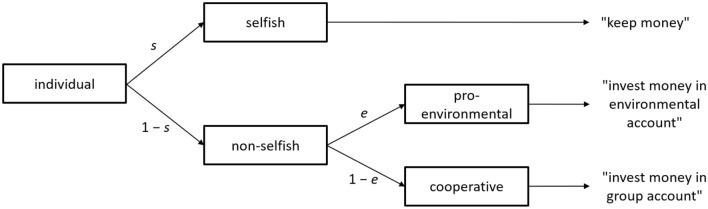
“GGG data were analyzed using a multinomial processing tree (MPT) model 46,47 specifically tailored to the GGG 44 (see Fig.”
Affect and emotions as drivers of climate change perception and action: a review
Brosch, T. (2021) · Current Opinion in Behavioral Sciences · doi:10.1016/j.cobeha.2021.02.001 · Cited by 588
The EUROHIS-QOL 8-item index: psychometric results of a cross-cultural field study
Schmidt, S., Mühlan, H., & Power, M. (2006) · European Journal of Public Health · doi:10.1093/eurpub/cki155 · Cited by 570
Ogunbode, C. A., Doran, R., Hanss, D., Ojala, M., Salmela-Aro, K., van den Broek, K. L., Bhullar, N., Aquino, S. D., Marot, T., Schermer, J. A., et al. (2022) · Journal of Environmental Psychology · doi:10.1016/j.jenvp.2022.101887 · Cited by 549 · cited 3×
“…eco-depression, solastalgia, ecological grief, and eco-anger, (ii) cover affects that were linked to pro-environmental behavior in previous work 10,12,14,15 , and (iii) reflect common sources of psychopathology in order to critically test whether negative affect in response to climate change is…”
Global climate change and mental health
Palinkas, L. A., & Wong, M. (2020) · Current Opinion in Psychology · doi:10.1016/j.copsyc.2019.06.023 · Cited by 493
Empirical evidence of mental health risks posed by climate change
Obradovich, N., Migliorini, R., Paulus, M. P., & Rahwan, I. (2018) · Proceedings of the National Academy of Sciences · doi:10.1073/pnas.1801528115 · Cited by 492
Anderson, C. A. (2001) · Current Directions in Psychological Science · doi:10.1111/1467-8721.00109 · Cited by 424
Climate anxiety: What predicts it and how is it related to climate action?
Whitmarsh, L., Player, L., Jiongco, A., James, M., Williams, M., Marks, E., & Kennedy-Williams, P. (2022) · Journal of Environmental Psychology · doi:10.1016/j.jenvp.2022.101866 · Cited by 401
Reversed item bias: An integrative model.
Weijters, B., Baumgartner, H., & Schillewaert, N. (2013) · Psychological Methods · doi:10.1037/a0032121 · Cited by 386
Harth, N. S., Leach, C. W., & Kessler, T. (2013) · Journal of Environmental Psychology · doi:10.1016/j.jenvp.2012.12.005 · Cited by 351 · cited 1×
“This finding replicates previous work demonstrating a positive association between CCD-like constructs and self-reported PEB 52–54 and provides an important extension in that it measures actual behavior where previous work focused on behavioral intentions that often overestimate PEB 55 .”
Do concerns about climate change lead to distress?
Searle, K., & Gow, K. (2010) · International Journal of Climate Change Strategies and Management · doi:10.1108/17568691011089891 · Cited by 338 · cited 3×
“This follows from previous work showing that younger individuals (aged 18–36) repeatedly reported increased levels of negative emotions in reaction to climate change 7,18,23,24 .”
Multinomial Processing Tree Models: A Review of the Literature
Erdfelder, E., Auer, T.-S., Hilbig, B. E., Aßfalg, A., Moshagen, M., & Nadarevic, L. (2009) · Zeitschrift für Psychologie / Journal of Psychology · doi:10.1027/0044-3409.217.3.108 · Cited by 336
Differentiating environmental concern in the context of psychological adaption to climate change
Helm, S. V., Pollitt, A., Barnett, M. A., Curran, M. A., & Craig, Z. R. (2018) · Global Environmental Change · doi:10.1016/j.gloenvcha.2017.11.012 · Cited by 307
Hierarchical Multinomial Processing Tree Models: A Latent-Trait Approach
Klauer, K. C. (2010) · Psychometrika · doi:10.1007/s11336-009-9141-0 · Cited by 288 · cited 1×
“To account for individual differences on these traits and to directly assess their effect on the behavioral parameters s and e , we fitted a Bayesian hierarchical extension of the MPT model 48 using the R package TreeBUGS 49 .”
Dueber, D. (2017) · UKnowledge (University of Kentucky) · doi:10.13023/edp.tool.01 · Cited by 274 · cited 1×
“…adequate overall model fit (CFI = 0.916, TLI = 0.903, SRMR = 0.066, RMSEA = 0.061) and excellent factor-specific reliability, replicability, and determinacy (Ω Distress = 0.841, Ω Impairment = 0.860, H Distress = 0.887, H Impairment = 0.880, FD Distress = 0.942, FD Impairment = 0.938) 31,32 .”
InfluentialOgunbode, C. A., Pallesen, S., Böhm, G., Doran, R., Bhullar, N., Aquino, S., Marot, T., Schermer, J. A., Wlodarczyk, A., Lu, S., et al. (2023) · Current Psychology · doi:10.1007/s12144-021-01385-4 · Cited by 255
Mental health effects of climate change
Padhy, S., Sarkar, S., Panigrahi, M., & Paul, S. (2015) · Indian Journal of Occupational and Environmental Medicine · doi:10.4103/0019-5278.156997 · Cited by 238
Kring, A. M., & Bachorowski, J.-A. (1999) · Cognition and Emotion · doi:10.1080/026999399379195 · Cited by 236 · cited 1×
“The inclusion of these four negative affects reflects the breadth of emotions relevant to climate change 10,27 , follows established emotion models 28 , and reflects common sources of psychopathology 29 .”
Shipley, N. J., & van Riper, C. J. (2022) · Journal of Environmental Psychology · doi:10.1016/j.jenvp.2021.101753 · Cited by 183
TreeBUGS: An R package for hierarchical multinomial-processing-tree modeling
Heck, D. W., Arnold, N. R., & Arnold, D. (2018) · Behavior Research Methods · doi:10.3758/s13428-017-0869-7 · Cited by 175 · cited 1×
“To account for individual differences on these traits and to directly assess their effect on the behavioral parameters s and e , we fitted a Bayesian hierarchical extension of the MPT model 48 using the R package TreeBUGS 49 .”
The Pro-Environmental Behavior Task: A laboratory measure of actual pro-environmental behavior
Lange, F., Steinke, A., & Dewitte, S. (2018) · Journal of Environmental Psychology · doi:10.1016/j.jenvp.2018.02.007 · Cited by 172
Balundė, A., Perlaviciute, G., & Steg, L. (2019) · Frontiers in Psychology · doi:10.3389/fpsyg.2019.02319 · Cited by 170 · cited 1×
“PEB is defined as behavior that consciously aims at avoiding or minimizing one’s negative impact on the natural world 21,22 .”
Hornsey, M. J., Fielding, K. S., McStay, R., Reser, J., Bradley, G. L., & Greenaway, K. H. (2015) · Journal of Environmental Psychology · doi:10.1016/j.jenvp.2015.02.003 · Cited by 150 · cited 4×
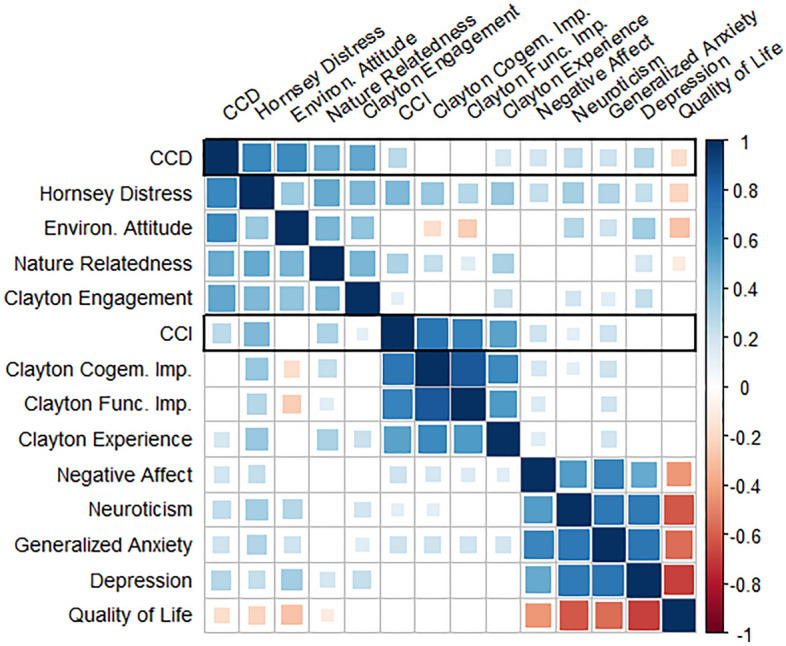
“As hypothesized, CCD showed the highest correlation with distress about the consequences of climate change 16 at r = 0.64.”
InfluentialLange, F., & Dewitte, S. (2021) · Behavior Research Methods · doi:10.3758/s13428-021-01617-2 · Cited by 147
Ten-year panel data confirm generation gap but climate beliefs increase at similar rates across ages
Milfont, T. L., Zubielevitch, E., Milojev, P., & Sibley, C. G. (2021) · Nature Communications · doi:10.1038/s41467-021-24245-y · Cited by 145 · cited 1×
“This follows from previous work showing that younger individuals (aged 18–36) repeatedly reported increased levels of negative emotions in reaction to climate change 7,18,23,24 .”
Exploring the role of incidental emotions in support for climate change policy
Lu, H., & Schuldt, J. P. (2015) · Climatic Change · doi:10.1007/s10584-015-1443-x · Cited by 123
Martin, G., Reilly, K., Everitt, H., & Gilliland, J. A. (2022) · Child and Adolescent Mental Health · doi:10.1111/camh.12525 · Cited by 122 · cited 1×
“This follows from previous work showing that younger individuals (aged 18–36) repeatedly reported increased levels of negative emotions in reaction to climate change 7,18,23,24 .”
Mah, A. Y. J., Chapman, D. A., Markowitz, E. M., & Lickel, B. (2020) · Journal of Anxiety Disorders · doi:10.1016/j.janxdis.2020.102282 · Cited by 113
An encompassing prior generalization of the Savage–Dickey density ratio
Wetzels, R., Grasman, R. P. P. P., & Wagenmakers, E. (2010) · Computational Statistics & Data Analysis · doi:10.1016/j.csda.2010.03.016 · Cited by 109
Swim, J., Clayton, S., Doherty, T., & Gifford, R. (2013) · PsycEXTRA Dataset · doi:10.1037/e582892010-001 · Cited by 93
Which is the greater good? A social dilemma paradigm disentangling environmentalism and cooperation
Klein, S. A., Hilbig, B. E., & Heck, D. W. (2017) · Journal of Environmental Psychology · doi:10.1016/j.jenvp.2017.06.001 · Cited by 88 · cited 7×
“The final sample consisted of 494 participants who provided valid answers for the GGG and CDD and CCI items, passed an attention check, answered the quality check positively, and did not provide invalid answers to more than 50% of the scales collected at this measurement occasion.”
InfluentialSelf-citationStewart, M., Carleton, W. C., & Groucutt, H. S. (2021) · Nature Communications · doi:10.1038/s41467-021-21201-8 · Cited by 88
Climate Change: A Call to Action for the Psychiatric Profession
Coverdale, J., Balon, R., Beresin, E. V., Brenner, A. M., Guerrero, A. P. S., Louie, A. K., & Roberts, L. W. (2018) · Academic Psychiatry · doi:10.1007/s40596-018-0885-7 · Cited by 69
Towers, S., Chen, S., Malik, A., & Ebert, D. (2018) · PLOS ONE · doi:10.1371/journal.pone.0205151 · Cited by 59
Climate change, resilience, and trauma: Course of action through research, policy, and practice.
Ferreira, R. J. (2020) · Traumatology An International Journal · doi:10.1037/trm0000282 · Cited by 16
Research works printed but not linked: 3
- Albrecht G Chronic Environmental Change: Emerging ‘Psychoterratic’ Syndromes in Climate Change and Human Well-Being 2011 Springer
- Costa PT Crae RR The NEO-PI/NEO-FFI Manual Supplement 1989 Psychological Assessment Resources
- Erdfelder E Multinomial processing tree models J Psychol 2009 217 108 124
Cited by
Cosh, S. M., Ryan, R., Fallander, K., Robinson, K., Tognela, J., Tully, P. J., & Lykins, A. D. (2024) · BMC Psychiatry · doi:10.1186/s12888-024-06274-1 · Cited by 138
Eco-emotions and Psychoterratic Syndromes: Reshaping Mental Health Assessment Under Climate Change
Cianconi, P., Hanife, B., Grillo, F., Betrò, S., Lesmana, C. B. J., & Janiri, L. (2023) · The Yale Journal of Biology and Medicine · doi:10.59249/earx2427 · Cited by 163
Lewandowski, R. E., Clayton, S. D., Olbrich, L., Sakshaug, J. W., Wray, B., Schwartz, S. E. O., Augustinavicius, J., Howe, P. D., Parnes, M., Wright, S., et al. (2024) · The Lancet Planetary Health · doi:10.1016/s2542-5196(24)00229-8 · Cited by 91
“12,22 In a nationally representative online US survey, which was not peer-reviewed, 57% (weighted) of 629 adolescents aged 13–17 years reported that climate change makes them feel afraid.”
A meta-analysis on the relationship between climate anxiety and wellbeing
Gago, T., Sargisson, R. J., & Milfont, T. L. (2024) · Journal of Environmental Psychology · doi:10.1016/j.jenvp.2024.102230 · Cited by 87
Climate change anxiety: A meta-analysis
Kühner, C., Gemmecke, C., Hüffmeier, J., & Zacher, H. (2025) · Global Environmental Change · doi:10.1016/j.gloenvcha.2025.103015 · Cited by 100
Metadata
- Authors
- Hepp, J., Klein, S. A., Horsten, L. K., Urbild, J., & Lane, S. P.
- Affiliations
- Heidelberg University (DE)
- Rheinland-Pfälzische Technische Universität Kaiserslautern-Landau (DE)
- University of Missouri (US)
- Corresponding author
- Hepp, Johanna
- Venue
- Scientific Reports
- Published
- 2023-07-12
- Volume
- 13
- Issue
- 1
- Pages
- 11272-11272
- ISSN
- 2045-2322 (ISSN-L)
- PMC
- PMC10338517
- OpenAlex
- W4384007619
- Semantic Scholar
- ab4d173bffbf28b90293d9c93aced3023fa25de9
- Cited by
- 41
- References
- 62
- Citations by year
- 2026: 10 · 2025: 12 · 2024: 18 · 2023: 1
- FWCI
- 17.62
- Type
- journal article
- Language
- en
- Open access
- gold
- doi.org
- Licence
- cc-by
- creativecommons.org/licenses/by/4.0 (tdm)
- creativecommons.org/licenses/by/4.0 (vor)
- Locations
- Scientific Reports (publishedVersion, cc-by)
- Research Square (acceptedVersion, cc-by)
- PubMed Central (publishedVersion, cc-by)
- PubMed (publishedVersion)
- DOAJ (DOAJ: Directory of Open Access Journals) (submittedVersion, cc-by-sa)
- Funders
- Deutsche Forschungsgemeinschaft (KL 3365/1-1)
- Medizinische Fakultät Mannheim der Universität Heidelberg
- Topics
- Social Sciences › Sociology and Political Science › Climate Change Communication and Perception
- Social Sciences › Psychology › Clinical Psychology › COVID-19 and Mental Health
- Physical Sciences › Environmental Science › Health, Toxicology and Mutagenesis › Climate Change and Health Impacts
- Keywords
- scale development, climate change and mental health, negative affectivity, depressive symptoms, generalized anxiety disorder, pro-environmental behavior, gender differences, age differences, cross-cultural validation, climate change mitigation
- MeSH terms
- Problem Behavior, Anger, Anxiety, Anxiety Disorders, Female, Humans, Climate Change
About these checks
Registry, retraction, Cites and statistics results are computed, not judged, with one exception: a printed reference that no index lists is read once by a model before it counts as a citation error. Claims are extracted by a model and kept only when their quote appears verbatim in the text; each cited source is then checked, with a model’s help, for whether it says what the claim relies on. Those verdicts can be wrong — read the claim’s quote and the cited source before relying on one.
Statistics and arithmetic are recomputed, not judged.
Confidence bands are shown only for fields calibrated on our annotated test set. None is calibrated yet, so no band is shown.
What counts as a claim ›How we measure confidence ›How we check this ›
Are you an author, or do you see a problem with this page? Request a review
Data sources
Bibliographic data: Semantic Scholar, OpenAlex, Crossref.
Contains information from the Semantic Scholar Academic Graph Datasets, made available under the ODC Attribution License (ODC-BY 1.0).
Semantic Scholar’s data is described in: Kinney, R., et al. (2023). The Semantic Scholar Open Data Platform. arXiv:2301.10140.
