

Effect of functional resistance training on the structure and function of the heart and liver in patients with non-alcoholic fatty liver
Open accessThe DOI matches its Crossref record; 64 of the 64 references it cites were found in a registry or an index.
Abstract
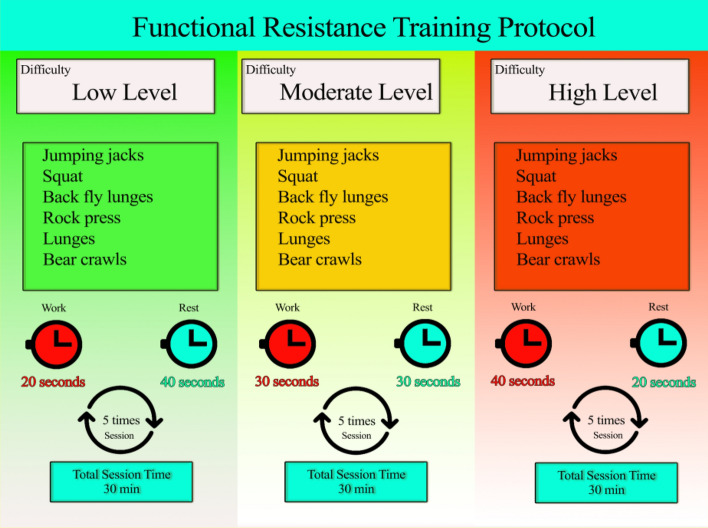
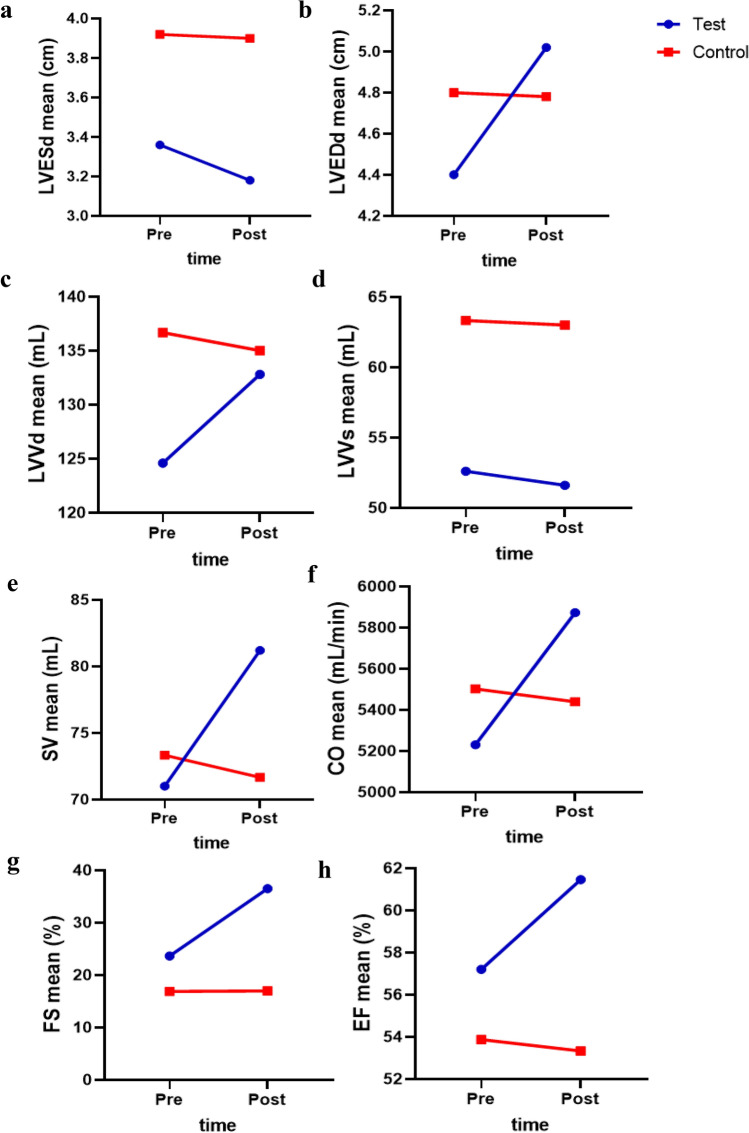
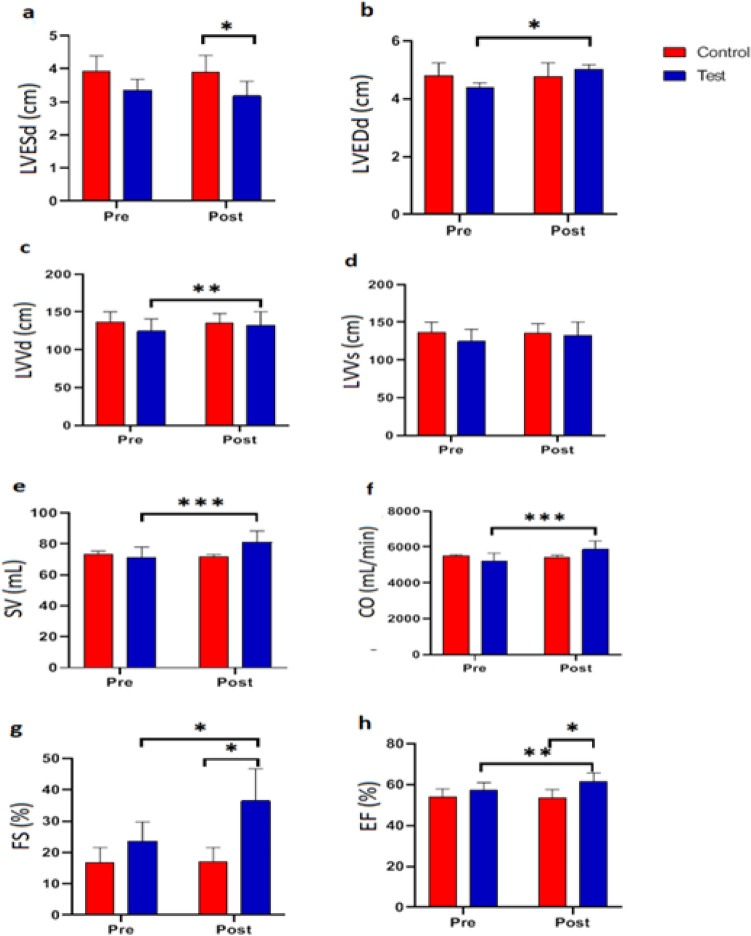
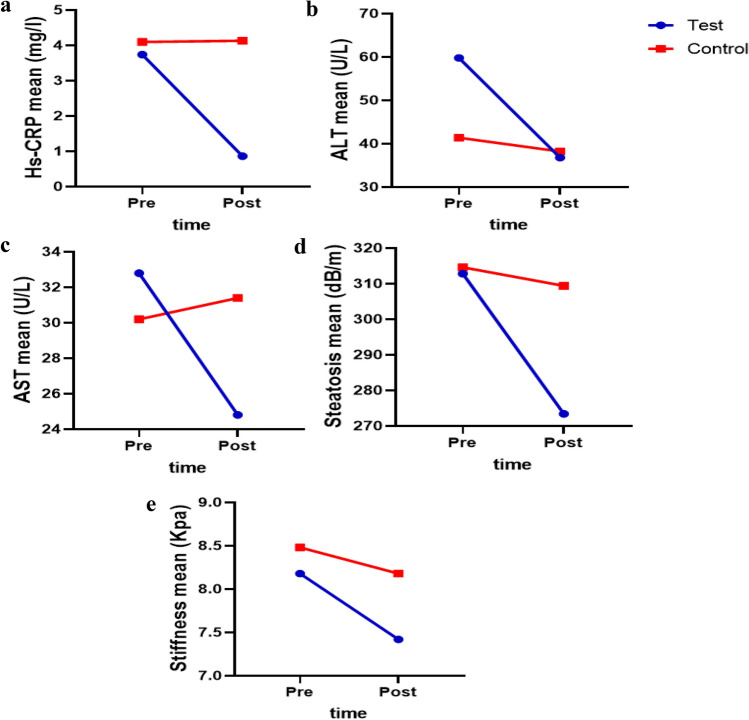
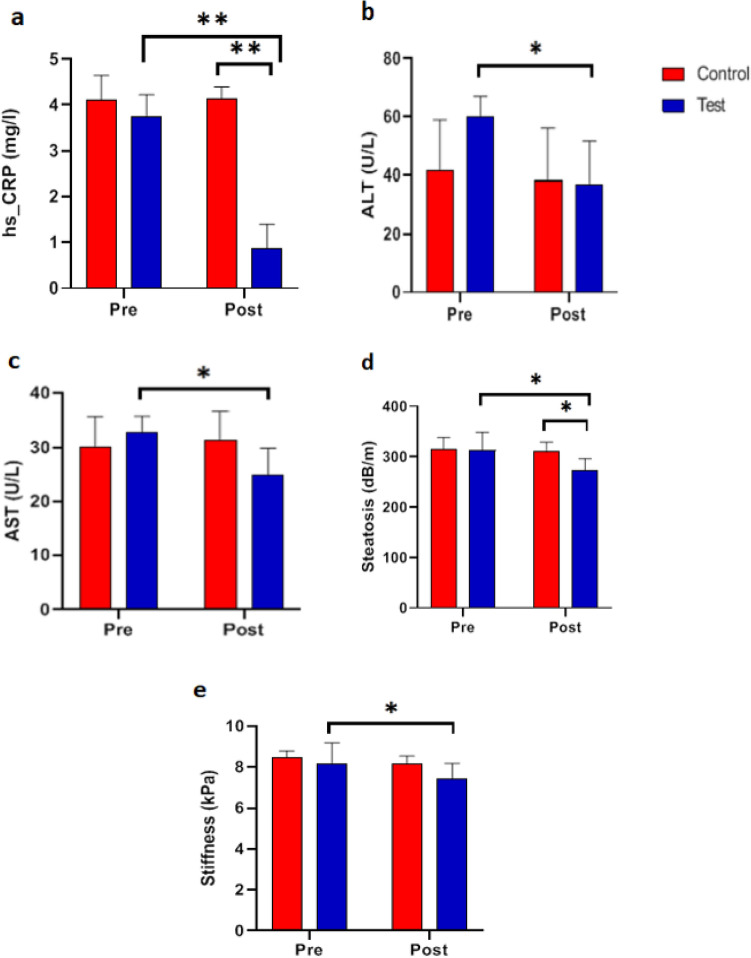
The current study is of the quasi-experimental type, with a pre-and post-test design, and subjects were randomly assigned to one of two groups: control (n = 8) and experimental (test) (n = 8). Based on the patient's self-report and using daily diet control tables, the patient's diet planning percentage of energy supply was managed and controlled for 3 days. The protocol for functional resistance training for these circular exercises, including the squat, lunge, bear crawl, rock press, jumping jack, and back fly lunge, was performed three times per week without specialized apparatus. Ejection fraction (EF) and fractional shortening (FS) were measured before and after functional resistance training, using echocardiography. Liver Stiffness and steatosis were measured using FibroScan, and the liver function was determined using biochemical assays. The average age of patients in the control group and the test group were 46.02 ± 5.4 and 48.6 ± 2.51, respectively. Pre-test and post-test of the body mass index were 32.06 ± 5.06 and 30.02 ± 3.97, and for the body fat percentage were 33.65 ± 6.09 and 25.41 ± 4.99. In non-alcoholic fatty liver patients, due to functional resistance training, EF (p-value = 0.003) and FS (p-value = 0.03) significantly increased, and C-reactive protein (Hs-CRP) (p-value = 0.001), steatosis (p-value = 0.04), and stiffness (p-value = 0.01) decreased. According to the results and without considering clinical trials, functional resistance training affects the structure and function of the heart and Liver in NAFLD patients.
Overview
The claims and statistics of this paper haven’t been checked yet.
Free: it reads the open-access text and checks the first 5 claims that cite a source we can check. Create a free account to check every claim.
Integrity signals
Registry
Cites
Statistics
Figures
Verification
Claims the paper makes
The claims and statistics of this paper haven’t been checked yet.
Free: it reads the open-access text and checks the first 5 claims that cite a source we can check. Create a free account to check every claim.
Claims other papers make about this one
Each is checked against this paper’s own text: does it say what the citing paper says it does?
The cited source doesn’t support the claim as written.
In the citing paper
“Resistance exercise showed significant reduction in ALT levels compared with control groups (WMD = − 15.40 IU/L, 95%CI − 28.60 to − 2.20, P < 0.001)”
From Effects of Mediterranean diet, exercise, and their combination on body composition and liver outcomes in metabolic dysfunction-associated steatotic liver disease: a systematic review and meta-analysis of randomized controlled trials (2025) · cites this paper as [81]
Checked by a reasoning model — may be wrong.
Experimental — accuracy not yet measured
Self-check
Percentages, sums and reported differences re-computed from the paper’s own numbers.
The self-check needs the paper’s full text.
Citations
Cites
The Physical Activity Guidelines for Americans
Piercy, K. L., Troiano, R. P., Ballard, R. M., Carlson, S. A., Fulton, J. E., Galuska, D. A., George, S. M., & Olson, R. D. (2018) · JAMA · doi:10.1001/jama.2018.14854 · Cited by 9,755
Lee, I.-M., Shiroma, E. J., Lobelo, F., Puska, P., Blair, S. N., & Katzmarzyk, P. T. (2012) · The Lancet · doi:10.1016/s0140-6736(12)61031-9 · Cited by 8,215
Chalasani, N., Younossi, Z., Lavine, J. E., Charlton, M., Cusi, K., Rinella, M., Harrison, S. A., Brunt, E. M., & Sanyal, A. J. (2018) · Hepatology · doi:10.1002/hep.29367 · Cited by 7,239
Fit Yourself and Take Your Lungs to Heart
Palange, P., & Bonini, M. (2013) · Respiration · doi:10.1159/000350831 · Cited by 2,779
The Effects of Physical Activity on Serum C-Reactive Protein and Inflammatory Markers
Kasapis, C., & Thompson, P. D. (2005) · Journal of the American College of Cardiology · doi:10.1016/j.jacc.2004.12.077 · Cited by 1,149
Pagano, G., Pacini, G., Musso, G., Gambino, R., Mecca, F., Depetris, N., Cassader, M., David, E., Cavallo-Perin, P., & Rizzetto, M. (2002) · Hepatology · doi:10.1053/jhep.2002.30690 · Cited by 753
Structural features of the athlete heart as defined by echocardiography
Maron, B. J. (1986) · Journal of the American College of Cardiology · doi:10.1016/s0735-1097(86)80282-0 · Cited by 516 · cited 1×
“Regular exercise augments venous return to the heart, thereby augmenting CO 41 .”
BackgroundEffects of aerobic exercise on lipids and lipoproteins
Wang, Y., & Xu, D. (2017) · Lipids in Health and Disease · doi:10.1186/s12944-017-0515-5 · Cited by 436
Risk of cardiomyopathy and cardiac arrhythmias in patients with nonalcoholic fatty liver disease
Anstee, Q. M., Mantovani, A., Tilg, H., & Targher, G. (2018) · Nature Reviews Gastroenterology & Hepatology · doi:10.1038/s41575-018-0010-0 · Cited by 310
Molecular Mechanisms Underlying Cardiac Adaptation to Exercise
Vega, R. B., Konhilas, J. P., Kelly, D. P., & Leinwand, L. A. (2017) · Cell Metabolism · doi:10.1016/j.cmet.2017.04.025 · Cited by 307
Sullivan, S., Kirk, E. P., Mittendorfer, B., Patterson, B. W., & Klein, S. (2012) · Hepatology · doi:10.1002/hep.25548 · Cited by 301
Strength training increases insulin action in healthy 50- to 65-yr-old men
Miller, J. P., Pratley, R. E., Goldberg, A. P., Gordon, P., Rubin, M., Treuth, M. S., Ryan, A. S., & Hurley, B. F. (1994) · Journal of Applied Physiology · doi:10.1152/jappl.1994.77.3.1122 · Cited by 283
Zhang, H.-J., He, J., Pan, L.-L., Ma, Z.-M., Han, C.-K., Chen, C.-S., Chen, Z., Han, H.-W., Chen, S., Sun, Q., et al. (2016) · JAMA Internal Medicine · doi:10.1001/jamainternmed.2016.3202 · Cited by 276
Arterial Stiffness and Hypertension in the Elderly
Laurent, S., & Boutouyrie, P. (2020) · Frontiers in Cardiovascular Medicine · doi:10.3389/fcvm.2020.544302 · Cited by 266
Cardiac remodelling: concentric versus eccentric hypertrophy in strength and endurance athletes
Mihl, C., Dassen, W. R. M., & Kuipers, H. (2008) · Netherlands Heart Journal · doi:10.1007/bf03086131 · Cited by 249
Lopez, P., Taaffe, D. R., Galvão, D. A., Newton, R. U., Nonemacher, E. R., Wendt, V. M., Bassanesi, R. N., Turella, D. J. P., & Rech, A. (2022) · Obesity Reviews · doi:10.1111/obr.13428 · Cited by 210
Revised Physical Activity Readiness Questionnaire.
Adams, R. (1999) · PubMed · Cited by 209
Cordina, R. L., O'Meagher, S., Karmali, A., Rae, C. L., Liess, C., Kemp, G. J., Puranik, R., Singh, N., & Celermajer, D. S. (2013) · International Journal of Cardiology · doi:10.1016/j.ijcard.2012.10.012 · Cited by 205
Targher, G., Valbusa, F., Bonapace, S., Bertolini, L., Zenari, L., Rodella, S., Zoppini, G., Mantovani, W., Barbieri, E., & Byrne, C. D. (2013) · PLoS ONE · doi:10.1371/journal.pone.0057183 · Cited by 197
Prevalence of steatosis and fibrosis in young adults in the UK: a population-based study
Abeysekera, K. W. M., Fernandes, G. S., Hammerton, G., Portal, A. J., Gordon, F. H., Heron, J., & Hickman, M. (2020) · The Lancet Gastroenterology & Hepatology · doi:10.1016/s2468-1253(19)30419-4 · Cited by 181 · cited 1×
“In the United States, NAFLD-related fibrosis is on the rise, which could lead to an increase in overall and cause-specific mortality 24 .”
BackgroundRelationship between Heart Disease and Liver Disease: A Two-Way Street
El Hadi, H., Di Vincenzo, A., Vettor, R., & Rossato, M. (2020) · Cells · doi:10.3390/cells9030567 · Cited by 176
Lautamäki, R., Borra, R., Iozzo, P., Komu, M., Lehtimäki, T., Salmi, M., Jalkanen, S., Airaksinen, K. E. J., Knuuti, J., Parkkola, R., et al. (2006) · American Journal of Physiology-Endocrinology and Metabolism · doi:10.1152/ajpendo.00604.2005 · Cited by 170
NAFLD, and cardiovascular and cardiac diseases: Factors influencing risk, prediction and treatment
Targher, G., Corey, K. E., & Byrne, C. D. (2021) · Diabetes & Metabolism · doi:10.1016/j.diabet.2020.101215 · Cited by 165
The Genetics of Nonalcoholic Fatty Liver Disease: Spotlight on PNPLA3 and TM6SF2
Day, C., & Anstee, Q. (2015) · Seminars in Liver Disease · doi:10.1055/s-0035-1562947 · Cited by 161
Resistance training and arterial compliance: keeping the benefits while minimizing the stiffening
Kawano, H., Tanaka, H., & Miyachi, M. (2006) · Journal of Hypertension · doi:10.1097/01.hjh.0000242399.60838.14 · Cited by 155
Eriksson, J., Tuominen, J., Valle, T., Sundberg, S., Sovijärvi, A., Lindholm, H., Tuomilehto, J., & Koivisto, V. (1998) · Hormone and Metabolic Research · doi:10.1055/s-2007-978828 · Cited by 150
Nash, M. S., Jacobs, P. L., Mendez, A. J., & Goldberg, R. B. (2001) · The Journal of Spinal Cord Medicine · doi:10.1080/10790268.2001.11753548 · Cited by 147
Capillary and Venous Samples of Total Creatine Kinase Are Similar After Eccentric Exercise
Knoblauch, M. A., O'Connor, D. P., & Clarke, M. S. F. (2010) · Journal of Strength and Conditioning Research · doi:10.1519/jsc.0b013e3181bf0489 · Cited by 131
Kim, D., Konyn, P., Cholankeril, G., & Ahmed, A. (2022) · Clinical Gastroenterology and Hepatology · doi:10.1016/j.cgh.2021.06.029 · Cited by 130
Zhang, Q., Yin, R., Gao, H., Huang, F., Wu, J., Pan, S., Lin, W., & Yang, D.-Z. (2017) · Lipids in Health and Disease · doi:10.1186/s12944-016-0392-3 · Cited by 124
Huang, S.-W., Ku, J.-W., Lin, L.-F., Liao, C.-D., Chou, L.-C., & Liou, T.-H. (2017) · European Journal of Physical and Rehabilitation Medicine · doi:10.23736/s1973-9087.17.04443-4 · Cited by 120
ECG patch monitors for assessment of cardiac rhythm abnormalities
Lobodzinski, S. S. (2013) · Progress in Cardiovascular Diseases · doi:10.1016/j.pcad.2013.08.006 · Cited by 119
Mazzotti, A., Caletti, M. T., Brodosi, L., Di Domizio, S., Forchielli, M. L., Petta, S., Bugianesi, E., Bianchi, G., & Marchesini, G. (2018) · Journal of Hepatology · doi:10.1016/j.jhep.2018.07.013 · Cited by 117
Sandri, M., Viehmann, M., Adams, V., Rabald, K., Mangner, N., Höllriegel, R., Lurz, P., Erbs, S., Linke, A., Kirsch, K., et al. (2016) · European Journal of Preventive Cardiology · doi:10.1177/2047487315588391 · Cited by 110
Hassannejad, A., Khalaj, A., Mansournia, M. A., Rajabian Tabesh, M., & Alizadeh, Z. (2017) · Obesity Surgery · doi:10.1007/s11695-017-2717-3 · Cited by 108
Left ventricular adaptations following short-term endurance training
Goodman, J. M., Liu, P. P., & Green, H. J. (2005) · Journal of Applied Physiology · doi:10.1152/japplphysiol.00258.2004 · Cited by 99
Home‐Based Exercise in Patients Awaiting Liver Transplantation: A Feasibility Study
Williams, F. R., Vallance, A., Faulkner, T., Towey, J., Durman, S., Kyte, D., Elsharkawy, A. M., Perera, T., Holt, A., Ferguson, J., et al. (2019) · Liver Transplantation · doi:10.1002/lt.25442 · Cited by 99
Sandri, M., Kozarez, I., Adams, V., Mangner, N., Hollriegel, R., Erbs, S., Linke, A., Mobius-Winkler, S., Thiery, J., Kratzsch, J., et al. (2012) · European Heart Journal · doi:10.1093/eurheartj/ehr469 · Cited by 95
Effect of exercise on left ventricular diastolic filling in athletes and nonathletes
Matsuda, M., Sugishita, Y., Koseki, S., Ito, I., Akatsuka, T., & Takamatsu, K. (1983) · Journal of Applied Physiology · doi:10.1152/jappl.1983.55.2.323 · Cited by 95
Effect of Functional Resistance Training on Muscular Fitness Outcomes in Young Adults
Weiss, T., Kreitinger, J., Wilde, H., Wiora, C., Steege, M., Dalleck, L., & Janot, J. (2010) · Journal of Exercise Science & Fitness · doi:10.1016/s1728-869x(10)60017-2 · Cited by 92 · cited 1×
“Some previous studies indicated that there is insufficient evidence to demonstrate that functional training enhances anthropometric and functional measures more effectively than conventional resistance training 12 .”
BackgroundKim, D., Murag, S., Cholankeril, G., Cheung, A., Harrison, S. A., Younossi, Z. M., & Ahmed, A. (2021) · Clinical Gastroenterology and Hepatology · doi:10.1016/j.cgh.2020.07.023 · Cited by 86
Resistance Training for Older Adults in Cardiac Rehabilitation
Khadanga, S., Savage, P. D., & Ades, P. A. (2019) · Clinics in Geriatric Medicine · doi:10.1016/j.cger.2019.07.005 · Cited by 70
Kalatehjari, P., Yousefian, M., & Khalilzadeh, M. A. (2015) · The Egyptian Journal of Aquatic Research · doi:10.1016/j.ejar.2015.07.004 · Cited by 61
Kwak, M., Kim, D., Chung, G. E., Kim, W., Kim, Y. J., & Yoon, J. (2015) · Liver International · doi:10.1111/liv.12552 · Cited by 58
Palevo, G., Keteyian, S. J., Kang, M., & Caputo, J. L. (2009) · Journal of Cardiopulmonary Rehabilitation and Prevention · doi:10.1097/hcr.0b013e3181ac784b · Cited by 57 · cited 1×
“Resistance training increases muscle mass and strength, as well as cardiac filling volume, SV, exercise capacity, and CO 39, 40 .”
BackgroundCroci, I., Coombes, J. S., Bucher Sandbakk, S., Keating, S. E., Nauman, J., Macdonald, G. A., & Wisloff, U. (2019) · Progress in Cardiovascular Diseases · doi:10.1016/j.pcad.2019.01.005 · Cited by 57
Zhao, S., Zhong, J., Sun, C., & Zhang, J. (2021) · Medicine · doi:10.1097/md.0000000000025103 · Cited by 54
Belyavskiy, E., Morris, D. A., Url‐Michitsch, M., Verheyen, N., Meinitzer, A., Radhakrishnan, A. K., Kropf, M., Frydas, A., Ovchinnikov, A. G., Schmidt, A. G., et al. (2018) · ESC Heart Failure · doi:10.1002/ehf2.12375 · Cited by 47
Kingsley, J. D., Mayo, X., Tai, Y. L., & Fennell, C. (2016) · Journal of Strength and Conditioning Research · doi:10.1519/jsc.0000000000001461 · Cited by 41 · cited 1×
“Nonetheless, resistance training may also cause transient increases in arterial rigidity 60 .”
BackgroundHe, B., Lu, Z., He, W., Huang, B. S., & Jiang, H. (2016) · Cardiovascular Therapeutics · doi:10.1111/1755-5922.12179 · Cited by 40
Adler, Y., Fisman, E. Z., Koren‐Morag, N., Tanné, D., Shemesh, J., Lasry, E., & Tenenbaum, A. (2008) · The American Journal of Cardiology · doi:10.1016/j.amjcard.2008.02.105 · Cited by 40
Jung, J. Y., Park, S. K., Ryoo, J., Oh, C., Kang, J. G., Lee, J., & Choi, J. (2017) · Hepatology Research · doi:10.1111/hepr.12770 · Cited by 39
The preventive effect of sustained physical activity on incident nonalcoholic fatty liver disease
Kwak, M., Kim, D., Chung, G. E., Kim, W., & Kim, J. S. (2017) · Liver International · doi:10.1111/liv.13332 · Cited by 39
Thiebaud, R. S., Fahs, C. A., Rossow, L. M., Loenneke, J. P., Kim, D., Mouser, J. G., Beck, T. W., Bemben, D. A., Larson, R. D., & Bemben, M. G. (2015) · European Journal of Applied Physiology · doi:10.1007/s00421-015-3242-5 · Cited by 35
El-Kader, S. M. A., Al-Shreef, F. M., & Al-Jiffri, O. H. (2019) · African Health Sciences · doi:10.4314/ahs.v19i4.9 · Cited by 35
Oni, E., Kalathiya, R., Aneni, E. C., Martin, S. S., Blaha, M. J., Feldman, T., Agatston, A. S., Blumenthal, R. S., Conceição, R., Carvalho, J. A. M., et al. (2014) · The American Journal of Cardiology · doi:10.1016/j.amjcard.2014.09.044 · Cited by 34
Leggio, M., Mazza, A., Cruciani, G., Sgorbini, L., Pugliese, M., Bendini, M. G., Severi, P., & Jesi, A. P. (2014) · Hypertension Research · doi:10.1038/hr.2014.44 · Cited by 31 · cited 1×
“The findings of this study are consistent with the findings of numerous earlier studies 31–34 .”
ResultCaldwell, J. T., Jones, K. M. D., Park, H., Pinto, J. R., Ghosh, P., Reid‐Foley, E., Ulrich, B., Delp, M. D., Behnke, B. J., & Muller‐Delp, J. M. (2021) · American Journal of Physiology-Heart and Circulatory Physiology · doi:10.1152/ajpheart.00885.2020 · Cited by 24
Exercise-induced elevation of liver enzymes in a healthy female research volunteer
Pavletic, A. J., Pao, M., & Wright, M. E. (2015) · Psychosomatics · doi:10.1016/j.psym.2015.03.002 · Cited by 23
Dantas, P. S., Sakata, M. M., Perez, J. D., Watanabe, R. L. H., Bizerra, F. C., das Neves, V. J., Guzzoni, V., Marcondes, F. K., Casarini, D. E., & Cunha, T. S. (2016) · Life Sciences · doi:10.1016/j.lfs.2016.03.040 · Cited by 15
Improvement of Heart Failure by Human Amniotic Mesenchymal Stromal Cell Transplantation in Rats.
Tousi, S. M. T. R., Faghihi, M., Nobakht, M., Molazem, M., Kalantari, E., Darbandi-Azar, A., & Aboutaleb, N. (2016) · PubMed Central · Cited by 14
Hosseini, M., Piri, M., Agha-Alinejad, H., & Hajsadeghi, S. (2012) · Biology of Sport · doi:10.5604/20831862.979404 · Cited by 12 · cited 1×
“The findings of this study are consistent with the findings of numerous earlier studies 31–34 .”
da Silva, N. T., Ricci‐Vitor, A. L., Cipriano, G., Garner, D. M., Netto, J., Giacon, T. R., Christófaro, D. G. D., & Vanderlei, L. C. M. (2020) · Research Quarterly for Exercise and Sport · doi:10.1080/02701367.2019.1679333 · Cited by 10
Qiu, X., Li, Y., Ma, M., Cao, M., Yan, X., & Cai, H. (2022) · Medicine · doi:10.1097/md.0000000000030230 · Cited by 4
Research works printed but not linked: 3
- Mirdar S Neyestani F Hamidian G Khalilzadeh MA The effect of tapering and Nigella sativa on the histological structure of the lung after increasing interval exercise training Arch. Med. Deporte 2019 36 2 92 99
- Kibele A Behm DGJ Seven weeks of instability and traditional resistance training effects on strength, balance, and functional performance J. Strength Condit. Res. 2009 23 9 2443 2450 19952576
- MohagheghArdabili AJF The effect of a 12-week plyometric and soccer training on the cardiac structure and function among the 13–15 years old boys J. Kashan Univ. Med. Sci. 2017 21 1 94 101
Cited by
Arita, V. A., Cabezas, M. C., Hernández Vargas, J. A., Trujillo-Cáceres, S. J., Mendez Pernicone, N., Bridge, L. A., Raeisi-Dehkordi, H., Dietvorst, C. A. W., Dekker, R., Uriza-Pinzón, J. P., et al. (2025) · BMC Medicine · doi:10.1186/s12916-025-04320-7 · Cited by 43
“Twelve aerobic [67, 69, 70, 72, 74–79, 90, 91], five resistance [80, 81, 83, 90, 91], and four combined aero-bic-resistance [85, 87–89] interventions reported ALT levels were included in the meta-analysis (Tables 4, 5, and 6, Additional file 2: Figure S2-S4).”
InfluentialInter-organ metabolic interaction networks in non-alcoholic fatty liver disease
Fan, Y., Zhang, S., Wang, Y., Wang, H., Li, H., & Bai, L. (2025) · Frontiers in Endocrinology · doi:10.3389/fendo.2024.1494560 · Cited by 28
Personalized Pain Pathways in Liver Fibrosis: Towards Precision Hepatology
Addissouky, T. A. (2024) · Avicenna Journal of Medical Biochemistry · doi:10.34172/ajmb.2535 · Cited by 8
Janota, B., Adamek, B., Szczepańska, E., Biernacki, K., & Janczewska, E. (2023) · Metabolites · doi:10.3390/metabo13121174 · Cited by 4
“Jafarikhah et al. suggested that resistance training could be beneficial in reducing liver fat [51].”
BackgroundLevchuk, O., & Денефіль, О. В. (2024) · Medical and Clinical Chemistry · doi:10.11603/mcch.2410-681x.2024.i2.14766
Metadata
- Authors
- Jafarikhah, R., Damirchi, A., Rahmani Nia, F., Razavi-Toosi, S. M. T., Shafaghi, A., & Asadian, M.
- Affiliations
- University of Guilan (IR)
- Guilan University of Medical Sciences (IR)
- Corresponding author
- Damirchi, Arsalan
- Venue
- Scientific Reports
- Published
- 2023-09-19
- Volume
- 13
- Issue
- 1
- Pages
- 15475-15475
- ISSN
- 2045-2322 (ISSN-L)
- PMC
- PMC10509216
- OpenAlex
- W4386864634
- Semantic Scholar
- 677c87e9bb846abfaef33238092fefeadbb72ff1
- Cited by
- 7
- References
- 64
- Citations by year
- 2026: 1 · 2025: 3 · 2024: 2 · 2023: 1
- FWCI
- 1.40
- Type
- journal article
- Language
- en
- Open access
- gold
- doi.org
- Licence
- cc-by
- creativecommons.org/licenses/by/4.0 (tdm)
- creativecommons.org/licenses/by/4.0 (vor)
- Locations
- Scientific Reports (publishedVersion, cc-by)
- PubMed Central (publishedVersion, cc-by)
- PubMed (publishedVersion)
- DOAJ (DOAJ: Directory of Open Access Journals) (submittedVersion, cc-by-sa)
- Funders
- Guilan University of Medical Sciences
- Topics
- Health Sciences › Medicine › Hepatology › Liver Disease Diagnosis and Treatment
- Health Sciences › Medicine › Physiology (medical) › Cardiovascular and exercise physiology
- Health Sciences › Medicine › Public Health, Environmental and Occupational Health › Physical Activity and Health
- Keywords
- functional resistance training, non-alcoholic fatty liver disease, cardiac function, ejection fraction, fractional shortening, liver stiffness, hepatic steatosis, C-reactive protein, fat loss, body mass index, diet control
- MeSH terms
- Animals, Ursidae, C-Reactive Protein, Echocardiography, Heart, Humans, Resistance Training, Non-alcoholic Fatty Liver Disease
About these checks
Registry, retraction, Cites and statistics results are computed, not judged, with one exception: a printed reference that no index lists is read once by a model before it counts as a citation error. Claims are extracted by a model and kept only when their quote appears verbatim in the text; each cited source is then checked, with a model’s help, for whether it says what the claim relies on. Those verdicts can be wrong — read the claim’s quote and the cited source before relying on one.
Statistics and arithmetic are recomputed, not judged.
Confidence bands are shown only for fields calibrated on our annotated test set. None is calibrated yet, so no band is shown.
What counts as a claim ›How we measure confidence ›How we check this ›
Are you an author, or do you see a problem with this page? Request a review
Data sources
Bibliographic data: Semantic Scholar, OpenAlex, Crossref.
Contains information from the Semantic Scholar Academic Graph Datasets, made available under the ODC Attribution License (ODC-BY 1.0).
Semantic Scholar’s data is described in: Kinney, R., et al. (2023). The Semantic Scholar Open Data Platform. arXiv:2301.10140.
