

ADCY4 inhibits cAMP-induced growth of breast cancer by inactivating FAK/AKT and ERK signaling but is frequently silenced by DNA methylation
Open accessThe DOI matches its Crossref record; 62 of the 62 references it cites were found in a registry or an index.
Abstract
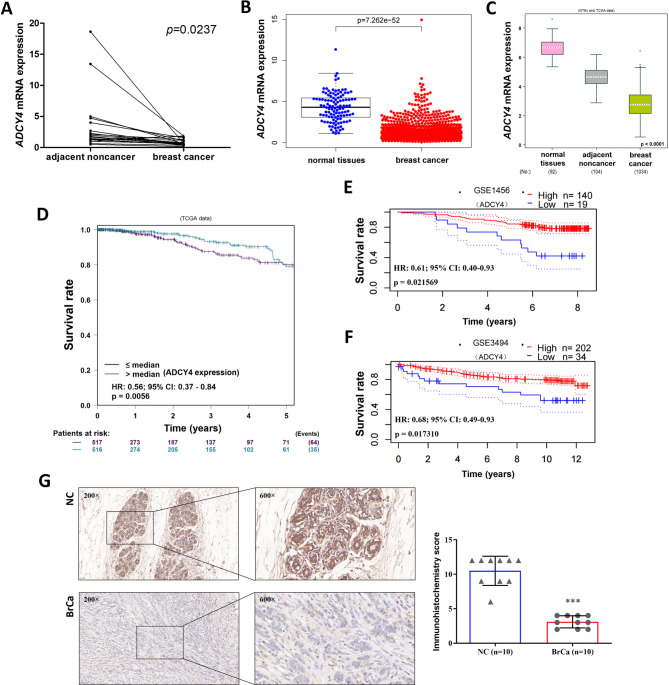
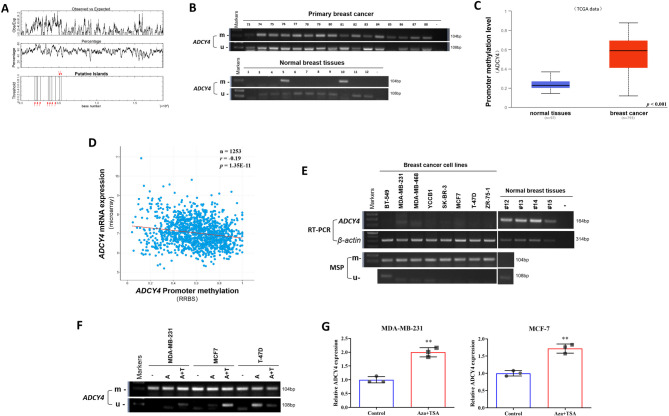
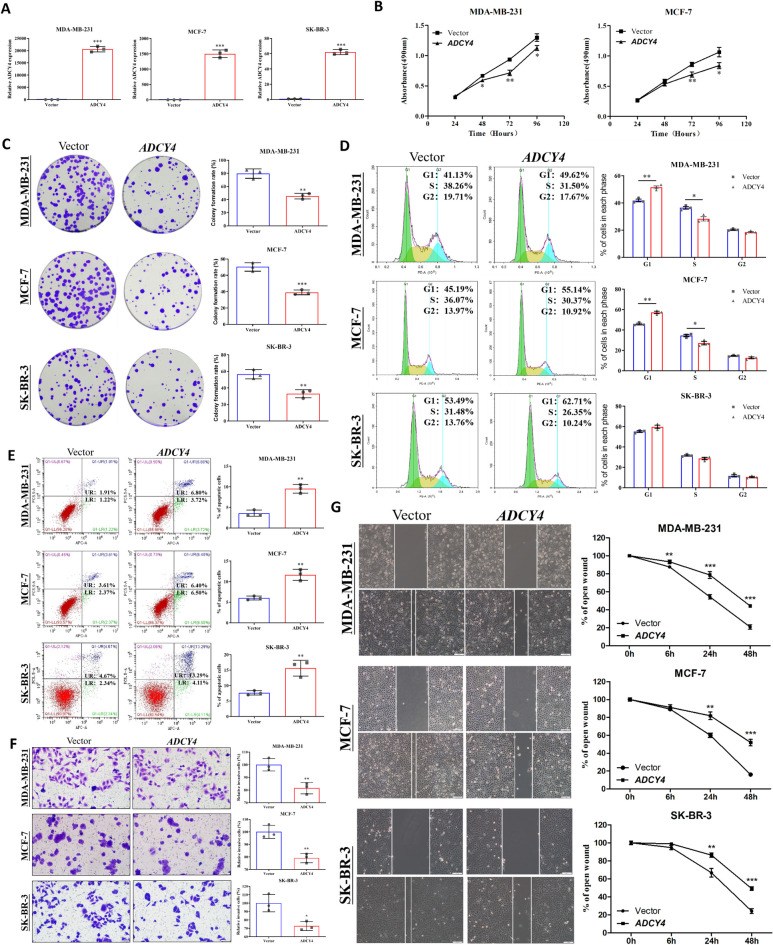
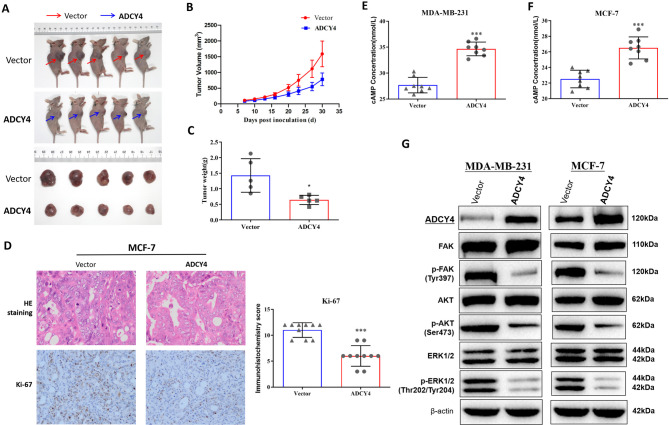
Local increases in cyclic adenosine monophosphate (cAMP) caused by specific adenylyl cyclases (ACs) can selectively modulate related proteins. AC-selective drugs have an advantage in side effect control, and the specific AC may finally be considered as a therapeutic target. We show that adenylyl cyclase 4 (ADCY4), which is silenced by DNA methylation and is critical for breast cancer (BC) patient survival, plays essential roles in anti-tumor effects in BC cells. DNA methyltransferase inhibitor and histone deacetylase inhibitor can restore ADCY4 mRNA expression in ADCY4-silenced BC cells. ADCY4 directly affects BC cell proliferation, apoptosis, invasion, and metastasis. Mechanistically, ADCY4 converts ATP to cAMP and activates cAMP/PKA signaling, leading to a decrease in the phosphorylation level of downstream FAK/AKT and ERK signaling and creating a suppression environment for cell survival. Ectopic ADCY4 inhibits BC growth, which is blocked by cAMP inhibition, activating AKT and ERK. The present study provides evidence that human BC relies upon this epigenetic silenced ADCY4-associated ATP-cAMP loop for phosphorylation and activation of FAK/AKT and ERK signaling. Also, ADCY4 increases BC cell chemosensitivity to paclitaxel. The observations demonstrates that ADCY4 is a significant tumor suppressor and that loss of ADCY4 functions by DNA methylation hampers cAMP signaling and triggers FAK/AKT and ERK signaling during breast tumorigenesis.
Overview
The claims and statistics of this paper haven’t been checked yet.
Free: it reads the open-access text and checks the first 5 claims that cite a source we can check. Create a free account to check every claim.
Integrity signals
Registry
Cites
Statistics
Figures
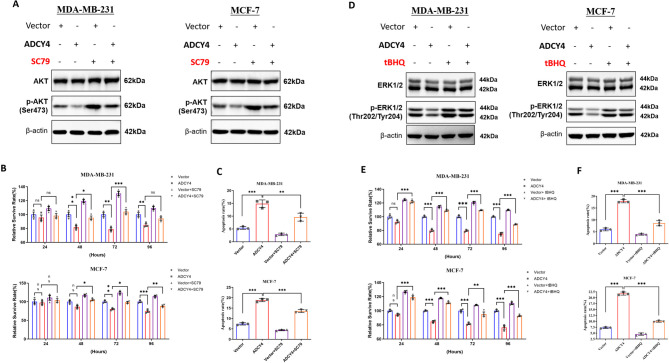
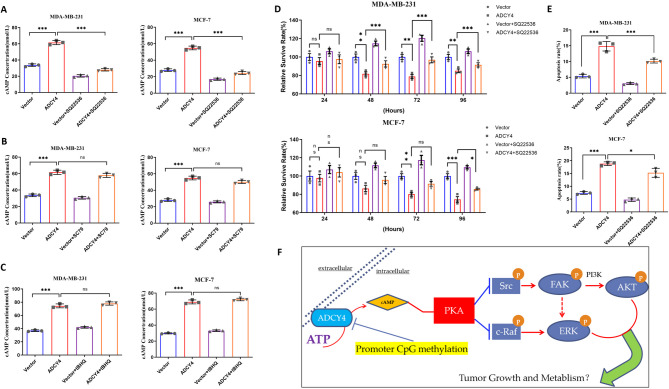
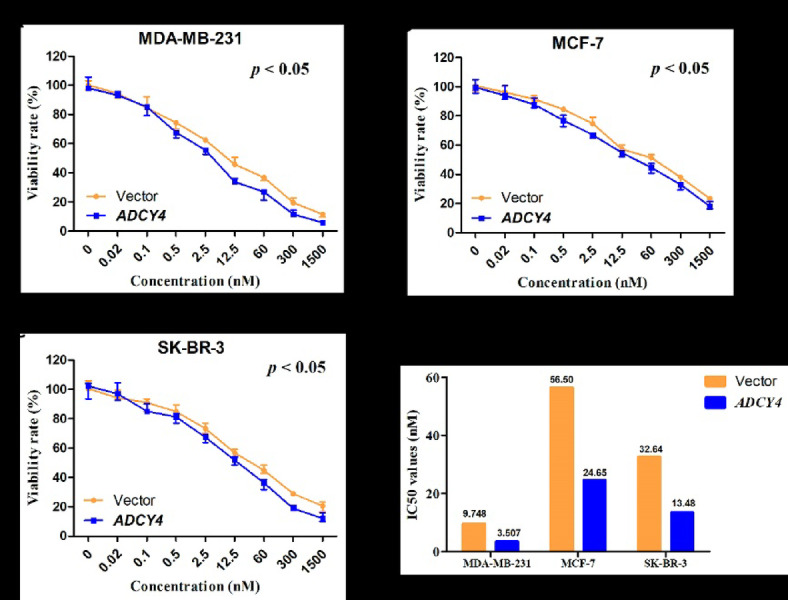
Verification
Claims the paper makes
The claims and statistics of this paper haven’t been checked yet.
Free: it reads the open-access text and checks the first 5 claims that cite a source we can check. Create a free account to check every claim.
Claims other papers make about this one
Each is checked against this paper’s own text: does it say what the citing paper says it does?
The source backs part of the claim, not all of it — or backs it for a different population, condition or comparison.
In the citing paper
“Notably, six of the 19 prognostic genes are non-enzymatic regulators that modulate glycolytic flux via receptor signaling or transcriptional control (16–21).”
From Bioinformatics-based identification of glycolysis-related signatures associated with drug resistance and prognosis in lung adenocarcinoma (2026) · cites this paper as [20]
Experimental — accuracy not yet measuredThe source backs part of the claim, not all of it — or backs it for a different population, condition or comparison.
In the citing paper
“Through literature research, six genes (WNT3A, VIPR1, ADRB2, SPRY1, PDGFB, and RXFP1) related to lung cancer and the regulation of glycolytic metabolic pathways were identified among the 19 genes.”
From Bioinformatics-based identification of glycolysis-related signatures associated with drug resistance and prognosis in lung adenocarcinoma (2026) · cites this paper as [20]
Experimental — accuracy not yet measuredThe check wasn’t confident either way, so it gives no verdict — never disputed.
In the citing paper
“In lung cancer, glycolysis has been implicated in promoting metastatic potential by facilitating cytoskeletal remodeling and enhancing cellular motility in both murine and human models (20).”
From Bioinformatics-based identification of glycolysis-related signatures associated with drug resistance and prognosis in lung adenocarcinoma (2026) · cites this paper as [20]
Experimental — accuracy not yet measured
Self-check
Percentages, sums and reported differences re-computed from the paper’s own numbers.
The self-check needs the paper’s full text.
Citations
Cites
Analysis of Relative Gene Expression Data Using Real-Time Quantitative PCR and the 2−ΔΔCT Method
Livak, K. J., & Schmittgen, T. D. (2001) · Methods · doi:10.1006/meth.2001.1262 · Cited by 180,860
Sung, H., Ferlay, J., Siegel, R. L., Laversanne, M., Soerjomataram, I., Jemal, A., & Bray, F. (2021) · CA: A Cancer Journal for Clinicians · doi:10.3322/caac.21660 · Cited by 108,699
Subramanian, A., Tamayo, P., Mootha, V. K., Mukherjee, S., Ebert, B. L., Gillette, M. A., Paulovich, A., Pomeroy, S. L., Golub, T. R., Lander, E. S., et al. (2005) · Proceedings of the National Academy of Sciences · doi:10.1073/pnas.0506580102 · Cited by 53,625
Cerami, E., Gao, J., Dogrusoz, U., Gross, B. E., Sumer, S. O., Aksoy, B. A., Jacobsen, A., Byrne, C. J., Heuer, M. L., Larsson, E., et al. (2012) · Cancer Discovery · doi:10.1158/2159-8290.cd-12-0095 · Cited by 17,455 · cited 1×
“The relationship between ADCY4 DNA methylation and its mRNA expression was investigated using cBioPortal online tool ( h t t p s : / / w w w . c b i o p o r t a l . o r g / ) (METABRIC, Nature 2012 & Nat Commun 2016, 1866 samples) 21 .”
Sherman, B. T., Hao, M., Qiu, J., Jiao, X., Baseler, M. W., Lane, H. C., Imamichi, T., & Chang, W. (2022) · Nucleic Acids Research · doi:10.1093/nar/gkac194 · Cited by 6,142
Mutation of the mouse klotho gene leads to a syndrome resembling ageing
Kuro-o, M., Matsumura, Y., Aizawa, H., Kawaguchi, H., Suga, T., Utsugi, T., Ohyama, Y., Kurabayashi, M., Kaname, T., Kume, E., et al. (1997) · Nature · doi:10.1038/36285 · Cited by 3,837
CDD/SPARCLE: functional classification of proteins via subfamily domain architectures
Marchler-Bauer, A., Bo, Y., Han, L., He, J., Lanczycki, C. J., Lu, S., Chitsaz, F., Derbyshire, M. K., Geer, R. C., Gonzales, N. R., et al. (2017) · Nucleic Acids Research · doi:10.1093/nar/gkw1129 · Cited by 2,713 · cited 2×
“In addition to its expression regulation mechanism, downregulated ADCY4 was also associated with poor survival and prognosis in BC. ADCY4 belongs to the AC family that structurally consists of two adenylate and guanylate cyclase catalytic domains, adenyl cyclase N-terminal extracellular and transmembrane region, and a…”
UALCAN: An update to the integrated cancer data analysis platform
Chandrashekar, D. S., Karthikeyan, S. K., Korla, P. K., Patel, H., Shovon, A. R., Athar, M., Netto, G. J., Qin, Z. S., Kumar, S., Manne, U., et al. (2022) · Neoplasia · doi:10.1016/j.neo.2022.01.001 · Cited by 2,473
Search and sequence analysis tools services from EMBL-EBI in 2022
Madeira, F., Pearce, M., Tivey, A. R. N., Basutkar, P., Lee, J., Edbali, O., Madhusoodanan, N., Kolesnikov, A., & Lopez, R. (2022) · Nucleic Acids Research · doi:10.1093/nar/gkac240 · Cited by 2,267 · cited 1×
“Meanwhile, we used EMBOSS-cpgplot explorer ( h t t p s : / / w w w . e b i . a c . u k / T o o l s / s e q s t a t s / e m b o s s _ c p g p l o t /) to display the CpG islands in the sequence of ADCY4 19 .”
Loibl, S., Poortmans, P., Morrow, M., Denkert, C., & Curigliano, G. (2021) · The Lancet · doi:10.1016/s0140-6736(20)32381-3 · Cited by 1,648
Integrin-mediated signal transduction linked to Ras pathway by GRB2 binding to focal adhesion kinase
Schlaepfer, D. D., Hanks, S. K., Hunter, T., & Geer, P. V. D. (1994) · Nature · doi:10.1038/372786a0 · Cited by 1,595 · cited 1×
“Interestingly, FAK/Src complex formation allows to phosphorylate FAK to mediate the activation of the RAS-ERK signaling pathway 55 .”
PrognoScan: a new database for meta-analysis of the prognostic value of genes
Mizuno, H., Kitada, K., Nakai, K., & Sarai, A. (2009) · BMC Medical Genomics · doi:10.1186/1755-8794-2-18 · Cited by 995 · cited 1×
“Furthermore, the prognostic values of ADCY4 in BC were confirmed using PrognoScan with GEO datasets ( h t t p : / / d n a 0 0 . b i o . k y u t e c h . a c . j p / P r o g n o S c a n / i n d e x . h t m l /) 18 .”
Schlaepfer, D. D., Jones, K. C., & Hunter, T. (1998) · Molecular and Cellular Biology · doi:10.1128/mcb.18.5.2571 · Cited by 397 · cited 1×
“FAK interaction with SHC also contributes to ERK pathway activation 56 .”
Activation of PKA leads to mesenchymal-to-epithelial transition and loss of tumor-initiating ability
Pattabiraman, D. R., Bierie, B., Kober, K. I., Thiru, P., Krall, J. A., Zill, C., Reinhardt, F., Tam, W. L., & Weinberg, R. A. (2016) · Science · doi:10.1126/science.aad3680 · Cited by 332
Regulating gene transcription in response to cyclic AMP elevation
Sands, W. A., & Palmer, T. M. (2008) · Cellular Signalling · doi:10.1016/j.cellsig.2007.10.005 · Cited by 326
Focal adhesion kinase: A potential target in cancer therapy
van Nimwegen, M. J., & van de Water, B. (2007) · Biochemical Pharmacology · doi:10.1016/j.bcp.2006.08.011 · Cited by 277 · cited 1×
“Many studies showed that FAK has a significant role in cancer signaling pathways of progression and metastasis 53 Moreover, FAK phosphorylation has been found in BC cells 54 .”
Zhang, P.-F., Li, K.-S., Shen, Y.-H., Gao, P.-T., Dong, Z.-R., Cai, J.-B., Zhang, C., Huang, X.-Y., Tian, M.-X., Hu, Z.-Q., et al. (2016) · Cell Death & Disease · doi:10.1038/cddis.2015.324 · Cited by 247 · cited 1×
“A recent report also demonstrated that FAK/PI3K/AKT signaling mediates the tumorigenesis of hepatocellular carcinoma 52 .”
Capturing adenylyl cyclases as potential drug targets
Pierre, S., Eschenhagen, T., Geisslinger, G., & Scholich, K. (2009) · Nature Reviews Drug Discovery · doi:10.1038/nrd2827 · Cited by 224 · cited 1×
“As an intracellular signaling regulator, cAMP is produced through ATP by nine membrane-bound ACs and one soluble AC 4 .”
bc-GenExMiner 4.5: new mining module computes breast cancer differential gene expression analyses
Jézéquel, P., Gouraud, W., Ben Azzouz, F., Guérin-Charbonnel, C., Juin, P. P., Lasla, H., & Campone, M. (2021) · Database · doi:10.1093/database/baab007 · Cited by 209 · cited 1×
“…performed online as well as the associations among ADCY4 mRNA, clinicalpathological parameters of BC, and patients’ survival using BC gene-expression miner (bc-GenExMiner: h t t p : / / b r e a s t c a n c e r g e n e x . i c o . u n i c a n c e r . f r / ) with TCGA, GTEx and SCAN-B datasets 17 .”
Dessauer, C. W., Watts, V. J., Ostrom, R. S., Conti, M., Dove, S., & Seifert, R. (2017) · Pharmacological Reviews · doi:10.1124/pr.116.013078 · Cited by 201
Biological roles of cAMP: variations on a theme in the different kingdoms of life
Gancedo, J. M. (2013) · Biological Reviews · doi:10.1111/brv.12020 · Cited by 178
Defective de novo methylation of viral and cellular DNA sequences in ICF syndrome cells
Tao, Q., Huang, H., Geiman, T. M., Lim, C. Y., Fu, L., Qiu, G.-H., & Robertson, K. D. (2002) · Human Molecular Genetics · doi:10.1093/hmg/11.18.2091 · Cited by 162 · cited 1×
“To investigate ADCY4 methylation in BC cells and tissues, MSP were performed as described previously 16 .”
Xiang, T., Li, L., Yin, X., Yuan, C., Tan, C., Su, X., Xiong, L., Putti, T. C., Oberst, M. D., Kelly, K., et al. (2012) · PLoS ONE · doi:10.1371/journal.pone.0029783 · Cited by 146 · cited 1×
“Flow cytometry analyses were processed as previously described 26 .”
Li, Y., Huang, J., Zeng, B., Yang, D., Sun, J., Yin, X., Lu, M., Qiu, Z., Peng, W., Xiang, T., et al. (2018) · Cancer Letters · doi:10.1016/j.canlet.2018.05.018 · Cited by 125 · cited 1×
“The final score was derived by intensity and positive ratio 14 .”
Cho‐Chung, Y. S., Clair, T., Bodwin, J. S., & Berghoffer, B. (1981) · Science · doi:10.1126/science.6269181 · Cited by 104
Identification of Prognostic Candidate Genes in Breast Cancer by Integrated Bioinformatic Analysis
Wang, C. C. N., Li, C., Cai, J.-H., Sheu, P. C. ‐., Tsai, J., Wu, M., Li, C.-J., & Hou, M.-F. (2019) · Journal of Clinical Medicine · doi:10.3390/jcm8081160 · Cited by 102 · cited 1×
“Although some ACs that may be involved in tumorigenesis have been identified in BC 38 there is a lack of direct evidence exploring their biological role from the perspective of epigenetics.”
Kallergi, G., Mavroudis, D., Georgoulias, V., & Stournaras, C. (2007) · Molecular Medicine · doi:10.2119/2006-00083.kallergi · Cited by 88 · cited 1×
“Many studies showed that FAK has a significant role in cancer signaling pathways of progression and metastasis 53 Moreover, FAK phosphorylation has been found in BC cells 54 .”
Sun, R., Xiang, T., Tang, J., Peng, W., Luo, J., Li, L., Qiu, Z., Tan, Y., Ye, L., Zhang, M., et al. (2020) · Theranostics · doi:10.7150/thno.35861 · Cited by 87 · cited 1×
“For combining Aza and TSA (a histonedeacetylase inhibitor: Sigma-Aldrich), cells were treated with Aza for 3 days and subsequently 100nM TSA for 24 h as previously described 15 .”
Inhibition of breast cancer cell migration by activation of cAMP signaling
Dong, H., Claffey, K. P., Brocke, S., & Epstein, P. M. (2015) · Breast Cancer Research and Treatment · doi:10.1007/s10549-015-3445-9 · Cited by 80
Ma, M., Dai, J., Tang, H., Xu, T., Yu, S., Si, L., Cui, C., Sheng, X., Chi, Z., Mao, L., et al. (2019) · Theranostics · doi:10.7150/thno.30516 · Cited by 66
Huang, L., Lin, H., Chen, Q., Yu, L., & Bai, D. (2019) · BMC Cancer · doi:10.1186/s12885-019-6374-x · Cited by 64
Hu, J., Xu, L., Shou, T., & Chen, Q. (2019) · Translational Lung Cancer Research · doi:10.21037/tlcr.2019.09.13 · Cited by 60 · cited 1×
“Another study suggested that FPR2, GNG11, and ADCY4 are the key genes in lung squamous cell carcinoma based on weighted gene co-expression network and protein interaction network analyses 44 .”
Cell Death Induced by Cationic Amphiphilic Drugs Depends on Lysosomal Ca2+ Release and Cyclic AMP
Anand, A., Liu, B., Giacobini, J. D., Maeda, K., Rohde, M., & Jäättelä, M. (2019) · Molecular Cancer Therapeutics · doi:10.1158/1535-7163.mct-18-1406 · Cited by 60
ADCY7 supports development of acute myeloid leukemia
Li, M., Xie, J., Lu, Z., Chen, C., Yin, Y., Zhan, R., Fang, Y., Hu, X., & Zhang, C. C. (2015) · Biochemical and Biophysical Research Communications · doi:10.1016/j.bbrc.2015.07.123 · Cited by 57
Dual Role of Fyn in the Regulation of FAK+6,7 by Cannabinoids in Hippocampus
Derkinderen, P., Toutant, M., Kadaré, G., Girault, J.-A., Ledent, C., & Parmentier, M. (2001) · Journal of Biological Chemistry · doi:10.1074/jbc.m105630200 · Cited by 55 · cited 1×
“Other studies demonstrated that PKA inhibition plays a significant role in CB1 cannabinoid receptor stimulation of neuronal FAK 59 .”
Oudart, J., Doué, M., Vautrin, A., Brassart, B., Sellier, C., Dupont-Deshorgue, A., Monboisse, J., Maquart, F., Brassart‐Pasco, S., & Ramont, L. (2015) · Oncotarget · doi:10.18632/oncotarget.6399 · Cited by 53
A perspective profile of ADCY1 in cAMP signaling with drug-resistance in lung cancer
Zou, T., Liu, J., She, L., Chen, J., Zhu, T., Yin, J., Li, X., Li, X., Zhou, H., & Liu, Z. (2019) · Journal of Cancer · doi:10.7150/jca.36614 · Cited by 53 · cited 1×
“At the same time, the potential role of ADCY1 in chemotherapy resistance of lung cancer requires further study 37 .”
Hong, S.-H., Goh, S.-H., Lee, S. J., Hwang, J.-A., Lee, J., Choi, I.-J., Seo, H., Park, J.-H., Suzuki, H., Yamamoto, E., et al. (2013) · Oncotarget · doi:10.18632/oncotarget.1324 · Cited by 51 · cited 1×
“As an oncogene, ADCY3 is involved in the tumorigenic process of gastric cancer, further revealing the mechanism of ADCY3 in the occurrence of gastric cancer and providing a new direction for molecular targets 40 .”
Analysis of genes associated with prognosis of lung adenocarcinoma based on GEO and TCGA databases
Ye, Y., & Tian, X. (2020) · Medicine · doi:10.1097/md.0000000000020183 · Cited by 50 · cited 1×
“Based on the dataset analysis, ADCY4 may be a candidate key gene for lung adenocarcinoma and is correlated with overall survival 46,47 .”
Deng, B., Yang, X., Liu, J., He, F.-F., Zhu, Z., & Zhang, C. (2010) · Molecular and Cellular Biochemistry · doi:10.1007/s11010-010-0396-7 · Cited by 49
Xiang, T., Tang, J., Li, L., Peng, W., Du, Z., Wang, X., Li, Q., Xu, H., Xiong, L., Xu, C., et al. (2019) · Theranostics · doi:10.7150/thno.34983 · Cited by 49 · cited 1×
“Cell mobility was investigated by in vitro transwell ® assays ) and wound healing assays as previously described 27 .”
Naviglio, S., Gesto, D. D., Illiano, F., Chiosi, E., Giordano, A., Illiano, G., & Spina, A. (2010) · Journal of Cellular Physiology · doi:10.1002/jcp.22288 · Cited by 44 · cited 1×
“Silvio et al. found that leptin-dependent signaling is affected by an increase in cAMP, offering an instance of how cAMP/PKA may play an inhibitor role of the ERK1, 2, and STAT3 signaling in MDA-MB-231 BC cells 58 .”
Yu, F., Mu, J., Huang, M., İmani, S., Wang, Y., Lin, S., Fan, J., & Wen, Q. (2019) · Epigenomics · doi:10.2217/epi-2019-0207 · Cited by 42
Self-citationExpression of Q227L-Gα s in MCF-7 human breast cancer cells inhibits tumorigenesis
Chen, J., Bander, J. A., Santore, T. A., Chen, Y., Ram, P. T., Smit, M. J., & Iyengar, R. (1998) · Proceedings of the National Academy of Sciences · doi:10.1073/pnas.95.5.2648 · Cited by 36
Mu, J., Hui, T., Shao, B., Li, L., Du, Z., Lu, L., Ye, L., Li, S., Li, Q., Xiao, Q., et al. (2017) · Oncotarget · doi:10.18632/oncotarget.17055 · Cited by 35
Shen-Gunther, J., Wang, C., Poage, G. M., Lin, C.-L., Perez, L., Banks, N., & Huang, T. H. ‐. (2016) · Clinical Epigenetics · doi:10.1186/s13148-016-0263-9 · Cited by 34 · cited 1×
“DNA methylation of ADCY8, CDH8, and ZNF582 and HPV genotypes are associated with tumor cytological grade in cervical cancer 39 .”
Epigenetic regulation by DNA methylation and miRNA molecules in cancer
Holubeková, V., Mendelová, A., Jašek, K., Meršaková, S., Žúbor, P., & Lasabová, Z. (2017) · Future Oncology · doi:10.2217/fon-2017-0363 · Cited by 34
Hua, Y., Wang, K., Jun-feng, J., He, J., Yang, L., Zou, Y., Du, B., & Liu, X. (2018) · Medical Science Monitor · doi:10.12659/msm.906002 · Cited by 33 · cited 1×
“Yi et al. found that high expression of ADCY9 is a poor prognostic effector for disease-free survival in colon cancer 35 .”
Luo, X., Xiong, X., Shao, Q., Xiang, T., Li, L., Yin, X., Li, X., Tao, Q., & Ren, G. (2017) · Oncotarget · doi:10.18632/oncotarget.16511 · Cited by 32
Zhang, L., Luo, B., Dang, Y., He, R., Chen, G., Peng, Z., & Feng, Z. (2019) · Experimental and Molecular Pathology · doi:10.1016/j.yexmp.2019.02.002 · Cited by 32
Wei, Y., Liu, D., Jin, X., Gao, P., Wang, Q., Zhang, J., & Zhang, N. (2016) · Cancer Medicine · doi:10.1002/cam4.938 · Cited by 32 · cited 1×
“For this purpose, SC79 (Akt activator, 8ug/ml) 28,29 and tBHQ (ERK activator, 40–50 µM) 30,31 were applied to activate the AKT and ERK.”
Li, L., Gong, Y., Tang, J., Yan, C., Li, L., Peng, W., Cheng, Z., Yu, R., Xiang, Q., Deng, C., et al. (2022) · Cellular and Molecular Life Sciences · doi:10.1007/s00018-021-04124-x · Cited by 30 · cited 1×
“This assay was processed as previously described 25 .”
Li, W., Sang, M., Hao, X., Li, J., Wang, Y., & Shan, B. (2019) · Journal of Cellular Biochemistry · doi:10.1002/jcb.29633 · Cited by 28
Self-citationZou, J., Wu, K., Lin, C., & Jie, Z. (2019) · American Journal of Physiology-Gastrointestinal and Liver Physiology · doi:10.1152/ajpgi.00405.2018 · Cited by 25 · cited 1×
“In addition, these ACs have been mentioned in studies related to the interaction with other genes and small RNAs or tumor drug resistance 32–34 .”
Yu, J., Luo, Y., & Wen, Q. (2019) · Journal of Experimental & Clinical Cancer Research · doi:10.1186/s13046-019-1184-1 · Cited by 21
Yu, F., Zhan, Q., Xu, H., Li, L., Li, C., Xiao, Q., Xiang, S., Hui, T., Xiang, T., & Ren, G. (2016) · Biochemical and Biophysical Research Communications · doi:10.1016/j.bbrc.2016.04.146 · Cited by 17
Lai, X., Li, G., Lin, B., & Yang, H. (2017) · Molecular Medicine Reports · doi:10.3892/mmr.2017.8161 · Cited by 17
Hua, P., Zhang, Y., Jin, C., Zhang, G., & Wang, B. (2020) · Medicine · doi:10.1097/md.0000000000022727 · Cited by 12
Xie, Y., Wu, H., Hu, W., Zhang, H., Li, A., Zhang, Z., Ren, S., & Zhang, X. (2022) · Pathology & Oncology Research · doi:10.3389/pore.2022.1610455 · Cited by 11 · cited 2×
“Another report showed a strong association with LUAD, in which RXFP1, AVPR2, CALCRL, ADRB1, RAMP3, RAMP2, VIPR1, and ADCY4 were hub genes 48 .”
Cheng, S., Vargas, A., Lee, J., Clement, C. C., & Champeil, É. (2018) · Chemical Biology & Drug Design · doi:10.1111/cbdd.13374 · Cited by 9 · cited 1×
“For this purpose, SC79 (Akt activator, 8ug/ml) 28,29 and tBHQ (ERK activator, 40–50 µM) 30,31 were applied to activate the AKT and ERK.”
Ma, P., Miao, X., Li, M., Kong, X., Jiang, Y., Wang, P., Zhang, P., Shang, P., Chen, Y., Zhou, X., et al. (2023) · Environmental Toxicology · doi:10.1002/tox.23926 · Cited by 7
Liu, Z., Ru, L., & Ma, Z. (2021) · Frontiers in Oncology · doi:10.3389/fonc.2021.637733 · Cited by 6 · cited 1×
“Furthermore, studies have reported that ADCY4 expression is low in lung squamous cell carcinoma and is closely related to its overall survival, while GSEA analysis suggested that its expression may be related to the spliceosome and cell adhesion factors 45 .”
Cited by
Ding, T., Diao, Y., Fu, R., Gong, C., He, Q., He, W., Zhang, L., Yang, X., Zeng, X., Lijuan, Y., et al. (2025) · Journal of Advanced Research · doi:10.1016/j.jare.2025.09.056 · Cited by 9
“Moreover, a study by Pan et al. demonstrated that hypermethylation-induced silencing of ADCY4 disrupts its intrinsic tumor-suppressive function in breast cancer [63].”
Zheng, Q., Liu, Y., Li, T., Zhang, X., Geng, Y., Chen, Z., Zhou, J., Fan, W., Wang, Y., Zhang, L., et al. (2026) · Frontiers in Oncology · doi:10.3389/fonc.2026.1871582
“In lung cancer, glycolysis has been implicated in promoting metastatic potential by facilitating cytoskeletal remodeling and enhancing cellular motility in both murine and human models (20).”
Self-citationYu, C., Fang, L., Meijuan, C., Yuanli, W., & Min, F. (2026) · Reproductive Sciences · doi:10.1007/s43032-026-02080-0
“Previ - ous study showed that ADCY4 was downregulated in lung adenocarcinoma [7], breast cancer [25], papillary renal cell carcinomas [26] and hepatocellular carcinoma [10].”
Liu, L., Li, A., Guo, Q., Wen, M., Zhao, L., Tan, S., Peng, M., 孔敏, Xu, Z., Zheng, L., et al. (2026) · Scientific Reports · doi:10.1038/s41598-026-78203-z
“Uric acid accumulation, the end product of purine metabolism, can directly damage glomerular structure 16 , whereas imbalance in the ATP/ADP/AMP ratio may further disrupt ADCY4 activity and its downstream cAMP-PKA signaling axis 17 .”
Metadata
- Authors
- Pan, G., Huang, M., Fu, S., Wang, Y., He, L., Wu, B., Yang, J., Lin, S., & Fan, Y.
- Affiliations
- Southwest Medical University (CN)
- The First People's Hospital of Guangyuan (CN)
- Corresponding author
- Pan, Guangrui
- Venue
- Scientific Reports
- Published
- 2025-07-01
- Volume
- 15
- Issue
- 1
- Pages
- 20426-20426
- ISSN
- 2045-2322 (ISSN-L)
- PMC
- PMC12217726
- OpenAlex
- W4411885734
- Cited by
- 3
- References
- 62
- Citations by year
- 2026: 2 · 2025: 1
- FWCI
- 0.90
- Type
- journal article
- Language
- en
- Open access
- gold
- doi.org
- Licence
- cc-by-nc-nd
- creativecommons.org/licenses/by-nc-nd/4.0 (tdm)
- creativecommons.org/licenses/by-nc-nd/4.0 (vor)
- Locations
- Scientific Reports (publishedVersion, cc-by-nc-nd)
- PubMed Central (publishedVersion, cc-by-nc-nd)
- PubMed (publishedVersion)
- DOAJ (DOAJ: Directory of Open Access Journals) (submittedVersion, cc-by-sa)
- Funders
- Wu Jieping Medical Foundation (320.6750.2023-18-100)
- Sichuan Provincial Science and Technology Support Program (2022NSFSC1425)
- Topics
- Life Sciences › Biochemistry, Genetics and Molecular Biology › Molecular Biology › Epigenetics and DNA Methylation
- Life Sciences › Biochemistry, Genetics and Molecular Biology › Molecular Biology › PI3K/AKT/mTOR signaling in cancer
- Life Sciences › Biochemistry, Genetics and Molecular Biology › Molecular Biology › Mechanisms of cancer metastasis
- Keywords
- breast cancer, DNA methylation, epigenetic silencing, cAMP signaling, protein kinase A, FAK/AKT signaling, ERK signaling, tumor suppressor, cell proliferation, apoptosis, metastasis, hypomethylating agents, histone deacetylase inhibitors
- MeSH terms
- Cyclic AMP, Adenylyl Cyclases, Animals, Breast Neoplasms, Female, Humans, Signal Transduction, Gene Expression Regulation, Neoplastic, Apoptosis, DNA Methylation, Gene Silencing, MAP Kinase Signaling System, Cell Line, Tumor, Cell Proliferation, Proto-Oncogene Proteins c-akt, Focal Adhesion Kinase 1
About these checks
Registry, retraction, Cites and statistics results are computed, not judged, with one exception: a printed reference that no index lists is read once by a model before it counts as a citation error. Claims are extracted by a model and kept only when their quote appears verbatim in the text; each cited source is then checked, with a model’s help, for whether it says what the claim relies on. Those verdicts can be wrong — read the claim’s quote and the cited source before relying on one.
Statistics and arithmetic are recomputed, not judged.
Confidence bands are shown only for fields calibrated on our annotated test set. None is calibrated yet, so no band is shown.
What counts as a claim ›How we measure confidence ›How we check this ›
Are you an author, or do you see a problem with this page? Request a review
Data sources
Bibliographic data: Semantic Scholar, OpenAlex, Crossref.
Contains information from the Semantic Scholar Academic Graph Datasets, made available under the ODC Attribution License (ODC-BY 1.0).
Semantic Scholar’s data is described in: Kinney, R., et al. (2023). The Semantic Scholar Open Data Platform. arXiv:2301.10140.
