

Engineering and logistical concerns add practical limitations to stratospheric aerosol injection strategies
Open accessThe DOI matches its Crossref record; 224 of the 227 references it cites were found in a registry or an index; 30 of the 41 sources its claims cite were checked for support.
Abstract
The use of reflective aerosols in the upper atmosphere (stratospheric aerosol injections, SAI) to limit incoming sunlight has been proposed as a potential means of countering anthropogenic climate change. Such a strategy ideates from observed cooling effects due to sulfate aerosol formation following volcanic eruptions. Solid mineral candidates have been proposed as a sulfate alternative, potentially lowering environmental risks like ozone depletion and absorption of radiation. The bulk of SAI modeling literature focuses on optimal deployment scenarios, in which practical constraints-microphysical, geopolitical, and economic-are not considered. Here, we explore several key micro- and macroscopic aspects of deployment that may directly increase risk, and the degree to which technical and governance approaches could be levied to offset it. We find that the risk and design space for SAI may be considerably constrained by factors like supply chains and governance. Logistical and technical considerations, most significantly difficulties in dispersing solid aerosols at scale in the desired size range, and the radiative properties of potentially formed aggregates, notably introduce uncertainties in the outcomes of solid-based SAI strategies more so than sulfate. We conclude that the design space for a "low-risk" SAI strategy, particularly with solid aerosol, may be more limited than current literature reflects.
Overview
CoChat Summary
TL;DR
This paper argues that practical engineering, supply-chain, and governance constraints narrow the realistic “low-risk” design space for stratospheric aerosol injection (SAI), especially for solid mineral aerosols. It finds that solid aerosols may be hard to disperse as optimal monomers at scale, and that aggregate formation can erode their radiative advantage over sulfate.
Key findings
- Governance and deployment coordination strongly affect SAI risk: centralized control can tune latitude, altitude, longitude, season, and magnitude, while decentralized deployment lacks such control and may produce shorter aerosol lifetimes, poorer radiative properties, and higher requisite burdens.
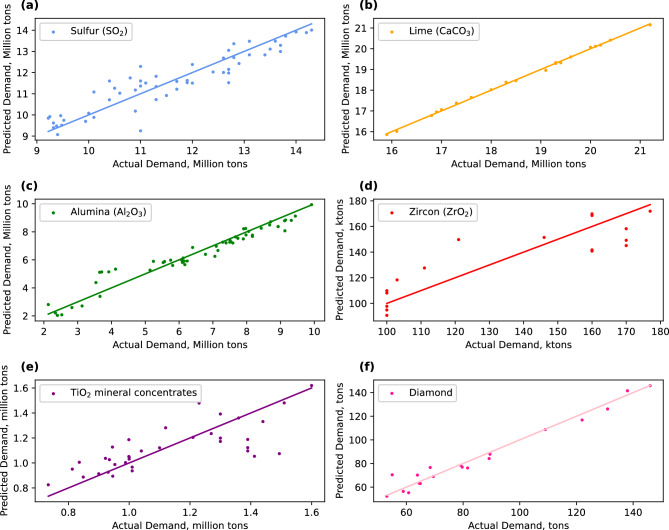
- Supply-chain constraints vary by candidate: in the paper’s 15-year scenario, diamond would require 100% of 2023 global production, zircon ores 40%, ilmenite/slag 4%, alumina 0.5%, lime 0.4%, and mined sulfur 0.6%; estimated price elasticities of demand were −0.44 for zircon, −0.29 for ilmenite, and near-inelastic for most others.
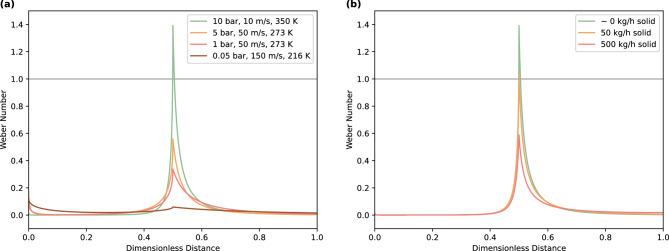
- Solid aerosol dispersal is constrained by Geldart Group C behavior: literature methods report low solid mass flows, while the paper notes a potential need to disperse >5,000 kg/hour cost-effectively; its nozzle simulation suggests a gas-to-solid mass ratio of roughly 35:1 to approach Weber number ~1.
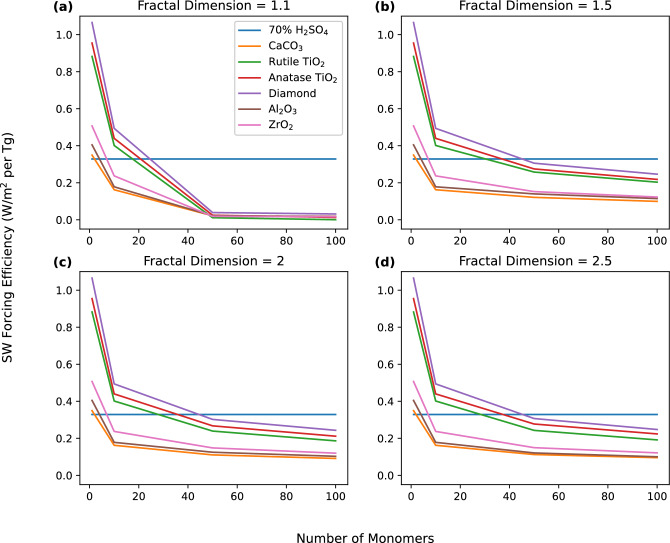
- Aggregate formation can sharply reduce shortwave forcing: sub-micron monomers may scatter up to 3× as effectively as sulfate, but aggregates with fractal dimension = 1.1 quickly reach near-0 forcing efficiency, while aggregates with fractal dimension >1.5 show less severe reductions.
Methods
- The paper synthesizes existing SAI modeling literature, grouping deployment strategies by latitude and degree of governance (centralized vs. decentralized) to assess how altitude, longitude, season, and magnitude affect aerosol lifetime and stratospheric aerosol optical density.
- Supply-chain analysis uses USGS yearly mineral surveys, a recession indicator index, and a log-linear regression to estimate price elasticity of demand for raw materials, with burdens calculated for a 15-year scenario starting in 2035 under RCP 6.0.
- Solid dispersal is examined via a two-phase fluid simulation of a choked convergent-barrel nozzle using MATLAB’s ode15s, Henderson’s drag model, and a modified Weber number; aggregate forcing is simulated with PythonicDISORT, Mie theory, and a mean-field T-matrix method for fractal aggregates.
Limitations
- The paper states that post-injection aggregation of solid aerosols remains relatively unconstrained, that decentralized SAI scenarios have not been modeled explicitly in the literature, and that GCM runs simulating aggregate injection are needed to better contextualize worst-case climate impacts.
- The paper also states that the cost-risk trade-off of solid monomer dispersal—especially increased cost for reduced payloads—remains a key uncertainty.
- Evident from the text: the supply-chain and deployment conclusions rely on existing literature and modeled scenarios rather than new large-scale field or GCM experiments, and the nozzle and radiative-transfer analyses are idealized simulations with stated assumptions such as inviscid flow apart from drag and monodisperse aerosols.
Model-written summary. Check it against the paper before relying on it.
Integrity signals
Registry
Cites
Statistics
Figures
Verification
Claims the paper makes
21 Valid · 7 Not valid · 7 Not checked · 88 Own results and interpretations
At least one cited source doesn’t support this claim or points to a different paper, and none confirmed it — see the verdicts below.
In the paper
“Kleinschmitt (2018) supports this, finding that the rate of change of burden achieved per unit injection decreases with injection height (for equatorial injections of 10 Tg S ), with an optimal range between 17 and 19 km22.”
§ Engineering and logistical concerns add practical limitations to stratospheric aerosol injection strategies > Results > Deployment strategies and governance
What the sources say
- Disputedcites [22] Kleinschmitt, C., Boucher, O. & Platt, U. Sensitivity of the radiative forcing by stratospheric sulfur geoengineering to the amount and strategy of the SO2injection studied with the LMDZ-S3A model. Atmos. Chem. Phys. 18, 2769–2786. 10.5194/acp-18-2769-2018 (2018). sourceExperimental — accuracy not yet measured
Section 3.3 reports that aerosol lifetime increases with injection height and that injections below 17 km produce a small stratospheric burden—the opposite of the claimed decrease in burden per unit injection. The section does support avoiding heights below 17 km and above 19 km, but that does not support the claimed direction of the burden change. (LLM, conf=0.87)
Checked by a reasoning model — may be wrong.
plainstates a cause- Asserted: passes — The authors put it forward as true.
- Checkable: passes — It can be checked against evidence.
- Load-bearing: unclear — It is unclear whether the paper’s conclusions depend on it.
- Based: passes — The paper gives a reason why it holds.
- Disputed
Every source the paper cites for this claim was checked and supports it.
In the paper
“Injections at longitudes with equator-ward winds yield particles with a longer lifetime than those with poleward ones16.”
§ Engineering and logistical concerns add practical limitations to stratospheric aerosol injection strategies > Results > Deployment strategies and governance
What the sources say
- Supportedcites [16] Sun, H., Bourguet, S., Eastham, S. & Keith, D. Optimizing injection locations relaxes altitude-lifetime trade-off for stratospheric aerosol injection. Geophys. Res. Lett. 10.1029/2023GL105371 (2023). source
Section 3.1 explains that equatorward winds at one injection longitude carry particles into the tropical pipe, where they can have a longer stratospheric lifetime. It contrasts this with poleward winds at another longitude, which carry particles out of the tropical pipe toward the tropopause. The claim accurately paraphrases that comparison. (LLM, conf=0.94)
plainstates a cause- Asserted: passes — The authors put it forward as true.
- Checkable: passes — It can be checked against evidence.
- Load-bearing: unclear — It is unclear whether the paper’s conclusions depend on it.
- Based: passes — The paper gives a reason why it holds.
- Supported
The cited sources support only part of this claim — read each source’s verdict below.
In the paper
“Springtime injections could lead to peak sAODs during the summer, matching maximum cooling capacity to peak sunlight18,29,30.”
§ Engineering and logistical concerns add practical limitations to stratospheric aerosol injection strategies > Results > Deployment strategies and governance
What the sources say
- Could not verifycites [18] Lee, W. R. et al. Quantifying the efficiency of stratospheric aerosol geoengineering at different altitudes. Geophys. Res. Lett. 10.1029/2023GL104417 (2023). sourceExperimental — accuracy not yet measured
The Introduction says that injection seasonality can affect SAI, but does not describe spring injections or a summer peak in stratospheric aerosol optical depth. The simulations in section 2 and the results in section 3.1 discuss injection altitudes and annual rates, not the proposed timing relative to peak sunlight. Searches for spring, summer, and seasonal AOD found no passage establishing the claim. (LLM, conf=0.76)
- Supportedcites [29] Visioni, D. et al. Seasonal injection strategies for stratospheric aerosol geoengineering. Geophys. Res. Lett. 46, 7790–7799. 10.1029/2019GL083680 (2019). source
Section 3.2 (p. 7) reports that spring injections at 15°N produce an AOD peak in summer and higher radiative forcing than injections in other seasons. The paper also explains that shortwave radiative forcing is maximized when peak stratospheric AOD coincides with the summer's strongest sunlight (p. 8). (LLM, conf=0.93)
- Supportedcites [30] Lee, W. R., MacMartin, D. G., Visioni, D. & Kravitz, B. High-latitude stratospheric aerosol geoengineering can be more effective if injection is limited to spring. Geophys. Res. Lett. 10.1029/2021GL092696 (2021). source
The Results report that AOD for all spring-injection cases peaks in summer. The discussion adds that the peak for March–May injection coincides with peak insolation in June, supporting the claimed alignment of reflective capacity with sunlight. (LLM, conf=0.93)
hedgedstates a cause- Asserted: passes — The authors put it forward as true.
- Checkable: passes — It can be checked against evidence.
- Load-bearing: unclear — It is unclear whether the paper’s conclusions depend on it.
- Based: passes — The paper gives a reason why it holds.
- Could not verify
The cited sources support only part of this claim — read each source’s verdict below.
In the paper
“However, the use of these minerals has primarily been modeled with the assumption that they could be dispersed on a grid box scale with a single, optimal sub-micron particle size11,12.”
§ Engineering and logistical concerns add practical limitations to stratospheric aerosol injection strategies > Introduction
What the sources say
- Partly supportedcites [11] Vattioni, S. et al. A fully coupled solid-particle microphysics scheme for stratospheric aerosol injections within the aerosol-chemistry-climate model socol-aerv2. Geosci. Model Dev. 17, 7767–7793. 10.5194/gmd-17-7767-2024 (2024). sourceExperimental — accuracy not yet measured
Section 4.2 (page unavailable) says injections are distributed across a climate-model grid box, and Section 2.2 describes runs with specified sub-micron monomer radii. The paper does not support the claim that modeling primarily assumes one optimal size: it tests radii from 80 to 320 nm, and Section 4.1 reports different radii producing the largest radiative forcing in this model and an earlier study. (LLM, conf=0.84)
- Supportedcites [12] Weisenstein, D. K., Keith, D. W. & Dykema, J. A. Solar geoengineering using solid aerosol in the stratosphere. Atmos. Chem. Phys. 15, 11835–11859. 10.5194/acp-15-11835-2015 (2015). source
Section 3.3 says the model implicitly mixes injected material into bands set by its grid resolution. Section 4.1.3 says it assumes all injected monomers have a uniform radius, and Section 4.2 identifies an optimal alumina monomer radius of roughly 240 nm. Together, these support the description of the modeling assumption, although the paper also compares runs using different radii. (LLM, conf=0.88)
plain- Asserted: passes — The authors put it forward as true.
- Checkable: passes — It can be checked against evidence.
- Load-bearing: passes — The paper’s conclusions depend on it.
- Based: passes — The paper gives a reason why it holds.
- Partly supported
Every source the paper cites for this claim was checked and supports it.
In the paper
“However, longitude may play a significant role in particle lifetime, particularly for lower-altitude injections26.”
§ Engineering and logistical concerns add practical limitations to stratospheric aerosol injection strategies > Results > Deployment strategies and governance
What the sources say
- Supportedcites [26] Sun, H., Bourguet, S., Luan, L. & Keith, D. Stratospheric transport and tropospheric sink of solar geoengineering aerosol: a Lagrangian analysis. npj Clim. Atmos. Sci. 10.1038/s41612-024-00664-8 (2024). source
The Introduction (page unavailable) states that particles injected at different longitudes in the tropical lower stratosphere can follow different transport pathways, resulting in different stratospheric lifetimes. This supports the hedged claim about longitude and lower-altitude injections. (LLM, conf=0.91)
hedgedstates a possible cause- Asserted: passes — The authors put it forward as true.
- Checkable: passes — It can be checked against evidence.
- Load-bearing: unclear — It is unclear whether the paper’s conclusions depend on it.
- Based: passes — The paper gives a reason why it holds.
- Supported
62 more claims · 5 with their cited sources checked
Create a free account to see all 123 claims and to verify the 2 references still open.
- It may state two separate claims as one. 35
- Probably not a substantial claim. 28
Citations
Cites
Items 201–227 of 227
Response of the equatorial atlantic cold tongue to stratospheric aerosol geoengineering
Pomalegni, Y. W., Da-Allada, C. Y., Sohou, Z., Baloïtcha, E., Alamou, E. A., Awo, F. M., Bonou, F., Biao, I., Obada, E., Zandagba, J. E., et al. (2022) · Aerosol Science and Engineering · doi:10.1007/s41810-021-00127-0 · Cited by 10
Assessing the Impact of Stratospheric Aerosol Injection on US Convective Weather Environments
Glade, I., Hurrell, J. W., Sun, L., & Rasmussen, K. L. (2023) · Earth s Future · doi:10.1029/2023ef004041 · Cited by 10
Morrison, A. L., Barnes, E. A., & Hurrell, J. W. (2024) · Earth s Future · doi:10.1029/2023ef004151 · Cited by 10
Bednarz, E. M., Visioni, D., Butler, A. H., Kravitz, B., MacMartin, D. G., & Tilmes, S. (2023) · Geophysical Research Letters · doi:10.1029/2023gl104726 · Cited by 9
Quaglia, I., Visioni, D., Bednarz, E., MacMartin, D. G., & Kravitz, B. (2024) · Geophysical Research Letters · doi:10.1029/2023gl107702 · Cited by 9
Lĭ, H., Richter, J. H., Hu, A., Meehl, G. A., & MacMartin, D. G. (2023) · Journal of Climate · doi:10.1175/jcli-d-23-0225.1 · Cited by 8
Morrison, A. L., Pathak, D., Barnes, E. A., & Hurrell, J. W. (2024) · Frontiers in Climate · doi:10.3389/fclim.2024.1426679 · Cited by 8
Lo, Y. T. E., Charlton-Perez, A. J., Highwood, E. J., & Lott, F. C. (2018) · Earth s Future · doi:10.1029/2018ef000933 · Cited by 6
Stratospheric transport and tropospheric sink of solar geoengineering aerosol: a Lagrangian analysis
Sun, H., Bourguet, S., Luan, L., & Keith, D. (2024) · npj Climate and Atmospheric Science · doi:10.1038/s41612-024-00664-8 · Cited by 6 · cited 2×
“…that models large-scale, global injection scenarios is grouped by latitude of injection, separated into tropical/equatorial 3–6,17–19,21,22,24,] 26,30–33,50–163 , polar 21,24,28,55–57,] 128,134–137,147,150,152,] 164,165 , and multi-latitude 6,11,16,17,21,] 22,25,28–30,32,]61,] 86–89,104,107,]…”
Wang, J., Zhao, L., & Moore, J. C. (2024) · Earth s Future · doi:10.1029/2024ef004422 · Cited by 6
Duffey, A., & Irvine, P. J. (2024) · Environmental Research Climate · doi:10.1088/2752-5295/ad9f91 · Cited by 6
South Atlantic subtropical anticyclone responses to stratospheric aerosol injection
Baldoni, T. C., Reboita, M. S., Crespo, N. M., Ribeiro, J. G. M., & da Rocha, R. P. (2025) · Environmental Research Climate · doi:10.1088/2752-5295/ada8cb · Cited by 6 · cited 2×
“…large-scale, global injection scenarios is grouped by latitude of injection, separated into tropical/equatorial 3–6,17–19,21,22,24,] 26,30–33,50–163 , polar 21,24,28,55–57,] 128,134–137,147,150,152,] 164,165 , and multi-latitude 6,11,16,17,21,] 22,25,28–30,32,]61,] 86–89,104,107,]…”
Powder disperser for the continuous aerosolizing of dry powdered nanoparticles
Tu, C., Lin, J., Yin, Z., Bao, F., & Du, P. (2017) · Advanced Powder Technology · doi:10.1016/j.apt.2017.08.011 · Cited by 5
Connolly, C. J., Prewett, E. M., Barnes, E. A., & Hurrell, J. W. (2024) · Earth s Future · doi:10.1029/2023ef004300 · Cited by 5
Why does stratospheric aerosol forcing strongly cool the warm pool?
Günther, M., Schmidt, H., Timmreck, C., & Toohey, M. (2024) · Atmospheric chemistry and physics · doi:10.5194/acp-24-7203-2024 · Cited by 5
Baur, S., Sanderson, B. M., Séférian, R., & Terray, L. (2025) · Earth System Dynamics · doi:10.5194/esd-16-667-2025 · Cited by 5
Zhang, S., Naïk, V., Paynter, D. J., Tilmes, S., & John, J. G. (2024) · Geophysical Research Letters · doi:10.1029/2024gl113532 · Cited by 5
Deformation behavior of sub-micron and micron sized alumina particles in compression
Sandia National Labs., A., Sarobol, P., Administration, U. A. S. F. H. R. A., Hall, A., Urrea, D. A., Chandross, M., Carroll, J. D., Boyce, B., Mook, W. M., Kotula, P., et al. (2014) · doi:10.2172/1159119 · Cited by 4
Morrison, A. L., Barnes, E. A., & Hurrell, J. W. (2024) · Earth s Future · doi:10.1029/2023ef004191 · Cited by 4
Diao, C., Keys, P. W., Bell, C., Barnes, E. A., & Hurrell, J. W. (2025) · Earth s Future · doi:10.1029/2024ef005455 · Cited by 4
Holistic Assessment of SO2 Injections Using CESM1(WACCM): Introduction to the Special Issue
Kravitz, B., MacMartin, D. G., Tilmes, S., Richter, J. H., Mills, M. J., Lamarque, J., Tribbia, J. J., & Large, W. G. (2018) · Journal of Geophysical Research Atmospheres · doi:10.1029/2018jd029293 · Cited by 3
Methods for Dispersal of Precipitated Calcium Carbonate for Stratospheric Aerosol Injection
Neukermans, A., Cooper, G., Foster, J., Galbraith, L., & Jain, S. (2021) · Journal of Atmospheric and Oceanic Technology · doi:10.1175/jtech-d-20-0205.1 · Cited by 3
PythonicDISORT: A Python reimplementation of the Discrete Ordinate Radiative Transfer package DISORT
Ho, D. J. X. (2024) · The Journal of Open Source Software · doi:10.21105/joss.06442 · Cited by 3
Mayer, K. J., Barnes, E. A., & Hurrell, J. W. (2024) · Environmental Research Climate · doi:10.1088/2752-5295/ad9b43 · Cited by 3
Ginzburg, V. A., Kostrykin, S. V., Ryaboshapko, A. G., Revokatova, A. P., & Bushmelev, I. O. (2020) · Russian Meteorology and Hydrology · doi:10.3103/s1068373920050052 · Cited by 2
Impact of stratospheric aerosol injection on photovoltaic energy potential over Nigeria
Ojo, O. S., Emmanuel, I., Ogolo, E. O., & Adeyemi, B. (2024) · Asian Journal of Atmospheric Environment · doi:10.1007/s44273-024-00028-x · Cited by 2
Design and Development of a Novel Nanoparticle Aerosol Generation System for Research Applications
Chambers, J. R. (2017) · The Research Repository @ WVU (West Virginia University) · doi:10.33915/etd.5335 · Cited by 1
Research works printed but not linked: 6
- Wagner, G. Geoengineering: The Gamble (Polity, 2021).
- Lee, F. R. et al. Quantifying the efficiency of stratospheric aerosol geoengineering at different altitudes. Geophys. Res. Lett. 10.1029/2023GL104417 (2023). · DOI · Paper page
- Lee, R. R. et al. Quantifying the efficiency of stratospheric aerosol geoengineering at different altitudes. Geophys. Res. Lett. 10.1029/2023GL104417 (2023). · DOI · Paper page
- To, D. Deagglomeration and mixing via the rapid expansion of high pressure and supercritical suspensions. Ph.D. thesis, New Jersey Institute of Technology (2011).
- Zhang, Y., Macmartin, D. G., Visioni, D., Bednarz, E. M. & Kravitz, B. Hemispherically symmetric strategies for stratospheric aerosol injection. Earth Syst. Dyn. 15, 191–213. 10.5194/esd-15-191-2024 (2024). · DOI · Paper page
- Ullmann’s Encyclopedia of Industrial Chemistry (Wiley, 2000).
Cited by
Strong light absorption by sp hybridized carbon impurities in diamond dust
Kumar, J., Jung, G.-Y., Kapoor, T. S., Mishra, R., & Chakrabarty, R. K. (2026) · Journal of Aerosol Science · doi:10.1016/j.jaerosci.2026.106767 · Cited by 4
Shahabadi, V., Luo, Y., Palmisano, A. M., Allende, P. D., Bain, A., Davies, J. F., & Preston, T. C. (2026) · Environmental Science Advances · doi:10.1039/d6va00218h · Cited by 1
Strong Light Absorption by sp2 Hybridized Carbon Impurities in Diamond DustPreprint
Kumar, J., Jung, G.-Y., Kapoor, T. S., Mishra, R., & Chakrabarty, R. K. (2025) · SSRN Electronic Journal · doi:10.2139/ssrn.5788557
Feinberg, A. A. (2026) · SSRN Electronic Journal · doi:10.2139/ssrn.6259580
The effect of particle shape on shortwave radiative forcing in stratospheric aerosol injection
Vennes, B., & Preston, T. C. (2026) · Journal of Quantitative Spectroscopy and Radiative Transfer · doi:10.1016/j.jqsrt.2026.109888
Metadata
- Authors
- Hack, M., McNeill, V. F., Steingart, D., & Wagner, G.
- Affiliations
- Columbia University (US)
- Corresponding author
- McNeill, V. Faye
- Venue
- Scientific Reports
- Published
- 2025-10-21
- Volume
- 15
- Issue
- 1
- Pages
- 34635-34635
- ISSN
- 2045-2322 (ISSN-L)
- PMC
- PMC12540826
- OpenAlex
- W4415468903
- Cited by
- 7
- References
- 223
- Citations by year
- 2026: 7
- FWCI
- 1.96
- Type
- journal article
- Language
- en
- Open access
- gold
- doi.org
- Licence
- cc-by-nc-nd
- creativecommons.org/licenses/by-nc-nd/4.0 (tdm)
- creativecommons.org/licenses/by-nc-nd/4.0 (vor)
- Locations
- Scientific Reports (publishedVersion, cc-by-nc-nd)
- Europe PMC (PubMed Central) (publishedVersion, cc-by-nc-nd)
- PubMed (publishedVersion)
- DOAJ (DOAJ: Directory of Open Access Journals) (submittedVersion, cc-by-sa)
- Funders
- Bernard and Anne Spitzer Charitable Trust
- Simons Foundation (MPS-SRM-00006583)
- Topics
- Physical Sciences › Environmental Science › Global and Planetary Change › Climate Change and Geoengineering
- Physical Sciences › Environmental Science › Global and Planetary Change › Atmospheric aerosols and clouds
- Physical Sciences › Earth and Planetary Sciences › Atmospheric Science › Atmospheric chemistry and aerosols
- Keywords
- stratospheric aerosol injection, solar geoengineering, sulfate aerosols, aerosol microphysics, radiative properties, geoengineering governance, climate change mitigation, volcanic eruptions, ozone depletion
About these checks
Registry, retraction, Cites and statistics results are computed, not judged, with one exception: a printed reference that no index lists is read once by a model before it counts as a citation error. Claims are extracted by a model and kept only when their quote appears verbatim in the text; each cited source is then checked, with a model’s help, for whether it says what the claim relies on. Those verdicts can be wrong — read the claim’s quote and the cited source before relying on one.
The claim verdicts this report counts are experimental: their accuracy is not yet measured.
A language model drew the claims from the paper on 2026-10-10, under version 3 of the claim definition (model deepseek-v4.1-flash, prompt extract-v3).
A second model labelled each claim on 2026-10-10 (model jev-1.13-20260917, definition revision gold-guideline-v0.2).
Cited sources are checked with a language model’s help (gpt-6-sol).
Statistics and arithmetic are recomputed, not judged.
Confidence bands are shown only for fields calibrated on our annotated test set. None is calibrated yet, so no band is shown.
What counts as a claim ›How we measure confidence ›How we check this ›
Are you an author, or do you see a problem with this page? Request a review
Data sources
Bibliographic data: Semantic Scholar, OpenAlex, Crossref.
Contains information from the Semantic Scholar Academic Graph Datasets, made available under the ODC Attribution License (ODC-BY 1.0).
Semantic Scholar’s data is described in: Kinney, R., et al. (2023). The Semantic Scholar Open Data Platform. arXiv:2301.10140.
