

Raman and ATR-FTIR unmask crystallinity changes and carboxylate group and vinyl group accumulation in natural weathering polypropylene microplastics
Open accessThe DOI matches its Crossref record; 53 of the 53 references it cites were found in a registry or an index.
Abstract
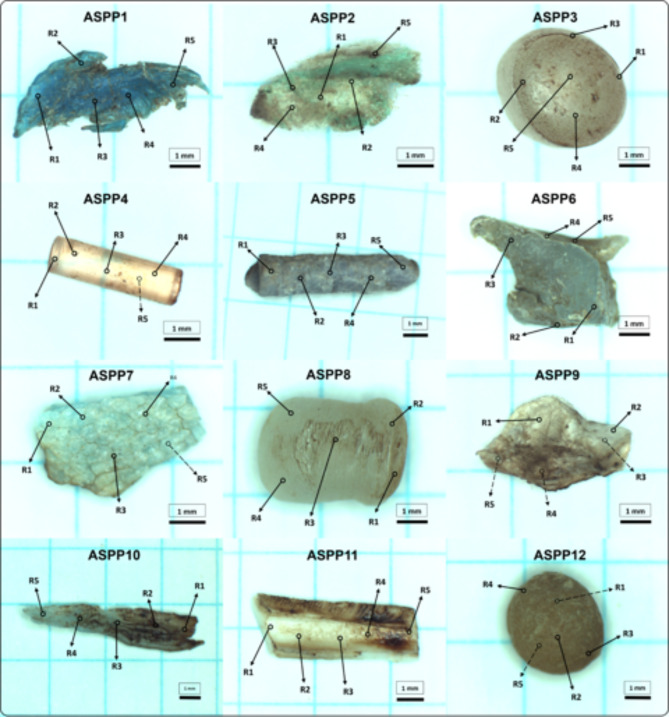
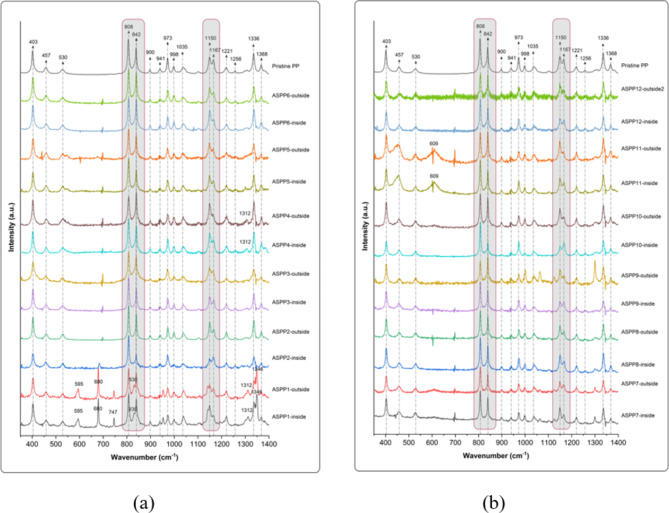
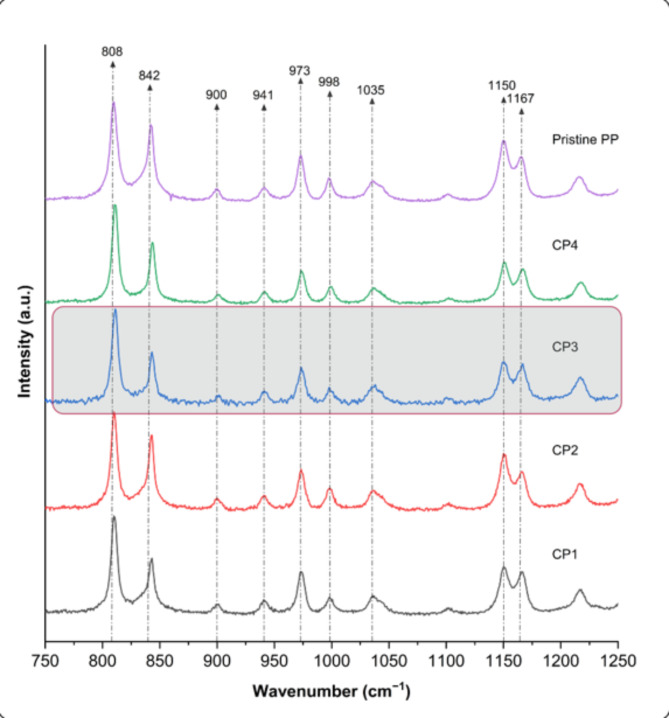
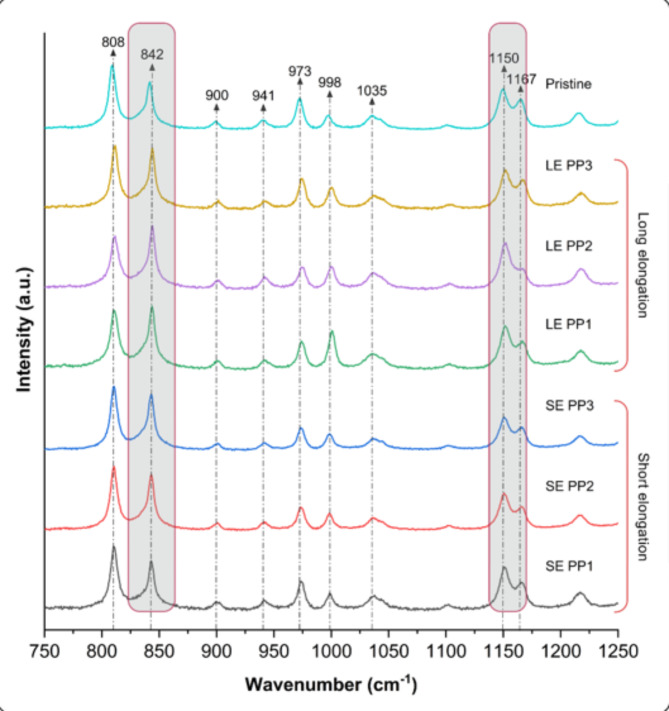
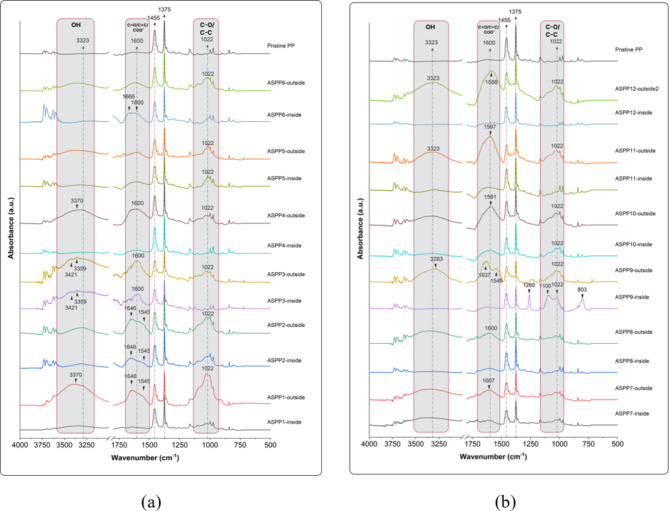
Naturally weathered polypropylene (NWPP) samples are useful for investigating the effects of various degradation factors that cannot be obtained in artificial laboratory experiments. In this study, NWPP samples were extracted from beach sediments (Ashiya, Hyogo, Japan). Raman and attenuated total reflection (ATR)–Fourier-transform infrared (FTIR) spectroscopies were used to analyze variations in the composition, crystallinity, orientation, and degradation of NWPP microplastics. The degree of degradation varies from sample to sample, from position to position in a sample, and the inside surface or outside surface of a sample. Significant intensity variations were observed for Raman bands at 1150 and 842 cm⁻¹, indicating changes in the crystallinity and molecular orientation of NWPP due to degradation. The Raman spectra of the elongated pristine PP showed intensity increases at 1150, 998, and 842 cm−1, indicating variations in the molecular orientation of the polymer chains induced by elongation. The ATR-FTIR spectra of NWPP yield several major new features in the 3600 –3200 cm−1 (OH stretching), 1750–1500 cm−1 (C=O/C=C/COO− stretching), and 1150–900 cm−1 (C–O/C–C stretching) regions. Of particular note is that in the 1750–1500 cm−1 region, at least four bands due to two kinds of vinyl groups and two kinds of carboxylate groups are clearly observed in the second derivative spectra, while bands arising from carbonyl compounds are weak. This may be the first time that the carboxylate bands have ever appeared more strongly than the carbonyl bands in the IR spectra of NWPP. The appearance of the carboxylate bands indicates two possibilities: one is the effect of seawater on the degradation of NWPP samples, and another is the oxidation of keto groups to the carboxylates. Moreover, since a few kinds of vinyl compounds and carboxylates are produced, it is very likely that the degree of degradation is high in the NWPP samples. In this way, IR spectroscopy is useful for exploring the degradation of NWPP while Raman spectroscopy is effective for examining variations in their crystallinity and orientation.
Overview
The claims and statistics of this paper haven’t been checked yet.
Free: it reads the open-access text and checks the first 5 claims that cite a source we can check. Create a free account to check every claim.
Integrity signals
Registry
Cites
Statistics
Figures
Verification
Claims the paper makes
The claims and statistics of this paper haven’t been checked yet.
Free: it reads the open-access text and checks the first 5 claims that cite a source we can check. Create a free account to check every claim.
Claims other papers make about this one
Each is checked against this paper’s own text: does it say what the citing paper says it does?
The source backs part of the claim, not all of it — or backs it for a different population, condition or comparison.
In the citing paper
“Taken together, the mass-change results and ATR-FTIR analyses highlighted contrasting behaviours among cellulose, PBAT-, PP-, and PE-based materials under the tested field conditions [26,29,30,31].”
From Linking Polymer Transformation and Soil Microclimate to Mulch (Bio)Degradation: A Field-Based Approach Using Mesh Bags and FTIR (2026) · cites this paper as [26]
Experimental — accuracy not yet measuredThe source backs part of the claim, not all of it — or backs it for a different population, condition or comparison.
In the citing paper
“These features are consistent with early-stage abiotic weathering (surface oxidation), rather than true biodegradation [24,25,26].”
From Linking Polymer Transformation and Soil Microclimate to Mulch (Bio)Degradation: A Field-Based Approach Using Mesh Bags and FTIR (2026) · cites this paper as [26]
Experimental — accuracy not yet measured
Self-check
Percentages, sums and reported differences re-computed from the paper’s own numbers.
The self-check needs the paper’s full text.
Citations
Cites
Microplastics in the marine environment
Andrady, A. L. (2011) · Marine Pollution Bulletin · doi:10.1016/j.marpolbul.2011.05.030 · Cited by 8,105
Hidalgo-Ruz, V., Gutow, L., Thompson, R. C., & Thiel, M. (2012) · Environmental Science & Technology · doi:10.1021/es2031505 · Cited by 5,440
Biological degradation of plastics: A comprehensive review
Shah, A. A., Hasan, F., Hameed, A., & Ahmed, S. (2008) · Biotechnology Advances · doi:10.1016/j.biotechadv.2007.12.005 · Cited by 2,765
Applications and societal benefits of plastics
Andrady, A. L., & Neal, M. A. (2009) · Philosophical Transactions of the Royal Society B: Biological Sciences · doi:10.1098/rstb.2008.0304 · Cited by 2,464
Pathways for degradation of plastic polymers floating in the marine environment
Gewert, B., Plassmann, M. M., & MacLeod, M. (2015) · Environmental Science: Processes & Impacts · doi:10.1039/c5em00207a · Cited by 2,168
Occurrence and distribution of microplastics in marine sediments along the Belgian coast
Claessens, M., Meester, S. D., Landuyt, L. V., Clerck, K. D., & Janssen, C. R. (2011) · Marine Pollution Bulletin · doi:10.1016/j.marpolbul.2011.06.030 · Cited by 1,428
Atmospheric microplastics: A review on current status and perspectives
Zhang, Y., Kang, S., Allen, S., Allen, D., Gao, T., & Sillanpää, M. (2020) · Earth-Science Reviews · doi:10.1016/j.earscirev.2020.103118 · Cited by 1,364
Thompson, R. C., Swan, S. H., Moore, C. J., & vom Saal, F. S. (2009) · Philosophical Transactions of the Royal Society B: Biological Sciences · doi:10.1098/rstb.2009.0054 · Cited by 1,294
Analysis of environmental microplastics by vibrational microspectroscopy: FTIR, Raman or both?
Käppler, A., Fischer, D., Oberbeckmann, S., Schernewski, G., Labrenz, M., Eichhorn, K.-J., & Voit, B. (2016) · Analytical and Bioanalytical Chemistry · doi:10.1007/s00216-016-9956-3 · Cited by 1,095
Vianello, A., Boldrin, A., Guerriero, P., Moschino, V., Rella, R., Sturaro, A., & Da Ros, L. (2013) · Estuarine, Coastal and Shelf Science · doi:10.1016/j.ecss.2013.03.022 · Cited by 1,067
Research works printed but not linked: 8
- GESAMP. Guidelines for the monitoring and assessment of plastic litter and microplastics in the ocean. In: Kershaw, P.J., Turra, A., Galgani, F. (Eds.), IMO/FAO/UNESCO-IOC/UNIDO/WMO/IAEA/UN/UNEP/UNDP/ISA joint group of experts on the scientific aspects of marine environmental protection). Rep. Stud. GESAMP No. 99. http://www.gesamp.org/site/assets/files/2002/rs99e.pdf (2019).
- Crawford, C. B. & Quinn, B. Microplastic Pollutants (Elsevier, 2016).
- Ribeiro-Claro, P., Nolasco, M. M. & Araújo, C. Characterization of microplastics by Raman spectroscopy. Compr. Anal. Chem. 70, 119–151 (2017).
- Strobl, G. R. & Hagedorn, W. Raman spectroscopic method for determining the crystallinity of polyethylene. J. Polym. Sci. Part. B Polym. Phys. 16 (7), 1181–1193 (1978).
- Löder, M. G. J. & Gerdts, G. Marine Anthropogenic Litter (Springer, 2015).
- Mahir, A., Hamouya, M., Chafik, E. L. & Idrissi, M. IR Spectroscopy and scanning electron microscopy studies of natural ageing of polypropylene. Int. J. Eng. Res. Technol. (IJERT) 4 (2), 2278–0181 (2015).
- Sawasaki, T. & Nojiri Radiation crosslinking of polypropylene. Radiat. Phys. Chem. 31 (10), 877–886 (1988).
- Gijsman, P. The role of charge transfer complexes in the photodegradation of polyolefins. Macromol. Mater. Eng. 252 (1–2), 45–54 (1997).
Cited by
UVA-induced weathering of microplastics in seawater: surface property transformations and kinetics
Gao, L., Su, Y., Mehmood, T., Wang, Z., Peng, L., & Zhang, N. (2025) · Frontiers in Marine Science · doi:10.3389/fmars.2025.1519668 · Cited by 47
Huang, X., Yongtao, N. I., Ma, Z., Xie, Z., Ding, Z., Xu, H., Wei, H., Jin, Q., & Zhou, R. (2026) · Water Research · doi:10.1016/j.watres.2026.125364 · Cited by 20
Eco-Engineered Co3O4/CoO/C Nanohybrid for Supercapacitors and Efficient Water Splitting
Alsaiari, R. A., Gomaa, I., & Abdelhamid, H. N. (2025) · Arabian Journal for Science and Engineering · doi:10.1007/s13369-025-10606-y · Cited by 16
Micro- and Nanoplastics in Dentistry: Challenges in Obtaining High-Quality Evidence
Šimunović, L., Bačić, I., & Meštrović, S. (2025) · Materials · doi:10.3390/ma18184269 · Cited by 15
Peng, Q., Hu, H., Dai, A., Wu, N., Li, H., & Tong, D. (2025) · Food Chemistry · doi:10.1016/j.foodchem.2025.144069 · Cited by 11
Zhu, K., Wu, D., Yang, S., Cao, C., Zhou, W., Qian, Q., & Chen, Q. (2025) · Polymers · doi:10.3390/polym17050700 · Cited by 11
“These spectral features correlate with PP’s structural degradation mechanisms, including chain scission and oxidation, and conventional chemometric tools (e.g., PCA) often fail to resolve them due to overlapping absorbance bands and additive interference [15].”
Highly Sensitive Parylene C‐Based Flexible Pressure Sensors for Wearable Systems
Wang, Z., Yalagala, B. P., Heidari, H., & Feeney, A. (2025) · Small Science · doi:10.1002/smsc.202500081 · Cited by 8
Garcia, R. J., Kang, M., & Jung, S. Y. (2025) · Applied Surface Science · doi:10.1016/j.apsusc.2025.165134 · Cited by 8
Wei, Z., Wu, B., Yang, Z., Hu, A., Zhang, Y., Zhang, Y., Huang, J. T., Saito, N., Chen, L., & Yang, L. (2025) · Energy storage materials · doi:10.1016/j.ensm.2025.104686 · Cited by 7
Kharraf, A. E., Rabiller‐Baudry, M., Real, A., Sandt, C., Bihannic, I., Wiesner, M. R., Bavay, D., Tabuteau, H., Khatib, I., Pattier, M., et al. (2025) · Journal of Hazardous Materials · doi:10.1016/j.jhazmat.2025.140501 · Cited by 7
Fascinating Frontier, Nanoarchitectonics, as Method for Everything in Materials Science
Ariga, K. (2025) · Materials · doi:10.3390/ma18225196 · Cited by 9
“This research trend is also prevalent in ecology and the environment, including the detection of specific substances [29–34], the removal of pollutants [35–39] and microplastics [40–45], achieving carbon neutrality [46–50], and the effective use of biomass [51–56].”
Coughlin, S. A., McFall, A., Kelly, S. A., & Megaw, J. (2025) · Polymer Degradation and Stability · doi:10.1016/j.polymdegradstab.2025.111558 · Cited by 6
Giulio, T. D., Malitesta, C., & Mazzotta, E. (2025) · Macromolecular Materials and Engineering · doi:10.1002/mame.202500280 · Cited by 8
“XPS coupling with bulk-sensitive techniques, such as attenuated total reflectance Fourier-transform infrared spectroscopy (ATR-FTIR) and Raman spectroscopy, can provide insights into chemical changes throughout the material [55, 83].”
Boateng, D. A. (2026) · Artificial Intelligence Chemistry · doi:10.1016/j.aichem.2026.100109 · Cited by 5
Choonut, A., Wongfaed, N., Poolpol, A., Boonlue, S., Wantala, K., Pinyakong, O., Plangklang, P., & Reungsang, A. (2026) · PLoS ONE · doi:10.1371/journal.pone.0341623 · Cited by 10
“Similar FTIR variations have been reported during polymer degradation [89].”
Advances in microplastics analysis: Challenges and innovations in aquatic biota studies
Miglioranza, K. S. B., Cardona, V., Cecchetto, F., Fideleff, S., Lourido, M., & Plaul, F. E. (2026) · TrAC Trends in Analytical Chemistry · doi:10.1016/j.trac.2026.118771 · Cited by 4
Recent advances in photocatalytic plastic waste conversion: a review on renewable energy pathways
Selvam, D. C., Devarajan, Y., Behera, P. R., Manjunath, H. R., Ajmeri, K. H., Das, N., & Ramachandra, C. G. (2025) · Reviews in Inorganic Chemistry · doi:10.1515/revic-2025-0061 · Cited by 5
“33,66,67 Figure 2 illustrates the correlation between the quantity of HPT rotations applied to PP and the corresponding hydrogen yield during the photoreforming process.”
Alshneeqat, M. G., Abualbandora, T. A., & Mourad, A. I. (2025) · Progress in Additive Manufacturing · doi:10.1007/s40964-025-01348-2 · Cited by 4
Saha, D., Tang, C., Khan, J., Jain, P., Yang, C., Chung-Li, D., Webster, R. F., Chen, C. L., Chen, Z., Bai, P., et al. (2025) · Chemical Science · doi:10.1039/d5sc05330g · Cited by 4
“39 – 41 The pair of bands at 477 and 554 cm − 1 , observed with high intensity between 0.45 V and 0.47 V vs. Ag/AgCl, were ascribed to Ni –”
InfluentialEz‐Zahraoui, S., Qaiss, A. E. K., Bouhfid, R., Achaby, M. E., & Hassani, F. S. A. (2025) · Journal of Thermoplastic Composite Materials · doi:10.1177/08927057251344146 · Cited by 4
“43 Given the possible occurrence of dynamic coalescence and subsequent phase separation in the neat B 60/40 blend, it is suspected that FA particles localize predominantly at the PP/EVA interface.”
3D Freeze‐Printing of Binder‐Free PEDOT:PSS
Weygant, J., Cheong, C. I. H., Bose, N. C., Gaggio, B., Shui, Y., Ka, S. G. S., Zhang, Y. S., & Huang, Y. Y. S. (2025) · Macromolecular Materials and Engineering · doi:10.1002/mame.202500082 · Cited by 3
Fire-exposed polypropylene as a potential source of nanoplastics in aquatic environments
Lee, H., Park, J., Son, J.-W., Lee, S., Yang, S., Myung, Y., & Kim, C. (2025) · Journal of Hazardous Materials · doi:10.1016/j.jhazmat.2025.140106 · Cited by 5
El‐Sawaf, A. K., Nassar, A. A., Hammouda, G. A. H., Aboulrous, A. A., Mubarak, M. F., & Ali, A. O. (2025) · Surfaces and Interfaces · doi:10.1016/j.surfin.2025.107957 · Cited by 3
Li, R., Song, Z., Zhang, Z., Gao, Y., Wang, J., Yang, L., & Wang, H. (2025) · Applied Surface Science · doi:10.1016/j.apsusc.2025.164244 · Cited by 3
Carranca, C., Pedra, F., Brunetto, G., & Barata, J. (2026) · Molecules · doi:10.3390/molecules31101758 · Cited by 2
“Taken together, the mass-change re-sults and ATR-FTIR analyses highlighted contrasting behaviours among cellulose, PBAT-, PP-, and PE-based materials under the tested field conditions [26,29–31].”
Abelouah, M. R., Bonanomi, G., Oulbaz, L., Idbella, A., Ouheddou, M., Laaraj, N. E., Nouj, N., & Idbella, M. (2025) · Environmental Pollution · doi:10.1016/j.envpol.2025.127296 · Cited by 3
Compatibility of polyimide separator with cyclic carbonate electrolyte
Jayaraman, P., Wang, Z., Thangam, V. P., Abdelaal, M. M., Chien, W., Kanamura, K., & Kotobuki, M. (2026) · Journal of Power Sources · doi:10.1016/j.jpowsour.2026.239906 · Cited by 2
Recent polymer modification strategies for reducing plastic waste and enhancing recyclability
Dey, H., Sheikh, M. R. K., & Shuvo, A. N. (2026) · Polymers and Polymer Composites · doi:10.1177/09673911261441896 · Cited by 3
Sahai, H., del Real, A. M. A., Wang, C., Li, H., Bueno, M. J. M., Hernando, M. D., & Fernández-Alba, A. R. (2026) · Polymer Degradation and Stability · doi:10.1016/j.polymdegradstab.2026.112325 · Cited by 2
Song, X., Chen, X. C., Zhang, H., Hu, D., Xu, Z., Zhang, D., Li, C., & Zhu, L. (2026) · Environmental Science & Technology · doi:10.1021/acs.est.6c06837 · Cited by 2
Phosphorus-Modified NiMo/γ-Al2O3 Catalysts for Highly Efficient Hydrogenation of Methyl Acrylate
Bassey, E. B., Guo, T., Wu, H., Zhang, G., Dong, H., Li, J., Wang, G., & Li, C. (2025) · Industrial & Engineering Chemistry Research · doi:10.1021/acs.iecr.5c02593 · Cited by 1
Kwon, D., Hong, S., & Yoo, Y. (2025) · Polymer Composites · doi:10.1002/pc.70522 · Cited by 2
“The results confirm that MB processing itself does not create new chemical bonds but improves filler dispersion, which increases the effective contact area and strengthens the influence of the POE [36, 91, 94, 95].”
Hadiyanto, H., Khoironi, A., Joelyna, F. A., Sabhira, A. I., Tana, S., Widayat, W., & Nur, M. M. A. (2025) · Arab Journal of Basic and Applied Sciences · doi:10.1080/25765299.2025.2575618 · Cited by 1
“Wavelength peaks at 973 and 998 cm − 1 indicated a new group (second cyclic alcohol) (Anshari et al., 2025).”
Correlation structural, optical, and dielectric properties of β-SiC/polypropylene nanocomposites
Gahramanli, L. R., Jafarov, M. A., Muradov, M., Baghirov, M. B., Mammadov, V., Musayeva, N. N., Khankishiyeva, R., Eyvazova, G. M., Alakbarova, S., Gómez, C. V., et al. (2025) · Fullerenes Nanotubes and Carbon Nanostructures · doi:10.1080/1536383x.2025.2596242 · Cited by 1
Mollo, V. M., Boikanyo, D., Nomngongo, P. N., & Ramontja, J. (2025) · Results in Chemistry · doi:10.1016/j.rechem.2025.102991 · Cited by 1
Çanga, E. M., Gowen, A., Chen, S., & Xu, J. (2026) · Environmental Technology & Innovation · doi:10.1016/j.eti.2026.104800 · Cited by 2
Liu, J. (2026) · Diamond and Related Materials · doi:10.1016/j.diamond.2026.113460 · Cited by 1
Moni, S. S., Qadri, M. M., Moshi, J. M., Hawsawi, Y. M., Alotaibi, S., Riadi, Y., Halawi, H. A. A., Sultan, M. H., Salawi, A., Kameli, N., et al. (2026) · Nanomedicine · doi:10.1080/17435889.2026.2634996 · Cited by 1
Yeste, M. P., Bergaliyeva, S., Cauqui, M. A., Cajaraville, M. P., & Sendra, M. (2026) · Microplastics · doi:10.3390/microplastics5020062 · Cited by 2
Mali, M., Ragone, R., Petrelli, V., Mourad, E., Gallo, V., Mastrorilli, P., & Dell’Anna, M. M. (2026) · Marine Pollution Bulletin · doi:10.1016/j.marpolbul.2026.119714 · Cited by 2
Ultra-Long-Chain Biobased Nonionic Surfactants with Cryo-Tolerance and Viscoelasticity
Chen, Q., Liu, L., Qian, Z., Zhao, X., Yin, H., & Feng, Y. (2026) · ACS Sustainable Chemistry & Engineering · doi:10.1021/acssuschemeng.5c13949 · Cited by 3
Hernández-Fernández, J., González-Cuello, R., & Ortega‐Toro, R. (2026) · Polymers · doi:10.3390/polym18101147 · Cited by 1
“Overall, the Raman findings demonstrate that the studied polypropylene sample is spectroscopically reproducible and structurally homogeneous at the probed scale, reinforcing the representativeness of the feedstock used in later pyrolysis work [34–36].”
Polystyrene photooxidation in natural waters as a precursor to microbial degradation
Beni, N. N., Flynn, C. G., & Aristilde, L. (2026) · npj Materials Degradation · doi:10.1038/s41529-026-00788-7 · Cited by 3
“=O stretching of photooxidation products 10,64 , was indi-cativeof aprogressiveaccumulationofacarbonyl functionalgroup overthe 90-day experiment of simulated sunlight 65,66 .”
Nguyen, T.-T. N., Tran, N.-S., Trinh-Dang, M., Van, M. V., & Nguyen-Sy, T. (2025) · Bioremediation Journal · doi:10.1080/10889868.2025.2558918
Enenche, D. E., Davidson, C. M., Osungbemiro, W. B., & Liggat, J. J. (2025) · Environments · doi:10.3390/environments12100342
“H) stretching peaks [71], as seen near 3300 cm − 1 in Figure 3A,D. Finally, even after samples have undergone density separation and digestion, some residual organic matter or biofilm may remain.”
Hydrochloric Acid Treatment of PA Fibers: Impact on H Bonds and Absorbance of Precipitates
Huang, Y., Zong, Y., & Sun, C. (2026) · ACS Applied Polymer Materials · doi:10.1021/acsapm.5c03702
Tewes, T. J., Duismann, C. N., Singh, U., Simon, P. F. W., & Bockmühl, D. P. (2026) · Molecules · doi:10.3390/molecules31050778
“Its sensitivity to subtle differences in molecular conformation, bond environments, and intermolecular interactions has led to its increasing use in polymer research, including material identification, crystallinity analysis, and degradation studies [24–27].”
Kwon, D., Han, I. S., Im, H., Kim, S., Yu, J., Hong, S., Kang, C., & Yoo, Y. (2026) · SSRN Electronic Journal · doi:10.2139/ssrn.6506805
Microplastics as Vectors of Pesticides
Brochado, M. G. D. S., Lima, A. D. C., Guedes, A. G., Soares, J. M., Guidi, Y. M., & Mendes, K. F. (2026) · The handbook of environmental chemistry · doi:10.1007/698_2026_1257
Sitthikitpanya, N., & Reungsang, A. (2026) · PLoS ONE · doi:10.1371/journal.pone.0346428
Velásquez, E., de Dicastillo, C. L., Nerín, C., Silva, F., Rozas, B., & Guarda, A. (2026) · Materials & Design · doi:10.1016/j.matdes.2026.116069
Li, J., Wang, C., Zhao, K., Fatima, S., Zheng, X., Sun, Y. W., Li, M., Han, N., Han, L., Ning, Y., et al. (2026) · BMC Chemistry · doi:10.1186/s13065-026-01819-9
Polyethylene and Polypropylene Degradation in the Echinodermata Digestive Organs
Karpenko, A. A., Odintsov, V. S., & Istomina, A. A. (2026) · Ocean Science Journal · doi:10.1007/s12601-026-00283-9
Natural weathering reduces spectroscopic identifiability of common plastics
Gilbert, A., Hodson, M. E., Kröger, R., & Gehrels, W. R. (2026) · Environmental Pollution · doi:10.1016/j.envpol.2026.128921
Jani, P. K., O’Brien, A. S., Malusare, D. U., Hsiao, L. C., & Khan, S. A. (2026) · Journal of Colloid and Interface Science · doi:10.1016/j.jcis.2026.140984
de Lara, L. S., Nadal, J. M., Camilo, A., Lyra, A. M., Farago, P. V., Jacinto, C., & Novatski, A. (2026) · Journal of Molecular Liquids · doi:10.1016/j.molliq.2026.129783
Kwon, D., Han, I. S., Im, H., Kim, S., Yu, J., Hong, S., Kang, C., & Yoo, Y. (2026) · SSRN Electronic Journal · doi:10.2139/ssrn.7038549
Development of a Degradation Diagnosis Technology to Improve the Safety of Ankle-Foot Orthoses
MIHARA, Y., Murahara, S., SUGINO, Y., Hayakawa, Y., MIYAMA, K., & HORIUCHI, T. (2026) · BUNSEKI KAGAKU · doi:10.2116/bunsekikagaku.75.331
Deng, Z., Zhang, S., Tian, L., Lv, Z., 兰金叻, Lee, Y. S., Yu, Y., & Yang, X. (2026) · Composites Communications · doi:10.1016/j.coco.2026.102911
Nasser, N. H., & Al‐Mosawi, A. I. (2026) · RSC Advances · doi:10.1039/d6ra02248k
Li, Z., Ai, W., Zhang, J., Bacha, A.-U.-R., Chen, W., Wang, Y., Li, Y., Cao, Y., Li, W., Yang, L., et al. (2026) · Environmental Science & Technology · doi:10.1021/acs.est.6c06727
Preparation of citric acid modified trimethylolpropane oleate and its tribological properties
Liu, J., Zhao, G., Han, Y., Jia, Q., Lai, B., Zhao, Q., Gong, K., & Wang, X. (2026) · Tribology International · doi:10.1016/j.triboint.2026.112619
Surface Topography and Functional Implications of Dry Physical Surface Treatments on UHMWPE
Sharma, V., Vaidya, K. S., & Kandasubramanian, B. (2026) · Polymer-Plastics Technology and Materials · doi:10.1080/25740881.2026.2720804
Carcione, R., D’Orsi, B., Mainardi, C. E., Sarcina, I. D., & Cemmi, A. (2026) · Journal of Physics Conference Series · doi:10.1088/1742-6596/3294/1/012008
Alswieleh, A. M. (2026) · Advances in Polymer Technology · doi:10.1155/adv/7549192
Linhong, H. (2026) · SID Symposium Digest of Technical Papers · doi:10.1002/sdtp.70003_409
Microplastics: health risks, human exposure characteristics, and advanced degradation technologies
Zhu, Y., Xiong, B., de Val, J. E. M. S., Chen, Á., He, Y., & Shi, J. (2026) · Nano TransMed · doi:10.1016/j.ntm.2026.100123
Pinillos, I., Molinero, N., Alcolea-Rodriguez, V., de la Guía, E. R., Roldán, M., Reinosa, J. J., Bañares, M. A., Fernandez, J. F., Portela, R., & Moreno-Arribas, M. V. (2026) · Food Research International · doi:10.1016/j.foodres.2026.120826
Shetty, V., Dixit, V., Dasgupta, M., -, A. V., Kumar, D. J. P., Tripathy, B. K., Mishra, R. K., & Raviprakash, Y. (2026) · Microchemical Journal · doi:10.1016/j.microc.2026.119655
Fire-Induced Physicochemical Changes and Polymer-Specific Nanoplastic Release into WaterPreprint
Lee, H., Son, J.-W., Yang, S., Park, J., Myung, Y., & Kim, C. (2026) · SSRN Electronic Journal · doi:10.2139/ssrn.7493677
Basgeet, D., Hasan, J., Raheja, K., Mathur, D., Kuppannagari, S. R., & Karayilan, M. (2026) · MRS Communications · doi:10.1557/s43579-026-01038-2
Seyedi, A., Mafigholami, R., Saviz, S., & Sari, A. H. (2026) · Chemical Engineering and Processing - Process Intensification · doi:10.1016/j.cep.2026.111065
Azizah, N. A., Sartimbul, A., Herawati, E. Y., Permadi, S., Gautama, B. G., Darmayati, Y., Risandi, J., & Hindarti, D. (2026) · Ecotoxicology · doi:10.1007/s10646-026-03157-x
“The bands observed between 2952.26 and 2838.16 cm⁻¹ corre - spond to asymmetric and symmetric stretching vibrations of methyl (CH₃) and methylene (CH₂) groups, respectively (Anshari et al. 2025 ).”
InfluentialNoori, H. N., Ali, N. K., Murad, H. I., Mahmood, W. K., Jamal, R. K., & Abood, M. B. (2026) · Applied Physics A · doi:10.1007/s00339-026-10296-9
“In this regard, the small peak seen at 1064 cm − 1 may be ascribed to the stretching vibration of the C-O bond [ 40, 41], indicating the presence of oxygen-containing functional groups on the surface of MWCNTs. Oxygen-containing functional groups can increase the surface polarity of MWCNTs and…”
Dual-phase plastic derivatives: Phase-specific photochemical behaviors and impacts on aquatic carbon
Gu, J., Cai, T., Liang, Y., Na, P., Huang, W., Dang, Z., & Yang, C. (2026) · Water Research · doi:10.1016/j.watres.2026.127109
Jażdżewska, K., Kadac-Czapska, K., Bochentyn, B., & Grembecka, M. (2026) · Applied Sciences · doi:10.3390/app16199936
Mahmod, A., & Praveena, S. M. (2026) · Physics and Chemistry of the Earth Parts A/B/C · doi:10.1016/j.pce.2026.104912
Lee, K.-T., & Lee, C.-E. (2026) · Journal of Cleaner Production · doi:10.1016/j.jclepro.2026.149751
Liu, J., Lai, B., Zhao, Q., Zhao, G., Gong, K., & Wang, X. (2026) · Chemical Engineering Journal Green and Sustainable · doi:10.1016/j.cejgas.2026.100152
Metadata
- Authors
- Anshari, R., Tsuboi, M., Sato, H., Tashiro, K., & Ozaki, Y.
- Affiliations
- Kwansei Gakuin University (JP)
- Kobe University (JP)
- Aichi Synchrotron Radiation Center (JP)
- Corresponding author
- Ozaki, Yukihiro
- Venue
- Scientific Reports
- Published
- 2025-01-20
- Volume
- 15
- Issue
- 1
- Pages
- 2518-2518
- ISSN
- 2045-2322 (ISSN-L)
- PMC
- PMC11747500
- OpenAlex
- W4406622654
- Semantic Scholar
- 394ecd23f1a3fd48c4a44b2f8d05ce5ab1a88321
- Cited by
- 78
- References
- 52
- Citations by year
- 2026: 50 · 2025: 28
- FWCI
- 18.39
- Type
- journal article
- Language
- en
- Open access
- gold
- doi.org
- Licence
- cc-by-nc-nd
- creativecommons.org/licenses/by-nc-nd/4.0 (tdm)
- creativecommons.org/licenses/by-nc-nd/4.0 (vor)
- Locations
- Scientific Reports (publishedVersion, cc-by-nc-nd)
- PubMed Central (publishedVersion, cc-by-nc-nd)
- PubMed (publishedVersion)
- DOAJ (DOAJ: Directory of Open Access Journals) (submittedVersion, cc-by-sa)
- Funders
- Japan Society for the Promotion of Science (23K23419, 24K08527)
- Topics
- Physical Sciences › Environmental Science › Pollution › Microplastics and Plastic Pollution
- Physical Sciences › Materials Science › Polymers and Plastics › Polymer crystallization and properties
- Social Sciences › Arts and Humanities › Archeology (arts and humanities) › Cultural Heritage Materials Analysis
- Keywords
- polypropylene microplastics, natural weathering, polymer degradation, crystallinity, molecular orientation, carboxylate groups, vinyl groups, seawater degradation, beach sediments, Raman spectroscopy, ATR-FTIR spectroscopy
About these checks
Registry, retraction, Cites and statistics results are computed, not judged, with one exception: a printed reference that no index lists is read once by a model before it counts as a citation error. Claims are extracted by a model and kept only when their quote appears verbatim in the text; each cited source is then checked, with a model’s help, for whether it says what the claim relies on. Those verdicts can be wrong — read the claim’s quote and the cited source before relying on one.
Statistics and arithmetic are recomputed, not judged.
Confidence bands are shown only for fields calibrated on our annotated test set. None is calibrated yet, so no band is shown.
What counts as a claim ›How we measure confidence ›How we check this ›
Are you an author, or do you see a problem with this page? Request a review
Data sources
Bibliographic data: Semantic Scholar, OpenAlex, Crossref.
Contains information from the Semantic Scholar Academic Graph Datasets, made available under the ODC Attribution License (ODC-BY 1.0).
Semantic Scholar’s data is described in: Kinney, R., et al. (2023). The Semantic Scholar Open Data Platform. arXiv:2301.10140.
