

Raman and ATR-FTIR unmask crystallinity changes and carboxylate group and vinyl group accumulation in natural weathering polypropylene microplastics
Open accessThe DOI matches its Crossref record; 53 of the 53 references it cites were found in a registry or an index.
Abstract
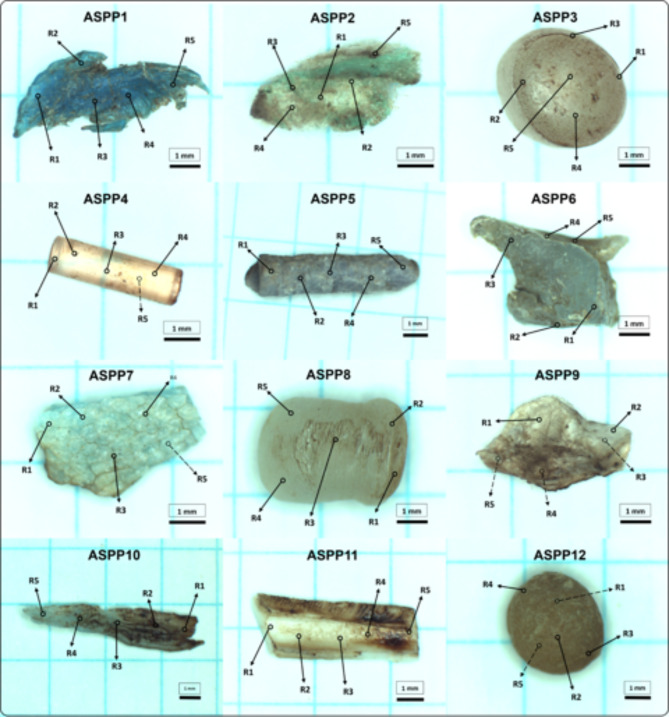
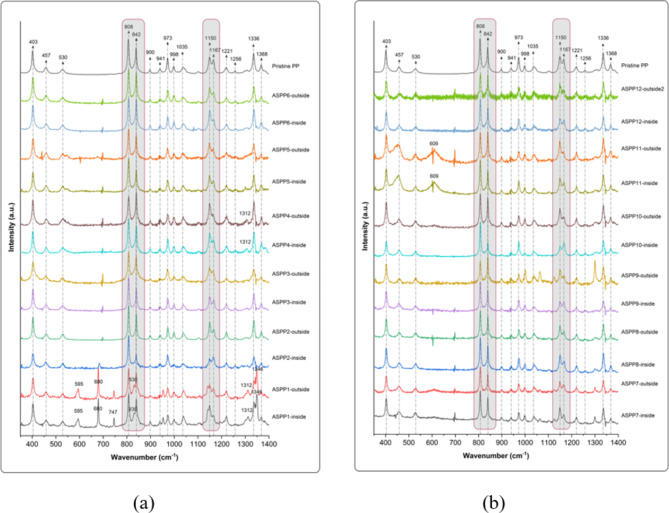
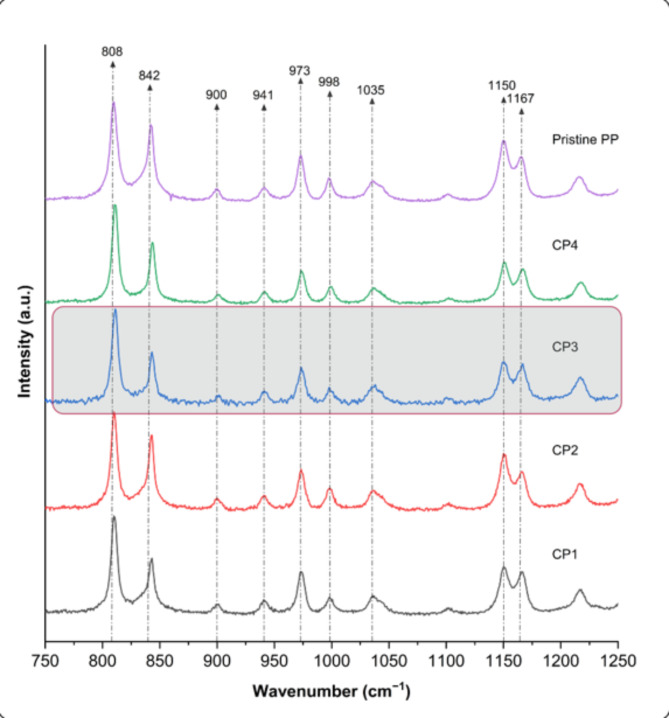
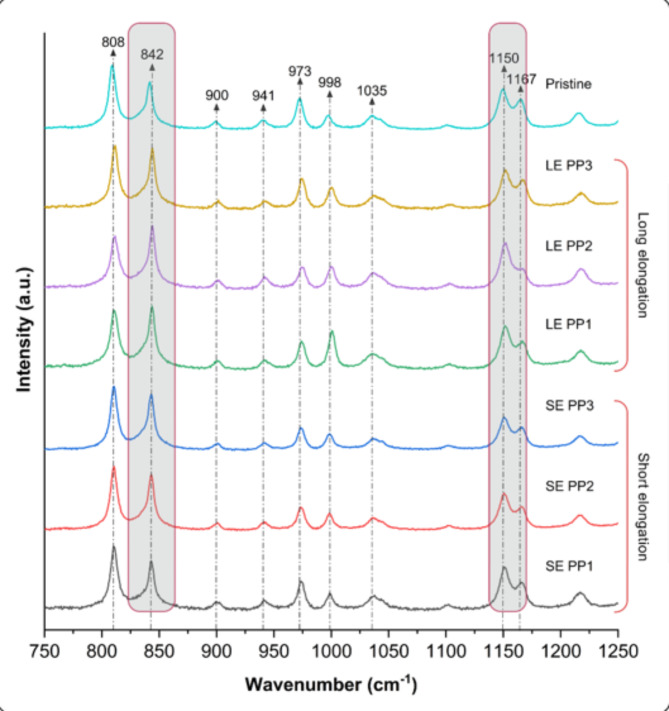
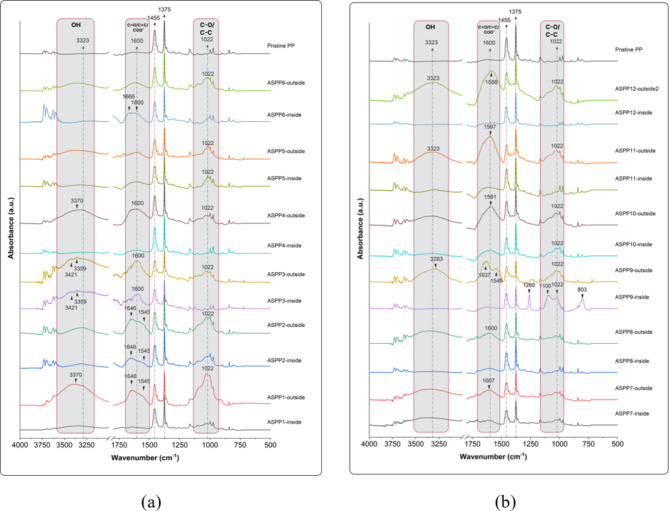
Naturally weathered polypropylene (NWPP) samples are useful for investigating the effects of various degradation factors that cannot be obtained in artificial laboratory experiments. In this study, NWPP samples were extracted from beach sediments (Ashiya, Hyogo, Japan). Raman and attenuated total reflection (ATR)–Fourier-transform infrared (FTIR) spectroscopies were used to analyze variations in the composition, crystallinity, orientation, and degradation of NWPP microplastics. The degree of degradation varies from sample to sample, from position to position in a sample, and the inside surface or outside surface of a sample. Significant intensity variations were observed for Raman bands at 1150 and 842 cm⁻¹, indicating changes in the crystallinity and molecular orientation of NWPP due to degradation. The Raman spectra of the elongated pristine PP showed intensity increases at 1150, 998, and 842 cm−1, indicating variations in the molecular orientation of the polymer chains induced by elongation. The ATR-FTIR spectra of NWPP yield several major new features in the 3600 –3200 cm−1 (OH stretching), 1750–1500 cm−1 (C=O/C=C/COO− stretching), and 1150–900 cm−1 (C–O/C–C stretching) regions. Of particular note is that in the 1750–1500 cm−1 region, at least four bands due to two kinds of vinyl groups and two kinds of carboxylate groups are clearly observed in the second derivative spectra, while bands arising from carbonyl compounds are weak. This may be the first time that the carboxylate bands have ever appeared more strongly than the carbonyl bands in the IR spectra of NWPP. The appearance of the carboxylate bands indicates two possibilities: one is the effect of seawater on the degradation of NWPP samples, and another is the oxidation of keto groups to the carboxylates. Moreover, since a few kinds of vinyl compounds and carboxylates are produced, it is very likely that the degree of degradation is high in the NWPP samples. In this way, IR spectroscopy is useful for exploring the degradation of NWPP while Raman spectroscopy is effective for examining variations in their crystallinity and orientation.
Overview
The claims and statistics of this paper haven’t been checked yet.
Free: it reads the open-access text and checks the first 5 claims that cite a source we can check. Create a free account to check every claim.
Integrity signals
Registry
Cites
Statistics
Figures
Verification
Claims the paper makes
The claims and statistics of this paper haven’t been checked yet.
Free: it reads the open-access text and checks the first 5 claims that cite a source we can check. Create a free account to check every claim.
Claims other papers make about this one
Each is checked against this paper’s own text: does it say what the citing paper says it does?
The source backs part of the claim, not all of it — or backs it for a different population, condition or comparison.
In the citing paper
“Taken together, the mass-change results and ATR-FTIR analyses highlighted contrasting behaviours among cellulose, PBAT-, PP-, and PE-based materials under the tested field conditions [26,29,30,31].”
From Linking Polymer Transformation and Soil Microclimate to Mulch (Bio)Degradation: A Field-Based Approach Using Mesh Bags and FTIR (2026) · cites this paper as [26]
Experimental — accuracy not yet measuredThe source backs part of the claim, not all of it — or backs it for a different population, condition or comparison.
In the citing paper
“These features are consistent with early-stage abiotic weathering (surface oxidation), rather than true biodegradation [24,25,26].”
From Linking Polymer Transformation and Soil Microclimate to Mulch (Bio)Degradation: A Field-Based Approach Using Mesh Bags and FTIR (2026) · cites this paper as [26]
Experimental — accuracy not yet measured
Self-check
Percentages, sums and reported differences re-computed from the paper’s own numbers.
The self-check needs the paper’s full text.
Citations
Cites
Microplastics in the marine environment
Andrady, A. L. (2011) · Marine Pollution Bulletin · doi:10.1016/j.marpolbul.2011.05.030 · Cited by 8,105
Hidalgo-Ruz, V., Gutow, L., Thompson, R. C., & Thiel, M. (2012) · Environmental Science & Technology · doi:10.1021/es2031505 · Cited by 5,440
Biological degradation of plastics: A comprehensive review
Shah, A. A., Hasan, F., Hameed, A., & Ahmed, S. (2008) · Biotechnology Advances · doi:10.1016/j.biotechadv.2007.12.005 · Cited by 2,765
Applications and societal benefits of plastics
Andrady, A. L., & Neal, M. A. (2009) · Philosophical Transactions of the Royal Society B: Biological Sciences · doi:10.1098/rstb.2008.0304 · Cited by 2,464
Pathways for degradation of plastic polymers floating in the marine environment
Gewert, B., Plassmann, M. M., & MacLeod, M. (2015) · Environmental Science: Processes & Impacts · doi:10.1039/c5em00207a · Cited by 2,168
Occurrence and distribution of microplastics in marine sediments along the Belgian coast
Claessens, M., Meester, S. D., Landuyt, L. V., Clerck, K. D., & Janssen, C. R. (2011) · Marine Pollution Bulletin · doi:10.1016/j.marpolbul.2011.06.030 · Cited by 1,428
Atmospheric microplastics: A review on current status and perspectives
Zhang, Y., Kang, S., Allen, S., Allen, D., Gao, T., & Sillanpää, M. (2020) · Earth-Science Reviews · doi:10.1016/j.earscirev.2020.103118 · Cited by 1,364
Thompson, R. C., Swan, S. H., Moore, C. J., & vom Saal, F. S. (2009) · Philosophical Transactions of the Royal Society B: Biological Sciences · doi:10.1098/rstb.2009.0054 · Cited by 1,294
Analysis of environmental microplastics by vibrational microspectroscopy: FTIR, Raman or both?
Käppler, A., Fischer, D., Oberbeckmann, S., Schernewski, G., Labrenz, M., Eichhorn, K.-J., & Voit, B. (2016) · Analytical and Bioanalytical Chemistry · doi:10.1007/s00216-016-9956-3 · Cited by 1,095
Vianello, A., Boldrin, A., Guerriero, P., Moschino, V., Rella, R., Sturaro, A., & Da Ros, L. (2013) · Estuarine, Coastal and Shelf Science · doi:10.1016/j.ecss.2013.03.022 · Cited by 1,067
Lenz, R., Enders, K., Stedmon, C. A., Mackenzie, D. M. A., & Nielsen, T. G. (2015) · Marine Pollution Bulletin · doi:10.1016/j.marpolbul.2015.09.026 · Cited by 794
Cooper, D. A., & Corcoran, P. L. (2010) · Marine Pollution Bulletin · doi:10.1016/j.marpolbul.2009.12.026 · Cited by 663
Endo, S., Takizawa, R., Okuda, K., Takada, H., Chiba, K., Kanehiro, H., Ogi, H., Yamashita, R., & Date, T. (2005) · Marine Pollution Bulletin · doi:10.1016/j.marpolbul.2005.04.030 · Cited by 607
Cai, L., Wang, J., Peng, J., Wu, Z., & Tan, X. (2018) · Science of The Total Environment · doi:10.1016/j.scitotenv.2018.02.079 · Cited by 575
Uheida, A., Mejía, H. G., Abdel-Rehim, M., Hamd, W., & Dutta, J. (2021) · Journal of Hazardous Materials · doi:10.1016/j.jhazmat.2020.124299 · Cited by 570
Gardette, M., Perthue, A., Gardette, J.-L., Janecska, T., Földes, E., Pukánszky, B., & Therias, S. (2013) · Polymer Degradation and Stability · doi:10.1016/j.polymdegradstab.2013.07.017 · Cited by 566
Competitive sorption of persistent organic pollutants onto microplastics in the marine environment
Bakir, A., Rowland, S. J., & Thompson, R. C. (2012) · Marine Pollution Bulletin · doi:10.1016/j.marpolbul.2012.09.010 · Cited by 560
Zbyszewski, M., & Corcoran, P. L. (2011) · Water, Air, & Soil Pollution · doi:10.1007/s11270-011-0760-6 · Cited by 418
Thermal stability of polyurethanes based on vegetable oils
Javni, I., Petrovìć, Z. S., Guo, A., & Fuller, R. (2000) · Journal of Applied Polymer Science · doi:10.1002/1097-4628(20000822)77:8<1742::aid-app11>3.0.co;2-t · Cited by 405
Harrison, J. P., Ojeda, J. J., & Romero-González, M. E. (2012) · Science of The Total Environment · doi:10.1016/j.scitotenv.2011.11.078 · Cited by 393
Stark, N. M., & Matuana, L. M. (2004) · Polymer Degradation and Stability · doi:10.1016/j.polymdegradstab.2003.11.002 · Cited by 392
Veerasingam, S., Saha, M., Suneel, V., Vethamony, P., Rodrigues, A. C., Bhattacharyya, S., & Naik, B. G. (2016) · Chemosphere · doi:10.1016/j.chemosphere.2016.06.056 · Cited by 390
Horizontal and Vertical Distribution of Microplastics in Korean Coastal Waters
Song, Y. K., Hong, S. H., Eo, S., Jang, M., Han, G. M., Isobe, A., & Shim, W. J. (2018) · Environmental Science & Technology · doi:10.1021/acs.est.8b04032 · Cited by 345
Gijsman, P., Meijers, G., & Vitarelli, G. (1999) · Polymer Degradation and Stability · doi:10.1016/s0141-3910(99)00033-6 · Cited by 326
Raman spectra and surface changes of microplastics weathered under natural environments
Dong, M., Zhang, Q., Xing, X., Chen, W., She, Z., & Luo, Z. (2020) · Science of The Total Environment · doi:10.1016/j.scitotenv.2020.139990 · Cited by 324
Vasile, C. (2000) · CRC Press eBooks · doi:10.1201/9780203908716 · Cited by 318
The role of physical structure and morphology in the photodegradation behaviour of polypropylene
Rabello, M. S., & White, J. R. (1997) · Polymer Degradation and Stability · doi:10.1016/s0141-3910(96)00202-9 · Cited by 299
Fu, Z., & Wang, J. (2019) · Science of The Total Environment · doi:10.1016/j.scitotenv.2019.07.167 · Cited by 254
Morlat, S., Mailhot, B., Gonzalez, D., & Gardette, J.-L. (2004) · Chemistry of Materials · doi:10.1021/cm031079k · Cited by 235
Changes during the weathering of polyolefins
Grause, G., Chien, M.-F., & Inoue, C. (2020) · Polymer Degradation and Stability · doi:10.1016/j.polymdegradstab.2020.109364 · Cited by 229
Natural Weathering Studies of Polypropylene
Rajakumar, K., Sarasvathy, V., Thamarai Chelvan, A., Chitra, R., & Vijayakumar, C. T. (2009) · Journal of Polymers and the Environment · doi:10.1007/s10924-009-0138-7 · Cited by 214
Furukawa, T., Sato, H., Kita, Y., Matsukawa, K., Yamaguchi, H., Ochiai, S., Siesler, H. W., & Ozaki, Y. (2006) · Polymer Journal · doi:10.1295/polymj.pj2006056 · Cited by 194
Self-citationOutdoor and accelerated laboratory weathering of polypropylene: A comparison and correlation study
Lv, Y., Huang, Y., Yang, J., Kong, M., Yang, H., Zhao, J., & Li, G. (2015) · Polymer Degradation and Stability · doi:10.1016/j.polymdegradstab.2014.12.023 · Cited by 183
Phan, S., Padilla‐Gamiño, J. L., & Luscombe, C. K. (2022) · Polymer Testing · doi:10.1016/j.polymertesting.2022.107752 · Cited by 182
Gamma‐, photo‐, and thermally‐initiated oxidation of isotactic polypropylene
Lacoste, J., Vaillant, D., & Carlsson, D. J. (1993) · Journal of Polymer Science Part A: Polymer Chemistry · doi:10.1002/pola.1993.080310316 · Cited by 167
Microplastics, a food safety issue?
Rainieri, S., & Barranco, A. (2019) · Trends in Food Science & Technology · doi:10.1016/j.tifs.2018.12.009 · Cited by 162
A general solution of the closed-loop kinetic scheme for the thermal oxidation of polypropylene
Rubio, L. R., Bruno Fayolle, C., Audouin, L., & Jacques Verdu, C. (2001) · Polymer Degradation and Stability · doi:10.1016/s0141-3910(01)00154-9 · Cited by 109
Hiejima, Y., Kida, T., Takeda, K., Igarashi, T., & Nitta, K. (2018) · Polymer Degradation and Stability · doi:10.1016/j.polymdegradstab.2018.02.010 · Cited by 96
Toapanta, T. Y. A., Okoffo, E. D., Ede, S., O’Brien, S., Burrows, S. D., Ribeiro, F., Gallen, M. J., Colwell, J. M., Whittaker, A. K., Kaserzon, S., et al. (2021) · The Science of The Total Environment · doi:10.1016/j.scitotenv.2021.148835 · Cited by 79
Influence of temperature, UV-light wavelength and intensity on polypropylene photothermal oxidation
François‐Heude, A., Richaud, E., Desnoux, E., & Colin, X. (2014) · Polymer Degradation and Stability · doi:10.1016/j.polymdegradstab.2013.12.038 · Cited by 77
Effects of inorganic fillers on the natural photo-oxidation of high-density polyethylene
Yang, R. C., Yu, J., Liu, Y., & Wang, K. (2005) · Polymer Degradation and Stability · doi:10.1016/j.polymdegradstab.2004.11.011 · Cited by 76
Quantifying the fragmentation of polypropylene upon exposure to accelerated weathering
Meides, N., Mauel, A., Menzel, T., Altstädt, V., Ruckdäschel, H., Senker, J., & Strohriegl, P. (2022) · Microplastics and Nanoplastics · doi:10.1186/s43591-022-00042-2 · Cited by 68
Autoxidation of semicrystalline polyethylene
Winslow, F. H., Hellman, M. Y., Matreyek, W., & Stills, S. M. (1966) · Polymer Engineering & Science · doi:10.1002/pen.760060317 · Cited by 65
Azuma, Y., Takeda, H., Watanabe, S., & Nakatani, H. (2009) · Polymer Degradation and Stability · doi:10.1016/j.polymdegradstab.2009.08.008 · Cited by 63
Martin, J., Ponçot, M., Hiver, J. M., Bourson, P., & Dahoun, A. (2013) · Journal of Raman Spectroscopy · doi:10.1002/jrs.4244 · Cited by 54
A study of the controlled degradation of polypropylene containing pro-oxidant agents
de Carvalho, C. L., Silveira, A. F., & Rosa, D. D. S. (2013) · SpringerPlus · doi:10.1186/2193-1801-2-623 · Cited by 45
Grossetete, T., Gonon, L., & Verney, V. (2002) · Polymer Degradation and Stability · doi:10.1016/s0141-3910(02)00134-9 · Cited by 41
Hiejima, Y., Takeda, K., & Nitta, K. (2017) · Macromolecules · doi:10.1021/acs.macromol.7b00229 · Cited by 41
Padermshoke, A., Kajiwara, T., An, Y., Takigawa, M., Van Nguyen, T., Masunaga, H., Kobayashi, Y., Ito, H., Sasaki, S., & Takahara, A. (2022) · Polymer · doi:10.1016/j.polymer.2022.125455 · Cited by 40
Kida, T., Hiejima, Y., & Nitta, K. (2016) · eXPRESS Polymer Letters · doi:10.3144/expresspolymlett.2016.63 · Cited by 39
Detecting Structural Environments of Carboxyl Groups in Dissolved Natural Organic Molecules
Duan, J., Sontarp, E. J., & Myneni, S. C. B. (2024) · ACS ES&T Water · doi:10.1021/acsestwater.3c00609 · Cited by 32
Mandrile, L., Giovannozzi, A. M., Pennecchi, F. R., Saverino, A., Lobascio, C., & Rossi, A. M. (2015) · Analytical Methods · doi:10.1039/c4ay02850c · Cited by 21
Thermal decomposition of photooxidized isotactic polypropylene
Czégény, Z., Jakab, E., Vı́g, A., Zelei, B., & Blazsó, M. (2000) · Journal of Analytical and Applied Pyrolysis · doi:10.1016/s0165-2370(00)00096-6 · Cited by 17
Research works printed but not linked: 8
- GESAMP. Guidelines for the monitoring and assessment of plastic litter and microplastics in the ocean. In: Kershaw, P.J., Turra, A., Galgani, F. (Eds.), IMO/FAO/UNESCO-IOC/UNIDO/WMO/IAEA/UN/UNEP/UNDP/ISA joint group of experts on the scientific aspects of marine environmental protection). Rep. Stud. GESAMP No. 99. http://www.gesamp.org/site/assets/files/2002/rs99e.pdf (2019).
- Crawford, C. B. & Quinn, B. Microplastic Pollutants (Elsevier, 2016).
- Ribeiro-Claro, P., Nolasco, M. M. & Araújo, C. Characterization of microplastics by Raman spectroscopy. Compr. Anal. Chem. 70, 119–151 (2017).
- Strobl, G. R. & Hagedorn, W. Raman spectroscopic method for determining the crystallinity of polyethylene. J. Polym. Sci. Part. B Polym. Phys. 16 (7), 1181–1193 (1978).
- Löder, M. G. J. & Gerdts, G. Marine Anthropogenic Litter (Springer, 2015).
- Mahir, A., Hamouya, M., Chafik, E. L. & Idrissi, M. IR Spectroscopy and scanning electron microscopy studies of natural ageing of polypropylene. Int. J. Eng. Res. Technol. (IJERT) 4 (2), 2278–0181 (2015).
- Sawasaki, T. & Nojiri Radiation crosslinking of polypropylene. Radiat. Phys. Chem. 31 (10), 877–886 (1988).
- Gijsman, P. The role of charge transfer complexes in the photodegradation of polyolefins. Macromol. Mater. Eng. 252 (1–2), 45–54 (1997).
Cited by
UVA-induced weathering of microplastics in seawater: surface property transformations and kinetics
Gao, L., Su, Y., Mehmood, T., Wang, Z., Peng, L., & Zhang, N. (2025) · Frontiers in Marine Science · doi:10.3389/fmars.2025.1519668 · Cited by 47
Huang, X., Yongtao, N. I., Ma, Z., Xie, Z., Ding, Z., Xu, H., Wei, H., Jin, Q., & Zhou, R. (2026) · Water Research · doi:10.1016/j.watres.2026.125364 · Cited by 20
Eco-Engineered Co3O4/CoO/C Nanohybrid for Supercapacitors and Efficient Water Splitting
Alsaiari, R. A., Gomaa, I., & Abdelhamid, H. N. (2025) · Arabian Journal for Science and Engineering · doi:10.1007/s13369-025-10606-y · Cited by 16
Micro- and Nanoplastics in Dentistry: Challenges in Obtaining High-Quality Evidence
Šimunović, L., Bačić, I., & Meštrović, S. (2025) · Materials · doi:10.3390/ma18184269 · Cited by 15
Peng, Q., Hu, H., Dai, A., Wu, N., Li, H., & Tong, D. (2025) · Food Chemistry · doi:10.1016/j.foodchem.2025.144069 · Cited by 11
Metadata
- Authors
- Anshari, R., Tsuboi, M., Sato, H., Tashiro, K., & Ozaki, Y.
- Affiliations
- Kwansei Gakuin University (JP)
- Kobe University (JP)
- Aichi Synchrotron Radiation Center (JP)
- Corresponding author
- Ozaki, Yukihiro
- Venue
- Scientific Reports
- Published
- 2025-01-20
- Volume
- 15
- Issue
- 1
- Pages
- 2518-2518
- ISSN
- 2045-2322 (ISSN-L)
- PMC
- PMC11747500
- OpenAlex
- W4406622654
- Cited by
- 78
- References
- 52
- Citations by year
- 2026: 50 · 2025: 28
- FWCI
- 18.39
- Type
- journal article
- Language
- en
- Open access
- gold
- doi.org
- Licence
- cc-by-nc-nd
- creativecommons.org/licenses/by-nc-nd/4.0 (tdm)
- creativecommons.org/licenses/by-nc-nd/4.0 (vor)
- Locations
- Scientific Reports (publishedVersion, cc-by-nc-nd)
- PubMed Central (publishedVersion, cc-by-nc-nd)
- PubMed (publishedVersion)
- DOAJ (DOAJ: Directory of Open Access Journals) (submittedVersion, cc-by-sa)
- Funders
- Japan Society for the Promotion of Science (23K23419, 24K08527)
- Topics
- Physical Sciences › Environmental Science › Pollution › Microplastics and Plastic Pollution
- Physical Sciences › Materials Science › Polymers and Plastics › Polymer crystallization and properties
- Social Sciences › Arts and Humanities › Archeology (arts and humanities) › Cultural Heritage Materials Analysis
- Keywords
- polypropylene microplastics, natural weathering, polymer degradation, crystallinity, molecular orientation, carboxylate groups, vinyl groups, seawater degradation, beach sediments, Raman spectroscopy, ATR-FTIR spectroscopy
About these checks
Registry, retraction, Cites and statistics results are computed, not judged, with one exception: a printed reference that no index lists is read once by a model before it counts as a citation error. Claims are extracted by a model and kept only when their quote appears verbatim in the text; each cited source is then checked, with a model’s help, for whether it says what the claim relies on. Those verdicts can be wrong — read the claim’s quote and the cited source before relying on one.
Statistics and arithmetic are recomputed, not judged.
Confidence bands are shown only for fields calibrated on our annotated test set. None is calibrated yet, so no band is shown.
What counts as a claim ›How we measure confidence ›How we check this ›
Are you an author, or do you see a problem with this page? Request a review
Data sources
Bibliographic data: Semantic Scholar, OpenAlex, Crossref.
Contains information from the Semantic Scholar Academic Graph Datasets, made available under the ODC Attribution License (ODC-BY 1.0).
Semantic Scholar’s data is described in: Kinney, R., et al. (2023). The Semantic Scholar Open Data Platform. arXiv:2301.10140.
