

Prescribable mHealth apps identified from an overview of systematic reviews
Open accessThe DOI matches its Crossref record; 62 of the 63 references it cites were found in a registry or an index.
Abstract
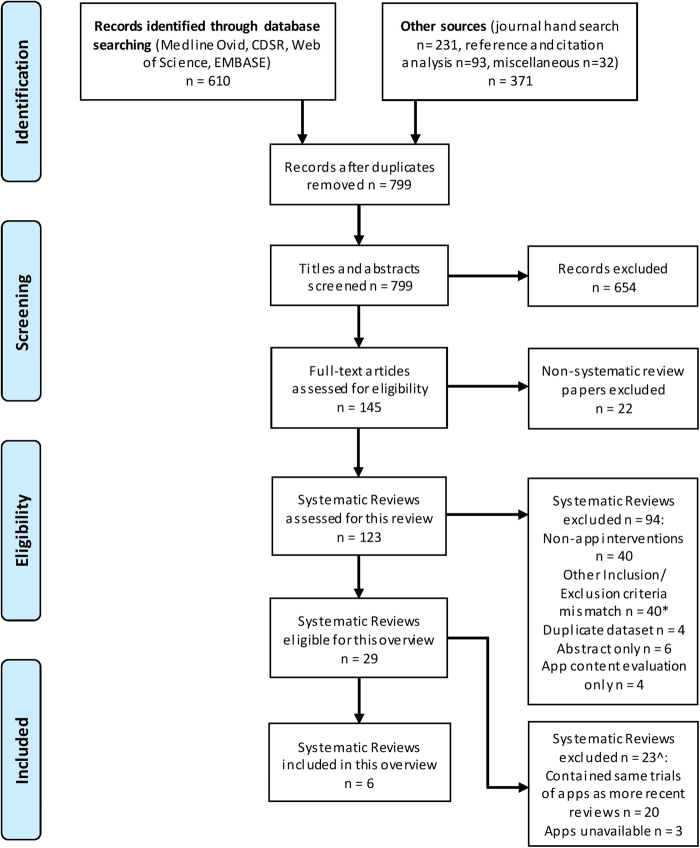
Mobile health apps aimed towards patients are an emerging field of mHealth. Their potential for improving self-management of chronic conditions is significant. Here, we propose a concept of “prescribable” mHealth apps, defined as apps that are currently available, proven effective, and preferably stand-alone, i.e., that do not require dedicated central servers and continuous monitoring by medical professionals. Our objectives were to conduct an overview of systematic reviews to identify such apps, assess the evidence of their effectiveness, and to determine the gaps and limitations in mHealth app research. We searched four databases from 2008 onwards and the Journal of Medical Internet Research for systematic reviews of randomized controlled trials (RCTs) of stand-alone health apps. We identified 6 systematic reviews including 23 RCTs evaluating 22 available apps that mostly addressed diabetes, mental health and obesity. Most trials were pilots with small sample size and of short duration. Risk of bias of the included reviews and trials was high. Eleven of the 23 trials showed a meaningful effect on health or surrogate outcomes attributable to apps. In conclusion, we identified only a small number of currently available stand-alone apps that have been evaluated in RCTs. The overall low quality of the evidence of effectiveness greatly limits the prescribability of health apps. mHealth apps need to be evaluated by more robust RCTs that report between-group differences before becoming prescribable. Systematic reviews should incorporate sensitivity analysis of trials with high risk of bias to better summarize the evidence, and should adhere to the relevant reporting guideline.
Overview
The claims and statistics of this paper haven’t been checked yet.
Free: it reads the open-access text and checks the first 5 claims that cite a source we can check. Create a free account to check every claim.
Integrity signals
Registry
Cites
Statistics
Figures
Verification
Claims the paper makes
The claims and statistics of this paper haven’t been checked yet.
Free: it reads the open-access text and checks the first 5 claims that cite a source we can check. Create a free account to check every claim.
Claims other papers make about this one
Each is checked against this paper’s own text: does it say what the citing paper says it does?
The source backs part of the claim, not all of it — or backs it for a different population, condition or comparison.
In the citing paper
“therefore, there is a small evidence base to provide guidance assessing their effectiveness [21, 22].”
From Patient Engagement with Conversational Agents in Health Applications 2016–2022: A Systematic Review and Meta-Analysis (2024) · cites this paper as [22]
Experimental — accuracy not yet measuredThe cited source says what the claim attributes to it.
In the citing paper
“There is mixed evidence to support current ambitions for mobile health (mHealth) apps to improve chronic health and well-being.”
From A Library of Analytic Indicators to Evaluate Effective Engagement with Consumer mHealth Apps for Chronic Conditions: Scoping Review (2019) · cites this paper as [1]
In the citing paper
“There are thousands of health-related apps available for download from the app store but only a tiny fraction are appropriate for clinical use.”
From What is the clinical value of mHealth for patients? (2020) · cites this paper as [37]
Self-check
Percentages, sums and reported differences re-computed from the paper’s own numbers.
The self-check needs the paper’s full text.
Citations
Cites
Preferred reporting items for systematic reviews and meta-analyses: The PRISMA statement
Moher, D., Liberati, A., Tetzlaff, J., & Altman, D. G. (2010) · International Journal of Surgery · doi:10.1016/j.ijsu.2010.02.007 · Cited by 12,156
Hoffmann, T. C., Glasziou, P. P., Boutron, I., Milne, R., Perera, R., Moher, D., Altman, D. G., Barbour, V., Macdonald, H., Johnston, M., et al. (2014) · BMJ · doi:10.1136/bmj.g1687 · Cited by 10,548
Self-citationMoher, D., Hopewell, S., Schulz, K. F., Montori, V., Gotzsche, P. C., Devereaux, P. J., Elbourne, D., Egger, M., & Altman, D. G. (2010) · BMJ · doi:10.1136/bmj.c869 · Cited by 8,883
GRADE guidelines: 3. Rating the quality of evidence
Balshem, H., Helfand, M., Schünemann, H. J., Oxman, A. D., Kunz, R., Brozek, J., Vist, G. E., Falck-Ytter, Y., Meerpohl, J., & Norris, S. (2011) · Journal of Clinical Epidemiology · doi:10.1016/j.jclinepi.2010.07.015 · Cited by 8,285
Development of AMSTAR: A measurement tool to assess the methodological quality of systematic reviews
Shea, B. J., Grimshaw, J. M., Wells, G. A., Boers, M., Andersson, N., Hamel, C., Porter, A. C., Tugwell, P., Moher, D., & Bouter, L. M. (2007) · BMC Medical Research Methodology · doi:10.1186/1471-2288-7-10 · Cited by 4,374
ROBIS: A new tool to assess risk of bias in systematic reviews was developed
Whiting, P., Savović, J., Higgins, J. P. T., Caldwell, D. M., Reeves, B. C., Shea, B., Davies, P., Kleijnen, J., & Churchill, R. (2016) · Journal of Clinical Epidemiology · doi:10.1016/j.jclinepi.2015.06.005 · Cited by 2,272
The impact of mHealth interventions: systematic review of systematic reviews
Marcolino, M. S., Oliveira, J. A. Q., D'Agostino, M., Ribeiro, A. L., Alkmim, M. B. M., & Novillo-Ortiz, D. (2018) · JMIR mHealth and uHealth · doi:10.2196/mhealth.8873 · Cited by 1,163
Schoeppe, S., Alley, S., Van Lippevelde, W., Bray, N. A., Williams, S. L., Duncan, M. J., & Vandelanotte, C. (2016) · International Journal of Behavioral Nutrition and Physical Activity · doi:10.1186/s12966-016-0454-y · Cited by 949
Evaluating Digital Health Interventions
Murray, E., Hekler, E. B., Andersson, G., Collins, L. M., Doherty, A., Hollis, C., Rivera, D. E., West, R., & Wyatt, J. C. (2016) · American Journal of Preventive Medicine · doi:10.1016/j.amepre.2016.06.008 · Cited by 847 · cited 1×
“…RCTs should remain the gold standard, but should be employed strategically, and only used when the intervention is stable, can be implemented with high-fi delity, and has a high likelihood of clinically meaningful bene fi t. 63 We also emphasize the value of traditional systematic and other reviews.”
BackgroundHollis, C., Falconer, C. J., Martin, J. L., Whittington, C., Stockton, S., Glazebrook, C., & Davies, E. B. (2017) · Journal of Child Psychology and Psychiatry · doi:10.1111/jcpp.12663 · Cited by 846 · cited 1×
“…of mHealth apps aimed at particular health conditions that examined different aspects of the apps such as the contents, quality and usability, 5 – 8 no overview of systematic reviews has been done yet to summarize the effectiveness of stand-alone mHealth apps speci fi cally, and across different…”
Background
Cited by
Items 101–200 of 290
Ramos, R. M., Cheng, P. G. F., & Jonas, S. (2019) · JMIR mhealth and uhealth · doi:10.2196/12051 · Cited by 27
“In addition to the general lack of science-based development, most existing research on mobile technology and mental health care is methodologically limited with very small sample sizes [9,10] or are supported with feasibility studies only [11,12].”
Sadler, S. G., Gerrard, J. M., Searle, A., Lanting, S. M., West, M., Wilson, R. L., Ginige, A., Fang, K. Y., & Chuter, V. (2023) · Journal of Medical Internet Research · doi:10.2196/47608 · Cited by 30
“This is because limited engagement has been identified as a key reason for the poor performance of mHealth apps for the management of other medical conditions [57].”
Digital Health Consumers on the Road to the Future
Kukafka, R. (2019) · Journal of Medical Internet Research · doi:10.2196/16359 · Cited by 27
“This concern is justifiable considering that, of the millions of digital health devices available for consumers today, only a small fraction have been tested and the evidence for those that had been evaluated was of low quality [23,24].”
Yang, S., Cha, M.-J., van Kessel, R., Warrier, G., Thrul, J., Lee, M., Yoon, J., Kang, D., & Cho, J. (2025) · Journal of Medical Internet Research · doi:10.2196/71349 · Cited by 31
“Estimates indicate that more than 350,000 mHealth apps are accessible on various mobile platforms [3-5], which can reach numerous people extensively, as internet use and smartphone ownership become common [6], despite uncertain quality and efficacy due to the unregulated free market [7].”
A systematic evaluation of primary headache management apps leveraging behavior change techniques
Noser, A. E., Klages, K. L., Gamwell, K. L., Brammer, C. N., Hommel, K. A., & Ramsey, R. R. (2021) · Cephalalgia · doi:10.1177/03331024211053572 · Cited by 25
“Health care providers recognize the benefits of apps for supporting headache treatment with the “prescribability” of apps becoming an important topic of conversation among stakeholders (35,36).”
BackgroundCuevas-González, D., Garćıa-Vázquez, J. P., Bravo-Zanoguera, M. E., Avitia, R. L., Reyna, M. A., Zermeño-Campos, N. A., & González-Ramírez, M. L. (2022) · International Journal of Environmental Research and Public Health · doi:10.3390/ijerph191911941 · Cited by 32
Pelle, T., Bevers, K., van der Palen, J. A. M., van den Hoogen, F. H. J., & van den Ende, C. H. M. (2019) · BMC Musculoskeletal Disorders · doi:10.1186/s12891-019-2768-9 · Cited by 25
Demsash, A. W., Kalayou, M. H., & Walle, A. D. (2024) · BMC Medical Education · doi:10.1186/s12909-024-05680-z · Cited by 21
“Additionally, mobile clinical guidelines applications could also provide health professionals with real-time information on the patient’s specific health condition [118, 119].”
BackgroundNogueira-Leite, D., Diniz, J. M., & Cruz-Correia, R. J. (2023) · JMIR Human Factors · doi:10.2196/45949 · Cited by 34
“The realization that most tools in the field needed to be more mature to match formulated expectations prompted specialists to increasingly voice concerns that most apps need to meet more clinical and technical validation standards, often lacking any empirical support for their adoption [7-11].”
Challenges in mobile health app research: Strategies for interprofessional researchers
Birkhoff, S. D., & Moriarty, H. (2020) · Journal of Interprofessional Education & Practice · doi:10.1016/j.xjep.2020.100325 · Cited by 24
The Digital Phenotyping Project: A Psychoanalytical and Network Theory Perspective
Potier, R. (2020) · Frontiers in Psychology · doi:10.3389/fpsyg.2020.01218 · Cited by 24
“There are many arguments in favor of this caution, as indicated by a study to analyze a small number of stand-alone apps currently available on mobile platforms that have been evaluated (Byambasuren et al., 2018).”
ResultPhi, N. T. T., Montori, V. M., Kunneman, M., Ravaud, P., & Tran, V.-T. (2025) · JAMA Network Open · doi:10.1001/jamanetworkopen.2025.7288 · Cited by 28
Magalhães, B. M. B. D. S., Fernandes, C. S., Santos, C., & Martínez‐Galiano, J. M. (2020) · Cancer Nursing · doi:10.1097/ncc.0000000000000823 · Cited by 27
“This ambiguity is why the concept of the prescription of apps 53 is being addressed to ensure that apps work, have fair privacy and data security policies, and ensure safety.”
BackgroundEvaluation Criteria for Weight Management Apps: Validation Using a Modified Delphi Process
Robles, N., Puigdomènech, E., Gómez-Calderón, C., Saigí-Rubió, F., Cuatrecasas, G., Zamora, A., Moharra, M., Paluzié, G., Balfegó, M., & Carrión, C. (2020) · JMIR mhealth and uhealth · doi:10.2196/16899 · Cited by 18
“In recent years, there has been a rise in the use of apps intended to prevent weight problems or treat adults who are overweight or obese; these apps facilitate the tracking of physical and dietary patterns, provide recommendations and advice, or include motivational strategies to achieve personalized goals; however,…”
BackgroundMarshall, J. M., Dunstan, D. A., & Bartik, W. J. (2021) · Frontiers in Psychology · doi:10.3389/fpsyg.2021.775775 · Cited by 27
Strategies for Patient, Family, and Caregiver Engagement
Bennett, W. L., Pitts, S. I., Aboumatar, H. J., Sharma, R., Smith, B. M., Das, A., Day, J., Holzhauer, K., & Bass, E. B. (2020) · doi:10.23970/ahrqepctb36 · Cited by 23
Geiger, S., Steinbach, J., Skoda, E., Jahre, L. M., Rentrop, V., Kocol, D., Jansen, C., Schüren, L. C., Niedergethmann, M., Teufel, M., et al. (2022) · Obesity Facts · doi:10.1159/000527914 · Cited by 19
Bröcker, E., Scheffler, F., Suliman, S., Olff, M., & Seedat, S. (2024) · Cambridge Prisms Global Mental Health · doi:10.1017/gmh.2024.34 · Cited by 17
“…internet-and mobile-based augmentation of resources has great potential to meet real needs, with over 300,000 mobile health applications available, concerns regarding the applications ’ credibility, privacy, and overall quality must be considered (Byambasuren et al., 2018; Chandrashekar, 2018).”
BackgroundO'Connor, S. R., Treanor, C., Ward, E., Wickens, R. A., O’Connell, A., Culliford, L. A., Rogers, C. A., Gidman, E., Pető, T., Knox, P. C., et al. (2022) · International Journal of Environmental Research and Public Health · doi:10.3390/ijerph192013714 · Cited by 17
“Mobile Health (mHealth) refers to use of devices including mobile phones, tablet computers or patient monitoring devices to detect and monitor changes in patient’s health and illness status [15].”
BackgroundGu, Y., Guan, Y., & Meng, Z. (2023) · Journal of Medical Internet Research · doi:10.2196/45437 · Cited by 18
“For HPs, the assessment of individual apps and literature searches on app evidence are highly time consuming and challenging to perform on their own [54].”
How to Design and Evaluate mHealth Apps? A Case Study of a Mobile Personal Health Record App
Kim, G., Hwang, D., Park, J., Kim, H. K., & Hwang, E.-S. (2024) · Electronics · doi:10.3390/electronics13010213 · Cited by 20
“However, many mHealth apps are developed with scant end-user feedback, often overlooking user requirements [5,6].”
BackgroundRobertson, I., Harrison, C., Ng, K. Y. B., Macklon, N., Cheong, Y. C., & Boivin, J. (2022) · Human Reproduction · doi:10.1093/humrep/deac046 · Cited by 21
“The research evidence supporting medical apps is extremely limited compared to the number of apps developed and available for use (Byambasuren et al. , 2018).”
Albertella, L., Gibson, L., Rooke, S. E., Norberg, M. M., & Copeland, J. (2019) · Journal of Cannabis Research · doi:10.1186/s42238-019-0009-6 · Cited by 23
Preparing nurses to be prescribers of digital therapeutics
Ferguson, C., Hickman, L., Wright, R. J., Davidson, P. M., & Jackson, D. W. (2018) · Contemporary Nurse · doi:10.1080/10376178.2018.1486943 · Cited by 21
“Further, Byambasuren et al. (2018) conducted an overview of a systematic review of prescribable mHealth apps.”
BackgroundDeveloping and validating a new scale to measure the acceptability of health apps among adolescents
Chen, E. S., Moracco, K. E., Kainz, K., Muessig, K. E., & Tate, D. F. (2022) · Digital Health · doi:10.1177/20552076211067660 · Cited by 19
“There is substantial competition in the health apps marketplace; in 2015, there were already 165,000 health and fitness apps available for download,(7) though limited information about app effectiveness.(8) To build engaging health apps, mHealth researchers and app developers must understand how and what adolescents v…”
BackgroundKernebeck, S., Scheibe, M., Sinha, M., Fischer, F., Knapp, A., Timpel, P., Harst, L., Reininghaus, U., & Vollmar, H. C. (2022) · Das Gesundheitswesen · doi:10.1055/a-1933-2779 · Cited by 19
“Diese und weitere Herausforderungen bei der Evaluation [6] und Evidenzgenerierung [7] spiegeln sich in den Ergebnissen verschie-dener Übersichtsarbeiten wider, die auf eine eingeschränkte bis moderate Evidenz hinweisen [8, 9].”
BackgroundEffectiveness of a Digital Health Application for the Treatment of Diabetes Type II—A Pilot Study
Bretschneider, M. P., Roth, L. M. K., & Schwarz, P. E. H. (2023) · Journal of Clinical Medicine · doi:10.3390/jcm12196317 · Cited by 22
“Another field that is evolving is digital medical devices as (stand-alone) interventions for chronic diseases like diabetes combining self-monitoring and education [12].”
BackgroundProvision of Digital Primary Health Care Services: Overview of Reviews
Fava, V. M. D., & Lapão, L. V. (2024) · Journal of Medical Internet Research · doi:10.2196/53594 · Cited by 30
Shin, H. J., Cho, I. T., Choi, W., Kim, H. R., Kang, M.-B., & Yang, W. (2024) · Journal of Yeungnam Medical Science · doi:10.12701/jyms.2024.01004 · Cited by 21
“Many healthcare professionals remain unfamiliar with DTx, leading to hesitation in adopting these new technologies [15].”
InfluentialDigital exercise interventions for improving measures of central obesity: a systematic review
Ballin, M., Hult, A., Björk, S., Dinsmore, J. G., Nordström, P., & Nordström, A. (2020) · International Journal of Public Health · doi:10.1007/s00038-020-01385-4 · Cited by 17
Wu, D., An, J., Yu, P., Lin, H., Ma, L., Duan, H., & Deng, N. (2021) · Journal of Medical Internet Research · doi:10.2196/25630 · Cited by 18
Hoeberichts, K., Roke, Y., Niks, I. M. W., & van Harten, P. N. (2022) · Advances in Neurodevelopmental Disorders · doi:10.1007/s41252-022-00304-3 · Cited by 49
“Smartphone mental health (mHealth) applications (apps) have an enormous potential to improve health in people (Byambasuren et al., 2018).”
BackgroundHuda, M. N. (2023) · Policy & Governance Review · doi:10.30589/pgr.v7i2.721 · Cited by 21
“Unfortunately, despite the potential benefits of m-government health services, few studies have demonstrated their effectiveness (Byambasuren et al., 2018).”
Shatte, A. B. R., & Teague, S. J. (2020) · BMC Medical Research Methodology · doi:10.1186/s12874-020-00973-5 · Cited by 19
May, C. D., StGeorge, J. M., & Lane, S. J. (2021) · Journal of Autism and Developmental Disorders · doi:10.1007/s10803-021-04925-w · Cited by 22
Pelle, T., van der Palen, J. A. M., de Graaf, F., van den Hoogen, F. H. J., Bevers, K., & van den Ende, C. H. M. (2021) · BMC Health Services Research · doi:10.1186/s12913-021-06440-1 · Cited by 17
Aliferis, C., & Simon, G. (2024) · Health informatics · doi:10.1007/978-3-031-39355-6_12 · Cited by 19
Bodner, E., Roth, L. M. K., Wiencke, K., Bischoff, C., & Schwarz, P. E. H. (2024) · Journal of Medical Internet Research · doi:10.2196/54324 · Cited by 17
“…of HCPs. Systematic reviews that analyze the efficacy of app-based interventions for type 1 diabetes mellitus and T2DM show that additional remote access to HCPs [19] as well as a higher frequency and intensity of feedback and interaction are associated with greater HbA 1c reductions [20].”
AI-driven Innovations in Assessing Stress, Anxiety, and Mental Health
Inamdar, A., Gurupadayya, B., Gautam, M., Sharma, A., Pathak, R., & Sharma, H. (2025) · Current Psychiatry Research and Reviews · doi:10.2174/0126660822334997241216062002 · Cited by 16
Minen, M. T., Gopal, A., Sahyoun, G., Stieglitz, E. J., & Torous, J. B. (2020) · Journal of Neuropsychiatry · doi:10.1176/appi.neuropsych.19120353 · Cited by 17
Open for Business: Chatbots, E-therapies, and the Future of Psychiatry
Gratzer, D., & Goldbloom, D. S. (2019) · The Canadian Journal of Psychiatry · doi:10.1177/0706743719850057 · Cited by 13
“There are over 315,000 mobile health apps; some are designed for people with psychiatric conditions, helping patients remember when to take medications or track their mood over time or improve their sleep.(11) (Chatbots, which could be apps, are considered earlier.”
BackgroundThe effect of an mHealth intervention for titration of insulin for type 2 diabetes: A pilot study
Bramwell, S., Meyerowitz‐Katz, G., Ferguson, C., Jayaballa, R., McLean, M. P., & MABERLY, G. F. (2019) · European Journal of Cardiovascular Nursing · doi:10.1177/1474515119889764 · Cited by 16
Treating Psychological Trauma in the Midst of COVID-19: The Role of Smartphone Apps
Marshall, J. M., Dunstan, D. A., & Bartik, W. J. (2020) · Frontiers in Public Health · doi:10.3389/fpubh.2020.00402 · Cited by 13
“The idea that a health professional could “prescribe” a mental health app (19) is attractive at this time because of the difficulties accessing face-to-face treatment, whether by telehealth or in-person.”
BackgroundHeron, N., O'Connor, S. R., Kee, F., Thompson, D. R., Anderson, N., Cutting, D., Cupples, M., & Donnelly, M. (2021) · International Journal of Environmental Research and Public Health · doi:10.3390/ijerph18094861 · Cited by 13
“Despite this, there is comparatively little data on the core intervention components associated with engagement and usage needed for sustained behavioural change [24,25].”
BackgroundKulikova, M. S., Калинина, А. М., Васильевна, К. А., & Drapkina, O. M. (2022) · Russian Journal of Preventive Medicine · doi:10.17116/profmed20222510135 · Cited by 13
Nogueira-Leite, D., & Cruz-Correia, R. J. (2023) · JMIR Research Protocols · doi:10.2196/41040 · Cited by 13
“There is rising concern that mobile apps, for one, do not meet enough clinical or technical validation standards or even register any type of empirical support [5-8].”
Serre, F., Moriceau, S., Donnadieu, L., Forcier, C., Garnier, H., Alexandre, J., Dupuy, L., Philip, P., Levavasseur, Y., de Sevin, É., et al. (2023) · Frontiers in Psychiatry · doi:10.3389/fpsyt.2023.1143167 · Cited by 15
“However, the reduced number of available studies of high methodological quality or with sufficient statistical power (82), as well as heterogeneity in comparison conditions, outcomes or population tested, make it difficult to provide compelling evidence of efficacy upon abstinence or reduction of addictive use (69, 71…”
BackgroundLokker, C., Jezrawi, R., Gabizon, I., Varughese, J. K., Brown, M., Trottier, D., Álvarez, E., Schwalm, J.-D., McGillion, M. H., Ma, J., et al. (2021) · JMIR Research Protocols · doi:10.2196/26155 · Cited by 11
“Multiple reviews have highlighted the lack of quality research evidence on the efficacy of apps [9,23-25]. mHealth research has several unique challenges contributing to this problem.”
A Transgender Health Information Resource: Participatory Design Study
Morse, B., Soares, A., Kwan, B. M., Allen, M., Lee, R. S., DeSanto, K., Holliman, B. D., Ytell, K., & Schilling, L. M. (2023) · JMIR Human Factors · doi:10.2196/42382 · Cited by 13
“The intensity of engagement is interesting to consider for mHealth apps that seek to change user behavior, such as apps to help patients manage chronic diseases, where long-term and frequent engagement may be critical to improve outcomes [91,92].”
A mobile app for contactless measurement of vital signs through remote Photoplethysmography
Casalino, G., Castellano, G., Nisio, A., Pasquadibisceglie, V., & Zaza, G. (2022) · Conference proceedings/Conference proceedings - IEEE International Conference on Systems, Man, and Cybernetics · doi:10.1109/smc53654.2022.9945406 · Cited by 12
“Mobile health (mHealth) applications not requiring continuous monitoring by medical professionals have also been proposed [6]–[8].”
BackgroundApps for Covid-19 in Germany: assessment using the German Mobile App Rating Scale
Holl, F., Flemisch, F., Swoboda, W. J., & Schobel, J. (2022) · JAMIA Open · doi:10.1093/jamiaopen/ooac082 · Cited by 11
“Fueled by the wide availability of cellular networks and mobile phones, mobile health (mHealth) applications have become widely used to expand access to care and are being used to monitor communicable diseases.(1,2) mHealth applications are already successfully used in low- and middle-income countries (LMICs) to preve…”
BackgroundmQoL: Mobile Quality of Life Lab: From Behavior Change to QoL
Manea, V. C., & Wac, K. (2018) · ACM International Joint Conference on Pervasive and Ubiquitous Computing (UbiComp) · doi:10.1145/3267305.3267549 · Cited by 10
“MHEALTH BURDEN: Researchers are forced to treat the mHealth app as only one aspect of the study, making it difficult to satisfy modern participant expectations regarding maintenance, support, and updates [1, 5, 9] or implement behavior change features (e.”
BackgroundExperiences of Health Care Providers Using a Mobile Medical Photography Application
Wyatt, K. D., Willaert, B. N., Lohse, C. M., Pallagi, P. J., Yiannias, J. A., & Hellmich, T. R. (2020) · Applied Clinical Informatics · doi:10.1055/s-0040-1701254 · Cited by 9
“11,12 One barrier to a formal study of mobile applications is that outcomes of interest may be heterogeneous or dif fi cult to measure.”
BackgroundGu, J., Miller, C. B., Henry, A. L., Espie, C. A., Davis, M., Stott, R. B., Emsley, R., Smits, J. A. J., Craske, M. G., Saunders, K., et al. (2020) · Trials · doi:10.1186/s13063-020-4230-6 · Cited by 14
Bonotis, P., Angelidis, P., & Natsiavas, P. (2025) · JMIR Human Factors · doi:10.2196/57342 · Cited by 10
“Despite this, mHealth app downloads are declining [9,10], raising concerns about their usability and acceptance, influenced by factors like privacy and usability [11].”
An Iterative and Collaborative End-to-End Methodology Applied to Digital Mental Health
Boulos, L., Mendes, A., Delmas, A., & Kaadoud, I. C. (2021) · Frontiers in Psychiatry · doi:10.3389/fpsyt.2021.574440 · Cited by 12
“This is unfortunately not always the case as shown by a smartphone app review revealing that, out of all health apps, only 11 were identified as “prescriptible” [meaning that they included randomized controlled trials (RCTs) reporting of effectiveness without clinical intervention] (82).”
BackgroundBest Practices for Developing a Diabetes mHealth App
Holtz, B., & Mitchell, K. M. (2023) · Journal of Diabetes Science and Technology · doi:10.1177/19322968231195849 · Cited by 9
Architecting dietary intake monitoring as a service combining NLP and IoT
Benítez-Guijarro, A., Callejas, Z., Noguera, M., & Benghazi, K. (2019) · Journal of Ambient Intelligence and Humanized Computing · doi:10.1007/s12652-019-01553-2 · Cited by 10
Technology to Support the Care of Children and Adolescents with Cancer
Baggott, C., Jibb, L., Parker, R., Stinson, J., & Linder, L. A. (2020) · Pediatric oncology · doi:10.1007/978-3-030-25804-7_8 · Cited by 8
Inomata, T., Sung, J., Nakamura, M., Iwagami, M., Okumura, Y., Fujio, K., Akasaki, Y., Fujimoto, K., Yanagawa, A., Midorikawa‐Inomata, A., et al. (2021) · Juntendō Igaku/Juntendo igaku · doi:10.14789/jmj.jmj21-0023-r · Cited by 10
Wu, D., Huyan, X., She, Y., Hu, J., Duan, H., & Deng, N. (2022) · JMIR mhealth and uhealth · doi:10.2196/33189 · Cited by 8
“Extensive evidence supports the effect of mHealth services in disease control [4,5,7-11], including promoting patient engagement in health care services and helping patients develop positive behavior in their daily self-management [12-16].”
BackgroundSleep mHealth Applications and Behavior Change Techniques Evaluation
Lancaster, B. D., Sweenie, R., Noser, A. E., Roberts, C. M., & Ramsey, R. R. (2023) · Behavioral Sleep Medicine · doi:10.1080/15402002.2022.2161548 · Cited by 11
“The “prescribability” of apps has become a necessary topic of conversation among stakeholders (Byambasuren et al., 2018; Gordon et al., 2020).”
Mao, C., Bayer, J., Ross, M. Q., Rhee, L., Le, H., Mount, J., Chang, H.-C., Chang, Y.-J., Hedstrom, A., & Hovick, S. R. A. (2023) · Mobile Media & Communication · doi:10.1177/20501579221149823 · Cited by 10
“Other work has noted small effects of tracking app use on physical activity behavior (see reviews: Byambasuren et al., 2018; Hall et al., 2015), while also noting the low quality of evidence.”
BackgroundBhandari, A., & Burroway, R. (2023) · Social Science & Medicine · doi:10.1016/j.socscimed.2023.116217 · Cited by 8
Gehder, S., & Goeldner, M. (2025) · Journal of Medical Internet Research · doi:10.2196/66356 · Cited by 11
Stubberud, A., Linde, M., & Tronvik, E. (2025) · Cephalalgia · doi:10.1177/03331024251348651 · Cited by 8
Ma, Y., Chen, D., & Xie, J. (2026) · Biomedicines · doi:10.3390/biomedicines14010223 · Cited by 11
“The key barrier to clinical translation is the lack of evidence from randomized controlled trials, as most digital therapeutic products have yet to prove their clinical effectiveness and cost-efficiency [45].”
Akasaki, Y., Inomata, T., Iwagami, M., Sung, J., Nagino, K., Adachi, T., Morita, H., Tamari, M., Kainuma, K., Kan‐o, K., et al. (2024) · Clinical and Translational Allergy · doi:10.1002/clt2.12394 · Cited by 7
Yokomitsu, K., Oimatsu, R., Toh, S. H. Y., & Sündermann, O. (2025) · JMIR mhealth and uhealth · doi:10.2196/60871 · Cited by 13
“Such services are also timely given the increasing ownership of mobile devices [9,10], which has facilitated access to mental health care in daily life, overcoming geographical and temporal limitations [11-14].”
Strauss, J., Zhang, J., Jarrett, M. L., Patterson, B. A., & Ameringen, M. V. (2021) · Elsevier eBooks · doi:10.1016/b978-0-12-822201-0.00006-x · Cited by 13
Schröder, T., Grube, H. C. B., Kühn, G., Sina, C., Thaçi, D., Nitschke, M. F., & König, I. R. (2022) · Trials · doi:10.1186/s13063-022-06933-2 · Cited by 8
“There is the concept of a “sham-DTx” as an equivalent to a placebo control [46]; however, it has to be acknowledged that complex DTx with multiple possible ingredients potentially responsible for a clinical effect cannot be controlled well with a reductive version of the DTx [47, 48].”
BackgroundElbers, S., Pool, J. J. M., Wittink, H. M., Köke, A. J. A., Scheffer, E., & Smeets, R. (2020) · JMIR Research Protocols · doi:10.2196/18632 · Cited by 6
“A recent systematic review revealed that health care apps to promote self-management in chronic conditions have seldom been evaluated by randomized controlled trials over a prolonged study period [27].”
BackgroundThe Need for Respectful Technologies: Going Beyond Privacy
Redmiles, E. M. (2021) · Springer eBooks · doi:10.1007/978-3-030-86144-5_42 · Cited by 6
IoT Based Pulse Oximeter for Remote Health Assessment: Design, Challenges and Futuristic Scope
Revathi, K., Tamilselvi, T., Gomathi, G., & Divya, R. (2022) · International Journal of Electrical and Electronics Research · doi:10.37391/ijeer.100325 · Cited by 6
Epistemic Injustice in and through AI
Chamma, D., Ahmadpour, N., Ahmed, S. I., Mim, N. J., Zhang, W. Q., di Bona, K., Sachathep, T., Horst, H. A., & Harb, J. I. (2025) · Australian Conference on Human-Computer Interaction (OzCHI) · doi:10.1145/3764687.3767279 · Cited by 6
Garuma, D., Lamba, D., Abessa, T. G., & Bonnechère, B. (2024) · Frontiers in Public Health · doi:10.3389/fpubh.2024.1377482 · Cited by 10
Morley, J., Laitila, J., Ross, J. S., Schamroth, J., Zhang, J., & Floridi, L. (2025) · Minds and Machines · doi:10.1007/s11023-025-09710-7 · Cited by 8
“…such a dynamic and rapidly evolving market: any commercial organization or individual can develop and launch a health app without being required to first subject it to rigorous efficacy, effectiveness, and safety testing (Byambasuren et al., 2018; Magrabi et al., 2019; Velthoven et al., 2018a).”
O’Connor, S. R., Kee, F., Thompson, D. R., Cupples, M., Donnelly, M., & Heron, N. (2020) · Digital Health · doi:10.1177/20552076211065271 · Cited by 10
“Although the development and use of mobile apps for supporting patient self-management in various health conditions continues to increase, some studies have reported that apps frequently have limitations in the rigour of their development and the accuracy of the clinical information provided.(21,22) Particularly in th…”
A Comparative Overview of Digital Health Applications between Belgium and Germany
Schudt, F., Rohloff-Meinke, C., Koehler, N., Sohrabi, K., Groß, V., & Scholtes, M. C. W. (2022) · Current Directions in Biomedical Engineering · doi:10.1515/cdbme-2022-1130 · Cited by 5
Gould, M. J., Lin, C., & Walsh, C. M. (2023) · Gastro Hep Advances · doi:10.1016/j.gastha.2023.03.001 · Cited by 5
“18 – 20 Concerningly, health applications for gastro-intestinal diseases were found to be among the lowest quality across an assessment of 20 different condition-speci fi c health categories.”
Digital Medicine and Ethics: Rooting for Evidence
Vayena, E., & Ienca, M. (2018) · The American Journal of Bioethics · doi:10.1080/15265161.2018.1498955 · Cited by 5
Rajasekera, J. R., Mishal, A. V., & Mori, Y. (2019) · Studies in big data · doi:10.1007/978-3-030-31672-3_6 · Cited by 6
Mental health mobile app use to manage psychological difficulties: an umbrella review
Badesha, K., Wilde, S., & Dawson, D. L. (2022) · Mental Health Review Journal · doi:10.1108/mhrj-02-2021-0014 · Cited by 11
Tomczyk, S. (2022) · Frontiers in Psychology · doi:10.3389/fpsyg.2022.899092 · Cited by 6
“MHealth apps comprise self-administered apps but also monitoring apps, and diagnostic tools to support medical decisions, and the translation of treatment effects into everyday life (e.g., Martínez-Pérez et al., 2014; Byambasuren et al., 2018; Chib and Lin, 2018; Hensher et al., 2021; Grundy, 2022).”
MethodResearch on the Impact of mHealth Apps on the Primary Healthcare Professionals in Patient Care
Al-Azzam, M. K. A. (2021) · Applied Bionics and Biomechanics · doi:10.1155/2021/7611686 · Cited by 6
RetractedDesign Strategies in Public Services
Cucciniello, M., Nasi, G., Porumbescu, G. A., & Tarricone, R. (2026) · Cambridge University Press eBooks · doi:10.1017/9781009451734 · Cited by 4
Benjumea, J., Ropero, J., Zubiete, E. D., Rivera-Romero, O., & Carrasco, A. (2023) · Methods of Information in Medicine · doi:10.1055/a-2155-2021 · Cited by 4
Public Understanding and Expectations of Digital Health Evidence Generation: Focus Group Study
Bondaronek, P., Li, J., & POTTS, H. W. W. (2025) · JMIR Formative Research · doi:10.2196/56523 · Cited by 4
“The proliferation of health and wellness apps is substantial [1,2], with over 318,000 found in a 2018 study [3].”
Cvietusa, P. J., Wagner, N., Shoup, J., Goodrich, G. K., Shetterly, S., King, D. K., Raebel, M., Riggs, C., & Bender, B. G. (2020) · The Permanente Journal · doi:10.7812/tpp/20.189 · Cited by 6
The Role of Mobile Applications in the Doctor’s Working Time Management System
Svyatenko, T. V., Gogunska, I. V., Semigina, T. V., Kasianenko, L., Salei, O., & Прокопенко, М. О. (2022) · International Journal of Statistics in Medical Research · doi:10.6000/1929-6029.2022.11.08 · Cited by 5
“Scientists [10] studied the impact of mobile apps, mostly related to diabetes, mental health, and obesity, on patient health.”
BackgroundD’Ulizia, A., D’Andrea, A., & Stahl, C. (2025) · International Journal of Technology and Human Interaction · doi:10.4018/ijthi.377177 · Cited by 5
Is the Quality of Mobile Health Applications for Burns Being Adequately Assessed?
Patel, B., Edwards, T., Schrire, T., Barnard, K., & Sen, S. K. (2021) · Journal of Burn Care & Research · doi:10.1093/jbcr/irab197 · Cited by 5
Kadam, P., & Phansalkar, S. (2021) · Journal of Engineering Science and Technology Review · doi:10.25103/jestr.142.20 · Cited by 4
“Some applications provided overall health management covering diabetes, obesity and mental health [10].”
Heron, N., O'Connor, S. R., Kee, F., Mant, J., Cupples, M., & Donnelly, M. (2020) · International Journal of Environmental Research and Public Health · doi:10.3390/ijerph17238788 · Cited by 4
Hewage, S. A., Kularatna, S., Parsonage, W. A., Walters, T. E., McPhail, S., Brain, D., & Allen, M. J. (2025) · Journal of Medical Internet Research · doi:10.2196/66815 · Cited by 6
“At present, lack of scientific validation is a common problem among mobile health apps [65,66].”
Usability Assessment Methods for Mobile Apps for Physical Rehabilitation: Umbrella Review
Hach, S., Alder, G., Stavric, V., Taylor, D., & Signal, N. (2024) · JMIR mhealth and uhealth · doi:10.2196/49449 · Cited by 10
“It has been observed that, at present, less than half of existing evaluation frameworks include such a scoring system, but that such systems could support funding decisions [29] and advance the vision of prescribable mHealth apps [10].”
BackgroundChapman-Goetz, J., Packham, N., Gabb, G. M., Potts, C., Yu, K., Prosser, A. E., Hotham, E. D., & Suppiah, V. (2022) · PLoS ONE · doi:10.1371/journal.pone.0263284 · Cited by 4
“The 24 hour cut-off for receiving the Tier 2 intervention for critical medications is based on evidence of rapid clinical deterioration in HF patients non-adherent for a mere 48 hours [11].”
BackgroundMethodCodesign and Feasibility Testing of a Tool to Evaluate Overweight and Obesity Apps
Puigdomènech, E., Robles, N., Balfegó, M., Cuatrecasas, G., Zamora, A., Saigí-Rubió, F., Paluzié, G., Moharra, M., & Carrión, C. (2022) · International Journal of Environmental Research and Public Health · doi:10.3390/ijerph19095387 · Cited by 6
“Thus, digital health interventions and mobile technologies could help in reducing the rates of obesity and overweight conditions [3,4].”
BackgroundPrescribing Behavior and Reasonable Price for Mental Health DiGAs – Results of a Pilot Study
Seitz, K. P., Scholtes, M. C. W., & Mueller, T. (2023) · Studies in health technology and informatics · doi:10.3233/shti230035 · Cited by 3
“One of the primary roles of the healthcare system is to create a framework that makes it easier for healthcare professionals and patients to find safe and effective apps that maximize health benefits and, when appropriate, influence payer decisions [9-12].”
BackgroundMirza, M. B. (2018) · Trends in Telemedicine & E-health · doi:10.31031/tteh.2018.01.000511 · Cited by 3
“Discussion and Conclusion Apps are being rapidly developed and marketed with little enduser feedback, and many are quickly disappearing from the mobile marketplace [14-17].”
Background
Metadata
- Authors
- Byambasuren, O., Sanders, S., Beller, E., & Glasziou, P.
- Affiliations
- Bond University (AU)
- Corresponding author
- Byambasuren, Oyungerel
- Venue
- npj Digital Medicine
- Published
- 2018-05-09
- Volume
- 1
- Issue
- 1
- Pages
- 12-12
- ISSN
- 2398-6352 (ISSN-L)
- PMC
- PMC6550270
- OpenAlex
- W2800465629
- Cited by
- 291
- References
- 63
- Citations by year
- 2026: 14 · 2025: 25 · 2024: 35 · 2023: 28 · 2022: 35 · 2021: 52 · 2020: 51 · 2019: 43 · 2018: 8
- FWCI
- 6.97
- Type
- journal article
- Language
- en
- Open access
- gold
- doi.org
- Licence
- cc-by
- creativecommons.org/licenses/by/4.0 (tdm)
- creativecommons.org/licenses/by/4.0 (vor)
- Locations
- npj Digital Medicine (publishedVersion, cc-by)
- Europe PMC (PubMed Central) (publishedVersion, cc-by)
- PubMed Central (publishedVersion, cc-by)
- PubMed (publishedVersion)
- Bond University Research Portal (Bond University) (submittedVersion, cc-by)
- DOAJ (DOAJ: Directory of Open Access Journals) (submittedVersion, cc-by-sa)
- Funders
- Australian Government
- National Health and Medical Research Council (1080042, 1044904)
- Topics
- Health Sciences › Health Professions › General Health Professions › Mobile Health and mHealth Applications
- Social Sciences › Psychology › Applied Psychology › Digital Mental Health Interventions
- Physical Sciences › Computer Science › Information Systems › Mobile Learning in Education
- Keywords
- mobile health apps, patient self-management, chronic disease, diabetes mellitus, mental health, obesity, evidence of effectiveness, risk of bias, randomized controlled trials
About these checks
Registry, retraction, Cites and statistics results are computed, not judged, with one exception: a printed reference that no index lists is read once by a model before it counts as a citation error. Claims are extracted by a model and kept only when their quote appears verbatim in the text; each cited source is then checked, with a model’s help, for whether it says what the claim relies on. Those verdicts can be wrong — read the claim’s quote and the cited source before relying on one.
Statistics and arithmetic are recomputed, not judged.
Confidence bands are shown only for fields calibrated on our annotated test set. None is calibrated yet, so no band is shown.
What counts as a claim ›How we measure confidence ›How we check this ›
Are you an author, or do you see a problem with this page? Request a review
Data sources
Bibliographic data: Semantic Scholar, OpenAlex, Crossref.
Contains information from the Semantic Scholar Academic Graph Datasets, made available under the ODC Attribution License (ODC-BY 1.0).
Semantic Scholar’s data is described in: Kinney, R., et al. (2023). The Semantic Scholar Open Data Platform. arXiv:2301.10140.
