

Prescribable mHealth apps identified from an overview of systematic reviews
Open accessThe DOI matches its Crossref record; 62 of the 63 references it cites were found in a registry or an index.
Abstract
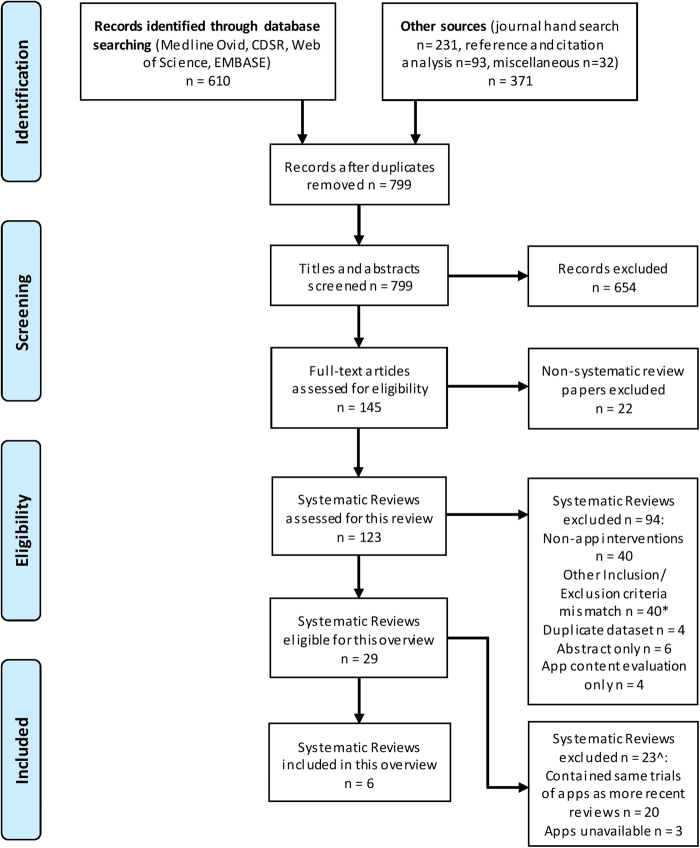
Mobile health apps aimed towards patients are an emerging field of mHealth. Their potential for improving self-management of chronic conditions is significant. Here, we propose a concept of “prescribable” mHealth apps, defined as apps that are currently available, proven effective, and preferably stand-alone, i.e., that do not require dedicated central servers and continuous monitoring by medical professionals. Our objectives were to conduct an overview of systematic reviews to identify such apps, assess the evidence of their effectiveness, and to determine the gaps and limitations in mHealth app research. We searched four databases from 2008 onwards and the Journal of Medical Internet Research for systematic reviews of randomized controlled trials (RCTs) of stand-alone health apps. We identified 6 systematic reviews including 23 RCTs evaluating 22 available apps that mostly addressed diabetes, mental health and obesity. Most trials were pilots with small sample size and of short duration. Risk of bias of the included reviews and trials was high. Eleven of the 23 trials showed a meaningful effect on health or surrogate outcomes attributable to apps. In conclusion, we identified only a small number of currently available stand-alone apps that have been evaluated in RCTs. The overall low quality of the evidence of effectiveness greatly limits the prescribability of health apps. mHealth apps need to be evaluated by more robust RCTs that report between-group differences before becoming prescribable. Systematic reviews should incorporate sensitivity analysis of trials with high risk of bias to better summarize the evidence, and should adhere to the relevant reporting guideline.
Overview
The claims and statistics of this paper haven’t been checked yet.
Free: it reads the open-access text and checks the first 5 claims that cite a source we can check. Create a free account to check every claim.
Integrity signals
Registry
Cites
Statistics
Figures
Verification
Claims the paper makes
The claims and statistics of this paper haven’t been checked yet.
Free: it reads the open-access text and checks the first 5 claims that cite a source we can check. Create a free account to check every claim.
Claims other papers make about this one
Each is checked against this paper’s own text: does it say what the citing paper says it does?
The source backs part of the claim, not all of it — or backs it for a different population, condition or comparison.
In the citing paper
“therefore, there is a small evidence base to provide guidance assessing their effectiveness [21, 22].”
From Patient Engagement with Conversational Agents in Health Applications 2016–2022: A Systematic Review and Meta-Analysis (2024) · cites this paper as [22]
Experimental — accuracy not yet measuredThe cited source says what the claim attributes to it.
In the citing paper
“There is mixed evidence to support current ambitions for mobile health (mHealth) apps to improve chronic health and well-being.”
From A Library of Analytic Indicators to Evaluate Effective Engagement with Consumer mHealth Apps for Chronic Conditions: Scoping Review (2019) · cites this paper as [1]
In the citing paper
“There are thousands of health-related apps available for download from the app store but only a tiny fraction are appropriate for clinical use.”
From What is the clinical value of mHealth for patients? (2020) · cites this paper as [37]
Self-check
Percentages, sums and reported differences re-computed from the paper’s own numbers.
The self-check needs the paper’s full text.
Citations
Cites
Preferred reporting items for systematic reviews and meta-analyses: The PRISMA statement
Moher, D., Liberati, A., Tetzlaff, J., & Altman, D. G. (2010) · International Journal of Surgery · doi:10.1016/j.ijsu.2010.02.007 · Cited by 12,156
Hoffmann, T. C., Glasziou, P. P., Boutron, I., Milne, R., Perera, R., Moher, D., Altman, D. G., Barbour, V., Macdonald, H., Johnston, M., et al. (2014) · BMJ · doi:10.1136/bmj.g1687 · Cited by 10,548
Self-citationMoher, D., Hopewell, S., Schulz, K. F., Montori, V., Gotzsche, P. C., Devereaux, P. J., Elbourne, D., Egger, M., & Altman, D. G. (2010) · BMJ · doi:10.1136/bmj.c869 · Cited by 8,883
GRADE guidelines: 3. Rating the quality of evidence
Balshem, H., Helfand, M., Schünemann, H. J., Oxman, A. D., Kunz, R., Brozek, J., Vist, G. E., Falck-Ytter, Y., Meerpohl, J., & Norris, S. (2011) · Journal of Clinical Epidemiology · doi:10.1016/j.jclinepi.2010.07.015 · Cited by 8,285
Development of AMSTAR: A measurement tool to assess the methodological quality of systematic reviews
Shea, B. J., Grimshaw, J. M., Wells, G. A., Boers, M., Andersson, N., Hamel, C., Porter, A. C., Tugwell, P., Moher, D., & Bouter, L. M. (2007) · BMC Medical Research Methodology · doi:10.1186/1471-2288-7-10 · Cited by 4,374
ROBIS: A new tool to assess risk of bias in systematic reviews was developed
Whiting, P., Savović, J., Higgins, J. P. T., Caldwell, D. M., Reeves, B. C., Shea, B., Davies, P., Kleijnen, J., & Churchill, R. (2016) · Journal of Clinical Epidemiology · doi:10.1016/j.jclinepi.2015.06.005 · Cited by 2,272
The impact of mHealth interventions: systematic review of systematic reviews
Marcolino, M. S., Oliveira, J. A. Q., D'Agostino, M., Ribeiro, A. L., Alkmim, M. B. M., & Novillo-Ortiz, D. (2018) · JMIR mHealth and uHealth · doi:10.2196/mhealth.8873 · Cited by 1,163
Schoeppe, S., Alley, S., Van Lippevelde, W., Bray, N. A., Williams, S. L., Duncan, M. J., & Vandelanotte, C. (2016) · International Journal of Behavioral Nutrition and Physical Activity · doi:10.1186/s12966-016-0454-y · Cited by 949
Evaluating Digital Health Interventions
Murray, E., Hekler, E. B., Andersson, G., Collins, L. M., Doherty, A., Hollis, C., Rivera, D. E., West, R., & Wyatt, J. C. (2016) · American Journal of Preventive Medicine · doi:10.1016/j.amepre.2016.06.008 · Cited by 847 · cited 1×
“…RCTs should remain the gold standard, but should be employed strategically, and only used when the intervention is stable, can be implemented with high-fi delity, and has a high likelihood of clinically meaningful bene fi t. 63 We also emphasize the value of traditional systematic and other reviews.”
BackgroundHollis, C., Falconer, C. J., Martin, J. L., Whittington, C., Stockton, S., Glazebrook, C., & Davies, E. B. (2017) · Journal of Child Psychology and Psychiatry · doi:10.1111/jcpp.12663 · Cited by 846 · cited 1×
“…of mHealth apps aimed at particular health conditions that examined different aspects of the apps such as the contents, quality and usability, 5 – 8 no overview of systematic reviews has been done yet to summarize the effectiveness of stand-alone mHealth apps speci fi cally, and across different…”
Background
Cited by
What is the clinical value of mHealth for patients?
Rowland, S. P., Fitzgerald, J. E., Holme, T., Powell, J., & McGregor, A. (2020) · npj Digital Medicine · doi:10.1038/s41746-019-0206-x · Cited by 454
Mobile phone text messaging and app-based interventions for smoking cessation
Whittaker, R., McRobbie, H., Bullen, C., Rodgers, A., Gu, Y., & Dobson, R. (2019) · Cochrane Database of Systematic Reviews · doi:10.1002/14651858.cd006611.pub5 · Cited by 452
“Byambasuren 2018 Byambasuren O, Sanders S, Beller E, Glasziou P. Prescribable mHealth apps identified from an overview of systematic reviews. npj Digital Medicine 2018;1(1):12.”
BackgroundResultBeyond validation: getting health apps into clinical practice
Gordon, W. J., Landman, A., Zhang, H., & Bates, D. W. (2020) · npj Digital Medicine · doi:10.1038/s41746-019-0212-z · Cited by 326
Akbar, S., Coiera, & Magrabi, F. (2020) · Journal of the American Medical Informatics Association · doi:10.1093/jamia/ocz175 · Cited by 245
Digital Interventions on Healthy Lifestyle Management: Systematic Review
Chatterjee, A., Prinz, A., Gerdes, M., & Martinez, S. (2021) · Journal of Medical Internet Research · doi:10.2196/26931 · Cited by 194
“Smartphone-based interventions [39-59] (such as apps, SMS text messages, sports, multicomponent interventions, emails, and social media) are readily available, inexpensive, and use tools already used by most teenagers.”
BackgroundMethodByambasuren, O., Beller, E., & Glasziou, P. (2019) · JMIR mHealth and uHealth · doi:10.2196/13199 · Cited by 177
“If proven to help achieve measurable clinical improvements in patients’ conditions, mHealth apps can be officially prescribed or recommended by general practitioners (GPs) [2].”
BackgroundSelf-citationKnitza, J., Tascilar, K., Messner, E.-M., Meyer, M., Vossen, D., Pulla, A., Bosch, P., Kittler, J., Kleyer, A., Sewerin, P., et al. (2019) · JMIR mHealth and uHealth · doi:10.2196/14991 · Cited by 169
Mobile Health Technology Interventions for Suicide Prevention: Systematic Review
Melia, R., Francis, K., Hickey, E., Bogue, J., Duggan, J., O'Sullivan, M., & Young, K. (2020) · JMIR mHealth and uHealth · doi:10.2196/12516 · Cited by 166
“Byambasuren et al [59] proposed a concept of prescriptible mHealth apps that are currently available, proven effective, and preferably stand-alone.”
BackgroundBauer, M., Glenn, T., Geddes, J., Gitlin, M., Grof, P., Kessing, L. V., Monteith, S., Faurholt-Jepsen, M., Severus, E., & Whybrow, P. C. (2020) · International Journal of Bipolar Disorders · doi:10.1186/s40345-019-0164-x · Cited by 163
Aungst, T. D., & Patel, R. (2020) · Journal of Medical Education and Curricular Development · doi:10.1177/2382120519901275 · Cited by 135
Pham, Q., Graham, G., Carrion, C., Morita, P. P., Seto, E., Stinson, J. N., & Cafazzo, J. A. (2019) · JMIR mHealth and uHealth · doi:10.2196/11941 · Cited by 131
“There is mixed evidence to support current ambitions for mobile health (mHealth) apps to improve chronic health and well-being [1].”
BackgroundHealth app policy: international comparison of nine countries’ approaches
Essén, A., Stern, A. D., Haase, C. B., Car, J., Greaves, F., Paparova, D., Vandeput, S., Wehrens, R., & Bates, D. W. (2022) · npj Digital Medicine · doi:10.1038/s41746-022-00573-1 · Cited by 130
Xiong, S., Lu, H., Peoples, N., Duman, E. K., Najarro, A., Ni, Z., Gong, E., Yin, R., Ostbye, T., Palileo-Villanueva, L. M., et al. (2023) · npj Digital Medicine · doi:10.1038/s41746-023-00764-4 · Cited by 126
Meyer, J. P., Isaacs, K. R., Shahawy, O. E., Burlew, A. K., & Wechsberg, W. M. (2019) · Drug and Alcohol Dependence · doi:10.1016/j.drugalcdep.2019.01.017 · Cited by 145
“A recent review (Byambasuren et al., 2018) found 22 mobile prescription apps that had been examined for efficacy in 23 randomized controlled trials (RCTs) for diabetes, mental health and obesity (illicit substance use was excluded).”
BackgroundBaxter, C. A., Carroll, J., Keogh, B., & Vandelanotte, C. (2020) · JMIR mhealth and uhealth · doi:10.2196/16741 · Cited by 139
“Badly behaving mHealth apps pose regulatory challenges regarding the evidence of app quality, safety, and efficacy and present risks to human health by potential misdiagnosis and inadequate or ineffective treatments, or by delaying face-to-face medical consultations [7,15,22,23].”
BackgroundInfluentialAgile research to complement agile development: A proposal for an mHealth research lifecycle
Wilson, K., Bell, C., Wilson, L., & Witteman, H. (2018) · npj Digital Medicine · doi:10.1038/s41746-018-0053-1 · Cited by 118
Acceptance of Mobile Health Applications: Examining Key Determinants and Moderators
Nunes, A., Limpo, T., & Castro, S. L. (2019) · Frontiers in Psychology · doi:10.3389/fpsyg.2019.02791 · Cited by 114
“…studies reveal many of these apps have narrow functionalities, tend to provide information to users rather than engage them behaviorally, are not always suitable to the target public, and were tested with small sample sizes for a short period of time (Aitken, 2015; Byambasuren et al., 2018).”
BackgroundPerspectives on Digital Humanism
Werthner, H., Prem, E., Lee, E. A., & Ghezzi, C. (2021) · Springer eBooks · doi:10.1007/978-3-030-86144-5 · Cited by 146
Sander, L. B., Schorndanner, J., Terhorst, Y., Spanhel, K., Pryss, R., Baumeister, H., & Messner, E.-M. (2020) · European Journal of Psychotraumatology · doi:10.1080/20008198.2019.1701788 · Cited by 102
Li, K., Urteaga, I., Wiggins, C. H., Druet, A., Shea, A. A., Vitzthum, V. J., & Elhadad, N. (2020) · npj Digital Medicine · doi:10.1038/s41746-020-0269-8 · Cited by 127
Old-fashioned technology in the era of “bling”: is there a future for text messaging in health care?
Willcox, J. C., Dobson, R., & Whittaker, R. (2019) · Journal of Medical Internet Research · doi:10.2196/16630 · Cited by 95
“The lack of a body of evidence for effectiveness currently limits the “prescribablity” of health apps [22,62].”
BackgroundByambasuren, O., Beller, E., Hoffmann, T., & Glasziou, P. (2020) · JMIR mhealth and uhealth · doi:10.2196/17447 · Cited by 102
“…named) 9 examples of popular Health & Fitness and Medical apps from the major app stores and 9 examples of tested and effected apps identified through our earlier study on the evidence supporting health and medical apps in order to gauge their general familiarity with mHealth apps [15] (Figure 2).”
BackgroundSelf-citationA Systematic Evaluation of Asthma Management Apps Examining Behavior Change Techniques
Ramsey, R. R., Caromody, J. K., Voorhees, S. E., Warning, A., Cushing, C. C., Guilbert, T. W., Hommel, K. A., & Fedele, D. A. (2019) · The Journal of Allergy and Clinical Immunology: In Practice · doi:10.1016/j.jaip.2019.03.041 · Cited by 87
Roberts, A. E., Davenport, T. A., Wong, T., Moon, H.-W., Hickie, I. B., & LaMonica, H. M. (2021) · Internet Interventions · doi:10.1016/j.invent.2021.100379 · Cited by 87
“However, due to the unregulated free market that exists within the digital landscape, apps and e-tools are often of uncertain quality and efficacy (Byambasuren et al., 2018).”
BackgroundA large scale analysis of mHealth app user reviews
Haggag, O., Grundy, J., Abdelrazek, M., & Haggag, S. (2022) · Empirical Software Engineering · doi:10.1007/s10664-022-10222-6 · Cited by 97
“Despite the existence of over 318,000 mHealth apps in the mobile app market, there is little evidence of them working as they are meant to/intended for a variety of reasons (Byambasuren et al. 2018; Liew et al. 2019; Institute 2020; Nordrum and et al 2016).”
BackgroundCo-producing digital mental health interventions: A systematic review
Brotherdale, R., Berry, K., Branitsky, A., & Bucci, S. (2024) · DIGITAL HEALTH · doi:10.1177/20552076241239172 · Cited by 80
“8 Misalignment between researchers ’ aims and clinical users ’ needs has been shown to be a major contributing factor to attrition 9 ; speci fi cally, lack of attention to individual user characteristics and poor app design.”
BackgroundSezgin, E., Militello, L. K., Huang, Y., & Lin, S. (2020) · Translational Behavioral Medicine · doi:10.1093/tbm/ibz141 · Cited by 83
Mandracchia, F., Llauradó, E., Tarro, L., Valls, R. M., & Solà, R. (2020) · JMIR mhealth and uhealth · doi:10.2196/18339 · Cited by 87
“Testing in scientific trials would demonstrate the apps’ reliability and effectiveness [74] in detecting food allergens and improving user knowledge.”
Attitudes of General Practitioners Toward Prescription of Mobile Health Apps: Qualitative Study
Sarradon‐Eck, A., Bouchez, T., Auroy, L., Schuers, M., & Darmon, D. (2021) · JMIR mhealth and uhealth · doi:10.2196/21795 · Cited by 94
“In addition, several clinical trials have shown a meaningful effect on health outcomes attributable to apps that mostly address diabetes, mental health, and obesity [4].”
BackgroundACCU3RATE: A mobile health application rating scale based on user reviews
Biswas, M., Tania, M. H., Kaiser, M. S., Kabir, R., Mahmud, M., & Kemal, A. A. (2021) · PLoS ONE · doi:10.1371/journal.pone.0258050 · Cited by 86
Schultchen, D., Terhorst, Y., Holderied, T., Stach, M., Messner, E.-M., Baumeister, H., & Sander, L. B. (2021) · International Journal of Behavioral Medicine · doi:10.1007/s12529-020-09944-y · Cited by 76
Top-Funded Digital Health Companies And Their Impact On High-Burden, High-Cost Conditions
Safavi, K., Mathews, S. C., Bates, D. W., Dorsey, E. R., & Cohen, A. B. (2019) · Health Affairs · doi:10.1377/hlthaff.2018.05081 · Cited by 75
Khan, K., Hall, C. L., Davies, E. B., Hollis, C. P., & Glazebrook, C. (2019) · Journal of Medical Internet Research · doi:10.2196/13478 · Cited by 85
“Indeed, recent systematic reviews [35,36], have shown there is inconclusive evidence on the efficacy of mobile apps utilized as health interventions, despite the high user acceptability ratings of smartphone apps.”
BackgroundShemesh, T., & Barnoy, S. (2020) · Telemedicine Journal and e-Health · doi:10.1089/tmj.2019.0144 · Cited by 83
“31 Indeed, a major challenge in recommending mHealth apps stems from the quality of evidence pertaining to the apps effectiveness, 32 in addition to privacy and safety considerations.”
The regulatory gap in digital health and alternative pathways to bridge it
Iqbal, J. D., & Biller-Andorno, N. (2022) · Health Policy and Technology · doi:10.1016/j.hlpt.2022.100663 · Cited by 66
Cucciniello, M., Petracca, F., Ciani, O., & Tarricone, R. (2021) · npj Digital Medicine · doi:10.1038/s41746-021-00517-1 · Cited by 86
Ameyaw, E. K., Amoah, P. A., & Ezezika, O. C. (2024) · Journal of Medical Internet Research · doi:10.2196/49510 · Cited by 112
“Additionally, consistent evidence has emerged from different parts of the world [54-56].”
BackgroundVaezipour, A., Campbell, J., Theodoros, D., & Russell, T. (2020) · JMIR mhealth and uhealth · doi:10.2196/18858 · Cited by 65
Usability of Mobile Health Apps for Postoperative Care: Systematic Review
Patel, B., & Thind, A. (2020) · JMIR Perioperative Medicine · doi:10.2196/19099 · Cited by 64
“mHealth apps are now being integrated into various sectors of health care, with over 318,000 [2] apps currently helping to track, educate, and diagnose [3].”
BackgroundUsability of Mobile Health Apps for Postoperative Care: Systematic Review (Preprint)
(2020) · doi:10.2196/preprints.19099 · Cited by 64
Determinant Factors of Public Acceptance of Stress Management Apps: Survey Study
Apolinário-Hagen, J., Hennemann, S., Fritsche, L., Drüge, M., & Breil, B. (2019) · JMIR Mental Health · doi:10.2196/15373 · Cited by 63
“To date, only a few stand-alone mHealth apps have been evaluated in randomized controlled trials (RCTs) and meet the criteria for becoming prescribable in medical contexts [26].”
Wang, J.-W., Zhu, Z., Shuling, Z., Fan, J., Yu, J., Gao, Z.-L., Chen, W.-D., & Li, X. (2024) · JMIR mhealth and uhealth · doi:10.2196/51478 · Cited by 100
“…mHealth apps have been extensively used in the fitness and medical fields due to their affordability, personalization, and diverse features [14]. mHealth apps can provide quantitative visual feedback regarding the health behaviors of users, such as their PA; meanwhile, users upload their…”
BackgroundDistinguishing features in the assessment of mHealth apps
Tarricone, R., Petracca, F., Ciani, O., & Cucciniello, M. (2021) · Expert Review of Pharmacoeconomics & Outcomes Research · doi:10.1080/14737167.2021.1891883 · Cited by 62
Physician attitudes towards—and adoption of—mobile health
Kong, T. Y., Scott, M. M., Li, Y., & Wichelman, C. (2020) · Digital Health · doi:10.1177/2055207620907187 · Cited by 75
Fitrianie, S., Horsch, C., Beun, R. J., Griffioen-Both, F., & Brinkman, W.-P. (2021) · Journal of Medical Systems · doi:10.1007/s10916-021-01785-w · Cited by 57
Kim, M., Kim, Y., Go, Y., Lee, S., Na, M., Lee, Y., Choi, S., & Choi, H. J. (2020) · JMIR mHealth and uHealth · doi:10.2196/14817 · Cited by 56
“Unfortunately, according to a systematic review, mHealth RCTs related to weight-loss programs suffer from a high attrition rate of more than 30% [49].”
Alamoodi, A. H., Garfan, S., Zaidan, B. B., Zaidan, A. A., Shuwandy, M. L., Alaa, M., Alsalem, M. A., Mohammed, A., Aleesa, A. M., Albahri, O. S., et al. (2020) · Health and Technology · doi:10.1007/s12553-020-00451-4 · Cited by 60
“In a second study [72] related to fitness and health apps, MyMealMate was highly praised, and MyFitnessPal is consistently the highest rated app on the market.”
BackgroundPelle, T., Bevers, K., van der Palen, J. A. M., van den Hoogen, F. H. J., & van den Ende, C. H. M. (2020) · Osteoarthritis and Cartilage · doi:10.1016/j.joca.2020.02.831 · Cited by 58
Virtual care models for cancer survivorship
Phạm, Q., Hearn, J., Gao, B. M., Brown, I., Hamilton, R. J., Berlín, A., Cafazzo, J. A., & Feifer, A. H. (2020) · npj Digital Medicine · doi:10.1038/s41746-020-00321-3 · Cited by 61
Cao, J., Lim, Y., Sengoku, S., Guo, X., & Kodama, K. (2021) · JMIR mhealth and uhealth · doi:10.2196/31097 · Cited by 69
“This can enable people to check their health status at any time and provide medical staff with more reference data [8-10].”
BackgroundTechnologies for Opioid Use Disorder Management: Mobile App Search and Scoping Review
Nuamah, J. K., Mehta, R. K., & Sasangohar, F. (2020) · JMIR mhealth and uhealth · doi:10.2196/15752 · Cited by 58
“The factors that influence the adoption of mHealth apps by health professionals include lack of clinical evidence [58], security [59], and inability to integrate apps with other systems [60].”
BackgroundConnected Health Technology for Cardiovascular Disease Prevention and Management
Wongvibulsin, S., Martin, S. S., Steinhubl, S. R., & Muse, E. D. (2019) · Current Treatment Options in Cardiovascular Medicine · doi:10.1007/s11936-019-0729-0 · Cited by 63
A Mobile Health Approach for Improving Outcomes in Suicide Prevention (SafePlan)
O'Grady, C., Melia, R., Bogue, J., O’Sullivan, M., Young, K. L., & Duggan, J. (2020) · Journal of Medical Internet Research · doi:10.2196/17481 · Cited by 62
A framework for analysing learning health systems: Are we removing the most impactful barriers?
McLachlan, S., Dube, K., Johnson, O. A., Buchanan, D., POTTS, H. W. W., Gallagher, T., & Fenton, N. (2019) · Learning Health Systems · doi:10.1002/lrh2.10189 · Cited by 54
“The questions that are much harder to answer are as follows: whether a duty of care is owed when issues arise out of the use of EHR and LHS; and who owes that duty of care to the patient? While legislation and the common law Bolam Test in countries following the English legal tradition deal with situations where treat…”
BackgroundJacob, C., Lindeque, J. P., Klein, A., Ivory, C. J., Heuss, S., & Peter, M. K. (2023) · JMIR Human Factors · doi:10.2196/45143 · Cited by 63
Boels, A. M., Rutten, G., Zuithoff, N., de Wit, A., & Vos, R. (2018) · BMC Endocrine Disorders · doi:10.1186/s12902-018-0304-9 · Cited by 47
“This trial will include a relatively high number of T2DM patients, as suggested by a recent reviews [8, 19, 33].”
ResultLearning endometriosis phenotypes from patient-generated data
Urteaga, I., McKillop, M. M., & Elhadad, N. (2020) · npj Digital Medicine · doi:10.1038/s41746-020-0292-9 · Cited by 55
“Recent software platforms like Research-Kit 14 and ResearchStack 15 facilitate the use of mobile technology to recruit and consent patients into studies 16 .”
BackgroundMethodDigital Medication Adherence Support: Could Healthcare Providers Recommend Mobile Health Apps?
Backes, C., Moyano, C. E., Rimaud, C., Bienvenu, C., & Schneider, M. P. (2021) · Frontiers in Medical Technology · doi:10.3389/fmedt.2020.616242 · Cited by 61
“Until today, there is insufficient evidence in favor of using mHealth apps (30) although, in 2015, a review identified a positive impact on medication adherence through mobile phone applications (31).”
BackgroundLu, S.-C., Xu, M., Wang, M., Hardi, A., Cheng, A. L., Chang, S.-H., & Yen, P.-Y. (2022) · JMIR Mental Health · doi:10.2196/39454 · Cited by 45
“For instance, several smartphone apps are available for delivering self-directed cognitive behavioral therapy (CBT) for those with depression [7].”
Rono, H. K., Bastawrous, A., Macleod, D., Mamboleo, R., Bunywera, C., Wanjala, E., Gichuhi, S., & Burton, M. J. (2020) · The Lancet Digital Health · doi:10.1016/s2589-7500(21)00083-2 · Cited by 59
An umbrella review of effectiveness and efficacy trials for app-based health interventions
Chong, S. O. K., Pedron, S., Abdelmalak, N., Laxy, M., & Stephan, A. (2023) · npj Digital Medicine · doi:10.1038/s41746-023-00981-x · Cited by 60
Digital health at fifteen: more human (more needed)
Huckvale, K., Wang, C.-H. J., Majeed, A., & Car, J. (2019) · BMC Medicine · doi:10.1186/s12916-019-1302-0 · Cited by 54
New medical big data for P4 medicine on allergic conjunctivitis
Inomata, T., Sung, J., Nakamura, M., Fujisawa, K., Muto, K., Ebihara, N., Iwagami, M., Nakamura, M., Fujio, K., Okumura, Y., et al. (2020) · Allergology International · doi:10.1016/j.alit.2020.06.001 · Cited by 46
Puigdomenech Puig, E., Robles, N., Saigí-Rubió, F., Zamora, A., Moharra, M., Paluzie, G., Balfegó, M., Cuatrecasas Cambra, G., Garcia-Lorda, P., & Carrion, C. (2019) · JMIR mHealth and uHealth · doi:10.2196/12612 · Cited by 44
Juengst, S. B., Terhorst, L. A., Nabasny, A., Wallace, T. D., Weaver, J., Osborne, C. L., Burns, S. P., Wright, B., Wen, P.-S., Kew, C. L., et al. (2021) · International Journal of Environmental Research and Public Health · doi:10.3390/ijerph18042173 · Cited by 43
“Hundreds of thousands of mHealth apps exist, and many are effective in maintaining or improving health outcomes [56,57].”
BackgroundClinical Validation of Digital Healthcare Solutions: State of the Art, Challenges and Opportunities
Gomis‐Pastor, M., Berdún, J., Borràs-Santos, A., López, A. D. D., Rama, B. F.-M., García-Esquirol, Ó., Gratacòs, M., Ontiveros, G., Cruz, R. P., Real, J., et al. (2024) · Healthcare · doi:10.3390/healthcare12111057 · Cited by 55
“This divergence creates a complex environment where evaluation criteria and priorities may differ significantly, posing a challenge in establishing a cohesive global standard.”
BackgroundUsing Medical Big Data to Develop Personalized Medicine for Dry Eye Disease
Inomata, T., Sung, J., Nakamura, M., Iwagami, M., Okumura, Y., Iwata, N., Midorikawa‐Inomata, A., Fujimoto, K., Eguchi, A., Nagino, K., et al. (2020) · Cornea · doi:10.1097/ico.0000000000002500 · Cited by 46
Mobile health solutions: an opportunity for rehabilitation in low-and middle income countries?
Bonnechère, B., Kossi, O., Mapinduzi, J., Panda, J., Rintala, A., Guidetti, S., Spooren, A., & Feys, P. (2023) · Frontiers in Public Health · doi:10.3389/fpubh.2022.1072322 · Cited by 41
“When proved successful and accessible, standalone mHealth applications that do not need dedicated central servers and extra human resources may join other basic low-cost non-pharmaceutical therapies that general practitioners can prescribe (29).”
BackgroundApiñaniz, A., Cobos-Campos, R., Sáez de Lafuente-Moríñigo, A., Parraza, N., Aizpuru, F., Pérez, I., Goicoechea, E., Trápaga, N., & García, L. (2019) · Family Practice · doi:10.1093/fampra/cmz020 · Cited by 40
Adhärenz digitaler Interventionen im Gesundheitswesen: Definitionen, Methoden und offene Fragen
Kernebeck, S., Busse, T. S., Ehlers, J. P., & Vollmar, H. C. (2021) · Bundesgesundheitsblatt - Gesundheitsforschung - Gesundheitsschutz · doi:10.1007/s00103-021-03415-9 · Cited by 51
Portz, J. D., Moore, S. L., & Bull, S. S. (2024) · Journal of Medical Internet Research · doi:10.2196/62790 · Cited by 51
Santo, K., & Redfern, J. (2019) · Current Hypertension Reports · doi:10.1007/s11906-019-0986-z · Cited by 38
Impact of a Digital Lifestyle Intervention on Diabetes Self-Management: A Pilot Study
Bretschneider, M. P., Klásek, J., Karbanová, M., Timpel, P., Herrmann, S., & Schwarz, P. E. H. (2022) · Nutrients · doi:10.3390/nu14091810 · Cited by 39
Patient and physician perspectives of a smartphone application for depression: a qualitative study
Patoz, M.-C., Hidalgo‐Mazzei, D., Blanc, O., Verdolini, N., Pacchiarotti, I., Murru, A., Zukerwar, L., Vieta, E., Llorca, P., & Samalin, L. (2021) · BMC Psychiatry · doi:10.1186/s12888-021-03064-x · Cited by 41
Tarricone, R., Cucciniello, M., Armeni, P., Petracca, F., Desouza, K. C., Hall, L. K., & Keefe, D. M. K. (2019) · JMIR mhealth and uhealth · doi:10.2196/13584 · Cited by 39
Responsible nudging for social good: new healthcare skills for AI-driven digital personal assistants
Capasso, M., & Umbrello, S. (2021) · Medicine Health Care and Philosophy · doi:10.1007/s11019-021-10062-z · Cited by 50
Moravcová, K., Karbanová, M., Bretschneider, M. P., Sovová, M., Ožana, J., & Sovová, E. (2022) · Nutrients · doi:10.3390/nu14102005 · Cited by 37
“This gap must be addressed to enable implementation of digital health in daily practice [20,21].”
BackgroundAlkhaldi, O., McMillan, B., Maddah, N., & Ainsworth, J. (2023) · JMIR mHealth and uHealth · doi:10.2196/43561 · Cited by 37
“The concept of “prescribable” health apps is recently introduced to refer to health apps that are currently available and have demonstrated effectiveness [3].”
BackgroundVecchia, C. D., Leroy, T., Bauquier, C., Pannard, M., Sarradon‐Eck, A., Darmon, D., Dufour, J.-C., & Préau, M. (2022) · JMIR mhealth and uhealth · doi:10.2196/28372 · Cited by 44
“The health-related dimensions for which GPs were very willing to prescribe mHealth apps and devices were diabetes, asthma (ie, chronic diseases) and addictions, physical activity, and vaccination (ie, primary prevention) reflecting findings in the literature [16,18].”
BackgroundGamwell, K. L., Kollin, S. R., Gibler, R. C., Bedree, H., Bieniak, K. H., Jagpal, A., Tran, S. T., Hommel, K. A., & Ramsey, R. R. (2020) · Pain · doi:10.1097/j.pain.0000000000002090 · Cited by 38
“Painmanagement healthcare providers acknowledge the need for apps to aid in pain management,(18) and the “prescribability” of apps has become a significant topic of discussion.(2) Although evidence of efficacy through low risk-of-bias randomized controlled trials (RCTs) is necessary to definitively establish the effic…”
BackgroundMobile app validation: a digital health scorecard approach
Sedhom, R., McShea, M. J., Cohen, A. B., Webster, J. A., & Mathews, S. C. (2021) · npj Digital Medicine · doi:10.1038/s41746-021-00476-7 · Cited by 44
Bricca, A., Pellegrini, A., Zangger, G., Ahler, J. R., Jäger, M., & Skou, S. T. (2022) · JMIR mhealth and uhealth · doi:10.2196/33168 · Cited by 40
“However, although apps are widely used (in 2019, more than 204 billion apps were downloaded) [17], their quality (eg, engagement and functionality), content, and potential for promoting behavior change are unclear [18].”
BackgroundCevasco, K. E., Morrison Brown, R. E., Woldeselassie, R., & Kaplan, S. (2024) · Journal of Medical Systems · doi:10.1007/s10916-024-02059-x · Cited by 35
Loohuis, A. M. M., Wessels, N. J., Dekker, J. H., van Merode, N. A. M., Hove, M. C. P. S., Kollen, B. J., Berger, M. Y., van der Worp, H., & Blanker, M. H. (2021) · The Annals of Family Medicine · doi:10.1370/afm.2585 · Cited by 47
mHealth App Prescription in Australian General Practice: Pre-Post Study
Byambasuren, O., Beller, E., Hoffmann, T., & Glasziou, P. (2020) · JMIR mHealth and uHealth · doi:10.2196/16497 · Cited by 34
“These were defined as proven effective (that is, shown to help achieve measurable clinical improvements in patients’ conditions), in addition to being standalone and currently available in the app stores [11].”
BackgroundSelf-citationA randomized clinical trial of smartphone self-managed recovery support services
Scott, C. K., Dennis, M. L., Johnson, K., & Grella, C. E. (2020) · Journal of Substance Abuse Treatment · doi:10.1016/j.jsat.2020.108089 · Cited by 37
Development of a health technology assessment module for evaluating mobile medical applications
Moshi, M. R., Tooher, R. L., & Merlin, T. (2020) · International Journal of Technology Assessment in Health Care · doi:10.1017/s0266462320000288 · Cited by 41
Eguchi, A., Inomata, T., Nakamura, M., Nagino, K., Iwagami, M., Sung, J., Midorikawa‐Inomata, A., Okumura, Y., Fujio, K., Fujimoto, K., et al. (2021) · Japanese Journal of Ophthalmology · doi:10.1007/s10384-020-00798-1 · Cited by 32
Baines, R., Hoogendoorn, P., Stevens, S., Chatterjee, A., Ashall-Payne, L., Andrews, T., & Leigh, S. (2022) · Therapeutic Innovation & Regulatory Science · doi:10.1007/s43441-022-00463-4 · Cited by 41
“…sufficient clinical evidence for certification, reimbursement and adoption purposes would also be highly beneficial [8, 26], as would acknowl-edging more innovative research designs [27–29], that fit the ever-evolving characteristics of software and usability testing in real-world setting [5, 26].”
BackgroundAccessibility and availability of smartphone apps for schizophrenia
Kwon, S., Firth, J., Joshi, D., & Torous, J. B. (2022) · Schizophrenia · doi:10.1038/s41537-022-00313-0 · Cited by 37
Inomata, T., Nakamura, M., Iwagami, M., Sung, J., Nakamura, M., Ebihara, N., Fujisawa, K., Muto, K., Nojiri, S., Ide, T., et al. (2022) · Allergology International · doi:10.1016/j.alit.2021.12.004 · Cited by 31
Barnett, S., Huckvale, K., Christensen, H. M., Venkatesh, S., Mouzakis, K., & Vasa, R. (2019) · Journal of Medical Internet Research · doi:10.2196/16399 · Cited by 34
“The challenge of resourcing life cycle management is a potential contributor to the small numbers of research-backed health apps currently available in public app stores [28,36].”
BackgroundJoubert, M., Benhamou, P., Schaepelynck, P., Hanaire, H. P., Catargi, B., Farret, A., Fontaine, P., Guerci, B., Reznik, Y., Jeandidier, N., et al. (2019) · Journal of Diabetes Science and Technology · doi:10.1177/1932296819834054 · Cited by 30
Jezrawi, R., Balakumar, S., Masud, R., Gabizon, I., Bhagirath, V. C., Varughese, J. K., Brown, M., Trottier, D., Schwalm, J., McGillion, M. H., et al. (2022) · Digital Health · doi:10.1177/20552076221102773 · Cited by 25
“Only a small proportion of health apps have been evaluated through randomized controlled trials (RCTs) reporting clinical endpoints, and published trials are of short duration, with small sample sizes, and have high risk for bias.(2) The paucity of evidence may explain why studies have shown that, although physicians…”
BackgroundLee, D., Frey, G. C., Cothran, D. J., Harezlak, J., & Shih, P. C. (2022) · JMIR Formative Research · doi:10.2196/35701 · Cited by 32
A Methodologic Systematic Review of Mobile Health Behavior Change Randomized Trials
Oikonomidi, T., Vivot, A., Tran, V.-T., Riveros, C., Robin, E., & Ravaud, P. (2019) · American Journal of Preventive Medicine · doi:10.1016/j.amepre.2019.07.008 · Cited by 30
Melia, R., Monahan, L., Duggan, J., Bogue, J., O’Sullivan, M., Young, K. L., Chambers, D., & McInerney, S. J. (2021) · BMC Psychiatry · doi:10.1186/s12888-021-03426-5 · Cited by 32
“Oyungerel and colleagues [66] conducted an analysis of systematic reviews of mobile health applications and found that the overall quality of the evidence of effectiveness was low.”
BackgroundHassanaly, P., & Dufour, J.-C. (2021) · Medical Devices Evidence and Research · doi:10.2147/mder.s328996 · Cited by 32
“Byambasuren et al 20,21 identified the following two barriers to prescription of mHealth applications by general practitioners: lack of knowledge about effective applications and lack of reliable sources (eg app stores) to access them.”
BackgroundNoser, A. E., Gibler, R. C., Ramsey, R. R., Wells, R. E., Seng, E. K., & Hommel, K. A. (2022) · Headache The Journal of Head and Face Pain · doi:10.1111/head.14392 · Cited by 29
Gibson, D. G., Tamrat, T., & Mehl, G. L. (2018) · Global Health Science and Practice · doi:10.9745/ghsp-d-18-00165 · Cited by 31
“However, more evidence on the effectiveness of this digital approach for improving health behaviors and linkages to health services is needed, and questions remain about the potential harm of unregulated digital applications for personal health tracking.(28,29)”
Background
Metadata
- Authors
- Byambasuren, O., Sanders, S., Beller, E., & Glasziou, P.
- Affiliations
- Bond University (AU)
- Corresponding author
- Byambasuren, Oyungerel
- Venue
- npj Digital Medicine
- Published
- 2018-05-09
- Volume
- 1
- Issue
- 1
- Pages
- 12-12
- ISSN
- 2398-6352 (ISSN-L)
- PMC
- PMC6550270
- OpenAlex
- W2800465629
- Cited by
- 291
- References
- 63
- Citations by year
- 2026: 14 · 2025: 25 · 2024: 35 · 2023: 28 · 2022: 35 · 2021: 52 · 2020: 51 · 2019: 43 · 2018: 8
- FWCI
- 6.97
- Type
- journal article
- Language
- en
- Open access
- gold
- doi.org
- Licence
- cc-by
- creativecommons.org/licenses/by/4.0 (tdm)
- creativecommons.org/licenses/by/4.0 (vor)
- Locations
- npj Digital Medicine (publishedVersion, cc-by)
- Europe PMC (PubMed Central) (publishedVersion, cc-by)
- PubMed Central (publishedVersion, cc-by)
- PubMed (publishedVersion)
- Bond University Research Portal (Bond University) (submittedVersion, cc-by)
- DOAJ (DOAJ: Directory of Open Access Journals) (submittedVersion, cc-by-sa)
- Funders
- Australian Government
- National Health and Medical Research Council (1080042, 1044904)
- Topics
- Health Sciences › Health Professions › General Health Professions › Mobile Health and mHealth Applications
- Social Sciences › Psychology › Applied Psychology › Digital Mental Health Interventions
- Physical Sciences › Computer Science › Information Systems › Mobile Learning in Education
- Keywords
- mobile health apps, patient self-management, chronic disease, diabetes mellitus, mental health, obesity, evidence of effectiveness, risk of bias, randomized controlled trials
About these checks
Registry, retraction, Cites and statistics results are computed, not judged, with one exception: a printed reference that no index lists is read once by a model before it counts as a citation error. Claims are extracted by a model and kept only when their quote appears verbatim in the text; each cited source is then checked, with a model’s help, for whether it says what the claim relies on. Those verdicts can be wrong — read the claim’s quote and the cited source before relying on one.
Statistics and arithmetic are recomputed, not judged.
Confidence bands are shown only for fields calibrated on our annotated test set. None is calibrated yet, so no band is shown.
What counts as a claim ›How we measure confidence ›How we check this ›
Are you an author, or do you see a problem with this page? Request a review
Data sources
Bibliographic data: Semantic Scholar, OpenAlex, Crossref.
Contains information from the Semantic Scholar Academic Graph Datasets, made available under the ODC Attribution License (ODC-BY 1.0).
Semantic Scholar’s data is described in: Kinney, R., et al. (2023). The Semantic Scholar Open Data Platform. arXiv:2301.10140.
