

Human–machine partnership with artificial intelligence for chest radiograph diagnosis
Open accessThe DOI matches its Crossref record; 46 of the 50 references it cites were found in a registry or an index.
Abstract
Human-in-the-loop (HITL) AI may enable an ideal symbiosis of human experts and AI models, harnessing the advantages of both while at the same time overcoming their respective limitations. The purpose of this study was to investigate a novel collective intelligence technology designed to amplify the diagnostic accuracy of networked human groups by forming real-time systems modeled on biological swarms. Using small groups of radiologists, the swarm-based technology was applied to the diagnosis of pneumonia on chest radiographs and compared against human experts alone, as well as two state-of-the-art deep learning AI models. Our work demonstrates that both the swarm-based technology and deep-learning technology achieved superior diagnostic accuracy than the human experts alone. Our work further demonstrates that when used in combination, the swarm-based technology and deep-learning technology outperformed either method alone. The superior diagnostic accuracy of the combined HITL AI solution compared to radiologists and AI alone has broad implications for the surging clinical AI deployment and implementation strategies in future practice.
Overview
The claims and statistics of this paper haven’t been checked yet.
Free: it reads the open-access text and checks the first 5 claims that cite a source we can check. Create a free account to check every claim.
Integrity signals
Registry
Cites
Statistics
Figures
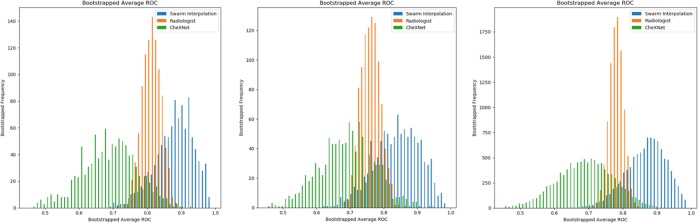
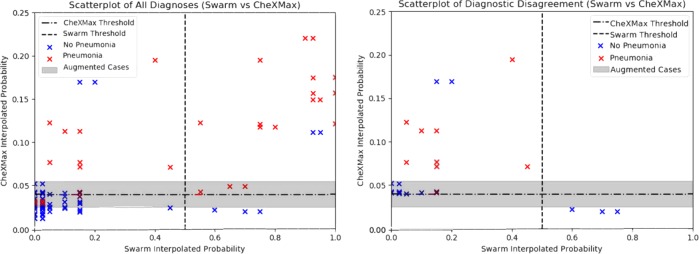
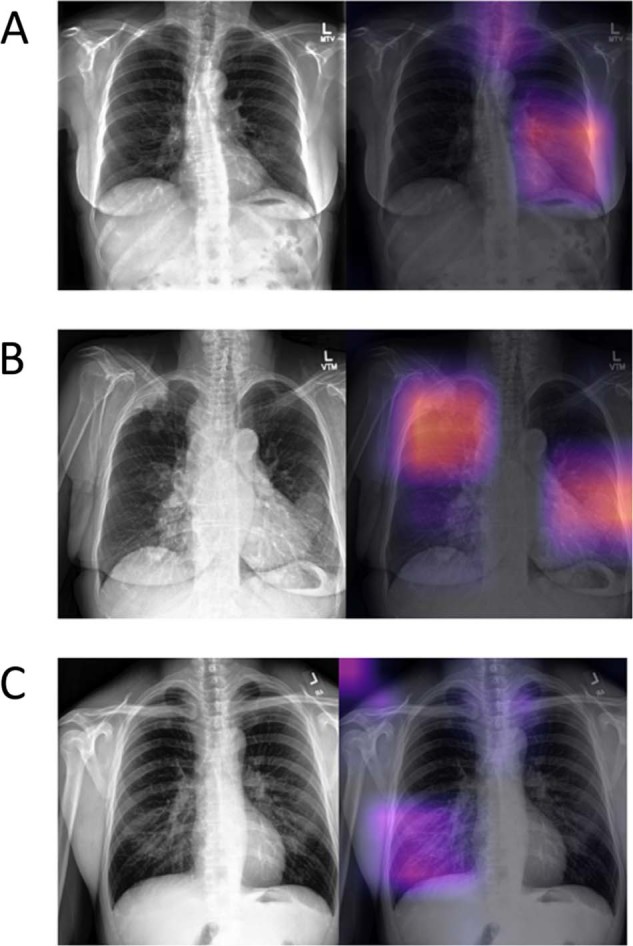
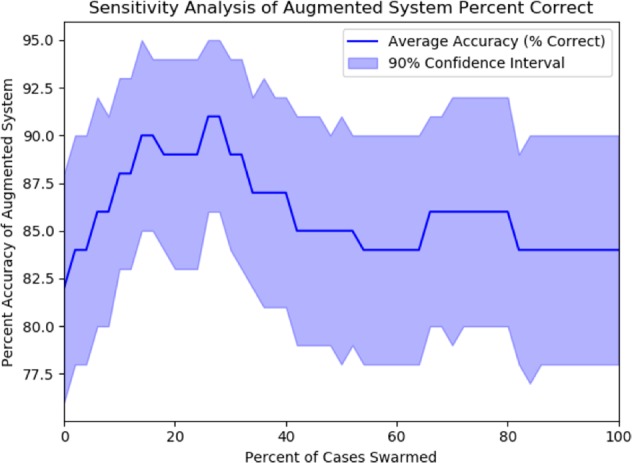
Verification
Claims the paper makes
The claims and statistics of this paper haven’t been checked yet.
Free: it reads the open-access text and checks the first 5 claims that cite a source we can check. Create a free account to check every claim.
Claims other papers make about this one
Each is checked against this paper’s own text: does it say what the citing paper says it does?
The check wasn’t confident either way, so it gives no verdict — never disputed.
In the citing paper
“More critically, recent studies reveal that clinicians’ trust in AI recommendations is fundamentally linked to their ability to understand the underlying reasoning processes [9,10,11].”
From Beyond Post hoc Explanations: A Comprehensive Framework for Accountable AI in Medical Imaging Through Transparency, Interpretability, and Explainability (2025) · cites this paper as [10]
Experimental — accuracy not yet measured
Self-check
Percentages, sums and reported differences re-computed from the paper’s own numbers.
The self-check needs the paper’s full text.
Citations
Cites
Dermatologist-level classification of skin cancer with deep neural networks
Esteva, A., Kuprel, B., Novoa, R. A., Ko, J., Swetter, S. M., Blau, H. M., & Thrun, S. (2017) · Nature · doi:10.1038/nature21056 · Cited by 14,362
Gulshan, V., Peng, L., Coram, M., Stumpe, M. C., Wu, D., Narayanaswamy, A., Venugopalan, S., Widner, K., Madams, T., Cuadros, J., et al. (2016) · JAMA · doi:10.1001/jama.2016.17216 · Cited by 7,697
Wang, X., Peng, Y., Lu, L., Lu, Z., Bagheri, M., & Summers, R. M. (2017) · 2017 IEEE Conference on Computer Vision and Pattern Recognition (CVPR) · doi:10.1109/cvpr.2017.369 · Cited by 4,616
Artificial intelligence in radiology
Hosny, A., Parmar, C., Quackenbush, J., Schwartz, L. H., & Aerts, H. J. W. L. (2018) · Nature Reviews Cancer · doi:10.1038/s41568-018-0016-5 · Cited by 3,803
Predicting the future - big data, machine learning, and clinical medicine
Obermeyer, Z., & Emanuel, E. J. (2016) · New England Journal of Medicine · doi:10.1056/nejmp1606181 · Cited by 3,652
Ehteshami Bejnordi, B., Veta, M., Johannes van Diest, P., van Ginneken, B., Karssemeijer, N., Litjens, G., van der Laak, J. A. W. M., and the CAMELYON16 Consortium, Hermsen, M., Manson, Q. F., et al. (2017) · JAMA · doi:10.1001/jama.2017.14585 · Cited by 3,293
Clinically applicable deep learning for diagnosis and referral in retinal disease
De Fauw, J., Ledsam, J. R., Romera-Paredes, B., Nikolov, S., Tomasev, N., Blackwell, S., Askham, H., Glorot, X., O’Donoghue, B., Visentin, D., et al. (2018) · Nature Medicine · doi:10.1038/s41591-018-0107-6 · Cited by 2,639
Lakhani, P., & Sundaram, B. (2017) · Radiology · doi:10.1148/radiol.2017162326 · Cited by 1,775
Rajpurkar, P., Irvin, J., Ball, R. L., Zhu, K., Yang, B., Mehta, H., Duan, T., Ding, D., Bagul, A., Langlotz, C. P., et al. (2018) · PLOS Medicine · doi:10.1371/journal.pmed.1002686 · Cited by 1,449
Self-citationPotential Biases in Machine Learning Algorithms Using Electronic Health Record Data
Gianfrancesco, M. A., Tamang, S., Yazdany, J., & Schmajuk, G. (2018) · JAMA Internal Medicine · doi:10.1001/jamainternmed.2018.3763 · Cited by 1,395
Cited by
Rajpurkar, P., Chen, E., Banerjee, O., & Topol, E. J. (2022) · Nature Medicine · doi:10.1038/s41591-021-01614-0 · Cited by 3,212
“Although the majority of studies have focused on a head-to-head comparison of AI with humans 82 , real-life medical practice is more likely to involve human-in-the-loop setups, where in humans actively collaborate with AI systems and provide oversight 83,84 .”
BackgroundSelf-citationDiagnostic accuracy of deep learning in medical imaging: a systematic review and meta-analysis
Aggarwal, R., Sounderajah, V., Martin, G., Ting, D. S. W., Karthikesalingam, A., King, D., Ashrafian, H., & Darzi, A. (2021) · npj Digital Medicine · doi:10.1038/s41746-021-00438-z · Cited by 946
Sharma, A., Lin, I. W., Miner, A. S., Atkins, D. C., & Althoff, T. (2023) · Nature Machine Intelligence · doi:10.1038/s42256-022-00593-2 · Cited by 500
“(3) whether the participant looked for additional suggestions for a single post (using the reload functionality).”
Background(2021) · doi:10.2196/25856 · Cited by 268
Chong, L., Zhang, G., Goucher-Lambert, K., Kotovsky, K., & Cagan, J. (2022) · Computers in Human Behavior · doi:10.1016/j.chb.2021.107018 · Cited by 262
Artificial intelligence and the ongoing need for empathy, compassion and trust in healthcare
Kerasidou, A. (2020) · Bulletin of the World Health Organization · doi:10.2471/blt.19.237198 · Cited by 232
The role of data science in healthcare advancements: applications, benefits, and future prospects
Subrahmanya, S. V. G., Shetty, D. K., Patil, V., Hameed, B. M. Z., Paul, R., Smriti, K., Naik, N., & Somani, B. K. (2022) · Irish Journal of Medical Science (1971 -) · doi:10.1007/s11845-021-02730-z · Cited by 228
Deep learning based human activity recognition (HAR) using wearable sensor data
Gupta, S. (2021) · International Journal of Information Management Data Insights · doi:10.1016/j.jjimei.2021.100046 · Cited by 197
Combining Human Expertise with Artificial Intelligence: Experimental Evidence from Radiology
Agarwal, N., Moehring, A., Rajpurkar, P., & Salz, T. (2023) · doi:10.2139/ssrn.4505053 · Cited by 161
“…The algorithm does not use any other patient information, such as the clinical history or vitals.10 Nonetheless, a prior version of this algorithm was shown to match or surpass the performance of board-certified radiologists from Stanford Hospital on five pathologies (Patel et al., 2019).”
Self-citationCombining Human Expertise with Artificial Intelligence: Experimental Evidence from Radiology
Agarwal, N., Moehring, A., Rajpurkar, P., & Salz, T. (2023) · doi:10.3386/w31422 · Cited by 161
Self-citationDeep learning-aided decision support for diagnosis of skin disease across skin tones
Groh, M., Badri, O., Daneshjou, R., Koochek, A., Harris, C., Soenksen, L. R., Doraiswamy, P. M., & Picard, R. (2024) · Nature Medicine · doi:10.1038/s41591-023-02728-3 · Cited by 160
Designing for human–AI complementarity in K‐12 education
Holstein, K., & Aleven, V. (2022) · AI Magazine · doi:10.1002/aaai.12058 · Cited by 156
Predicting Sports Injuries with Wearable Technology and Data Analysis
Zadeh, A. H., Taylor, D., Bertsos, M., Tillman, T., Nosoudi, N., & Bruce, S. (2020) · Information Systems Frontiers · doi:10.1007/s10796-020-10018-3 · Cited by 160
Human and Machine: The Impact of Machine Input on Decision Making Under Cognitive Limitations
Boyacı, T., Canyakmaz, C., & de Véricourt, F. (2024) · Management Science · doi:10.1287/mnsc.2023.4744 · Cited by 150
Deep learning for computational cytology: A survey
Jiang, H., Zhou, Y., Lin, Y., Chan, R., Liu, J., & Chen, H. (2022) · Medical Image Analysis · doi:10.1016/j.media.2022.102691 · Cited by 150
Zafar, A. (2024) · Discover Artificial Intelligence · doi:10.1007/s44163-024-00121-8 · Cited by 147
Kawakami, A., Sivaraman, V., Cheng, H.-F., Stapleton, L., Cheng, Y., Qing, D., Perer, A., Wu, Z. S., Zhu, H., & Holstein, K. (2022) · CHI Conference on Human Factors in Computing Systems · doi:10.1145/3491102.3517439 · Cited by 143
Rajpurkar, P., O’Connell, C., Schechter, A., Asnani, N., Li, J., Kiani, A., Ball, R. L., Mendelson, M., Maartens, G., van Hoving, D. J., et al. (2020) · npj Digital Medicine · doi:10.1038/s41746-020-00322-2 · Cited by 137
Self-citationBayesian modeling of human–AI complementarity
Steyvers, M., Tejeda, H., Kerrigan, G., & Smyth, P. (2022) · Proceedings of the National Academy of Sciences · doi:10.1073/pnas.2111547119 · Cited by 131
Demographic bias of expert-level vision-language foundation models in medical imaging
Yang, Y., Liu, Y., Liu, X., Gulhane, A., Mastrodicasa, D., Wu, W., Wang, E. J., Sahani, D. V., & Patel, S. (2025) · Science Advances · doi:10.1126/sciadv.adq0305 · Cited by 127
Is the Most Accurate AI the Best Teammate? Optimizing AI for Teamwork
Bansal, G., Nushi, B., Kamar, E., Horvitz, E., & Weld, D. S. (2021) · Proceedings of the AAAI Conference on Artificial Intelligence · doi:10.1609/aaai.v35i13.17359 · Cited by 121
Artificial intelligence in radiography: Where are we now and what does the future hold?
Malamateniou, C., KNAPP, K. M., Pergola, M. B., Woznitza, N., & Hardy, M. (2021) · Radiography · doi:10.1016/j.radi.2021.07.015 · Cited by 119
The network science of collective intelligence
Centola, D. M. (2022) · Trends in Cognitive Sciences · doi:10.1016/j.tics.2022.08.009 · Cited by 121
Artificial Intelligence: reshaping the practice of radiological sciences in the 21st century
Naqa, I. E., Haider, M. A., Giger, M. L., & Haken, R. K. T. (2020) · British Journal of Radiology · doi:10.1259/bjr.20190855 · Cited by 116
Salwei, M. E., & Carayon, P. (2022) · Journal of Cognitive Engineering and Decision Making · doi:10.1177/15553434221097357 · Cited by 112
Hurkmans, C., Bibault, J.-E., Brock, K. K., van Elmpt, W., Feng, M., David Fuller, C., Jereczek-Fossa, B. A., Korreman, S., Landry, G., Madesta, F., et al. (2024) · Radiotherapy and Oncology · doi:10.1016/j.radonc.2024.110345 · Cited by 110
Olawade, D. B., Plabon, S. B., Ojo, A., Ogunbona, M. A., Makanjuola, B. D., & Olasilola, R. (2026) · International Journal of Medical Informatics · doi:10.1016/j.ijmedinf.2026.106362 · Cited by 110
Groh, M., Harris, C., Daneshjou, R., Badri, O., & Koochek, A. (2022) · Proceedings of the ACM on Human-Computer Interaction · doi:10.1145/3555634 · Cited by 102
Applications of Artificial Intelligence to Obesity Research: Scoping Review of Methodologies
An, R., Shen, J., & Xiao, Y. (2022) · Journal of Medical Internet Research · doi:10.2196/40589 · Cited by 99
Challenges of human—machine collaboration in risky decision-making
Xiong, W., Fan, H., Ma, L., & Wang, C. (2022) · Frontiers of Engineering Management · doi:10.1007/s42524-021-0182-0 · Cited by 95
Hong, J. C., Eclov, N. C. W., Dalal, N. H., Thomas, S. M., Stephens, S. J., Malicki, M., Shields, S., Cobb, A., Mowery, Y. M., Niedzwiecki, D., et al. (2020) · Journal of Clinical Oncology · doi:10.1200/jco.20.01688 · Cited by 93
Chaudhari, A. S., Sandino, C. M., Cole, E. K., Larson, D. B., Gold, G. E., Vasanawala, S. S., Lungren, M. P., Hargreaves, B. A., & Langlotz, C. P. (2020) · Journal of Magnetic Resonance Imaging · doi:10.1002/jmri.27331 · Cited by 92
Self-citationNon-Invasive Diagnosis of Deep Vein Thrombosis From Ultrasound With Machine Learning
Kainz, B., Heinrich, M. P., Makropoulos, A., Oppenheimer, J., Mandegaran, R., Sankar, S., Deane, C., Mischkewitz, S., Al-Noor, F., Rawdin, A., et al. (2020) · npj Digital Medicine · doi:10.1038/s41746-021-00503-7 · Cited by 92
Artificial intelligence for throughput bottleneck analysis – State-of-the-art and future directions
Subramaniyan, M., Skoogh, A., Bokrantz, J., Sheikh, M. A., Thürer, M., & Chang, Q. (2021) · Journal of Manufacturing Systems · doi:10.1016/j.jmsy.2021.07.021 · Cited by 91
A systematic review on AI/ML approaches against COVID-19 outbreak
Dogan, O., Tiwari, S., Jabbar, M. A., & Guggari, S. (2021) · Complex & Intelligent Systems · doi:10.1007/s40747-021-00424-8 · Cited by 87
“treatment monitoring, prediction of cases and mortality, and drugs/vaccines development [204].”
BackgroundKempt, H., & Nagel, S. K. (2022) · Journal of Medical Ethics · doi:10.1136/medethics-2021-107440 · Cited by 87
How Child Welfare Workers Reduce Racial Disparities in Algorithmic Decisions
Cheng, H.-F., Stapleton, L., Kawakami, A., Sivaraman, V., Cheng, Y., Qing, D., Perer, A., Holstein, K., Wu, Z. S., & Zhu, H. (2022) · CHI Conference on Human Factors in Computing Systems · doi:10.1145/3491102.3501831 · Cited by 85
Yildirim, N., Richardson, H., Wetscherek, M. T., Bajwa, J., Jacob, J., Pinnock, M. A., Harris, S., Coelho De Castro, D., Bannur, S., Hyland, S., et al. (2024) · Proceedings of the CHI Conference on Human Factors in Computing Systems · doi:10.1145/3613904.3642013 · Cited by 82
Self-citationArtificial Intelligence-Based Detection of Pneumonia in Chest Radiographs
Becker, J., Decker, J. A., Römmele, C., Kahn, M., Messmann, H., Wehler, M., Schwarz, F., Kroencke, T. J., & Scheurig‐Muenkler, C. (2022) · Diagnostics · doi:10.3390/diagnostics12061465 · Cited by 82
Bao, Y., Gong, W., & Yang, K. (2023) · Systems · doi:10.3390/systems11090442 · Cited by 80
Applications and challenges of artificial intelligence in diagnostic and interventional radiology
Waller, J., O’Connor, A., Raafat, E., Amireh, A., Dempsey, J., Martin, C., & Umair, M. (2022) · Polish Journal of Radiology · doi:10.5114/pjr.2022.113531 · Cited by 80
Artificial intelligence in medicine: Technical basis and clinical applications
Erickson, B. J. (2020) · Elsevier eBooks · doi:10.1016/b978-0-12-821259-2.00002-8 · Cited by 76
A Taxonomy of Human and ML Strengths in Decision-Making to Investigate Human-ML Complementarity
Rastogi, C., Leqi, L., Holstein, K., & Heidari, H. (2023) · Proceedings of the AAAI Conference on Human Computation and Crowdsourcing · doi:10.1609/hcomp.v11i1.27554 · Cited by 76
Singh, Y., Hathaway, Q. A., Keishing, V., Salehi, S., Wei, Y., Horvat, N., Vera-Garcia, D. V., Choudhary, A., Mula Kh, A., Quaia, E., et al. (2025) · Bioengineering · doi:10.3390/bioengineering12080879 · Cited by 72
Combining Human Predictions with Model Probabilities via Confusion Matrices and Calibration
Kerrigan, G., Smyth, P., & Steyvers, M. (2021) · neural information processing systems · doi:10.48550/arxiv.2109.14591 · Cited by 70
Kaur, I., Behl, T., Aleya, L., Rahman, H., Kumar, A., Arora, S., & Bulbul, I. J. (2021) · Environmental Science and Pollution Research · doi:10.1007/s11356-021-13823-8 · Cited by 65
Artificial intelligence in critical illness and its impact on patient care: a comprehensive review
Saqib, M., Iftikhar, M., Neha, F., Karishma, F., & Mumtaz, H. (2023) · Frontiers in Medicine · doi:10.3389/fmed.2023.1176192 · Cited by 63
Ramamonjison, R., Li, H., Yu, T. T., He, S., Rengan, V., Banitalebi-Dehkordi, A., Zhou, Z., & Zhang, Y. (2022) · Conference on Empirical Methods in Natural Language Processing (EMNLP) · doi:10.18653/v1/2022.emnlp-industry.4 · Cited by 64
Harfouche, A. L., Nakhle, F., Harfouche, A., Sardella, O. G., Dart, E., & Jacobson, D. (2022) · Trends in Plant Science · doi:10.1016/j.tplants.2022.08.021 · Cited by 60
Li, J., & Yeo, R. K. (2024) · Human Resource Development International · doi:10.1080/13678868.2024.2348987 · Cited by 58
Emergence of New Disease: How Can Artificial Intelligence Help?
Park, Y., Casey, D., Joshi, I., Zhu, J., & Cheng, F. (2020) · Trends in Molecular Medicine · doi:10.1016/j.molmed.2020.04.007 · Cited by 57
Wilhelm, O., & Kyllonen, P. C. (2021) · Intelligence · doi:10.1016/j.intell.2021.101585 · Cited by 55
Regulatory Sandboxes: A Cure for mHealth Pilotitis?
Bhatia, A., Matthan, R., Khanna, T., & Balsari, S. (2020) · Journal of Medical Internet Research · doi:10.2196/21276 · Cited by 53
AI-Assisted Decision-making: a Cognitive Modeling Approach to Infer Latent Reliance Strategies
Tejeda, H., Kumar, A., Smyth, P., & Steyvers, M. (2022) · Computational Brain & Behavior · doi:10.1007/s42113-022-00157-y · Cited by 53
Using artificial intelligence technology to fight COVID-19: a review
Peng, Y., Liu, E., Peng, S., Chen, Q., Li, D., & Lian, D. (2022) · Artificial Intelligence Review · doi:10.1007/s10462-021-10106-z · Cited by 53
An Opinion on ChatGPT in Health Care—Written by Humans Only
Kleesiek, J., Wu, Y., Stiglic, G., Egger, J., & Bian, J. (2023) · Journal of Nuclear Medicine · doi:10.2967/jnumed.123.265687 · Cited by 52
McGrath, M. J., Duenser, A., Lacey, J., & Paris, C. (2025) · Computers in Human Behavior: Artificial Humans · doi:10.1016/j.chbah.2025.100200 · Cited by 51
Towards new frontiers of healthcare systems research using artificial intelligence and generative AI
Chatterjee, S., Fruhling, A., Kotiadis, K., & Gärtner, D. (2024) · Health Systems · doi:10.1080/20476965.2024.2402128 · Cited by 51
Navigating AI Convergence in Human–Artificial Intelligence Teams: A Signaling Theory Approach
Smith, A., Wagoner, H. P. V., Keplinger, K., & Çelebi, C. (2025) · Journal of Organizational Behavior · doi:10.1002/job.2856 · Cited by 51
Assessment of dysplasia in bone marrow smear with convolutional neural network
Mori, J., Kaji, S., Kawai, H., Kida, S., Tsubokura, M., Fukatsu, M., Harada, K. S., Noji, H., Ikezoe, T., Maeda, T., et al. (2020) · Scientific Reports · doi:10.1038/s41598-020-71752-x · Cited by 49
Guo, L., Zhou, C., Xu, J., Huang, C., Yu, Y., & Lu, G. (2024) · Journal of Imaging Informatics in Medicine · doi:10.1007/s10278-024-00990-6 · Cited by 48
Predicting Driver Fatigue in Monotonous Automated Driving with Explanation using GPBoost and SHAP
Zhou, F., Alsaid, A., Blommer, M., Curry, R., Swaminathan, R., Kochhar, D. S., Talamonti, W. J., & Tijerina, L. (2021) · International Journal of Human-Computer Interaction · doi:10.1080/10447318.2021.1965774 · Cited by 47
Precision medicine and artificial intelligence: overview and relevance to reproductive medicine
Hajirasouliha, I., & Elemento, O. (2020) · Fertility and Sterility · doi:10.1016/j.fertnstert.2020.09.156 · Cited by 47
Baltzersen, R. K. (2021) · Cambridge University Press eBooks · doi:10.1017/9781108981361 · Cited by 48
Artificial intelligence in medicine: past, present, and future
Gennatas, E. D., & Chen, J. H. (2020) · Elsevier eBooks · doi:10.1016/b978-0-12-821259-2.00001-6 · Cited by 45
Integration of AI and Wearable Devices for Continuous Cardiac Health Monitoring
Zainab, H., Khan, A. H., Khan, R., & Hussain, H. K. (2024) · International Journal of Multidisciplinary Sciences and Arts · doi:10.47709/ijmdsa.v3i4.4956 · Cited by 45
El-Bana, S., Al-Kabbany, A., & Sharkas, M. (2020) · PeerJ Computer Science · doi:10.7717/peerj-cs.303 · Cited by 45
Metacognitive sensitivity: The key to calibrating trust and optimal decision making with AI
Lee, D., Pruitt, J., Zhou, T., Du, J., & Odegaard, B. (2025) · PNAS Nexus · doi:10.1093/pnasnexus/pgaf133 · Cited by 44
Artificial intelligence driven 3D reconstruction for enhanced lung surgery planning
Chen, X., Dai, C., Peng, M., Wang, D., Sui, X., Duan, L., Wang, X., Wang, X., Weng, W., Wang, S., et al. (2025) · Nature Communications · doi:10.1038/s41467-025-59200-8 · Cited by 43
Kawakami, A., Sivaraman, V., Stapleton, L., Cheng, H.-F., Perer, A., Wu, Z. S., Zhu, H., & Holstein, K. (2022) · Designing Interactive Systems Conference · doi:10.1145/3532106.3533556 · Cited by 42
Do We Collaborate With What We Design?
Evans, K. D., Robbins, S., & Bryson, J. J. (2023) · Topics in Cognitive Science · doi:10.1111/tops.12682 · Cited by 47
Wang, C., Ma, J., Zhang, S., Shao, J., Wang, Y., Zhou, H.-Y., Song, L., Zheng, J., Yu, Y., & Li, W. (2022) · npj Digital Medicine · doi:10.1038/s41746-022-00648-z · Cited by 41
Dow, E. R., Khan, N. C., Chen, K. M., Mishra, K., Perera, C., Narala, R., Basina, M., Dang, J., Kim, M., Levine, M., et al. (2023) · Ophthalmology Science · doi:10.1016/j.xops.2023.100330 · Cited by 40
Xiong, W., Wang, C., & Ma, L. (2023) · Computers in Human Behavior · doi:10.1016/j.chb.2022.107556 · Cited by 39
Xue, P., Xu, H., Tang, H., Weng, H., Wei, H., Wang, Z., Zhang, H., Weng, Y., Xu, L., Li, H., et al. (2023) · Modern Pathology · doi:10.1016/j.modpat.2023.100186 · Cited by 39
Galsgaard, A., Doorschodt, T., Holten, A.-L., Müller, F. C., Ploug Boesen, M., & Maas, M. (2022) · European Journal of Radiology · doi:10.1016/j.ejrad.2022.110231 · Cited by 38
“However, it is in the collaboration between medical professionals and AI in task solving, that we see promising results in relation to higher professional performances [3,4].”
BackgroundHolstein, K., De-Arteaga, M., Tumati, L., & Cheng, Y. (2023) · Proceedings of the ACM on Human-Computer Interaction · doi:10.1145/3579628 · Cited by 38
Evaluating the impact of human explanation strategies on human-AI visual decision-making
Morrison, K., Shin, D., Holstein, K., & Perer, A. (2023) · Proceedings of the ACM on Human-Computer Interaction · doi:10.1145/3579481 · Cited by 37
Santus, E., Marino, N., Cirillo, D., Chersoni, E., Montagud, A., Chadha, A. S., Valencia, A., Hughes, K. S., & Lindvall, C. J. (2021) · Journal of Medical Internet Research · doi:10.2196/22453 · Cited by 36
A method for AI assisted human interpretation of neonatal EEG
Gómez-Quintana, S., O’Shea, A., Factor, A., Popovici, E. M., & Temko, A. (2022) · Scientific Reports · doi:10.1038/s41598-022-14894-4 · Cited by 36
Eneogu, R. A., Mitchell, E. M. H., Ogbudebe, C. L., Aboki, D., Anyebe, V., Dimkpa, C. B., Egbule, D., Nsa, B., van der Grinten, E., Soyinka, F. O., et al. (2024) · PLOS Global Public Health · doi:10.1371/journal.pgph.0002018 · Cited by 36
Towards a Smart Bionic Eye : AI-powered artificial vision for the treatment of incurable blindness
Beyeler, M., & Sanchez-Garcia, M. (2022) · Journal of Neural Engineering · doi:10.1088/1741-2552/aca69d · Cited by 35
“…the robustness of vision-based AI systems in real-world scenarios, potential solutions may range from techniques to improve model performance under naturally-induced image corruptions and alterations (Drenkow et al 2021) to human–machine partnership (Patel et al 2019, Fauvel and Chalk 2022).”
Current status and future developments in predicting outcomes in radiation oncology
Niraula, D., Cui, S., Pakela, J. M., Wei, L., Luo, Y., Haken, R. K. T., & Naqa, I. E. (2022) · British Journal of Radiology · doi:10.1259/bjr.20220239 · Cited by 35
Hirblinger, A. T. (2022) · International Negotiation · doi:10.1163/15718069-bja10050 · Cited by 38
Renouard, A., Maggi, A., Grunberg, M., Doubre, C., & Hibert, C. (2021) · Seismological Research Letters · doi:10.1785/0220200305 · Cited by 34
“I’m afraid I can’t let you do that, Doctor”: meaningful disagreements with AI in medical contexts
Kempt, H., Heilinger, J.-C., & Nagel, S. K. (2023) · AI & SOCIETY · doi:10.1007/s00146-022-01418-x · Cited by 31
“Others have taken the autonomous processes of these machines to amount to something more action-like, rendering the description of these interactions more akin to cooperation, collaborations or partnerships (e.g., Patel et al. (2019) for diagnostic imaging, see Nyholm (2018) for a general analysis).”
BackgroundInteracting with Machines: Can an Artificially Intelligent Agent Be a Partner?
Schmidt, P., & Loidolt, S. (2023) · Philosophy & Technology · doi:10.1007/s13347-023-00656-1 · Cited by 32
Comparing Zealous and Restrained AI Recommendations in a Real-World Human-AI Collaboration Task
Xu, C., Lien, K.-C., & Höllerer, T. (2023) · CHI Conference on Human Factors in Computing Systems · doi:10.1145/3544548.3581282 · Cited by 31
Day, T. G., Matthew, J., Budd, S., Venturini, L., Wright, R., Farruggia, A., Vigneswaran, T. V., Zidere, V., Hajnal, J. V., Razavi, R., et al. (2024) · Ultrasound in Obstetrics and Gynecology · doi:10.1002/uog.27577 · Cited by 31
Noyan, M. A., Durdu, M., & Eskiocak, A. H. (2020) · Scientific Reports · doi:10.1038/s41598-020-75546-z · Cited by 31
Defining and classifying AI in the workplace
Lane, M., & Williams, M. (2023) · OECD social employment and migration working papers · doi:10.1787/59e89d7f-en · Cited by 30
Nguyen, N. H., Nguyen, H. Q., Nguyen, N. T., Nguyễn, T. V., Pham, H., & Nguyen, T. N.-M. (2022) · Frontiers in Digital Health · doi:10.3389/fdgth.2022.890759 · Cited by 31
Winkler, J. K., Sies, K., Fink, C., Toberer, F., Enk, A., Abassi, M. S., Fuchs, T., Blum, A., Stolz, W., Coras‐Stepanek, B., et al. (2021) · JDDG Journal der Deutschen Dermatologischen Gesellschaft · doi:10.1111/ddg.14510 · Cited by 29
Chou, M. M., Illa-Bochaca, I., Minxi, B., Darvishian, F., Johannet, P. M., Moran, U., Shapiro, R. L., Berman, R. S., Osman, I., Jour, G., et al. (2020) · Modern Pathology · doi:10.1038/s41379-020-00686-6 · Cited by 29
COVID-19 pneumonia accurately detected on chest radiographs with artificial intelligence
Dorr, F., Chaves, H., Serra, M., Ramirez, A., Costa, M. E., Seia, J. O., Cejas, C. P., Castro, M., Eyheremendy, E., Slezak, D. F., et al. (2020) · Intelligence-Based Medicine · doi:10.1016/j.ibmed.2020.100014 · Cited by 27
Exploring explainable AI features in the vocal biomarkers of lung disease
Chen, Z., Liang, N., Li, H., Zhang, H., Li, H., Yan, L., Hu, Z., Chen, Y., Zhang, Y., Wang, Y., et al. (2024) · Computers in Biology and Medicine · doi:10.1016/j.compbiomed.2024.108844 · Cited by 26
Optimising the paradigms of human AI collaborative clinical coding
Gao, Y., Chen, Y., Wang, M., Wu, J., Kim, Y., Zhou, K., Li, M., Liu, X., Fu, X., Wu, J. Y., et al. (2024) · npj Digital Medicine · doi:10.1038/s41746-024-01363-7 · Cited by 26
Ethical and clinical implications of AI integration in cardiovascular healthcare
Ahmad, A., Husnain, A., Shiwlani, A., Hussain, A., Gondal, M. N., & Saeed, A. (2024) · World Journal of Advanced Research and Reviews · doi:10.30574/wjarr.2024.23.3.2907 · Cited by 26
Major, V. J., & Aphinyanaphongs, Y. (2020) · BMC Medical Informatics and Decision Making · doi:10.1186/s12911-020-01235-6 · Cited by 25
Human-AI coordination for large-scale group decision making with heterogeneous feedback strategies
Zhang, J., Wang, N., & Tang, M. (2025) · Journal of the Operational Research Society · doi:10.1080/01605682.2025.2466677 · Cited by 24
Metadata
- Authors
- Patel, B. N., Rosenberg, L., Willcox, G., Baltaxe, D., Lyons, M., Irvin, J., Rajpurkar, P., Amrhein, T., Gupta, R., Halabi, S., Langlotz, C., Lo, E., Mammarappallil, J., Mariano, A. J., Riley, G., Seekins, J., Shen, L., Zucker, E., & Lungren, M. P.
- Affiliations
- Stanford Medicine (US)
- Unanimous AI (United States) (US)
- Duke Medical Center (US)
- Corresponding author
- Patel, Bhavik N.
- ORCID
- Venue
- npj Digital Medicine
- Published
- 2019-11-18
- Volume
- 2
- Issue
- 1
- Pages
- 111-111
- ISSN
- 2398-6352 (ISSN-L)
- PMC
- PMC6861262
- OpenAlex
- W2984904339
- Semantic Scholar
- 98634f75c0545f3f2a21463dfa33b3ed75319c96
- Cited by
- 254
- References
- 50
- Citations by year
- 2026: 26 · 2025: 44 · 2024: 32 · 2023: 33 · 2022: 43 · 2021: 42 · 2020: 33 · 2019: 1
- FWCI
- 9.45
- Type
- journal article
- Language
- en
- Update notices
- correction (2019-12-10)
- Open access
- gold
- doi.org
- Licence
- cc-by
- creativecommons.org/licenses/by/4.0 (tdm)
- creativecommons.org/licenses/by/4.0 (vor)
- Locations
- npj Digital Medicine (publishedVersion, cc-by)
- PubMed Central (publishedVersion, cc-by)
- PubMed (publishedVersion)
- DOAJ (DOAJ: Directory of Open Access Journals) (submittedVersion)
- Topics
- Health Sciences › Medicine › Health Informatics › Artificial Intelligence in Healthcare and Education
- Health Sciences › Medicine › Radiology, Nuclear Medicine and Imaging › COVID-19 diagnosis using AI
- Health Sciences › Medicine › Radiology, Nuclear Medicine and Imaging › Radiology practices and education
- Keywords
- human-in-the-loop AI, human-machine collaboration, collective intelligence, swarm intelligence, pneumonia diagnosis, chest radiograph, deep learning, diagnostic accuracy
About these checks
Registry, retraction, Cites and statistics results are computed, not judged, with one exception: a printed reference that no index lists is read once by a model before it counts as a citation error. Claims are extracted by a model and kept only when their quote appears verbatim in the text; each cited source is then checked, with a model’s help, for whether it says what the claim relies on. Those verdicts can be wrong — read the claim’s quote and the cited source before relying on one.
Statistics and arithmetic are recomputed, not judged.
Confidence bands are shown only for fields calibrated on our annotated test set. None is calibrated yet, so no band is shown.
What counts as a claim ›How we measure confidence ›How we check this ›
Are you an author, or do you see a problem with this page? Request a review
Data sources
Bibliographic data: Semantic Scholar, OpenAlex, Crossref.
Contains information from the Semantic Scholar Academic Graph Datasets, made available under the ODC Attribution License (ODC-BY 1.0).
Semantic Scholar’s data is described in: Kinney, R., et al. (2023). The Semantic Scholar Open Data Platform. arXiv:2301.10140.
