

Human–machine partnership with artificial intelligence for chest radiograph diagnosis
Open accessThe DOI matches its Crossref record; 46 of the 50 references it cites were found in a registry or an index.
Abstract
Human-in-the-loop (HITL) AI may enable an ideal symbiosis of human experts and AI models, harnessing the advantages of both while at the same time overcoming their respective limitations. The purpose of this study was to investigate a novel collective intelligence technology designed to amplify the diagnostic accuracy of networked human groups by forming real-time systems modeled on biological swarms. Using small groups of radiologists, the swarm-based technology was applied to the diagnosis of pneumonia on chest radiographs and compared against human experts alone, as well as two state-of-the-art deep learning AI models. Our work demonstrates that both the swarm-based technology and deep-learning technology achieved superior diagnostic accuracy than the human experts alone. Our work further demonstrates that when used in combination, the swarm-based technology and deep-learning technology outperformed either method alone. The superior diagnostic accuracy of the combined HITL AI solution compared to radiologists and AI alone has broad implications for the surging clinical AI deployment and implementation strategies in future practice.
Overview
The claims and statistics of this paper haven’t been checked yet.
Free: it reads the open-access text and checks the first 5 claims that cite a source we can check. Create a free account to check every claim.
Integrity signals
Registry
Cites
Statistics
Figures
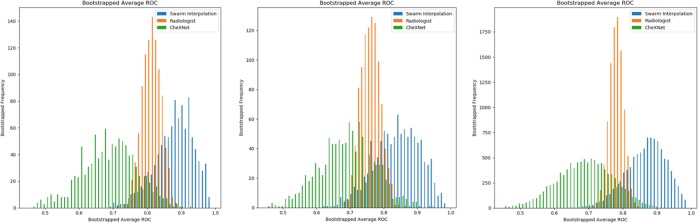
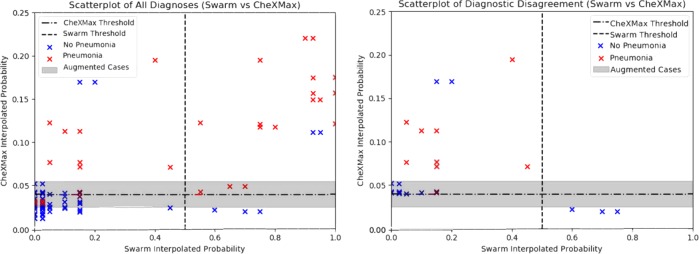
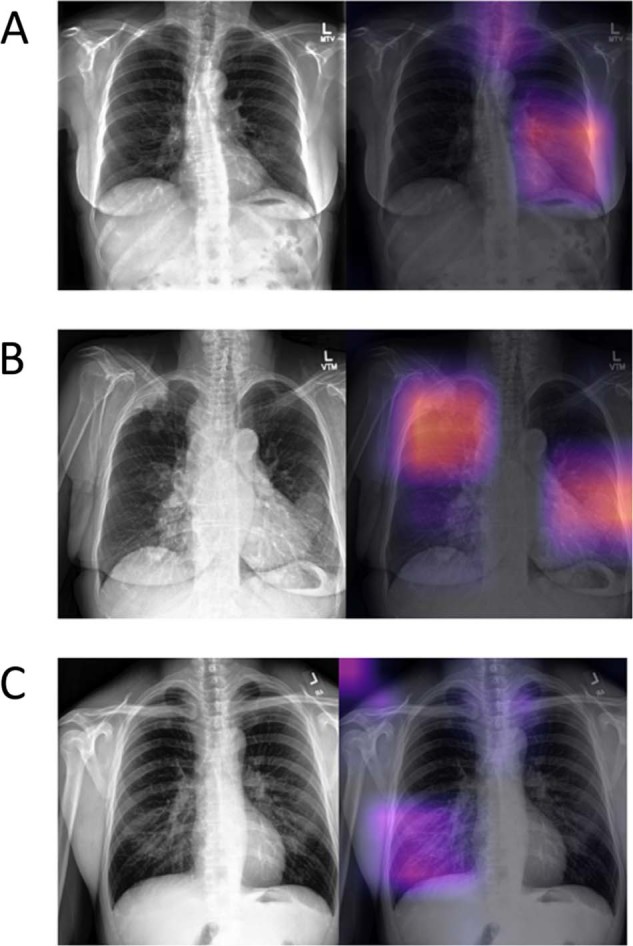
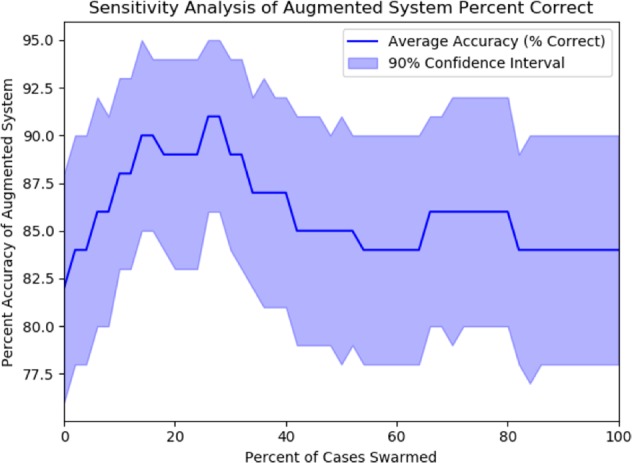
Verification
Claims the paper makes
The claims and statistics of this paper haven’t been checked yet.
Free: it reads the open-access text and checks the first 5 claims that cite a source we can check. Create a free account to check every claim.
Claims other papers make about this one
Each is checked against this paper’s own text: does it say what the citing paper says it does?
The check wasn’t confident either way, so it gives no verdict — never disputed.
In the citing paper
“More critically, recent studies reveal that clinicians’ trust in AI recommendations is fundamentally linked to their ability to understand the underlying reasoning processes [9,10,11].”
From Beyond Post hoc Explanations: A Comprehensive Framework for Accountable AI in Medical Imaging Through Transparency, Interpretability, and Explainability (2025) · cites this paper as [10]
Experimental — accuracy not yet measured
Self-check
Percentages, sums and reported differences re-computed from the paper’s own numbers.
The self-check needs the paper’s full text.
Citations
Cites
Dermatologist-level classification of skin cancer with deep neural networks
Esteva, A., Kuprel, B., Novoa, R. A., Ko, J., Swetter, S. M., Blau, H. M., & Thrun, S. (2017) · Nature · doi:10.1038/nature21056 · Cited by 14,362
Gulshan, V., Peng, L., Coram, M., Stumpe, M. C., Wu, D., Narayanaswamy, A., Venugopalan, S., Widner, K., Madams, T., Cuadros, J., et al. (2016) · JAMA · doi:10.1001/jama.2016.17216 · Cited by 7,697
Wang, X., Peng, Y., Lu, L., Lu, Z., Bagheri, M., & Summers, R. M. (2017) · 2017 IEEE Conference on Computer Vision and Pattern Recognition (CVPR) · doi:10.1109/cvpr.2017.369 · Cited by 4,616
Artificial intelligence in radiology
Hosny, A., Parmar, C., Quackenbush, J., Schwartz, L. H., & Aerts, H. J. W. L. (2018) · Nature Reviews Cancer · doi:10.1038/s41568-018-0016-5 · Cited by 3,803
Predicting the future - big data, machine learning, and clinical medicine
Obermeyer, Z., & Emanuel, E. J. (2016) · New England Journal of Medicine · doi:10.1056/nejmp1606181 · Cited by 3,652
Ehteshami Bejnordi, B., Veta, M., Johannes van Diest, P., van Ginneken, B., Karssemeijer, N., Litjens, G., van der Laak, J. A. W. M., and the CAMELYON16 Consortium, Hermsen, M., Manson, Q. F., et al. (2017) · JAMA · doi:10.1001/jama.2017.14585 · Cited by 3,293
Clinically applicable deep learning for diagnosis and referral in retinal disease
De Fauw, J., Ledsam, J. R., Romera-Paredes, B., Nikolov, S., Tomasev, N., Blackwell, S., Askham, H., Glorot, X., O’Donoghue, B., Visentin, D., et al. (2018) · Nature Medicine · doi:10.1038/s41591-018-0107-6 · Cited by 2,639
Lakhani, P., & Sundaram, B. (2017) · Radiology · doi:10.1148/radiol.2017162326 · Cited by 1,775
Rajpurkar, P., Irvin, J., Ball, R. L., Zhu, K., Yang, B., Mehta, H., Duan, T., Ding, D., Bagul, A., Langlotz, C. P., et al. (2018) · PLOS Medicine · doi:10.1371/journal.pmed.1002686 · Cited by 1,449
Self-citationPotential Biases in Machine Learning Algorithms Using Electronic Health Record Data
Gianfrancesco, M. A., Tamang, S., Yazdany, J., & Schmajuk, G. (2018) · JAMA Internal Medicine · doi:10.1001/jamainternmed.2018.3763 · Cited by 1,395
Cited by
Items 201–300 of 334
Artificial Intelligence in Ocular Oncology: Differentiating Choroidal Melanocytic Lesions
Harby, L. A., Korot, E., Keane, P. A., Lally, S. E., Ferenczy, S. R., Dalvin, L. A., Pellegrini, M., Duker, J. S., Fung, A. T.-C., Kaliki, S., et al. (2025) · Ophthalmology Science · doi:10.1016/j.xops.2025.100948 · Cited by 4
The worldwide methods of artificial intelligence for detection and diagnosis of COVID-19
Eldow, M. E. Y. (2021) · Elsevier eBooks · doi:10.1016/b978-0-323-89777-8.00012-9 · Cited by 5
Al-Hudaibi, Z. H., Almatar, R. M., Alwabari, Z. A., Al-Duhailan, O. M., Alsuwailem, H. M., & Alhajji, Z. (2025) · Journal of Advanced Trends in Medical Research · doi:10.4103/atmr.atmr_41_25 · Cited by 4
Edgar, B., Eze, V. H. U., Adam, S. A., Yinka, S., & Erheyovwe, B. P. (2025) · Frontiers in Mechanical Engineering · doi:10.3389/fmech.2025.1696957 · Cited by 4
DIYR: The Do-It- Yourself-Revolution
Ayala-García, C., Scalabrini, M., & Cohen, N. (2024) · DIID · doi:10.30682/diid8224i · Cited by 4
Gao, W., Liu, Y., Yu, Z., Cui, D., Liu, W., Liang, X., Zhao, J., Xie, J., Li, H., Ma, L., et al. (2024) · arXiv (Cornell University) · doi:10.48550/arxiv.2406.07362 · Cited by 4
Bieńkowska, A., Małecki, J., Mathiesen-Ohman, A., & Tworek, K. (2025) · arXiv (Cornell University) · doi:10.48550/arxiv.2511.13670 · Cited by 4
Li, L., & Zheng, H. (2024) · International Journal of Electronic Commerce · doi:10.1080/10864415.2024.2401948 · Cited by 3
Damarched, M. K. (2026) · Journal of Drug Delivery and Therapeutics · doi:10.22270/jddt.v16i3.7649 · Cited by 3
Human-in-the-Loop Chest X-Ray Diagnosis: Enhancing Large Multimodal Models with Eye Fixation Inputs
Kim, Y., Wu, J., Abdulle, Y., Gao, Y., & Wu, H. (2024) · Lecture notes in computer science · doi:10.1007/978-3-031-67751-9_6 · Cited by 3
AI for screening in healthcare: promise and challenges
Saito, K., Walston, S. L., Takita, H., Mitsuyama, Y., Arita, Y., & Ueda, D. (2026) · Abdominal Radiology · doi:10.1007/s00261-025-05370-4 · Cited by 3
Artifically intelligent physics solver: This AI understands Newtons law
Nirmala, V., & Rajagopal, A. R. (2019) · Science & Technology Journal · doi:10.22232/stj.2019.07.01.03 · Cited by 3
Exploring how students interact with AI for detecting moral sentiments in social media
Upadhyaya, A., Schicchi, D., Taibi, D., & Fisichella, M. (2026) · Array · doi:10.1016/j.array.2026.100941 · Cited by 1
Problemløsing med kunstig intelligens: Bruk av Spacemaker i tidligfase eiendomsutvikling
Kolbjørnsrud, V., & Sannes, R. (2022) · Praktisk økonomi & finans · doi:10.18261/pof.38.1.4 · Cited by 3
Does ChatGPT Add Value to University Students’ Academic Performance?
Kaur, P., Jawaid, A., Qi, R. O. J., Rokman, R. D. B. C. M., Awai, S. S. A., Liew, S. S., & Yunus, S. N. B. M. (2023) · International Journal of Membrane Science and Technology · doi:10.15379/ijmst.v10i3.2583 · Cited by 3
Al-Kabbany, A., El-Bana, S., & Sharkas, M. (2020) · doi:10.36227/techrxiv.12560168 · Cited by 3
Amjad, F., Hajari, M. A., Dalman, A., Baharvand, H., & Montazeri, L. (2024) · F&S Reviews · doi:10.1016/j.xfnr.2024.01.002 · Cited by 3
GPT-4o–Powered Preanesthetic AI: Development and Validation Study
Lin, B.-H., Lü, C.-W., Hou, I., Lin, T., Liu, C.-E., & Khoi, C.-S. (2026) · JMIR Medical Informatics · doi:10.2196/83893 · Cited by 3
Reciprocal Human-Machine Learning in Manufacturing
Nixdorf, S. (2024) · reposiTUm (TU Wien) · doi:10.34726/hss.2024.117680 · Cited by 3
Kim, Y., Wu, J., Kim, S. H., Vasudev, P., Shen, J., & Wu, H. (2025) · Findings of the Association for Computational Linguistics: ACL (Findings of ACL) · doi:10.18653/v1/2025.findings-acl.909 · Cited by 3
Human-AI Collaboration in Radiology: The Case of Pulmonary EmbolismPreprint
Goldsmith-Pinkham, P. S., Tan, C., & Zentefis, A. (2026) · arXiv (Cornell University) · doi:10.48550/arxiv.2601.13379 · Cited by 3
Disagreement between Human and Machine PredictionsPreprint
Miyakawa, D., & Shintani, K. (2024) · SSRN Electronic Journal · doi:10.2139/ssrn.4946723 · Cited by 3
Fang, Z., Zhou, S., Yuan, Z., Si, Y., Li, M., Li, J., Xu, Y., Wenjia, X., Kuang, K., Li, Y., et al. (2024) · arXiv (Cornell University) · doi:10.48550/arxiv.2401.08695 · Cited by 3
Zhang, Z., Liu, Y., Zhao, H., Zhou, Y., Xu, Y., & Li, Z. (2025) · Biomimetics · doi:10.3390/biomimetics10090567 · Cited by 3
Budgeted Classification with Rejection: An Evolutionary Method with Multiple Objectives
Hamilton, N. H., & Fulp, E. W. (2022) · IEEE Congress on Evolutionary Computation (CEC) · doi:10.1109/cec55065.2022.9870382 · Cited by 3
Cereser, L., Zussino, G., Cicciò, C., Tullio, A., Montanaro, C., Driussi, M., Poi, E. D., Patruno, V., Zuiani, C., & Girometti, R. (2024) · La radiologia medica · doi:10.1007/s11547-024-01852-5 · Cited by 3
Getting Smart About Wearable ECG Interpretation in the Clinic
Perez, M. V. (2022) · JACC. Clinical electrophysiology · doi:10.1016/j.jacep.2022.03.018 · Cited by 3
Medical Image Deidentification, Cleaning and Compression Using PylogikPreprint
Kline, A. S., Appadurai, V., Luo, Y., & Shah, S. J. (2023) · arXiv (Cornell University) · doi:10.48550/arxiv.2304.12322 · Cited by 3
Human versus artificial social cognition and metacognition: the normative difference
Tison, R., & Zawidzki, T. W. (2025) · AI and Ethics · doi:10.1007/s43681-025-00774-w · Cited by 2
High Volatility and Action Bias Distinguish LLMs from Humans in Group CoordinationPreprint
Maini, S. S., Goldstone, R. L., & Tiganj, Z. (2026) · arXiv (Cornell University) · doi:10.48550/arxiv.2604.02578 · Cited by 2
From Redaction to Restoration: Deep Learning for Medical Image Deidentification and Reconstruction
Kline, A. S., Gaonkar, A., Pittman, D., Kuehn, C., & Forkert, N. (2026) · Journal of Imaging Informatics in Medicine · doi:10.1007/s10278-026-02241-2 · Cited by 2
Дорофеев, Д. А., Корелина, В. Е., Витков, А. А., Kirilik, E. V., Kuroyedov, А. V., Lukyanova Ksenia, O., Markelova, A. A., Поздеева, О. Г., & Хохлова, А. С. (2023) · National Journal glaucoma · doi:10.53432/2078-4104-2023-22-2-29-37 · Cited by 2
Human–machine hybrid deep reinforcement learning for autonomous navigation in unknown environments
Li, Y., Zhang, Q., Kang, Y., & Zhao, Y. (2026) · Advanced Engineering Informatics · doi:10.1016/j.aei.2026.104379 · Cited by 2
Sun, Z., & Ding, J. (2025) · Human Behavior and Emerging Technologies · doi:10.1155/hbe2/6901297 · Cited by 2
Optimal Human AI Coordination in Decision Workflows: Collaboration Paradox and Automation CliffsPreprint
Gu, W., Li, M. L., & Zhu, S. (2026) · SSRN Electronic Journal · doi:10.2139/ssrn.6417798 · Cited by 2
The Role of Artificial Intelligence and Machine Learning in Decision-Making in the ICU
Kargirwar, K., Dange, A., & Pandit, R. (2024) · International Journal of Medical Science and Clinical Research Studies · doi:10.47191/ijmscrs/v4-i12-31 · Cited by 2
Bosniak classification of renal cysts using large language models: a comparative study
Hacıbey, İ., & Kaba, E. (2025) · Die Radiologie · doi:10.1007/s00117-025-01499-x · Cited by 2
Ethical Aspects of Information-Based Medicine (With a Focus on Mental Health)
Kalina, J., & Tobišková, N. (2021) · Advances in medical technologies and clinical practice book series · doi:10.4018/978-1-7998-7888-9.ch003 · Cited by 2
Cofini, V., Muselli, M., Piccardi, L., Benvenuti, E., Pangrazio, G. D., Mancinelli, M., Cimino, E., Palermo, P., Petrucci, E., Picchi, G., et al. (2026) · Frontiers in Digital Health · doi:10.3389/fdgth.2026.1787117 · Cited by 2
Challenging the Myth of AI Autonomy
Rani, U., & Williams, M. (2026) · Weizenbaum Journal of the Digital Society · doi:10.34669/wi.wjds/6.1.6 · Cited by 2
Sports person psychological behaviour signal analysis during Thfeir activity session
Zhang, Y., Kumar, P. M., & Manickam, A. (2021) · Journal of Intelligent & Fuzzy Systems · doi:10.3233/jifs-219018 · Cited by 2
Wu, L., Wang, J., Jin, L. X., Hemalatha, P., & Premalatha, R. (2021) · Journal of Intelligent & Fuzzy Systems · doi:10.3233/jifs-219009 · Cited by 2
Al-Kabbany, A., El-Bana, S., & Sharkas, M. (2020) · doi:10.36227/techrxiv.12560168.v1 · Cited by 2
HM-MDS: A Human-machine Collaboration based Online Medical Diagnosis System
Chen, Y., Liu, J., Yu, Z., Wang, H., Wang, L., & Guo, B. (2022) · Conference proceedings/Conference proceedings - IEEE International Conference on Systems, Man, and Cybernetics · doi:10.1109/smc53654.2022.9945298 · Cited by 2
Usability Evaluation of Car Cockpit Based on Multiple Objective Measures
Wei, C., Wang, Z., & Fu, S. (2020) · Lecture notes in computer science · doi:10.1007/978-3-030-49183-3_34 · Cited by 2
Data over dialogue: Why artificial intelligence is unlikely to humanise medicine
Hatherley, J. J. (2024) · arXiv (Cornell University) · doi:10.26180/24955371 · Cited by 2
Artificial Intelligence in Modern Healthcare
Hosseini, H., Rahdar, A., Tabatabaei, A., Pandey, S., & Shirzad, M. (2026) · Wiley eBooks · doi:10.1002/9781394384891.ch2 · Cited by 2
Goswamy, P., & Kashyap, S. K. (2024) · Current Science · doi:10.18520/cs/v127/i1/56-64 · Cited by 2
Artificial Intelligence in Medical Informatics: From Algorithms to Clinical Practice—A Survey
Luo, Y.-F., Bu, D., Wu, Y., & ZHAO, Y. (2026) · Journal of Computer Science and Technology · doi:10.1007/s11390-026-6030-2 · Cited by 1
Invasion of ChatGPT and LLMs in Review and Writing Spaces: A Revolution or Radical
Hadap, A., & Khatri, V. (2024) · Springer eBooks · doi:10.1007/978-981-97-4060-4_16 · Cited by 1
Taming Large Language Models for Healthcare – A Multi-layered System
Sudharsan, B., Kosiba, R., Parthasarathi, A., & Richard, R. P. (2025) · Communications in computer and information science · doi:10.1007/978-3-031-86623-4_15 · Cited by 1
Roffi, M. R. A. M., Rafan, N. A., & Abdullah, S. (2025) · Research Square · doi:10.21203/rs.3.rs-6952608/v1 · Cited by 1
Parvovirus infection alters the nucleolar structurePreprint
Mattola, S., Leclerc, S., Hakanen, S., Aho, V., Parrish, C. R., & Vihinen‐Ranta, M. (2022) · bioRxiv (Cold Spring Harbor Laboratory) · doi:10.1101/2022.06.07.495090 · Cited by 1
Wei, X., Wang, C., & Ma, L. (2023) · Lecture notes in computer science · doi:10.1007/978-3-031-35741-1_35 · Cited by 1
Kaur, K. K. (2021) · Perceptions in Reproductive Medicine · doi:10.31031/prm.2021.04.000595 · Cited by 1
Are Medical Technologists still needed in Medical Laboratories in a Technologically Advanced Future?
Cutamora, E. B., Cortes, K. C., & Pepito, J. A. (2022) · Journal of Health and Medical Sciences · doi:10.31014/aior.1994.05.03.230 · Cited by 1
Hashem, A. F., Yousuf, A. M., & Hassan, A. (2025) · Scientific Reports · doi:10.1038/s41598-025-14128-3 · Cited by 1
Pneumoconiosis screening and classification using deep learning models
Liu, M., Huang, Z., Borek, M., Loveless, I., Rosenman, K. D., Alessio, A. M., & Wang, L. (2026) · Occupational and Environmental Medicine · doi:10.1136/oemed-2026-111040 · Cited by 1
Using Deep Learning Algorithms to Predict Dental Implant Brands from Panoramic Radiographs
Taşdemir, İ., İçen, V., & Kölüş, T. (2025) · Medical Records · doi:10.37990/medr.1524857 · Cited by 1
Nakhle, F. (2023) · UnitusOpen (Tuscia University) · Cited by 1
Who Knocks on Heaven’s Door: Measuring Augmentation and Outperformance in Human–AI Diagnostic Teams
Cabitza, F. (2025) · Lecture notes in computer science · doi:10.1007/978-3-031-95841-0_14 · Cited by 1
Herencia del sesgo: influencia de los sesgos de la Inteligencia Artificial en las decisiones humanas
Vicente Holgado, L. (2024) · Basque Digital Memory (Vital Foundation) · Cited by 1
Hidalgo, C. G., Hernández, J. A. C., Espí, J. V. C., Vicente, G. P., Martínez, J. M. P., Barrio, A. B., Hernández, G. P., & Pastor, A. M. (2026) · Revista Española de Educación Médica · doi:10.6018/edumed.695571 · Cited by 1
Walker, E. A. (2024) · White Rose eTheses Online (University of Leeds, The University of Sheffield, University of York) · Cited by 1
Ruffle, J. K., Mohinta, S., Pombo, G., Biswas, A., Campbell, A. D., Davagnanam, I., Doig, D., Hammam, A., Hyare, H., Jabeen, F., et al. (2025) · arXiv (Cornell University) · doi:10.48550/arxiv.2512.19707 · Cited by 1
Kim, Y., Wu, J., & Wu, H. (2025) · arXiv (Cornell University) · doi:10.48550/arxiv.2507.09097 · Cited by 1
An Investigation of Human Annotators' AI Teammate Selection and Compliance Behaviours
Tse, J. (2024) · UWSpace (University of Waterloo) · Cited by 1
Lin, Y., Ding, Y., Benishay, E. T., Trikantzopoulos, E., Nauheim, D. O., Ong, H., Bian, J., Xu, H., Yang, Y., Shih, G., et al. (2026) · arXiv (Cornell University) · doi:10.48550/arxiv.2607.14264 · Cited by 1
Predictive models for post-ERCP pancreatitis: a systematic review and meta-analysis
Zhong, Z., Li, L., Liu, J., Xie, Q., & Wu, J. (2026) · Frontiers in Gastroenterology · doi:10.3389/fgstr.2025.1629698 · Cited by 1
Sharma, M., Ganie, K. A., Panwar, P., & Arti (2025) · International Journal of Latest Technology in Engineering Management & Applied Science · doi:10.51583/ijltemas.2025.1412000008
Conversational Forecasting Across Large Human Groups Using a Swarm of Surrogate AI Agents
Rosenberg, L. B., Schumann, H., Mani, G., & Willcox, G. (2026) · International Conference on Human-AI Interaction and Experience Design (HAXD) · doi:10.1109/haxd70072.2026.11620928
Self-citationEthical considerations and privacy in artificial intelligence-driven metaverse healthcare
Katepaka, S., Bej, A., Das, A., & Nandi, A. (2026) · Elsevier eBooks · doi:10.1016/b978-0-443-27692-7.00025-3
Bridging artificial intelligence and clinical decision-making in gastric cancer surgery
Ormeci, M. T., Kirkik, D., & Tulubaş, E. (2026) · World Journal of Gastrointestinal Surgery · doi:10.4240/wjgs.119402
Artificial intelligence in respiratory medicine
Gonem, S. (2023) · Elsevier eBooks · doi:10.1016/b978-0-443-15688-5.00027-9
When AI is wrong: the limits of human oversight in AI-assisted diagnostic decision-making
Xiao, F., Diao, K., Li, C., Gong, Y., Li, B., Chen, J., Xiu-Qiong, F. U., & Xie, J. Y. (2026) · Behaviour and Information Technology · doi:10.1080/0144929x.2026.2666286
Navigating the Promises and Perils of Generative AI in Transforming Healthcare Services
Kohli, S., Kaushal, R., & Raina, A. (2025) · Advances in hospitality, tourism and the services industry (AHTSI) book series · doi:10.4018/979-8-3693-7447-4.ch020
Alegre, J. C. A., & Mytskevych, J. (2026) · doi:10.2196/preprints.99775
Human–AI Collaboration in High-Value Service Systems: Promise and Pitfalls
de Véricourt, F. (2026) · Springer series in supply chain management · doi:10.1007/978-3-032-07054-8_13
Collective Superintelligence - Keeping Humans in the AI LoopPreprint
Rosenberg, L. B. (2026) · SSRN Electronic Journal · doi:10.2139/ssrn.7576882
Self-citationThird annual transplant AI symposium: from organ matching to digital twins
Ramesh, D., Manickavel, P., Sidhu, A., Kremers, W. K., Mour, G. K., Huebert, R. C., Ahn, J., & Bhat, M. (2026) · Frontiers in Transplantation · doi:10.3389/frtra.2026.1871888
Portincasa, P., Khalil, M., Novielli, P., & Tangaro, S. (2026) · European Journal of Clinical Investigation · doi:10.1111/eci.70254
Yang, Y. (2026) · JMIR Formative Research · doi:10.2196/94172
From “Nice-to-Have” to “Must-Have:” AI’s Inevitable Progression?
Korchi, A. (2023) · Applied Radiology · doi:10.37549/ar2860
Part 2: Toward responsible AI adoption in neurointerventional surgery
Vargas, J., Hoffman, H., Schirmer, C. M., Hui, F. K., 河野健一, Booth, T. C., Kellogg, R. T., & Levitt, M. (2026) · JNIS Advances · doi:10.1136/jnisadv-2026-000012
Curiello, S., Chapman, A. P., & Wyatt, J. C. (2026) · Journal of Medical Internet Research · doi:10.2196/92392
Gesundheitswesen, Chemie/Pharma
Reuter, W. (2023) · Springer eBooks · doi:10.1007/978-3-662-66278-6_25
Baltzersen, R. K. (2021) · Cambridge University Press eBooks · doi:10.1017/9781108981361.016
Hyperchat and Hypervideo: Enabling Real-time Groupwise Conversations at Unlimited Scale
Rosenberg, L. B., Willcox, G., Schumann, H., & Bader, M. (2025) · IEEE World AI IoT Congress (AIIoT) · doi:10.1109/aiiot65859.2025.11105240
Self-citationLeveraging AI Models/Tools for Human Fertility
Santosh, K., & Roy, D. G. (2025) · Studies in computational intelligence · doi:10.1007/978-981-95-1248-5_4
Assessing the Impact of Differing Perspectives in Advice-Taking BehaviorPreprint
Kumar, A., Tham, R.-H. M., & Steyvers, M. (2024) · PsyArXiv (OSF Preprints) · doi:10.31234/osf.io/seqjr
Should Couch Potatoes Be Encouraged to Use Transcranial Direct Current Stimulation?
Minerva, F. (2020) · Neuroethics · doi:10.1007/s12152-020-09454-4
Human-AI Collaboration in Radiology: The Case of Pulmonary EmbolismPreprint
Goldsmith-Pinkham, P. S., Tan, C., & Zentefis, A. (2026) · SSRN Electronic Journal · doi:10.2139/ssrn.6482718
Integrating artificial intelligence and internet of things for smart healthcare systems
Ramesh, R., Gokul Nittin, A., Gayathri, A., Elango, K., & Sampath, V. (2025) · Elsevier eBooks · doi:10.1016/b978-0-443-36434-1.00016-1
Hybrid Intelligence Forecasting: A Review
Karimi, M., & Carvalho, A. (2026) · Decision Analysis · doi:10.1287/deca.2025.0484
Guérinot, C. (2022) · theses.fr (ABES) · doi:10.70675/db4b8c16zc80ez4024z89a8z6f7ce20ca860
Metadata
- Authors
- Patel, B. N., Rosenberg, L., Willcox, G., Baltaxe, D., Lyons, M., Irvin, J., Rajpurkar, P., Amrhein, T., Gupta, R., Halabi, S., Langlotz, C., Lo, E., Mammarappallil, J., Mariano, A. J., Riley, G., Seekins, J., Shen, L., Zucker, E., & Lungren, M. P.
- Affiliations
- Stanford Medicine (US)
- Unanimous AI (United States) (US)
- Duke Medical Center (US)
- Corresponding author
- Patel, Bhavik N.
- ORCID
- Venue
- npj Digital Medicine
- Published
- 2019-11-18
- Volume
- 2
- Issue
- 1
- Pages
- 111-111
- ISSN
- 2398-6352 (ISSN-L)
- PMC
- PMC6861262
- OpenAlex
- W2984904339
- Semantic Scholar
- 98634f75c0545f3f2a21463dfa33b3ed75319c96
- Cited by
- 254
- References
- 50
- Citations by year
- 2026: 26 · 2025: 44 · 2024: 32 · 2023: 33 · 2022: 43 · 2021: 42 · 2020: 33 · 2019: 1
- FWCI
- 9.45
- Type
- journal article
- Language
- en
- Update notices
- correction (2019-12-10)
- Open access
- gold
- doi.org
- Licence
- cc-by
- creativecommons.org/licenses/by/4.0 (tdm)
- creativecommons.org/licenses/by/4.0 (vor)
- Locations
- npj Digital Medicine (publishedVersion, cc-by)
- PubMed Central (publishedVersion, cc-by)
- PubMed (publishedVersion)
- DOAJ (DOAJ: Directory of Open Access Journals) (submittedVersion)
- Topics
- Health Sciences › Medicine › Health Informatics › Artificial Intelligence in Healthcare and Education
- Health Sciences › Medicine › Radiology, Nuclear Medicine and Imaging › COVID-19 diagnosis using AI
- Health Sciences › Medicine › Radiology, Nuclear Medicine and Imaging › Radiology practices and education
- Keywords
- human-in-the-loop AI, human-machine collaboration, collective intelligence, swarm intelligence, pneumonia diagnosis, chest radiograph, deep learning, diagnostic accuracy
About these checks
Registry, retraction, Cites and statistics results are computed, not judged, with one exception: a printed reference that no index lists is read once by a model before it counts as a citation error. Claims are extracted by a model and kept only when their quote appears verbatim in the text; each cited source is then checked, with a model’s help, for whether it says what the claim relies on. Those verdicts can be wrong — read the claim’s quote and the cited source before relying on one.
Statistics and arithmetic are recomputed, not judged.
Confidence bands are shown only for fields calibrated on our annotated test set. None is calibrated yet, so no band is shown.
What counts as a claim ›How we measure confidence ›How we check this ›
Are you an author, or do you see a problem with this page? Request a review
Data sources
Bibliographic data: Semantic Scholar, OpenAlex, Crossref.
Contains information from the Semantic Scholar Academic Graph Datasets, made available under the ODC Attribution License (ODC-BY 1.0).
Semantic Scholar’s data is described in: Kinney, R., et al. (2023). The Semantic Scholar Open Data Platform. arXiv:2301.10140.
