

Automating sleep stage classification using wireless, wearable sensors
Open accessThe DOI matches its Crossref record; 45 of the 45 references it cites were found in a registry or an index.
Abstract
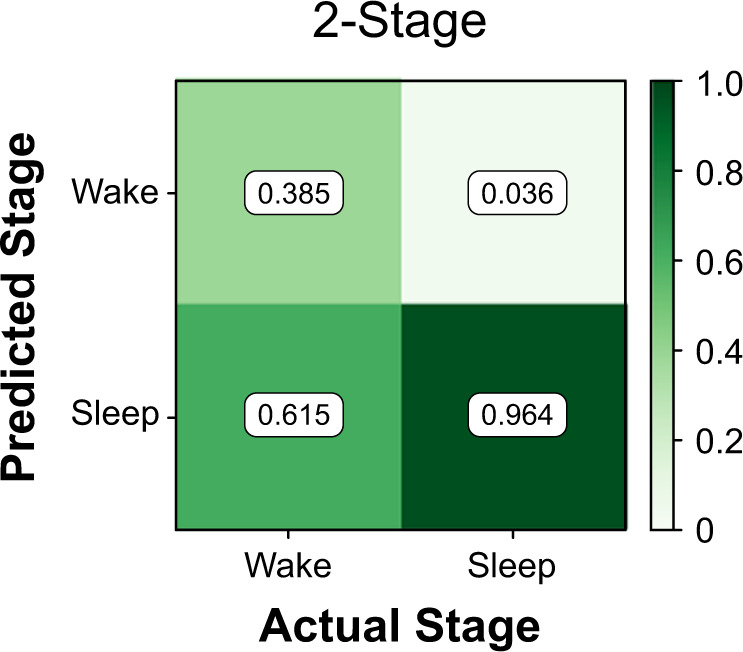
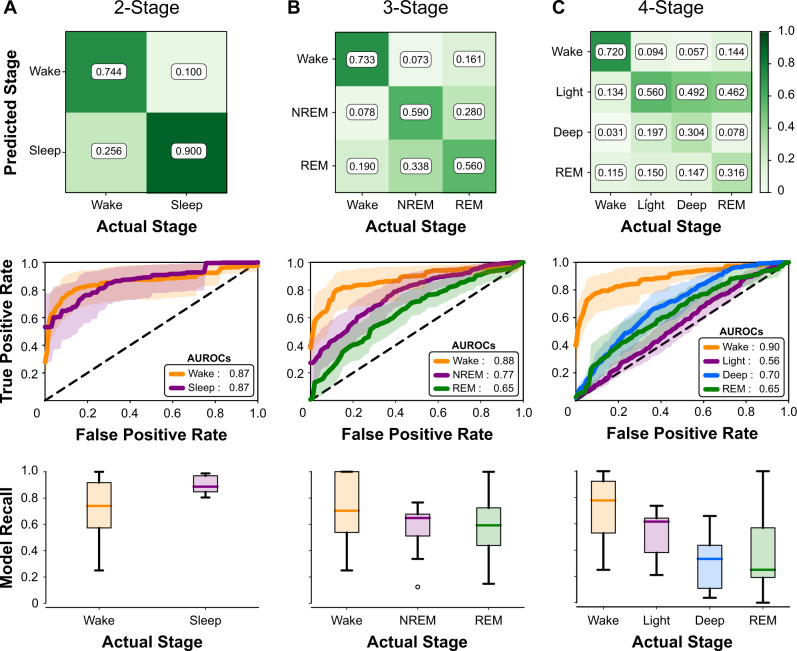
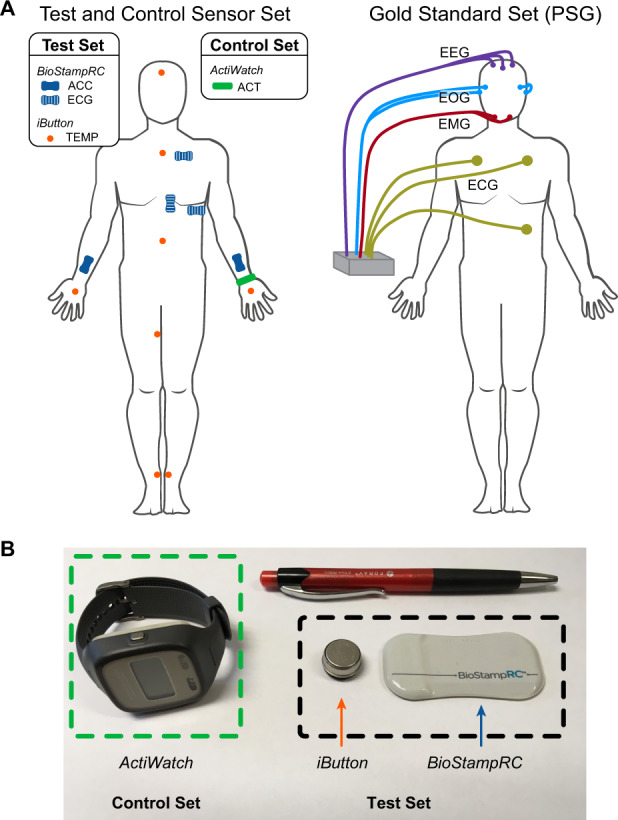
Polysomnography (PSG) is the current gold standard in high-resolution sleep monitoring; however, this method is obtrusive, expensive, and time-consuming. Conversely, commercially available wrist monitors such as ActiWatch can monitor sleep for multiple days and at low cost, but often overestimate sleep and cannot differentiate between sleep stages, such as rapid eye movement (REM) and non-REM. Wireless wearable sensors are a promising alternative for their portability and access to high-resolution data for customizable analytics. We present a multimodal sensor system measuring hand acceleration, electrocardiography, and distal skin temperature that outperforms the ActiWatch, detecting wake and sleep with a recall of 74.4% and 90.0%, respectively, as well as wake, non-REM, and REM with recall of 73.3%, 59.0%, and 56.0%, respectively. This approach will enable clinicians and researchers to more easily, accurately, and inexpensively assess long-term sleep patterns, diagnose sleep disorders, and monitor risk factors for disease in both laboratory and home settings.
Overview
The claims and statistics of this paper haven’t been checked yet.
Free: it reads the open-access text and checks the first 5 claims that cite a source we can check. Create a free account to check every claim.
Integrity signals
Registry
Cites
Statistics
Figures
Verification
Claims the paper makes
The claims and statistics of this paper haven’t been checked yet.
Free: it reads the open-access text and checks the first 5 claims that cite a source we can check. Create a free account to check every claim.
Claims other papers make about this one
Each is checked against this paper’s own text: does it say what the citing paper says it does?
In the citing paper
“sleep assessment algorithms are frequently proprietary and validated in small populations, making their measurement validity unclear5–8”
From Self-supervised learning of accelerometer data provides new insights for sleep and its association with mortality (2024) · cites this paper as [6]
In the citing paper
“This potentially affects health-related outcomes that rely on PPG including a host of sleep-related indices such as sleep duration, architecture [8], diagnosis of sleep apnea [9], long-term sleep patterns, and other sleep disorders [10].”
From Limiting racial disparities and bias for wearable devices in health science research (2020) · cites this paper as [10]
Self-check
Percentages, sums and reported differences re-computed from the paper’s own numbers.
The self-check needs the paper’s full text.
Citations
Cites
The Pittsburgh Sleep Quality Index: a new instrument for psychiatric practice and research
Buysse, D. J., Reynolds, C. F., Monk, T. H., Berman, S. R., & Kupfer, D. J. (1989) · Psychiatry Research · doi:10.1016/0165-1781(89)90047-4 · Cited by 35,234
(2007) · Cited by 6,530
Short- and long-term health consequences of sleep disruption
Medic, G., Wille, M., & Hemels, M. (2017) · Nature and Science of Sleep · doi:10.2147/nss.s134864 · Cited by 1,776
Sympathetic-Nerve Activity during Sleep in Normal Subjects
Somers, V. K., Dyken, M. E., Mark, A. L., & Abboud, F. M. (1993) · New England Journal of Medicine · doi:10.1056/nejm199302043280502 · Cited by 1,574
Monitoring of Vital Signs with Flexible and Wearable Medical Devices
Khan, Y., Ostfeld, A. E., Lochner, C. M., Pierre, A., & Arias, A. C. (2016) · Advanced Materials · doi:10.1002/adma.201504366 · Cited by 1,408
Wearable Sensors for Remote Health Monitoring
Majumder, S., Mondal, T., & Deen, M. (2017) · Sensors · doi:10.3390/s17010130 · Cited by 1,375
Marino, M., Li, Y., Rueschman, M. N., Winkelman, J. W., Ellenbogen, J. M., Solet, J. M., Dulin, H., Berkman, L. F., & Buxton, O. M. (2013) · Sleep · doi:10.5665/sleep.3142 · Cited by 1,056
Buxton, O. M., & Marcelli, E. (2010) · Social Science & Medicine · doi:10.1016/j.socscimed.2010.05.041 · Cited by 818
Further Validation of Actigraphy for Sleep Studies
de Souza, L., Benedito-Silva, A. A., Pires, M. L. N., Poyares, D., Tufik, S., & Calil, H. M. (2003) · Sleep · doi:10.1093/sleep/26.1.81 · Cited by 587
Krauchi, K., & Wirz-Justice, A. (1994) · American Journal of Physiology-Regulatory, Integrative and Comparative Physiology · doi:10.1152/ajpregu.1994.267.3.r819 · Cited by 558
Cited by
Limiting racial disparities and bias for wearable devices in health science research
Colvonen, P. J., DeYoung, P. N., Bosompra, N.-O. A., & Owens, R. L. (2020) · Sleep · doi:10.1093/sleep/zsaa159 · Cited by 137
“This potentially affects health-related outcomes that rely on PPG including a host of sleep-related indices such as sleep duration, architecture [8], diagnosis of sleep apnea [9], long-term sleep patterns, and other sleep disorders [10].”
BackgroundIntelligent Wearable Systems: Opportunities and Challenges in Health and Sports
Yang, L., Amin, O., & Shihada, B. (2024) · ACM Computing Surveys · doi:10.1145/3648469 · Cited by 197
“Boe et al. applied an ML model to monitor five different sleep stages based on a wrist-band ACC and three ECG sensor patches [94].”
BackgroundMethodWearable Sensing Devices for Point of Care Diagnostics
Mondal, S., Zehra, N., Choudhury, A., & Iyer, P. K. (2020) · ACS Applied Bio Materials · doi:10.1021/acsabm.0c00798 · Cited by 104
AI in Rehabilitation Medicine: Opportunities and Challenges
Lanotte, F., O’Brien, M. K., & Jayaraman, A. (2023) · Annals of Rehabilitation Medicine · doi:10.5535/arm.23131 · Cited by 148
“Using multiple sensors on different body locations can increase the accuracy of activity detection [66] or sleep stage monitoring [45], although it may also increase power consumption and reduce patient compliance.”
BackgroundSelf-citationZavanelli, N., Kim, H., Kim, J.-S., Herbert, R., Mahmood, M., Kim, Y., Kwon, S., Bolus, N. B., Torstrick, F. B., Lee, C. S. D., et al. (2021) · Science Advances · doi:10.1126/sciadv.abl4146 · Cited by 96
Heyat, M. B. B., Lai, D., Wu, K., Akhtar, F., Sultana, A., Tumrani, S., Teelhawod, B. N., Abbasi, R., Kamal, M. A., & Muaad, A. Y. M. (2022) · Current Pharmaceutical Design · doi:10.2174/1381612829666221201161636 · Cited by 88
Heyat, M. B. B., Akhtar, F., Khan, A., Noor, A., Benjdira, B., Qamar, Y., Abbas, S. J., & Lai, D. (2020) · Applied Sciences · doi:10.3390/app10217410 · Cited by 79
“Previously, bruxism detection methods The C4-P4 channel of the combined classification has were limited, so we compared with sleep disorder”
MethodHöhn, C., Hahn, M. A., Lendner, J. D., & Hoedlmoser, K. (2024) · eNeuro · doi:10.1523/eneuro.0259-23.2024 · Cited by 88
Ensemble Computational Intelligent for Insomnia Sleep Stage Detection via the Sleep ECG Signal
Tripathi, P., Ansari, M. A., Gandhi, T. K., Mehrotra, R., Heyat, M. B. B., Akhtar, F., Ukwuoma, C. C., Muaad, A. Y. M., Kadah, Y. M., Al–antari, M. A., et al. (2022) · IEEE Access · doi:10.1109/access.2022.3212120 · Cited by 86
“Boe et al. [67] utilized a multimodal devices assessing hand hastening, ECG, and Acti Watch for the diagnostic sleep stage such as w , REM, and NREM.”
BackgroundNon-invasive Techniques for Monitoring Different Aspects of Sleep: A Comprehensive Review
Hussain, Z., Sheng, Q. Z., Zhang, W. E., Ortiz, J., & Pouriyeh, S. (2022) · ACM Transactions on Computing for Healthcare · doi:10.1145/3491245 · Cited by 72
“[9] 2019 2,3,4 IMU, Temperaturechest, wrist, ankles and forehead BioStampRC, Thermochron iButton, ActiWatch Spectrum (for comparison) Bagging classifier with DT 60.”
MethodSharma, M. D., Darji, J., Thakrar, M., & Acharya, U. R. (2022) · Computers in Biology and Medicine · doi:10.1016/j.compbiomed.2022.105224 · Cited by 73
Multimodal Smart Eyewear for Longitudinal Eye Movement Tracking
Homayounfar, S. Z., Rostaminia, S., Kiaghadi, A., Chen, X., Alexander, E. T., Ganesan, D., & Andrew, T. L. (2020) · Matter · doi:10.1016/j.matt.2020.07.030 · Cited by 59
Khan, A. N., Cha, Y., Giddens, H., & Hao, Y. (2022) · Engineering · doi:10.1016/j.eng.2021.10.019 · Cited by 61
Godkin, F. E., Turner, E., Demnati, Y., Vert, A., Roberts, A., Swartz, R. H., McLaughlin, P. M., Weber, K. S., Thai, V., Beyer, K. B., et al. (2021) · Journal of Neurology · doi:10.1007/s00415-021-10831-z · Cited by 51
The Future of Sleep Measurements
Arnardóttir, E. S., Íslind, A. S., & Óskarsdóttir, M. (2021) · Sleep Medicine Clinics · doi:10.1016/j.jsmc.2021.05.004 · Cited by 64
Recent Developments in Wearable NEMS/MEMS-Based Smart Infrared Sensors for Healthcare Applications
Padha, B., Yadav, I., Dutta, S., & Arya, S. K. (2023) · ACS Applied Electronic Materials · doi:10.1021/acsaelm.3c00860 · Cited by 55
A systematic review of the performance of actigraphy in measuring sleep stages
Yuan, H., Hill, E. A., Kyle, S. D., & Doherty, A. (2024) · Journal of Sleep Research · doi:10.1111/jsr.14143 · Cited by 56
Hearables, in-ear sensing devices for bio-signal acquisition: a narrative review
Ne, C. K. H., Muzaffar, J., Amlani, A., & Bance, M. (2021) · Expert Review of Medical Devices · doi:10.1080/17434440.2021.2014321 · Cited by 49
“This technique combines EEG, ECG, EOG, and EMG to identify sleep stages and wakefulness [66].”
MethodToward sleep apnea detection with lightweight multi-scaled fusion network
Chen, X., Chen, Y., Ma, W., Fan, X., & Li, Y. (2022) · Knowledge-Based Systems · doi:10.1016/j.knosys.2022.108783 · Cited by 46
Yuan, H., Plekhanova, T., Walmsley, R., Reynolds, A. C., Maddison, K. J., Bucan, M., Gehrman, P., Rowlands, A., Ray, D. W., Bennett, D., et al. (2024) · npj Digital Medicine · doi:10.1038/s41746-024-01065-0 · Cited by 40
He, C., Tan, J., Jian, X., Zhong, G., Cheng, L., & Lin, J. (2022) · IEEE Internet of Things Journal · doi:10.1109/jiot.2022.3146926 · Cited by 40
A real-time, personalized sleep intervention using mathematical modeling and wearable devices
Song, Y. M., Choi, S. J., Park, S. H., Lee, S. J., Joo, E. Y., & Kim, J. K. (2023) · SLEEP · doi:10.1093/sleep/zsad179 · Cited by 48
ENIGMA‐Sleep: Challenges, opportunities, and the road map
Tahmasian, M., Aleman, A., Andreassen, O. A., Arab, Z., Baillet, M., Benedetti, F., Bresser, T., Bright, J. K., Chee, M. W. L., Chylinski, D., et al. (2021) · Journal of Sleep Research · doi:10.1111/jsr.13347 · Cited by 35
Jin, M., Shi, P., Sun, Z. Z., Zhao, N., Shi, M., Wu, M., Ye, C., Lin, C., & Fu, L. (2024) · Sensors · doi:10.3390/s24092903 · Cited by 36
“…into the various data collected by these sensors can provide users with personalized insights into their daily activities [12], sleep patterns [13], stress levels [14], and other lifestyle factors that influence health. types of wearable that can be fabricated using the LbL technique,…”
MethodShedding Light on Nocturnal Movements in Parkinson’s Disease: Evidence from Wearable Technologies
Zampogna, A., Manoni, A., Asci, F., Liguori, C., Irrera, F., & Suppa, A. (2020) · Sensors · doi:10.3390/s20185171 · Cited by 41
Detecting sleep outside the clinic using wearable heart rate devices
Perez-Pozuelo, I., Posa, M., Spathis, D., Westgate, K. L., Wareham, N. J., Mascolo, C., Brage, S., & Palotti, J. (2022) · Scientific Reports · doi:10.1038/s41598-022-11792-7 · Cited by 33
AI-Driven sleep staging from actigraphy and heart rate
Song, T.-A., Chowdhury, S. R., Malekzadeh, M., Harrison, S. L., Blackwell-Hoge, T., Redline, S. S., Stone, K. L., Saxena, R., Purcell, S., & Dutta, J. (2023) · PLoS ONE · doi:10.1371/journal.pone.0285703 · Cited by 36
“[60], despite the fact that the latter utilizes real-time ECG and temperature signals that are typically not available through a consumer smartwatch device.”
BackgroundYang, M., Ye, Z., Ren, Y., Farhat, M., & Chen, P. (2023) · Micromachines · doi:10.3390/mi15010026 · Cited by 33
“These wearable electronic devices, in sharp contrast to their traditional bulky and rigid counterparts, have been meticulously engineered to embody the merits of lightness [16], compactness [17], and unobtrusiveness [18], thereby facilitating their fabrication and measurement convenience.”
BackgroundChen, X., Chen, Y., Ma, W., Fan, X., & Li, Y. (2021) · IEEE International Conference on Bioinformatics and Biomedicine (BIBM) · doi:10.1109/bibm52615.2021.9669358 · Cited by 26
Digital health in chronic obstructive pulmonary disease
Long, H., Li, S., & Chen, Y. (2023) · Chronic Diseases and Translational Medicine · doi:10.1002/cdt3.68 · Cited by 35
“23 For chronic diseases, wearable devices can provide longitudinal data that tracks patient progress, o ff ering an alternative to more complex, uncomfortable, and costly monitoring methods.”
BackgroundData Analytics in Physical Activity Studies With Accelerometers: Scoping Review
Liang, Y., Wang, C. I., & Hsiao, C. K. (2024) · Journal of Medical Internet Research · doi:10.2196/59497 · Cited by 37
“…include daily activities (sitting, walking, and lying) [13,44,45], housework (washing dishes and dust mopping) [46,456], fall detection [473,474], and rehabilitation activities [475,476], while sleep stages for classification include wake, light sleep, and deep sleep stages [8,460,477].”
Du, Y., Gu, J., Duan, S., Trueb, J. T., Tzavelis, A., Shin, H., Arafa, H., Li, X., Huang, Y. Y., Carr, A. N., et al. (2025) · Proceedings of the National Academy of Sciences · doi:10.1073/pnas.2501220122 · Cited by 28
Self-citationWu, J., Hu, R., Li, M., Liu, S., Zhang, X., He, J., Chen, J., & Li, X. (2021) · Biomedical Signal Processing and Control · doi:10.1016/j.bspc.2021.102942 · Cited by 25
Gullapalli, B. T., Carreiro, S., Chapman, B. P., Ganesan, D., Sjoquist, J., & Rahman, T. (2021) · Proceedings of the ACM on Interactive Mobile Wearable and Ubiquitous Technologies · doi:10.1145/3478107 · Cited by 37
“In regards to behavioral health and wellbeing, [35, 72] used physiological signals from wearable sensors to detect different emotion states, and [3, 10] were able to classify different stages of sleep for sleep quality assessments.”
BackgroundKuula, L., & Pesonen, A. (2020) · JMIR mhealth and uhealth · doi:10.2196/24704 · Cited by 33
Delayed sleep wake phase disorder in adolescents: an updated review
Narala, B., Ahsan, M., Ednick, M., & Kier, C. (2023) · Current Opinion in Pediatrics · doi:10.1097/mop.0000000000001322 · Cited by 25
Braun, B. J., Grimm, B. P., Hanflik, A. M., Richter, P. H., Sivananthan, S., Yarboro, S. R., & Marmor, M. T. (2022) · Injury · doi:10.1016/j.injury.2022.03.026 · Cited by 26
Flexible, wearable mechano-acoustic sensors for body sound monitoring applications
Dang, T. B., Truong, T., Nguyen, C. C., Listyawan, M. A., Sapers, J. S., Zhao, S., Truong, D. P., Zhang, J., Do, T. N., & Phan, H. (2025) · Nanoscale · doi:10.1039/d4nr05145a · Cited by 24
Wireless Wearable Devices and Recent Applications in Health Monitoring and Clinical Diagnosis
Su, M., Hua, J., Sun, X., Liu, Z., Shi, Y., & Pan, L. (2023) · Biomedical Materials & Devices · doi:10.1007/s44174-023-00141-5 · Cited by 25
Beyond Detection: Towards Actionable Sensing Research in Clinical Mental Healthcare
Adler, D. A., Yang, Y., Viranda, T., Xu, X., Mohr, D. C., Meter, A. V., Tartaglia, J., Jacobson, N. C., Wang, F., Estrin, D. L., et al. (2024) · Proceedings of the ACM on Interactive Mobile Wearable and Ubiquitous Technologies · doi:10.1145/3699755 · Cited by 38
“Sensors embedded in these technologies collect fine-grained data on location, sound, light, and movement [15] that can approximate behavior and physiology [2, 27, 119].”
Self-powered and self-sensing wearable devices from a comfort perspective
Zou, R., Chen, H., Pan, H., Zhang, H., Kong, L., Zhang, Z., Xiang, Z., Zhi, J., & Xu, Y. (2024) · Device · doi:10.1016/j.device.2024.100466 · Cited by 19
Classification of Sleep-Wake State in Ballistocardiogram system based on Deep Learning
Ahmed, N., Srivyshnav, K. S., Chokalingam, K., Rawooth, M., Kumar, G., Parchani, G., & Saran, V. (2022) · Annual International Conference of the IEEE Engineering in Medicine and Biology Society (EMBC) · doi:10.1109/embc48229.2022.9871831 · Cited by 18
“Researchers have begun investigating wearables for detecting sleep-state with the rise of computational efficiencies [5].”
BackgroundFeng, S., Huang, H., Wang, N., Wei, Y., Liu, Y., & Qin, D. (2021) · Frontiers in Behavioral Neuroscience · doi:10.3389/fnbeh.2021.673372 · Cited by 19
Somnotate: A probabilistic sleep stage classifier for studying vigilance state transitions
Brodersen, P. J. N., Alfonsa, H., Krone, L. B., Blanco‐Duque, C., Fisk, A. S., Flaherty, S. J., Guillaumin, M. C. C., Huang, Y., Kahn, M. C., McKillop, L. E., et al. (2024) · PLoS Computational Biology · doi:10.1371/journal.pcbi.1011793 · Cited by 18
What radio waves tell us about sleep!
He, H., Li, C., Ganglberger, W., Gallagher, K., Hristov, R., Ouroutzoglou, M., Sun, H., Sun, J., Westover, M. B., & Katabi, D. (2024) · SLEEP · doi:10.1093/sleep/zsae187 · Cited by 26
“Indeed, the last decade has witnessed increasing use of wearable devices [15–18] and in-mattress sensors for measuring sleep at home in clinical trials [19–21].”
Improved sleep stage predictions by deep learning of photoplethysmogram and respiration patterns
Kazemi, K., Abiri, A., Zhou, Y., Rahmani, A. M., Khayat, R., Liljeberg, P., & Khine, M. (2024) · Computers in Biology and Medicine · doi:10.1016/j.compbiomed.2024.108679 · Cited by 19
Beyer, K. B., Weber, K. S., Cornish, B. F., Vert, A., Thai, V., Godkin, F. E., McIlroy, W. E., & Ooteghem, K. V. (2024) · BMC Digital Health · doi:10.1186/s44247-024-00062-3 · Cited by 17
“…approach necessitates a multi-sensor model that accommodates a variety of sensor types (‘modes’) worn at appropriate body locations (‘nodes’) to optimize the type and quality of raw data that is used to construct the valid metrics of health required for clinical purposes [4, 10, 18–21].”
Imputing missing sleep data from wearables with neural networks in real-world settings
Lee, M. P., Hoang, K., Park, S., Song, Y. M., Joo, E. Y., Chang, W., Kim, J. H., & Kim, J. K. (2023) · SLEEP · doi:10.1093/sleep/zsad266 · Cited by 13
Yu, H., Wang, C., Meng, F., Zou, D.-Q., Li, J.-H., Song, Z., Zhao, M., Zhang, L., Xu, S.-S., & Wang, L. (2021) · IEEE Sensors Journal · doi:10.1109/jsen.2021.3117994 · Cited by 12
Thiesse, L., Staner, L., Bourgin, P., Roth, T. G., Fuchs, G., Kirscher, D., Schaffhauser, J.-Y., Saoud, J. B., & Viola, A. (2021) · SLEEP Advances · doi:10.1093/sleepadvances/zpab019 · Cited by 14
“Cardiac-based sleep scoring algorithms are usually evaluated only in healthy subjects [14, 19, 20, 31, 32].”
BackgroundMixed-Input Deep Learning Approach to Sleep/Wake State Classification by Using EEG Signals
Hasan, M. N., & Koo, I. (2023) · Diagnostics · doi:10.3390/diagnostics13142358 · Cited by 15
Biswas, M. A. S., Dutta, A., Das, S., Abdullah, A. M., Zhang, W., Zohra, F. T., & Cheng, H. (2026) · Advanced Science · doi:10.1002/advs.202521138 · Cited by 14
Zhou, S., Song, G., Sun, H., Zhang, D., Leng, Y., Westover, M. B., & Hong, S. (2025) · npj Digital Medicine · doi:10.1038/s41746-025-01607-0 · Cited by 15
“Previousresearchhasshowntheeffectivenessofusingfewer physiologicalsignalsinwearabledevicesforsleepstaging 54,55 , suggesting the potential for portable sleep depth annotation systems.”
Chen, P.-W., O’Brien, M. K., Horin, A. P., Koch, L. L. M., Lee, J. Y., Xu, S., Zee, P. C., Arora, V. M., & Jayaraman, A. (2022) · Sensors · doi:10.3390/s22166190 · Cited by 13
Self-citationGeneralized sleep decoding with basal ganglia signals in multiple movement disorders
Yin, Z., Yu, H., Yuan, T., Smyth, C., Anjum, M. F., Zhu, G., Ma, R., Xu, Y., An, Q., Gan, Y., et al. (2024) · npj Digital Medicine · doi:10.1038/s41746-024-01115-7 · Cited by 13
Polymer-Based Flexible Wireless Sensors for Health Monitoring
Huang, H., Xue, G., Zhan, J., Yang, Y. C., Jia, B., Dong, Z., Deng, Z., & Zhao, X. (2026) · Nano-Micro Letters · doi:10.1007/s40820-026-02233-5 · Cited by 16
Prediction of good sleep with physical activity and light exposure: a preliminary study
Park, K., Lee, S. E., Lee, C., Hwang, H. D., Yoon, D. H., Choi, E. C., & Lee, E. M. (2022) · Journal of Clinical Sleep Medicine · doi:10.5664/jcsm.9872 · Cited by 10
Xu, J., Chen, W., Liu, L., Jiang, S., Wang, H., Zhang, J., Gan, X., Zhou, X., Guo, T., Wu, C., et al. (2024) · Science China Materials · doi:10.1007/s40843-023-2758-7 · Cited by 9
“The head, chest, hands, and feet of the patient need to be covered with electrodes to record electroencephalogram (EEG), eye movement, and electromyogram (EMG) signals [27,47,48].”
Sindorf, J., Szabo, A. L., O’Brien, M. K., Sunderrajan, A., Knutson, K. L., Zee, P. C., Wolfe, L. F., Arora, V. M., & Jayaraman, A. (2024) · SLEEP · doi:10.1093/sleep/zsae123 · Cited by 12
Self-citationBond, J. C., Coleman, C. M., Yland, J. J., Wesselink, A. K., Wang, T. R., Willis, M. D., Hatch, E. E., Rothman, K. J., Savitz, D. A., Eisenberg, M. L., et al. (2023) · Human Reproduction · doi:10.1093/humrep/dead249 · Cited by 8
Cattaneo, A., Vitali, A., Regazzoni, D., & Rizzi, C. (2024) · Studies in health technology and informatics · doi:10.3233/shti240014 · Cited by 12
Neyroud, M. C., & Newman, C. J. (2021) · Children · doi:10.3390/children8090815 · Cited by 7
“…of quantitative and objective data, not only on movement, physical activity and heartrate during adaptive sports, as previously demonstrated, in children with PIMD during tandem skiing [16], but also around-the-clock with longer term monitoring, potentially including sleep measurements [37].”
BackgroundTripathi, P., Ansari, M. A., Gandhi, T. K., Albalwy, F., Mehrotra, R., & Mishra, D. (2024) · Heliyon · doi:10.1016/j.heliyon.2024.e25958 · Cited by 8
“Bo et al. [72] applied a multimodal sensor scheme estimating hand speed, cardiac signal and Actiwatch for detecting the P. Tripathi et al. stages of sleep including REM and NREM.”
BackgroundSleep Monitoring and Sleep-Aid Intervention Methods: A Review
He, C., Wang, X., Wen, Y., Liu, S., Fang, Z., Wu, H. Y., Liang, M., & Deng, S. (2025) · IEEE Internet of Things Journal · doi:10.1109/jiot.2025.3582901 · Cited by 9
“IMUs, accelerometers, or gyroscopes can be used to collect sleeping postures and sleep data [36], [37], [38].”
Touil, M., Bahatti, L., & Magri, A. E. (2023) · Journal of Artificial Intelligence and Technology · doi:10.37965/jait.2023.0424 · Cited by 9
Lee, S., Park, U. K., Yun, S., Park, G., Cho, S. P., Kim, K. M., & Jeong, I. C. (2025) · Computers in Biology and Medicine · doi:10.1016/j.compbiomed.2025.110452 · Cited by 6
Wang, Y., Varghese, J., Muhammed, S., Lavigne, G. J., Finan, P. H., & Colloca, L. (2023) · Journal of Pain · doi:10.1016/j.jpain.2023.10.013 · Cited by 7
An Inertial-Based Wearable System for Monitoring Vital Signs during Sleep
Kontaxis, S., Kanellos, F. S., Ntanis, A., Kostikis, N., Konitsiotis, S., & Rigas, G. (2024) · Sensors · doi:10.3390/s24134139 · Cited by 6
Fagundes, N. C. F., Perez‐Garcia, A., Graf, D., Flores‐Mir, C., & Heo, G. (2022) · BMJ Open · doi:10.1136/bmjopen-2022-061651 · Cited by 5
Hong, W. (2024) · ACS Applied Materials & Interfaces · doi:10.1021/acsami.4c11493 · Cited by 4
Sleep indicators and staging: A functional near-infrared spectroscopy study in healthy young adults
Cao, Y., An, X., Zhong, W., Jiang, J., Chu, H., Jiao, X., Chen, X., Ke, Y., & Wang, B. (2025) · NeuroImage · doi:10.1016/j.neuroimage.2025.121368 · Cited by 4
“…to provide a comparison of the performance of fNIRS-based sleep staging with that of the gold standard PSG, several sleep statistics were compared (Boe et al., 2019): For each parameter, the mean and standard deviation of the errors, as well as the root mean squared error (RMSE) between estimates…”
Horie, K., Miyamoto, R., Ota, L., Abe, T., Suzuki, Y., Kawana, F., Kokubo, T., Yanagisawa, M., & Kitagawa, H. (2024) · Scientific Reports · doi:10.1038/s41598-024-72612-8 · Cited by 3
Leocádio-Miguel, M. A., & Araújo, J. F. (2021) · Springer eBooks · doi:10.1007/978-3-030-85074-6_37 · Cited by 6
Zhang, D., Peng, Z. Q., van Pul, C., Overeem, S., Chen, W., Dudink, J., Andriessen, P., Aarts, R. M., & Long, X. (2023) · Children · doi:10.3390/children10111792 · Cited by 4
“These parameters were influenced by Boe et al. [38].”
Yuan, H., Plekhanova, T., Walmsley, R., Reynolds, A. C., Maddison, K. J., Bucan, M., Gehrman, P., Rowlands, A., Ray, D. W., Bennett, D., et al. (2023) · doi:10.1101/2023.07.07.23292251 · Cited by 3
Wireless Sensors for Multi‐modal Health Monitoring
Ajum, N., Iftikhar, S., Kalsoom, T., & Rehman, M. U. (2024) · Wiley eBooks · doi:10.1002/9781394257744.ch4 · Cited by 4
Sleep Pattern Study with Respect to Binaural Beats Using Sensors and Mobile Application
Rishika, R., Gupta, A., Sinha, S., & Reka, S. S. (2021) · Wireless Personal Communications · doi:10.1007/s11277-021-08245-1 · Cited by 2
Emerging technology for point-of-care diagnostics: Recent developments
Mondal, S., Arunagirinathan, R. N., Yathirajula, R. B., Medhi, I., Li, L., Wang, S., & Iyer, P. K. (2022) · Elsevier eBooks · doi:10.1016/b978-0-323-85725-3.00021-0 · Cited by 4
Mulamoottil, S. P., & Vigneswaran, T. (2023) · International Journal of Electronics and Communication Engineering · doi:10.14445/23488549/ijece-v10i12p106 · Cited by 2
Tung, J. Y., Gower, S., Ooteghem, K. V., Nouredanesh, M., & Gage, W. H. (2021) · Elsevier eBooks · doi:10.1016/b978-0-12-818914-6.00008-9 · Cited by 2
Garingo, M., Katz, C., Patel, K., Meyer, S., Sabetian, P., Durmer, J. S., Chiang, S., Rao, V. R., & Stern, J. M. (2023) · Journal of Clinical Neurophysiology · doi:10.1097/wnp.0000000000001038 · Cited by 1
“25 We selected two derived signals, Euclidean Norm Minus One and locomotor inactivity during sleep (LIDS).”
Energy-efficient real-time 4-stage sleep classification at 10-second resolution
Mohammadi, Z., Fazel, P., & Mohammadi, S. (2026) · Medical & Biological Engineering & Computing · doi:10.1007/s11517-026-03616-x · Cited by 1
“…machine learning approaches for ECG-based sleep staging typically rely on handcrafted features—such as HRV, ECG-derived respiration (EDR), or morphological parameters—and classifiers like support vector machines (SVMs), Bayesian linear discriminants, or tree-based ensembles [7, 8, 20, 22, 23].”
Sadek, I., Abdulrazak, B., & Mokhtari, M. (2021) · Conference proceedings - Canadian Conference on Electrical and Computer Engineering · doi:10.1109/ccece53047.2021.9569152 · Cited by 1
Can’t touch this: the emergence of contactless sleep technology
Yoo, A., & Anafi, R. C. (2024) · SLEEP · doi:10.1093/sleep/zsae207 · Cited by 1
“But without adding additional sensors they lack the ability to accurately distinguish between sleep stages [4], characterize electrophysiological sleep features, or detect and classify respiratory events.”
Sensing sleep, the challenge of wearable technology for children with neuromuscular disorders
Newman, C. J. (2020) · European Journal of Paediatric Neurology · doi:10.1016/j.ejpn.2020.04.009
Wireless vigilance state monitoring
Libourel, P. (2021) · Elsevier eBooks · doi:10.1016/b978-0-323-85235-7.00009-0 · Cited by 2
Sleep-Wake Classification Using Acceleration Data from Wearable Wrist Worn Sensors: REVIEW
Chakraborty, S., Sarkar, A., & Basak, P. (2022) · Communications in computer and information science · doi:10.1007/978-3-031-22485-0_20
Doherty, A., Yuan, H., Plekhanova, T., Walmsley, R., Reynolds, A., Maddison, K., Bucan, M., Gehrman, P., Rowlands, A., Ray, D., et al. (2023) · doi:10.21203/rs.3.rs-3275989/v1
Wang, Z., Li, J., Wang, J., Yang, Y., Xia, Y., Fan, Q., Yu, H., & Deng, B. (2024) · Chinese Control Conference (CCC) · doi:10.23919/ccc63176.2024.10661574
“[12] collected the ST, ECG and ACT to classify the sleep stages by using the bagging model, and the accuracy of detecting sleep can reach up to 90%.”
MethodREM Estimation Based on Accelerometer by Excluding Other Stages and Two-Scale Smoothing
Shintani, D., Nakari, I., Washizaki, S., & Takadama, K. (2024) · Annual International Conference of the IEEE Engineering in Medicine and Biology Society (EMBC) · doi:10.1109/embc53108.2024.10781582
“For this issue, daily sleep monitoring is useful for finding sleep problems, and inexpensive sensors such as accelerometers and pressure sensors have been recently attracting attention for sleep monitoring [3]–[5].”
Reyes, R. Q., & Trejo, L. A. (2026) · JMIR Research Protocols · doi:10.2196/76415
Detecting sleep stages after stroke using wearable sensors: machine learning design and challenges
Sindorf, J., O’Brien, M. K., Sunderrajan, A., Arora, V., & Jayaraman, A. (2026) · BMJ Digital Health & AI · doi:10.1136/bmjdhai-2025-000164
“32 This performance difference may be attributable to the highly individualised physiological patterns for inpatients with stroke paired with the small sample size available for model training, suggesting that effective sleep stage models will require substantially larger and more diverse training…”
Self-citationSleep Monitoring Technology: Evolution, Current Landscape, and Future Horizons
Wu, J., Wu, W., Zhu, Z., Zhou, H., & Liu, H. (2026) · Frontiers in Science and Engineering · doi:10.54691/y4ej6z93
“…overcome actigraphy's limitations, newer wearables incorporate additional sensors: Photoplethysmography (PPG): Common in smartwatches and rings, PPG uses green LED light to detect blood volume changes in capillaries, providing continuous heart rate and pulse rate variability (a proxy for HRV) [42].”
Wearable sensor and clinical data fusion for cardiovascular risk prediction
Kumar, N., Sharma, S., Devi, K., Dubey, A., Singh, A., & Singh, K. S. (2026) · Elsevier eBooks · doi:10.1016/b978-0-443-44025-0.00009-7
Monitoring and assessment for obstructive sleep apnea
Xu, Y., Lin, F., Chen, S., You, Z., Zhu, S., Zhao, W., & Zhao, Q. (2026) · FlexMat. · doi:10.1002/flm2.70092
Fairbairn, C. E., & Bosch, N. (2026) · Clinical Psychological Science · doi:10.1177/21677026251379441 · Cited by 2
“…and eating behaviors from accelerometer data (Ordóñez & Roggen, 2016; Thomaz et al., 2015), sleep duration and sleep stage from multisensor data (Boe et al., 2019), and alcohol-use episodes from sweat-based sensors (Didier et al., 2023; Fairbairn & Bosch, 2021; Fairbairn et al., 2020, 2025).”
Tallal, U., Agrawal, R., & Kshirsagar, S. (2026) · Sensors · doi:10.3390/s26185746
“Boe et al. [16] reported a related finding using a wireless, multi-sensor wearable system, where combining physiological streams improved automated staging over single-sensor baselines.”
Luo, J., Liu, R., Yin, J., Cao, W., Sun, S., & Chen, R. (2026) · PLoS Medicine · doi:10.1371/journal.pmed.1005213
Metadata
- Authors
- Boe, A. J., McGee Koch, L. L., O’Brien, M. K., Shawen, N., Rogers, J. A., Lieber, R. L., Reid, K. J., Zee, P. C., & Jayaraman, A.
- Affiliations
- Northwestern University (US)
- Corresponding author
- Jayaraman, Arun
- ORCID
- Venue
- npj Digital Medicine
- Published
- 2019-12-20
- Volume
- 2
- Issue
- 1
- Pages
- 131-131
- ISSN
- 2398-6352 (ISSN-L)
- PMC
- PMC6925191
- OpenAlex
- W2996617683
- Cited by
- 98
- References
- 45
- Citations by year
- 2026: 11 · 2025: 6 · 2024: 24 · 2023: 18 · 2022: 15 · 2021: 17 · 2020: 7
- FWCI
- 4.36
- Type
- journal article
- Language
- en
- Open access
- gold
- doi.org
- Licence
- cc-by
- creativecommons.org/licenses/by/4.0 (tdm)
- creativecommons.org/licenses/by/4.0 (vor)
- Locations
- npj Digital Medicine (publishedVersion, cc-by)
- Europe PMC (PubMed Central) (publishedVersion, cc-by)
- PubMed Central (publishedVersion, cc-by)
- PubMed (publishedVersion)
- DOAJ (DOAJ: Directory of Open Access Journals) (submittedVersion)
- Funders
- U.S. Department of Health & Human Services | National Institutes of Health (T32GM008152)
- Topics
- Physical Sciences › Computer Science › Computer Vision and Pattern Recognition › Context-Aware Activity Recognition Systems
- Physical Sciences › Engineering › Biomedical Engineering › Non-Invasive Vital Sign Monitoring
- Social Sciences › Psychology › Experimental and Cognitive Psychology › Sleep and related disorders
- Keywords
- sleep stage classification, wearable sensors, wireless sensors, REM sleep detection, NREM sleep, hand acceleration, electrocardiogram, skin temperature, polysomnography alternative, sleep monitoring, sleep disorders
About these checks
Registry, retraction, Cites and statistics results are computed, not judged, with one exception: a printed reference that no index lists is read once by a model before it counts as a citation error. Claims are extracted by a model and kept only when their quote appears verbatim in the text; each cited source is then checked, with a model’s help, for whether it says what the claim relies on. Those verdicts can be wrong — read the claim’s quote and the cited source before relying on one.
Statistics and arithmetic are recomputed, not judged.
Confidence bands are shown only for fields calibrated on our annotated test set. None is calibrated yet, so no band is shown.
What counts as a claim ›How we measure confidence ›How we check this ›
Are you an author, or do you see a problem with this page? Request a review
Data sources
Bibliographic data: Semantic Scholar, OpenAlex, Crossref.
Contains information from the Semantic Scholar Academic Graph Datasets, made available under the ODC Attribution License (ODC-BY 1.0).
Semantic Scholar’s data is described in: Kinney, R., et al. (2023). The Semantic Scholar Open Data Platform. arXiv:2301.10140.
