

Development of digital biomarkers for resting tremor and bradykinesia using a wrist-worn wearable device
Open accessThe DOI matches its Crossref record; 57 of the 58 references it cites were found in a registry or an index.
Abstract
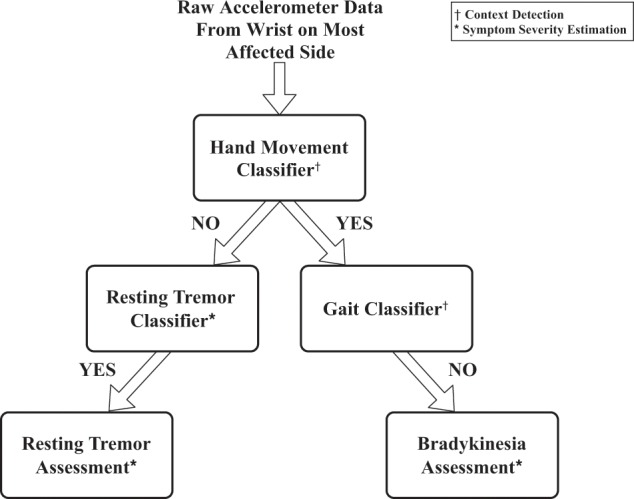
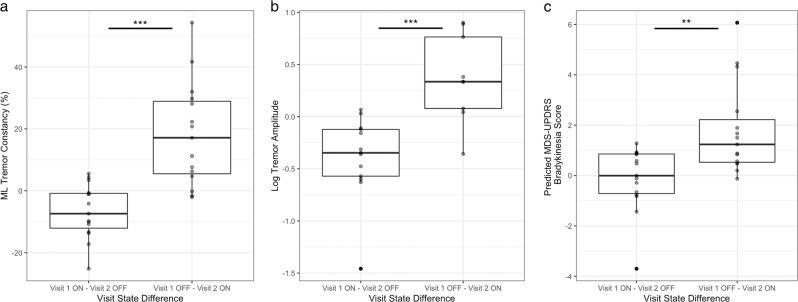
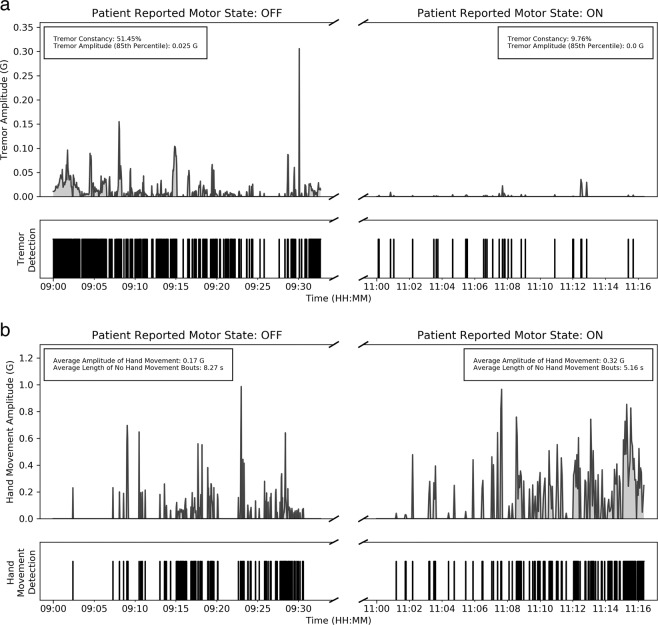
Objective assessment of Parkinson’s disease symptoms during daily life can help improve disease management and accelerate the development of new therapies. However, many current approaches require the use of multiple devices, or performance of prescribed motor activities, which makes them ill-suited for free-living conditions. Furthermore, there is a lack of open methods that have demonstrated both criterion and discriminative validity for continuous objective assessment of motor symptoms in this population. Hence, there is a need for systems that can reduce patient burden by using a minimal sensor setup while continuously capturing clinically meaningful measures of motor symptom severity under free-living conditions. We propose a method that sequentially processes epochs of raw sensor data from a single wrist-worn accelerometer by using heuristic and machine learning models in a hierarchical framework to provide continuous monitoring of tremor and bradykinesia. Results show that sensor derived continuous measures of resting tremor and bradykinesia achieve good to strong agreement with clinical assessment of symptom severity and are able to discriminate between treatment-related changes in motor states.
Overview
The claims and statistics of this paper haven’t been checked yet.
Free: it reads the open-access text and checks the first 5 claims that cite a source we can check. Create a free account to check every claim.
Integrity signals
Registry
Cites
Statistics
Figures
Verification
Claims the paper makes
The claims and statistics of this paper haven’t been checked yet.
Free: it reads the open-access text and checks the first 5 claims that cite a source we can check. Create a free account to check every claim.
Claims other papers make about this one
Each is checked against this paper’s own text: does it say what the citing paper says it does?
The source backs part of the claim, not all of it — or backs it for a different population, condition or comparison.
In the citing paper
“A sensor's location can affect the accuracy of detection22,23,42.”
From Wearable sensors during drawing tasks to measure the severity of essential tremor (2022) · cites this paper as [23]
Experimental — accuracy not yet measuredIn the citing paper
“The quality and quantity of such information depends on the compliance and motivation of patients23.”
From Wearable sensors during drawing tasks to measure the severity of essential tremor (2022) · cites this paper as [23]
Self-check
Percentages, sums and reported differences re-computed from the paper’s own numbers.
The self-check needs the paper’s full text.
Citations
Cites
A guideline of selecting and reporting intraclass correlation coefficients for reliability research
Koo, T. K., & Li, M. Y. (2016) · Journal of Chiropractic Medicine · doi:10.1016/j.jcm.2016.02.012 · Cited by 31,709
Practical Statistics for Medical Research.
Walter, S. D., & Altman, D. G. (1992) · Biometrics · doi:10.2307/2532320 · Cited by 11,668 · cited 1×
“Agreement between the video raters and live rater for tremor constancy and amplitude (which are ordinal ratings from 0 to 4) was assessed using Cohen’s Kappa K with linear weights.(61) The hand bradykinesia score was considered as a continuous variable ranging from 0 to 12, and hence the ICC was computed as a measure…”
MethodPractical Statistics for Medical Research
Altman, D. G. (1990) · doi:10.1201/9780429258589 · Cited by 10,668
Goetz, C. G., Tilley, B. C., Shaftman, S. R., Stebbins, G. T., Fahn, S., Martinez‐Martin, P., Poewe, W., Sampaio, C., Stern, M. B., Dodel, R., et al. (2008) · Movement Disorders · doi:10.1002/mds.22340 · Cited by 7,536 · cited 4×
“The assessment of bradykinesia is based the examiner’s observation of slowness, hesitancy and amplitude of movement as well as poverty or absence of movement.(9) To capture these aspects of bradykinesia, we derived four measures from raw accelerometer data: amplitude of hand movements (amplitude and slowness), smoothn…”
BackgroundMethodInfluentialAdams, J. L., Dinesh, K., Xiong, M., Tarolli, C. G., Sharma, S., Sheth, N., Aranyosi, A. J., Zhu, W., Goldenthal, S., Biglan, K. M., et al. (2017) · Digital Biomarkers · doi:10.1159/000479018 · Cited by 3,171
Lees, A. J., Hardy, J., & Revesz, T. (2009) · The Lancet · doi:10.1016/s0140-6736(09)60492-x · Cited by 1,956
DeMaagd, G. A., & Philip, A. (2015) · PubMed Central · Cited by 956
Normative spatiotemporal gait parameters in older adults
Hollman, J. H., McDade, E. M., & Petersen, R. C. (2011) · Gait & Posture · doi:10.1016/j.gaitpost.2011.03.024 · Cited by 807
Technology in Parkinson’s disease: challenges and opportunities
Espay, A. J., Bonato, P., Nahab, F. B., Maetzler, W., Dean, J. M., Klucken, J., Eskofier, B. M., Merola, A., Horak, F., Lang, A. E., et al. (2016) · Movement Disorders · doi:10.1002/mds.26642 · Cited by 654
Window Size Impact in Human Activity Recognition
Banos, O., Galvez, J.-M., Damas, M., Pomares, H., & Rojas, I. (2014) · Sensors · doi:10.3390/s140406474 · Cited by 648
Research works printed but not linked: 3
- Standaert, D. G. & Roberson, E. D. Treatment of Central Nervous System Degenerative Disorders. in Goodman & Gilman’s: The Pharmacological Basis of Therapeutics, 12e (eds Brunton, L. L., Chabner, B. A. & Knollmann, B. C.) (McGraw-Hill Education, 2015).
- Erb K The BlueSky Project: monitoring motor and non-motor characteristics of people with Parkinson’s disease in the laboratory, a simulated apartment, and home and community settings Mov. Disord. 2018 33 1990 1990
- Guyon I Elisseeff A An introduction to variable and feature selection J. Mach. Learn. Res. 2003 3 1157 1182
Cited by
Digital biomarkers: Convergence of digital health technologies and biomarkers
Vasudevan, S., Saha, A., Tarver, M. E., & Patel, B. (2022) · npj Digital Medicine · doi:10.1038/s41746-022-00583-z · Cited by 183
Parkinson’s Disease Management via Wearable Sensors: A Systematic Review
Mughal, H., Javed, A. R., Rizwan, M., Almadhor, A. S., & Kryvinska, N. (2022) · IEEE Access · doi:10.1109/access.2022.3162844 · Cited by 140
“[43]ACM vs Polysomnography to evaluate sleep-wake cycle [50] Nocturnal movement assessment via triaxial accelerometer on lower back”
BackgroundMethodInfluentialParkinson’s Disease Tremor Detection in the Wild Using Wearable Accelerometers
San-Segundo, R., Zhang, A., Cebulla, A., Panev, S., Tabor, G. F., Stebbins, K., Massa, R. E., Whitford, A. S., de la Torre, F. N., & Hodgins, J. K. (2020) · Sensors · doi:10.3390/s20205817 · Cited by 125
“Recent studies proposing the percentage of tremor as a PD biomarker to provide continuous monitoring of tremor have reported errors of over 15% [46].”
BackgroundChandrabhatla, A. S., Pomeraniec, I. J., & Ksendzovsky, A. (2022) · npj Digital Medicine · doi:10.1038/s41746-022-00568-y · Cited by 123
“…of insole sensors enabled detection of PD-related FoG episodes with 90% accuracy 51 and wrist-worn accelerometers achieved “ good to strong ” agreement with clinical ratings of resting tremor and bradykinesia, in addition to discriminating between treatment-caused changes in motor symptoms 52 .”
BackgroundEvidence from ClinicalTrials.gov on the growth of Digital Health Technologies in neurology trials
Masanneck, L., Gieseler, P., Gordon, W. J., Meuth, S. G., & Stern, A. D. (2023) · npj Digital Medicine · doi:10.1038/s41746-023-00767-1 · Cited by 109
Sigcha, L., Pavón, I., Costa, N., da Costa, S. P., Gago, M. F., Arezes, P., López, J. M., & de Arcas, G. (2021) · Sensors · doi:10.3390/s21010291 · Cited by 106
“3, and penalty parameter equal to 1), AdaBoost (100 estimators, with FTT and MFCCs), Random Forest [99] (with 10 estimators as stated in [55]), Gradient Boost (with 70 estimators as stated in [15]), a CNN (single output) with raw signals, and two multitask CNN models trained with raw signals and the FFT features.”
BackgroundMethodInfluentialGao, L., Zhang, G., Yu, B., Qiao, Z., & Wang, J. (2020) · Measurement · doi:10.1016/j.measurement.2020.108252 · Cited by 104
Bent, B., Wang, K., Grzesiak, E. A., Jiang, C., Qi, Y., Jiang, Y., Cho, P., Zingler, K., Ogbeide, F. I., Zhao, A., et al. (2020) · Journal of Clinical and Translational Science · doi:10.1017/cts.2020.511 · Cited by 104
“Research in digital biomarker development spans fields and disease states, from movement-related disorders [4] to breast cancer [5] to Alzheimer ’ s disease [6], and can conceivably be applied to any area of health, wellness, and medicine.”
Using a smartwatch and smartphone to assess early Parkinson’s disease in the WATCH-PD study
Adams, J. L., Kangarloo, T., Tracey, B., O’Donnell, P., Volfson, D., Latzman, R. D., Zach, N., Alexander, R., Bergethon, P., Cosman, J., et al. (2023) · npj Parkinson's Disease · doi:10.1038/s41531-023-00497-x · Cited by 98
“This study focused on deriving key features from a specialized software battery of assessments installed on commercially available devices, which have several advantages 16,17 .”
InfluentialSelf-citationWearable and Biodegradable Sensors for Clinical and Environmental Applications
Baldo, T. A., de Lima, L. F., Mendes, L. F., de Araujo, W. R., Paixão, T. R. L. C., & Coltro, W. K. T. (2020) · ACS Applied Electronic Materials · doi:10.1021/acsaelm.0c00735 · Cited by 98
Burq, M., Rainaldi, E., Ho, K. C., Chen, C., Bloem, B. R., Evers, L. J. W., Helmich, R. C. G., Myers, L. J., Marks, W. J., & Kapur, R. (2022) · npj Digital Medicine · doi:10.1038/s41746-022-00607-8 · Cited by 95
Wearable Devices for Assessment of Tremor
Vescio, B., Quattrone, A., Nisticò, R., Crasà, M., & Quattrone, A. (2021) · Frontiers in Neurology · doi:10.3389/fneur.2021.680011 · Cited by 82
Landscape and future directions of machine learning applications in closed-loop brain stimulation
Chandrabhatla, A. S., Pomeraniec, I. J., Horgan, T. M., Wat, E. K., & Ksendzovsky, A. (2023) · npj Digital Medicine · doi:10.1038/s41746-023-00779-x · Cited by 67
Sigcha, L., Borzì, L., Pavón, I., Costa, N., da Costa, S. P., Arezes, P., López, J. M., & de Arcas, G. (2022) · Engineering Applications of Artificial Intelligence · doi:10.1016/j.engappai.2022.105482 · Cited by 64
Di, J., Demanuele, C., Kettermann, A. E., Karahanoğlu, F. I., Cappelleri, J. C., Potter, A., Bury, D. P., Cedarbaum, J. M., & Byrom, B. (2021) · Contemporary Clinical Trials · doi:10.1016/j.cct.2021.106661 · Cited by 65
Self-citationOlaru, M., Cernera, S., Hahn, A., Wozny, T. A., Ansó, J., de Hemptinne, C., Little, S. J., Neumann, W., Abbasi-Asl, R., & Starr, P. A. (2024) · Brain · doi:10.1093/brain/awae004 · Cited by 63
Remote Assessments of Hand Function in Neurological Disorders: Systematic Review
Gopal, A., Hsu, W., Allen, D. D., & Bove, R. M. (2022) · JMIR Rehabilitation and Assistive Technologies · doi:10.2196/33157 · Cited by 61
“Study quality is summarized in Multimedia Appendix 2 [19-90].”
BackgroundMethodInfluentialGu, B., Kim, H. S., Kim, H., & Yoo, J.-I. (2025) · JMIR mhealth and uhealth · doi:10.2196/76084 · Cited by 57
The potential role for artificial intelligence in fracture risk prediction
Hong, N., Whittier, D. E., Glüer, C.-C., & Leslie, W. D. (2024) · The Lancet Diabetes & Endocrinology · doi:10.1016/s2213-8587(24)00153-0 · Cited by 53
Landers, M., Dorsey, R. E., & Saria, S. (2021) · Digital Biomarkers · doi:10.1159/000517885 · Cited by 53
“In recent explorations however, digital endpoints have used an array of sensors, from infrared cameras to commonly accessible accelerometers, for the purpose of demonstrating the burden of a patient’s disability [18].”
BackgroundDetecting Parkinson’s Disease from Wrist-Worn Accelerometry in the U.K. Biobank
Williamson, J. R., Telfer, B. A., Mullany, R., & Friedl, K. E. (2021) · Sensors · doi:10.3390/s21062047 · Cited by 53
“, tremor, freezing, and bradykinesia, in the clinic through scripted tests using wearable sensors [6,13,15,35].”
BackgroundMethodDevelopment of digital measures for nighttime scratch and sleep using wrist-worn wearable devices
Mahadevan, N., Christakis, Y., Di, J., Bruno, J., Zhang, Y., Dorsey, E. R., Pigeon, W. R., Beck, L. A., Thomas, K. C., Liu, Y., et al. (2021) · npj Digital Medicine · doi:10.1038/s41746-021-00402-x · Cited by 51
Self-citationNeuromechanical Biomarkers for Robotic Neurorehabilitation
Garro, F., Chiappalone, M., Buccelli, S., Michieli, L. D., & Semprini, M. (2021) · Frontiers in Neurorobotics · doi:10.3389/fnbot.2021.742163 · Cited by 49
“, 2020) and the biomarker-based assessments of the tremor and bradykinesia through a wrist-worn wearable (Mahadevan et al., 2020) have been published.”
BackgroundConsiderations for Conducting Bring Your Own “Device” (BYOD) Clinical Studies
Demanuele, C., Lokker, C., Jhaveri, K. A., Tuttle, P. G., Sezgın, E., Geoghegan, C., Zou, K. H., Izmailova, E. S., & Carthy, M. M. (2022) · Digital Biomarkers · doi:10.1159/000525080 · Cited by 50
Self-citationAbrami, A., Gunzler, S. A., Kilbane, C., Ostrand, R., Ho, B. K., & Cecchi, G. (2020) · Journal of Medical Internet Research · doi:10.2196/21037 · Cited by 47
Self-citationMachine Learning in Tremor Analysis: Critique and Directions
De, A., Bhatia, K. P., Volkmann, J., Peach, R. L., & Schreglmann, S. R. (2023) · Movement Disorders · doi:10.1002/mds.29376 · Cited by 47
“73,79 Sensor placement in the aforementioned studies was not uniform, ranging from, for example, wrist, 34,36,37,40,44 dorsal middle metacarpal, 38,39,52,54,82 middle phalangeal, 42 distal phalangeal, 32 and middle of the lower arm 49,58 to combinations of, for example, wrist and fi nger 43,51 or…”
BackgroundWearable Biosensors in Congenital Heart Disease
Tandon, A. A., Nguyen, H. H., Avula, S., Seshadri, D. R., Patel, A., Fares, M., Baloğlu, O., Amdani, S. M., Jafari, R., Inan, O. T., et al. (2023) · JACC Advances · doi:10.1016/j.jacadv.2023.100267 · Cited by 48
Habets, J., Herff, C., Kubben, P., Kuijf, M. L., Temel, Y., Evers, L. J. W., Bloem, B. R., Starr, P. A., Gilron, R., & Little, S. J. (2021) · Sensors · doi:10.3390/s21237876 · Cited by 44
Quantifying Tremor in Essential Tremor Using Inertial Sensors—Validation of an Algorithm
McGurrin, P. M., McNames, J., Wu, T., Hallett, M., & Haubenberger, D. (2020) · IEEE Journal of Translational Engineering in Health and Medicine · doi:10.1109/jtehm.2020.3032924 · Cited by 41
“learning algorithms to quantify tremor [10], [11], and many groups have evaluated the potential of commercial off-theshelf smart watches and smart phones [12]–[15].”
BackgroundQuantitative assessment of essential tremor based on machine learning methods using wearable device
Ma, C., Li, D., Pan, L., Li, X., Yin, C., Li, A., Zhang, Z., & Zong, R. (2021) · Biomedical Signal Processing and Control · doi:10.1016/j.bspc.2021.103244 · Cited by 40
Sigcha, L., Domínguez, B., Borzì, L., Costa, N., da Costa, S. P., Arezes, P., López, J. M., de Arcas, G., & Pavón, I. (2022) · Electronics · doi:10.3390/electronics11233879 · Cited by 40
Clinically Informed Automated Assessment of Finger Tapping Videos in Parkinson’s Disease
Yu, T., Park, K. W., McKeown, M. J., & Wang, Z. J. (2023) · Sensors · doi:10.3390/s23229149 · Cited by 41
“Various studies exploring bradykinesia, resting tremor, or rigidity in the upper limbs have employed commercially available sensors placed on the arms, wrists, or fingertips, yielding diverse outcome measures [8,15,16].”
BackgroundVescio, B., Nisticò, R., Augimeri, A., Quattrone, A., Crasà, M., & Quattrone, A. (2021) · Diagnostics · doi:10.3390/diagnostics11020200 · Cited by 39
“There is an increasing interest in methods based on accelerometers [6,7] and/or surface electromyography (EMG) electrodes, since they are readily available, non-invasive diagnostic tools.”
MethodWearable Sensor-Based Assessments for Remotely Screening Early-Stage Parkinson’s Disease
Johnson, S., Kantartjis, M., Severson, J., Dorsey, R. E., Adams, J., Kangarloo, T., Kostrzebski, M. A., Best, A., Merickel, M., Amato, D., et al. (2024) · Sensors · doi:10.3390/s24175637 · Cited by 40
“In PD, for example, both low-level signal-based [43] and high-level model-based heuristic [44] features have been developed for bradykinesia.”
BackgroundOyama, G., Burq, M., Hatano, T., Marks, W. J., Kapur, R., Fernandez, J. L., Fujikawa, K., Furusawa, Y., Nakatome, K., Rainaldi, E., et al. (2023) · Scientific Reports · doi:10.1038/s41598-023-29382-6 · Cited by 38
Cardenas, L., Parajes, K., Zhu, M. J., & Zhai, S. (2024) · IEEE Annual Computing and Communication Workshop and Conference (CCWC) · doi:10.1109/ccwc60891.2024.10427622 · Cited by 37
Arora, S., Lo, C., Hu, M., & Tsanas, A. (2021) · IEEE Access · doi:10.1109/access.2021.3057715 · Cited by 37
“These developments include the use of wearable sensors [11] and smartphones [12]–[14].”
BackgroundPolvorinos-Fernández, C., Sigcha, L., Borzì, L., Olmo, G., Asensio, C., López, J. M., de Arcas, G., & Pavón, I. (2024) · Applied Sciences · doi:10.3390/app142210189 · Cited by 37
Mehta, D. S., Asif, U., Hao, T., Bilal, E., von Cavallar, S., Harrer, S., & Rogers, J. L. (2021) · IEEE/CVF Conference on Computer Vision and Pattern Recognition Workshops (CVPRW) · doi:10.1109/cvprw53098.2021.00425 · Cited by 36
“More recently, in an effort to simplify the setup process, and more importantly for the ability to harness data from consumer devices such as smartwatch and fitness trackers, a growing body of research [3, 15] has been investigating the feasibility of leveraging only data from the wrist-worn motion sensor to estimatin…”
BackgroundDigital Phenotyping in Clinical Neurology
Gupta, A. S. (2022) · Seminars in Neurology · doi:10.1055/s-0041-1741495 · Cited by 36
Applications of deep learning methods in digital biomarker research using noninvasive sensing data
Jeong, H., Jeong, Y. W., Park, Y., Kim, K., Park, J. H., & Kang, D. R. (2022) · Digital Health · doi:10.1177/20552076221136642 · Cited by 36
“13 The symptoms of PD were evaluated by measuring tremor and bradykinesia, 14 and the gait fl uctuations in PD patients were reported using magnet-ometers and barometers, as well as accelerometers and gyro-scopes.”
MethodWearable sensors during drawing tasks to measure the severity of essential tremor
Ali, S. M., Arjunan, S. P., Peters, J., Perju-Dumbrava, L., Ding, C., Eller, M., Raghav, S., Kempster, P., Motin, M. A., Radcliffe, P. J., et al. (2022) · Scientific Reports · doi:10.1038/s41598-022-08922-6 · Cited by 35
Brand, Y. E., Schwartz, D., Gazit, E., Buchman, A. S., Gilad-Bachrach, R., & Hausdorff, J. M. (2022) · Sensors · doi:10.3390/s22187094 · Cited by 35
A Self-Powered Portable Flexible Sensor of Monitoring Speed Skating Techniques
Lu, Z., Zhu, Y., Jia, C., Zhao, T., Bian, M., Jia, C., Zhang, Y., & Mao, Y. (2021) · Biosensors · doi:10.3390/bios11040108 · Cited by 34
Far, M. S., Eickhoff, S. B., Goñi, M., & Dukart, J. (2021) · Journal of Medical Internet Research · doi:10.2196/26608 · Cited by 34
“Numerous DB have been proposed for PD diagnosis as well as for assessing agreement between clinical rating scales such as UPDRS and sensor-driven data to quantify disease severity or intervention effects [4,6-9].”
Leveraging Machine Learning for Disease Diagnoses Based on Wearable Devices: A Survey
Jiang, Z., van Zoest, V., Deng, W., Ngai, E. C. ‐., & Liu, J. (2023) · IEEE Internet of Things Journal · doi:10.1109/jiot.2023.3313158 · Cited by 34
“Mahadevan et al. [61] considered both resting tremor and FoG.”
BackgroundManta, C. J., Mahadevan, N., Bakker, J. P., Irmak, S. O., Izmailova, E. S., Park, S., Poon, J. L., Shevade, S., Valentine, S., Vandendriessche, B., et al. (2021) · Digital Biomarkers · doi:10.1159/000515835 · Cited by 33
Self-citationBorzì, L., Sigcha, L., & Olmo, G. (2023) · Sensors · doi:10.3390/s23094426 · Cited by 29
“Previous studies have explored the contextualization of activities to perform an automatic assessment of cardinal motor symptoms such as bradykinesia and tremor using both hierarchical [63] and multi-task [64] approaches, and also in FoG detection using fuzzy logic [45].”
BackgroundUpper limb intention tremor assessment: opportunities and challenges in wearable technology
Paredes-Acuña, N., Utpadel-Fischler, D., Ding, K., Thakor, N. V., & Cheng, G. (2024) · Journal of NeuroEngineering and Rehabilitation · doi:10.1186/s12984-023-01302-9 · Cited by 27
Detection of Parkinson’s Disease Using Wrist Accelerometer Data and Passive Monitoring
Rastegari, E., Ali, H., & Marmelat, V. (2022) · Sensors · doi:10.3390/s22239122 · Cited by 26
“RMS of acceleration in the anterior posterior (AP), mediolateral (ML), and vertical (Ver) directions: Root mean square (RMS) of acceleration is a time domain feature used in many studies focusing on PD symptom detection or early diagnosis of the disease [3,16,44].”
InfluentialMovement Disorders and Smart Wrist Devices: A Comprehensive Study
Caroppo, A., Manni, A., Rescio, G., Carluccio, A. M., Siciliano, P. A., & Leone, A. (2025) · Sensors · doi:10.3390/s25010266 · Cited by 25
Czech, M. D., Badley, D., Yang, L., Shen, J., Crouthamel, M., Kangarloo, T., Dorsey, E. R., Adams, J., & Cosman, J. D. (2024) · Communications Medicine · doi:10.1038/s43856-024-00481-3 · Cited by 23
“Speci fi cally, for pronation-supination sample sizes were 9, 38, 17, and 12, and for toe tapping sample sizes were 15, 33, 19, and 11 for scores of 0, 1, 2 and 3,respectively.”
Osuka, Y., Chan, L. L. Y., Brodie, M. A. D., Okubo, Y., & Lord, S. R. (2024) · Journal of the American Medical Directors Association · doi:10.1016/j.jamda.2024.105196 · Cited by 23
Sensor-Based Quantification of MDS-UPDRS III Subitems in Parkinson’s Disease Using Machine Learning
Bremm, R. P., Pavelka, L., Garcia, M. M., Mombaerts, L., Krüger, R., & Hertel, F. (2024) · Sensors · doi:10.3390/s24072195 · Cited by 24
Using machine learning to identify Parkinson’s disease severity subtypes with multimodal data
Park, H., Youm, C., Cheon, S., Kim, B., Choi, H., Hwang, J., & Kim, M. (2025) · Journal of NeuroEngineering and Rehabilitation · doi:10.1186/s12984-025-01648-2 · Cited by 22
“Further, most studies focused on evaluating motor symptoms during walking or rest using restricted data-sets, which makes it challenging to clinically validate high-dimensional features extracted from digital devices [34].”
Computer models evaluating hand tremors in Parkinson's disease patients
Legaria-Santiago, V. K., Fernández, L. P. S., Sánchez-Pérez, L. A., & Garza-Rodríguez, A. (2021) · Computers in Biology and Medicine · doi:10.1016/j.compbiomed.2021.105059 · Cited by 22
Technological support for people with Parkinson’s disease: a narrative review
Libero, T. D., Langiano, E., Carissimo, C., Ferrara, M., Diotaiuti, P., & Rodio, A. (2022) · Journal of Gerontology and Geriatrics · doi:10.36150/2499-6564-n523 · Cited by 21
A computational framework for discovering digital biomarkers of glycemic control
Bartolome, A., & Prioleau, T. (2022) · npj Digital Medicine · doi:10.1038/s41746-022-00656-z · Cited by 21
Albert, L., Potheegadoo, J., Herbelin, B., Bernasconi, F., & Blanke, O. (2024) · Nature Communications · doi:10.1038/s41467-024-45912-w · Cited by 20
Bălăeţ, M., Alhajraf, F., Zerenner, T., Welch, J., Razzaque, J., Lo, C., Giunchiglia, V., Trender, W. R., Lerede, A., Hellyer, P. J., et al. (2024) · npj Digital Medicine · doi:10.1038/s41746-024-01124-6 · Cited by 20
“Indeed, historically, most online digital tools developed for PD have focused on motor tracking rather than cognitive assessment 46 – 48 .”
Peng, X., Zhao, Y., Li, Z., Wang, X., Nan, F., Zhao, Z., Yang, Y., & Yang, P. (2025) · IEEE Transactions on Biomedical Engineering · doi:10.1109/tbme.2024.3418688 · Cited by 20
“Significance: The explanatory analysis of digital features in this study provides more prior knowledge for PD self-assessment in a free-living environment.”
InfluentialPacker, E., Debelle, H., Bailey, H. G. B., Rehman, R. Z. U., Yarnall, A. J., Rochester, L., Alcock, L., & Din, S. D. (2025) · npj Parkinson s Disease · doi:10.1038/s41531-025-00943-y · Cited by 19
“…4 studies used gyroscopes 54,58,60,61 ; 31 studies used both accelerometers and gyroscopes; 7 studies used a combination of accelerometers, gyroscopes, and magnetometers 22,23,25,28,62 – 64 ; and 3 studies used a combination of accelerometers,gyroscopes,magnetometers,andbarometers 31 – 33 .”
InfluentialDevelopment of a New Wearable Device for the Characterization of Hand Tremor
Vescio, B., Maria, M. D., Crasà, M., Nisticò, R., Calomino, C., Aracri, F., Quattrone, A., & Quattrone, A. (2023) · Bioengineering · doi:10.3390/bioengineering10091025 · Cited by 19
Sigcha, L., Polvorinos-Fernández, C., Costa, N., da Costa, S. P., Arezes, P., Gago, M. F., Lee, C., López, J. M., de Arcas, G., & Pavón, I. (2023) · Frontiers in Neurology · doi:10.3389/fneur.2023.1326640 · Cited by 19
Crowe, C., Sica, M., Kenny, L., O’Flynn, B., Mueller, D. S., Timmons, S., Barton, J. J., & Tedesco, S. A. (2024) · IEEE Transactions on Neural Systems and Rehabilitation Engineering · doi:10.1109/tnsre.2024.3477003 · Cited by 20
“Notably, Kim et al. reported an accuracy of 0.85 in differentiating tremor severity using CNNs, which outperformed other machine learning algorithms tested [39], and San Segundo et al. reported an average error of 4.1% when predicting percentage of tremor time on laboratory captured data [36].”
BackgroundMethodInfluentialMa, C., Zhang, P., Wang, J., Zhang, J., Pan, L., Li, X., Yin, C., Li, A., Zong, R., & Zhang, Z. (2022) · Computer Methods and Programs in Biomedicine · doi:10.1016/j.cmpb.2022.106741 · Cited by 17
Intraoperative Quantification of MDS-UPDRS Tremor Measurements Using 3D Accelerometry: A Pilot Study
Smid, A., Elting, J. W. J., van Dijk, J. M. C., Otten, B., Oterdoom, D. L. M., Tamási, K., Heida, T., van Laar, T., & Drost, G. (2022) · Journal of Clinical Medicine · doi:10.3390/jcm11092275 · Cited by 17
Hanrahan, M., Wilson, C., Keogh, A., Barker, S. B., Rochester, L., Brittain, K., Lumsdon, J., & Ardle, R. M. (2024) · Expert Review of Pharmacoeconomics & Outcomes Research · doi:10.1080/14737167.2024.2410245 · Cited by 15
“For instance, common motor symptoms in people with PD can be objectively measured using digital technology, including data in smartphones or inexpensive sensors [17,18], and recent technological advancements include infrared cameras and accessible accelerometers, utilizing an array of sensors [19].”
Channa, A., Ruggeri, G., Ifrim, R., Mammone, N., Iera, A., & Popescu, N. (2024) · Electronics · doi:10.3390/electronics13061002 · Cited by 14
Habets, J., Heijmans, M., Leentjens, A. F. G., Simons, C. J. P., Temel, Y., Kuijf, M. L., Kubben, P., & Herff, C. (2021) · Data · doi:10.3390/data6020022 · Cited by 14
Dattola, S., Ielo, A., Quartarone, A., & Cola, M. C. D. (2025) · Bioengineering · doi:10.3390/bioengineering12010037 · Cited by 13
Detecting Minor Symptoms of Parkinson’s Disease in the Wild Using Bi-LSTM with Attention Mechanism
Skaramagkas, V., Boura, I., Spanaki, C., Michou, E., Karamanis, G., Kefalopoulou, Z. M., & Tsiknakis, M. (2023) · Sensors · doi:10.3390/s23187850 · Cited by 13
“Moreover, bradykinesia, in contrast to rest or postural tremor, is usually detected from accelerometers when upper or lower limbs are actively moving [62,63].”
BackgroundBiosignal Compression Toolbox for Digital Biomarker Discovery
Bent, B., Lu, B., Kim, J., & Dunn, J. (2021) · Sensors · doi:10.3390/s21020516 · Cited by 12
“Digital biomarkers have applications in a number of disease states, including movement-related disorders [6], breast cancer [7], and Alzheimer’s disease [8].”
BackgroundRegalia, G., Resnati, D., & Tognetti, S. (2022) · Elsevier eBooks · doi:10.1016/b978-0-12-822548-6.00130-8 · Cited by 12
Reithe, H., Marty, B., Torrado, J. C., Førsund, E., Husebo, B. S., Erdal, A., Kverneng, S. U., Sheard, E., Tzoulis, C., & Pătraşcu, M. (2025) · BioMedical Engineering OnLine · doi:10.1186/s12938-025-01353-0 · Cited by 11
“For instance, while PKG has shown good results, the manufacturer has received criticism for not disclosing the algorithm that calculates their scores, making it unavailable for others to validate [28].”
Deep Clinical Phenotyping of Parkinson’s Disease: Towards a New Era of Research and Clinical Care
Xu, Z., Shen, B., Tang, Y., Wu, J., & Wang, J. (2022) · Phenomics · doi:10.1007/s43657-022-00051-4 · Cited by 11
Park, H., Shin, S., Youm, C., & Cheon, S. (2024) · Scientific Reports · doi:10.1038/s41598-024-75445-7 · Cited by 10
A generalizable and open-source algorithm for real-life monitoring of tremor in Parkinson’s disease
Timmermans, N. A., Terranova, R., Soriano, D. C., Cagnan, H., Raykov, Y. P., Bucur, I. G., Bloem, B. R., Helmich, R. C. G., & Evers, L. J. W. (2025) · npj Parkinson's Disease · doi:10.1038/s41531-025-01056-2 · Cited by 11
“However, external ,despitepotentialperformancedegradationduetovarying sensorpositionsorsensitivitytonoise 21,32 .”
InfluentialShuqair, M., Shahed, J. J., & Ghoraani, B. (2024) · Bioengineering · doi:10.3390/bioengineering11070689 · Cited by 10
Schmitter‐Edgecombe, M., Luna, C. M., & Cook, D. J. (2022) · Springer eBooks · doi:10.1007/978-3-031-11389-5_4 · Cited by 10
Li, Y., Wang, Z., & Dai, H. (2023) · Physiological Measurement · doi:10.1088/1361-6579/acb8fe · Cited by 10
A framework of digital biomarkers for neurodegenerative diseases
Nerrise, F., Schütz, N., Zhao, Q., Gould, C. E., Milstein, A. S., Schulman, K. A., Henderson, V. W., Landay, J. A., Fei-Fei, L., Lin, F. V., et al. (2026) · Nature Reviews Bioengineering · doi:10.1038/s44222-026-00433-7 · Cited by 9
“…measuring the motor impairment features (such as tremors, gait disturbances and bradykinesia) that are hallmarks of various NDDs that emerge at varying stages of disease progression 41,42,81–83 , for example, at early stages in PD and multiple sclerosis, and often later in Alzheimer disease 84 .”
Towards motor evaluation of Parkinson's Disease Patients using wearable inertial sensors.
Anand, V., Bilal, E., Ho, B. K., & Rice, J. J. (2020) · PubMed Central · Cited by 9
Self-citationBremm, R. P., Werle, A., Auer, C., Hertel, F., Gonçalves, J. M., & Koch, K. P. (2021) · arXiv (Cornell University) · doi:10.48550/arxiv.2108.01736 · Cited by 9
“For instance, acceleration sensors are able to detect some manifestations of pathological signs in PD, such as tremor, bradykinesia, dyskinesia, and freezing of gait [30], [31].”
BackgroundKhalil, R. M., Shulman, L. M., Gruber‐Baldini, A. L., Shakya, S., Fenderson, R., Hoven, M. V., Hausdorff, J. M., von Coelln, R., & Cummings, M. P. (2024) · Sensors · doi:10.3390/s24154983 · Cited by 8
Better Understanding Rehabilitation of Motor Symptoms: Insights from the Use of Wearables
Çelik, Y., Wall, C., Moore, J., & Godfrey, A. (2025) · Pragmatic and Observational Research · doi:10.2147/por.s396198 · Cited by 8
“94 Tremor can present as either an isolated symptom of a disease, as seen in essential tremor (ET), or as a component of various neurological disorders, including PD, 95,96 stroke, 97,98 traumatic brain injury (TBI), 99 multiple sclerosis (MS).”
Task-Oriented Intelligent Solution to Measure Parkinson’s Disease Tremor Severity
AlMahadin, G., Lotfi, A., Carthy, M. M., & Breedon, P. (2021) · Journal of Healthcare Engineering · doi:10.1155/2021/9624386 · Cited by 8
“(e data collection can be classified according to performed tasks into two main groups: scripted tasks and unscripted tasks [8].”
BackgroundRetractedBhalala, K. S., & Mansoor, H. (2025) · Bioengineering · doi:10.3390/bioengineering12101059 · Cited by 7
“Consumer-grade devices now enable the continuous collection of objective physiological measurements [10,11], while large language models demonstrate remarkable capabilities in medical data interpretation and communication [12].”
Zhai, S., Liaw, A. I., Shen, J., Xu, Y., Svetnik, V., FitzGerald, J. J., Antoniades, C. A., Holder, D., Dockendorf, M. F., Ren, J., et al. (2025) · Frontiers in Digital Health · doi:10.3389/fdgth.2024.1500811 · Cited by 7
Computerized Screening of Essential Tremor and Level of Severity Using Consumer Tablet
Motin, M. A., Peters, J., Perju‐Dumbrava, L., Ding, C., Eller, M., Raghav, S., Ali, S. M., Kempster, P. A., Radcliffe, P., & Kumar, D. (2021) · IEEE Access · doi:10.1109/access.2021.3052186 · Cited by 7
“Computerized methods using digital tablets [5]–[12] or wearable sensors [13]–[17] have potential as sensitive and quantitative assessments of writing and drawing in ET.”
MethodParkinson's Disease and Wearable Technology: An Indian Perspective
Bagrodia, V., Holla, V. V., Kamble, N. L., Pal, P. K., & Yadav, R. (2022) · Annals of Indian Academy of Neurology · doi:10.4103/aian.aian_653_22 · Cited by 7
“[26] Their further development into triaxial accelerometers along with gyroscopes and magnetometers as wearable devices created digital biomarkers for these symptoms[27] and quantified other symptoms such as postural instability[28] and freezing of gait.”
Background“Self‐care selfies”: Patient‐uploaded videos capture meaningful changes in dexterity over 6 months
Gopal, A., Torres, W. O., Winawer, I., Poole, S. T., Balan, A., Stuart, H. S., Fritz, N. E., Gelfand, J. M., Allen, D. D., & Bove, R. M. (2023) · Annals of Clinical and Translational Neurology · doi:10.1002/acn3.51928 · Cited by 6
Li, S., Chen, S., Yu, X., Shang, H., Tu, T.-T., & Quan, M. (2026) · Journal of Medical Internet Research · doi:10.2196/85596 · Cited by 6
“…reinforcing assessment paradigms built around controlled tasks; however, it also structurally steers research toward motor outcomes (eg, gait, freezing of gait, tremor, and bradykinesia), making sleep, mood, and cognition more difficult to capture continuously and comprehensively [38,46,53].”
InfluentialYu, Z., Su, D., Li, S., Lin, S., Ren, K., & Feng, T. (2026) · Translational Neurodegeneration · doi:10.1186/s40035-026-00558-0 · Cited by 6
“In the context of PD, digital biomarkers can directly capture features of motor and behavioral abnormalities and thus offer advantages in treatment-response evaluation, capturing short-term disease-modification effects, and continuous monitoring of motor fluctuations [157, 182, 186, 228].”
InfluentialOsuka, Y., Chan, L. L. Y., Brodie, M. A. D., Okubo, Y., & Lord, S. R. (2025) · Age and Ageing · doi:10.1093/ageing/afaf210 · Cited by 5
Ma, C., Zhang, P., Pan, L., Li, X., Yin, C., Li, A., Zong, R., & Zhang, Z. (2022) · Journal of King Saud University - Computer and Information Sciences · doi:10.1016/j.jksuci.2022.08.009 · Cited by 5
GluMarker: A Novel Predictive Modeling of Glycemic Control Through Digital Biomarkers
Zhou, Z., Cheng, M., Diao, X., Cui, Y., & Li, X. (2024) · Annual International Conference of the IEEE Engineering in Medicine and Biology Society (EMBC) · doi:10.1109/embc53108.2024.10782165 · Cited by 5
“Digital biomarkers [1], [2] are an emergent class of medical indicators derived from data collected via digital devices, such as wearables, smartphones, and other sensor-equipped technologies.”
Mobile health technologies for the management of Parkinson’s disease
Bougea, A. M. (2025) · Expert Review of Neurotherapeutics · doi:10.1080/14737175.2025.2580468 · Cited by 4
“Even though PKG has demonstrated positive outcomes, the manufacturer has been facing criticism for not to reveal the algorithm that was used to determine their rankings, which prevents others from validating them [76].”
Alzheimer’s And Parkinson’s Disease Classification Using Deep Learning Based On MRI: A Review
Suganya, A., & Aarthy, S. L. (2023) · International Journal of Communication Networks and Information Security (IJCNIS) · doi:10.17762/ijcnis.v14i1s.5588 · Cited by 4
Albert, L., Bernasconi, F., Potheegadoo, J., & Blanke, O. (2024) · Parkinsonism & Related Disorders · doi:10.1016/j.parkreldis.2024.107195 · Cited by 4
Metadata
- Authors
- Mahadevan, N., Demanuele, C., Zhang, H., Volfson, D., Ho, B., Erb, M. K., & Patel, S.
- Affiliations
- Pfizer (United States) (US)
- Tufts Medical Center (US)
- Corresponding author
- Patel, Shyamal
- ORCID
- Venue
- npj Digital Medicine
- Published
- 2020-01-15
- Volume
- 3
- Issue
- 1
- Pages
- 5-5
- ISSN
- 2398-6352 (ISSN-L)
- PMC
- PMC6962225
- OpenAlex
- W2999749474
- Cited by
- 138
- References
- 58
- Citations by year
- 2026: 13 · 2025: 25 · 2024: 24 · 2023: 19 · 2022: 25 · 2021: 24 · 2020: 8
- FWCI
- 7.39
- Type
- journal article
- Language
- en
- Open access
- gold
- doi.org
- Licence
- cc-by
- creativecommons.org/licenses/by/4.0 (tdm)
- creativecommons.org/licenses/by/4.0 (vor)
- Locations
- npj Digital Medicine (publishedVersion, cc-by)
- PubMed Central (publishedVersion, cc-by)
- PubMed (publishedVersion)
- DOAJ (DOAJ: Directory of Open Access Journals) (submittedVersion)
- DOAJ (DOAJ: Directory of Open Access Journals) (submittedVersion, cc-by-sa)
- Funders
- Pfizer
- Topics
- Physical Sciences › Computer Science › Computer Vision and Pattern Recognition › Context-Aware Activity Recognition Systems
- Health Sciences › Medicine › Clinical Neurology › Parkinson's Disease Mechanisms and Treatments
- Physical Sciences › Engineering › Biomedical Engineering › Non-Invasive Vital Sign Monitoring
- Keywords
- Parkinson's disease, resting tremor, bradykinesia, digital biomarkers, wrist-worn accelerometers, wearable sensors, free-living conditions
About these checks
Registry, retraction, Cites and statistics results are computed, not judged, with one exception: a printed reference that no index lists is read once by a model before it counts as a citation error. Claims are extracted by a model and kept only when their quote appears verbatim in the text; each cited source is then checked, with a model’s help, for whether it says what the claim relies on. Those verdicts can be wrong — read the claim’s quote and the cited source before relying on one.
Statistics and arithmetic are recomputed, not judged.
Confidence bands are shown only for fields calibrated on our annotated test set. None is calibrated yet, so no band is shown.
What counts as a claim ›How we measure confidence ›How we check this ›
Are you an author, or do you see a problem with this page? Request a review
Data sources
Bibliographic data: Semantic Scholar, OpenAlex, Crossref.
Contains information from the Semantic Scholar Academic Graph Datasets, made available under the ODC Attribution License (ODC-BY 1.0).
Semantic Scholar’s data is described in: Kinney, R., et al. (2023). The Semantic Scholar Open Data Platform. arXiv:2301.10140.
