

Development of digital biomarkers for resting tremor and bradykinesia using a wrist-worn wearable device
Open accessThe DOI matches its Crossref record; 57 of the 58 references it cites were found in a registry or an index.
Abstract
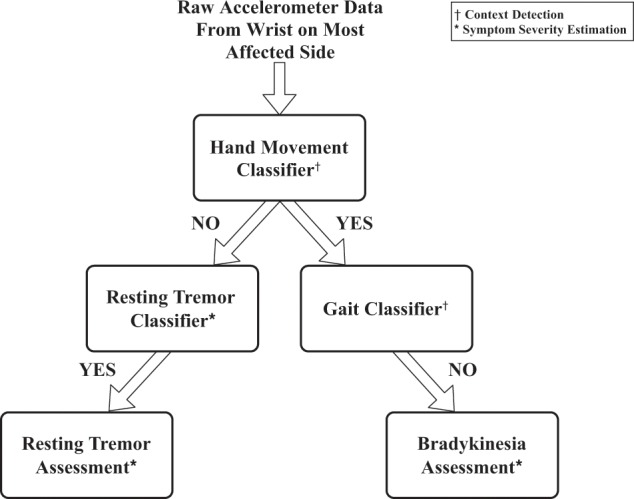
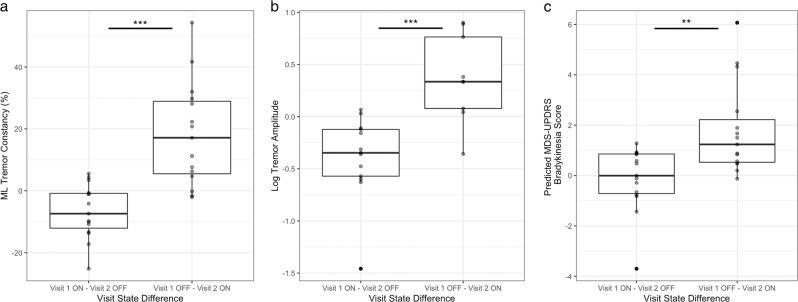
Objective assessment of Parkinson’s disease symptoms during daily life can help improve disease management and accelerate the development of new therapies. However, many current approaches require the use of multiple devices, or performance of prescribed motor activities, which makes them ill-suited for free-living conditions. Furthermore, there is a lack of open methods that have demonstrated both criterion and discriminative validity for continuous objective assessment of motor symptoms in this population. Hence, there is a need for systems that can reduce patient burden by using a minimal sensor setup while continuously capturing clinically meaningful measures of motor symptom severity under free-living conditions. We propose a method that sequentially processes epochs of raw sensor data from a single wrist-worn accelerometer by using heuristic and machine learning models in a hierarchical framework to provide continuous monitoring of tremor and bradykinesia. Results show that sensor derived continuous measures of resting tremor and bradykinesia achieve good to strong agreement with clinical assessment of symptom severity and are able to discriminate between treatment-related changes in motor states.
Overview
The claims and statistics of this paper haven’t been checked yet.
Free: it reads the open-access text and checks the first 5 claims that cite a source we can check. Create a free account to check every claim.
Integrity signals
Registry
Cites
Statistics
Figures
Verification
Claims the paper makes
The claims and statistics of this paper haven’t been checked yet.
Free: it reads the open-access text and checks the first 5 claims that cite a source we can check. Create a free account to check every claim.
Claims other papers make about this one
Each is checked against this paper’s own text: does it say what the citing paper says it does?
The source backs part of the claim, not all of it — or backs it for a different population, condition or comparison.
In the citing paper
“A sensor's location can affect the accuracy of detection22,23,42.”
From Wearable sensors during drawing tasks to measure the severity of essential tremor (2022) · cites this paper as [23]
Experimental — accuracy not yet measuredIn the citing paper
“The quality and quantity of such information depends on the compliance and motivation of patients23.”
From Wearable sensors during drawing tasks to measure the severity of essential tremor (2022) · cites this paper as [23]
Self-check
Percentages, sums and reported differences re-computed from the paper’s own numbers.
The self-check needs the paper’s full text.
Citations
Cites
A guideline of selecting and reporting intraclass correlation coefficients for reliability research
Koo, T. K., & Li, M. Y. (2016) · Journal of Chiropractic Medicine · doi:10.1016/j.jcm.2016.02.012 · Cited by 31,709
Practical Statistics for Medical Research.
Walter, S. D., & Altman, D. G. (1992) · Biometrics · doi:10.2307/2532320 · Cited by 11,668 · cited 1×
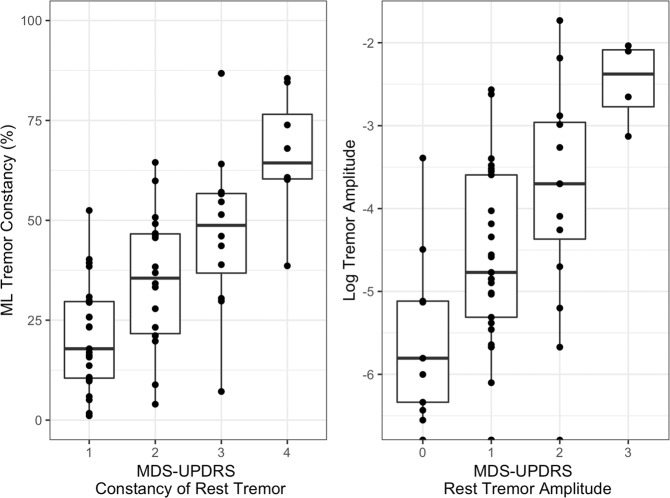
“Agreement between the video raters and live rater for tremor constancy and amplitude (which are ordinal ratings from 0 to 4) was assessed using Cohen’s Kappa K with linear weights.(61) The hand bradykinesia score was considered as a continuous variable ranging from 0 to 12, and hence the ICC was computed as a measure…”
MethodPractical Statistics for Medical Research
Altman, D. G. (1990) · doi:10.1201/9780429258589 · Cited by 10,668
Goetz, C. G., Tilley, B. C., Shaftman, S. R., Stebbins, G. T., Fahn, S., Martinez‐Martin, P., Poewe, W., Sampaio, C., Stern, M. B., Dodel, R., et al. (2008) · Movement Disorders · doi:10.1002/mds.22340 · Cited by 7,536 · cited 4×
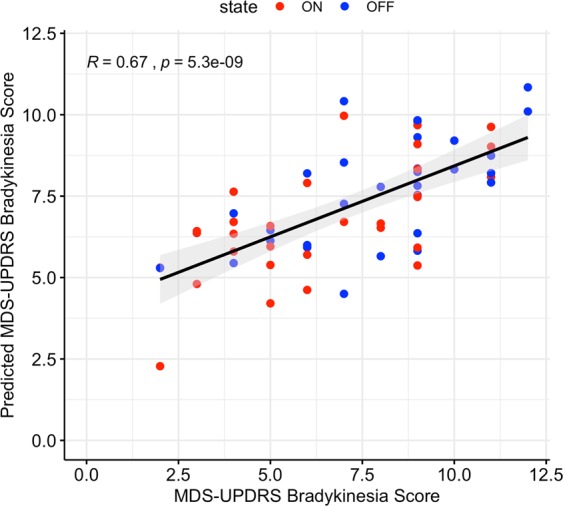
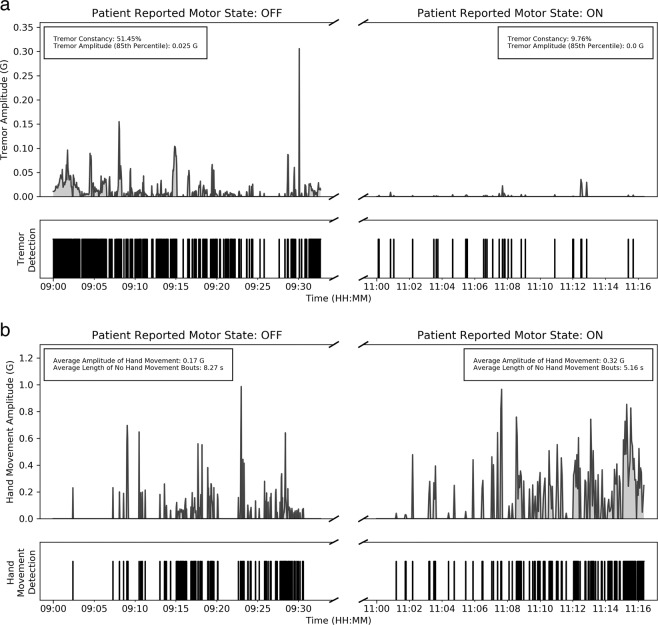
“The assessment of bradykinesia is based the examiner’s observation of slowness, hesitancy and amplitude of movement as well as poverty or absence of movement.(9) To capture these aspects of bradykinesia, we derived four measures from raw accelerometer data: amplitude of hand movements (amplitude and slowness), smoothn…”
BackgroundMethodInfluentialAdams, J. L., Dinesh, K., Xiong, M., Tarolli, C. G., Sharma, S., Sheth, N., Aranyosi, A. J., Zhu, W., Goldenthal, S., Biglan, K. M., et al. (2017) · Digital Biomarkers · doi:10.1159/000479018 · Cited by 3,171
Lees, A. J., Hardy, J., & Revesz, T. (2009) · The Lancet · doi:10.1016/s0140-6736(09)60492-x · Cited by 1,956
DeMaagd, G. A., & Philip, A. (2015) · PubMed Central · Cited by 956
Normative spatiotemporal gait parameters in older adults
Hollman, J. H., McDade, E. M., & Petersen, R. C. (2011) · Gait & Posture · doi:10.1016/j.gaitpost.2011.03.024 · Cited by 807
Technology in Parkinson’s disease: challenges and opportunities
Espay, A. J., Bonato, P., Nahab, F. B., Maetzler, W., Dean, J. M., Klucken, J., Eskofier, B. M., Merola, A., Horak, F., Lang, A. E., et al. (2016) · Movement Disorders · doi:10.1002/mds.26642 · Cited by 654
Window Size Impact in Human Activity Recognition
Banos, O., Galvez, J.-M., Damas, M., Pomares, H., & Rojas, I. (2014) · Sensors · doi:10.3390/s140406474 · Cited by 648
The mPower study, Parkinson disease mobile data collected using ResearchKit
Bot, B. M., Suver, C., Neto, E. C., Kellen, M., Klein, A., Bare, C., Doerr, M., Pratap, A., Wilbanks, J., Dorsey, E. R., et al. (2016) · Scientific Data · doi:10.1038/sdata.2016.11 · Cited by 630
Monitoring Motor Fluctuations in Patients With Parkinson's Disease Using Wearable Sensors
Patel, S., Lorincz, K., Hughes, R., Huggins, N., Growdon, J., Standaert, D., Akay, M., Dy, J., Welsh, M., & Bonato, P. (2009) · IEEE Transactions on Information Technology in Biomedicine · doi:10.1109/titb.2009.2033471 · Cited by 623
Self-citationDyskinesias and motor fluctuations in Parkinson's disease
Schrag, A., & Quinn, N. (2000) · Brain · doi:10.1093/brain/123.11.2297 · Cited by 600 · cited 1×
“However, as the disease progresses, patients often develop complications like dyskinesias and motor fluctuations, which reduces the efficacy of levodopa-based treatments.(6) Despite many advances in the development of therapies for managing PD symptoms, there are currently no available therapies that slow disease prog…”
BackgroundPathophysiology of Parkinsonism
Galvan, A., & Wichmann, T. (2008) · Clinical Neurophysiology · doi:10.1016/j.clinph.2008.03.017 · Cited by 549
Motor fluctuations and dyskinesias in Parkinson's disease: Clinical manifestations
Jankovic, J. (2005) · Movement Disorders · doi:10.1002/mds.20458 · Cited by 547
Sensitivity of Smoothness Measures to Movement Duration, Amplitude, and Arrests
Hogan, N., & Sternad, D. (2009) · Journal of Motor Behavior · doi:10.3200/35-09-004-rc · Cited by 440
How Wearable Sensors Can Support Parkinson's Disease Diagnosis and Treatment: A Systematic Review
Rovini, E., Maremmani, C., & Cavallo, F. (2017) · Frontiers in Neuroscience · doi:10.3389/fnins.2017.00555 · Cited by 426
Salarian, A., Russmann, H., Wider, C., Burkhard, P. R., Vingerhoets, F. J. G., & Aminian, K. (2007) · IEEE Transactions on Biomedical Engineering · doi:10.1109/tbme.2006.886670 · Cited by 416 · cited 1×
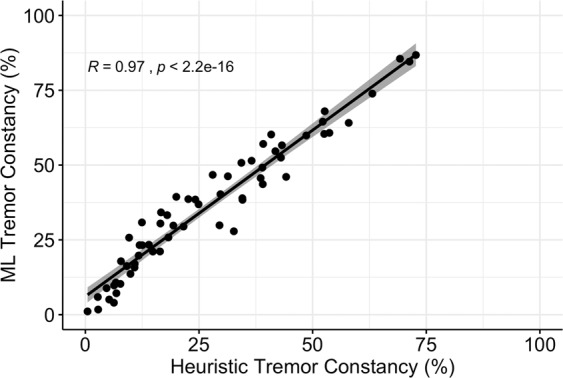
“published gyroscope-based heuristic algorithm.(15) This translates into sensor-derived tremor constancy of 4.”
Zhan, A., Mohan, S., Tarolli, C., Schneider, R. B., Adams, J. L., Sharma, S., Elson, M. J., Spear, K. L., Glidden, A. M., Little, M. A., et al. (2018) · JAMA Neurology · doi:10.1001/jamaneurol.2018.0809 · Cited by 381
Quantitative wearable sensors for objective assessment of Parkinson's disease
Maetzler, W., Domingos, J., Srulijes, K., Ferreira, J. J., & Bloem, B. R. (2013) · Movement Disorders · doi:10.1002/mds.25628 · Cited by 374 · cited 1×
“Advances in sensing technology have fostered the development of new methods for objective measurement of PD motor symptoms.(13) Early efforts(14) were focused on the development and validation of methods with data collected using multiple sensing modalities (e.”
MethodInterrater reliability of the unified Parkinson's disease rating scale motor examination
Richards, M., Marder, K., Cote, L., & Mayeux, R. (1994) · Movement Disorders · doi:10.1002/mds.870090114 · Cited by 318
Hauser, R. A., Friedlander, J., Zesiewicz, T. A., Adler, C. H., Seeberger, L. C., O'Brien, C. F., Molho, E. S., & Factor, S. A. (2000) · Clinical Neuropharmacology · doi:10.1097/00002826-200003000-00003 · Cited by 300
Automated Assessment of Bradykinesia and Dyskinesia in Parkinson's Disease
Griffiths, R. I., Kotschet, K., Arfon, S., Xu, Z. M., Johnson, W., Drago, J., Evans, A., Kempster, P., Raghav, S., & Horne, M. K. (2012) · Journal of Parkinson’s Disease · doi:10.3233/jpd-2012-11071 · Cited by 280
Assessment of Tremor Activity in the Parkinson’s Disease Using a Set of Wearable Sensors
Rigas, G., Tzallas, A. T., Tsipouras, M. G., Bougia, P., Tripoliti, E. E., Baga, D., Fotiadis, D. I., Tsouli, S. G., & Konitsiotis, S. (2012) · IEEE Transactions on Information Technology in Biomedicine · doi:10.1109/titb.2011.2182616 · Cited by 241
The clinical heterogeneity of Parkinson's disease and its therapeutic implications
Greenland, J. C., Williams‐Gray, C. H., & Barker, R. A. (2019) · European Journal of Neuroscience · doi:10.1111/ejn.14094 · Cited by 237
Parkinson's disease home diary: Further validation and implications for clinical trials
Hauser, R. A., Deckers, F., & Lehert, P. (2004) · Movement Disorders · doi:10.1002/mds.20248 · Cited by 194
Accuracy of Self-Reported Disability in Patients With Parkinsonism
Brown, R. G., MacCarthy, B., Jahanshahi, M., & Marsden, C. D. (1989) · Archives of Neurology · doi:10.1001/archneur.1989.00520450025014 · Cited by 175
PERFORM: A System for Monitoring, Assessment and Management of Patients with Parkinson’s Disease
Tzallas, A., Tsipouras, M., Rigas, G., Tsalikakis, D., Karvounis, E., Chondrogiorgi, M., Psomadellis, F., Cancela, J., Pastorino, M., Waldmeyer, M., et al. (2014) · Sensors · doi:10.3390/s141121329 · Cited by 171
A clinical view on the development of technology‐based tools in managing Parkinson's disease
Maetzler, W., Klucken, J., & Horne, M. (2016) · Movement Disorders · doi:10.1002/mds.26673 · Cited by 162 · cited 1×
“An opportunity for the research community is to come up with new objective measures or scales along with target ranges that can be used for clinical decision-making.(47) While there are practical advantages to minimizing the number of devices, because PD motor symptoms can manifest across the body, application of the…”
BackgroundThe first frontier: digital biomarkers for neurodegenerative disorders
Dorsey, E. R., Papapetropoulos, S., Xiong, M., & Kieburtz, K. (2017) · Digital Biomarkers · doi:10.1159/000477383 · Cited by 162
Feasibility of large-scale deployment of multiple wearable sensors in Parkinson's disease
Silva de Lima, A. L., Hahn, T., Evers, L. J. W., de Vries, N. M., Cohen, E., Afek, M., Bataille, L., Daeschler, M., Claes, K., Boroojerdi, B., et al. (2017) · PLOS ONE · doi:10.1371/journal.pone.0189161 · Cited by 162 · cited 1×
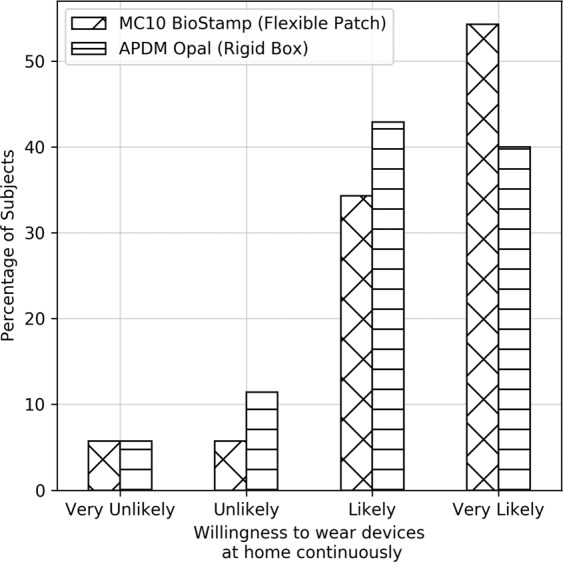
“However, while we observed a strong preference for wrist-worn devices, in a large study (N= 953) aimed at assessing feasibility of using wearable devices for long-term (monitoring duration ranged from 6 to 13 weeks) continuous monitoring of PD motor symptoms, the median compliance for the wrist-worn device was only 65…”
BackgroundAmbulatory motor assessment in Parkinson's disease
Keijsers, N. L. W., Horstink, M. W. I. M., & Gielen, S. C. A. M. (2006) · Movement Disorders · doi:10.1002/mds.20633 · Cited by 158
Patient Diaries As a Clinical Endpoint in Parkinson's Disease Clinical Trials
Papapetropoulos, S. (. (2012) · CNS Neuroscience & Therapeutics · doi:10.1111/j.1755-5949.2011.00253.x · Cited by 145 · cited 1×
“However, issues such as lack of compliance, recall bias and diary fatigue limit the accuracy of information that can be collected with this approach.(11) The limitations of these tools contribute to the need for large sample sizes and long durations of clinical trials for new therapies, and increase the risk of failur…”
BackgroundContinuous Assessment of Levodopa Response in Parkinson's Disease Using Wearable Motion Sensors
Pulliam, C. L., Heldman, D. A., Brokaw, E. B., Mera, T. O., Mari, Z. K., & Burack, M. A. (2017) · IEEE Transactions on Biomedical Engineering · doi:10.1109/tbme.2017.2697764 · Cited by 138 · cited 2×
“Using multi-modal (accelerometer and gyroscope) data recorded from devices located on the wrist and ankle of the most affected side, Pulliam et al.(27) were able to achieve good accuracy (AUC > 0.”
MethodInfluentialAmbulatory Monitoring of Activities and Motor Symptoms in Parkinson's Disease
Zwartjes, D. G. M., Heida, T., van Vugt, J. P. P., Geelen, J. A. G., & Veltink, P. H. (2010) · IEEE Transactions on Biomedical Engineering · doi:10.1109/tbme.2010.2049573 · Cited by 128 · cited 2×
“For example, Zwartjes et al.(29) proposed a hierarchical framework for context specific assessment of tremor and bradykinesia using inertial sensors (accelerometer and gyroscope) located at four locations on the body.”
BackgroundLee, S. I., Adans-Dester, C. P., Grimaldi, M., Dowling, A. V., Horak, P. C., Black-Schaffer, R. M., Bonato, P., & Gwin, J. T. (2018) · IEEE Journal of Translational Engineering in Health and Medicine · doi:10.1109/jtehm.2018.2829208 · Cited by 119
Novel Methods and Technologies for 21st-Century Clinical Trials: A Review
Dorsey, E. R., Venuto, C., Venkataraman, V., Harris, D. A., & Kieburtz, K. (2015) · JAMA Neurology · doi:10.1001/jamaneurol.2014.4524 · Cited by 118
Monitoring Motor Symptoms During Activities of Daily Living in Individuals With Parkinson's Disease
Thorp, J. E., Adamczyk, P. G., Ploeg, H., & Pickett, K. A. (2018) · Frontiers in Neurology · doi:10.3389/fneur.2018.01036 · Cited by 114 · cited 1×
“In order to deploy wearable sensors in a real-world setting, it is essential to develop and validate methods that are able to extract clinically meaningful information from data collected during unstructured activities typically performed under free-living conditions while relying on a minimal number of devices.(21) I…”
BackgroundDynamical Learning and Tracking of Tremor and Dyskinesia From Wearable Sensors
Cole, B. T., Roy, S. H., De Luca, C. J., & Nawab, S. H. (2014) · IEEE Transactions on Neural Systems and Rehabilitation Engineering · doi:10.1109/tnsre.2014.2310904 · Cited by 108
Lakshminarayana, R., Wang, D., Burn, D., Chaudhuri, K. R., Galtrey, C., Guzman, N. V., Hellman, B., James, B., Pal, S., Stamford, J., et al. (2017) · npj Parkinson's Disease · doi:10.1038/s41531-016-0003-z · Cited by 106
Ferreira, J. J., Godinho, C., Santos, A. T., Domingos, J., Abreu, D., Lobo, R., Gonçalves, N., Barra, M., Larsen, F., Fagerbakke, Ø., et al. (2015) · BMC Neurology · doi:10.1186/s12883-015-0343-z · Cited by 96
Galperin, I., Hillel, I., Del Din, S., Bekkers, E. M. J., Nieuwboer, A., Abbruzzese, G., Avanzino, L., Nieuwhof, F., Bloem, B. R., Rochester, L., et al. (2019) · Parkinsonism & Related Disorders · doi:10.1016/j.parkreldis.2019.01.022 · Cited by 96 · cited 1×
“These endpoints, which are typically based on either infrequent clinical assessments or unreliable patient self-reports, can fail to capture the impact of disease on daily life.(44) Wearable devices, which can provide objective and high resolution monitoring of motor symptoms, have the potential to deliver new insight…”
BackgroundAssuring interrater reliability for the UPDRS motor section: Utility of the UPDRS teaching tape
Goetz, C. G., & Stebbins, G. T. (2004) · Movement Disorders · doi:10.1002/mds.20220 · Cited by 93 · cited 1×
“While the heuristic algorithm might not provide perfect labels, it is preferable to manually annotating videos, which is extremely time consuming, error prone and suffers from inter and intra rater reliability issues.(59) To generate labels for the positive class (tremor present), we applied the heuristic algorithm to…”
MethodPatel, S., Lorincz, K., Hughes, R., Huggins, N., Growdon, J. H., Welsh, M., & Bonato, P. (2007) · 2007 29th Annual International Conference of the IEEE Engineering in Medicine and Biology Society · doi:10.1109/iembs.2007.4353793 · Cited by 92 · cited 1×
“We chose a 3-s window length for the gait and tremor classifier based on prior work(14,54) in the area of monitoring PD symptoms and human activity recognition that has shown that this duration provides sufficient resolution for extracting relevant time and frequency domain features.(55) Because tremor has a fundament…”
MethodSelf-citationAn Objective Fluctuation Score for Parkinson's Disease
Horne, M. K., McGregor, S., & Bergquist, F. (2015) · PLOS ONE · doi:10.1371/journal.pone.0124522 · Cited by 88
Lee, H. J., Lee, W. W., Kim, S. K., Park, H.-Y., Jeon, H. S., Kim, H. B., Jeon, B. S., & Park, K. S. (2016) · Journal of the Neurological Sciences · doi:10.1016/j.jns.2016.01.058 · Cited by 83
Body-worn sensors in Parkinson’s disease: evaluating their acceptability to patients
Fisher, J. M., Hammerla, N. Y., Rochester, L., Andras, P., & Walker, R. W. (2016) · Telemedicine and e-Health · doi:10.1089/tmj.2015.0026 · Cited by 81
Hoff, J. I., van der Meer, V., & van Hilten, J. J. (2004) · Clinical Neuropharmacology · doi:10.1097/00002826-200403000-00002 · Cited by 64
Teshuva, I., Hillel, I., Gazit, E., Giladi, N., Mirelman, A., & Hausdorff, J. M. (2019) · Journal of Neural Transmission · doi:10.1007/s00702-019-02017-9 · Cited by 63
High‐resolution tracking of motor disorders in Parkinson's disease during unconstrained activity
Roy, S. H., Cole, B. T., Gilmore, L. D., De Luca, C. J., Thomas, C. A., Saint‐Hilaire, M. M., & Nawab, S. H. (2013) · Movement Disorders · doi:10.1002/mds.25391 · Cited by 61 · cited 2×
“A multi-modal system proposed by Roy et al.28 uses accelerometer and surface EMG data recorded from four wearable devices placed on the limbs for monitoring tremor and dyskinesia during unconstrained activity.”
MethodIsaacson, S., Boroojerdi, B., Waln, O., McGraw, M., Kreitzman, D. L., Klos, K. J., Revilla, F. J., Heldman, D. A., Phillips, M., Terricabras, D., et al. (2019) · Parkinsonism & Related Disorders · doi:10.1016/j.parkreldis.2019.01.025 · Cited by 60
Gazelle: Energy-Efficient Wearable Analysis for Running
Liu, Q., Williamson, J. A., Li, K., Mohrman, W., Lv, Q., Dick, R. P., & Shang, L. (2016) · IEEE Transactions on Mobile Computing · doi:10.1109/tmc.2016.2623304 · Cited by 55
Santiago, A., Langston, J. W., Gandhy, R., Dhall, R., Brillman, S., Rees, L., & Barlow, C. (2018) · Journal of Parkinson s Disease · doi:10.3233/jpd-181373 · Cited by 53
Motivational modulation of bradykinesia in Parkinson’s disease off and on dopaminergic medication
Kojovic, M., Mir, P., Trender-Gerhard, I., Schneider, S. A., Pareés, I., Edwards, M. J., Bhatia, K. P., & Jahanshahi, M. (2014) · Journal of Neurology · doi:10.1007/s00415-014-7315-x · Cited by 44
Khodakarami, H., Farzanehfar, P., & Horne, M. K. (2019) · Sensors · doi:10.3390/s19102241 · Cited by 41
[5 years younger than the Polish People's Republic].
Dziedzic, J. (1970) · PubMed · Cited by 39
Quantitative Measurement of Akinesia in Parkinson's Disease
Lalvay, L., Lara, M., Mora, A., Alarcón, F., Fraga, M., Pancorbo, J., Marina, J. L., Mena, M. A., Sendón, J. L. L., & de Yébenes, J. G. (2016) · Movement Disorders Clinical Practice · doi:10.1002/mdc3.12410 · Cited by 19
Research works printed but not linked: 3
- Standaert, D. G. & Roberson, E. D. Treatment of Central Nervous System Degenerative Disorders. in Goodman & Gilman’s: The Pharmacological Basis of Therapeutics, 12e (eds Brunton, L. L., Chabner, B. A. & Knollmann, B. C.) (McGraw-Hill Education, 2015).
- Erb K The BlueSky Project: monitoring motor and non-motor characteristics of people with Parkinson’s disease in the laboratory, a simulated apartment, and home and community settings Mov. Disord. 2018 33 1990 1990
- Guyon I Elisseeff A An introduction to variable and feature selection J. Mach. Learn. Res. 2003 3 1157 1182
Cited by
Digital biomarkers: Convergence of digital health technologies and biomarkers
Vasudevan, S., Saha, A., Tarver, M. E., & Patel, B. (2022) · npj Digital Medicine · doi:10.1038/s41746-022-00583-z · Cited by 183
Parkinson’s Disease Management via Wearable Sensors: A Systematic Review
Mughal, H., Javed, A. R., Rizwan, M., Almadhor, A. S., & Kryvinska, N. (2022) · IEEE Access · doi:10.1109/access.2022.3162844 · Cited by 140
“[43]ACM vs Polysomnography to evaluate sleep-wake cycle [50] Nocturnal movement assessment via triaxial accelerometer on lower back”
BackgroundMethodInfluentialParkinson’s Disease Tremor Detection in the Wild Using Wearable Accelerometers
San-Segundo, R., Zhang, A., Cebulla, A., Panev, S., Tabor, G. F., Stebbins, K., Massa, R. E., Whitford, A. S., de la Torre, F. N., & Hodgins, J. K. (2020) · Sensors · doi:10.3390/s20205817 · Cited by 125
“Recent studies proposing the percentage of tremor as a PD biomarker to provide continuous monitoring of tremor have reported errors of over 15% [46].”
BackgroundChandrabhatla, A. S., Pomeraniec, I. J., & Ksendzovsky, A. (2022) · npj Digital Medicine · doi:10.1038/s41746-022-00568-y · Cited by 123
“…of insole sensors enabled detection of PD-related FoG episodes with 90% accuracy 51 and wrist-worn accelerometers achieved “ good to strong ” agreement with clinical ratings of resting tremor and bradykinesia, in addition to discriminating between treatment-caused changes in motor symptoms 52 .”
BackgroundEvidence from ClinicalTrials.gov on the growth of Digital Health Technologies in neurology trials
Masanneck, L., Gieseler, P., Gordon, W. J., Meuth, S. G., & Stern, A. D. (2023) · npj Digital Medicine · doi:10.1038/s41746-023-00767-1 · Cited by 109
Metadata
- Authors
- Mahadevan, N., Demanuele, C., Zhang, H., Volfson, D., Ho, B., Erb, M. K., & Patel, S.
- Affiliations
- Pfizer (United States) (US)
- Tufts Medical Center (US)
- Corresponding author
- Patel, Shyamal
- ORCID
- Venue
- npj Digital Medicine
- Published
- 2020-01-15
- Volume
- 3
- Issue
- 1
- Pages
- 5-5
- ISSN
- 2398-6352 (ISSN-L)
- PMC
- PMC6962225
- OpenAlex
- W2999749474
- Cited by
- 138
- References
- 58
- Citations by year
- 2026: 13 · 2025: 25 · 2024: 24 · 2023: 19 · 2022: 25 · 2021: 24 · 2020: 8
- FWCI
- 7.39
- Type
- journal article
- Language
- en
- Open access
- gold
- doi.org
- Licence
- cc-by
- creativecommons.org/licenses/by/4.0 (tdm)
- creativecommons.org/licenses/by/4.0 (vor)
- Locations
- npj Digital Medicine (publishedVersion, cc-by)
- PubMed Central (publishedVersion, cc-by)
- PubMed (publishedVersion)
- DOAJ (DOAJ: Directory of Open Access Journals) (submittedVersion)
- DOAJ (DOAJ: Directory of Open Access Journals) (submittedVersion, cc-by-sa)
- Funders
- Pfizer
- Topics
- Physical Sciences › Computer Science › Computer Vision and Pattern Recognition › Context-Aware Activity Recognition Systems
- Health Sciences › Medicine › Clinical Neurology › Parkinson's Disease Mechanisms and Treatments
- Physical Sciences › Engineering › Biomedical Engineering › Non-Invasive Vital Sign Monitoring
- Keywords
- Parkinson's disease, resting tremor, bradykinesia, digital biomarkers, wrist-worn accelerometers, wearable sensors, free-living conditions
About these checks
Registry, retraction, Cites and statistics results are computed, not judged, with one exception: a printed reference that no index lists is read once by a model before it counts as a citation error. Claims are extracted by a model and kept only when their quote appears verbatim in the text; each cited source is then checked, with a model’s help, for whether it says what the claim relies on. Those verdicts can be wrong — read the claim’s quote and the cited source before relying on one.
Statistics and arithmetic are recomputed, not judged.
Confidence bands are shown only for fields calibrated on our annotated test set. None is calibrated yet, so no band is shown.
What counts as a claim ›How we measure confidence ›How we check this ›
Are you an author, or do you see a problem with this page? Request a review
Data sources
Bibliographic data: Semantic Scholar, OpenAlex, Crossref.
Contains information from the Semantic Scholar Academic Graph Datasets, made available under the ODC Attribution License (ODC-BY 1.0).
Semantic Scholar’s data is described in: Kinney, R., et al. (2023). The Semantic Scholar Open Data Platform. arXiv:2301.10140.
