

Impact of a deep learning assistant on the histopathologic classification of liver cancer
Open accessThe DOI matches its Crossref record; 35 of the 35 references it cites were found in a registry or an index.
Abstract
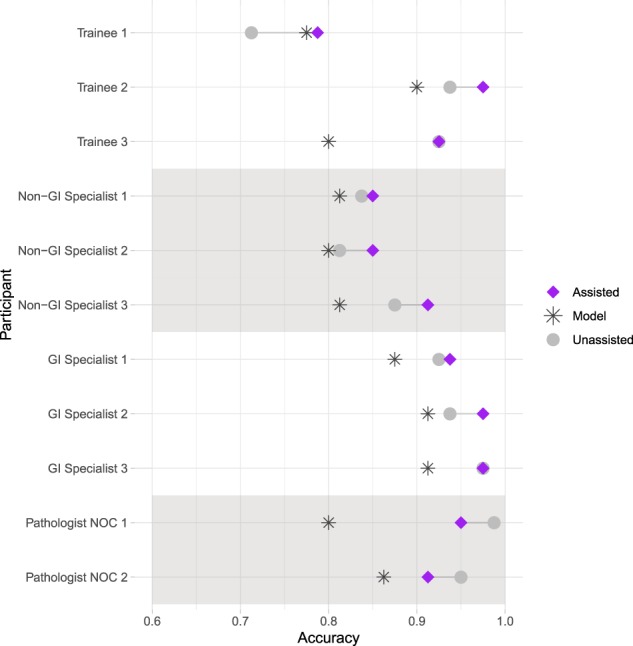
Artificial intelligence (AI) algorithms continue to rival human performance on a variety of clinical tasks, while their actual impact on human diagnosticians, when incorporated into clinical workflows, remains relatively unexplored. In this study, we developed a deep learning-based assistant to help pathologists differentiate between two subtypes of primary liver cancer, hepatocellular carcinoma and cholangiocarcinoma, on hematoxylin and eosin-stained whole-slide images (WSI), and evaluated its effect on the diagnostic performance of 11 pathologists with varying levels of expertise. Our model achieved accuracies of 0.885 on a validation set of 26 WSI, and 0.842 on an independent test set of 80 WSI. Although use of the assistant did not change the mean accuracy of the 11 pathologists (p = 0.184, OR = 1.281), it significantly improved the accuracy (p = 0.045, OR = 1.499) of a subset of nine pathologists who fell within well-defined experience levels (GI subspecialists, non-GI subspecialists, and trainees). In the assisted state, model accuracy significantly impacted the diagnostic decisions of all 11 pathologists. As expected, when the model’s prediction was correct, assistance significantly improved accuracy (p = 0.000, OR = 4.289), whereas when the model’s prediction was incorrect, assistance significantly decreased accuracy (p = 0.000, OR = 0.253), with both effects holding across all pathologist experience levels and case difficulty levels. Our results highlight the challenges of translating AI models into the clinical setting, and emphasize the importance of taking into account potential unintended negative consequences of model assistance when designing and testing medical AI-assistance tools.
Overview
The claims and statistics of this paper haven’t been checked yet.
Free: it reads the open-access text and checks the first 5 claims that cite a source we can check. Create a free account to check every claim.
Integrity signals
Registry
Cites
Statistics
Figures
Verification
Claims the paper makes
The claims and statistics of this paper haven’t been checked yet.
Free: it reads the open-access text and checks the first 5 claims that cite a source we can check. Create a free account to check every claim.
Claims other papers make about this one
Each is checked against this paper’s own text: does it say what the citing paper says it does?
The source backs part of the claim, not all of it — or backs it for a different population, condition or comparison.
In the citing paper
“An interesting observation is that the type of explanation matters when it comes to biasing the end user.”
From AI pitfalls and what not to do: mitigating bias in AI (2023) · cites this paper as [62]
Experimental — accuracy not yet measuredThe source backs part of the claim, not all of it — or backs it for a different population, condition or comparison.
In the citing paper
“Bias mitigation is especially important as we understand human–machine partnership, with early findings showing worsening performance for experts when presented with biased model outputs.”
From AI pitfalls and what not to do: mitigating bias in AI (2023) · cites this paper as [62]
Experimental — accuracy not yet measuredThe source backs part of the claim, not all of it — or backs it for a different population, condition or comparison.
In the citing paper
“If physicians do not trust the technology, they will not use it, but blind trust in the technology can lead to medical errors8–11.”
From Do as AI say: susceptibility in deployment of clinical decision-aids (2021) · cites this paper as [10]
Experimental — accuracy not yet measuredThe cited source says what the claim attributes to it.
In the citing paper
“Using the XAI techniques to assist the clinician can help to produce better diagnosis than the model or clinician alone [204,212,233,234].”
From Survey of explainable artificial intelligence techniques for biomedical imaging with deep neural networks (2023) · cites this paper as [233]
In the citing paper
“For example, the use of a machine learning algorithm by pathologists to differentiate different liver cancer types found that the pathologist accuracy did not improve when the model’s prediction was correct; however, the pathologist performance worsened when the model’s prediction was incorrect. 62”
From AI pitfalls and what not to do: mitigating bias in AI (2023) · cites this paper as [62]
Self-check
Percentages, sums and reported differences re-computed from the paper’s own numbers.
The self-check needs the paper’s full text.
Citations
Cites
Fitting Linear Mixed-Effects Models Using lme4
Bates, D., Mächler, M., Bolker, B., & Walker, S. (2015) · Journal of Statistical Software · doi:10.18637/jss.v067.i01 · Cited by 86,835
LeCun, Y., Bengio, Y., & Hinton, G. (2015) · Nature · doi:10.1038/nature14539 · Cited by 84,126
Densely Connected Convolutional Networks
Huang, G., Liu, Z., Van Der Maaten, L., & Weinberger, K. Q. (2017) · 2017 IEEE Conference on Computer Vision and Pattern Recognition (CVPR) · doi:10.1109/cvpr.2017.243 · Cited by 48,566
Dermatologist-level classification of skin cancer with deep neural networks
Esteva, A., Kuprel, B., Novoa, R. A., Ko, J., Swetter, S. M., Blau, H. M., & Thrun, S. (2017) · Nature · doi:10.1038/nature21056 · Cited by 14,362
Learning Deep Features for Discriminative Localization
Zhou, B., Khosla, A., Lapedriza, A., Oliva, A., & Torralba, A. (2016) · 2016 IEEE Conference on Computer Vision and Pattern Recognition (CVPR) · doi:10.1109/cvpr.2016.319 · Cited by 11,428 · cited 1×
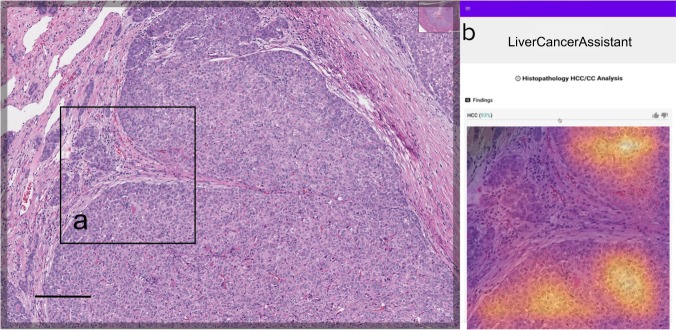
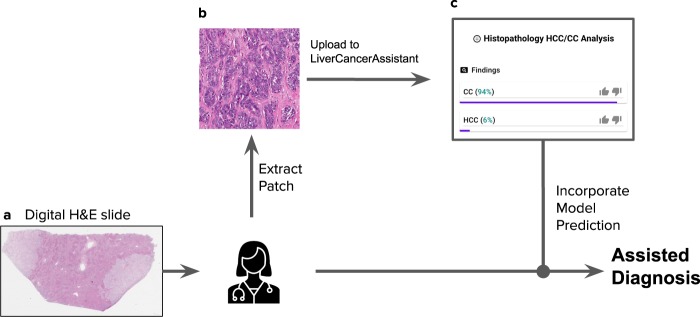
“…on image classi fi cation tasks, 26 was incorporated into a simple prototype diagnostic support tool (see Methods) consisting of a web interface where pathologists could upload H&E image patches and receive the model ’ s predictions and explanatory class activation maps 27 (CAMs) in real time (Fig.”
MethodBuilding Predictive Models in R Using the caret Package
Kuhn, M. (2008) · Journal of Statistical Software · doi:10.18637/jss.v028.i05 · Cited by 8,863
Probable Inference, the Law of Succession, and Statistical Inference
Wilson, E. B. (1927) · Journal of the American Statistical Association · doi:10.1080/01621459.1927.10502953 · Cited by 4,476 · cited 1×
“Confidence intervals were calculated using the Wilson score method.(32) Sensitivity and specificity for each pathologist was generated using the caret package in R.”
MethodEhteshami Bejnordi, B., Veta, M., Johannes van Diest, P., van Ginneken, B., Karssemeijer, N., Litjens, G., van der Laak, J. A. W. M., and the CAMELYON16 Consortium, Hermsen, M., Manson, Q. F., et al. (2017) · JAMA · doi:10.1001/jama.2017.14585 · Cited by 3,293
Hannun, A. Y., Rajpurkar, P., Haghpanahi, M., Tison, G. H., Bourn, C., Turakhia, M. P., & Ng, A. Y. (2019) · Nature Medicine · doi:10.1038/s41591-018-0268-3 · Cited by 3,148
Self-citationCoudray, N., Ocampo, P. S., Sakellaropoulos, T., Narula, N., Snuderl, M., Fenyö, D., Moreira, A. L., Razavian, N., & Tsirigos, A. (2018) · Nature Medicine · doi:10.1038/s41591-018-0177-5 · Cited by 2,930 · cited 1×
“To date, AI algorithms have achieved high accuracy on some tumor classification tasks.(17,18) However, much of the work in this area has focused on the retrospective evaluation of model performance on groundtruth-labeled validation datasets.”
Method
Cited by
Items 201–300 of 328
Rubinstein, B., & Matos, S. (2025) · Neural Processing Letters · doi:10.1007/s11063-025-11725-1 · Cited by 9
“…may benefit more from AI assistance than their more experienced peers, as in a study with 11 pathologists with varying levels of expertise [ 31], where a deep learning algorithm was used to assist pathologists in differentiating between the two subtypes of primary liver cancer and the…”
Augmenting care in hepatocellular carcinoma with artificial intelligence
Xu, F. W. X., Tang, S. S. K., Soh, H. N., Pang, N. Q., & Bonney, G. K. (2023) · Artificial Intelligence Surgery · doi:10.20517/ais.2022.33 · Cited by 8
Abdelhamed, W., & El‐Kassas, M. (2025) · Hepatoma Research · doi:10.20517/2394-5079.2024.138 · Cited by 8
Patil, A., Hasan, B., Park, B. U., Smith, L., Sivasubramaniam, P., Elhalaby, R. E., Elessawy, N., Nazli, S., DaCosta, A., Shabaan, A., et al. (2025) · Modern Pathology · doi:10.1016/j.modpat.2025.100747 · Cited by 7
Бердутин, В. А., Abaeva, O. P., Romanova, T. E., & Romanov, S. V. (2023) · Sociology of Medicine · doi:10.17816/socm106054 · Cited by 5
Characterizing the clinical adoption of medical AI through U.S. insurance claimsPreprint
Wu, K., Wu, E., Theodorou, B., Liang, W., Mack, C. D., Glass, L. M., Sun, J., & Zou, J. (2023) · medRxiv · doi:10.1101/2023.08.26.23294629 · Cited by 5
Rivera, S. C., Liu, X., Chan, A., Denniston, A. K., Calvert, M., y CONSORT-AI, G. D. T. S.-A., y CONSORT-AI, G. D. S.-A., & y CONSORT-AI, G. D. C. S.-A. (2024) · Revista Panamericana de Salud Pública · doi:10.26633/rpsp.2024.12 · Cited by 8
Chang, Q., Zhou, X., Mao, H., Feng, J.-F., Wu, X., Zhang, Z., & Hu, Z. (2024) · Biomolecules and Biomedicine · doi:10.17305/bb.2024.10247 · Cited by 4
“This diseasecanbehistopathologicallysubdividedintotwoprincipal categories: hepatocellular carcinoma (HCC) and intrahepatic cholangiocarcinoma (iCCA) [2].”
BackgroundYousefzamani, M., & Mofrad, F. B. (2025) · Expert Review of Medical Devices · doi:10.1080/17434440.2025.2514764 · Cited by 6
“In recent literature, multiple imaging modalities (e.g. CT, MRI, and histopathology) have been assessed in the classification and staging of liver diseases with deep learning [46,60,71,72].”
InfluentialRobben, M., Hajighasemi, A., Nasr, M. S., Veerla, J. P., Alsup, A., Rout, B., Shang, H. H., Fowlds, K., Malidarreh, P. B., Koomey, P., et al. (2023) · F1000Research · doi:10.12688/f1000research.139210.1 · Cited by 5
Advancements and Challenges in Artificial Intelligence Applications in Healthcare Delivery SystemsPreprint
Aftab, M., Nadeem, A., Zhang, C., Dong, Z., Jiang, Y., & Liu, K. (2024) · Preprints.org · doi:10.20944/preprints202407.0938.v1 · Cited by 5
Tang, F., Yao, F., & Zhou, M. (2026) · Computers & Education · doi:10.1016/j.compedu.2026.105619 · Cited by 9
Yan, J., Wang, J., Jian, F., Cui, X., Zhang, Y., Yang, X., Gao, Q., Ding, Z., 汤钊猷, Fan, J., et al. (2026) · Portal hypertension & cirrhosis · doi:10.1002/poh2.70033 · Cited by 7
Huynh, C. D. (2026) · Intelligence-Based Medicine · doi:10.1016/j.ibmed.2026.100386 · Cited by 4
Zhu, Y., Yuan, W. M., Xie, C., Xu, W., Wang, J.-P., Feng, L., Wu, H., Lu, P., Geng, Z.-H., Lv, C., et al. (2022) · Frontiers in Oncology · doi:10.3389/fonc.2022.1008537 · Cited by 4
“Some deep learning algorithms have been applied in histopathologic classification and have achieved a better diagnostic performance than pathologists in liver cancer (22), breast cancer (23), melanoma (24), and prostate cancer biopsy (25, 26).”
MethodLiu, X., Rivera, S. C., Moher, D., Calvert, M., Denniston, A. K., & y CONSORT-AI, G. D. T. S.-A. (2024) · Revista Panamericana de Salud Pública · doi:10.26633/rpsp.2024.13 · Cited by 6
Human-AI Teaming: Following the IMOI Framework
Kleanthous, S. (2024) · Lecture notes in computer science · doi:10.1007/978-3-031-60611-3_27 · Cited by 6
[Translated article] Introducing artificial intelligence to hospital pharmacy departments
González-Pérez, Y., Delgado, A. M., & Sesmero, J. M. M. (2024) · Farmacia Hospitalaria · doi:10.1016/j.farma.2024.04.001 · Cited by 13
Bibliometrics of artificial intelligence applications in hepatobiliary surgery from 2014 to 2024
Zheng, R.-J., Li, D.-L., Lin, H.-M., Wang, J.-F., Luo, Y., Tang, Y., Li, F., Hu, Y., & Su, S. (2025) · World Journal of Gastrointestinal Surgery · doi:10.4240/wjgs.v17.i5.104728 · Cited by 4
“A notable study by Kiani et al [31], published in 2020, introduced a DL-based model designed to assist pathologists in differentiating subtypes of primary liver cancer using whole-slide images stained with hematoxylin and eosin.”
Intelligent Hepatocellular Carcinoma Detection using Hybrid Radial basis Function Networks
Jagadeesan, S., Nayak, S., Srija, N., Chandru, P., Reddy, P. N. K., & Rastogi, R. (2023) · International Conference on Intelligent Computing and Control Systems (ICICCS) · doi:10.1109/iciccs56967.2023.10142770 · Cited by 3
“In recent years, feature engineering has been reconceptualized in consideration of the relevance of language modeling in the diagnosis of hepatocellular carcinoma [10].”
BackgroundOmar, M., Xu, Z., Rand, S. B., Alexanderani, M. K., Salles, D. C., Valencia, I., Schaeffer, E. M., Robinson, B. D., Lotan, T. L., Loda, M. F., et al. (2024) · Molecular Cancer Research · doi:10.1158/1541-7786.mcr-23-0639 · Cited by 7
Kumar, E. P., Rahaman, H., Reddy, C. V., Sahil, R., Buchanalli, S., & Depuru, B. K. (2024) · International Journal of Innovative Science and Research Technology (IJISRT) · doi:10.38124/ijisrt/ijisrt24jun1368 · Cited by 3
Wu, X., Tu, H., Hu, Q., Tsai, S. P., Chu, D. T., & Wen, C. P. (2024) · BMJ Oncology · doi:10.1136/bmjonc-2023-000087 · Cited by 6
“Although ML models have been used to predict the risk of specific cancers (skin, breast, liver and lung cancer), 20–22 there are limited health check-up data-based ML models that can predict the risk of developing any cancer.”
Machine Learning Methods Using Texture Feature Selection in Diagnosis of Liver Cancer
Naeem, S., Ali, A., Anam, S., & ZUBAIR, M. (2022) · MOL2NET International Conference on Multidisciplinary Sciences (MOL2NET) · doi:10.3390/mol2net-08-13947 · Cited by 3
Berbis, M. A., McClintock, D. S., Bychkov, A., Cheng, J., Delahunt, B., Egevad, L., Eloy, C., Farris, A. B., Fraggetta, F., del Moral, R. G., et al. (2022) · medRxiv · doi:10.1101/2022.09.02.22279476 · Cited by 3
Self-citationLuo, J., Zhang, H., Jiang, D., Li, Y., & Tao, Y. (2024) · Archives of Medical Science · doi:10.5114/aoms/191789 · Cited by 3
“According to the histological criteria, hepatocellular carcinoma (HCC) is usually divided into three types: cholangiocarcinoma, HCC, and mixed liver cancer [2].”
AISIM: evaluating impacts of user interface elements of an AI assisting tool
Wiratchawa, K., Wanna, Y., Junsawang, P., Titapun, A., Techasen, A., Boonrod, A., Laopaiboon, V., Chamadol, N., Bulathwela, S., & Intharah, T. (2025) · PLoS ONE · doi:10.1371/journal.pone.0322854 · Cited by 2
“On the other hand, [20,30,31] tested their hypothesis with the mixed-effect statistics.”
Burçak, K. C. (2025) · Neural Computing and Applications · doi:10.1007/s00521-025-11653-0 · Cited by 2
Qiao, L., Luo, Y.-G., Wang, Q.-Y., Yuan, T., Xu, M. M., Xiong, G.-B., & Zhu, F. (2025) · World Journal of Gastrointestinal Oncology · doi:10.4251/wjgo.v17.i10.111367 · Cited by 2
“Kiani et al [55] developed an AI-assisted diagnostic tool using CNNs to aid pathologists in differentiating ICC from HCC on WSIs and investigated its impact on diagnostic accuracy.”
Marins, L. V., Pacca, A. M., Campos, C. F. F., de Oliveira, I. M., Monteiro, G. B. M., Souza, J. P. S. D. E., Perez, M. A. G., Furtado, L. B., da Silva, S. R. L., Santana, F. A. D. O., et al. (2025) · Surgical and Experimental Pathology · doi:10.1186/s42047-025-00210-7 · Cited by 3
Akbulut, S., & Çolak, C. (2026) · World Journal of Gastrointestinal Oncology · doi:10.4251/wjgo.v18.i2.113870 · Cited by 4
“…on systemic therapy, enabling personalized surveillance and treatment plans; and (4) Treatment planning and response prediction: Assisting in treatment selection (predicting response to locoregional or systemic therapies, etc. ) and planning interventions like surgery or radiation[67,68].”
Boppana, S. H., Chandrashekar, A., Maddineni, G., Chakinala, R. C., Raj, R., Shivaprakash, R. B., Yarra, P., Sunkesula, V. C. K., & Mintz, C. D. (2026) · Journal of Clinical Medicine · doi:10.3390/jcm15072484 · Cited by 3
“The most clinically informative pathology-AI study in this section is the human-AI interaction experiment by Kiani et al. [43].”
Wei, Y., Li, Y., Hu, W., Kang, J., Han, Z. Y., Zhen, M., & Wang, C. (2026) · Frontiers in Oral Health · doi:10.3389/froh.2026.1741033 · Cited by 3
Papale, A., Lopiano, G., Campagner, A., & Cabitza, F. (2026) · Technologies · doi:10.3390/technologies14060366 · Cited by 2
Digital transformation in healthcare
Masoud, R. (2022) · International Journal of Scientific and Research Publications · doi:10.29322/ijsrp.12.07.2022.p12744 · Cited by 5
Muto, R., Fukuta, S., Watanabe, T., Shindo, Y., Kanemitsu, Y., Kajikawa, S., Yonezawa, T., Inoue, T., Ichihashi, T., Shiratori, Y., et al. (2022) · Frontiers in Medicine · doi:10.3389/fmed.2022.1042067 · Cited by 3
Artificial intelligence in the prediction of progression and outcomes in viral hepatitis
Yang, H. (2023) · Elsevier eBooks · doi:10.1016/b978-0-323-99136-0.00013-1 · Cited by 2
A novel Nine-SequenceNet with attention for liver histopathological classification
Sun, L., Sun, Z., Wang, C., Cheng, S., & Wang, K. (2024) · Biomedical Signal Processing and Control · doi:10.1016/j.bspc.2024.106095 · Cited by 3
Hägele, M., Eschrich, J., Ruff, L., Alber, M., Schallenberg, S., Guillot, A., Roderburg, C., Tacke, F., & Klauschen, F. (2024) · Scientific Reports · doi:10.1038/s41598-024-75256-w · Cited by 3
Artificial Intelligence as a Tool to Support the Translator’s Work. Bibliometric Analysis
Greńczuk, A., Tryczyńska, K., Sahinguvy, W., Nkunzimana, H., Ogonowski, P., & Chomiak-Orsa, I. (2024) · Lecture notes in networks and systems · doi:10.1007/978-3-031-78465-1_7 · Cited by 4
Qu, B., He, W., Yao, X., Shan, D., & Shu, J. (2025) · Biomedical Signal Processing and Control · doi:10.1016/j.bspc.2025.108201 · Cited by 6
Artificial intelligence in pathological evaluation of gastrointestinal cancers
Alpsoy, A., Yavuz, A., & Elpek, G. Ö. (2021) · Artificial Intelligence in Gastroenterology · doi:10.35712/aig.v2.i6.141 · Cited by 2
Duhayyim, M. A., Mengash, H. A., Marzouk, R., Nour, M. K., Mahgoub, H., Althukair, F., & Mohamed, A. (2022) · Computational Intelligence and Neuroscience · doi:10.1155/2022/6162445 · Cited by 3
RetractedAn investigation of the COVID-19 impact on liver cancer using exploratory and predictive analytics
Chang, V. I. C., Patel, R. M., Ganatra, M. A., & Xu, Q. A. (2024) · Healthcare Analytics · doi:10.1016/j.health.2024.100309 · Cited by 2
Applying Deep Learning and Natural Language Processing in Cancer: A Survey
AbuSamra, A. A., & Al-Madhoun, A. M. R. (2021) · Palestinian International Conference on Information and Communication Technology (PICICT) · doi:10.1109/picict53635.2021.00030 · Cited by 2
Assessing Artificial Intelligence Models to Diagnose and Differentiate Common Liver CarcinomasPreprint
Thomas, M., Mastorides, S., Borkowski, S., Reed, J., Deland, L., Thomas, L., & Borkowski, A. (2022) · medRxiv · doi:10.1101/2022.08.30.22279347 · Cited by 3
Kim, M., Sekiya, H., Yao, G., Martin, N. B., Castanedes‐Casey, M., Dickson, D. W., Hwang, T. H., & Koga, S. (2023) · Research Square · doi:10.21203/rs.3.rs-2459626/v2 · Cited by 2
Evolution and Tendency on the Feature Extraction Process for Diagnostic Aid in Healthcare
Escobar-Linero, E., Muñoz-Saavedra, L., Luna-Perejón, F., Civit-Masot, J., Rivas-Perez, M., Domínguez-Morales, M., & Balcells, A. (2023) · Advances in medical technologies and clinical practice book series · doi:10.4018/978-1-6684-6434-2.ch006 · Cited by 1
Su, Z., Zhang, H., Hu, H., Yang, Y., Huang, C., Liu, C., He, F., & Chen, W. (2025) · Analytical Chemistry · doi:10.1021/acs.analchem.4c06106 · Cited by 1
Salmanpour, M. R., Piri, S. M., Mehrnia, S. S., Shariftabrizi, A., Allahmoradi, M., Manem, V. S., Rahmim, A., & Hacihaliloglu, I. (2026) · Journal of Imaging Informatics in Medicine · doi:10.1007/s10278-025-01817-8 · Cited by 5
“However, they also highlighted that incorrect model predictions could adversely impact pathologists’ final decisions, underscoring the importance of exercising caution when deploying AI for diagnostic automation [100].”
Meng, F., Deng, X., Qu, Y., Li, C.-T., Ma, Q., Mao, Y.-S., Zhang, X.-W., Huang, P., Chen, H., Wang, Q.-S., et al. (2026) · IEEE journal of biomedical and health informatics · doi:10.1109/jbhi.2026.3658523 · Cited by 2
Four Aspirations for Evaluating AI-Infused Technologies: A Narrative Review
Morey, D. A., Jalaeian, M., Reynolds, M. E., McGeorge, N., Oldham, H. K., & Rayo, M. F. (2026) · Journal of Cognitive Engineering and Decision Making · doi:10.1177/15553434261443032 · Cited by 1
“…risks have included poor algorithm performance (Wong et al., 2021), additional workload for practitioners (Beede et al., 2020), ampli fi cation of disparities (Obermeyer et al., 2019), and susceptibility to AI errors (Kiani et al., 2020; Morey et al., 2025; Tschandl et al., 2020; Yu et al., 2024).”
Research Progress of Deep Learning in Pathological Diagnosis of Liver Cancer
陈, 超. (2023) · Advances in Clinical Medicine · doi:10.12677/acm.2023.13122654 · Cited by 1
Alamgeer, M. (2024) · Acta Scientific Cancer Biology · doi:10.31080/ascb.2024.08.0492 · Cited by 1
TshFNA-Examiner: A Nuclei Segmentation and Cancer Assessment Framework for Thyroid Cytology Image
Ke, J., Zhu, J., Yang, X., Zhang, H., Sun, Y., Wang, J. E., Lu, Y., Shen, Y., Liu, S., Jiang, F., et al. (2024) · Journal of Shanghai Jiaotong University (Science) · doi:10.1007/s12204-024-2743-y · Cited by 4
Deep Survival Analysis from Whole Slide Images: A Multiple Instance Learning Approach
Hwang, M., Lee, D., & Lee, C. H. (2024) · International Conference on Information and Communication Technology Convergence (ICTC) · doi:10.1109/ictc62082.2024.10827719 · Cited by 1
“To address the challenges of processing WSIs, traditional methods often rely on either cropping fixed-size regions of interest (ROIs) from the images [7] or having experts analyze each WSI to generate tabular data for input.”
Omar, M., Xu, Z., Rand, S. B., Mohammad, M., Salles, D. C., Schaeffer, E. M., Robinson, B. D., Lotan, T. L., Loda, M. F., & Marchionni, L. (2022) · bioRxiv (Cold Spring Harbor Laboratory) · doi:10.1101/2022.11.18.517111 · Cited by 1
Real-world usage diminishes validity of Artificial Intelligence toolsPreprint
Vaid, A., Sawant, A. S., Suárez‐Fariñas, M., Lee, J., Kaul, S. K., Kovatch, P., Freeman, R., Jiang, J. J., Jayaraman, P., Fayad, Z. A., et al. (2022) · medRxiv · doi:10.1101/2022.11.17.22282440 · Cited by 1
Nuutinen, M., & Leskelä, R. (2023) · SSRN Electronic Journal · doi:10.2139/ssrn.4466664 · Cited by 1
Evaluating AI-Assistance for Pathologists in Diagnosing and Grading Laryngeal LesionsPreprint
Bellahsen‐Harrar, Y., Lubrano, M., Lépine, C., Bèaufrere, A., Bocciarelli, C., Brunet, A., Decroix, E., Sissy, F. N. E., Fabiani, B., Morini, A., et al. (2023) · medRxiv · doi:10.1101/2023.07.23.23292962 · Cited by 1
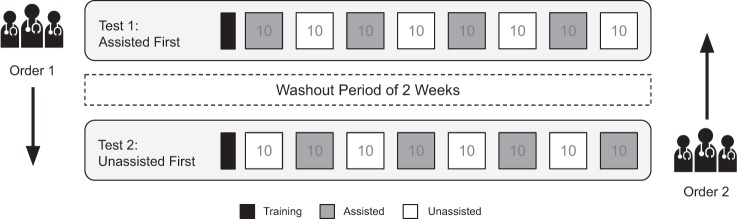
“The study was designed as a randomised crossover trial, where each participant was randomly assigned to start with either the AI-assisted review or the non-assisted review, following protocols used in other studies 19,25,26 .”
MethodImpact of a machine learning-powered algorithm on pathologist HER2 IHC scoring in breast cancerPreprint
Shamshoian, J., Shanis, Z., Cabeen, R. P., Yu, L., Chakraborty, S., Thibault, M., Martin, B., Padigela, H., Juyal, D., Javed, S. A., et al. (2025) · medRxiv · doi:10.1101/2025.02.04.25321335 · Cited by 5
Self-citationWu, C. (2021) · IEEE International Conference on Power, Intelligent Computing and Systems (ICPICS) · doi:10.1109/icpics52425.2021.9524218
Sivakumar, E., Anand, A., & Sarate, S. G. (2021) · International Conference on System Modeling & Advancement in Research Trends (SMART) · doi:10.1109/smart52563.2021.9676334
Deep representation learning for complex medical images
Bozkurt, A. (2020) · Digital Repository Service (Northeastern University) · doi:10.17760/d20382834 · Cited by 1
Role of artificial intelligence in the diagnosis and treatment of hepatocellular carcinoma
Mokhria, R. K., & Singh, J. (2022) · Artificial Intelligence in Gastroenterology · doi:10.35712/aig.v3.i4.96 · Cited by 1
Kim, M., Sekiya, H., Martin, N. B., Castanedes‐Casey, M., Dickson, D. W., Hwang, T. H., & Koga, S. (2023) · Research Square · doi:10.21203/rs.3.rs-2459626/v1 · Cited by 2
Deep learning techniques for hepatocellular carcinoma diagnosis
Bishi, D. K., Padhi, P., Panigrahi, C. R., Pati, B., & Rath, C. C. (2023) · Elsevier eBooks · doi:10.1016/b978-0-323-85240-1.00013-4
汪, 笑. (2023) · Advances in Clinical Medicine · doi:10.12677/acm.2023.1371589
Artificial intelligence in pathology and application to liver disease
Caldéraro, J., & Vij, M. (2023) · Elsevier eBooks · doi:10.1016/b978-0-323-99136-0.00014-3 · Cited by 1
A Novel Method and Data Storage Medium for Processing Liver Cancer Data
Mamatha, C. M., Anupriya, A., Swathi, V., Mayur, K., & Zolgikar, S. (2023) · International Conference on Smart Electronics and Communication (ICOSEC) · doi:10.1109/icosec58147.2023.10276334
Chang, Q., Zhou, X., Mao, H., Feng, J.-F., Wu, X., Zhang, Z., & Hu, Z. (2024) · Research Square · doi:10.21203/rs.3.rs-3898749/v1
Tang, Y., Zheng, Y., Luo, D., Zhou, L., Wang, W., Wang, X., Chen, J., Li, B., Shu, J., Lv, M., et al. (2024) · Research Square · doi:10.21203/rs.3.rs-3989948/v1 · Cited by 1
Wang, J., Jin, Y., Jiang, A., Chen, W., Shan, G., Gu, Y., Ming, Y., Li, J., Yue, C., Huang, Z., et al. (2024) · Research Square · doi:10.21203/rs.3.rs-4008354/v1
Evolution of Generative AI in Healthcare
Thakur, N. (2024) · Advances in medical technologies and clinical practice book series · doi:10.4018/979-8-3693-3731-8.ch002 · Cited by 1
Artificial intelligence in transplant oncology
Lu, Z. Y., Maki, M. Q., Patel, M. S., & Ivanics, T. (2024) · Elsevier eBooks · doi:10.1016/b978-0-443-21901-6.00016-1
Cheng, J., Abel, J. T., Balis, U. J., Pantanowitz, L., & McClintock, D. S. (2024) · Elsevier eBooks · doi:10.1016/b978-0-323-95359-7.00008-x
Triple-phase CT evaluation of hepatic lesions in the Saudi population: Assessing diagnostic accuracy
Musa, A., Hadadi, I., Loaz, O., Kajoak, S. A., Osman, H., Aljehani, S., Alwagdani, M., Aloufi, M., Alnemari, A., Althagafi, N., et al. (2024) · Journal of Radiation Research and Applied Sciences · doi:10.1016/j.jrras.2024.101251 · Cited by 5
A Comparative Study of Deep Learning Models with Transfer Learning for Liver Tumor Classification
Mounika, M., Lakshmi, S. V., Geethanjali, N., Latha, C. K., Babu, S. R., & Sunitha, G. (2024) · Advanced technologies and societal change · doi:10.1007/978-981-99-2832-3_89
Liava, C., & Shah, V. H. (2025) · Elsevier eBooks · doi:10.1016/b978-0-443-15728-8.00002-1
Bondhopadhyay, B., Aggarwal, N., & Sen, S. (2025) · IGI Global eBooks · doi:10.4018/979-8-3693-5400-1.ch010
Shimokawa, I., Terasaki, M., Tanaka, S., Toda, E., Takakuma, S., Kajimoto, Y., Kunugi, S., Shimizu, A., & Terasaki, Y. (2025) · medRxiv · doi:10.1101/2025.05.21.25327411
“Similarly, the study by Kiani et al 24 demonstrated that AI assistance significantly influenced pathologists' decisions in the histopathologic classification of liver cancer: when the AI model’s prediction was correct, diagnostic accuracy improved, but when incorrect, accuracy decreased—even across different levels of…”
Advances in Endoscopic Diagnosis and Treatment of Hilar Cholangiocarcinoma
邢, 璐. (2025) · Advances in Clinical Medicine · doi:10.12677/acm.2025.1551580
Application of artificial intelligence in diagnosis and treatment of hepatocellular carcinoma
Pérez, M. J., & Grande, R. G. (2025) · Revisiones en cáncer · doi:10.20960/revcancer.00113
Improving AI-Assisted Decision-Making Through Calibrated CoarseningPreprint
Hoong, R., & Dreyfuss, B. (2025) · SSRN Electronic Journal · doi:10.2139/ssrn.5286198 · Cited by 5
(2025) · Zeitschrift für Gemeinwirtschaft und Gemeinwohl · doi:10.5771/2701-4193-2025-2-105
Gaur, Y., Chaudhary, A., & Abraham, A. (2025) · Elsevier eBooks · doi:10.1016/b978-0-443-27444-2.00013-7
Deep Learning-Based Classification of Liver Cells Using Mask R-CNN on Whole Slide Images
Zisan, K. H., Raduan, S. M., Shahriar, M., Orin, R. T., Kamal, K. M. S., & Reza, A. W. (2025) · Lecture notes in networks and systems · doi:10.1007/978-981-96-6046-9_33
Kumar, G. S. C., Mulugu, N., Kamal, M. V., Voddelli, S., & Bethel, G. N. B. (2025) · Biomedical Materials & Devices · doi:10.1007/s44174-025-00556-2
Einsatzszenarien und Potenziale von KI im Bereich der prähospitalen Telenotfallmedizin
Rehbock, C., Durdova, N., Beckers, S. K., Borgs, C., & Schröder, H. (2025) · Springer eBooks · doi:10.1007/978-3-658-48573-3_17 · Cited by 1
Yu, Z., Li, K., & Lin, Z. (2025) · International Journal of Surgery · doi:10.1097/js9.0000000000004177 · Cited by 1
Histopathalogical Cancer Detection Using Convolutional Neural Networks
Kalimuthu, G., & Govindaraju, K. (2025) · International Conference on Computational Intelligence and Communication Networks (CICN) · doi:10.1109/cicn67655.2025.11367999
Chuang, W., Yu, W.-H., Yu-jen, L., Huang, C.-C., Lee, K.-F., Hwang, C., Chang, L., Ueng, S., Yeh, C.-J., Chuang, H.-C., et al. (2026) · Diagnostic Pathology · doi:10.1186/s13000-026-01747-1
Piao, Z. H., Wu, J., Ao, S., Chen, H., Chen, B., Du, X., Liu, B., & Li, L. (2026) · Research Square · doi:10.21203/rs.3.rs-8541267/v1
Little, D. R., Shirinifard, A., Lupo, M. S., Wu, C.-H., Chen, H., Clemons, M. R., MacLean, M., Marola, O. J., Howell, G. R., Li, C., et al. (2026) · bioRxiv (Cold Spring Harbor Laboratory) · doi:10.64898/2026.02.27.708333
Context aware deep learning techniques for analysis of breast cancer histopathology: a review
Dutta, R. M., Sekh, A. A., Dogra, D. P., & Dan, P. K. (2026) · Discover Computing · doi:10.1007/s10791-026-10071-7
Deep Learning Methods for Grading Head and Neck Squamous Lesions from Whole Slide Images
Lubrano, M. (2023) · theses.fr (ABES) · doi:10.70675/c2fe54c9ze50cz444bzb5f8zd650c647e2ae
Sarfati, E. (2025) · theses.fr (ABES) · doi:10.70675/c8de34e7z1fa6z42cbza183z1e37c1b52362 · Cited by 1
Miao, R.-Z., Hao-rui, Z., Li, T.-Y., Zhou, J., & Yang, X.-R. (2026) · Hepatoma Research · doi:10.20517/2394-5079.2025.92
Artificial Intelligence in Medical Informatics: From Algorithms to Clinical Practice—A Survey
Luo, Y.-F., Bu, D., Wu, Y., & ZHAO, Y. (2026) · Journal of Computer Science and Technology · doi:10.1007/s11390-026-6030-2 · Cited by 1
Artificial intelligence in genomic medicine: dispelling three myths
Solomon, B. D. (2026) · npj Genomic Medicine · doi:10.1038/s41525-026-00575-y · Cited by 1
Metadata
- Authors
- Kiani, A., Uyumazturk, B., Rajpurkar, P., Wang, A., Gao, R., Jones, E., Yu, Y., Langlotz, C. P., Ball, R. L., Montine, T. J., Martin, B. A., Berry, G. J., Ozawa, M. G., Hazard, F. K., Brown, R. A., Chen, S. B., Wood, M., Allard, L. S., Ylagan, L., Ng, A. Y., & Shen, J.
- Affiliations
- Stanford University (US)
- Stanford Medicine (US)
- Corresponding author
- Ng, Andrew Y.
- Shen, Jeanne
- ORCID
- Venue
- npj Digital Medicine
- Published
- 2020-02-26
- Volume
- 3
- Issue
- 1
- Pages
- 23-23
- ISSN
- 2398-6352 (ISSN-L)
- PMC
- PMC7044422
- OpenAlex
- W3007464329
- Cited by
- 325
- References
- 34
- Citations by year
- 2026: 41 · 2025: 64 · 2024: 62 · 2023: 55 · 2022: 40 · 2021: 38 · 2020: 25
- FWCI
- 15.53
- Type
- journal article
- Language
- en
- Open access
- gold
- doi.org
- Licence
- cc-by
- creativecommons.org/licenses/by/4.0 (tdm)
- creativecommons.org/licenses/by/4.0 (vor)
- Locations
- npj Digital Medicine (publishedVersion, cc-by)
- Europe PMC (PubMed Central) (publishedVersion, cc-by)
- PubMed Central (publishedVersion, cc-by)
- PubMed (publishedVersion)
- DOAJ (DOAJ: Directory of Open Access Journals) (submittedVersion, cc-by-sa)
- Topics
- Physical Sciences › Computer Science › Artificial Intelligence › AI in cancer detection
- Health Sciences › Medicine › Health Informatics › Artificial Intelligence in Healthcare and Education
- Health Sciences › Medicine › Radiology, Nuclear Medicine and Imaging › Radiomics and Machine Learning in Medical Imaging
- Keywords
- liver cancer, hepatocellular carcinoma, cholangiocarcinoma, histological classification, whole slide images, clinical implementation of AI, H&E staining
About these checks
Registry, retraction, Cites and statistics results are computed, not judged, with one exception: a printed reference that no index lists is read once by a model before it counts as a citation error. Claims are extracted by a model and kept only when their quote appears verbatim in the text; each cited source is then checked, with a model’s help, for whether it says what the claim relies on. Those verdicts can be wrong — read the claim’s quote and the cited source before relying on one.
Statistics and arithmetic are recomputed, not judged.
Confidence bands are shown only for fields calibrated on our annotated test set. None is calibrated yet, so no band is shown.
What counts as a claim ›How we measure confidence ›How we check this ›
Are you an author, or do you see a problem with this page? Request a review
Data sources
Bibliographic data: Semantic Scholar, OpenAlex, Crossref.
Contains information from the Semantic Scholar Academic Graph Datasets, made available under the ODC Attribution License (ODC-BY 1.0).
Semantic Scholar’s data is described in: Kinney, R., et al. (2023). The Semantic Scholar Open Data Platform. arXiv:2301.10140.
