

Mobile health strategies for blood pressure self-management in urban populations with digital barriers: systematic review and meta-analyses
Open accessThe DOI matches its Crossref record; 80 of the 81 references it cites were found in a registry or an index.
Abstract
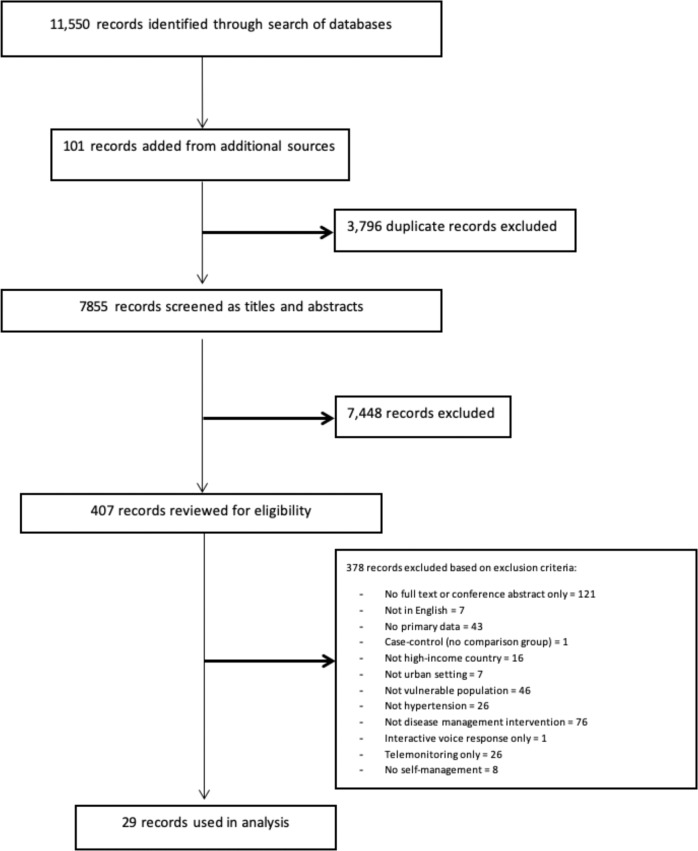
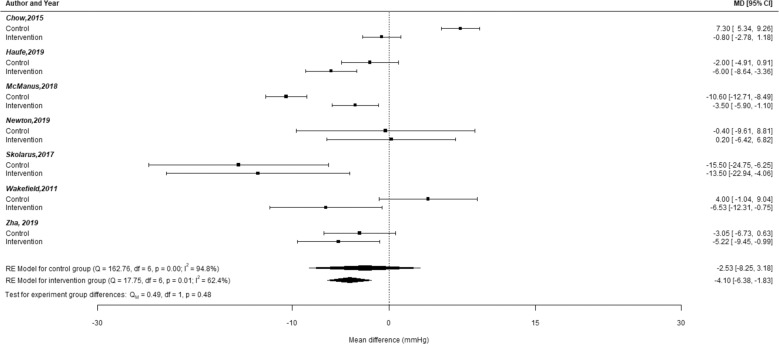
Mobile health (mHealth) technologies improve hypertension outcomes, but it is unknown if this benefit applies to all populations. This review aimed to describe the impact of mHealth interventions on blood pressure outcomes in populations with disparities in digital health use. We conducted a systematic search to identify studies with systolic blood pressure (SBP) outcomes located in urban settings in high-income countries that included a digital health disparity population, defined as mean age ≥65 years; lower educational attainment (≥60% ≤high school education); and/or racial/ethnic minority (<50% non-Hispanic White for US studies). Interventions were categorized using an established self-management taxonomy. We conducted a narrative synthesis; among randomized clinical trials (RCTs) with a six-month SBP outcome, we conducted random-effects meta-analyses. Twenty-nine articles (representing 25 studies) were included, of which 15 were RCTs. Fifteen studies used text messaging; twelve used mobile applications. Studies were included based on race/ethnicity (14), education (10), and/or age (6). Common intervention components were: lifestyle advice (20); provision of self-monitoring equipment (17); and training on digital device use (15). In the meta-analyses of seven RCTs, SBP reduction at 6-months in the intervention group (mean SBP difference = −4.10, 95% CI: [−6.38, −1.83]) was significant, but there was no significant difference in SBP change between the intervention and control groups ( p = 0.48). The use of mHealth tools has shown promise for chronic disease management but few studies have included older, limited educational attainment, or minority populations. Additional robust studies with these populations are needed to determine what interventions work best for diverse hypertensive patients.
Overview
The claims and statistics of this paper haven’t been checked yet.
Free: it reads the open-access text and checks the first 5 claims that cite a source we can check. Create a free account to check every claim.
Integrity signals
Registry
Cites
Statistics
Figures
Verification
Claims the paper makes
The claims and statistics of this paper haven’t been checked yet.
Free: it reads the open-access text and checks the first 5 claims that cite a source we can check. Create a free account to check every claim.
Claims other papers make about this one
Each is checked against this paper’s own text: does it say what the citing paper says it does?
The source backs part of the claim, not all of it — or backs it for a different population, condition or comparison.
In the citing paper
“This included improved user experience, timeliness of and accessibility to health care and information, consistent with studies in other settings20,85,86.”
From Digital health interventions for non-communicable disease management in primary health care in low-and middle-income countries (2023) · cites this paper as [20]
Experimental — accuracy not yet measuredThe source backs part of the claim, not all of it — or backs it for a different population, condition or comparison.
In the citing paper
“This mixture of findings on clinical outcomes added to the conflicting evidence in the existing literature, where many meta-analyses of related topics disagreed on outcomes such as blood pressure reduction19,20.”
From Digital health interventions for non-communicable disease management in primary health care in low-and middle-income countries (2023) · cites this paper as [20]
Experimental — accuracy not yet measuredThe source backs part of the claim, not all of it — or backs it for a different population, condition or comparison.
In the citing paper
“This included improved user experience, timeliness of and accessibility to health care and information, consistent with studies in other settings20,85,86.”
From Digital health interventions for non-communicable disease management in primary health care in low-and middle-income countries (2023) · cites this paper as [20]
Experimental — accuracy not yet measuredThe source backs part of the claim, not all of it — or backs it for a different population, condition or comparison.
In the citing paper
“First, it confirmed that digital health was effective in controlling and managing hypertension, medication adherence, healthy lifestyles and body composition.50,51”
From Effectiveness of digital health interventions on blood pressure control, lifestyle behaviours and adherence to medication in patients with hypertension in low-income and middle-income countries: a systematic review and meta-analysis of randomised controlled trials (2024) · cites this paper as [50]
Experimental — accuracy not yet measured
8 more claims about this paper
Create a free account to see every claim other papers make about this one.
Self-check
Percentages, sums and reported differences re-computed from the paper’s own numbers.
The self-check needs the paper’s full text.
Citations
Cites
GRADE: an emerging consensus on rating quality of evidence and strength of recommendations
Guyatt, G. H., Oxman, A. D., Vist, G. E., Kunz, R., Falck-Ytter, Y., Alonso-Coello, P., & Schünemann, H. J. (2008) · BMJ · doi:10.1136/bmj.39489.470347.ad · Cited by 23,305
Bridging Research and Practice
Tabak, R. G., Khoong, E. C., Chambers, D. A., & Brownson, R. C. (2012) · American Journal of Preventive Medicine · doi:10.1016/j.amepre.2012.05.024 · Cited by 1,386
Self-citationExposing some important barriers to health care access in the rural USA
Douthit, N., Kiv, S., Dwolatzky, T., & Biswas, S. (2015) · Public Health · doi:10.1016/j.puhe.2015.04.001 · Cited by 1,182
The impact of mHealth interventions: systematic review of systematic reviews
Marcolino, M. S., Oliveira, J. A. Q., D'Agostino, M., Ribeiro, A. L., Alkmim, M. B. M., & Novillo-Ortiz, D. (2018) · JMIR mHealth and uHealth · doi:10.2196/mhealth.8873 · Cited by 1,163
Trends in Blood Pressure Control Among US Adults With Hypertension, 1999-2000 to 2017-2018
Muntner, P., Hardy, S. T., Fine, L. J., Jaeger, B. C., Wozniak, G., Levitan, E. B., & Colantonio, L. D. (2020) · JAMA · doi:10.1001/jama.2020.14545 · Cited by 964
Mobile-health: A review of current state in 2015
Silva, B. M. C., Rodrigues, J. J. P. C., de la Torre Díez, I., López-Coronado, M., & Saleem, K. (2015) · Journal of Biomedical Informatics · doi:10.1016/j.jbi.2015.06.003 · Cited by 871
Increasing Diversity in Clinical Trials: Overcoming Critical Barriers
Clark, L. T., Watkins, L., Piña, I. L., Elmer, M., Akinboboye, O., Gorham, M., Jamerson, B., McCullough, C., Pierre, C., Polis, A. B., et al. (2019) · Current Problems in Cardiology · doi:10.1016/j.cpcardiol.2018.11.002 · Cited by 731
Chow, C. K., Redfern, J., Hillis, G. S., Thakkar, J., Santo, K., Hackett, M. L., Jan, S., Graves, N., de Keizer, L., Barry, T., et al. (2015) · JAMA · doi:10.1001/jama.2015.10945 · Cited by 676
Tucker, K. L., Sheppard, J. P., Stevens, R., Bosworth, H. B., Bove, A., Bray, E. P., Earle, K., George, J., Godwin, M., Green, B. B., et al. (2017) · PLOS Medicine · doi:10.1371/journal.pmed.1002389 · Cited by 658
Health Care Systems in Low- and Middle-Income Countries
Mills, A. (2014) · New England Journal of Medicine · doi:10.1056/nejmra1110897 · Cited by 643
Cited by
Focusing on Digital Health Equity
Lyles, C. R., Wachter, R. M., & Sarkar, U. (2021) · JAMA · doi:10.1001/jama.2021.18459 · Cited by 232
Self-citationMair, J. L., Salamanca-Sanabria, A., Augsburger, M., Frese, B. F., Abend, S., Jakob, R., Kowatsch, T., & Haug, S. (2023) · Annals of Behavioral Medicine · doi:10.1093/abm/kaad041 · Cited by 140
“[37], no significant differences in systolic blood pressure between mobile app-based intervention groups compared with control were reported, but significant decreases at 6-month follow-up were found in the intervention group only (MD −4.”
BackgroundKatz, M. E., Mszar, R., Grimshaw, A. A., Gunderson, C. G., Onuma, O. K., Lu, Y., & Spatz, E. S. (2024) · JAMA Network Open · doi:10.1001/jamanetworkopen.2023.56070 · Cited by 182
Guidelines should consider clinicians’ time needed to treat
Johansson, M., Guyatt, G. H., & Montori, V. M. (2023) · BMJ · doi:10.1136/bmj-2022-072953 · Cited by 154
Xiong, S., Lu, H., Peoples, N., Duman, E. K., Najarro, A., Ni, Z., Gong, E., Yin, R., Ostbye, T., Palileo-Villanueva, L. M., et al. (2023) · npj Digital Medicine · doi:10.1038/s41746-023-00764-4 · Cited by 126
Boima, V., Doku, A., Agyekum, F., Tuglo, L. S., & Agyemang, C. (2024) · EClinicalMedicine · doi:10.1016/j.eclinm.2024.102432 · Cited by 82
“50,51 According to the Blood Pressure Lowering Treatment Trialists ’ Collaboration analysis of 29 RCTs, a reduction in SBP and DBP of 2 mmHg would remarkably decrease the prevalence of CVD by 10%.”
MethodManagement of Coronary Artery Disease in Older Adults: Recent Advances and Gaps in Evidence
Cacciatore, S., Spadafora, L., Bernardi, M., Galli, M., Betti, M., Perone, F., Nicolaio, G., Marzetti, E., Martone, A. M., Landi, F., et al. (2023) · Journal of Clinical Medicine · doi:10.3390/jcm12165233 · Cited by 84
Fotteler, M. L., Mühlbauer, V., Brefka, S., Mayer, S., Kohn, B., Holl, F., Swoboda, W., Gaugisch, P., Risch, B., Denkinger, M., et al. (2022) · JMIR Aging · doi:10.2196/31916 · Cited by 52
“The selected trials were very heterogeneous with respect to the ATs applied as well as the outcomes, which made it difficult to summarize the evidence [57].”
BackgroundInfluentialDigital Health in Primordial and Primary Stroke Prevention: A Systematic Review
Feigin, V. L., Owolabi, M. O., Hankey, G. J., Pandian, J. D., & Martins, S. C. O. (2022) · Stroke · doi:10.1161/strokeaha.121.036400 · Cited by 54
Use of Self-Measured Blood Pressure Monitoring to Improve Hypertension Equity
Khoong, E. C., Commodore-Mensah, Y. Y., Lyles, C. R., & Fontil, V. (2022) · Current Hypertension Reports · doi:10.1007/s11906-022-01218-0 · Cited by 46
Self-citationFotteler, M., Kocar, T. D., Dallmeier, D., Kohn, B., Mayer, S., Waibel, A.-K., Swoboda, W. J., & Denkinger, M. D. (2023) · BMC Public Health · doi:10.1186/s12889-023-16926-8 · Cited by 39
“Prominent examples are wearable devices [5], robotic systems [18], smart in-home technology [7], or mobile health applications [19].”
BackgroundWillems, R. P., Annemans, L., Siopis, G., Moschonis, G., Vedanthan, R., Jung, J., Kwaśnicka, D., Oldenburg, B. F., D’Antonio, C., Girolami, S., et al. (2023) · npj Digital Medicine · doi:10.1038/s41746-023-00876-x · Cited by 34
Qiu, Y., Huang, H., Gai, J., & Leo, G. D. (2024) · Journal of Medical Internet Research · doi:10.2196/65541 · Cited by 32
“…degrees of digital health technology use [40], and that adoption of digital health technologies is more prevalent among those with chronic conditions [41], including diabetes [42], hypertension [43], heart conditions [44], chronic lung disease [45], and depression [46] in certain conditions.”
Aovare, P., Abdulai, K., Laar, A. K., van der Linden, E. L., Moens, N., Richard, E., van Charante, E. P. M., & Agyemang, C. O. (2023) · JMIR mhealth and uhealth · doi:10.2196/43742 · Cited by 29
“3 billion subscribers to mobile services worldwide, 67% of the world’s population [19,20].”
Azevedo, R. F. L., Varzino, M., Steinman, E., & Rogers, W. A. (2025) · Journal of Medical Internet Research · doi:10.2196/65855 · Cited by 19
Tang, A., Woldemariam, S. R., Roger, J. M., & Sirota, M. (2022) · Yearbook of Medical Informatics · doi:10.1055/s-0042-1742513 · Cited by 19
“Informatics and artificial intelligence techniques can also be used to guide patients in management of their own care [93], such as in determining optimal drug dosage or timing [94, 95], or in predicting risk and providing recommendations from surveys and inputted data points [96, 97].”
BackgroundSatibi, S., Ghozali, M. T., & Forthwengel, G. (2023) · Journal of Medicine and Life · doi:10.25122/jml-2023-0153 · Cited by 23
Luca, V. D., Lazić, V., Birov, S., Piesche, K., Beyhan, O., Pengo, M. F., Melgara, M., Sherman, M. H., Lilja, M., Balenović, A., et al. (2021) · International Journal of Environmental Research and Public Health · doi:10.3390/ijerph182312442 · Cited by 15
Empowering rheumatology through digital health technologies: contributions and barriers
Benavent, D., Carmona, L., Llorente, J. F. G., Montoro, M., Ramirez, S., Otón, T., Loza, E., & Gómez-Centeno, A. (2024) · Exploration of Musculoskeletal Diseases · doi:10.37349/emd.2024.00038 · Cited by 15
Commodore-Mensah, Y. Y., Chen, Y., Ogungbe, O., Liu, X., Metlock, F., Carson, K. A., Echouffo-Tcheugui, J. B., Ibe, C. A., Crews, D. C., Cooper, L. A., et al. (2024) · American Heart Journal · doi:10.1016/j.ahj.2024.05.008 · Cited by 15
Haro‐Ramos, A. Y., Rodríguez, H. P., & Aguilera, A. (2023) · Behaviour Research and Therapy · doi:10.1016/j.brat.2023.104318 · Cited by 12
Chen, Y., Kruahong, S., Elias, S. D., Turkson‐Ocran, R., Commodore-Mensah, Y. Y., Koirala, B., & Himmelfarb, C. D. (2023) · Journal of Medical Internet Research · doi:10.2196/47566 · Cited by 15
“While some studies indicate the potential of mHealth technology to reduce disparities [21,30], conflicting evidence indicates that if only individuals with greater resources have access to these technologies, it may inadvertently widen racial disparities [31].”
InfluentialZhao, D. H., Zhang, Y., Wang, J., He, L., He, Y., & Ma, C. (2025) · Nature Reviews Cardiology · doi:10.1038/s41569-025-01222-2 · Cited by 15
Paper 6: engaging racially and ethnically diverse interest holders in evidence syntheses
Sathe, N. A., Ovelman, C., Ospina, N. S., Dewidar, O., Terhune, E., Francis, D., Welch, V. A., Heyn, P. C., Duque, T. G., & Viswanathan, M. (2024) · Journal of Clinical Epidemiology · doi:10.1016/j.jclinepi.2024.111575 · Cited by 11
Patient-Facing Clinical Decision Support for High Blood Pressure Control: Patient Survey
Dorr, D. A., D'Autremont, C., Richardson, J. E., Bobo, M., Terndrup, C. P., Dunne, M., Cheng, A., & Rope, R. W. (2022) · JMIR Cardio · doi:10.2196/39490 · Cited by 10
“Substantial work to understand how to engage patients, especially those who are historically underserved, has been undertaken, but disparities remain [34-36].”
BackgroundDorsch, M. P., Golbus, J. R., Stevens, R., Trumpower, B., Basu, T., Luff, E., Warden, K., Giacalone, M., Bailey, S., Rubick, G. V., et al. (2025) · npj Digital Medicine · doi:10.1038/s41746-025-01844-3 · Cited by 17
“In general, the data around mHealth interventions for hypertensive individuals with digital barriers or from underrepresented groups has been limited,withmuchoftheevidencefrom pilotstudiesoflimitedsamplesizes or nonrandomized studies 7 .”
Implementation of Direct-to-Patient Mobile Teledermatology in VA
Peracca, S. B., Lachica, O., Lamkin, R. P., Jackson, G. L., Mohr, D. C., King, H. A., Whited, J. D., Fonseca, A. S., Morris, I. J., Gifford, A. L., et al. (2024) · Journal of General Internal Medicine · doi:10.1007/s11606-023-08480-1 · Cited by 11
Golbus, J. R., Dorsch, M. P., Chen, Y., Basu, T., Luff, E., Klasnja, P., Newman, M., Skolarus, L. E., Dempsey, W., & Nallamothu, B. K. (2026) · Journal of Medical Internet Research · doi:10.2196/78218 · Cited by 4
“In general, the data around mHealth interventions for individuals with hypertension with digital barriers or from underrepresented groups have been limited [20].”
Digital Health for Oncological Care
Cohen, A. B., & Schwamm, L. H. (2024) · The Cancer Journal · doi:10.1097/ppo.0000000000000693 · Cited by 8
Candio, P., & Ooms, T. (2025) · BMC Health Services Research · doi:10.1186/s12913-025-13696-4 · Cited by 12
“The remaining three reviews varied in scope, with one review focusing on diabetes-related foot health [52], one on blood pressure [53] and the broadest considering effectiveness trials of mHealth applications in terms of type II diabetes and hypertension from an inequality perspective including 65…”
Dele-Ojo, B. F., Oseni, T. I. A., Duodu, F., Echieh, C. P., Blankson, P., Alabi, B. S., Sarpong, D. F., Tayo, B. O., Boima, V., Amoakoh‐Coleman, M., et al. (2023) · Research Square · doi:10.21203/rs.3.rs-3272069/v1 · Cited by 11
“Hence, engaging more active patients and physicians’ involvement in hypertension management through mobile health technologies promises to improve BP control 7 .”
BackgroundMotta-Yanac, E., Riley, V., Ellis, N. J., Mankoo, A., & Gidlow, C. J. (2025) · International Journal of Medical Informatics · doi:10.1016/j.ijmedinf.2024.105755 · Cited by 5
Clinical efficiency of remote blood pressure monitoring in real-world practice
Korsunsky, D. V., Boytsov, S. A., Васильевна, К. А., Komkov, D. S., Калинина, А. М., & Drapkina, O. M. (2025) · CARDIOVASCULAR THERAPY AND PREVENTION · doi:10.15829/1728-8800-2025-4374 · Cited by 5
Damar, M., Kop, O., Şaylan, Ö. F., Özen, A., Çakmak, Ü. E., & Erenay, F. S. (2024) · Journal of Emerging Computer Technologies · doi:10.57020/ject.1514154 · Cited by 7
Automated image transcription for perinatal blood pressure monitoring using mobile health technology
Katebi, N., Hogg-Bremer, W., Nguyen, T., Phan, D., Jeff, J., Armstrong, K., Phabian-Millbrook, P., Platner, M. H., Carroll, K., Shoai, B., et al. (2024) · PLOS Digital Health · doi:10.1371/journal.pdig.0000588 · Cited by 6
“These disparities are driven by a combination of social, economics and systematic factors [7–9].”
BackgroundTelehealth in hypertensive patients: to whom, how and for how long?
Васильевич, И. М., & Конради, А. О. (2022) · Arterial’naya Gipertenziya (Arterial Hypertension) · doi:10.18705/1607-419x-2022-28-2-108-125 · Cited by 5
Mobile health technology for diverse populations: challenges and opportunities
Diao, J. A., & Kvedar, J. C. (2021) · npj Digital Medicine · doi:10.1038/s41746-021-00500-w · Cited by 6
Digitalization of hypertension management: a paradigm shift
Kaur, S., Gulati, H. K., & Baldi, A. (2024) · Naunyn-Schmiedeberg s Archives of Pharmacology · doi:10.1007/s00210-024-03229-x · Cited by 5
“…ensuring adherence to medical treatment, analyzing and monitoring BP measurements, facilitating communication with healthcare providers, sending reminders for follow-up visits to the treating physician, and effectively managing other cardiovascular disease (CVD) risk factors (Khoong et al. 2021).”
Echieh, C. P., Dele-Ojo, B. F., Oseni, T. I. A., Blankson, P., Duodu, F., Tayo, B. O., Alabi, B. S., Sarpong, D. F., Amoakoh‐Coleman, M., Boima, V., et al. (2024) · Digital Health · doi:10.1177/20552076241297035 · Cited by 4
Todd, A., Lavie, C. J., & Abohashem, S. (2025) · Trends in Cardiovascular Medicine · doi:10.1016/j.tcm.2025.03.005 · Cited by 4
Wiegel, P., Fotteler, M., Kohn, B., Mayer, S., Verri, F. M., Dallmeier, D., & Denkinger, M. D. (2024) · JMIR Human Factors · doi:10.2196/53811 · Cited by 3
Hamza, N. A. E., Hafez, W., Saed, S. A. A., Raouf, M., Magdi, N., Allam, S., Sweedy, R., Alaraby, D., Abdeljawad, M. M., & Taha, N. A. (2025) · Health Policy and Technology · doi:10.1016/j.hlpt.2025.101064 · Cited by 3
Rosa, D., Villa, G., Marcomini, I., Nardin, E., Gianfranceschi, E., Faini, A., Pengo, M. F., Bilo, G., Croce, A., Parati, G., et al. (2025) · High Blood Pressure & Cardiovascular Prevention · doi:10.1007/s40292-025-00731-y · Cited by 4
Dorr, D. A., Montgomery, E., Ghumman, A., Michaels, L. C., Rolbiecki, A. J., Canfield, S. M., Shaffer, V. A., Johnson, B., Lockwood, M., Ghosh, P., et al. (2024) · BMJ Open · doi:10.1136/bmjopen-2024-085898 · Cited by 3
Lemp, J. M., Pengpid, S., Buntup, D., Bärnighausen, T., Geldsetzer, P., Peltzer, K., Rehm, J. T., Sornpaisarn, B., & Probst, C. (2022) · Preventive Medicine Reports · doi:10.1016/j.pmedr.2022.101954 · Cited by 4
Forte, J. C., Folkertsma, P., Gannamani, R., Kumaraswamy, S., van Dam, S., & Hoogsteen, J. (2022) · International Journal of Environmental Research and Public Health · doi:10.3390/ijerph19074171 · Cited by 4
Poh, J. H. K., Mullen, C., Munot, S., Brennan, P., Chow, C. K., & O’Hagan, E. T. (2024) · Health Literacy and Communication Open · doi:10.1080/28355245.2024.2415042 · Cited by 2
Adediran, E., Schliep, K. C., Deatley, T., Gardner, E., Baron, K. G., Kiraly, B., & Ose, D. J. (2025) · Oxford Open Digital Health · doi:10.1093/oodh/oqaf029 · Cited by 2
Yakubu, M., Esan, D. T., Ogunmuyiwa, A. O., Akingbade, O., Esan, T. O., & Akintunde, A. A. (2026) · Medicine · doi:10.1097/md.0000000000046766 · Cited by 2
“[42] Although 1 study indicated that mHealth interventions primarily affected SBP, [32] the majority demonstrated significant improvements in the over-all health of hypertensive patients.”
Chen, Y., Turkson‐Ocran, R., Koirala, B., Davidson, P. M., Commodore-Mensah, Y. Y., & Himmelfarb, C. D. (2024) · Journal of Medical Internet Research · doi:10.2196/46277 · Cited by 3
“Mobile health (mHealth) technology is becoming an increasingly important part of the self-management of CVD risk factors facilitated by the widespread adoption of smartphones and tablets [11].”
Tudpor, K., Hughes, D., Chanaboon, S., & Turnbull, N. (2022) · International Journal of Health Sciences · doi:10.53730/ijhs.v6ns2.6467 · Cited by 2
“More than 30 mobile applications were developed for monitoring blood pressure (Khoong et al., 2021).”
BackgroundSkolarus, L. E., Lin, C. C., Mishra, S. R., Meurer, W. J., Dinh, M., Whitfield, C., Bi, R., Brown, D. L., Oteng, R. A., Buis, L. R., et al. (2024) · JMIR mhealth and uhealth · doi:10.2196/54946 · Cited by 2
“SMBP reduces BP, in part by promoting the habit of medication adherence and a healthy lifestyle, but little is known about SMBP in the Black and low-income population [11-15].”
BackgroundCan mHealth bridge the digital divide in rheumatic and musculoskeletal conditions?
Schreurs, L., Steenhout, I., Bosmans, J., Buyl, R., & Cock, D. D. (2023) · BMC Digital Health · doi:10.1186/s44247-022-00005-w · Cited by 2
“In addition, these populations often experience cost-related barriers to care and difficulties attending in-person office visits [33]. mHealth-applications could present a cost-effective measure for these populations by providing tele-consultations or remote monitoring of symptoms [34].”
BackgroundDevelopment of a Patient-Facing Clinical Decision Support Application for Hypertension
Bobo, M., Canfield, S. M., Shaffer, V. A., Storer, M., Michaels, L. C., Yates, A., Rolbiecki, A. J., Koopman, R. J., & Dorr, D. A. (2025) · Applied Clinical Informatics · doi:10.1055/a-2697-2107 · Cited by 2
Bermudez-Cañete, A., Perez, P. N., Duffy, S., Chavez, A., Arthur, I. S., Tun, R., Lopez, Y. L., Perez, C., & Valley, T. M. (2026) · JMIR Formative Research · doi:10.2196/75471 · Cited by 1
“The use of mobile health (mHealth) technologies by CHWs has emerged as promising for health care delivery in LMICs across various contexts, including the management of noncommunicable diseases [7-10].”
Motta-Yanac, E., Riley, V., Ellis, N., Mankoo, A. S., & Gidlow, C. J. (2026) · BMJ Open · doi:10.1136/bmjopen-2025-116004 · Cited by 1
A pilot study exploring novel contexts for out-of-office blood pressure measurement
Allinson, F., Mejia, N., Ariniello, L. M., Quer, G., & Muse, E. D. (2024) · Frontiers in Cardiovascular Medicine · doi:10.3389/fcvm.2024.1351746 · Cited by 1
Azar, K. M. J., Zoken, Y., Cooper‐DeHoff, R. M., Fontil, V., Modrow, M. F., Nasrallah, C., & Pletcher, M. J. (2023) · medRxiv · doi:10.1101/2023.04.07.23288278 · Cited by 2
“One other recent review by Khoong et al.(40) examined the impact 290 of mobile health strategies for BP self-management on BP outcomes but the search was 291 limited to studies conducted prior to July 2019 and, thus, does not include several of those we 292 have identified.”
BackgroundSelf-citationTsai, Y., Hsiao, P.-N., Jian, F.-X., Yu, P.-S., Wang, S., Hsiao, S.-M., Kung, L., Kuo, M., Hwang, S., & Chiu, Y. (2024) · JMIR mhealth and uhealth · doi:10.2196/22927
Nnaka, T., Heitkemper, E., Hébert, E. T., Radhakrishnan, K., Young, M., Ewere, T., & Kim, M. T. (2025) · CIN Computers Informatics Nursing · doi:10.1097/cin.0000000000001219
An Apple-watch all day keeps your life astray—or does it?
Meland, E. (2025) · Scandinavian Journal of Public Health · doi:10.1177/14034948251370466
“…well educated and have good health knowledge and motivation [12], although some studies show that people with less digital access can also benefit [13]. long-term observation studies have found that worrying about body size can have unexpected effects—sometimes making weight problems worse and…”
Khoong, E. C., Kim, H. C., Li, J., Larreynaga, J., Luna, I., Yang, A., Kazi, D. S., Lyles, C. R., McCulloch, C. E., Rahman, S. B., et al. (2025) · Contemporary Clinical Trials · doi:10.1016/j.cct.2025.108101 · Cited by 1
Self-citationFotteler, M., Kocar, T. D., Dallmeier, D., Kohn, B., Mayer, S., Waibel, A.-K., Swoboda, W., & Denkinger, M. (2024) · Figshare · doi:10.6084/m9.figshare.26626870
Fotteler, M., Kocar, T. D., Dallmeier, D., Kohn, B., Mayer, S., Waibel, A.-K., Swoboda, W., & Denkinger, M. (2024) · Figshare · doi:10.6084/m9.figshare.26626867
Oso, O. V., Adebayo, U. O., Ajayi, D. T., Oluwasusi, E. A., Jegede, T. O., Onyeaghala, E. O., Agun, P. D., Oyetunji, S. O., & Wagwula, P. M. (2025) · SN Comprehensive Clinical Medicine · doi:10.1007/s42399-025-02208-4 · Cited by 1
Kanai, M., Miki, T., Toda, T., Hagiwara, Y., & Ikeda, T. (2026) · PLOS Digital Health · doi:10.1371/journal.pdig.0001268
“Treatment effect heterogeneity has been reported in previous studies of digital health interventions, with some suggesting that younger individuals and those with poorly controlled baseline blood pressure benefit more from such programs [11,15,21].”
Kańska, K. T., Wieczorek, M. T., Jasiński, J. L., Leszczyńska, K. M., Krawczyk, K., Hak, K. J., Napierała, W., Mitan, A. M., Tomaszewska, A. M., & Krzysztofik, A. (2026) · International Journal of Innovative Technologies in Social Science · doi:10.31435/ijitss.1(49).2026.5193
Maniyara, K., & Kodali, P. B. (2026) · JMIR Research Protocols · doi:10.2196/81307 · Cited by 1
“Instant messaging through WhatsApp can facilitate mobile health (mHealth) services by acting as a medium for communicating reminders, health advice, and hypertension management guidelines [5,6, 9,12,13].”
Ma, Y., zhang, X., Shi, J., Guo, C., Tian, C., Wan, Z., Li, Y., Li, Y., Guo, L., Lang, Y., et al. (2026) · doi:10.2196/preprints.102956
Yuan, J., Zhang, S., Xia, S., Sun, R., Yun, J., Xu, X., Li, M., Yin, R., & Zhao, J. (2026) · Scientific Reports · doi:10.1038/s41598-026-62449-8
Hypertension Identification using Mobile Health Outreach Project (HI HOPE): A Pilot Study
Baumann, R., Kirsch, J., Clinch, K., Eckerstorfer, M., Sharma, R., Banjeree, R., Jaffer, S., & Hussein, H. M. (2026) · Journal of Community Health · doi:10.1007/s10900-026-01605-7
Jona, R. N., Victoria, A. Z., & Sulistyaningrum, D. P. (2026) · MEDICA (International Medical Scientific Journal) · doi:10.53770/medica.v8i7.1030
“…monitoring and telemedicine suggests that digital monitoring is most effective when it supports a continuous management loop rather than a passive data collection process (Khoong et al., 2021; Liu et al., 2023; Margolis et al., 2013; McManus et al., 2018; Omboni et al., 2020; Parati et al., 2021).”
InfluentialCommodore-Mensah, Y. Y., Bellows, B. K., Smith, A. P., Flynn, J. T., Pressley, A., Honeycutt, S., Sánchez, E., Abdalla, M. F., & Nesbitt, S. D. (2026) · Hypertension · doi:10.1161/hyp.0000000000000266
Atento, R. G., Quinto, L. F., Atento, A. G., Teodosio, G. M., Espelita, C. A. M. H., Mundo, F. D., & Manzana, P. (2026) · International Journal of Health & Business Analytics · doi:10.65166/tb6tep93
“Device ownership, network quality, affordability, age, socioeconomic position, and digital literacy strongly influence whether populations can actually benefit from mobile health systems (Blake et al., 2023; Khoong et al., 2021).”
Ma, Y., zhang, X., Li, Y., Wan, Z., Guo, L., Shi, J., Lang, Y., & sun, W. (2026) · Journal of Medical Internet Research · doi:10.2196/99321
Digital health interventions for patient engagement: A systematic umbrella review
Iqbal, U., Nkhoma, D., Manga, Y. B., Tanweer, A., Bokhari, S. M. H., Wibowo, M. F., Ningrum, D. N. A., Rahmanti, A. R., Huang, C.-W., Yang, H.-C., et al. (2026) · PLOS Digital Health · doi:10.1371/journal.pdig.0001785
Metadata
- Authors
- Khoong, E. C., Olazo, K., Rivadeneira, N. A., Thatipelli, S., Barr-Walker, J., Fontil, V., Lyles, C. R., & Sarkar, U.
- Affiliations
- San Francisco General Hospital (US)
- Northwestern University (US)
- Corresponding author
- Khoong, Elaine C.
- ORCID
- Venue
- npj Digital Medicine
- Published
- 2021-07-22
- Volume
- 4
- Issue
- 1
- Pages
- 114-114
- ISSN
- 2398-6352 (ISSN-L)
- PMC
- PMC8298448
- OpenAlex
- W3186126182
- Cited by
- 73
- References
- 81
- Citations by year
- 2026: 11 · 2025: 14 · 2024: 22 · 2023: 13 · 2022: 10 · 2021: 3
- FWCI
- 2.48
- Type
- journal article
- Language
- en
- Open access
- gold
- doi.org
- Licence
- cc-by
- creativecommons.org/licenses/by/4.0 (tdm)
- creativecommons.org/licenses/by/4.0 (vor)
- Locations
- npj Digital Medicine (publishedVersion, cc-by)
- PubMed Central (publishedVersion, cc-by)
- PubMed (publishedVersion)
- eScholarship (California Digital Library) (submittedVersion, cc-by)
- DOAJ (DOAJ: Directory of Open Access Journals) (submittedVersion, cc-by-sa)
- eScholarship (California Digital Library) (submittedVersion)
- Funders
- U.S. Department of Health & Human Services | NIH | National Heart, Lung, and Blood Institute (K23HL136899)
- U.S. Department of Health & Human Services | National Institutes of Health (K24CA212294)
- Topics
- Health Sciences › Health Professions › General Health Professions › Mobile Health and mHealth Applications
- Health Sciences › Medicine › Cardiology and Cardiovascular Medicine › Blood Pressure and Hypertension Studies
- Health Sciences › Medicine › Geriatrics and Gerontology › Technology Use by Older Adults
- Keywords
- mobile health, hypertension, digital health disparities, urban population, older adults, racial and ethnic minorities, educational attainment, text messaging, mobile health apps, self-measured blood pressure, lifestyle advice, digital literacy
About these checks
Registry, retraction, Cites and statistics results are computed, not judged, with one exception: a printed reference that no index lists is read once by a model before it counts as a citation error. Claims are extracted by a model and kept only when their quote appears verbatim in the text; each cited source is then checked, with a model’s help, for whether it says what the claim relies on. Those verdicts can be wrong — read the claim’s quote and the cited source before relying on one.
Statistics and arithmetic are recomputed, not judged.
Confidence bands are shown only for fields calibrated on our annotated test set. None is calibrated yet, so no band is shown.
What counts as a claim ›How we measure confidence ›How we check this ›
Are you an author, or do you see a problem with this page? Request a review
Data sources
Bibliographic data: Semantic Scholar, OpenAlex, Crossref.
Contains information from the Semantic Scholar Academic Graph Datasets, made available under the ODC Attribution License (ODC-BY 1.0).
Semantic Scholar’s data is described in: Kinney, R., et al. (2023). The Semantic Scholar Open Data Platform. arXiv:2301.10140.
