

Health-focused conversational agents in person-centered care: a review of apps
Open accessThe DOI matches its Crossref record; 39 of the 40 references it cites were found in a registry or an index.
Abstract
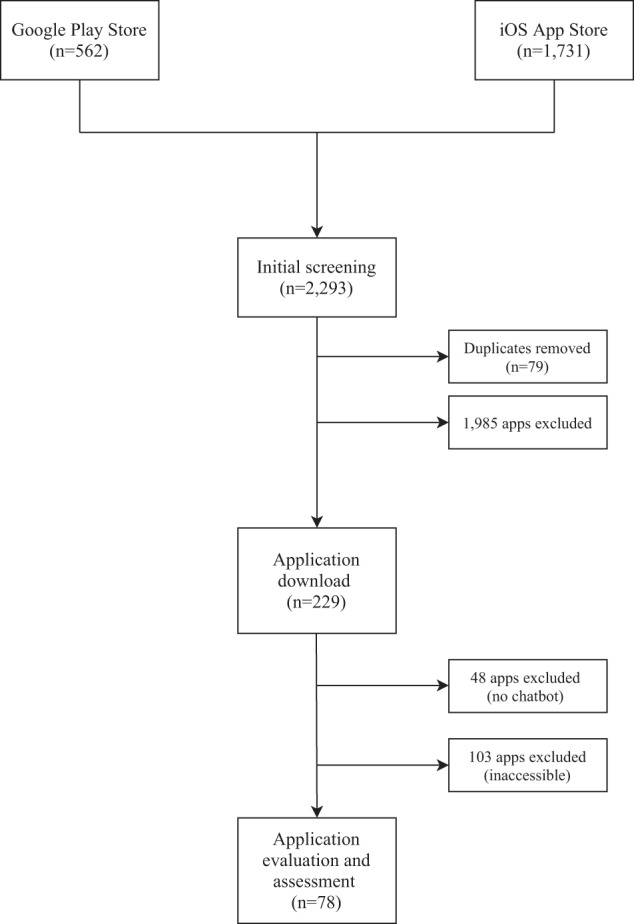
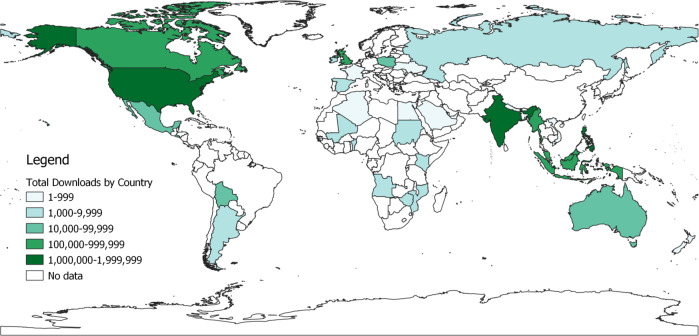
Health-focused apps with chatbots (“healthbots”) have a critical role in addressing gaps in quality healthcare. There is limited evidence on how such healthbots are developed and applied in practice. Our review of healthbots aims to classify types of healthbots, contexts of use, and their natural language processing capabilities. Eligible apps were those that were health-related, had an embedded text-based conversational agent, available in English, and were available for free download through the Google Play or Apple iOS store. Apps were identified using 42Matters software, a mobile app search engine. Apps were assessed using an evaluation framework addressing chatbot characteristics and natural language processing features. The review suggests uptake across 33 low- and high-income countries. Most healthbots are patient-facing, available on a mobile interface and provide a range of functions including health education and counselling support, assessment of symptoms, and assistance with tasks such as scheduling. Most of the 78 apps reviewed focus on primary care and mental health, only 6 (7.59%) had a theoretical underpinning, and 10 (12.35%) complied with health information privacy regulations. Our assessment indicated that only a few apps use machine learning and natural language processing approaches, despite such marketing claims. Most apps allowed for a finite-state input, where the dialogue is led by the system and follows a predetermined algorithm. Healthbots are potentially transformative in centering care around the user; however, they are in a nascent state of development and require further research on development, automation and adoption for a population-level health impact.
Overview
The claims and statistics of this paper haven’t been checked yet.
Free: it reads the open-access text and checks the first 5 claims that cite a source we can check. Create a free account to check every claim.
Integrity signals
Registry
Cites
Statistics
Figures
Verification
Claims the paper makes
The claims and statistics of this paper haven’t been checked yet.
Free: it reads the open-access text and checks the first 5 claims that cite a source we can check. Create a free account to check every claim.
Claims other papers make about this one
Each is checked against this paper’s own text: does it say what the citing paper says it does?
The source backs part of the claim, not all of it — or backs it for a different population, condition or comparison.
In the citing paper
“Most chatbots continue to be employed in narrowly defined tasks, such as structured screening tools or symptom checkers”
From Charting the evolution of artificial intelligence mental health chatbots from rule‐based systems to large language models: a systematic review (2025) · cites this paper as [12]
Experimental — accuracy not yet measuredThe cited source says what the claim attributes to it.
In the citing paper
“In addition, a recent review of health-focused conversational agents apps found that most of these rely on rule-based approaches and predefined app-led dialog 74 .”
From Multimodal biomedical AI (2022) · cites this paper as [74]
Self-check
Percentages, sums and reported differences re-computed from the paper’s own numbers.
The self-check needs the paper’s full text.
Citations
Cites
The Transtheoretical Model of Health Behavior Change.
Prochaska, J. O., & Velicer, W. F. (1997) · American Journal of Health Promotion · doi:10.4278/0890-1171-12.1.38 · Cited by 7,782
Dissecting racial bias in an algorithm used to manage the health of populations
Obermeyer, Z., Powers, B., Vogeli, C., & Mullainathan, S. (2019) · Science · doi:10.1126/science.aax2342 · Cited by 7,137
International Organization for Standardization (ISO)
Nahler, G. (2009) · Dictionary of Pharmaceutical Medicine · doi:10.1007/978-3-211-89836-9_723 · Cited by 3,677
Fitzpatrick, K. K., Darcy, A., & Vierhile, M. (2017) · JMIR Mental Health · doi:10.2196/mental.7785 · Cited by 2,730
Linehan, M. M., Comtois, K. A., Murray, A. M., Brown, M. Z., Gallop, R. J., Heard, H. L., Korslund, K. E., Tutek, D. A., Reynolds, S. K., & Lindenboim, N. (2006) · Archives of General Psychiatry · doi:10.1001/archpsyc.63.7.757 · Cited by 2,025
Conversational agents in healthcare: a systematic review
Laranjo, L., Dunn, A. G., Tong, H. L., Kocaballi, A. B., Chen, J., Bashir, R., Surian, D., Gallego, B., Magrabi, F., Lau, A. Y. S., et al. (2018) · Journal of the American Medical Informatics Association · doi:10.1093/jamia/ocy072 · Cited by 1,388
Inkster, B., Sarda, S., & Subramanian, V. (2018) · doi:10.2196/preprints.12106 · Cited by 1,063
Chatbots and Conversational Agents in Mental Health: A Review of the Psychiatric Landscape
Vaidyam, A. N., Wisniewski, H., Halamka, J. D., Kashavan, M. S., & Torous, J. B. (2019) · The Canadian Journal of Psychiatry · doi:10.1177/0706743719828977 · Cited by 1,048
Conversational Agents in Health Care: Scoping Review and Conceptual Analysis
Tudor Car, L., Dhinagaran, D. A., Kyaw, B. M., Kowatsch, T., Joty, S., Theng, Y.-L., & Atun, R. (2020) · Journal of Medical Internet Research · doi:10.2196/17158 · Cited by 553
Abd-Alrazaq, A. A., Rababeh, A., Alajlani, M., Bewick, B. M., & Househ, M. (2020) · Journal of Medical Internet Research · doi:10.2196/16021 · Cited by 503
Time allocation in primary care office visits
Tai‐Seale, M., McGuire, T. G., & Zhang, W. (2007) · Health Services Research · doi:10.1111/j.1475-6773.2006.00689.x · Cited by 472
Physicians’ perceptions of chatbots in health Care: cross-sectional web-based survey
Palanica, A., Flaschner, P., Thommandram, A., Li, M., & Fossat, Y. (2019) · Journal of Medical Internet Research · doi:10.2196/12887 · Cited by 384
Miner, A. S., Milstein, A., Schueller, S., Hegde, R., Mangurian, C., & Linos, E. (2016) · JAMA Internal Medicine · doi:10.1001/jamainternmed.2016.0400 · Cited by 368
Privacy and Security in Mobile Health Apps: A Review and Recommendations
Martínez-Pérez, B., de la Torre-Díez, I., & López-Coronado, M. (2015) · Journal of Medical Systems · doi:10.1007/s10916-014-0181-3 · Cited by 342
Survey of conversational agents in health
Montenegro, J. L. Z., da Costa, C. A., & da Rosa Righi, R. (2019) · Expert Systems with Applications · doi:10.1016/j.eswa.2019.03.054 · Cited by 322
Chatbots in the fight against the COVID-19 pandemic
Miner, A. S., Laranjo, L., & Kocaballi, A. B. (2020) · npj Digital Medicine · doi:10.1038/s41746-020-0280-0 · Cited by 322
Reporting Mental Health Symptoms: Breaking Down Barriers to Care with Virtual Human Interviewers
Lucas, G. M., Rizzo, A., Gratch, J., Scherer, S., Stratou, G., Boberg, J., & Morency, L.-P. (2017) · Frontiers in Robotics and AI · doi:10.3389/frobt.2017.00051 · Cited by 308
A randomized controlled trial of an automated exercise coach for older adults
Bickmore, T. W., Silliman, R. A., Nelson, K., Cheng, D. M., Winter, M., Henault, L., & Paasche‐Orlow, M. K. (2013) · Journal of the American Geriatrics Society · doi:10.1111/jgs.12449 · Cited by 305
Bickmore, T. W., Pfeifer, L. M., Byron, D., Forsythe, S., Henault, L. E., Jack, B. W., Silliman, R., & Paasche-Orlow, M. K. (2010) · Journal of Health Communication · doi:10.1080/10810730.2010.499991 · Cited by 249
Maintaining reality: Relational agents for antipsychotic medication adherence
Bickmore, T. W., Puskar, K., Schlenk, E. A., Pfeifer, L. M., & Sereika, S. M. (2010) · Interacting with Computers · doi:10.1016/j.intcom.2010.02.001 · Cited by 213
Automated interventions for multiple health behaviors using conversational agents
Bickmore, T. W., Schulman, D., & Sidner, C. (2013) · Patient Education and Counseling · doi:10.1016/j.pec.2013.05.011 · Cited by 206
Crutzen, R., Peters, G.-J. Y., Portugal, S. D., Fisser, E. M., & Grolleman, J. J. (2011) · Journal of Adolescent Health · doi:10.1016/j.jadohealth.2010.09.002 · Cited by 205
Using Health Chatbots for Behavior Change: A Mapping Study
Pereira, J., & Díaz, Ó. (2019) · Journal of Medical Systems · doi:10.1007/s10916-019-1237-1 · Cited by 199
Technical metrics used to evaluate health care chatbots: scoping review
Abd-Alrazaq, A., Safi, Z., Alajlani, M., Warren, J., Househ, M., & Denecke, K. (2020) · Journal of Medical Internet Research · doi:10.2196/18301 · Cited by 150
Philip, P., Micoulaud-Franchi, J.-A., Sagaspe, P., Sevin, E. D., Olive, J., Bioulac, S., & Sauteraud, A. (2017) · Scientific Reports · doi:10.1038/srep42656 · Cited by 128
Ruggiano, N., Brown, E. L., Roberts, L., Framil Suarez, C. V., Luo, Y., Hao, Z., & Hristidis, V. (2021) · Journal of Medical Internet Research · doi:10.2196/25006 · Cited by 100
Reducing preconception risks among African American women with conversational agent technology
Jack, B., Bickmore, T., Hempstead, M., Yinusa-Nyahkoon, L., Sadikova, E., Mitchell, S., Gardiner, P., Adigun, F., Penti, B., Schulman, D., et al. (2015) · The Journal of the American Board of Family Medicine · doi:10.3122/jabfm.2015.04.140327 · Cited by 99
Health Care Chatbots Are Here to Help
Bates, M. (2019) · IEEE Pulse · doi:10.1109/mpuls.2019.2911816 · Cited by 97
Ellis, T., Latham, N. K., DeAngelis, T. R., Thomas, C. A., Saint-Hilaire, M., & Bickmore, T. W. (2013) · American Journal of Physical Medicine & Rehabilitation · doi:10.1097/phm.0b013e31828cd466 · Cited by 91
Is that social bot behaving unethically?
de Lima Salge, C. A., & Berente, N. (2017) · Communications of the ACM · doi:10.1145/3126492 · Cited by 77
Maeda, E., Miyata, A., Boivin, J., Nomura, K., Kumazawa, Y., Shirasawa, H., Saito, H., & Terada, Y. (2020) · Reproductive BioMedicine Online · doi:10.1016/j.rbmo.2020.09.006 · Cited by 75
Cognitive Therapy: Nature and Relation to Behavior Therapy – Republished Article
Beck, A. T. (2016) · Behavior Therapy · doi:10.1016/j.beth.2016.11.003 · Cited by 74
Medication management support in diabetes: a systematic assessment of diabetes self-management apps
Huang, Z., Lum, E., Jimenez, G., Semwal, M., Sloot, P., & Car, J. (2019) · BMC Medicine · doi:10.1186/s12916-019-1362-1 · Cited by 66
What Do We Know About the Use of Chatbots for Public Health?
Gabarrón, E., Larbi, D., Denecke, K., & Årsand, E. (2020) · Studies in health technology and informatics · doi:10.3233/shti200270 · Cited by 55
Green, E. P., Lai, Y., Pearson, N., Rajasekharan, S., Rauws, M., Joerin, A., Kwobah, E., Musyimi, C., Jones, R. M., Bhat, C., et al. (2020) · doi:10.2196/preprints.17895 · Cited by 49
A Systematic Review of Apps using Mobile Criteria for Adolescent Pregnancy Prevention (mCAPP)
Chen, E., & Mangone, E. R. (2016) · JMIR mHealth and uHealth · doi:10.2196/mhealth.6611 · Cited by 43
Decision Support and Alerts of Apps for Self-management of Blood Glucose for Type 2 Diabetes
Lum, E., Jimenez, G., Huang, Z., Thai, L., Semwal, M., Boehm, B. O., & Car, J. (2019) · JAMA · doi:10.1001/jama.2019.1644 · Cited by 41
Conversational Agents for Health and Wellbeing
Kocaballi, A. B., Quiroz, J. C., Laranjo, L., Rezazadegan, D., Kocielnik, R., Clark, L., Liao, Q. V., Park, S. Y., Moore, R. J., & Miner, A. (2020) · Extended Abstracts of the 2020 CHI Conference on Human Factors in Computing Systems · doi:10.1145/3334480.3375154 · Cited by 38
World will lack 18 million health workers by 2030 without adequate investment, warns UN
Limb, M. K. (2016) · BMJ · doi:10.1136/bmj.i5169 · Cited by 36
Research works printed but not linked: 3
- 2. World Health Organization & UNICEF. Declaration of Astana: Global Conference on Primary Healthcare. https://www.who.int/teams/primary-health-care/conference/ declaration (2018).
- 35. Fadhil, A. & Schiavo, G. Designing for health chatbots. arXiv https://arxiv.org/abs/ 1902.09022 (2019).
- 50. Wang, W. & Siau, K. Trust in Health Chatbots. https://www.researchgate.net/ profile/Keng-Siau-2/publication/333296446_Trust_in_Health_Chatbots/links/ 5ce5dd35299bf14d95b1d15b/Trust-in-Health-Chatbots.pdf (2018).
Cited by
Acosta, J. N., Falcone, G. J., Rajpurkar, P., & Topol, E. J. (2022) · Nature Medicine · doi:10.1038/s41591-022-01981-2 · Cited by 1,365
Torous, J., Linardon, J., Goldberg, S. B., Sun, S., Bell, I., Nicholas, J., Hassan, L., Hua, Y., Milton, A., & Firth, J. (2025) · World Psychiatry · doi:10.1002/wps.21299 · Cited by 323
Loneliness and suicide mitigation for students using GPT3-enabled chatbots
Maples, B., Cerit, M., Vishwanath, A., & Pea, R. (2024) · npj Mental Health Research · doi:10.1038/s44184-023-00047-6 · Cited by 250
Digital mental health: challenges and next steps
Smith, K. A., Blease, C., Faurholt-Jepsen, M., Firth, J., Van Daele, T., Moreno, C., Carlbring, P., Ebner-Priemer, U. W., Koutsouleris, N., Riper, H., et al. (2023) · BMJ Mental Health · doi:10.1136/bmjment-2023-300670 · Cited by 233
Digital transformation of mental health services
Bond, R. R., Mulvenna, M. D., Potts, C., O’Neill, S., Ennis, E., & Torous, J. (2023) · npj Mental Health Research · doi:10.1038/s44184-023-00033-y · Cited by 199
“Thankfully, most health related chatbots actually use fi xed fi nite state conversational design (i.e. transparent, pre-de fi ned branching tree logic) and not AI 35 .”
Metadata
- Authors
- Parmar, P., Ryu, J., Pandya, S., Sedoc, J., & Agarwal, S.
- Affiliations
- Johns Hopkins University (US)
- New York University (US)
- Corresponding author
- Agarwal, Smisha
- Venue
- npj Digital Medicine
- Published
- 2022-02-17
- Volume
- 5
- Issue
- 1
- Pages
- 21-21
- ISSN
- 2398-6352 (ISSN-L)
- PMC
- PMC8854396
- OpenAlex
- W4212875148
- Semantic Scholar
- 629be98c203f089fb093a4c8080c75cec542f18e
- Cited by
- 113
- References
- 40
- Citations by year
- 2026: 18 · 2025: 27 · 2024: 27 · 2023: 30 · 2022: 11
- FWCI
- 4.59
- Type
- journal article
- Language
- en
- Open access
- gold
- doi.org
- Licence
- cc-by
- creativecommons.org/licenses/by/4.0 (tdm)
- creativecommons.org/licenses/by/4.0 (vor)
- Locations
- npj Digital Medicine (publishedVersion, cc-by)
- PubMed Central (publishedVersion, cc-by)
- PubMed (publishedVersion)
- DOAJ (DOAJ: Directory of Open Access Journals) (submittedVersion, cc-by-sa)
- Topics
- Health Sciences › Health Professions › General Health Professions › Mobile Health and mHealth Applications
- Health Sciences › Medicine › Health Informatics › Artificial Intelligence in Healthcare and Education
- Social Sciences › Psychology › Applied Psychology › Digital Mental Health Interventions
- Keywords
- healthcare chatbots, chatbots, mobile health apps, person-centred care, natural language processing, health information privacy, mental health apps, primary care, health education, symptom assessment
About these checks
Registry, retraction, Cites and statistics results are computed, not judged, with one exception: a printed reference that no index lists is read once by a model before it counts as a citation error. Claims are extracted by a model and kept only when their quote appears verbatim in the text; each cited source is then checked, with a model’s help, for whether it says what the claim relies on. Those verdicts can be wrong — read the claim’s quote and the cited source before relying on one.
Statistics and arithmetic are recomputed, not judged.
Confidence bands are shown only for fields calibrated on our annotated test set. None is calibrated yet, so no band is shown.
What counts as a claim ›How we measure confidence ›How we check this ›
Are you an author, or do you see a problem with this page? Request a review
Data sources
Bibliographic data: Semantic Scholar, OpenAlex, Crossref.
Contains information from the Semantic Scholar Academic Graph Datasets, made available under the ODC Attribution License (ODC-BY 1.0).
Semantic Scholar’s data is described in: Kinney, R., et al. (2023). The Semantic Scholar Open Data Platform. arXiv:2301.10140.
