

Health-focused conversational agents in person-centered care: a review of apps
Open accessThe DOI matches its Crossref record; 39 of the 40 references it cites were found in a registry or an index.
Abstract
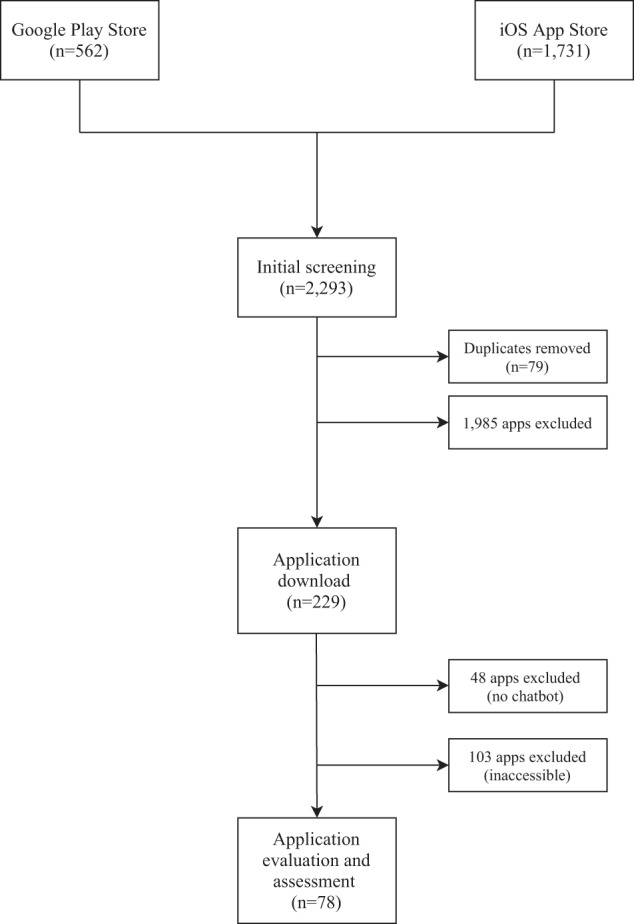
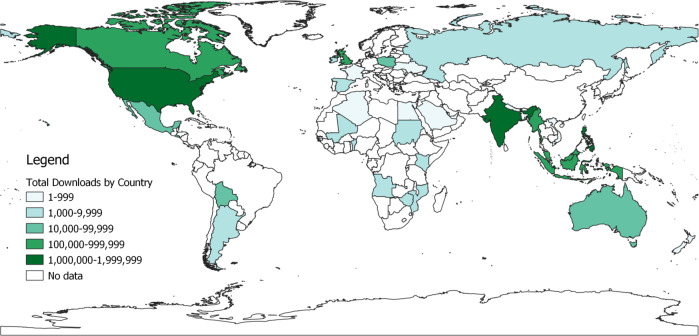
Health-focused apps with chatbots (“healthbots”) have a critical role in addressing gaps in quality healthcare. There is limited evidence on how such healthbots are developed and applied in practice. Our review of healthbots aims to classify types of healthbots, contexts of use, and their natural language processing capabilities. Eligible apps were those that were health-related, had an embedded text-based conversational agent, available in English, and were available for free download through the Google Play or Apple iOS store. Apps were identified using 42Matters software, a mobile app search engine. Apps were assessed using an evaluation framework addressing chatbot characteristics and natural language processing features. The review suggests uptake across 33 low- and high-income countries. Most healthbots are patient-facing, available on a mobile interface and provide a range of functions including health education and counselling support, assessment of symptoms, and assistance with tasks such as scheduling. Most of the 78 apps reviewed focus on primary care and mental health, only 6 (7.59%) had a theoretical underpinning, and 10 (12.35%) complied with health information privacy regulations. Our assessment indicated that only a few apps use machine learning and natural language processing approaches, despite such marketing claims. Most apps allowed for a finite-state input, where the dialogue is led by the system and follows a predetermined algorithm. Healthbots are potentially transformative in centering care around the user; however, they are in a nascent state of development and require further research on development, automation and adoption for a population-level health impact.
Overview
The claims and statistics of this paper haven’t been checked yet.
Free: it reads the open-access text and checks the first 5 claims that cite a source we can check. Create a free account to check every claim.
Integrity signals
Registry
Cites
Statistics
Figures
Verification
Claims the paper makes
The claims and statistics of this paper haven’t been checked yet.
Free: it reads the open-access text and checks the first 5 claims that cite a source we can check. Create a free account to check every claim.
Claims other papers make about this one
Each is checked against this paper’s own text: does it say what the citing paper says it does?
The source backs part of the claim, not all of it — or backs it for a different population, condition or comparison.
In the citing paper
“Most chatbots continue to be employed in narrowly defined tasks, such as structured screening tools or symptom checkers”
From Charting the evolution of artificial intelligence mental health chatbots from rule‐based systems to large language models: a systematic review (2025) · cites this paper as [12]
Experimental — accuracy not yet measuredThe cited source says what the claim attributes to it.
In the citing paper
“In addition, a recent review of health-focused conversational agents apps found that most of these rely on rule-based approaches and predefined app-led dialog 74 .”
From Multimodal biomedical AI (2022) · cites this paper as [74]
Self-check
Percentages, sums and reported differences re-computed from the paper’s own numbers.
The self-check needs the paper’s full text.
Citations
Cites
The Transtheoretical Model of Health Behavior Change.
Prochaska, J. O., & Velicer, W. F. (1997) · American Journal of Health Promotion · doi:10.4278/0890-1171-12.1.38 · Cited by 7,782
Dissecting racial bias in an algorithm used to manage the health of populations
Obermeyer, Z., Powers, B., Vogeli, C., & Mullainathan, S. (2019) · Science · doi:10.1126/science.aax2342 · Cited by 7,137
International Organization for Standardization (ISO)
Nahler, G. (2009) · Dictionary of Pharmaceutical Medicine · doi:10.1007/978-3-211-89836-9_723 · Cited by 3,677
Fitzpatrick, K. K., Darcy, A., & Vierhile, M. (2017) · JMIR Mental Health · doi:10.2196/mental.7785 · Cited by 2,730
Linehan, M. M., Comtois, K. A., Murray, A. M., Brown, M. Z., Gallop, R. J., Heard, H. L., Korslund, K. E., Tutek, D. A., Reynolds, S. K., & Lindenboim, N. (2006) · Archives of General Psychiatry · doi:10.1001/archpsyc.63.7.757 · Cited by 2,025
Conversational agents in healthcare: a systematic review
Laranjo, L., Dunn, A. G., Tong, H. L., Kocaballi, A. B., Chen, J., Bashir, R., Surian, D., Gallego, B., Magrabi, F., Lau, A. Y. S., et al. (2018) · Journal of the American Medical Informatics Association · doi:10.1093/jamia/ocy072 · Cited by 1,388
Inkster, B., Sarda, S., & Subramanian, V. (2018) · doi:10.2196/preprints.12106 · Cited by 1,063
Chatbots and Conversational Agents in Mental Health: A Review of the Psychiatric Landscape
Vaidyam, A. N., Wisniewski, H., Halamka, J. D., Kashavan, M. S., & Torous, J. B. (2019) · The Canadian Journal of Psychiatry · doi:10.1177/0706743719828977 · Cited by 1,048
Conversational Agents in Health Care: Scoping Review and Conceptual Analysis
Tudor Car, L., Dhinagaran, D. A., Kyaw, B. M., Kowatsch, T., Joty, S., Theng, Y.-L., & Atun, R. (2020) · Journal of Medical Internet Research · doi:10.2196/17158 · Cited by 553
Abd-Alrazaq, A. A., Rababeh, A., Alajlani, M., Bewick, B. M., & Househ, M. (2020) · Journal of Medical Internet Research · doi:10.2196/16021 · Cited by 503
Research works printed but not linked: 2
- 2. World Health Organization & UNICEF. Declaration of Astana: Global Conference on Primary Healthcare. https://www.who.int/teams/primary-health-care/conference/ declaration (2018).
- 50. Wang, W. & Siau, K. Trust in Health Chatbots. https://www.researchgate.net/ profile/Keng-Siau-2/publication/333296446_Trust_in_Health_Chatbots/links/ 5ce5dd35299bf14d95b1d15b/Trust-in-Health-Chatbots.pdf (2018).
Cited by
Acosta, J. N., Falcone, G. J., Rajpurkar, P., & Topol, E. J. (2022) · Nature Medicine · doi:10.1038/s41591-022-01981-2 · Cited by 1,365
Torous, J., Linardon, J., Goldberg, S. B., Sun, S., Bell, I., Nicholas, J., Hassan, L., Hua, Y., Milton, A., & Firth, J. (2025) · World Psychiatry · doi:10.1002/wps.21299 · Cited by 323
Loneliness and suicide mitigation for students using GPT3-enabled chatbots
Maples, B., Cerit, M., Vishwanath, A., & Pea, R. (2024) · npj Mental Health Research · doi:10.1038/s44184-023-00047-6 · Cited by 250
Digital mental health: challenges and next steps
Smith, K. A., Blease, C., Faurholt-Jepsen, M., Firth, J., Van Daele, T., Moreno, C., Carlbring, P., Ebner-Priemer, U. W., Koutsouleris, N., Riper, H., et al. (2023) · BMJ Mental Health · doi:10.1136/bmjment-2023-300670 · Cited by 233
Digital transformation of mental health services
Bond, R. R., Mulvenna, M. D., Potts, C., O’Neill, S., Ennis, E., & Torous, J. (2023) · npj Mental Health Research · doi:10.1038/s44184-023-00033-y · Cited by 199
“Thankfully, most health related chatbots actually use fi xed fi nite state conversational design (i.e. transparent, pre-de fi ned branching tree logic) and not AI 35 .”
Thirunavukarasu, A. J., Hassan, R., Mahmood, S., Sanghera, R., Barzangi, K., El Mukashfi, M., & Shah, S. (2023) · JMIR Medical Education · doi:10.2196/46599 · Cited by 187
“Unlike most chatbots previously trialed in clinical settings, ChatGPT facilitates free-text input and spontaneous output, as opposed to manually designed finite-state inputs and outputs [3].”
BackgroundKjell, O., Kjell, K., & Schwartz, H. A. (2023) · Psychiatry Research · doi:10.1016/j.psychres.2023.115667 · Cited by 156
Pandey, S., & Sharma, S. (2023) · Healthcare Analytics · doi:10.1016/j.health.2023.100198 · Cited by 77
Hua, Y., Siddals, S., Ma, Z., Galatzer‐Levy, I., Xia, W., Hau, C., Na, H., Flathers, M., Linardon, J., Ayubcha, C., et al. (2025) · World Psychiatry · doi:10.1002/wps.21352 · Cited by 117
“Most chatbots continue to be employed in narrowly defined tasks, such as structured screening tools or symptom checkers 12 , where deterministic outputs remain sufficient.”
Huq, S. M., Maskeliūnas, R., & Damaševičius, R. (2024) · Disability and Rehabilitation: Assistive Technology · doi:10.1080/17483107.2022.2146768 · Cited by 82
Task-Specific Transformer-Based Language Models in Health Care: Scoping Review
Cho, H. N., Jun, T. J., Kim, Y., Kang, H. J., Ahn, I., Gwon, H., Kim, Y., Seo, H., Choi, H., Kim, M., et al. (2024) · JMIR Medical Informatics · doi:10.2196/49724 · Cited by 107
Sáiz-Manzanares, M. C., Marticorena-Sánchez, R., Martín-Antón, L. J., González Díez, I., & Almeida, L. (2023) · Heliyon · doi:10.1016/j.heliyon.2023.e12843 · Cited by 96
“More specifically, chatbots using AI, NLP and Deep Learning (DL) seem to be the most effective [40,41] however, more studies are needed in this respect [42].”
MethodLi, C., Mowery, D. L., Ma, X., Yang, R., Vurgun, U., Hwang, S., Donnelly, H. K., Bandhey, H., Senathirajah, Y., Visweswaran, S., et al. (2024) · Journal of Clinical and Translational Science · doi:10.1017/cts.2024.571 · Cited by 71
Conversational AI and Vaccine Communication: Systematic Review of the Evidence
Passanante, A., Pertwee, E., Lin, L. K., Lee, K. Y., Wu, J. T. K., & Larson, H. J. (2023) · Journal of Medical Internet Research · doi:10.2196/42758 · Cited by 59
Is ChatGPT a trusted source of information for total hip and knee arthroplasty patients?
Wright, B. M., Bodnar, M. S., Moore, A. D., Maseda, M., Kucharik, M. P., Diaz, C. C., Schmidt, C. M., & Mir, H. R. (2024) · Bone & Joint Open · doi:10.1302/2633-1462.52.bjo-2023-0113.r1 · Cited by 54
Wrightson-Hester, A.-R., Anderson, G., Dunstan, J., McEvoy, P. M., Sutton, C. J., Myers, B., Egan, S., Tai, S., Johnston-Hollitt, M., Chen, W., et al. (2023) · JMIR Human Factors · doi:10.2196/46849 · Cited by 43
Lai, X., Chen, J., Lai, Y., Huang, S., Cai, Y., Sun, Z., Wang, X. P., Pan, K., Gao, Q., & Huang, C. (2025) · JMIR Medical Informatics · doi:10.2196/59309 · Cited by 50
Pithpornchaiyakul, S., Naorungroj, S., Pupong, K., & Hunsrisakhun, J. (2022) · Journal of Medical Internet Research · doi:10.2196/39218 · Cited by 48
Deva, R., Ramani, D., Divate, T., Jalota, S., & Ismail, A. (2025) · CHI Conference on Human Factors in Computing Systems · doi:10.1145/3706598.3713362 · Cited by 45
Gasteiger, N., Dowding, D., Norman, G., McGarrigle, L., Eost‐Telling, C., Jones, D. J., Vercell, A., Ali, S. M., & O’Connor, S. (2023) · BMJ Open · doi:10.1136/bmjopen-2023-073283 · Cited by 44
Abubakar, A. M., Gupta, D., & Parida, S. (2024) · Procedia Computer Science · doi:10.1016/j.procs.2024.04.087 · Cited by 44
Understanding the Benefits and Design of Chatbots to Meet the Healthcare Needs of Migrant Workers
Tseng, Y., Jarupreechachan, W., & Lee, T.-H. (2023) · Proceedings of the ACM on Human-Computer Interaction · doi:10.1145/3610106 · Cited by 43
Saffarizadeh, K., University of Texas at Arlington, Keil, M., Georgia State University, Boodraj, M., Boise State University, Alashoor, T., & University of Navarra (2024) · Journal of the Association for Information Systems · doi:10.17705/1jais.00839 · Cited by 41
Weeks, R., Sangha, P., Cooper, L., Sedoc, J., White, S., Gretz, S., Toledo, A., Lahav, D., Hartner, A.-M., Martin, N., et al. (2022) · JMIR Human Factors · doi:10.2196/40533 · Cited by 40
Self-citationHe, X., Xi, Z., & Ding, H. (2023) · Journal of Medical Internet Research · doi:10.2196/50342 · Cited by 37
Smooth Talking: Generative Versus Scripted Coaching Chatbot Adoption and Efficacy Comparison
Terblanche, N. H. D. (2024) · International Journal of Human-Computer Interaction · doi:10.1080/10447318.2024.2423125 · Cited by 35
Cho, Y., Rai, S., Ungar, L., Sedoc, J., & Guntuku, S. (2023) · Proceedings of the 2023 Conference on Empirical Methods in Natural Language Processing · doi:10.18653/v1/2023.emnlp-main.698 · Cited by 33
Self-citationMayer, C. J., Mahal, J., Geisel, D., Geiger, E. J., Staatz, E., Zappel, M., Lerch, S. P., Ehrenthal, J. C., Walter, S., & Ditzen, B. (2024) · Computers in Human Behavior · doi:10.1016/j.chb.2024.108419 · Cited by 32
Rollwage, M., McFadyen, J., Juechems, K., Balogh, A., Pisupati, S., Mircea, M.-T., Hauser, T. U., Prichard, G., & Harper, R. J. (2026) · Nature Medicine · doi:10.1038/s41591-026-04278-w · Cited by 32
Shimbo, D., Shah, R. U., Abdalla, M., Agarwal, R., Ahmad, F. S., Anaya, G., Attia, Z. I., Bull, S. S., Chang, A. R., Commodore-Mensah, Y. Y., et al. (2024) · Hypertension · doi:10.1161/hypertensionaha.124.22095 · Cited by 31
Kappas, A., & Gratch, J. S. (2023) · Affective Science · doi:10.1007/s42761-023-00211-3 · Cited by 30
Artificial intelligence agents in healthcare research: A scoping review
Njei, B., Al-Ajlouni, Y. A., Sidney Kanmounye, U., Boateng, S., Loic Nguefang, G., Njei, N., Hamouri, S., & Al-Ajlouni, A. F. (2026) · PLOS One · doi:10.1371/journal.pone.0342182 · Cited by 27
“While engineering-centric studies emphasize architectural optimization and algorithmic performance, translational research addressing usability, safety, and clinical outcomes remains comparatively underrepresented [9].”
Linardon, J. (2025) · Current Treatment Options in Psychiatry · doi:10.1007/s40501-025-00344-1 · Cited by 28
Brown, D., Barrera, A., Ibañez, L., Budassi, I., Murphy, B., Shrestha, P., Salomon-Ballada, S., Kriscovich, J., & Torrente, F. M. (2024) · Nature Human Behaviour · doi:10.1038/s41562-024-01985-7 · Cited by 28
Chiauzzi, E. J., Williams, A. A. A., Mariano, T. Y., Pajarito, S., Robinson, A. H., Kirvin-Quamme, A., & Forman‐Hoffman, V. L. (2024) · BMC Psychiatry · doi:10.1186/s12888-024-05532-6 · Cited by 25
Design recommendations for chatbots to support people with depression
de Souza, P. M., Pires, I. D. C., Motti, V. G., Caseli, H. D. M., Neto, J. B. B., Martini, L. C., & Néris, V. P. D. A. (2022) · Brazilian Symposium on Human Factors in Computing Systems (IHC) · doi:10.1145/3554364.3559119 · Cited by 24
Abdullah, M. S. (2025) · doi:10.63125/780spe97 · Cited by 23
Rivera-Rivera, J. N., AuBuchon, K. E., Smith, M., Starling, C. M., Ganacias, K. G., Danielson, A., Patchen, L., Rethy, J. A., Blumenthal, J., Thomas, A. D., et al. (2024) · JMIR Pediatrics and Parenting · doi:10.2196/56807 · Cited by 23
Artificial intelligence and public health: prospects, hype and challenges
Nutbeam, D., & Milat, A. (2025) · Public Health Research & Practice · doi:10.1071/pu24001 · Cited by 22
Development and evaluation of a lightweight large language model chatbot for medication enquiry
Elangovan, K., Ong, J. C. L., Jin, L., Seng, J. J. B., Kwan, Y. H., Ng, L. S., Zhong, R. J., Li, J., Ke, Y. H., Liu, N., et al. (2025) · PLOS Digital Health · doi:10.1371/journal.pdig.0000961 · Cited by 23
Guest, P. C., Vasilevska, V., Al-Hamadi, A. K., Eder, J., Falkai, P., & Steiner, J. (2023) · Frontiers in Psychiatry · doi:10.3389/fpsyt.2023.1227426 · Cited by 22
Private Yet Social: How LLM Chatbots Support and Challenge Eating Disorder Recovery
Choi, R., Kim, T., Park, S., Kim, J. G., & Lee, S.-J. (2025) · Proceedings of the 2025 CHI Conference on Human Factors in Computing Systems · doi:10.1145/3706598.3713485 · Cited by 19
MacNeill, A. L., MacNeill, L., Luke, A., & Doucet, S. A. (2024) · Journal of Medical Internet Research · doi:10.2196/49387 · Cited by 19
Andrews, N. E., Ireland, D., Vijayakumar, P., Burvill, L., Hay, E., Westerman, D., Rose, T., Schlumpf, M., Strong, J., & Claus, A. P. (2023) · JMIR Formative Research · doi:10.2196/47267 · Cited by 19
The real ethical issues with AI for clinical psychiatry
Fisher, C. E. (2024) · International Review of Psychiatry · doi:10.1080/09540261.2024.2376575 · Cited by 19
An Overview of Search Engine Marketing: A Systematic Literature Review
Şahin, A., & Dirsehan, T. (2022) · DergiPark · Cited by 18
Armoundas, A. A., Ahmad, F. S., Attia, Z. I., Doudesis, D., Khera, R., Kyriakoulis, K. G., Stergiou, G. S., & Tang, W. H. W. (2025) · Hypertension · doi:10.1161/hypertensionaha.124.22349 · Cited by 15
Conversational Agents for Older Adults' Health: A Systematic Literature Review
An, J., Yi, S., Lyu, Y., Liu, H., & Zhang, Y. (2025) · arXiv (Cornell University) · doi:10.48550/arxiv.2503.23153 · Cited by 16
Embedded Conversational AI, Chatbots, and NLP to Improve Healthcare Administration and Practices
Singh, A., Joshi, S., & Domb, M. (2023) · International Conference on Automation, Computing and Renewable Systems (ICACRS) · doi:10.1109/icacrs58579.2023.10404985 · Cited by 14
The Human-or-Machine Issue: Turing-Inspired Reflections on an Everyday Matter
Harel, D., & Marron, A. (2024) · Communications of the ACM · doi:10.1145/3637210 · Cited by 14
The Routledge Handbook of Artificial Intelligence and Philanthropy
Ugazio, G., & Maricic, M. (2024) · Routledge eBooks · doi:10.4324/9781003468615 · Cited by 13
A text-based conversational agent for asthma support: Mixed-methods feasibility study
Cook, D., Peters, D., Moradbakhti, L., Su, T., Re, M. D., Schuller, B. W., Quint, J. K., Wong, E., & Calvo, R. A. (2024) · Digital Health · doi:10.1177/20552076241258276 · Cited by 13
Recommendations for Mental Health Chatbot Conversations: An Integrative Review
Nieminen, H., Vartiainen, A., Bond, R., Laukkanen, E., Mulvenna, M. D., & Kuosmanen, L. (2025) · Journal of Advanced Nursing · doi:10.1111/jan.16762 · Cited by 11
Dixit, K. K., Pundir, S., Shrivastava, A., Kumar, C. P., Srivastava, A. P., & Singh, P. (2023) · IEEE Uttar Pradesh Section International Conference on Electrical, Electronics and Computer Engineering (UPCON) · doi:10.1109/upcon59197.2023.10434291 · Cited by 11
Minian, N., Mehra, K., Rose, J., Veldhuizen, S., Zawertailo, L. A., Ratto, M., Lecce, J., & Selby, P. L. (2023) · Digital Health · doi:10.1177/20552076231182807 · Cited by 10
Lachance, A., Da, S. M. A. R., Yameogo, A. R., Plaisimond, J., Naye, F., Yousefi, F., Bergeron, F., Sasseville, M., & Gagnon, M. (2024) · Multimodal Technologies and Interaction · doi:10.3390/mti8110101 · Cited by 10
Çolakoğlu, S., Durmus, M., Polat, Z. P., Yildiz, A., & Sezgın, E. (2025) · Journal of Medical Systems · doi:10.1007/s10916-025-02202-2 · Cited by 9
Viewpoint: Hybrid Intelligence Supports Application Development for Diabetes Lifestyle Management
Dudzik, B., van der Waa, J., Chen, P., Dobbe, R., de Troya, I. M. D. R., Bakker, R. M., de Boer, M., Smit, Q. T. S., Dell’Anna, D., Erdogan, E., et al. (2024) · Journal of Artificial Intelligence Research · doi:10.1613/jair.1.15916 · Cited by 9
Calvo, R. A., Peters, D., Moradbakhti, L., Cook, D., Rizos, G., Schuller, B. W., Kallis, C., Wong, E., & Quint, J. K. (2023) · JMIR Research Protocols · doi:10.2196/42965 · Cited by 9
Wahbeh, A., Al-Ramahi, M. A., El-Gayar, O., Elnoshokaty, A., & Nasralah, T. (2023) · Hawaii International Conference on System Sciences (HICSS) · doi:10.24251/hicss.2023.392 · Cited by 8
Bertoni, A. P. S., Rodrigues, V., Zeiser, F. A., Mello, B., da Costa, C. A., Donida, B., Rigo, S. J., & Righi, R. D. R. (2022) · doi:10.5753/sbc.10508.0.1 · Cited by 7
Adaptive Mental Health And Mood Uplifting Chatbot
Siddiqui, T., Sharma, A., & Arora, M. (2023) · International Conference on Computing, Communication and Networking Technologies (ICCCNT) · doi:10.1109/icccnt56998.2023.10308236 · Cited by 6
Campos, F. A. A. C., Feitosa, F. B., Moll, M. F., Reis, I. D. O., García, J. C. S., & Ventura, C. A. A. (2025) · International Journal of Environmental Research and Public Health · doi:10.3390/ijerph22020310 · Cited by 6
Szczuka, J. M., & Mühl, L. (2024) · Current Sexual Health Reports · doi:10.1007/s11930-024-00383-4 · Cited by 5
Dolman, A. J., Kaliappan, S., Zhou, Y., Palleti, D., Marquard, J. L., Lee, S. I., Karkar, R., & Jimison, H. B. (2025) · Innovation in Aging · doi:10.1093/geroni/igaf106 · Cited by 5
Mlakar, I., Šafran, V., Plohl, N., Kumperščak, H. G., Močnik, S., Smogavc, Ž., & Smrke, U. (2026) · PLOS Digital Health · doi:10.1371/journal.pdig.0001069 · Cited by 4
MacNeill, A. L., Luke, A., & Doucet, S. A. (2025) · Digital Health · doi:10.1177/20552076241311066 · Cited by 4
Towards a model for understanding failures in health data protection: a mixed-methods study
Pool, J., Akhlaghpour, S., Hassandoust, F., Fatehi, F., & Burton‐Jones, A. (2025) · Behaviour and Information Technology · doi:10.1080/0144929x.2025.2551568 · Cited by 4
Jonsson, M., Gustavsson, C., Pettersson, L., Gulliksen, J., & Johansson, S. (2025) · Interacting with Computers · doi:10.1093/iwc/iwaf034 · Cited by 4
Evaluating telemedicine diabetes mellitus: a mobile health app for type-2 diabetes
Karim, M. Z. A., Thamrin, N. M., Shauri, R. L. A., Jailani, R., Manaf, H., & Mustapa, A. (2024) · International Journal of Advances in Applied Sciences · doi:10.11591/ijaas.v13.i4.pp787-795 · Cited by 4
Digitisation of emergency medicine: opportunities, examples and issues for consideration
Ho, K. (2024) · Singapore Medical Journal · doi:10.4103/singaporemedj.smj-2023-217 · Cited by 4
Wahbeh, A., Al-Ramahi, M. A., El-Gayar, O., Elnoshokaty, A., & Nasralah, T. (2023) · Digital Commons @ Texas A&M University-San Antonio (Texas A&M University-San Antonio) · Cited by 4
Hameed, I., Umar, H., Umber, F., & Mustafa, M. (2025) · arXiv (Cornell University) · doi:10.48550/arxiv.2510.27401 · Cited by 4
Advancements and Applications of STR Kits in Forensic DNA Profiling: A Comprehensive Review
Mahmoud, O. A., Hameed, M. A., Muhi, S. H., Abed, F. B., Ibrahim, S. M., Hadi, I. R., Mohammed, D. A., & Attallah, R. M. (2025) · Baghdad Journal of Biochemistry and Applied Biological Sciences · doi:10.47419/bjbabs.v6i.355 · Cited by 3
Yang, H., Chang, F., Muroi, F., Liu, Z., Zhang, W., & Cai, J. (2026) · Psychotherapy and Psychosomatics · doi:10.1159/000552072 · Cited by 4
Kini, A., Vengrenyuk, A., Derek Pineda, N. P., Vengrenyuk, Y., Oliver, B. A., Poon, G., Balce, Y., Bander, J. A., Rhee, A. J., Darrow, B. J., et al. (2026) · npj Digital Medicine · doi:10.1038/s41746-026-02959-x · Cited by 5
Depiction of conversational agents as health professionals: a scoping review
MacNeill, A. L., MacNeill, L., Yi, S., Goudreau, A., Luke, A., & Doucet, S. A. (2024) · JBI Evidence Synthesis · doi:10.11124/jbies-23-00029 · Cited by 3
Sasseville, M., Barony, R., Yameogo, A. R., Bergeron-Drolet, L.-A., Bergeron, F., & Gagnon, M. (2022) · JMIR Research Protocols · doi:10.2196/40265 · Cited by 3
Harnessing the Power of Language Models for Intelligent Digital Health Services
Garima, S., Morandé, S., & Shashank, S. (2024) · ITU Kaleidoscope Academic Conference (ITU K) · doi:10.23919/ituk62727.2024.10772761 · Cited by 3
di Bona, K., Ijaz, K., & Ahmadpour, N. (2025) · Australian Conference on Human-Computer Interaction (OzCHI) · doi:10.1145/3764687.3764704 · Cited by 2
Sangha, P., Weeks, R., Miller, E. A., Sedoc, J., Lacey, H., Liang, C. A., & Agarwal, S. (2025) · Journal of Social Marketing · doi:10.1108/jsocm-06-2024-0139 · Cited by 2
Self-citationLucchini, A., Bozzon, A., & Colombo, S. (2026) · CHI Conference on Human Factors in Computing Systems · doi:10.1145/3772318.3790698 · Cited by 2
Jecker, N. S., Ozeki-Hayashi, R., Nakazawa, E., & Fujita, T. (2026) · Philosophy & Technology · doi:10.1007/s13347-026-01073-w · Cited by 4
Inteligencia artificial y aprendizaje automatizado, ¿oportunidad o amenaza?
Díaz, J. J. S., Rincón, A. R., & Jiménez-Canizales, C. E. (2023) · Revista Colombiana de Endocrinología Diabetes & Metabolismo · doi:10.53853/encr.10.2.797 · Cited by 2
A Structured Literature Review on Conversational Agents that Empower Health Interventions
Pietrantoni, N. (2023) · International Conference on Information Systems and Software Technologies (ICI2ST) · doi:10.1109/ici2st62251.2023.00024 · Cited by 1
Leveraging artificial intelligence in advance care planning: A scoping review
Tan, M., Tang, S., Ni, Z., Kan, S., Macharia, P. M., Zhang, H., Yi, H., Li, G., & Ding, J. (2025) · Artificial Intelligence in Medicine · doi:10.1016/j.artmed.2025.103315 · Cited by 1
Jaiswal, N., Ma, Y., Lebouché, B., Poenaru, D., Pomey, M., Achiche, S., Lessard, D., Engler, K., Montiel, Z., Acevedo, H., et al. (2025) · Research Involvement and Engagement · doi:10.1186/s40900-025-00804-1 · Cited by 1
Lin, J., Jaiswal, N., Ma, Y., Lebouché, B., Villanueva, S., Achiche, S., Lessard, D., Engler, K., Berthelot, S., Buckeridge, D. L., et al. (2026) · JMIR Research Protocols · doi:10.2196/89852 · Cited by 1
Nieminen, H., Kopra, J., Vartiainen, A., Raymond, B., Emilia, L., Mulvenna, M. D., & Lauri, K. (2026) · Behaviour and Information Technology · doi:10.1080/0144929x.2026.2716287 · Cited by 1
Lange, F., Mardi, S., Binder, T., Reich, M. M., Odorfer, T., & Volkmann, J. (2026) · The Lancet Regional Health - Europe · doi:10.1016/j.lanepe.2026.101866 · Cited by 1
Silva, D. F. M., & Barrientos, A. H. (2023) · IntechOpen eBooks · doi:10.5772/intechopen.110847 · Cited by 1
Design de um chatbot para o diálogo com universitários com possível perfil depressivo
Pires, I. D. C., Caseli, H. D. M., & Néris, V. P. D. A. (2023) · doi:10.5753/sbcas_estendido.2023.229543 · Cited by 1
Sano, T., Takahashi, M., Fujimura, K., Inoue, T., Sato, T., & Katagiri, Y. (2024) · ACM International Joint Conference on Pervasive and Ubiquitous Computing (UbiComp) · doi:10.1145/3675094.3677590 · Cited by 1
On the impact of AI-empowered, gaming-based virtual worlds on philanthropy
Schipper, M., Shamsrizi, M., & Pakura, A. (2024) · Routledge eBooks · doi:10.4324/9781003468615-10 · Cited by 1
Moradbakhti, L., Peters, D., Quint, J. K., Schuller, B. W., Cook, D., & Calvo, R. A. (2026) · JMIR Human Factors · doi:10.2196/80979 · Cited by 1
Evaluation and Prototype of Health Counseling LLM Using the Turing TestPreprint
Nakamura, K. D., Tatsuoka, H., Miyakawa, T., Ishii, H., Onishi, M., & Ohyama, Y. (2024) · Preprints.org · doi:10.20944/preprints202408.1614.v1 · Cited by 1
Enriched Story Experiences with a New Video Interaction Model
Ma, L. C. (2023) · doi:10.11575/prism/dspace/41001 · Cited by 1
Razmjooy, N., & Rajinikanth, V. (2022) · Institute of Physics eBooks · doi:10.1088/978-0-7503-4012-0ch1
Health Informatics and Patient Safety in Pharmacotherapy
Rissanen, A., & Rissanen, M. (2023) · Lecture notes in computer science · doi:10.1007/978-981-99-7108-4_31
Research on Media Presentation and Public Reaction to the First Health Digital Assistant in Croatia
PETRICEVIC, S., & Mustić, D. (2023) · The Eurasia Proceedings of Science Technology Engineering and Mathematics · doi:10.55549/epstem.1365751
Metadata
- Authors
- Parmar, P., Ryu, J., Pandya, S., Sedoc, J., & Agarwal, S.
- Affiliations
- Johns Hopkins University (US)
- New York University (US)
- Corresponding author
- Agarwal, Smisha
- Venue
- npj Digital Medicine
- Published
- 2022-02-17
- Volume
- 5
- Issue
- 1
- Pages
- 21-21
- ISSN
- 2398-6352 (ISSN-L)
- PMC
- PMC8854396
- OpenAlex
- W4212875148
- Semantic Scholar
- 629be98c203f089fb093a4c8080c75cec542f18e
- Cited by
- 113
- References
- 40
- Citations by year
- 2026: 18 · 2025: 27 · 2024: 27 · 2023: 30 · 2022: 11
- FWCI
- 4.59
- Type
- journal article
- Language
- en
- Open access
- gold
- doi.org
- Licence
- cc-by
- creativecommons.org/licenses/by/4.0 (tdm)
- creativecommons.org/licenses/by/4.0 (vor)
- Locations
- npj Digital Medicine (publishedVersion, cc-by)
- PubMed Central (publishedVersion, cc-by)
- PubMed (publishedVersion)
- DOAJ (DOAJ: Directory of Open Access Journals) (submittedVersion, cc-by-sa)
- Topics
- Health Sciences › Health Professions › General Health Professions › Mobile Health and mHealth Applications
- Health Sciences › Medicine › Health Informatics › Artificial Intelligence in Healthcare and Education
- Social Sciences › Psychology › Applied Psychology › Digital Mental Health Interventions
- Keywords
- healthcare chatbots, chatbots, mobile health apps, person-centred care, natural language processing, health information privacy, mental health apps, primary care, health education, symptom assessment
About these checks
Registry, retraction, Cites and statistics results are computed, not judged, with one exception: a printed reference that no index lists is read once by a model before it counts as a citation error. Claims are extracted by a model and kept only when their quote appears verbatim in the text; each cited source is then checked, with a model’s help, for whether it says what the claim relies on. Those verdicts can be wrong — read the claim’s quote and the cited source before relying on one.
Statistics and arithmetic are recomputed, not judged.
Confidence bands are shown only for fields calibrated on our annotated test set. None is calibrated yet, so no band is shown.
What counts as a claim ›How we measure confidence ›How we check this ›
Are you an author, or do you see a problem with this page? Request a review
Data sources
Bibliographic data: Semantic Scholar, OpenAlex, Crossref.
Contains information from the Semantic Scholar Academic Graph Datasets, made available under the ODC Attribution License (ODC-BY 1.0).
Semantic Scholar’s data is described in: Kinney, R., et al. (2023). The Semantic Scholar Open Data Platform. arXiv:2301.10140.
