

Integrated multimodal artificial intelligence framework for healthcare applications
Open accessThe DOI matches its Crossref record; 52 of the 53 references it cites were found in a registry or an index; 16 of the 23 sources its claims cite were checked for support.
Abstract
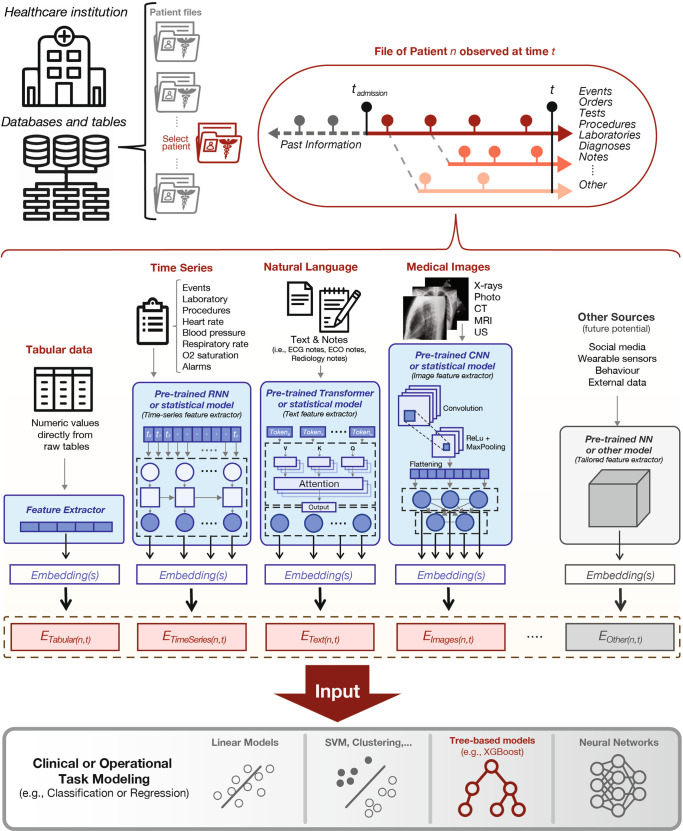
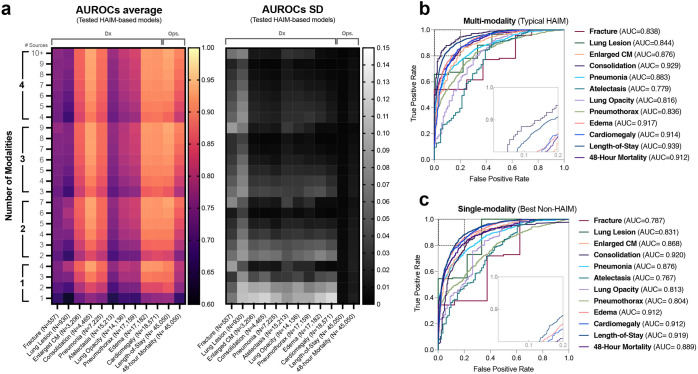
Artificial intelligence (AI) systems hold great promise to improve healthcare over the next decades. Specifically, AI systems leveraging multiple data sources and input modalities are poised to become a viable method to deliver more accurate results and deployable pipelines across a wide range of applications. In this work, we propose and evaluate a unified Holistic AI in Medicine (HAIM) framework to facilitate the generation and testing of AI systems that leverage multimodal inputs. Our approach uses generalizable data pre-processing and machine learning modeling stages that can be readily adapted for research and deployment in healthcare environments. We evaluate our HAIM framework by training and characterizing 14,324 independent models based on HAIM-MIMIC-MM, a multimodal clinical database ( N = 34,537 samples) containing 7279 unique hospitalizations and 6485 patients, spanning all possible input combinations of 4 data modalities (i.e., tabular, time-series, text, and images), 11 unique data sources and 12 predictive tasks. We show that this framework can consistently and robustly produce models that outperform similar single-source approaches across various healthcare demonstrations (by 6–33%), including 10 distinct chest pathology diagnoses, along with length-of-stay and 48 h mortality predictions. We also quantify the contribution of each modality and data source using Shapley values, which demonstrates the heterogeneity in data modality importance and the necessity of multimodal inputs across different healthcare-relevant tasks. The generalizable properties and flexibility of our Holistic AI in Medicine (HAIM) framework could offer a promising pathway for future multimodal predictive systems in clinical and operational healthcare settings.
Overview
CoChat Summary
## TL;DR
The paper proposes HAIM, a modular multimodal AI framework for healthcare that turns heterogeneous EHR data into fixed-size patient embeddings for downstream prediction. On a multimodal MIMIC-based dataset, the framework trained 14,324 XGBoost models and reported consistent AUROC gains over single-source baselines across chest X-ray pathology, length-of-stay, and 48 h mortality tasks.
## Key findings
- The compiled dataset, HAIM-MIMIC-MM, contained 34,537 samples, 7,279 hospitalization stays, and 6,485 unique patients.
- Across all experiments, the framework evaluated 14,324 independent models: 10,230 for chest pathology diagnosis, 2,047 for length-of-stay, and 2,047 for 48 h mortality prediction.
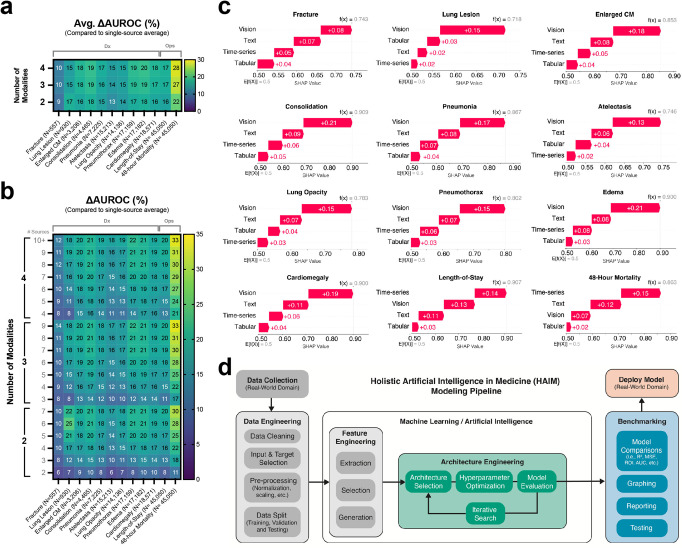
- Multimodal/multi-source inputs improved average performance over canonical single-source systems by 6–22% for chest X-ray pathology prediction, 8–20% for length-of-stay, and 11–33% for 48 h mortality.
- For chest pathology prediction, the minimum per-task AUROC improvements were reported as: Fracture 6%, Lung Lesion 7%, Enlarged cardiomediastinum 9%, Consolidation 10%, Pneumonia 8%, Atelectasis 6%, Lung opacity 7%, Pneumothorax 8%, Edema 10%, and Cardiomegaly 10%.
- Shapley-value analysis showed that vision data contributed most to chest pathology tasks, while historical time-series records were most relevant for length-of-stay and 48 h mortality.
## Methods
- The study built a unified multimodal dataset by combining MIMIC-IV v1.0 and MIMIC-CXR-JPG v2.0.0 using matched patient/admission/imaging identifiers.
- Each patient admission was converted into a patient-centric file and embedded across 4 modalities and 11 data sources: tabular demographics, time-series events, text notes, and images; fixed embeddings were extracted using Clinical BERT for text and Densenet121-res224-chex for images.
- Downstream tasks included 10 chest pathology binary classifications, length-of-stay (discharged alive within 48 h vs otherwise), and 48 h mortality (expired within 48 h vs otherwise). Models were XGBoost, trained with 80/20 splits, repeated 5 times, with 5-fold cross-validated grid search on the training set; performance was reported by test AUROC.
## Limitations
- The paper states that Shapley analysis can reveal small or negative contributions when there is absence of extracted information or error propagation, and that such issues may be addressed by removing modalities or changing feature extractors.
- The paper notes that some improvements showed diminishing returns and local non-monotonic effects due to data source availability, error, and redundancy.
- Evident from the text: the demonstration is based on a single source dataset from MIMIC/BIDMC, so generalization to other hospitals or EHR systems is not directly established by the reported experiments.
Model-written summary. Check it against the paper before relying on it.
Integrity signals
Registry
Cites
Statistics
Figures
Verification
Claims the paper makes
10 Valid · 4 Not valid · 4 Not checked · 58 Own results and interpretations
The cited sources support only part of this claim — read each source’s verdict below.
In the paper
“Such anticipated utility, particularly in AI/ML systems aimed to improve clinical efficiency and patient outcomes, will require knowledge from multiple data sources and various input modalities2–4.”
§ Integrated multimodal artificial intelligence framework for healthcare applications > Introduction
What the sources say
- Partly supportedcites [2] Huang S-C Pareek A Seyyedi S Banerjee I Lungren MP Fusion of medical imaging and electronic health records using deep learning: a systematic review and implementation guidelines NPJ Dig. Med. 2020 3 1 9 PMC7567861 33083571 sourceExperimental — accuracy not yet measured
The Integration section describes medical data from records, imaging, lab results and wearables as potential inputs for AI analysis. The Conclusion links access across independent systems and varied data types to machine-learning strategies. These passages support the value of multiple sources and modalities, but do not establish that AI/ML systems require them to improve clinical efficiency or patient outcomes. (LLM, conf=0.83)
- Not checked — no full text of the sourcecites [3] Gietzelt M Löpprich M Karmen C Ganzinger M Models and data sources used in systems medicine Methods Inf. Med. 2016 55 107 113 26846174 source
- Partly supportedcites [4] Boonn WW Langlotz CP Radiologist use of and perceived need for patient data access J. Dig. imaging 2009 22 357 362 PMC3043710 18459002 sourceExperimental — accuracy not yet measured
The Conclusion calls for an application that retrieves pertinent patient information from multiple clinical systems and presents it efficiently to radiologists, with expected benefits for interpretation and quality of care. The Results identify several useful information sources. The paper does not establish that AI/ML systems require multiple input modalities; that part extends beyond its discussion of radiologists’ access to clinical data. (LLM, conf=0.86)
plainstates a possible cause- Asserted: passes — The authors put it forward as true.
- Checkable: passes — It can be checked against evidence.
- Load-bearing: passes — The paper’s conclusions depend on it.
- Based: passes — The paper gives a reason why it holds.
- Partly supported
The cited sources support only part of this claim — read each source’s verdict below.
In the paper
“For this work, we utilize the Medical Information Cart for Intensive Care (MIMIC)-IV32,33, an openly accessible database that contains de-identified records of 383,220 individual patients admitted to the ICU or emergency department (ED) of Beth Israel Deaconess Medical Center (BIDMC) in Boston, MA, USA, between 2008 and 2019 (inclusive).”
§ Integrated multimodal artificial intelligence framework for healthcare applications > Methods > Dataset
What the sources say
- Partly supportedcites [32] Johnson, A. et al. MIMIC-IV (version 1.0). PhysioNet, 10.13026/s6n6-xd98. (2021). sourceExperimental — accuracy not yet measured
The Methods (page unavailable) confirm that MIMIC-IV draws on de-identified records of BIDMC ICU or emergency-department patients from 2008–2019. The copy does not substantiate the figure of 383,220 individual patients. Its access information also describes the database as restricted to credentialed users who complete training and sign a data-use agreement, rather than openly accessible without qualification. (LLM, conf=0.87)
- Not checked — no full text of the sourcecites [33] Goldberger AL PhysioBank, PhysioToolkit, and PhysioNet: components of a new research resource for complex physiologic signals Circulation 2000 101 e215 e220 10851218 source
plainn = 383,220- Asserted: passes — The authors put it forward as true.
- Checkable: passes — It can be checked against evidence.
- Load-bearing: passes — The paper’s conclusions depend on it.
- Based: passes — The paper gives a reason why it holds.
- Partly supported
The cited sources that could be checked couldn’t confirm or dispute this claim.
In the paper
“However, developing unified and scalable pipelines that can consistently be applied to train multimodal AI/ML systems that leverage and outperform their single-modality counterparts has remained challenging2.”
§ Integrated multimodal artificial intelligence framework for healthcare applications > Introduction
What the sources say
- Could not verifycites [2] Huang S-C Pareek A Seyyedi S Banerjee I Lungren MP Fusion of medical imaging and electronic health records using deep learning: a systematic review and implementation guidelines NPJ Dig. Med. 2020 3 1 9 PMC7567861 33083571 sourceExperimental — accuracy not yet measured
The Conclusion (page not provided) describes a scalable data lake that can store varied healthcare data and support machine learning; the Discussion describes challenges in consolidating medical-record systems. Neither addresses the claimed difficulty of building unified pipelines to train multimodal AI/ML models that outperform single-modality models. Searches for multimodal performance and training-pipeline challenges found no passage on that point. (LLM, conf=0.76)
plain- Asserted: passes — The authors put it forward as true.
- Checkable: passes — It can be checked against evidence.
- Load-bearing: passes — The paper’s conclusions depend on it.
- Based: passes — The paper gives a reason why it holds.
- Could not verify
The cited sources that could be checked couldn’t confirm or dispute this claim.
In the paper
“Furthermore, it has been shown that multimodality in most of these domains can increase the performance of AI/ML systems (accuracy: 1.2–27.7%) compared to single-modality approaches for the same task2.”
§ Integrated multimodal artificial intelligence framework for healthcare applications > Introduction
What the sources say
- Could not verifycites [2] Huang S-C Pareek A Seyyedi S Banerjee I Lungren MP Fusion of medical imaging and electronic health records using deep learning: a systematic review and implementation guidelines NPJ Dig. Med. 2020 3 1 9 PMC7567861 33083571 sourceExperimental — accuracy not yet measured
The Integration and Discussion sections discuss combining health data from different sources for possible AI analysis, but neither reports a comparison with single-modality systems. Searches for multimodality, comparative AI/ML performance, and the 1.2–27.7% accuracy range found no supporting passage in our copy; page numbers were unavailable. (LLM, conf=0.76)
boostedstates a cause- Asserted: passes — The authors put it forward as true.
- Checkable: passes — It can be checked against evidence.
- Load-bearing: passes — The paper’s conclusions depend on it.
- Based: passes — The paper gives a reason why it holds.
- Could not verify
The cited sources support only part of this claim — read each source’s verdict below.
In the paper
“Multimodal architectures for AI/ML systems are attractive because they can emulate the input conditions that clinicians and healthcare administrators currently use to perform predictions and respond to their complex decision-making landscape2,5.”
§ Integrated multimodal artificial intelligence framework for healthcare applications > Introduction
What the sources say
- Partly supportedcites [2] Huang S-C Pareek A Seyyedi S Banerjee I Lungren MP Fusion of medical imaging and electronic health records using deep learning: a systematic review and implementation guidelines NPJ Dig. Med. 2020 3 1 9 PMC7567861 33083571 sourceExperimental — accuracy not yet measured
The Integration and Discussion sections describe combining varied health data, including records and wearables, for AI analysis and physicians’ treatment planning. The Conclusion says the proposed data system could support machine-learning strategies. The paper does not say that multimodal AI/ML architectures emulate clinicians’ or administrators’ existing inputs for prediction and complex decision-making; its architecture is for blockchain-based record management. (LLM, conf=0.84)
- Partly supportedcites [5] Wang W Krishnan E Big data and clinicians: a review on the state of the science JMIR Med. Inform. 2014 2 e1 25600256 PMC4288113 sourceExperimental — accuracy not yet measured
The Results section (Method Development Studies; page unavailable) describes tools that use clinical data to aid analysis and treatment decisions. The Discussion (Methods for Manipulation of Clinical Big Data; page unavailable) also describes diverse data and data integration. Neither passage says that multimodal AI/ML architectures emulate the inputs clinicians or healthcare administrators use, so the claim’s central rationale is unsupported. (LLM, conf=0.78)
plainstates a cause- Asserted: passes — The authors put it forward as true.
- Checkable: passes — It can be checked against evidence.
- Load-bearing: passes — The paper’s conclusions depend on it.
- Based: passes — The paper gives a reason why it holds.
- Partly supported
31 more claims · 1 with their cited sources checked
Create a free account to see all 76 claims and to verify the 1 reference still open.
- It may state two separate claims as one. 21
- Probably not a substantial claim. 24
- The quote only partly states this claim. 1
Claims other papers make about this one
Each is checked against this paper’s own text: does it say what the citing paper says it does?
The cited source doesn’t support the claim as written.
In the citing paper
“MIMIC-IV-MM is generated by joining MIMIC-IV, MIMIC-CXR, and MIMIC-IV-Note on the triplet of patient subject ID, hospital admission ID, and ICU-stay ID.”
From Multimodal risk prediction with physiological signals, medical images and clinical notes (2024) · cites this paper as [25]
Checked by a reasoning model — may be wrong.
Experimental — accuracy not yet measuredThe source backs part of the claim, not all of it — or backs it for a different population, condition or comparison.
In the citing paper
“These approaches combine heterogeneous data sources to improve diagnostic accuracy and contextual understanding in complex clinical scenarios [9].”
From Artificial Intelligence in Clinical Decision-Making: A Comprehensive Review of Diagnostic, Prognostic, and Therapeutic Applications, Validation Gaps, Bias, and Deployment Challenges (2026) · cites this paper as [9]
Experimental — accuracy not yet measuredThe source backs part of the claim, not all of it — or backs it for a different population, condition or comparison.
In the citing paper
“In dermatology, ophthalmology, and radiology, convolutional neural networks have reported performance comparable to specialists in selected controlled tasks, such as skin cancer classification, diabetic retinopathy detection, breast cancer screening, and lung nodule identification [9,12].”
From Artificial Intelligence in Clinical Decision-Making: A Comprehensive Review of Diagnostic, Prognostic, and Therapeutic Applications, Validation Gaps, Bias, and Deployment Challenges (2026) · cites this paper as [9]
Experimental — accuracy not yet measuredThe source backs part of the claim, not all of it — or backs it for a different population, condition or comparison.
In the citing paper
“These systems may improve triage prioritisation, reduce waiting times, and support resource allocation [9,15].”
From Artificial Intelligence in Clinical Decision-Making: A Comprehensive Review of Diagnostic, Prognostic, and Therapeutic Applications, Validation Gaps, Bias, and Deployment Challenges (2026) · cites this paper as [9]
Experimental — accuracy not yet measuredThe source backs part of the claim, not all of it — or backs it for a different population, condition or comparison.
In the citing paper
“When the authors tested their framework in over 14’000 different prediction models, they found that predictions based on multimodal data outperform unimodal comparators by 6-30%.”
From Orchestrating explainable artificial intelligence for multimodal and longitudinal data in medical imaging (2024) · cites this paper as [16]
Experimental — accuracy not yet measured
4 more claims about this paper
Create a free account to see every claim other papers make about this one.
Citations
Cites
Goldberger, A. L., Amaral, L. A. N., Glass, L., Hausdorff, J. M., Ivanov, P. C., Mark, R. G., Mietus, J. E., Moody, G. B., Peng, C.-K., & Stanley, H. E. (2000) · Circulation · doi:10.1161/01.cir.101.23.e215 · Cited by 14,809
Re-epithelialization and immune cell behaviour in an ex vivo human skin model
Rakita, A., Nikolić, N., Mildner, M., Matiasek, J., & Elbe-Bürger, A. (2020) · Scientific Reports · doi:10.1038/s41598-019-56847-4 · Cited by 8,228
MIMIC-III, a freely accessible critical care database
Johnson, A. E. W., Pollard, T. J., Shen, L., Lehman, L.-W. H., Feng, M., Ghassemi, M., Moody, B., Szolovits, P., Anthony Celi, L., & Mark, R. G. (2016) · Scientific Data · doi:10.1038/sdata.2016.35 · Cited by 8,141 · cited 1×
“0) improves on MIMIC-III 34 to provide public access to the EHR data of over 40,000 hospitalized patients based on the BIDMC ’ s MetaVision clinical information system.”
MethodU1 snRNP regulates cancer cell migration and invasion in vitro
Oh, J.-M., Venters, C. C., Di, C., Pinto, A. M., Wan, L., Younis, I., Cai, Z., Arai, C., So, B. R., Duan, J., et al. (2020) · Nature Communications · doi:10.1038/s41467-019-13993-7 · Cited by 7,157
Scalable and accurate deep learning with electronic health records
Rajkomar, A., Oren, E., Chen, K., Dai, A. M., Hajaj, N., Hardt, M., Liu, P. J., Liu, X., Marcus, J., Sun, M., et al. (2018) · npj Digital Medicine · doi:10.1038/s41746-018-0029-1 · Cited by 2,648
Explaining prediction models and individual predictions with feature contributions
Štrumbelj, E., & Kononenko, I. (2014) · Knowledge and Information Systems · doi:10.1007/s10115-013-0679-x · Cited by 2,286
Scalable and accurate deep learning with electronic health records.
Rajkomar, A., Oren, E., Chen, K., Dai, A. M., Hajaj, N., Hardt, M., Liu, P. J., Liu, X., Marcus, J., Sun, M., et al. (2018) · eScholarship (California Digital Library) · Cited by 2,242
MIMIC-CXR, a de-identified publicly available database of chest radiographs with free-text reports
Johnson, A. E. W., Pollard, T. J., Berkowitz, S. J., Greenbaum, N. R., Lungren, M. P., Deng, C.-Y., Mark, R. G., & Horng, S. (2019) · Scientific Data · doi:10.1038/s41597-019-0322-0 · Cited by 1,816
Alsentzer, E., Murphy, J., Boag, W., Weng, W.-H., Jindi, D., Naumann, T., & McDermott, M. (2019) · Proceedings of the 2nd Clinical Natural Language Processing Workshop · doi:10.18653/v1/w19-1909 · Cited by 1,736 · cited 4×
“We obtained embeddings for the unstructured free text (E radn , E ecgn , and E econ ) by concatenating all available text from each of these types of notes as continuous strings and then by processing them using Clinical BERT 39 , a transformer-based bidirectional encoder model pre-trained on a large corpus of biomedi…”
MethodInfluentialA clinically applicable approach to continuous prediction of future acute kidney injury
Tomašev, N., Glorot, X., Rae, J. W., Zielinski, M., Askham, H., Saraiva, A., Mottram, A., Meyer, C., Ravuri, S., Protsyuk, I., et al. (2019) · Nature · doi:10.1038/s41586-019-1390-1 · Cited by 1,086
Research works printed but not linked: 1
- Royalty, J. P. Machine Learning Time-to-Event Mortality Prediction in MIMIC-IV Critical Care Database (Doctoral dissertation). Undergraduate Research Scholars Program. Available electronically from https://hdl.handle.net/1969.1/194429 (2021).
Cited by
Items 201–300 of 369
Comparative Analysis of Fine-Tuned Multimodal Models in Radiology Image Captioning
Hoque, M., Hasan, M. R., Emon, M. I. S., Oluwafemi, E. P. O., Rahman, M. M., & Khalifa, F. (2025) · IEEE International Conference on Computing and Machine Intelligence (ICMI) · doi:10.1109/icmi65310.2025.11141312 · Cited by 3
“By addressing the limitations of text-only approaches, LMMs enable the interpretation of complex and heterogeneous medical data [2].”
A comprehensive survey of AI trust frameworks in healthcare: current state and future directions
Eke, C. I., Shuib, L. M., & Phiri, M. (2025) · Health Services and Outcomes Research Methodology · doi:10.1007/s10742-025-00351-y · Cited by 2
Med-Diffusion: Diffusion Model-Based Imputation of Multimodal Sensor Data for Surgical Patients
Cheng, Z., Zhang, B., Hu, Y., Du, Y., Liu, T., Zhang, Z., Lu, C., Zhou, S., & Cui, Z. (2025) · Sensors · doi:10.3390/s25196175 · Cited by 3
MediAI: AI-Driven Healthcare Revolution for Smarter Diagnostics and Treatment
Chakraborty, P., Saha, S., Parvin, N., Mukherjee, S., Das, A., & Panda, T. S. (2025) · International Conference on Engineering Innovations and Technologies (ICoEIT) · doi:10.1109/icoeit63558.2025.11211553 · Cited by 2
“[1 ] Studies indicate that AI-assisted robotic surgeries have a 96% success rate, significantly lowering post-surgical complications.”
Chen, Q., He, W., Chen, X., Cheng, C., Bian, M., & Xu, H. (2025) · Image and Vision Computing · doi:10.1016/j.imavis.2025.105820 · Cited by 3
Predicting Nonidiopathic Scoliosis from Plain Radiographs
Mulford, K. L., Nugraha, H. K., Todderud, J. E., et al. (2025) · JBJS Open Access · doi:10.2106/jbjs.oa.25.00257 · Cited by 1
Chetla, N., Patel, S., Kumar, R., Naidu, T., Bouras, A., Tavakkoli, A., & Waisberg, E. (2025) · Cureus · doi:10.7759/cureus.98029 · Cited by 3
“Evaluating such zero-shot performance is critical to understanding the feasibility, limitations, and potential role of LLMs in future radiology workflows [6,7].”
Evaluating the effect of visual data on multimodal artificial intelligence diagnostic performance
Mahajan, A., Fry, C., Zhou, L., & Bates, D. W. (2025) · The Lancet Digital Health · doi:10.1016/j.landig.2025.100938 · Cited by 1
Unnikrishnan, R., Kamath, S. S., & Ananthanarayana, V. S. (2025) · Information Fusion · doi:10.1016/j.inffus.2025.104021 · Cited by 2
Golovenko, M. Y., & Larionov, V. (2025) · Artificial Intelligence · doi:10.15407/jai2025.04.010 · Cited by 2
Chourasiya, L., Lillohre, U. K., Pandey, A. K., Simaiya, S., Hussien, S. A., Ghith, E. S., & Khan, M. (2025) · Scientific Reports · doi:10.1038/s41598-025-33141-0 · Cited by 2
“Strengthen privacy-preserving mechanisms to ensure compliance with healthcare security regulations 21 .”
Future Directions for AI in Medical Image Analysis
Hammad, M. A., & Ahmad, S. (2026) · Springer eBooks · doi:10.1007/978-3-032-02963-8_9 · Cited by 3
Pulick, E., Carey, K. A., Qyli, T., Oguss, M. K., Picart, J. K., Penumalee, L. S., Nezirova, L., Tully, S. T., GILBERT, E. R., Shah, N. S., et al. (2026) · JMIR AI · doi:10.2196/81642 · Cited by 2
“Fusion methods, particularly intermediate and late fusion approaches, have been shown to improve predictive performance by integrating additional modalities, such as imaging and clinical notes [46,47].”
Zou, C., Mankowski, W. C., Pantalone, L., Horng, H., Verma, S. S., Barbosa, E. J. M., Cook, T. S., Noël, P. B., Carpenter, E. L., Thompson, J. C., et al. (2026) · Radiology Artificial Intelligence · doi:10.1148/ryai.240218 · Cited by 2
Bappi, M. I., Richter, D. J., Kolekar, S. S., & Kim, K. (2026) · PLoS ONE · doi:10.1371/journal.pone.0316509 · Cited by 7
“(c) Fairness & bias mitigation: As emphasised in recent literature on algorithmic fairness in healthcare [90,91], multi-modal models may inadvertently amplify existing socioeconomic or demographic inequities.”
Zahlan, A., Soh, P. H., & Clarysse, B. (2026) · npj Digital Medicine · doi:10.1038/s41746-026-02595-5 · Cited by 3
Human–machine interaction in AI-assisted medical diagnosis: Challenges and future directions
Verma, A., & Yadav, A. K. (2026) · Elsevier eBooks · doi:10.1016/b978-0-443-44638-2.00004-x · Cited by 1
Multimodal Artificial Intelligence in Pediatric Emergency and Critical Care
Kumar, M. (2026) · Springer eBooks · doi:10.1007/978-981-95-9027-8_11 · Cited by 1
Artificial Intelligence for Health Equity: Bridging Gaps with Multimodal Intelligence
Karthikeyan, V., Pandey, S., & Gunasekar, A. (2026) · Springer eBooks · doi:10.1007/978-981-95-9027-8_4 · Cited by 1
EMPATHIA Med: A Framework for Emotion Conditioned Multimodal Medical Intelligence
Aarthi, D., Ismoilov, M., Nivedha, R., Jeevitha, R., qizi, A. Z. F., & Priya, M. (2026) · International Conference on Machine Learning and Autonomous Systems (ICMLAS) · doi:10.1109/icmlas67792.2026.11483808 · Cited by 1
“…AI systems whereby the value of multimodal learning has been demonstrated to aid a variety of healthcare activities, such as the diagnosis process and treatment planning, along with other issues that are associated with the heterogeneity of data, interpretability, and clinical implementation [2].”
Li, Y. J., Su, F., Banyi, N., Edgcumbe, P., Thamboo, A. V., & Amanian, A. (2026) · Otolaryngology · doi:10.1002/ohn.70285 · Cited by 4
Xia, M., Wang, Z., Xie, H., Wu, J., Zhu, M., & Zhang, K. (2026) · International Conference on Electronic Engineering and Information Systems (EEISS) · doi:10.1109/eeiss69782.2026.11584514 · Cited by 3
Naidu, G., & Krishnan, V. (2025) · International Journal of Intelligence Science · doi:10.4236/ijis.2025.151002 · Cited by 5
O FUTURO DA CARDIOLOGIA INTERVENCIONISTA: DISPOSITIVOS INOVADORES
Voltolini, E. (2025) · EPITAYA eBooks · doi:10.47879/ed.ep.2025820p84
Chen, B., & Liu, G. (2025) · Applied Sciences · doi:10.3390/app15116054 · Cited by 1
Cognition, code, and the scalpel: A roadmap to autonomous robotic surgery
Huang, K. A., & Kuo, P. C. (2025) · The American Journal of Surgery · doi:10.1016/j.amjsurg.2025.116449 · Cited by 1
Building Robust Medical Algorithms
Razmi, R. M. (2024) · doi:10.1002/9781394240197.ch2 · Cited by 1
Phillips, E., O’Donoghue, O., Zhang, Y., Tsimpos, P., Mallinger, L. A., Chatzidakis, S., Pohlmann, J. E., Du, Y., Kim, I. S. Y., Song, J. J., et al. (2024) · medRxiv · doi:10.1101/2024.11.13.24317229 · Cited by 1
Kursuncu, U., Baird, A. M., & Xia, Y. (2024) · SSRN Electronic Journal · doi:10.2139/ssrn.5035722 · Cited by 4
Hu, Y., Zeng, Y., Wang, L., Liao, Z., Tan, M. J., Kuang, Y., Gong, P., Qi, B., & Zhen, X. (2024) · PubMed Central · doi:10.12122/j.issn.1673-4254.2024.12.20 · Cited by 1
Can, D.-C., Dang, L. D., Tang, Q.-H., Ly, D. M., Ha, H., Blanc, G., Chén, O. Y., & Nguyen, B. T. (2025) · SSRN Electronic Journal · doi:10.2139/ssrn.5149003 · Cited by 3
Benani, A., Ohayon, S., Laleye, F., Bauvin, P., Messas, E., Bodard, S., & Tannier, X. (2025) · medRxiv · doi:10.1101/2025.03.12.25322656 · Cited by 15
Ferreira, A. R., Alho, I., Neves, A. L., Lopes, H., & Correia, M. M. B. (2025) · SSRN Electronic Journal · doi:10.2139/ssrn.5230369 · Cited by 1
[Research progress on electronic health records multimodal data fusion based on deep learning].
(2024) · PubMed Central · doi:10.7507/1001-5515.202310011 · Cited by 1
Patil, S. S., Jha, G. K., Mohsin, N., Patel, P., Ralte, L., & Shukla, A. K. (2026) · Cureus · doi:10.7759/cureus.109905
“Dermatology studies demonstrate specialist-level classification of skin cancer [9], while ophthalmology systems show strong results in diabetic retinopathy detection and screening [10,11].”
InfluentialAI for Automated Thoracic Disease Assessment from X-Ray Imaging: a Review
Ali, H. M., El-Metwally, S. M., & Wahed, M. A. (2023) · Novel Intelligent and Leading Emerging Sciences Conference (NILES) · doi:10.1109/niles59815.2023.10296683
“…assist in analyzing complex associations and relationships between different inputs [34]. multimodal AI has promising applications in health, offering new insights and possibilities for improving patient care and potential in medical imaging applications that needs to be more investigated [33][35].”
BackgroundHan, S., Kim, Y. B., No, J. H., Suh, D. H., Kim, K., & Ahn, S. (2023) · JMIR Medical Informatics · doi:10.2196/45377 · Cited by 1
“Future studies with multiple hospital settings and multimodal features are required [36].”
BackgroundEnhancing Atrial Fibrillation Prediction Using Multimodal Neural Networks and XGBoost IntegrationPreprint
Rawshani, A., Rawshani, A., Smith, J. G., Borén, J., Bhatt, D. L., Börjesson, M., Engdahl, J., Lundgren, P., Louca, A., Råmunddal, T., et al. (2024) · Research Square · doi:10.21203/rs.3.rs-3872379/v1
Clinical Applications of Artificial Intelligence in Cardiology
Tamura, Y. (2024) · Health Evaluation and Promotion · doi:10.7143/jhep.51.229
Liu, Y.-X., Zhang, Z., Mi, J., et al. (2024) · SSRN Electronic Journal · doi:10.2139/ssrn.5050197
Mobility Scooter Riding Behavior Stability Analysis Based on Multimodal Contrastive Learning
Chung, J., Zhang, C., & Chen, T. (2024) · IEEE International Conference on Big Data (BigData) · doi:10.1109/bigdata62323.2024.10825478
“Multimodal learning in healthcare is an emerging field that leverages data of various modalities, such as images, clinical notes, Electronic Health Records (EHR) and genomic data, in the process of diagnosis, treatment, and medical research [3], [12], [22].”
Transformative Effect on the Role of Telehealth During Pandemic
George, P. M., Rajan, P. S., Priyatharsini, G. S., & Shubhashree, N. S. (2024) · Medical virology · doi:10.1007/978-981-97-2938-8_4
Hepatitis C Virus Saint Petersburg Variant Detection With Machine Learning Methods
Arslan, N., Reuter, B., Buech, J., et al. (2025) · Journal of Medical Virology · doi:10.1002/jmv.70169
Qin, W., & He, R. (2025) · Obesity Surgery · doi:10.1007/s11695-025-07925-2
“We recommend that future research explore the adaptability of AI models in real-world, multi-faceted clinical environments to ensure that AI recommendations are truly tailored to each patient’s unique circum-stances [3].”
Areddy, P. R. (2025) · International Journal of Innovative Research in Science Engineering and Technology · doi:10.15680/ijirset.2025.1406007
Lai, X., Lai, Y., Chen, J., Huang, S., Gao, Q., & Huang, C. (2025) · doi:10.2196/preprints.79217
Augmented Analytics in Healthcare BI Platforms: From Dashboards to Decision Automation
Edulakanti, N. (2024) · International Journal of Intelligent Systems and Applications in Engineering · doi:10.17762/ijisae.v12i22s.7769
AI-Driven Cloud-Based System for Automated Data Extraction from Healthcare Claim Forms
Chakraborti, S. (2025) · Journal of Information Systems Engineering & Management · doi:10.52783/jisem.v10i57s.12535
The Impact of Artificial Intelligence on Contemporary Hospital Systems
Rajeswari, D., Amala, K. J., & Venkatachalam, A. (2025) · Advances in computational intelligence and robotics book series · doi:10.4018/979-8-3373-2787-7.ch001
Artificial Intelligence in Healthcare: Applications, Challenges, and Future Directions
Ahmad, F. (2025) · Advances in computational intelligence and robotics book series · doi:10.4018/979-8-3373-5727-0.ch002
Luo, J., Yang, L., Nie, X., Lan, L., Huang, S., Wan, X., & Zhou, X. (2025) · Information Fusion · doi:10.1016/j.inffus.2025.103866 · Cited by 3
Using Relative Risk Rankings to Understand Information Differences in Multimodal Prediction ModelsPreprint
Kim, C., Yoon, W., Lee, H., Lee, J.-O., Afshar, M., Kang, J., & Miller, T. A. (2025) · medRxiv · doi:10.1101/2025.10.30.25339162
Clinical Deployment of Socially Assistive Robot for Physical Health Assessment
Lachaux, K., Gagnon, É., Thullier, F., Maítre, J., Bouchard, K., Gagnon, C., Duchesne, É., & Gaboury, S. (2025) · IEEE RO-MAN · doi:10.1109/ro-man63969.2025.11217564 · Cited by 1
“Recent advances in multimodal AI frameworks, such as the HAIM system [31] and foundation models for medical imaging [14], further accentuate the value of integrating VLM-enhanced OCR to improve predictive accuracy and generalization across diverse medical data sources.”
Kim, J., Kim, Y.-J., & Kim, K. (2025) · medRxiv · doi:10.1101/2025.11.10.25339886 · Cited by 1
Optimizing Smart Hospitals with Deep Learning and Indoor Navigation: The Shkodra Case Study
Bekteshi, E., Bekteshi, E., Polimeno, E., & Tommasi, F. (2025) · Lecture notes in computer science · doi:10.1007/978-3-032-12092-2_24
Frei, E., Frei, O., Hagen, E., et al. (2025) · medRxiv · doi:10.1101/2025.11.12.25340071
Avaliação da acurácia diagnóstica do ChatGPT na emissão de laudos de tomografias de coerência óptica
de Almeida, A. G., & Cerqueira, V. B. (2025) · Revista Brasileira de Oftalmologia · doi:10.37039/1982.8551.20250089
Raghu, N., Meher, K., Harish, K. K., et al. (2025) · De Gruyter eBooks · doi:10.1515/9783112208076-024
Tabatabaee, S., & Khasawneh, M. T. (2025) · SSRN Electronic Journal · doi:10.2139/ssrn.5864720
Shang, Y., Huang, X., & Song, K. (2025) · AI Med · doi:10.71423/aimed.20251206
Multimorbidity measurement strategies for predicting hospital visits
Neves, B. D., Moreira, J. M., Gonçalves, S., Cerejo, J., Mota, I., Silva, N. A., Leite, F., & Silva, M. J. (2025) · BMC Health Services Research · doi:10.1186/s12913-025-13817-z
Lu, M., Chang, S., & Miao, M. (2025) · doi:10.1145/3764206.3764291
“The voice data is converted into text with the help of the voice recognition module, and the image and video data are extracted with the help of the computer vision module [ 9 ] .”
Tolu-Akinnawo, O. Z., Greek, A., Jaamour, D., Azeez, H. A., Ibekwe, J. P., Adeleke, O. A., Bolarinwa, A. C., Adenuga, O., Jung, J. H., & Awoyemi, T. (2025) · Journal of Cardiovascular Pharmacology · doi:10.1097/fjc.0000000000001788 · Cited by 1
Healthcare Informatics: Transforming Patient Care with Multimodal Machine Learning
Achan, P., Nair, N., & Narayanan, S. (2025) · Springer handbooks · doi:10.1007/978-3-031-81728-1_40
Chrono-Analytics in Healthcare: Inferring Recovery Archetypes from Temporal Data
Gomathi, S., Davamani, K. A., Meena Kumari Bugatha, N., Amanullah, M., Janakiraman, V., & Chandrasekaran, B. (2025) · International Conference on IoT Based Control Networks and Intelligent Systems (ICICNIS) · doi:10.1109/icicnis66685.2025.11315569
Generative AI to Bridge the Gap and Improve Medical Reporting Interpretation
Ghosh, T., Ghosh, S., Biswas, S., Kairi, A., Ghosh, S., & Maiti, S. (2026) · Lecture notes in networks and systems · doi:10.1007/978-981-96-8632-2_3
Niu, J., Yin, Y., & Wang, S. (2026) · JMIR Aging · doi:10.2196/86595 · Cited by 1
Nian, H., Wu, Y.-B., Bai, Y., Zhang, Z.-L., Tu, X., Liu, Q., Zhou, D.-H., & Du, Q. (2026) · Artificial Intelligence in Gastroenterology · doi:10.35712/aig.v7.i1.115498
Li, Y., Zhao, J., Li, X., Liang, S., & Tang, Y. (2026) · PLoS ONE · doi:10.1371/journal.pone.0338807 · Cited by 1
AI in Magnetic Resonance Imaging
Stogiannos, N., Leandrou, S., & Bougias, H. (2026) · Springer eBooks · doi:10.1007/978-3-032-05080-9_7
Visual Question Answering and XAI: Multimodal Approach for Automatic Diagnosis from Lung Radiographs
Agliata, A., Vittorio, B., Mariano, C., Mario, C. A., Angelo, C., Nardo, E. D., Antonio, P., Sorrentino, M., & Cosimo, V. (2025) · IEEE Symposium on Computers and Communications (ISCC) · doi:10.1109/iscc65549.2025.11326236
“Frameworks like HAIM have shown diagnostic improvements ranging from 6% to 40% through the integration of various data modalities [5], while studies like RadioPathomics confirm the superiority of multimodal over unimodal approaches in predicting radiotherapy outcomes [6].”
M2CR: A primary liver cancer diagnosis system with multimodal multitask collaborative reasoning
Huang, S., Luo, J., Wan, X., & Nie, X. (2026) · Expert Systems with Applications · doi:10.1016/j.eswa.2026.131275 · Cited by 2
Designing Intelligent and Integrated Analytics Frameworks for Personalized Healthcare
Sudharson, D., N, P. K., Rakshitha, S., Sri Dharaneesh, P., Diwakaran, M., & Saravanan, A. (2025) · International Conference on Applied Artificial Intelligence and Computing (ICAAIC) · doi:10.1109/icaaic64647.2025.11330909
“Multimodal approaches combining clinical records, imaging, and lab data show better predictive outcomes [14], [15].”
Leal, D. A., de Souza, R. M. M., Souza, L. V. B., Biczyk, M., Amorim, M. M., & de Castro, L. N. (2026) · Lecture notes in networks and systems · doi:10.1007/978-3-032-04160-9_29
Artificial intelligence integration in medical imaging data
Kataria, P., Chaturvedi, A., Yadav, S., Prakash, A., & Sharma, R. D. (2026) · Progress in molecular biology and translational science · doi:10.1016/bs.pmbts.2026.01.019
Near-instantaneous Cardiovascular Event Prediction Using Multimodal Deep Learning
Al-Hasooni, M., Abdzaid, A., Hadi, N., & Fakhruldeen, H. (2026) · Electronics ETF · doi:10.53314/els2630003a
Sophia, S. J., Hazeesh, S., Kalyaani, M., & Likhitha, G. (2025) · International Conference on Evolutionary Computing and Mobile Sustainable Networks (ICECMSN) · doi:10.1109/icecmsn68058.2025.11382615
“Imrie et al. [5] and Soenksen et al. [6] examined ensemble and multimodal architectures that improve clinical decision-making with complementary data sources.”
Frei, E., Frei, O., Hagen, E., Shadrin, A. A., Bakken, N. R., Birkenæs, V., Ask, H., Andreassen, O. A., & Smeland, O. B. (2026) · Journal of Affective Disorders · doi:10.1016/j.jad.2026.121481
A Multidimensional Approach to Address Healthcare Ecosystem's Challenges
Chatterjee, S., Dubey, S., & Pandey, A. (2025) · World Conference on Cutting-Edge Science and Technology (WCCEST) · doi:10.1109/wccest66994.2025.11389938
“The advanced the technology [12] by presenting a revolutionary multimodal AI framework that can merge several types of patient data, such as genomic sequences, clinical notes, lab findings, and imaging scans.”
Nirwana, Azhar, M., & Usman, M. (2026) · Journal of Data Sciences · doi:10.61453/jods.v20260105
Unlocking the Full Potential of Health Care Teams: How Artificial Intelligence Can Help
Hsu, M., Pokharel, B. B., Kueper, J. K., Kerrissey, M. J., & Tsuei, S. H. (2026) · JMIR AI · doi:10.2196/77393
Artificial intelligence: Role and relevance in bioengineering
Patel, S. A. (2026) · Elsevier eBooks · doi:10.1016/b978-0-443-26466-5.00010-6
Comparative Analysis of Multimodal Fusion Techniques for Clinical Severity Classification
Bajracharya, A., Toussaint, Y., & Aridhi, S. (2025) · IEEE International Conference on Big Data (BigData) · doi:10.1109/bigdata66926.2025.11402499 · Cited by 1
“Soenksen et al. (2022) introduced the Holistic AI in Medicine (HAIM) framework, a modular ML pipeline for leveraging multimodal inputs (tabular, time-series, text, and images) from EHRs for various clinical prediction tasks.”
Sensors Fusion in Digital Healthcare Applications
Lee, B. G. (2026) · Sensors · doi:10.3390/s26061870
Reshanjana, R. M. U., & Asanka, D. (2025) · International Conference on Innovations in Engineering, Science and Technology for Sustainable Development (ICEST) · doi:10.1109/icest65883.2025.11428516
“…conversational assistance, and treatment planning in human medicine (e.g. HAIM (Holistic AI in Medicine) framework who combines multiple data types such as tabular data, time-series, textual clinical notes, and medical images to enhance healthcare predictions and operational analytics) [19], [20].”
Agentic AI for Prostate Cancer: A Vision for Multimodal Clinical Intelligence
Papanikolaou, N., Padhani, A. R., & Sanguedolce, F. (2026) · European Urology Oncology · doi:10.1016/j.euo.2026.03.016
Transformative Roles of Artificial Intelligence in Clinical Trials
Jie, C. H. E. N. (2026) · Statistics in Biosciences · doi:10.1007/s12561-026-09517-9
Artificial Intelligence–Driven Multimodal Modeling for Personalized Cardiac Therapy Optimization
Mumtaz, A., Zainab, H., & Singh, N. (2026) · International Journal of Innovative Research in Computer Science & Technology · doi:10.55524/ijircst.2026.14.1.17
Medi Voice: An AI-Powered Voice Recognition and Medical Record Automation System
Logeshwari, R., Akshaya, R. B., Ananthakumar, L., K, S. D., Praveena, A., & Karunakaran, V. (2026) · International Conference on Intelligent Sustainable Systems (ICISS) · doi:10.1109/iciss67859.2026.11453557
“A multimodal AI framework in healthcare was proposed and has shown how the speech, text, and vision modalities can be interacted to enhance clinical decision support, patient monitoring, and healthcare efficiency [19].”
Adrejiya, P., Neshat, N., Patel, A. H., Shah, V., Patel, N. H., Frishman, W. H., & Aronow, W. S. (2026) · Cardiology in Review · doi:10.1097/crd.0000000000001268 · Cited by 1
Nagar, P., Rashid, M., Arora, S., Alam, S., Agrawal, M., & Basist, P. (2026) · International Journal of Diabetes in Developing Countries · doi:10.1007/s13410-026-01651-w
Wang, Z., Ma, T., & Wang, H. (2026) · Die Radiologie · doi:10.1007/s00117-026-01608-4 · Cited by 2
Miao, R.-Z., Hao-rui, Z., Li, T.-Y., Zhou, J., & Yang, X.-R. (2026) · Hepatoma Research · doi:10.20517/2394-5079.2025.92
Golshan-Tafti, M., Bahrami, R., Jayervand, F., Yeganegi, M., Shiehbeiki, S., Zanbagh, L., Talebi, H., Shahbazi, A., Shiri, A., Hajizadeh, N., et al. (2026) · Egyptian Pediatric Association Gazette · doi:10.1186/s43054-026-00538-z · Cited by 1
An Embeddings Fusion Approach Predicts Disease State from Microbiome FeaturesPreprint
Valdes, C., Gonçalves, A. R., Zhu, H., Zhang, B., Ranganathan, H., Thissen, J. B., Martí, J. M., Kok, C. R., Mulakken, N., Jaing, C. J., et al. (2026) · bioRxiv (Cold Spring Harbor Laboratory) · doi:10.64898/2026.04.20.719747
“9) (section 7.1 supplementals), indicating that multimodal models improve results for clinical prediction applications, which is consistent with observations in other domains [74].”
InfluentialMultimodal data fusion healthcare applications with Internet of Things
Sharma, G., & Mahajan, S. (2026) · Elsevier eBooks · doi:10.1016/b978-0-443-44025-0.00004-8
Geospatial Intelligence and GIS in Multimodal AI for Healthcare
Venkatesh, U., Ahmed, A., & Kumar, J. (2026) · Springer eBooks · doi:10.1007/978-981-95-9027-8_3
AI/ML Model Integration and Deployment
Pandey, A., Gupta, P., & Sehgal, N. K. (2026) · Springer eBooks · doi:10.1007/978-3-032-10808-1_7
Metadata
- Authors
- Soenksen, L. R., Ma, Y., Zeng, C., Boussioux, L., Villalobos Carballo, K., Na, L., Wiberg, H. M., Li, M. L., Fuentes, I., & Bertsimas, D.
- Affiliations
- Harvard University (US)
- Massachusetts Institute of Technology (US)
- Corresponding author
- Bertsimas, Dimitris
- ORCID
- Venue
- npj Digital Medicine
- Published
- 2022-09-20
- Volume
- 5
- Issue
- 1
- Pages
- 149-149
- ISSN
- 2398-6352 (ISSN-L)
- PMC
- PMC9489871
- OpenAlex
- W4296776307
- Cited by
- 380
- References
- 47
- Citations by year
- 2026: 141 · 2025: 129 · 2024: 74 · 2023: 33 · 2022: 3
- FWCI
- 19.74
- Type
- journal article
- Language
- en
- Open access
- gold
- doi.org
- Licence
- cc-by
- creativecommons.org/licenses/by/4.0 (tdm)
- creativecommons.org/licenses/by/4.0 (vor)
- Locations
- npj Digital Medicine (publishedVersion, cc-by)
- PubMed Central (publishedVersion, cc-by)
- PubMed (publishedVersion)
- arXiv (Cornell University) (submittedVersion)
- DOAJ (DOAJ: Directory of Open Access Journals) (submittedVersion, cc-by-sa)
- arXiv (Cornell University)
- Funders
- National Science Foundation (174530)
- Harvard T.H. Chan School of Public Health
- Topics
- Physical Sciences › Computer Science › Artificial Intelligence › Machine Learning in Healthcare
- Health Sciences › Medicine › Health Informatics › Artificial Intelligence in Healthcare and Education
- Health Sciences › Health Professions › Health Information Management › Artificial Intelligence in Healthcare
- Keywords
- multimodal AI, multimodal medical data, length of stay prediction, Shapley value, hospitalization data, clinical prediction model
About these checks
Registry, retraction, Cites and statistics results are computed, not judged, with one exception: a printed reference that no index lists is read once by a model before it counts as a citation error. Claims are extracted by a model and kept only when their quote appears verbatim in the text; each cited source is then checked, with a model’s help, for whether it says what the claim relies on. Those verdicts can be wrong — read the claim’s quote and the cited source before relying on one.
The claim verdicts this report counts are experimental: their accuracy is not yet measured.
A language model drew the claims from the paper on 2026-10-09, under version 3 of the claim definition (model deepseek-v4.1-flash, prompt extract-v3).
A second model labelled each claim on 2026-10-09 (model jev-1.13-20260917, definition revision gold-guideline-v0.2).
Cited sources are checked with a language model’s help (gpt-6-sol).
Statistics and arithmetic are recomputed, not judged.
Confidence bands are shown only for fields calibrated on our annotated test set. None is calibrated yet, so no band is shown.
What counts as a claim ›How we measure confidence ›How we check this ›
Are you an author, or do you see a problem with this page? Request a review
Data sources
Bibliographic data: Semantic Scholar, OpenAlex, Crossref.
Contains information from the Semantic Scholar Academic Graph Datasets, made available under the ODC Attribution License (ODC-BY 1.0).
Semantic Scholar’s data is described in: Kinney, R., et al. (2023). The Semantic Scholar Open Data Platform. arXiv:2301.10140.
