

An IMiD-induced SALL4 degron system for selective degradation of target proteins
Open accessThe DOI matches its Crossref record; 53 of the 53 references it cites were found in a registry or an index.
Abstract
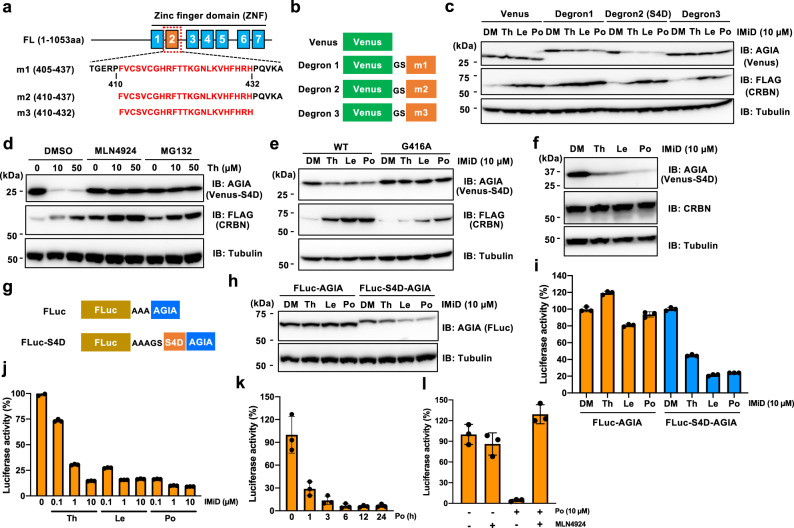
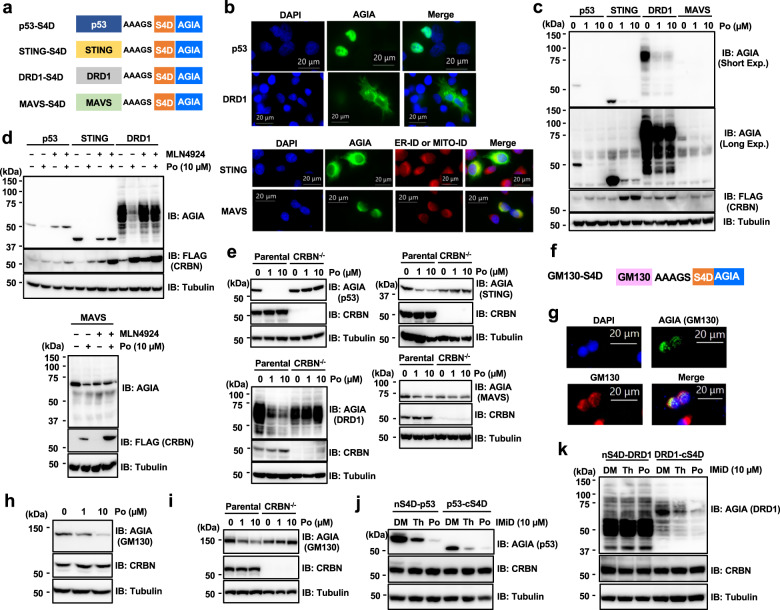
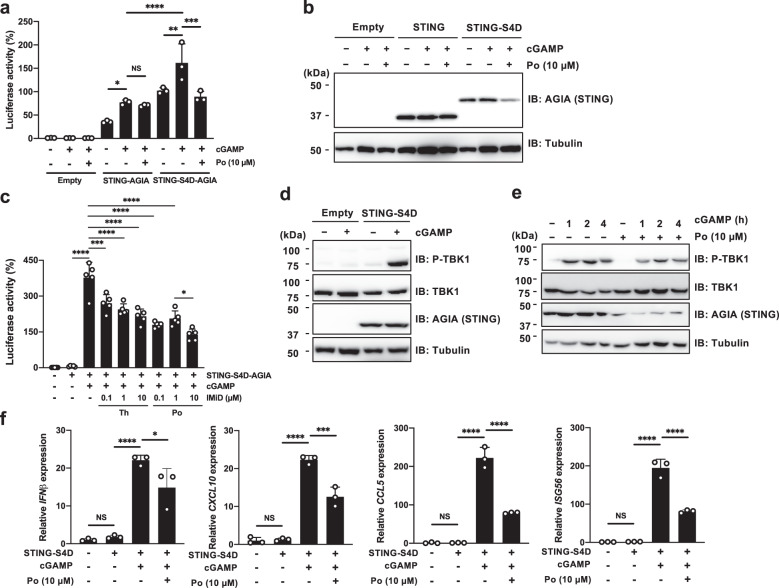
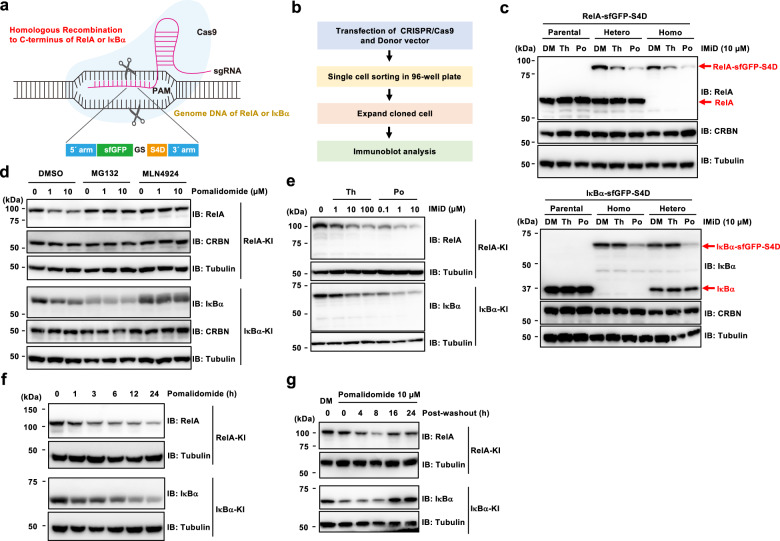
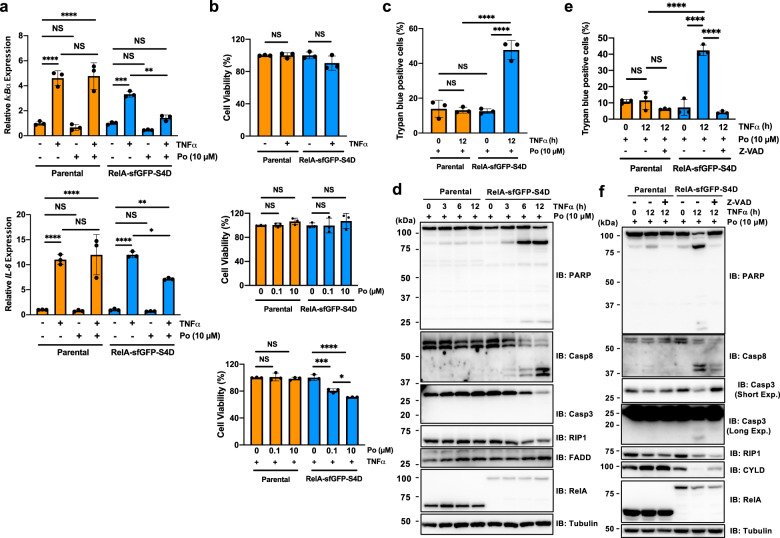
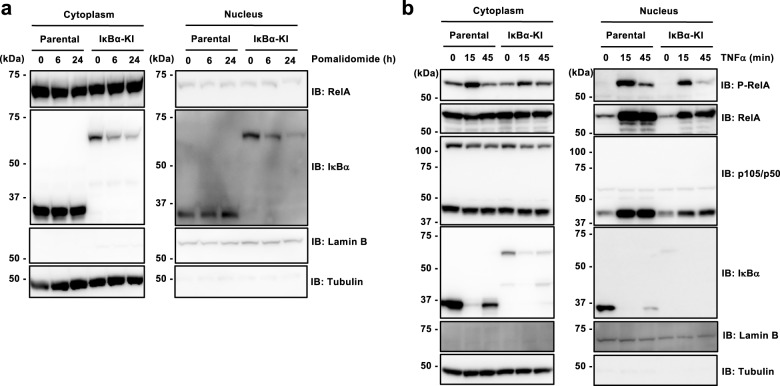
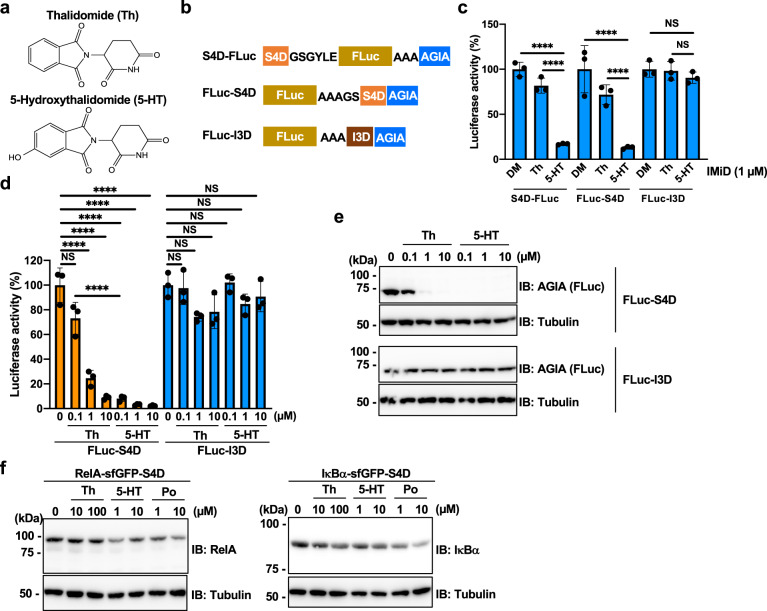
Regulating the amount of proteins in living cells is a powerful approach for understanding the functions of the proteins. Immunomodulatory drugs (IMiDs) induce the degradation of neosubstrates by interacting with celebron (CRBN) in the cullin E3 ubiquitin ligase complex (CRL4 CRBN). Here, we developed the IMiD-dependent Sal-like protein 4 (SALL4) degron (S4D) system for chemical protein knockdown. In transient assays, an N- or C-terminal S4D tag induced the degradation of proteins localized to various subcellular compartments, including the plasma membrane. The activity of luciferase-S4D was reduced by 90% within 3 h of IMiD treatment. IMiD treatment reduced the expression of endogenous S4D-fused RelA and IκBα in knock-in (KI) experiments. Interestingly, the IκBα knockdown suggested that there may be another, unknown mechanism for RelA translocation to the nucleus. Furthermore, 5-hydroxythalidomide as a thalidomide metabolite specifically degradated S4D-tagged protein. These results indicate that the S4D system is a useful tool for cellular biology.
Overview
The claims and statistics of this paper haven’t been checked yet.
Free: it reads the open-access text and checks the first 5 claims that cite a source we can check. Create a free account to check every claim.
Integrity signals
Registry
Cites
Statistics
Figures
Verification
Claims the paper makes
The claims and statistics of this paper haven’t been checked yet.
Free: it reads the open-access text and checks the first 5 claims that cite a source we can check. Create a free account to check every claim.
Claims other papers make about this one
Each is checked against this paper’s own text: does it say what the citing paper says it does?
The source backs part of the claim, not all of it — or backs it for a different population, condition or comparison.
In the citing paper
“Furthermore, the addition of C-terminal residues PQVKA to SALL4 ZF2 results in increased degradation relative to ZF2 alone13.”
From Structural and biophysical comparisons of the pomalidomide- and CC-220-induced interactions of SALL4 with cereblon (2023) · cites this paper as [13]
Experimental — accuracy not yet measuredThe cited source says what the claim attributes to it.
In the citing paper
“Extension of ZF2 to include the C-terminal sequence PQVKA identified previously in cellular degradation studies13 resulted in a KD of 0.98 μM, a 68-fold improvement in affinity of ZF2(405–437) relative to ZF2(405–432).”
From Structural and biophysical comparisons of the pomalidomide- and CC-220-induced interactions of SALL4 with cereblon (2023) · cites this paper as [13]
Self-check
Percentages, sums and reported differences re-computed from the paper’s own numbers.
The self-check needs the paper’s full text.
Citations
Cites
Seth, R. B., Sun, L., Ea, C.-K., & Chen, Z. J. (2005) · Cell · doi:10.1016/j.cell.2005.08.012 · Cited by 3,329
Regulation and Function of NF-κB Transcription Factors in the Immune System
Vallabhapurapu, S., & Karin, M. (2009) · Annual Review of Immunology · doi:10.1146/annurev.immunol.021908.132641 · Cited by 2,588
Cyclic GMP-AMP Is an Endogenous Second Messenger in Innate Immune Signaling by Cytosolic DNA
Wu, J., Sun, L., Chen, X., Du, F., Shi, H., Chen, C., & Chen, Z. J. (2013) · Science · doi:10.1126/science.1229963 · Cited by 2,541
Identification of a Primary Target of Thalidomide Teratogenicity
Ito, T., Ando, H., Suzuki, T., Ogura, T., Hotta, K., Imamura, Y., Yamaguchi, Y., & Handa, H. (2010) · Science · doi:10.1126/science.1177319 · Cited by 2,136
Quality control in the endoplasmic reticulum
Ellgaard, L., & Helenius, A. (2003) · Nature Reviews Molecular Cell Biology · doi:10.1038/nrm1052 · Cited by 2,126
Lenalidomide Causes Selective Degradation of IKZF1 and IKZF3 in Multiple Myeloma Cells
Krönke, J., Udeshi, N. D., Narla, A., Grauman, P., Hurst, S. N., McConkey, M., Svinkina, T., Heckl, D., Comer, E., Li, X., et al. (2014) · Science · doi:10.1126/science.1244851 · Cited by 1,879
NF-κB, the first quarter-century: remarkable progress and outstanding questions
Hayden, M. S., & Ghosh, S. (2012) · Genes & Development · doi:10.1101/gad.183434.111 · Cited by 1,693
An auxin-based degron system for the rapid depletion of proteins in nonplant cells
Nishimura, K., Fukagawa, T., Takisawa, H., Kakimoto, T., & Kanemaki, M. (2009) · Nature Methods · doi:10.1038/nmeth.1401 · Cited by 1,663
Signaling in innate immunity and inflammation
Newton, K., & Dixit, V. M. (2012) · Cold Spring Harbor Perspectives in Biology · doi:10.1101/cshperspect.a006049 · Cited by 1,513
Structure of the DDB1–CRBN E3 ubiquitin ligase in complex with thalidomide
Fischer, E. S., Böhm, K., Lydeard, J. R., Yang, H., Stadler, M. B., Cavadini, S., Nagel, J., Serluca, F., Acker, V., Lingaraju, G. M., et al. (2014) · Nature · doi:10.1038/nature13527 · Cited by 1,141
Cited by
Structural bases of IMiD selectivity that emerges by 5-hydroxythalidomide
Furihata, H., Yamanaka, S., Honda, T., Miyauchi, Y., Asano, A., Shibata, N., Tanokura, M., Sawasaki, T., & Miyakawa, T. (2020) · Nature Communications · doi:10.1038/s41467-020-18488-4 · Cited by 89
Self-citationYamanaka, S., Murai, H., Saito, D., Abe, G., Tokunaga, E., Iwasaki, T., Takahashi, H., Takeda, H., Suzuki, T., Shibata, N., et al. (2021) · The EMBO Journal · doi:10.15252/embj.2020105375 · Cited by 89
“To investigate whether the loss of PLZF was dependent on CRBN, we generated CRBN-deficient HEK293T cells using CRISPR/ Cas9 (Yamanaka et al , 2020).”
Self-citationYamanaka, S., Horiuchi, Y., Matsuoka, S., Kido, K., Nishino, K., Maeno, M., Shibata, N., Kosako, H., & Sawasaki, T. (2022) · Nature Communications · doi:10.1038/s41467-021-27818-z · Cited by 86
“0 20 40 60 CK1α (330-335) Th Le Po 5HT SALL4 (574-586) WIZ (1371-1382) WIZ(1373-1384) FAM83G (344-353) ZBTB9 (262-286) ZNF629 (590-615) ZNF644 (1202-1222) FGD (110-132) PIKFYVE (1690-1717) LMO7 (1396-1418) L3MBTL2 (213-228) ARID3A (1-13) AHCYL1 (40-53) CALR (44-55) CDK6 (275-287) CRBN (157-162) CRBN (182-215) CSTF1 (1…”
InfluentialSelf-citationAdvancing targeted protein degradation for metabolic diseases therapy
Zhou, Q., Xiao, H., Yang, F., Wang, Y., Li, P., & Zheng, Z. (2022) · Pharmacological Research · doi:10.1016/j.phrs.2022.106627 · Cited by 78
Applications of Bacterial Degrons and Degraders — Toward Targeted Protein Degradation in Bacteria
Izert, M. A., Klimecka, M. M., & Górna, M. W. (2021) · Frontiers in Molecular Biosciences · doi:10.3389/fmolb.2021.669762 · Cited by 53
Identification and selectivity profiling of small-molecule degraders via multi-omics approaches
Scholes, N. S., Mayor-Ruiz, C., & Winter, G. E. (2021) · Cell Chemical Biology · doi:10.1016/j.chembiol.2021.03.007 · Cited by 41
Ligand-induced degrons for studying nuclear functions
Kanemaki, M. T. (2022) · Current Opinion in Cell Biology · doi:10.1016/j.ceb.2021.12.006 · Cited by 36
Targeted Protein Degradation: Clinical Advances in the Field of Oncology
Salama, A. K. A. A., Trkulja, M. V., Casanova, E., & Uras, I. Z. (2022) · International Journal of Molecular Sciences · doi:10.3390/ijms232315440 · Cited by 40
Ma, X., Leon, B., Ornelas, E., Dovala, D., Tandeske, L., Luu, C., Pardee, G., Widger, S., Solomon, J. M., Beckwith, R. E. J., et al. (2023) · Scientific Reports · doi:10.1038/s41598-023-48606-3 · Cited by 21
“Through measurement of the binding affinities of SALL4 ZF constructs for CRBN:MG complexes, we confirmed the improvements in potency suggested in biochemical assays for ZF1 and for a C-terminal extension that includes residues PQVKA implicated in a previous study 13 .”
BackgroundInfluentialCombination of AID2 and BromoTag expands the utility of degron-based protein knockdowns
Hatoyama, Y., Islam, M., Bond, A. G., Hayashi, K., Ciulli, A., & Kanemaki, M. T. (2024) · EMBO Reports · doi:10.1038/s44319-024-00224-4 · Cited by 21
“…on immunomodulatory drugs (IMiDs) or proteolysis-targeting chimeras (PROTACs) that utilize an endogenous E3 ligase such as CRL4 – CRBN and CRL2 – VHL (Bond et al, 2021; Bouguenina et al, 2023; Buckley et al, 2015; Koduri et al, 2019; Nabet et al, 2018; Nowak et al, 2021; Yamanaka et al, 2020).”
Yunusova, A., Smirnov, A. V., Шнайдер, Т. А., Lukyanchikova, V., Afonnikova, S. D., & Баттулин, Н. Р. (2021) · Frontiers in Molecular Biosciences · doi:10.3389/fmolb.2021.757394 · Cited by 19
“In the future, exclusion of the AFB expression step could help to improve the AID experience (Yamanaka et al., 2020), but the method is still under development.”
MethodYamashita, M., Ogawa, C., Zhang, B., Kobayashi, T., Nomura, A., Barker, C. S., Zou, C., Yamanaka, S., Hayashi, K., Shinkai, Y., et al. (2024) · Nature Communications · doi:10.1038/s41467-024-54308-9 · Cited by 18
“In a recent study, a human CRBN (hCRBN)-binding domain within Sal-like protein 4 (SALL4) was identi fi ed and termed as the SALL4 degron (S4D) 5 , which comprises 29 amino acids derived from the second zinc fi nger of SALL4.”
Self-citationDegron tagging for rapid protein degradation in mice
Hernández-Morán, B. A., Taylor, G. C. A., Lorente‐Macías, Á., & Wood, A. J. (2024) · Disease Models & Mechanisms · doi:10.1242/dmm.050613 · Cited by 15
“Several degron tag systems have been developed based on IMiD degrader compounds and their protein targets (Carbonneau et al., 2021; Koduri et al., 2019; Yamanaka et al., 2020).”
A degron system targeting endogenous PD-1 inhibits the growth of tumor cells in mice
Naruse, C., Sugihara, K., Miyazaki, T., Pan, X., Sugiyama, F., & Asano, M. (2022) · NAR Cancer · doi:10.1093/narcan/zcac019 · Cited by 13
“Various de-gron systems, such as the auxin-inducible degron (AID) sys-tem (1,2), FKBP-based systems (3–5), degron systems with HaloPROTAC tag (6–8), and IMiD-induced degron systems, such as IKZF (9) and SALL4 (10), have been used to elucid ate the functions of various proteins in cultured cells (11–14).”
Orthogonal IMiD-Degron Pairs Induce Selective Protein Degradation in Cells
Brennan, P. J., Saunders, R. E., Spanou, M., Singleton, S. E., Serafini, M. T., Sun, L., Heger, G., Konopacka, A., Beveridge, R. D. D., Taylor, C. C., et al. (2025) · ACS Chemical Biology · doi:10.1021/acschembio.5c00751 · Cited by 10
Strategies for Post-Translational Control of Protein Expression and Their Applications
Utsugi, Y., & Miyamae, Y. (2021) · Applied Sciences · doi:10.3390/app11188300 · Cited by 9
Targeted degradation of GSPT1 and NEK7 by a molecular glue prodrug for treatment of HCC
Glaza, P., Pluta, R., Odrzywol, K., Klejnot, M., Wieczorek, M., Cottens, S., Coppen, D., Dobrzański, P., Drmota, T., Lis-Grześniak, J., et al. (2025) · Communications Chemistry · doi:10.1038/s42004-025-01641-9 · Cited by 10
“ABS-752 is currently in clinical trials for the treatment of HCC. Hepatocellular carcinoma (HCC) is a leading cause of cancer death, with estimated 736,000 new cases and 645,000 deaths in 2022, projected to rise to 1.33 million and 1.21 million, respectively, by 2050 1,2 .”
InfluentialZhang, Y., & Erb, M. A. (2021) · Current Research in Chemical Biology · doi:10.1016/j.crchbi.2021.100011 · Cited by 7
Verbič, A., Lebar, T., Praznik, A., & Jerala, R. (2024) · ACS Synthetic Biology · doi:10.1021/acssynbio.3c00588 · Cited by 6
“76 Our results present an insight into the use of subunits of natural degradation complexes in designed degradation systems, highlight approaches of modulation and control of degradation, and provide a robust method to control the stability of different proteins using CID systems, providing an…”
Mechanistic and kinetic insights into transcription factor biology via acute protein depletion
Mehta, S., Buyanbat, A., Yan, K., & Orkin, S. H. (2024) · Experimental Hematology · doi:10.1016/j.exphem.2024.104250 · Cited by 5
Direct Protein Degradation: Emerging Tools to Probe Biological Complexity in Mammalian Systems
Rajalekshmi, S., & Sathyan, K. M. (2025) · BioEssays · doi:10.1002/bies.70075 · Cited by 3
“Several degron tags based on the IMiD-induced CRBN-binding motifs derived from neo-substrates have been tested in both human and mouse cell lines [49, 86–88].”
Utsugi, Y., Nishimura, K., Yamanaka, S., Nishino, K., Kosako, H., Sawasaki, T., Shigemori, H., Wandless, T. J., & Miyamae, Y. (2024) · ACS Chemical Biology · doi:10.1021/acschembio.3c00670 · Cited by 2
Self-citationPhotoswitchable Molecular Glues Enable Optical Control of Transcription Factor DegradationPreprint
Arp, C. J., Reynders, M., Sreekanth, V., Kokkonda, P., Pagano, M., Choudhary, A., & Trauner, D. H. (2023) · bioRxiv (Cold Spring Harbor Laboratory) · doi:10.1101/2023.04.09.536172 · Cited by 2
Protein degradation by small tag artificial bacterial E3 ligasePreprint
Liu, Z., Tsai, M., Ghosh, S., Lawrence, J., Chu, S., Bingol, B., & Warming, S. (2024) · bioRxiv (Cold Spring Harbor Laboratory) · doi:10.1101/2024.09.07.611797 · Cited by 2
Levashova, E., Bischof, L., Bunev, A. S., Sapegin, A., Grygor'eva, O., Kudinov, A. Y., Ebeling, S., Tatarinov, I., Dar’in, D. V., Kantin, G. P., et al. (2025) · European Journal of Medicinal Chemistry · doi:10.1016/j.ejmech.2025.118235 · Cited by 1
Medicinal chemistry enabling advances in protein structure prediction
Munasinghe, A., Zhang, Z., & Wu, H. (2026) · Elsevier eBooks · doi:10.1016/b978-0-443-29808-0.00096-0
Jang, S., Shin, S., Jeong, Y., An, Y., Han, Y., Kim, H. S., & Lim, D. (2026) · International Journal of Biological Macromolecules · doi:10.1016/j.ijbiomac.2026.154428
Metadata
- Authors
- Yamanaka, S., Shoya, Y., Matsuoka, S., Nishida-Fukuda, H., Shibata, N., & Sawasaki, T.
- Affiliations
- Ehime University (JP)
- Nagoya Institute of Technology (JP)
- Corresponding author
- Sawasaki, Tatsuya
- Venue
- Communications Biology
- Published
- 2020-09-18
- Volume
- 3
- Issue
- 1
- Pages
- 515-515
- ISSN
- 2399-3642 (ISSN-L)
- PMC
- PMC7501283
- OpenAlex
- W3087018358
- Cited by
- 29
- References
- 52
- Citations by year
- 2026: 2 · 2025: 5 · 2024: 7 · 2023: 2 · 2022: 5 · 2021: 7 · 2020: 1
- FWCI
- 1.22
- Type
- journal article
- Language
- en
- Open access
- gold
- doi.org
- Licence
- cc-by
- creativecommons.org/licenses/by/4.0 (tdm)
- creativecommons.org/licenses/by/4.0 (vor)
- Locations
- Communications Biology (publishedVersion, cc-by)
- PubMed (publishedVersion)
- Funders
- MEXT | Japan Society for the Promotion of Science (JP17J08477, JP18K08574, JP17H06112, JP16H06579, JP16H04729, JP19H03218)
- Japan Agency for Medical Research and Development (JP19am0101077)
- Takeda Science Foundation
- Topics
- Life Sciences › Biochemistry, Genetics and Molecular Biology › Molecular Biology › Protein Degradation and Inhibitors
- Life Sciences › Biochemistry, Genetics and Molecular Biology › Molecular Biology › Ubiquitin and proteasome pathways
- Physical Sciences › Chemistry › Organic Chemistry › Chemical Synthesis and Analysis
- Keywords
- immunomodulators, cereblon, protein degradation, RelA, IκBα, NF-κB signaling, plasma membrane proteins
- MeSH terms
- Cell Membrane, HeLa Cells, Humans, Immunologic Factors, Substrate Specificity, Thalidomide, Transcription Factors, Transcriptional Elongation Factors, Ubiquitin-Protein Ligases, Transcription Factor RelA, Receptors, Interleukin-17, Gene Knockdown Techniques, Proteolysis
About these checks
Registry, retraction, Cites and statistics results are computed, not judged, with one exception: a printed reference that no index lists is read once by a model before it counts as a citation error. Claims are extracted by a model and kept only when their quote appears verbatim in the text; each cited source is then checked, with a model’s help, for whether it says what the claim relies on. Those verdicts can be wrong — read the claim’s quote and the cited source before relying on one.
Statistics and arithmetic are recomputed, not judged.
Confidence bands are shown only for fields calibrated on our annotated test set. None is calibrated yet, so no band is shown.
What counts as a claim ›How we measure confidence ›How we check this ›
Are you an author, or do you see a problem with this page? Request a review
Data sources
Bibliographic data: Semantic Scholar, OpenAlex, Crossref.
Contains information from the Semantic Scholar Academic Graph Datasets, made available under the ODC Attribution License (ODC-BY 1.0).
Semantic Scholar’s data is described in: Kinney, R., et al. (2023). The Semantic Scholar Open Data Platform. arXiv:2301.10140.
