

The neuroprotective mechanism of lithium after ischaemic stroke
Open accessPublished version of a preprint
The DOI matches its Crossref record; 74 of the 74 references it cites were found in a registry or an index.
Abstract
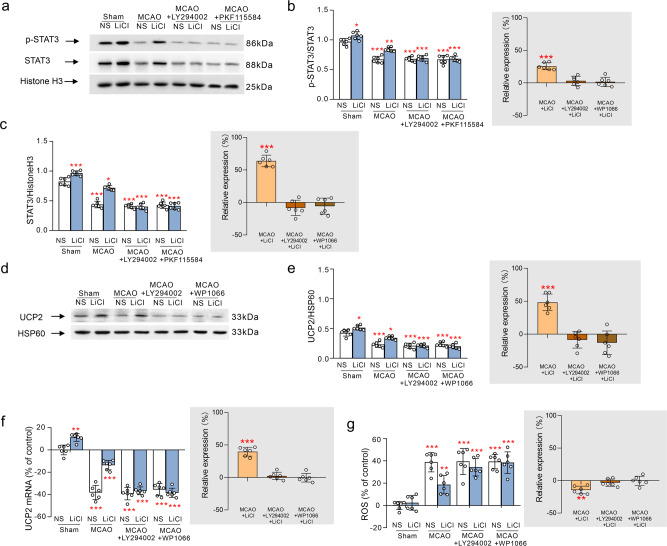
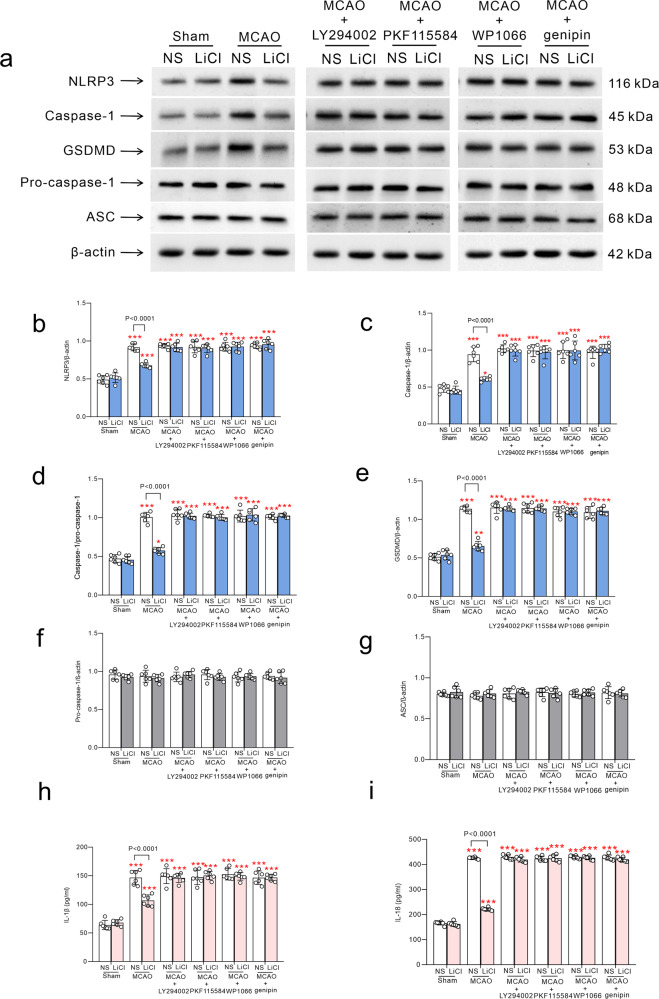
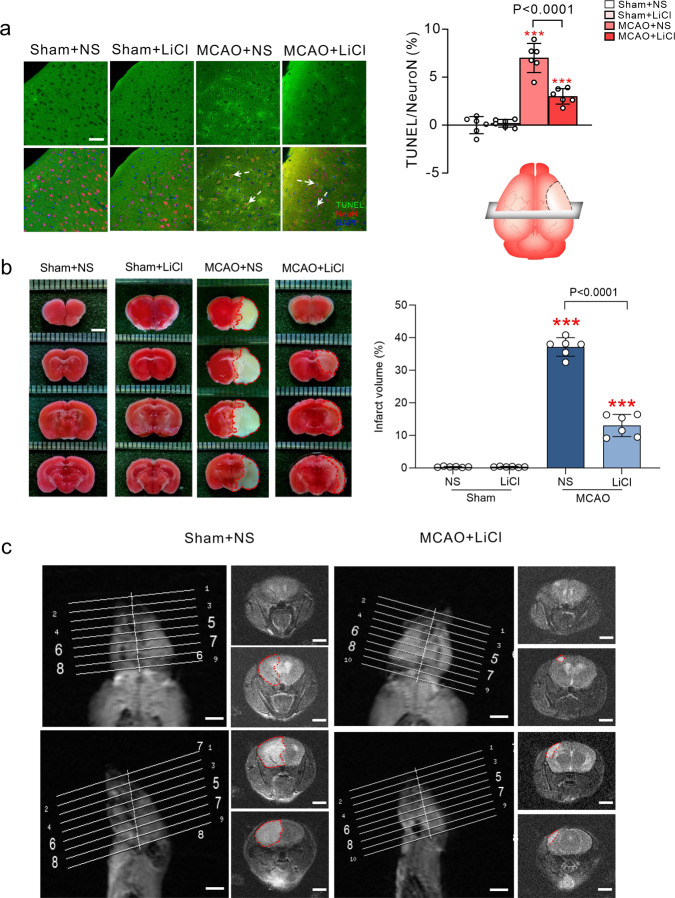
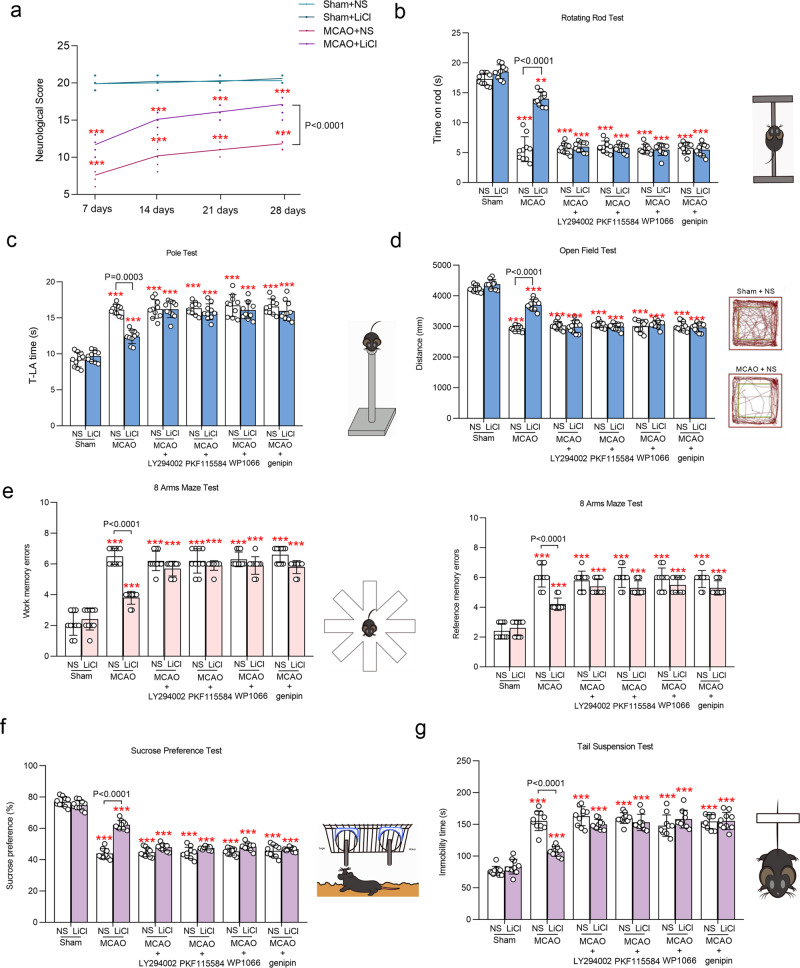
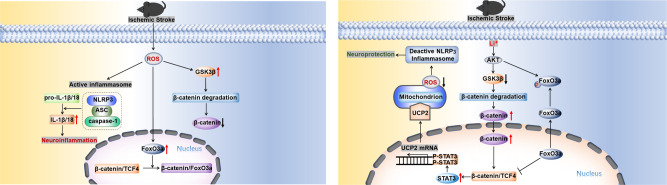
Stroke causes degeneration and death of neurones leading to the loss of motor function and frequent occurrence of cognitive impairment and depression. Lithium (Li + ), the archetypal mood stabiliser, is neuroprotective in animal models of stroke, albeit underlying mechanisms remain unknown. We discover that Li + inhibits activation of nucleotide-binding oligomerisation domain-like receptor family pyrin domain-containing 3 (NLRP3) inflammasomes in the middle cerebral artery occlusion (MCAO) stroke model in mice. This action of Li + is mediated by two signalling pathways of AKT/GSK3β/β-catenin and AKT/FoxO3a/β-catenin which converge in suppressing the production of reactive oxygen species (ROS). Using immunocytochemstry, MRI imaging, and cell sorting with subsequent mRNA and protein quantification, we demonstrate that Li + decreases the infarct volume, improves motor function, and alleviates associated cognitive and depressive impairments. In conclusion, this study reveals molecular mechanisms of Li + neuroprotection during brain ischaemia, thus providing the theoretical background to extend clinical applications of Li + for treatment of ischemic stroke.
Overview
The claims and statistics of this paper haven’t been checked yet.
Free: it reads the open-access text and checks the first 5 claims that cite a source we can check. Create a free account to check every claim.
Integrity signals
Registry
Cites
Statistics
Figures
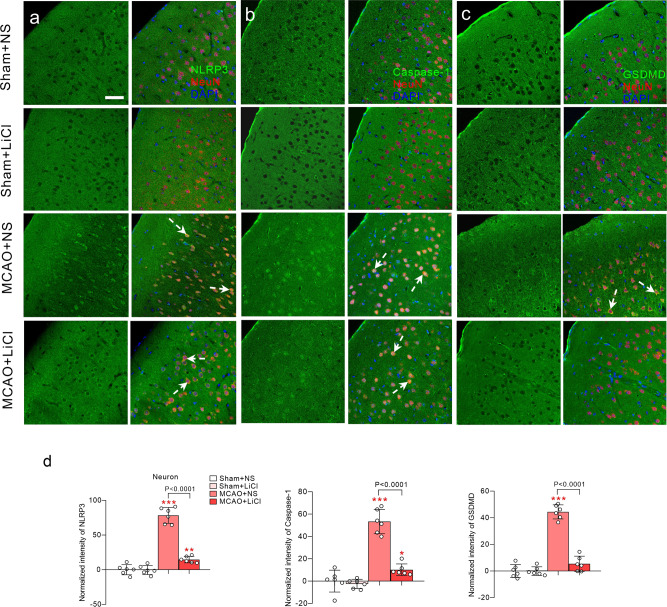
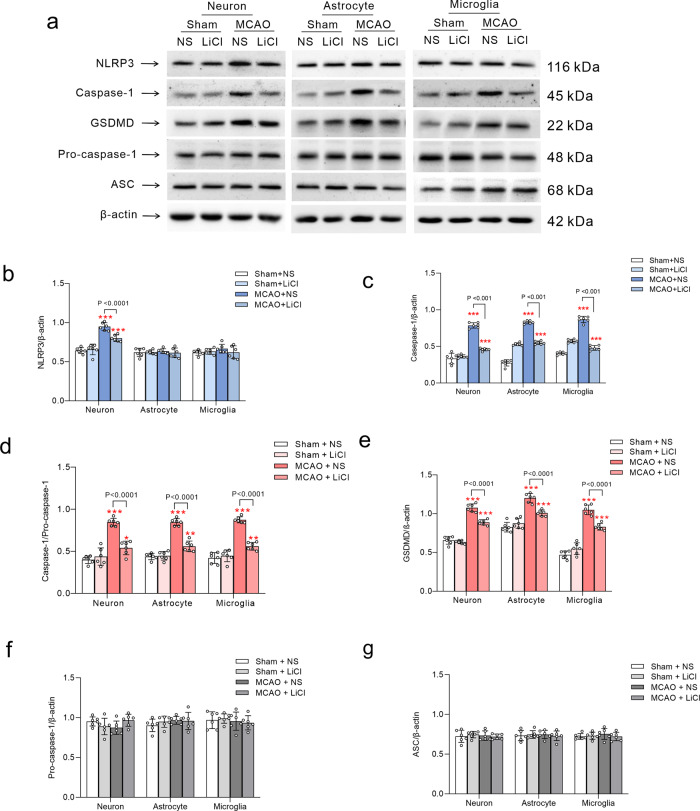
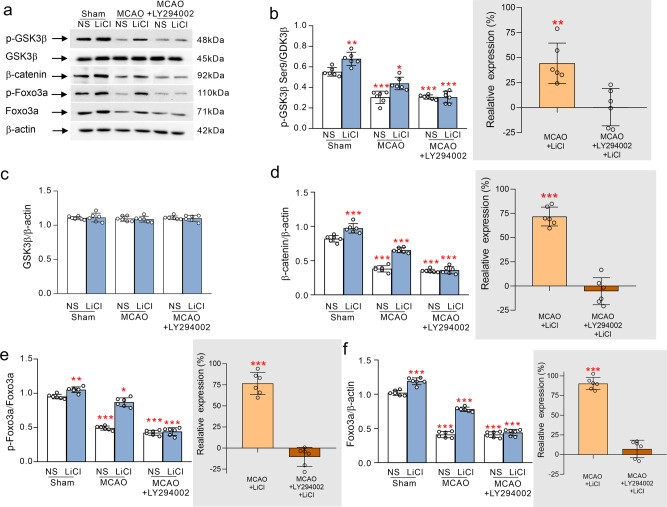
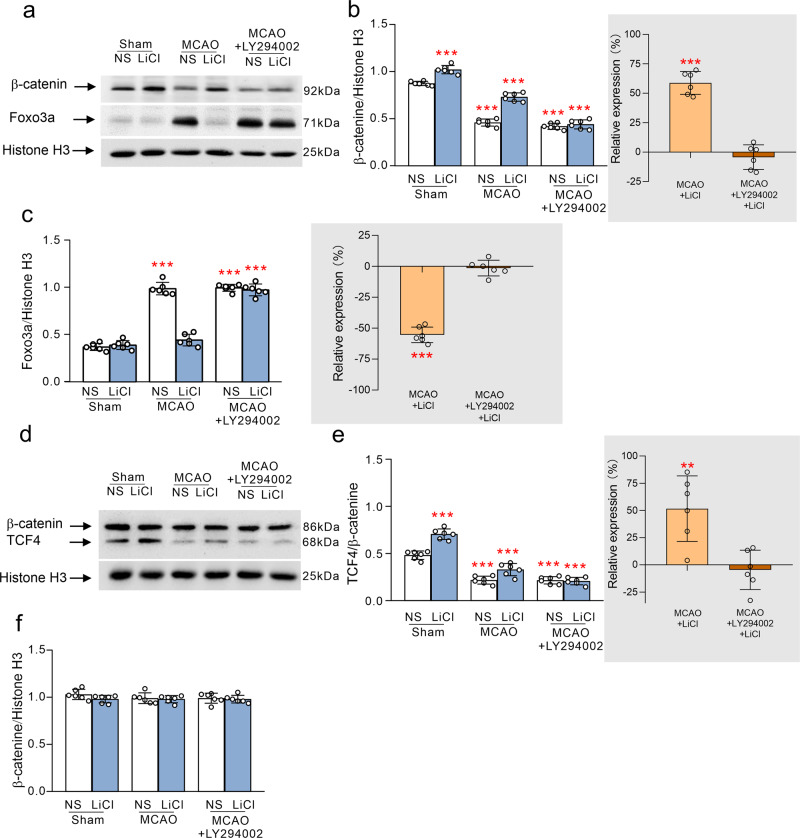
Verification
Claims the paper makes
The claims and statistics of this paper haven’t been checked yet.
Free: it reads the open-access text and checks the first 5 claims that cite a source we can check. Create a free account to check every claim.
Claims other papers make about this one
Each is checked against this paper’s own text: does it say what the citing paper says it does?
The source backs part of the claim, not all of it — or backs it for a different population, condition or comparison.
In the citing paper
“In our recent study, lithium salt (Li + ) was found to effectively alleviate ischemia-induced anhedonia in mice by suppressing the production of mitochondrial ROS in glial cells. 136”
From Major depressive disorder: hypothesis, mechanism, prevention and treatment (2024) · cites this paper as [136]
Experimental — accuracy not yet measuredThe source backs part of the claim, not all of it — or backs it for a different population, condition or comparison.
In the citing paper
“in the middle cerebral artery occlusion (MCAO) stroke model of mice, Li + can significantly attenuate GSDMD-mediated glial pyroptosis by regulating the AKT/GSK3β/TCF4/β-catenin signaling pathway”
From Major depressive disorder: hypothesis, mechanism, prevention and treatment (2024) · cites this paper as [136]
Experimental — accuracy not yet measuredThe cited source says what the claim attributes to it.
In the citing paper
“This neuroprotective mechanism of Li + after ischemia-reperfusion injuries contributes to the improved depressive-like behaviors, besides of motor and cognitive capacities. 136”
From Major depressive disorder: hypothesis, mechanism, prevention and treatment (2024) · cites this paper as [136]
Self-check
Percentages, sums and reported differences re-computed from the paper’s own numbers.
The self-check needs the paper’s full text.
Citations
Cites
1 retracted
Xue, W., Li, Y., & Zhang, M. (2021) · Pharmaceutical Biology · doi:10.1080/13880209.2021.1981399 · Cited by 18
Self-citationRetractedBradford, M. M. (1976) · Analytical Biochemistry · doi:10.1016/0003-2697(76)90527-3 · Cited by 255,302
Heart Disease and Stroke Statistics—2017 Update: A Report From the American Heart Association
Benjamin, E. J., Blaha, M. J., Chiuve, S. E., Cushman, M., Das, S. R., Deo, R., de Ferranti, S. D., Floyd, J., Fornage, M., Gillespie, C., et al. (2017) · Circulation · doi:10.1161/cir.0000000000000485 · Cited by 12,591
Heart disease and stroke statistics-2018 update: a report from the american heart association
Benjamin, E. J., Virani, S. S., Callaway, C. W., Chamberlain, A. M., Chang, A. R., Cheng, S., Chiuve, S. E., Cushman, M., Delling, F. N., Deo, R., et al. (2018) · Circulation · doi:10.1161/cir.0000000000000558 · Cited by 7,146
Lopez, A. D., Mathers, C. D., Ezzati, M., Jamison, D. T., & Murray, C. J. (2006) · The Lancet · doi:10.1016/s0140-6736(06)68770-9 · Cited by 5,630
A role for mitochondria in nlrp3 inflammasome activation
Zhou, R., Yazdi, A. S., Menu, P., & Tschopp, J. (2011) · Nature · doi:10.1038/nature09663 · Cited by 5,602
Wnt/β-Catenin Signaling in Development and Disease
Clevers, H. (2006) · Cell · doi:10.1016/j.cell.2006.10.018 · Cited by 5,568
NLRP3 inflammasomes are required for atherogenesis and activated by cholesterol crystals
Duewell, P., Kono, H., Rayner, K. J., Sirois, C. M., Vladimer, G., Bauernfeind, F. G., Abela, G. S., Franchi, L., Nuñez, G., Schnurr, M., et al. (2010) · Nature · doi:10.1038/nature08938 · Cited by 4,026
Inflammasome-activated gasdermin D causes pyroptosis by forming membrane pores
Liu, X., Zhang, Z., Ruan, J., Pan, Y., Magupalli, V. G., Wu, H., & Lieberman, J. (2016) · Nature · doi:10.1038/nature18629 · Cited by 3,202
Ischaemic accumulation of succinate controls reperfusion injury through mitochondrial ROS
Chouchani, E. T., Pell, V. R., Gaude, E., Aksentijević, D., Sundier, S. Y., Robb, E. L., Logan, A., Nadtochiy, S. M., Ord, E. N. J., Smith, A. C., et al. (2014) · Nature · doi:10.1038/nature13909 · Cited by 2,907
Research works printed but not linked: 1
- Mitchell SW On the use of bromide of lithium Am. J. Med. Sci. 1870 60 443 445
Cited by
Major depressive disorder: hypothesis, mechanism, prevention and treatment
Cui, L., Li, S., Wang, S., Wu, X., Liu, Y., Yu, W., Wang, Y., Tang, Y., Xia, M., & Li, B. (2024) · Signal Transduction and Targeted Therapy · doi:10.1038/s41392-024-01738-y · Cited by 1,244
“136 This neuroprotective mechanism of Li + after ischemia-reperfusion injuries contributes to the improved depressive-like behaviors, besides of motor and cognitive capacities.”
BackgroundInfluentialSelf-citationNew Advances in the Pharmacology and Toxicology of Lithium: A Neurobiologically Oriented Overview
Bortolozzi, A. A., Fico, G., Berk, M., Solmi, M., Fornaro, M., Quevedo, J., Zarate, C. A., Kessing, L. V., Vieta, E., & Carvalho, A. F. (2024) · Pharmacological Reviews · doi:10.1124/pharmrev.120.000007 · Cited by 74
Chiarini, A., Gui, L., Viviani, C., Armato, U., & Prà, I. D. (2023) · Biomedicines · doi:10.3390/biomedicines11040999 · Cited by 72
Modulation of neuroimmune cytokine networks by antidepressants: implications in mood regulation
Nava, R. G., Adri, A. S., Filgueiras, I. S., Nóbile, A. L., Barcelos, P. M., Corrêa, Y. L. G., de Oliveira, S. F., Cabral‐Miranda, G., Dias, H. D., Schimke, L. F., et al. (2025) · Translational Psychiatry · doi:10.1038/s41398-025-03532-y · Cited by 58
The Potential of NLRP3 Inflammasome as a Therapeutic Target in Neurological Diseases
He, W., Hu, Z., Zhong, Y., Wu, C., & Li, J. (2023) · Molecular Neurobiology · doi:10.1007/s12035-023-03229-7 · Cited by 41
Pharmacological interventions targeting the microcirculation following traumatic spinal cord injury
Wang, R., & Bai, J. (2023) · Neural Regeneration Research · doi:10.4103/1673-5374.375304 · Cited by 32
Exploring the Neuroprotective Effects of Lithium in Ischemic Stroke: A literature review
Wang, W., Lu, D., Shi, Y., & Wang, Y. (2023) · International Journal of Medical Sciences · doi:10.7150/ijms.88195 · Cited by 28
Li, X., Chen, B., Zhang, D., Wang, S., Feng, Y., Wu, X., Cui, L., Ji, M., Gong, W., Verkhratsky, A., et al. (2023) · Molecular Psychiatry · doi:10.1038/s41380-023-02037-8 · Cited by 27
Self-citationRana, A. K., Kumar, R., Shukla, D. N., & Singh, D. (2023) · Free Radical Biology and Medicine · doi:10.1016/j.freeradbiomed.2023.07.004 · Cited by 24
Ji, M. H., Gong, W., Wang, S., Zhang, D., Chen, B., Li, X., Wu, X., Cui, L., Feng, Y., Verkhratsky, A., et al. (2022) · Neurochemical Research · doi:10.1007/s11064-022-03655-4 · Cited by 23
Self-citationShared Inflammatory Pathology of Stroke and COVID-19
Sánchez, K. E., & Rosenberg, G. A. (2022) · International Journal of Molecular Sciences · doi:10.3390/ijms23095150 · Cited by 16
Zhang, X., Wolfinger, A., Wu, X., Alnafisah, R. S., Imami, A. S., Hamoud, A.-R. A., Lundh, A., Parpura, V., McCullumsmith, R. E., Shukla, R., et al. (2022) · Cells · doi:10.3390/cells11203315 · Cited by 13
Self-citationLi, H., Zhang, C., Zhou, Y., Deng, Y., Zheng, X., & Xue, X. (2023) · Aging · doi:10.18632/aging.205151 · Cited by 13
Self-citationLiu, H., Yue, Q., Zhang, W., Ding, Q., Yang, J., Mu, L., & Sun, J. (2024) · Advanced Biology · doi:10.1002/adbi.202400180 · Cited by 13
Immunomodulatory effect of lithium treatment on in vitro model of neuroinflammation
Sakrajda, K., Langwiński, W., Stachowiak, Z., Ziarniak, K., Narożna, B., & Szczepankiewicz, A. (2024) · Neuropharmacology · doi:10.1016/j.neuropharm.2024.110238 · Cited by 12
Lithium Biological Action Mechanisms after Ischemic Stroke
Munteanu, C., Rotariu, M., Turnea, M. A., Tătăranu, L. G., Dogaru, G., Popescu, C., Spînu, A., Andone, I., Ionescu, E. V., Tucmeanu, E.-R., et al. (2022) · Life · doi:10.3390/life12111680 · Cited by 12
Chen, K., Xu, B., Qiu, S., Long, L., Zhao, Q., Xu, J., & Wang, H. (2024) · Glia · doi:10.1002/glia.24572 · Cited by 12
Liu, J., Zhang, X., Xu, Y., & Zhang, S. (2023) · Molecular Neurobiology · doi:10.1007/s12035-023-03557-8 · Cited by 11
Structure and Neuroprotector Properties of a Complex Compound of Lithium with Comenic Acid
Kozin, S. V., Кравцов, А. А., Ivashchenko, L. I., Dotsenko, V. V., Dzhimak, S. S., Aksenov, N. A., Вашурин, А. С., Ивлев, В. А., Baryshev, M., Беспалов, А. В., et al. (2023) · International Journal of Molecular Sciences · doi:10.3390/ijms25010286 · Cited by 9
Iwatani, Y., Hayashi, H., Oba, H., Oba, M., Sawamura, A., Moriyama, Y., & Takagi, N. (2024) · Biomedicine & Pharmacotherapy · doi:10.1016/j.biopha.2024.116778 · Cited by 9
Novel pathogenesis of post-traumatic stress disorder studied in transgenic mice
Gong, W., Li, X., Feng, Y., Ji, M. H., Zhang, D., Chen, B., Wang, S., Wu, X., Cui, L., Li, B., et al. (2023) · Journal of Psychiatric Research · doi:10.1016/j.jpsychires.2023.02.042 · Cited by 8
Self-citationDexmedetomidine in ischemic and hemorrhagic brain injury: Neuroprotection from mechanisms to therapy
Zhu, L., Chen, A., Gai, C.-L., Li, L., Teng, C., Wei, J., Yang, Y., Wei, X., & Chen, X. (2025) · Biomedicine & Pharmacotherapy · doi:10.1016/j.biopha.2025.118872 · Cited by 7
Zhou, M., Tao, X., Lin, K., Leng, C., Yang, Y., Gui, Y., Sun, Y., Zhou, M., Sun, B., Xia, Y., et al. (2025) · Journal of the American Heart Association · doi:10.1161/jaha.124.038263 · Cited by 6
“22 These studies suggest that the NLRP3 inflammasome plays an essential role in the pathogenesis of PSD.”
Mitochondrial Insights into Lithium Response in Bipolar Disorder: A State-of-the-Art Review
Balaç, S., Dal, F., Karaçiçek, B., Akşahin, İ. C., Pisanu, C., Şenol, Ş. H., Manchia, M., Meloni, A., Damri, O., Agam, G., et al. (2025) · Neuropsychobiology · doi:10.1159/000549993 · Cited by 4
Association of Metallic and Nonmetallic Elements with Fibrin Clot Properties and Ischemic Stroke
Jakubowski, H., Sikora, M., Bretes, E., Perła‐Kaján, J., Utyro, O., Wojtasz, I., Kaźmierski, R., Frankowski, M., & Zioła‐Frankowska, A. (2024) · Life · doi:10.3390/life14050634 · Cited by 4
Neurons Structure and Cytokine Expression after Lithium Carbonate Treatment on Melanoma Mice Model
Obanina, N. A., Bgatova, N. P., & Ivanov, I. D. (2024) · Cell and Tissue Biology · doi:10.1134/s1990519x2470041x · Cited by 4
Frontiers in liquid lithium mining: innovations and advances in extraction techniques
Li, M., Shi, R., Xie, J., Du, Y., & Han, J. (2025) · Results in Engineering · doi:10.1016/j.rineng.2025.107352 · Cited by 3
Astrocytic CCL5 orchestrates CCR5-positive neuronal necroptosis in subarachnoid hemorrhage
Chen, P., Jiang, Y., Xue, S.-Q., Wang, Y., Lin, W.-L., Shi, M.-Y., Li, S.-J., Sun, W.-W., Zhao, J.-X., Kang, D.-Z., et al. (2026) · Journal of Neuroinflammation · doi:10.1186/s12974-026-03714-5 · Cited by 3
Lithium and the Brain–Bone Axis: A Bridge between Osteoporosis and Alzheimer’s Disease
Lee, J.-W., Hasegawa, T., Ikedo, A., Mizuno, K., Amizuka, N., & Kong, S. W. (2026) · Current Osteoporosis Reports · doi:10.1007/s11914-026-00954-5 · Cited by 4
Neuroprotective Potential of Lithium Chloride in a Model of Traumatic Brain Injury
Шарикадзе, Д., Gabitov, M. V., Redkin, I. V., Kuzovlev, A. N., & Moroz, V. V. (2025) · General Reanimatology · doi:10.15360/1813-9779-2025-5-2528 · Cited by 2
Effect of lithium on glucose homeostasis: Role of protein kinase B (AKT) in rats
Ghamry, M., Ibrahim, I., Elshazly, S., & Fahmy, A. (2025) · Open Veterinary Journal · doi:10.5455/ovj.2025.v15.i11.15 · Cited by 1
The 25-Year Evolution of Lithium as a Disease-Modifying Agent in Dementia: A Narrative Review
Moore, G. J., Bose, N., Henter, I. D., & Manji, H. K. (2026) · JAMA Psychiatry · doi:10.1001/jamapsychiatry.2026.1296 · Cited by 1
Rahimi, G., Mirsadeghi, S., Rahmani, S., Izadi, A., Ghodsi, Z., Ghodsi, S. M., Rahimi‐Movaghar, V., & Kiani, S. (2022) · PharmaNutrition · doi:10.1016/j.phanu.2022.100307
Verkhratsky, A., & Butt, A. M. (2023) · Elsevier eBooks · doi:10.1016/b978-0-12-821565-4.00001-8
Self-citationTERAPIAS NEUROPROTECTORAS Y FÁRMACOS EMERGENTES EN EL TRATAMIENTO DEL ICTUS: AVANCES RECIENTES.
Menoscal, C. L. F., Intriago, I. A. B., Quiñonez, D. K. L., Cisneros, L., Zambrano, N. L. V., Rivera, L. S. B., Evelin Zulime Asencio De La, A., Calderón, F. A. B., Honores, F. J. S., Nieto, K. M. A., et al. (2024) · Brazilian Journal of Implantology and Health Sciences · doi:10.36557/2674-8169.2024v6n8p346-358
Pharmacological Roles of Lithium in Treatment of Diseases: New Insights
Ghamry, M. E., Ibrahim, I. A. A. E.-H., Elshazly, S. M., & Fahmy, A. (2025) · World s Veterinary Journal · doi:10.54203/scil.2025.wvj53
Estimated lithium exposure in drinking groundwater and stroke risks in the United States
Luo, J., Jin, Z., Yang, Y., Olopade, C. O., Ahsan, H., Pinto, J. M., & Aschebrook‐Kilfoy, B. (2026) · International Journal of Stroke · doi:10.1177/17474930261432186
Wu, Y., Sun, Y., Song, Y., & Wang, X. (2026) · Frontiers in Pharmacology · doi:10.3389/fphar.2026.1902090
Metadata
- Authors
- Chen, B., Zhang, M., Ji, M., Zhang, D., Chen, B., Gong, W., Li, X., Zhou, Y., Dong, C., Wen, G., Zhan, X., Wu, X., Yuan, H., Xu, E., Xia, M., Verkhratsky, A., & Li, B.
- Affiliations
- China Medical University (CN)
- First Hospital of China Medical University (CN)
- Ikerbasque (ES)
- Corresponding author
- Verkhratsky, Alexei
- Li, Baoman
- ORCID
- Venue
- Communications Biology
- Published
- 2022-02-03
- Volume
- 5
- Issue
- 1
- Pages
- 105-105
- ISSN
- 2399-3642 (ISSN-L)
- PMC
- PMC8814028
- OpenAlex
- W4220952997
- Cited by
- 37
- References
- 73
- Citations by year
- 2026: 5 · 2025: 6 · 2024: 9 · 2023: 11 · 2022: 6
- FWCI
- 2.81
- Type
- journal article
- Language
- en
- Open access
- gold
- doi.org
- Licence
- cc-by
- creativecommons.org/licenses/by/4.0 (tdm)
- creativecommons.org/licenses/by/4.0 (vor)
- Locations
- Communications Biology (publishedVersion, cc-by)
- Research Square (acceptedVersion, cc-by)
- PubMed Central (publishedVersion, cc-by)
- PubMed (publishedVersion)
- Research Explorer (The University of Manchester) (publishedVersion, other-oa)
- DOAJ (DOAJ: Directory of Open Access Journals) (submittedVersion, cc-by-sa)
- Funders
- National Natural Science Foundation of China (81871852)
- Topics
- Life Sciences › Neuroscience › Neurology › Neuroprotection in Cerebral Ischemia
- Life Sciences › Neuroscience › Neurology › Neuroinflammation and Neurodegeneration Mechanisms
- Life Sciences › Biochemistry, Genetics and Molecular Biology › Molecular Biology › Inflammasome and immune disorders
- Keywords
- lithium, neuroprotection, ischemic stroke, NLRP3 inflammasome, middle cerebral artery occlusion, reactive oxygen species, infarct size, motor recovery, cognitive impairment, depression, brain ischaemia
- MeSH terms
- Ischemic Stroke, Animals, Depression, Gene Expression Regulation, Lithium, Male, Mice, Transgenic, Random Allocation, RNA, Messenger, Neuroprotective Agents, Mice, Cognitive Dysfunction
About these checks
Registry, retraction, Cites and statistics results are computed, not judged, with one exception: a printed reference that no index lists is read once by a model before it counts as a citation error. Claims are extracted by a model and kept only when their quote appears verbatim in the text; each cited source is then checked, with a model’s help, for whether it says what the claim relies on. Those verdicts can be wrong — read the claim’s quote and the cited source before relying on one.
Statistics and arithmetic are recomputed, not judged.
Confidence bands are shown only for fields calibrated on our annotated test set. None is calibrated yet, so no band is shown.
What counts as a claim ›How we measure confidence ›How we check this ›
Are you an author, or do you see a problem with this page? Request a review
Data sources
Bibliographic data: Semantic Scholar, OpenAlex, Crossref.
Contains information from the Semantic Scholar Academic Graph Datasets, made available under the ODC Attribution License (ODC-BY 1.0).
Semantic Scholar’s data is described in: Kinney, R., et al. (2023). The Semantic Scholar Open Data Platform. arXiv:2301.10140.
