

The neuroprotective mechanism of lithium after ischaemic stroke
Open accessPublished version of a preprint
The DOI matches its Crossref record; 74 of the 74 references it cites were found in a registry or an index.
Abstract
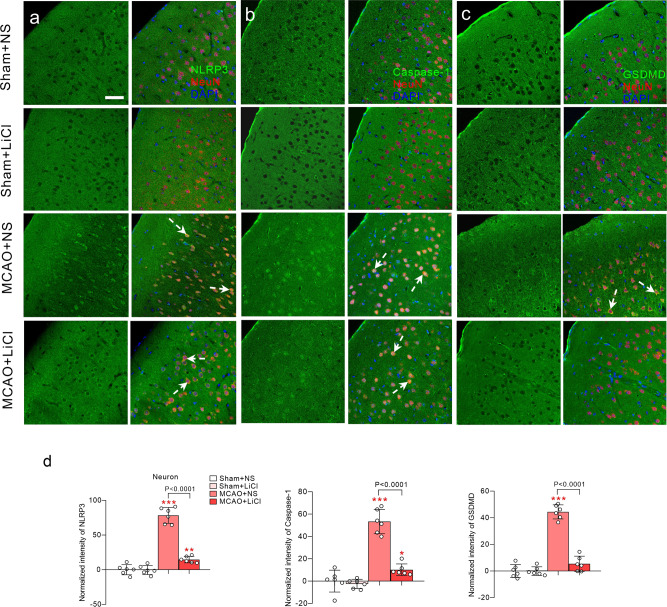
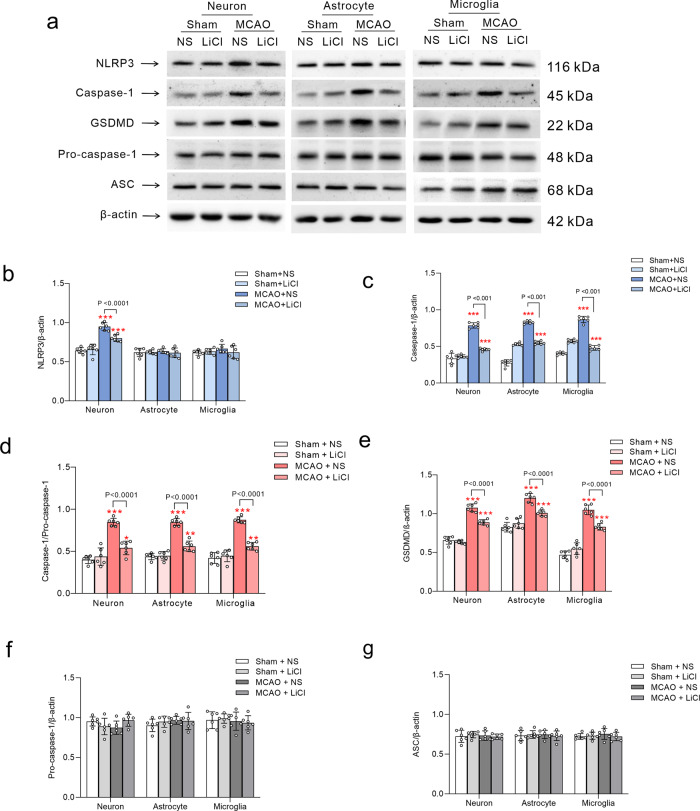
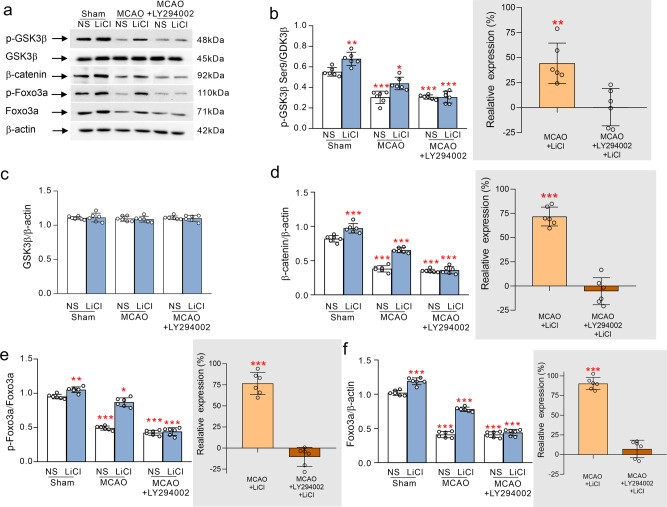
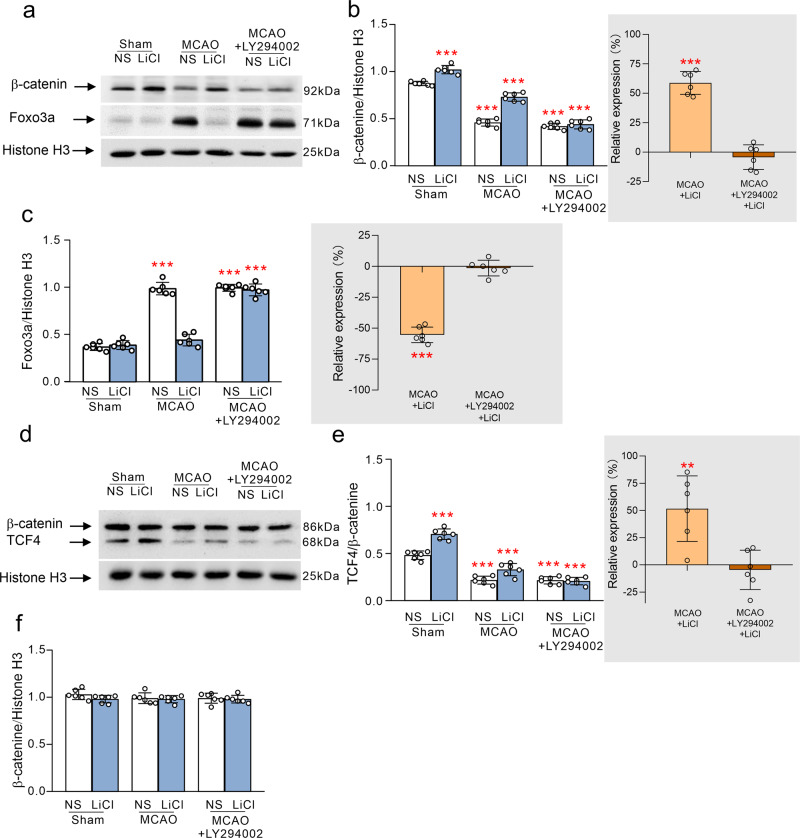
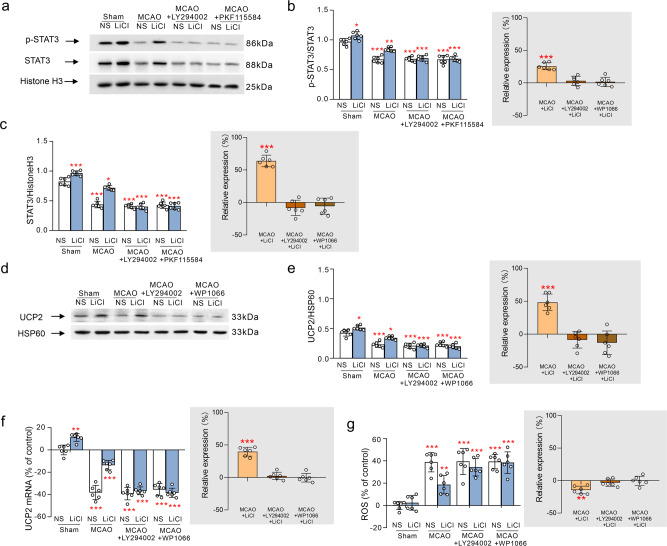
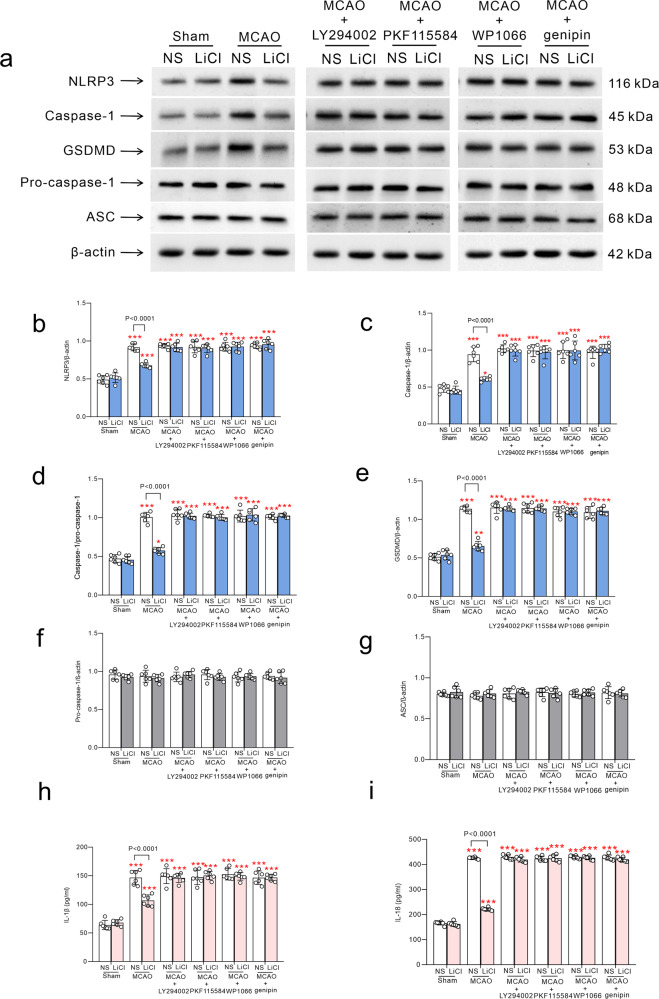
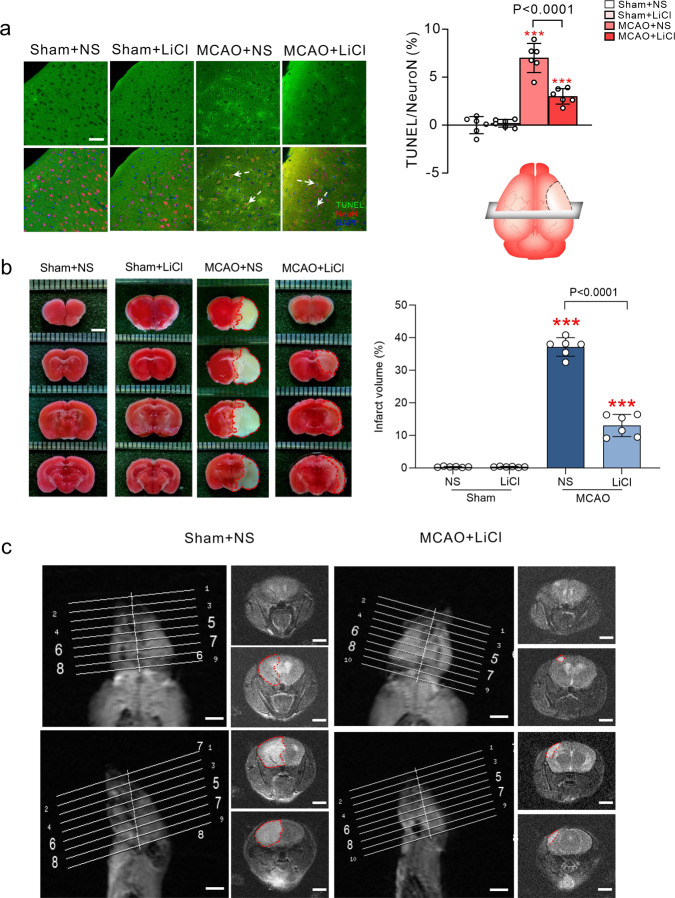
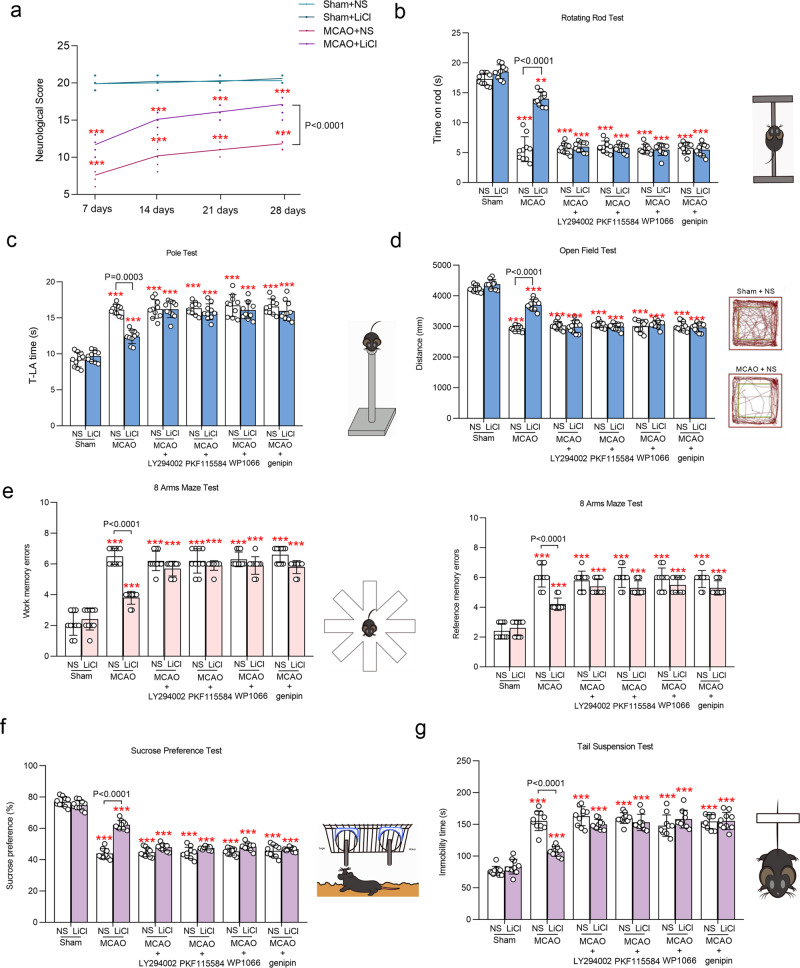
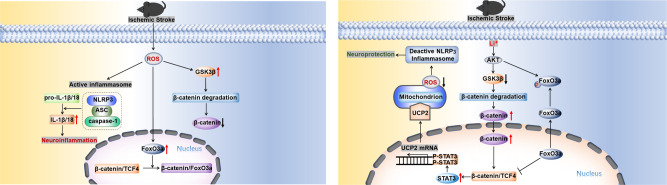
Stroke causes degeneration and death of neurones leading to the loss of motor function and frequent occurrence of cognitive impairment and depression. Lithium (Li + ), the archetypal mood stabiliser, is neuroprotective in animal models of stroke, albeit underlying mechanisms remain unknown. We discover that Li + inhibits activation of nucleotide-binding oligomerisation domain-like receptor family pyrin domain-containing 3 (NLRP3) inflammasomes in the middle cerebral artery occlusion (MCAO) stroke model in mice. This action of Li + is mediated by two signalling pathways of AKT/GSK3β/β-catenin and AKT/FoxO3a/β-catenin which converge in suppressing the production of reactive oxygen species (ROS). Using immunocytochemstry, MRI imaging, and cell sorting with subsequent mRNA and protein quantification, we demonstrate that Li + decreases the infarct volume, improves motor function, and alleviates associated cognitive and depressive impairments. In conclusion, this study reveals molecular mechanisms of Li + neuroprotection during brain ischaemia, thus providing the theoretical background to extend clinical applications of Li + for treatment of ischemic stroke.
Overview
The claims and statistics of this paper haven’t been checked yet.
Free: it reads the open-access text and checks the first 5 claims that cite a source we can check. Create a free account to check every claim.
Integrity signals
Registry
Cites
Statistics
Figures
Verification
Claims the paper makes
The claims and statistics of this paper haven’t been checked yet.
Free: it reads the open-access text and checks the first 5 claims that cite a source we can check. Create a free account to check every claim.
Claims other papers make about this one
Each is checked against this paper’s own text: does it say what the citing paper says it does?
The source backs part of the claim, not all of it — or backs it for a different population, condition or comparison.
In the citing paper
“In our recent study, lithium salt (Li + ) was found to effectively alleviate ischemia-induced anhedonia in mice by suppressing the production of mitochondrial ROS in glial cells. 136”
From Major depressive disorder: hypothesis, mechanism, prevention and treatment (2024) · cites this paper as [136]
Experimental — accuracy not yet measuredThe source backs part of the claim, not all of it — or backs it for a different population, condition or comparison.
In the citing paper
“in the middle cerebral artery occlusion (MCAO) stroke model of mice, Li + can significantly attenuate GSDMD-mediated glial pyroptosis by regulating the AKT/GSK3β/TCF4/β-catenin signaling pathway”
From Major depressive disorder: hypothesis, mechanism, prevention and treatment (2024) · cites this paper as [136]
Experimental — accuracy not yet measuredThe cited source says what the claim attributes to it.
In the citing paper
“This neuroprotective mechanism of Li + after ischemia-reperfusion injuries contributes to the improved depressive-like behaviors, besides of motor and cognitive capacities. 136”
From Major depressive disorder: hypothesis, mechanism, prevention and treatment (2024) · cites this paper as [136]
Self-check
Percentages, sums and reported differences re-computed from the paper’s own numbers.
The self-check needs the paper’s full text.
Citations
Cites
1 retracted
Xue, W., Li, Y., & Zhang, M. (2021) · Pharmaceutical Biology · doi:10.1080/13880209.2021.1981399 · Cited by 18
Self-citationRetractedBradford, M. M. (1976) · Analytical Biochemistry · doi:10.1016/0003-2697(76)90527-3 · Cited by 255,302
Heart Disease and Stroke Statistics—2017 Update: A Report From the American Heart Association
Benjamin, E. J., Blaha, M. J., Chiuve, S. E., Cushman, M., Das, S. R., Deo, R., de Ferranti, S. D., Floyd, J., Fornage, M., Gillespie, C., et al. (2017) · Circulation · doi:10.1161/cir.0000000000000485 · Cited by 12,591
Heart disease and stroke statistics-2018 update: a report from the american heart association
Benjamin, E. J., Virani, S. S., Callaway, C. W., Chamberlain, A. M., Chang, A. R., Cheng, S., Chiuve, S. E., Cushman, M., Delling, F. N., Deo, R., et al. (2018) · Circulation · doi:10.1161/cir.0000000000000558 · Cited by 7,146
Lopez, A. D., Mathers, C. D., Ezzati, M., Jamison, D. T., & Murray, C. J. (2006) · The Lancet · doi:10.1016/s0140-6736(06)68770-9 · Cited by 5,630
A role for mitochondria in nlrp3 inflammasome activation
Zhou, R., Yazdi, A. S., Menu, P., & Tschopp, J. (2011) · Nature · doi:10.1038/nature09663 · Cited by 5,602
Wnt/β-Catenin Signaling in Development and Disease
Clevers, H. (2006) · Cell · doi:10.1016/j.cell.2006.10.018 · Cited by 5,568
NLRP3 inflammasomes are required for atherogenesis and activated by cholesterol crystals
Duewell, P., Kono, H., Rayner, K. J., Sirois, C. M., Vladimer, G., Bauernfeind, F. G., Abela, G. S., Franchi, L., Nuñez, G., Schnurr, M., et al. (2010) · Nature · doi:10.1038/nature08938 · Cited by 4,026
Inflammasome-activated gasdermin D causes pyroptosis by forming membrane pores
Liu, X., Zhang, Z., Ruan, J., Pan, Y., Magupalli, V. G., Wu, H., & Lieberman, J. (2016) · Nature · doi:10.1038/nature18629 · Cited by 3,202
Ischaemic accumulation of succinate controls reperfusion injury through mitochondrial ROS
Chouchani, E. T., Pell, V. R., Gaude, E., Aksentijević, D., Sundier, S. Y., Robb, E. L., Logan, A., Nadtochiy, S. M., Ord, E. N. J., Smith, A. C., et al. (2014) · Nature · doi:10.1038/nature13909 · Cited by 2,907
Gasdermin D is an executor of pyroptosis and required for interleukin-1β secretion
He, W.-T., Wan, H., Hu, L., Chen, P., Wang, X., Huang, Z., Yang, Z.-H., Zhong, C.-Q., & Han, J. (2015) · Cell Research · doi:10.1038/cr.2015.139 · Cited by 2,517
Convergence of Wnt, ß-Catenin, and Cadherin Pathways
Nelson, W. J., & Nusse, R. (2004) · Science · doi:10.1126/science.1094291 · Cited by 2,515
Pendlebury, S. T., & Rothwell, P. M. (2009) · The Lancet Neurology · doi:10.1016/s1474-4422(09)70236-4 · Cited by 1,853
1,026 Experimental treatments in acute stroke
O'Collins, V. E., Macleod, M. R., Donnan, G. A., Horky, L. L., van der Worp, B. H., & Howells, D. W. (2006) · Annals of Neurology · doi:10.1002/ana.20741 · Cited by 1,460
Biggs, W. H., Meisenhelder, J., Hunter, T., Cavenee, W. K., & Arden, K. C. (1999) · Proceedings of the National Academy of Sciences · doi:10.1073/pnas.96.13.7421 · Cited by 1,116
Glial Cells: Role of the Immune Response in Ischemic Stroke
Xu, S., Lu, J., Shao, A., Zhang, J. H., & Zhang, J. (2020) · Frontiers in Immunology · doi:10.3389/fimmu.2020.00294 · Cited by 601
THE TREATMENT OF MANIC PSYCHOSES BY THE ADMINISTRATION OF LITHIUM SALTS
Schou, M., Juel-Nielsen, N., Stromgren, E., & Voldby, H. (1954) · Journal of Neurology, Neurosurgery & Psychiatry · doi:10.1136/jnnp.17.4.250 · Cited by 552
Yang-Wei Fann, D., Lee, S.-Y., Manzanero, S., Tang, S.-C., Gelderblom, M., Chunduri, P., Bernreuther, C., Glatzel, M., Cheng, Y.-L., Thundyil, J., et al. (2013) · Cell Death & Disease · doi:10.1038/cddis.2013.326 · Cited by 475
Treatment of stroke with a PSD-95 inhibitor in the gyrencephalic primate brain
Cook, D. J., Teves, L., & Tymianski, M. (2012) · Nature · doi:10.1038/nature10841 · Cited by 443
NLRP3 Deficiency Ameliorates Neurovascular Damage in Experimental Ischemic Stroke
Yang, F., Wang, Z., Wei, X., Han, H., Meng, X., Zhang, Y., Shi, W., Li, F., Xin, T., Pang, Q., et al. (2014) · Journal of Cerebral Blood Flow & Metabolism · doi:10.1038/jcbfm.2013.242 · Cited by 422
Abulafia, D. P., de Rivero Vaccari, J. P., Lozano, J. D., Lotocki, G., Keane, R. W., & Dietrich, W. D. (2009) · Journal of Cerebral Blood Flow & Metabolism · doi:10.1038/jcbfm.2008.143 · Cited by 322
Spontaneous and Therapeutic-Induced Mechanisms of Functional Recovery After Stroke
Cassidy, J. M., & Cramer, S. C. (2017) · Translational Stroke Research · doi:10.1007/s12975-016-0467-5 · Cited by 292
Review of Lithium Effects on Brain and Blood
Young, W. (2009) · Cell Transplantation · doi:10.3727/096368909x471251 · Cited by 287
Zhao, H., Sapolsky, R. M., & Steinberg, G. K. (2006) · Molecular Neurobiology · doi:10.1385/mn:34:3:249 · Cited by 278
The history of lithium therapy
Shorter, E. (2009) · Bipolar Disorders · doi:10.1111/j.1399-5618.2009.00706.x · Cited by 275
Ward, R., Li, W., Abdul, Y., Jackson, L., Dong, G., Jamil, S., Filosa, J., Fagan, S. C., & Ergul, A. (2019) · Pharmacological Research · doi:10.1016/j.phrs.2019.01.035 · Cited by 270
Makin, S. D. J., Turpin, S., Dennis, M. S., & Wardlaw, J. M. (2013) · Journal of Neurology, Neurosurgery & Psychiatry · doi:10.1136/jnnp-2012-303645 · Cited by 268
Neuroprotective effects of lithium in cultured cells and animal models of diseases
Chuang, D., Chen, R., Chalecka‐Franaszek, E., Ren, M., Hashimoto, R., Senatorov, V., Kanai, H., Hough, C., Hiroi, T., & Leeds, P. (2002) · Bipolar Disorders · doi:10.1034/j.1399-5618.2002.01179.x · Cited by 248
Ye, Y., Jin, T., Zhang, X., Zeng, Z., Ye, B., Wang, J., Zhong, Y., Xiong, X., & Gu, L. (2019) · Frontiers in Cellular Neuroscience · doi:10.3389/fncel.2019.00553 · Cited by 238
Modulatory mechanisms controlling the NLRP3 inflammasome in inflammation: recent developments
Haneklaus, M., O’Neill, L. A., & Coll, R. C. (2013) · Current Opinion in Immunology · doi:10.1016/j.coi.2012.12.004 · Cited by 204
Xu, J., Culman, J., Blume, A., Brecht, S., & Gohlke, P. (2003) · Stroke · doi:10.1161/01.str.0000066308.25088.64 · Cited by 165
Xia, M., Yang, L., Sun, G., Qi, S., & Li, B. (2017) · Psychopharmacology · doi:10.1007/s00213-016-4473-9 · Cited by 149
Self-citationNLRP3 inflammasome as a potential treatment in ischemic stroke concomitant with diabetes
Hong, P., Gu, R., Li, F., Xiong, X., Liang, W., You, Z.-J., & Zhang, H. (2019) · Journal of Neuroinflammation · doi:10.1186/s12974-019-1498-0 · Cited by 149
Forkhead Box, Class O Transcription Factors in Brain: Regulation and Behavioral Manifestation
Polter, A., Yang, S., Zmijewska, A. A., van Groen, T., Paik, J.-H., DePinho, R. A., Peng, S. L., Jope, R. S., & Li, X. (2009) · Biological Psychiatry · doi:10.1016/j.biopsych.2008.08.005 · Cited by 127
Self-citationYang, J., Li, Q., Wang, Z., Qi, C., Han, X., Lan, X., Wan, J., Wang, W., Zhao, X., Hou, Z., et al. (2017) · Scientific Reports · doi:10.1038/srep40358 · Cited by 98
Inhibition of NLRP3 Inflammasome: A Prospective Target for the Treatment of Ischemic Stroke
Feng, Y.-S., Tan, Z., Wang, M., Xing, Y., Dong, F., & Zhang, F. (2020) · Frontiers in Cellular Neuroscience · doi:10.3389/fncel.2020.00155 · Cited by 89
Neutrophil Caspase-11 Is Essential to Defend against a Cytosol-Invasive Bacterium
Kovacs, S. B., Oh, C., Maltez, V. I., McGlaughon, B. D., Verma, A., Miao, E. A., & Aachoui, Y. (2020) · Cell Reports · doi:10.1016/j.celrep.2020.107967 · Cited by 85
The History of Lithium Therapy
Johnson, F. N. (1984) · Palgrave Macmillan UK eBooks · doi:10.1007/978-1-349-07289-7 · Cited by 84
Nabavi, S., Habtemariam, S., Di Lorenzo, A., Sureda, A., Khanjani, S., Nabavi, S., & Daglia, M. (2016) · Nutrients · doi:10.3390/nu8050248 · Cited by 80
Fu, H., Li, B., Hertz, L., & Peng, L. (2012) · Neurochemistry International · doi:10.1016/j.neuint.2012.04.010 · Cited by 69
Self-citationPost-stroke depression and functional independence: a conundrum: PSD and functional independence
Brown, C., Hasson, H., Thyselius, V., & Almborg, A.-H. (2012) · Acta Neurologica Scandinavica · doi:10.1111/j.1600-0404.2011.01595.x · Cited by 67
Clinical Perspectives of Lithium’s Neuroprotective Effect
RYBAKOWSKI, J. K., Suwalska, A., & Hájek, T. (2017) · Pharmacopsychiatry · doi:10.1055/s-0043-124436 · Cited by 62
Taler, M., Aronovich, R., Henry Hornfeld, S., Dar, S., Sasson, E., Weizman, A., & Hochman, E. (2021) · Bipolar Disorders · doi:10.1111/bdi.12962 · Cited by 61
Ji, Y.-B., Gao, Q., Tan, X.-X., Huang, X.-W., Ma, Y.-Z., Fang, C., Wang, S.-N., Qiu, L.-H., Cheng, Y.-X., Guo, F.-Y., et al. (2021) · Neuropharmacology · doi:10.1016/j.neuropharm.2021.108474 · Cited by 59
Li, B., Dong, L., Wang, B., Cai, L., Jiang, N., & Peng, L. (2012) · Neurochemical Research · doi:10.1007/s11064-012-0814-1 · Cited by 58
Self-citationXia, M., Li, Z., Li, S., Liang, S., Li, X., Chen, B., Zhang, M., Dong, C., Verkhratsky, A., Guan, D., et al. (2020) · Neuroscience Bulletin · doi:10.1007/s12264-020-00524-4 · Cited by 55
Self-citationLi, X., Liang, S., Li, Z., Li, S., Xia, M., Verkhratsky, A., & Li, B. (2019) · Frontiers in Psychiatry · doi:10.3389/fpsyt.2018.00734 · Cited by 54
Self-citationThe ameliorative effect of fluoxetine on neuroinflammation induced by sleep deprivation
Xia, M., Li, X., Yang, L., Ren, J., Sun, G., Qi, S., Verkhratsky, A., & Li, B. (2018) · Journal of Neurochemistry · doi:10.1111/jnc.14272 · Cited by 53
Self-citationMohammadianinejad, S. E., Majdinasab, N., Sajedi, S. A., Abdollahi, F., Moqaddam, M. M., & Sadr, F. (2014) · Clinical Neuropharmacology · doi:10.1097/wnf.0000000000000028 · Cited by 50
Haupt, M., Zechmeister, B., Bosche, B., Lieschke, S., Zheng, X., Zhang, L., Venkataramani, V., Jin, F., Hein, K., Weber, M. S., et al. (2020) · Neuropharmacology · doi:10.1016/j.neuropharm.2020.108357 · Cited by 49
Doeppner, T. R., Kaltwasser, B., Sánchez-Mendoza, E. H., Çağlayan, A. B., Bähr, M., & Hermann, D. M. (2016) · Journal of Cerebral Blood Flow & Metabolism · doi:10.1177/0271678x16647738 · Cited by 47
Uptake of lithium into rat brain after acute and chronic administration
Hillert, M. H., Zimmermann, M., & Klein, J. (2012) · Neuroscience Letters · doi:10.1016/j.neulet.2012.05.060 · Cited by 46
Habib, M. Z., Ebeid, M. A., el Faramawy, Y., Saad, S. S. T., Magdoub, H. M. E., Attia, A. A., Aboul‐Fotouh, S., & Abdel-Tawab, A. M. (2020) · Toxicology and Applied Pharmacology · doi:10.1016/j.taap.2020.115073 · Cited by 46
Isoflurane Posttreatment Reduces Brain Injury After an Intracerebral Hemorrhagic Stroke in Mice
Khatibi, N. H., Ma, Q., Rolland, W. B., Ostrowski, R. P., Fathali, N., Martin, R., Applegate, R. L., Stier, G. R., Tang, J., & Zhang, J. H. (2011) · Anesthesia & Analgesia · doi:10.1213/ane.0b013e31821f9524 · Cited by 45
Gomez, A., Serrano, A., Salero, E., Tovar, A., Amescua, G., Galor, A., Keane, R. W., Vaccari, J. P. D. R., & Sabater, A. L. (2021) · Experimental Eye Research · doi:10.1016/j.exer.2021.108574 · Cited by 44
Lithium Reduces FoxO3a Transcriptional Activity by Decreasing Its Intracellular Content
Mao, Z., Liu, L., Zhang, R., & Li, X. (2007) · Biological Psychiatry · doi:10.1016/j.biopsych.2007.01.006 · Cited by 43
Self-citationFan, M., Jin, W., Zhao, H., Xiao, Y., Jia, Y., Yin, Y., Jiang, X., Xu, J., Meng, N., & Lv, P. (2015) · Behavioural Brain Research · doi:10.1016/j.bbr.2015.05.047 · Cited by 38
Drug interactions of lithium and other antimanic/mood-stabilizing medications.
Dünner, D. L. (2003) · PubMed · Cited by 38
Lithium Posttreatment Alleviates Blood–Brain Barrier Injury After Intracerebral Hemorrhage in Rats
Li, W., Li, R., Zhao, S., Jiang, C. S., Liu, Z., & Tang, X. (2018) · Neuroscience · doi:10.1016/j.neuroscience.2018.05.001 · Cited by 29
Lu, J., Yang, S., Chen, X., Chen, Y., Luo, P., Lin, F., & Zhang, J. (2018) · Molecular Medicine Reports · doi:10.3892/mmr.2018.9683 · Cited by 29
Bullen, J. W., Ziotopoulou, M., Ungsunan, L., Misra, J., Alevizos, I., Kokkotou, E. G., Maratos–Flier, E., Stephanopoulos, G. N., & Mantzoros, C. S. (2004) · American Journal of Physiology-Endocrinology and Metabolism · doi:10.1152/ajpendo.00114.2004 · Cited by 27
Sun, X., Liu, Y., Dai, T., Ding, J. H., & Hu, G. (2011) · Neuroscience · doi:10.1016/j.neuroscience.2011.05.047 · Cited by 25
Xue, J., Jia, P., Zhang, D., & Yao, Z. (2021) · Cell Biochemistry and Function · doi:10.1002/cbf.3623 · Cited by 22
Self-citationLeptin suppresses adenosine triphosphate‐induced impairment of spinal cord astrocytes
Li, B., Qi, S., Sun, G., Yang, L., Han, J., Zhu, Y., & Xia, M. (2016) · Journal of Neuroscience Research · doi:10.1002/jnr.23795 · Cited by 21
Self-citationLi, Z., Lu, Y., Liang, S., Li, S., Chen, B., Zhang, M., Xia, M., Guan, D., Verkhratsky, A., & Li, B. (2020) · Neurochemistry International · doi:10.1016/j.neuint.2020.104689 · Cited by 21
Self-citationBi, M., Wang, J., Zhang, Y., Li, L., Wang, L., Yao, R., Duan, S., Tong, S., & Li, J. (2018) · PLoS ONE · doi:10.1371/journal.pone.0197405 · Cited by 19
Temporal and Spatial Dynamics of Inflammasome Activation After Ischemic Stroke
Lu, D., Hu, M., Zhang, B., Lin, Y., Zhu, Q., Men, X., Lu, Z., & Cai, W. (2021) · Frontiers in Neurology · doi:10.3389/fneur.2021.621555 · Cited by 18
ECT for Post-stroke Depression: Beta Blockade to Modify Rise in Blood Pressure.
Allman, P., & Hawton, K. E. (1987) · PubMed · Cited by 15
Effects of cochlear hair cell ablation on spatial learning/memory
Qian, Z. J., & Ricci, A. J. (2020) · Scientific Reports · doi:10.1038/s41598-020-77803-7 · Cited by 15
Zhang, T., He, M., Zhang, X. P., Li, J., & Zhang, J.-Z. (2021) · Neurochemical Research · doi:10.1007/s11064-021-03270-9 · Cited by 15
Zhao, X., Li, Z., Liang, S., Li, S., Ren, J., Li, B., Zhu, Y., & Xia, M. (2019) · Neurochemistry International · doi:10.1016/j.neuint.2019.104500 · Cited by 12
Self-citationZhang, Y. (2021) · Immunopharmacology and Immunotoxicology · doi:10.1080/08923973.2021.1966034 · Cited by 12
A depressed workman with heatstroke
Albukrek, D., Moran, D. S., & Epstein, Y. (1996) · The Lancet · doi:10.1016/s0140-6736(96)90149-x · Cited by 10
Split thickness skin graft for cervicovaginal reconstruction in congenital atresia of cervix
Zhang, X., Han, T., Ding, J., & Hua, K. (2015) · Fertility and Sterility · doi:10.1016/j.fertnstert.2015.07.002 · Cited by 9
Research works printed but not linked: 1
- Mitchell SW On the use of bromide of lithium Am. J. Med. Sci. 1870 60 443 445
Cited by
Major depressive disorder: hypothesis, mechanism, prevention and treatment
Cui, L., Li, S., Wang, S., Wu, X., Liu, Y., Yu, W., Wang, Y., Tang, Y., Xia, M., & Li, B. (2024) · Signal Transduction and Targeted Therapy · doi:10.1038/s41392-024-01738-y · Cited by 1,244
“136 This neuroprotective mechanism of Li + after ischemia-reperfusion injuries contributes to the improved depressive-like behaviors, besides of motor and cognitive capacities.”
BackgroundInfluentialSelf-citationNew Advances in the Pharmacology and Toxicology of Lithium: A Neurobiologically Oriented Overview
Bortolozzi, A. A., Fico, G., Berk, M., Solmi, M., Fornaro, M., Quevedo, J., Zarate, C. A., Kessing, L. V., Vieta, E., & Carvalho, A. F. (2024) · Pharmacological Reviews · doi:10.1124/pharmrev.120.000007 · Cited by 74
Chiarini, A., Gui, L., Viviani, C., Armato, U., & Prà, I. D. (2023) · Biomedicines · doi:10.3390/biomedicines11040999 · Cited by 72
Modulation of neuroimmune cytokine networks by antidepressants: implications in mood regulation
Nava, R. G., Adri, A. S., Filgueiras, I. S., Nóbile, A. L., Barcelos, P. M., Corrêa, Y. L. G., de Oliveira, S. F., Cabral‐Miranda, G., Dias, H. D., Schimke, L. F., et al. (2025) · Translational Psychiatry · doi:10.1038/s41398-025-03532-y · Cited by 58
The Potential of NLRP3 Inflammasome as a Therapeutic Target in Neurological Diseases
He, W., Hu, Z., Zhong, Y., Wu, C., & Li, J. (2023) · Molecular Neurobiology · doi:10.1007/s12035-023-03229-7 · Cited by 41
Metadata
- Authors
- Chen, B., Zhang, M., Ji, M., Zhang, D., Chen, B., Gong, W., Li, X., Zhou, Y., Dong, C., Wen, G., Zhan, X., Wu, X., Yuan, H., Xu, E., Xia, M., Verkhratsky, A., & Li, B.
- Affiliations
- China Medical University (CN)
- First Hospital of China Medical University (CN)
- Ikerbasque (ES)
- Corresponding author
- Verkhratsky, Alexei
- Li, Baoman
- ORCID
- Venue
- Communications Biology
- Published
- 2022-02-03
- Volume
- 5
- Issue
- 1
- Pages
- 105-105
- ISSN
- 2399-3642 (ISSN-L)
- PMC
- PMC8814028
- OpenAlex
- W4220952997
- Cited by
- 37
- References
- 73
- Citations by year
- 2026: 5 · 2025: 6 · 2024: 9 · 2023: 11 · 2022: 6
- FWCI
- 2.81
- Type
- journal article
- Language
- en
- Open access
- gold
- doi.org
- Licence
- cc-by
- creativecommons.org/licenses/by/4.0 (tdm)
- creativecommons.org/licenses/by/4.0 (vor)
- Locations
- Communications Biology (publishedVersion, cc-by)
- Research Square (acceptedVersion, cc-by)
- PubMed Central (publishedVersion, cc-by)
- PubMed (publishedVersion)
- Research Explorer (The University of Manchester) (publishedVersion, other-oa)
- DOAJ (DOAJ: Directory of Open Access Journals) (submittedVersion, cc-by-sa)
- Funders
- National Natural Science Foundation of China (81871852)
- Topics
- Life Sciences › Neuroscience › Neurology › Neuroprotection in Cerebral Ischemia
- Life Sciences › Neuroscience › Neurology › Neuroinflammation and Neurodegeneration Mechanisms
- Life Sciences › Biochemistry, Genetics and Molecular Biology › Molecular Biology › Inflammasome and immune disorders
- Keywords
- lithium, neuroprotection, ischemic stroke, NLRP3 inflammasome, middle cerebral artery occlusion, reactive oxygen species, infarct size, motor recovery, cognitive impairment, depression, brain ischaemia
- MeSH terms
- Ischemic Stroke, Animals, Depression, Gene Expression Regulation, Lithium, Male, Mice, Transgenic, Random Allocation, RNA, Messenger, Neuroprotective Agents, Mice, Cognitive Dysfunction
About these checks
Registry, retraction, Cites and statistics results are computed, not judged, with one exception: a printed reference that no index lists is read once by a model before it counts as a citation error. Claims are extracted by a model and kept only when their quote appears verbatim in the text; each cited source is then checked, with a model’s help, for whether it says what the claim relies on. Those verdicts can be wrong — read the claim’s quote and the cited source before relying on one.
Statistics and arithmetic are recomputed, not judged.
Confidence bands are shown only for fields calibrated on our annotated test set. None is calibrated yet, so no band is shown.
What counts as a claim ›How we measure confidence ›How we check this ›
Are you an author, or do you see a problem with this page? Request a review
Data sources
Bibliographic data: Semantic Scholar, OpenAlex, Crossref.
Contains information from the Semantic Scholar Academic Graph Datasets, made available under the ODC Attribution License (ODC-BY 1.0).
Semantic Scholar’s data is described in: Kinney, R., et al. (2023). The Semantic Scholar Open Data Platform. arXiv:2301.10140.
